❌

Reading view

White Nationalist Attempted Mass Shooting at Hindu Temple While Indian-American Congressman Was Inside
‘We Were Very Fortunate That Something Much, Much Worse Did Not Happen’

For years, but with increasing ferocity lately, the far-right has been directing its hatred toward Indian Americans and other immigrants of South Asian descent. Some Republican candidates have seized on this strain of bigotry, perhaps hoping a panic over demographic change will fuel voter turnout.

This week, this dark, very American story advanced to its inevitable next chapter, as a young man who police have described as unstable targeted a Hindu temple west of Chicago for a mass shooting.

However, when 19-year-old Alexandros Paporakis showed up at the temple in Aurora, Illinois, his gun jammed, police say.

He texted a colleague at Taco Bell, where he worked, about what he was up to. The colleague called the authorities.

“I think we were very fortunate that something much, much worse did not happen,” Palatine, Illinois’ police chief, Bill Nord, told press. “The seriousness of this alleged threat cannot be overstated,” he said later.

Police found tactical gear and hundreds of rounds of ammunition at the 19-year-old suspect’s home, as well as white nationalist material. They also found a manifesto titled “Why I Fought: A.K.A.: (Aurora Shooter’s Manifesto).” The manifesto targeted South Asian, Jewish and Black people, per local reports.

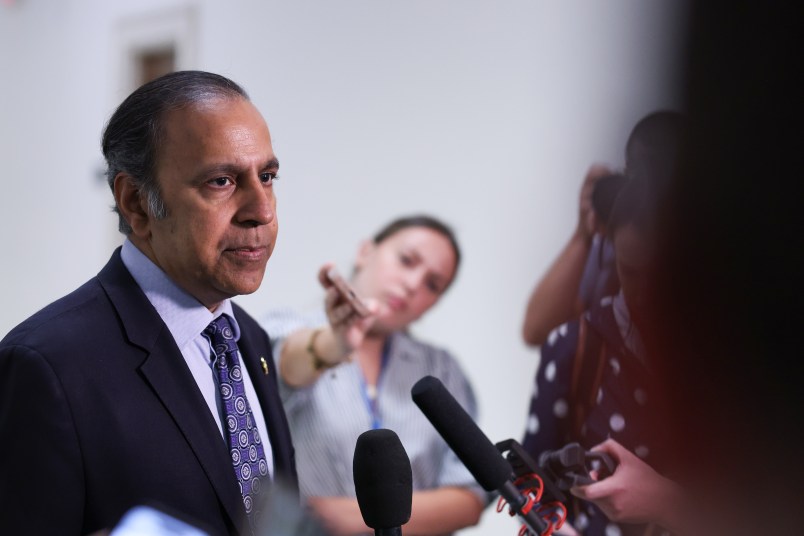
Rep. Raja Krishnamoorthi (D-IL) was at the temple on Sunday when Paporakis turned up, he said, and on Thursday called on the feds to get involved.

“We know this type of hate is coursing thorough social media online, it’s exploded,” Krishnamoorthi told a local news station. “We can’t rely on luck, that’s why we have to condemn the hatred. We can’t stay silent, or worse, condone it or fan the flames.”

“Secondly,” he continued, “we have to redirect the FBI’s focus to domestic violent extremism and trying to uncover these plots.”

The FBI, under Trump, has largely abandoned efforts to track neo-Nazi extremists, in some cases repositioning resources toward targeting the president’s critics and political enemies.

Trump’s Long-Brewing Effort to Oust Ilhan Omar From America
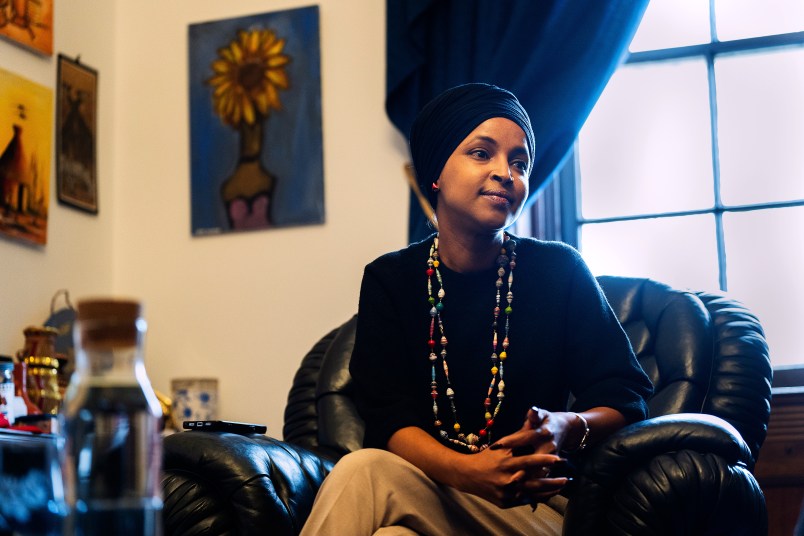
WASHINGTON, DC December 10: U.S. Rep. Ilhan Omar (D-MN) poses for a portrait in her office on Capitol Hill on Wednesday December 10, 2025. (Photo by Demetrius Freeman/The Washington Post via Getty Images)

The Trump administration effort to eject Muslim representative Ilhan Omar (D-MN) from the country is the culmination of a years-long fixation.

  • Way back in 2019, TPM reporter Christopher Mathias noted this week, attendees at Trump rallies were chanting “send her back” when the president mentioned Omar.
  • That year, the Washington Post reported yesterday, a “political appointee in the first Trump administration” demanded that DHS scrub Omar’s immigration records for any indication of fraud. It ultimately did not find what it needed to to move forward with a case.
  • In its second term, the Trump administration is increasingly attempting to make use of denaturalization, an extremely difficult outcome to achieve legally. That, however, is the goal with its latest investigation of Omar, per the Wall Street Journal.
  • To successfully denaturalize someone, “the government needs to show that there was an omission or falsehood on the naturalization paperwork of such magnitude that it would have prevented the person from getting citizenship had the truth been shared with immigration authorities,” writes TPM’s Josh Kovensky, who has been covering the administration’s denaturalization efforts for us since 2024.
  • The administration appears to specifically be looking into whether Omar’s father filed immigration paperwork claiming she was 17 when she was actually 18, a theory that has been pushed on the right for years, most prominently by a QAnon-supporting candidate who once challenged Omar in a primary campaign, Josh reports. A 17-year-old minor naturalizes with their parent when their parent obtains citizenship, while an 18-year-old adult must apply for citizenship independently.
  • “I think her citizenship is solid and there wasn’t any fraud there,” one former official involved in the 2019 investigation told the Washington Post.

Tabs

  • The White House is denying that Trump himself gave the order to restrict Ukraine’s access to Starlink, Bloomberg reports. But the order came “from inside the White House,” Reuters reports. “The officials said ‌leaders at the Defense Department received a message that the SpaceX Starshield service for the Ukrainian military needed to be slowed,” the Reuters report says.
  • Meanwhile, Ukraine has run out of patriot missiles, CNN reports. The U.S. seems to be withholding them as Trump punishes the country’s leader, Volodymyr Zelensky, for criticizing his pre-midterms diesel deal with Russia. Patriot missiles, which are used as interceptors, are in extremely short supply more generally thanks in part to the war with Iran. As a result, Russian missiles are more easily striking Ukrainian targets.
  • Hunter Walker profiles Bobby Pulido, the Tejano singer who, thanks in part to a GOP Texas gerrymandering effort that appears increasingly to have been misguided, stands a real chance of flipping his district from red to blue.

Man of the Hour

WASHINGTON, DC – MARCH 17: Paolo Zampolli (C), who was appointed by U.S. President Donald Trump to the board of the John F. Kennedy Center for the Performing Arts stands on the stage of the Opera Hall with fellow board members following a meeting on March 17, 2025 in Washington, DC. (Photo by Chip Somodevilla/Getty Images)

It’s longtime Trump friend and now-former State Department Special Envoy for Arts and Culture Paolo Zampolli, who, Politico recently reported, has been in a bizarre, long-running, sprawling feud with his boss, cc-ing a dozen-plus people as they snap at each other over email. Among other issues, Zampolli blamed said boss, Deputy Secretary of State Christopher Landau, for, he thought, being the source of a New York Times article that said Zampolli got his longtime girlfriend deported by ICE as part of a custody battle over their son. (Yes, it’s messy.) The girlfriend, in turn, threatened to reveal details she said she knew about Trump, Melania, and Jeffrey Epstein. (Messy.) Anyway, Trump — who, as Josh Marshall observes, suddenly seems to have no taste for drama — canned Zampolli yesterday

Are We at War?

No, says Rep. Rob Wittman (R-VA).

“Right now we are defending U.S. assets there, so there is no war as we speak,” Wittman told HuffPost Thursday.
  •  

Democrats have discovered the key to midterm victory

Former Speaker of the House Nancy Pelosi always said that the only way for Democrats to win elections was to focus on the proverbial “kitchen table issues.” As the leader of the caucus for 20 years, she had quite a track record, presiding over quite a few big wins and many small ones, so she knew what she was talking about. According to her way of thinking, people are motivated to vote over concerns about their own material well-being, and in recent years, this has meant healthcare, job security and the cost of living — the basics.

Republicans, by contrast, tend to rely on a broader appeal to security in general. “Law and order” has been their bumper sticker, covering a wide range of free-floating anxieties in American society having to do with cultural changes, race and the loss of status of straight white males. Their answer to economic stress comes down to blaming the bogeyman of the day, whether it’s immigrants or the deficit, and the answer is always tax cuts and more tax cuts. 

Democrats have usually been trusted more on the kitchen-table issues, depending on whether they happen to be in office when some kind of economic crisis hits. Jimmy Carter paid a high price, losing his 1980 re-election bid after having inherited crippling stagflation from his GOP predecessors, and was hit with a big recession as a result of the Federal Reserve policies — which he supported — to break it. His successor, Ronald Reagan, reaped the benefit, a common consequence of painful Democratic policies necessarily deployed to clean up a Republican administration’s economic mess.

The GOP enjoyed 12 years in the White House after Carter’s loss, including a big boom which inevitably turned into a recession and helped ensure Bill Clinton’s victory over George H.W. Bush in the 1992 election. Clinton presided over an economic boom that saved his presidency, which was otherwise dogged by scandals largely perpetrated by the GOP’s final evolution from the party of mainline Protestants and main street business owners to one of ruthless street-fighters.

Economics, of course, aren’t the only issue that motivates voters. While more abstract notions of foreign policy and national security are rarely at the top of the agenda, war certainly can be. George W. Bush learned this in 2006, when the American people finally realized the Iraq war was a disaster. But something else was looming on the horizon. Bush had also made the fatal mistake of trying to privatize Social Security, breaking whatever trust people had in Republicans to safeguard their hard-won benefits. The Democrats won the midterm election in a rout.

Two years later, Barack Obama was hit with a double whammy. The war in Iraq was still the top issue, but at the height of his campaign against Arizona Sen. John McCain, the Republican nominee, the bottom fell out of the housing market and the world suffered the worst financial crisis since the Great Depression. At the same time, the healthcare crisis had reached a crescendo, with millions of people going bankrupt, and many suffering and dying due to the high price of insurance. After his win, those kitchen-table issues were front and center in shaping Obama’s presidency. In fact, two years into his first term, as the Great Recession continued to drag on, the American people let out the equivalent of a political primal scream and gave Democrats what Obama famously admitted was a “shellacking” in the 2010 midterms. Perversely, this was largely caused by the passage of the Affordable Care Act, the party’s healthcare plan, underscoring that no good deed goes unpunished.


Want more sharp takes on politics? Sign up for our free newsletter, Standing Room Only, written by Amanda Marcotte, now also a weekly show on YouTube or wherever you get your podcasts.


Then came Donald Trump. When he announced his candidacy for president in 2015, the economy was on the upswing, and just enough people were gulled by his phony reputation as a great businessman and promises to make everyone rich that he eked out an Electoral College win. Once in office, Trump basically just rode the recovery that was already underway and took credit for it. When the Covid-19 pandemic hit and his incompetence fully manifested itself, voters turned against him. If there was ever a kitchen-table issue, the pandemic was it: We were all stuck sitting around the table for months, wondering if the world was ever going to be the same. Trump failed to rise to the occasion.

But he was elected again after Joe Biden presided over the pandemic’s economic recovery, which was painful, ushering in inflation for the first time in decades to a chunk of a population that had never experienced it. The issue did him — and his vice president, Kamala Harris, who replaced him on the ticket — in, returning Trump to the White House on the promise that he would restore the economy to the alleged golden age of his first term. Unfortunately for America and the world, enough people bought into Trump’s chicanery once again, and here we are today in a crisis of chaos, mistrust, incompetence and despair over the radical policies wrought by a second Trump administration. 

Kitchen-table issues are still at the top of most voters’ lists. The cost of living remains high and keeps climbing. Housing is out of control, and gas prices are through the roof due to Trump’s war of choice with Iran. His much-ballyhooed tariffs have helped keep inflation high, and there is now little doubt what is driving the polls showing that Republicans are about to take a drubbing in the November midterms. 

But the concept of kitchen-table issues has its limits. Not everything in life is actually about money, and people’s perceptions of the economy are often colored by other issues that don’t appear at first glance to be directly related.

But the concept of kitchen-table issues has its limits. Not everything in life is actually about money, and people’s perceptions of the economy are often colored by other issues that don’t appear at first glance to be directly related. Bush’s losses in 2006, for instance, were affected by his mishandling of Hurricane Katrina and the Iraq War, both of which contributed to a sense that the administration suffered from hubris and incompetence. There is little doubt that the backlash against Obama during his first term was also driven by the recoil on the right to his identity as the first Black president. Trump likewise benefited from the fact that misogyny and racism were in play in his victories over the first two women to win the nominations of a major party.

The problem is that Democrats have too often relied solely on the kitchen-table issue agenda and failed to address underlying anxieties that contribute to their distress. And with Donald Trump, they are legion. 

The unrelenting pandemonium of his presidency, from his brutal immigration crackdown to the flagrant corruption and degeneration of the president himself, as manifested in his obsession with gold and the building of personal monuments in a time of economic stress, is making the public depressed and angry. The fact that Trump broke one of his fundamental promises to not get the country into a war, as he whines constantly about being denied the Nobel Peace Prize, is maddening. His ongoing disregard of the rule of law and the assault on the democratic process are obvious. The disconnect between what average Americans are feeling and the way their leaders are behaving is a mile wide.

People have been yearning for a holistic explanation for this chaos and confusion — and Democrats have finally found a way to express it. As POLITICO recently noted, Sen. Jon Ossoff of Georgia, along with Senate candidates Dr. Abdul El-Sayed of Michigan and James Talarico of Texas, as different as they are individually, are “leaning hard into anti-corruption messaging in the final weeks of the campaign as new research suggests that linking corruption to Americans’ economic struggles can boost Democrats into the home stretch.”

The corruption argument is compelling. Beyond the hated war in Iran (and its resulting gas prices), Trump’s son-in-law Jared Kushner and old friend Steve Witkoff’s deals in the Middle East have come under scrutiny and outrage, as have the government contracts being handed out to companies in which Trump’s sons are invested. Pardons are being sold to anyone with enough cash, some of them to people convicted of healthcare fraud, even as the Republicans are cutting Medicaid and healthcare subsidies. Contrary to his blarney, Trump’s Louis XIV-style monuments to himself are being largely paid for by the taxpayers. On top of all that, there are the reports that Trump has made $2 billion since returning to the White House, a figure that is excessive, even for him. 

The shameless grifting is too obvious for voters to overlook, and the Democrats have finally realized that the critique of Trump and MAGA Republicans must go beyond the kitchen table because it is all connected. The chaos, incompetence, deceit and self-dealing are at the heart of America’s distress, and it’s benefiting Trump and his cronies at the expense of average taxpayers. 

Distilling all this into a media-ready indictment, a soundbite, is difficult, but “Washington is rigged to benefit the wealthy at the expense of everyday Americans” is about as good as it gets. Let’s hope Democrats can carry this message of reform past Election Day and actually do something about it.

The post Democrats have discovered the key to midterm victory appeared first on Salon.com.

  •  

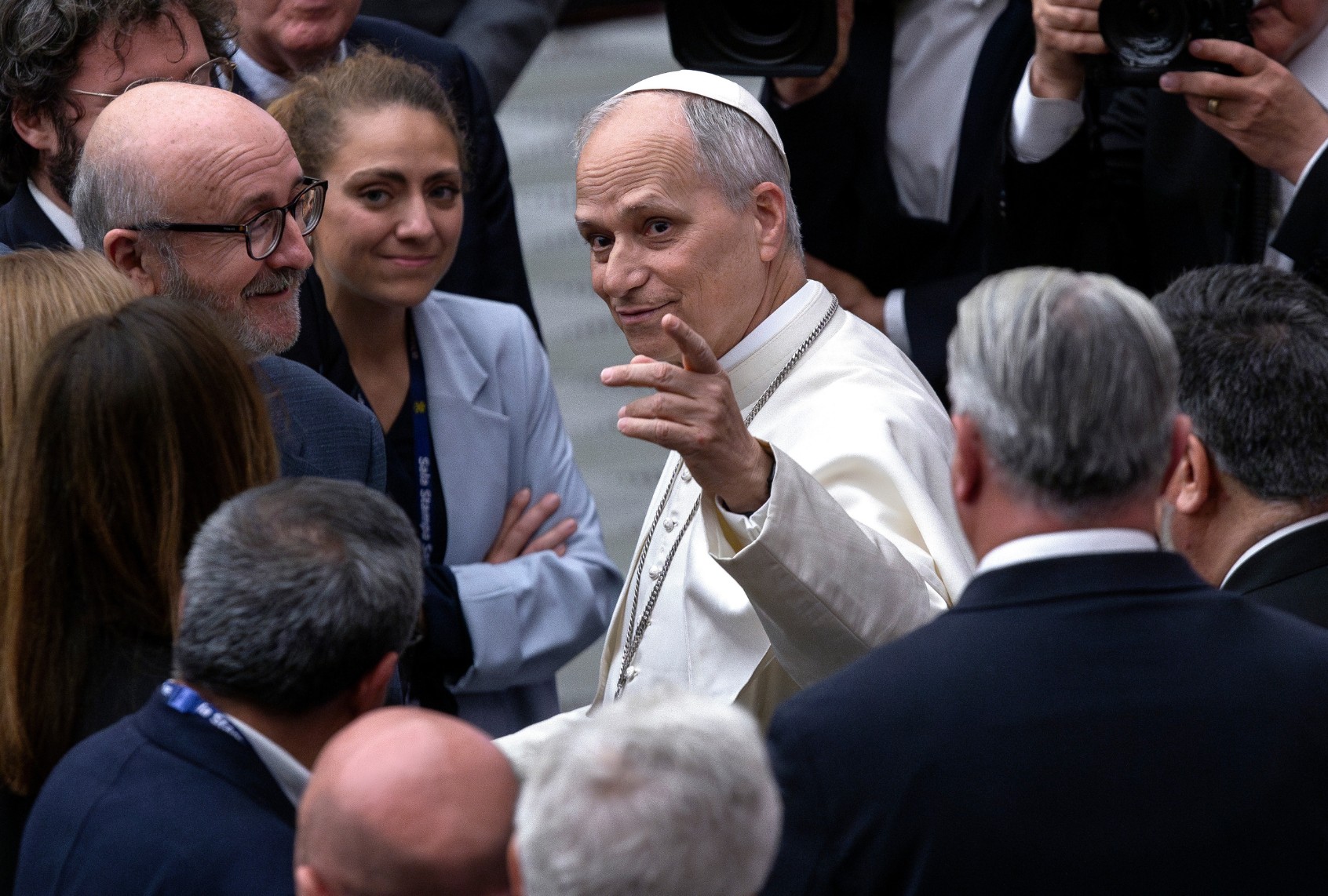
Pope Leo XIV diagnosed with cancer

Pope Leo XIV underwent surgery earlier this week, which led to a diagnosis of lung cancer on Tuesday. At a recent health checkup, doctors had discovered a small nodule in the 71-year-old pontiff’s lung, known as adenocarcinoma. It is a common form of non-small-cell lung cancer and was removed by cutting it out. The Vatican also released a statement saying the lower lobe of the pope’s right lung was removed, but that he experienced no complications from the procedure and returned to his room. It is the first significant medical procedure of the pope’s tenure.

“You can heal from a lung tumor,” Dr. Lorenzo Spaggiari, a thoracic surgical oncologist at the European Institute of Oncology in Milan, told the New York Times. Spaggiari, who is not part of the pope’s medical team, also said one of his patients ran the New York Marathon after having a lung removed. “The important thing is to catch it [at] an initial stage,” he said.


Start your day with essential news from Salon.
Sign up for our free morning newsletter, Crash Course.


Leo was elected as head of the Roman Catholic Church in May 2025, the first American to hold the role. In that short time, members of the Trump administration have repeatedly clashed with the pope, with President Donald Trump once accusing him of being “soft on crime.” Leo has been outspoken about Trump’s war against Iran and immigration policy, urging Catholics to “welcome the stranger.”

The post Pope Leo XIV diagnosed with cancer appeared first on Salon.com.

  •  

Trump gets richer while gas prices soar

In mid-September, Chinese scientists announced a breakthrough in extracting hydrogen and fresh water from the ocean with about 15% better energy efficiency than older techniques. Their research, published in Nature Energy on Sept. 15, underscores that China continues to dominate in the renewable energy race, generating so much that the country can’t even use it all. As Reuters reported in August, “China turned away enough clean energy to power Mexico ​for a year in the six months through June as its grids hit their limits.” At the Fortune Leaders Forum in Macau on Sept. 8, Youyuan Huang, executive vice chairman of BTR New Material Group, the world’s top maker of battery anode materials, said “China’s grid is a very strong and stable one . . . but we’ve installed too much green energy.”

Boy, the U.S. could sure use some of that excess juice. Currently, this country is embroiled in a self-inflicted energy crisis, largely a result of President Donald Trump’s war against Iran, that is sending deep ripple effects across the globe as oil prices spike. In the U.S. alone, diesel prices have risen around 70% since before the war began on Feb. 28, hitting a record $6.52 on Sept. 22, and in the last two months, at least 16 trucking companies, both large and small, have been bankrupted. The world’s richest nations are trying to staunch the bleeding, recently vowing to release up to 100 million barrels of diesel and crude oil within four months. But on Monday, Amin Nasser, CEO of Aramco, the world’s largest oil company, cautioned that this is little more than a Band-Aid and that long-term supply issues remain. Until the Strait of Hormuz “fully reopens and confidence returns, the crude reality is that pressure at both ends of the barrel will intensify,” Nasser said at the Energy Intelligence Forum in London.

Some “crude reality” would be another nice-to-have for those helming U.S. policy. The rising fury against the war and high energy prices threatens to clobber Republicans in the midterm elections. So the Trump administration is frantically trying to drive down diesel prices, first by floating the idea of banning exports. This tactic, criticized as “unwise” by some oil executives, has been abandoned for now, but at a Monday rally in Nebraska — where Trump also seemed to promote the idea of Iran attacking two California cities — he signed an executive order promoting the use of red-dyed diesel. Normally reserved for agriculture operations, red diesel is exempt from highway fuel taxes, but experts caution that expanding its use probably won’t help much because major fuel suppliers are unlikely to go along with it. For one, the taxes are only deferred, meaning companies could end up paying them later. But red dye, when used, can also gum up tanks and fuel systems. “We do not expect most reputable diesel retailers and fuel marketers to do this,” the Society of Independent Gasoline Marketers of America and the National Association of Truck Stop Owners said in a note to their members, citing “limited upside.”

On Friday, Trump announced his latest bid to reduce prices: buying oil from Russia. Shortly afterward, the Treasury Department issued a temporary license allowing Russian diesel to be supplied to the global market. Though details were scarce, this undermines the president’s own sweeping Russia sanctions law he signed last month. Regardless, it doesn’t look like it will do much to lower prices. “It’s kind of shuffling deck chairs on the Titanic,” Michael Lynch of the Energy Policy Research Foundation, told the Associated Press. “If we get diesel from Russia, basically it means that their existing customers are not going to get it and they’ll have to go somewhere else, and that will keep the price basically where it is now.”

With diminishing options — besides the obvious one of ending the Iran war immediately, which Trump can do whenever he wishes — the administration’s primary strategy is to blame everyone else. On Monday, he repeated claims on social media that Ukraine is most at fault for high oil prices thanks to their continued attacks on Russian oil refineries, and that “What’s driving up gasoline is no longer the Strait of Hormuz.” The president also said the closure of oil refineries in “blue states” is part of the problem. 

With diminishing options — besides the obvious one of ending the Iran war immediately, which Trump can do whenever he wishes — the administration’s primary strategy is to blame everyone else.


Energy Secretary Chris Wright has also spread these claims, appearing Oct. 4 on “Face the Nation” to blame Ukraine and California Gov. Gavin Newsom, the latter for closing two refineries. (In fact, Newsom had nothing to do with the refinery closures.) Wright insisted that fuel prices will drop soon, as Trump has been claiming for months now. He also said that Trump was warned before attacking Iran that it might create an energy crisis — “he was well aware of the risk to energy flows that were coming out of the Persian Gulf region” — but the president insisted it would all be worth it to stop Iran from getting a nuclear weapon.

Wright has been especially busy lately trying to instill a sense of optimism around the energy sector, dismissing climate change as a non-issue while laundering Trump’s vision of “energy dominance.” All of this is remarkably myopic. Half of it is an artificial war against renewable energy projects, including the cancellation of almost $8 billion in Biden-era clean energy grants, and using specious claims about “national security” to cancel offshore wind projects. The other half is accelerating oil, gas and coal extraction while slashing protections for endangered species threatened by drilling in the Gulf of Mexico. But here’s the rub: Neither approach has made fuel cheaper, and it doesn’t seem that will change any time soon.


Start your day with essential news from Salon.
Sign up for our free morning newsletter, Crash Course.


There’s little wonder why: Wright founded Liberty Energy in 2011, one of the fossil fuel giants that led that decade’s fracking boom, and he has attacked renewable energy projects almost as enthusiastically as Trump, saying they can never fully meet increasing energy demands. China and other countries have conclusively proved that false, but it’s not an either-or situation. Despite being the world’s No. 1 renewable energy producer, China is also rapidly expanding its coal industry. “The growth of renewable electricity is not incompatible with maintaining, and sometimes developing, fossil-fuel capacity,” science and technology historian Jean-Baptiste Fressoz explains in his 2025 book “More and More and More: An All-Consuming History of Energy.” 

In other words, human energy consumption is rising so fast that we’re continuing to grow all energy sectors rather than entirely replacing fossil fuels with renewables. (That’s not great news for the climate, of course.) But only the U.S. is leaning quite so hard into 19th-century fossil fuels instead of 21st-century solutions.

Why would the Trump administration push so hard for retrograde technology? Perhaps it’s time to admit that the president actually has no interest in driving down consumer prices or the cost of living, let alone ending the war, whether it hurts his party’s electoral chances or not. Trump is deeply invested in oil and gas companies, which have enjoyed obscene profits throughout the conflict. As Reuters reported in late September, “The ​five largest Western oil companies — BP, Chevron, ExxonMobil, Shell and TotalEnergies — are expected to report combined third-quarter profits of around $53 billion, according to RBC Capital Markets estimates, up from $48 billion ‌in the second quarter and more than double year-earlier levels.” 

Trump has caught plenty of these profits, with an August report from the Joint Economic Committee finding that the president “owned as much as $45.6 million in oil and gas company stocks in 2025, a portfolio that is now worth as much as $61.1 million given the surge in oil and gas stocks driven by Trump’s war in Iran.”

No wonder Trump continues to hint that the Iran war will heat up again after the midterms: He has a vested interest in keeping it going and inflating gas prices, so maybe it makes sense to call his bluff here. After all, truckers may be dropping more than $1,000 every time they fill up, or losing their jobs entirely, but the ultra-rich aren’t feeling much stress from all this. They are well positioned to buy up bankrupt trucking companies and jack up prices, further consolidating their monopolistic or oligarchic power. It’s the classic “shock doctrine,” in which corporations exploit disaster conditions, created intentionally or not. 

It would be more sensible to follow China’s lead on renewable energy, just as it would probably be smart to retreat on Iran rather than get entrenched in another forever war. But that just wouldn’t generate such spectacular windfall profits for Trump or those in his orbit. The solution is to nail these people to the consequences of their decision. They don’t want to end this crisis, so we must make them.

The post Trump gets richer while gas prices soar appeared first on Salon.com.

  •  

Pete Hegseth’s holy war on “weirdos” targets most Americans

Pete Hegseth is odd. This isn’t just a personal opinion, though there’s no doubt that he gets widely mocked for his carefully cultivated public persona, which is a mix of megachurch preacher, gym rat and Robert Duvall’s napalm-huffing character in “Apocalypse Now.” The fact that the defense secretary is different is simply a statistical reality.

It’s not just that he’s a white evangelical Christian, a group that, according to PRRI, makes up only 13% of the population. Hegseth’s church, the Communion of Reformed Evangelical Churches, is extreme even for the right, with a leader who argues against women’s suffrage and teaches that slavery was the height of “mutual intimacy and harmony” between the races. Even within MAGA, those remain fringe positions, despite great efforts by some Christian nationalists to reignite “debate” on such long-resolved issues. 

All this means it’s hard not to laugh when Hegseth pontificates about his hatred of “weirdos.” Although he has a war to fight in Iran, somehow he finds time to focus his attention on what he clearly sees as the greater battle: remaking the military according to the demands of his very white, very male, very right-wing vision.

“No fatties, no t******s, no beardos, no weirdos, no wimps, no radicals,” Hegseth said during a Sept. 30 speech at the U.S. Marine Corps Base Quantico in Virginia. He didn’t explicitly say “no women,” but his kicker — “with testosterone testing on top” — made the implication plain. The “no beardos” demand may seem strange, but as Jamelle Bouie of the New York Times explained, it’s coded racism. Hegseth ended medical exemptions that allowed beards for people, mostly Black men, with certain skin conditions. This may explain why he has no problem when white men have beards, as seen on his church leader, Doug Wilson, or the many celebrities the defense secretary likes to take photos with. (Hegseth himself sported a beard in 2018.) 

“Wimps,” “radicals” and “weirdos” are more ambiguous pejoratives, but Hegseth’s recent actions suggest his definitions are expansive enough to cover the vast majority of Americans. He’s been on a firing spree, demanding a 20% cut of the Pentagon’s top brass in an apparent effort to expunge those he deems “woke.” The move comes after nearly two years of blocking promotions for and pushing out Black and female military leaders. Hegseth also rewrote the list of religions recognized by the Pentagon, narrowing from over 200 faith categorizations to a mere 31 — 22 of which are Christian. He claims this is to simplify the bureaucracy, but his motives are likely more disturbing: to stigmatize non-Christians and restrict the definition of “Christian.” The Air Force is already forcing service members to register their religious beliefs under the truncated list, drawing criticism from atheists and others whose belief systems are not included as options. 

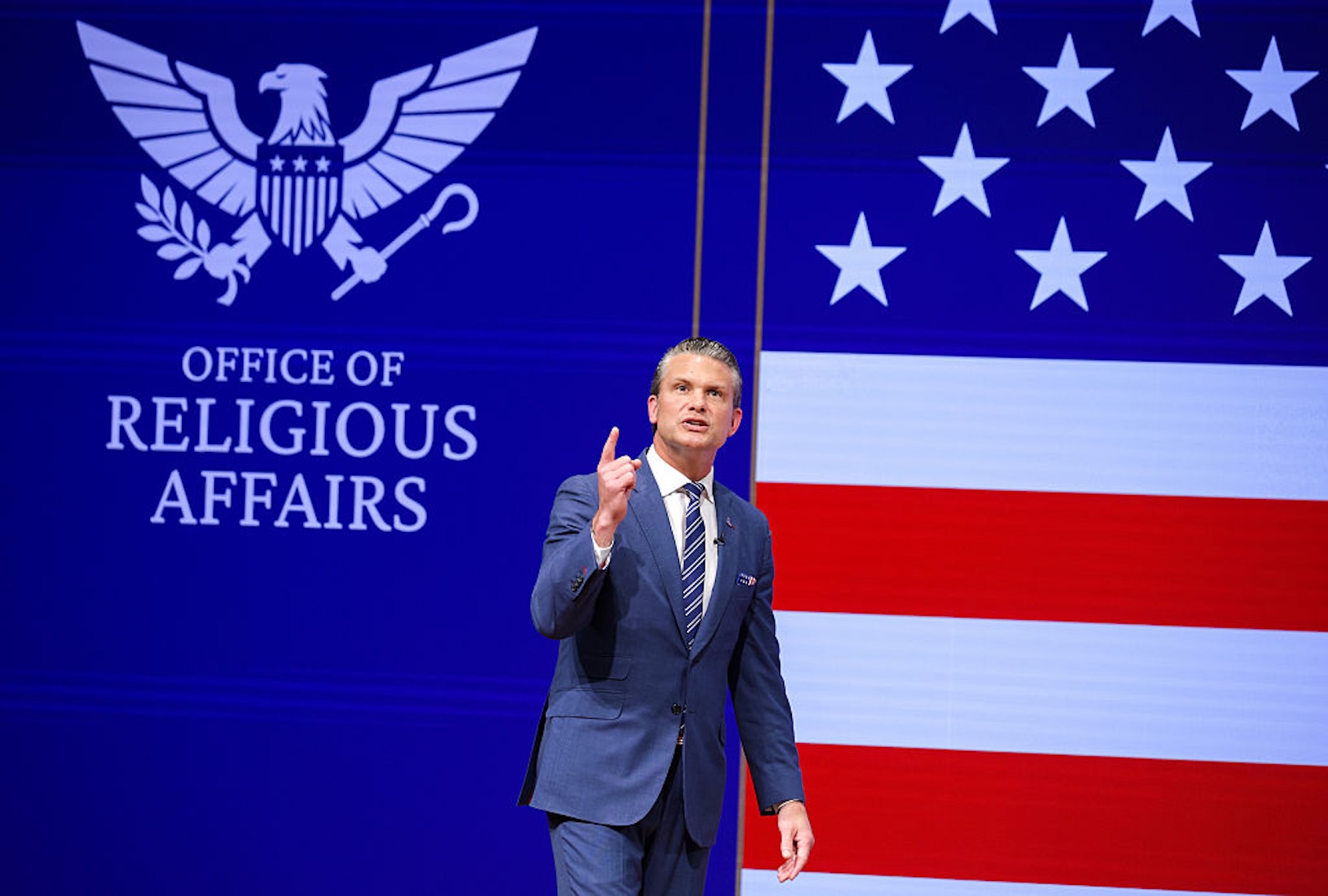
Last week, Hegseth upped the ante by announcing the formation of the Office of Religious Affairs “to strengthen the moral, ethical and spiritual readiness of our warfighters.” Despite boilerplate claims that this action will not “compel religious participation” or “diminish the free exercise rights” of service members, both the policies and pomp surrounding the announcement made it clear that the goal is to promote Hegseth’s version of Christianity — and shame anyone who does not adhere to it. The office will be run by the defense secretary himself and, in ominous language, promises to fund “research, technology, and analytical tools to support and assess spiritual fitness,” which sounds like a data-gathering operation to ensure troops meet Hegseth’s esoteric views on proper religious practice. 

“Our department is, you might say, putting on the full armor of God,” Hegseth said in his announcement, using language from the Book of Ephesians that will be sure to resonate with Christian evangelicals. 

Taken together, this purge helps clarify what Hegseth means when he’s talking about “weirdos” and “wimps,” as well as other slurs like “t******s.” He’s hostile to women, the LGBTQ+ community, people of color and anyone who doesn’t adhere to his vision of conservative Christianity — although it’s worth noting that with his message of peace and love, Jesus Christ himself would not be accepted by Hegseth as a Christian.

The secretary may have gone to Princeton University, but he hasn’t yet grasped the concept of irony. The people he deems “weirdos” far outnumber those in his narrow category, presumably of non-weirdos, many times over. 


Want more sharp takes on politics? Sign up for our free newsletter, Standing Room Only, written by Amanda Marcotte, now also a weekly show on YouTube or wherever you get your podcasts.


Hegseth has tried to justify his position and rhetoric by arguing that a proper military should only contain “the real 1%” of supposedly superior people. But as Eliot Cohen of The Atlantic notes, this claim is ignorant of history. You need large numbers to win wars, which inherently means that armies can’t be elitist institutions.

Hegseth has a real math problem on his hands. His “real 1%” of alleged non-weirdos is just not enough people to staff a modern military, especially in times of war. His solution appears to be to hit the road, trying to recruit more mini-Hegseths to enlist. On Sept. 19 he embarked on the Send Me Tour in an effort to reach out to people in white evangelical-heavy parts of the country with a Bible-heavy pitch about how Jesus wants them to fight for their country. Both the tour’s name and the secretary’s stump speech rely heavily on Isaiah 6:8; Hegseth equates God’s call to the prophet to be faithful with his own plea for evangelicals to join the military.

In a response video, Sen. Raphael Warnock, the Democrat from Georgia who is also an ordained minister with multiple theology degrees, didn’t mince his words. “Pete Hegseth is busy twisting the scriptures yet again . . . When Isaiah answers that call, it is not a call to go into battle.” Instead, Warnock said, “Isaiah challenges corruption” and “those who would crush the poor.”

Those objectives, of course, are not remotely Hegseth’s. His creation of a hierarchy that places white, straight men at the top and relegates everyone else into an underclass of “weirdos” and “wimps” ignores the Bible’s historical context — and actual meaning. Anyone who doubts that can simply examine his behavior in office and his monomaniacal focus on sorting America’s service members into a worthy-unworthy dichotomy, based solely on how much they adhere to his own self-serving ideals of what a soldier should look like.

The post Pete Hegseth’s holy war on “weirdos” targets most Americans appeared first on Salon.com.

  •  

White House denies Trump wants to let Iran bomb California cities

At a Monday night rally in Nebraska, President Donald Trump spoke about the Iran war and record-high oil prices, both of which are outraging voters and promise to be deciding factors in the November midterm elections. First the president downplayed the high costs, saying they are “artificial” and “a little bit high.” Then Trump said that by attacking Iran, he was promoting peace.

“It’s a small price to pay for keeping the world safe, keeping our country safe,” Trump said to applause. “They can take out a city. Let them take let it let them take out Los Angeles. Let them take out San Diego. That’s this is a very small price to pay and it’s going to be over with very soon. It’s essentially almost over with and they might keep going a little long. You know, they always say they have a big threshold for pain. They need it. Let me tell you.”

The New York Times reported “It was not immediately clear what Mr. Trump meant,” but to others, the message was clearly about inciting violence on an American city. Politicians, especially in California, erupted in outrage, at least on social media. San Diego Mayor Todd Gloria posted on X that “San Diego is not collateral damage … Keep our city out of your reckless war talk.” Los Angeles Mayor Karen Bass described Trump’s comments as “dangerous,” posting on X that “In the face of irresponsible threats, as Angelenos, we know how to stand together and protect our city.”

California Gov. Gavin Newsom echoed Bass, posting on X that Trump’s comments could be “treasonous” and claimed he is “directing the State Threat Assessment Center to actively monitor the situation in the event that foreign actors interpret the President’s remarks as an invitation to target California.” All three are Democrats but at least one Republican shared the sentiment that Trump’s speech wasn’t harmless.


Start your day with essential news from Salon.
Sign up for our free morning newsletter, Crash Course.


“As a Navy veteran, I served to protect Americans, not write off American cities as an acceptable price of war,” Jim Desmond, a Republican congressional nominee in a San Diego metro district, posted on X. “Our job is to keep Americans safe, stand up to our enemies, and make sure a threat like that never becomes reality. No American city is expendable, and no American family should ever be treated as collateral damage.”

But on Tuesday, the White House said this was all just a big misunderstanding and the president actually wants to prevent Tehran from taking out a city. White House Communications Director Steven Cheung posted on X that “The media freakout over President Trump’s comments is not rooted in reality. He was clearly stating U.S. cities would have been threatened if a nuclear Iran hadn’t been stopped. America is safer because of the President. Iran has no nuclear, no navy, no air force, and no money.”

Also on Tuesday, it was reported that most families of the six soldiers killed in the deadliest attack of the Iran war would not be attending a major White House event for Gold Star families hosted by Trump.

The post White House denies Trump wants to let Iran bomb California cities appeared first on Salon.com.

  •  

Trump leans into Iran war, admits it could cost Republicans the midterms

President Donald Trump’s war against Iran, which just passed its seven month mark, is deeply unpopular among Americans, new polling continues to suggest. A survey from the Associated Press/NORC Research Center published Thursday reports that 71% of adults disapprove of how Trump is handling the Iran war, started alongside Israel in late February, while 69% say the war has not been worth fighting.

“More than half of adults say the country as a whole, the national economy, and their local economy are worse off since Trump was reelected in 2025,” the survey reports. “Most Americans (73%) say the country is heading in the wrong direction, including 92% of Democrats and 47% of Republicans.”

The president seems to realize this growing frustration could cost Republicans dearly in the midterm elections next month, possibly losing GOP control of the House, Senate or both. “It’s possible,” Trump mused to reporters outside the White House Thursday. But he continues to insist that the Iran war is worth it — ostensibly to prevent the nation from obtaining a nuclear weapon, despite the nuclear stockpiles of both the U.S. and Israel — while doubling down on threats and deploying even more troops to the region. 


Start your day with essential news from Salon.
Sign up for our free morning newsletter, Crash Course.


On Thursday, officials told the Wall Street Journal the Pentagon is sending a third aircraft-carrier strike group and additional Marine Corps ships to the Middle East, expected to arrive at the end of November. It would add around 10,000 more troops to the region, putting further strain on the Navy, which has been under pressure from near-record deployments and supply shortages.

But it does seem like Trump is waiting until after the voting to renew bombing Iran, as the Journal reported in late September. In a sprawling interview with Time published Thursday, the president said as much. “Because by annihilating Iran, we’ve created peace in the world,” he said. “With Iran, I don’t think you could ever have peace.”

The post Trump leans into Iran war, admits it could cost Republicans the midterms appeared first on Salon.com.

  •  

Five arrested near UK-US base in Iran terror probe

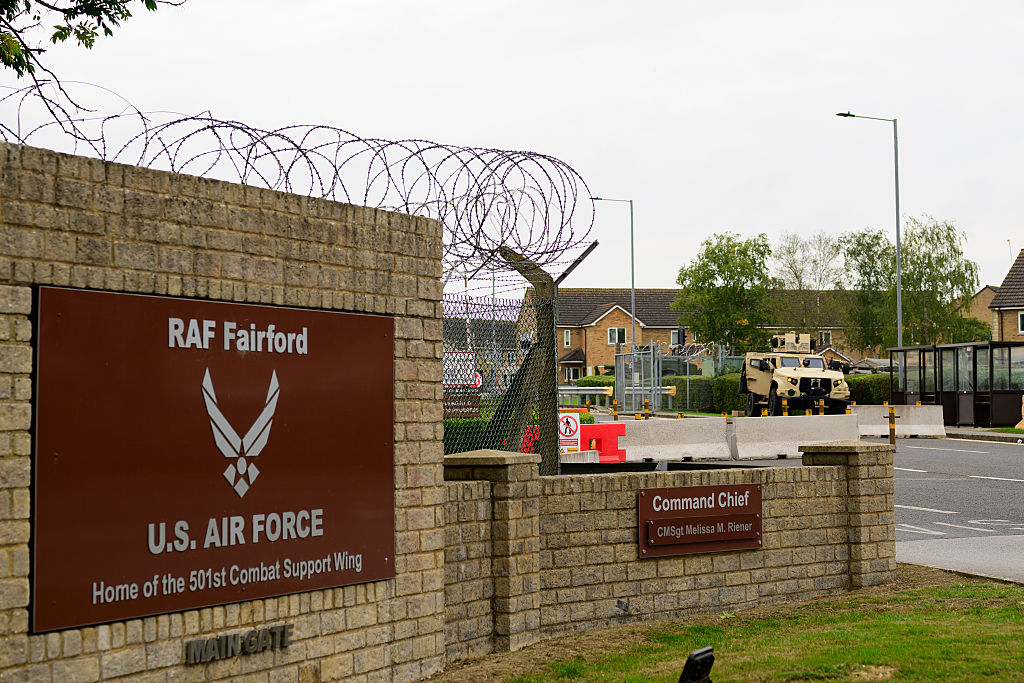
British counterterrorism police are investigating a possible Iran connection after five men were arrested near a U.S.-used air base on suspicion of preparing a terrorist act.

Police received a call shortly after midnight Sunday about three suspicious vehicles apparently traveling toward RAF Fairford in Gloucestershire, England, near the southern Welsh border. Armed officers stopped the vehicles and arrested five men in nearby Whelford on suspicion of explosives offenses.

The men were later also arrested on suspicion of preparing a terrorist act, according to Counter Terrorism Policing.

Investigators are examining whether the suspected plot is linked to Iran, according to multiple reports. A source familiar with the investigation told Reuters that an Iran-linked motive is considered the leading possibility, while Russian sabotage and an Islamist plot are also being examined.

British authorities have not publicly identified a motive or said who they believe was behind the alleged plot.

RAF Fairford has played a role in U.S. military operations during the war with Iran. American B-1 and B-52 bombers have operated from the base, including for strikes on Iranian missile sites.

Iran‘s Revolutionary Guards warned Britain in July against allowing U.S. bombers to operate from Fairford, saying bases used for attacks on Iranian territory could become legitimate targets.

Police established a roughly 400-meter cordon around the vehicles while an explosive ordnance disposal team examined them. About 85 nearby households were advised to evacuate as a precaution.


Start your day with essential news from Salon.
Sign up for our free morning newsletter, Crash Course.


President Donald Trump said Sunday that U.S. and British authorities had worked together on the investigation and claimed the suspects intended to cause “big damage.”

“We had them under investigation,” Trump told reporters. “They were looking to do big damage to our fort.”

British authorities have not publicly confirmed Trump’s characterization of the alleged plot or said how long the suspects had been under surveillance.

“We are in the early stages of an investigation, and five men remain in custody,” Deputy Assistant Commissioner Vicki Evans, the senior national coordinator for Counter Terrorism Policing, said.

Police said the immediate incident has been contained, but the investigation remains ongoing.

The post Five arrested near UK-US base in Iran terror probe appeared first on Salon.com.

  •  

Trump says no to Iran’s Hormuz deal

President Donald Trump said Saturday that he rejected Iran’s proposal to reopen the Strait of Hormuz, days after publicly calling on Tehran to reopen the critical shipping route and suggesting a deal could end the seven-month war.

“They made a proposal, but I rejected it,” Trump told reporters outside the White House on Saturday.

Iranian officials unveiled the proposal during a week of diplomacy surrounding the United Nations General Assembly in New York. The plan would reopen the Strait of Hormuz within seven days and pause fighting across the region while the two sides pursued broader negotiations.

In exchange, Tehran sought an end to the U.S. blockade of Iranian ports, sanctions relief and access to frozen Iranian assets, according to reports. Iranian Foreign Minister Abbas Araghchi said Friday that the proposal had been transmitted to U.S. officials through mediators.

The Wall Street Journal first reported that Trump had rejected the proposal, citing U.S. officials. The newspaper also reported that Trump has told aides he expects the United States to resume bombing Iran after the November midterm elections.

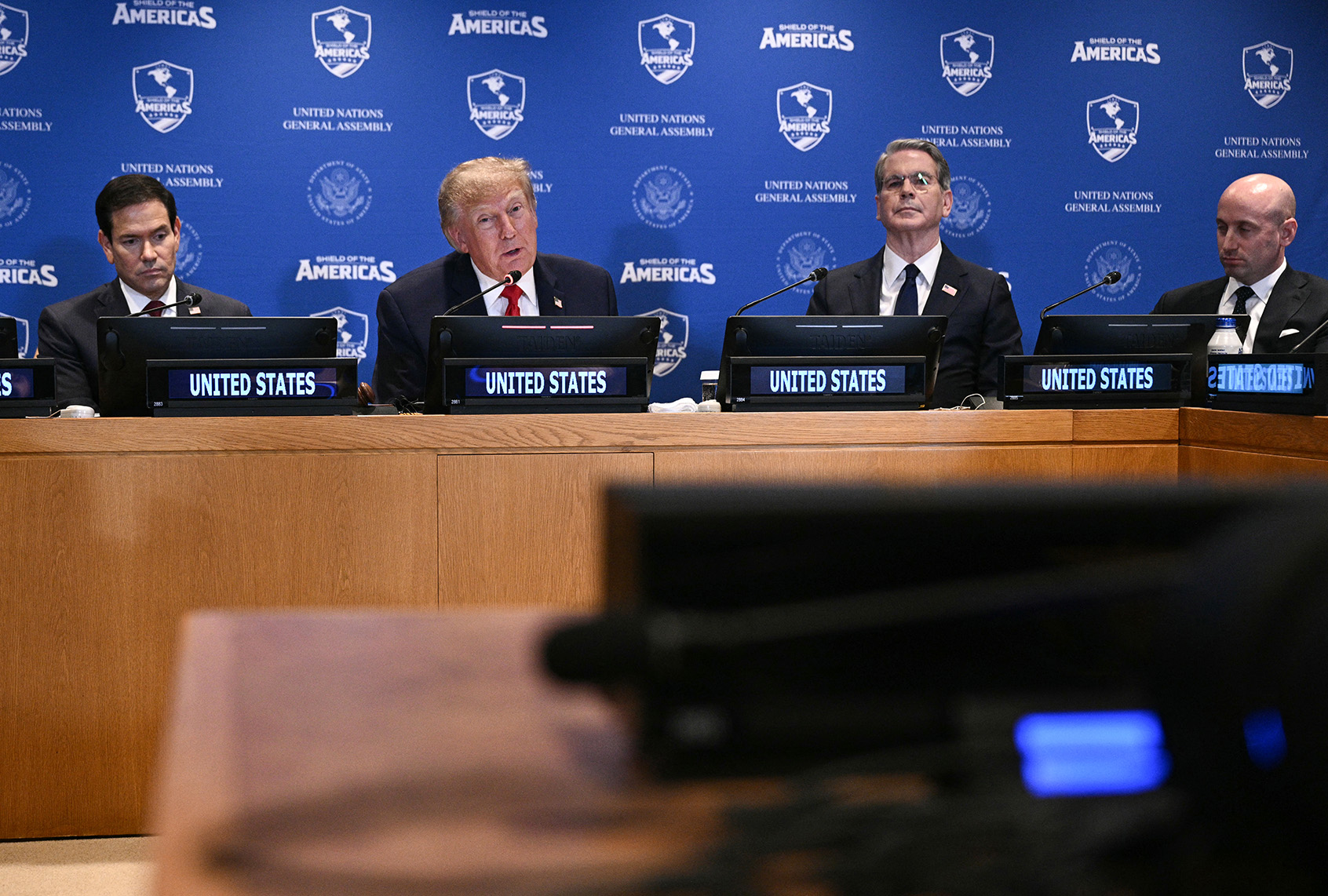
Trump’s rejection comes just days after he used his address before the U.N. General Assembly to demand that Iran reopen the strait while threatening the country with “annihilation” if it failed to reach an agreement with the United States.

“I have a big decision to make,” Trump told world leaders Tuesday, presenting Iran with a choice between a deal that would allow the country to rebuild or further U.S. military action.

Trump also predicted that an agreement with Tehran could come after the midterms, while insisting that the November elections were not influencing his decisions on the war.

Iranian President Masoud Pezeshkian responded from the same U.N. stage Wednesday, saying Tehran remained open to diplomacy but would not negotiate under threat. U.S. and Iranian officials also communicated through Qatari and Pakistani mediators during the gathering, contacts Secretary of State Marco Rubio described as significant despite the limited progress.

The Strait of Hormuz remains one of the world’s most important energy corridors, and its closure during the war has disrupted global oil shipments and contributed to higher energy prices.


Start your day with essential news from Salon.
Sign up for our free morning newsletter, Crash Course.


Trump appeared to have another idea for the waterway Friday, sharing a map on Truth Social in which the Strait of Hormuz had been relabeled the “TRUMP STRAIT.”

Despite Trump’s rejection of Iran’s latest proposal, indirect diplomacy has not formally ended. An American official described this week’s mediated discussions as “positive and constructive,” while Iranian officials said Saturday they were awaiting an official U.S. response.

For now, however, the proposal that could have reopened the strait within a week appears to have met a considerably shorter response from the president: no.

The post Trump says no to Iran’s Hormuz deal appeared first on Salon.com.

  •  

Donald Trump abdicates as leader of the free world

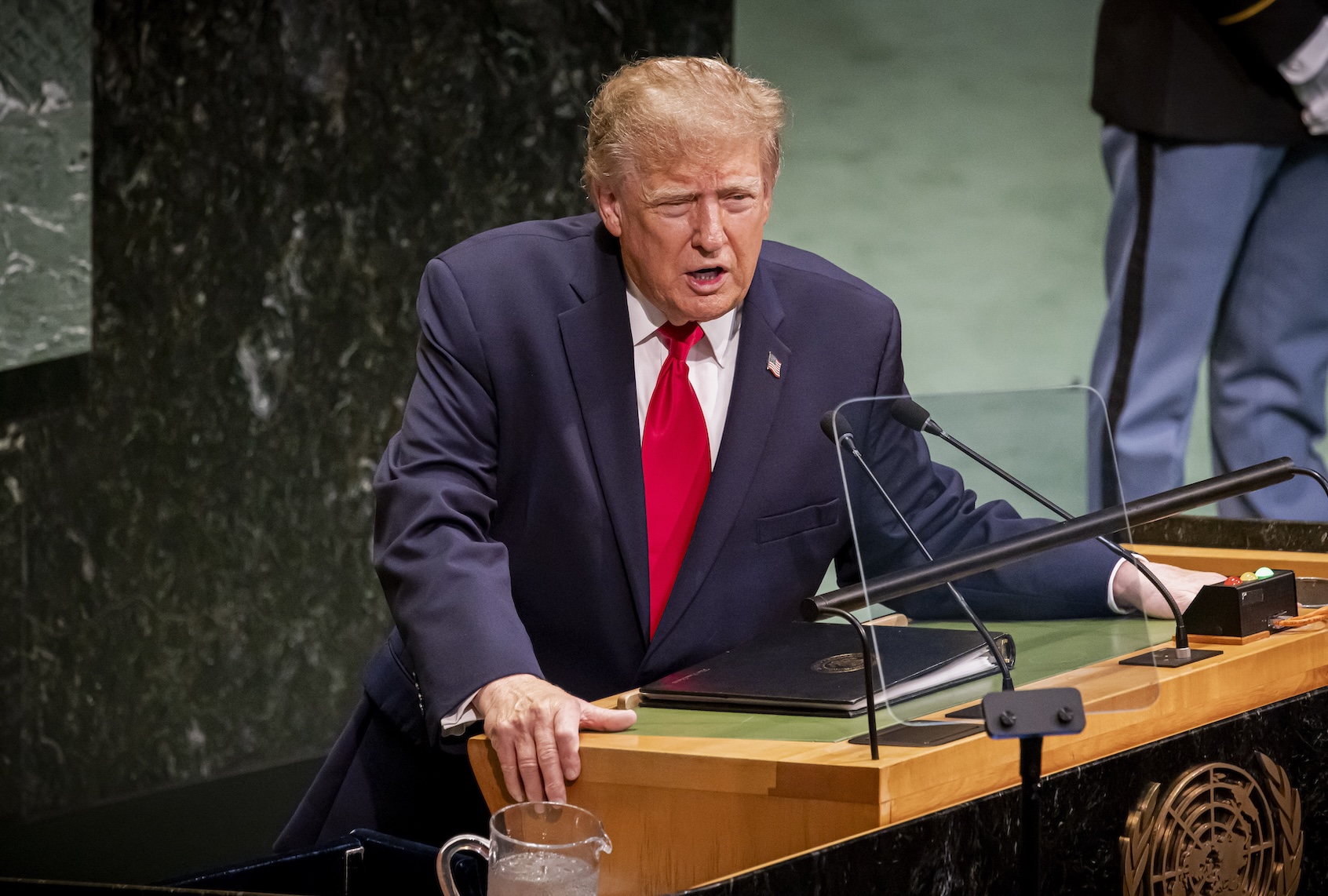
On Tuesday, Donald Trump stood before the United Nations General Assembly to give a speech in which he made it clear that the United States has now fully abandoned its last remaining fig leaf of decency and morality on the world stage, and has embarked on an imperialist model not seen since the 19th century. Since this was a Trump speech, filled with his usual bombast and braggadocio, it didn’t have quite the shock value it might have carried in the past. But there was a new atmosphere in the room. The world sees America as a threat now, and countries are making new arrangements.

The speech was the worst he’s given, and that’s saying something. Delivered with a bored, desultory tone, the obviously tired president spent 40 minutes rambling on and on with his usual litany of grievances and lies. He made it clear that he sees no limits on his power. Looking directly at the Iranian president, he mused aloud, “I have a big decision to make. Will a deal be made with Iran that lets them rebuild? Or do I annihilate the Islamic Republic? Do I drive them into hell with no chance of survival, and no hope of future greatness for generations?” It was outrageously provocative and insulting, and on Wednesday, Iranian President Masoud Pezeshkian responded in his own U.N. speech by describing the Islamic Republic as “victims of terrorism” at the hands of the U.S., while claiming “we are ready for dialogue and diplomacy and negotiations without accepting the language of force.”

In many ways, this was familiar ground for the president. But there was one portion of his speech that brought home just how far gone American foreign policy is today. Speaking of his policy of murder on the high seas in the Caribbean, Trump claimed that drug traffickers, whom he calls “terrorists,” must be “killed, exiled or detained as enemy combatants without the possibility of release, which is what we’re doing.” The Navy is routinely blowing up small boats and killing human beings based upon unproven claims that they are transporting drugs. No U.S. or international law sanctions such a thing. And according to a fact-check by the New York Times, Trump’s assertion that this operation has reduced the flow of drugs by 90% is a blatant lie. It has made no difference at all. The policy is an abomination, and it proves to the world that the United States has abandoned all fealty to the rule of law, not to mention common decency. 

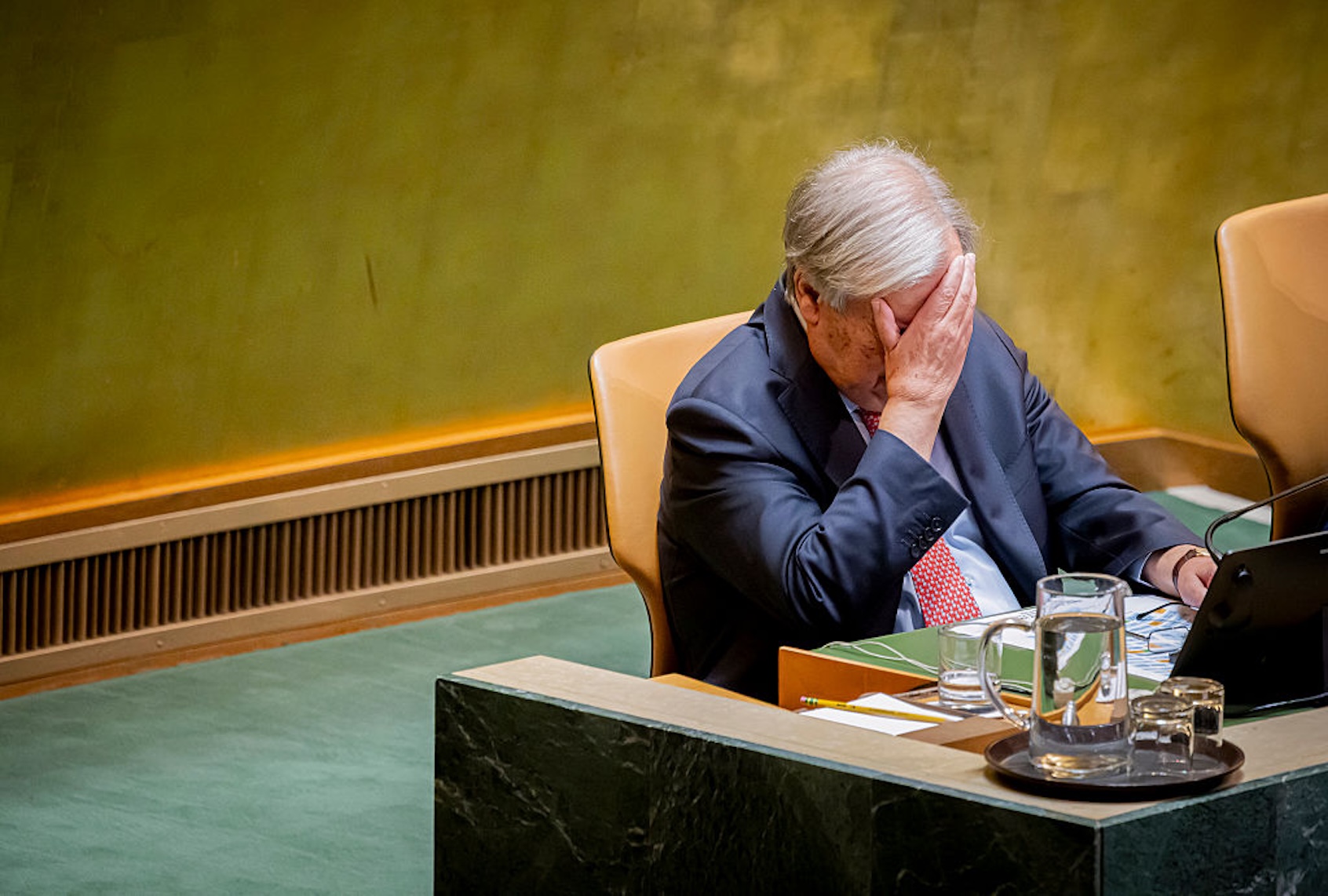
United Nations Secretary General Antonio Guterres covers his face with his right hand as President Donald Trump speaks before the U.N. General Assembly

(Patrick van Katwijk/Getty Images) United Nations Secretary General Antonio Guterres during the speech of President Donald Trump during the 81st U.N. General Assembly on Sept. 22, 2026.

But that wasn’t all. The president bragged about his actions in Venezuela, declaring that since his incursion in January, which deposed President Nicolás Maduro, Trump has now acquired “more than 60% of the oil in the world . . . it was a war, but it’s perhaps the biggest deal ever made. To the victor belong the spoils. You’ve all heard that.” (The number is actually about 23%, according to the Times.) We have certainly heard that before — from him. The saying is one of his favorite maxims, but it hasn’t been uttered by any other world leader for centuries. He went on to proclaim, “Our actions in Venezuela are proof that the United States will no longer permit threats to America to gain a foothold anywhere in the Western Hemisphere. And if necessary, we will use our unmatched military might to secure the vital national interests of the United States.” What threat Venezuela posed to our “vital national interests” is unclear, unless it means simply having something we want to take.

To say this at the U.N., which was formed to prevent this very behavior, confirms every nation’s worst fears about what the United States has become under Trump. It is crude, antediluvian imperialism, and the assembled dignitaries did not applaud or even respond, although the Iranian and Cuban delegations did walk out when they were threatened. 

The U.S is obviously now seen by many as a rogue state, disrespected and disdained by allies and adversaries alike. All you had to do was look at the faces of those in attendance to see it. 

But many are realizing, even as Trump besmirched the U.S. and U.N. alike, there is a new “leader of the free world” on the scene. 

Mark Carney did not speak at the General Assembly, but he did hold bilateral meetings and a press conference. In the process, the Canadian prime minister gave some measure of hope to those — including many Americans themselves — who see the U.S. as a threat to world peace and yearn for something better.

Mark Carney did not speak at the General Assembly, but he did hold bilateral meetings and a press conference. In the process, the Canadian prime minister gave some measure of hope to those — including many Americans themselves — who see the U.S. as a threat to world peace and yearn for something better. “This is, in many respects, a time that comes once or twice every century,” Carney told the media gathered in New York. “What comes ahead, it’s not wishful multilateralism, which defends only the status quo, nor a cold realpolitik that dismantles the status quo altogether. The alternative that Canada and many others are pursuing is values-based realism, an approach that’s both principled and pragmatic.”

The last few weeks have been productive for Carney, as he led a summit of big money investors and CEOs, partnering with former prime minister Steve Harper to make a bipartisan pitch for opportunities in manufacturing, natural gas, mining and ports on two oceans. Canada has a wealth of resources, including an educated workforce. You know, kind of like America — before it turned itself into a global pariah. 

Carney followed his U.N. appearance with a triumphant trip to Europe, where he was greeted like a rock star, obviously appreciated for his bold break with the U.S. that began with a visionary speech in January at the World Economic Forum in Davos that called for a new world order. On Sept. 16, at the meeting of the European Commission, President Ursula von der Leyen called for Canada to become the European Union’s first “associate member.” In making the case, she said, “We must urgently reimagine our partnerships. And build global coalitions for our resilience and democracies.” 


Want more sharp takes on politics? Sign up for our free newsletter, Standing Room Only, written by Amanda Marcotte, now also a weekly show on YouTube or wherever you get your podcasts.


In his speech, which was greeted ecstatically by E.U. members, Carney said “Put simply: we’re in a position where we need to pursue calibrated alliances, integrating deeply with those countries who share our values, remaining open-eyed with those who do not.” 

That vision was put into action this week in New York, when Carney and leaders from the European Union and six other nations announced “Partners for Multilateralism,” which he described as “a new forum that looks at universal institutions, practical coalitions and capacities that exist outside of governments to build trust and bring people together.” The prime minister explained that they do not see this as an attempt to form consensus among nations, an impossible task, but to instead create a new paradigm for countries “formed around problems rather than geography or size, not as an alternative to multilateralism, but as an instrument of it.”

I have written before that the post-World War II order has run its course. The end of the Cold War, and the burden of being the world’s policeman and guarantor of security, has warped America’s values. It was clearly time for something new, hopefully better, to emerge in the 21st century. But Trump’s bellicose “transactional” approach, aside from the clear corruption and immorality, exacerbates the problem at a time of serious global challenges that include nuclear threats, climate change and the emergence of artificial intelligence. These issues demand cooperation. But Trump prefers to blow everything up — and reap the financial rewards wherever he can find them.

Finally, someone is proposing something new to take its place. It’s still in the very nascent stages, and who knows where it will go? But it’s a serious proposal that seeks to find some stability and predictability in a modern, multi-polar world that requires both cooperation and flexibility. 

We can thank Carney for taking the president’s threats to Canadian sovereignty seriously and starting this overdue conversation. He is the man to whom those who believe in freedom and democracy now look for leadership, and we should all be grateful that he has willingly taken on the role. 

The post Donald Trump abdicates as leader of the free world appeared first on Salon.com.

  •  

Trump admin spars with Iran at UN meeting

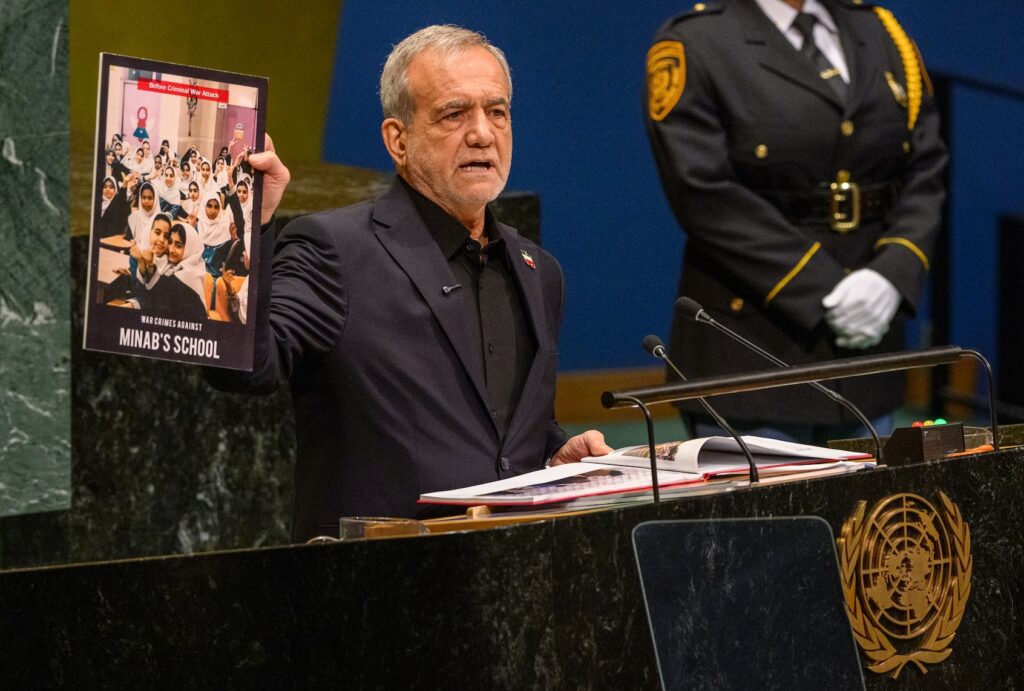
The U.N. General Assembly in New York this week honed in on global conflicts, especially the Ukraine-Russia war and the U.S.-Israel war against Iran. On Tuesday, Iran’s President Masoud Pezeshkian gave a speech describing his nation as “victims of terrorism” by the U.S., emphasizing that Iran was “hit” but “we did not bend the knee.” He held up images of more than 120 children killed by a U.S. missile strike in the early days of the war, actions described last week by a U.N. fact-finding mission as “reasonable grounds” for war crimes. 

“It must be understood by Mr. Trump and those who seek to bully us that we are ready for dialogue and diplomacy and negotiations without accepting the language of force,” Pezeshkian said. It was, as the Associated Press put it, “a striking instance of a foreign leader addressing the world body while their country is at war with the host nation.” A U.S. representative at the U.N. walked out during Pezeshkian’s speech.

U.S. Secretary of State Marco Rubio dismissed Pezeshkian’s speech, telling reporters afterward “I don’t know what standing Iran has to lecture anyone on human rights or the international system when they habitually violate it.” 

“They violate the sovereignty of every one of their neighbors by sponsoring terrorist organizations that reside in the borders of those countries. They slaughter their own people,” Rubio added.

(Photo by Alexi J. Rosenfeld/Getty Images) President of Iran Masoud Pezeshkian holds up a poster of a girl’s school that was attacked while addressing the 81st session of the U.N. General Assembly on September 23, 2026.

During his own speech the day before, Trump continued to mull the idea of escalating the Iran war, which has seen global energy prices spike to unprecedented levels and killed between 1,800 to 3,000 civilians across the Middle East. The Washington Post reported last week that the Pentagon is also not disclosing the true number of U.S. soldiers who have died in the war. The Pentagon’s public database cites 18 servicemember deaths, but officials who spoke on the condition of anonymity to discuss the figures, said the true number could be as high as 23. 


Start your day with essential news from Salon.
Sign up for our free morning newsletter, Crash Course.


“I have a big decision to make,” Trump said Tuesday. “Will a deal be made with Iran that lets them rebuild and create a far greater country than it ever was before, maybe one of the greatest in the Middle East or even the world. Or do I annihilate the Islamic Republic and do it quickly, never giving them a chance to kill and destroy people and countries again?”

Meanwhile, Ukrainian President Volodymyr Zelenskyy delivered remarks Wednesday urging the world to keep up the economic pressure on Russia to impede their ability to wage war against Ukraine. “When someone gives Russia more money through trade, they give this war more time. And that is exactly why we insist on limiting trade with the aggressor, and why we are burning Russia’s revenues ourselves,” he said, describing Russian President Vladimir Putin as unable to embrace peace. Russia will address the assembly Saturday.

“Can you even imagine him without war? He is ‘Patient Zero’, the one from whom war keeps spreading further,” Zelenskyy said. “‘Patient Zero’ must be stopped.”

Additionally, Japan’s prime minister, Sanae Takaichi, called on the U.N. to stop using references to former Axis powers as “enemy states” in its charter, a World War II-era designation that the New York Times reports China and Russia have recently used to attack Japan. “Japan feels a sense of responsibility to safeguard the ideals of the United Nations as our beacon of hope,” Takaichi said on Tuesday. 

The post Trump admin spars with Iran at UN meeting appeared first on Salon.com.

  •  

Things Fall Apart (in the Middle East): The Donald Trump Story

One of the key arguments for a great power — other than the great power itself wanting to be one — is that they act as a guarantor of stability and the status quo. That is far from the only public or global good. And a great power will ensure that status quo on its own terms and mostly to its own advantage. But if you have any acquaintance with history, you know you can do a lot worse than relative peace and the status quo. Trump’s Iran War has been a bracing illustration of all these realities. Once the great power starts letting things break, those breakages can start multiplying very fast. Eventually you’ll find a new equilibrium, of course. But eventually can take a long time. And again, even a passing acquaintance with history tells us that things can suck without end for extended periods of time.

There’s an interesting New York Times piece from over the weekend that illustrates all these things. We know the outline. But it provides new details. As a knock-on effect of the U.S. war with Iran, the ongoing battle between Saudi Arabia and the Houthi rebel government in Yemen has again become hot. In recent weeks, the Houthis have partly cut off Saudi Arabia’s other path to the ocean. Put simply, the Saudis can export oil through the Strait of Hormuz or the Red Sea. The former has been mostly closed for months. Now the Houthis are in de facto or near control of the second. That’s a big crisis for the Saudis. This is part of the larger U.S.-Iran battle because the Houthis are clients of Iran. And Iran’s core strategy has been to create enough pain for the U.S.’s regional allies that they will force the U.S. to end the war. Remember, each time the U.S. attacks Iran, they respond by attacking the various Gulf emirates.

  •  

Pete Hegseth declares war — on his own troops

It should come as no surprise that wars break armies. The chaotic, destructive nature of battle tends to wound even the most highly trained armed forces. Today, however, the U.S. military is being impaired not by some determined overseas enemy but rather by its own leadership in a fratricidal war against imagined cultural bogeymen. The harm has become so discernible that Rep. Thomas Massie, R-Ky., called this week for an impeachment vote on Secretary of Defense Pete Hegseth.

Massie’s push for removal, while unexpected, is not without merit. In his crusade to decontaminate the ranks from the supposed virus of “DEI” — diversity, equity and inclusion — Hegseth is waging a malicious campaign against his own troops with little, if any, precedent in American history.

True, there have been moments in the nation’s martial past when social progress and military resistance sat in uneasy tension. The Truman administration’s desegregation of the armed forces or President Bill Clinton’s desire to allow gay and lesbian service members to serve openly exemplified clashes when the very meaning of American democracy seemed to be negotiated among those in uniform.

Previous American wars equally have highlighted both the fraught nature of serving in higher-level leadership roles and in lower ranks where war’s injurious effects are most grievously felt.

During the Second World War, for instance, the U.S. Army Chief of Staff George C. Marshall gained a harsh reputation for firing senior officers who didn’t pass muster in the crucible of combat. Yet the future secretary of state — and architect of the Marshall Plan — was most concerned with competence and candor leading to military effectiveness. As one account suggests, Marshall “was not looking for conformists. He believed in the respectful, confidential expression of dissent.” In a time of war, personal ideologies mattered little to national security. 

If young Americans serving in uniform during World War II were unaware of how Marshall approached general officer accountability, they certainly felt war’s ravages up close and personal. Marine Eugene B. Sledge, a Pacific theater veteran, marveled at “the incredible cruelty that decent men could commit when reduced to a brutish existence in their fight for survival amid the violent death, terror, tension, fatigue, and filth that was the infantryman’s war.”

The Cold War experience would prove just as injurious, and on more than just the personal level. While veterans of the American war in Vietnam, like Lieutenant Philip Caputo, remembered his men being in a “permanent state of exhaustion,” more senior officers worried about the conflict’s impact on the very health of the U.S. military. Future Lt. Gen. Harold G. Moore, who commanded a cavalry unit at the late 1965 Ia Drang battle, fretted how the war was “devastating to the morale and effectiveness of every American unit in combat.” Might the armed forces not survive the ordeal of Vietnam? 


Want more sharp takes on politics?Sign up for our free newsletter, Standing Room Only, written by Amanda Marcotte, now also a weekly show on YouTube or wherever you get your podcasts.


Such existential questions endured throughout the post-9/11 global war on terrorism. While pundits and correspondents alike compared the war in Iraq to Vietnam, soldiers and Marines on the front lines struggled to find meaning in their combat tours. As journalist C.J. Chivers, who interviewed scores of fellow veterans, wondered: “Had it been worth it? Have they helped? Why had they been ordered to fight the way they fought?” In such convoluted wars, easy answers were hard to come by.

As in Vietnam, larger questions about the impact of war on military readiness accompanied veterans’ soul-searching. Some wrote anxiously about the “strain . . . being felt throughout the services, in terms of wear and tear on the troops, their families, and their equipment.” Others opined that American strategy lay “dead,” the victim of a hyper-focused counterinsurgency approach that favored tactics over the more important challenge of matching national resources to policy aims. 

If the wars in Iraq and Afghanistan had “broken” some American servicemembers serving overseas, making for a difficult reintegration back home, they apparently also had fractured the very organizations to which those in uniform belonged. 

While the ongoing war in Iran consumes strategic military reserves for ostensibly little strategic gain, the defense secretary persists in targeting the very men and women tasked with carrying out the president’s foreign policy objectives.

Hegseth’s cultural war, however, is far different — and, potentially, far more damaging. While the ongoing war in Iran consumes strategic military reserves for ostensibly little strategic gain, the defense secretary persists in targeting the very men and women tasked with carrying out the president’s foreign policy objectives. The fratricide is nearly all-encompassing.

Unlike any defense secretary before him, Hegseth has inserted himself into promotion board decisions, especially when it comes to selection of officers for promotion to major general. By one account, he has blocked the advancement of more than 80 generals and admirals. His flurry of cashiering officers appears based on little more than targeting those who are not ideologically aligned with the secretary’s worldview. 

On another front, his anti-diversity and inclusion crusade continues unimpeded. In a fiery speech to the West Point graduating class in May, Hegseth railed against “woke” and “anti-American ideologies” while castigating those who “embraced the DEI craze.” The message was clear: Only “warriors” need apply to the newly reconstituted profession of arms. Perhaps not coincidentally, adverse promotion decisions have fallen most heavily on Black and female officers.

The secretary’s constant refrain on what we might call “tactical masculinity” oversimplifies the true nature of modern warfare, which is far more complex and multifaceted than his vision of tough and fit infantrymen engaging in hand-to-hand combat. The increasing use of military drones is but one example. But Hegseth’s scorched-earth policies also run the long-term risk of weakening the nation’s armed forces by narrowing recruiting possibilities for an all-volunteer force. An all-white, all-male military is hardly representative of American democracy.

All wars damage the armies that fight them. And, without question, some wars see armies turn against themselves, most infamously in Vietnam, when some 900 “fragging” incidents — attempts on the lives of fellow soldiers — resulted in the deaths of 99 American uniformed personnel. 

Yet the current fratricidal war against the U.S. armed forces, championed by its own defense secretary himself, is a phenomenon unlike any other in the nation’s history.

Evaluating the present without the benefit of perspective from the past can be a risky business. At very least, though, Americans today should insist that their civilian leaders don’t wage war against those citizens who have pledged their service for no other cause but the nation’s defense.

The post Pete Hegseth declares war — on his own troops appeared first on Salon.com.

  •  

Trump’s Iran war has economists aghast

America and Israel’s ongoing war against Iran has sunk the global economy so deeply in the mire that economists are now seemingly throwing down their pencils in frustration. On Thursday, for the first time since the start of the conflict, analysts at JPMorgan said they don’t have a baseline view of oil markets. 

“We simply don’t know how to model the endgame,” Natasha Kaneva, head of the company’s global commodities strategy, said in a note. According to CNBC, analysts at JPMorgan assumed there were some economic red lines the U.S. simply would not cross in the conflict, and that President Donald Trump would eventually be forced to reach a deal with Iran. But close to seven months after the war began, most of those red lines — including oil hitting more than $100 a barrel, gasoline nearing $5 a gallon at the pump or 10-year Treasury yields rising above 5% — have already been crossed, and “the exit strategy is less clear, not more,” in Kaneva’s words.

Earlier this month, diesel prices climbed above $6 per gallon in the U.S. for the first time ever, and continues to climb. Costs are expected to rise as winter approaches, a season of peak demand for the fuel. Meanwhile, oil stockpiles continue dropping toward record lows, as highlighted by a new analysis from the S&P Global Energy Fuels and Refining team, which warned “winter is coming for diesel markets.”

Karim Fawaz, executive director at S&P Global Energy, warned in the analysis that “Inventories are low, spare refining capacity is scarce, and seasonal demand is about to strengthen at exactly the wrong moment.” 


Start your day with essential news from Salon.
Sign up for our free morning newsletter, Crash Course.


Maybe it’s bad news when even the economists have quit pretending that everything will be fine. The Iran war continues to be a disaster, yet Trump has refused to stop bombing the Islamic Republic. On Thursday he indicated he might even double down, telling Axios, “I have a big decision coming up. Do I want to go in and annihilate them [the Iranian regime] or do I not? It’s a big decision. Anything could happen with me.”  

Anything but peace, I imagine. The previous day, the president recycled an old line, claiming that the Iranians “want to make a deal.” Given how many times we’ve heard that one before, I’m just not convinced. Economic forecasts for the coming months continue to be grim as fighting in the Middle East intensifies. A drone attack that heavily damaged one of Saudi Arabia’s pipelines is expected to cause crude oil exports to fall by 400,000 barrels per day this month alone. That’s just one of countless reasons why energy prices are predicted to keep spiking. Although more war clearly isn’t helping, Trump is now promising to sell 48 F-35 fighter jets to Saudi Arabia. Just what everyone needs.

Earlier this week, the Pentagon told Congress that the cost of the war has climbed to $42 billion, a bit over the most recent estimates of $38 billion from the Congressional Budget Office. Some experts have estimated the cost to be even higher, such as Linda J. Bilmes, the Daniel Patrick Moynihan senior lecturer in public policy at the Harvard Kennedy School, who told The Hill it could be as much as $100 billion — and that was back in July.

But honestly, who cares about gas prices and grocery bills? The most severe cost in war is always human, and Trump’s aggression in the Middle East has resulted in an estimated 1,800 to 3,800 civilian deaths. The Washington Post reported Friday that the Pentagon is also not disclosing the true number of U.S. soldiers who have died in the war. The Pentagon’s public database cites 18 servicemember deaths, but officials who spoke on the condition of anonymity to discuss the figures, said the true number could be as high as 23, plus three U.S. contractors based in the region have died since Feb. 28. Meanwhile, Yemen’s Iran-backed Houthi rebels have attracted significant attention for their attacks along the Red Sea coast, threatening Saudi Arabia’s oil exports, but less attention is being paid to the more than 100,000 people who have fled the renewed fighting.

On Thursday, the U.N.’s top human rights body reported “reasonable grounds” to believe that the U.S. has committed war crimes in Iran, citing two strikes, including one on a school in the southern city of Minab that killed 150 people, including 120 children. A White House spokesperson responded that the human rights body has “accomplished nothing for human rights while spouting unserious nonsense for decades.” While the focus on bottom lines and costs at the pump is understandable, I don’t need baffled economists to know that Trump’s war is born of absolute insanity.

The post Trump’s Iran war has economists aghast appeared first on Salon.com.

  •  

White House Iran War Denialism Reaches Absurd New Level in Briefing Where Vance Both Confirms and Denies Bullets Are Flying

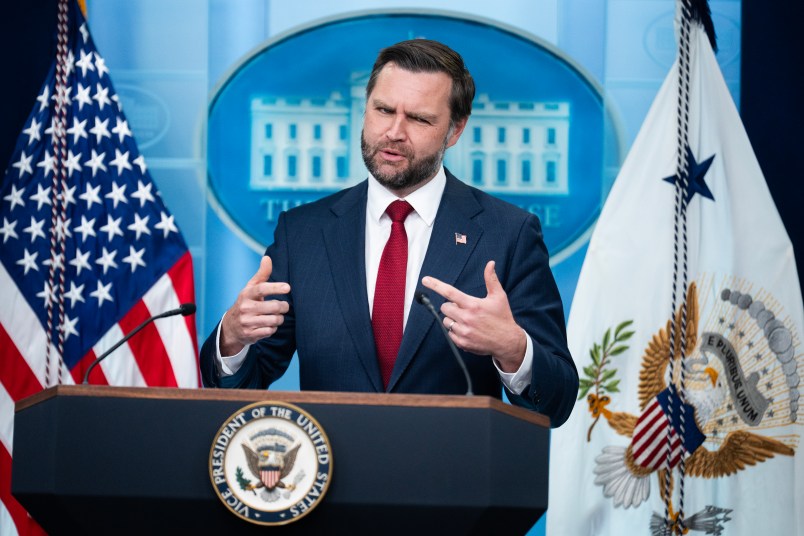
Through much of the course of the U.S.’s war in Iran, the Trump administration has tried to avoid calling the conflict “a war.” Those efforts led to an odd moment in the White House briefing room Thursday when Vice President JD Vance seemingly tripped over his own efforts to downplay the hostilities. 

“I wouldn’t call it a war. Right now, there is no active shooting,” Vance said in response to a question about whether the war would be over before the midterm elections in November. 

The comment from the vice president, who was filling the traditional press secretary’s role following the departure of Karoline Leavitt, was particularly striking since, within the very same briefing, Vance acknowledged Iran was “shooting at ships” seven different times prior to saying there was “no active shooting.”

“The fundamental reality is that the reason gas prices are so high right now is because the Iranians are shooting at commercial shipping. Even, by the way, when they signed an agreement that said, ‘We’re going to stop shooting at commercial shipping,’ they almost immediately went back to shooting at commercial shipping,” Vance said a little over twenty minutes before he claimed there was “no active shooting.” 

Vance sort of addressed the contradiction moments after making his declaration that this isn’t a shooting war.

“I recognize there is — there have been places where this has flared up,” Vance said.

And the vice president, who was at the briefing room podium for about an hour, returned to discussing Iran “shooting at ships” approximately thirty seconds after claiming there is “no active shooting.”

“When you ask, when will this end, you’re asking me a question, like, ‘When will the Iranians stop shooting at ships?’ I think the reality is, I don’t know the answer to that question,” he said, adding, “You would have to ask the Iranians.”

The White House did not immediately respond to questions from TPM about what they would call the situation in Iran, if it is not a war, or about the blatant contradiction in Vance’s remarks about “shooting.”

Iranian attacks on vessels in the Strait of Hormuz, which is a vital waterway for oil shipments, have not been the only shooting in the region. U.S. ships have opened fire on other boats as they enforce a naval blockade on Iran. American and Iranian forces also struck each other’s military assets in the Middle East this week. 

On one level, the bizarre Orwellian spectacle of the Trump administration refusing to acknowledge a war that the world is watching play out doesn’t matter. Major media outlets, Wikipedia, and even MAGA members of Congress are all referring to the situation in Iran as a “war.” However, the distinction the White House has been straining to make has real legal consequences since the War Powers Resolution of 1973 requires the president to withdraw troops or receive congressional approval for a military conflict within 60 days of its start. The White House has used various rebrands, rhetorical flourishes, and temporary ceasefires to avoid that clock. Acknowledging the war also has clear political fallout since, with the populace weary of foreign conflicts and gas prices climbing, polls show it is extremely unpopular, even among voters who support Trump. 

For Vance, the issue hung over his attempt to fill in for the press secretary. As the vice president left the room after taking questions from selected reporters, other journalists shouted their queries at him. 

“If it isn’t a war, what is it?” one asked.

Vance did not answer. 

  •  

Republicans Try, and Fail, to Set Number of Justices at 9

Republicans Remind Everyone That Number of Supreme Court Justices Is Not in Constitution

Amid signs Democrats may be more seriously mulling the possibility of some kind of Supreme Court reform, Republicans put forward an effort to set the number of justices at nine. I’m not sure it worked out exactly the way they hoped.

As context, you likely saw that over the weekend, Rep. James Clyburn (D-SC), a high-profile Democrat who has in the past held various positions in leadership, endorsed the idea of expanding the Court from nine justices to 13. Various court reformers have offered up the number 13 as a reasonable one to match the number of federal circuit courts. “I would hope we would get people on the court who will follow the constitutional underpinnings of this great nation of ours,” Clyburn said.

At the same time, Republicans in the House rolled out an attempt to set the number of justices at nine: a joint House-Senate resolution reading, “The Supreme Court of the United States shall be composed of nine justices consisting of one chief justice and eight associate justices.” It was sponsored by Rep. Andy Biggs, a member of the House Freedom Caucus who is running for governor of Arizona.

The resolution would have needed a two-thirds majority in the House and Senate to pass, something that would have perhaps been achievable in another time, if you imagine a Democratic Party seeking to ostracize those radical Court reformers in their left flank. Instead, it barely achieved a simple majority, with a vote of 212 to 206. One Democrat — Don Davis of North Carolina — voted with Republicans, while Kevin Kiley, a Republican-turned-independent who still caucuses with his former party, voted against the resolution.

House Democratic leadership encouraged members to vote against the bill, with Rep. Katherine Clark (D-MA), the House whip, writing, “This proposed constitutional amendment would permanently fix the number of Supreme Court justices at nine, stripping Congress of yet another constitutional authority that is meant to be controlled by the American people’s representatives,” per NBC.

What the gambit effectively achieved, as Supreme Court reporter Lawrence Hurley pointed out, was to underscore that the number of justices is not, in fact, enshrined in the Constitution, that the number of justices can at any moment be changed by Congress, and that there is not support in Congress to change that.

DHS’ ‘Voter Fraud’ Surge Takes Shape

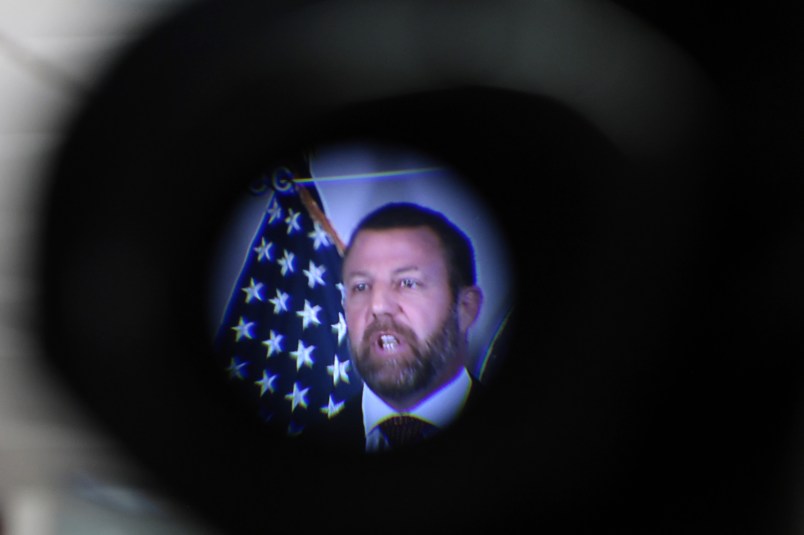
NEW YORK, NEW YORK – SEPTEMBER 01: Secretary of Homeland Security Markwayne Mullin is seen speaking through the viewfinder of a camera during a press conference at the US Citizenship and Immigration Services (USCIS) NY field office on September 01, 2026 in New York City. (Photo by Michael M. Santiago/Getty Images)

Reports in the New York Times and Wired give us new details of how DHS’ pre-election voter fraud push is working.

  • In Wired, David Gilbert writes that ICE is offering up to $5 million for a contract “for the handling and secure delivery of publicly available voter registration files and voter history files to support Homeland Security Investigations (HSI) fraud detection and data segmentation activities” before Sept. 30.
  • The Times writes that as part of the push, federal agents are plugging people’s names and partial social security numbers into websites run by states that are intended for individual voters’ use.
  • Its not clear where the list of individuals came from that agents are being asked to investigate, but one source told the Times it includes U.S. citizens.

Tabs

  • Gloria Steinem has died at 92.
  • Elon Musk and Speaker of the House Mike Johnson (R-LA) met in Texas as the billionaire contemplates dumping millions into House races there, according to Politico.
  • The U.S. on Tuesday bombed a wedding in Iran, killing a six-year-old boy and several others, the New York Times reports.

Man of the Hour

CLIVE, IOWA – AUGUST 29: U.S. Sen. Ted Cruz (R-TX) poses for a selfie with an audience member during a BBQ fundraiser for Iowa Republican U.S. Senate candidate, Rep. Ashley Hinson (R-IA) at the Horizon Events Center on August 29, 2026 in Clive, Iowa. Hinson, running against Democrat state Rep. Josh Turek, is looking to replace retiring U.S. Sen. Joni Ernst (R-IA). (Photo by Charlie Neibergall/Getty Images)

It’s Ted Cruz, glutton for punishment, visiting Iowa and reportedly contemplating another run for president in 2028.

Are We at War?

Yes, with Defense Secretary Pete Hegseth quietly extending deployments into 2027, per the Wall Street Journal.

  •  
❌