❌

Reading view

The Supreme Court could make it impossible to sue federal officers

A man is held to the ground by a federal officer
Law enforcement officers detain an activist outside the Bishop Henry Whipple Federal Building during a protest opposing ICE operations, in Minneapolis on March 1, 2026. | Kerem Yucel/AFP via Getty Images

Let’s say that you’re savagely beaten by a federal officer despite the fact that you committed no crime. Or maybe your home is ransacked by FBI agents who didn’t even bother to get a warrant. Or maybe you’re shot in cold blood by immigration officials engaged in a paramilitary occupation of your home city.

The Supreme Court has worked hard, especially in recent years, to ensure that you will have little, if  any, recourse against federal law enforcement officials who abuse their power. In one case, decided about six years ago, the Court’s Republican majority gave lawsuit immunity to a US Border Patrol agent who fatally shot a Mexican teenager in the face.

Now, the Court is poised to finish the job. On November 9, the Court will hear Nielsen v. Watanabe, a case that could eliminate all remaining hope that someone targeted by a federal officer with no regard for the Constitution might be able to hold that officer accountable in court. Among other things, the justices could use Nielsen to overrule its decision in Bivens v. Six Unknown Named Agents (1971), which established that federal law enforcement officers may sometimes be sued if they violate someone’s constitutional rights.

Bivens was rooted in something very similar to the Spider-Man Rule — with great power comes great responsibility. As the Court explained in Bivens, a federal officer who acts unlawfully “in the name of the United States possesses a far greater capacity for harm than an individual trespasser exercising no authority other than his own.” And thus the Constitution must offer some remedy to people who are injured by such an officer.

But Bivens quickly fell out of favor in the Supreme Court as its membership moved rightward. The Court’s current, Republican majority is so unrelentingly hostile toward Bivens that it is hard to imagine any plaintiff prevailing in a Bivens suit before this Court. The Court’s most recent decisions have described Bivens suits as a “disfavored judicial activity.” In one decision, they’ve said that it is “doubtful that we would have reached the same result” if Bivens were “decided today.” And they’ve instructed judges to reject Bivens claims if there is “any rational reason (even one)” to do so.

In Nielsen, the same justices who wrote these lines are now being asked to overrule Bivens altogether. Even if they decide not to go that far, they’ve already done so much to carve up Bivens that there is virtually no hope for anyone who sues a federal officer for violating their constitutional rights.

What’s the specific issue in Nielsen?

Nielsen arises out of an alleged violation of the Eighth Amendment, which forbids “cruel and unusual punishments.” The Supreme Court has long held that this amendment requires prisons to provide medical care to incarcerated people, because if the prison does not provide them with care, they will have no other way to treat their illnesses or injuries.

The last time the Court ruled in favor of someone who sued a federal officer under Bivens was Carlson v. Green (1980), a decision that allowed the estate of a man who died in prison due to poor medical care to sue prison officials under Bivens. The Nielsen plaintiff, a formerly incarcerated man named Kekai Watanabe, raises a similar claim to the one in Carlson. Watanabe was assaulted by fellow inmates, and received some medical care for “severe back pain.” But when he asked to be treated in a hospital, that care was denied.

He claims that, for months, he “received only intermittent and short-term treatment for pain, often over-the-counter medication,” despite repeated requests for more care. After seven months, according to his brief, Watanabe was finally given an X-ray, which revealed that he had a fractured tailbone and that “bone chips had migrated into the surrounding soft tissue.” Watanabe also claims that he was never given treatment by a medical specialist, and “remains in tremendous pain today.”

A federal appeals court concluded that Watanabe’s legal claim “is identical to Carlson in all meaningful respects,” and thus his lawsuit against a prison health provider could move forward. Though the Supreme Court “has cautioned against extending Bivens remedies,” the lower court explained, “it has consistently maintained that” Carlson is “still good law.”

On the one hand, the appeals court is correct that Watanabe alleges a legal violation that is very similar to the one in Carlson. In both cases, someone incarcerated in a federal prison alleged that their Eighth Amendment rights were violated because the prison did not provide them with adequate medical care. So that does suggest that Watanabe should be allowed to bring a Bivens claim for as long as Carlson remains good law.

Still, the Court’s recent cases tell judges to rule against Bivens plaintiffs if there is “any rational reason” to do so. And there are certainly some distinctions that can be drawn between Carlson and Nielsen. The plaintiff in Carlson, for example, had an asthma attack and died within hours, while Watanabe is still alive and his medical condition played out over many months. The defendants’ lawyers in Nielsen also argue that Congress has changed the law governing suits brought by federal prisoners in ways that make their case meaningfully different from Carlson.

These distinctions are fairly minor. But if judges are really supposed to look for any rational reason to deny Bivens claims, then these distinctions are almost certainly enough. Again, it’s hard to imagine this Supreme Court ruling in favor of any Bivens plaintiff, including Watanabe. In Nielsen, the lawyers asking the Court to overrule Bivens claim that, since Carlson, the Court has rejected 13 different suits raising Bivens arguments.

For what it is worth, the legal debate over Bivens focuses on whether Congress must specifically authorize suits against federal officers before those suits can move forward. The Court’s Republicans claim that the absence of such a law means that no suits against federal officers are allowed (a federal law does authorize suits against state officials who violate constitutional rights). 

Meanwhile, proponents of Bivens argue that the 1971 decision merely added coherence to a long line of pre-Bivens decisions permitting suits against federal officials — some of which stretch back to the early 1800s. As the Court said in Larson v. Domestic & Foreign Commerce Corp. (1949), “the principle that an agent is liable for his own torts ‘is an ancient one and applies even to certain acts of public officers or public instrumentalities.’”

But it matters little who is correct about this debate, because Republicans control six seats on the Supreme Court, and those six justices are fully dug into their opposition to Bivens.

The biggest open question in Nielsen, in other words, is whether the Court will take the defendant’s lawyers up on their invitation to overrule Bivens in its entirety. Just a few years ago, a decision overruling Bivens would have been a very big deal. But, in light of the Court’s decisions holding that judges should look for reasons to deny Bivens claims, little of Bivens remains to be further undermined by this Court.

Federal officials already enjoy such broad immunity from suit that an opinion overruling Bivens will probably do little more than rescue judges from the menial task of hunting through legal records in Bivens cases, searching for a reason to rule against the plaintiff.

  •  

DOJ tells judge probing prosecutor misconduct that Trump can make it go away

Statue of liberty. Monument in USA. Statue of liberty in New York. Monument from USA under blue sky. Symbol of democracy of united states. Top of statue of liberty close-up. Sights of New York Image: FOTOGRIN/shutterstock.com

In May, when federal Judge April Perry uncovered apparent grand jury misconduct, the underlying Broadview Six prosecution collapsed. Perry began examining whether federal prosecutors were candid with her about what happened and whether officials outside the Chicago U.S. attorney's office were involved. — Read the rest

The post DOJ tells judge probing prosecutor misconduct that Trump can make it go away appeared first on Boing Boing.

  •  

Republicans have an Epstein problem

James Talarico stands behind a podium with a sign that reads Release the Epstein files
Texas Senate candidate James Talarico, a Democrat, speaks at a public exhibit about the Epstein files in Dallas. | Chitose Suzuki/The Dallas Morning News via Getty Images

This story appeared in Today, Explained, a daily newsletter that helps you understand the most compelling news and stories of the day. Subscribe here.

Eighteen years after his first conviction, and seven years after his much-debated death, the ghost of the convicted sex offender Jeffrey Epstein is suddenly inescapable again. 

He’s the subject of scores of midterm campaign ads, each more lurid than the last. A second bill mandating the release of the Epstein files is currently kicking around Congress. And on Monday, House Democrats released a new report alleging that the Justice Department helped cover up details of Epstein’s relationship with President Donald Trump, calling — very aspirationally! — for an independent criminal investigation.

Of course, no one really expects Trump’s attorney general to name a special counsel to investigate the Trump administration. In a statement, one White House spokesperson panned the report as “a desperate attempt by crazed Democrats to distract Americans.” (The timing, just one week before the midterms, does seem pretty fortuitous.)

The document, which runs to 50 pages, draws on public accounts and staff interviews with an unspecified number of survivors, including a former pageant queen who alleges that Trump raped her in 1993. The woman had previously accused Trump of groping her, which a Trump spokesperson dismissed at the time as “fake.”

Go a little deeper

When it comes to Epstein, however, Democrats don’t need a lot of new material to damage Trump. The scandal, and his administration’s handling of it, continue to cast a long, dark shadow over Republicans. 

That’s surprising to me, candidly, because the decades-old dealings of even a very despicable sex offender don’t have any bearing on Americans’ day-to-day costs or experiences. And Trump has been able to brush off a lot of other unsavory behavior and associations. 

But the Epstein story has lodged in the brains of some voters who helped elect Trump — including young voters whose growing disillusionment could make a big difference in next week’s elections.

Many of these young voters “resent the fact that Trump’s basically become part of the establishment” and see the Epstein files as evidence of that, the political analyst Rachel Janfaza recently told Vox. Some also feel burned by Trump’s campaign promise to release the government’s investigative files on Epstein…and his about-face once in office. 

Democrats, sensing an opening, are hammering the issue. Relentlessly so. According to data from the tracker AdImpact cited by NBC News, there are currently more than 500 campaign ads airing across the country that include the words “pedophile” or “predator.” 

Many of them reference Epstein or the so-called Epstein files, and three-quarters are backed by Democrats. One recent ad featuring an Epstein survivor, and targeted at Kansas Republican Roger Marshall, slams the incumbent senator’s September 2025 vote to block a procedural measure that would have released the Epstein files. (The Senate later moved to release the files by unanimous consent.) 

Another ad, this one in Maine, claims that Epstein’s “business partner” funneled $3 million to Sen. Susan Collins’s super PAC. (Importantly, the connection between Epstein and this purported partner is so tenuous as to be nonexistent.) 

These ads will fade after Tuesday, of course. But you haven’t heard the last word on this. Should Democrats win control of either chamber, they’ll gain the power to subpoena witnesses and documents for yet more Epstein investigations. 

Some Democratic leaders in the House are already salivating over that prospect.

One link for later

➨ Ask better questions than “what do you do?” Small talk is often dominated by idle chatter about traffic, weather, or jobs. To actually get to know your conversation partner, try leading with questions that get at their interests: what a friend’s friend is reading, for example, or what a barista’s favorite beverage is. You can even draft a little list of go-to questions in advance to deploy in conversation when you need them. Just don’t treat the exercise like a checklist. The real key to better small talk is being curious. 

Before you go…

  • Did you know…that concrete is the second-most-used material on Earth? (The first is water!) Mixing and pouring concrete is responsible for a huge share of global emissions, but there are efforts underway to make it more sustainable.
  • Today’s trivia: An arroyo is a stream — or at least, a streambed — found in what type of environment? (You can find this and other brain puzzles in Vox’s daily crossword. Look for the answer in tomorrow’s edition.)
  • Yesterday’s trivia: Yesterday we asked you for the name of the lovable yellow dog in the comic strip Garfield. That would be Odie, whose look evolved over the years as illustrator Jim Davis sought to distinguish him from his iconic canine rival Snoopy.
  •  

How Trump is prepping to deny election results

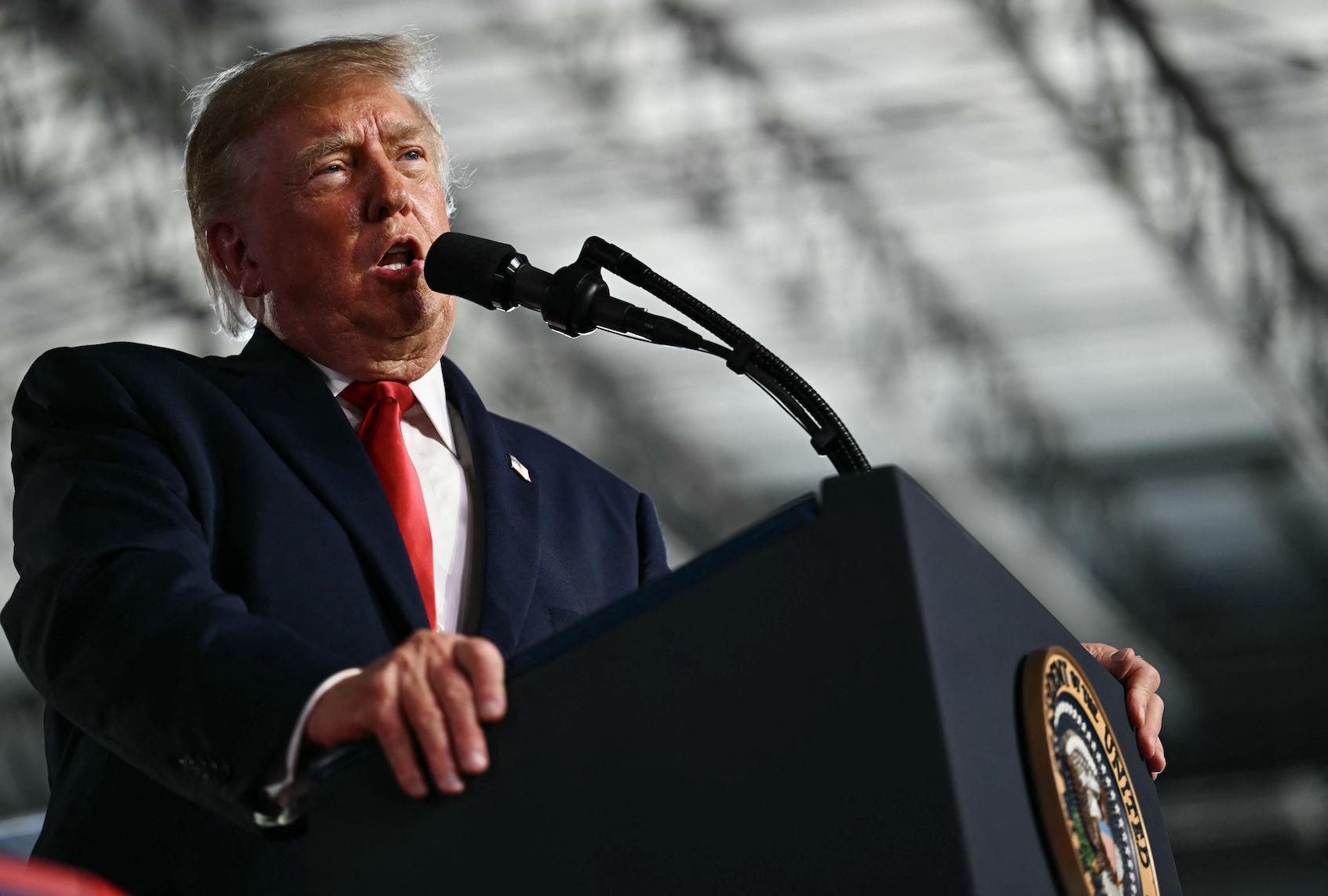
With the midterm elections a week away, President Donald Trump is pre-emptively casting doubt on the results if they are unfavorable to the Republican Party. On Tuesday, reporters asked the president if he would unconditionally accept the results in November. “I will if they’re honest elections,” Trump responded.

It’s a familiar line for Trump. As the Washington Post summarized, “In 2016, Trump said he would accept the election results ‘if I win.’ In 2020, he repeatedly declined to commit to accept the results, saying ‘We’re going to have to see what happens.’ In 2024, Trump said he would accept the results if the election was ‘fair and legal and good.’”

Trump has yet to admit he lost the 2020 election against Joe Biden, in one six month period alone claiming he won more than 100 times, despite there being no evidence of widespread voter fraud. The president has lost at least 64 court cases challenging the results.

But some analysts are growing increasingly worried Trump might do more to annul voting results this time around, especially as the Department of Justice is getting increasingly involved in the elections. Earlier this month, the DOJ filed criminal charges against more than two dozen green card holders in California, accusing them of illegally registering to vote or casting fraudulent ballots. Last week, Trump personally requested a DOJ lawsuit against Alaska to block certification of the state’s Senate election if the Republican incumbent loses. The New York Times reported it was “a highly unusual move that signaled an effort to potentially intervene in the outcome.”

On Monday, the Trump administration threatened Washington state with legal action if it did not purge around 400 people from its voter rolls that they claim are not U.S. citizens.


Start your day with essential news from Salon.
Sign up for our free morning newsletter, Crash Course.


“The timing of this request — one week before the General Election — is no doubt intended to cast unfounded suspicion on the results,” Washington Secretary of State Steve Hobbs said in a statement on Monday. “We take our responsibility to protect voter information seriously and will only respond to requests that follow due process. We saw what happened in California and don’t want Washingtonians to be harassed.”

Even if these attempts don’t work, the overall goal may be to rattle voter confidence in the security of the U.S. elections. “This is part of the election takeover playbook that I’ve seen around the world and unfortunately in some other autocratic environments,” Michael McNulty, a former senior elections adviser for the U.S. Agency for International Development, told the New York Times. McNulty has studied elections in countries like El Salvador, Hungary and Venezuela. “Trump has essentially undermined the independence of the DOJ and it’s been weaponized,” he said.

“Time and again, the evidence shows U.S. elections are secure. State and local election officials, in communities across the country, painstakingly implement layered security to protect the integrity of elections,” Ben Hovland and Emma Hulbert write in a recent article for Center for American Progress. “Despite all this evidence, the Trump administration continues to call the security of elections into question. As the Center for American Progress has detailed, alleging voter fraud or invoking national security emergencies provide powerful pretexts for challenging election results, despite the fact that these claims are contrived to justify just such election subversion. Widespread voter fraud is a myth, and presidents have no constitutional or legal authority to take control of elections.”

The post How Trump is prepping to deny election results appeared first on Salon.com.

  •  

The Cornell rape case has surfaced a hidden divide among progressives

Protesters holding signs about sexual violence and justice
A rally takes place in New York City on October 8, 2026, in the wake of Cornell University rape accusations. | Selcuk Acar/Anadolu via Getty Images

The harrowing allegations of rape at a Cornell University fraternity have been rippling out in both New York state and national politics.

Democrats have tended to voice sympathy with the accuser, saying that they stand with her and other victims. Rep. Alexandria Ocasio-Cortez (D-NY) said there was “a culture of rape, sexual assault, and pedophilia” in elite institutions across the country. Michigan Senate candidate Abdul El-Sayed said Cornell “protected her abusers, letting them off with a slap on the wrist.” 

Key takeaways

  • In the wake of the Cornell rape allegations, advocates for victims of rape and sexual assault are renewing a push for New York to close what they call the “voluntary intoxication loophole” in state law.
  • This proposed change would make it easier for prosecutors to argue that people can be too intoxicated to consent to sex, even if they are conscious and haven’t explicitly said no.
  • But this reform effort has met resistance from key parts of the progressive coalition who are skeptical of the criminal justice system; they fear new tough laws will be weaponized against minority groups and contribute to mass incarceration.

New York Gov. Kathy Hochul said the accuser was “failed” by local police and county prosecutors who did not bring charges, so Hochul appointed state Attorney General Letitia James to take over the investigation. Days before that appointment, James posted on social media that “what this young woman has been forced to endure is horrific and unacceptable,” adding: “To her, and to all survivors: you’re not alone. We stand with you.” 

Some Republicans, meanwhile, are accusing Democrats of rushing to judgment. Saritha Komatireddy, who is running for attorney general of New York against James, said in a debate that James had “screwed this one up by prejudging it.” The investigation, Komatireddy said, “requires someone who approaches the case with fairness, impartiality and integrity.” And right-wing commentators like Megyn Kelly and Ben Shapiro have questioned the accuser’s story.

But beyond the procedural fight over this particular investigation, many Democrats have also called for changing the law to make cases like it that involve drugs or alcohol easier to prosecute in general. 

This might seem like a clean issue for the party, in line with prior progressive efforts to crack down on sexual assault via Title IX and expanding statute of limitations laws. 

However, it’s not so simple: According to my conversations with experts and advocates involved in these reform conversations, this is where the Democratic unity begins to fray, because of a divide between two key parts of the progressive coalition. 

The impulse to create stronger protections for victims has crashed into the left’s longstanding suspicion of the criminal justice system. And as a result, a coherent policy response has been hard to craft — and may end up being impossible to get agreement on.

On one side are advocacy groups for women and for victims of rape or sexual assault. They argue that current law — in New York and other states — makes it far too difficult to successfully prosecute perpetrators, and that it should be changed. They’ve advocated for closing what they call the “voluntary intoxication loophole,” which they say makes it harder to prosecute abusers of victims who have willingly consumed drugs or alcohol.

On the other side are various progressive or left constituencies that are deeply skeptical of the criminal justice system. These constituencies — which include key figures in New York’s Black political establishment, public defenders, supporters of criminal justice reform, and members of the Democratic Socialists of America — are united by a shared antipathy to mass incarceration and what they see as disproportionate police targeting of minority communities. 

The former camp argues that false rape and sexual assault allegations are vanishingly rare, that these crimes are hugely underpunished, and that the law needs to be updated to make these prosecutions easier. But the latter camp argues that Black and other nonwhite men are often falsely accused, and that it would be unwise to hand prosecutors another tool they could use to put men in jail in cases where ascertaining consent is more difficult.

It’s a fraught debate. Modern-day progressives have strongly backed the Me Too movement as well as campaigns for racial justice and criminal justice reform. Progressives want to be on the side of victims against the privileged and powerful — but sometimes, they have different ideas about who falls into which category.

The legal issues around “voluntary intoxication” and rape charges, explained

The current controversy in New York focuses on efforts to close what advocates call the “voluntary intoxication loophole” in rape and sexual assault law.

Every state says rape is a crime. Every state says it’s a crime to have sex with someone who is unconscious. And every state says it’s a crime to have sex with someone who is incapacitated due to unknowingly being dosed with drugs.

But what about someone who chooses to drink or take drugs, who remains conscious, and who doesn’t outright refuse consent? Should there be a standard by which the law deems that person incapable of meaningfully consenting, because they are too intoxicated? 

Many states have long had laws on the books saying yes — that someone who voluntarily drinks or does drugs can reach a state where they are too mentally impaired to consent to sex, even if they’re conscious and capable of communicating. But about half of states don’t have such a law, according to the Associated Press. And this hasn’t been an especially partisan issue to this point, with a mix of red and blue states adopting each standard.

The push to change the law in New York predates the Cornell case, and goes back to the late 2010s. At that time, the Me Too movement had put Manhattan District Attorney Cyrus Vance Jr. in the hot seat, with advocates criticizing him for not initially prosecuting Harvey Weinstein and arguing he was soft on rape and sex crimes generally. 

In the midst of pivoting on the issue (he had Weinstein indicted in 2018), Vance claimed that, in certain of these cases, his office was hamstrung by what he called a “loophole” in New York law involving intoxication. “Prosecutors cannot bring sex crime charges in cases where the victim became voluntarily intoxicated and was unable to consent,” he wrote in a letter. So really, Vance said, it was on the legislature to change the law.

Quickly, critics argued that Vance had misstated the law, saying it was not actually true that a loophole allowed people to rape voluntarily intoxicated New Yorkers with impunity. Vance’s office later acknowledged that his initial comments were “inartfully put.” 

The problematic cases, Vance’s team argued, were about victims who were “too intoxicated to consent” but who were also at least partially conscious and didn’t outright express their unwillingness — this, they said, was the “gap in the law.” “There’s a real problem that we have with people getting drunk and then being taken advantage of,” Vance said. 

So some Democrats and groups advocating for victims of sexual assault and rape kicked off an effort to change that law, in New York and elsewhere. Their favored bill says that lack of consent can be established if an alleged victim is “temporarily incapable of appraising or controlling their conduct” — and if the accused knew or reasonably should have known that.

Critics argue, though, that such bills go too far, and could make it easier to prosecute sexual encounters that, to the accused, seemed consensual. 

“The proposed legislation fails to provide any objective guidance about when a partner is too intoxicated to legally agree to engage in sexual conduct,” the New York State Association of Criminal Defense Lawyers said in an emailed statement.

Skeptics of the bill outlined several scenarios that concerned them, including scenarios where one person seems to consent but later decides that, in retrospect, they were too intoxicated for it to have truly been consensual. 

“You get all these scenarios where two people meet up at a bar and they both become voluntarily intoxicated,” said Yung-Mi Lee, a public defender and a former president of New York’s criminal defense lawyers association. “So then, if someone later says, ‘I was voluntarily incapable of appraising my conduct, I lost my inhibitions,’ they could say, ‘You committed a rape against me.’”

To advocates for victims’ rights, these concerns are overstated. “The burden that’s placed on a victim of sexual violence is such a large burden to bear in the first place that these changes to the law are really just slightly opening the door,” Rebecca Zipkin of the advocacy group World Without Exploitation told me.

“The current situation is not working to provide justice for survivors,” Stefan Turkheimer of RAINN, a network for rape and abuse survivors, told me. “The status quo is not okay.”

Why it hasn’t passed in New York

Versions of the voluntary intoxication bill have been signed into law in recent years in Minnesota, Michigan, and Texas. The bill has also repeatedly passed the New York state Senate by overwhelming margins. But it has never been brought to a vote in the lower chamber, the New York state Assembly.

That’s because, advocates for the bill told me, they’ve faced resistance from some influential parts of the Democratic Party and progressive coalition. 

Indeed, the skeptics are said to include two factions that are often at odds: New York’s Black political establishment and the Democratic Socialists of America. 

Assembly Speaker Carl Heastie controls which bills come to a vote in his chamber. He was an architect of the state’s sweeping bail reform law, a critic of what he called the existing “racist and classist system,” and has said he would be “a failure as a Black man” if he did not pass criminal justice reform. 

“It is generally known that Speaker Heastie does not believe in creating new crimes because he believes New York suffers from overincarceration,” Lizzie Asher, an advocate for changing the law and a co-founder of the Justice Without Exclusion Coalition, told me. (Heastie has said that he did not bring the bill to a vote because it lacked enough support among his chamber’s Democrats.)

Assembly member Latrice Walker is another champion of criminal justice reform; she even did a hunger strike in 2023 to protest rollbacks to the bail reform law. She spoke out about her concerns about the voluntary intoxication bill earlier this year, telling the New York Times that while she wanted survivors to get justice, she was “cautious about the creation of new laws and our duty to preserve due process protections.”

Zipkin and other advocates have also pointed to the six DSA-affiliated members of the assembly, who are associated with a general skepticism about the criminal justice system and incarceration, as a potential obstacle. None are currently listed as cosponsors of the bill. Back when Zohran Mamdani was in the assembly, he too declined to sign on, advocates noted. 

The DSA as an organization is very critical toward the police and prison system; many DSA members have called for defunding or abolishing the police in the past, and the DSA’s national platform still holds out “fully abolishing the police and prison system” as a long-term goal.

These objections may be harder to maintain amidst a wave of outrage around the Cornell case. Speaker Heastie announced he was creating a working group to reexamine the voluntary intoxication issue. The group includes Walker, whose office told Vox she would not comment on the law while “they undertake their important work.” Heastie told the group to give him recommendations by the end of the year, for consideration in New York’s 2027 legislative session. 

Is this a bigger divide among progressives?

The divide is coming into public view due to national attention on the Cornell case — but it’s long predated the current moment. 

Back in 2016, a California judge gave Brock Turner, a Stanford swimmer convicted of sexually assaulting an unconscious woman behind a dumpster, a six-month jail sentence. Advocates for victims’ rights were furious at what they deemed an inexcusably lenient punishment; nationwide outrage and an ultimately successful campaign to recall the judge ensued. 

But some progressive supporters of criminal justice reform felt queasy about the idea of punishing a judge for not locking up a defendant long enough. Skeptical of the criminal justice system and the value of incarceration, they worried this public fury would incentivize judges to be harsher across the board.

“What ultimately will happen is that the people that we represent — people of color, minorities, the disenfranchised, the poor in our communities that make up the people ensnared in our criminal justice system — they’re the ones that are going to bear the cost of this recall,” Sajid Khan, a public defender in Santa Clara County, California, said in 2018.

In practice, these two groups of advocates have generally managed to coexist in the progressive coalition. That’s in part because the Me Too cases that get the most attention have tended to be from white-collar work environments or college campuses, rather than in the dispossessed or marginalized populations that criminal justice reformers are more typically focused on.

But some argue that there’s a more fundamental tension here. Aya Gruber, a professor at the USC Gould School of Law, has written a book arguing that feminists’ efforts to ensure rape and domestic violence are punished more severely have, in practice, ended up contributing to racist mass incarceration. 

“I just think it is a really dangerous thing to start expanding the criminal law in ways that grant all this power to prosecutors,” Gruber told me. “This idea that somehow all this cultural power is going to be used against already privileged people and thus have some sort of egalitarian aspect to it makes it very tempting. But we can identify populations that are more heavily policed, and they are generally not privileged populations.”

  •  

Alleged voter fraud in California leads to 28 arrests

The Trump administration is ramping up its efforts to flush out noncitizen voters with next month’s midterm elections approximately two weeks away. On Monday, the Department of Justice filed criminal charges against more than two dozen green card holders in California, accusing them of illegally registering to vote or casting fraudulent ballots. The 28 defendants are lawful permanent residents with legal status in the country but are not citizens permitted to vote.

Noncitizen voting is incredibly uncommon, according to data on the issue, and has not been shown to influence the results of races. Not only does the practice create a paper trail, it carries steep penalties. “Federal law prohibits non-U.S. citizens from registering and voting in Federal elections; violators are removable and face up to five years in prison,” Citizenship and Immigration Services acknowledged in an October 2024 letter. “The evidence is clear that these laws are working as intended — it is extremely uncommon for noncitizens to vote in Federal elections.”

That hasn’t stopped members of the Trump administration from upholding the recent DOJ arrests, dubbed Operation Protect the Vote, as evidence of cheating in the midterms. “This causes real damage to real elections and real damage to American citizens,” Trent McCotter, the acting deputy attorney general at the DOJ, said during a Los Angeles news conference.

The arrests come less than a week after the DOJ sued California and sent officials a list on an USB drive and a handwritten password, demanding to know who on the list was a citizen or not with only a 48-hour window to respond. Dean Logan, the Los Angeles county clerk and recorder, told The Guardian his office refused to review the list, in part because they didn’t consider the USB drive to be secure. “The Department of Justice has not provided the underlying evidence, source, or methodology supporting its assertions that individuals identified in its records are ineligible to vote,” Logan said in a statement. 


Start your day with essential news from Salon.
Sign up for our free morning newsletter, Crash Course.


“If the regime truly believed California had an illegal voting problem — no such problem exists — they would have taken this action a long time ago, not as Californians are literally casting votes,” State Sen. Scott Wiener, a Democrat, posted on X. “This is all a political stunt to trick people into voting for Prop 39 (which will make it harder for citizens to vote) and to lay groundwork for a coup on January 3 by refusing to seat House Democrats based on bogus “voter fraud” claims.”

Prop 39, also known as the “Voter Identification, Citizenship Verification, and Registered Voter List Administration Initiative,” is basically a voter ID law. If passed, it would, among other things, require voters to present a government-issued ID for in-person voting or provide the last four digits of a government-issued ID designated during voter registration for mail-in voting.

Claims of voter fraud and noncitizen voting are not new to the Trump administration. It was a strategy that Donald Trump explored in his 2024 presidential campaign, but it was largely dropped once he defeated Vice President Kamala Harris and it became unnecessary to use. David Becker, the executive director of the Center for Election Innovation and Research. “You can absolutely bet if Trump loses, he will claim there was widespread noncitizen voting without any evidence whatsoever,” Becker told NPR in September 2024. “And that is going to incite anger and potentially violence.”

The post Alleged voter fraud in California leads to 28 arrests appeared first on Salon.com.

  •  

The Supreme Court may be about to make America’s prisons much crueler

Inmates stands behind bars.

Update, October 21, 11:45 am ET: The Supreme Court released a brief order on October 21, which ruled against the Trump administration’s request to deny gender-affirming care to transgender prisoners. The order is two sentences long. It is temporary. And it does not explain the Court’s reasoning. So it is not clear why the Court ruled against Trump or even whether Trump will lose if this case reaches the Court again after it has be fully litigated in lower courts. Justices Clarence Thomas and Samuel Alito dissented. The article below was originally published on October 13.

On the first day of his second term, President Donald Trump issued an executive order requiring the Bureau of Prisons to “ensure that no Federal funds are expended for any medical procedure, treatment, or drug for the purpose of conforming an inmate’s appearance to that of the opposite sex.” Issued alongside a record 26 other orders that day, it was an unsurprising development, because Trump had made this issue one of the centerpieces of his 2024 campaign.

The fate of that executive order, as well as the US Bureau of Prisons’ (“BOP”) memoranda implementing the order, is now before the Supreme Court in a case called Trump v. Kingdom. And, while this case obviously has high stakes for incarcerated transgender people specifically, the Court’s resolution of this case could potentially have far greater reach — cutting off many cis and transgender people’s access to healthcare while they are incarcerated.

That’s because one of the central questions in Kingdom — though this issue is not yet before the justices — is when the Constitution requires prisons to provide medical care to incarcerated people. In Estelle v. Gamble (1976), the Supreme Court held that the Eighth Amendment’s ban on “cruel and unusual punishments” imposes on the government an “obligation to provide medical care for those whom it is punishing by incarceration.” People in prison, after all, cannot simply drive themselves to the hospital if they get sick. If the prison does not give them adequate medical care, they will suffer untreated and potentially die.

For procedural reasons, the Court is unlikely to opine on whether Estelle requires prisons to provide gender-affirming care to trans people right away. But the question of when the Eighth Amendment requires prisons to provide medical care to incarcerated people is front and center in the Kingdom case, which means the Court could potentially use Kingdom to limit all imprisoned people’s access to healthcare — or even to undercut the Constitution’s protections against cruel and unusual punishments more broadly.

Ironically, this case also arises out of a famous political blunder by pro-trans advocates. In 2019, when then-Sen. Kamala Harris was seeking her party’s 2020 presidential nomination, the ACLU circulated a questionnaire to candidates that asked if they would use presidential authority “to ensure that transgender and nonbinary people who rely on the state for medical care — including those in prison and immigration detention — will have access to comprehensive treatment associated with gender transition, including all necessary surgical care?” 

Harris responded that she would, and also said that she “pushed the California Department of Corrections and Rehabilitation to provide gender transition surgery to state inmates” while she was state attorney general. 

Years later, during his 2024 debate with Harris, Trump claimed that the then-vice president “wants to do transgender operations on illegal aliens that are in prison.” And not long after, his opposition to gender-affirming care for trans people in prison became a key part of his campaign.

It’s unclear why the ACLU thought it was a good idea to shine a light on this issue in 2019 because, at the time, the BOP provided gender-affirming care to people in federal prison. The ACLU — which represents the pro-trans side in the Kingdom case — now argues that transgender people in federal prison have had access to at least some forms of gender-affirming care “since at least 1992.”

Indeed, Trump’s own administration concluded in a 2018 memo that the Bureau of Prisons’ “statutory mandate to provide basic medical and mental health care” to incarcerated people obligated it to provide “pharmaceutical interventions (e.g., cross-gender hormone therapy), hair removal and surgery (if individualized assessment indicates surgical intervention is applicable)” to transgender people in prison if their doctors determined that these interventions are “medically necessary care.”

In any event, regardless of why Trump fixated on cutting off trans healthcare for people in federal prison, Kingdom is now before the Court. That means that the fate of trans people in prison — and, if the Eighth Amendment issue eventually reaches the Court, all incarcerated people — is now in the hands of a Republican Court that is often hostile to trans litigants, and that has, at times, signaled that it wants to drastically roll back the scope of the Eighth Amendment.

What are the legal issues in the Kingdom case?

At least since Estelle, the Court has held that people who are incarcerated are not also sentenced to live and die without medical care. As the Court said in Brown v. Plata (2011), “a prison that deprives prisoners of basic sustenance, including adequate medical care, is incompatible with the concept of human dignity and has no place in civilized society.”

Under Estelle and Brown, transgender people often have a right to gender-affirming care during their incarceration. As the US Court of Appeals for the Ninth Circuit held in Edmo v. Corizon (2019), such a person must show that they have a “serious medical need” for such care — typically by demonstrating that the care was prescribed to them by their health provider. But the Constitution does not permit prisons to deny medically necessary care to incarcerated people.

In Kingdom, the ACLU raised this Eighth Amendment argument in the lower courts, but those lower courts ruled in favor of transgender people in prison on different, much more technical legal grounds.

For over three decades, from at least 1992 to 2025, according to the ACLU’s brief to the justices, the BOP provided at least some gender-affirming care, including hormone therapy, to transgender people. This matters because, when a federal agency changes its policies, a federal law typically requires it to “examine the relevant data and articulate a satisfactory explanation for its action, including a rational connection between the facts found and the choice made.” This explanation often must explain the agency’s justification for “disregarding facts and circumstances” that justified the previous policy.

Both the ACLU and the lower courts that heard Kingdom argue that the Trump administration did not comply with this obligation when it cut off care for trans people in prison. 

Among other things, the district court that heard this case determined that the administration cited “zero evidence from its own medical or mental health care professionals to support its conclusions” against providing transgender healthcare. While the Trump administration argues that providing gender-affirming care makes prisons less safe, the district court also noted that “the government has not cited a single instance of gender-affirming care giving rise to safety concerns despite having provided such care for many years.”

Is this a persuasive legal argument against the Trump administration’s new policy? I think it is. And so did three federal judges that previously heard the Kingdom case. But the fate of trans people in prison is now in the hands of a Supreme Court that rarely rules in favor of transgender litigants, and that has a history of handing down legally incoherent opinions that are inconsistent with the Court’s own precedents, and that also deny legal rights to trans people.

The current Court’s uncertain commitment to the Eighth Amendment

Because the lower courts that heard Kingdom did not rule on the Eighth Amendment question, Kingdom should not currently give the justices an opportunity to roll back Estelle. But, in the likely event that this Court rejects the ACLU’s argument that the Trump administration did not adequately explain its new policy, the case will return to the lower courts and the Eighth Amendment issue will be fully litigated — teeing up the Eighth Amendment question for the justices to decide in the near future.

This issue could arise, moreover, at the exact moment that some justices are pushing for sweeping changes to how their Court understands the term “cruel and unusual punishments.” Indeed, at least some of the Supreme Court’s recent Eighth Amendment precedents suggest that the Republican justices want a wholesale rewrite of the Court’s previous precedents laying out what constitutes cruel and unusual punishment.

Since the mid-to-late twentieth century, the Court has held that, in Chief Justice Earl Warren’s words, the Eighth Amendment “must draw its meaning from the evolving standards of decency that mark the progress of a maturing society.” Thus, as certain forms of punishment grow more uncommon, they become more constitutionally dubious.

This “evolving standards of decency” framework is front and center in nearly every major Supreme Court decision interpreting the Eighth Amendment for the last five or six decades, including Estelle.

In Bucklew v. Precythe (2019), however, the Court’s Republican majority seemed to abandon this framework. Although decades worth of pre-Bucklew decisions established that a punishment is unconstitutional if it is considered cruel and unusual today, Bucklew suggested that a method of punishment is unconstitutional only if it “had fallen out of use” at “the time of the founding.” 

Bucklew did list some methods of punishment that fail this test, but they are things like “disemboweling” or “burning alive.”  

Thus, if taken seriously, Bucklew’s new approach to Eighth Amendment cases would dramatically expand the government’s power to impose harsh punishments. The late Justice Antonin Scalia, for example, argued that a Bucklew-like approach to the Eighth Amendment does not prohibit the government from executing most intellectually disabled offenders, and that it does not limit the government’s ability to impose excessive punishments for minor crimes.

In fairness, some of the Court’s post-Bucklew decisions are inconsistent with the framework the Court laid out in that case. So at least some of the justices who joined Bucklew may have since decided that it’s a bad idea to toss out the Court’s entire framework for Eighth Amendment cases. But Bucklew was one hell of a warning shot over the bow of the Eighth Amendment. And the mere fact that the Bucklew decision exists means that advocates for humane punishments must hold their breath any time this Court is asked whether a particular punishment is cruel and unusual.

In the worst-case scenario for people in prison, a case like Kingdom could inspire the Republican justices to overrule — or, at least, drastically limit — decisions like Estelle and Brown. That would mean that all incarcerated people, regardless of their gender identity, could lose access to medically necessary care unless the government decides to give it to them as an act of grace.

  •  

Judge to Trump DOJ: You did ‘your absolute worst’ for a proposed golf course

A federal judge excoriated the Trump administration Monday after hundreds of trees were cut down at a historic Washington, D.C., golf course over the holiday weekend, accusing government lawyers of ignoring her warnings and destroying their credibility with the court.

“I am thoroughly unamused right now,” U.S. District Judge Ana Reyes said during an emergency hearing over the removal of trees at East Potomac Golf Links, a public course President Donald Trump wants to transform into a championship-level venue.

Government lawyers acknowledged that approximately 430 trees had been removed Saturday, with another 299 slated for removal.

Reyes had repeatedly instructed the government to notify the court and preservationists before undertaking significant work at the course. Instead, officials filed notice at 4:55 p.m. Friday, shortly before the holiday weekend, and began cutting trees early Saturday.

“I trusted you all not to do precisely what you have done,” Reyes told government lawyers. “On what universe did anyone in your offices think that that was acceptable?”

When Justice Department attorney Marissa Piropato said government lawyers had done their best to provide notice, Reyes fired back: “You did your absolute worst.”

The judge temporarily halted further tree removal until at least Tuesday afternoon, warning that violating her order could trigger contempt proceedings.

The National Park Service maintained that the work was part of a restoration plan dating to 2019, before Trump’s proposed redevelopment. Officials said the project would restore the course’s original landscape and improve safety.

But a Park Service official testified Monday that none of the trees removed Saturday had been identified as hazardous. Two officials also acknowledged there was no urgency to the work, according to the Post.


Start your day with essential news from Salon.
Sign up for our free morning newsletter, Crash Course.


Preservationists suing the administration argue that the tree removal is part of a larger effort to remake the century-old public course without completing required environmental and historic-preservation reviews.

Reyes said she would reconvene the hearing Tuesday to question additional Interior Department officials about why the work proceeded over the holiday weekend.

“I have no faith that the government isn’t going to cut them down unless there’s an order in place not to do so,” she said.

The post Judge to Trump DOJ: You did ‘your absolute worst’ for a proposed golf course appeared first on Salon.com.

  •  
❌