Beneath the shadows of indigo-streaked clouds, a young woman strolls through a fog-covered city, stopping at the base of a skyscraper. She looks up, eyes following every square inch of the structure until the point where it juts past the clouds and into the dark atmosphere above, beyond where she can see. She is the princess, and this is the castle she’ll be locked in, an indomitable beast of a citadel fittingly titled the Tower Hotel.
“How hokey,” you might say, “a modern princess trapped in a luxury high-rise.” But really, everything in “Her Private Hell” is contrivance. Writer-director Nicolas Winding Refn — “NWR,” as he’s taken to branding himself — isn’t exactly known for his subtlety. His previous feature, 2016’s love-it-or-hate-it loony toon “The Neon Demon,” was a modeling industry semi-satire that featured beauties quite literally gobbling up their ingenue competition. It’s really no surprise that his first film in 10 years would arrive with its thematic commentary just as legible.
But that’s where the fun begins. Once the viewer understands where Refn is headed, they can submit themselves to his grotesque neon visions. His appeal as a filmmaker lies in his stylistic flair; the joy comes from watching him marry the aesthetically manicured with the ideologically bizarre. Whether it’s a union of love or force is another matter. NWR’s high concepts and their abrasive execution don’t always coalesce. But when they do, it’s like watching a magic trick play out before your eyes, leaving you so stunned you’re stammering, unable to utter even a single “How?”
(Neon) “Her Private Hell”
Refn’s cold, theoretical violence and Thatcher’s knack for affected, high-glamor drama are a match made in DayGlo heaven. Her work is unlike anything I’ve seen this year, a ruthless and surprising turn from someone who’s struggled to find the right type of script for her unique style and physicality.
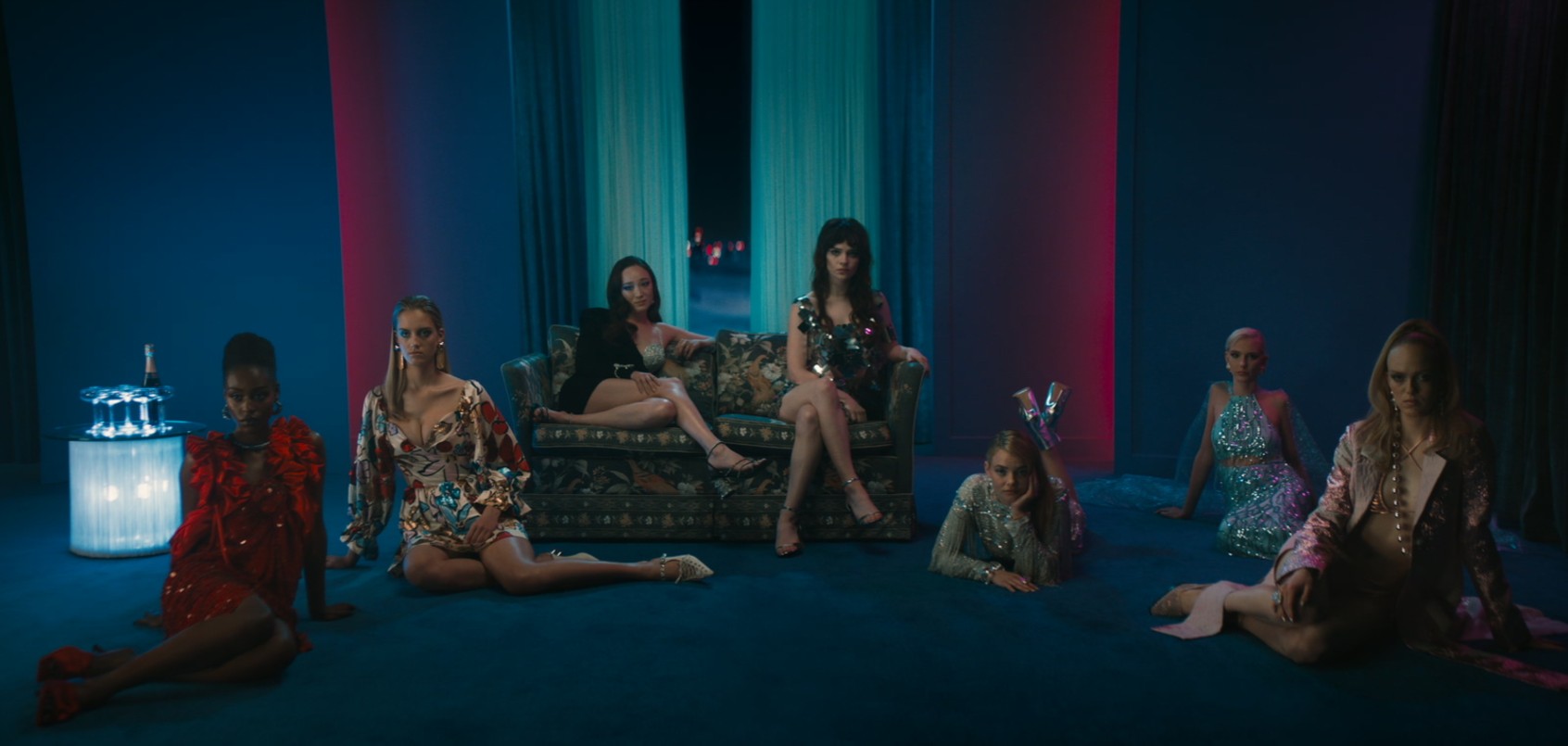
“Her Private Hell” is Refn’s greatest trick yet: A beguiling fairy tale for a lost lamb named Elle (Sophie Thatcher). In this story, Elle is the archetypal royalty figure, thrust through a kaleidoscope of Refn’s signature bright pinks and blues and spit back into the tower where she passes her days, waiting for her savior to arrive. But as she greets her fate and rides the elevator to her penthouse prison, Elle strolls past Hunter (Kristine Froseth), a real-life Sleeping Beauty, napping on the lush chairs in the hallway outside. Elle and Hunter are due to shoot a movie together, which Elle’s father, the filmmaker Johnny Thunders (Dougray Scott), will produce. “The airline lost my luggage because of the Mist,” Hunter tells Elle. Ugh. Of course. The Mist seems to be screwing up everything these days.
Want more from culture than just the latest trend? The Swell highlights art made to last. Sign up here
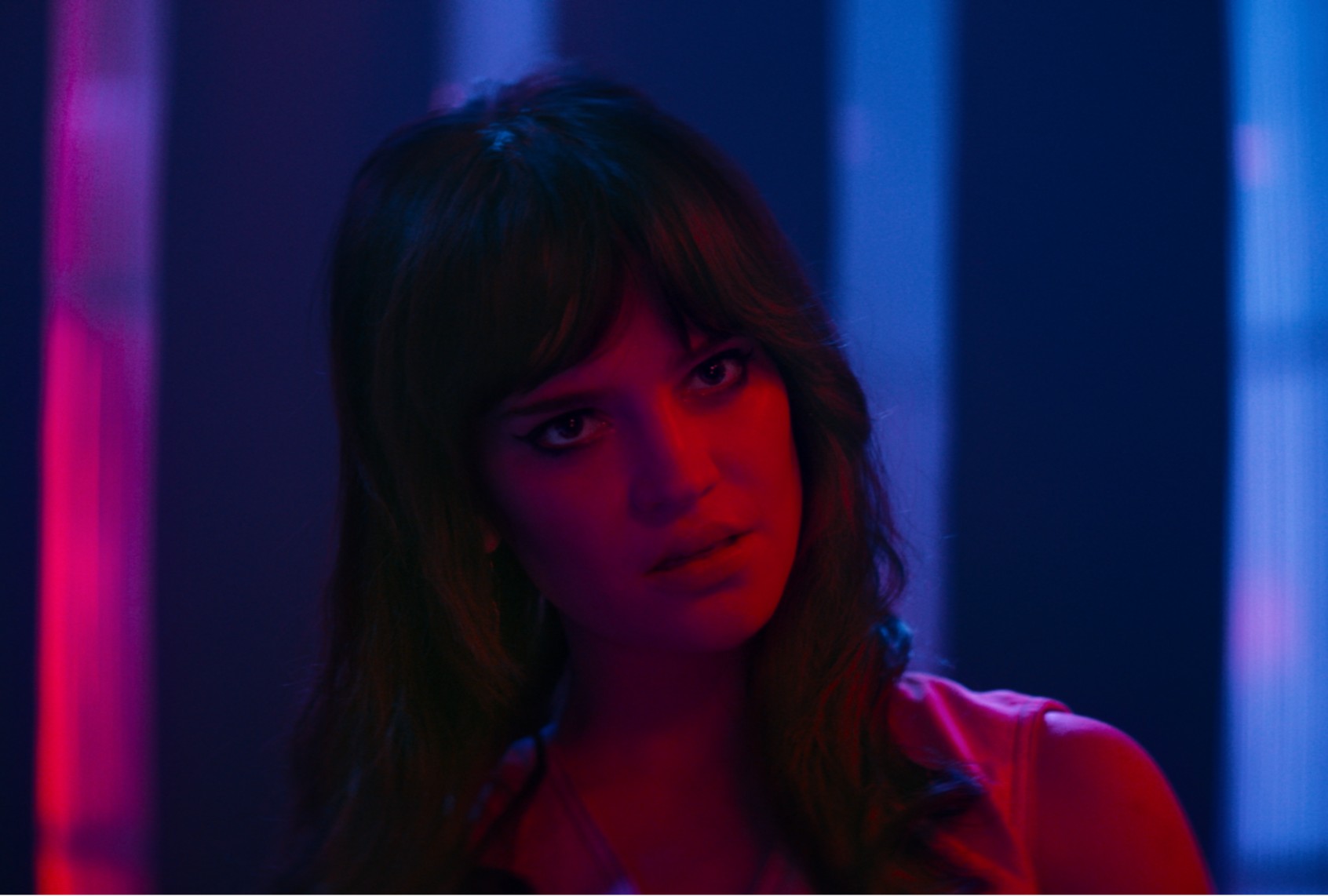
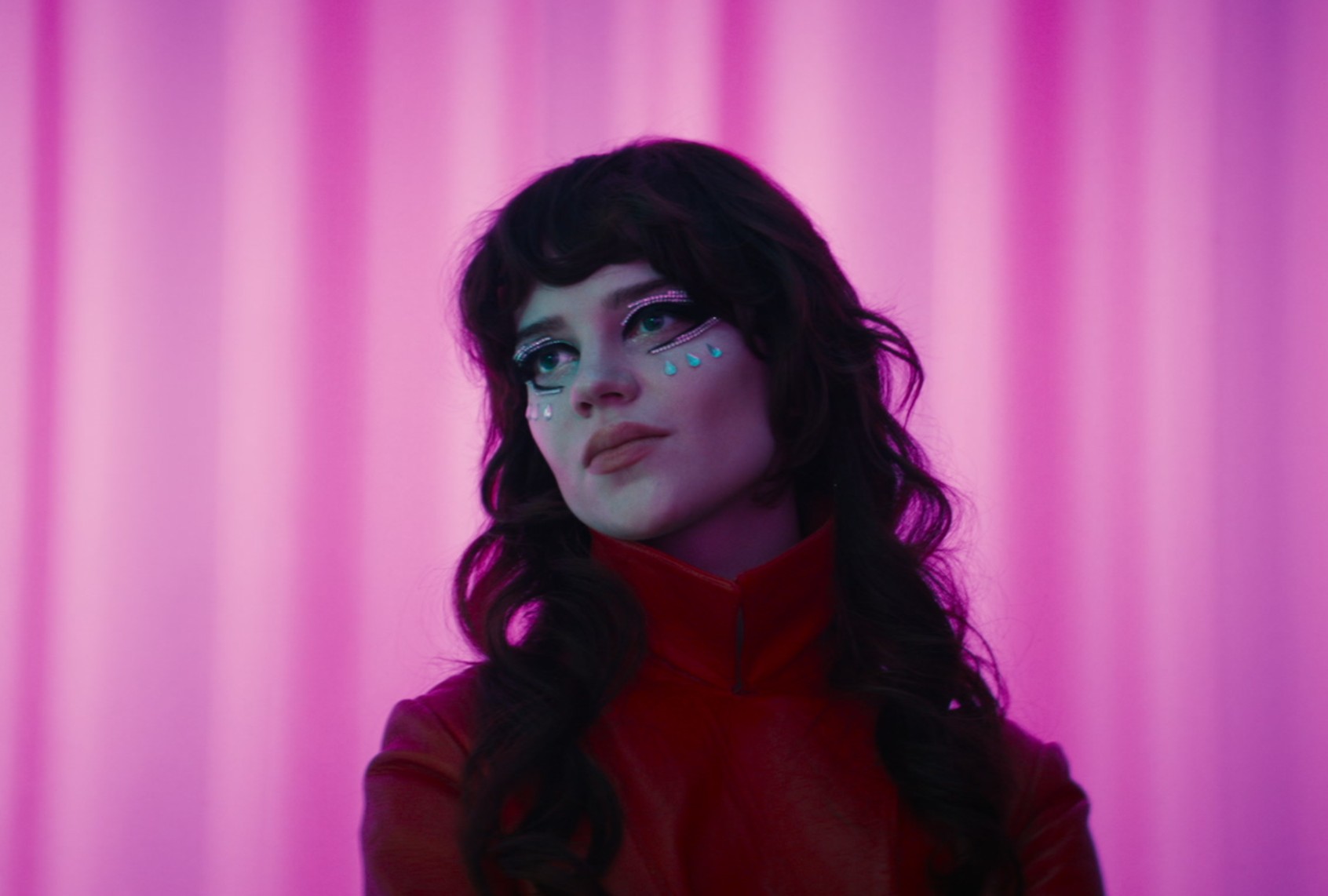
In the extraordinary abstraction that follows, Thatcher finds her ideal role as one of NWR’s stilted avatars, gussied up in couture and spouting riddles. Her energy rises and falls alongside the mysterious mist, which has engulfed the city and brought whispers of a mysterious ancient entity lurking in its haze. Thatcher performs as if this was the part she was born for, and it very well may be.
Refn’s cold, theoretical violence and Thatcher’s knack for affected, high-glamor drama are a match made in DayGlo heaven. Her work is unlike anything I’ve seen this year, a ruthless and surprising turn from someone who’s struggled to find the right type of script for her unique style and physicality. If there is a God, somewhere amid all this mist, “Her Private Hell” will be Thatcher’s entrée to a new era of hyper-ostentatious, Elizabethan — Taylor, that is — cinematic elegance, a large void in the once-plentiful pool of subgenres that only she can fill.
Thatcher has been searching for her niche for a moment, but the delay hasn’t been for lack of trying. Since her breakthrough in Showtime’s “Yellowjackets” in 2021 — where she plays the troubled teenager Natalie, fighting for survival in the Canadian wilderness alongside her high school soccer teammates after their plane crash-lands — Thatcher’s had more than a few substantive roles. In 2024’s “Heretic,” she played a Mormon missionary lured into a violent theological maze by a wicked Hugh Grant. And in 2025’s “Companion,” Thatcher scored a decent turn as a sex robot with her programming on the fritz after she’s implicated in a murder plot. If those films sound preposterous, it’s because they are. “Heretic” was underbaked and half-thought, while “Companion” tried to create big laughs and bigger action from minuscule ideas. Thatcher, though, was far and away the best part of both films, bringing a striking depth to her thinly sketched characters.
But one gets the sense that Thatcher’s worried about being pigeonholed. “Yellowjackets,” “Heretic” and “Companion” are all horror-thrillers. And Thatcher’s other film roles in 2023’s “The Boogeyman” and a bit part in the following year’s “MaXXXine” certainly don’t help Hollywood’s perception of her as a wannabe scream queen. The perennial problem with horror, even contemporary horror, is that it’s an extremely difficult genre to migrate from. But Thatcher’s talents extend past genre confines. She conjures a bewitching onscreen presence that many of her contemporaries could only dream of, pulling the viewer’s gaze with a single glare from her steely eyes or the quiver of her chin. The same grin can look menacing or jovial, depending on how Thatcher contorts the rest of her features. What’s more, there’s an ease to all of these things — a soft tenderness that counterbalances the frigidity — as if such intensity comes casually. And maybe it does.
With “Her Private Hell,” Thatcher has found an auteur who matches her refreshing self-assurance. Here, Refn lets it all go and indulges in his every artistic impulse, drenching a Brian De Palma-inspired deception in neon (and bringing in De Palma’s longtime collaborator, Pino Donaggio, for a resplendent score better than anything you’ve heard this decade). Thatcher isn’t so different from De Palma’s muses either. The naive exuberance of Nancy Allen, the innate sex appeal of Melanie Griffith and Michelle Pfeiffer, the informal immorality of Amy Irving; Thatcher has it all, rolled into one captivating package. When Elle and Hunter witness the brutal murder of a neighbor across the way — presumably by the mist’s fabled entity, The Leatherman — Refn completes the thread that ties his violent vapidity, where pretty girls do ugly things, to De Palma’s voyeuristic dreaminess. If you’re a fan of film and all the places it can take you, you can’t do much better than this.
“Her Private Hell” is not merely glittering debris, as some have posited, nor is it style over substance; it’s a campfire story told by Thatcher’s unearthly orator, with just as much chilling impact.
That is until Thatcher ratchets up the eerie tension tenfold while Refn builds his gorgeous fantasy around her. When Elle’s father unexpectedly departs, leaving her to finish shooting her movie in the care of her not-so-wicked stepmother, Dominique (Havana Rose Liu), the pair’s psychosexual strain further complicates matters. Before Dominique married Elle’s father, the two were the best of friends. As strange as it is, their dynamic seems to alter everything around them, as if their mutual destiny were written in the stars — not that anyone can see the stars with all this mist, that is.
For a director who’s staked a name on films and television shows that are narratively impenetrable, “Her Private Hell” may feel like a big ask for some viewers. And I get that, I do. The movie sways almost imperceptibly between Elle’s quest for the truth and the haunting story of Private K (Charles Melton), a soldier who lost everything to the mist and its monstrous entity the last time it immersed the city. It can occasionally feel as if Refn is playing a game with you, softly whispering if you’re still there. But though some have complained about what they call “a total lack of plot,” I simply must object, and not just on behalf of Thatcher, whose work is worth seeking out even if you don’t jive with Refn’s aesthetic obsessions.
There is so much to admire with “Her Private Hell” — too much for just one go-round. It’s not only gripping, but extremely intricate if you’re brave enough to get on its level. Two women witness the strange murder of a neighbor and begin to believe that something could be lurking in the mist that’s enveloped the Earth. When they start shooting a movie together, they begin to understand their connection to this ancient evil, and their place in a cyclical inferno wrought by absent parents and bad weather. They soon understand that to be heartbroken is to be damned to know the exquisite pain of being alive. This film is not merely glittering debris, as some have posited, nor is it style over substance; it’s a campfire story told by Thatcher’s unearthly orator.
As the night grows black and the last embers start to dull, “Her Private Hell” sends you off to bed wondering if it could all be true. Thatcher’s warbly voice hangs in the air; tales of the Leatherman and lost daughters spinning around your brain as you try to fall asleep. “None of this is real,” you tell yourself, turning off your brain for a good night’s rest. But just then, a piercing pink light appears outside, and a low, opaque mist begins to creep through the seams of your tent. As it turns out, the fantastical has much more grounding in reality than we ever want to imagine.
In 2025, it was announced that Weezer is getting their very own movie. Now, we’ve got a major update on the forthcoming rock flick.
Stereogum reports that on Aug. 12, Weezer guitarist Brian Bell attended the premiere of Green Day’s new film, Nimrods, in Los Angeles. During the event, local radio station Alt 98.7 asked him if Weezer had thought of making a movie. “We already have,” Bell replied.
He went on to say, “Although I’m not supposed to talk about it. But yes, it’s in the can. It’s gonna be incredible.” Finally, Bell confirmed, “You’ll see it in 2027.”
At this time, the Weezer movie does not have an officially announced premiere date
The Weezer movie is said to be in a mockumentary style, similar to the 2022 Weird Al movie Weird: The Al Yankovic Story. The film is rumored to be titled Weezer: Security Threat, and is directed by Henry Joost and Ariel Schulman.
Not a whole lot is known about the plot of the film. During a 2026 Rolling Stone interview, frontman Rivers Cuomo described it as a “comedy improv project.”
Keanu Reeves has been cast as the film’s villain, reportedly playing a fictional version of himself. Other cast members include Ben Schwartz, Eric Andre, Johnny Knoxville, Joseph Gordon-Levitt, and Rainn Wilson.
Additonally, Weird Al is set to make an appearance, as is Spike Jonze. As for musical friends of Weezer: Olivia Rodrigo, Courtney Love, and Juliette Lewis all make appearances.
Keanu Reeves and Weezer are old friends
Interestingly, Keanu Reeves and Weezer go way back. Reeves’ band Dogstar actually played a part in Weezer’s rise to fame. Dogstar was the first band that Weezer played with when they originally formed in the early 90s.
During the heyday of grunge, Dogstar was a pretty well-known group. The band released two albums between the mid 90s and ealry 2000s: Our Little Visionary (1996) and Happy Ending (2000). In 2002 they went inactive, but later reunited in 202o. Three years later, they released Somewhere Between the Power Lines and Palm Trees in 2023.
As for Weezer, we pretty much all know that story. Their self-titled (blue) album in 1994 was a mega hit, and a landmark album for rock music. They too went on hiatus—in 1997—after releasing their sophomore record, Pinkerton. Weezer reunited a few years later and have since gone on to release many more studio albums. Their 20th album, Weezer (Gold Album), is set to release on Aug. 21, 2026.
Jesus might’ve taken a serious beating in the 2004 Mel Gibson epic The Passion of the Christ, but the actor who played him didn’t exactly get off scot-free himself. While filming the final shot in the movie back in 2003, Jim Caviezel, who starred as Jesus, was struck by lightning, along with production assistant Jan Michelini, who’d also been struck earlier in the shoot. Producer Steve McEveety described the second incident to Variety, saying, “I’m about a hundred feet away from them when I glance over and see smoke coming out of Caviezel’s ears.”
Though it was reported at the time that neither Caviezel nor Michelini were badly hurt, that didn’t end up being true in Caviezel’s case. The effects of the lightning strike eventually led to two different heart surgeries for the actor, along with “lots of medication.” It wasn’t until the second procedure in 2014 that Caviezel says his problems were “finally corrected.” However, even that wasn’t without its hiccups.
Jim Caviezel Was Struck by Lightning While Playing Jesus, Leading to Years of Heart Problems
Despite crediting the 2014 surgery with saving his life, he explained to Shawn Ryan in 2023 that it, ironically enough, killed him as well—temporarily, that is. “I died on the operating table,” Caviezel revealed. “They brought me back. But I was supposed to be here,” he continued. “The reason why I brought that up is I felt incredible peace and love. That’s waiting for us.”
Caviezel went on to describe his brush with death as “amazing,” and compared the experience to cracking an egg. “And then it just came out, and I was dead, and I didn’t have to breathe anymore,” he recalled. Although Caviezel remembered the dying part being painless, he said that all changed when the doctors were finally able to revive him. You can listen to Caviezel recount the story for yourself in the video above.
Back in 2007, long before the MasterClass franchise was a thing, Jane Espenson, one of television’s most respected and imaginative writers, wrote an essay/tutorial for The New Republic that breaks down the embraceable genre formula she calls the Chosen One.
It’s a catchy idea that explains why figures like Peter Parker, Luke Skywalker and Harry Potter have a lasting hold on their fans in ways that other heroes don’t.
Although each occupies a distinctly separate universe, Espenson says they all fit the same pattern. “They’re living a life, sometimes a fine one, often a troubled one, but certainly one governed by ordinary rules, when suddenly the curtain is pulled back and a whole new world, or a new set of rules of this world, is revealed,” she said. “And what’s more — and this is the important part — in that new world, they are something special.”
Once I read that simple recipe, it changed the way I thought about every kind of genre fiction, including superhero tales like HBO’s “Lanterns.”
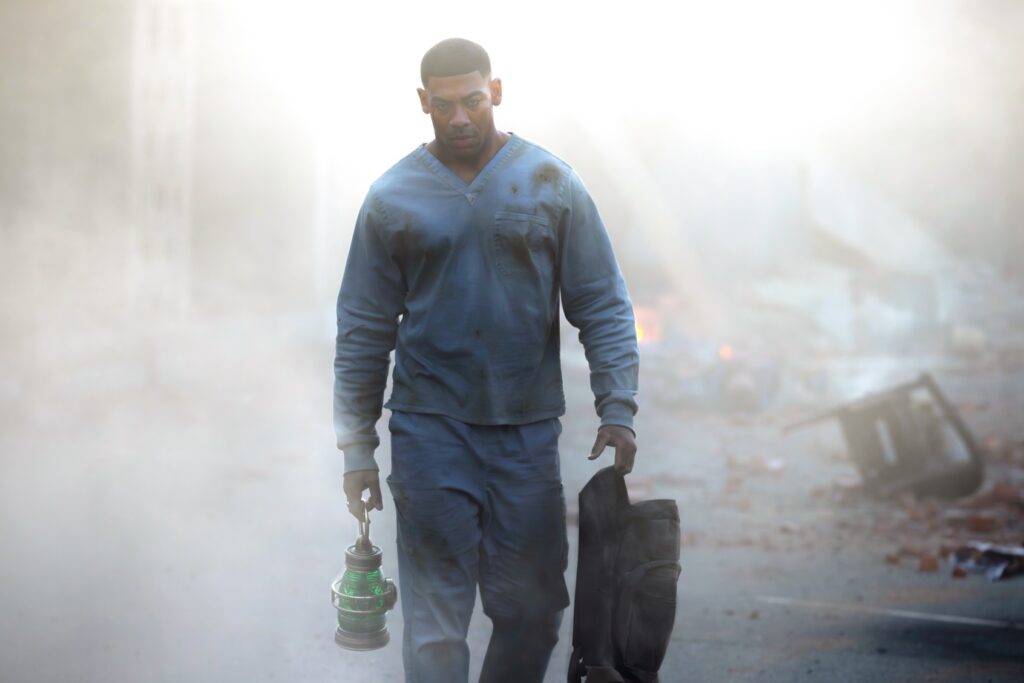
(Courtesy of HBO Max) Aaron Pierre in “Lanterns.”
The Green Lanterns don’t neatly fit into the Chosen One mold, you see. And that may explain why they seem to be less popular than other DC heroes.
I can imagine diehard Green Lantern fans firing up their rebuttals as they read this. After all, the very nature of how Green Lanterns obtain their superhuman abilities involves cosmically empowered rings choosing their wearers. Once the selected become official members of the Green Lantern Corps, they can wield their rings to create astronomical constructs. The top members of the Lantern Corps are only limited by their imagination.
But mainstream culture’s best-known Green Lanterns aren’t orphans or troubled. Hal Jordan and John Stewart are both military men. John is also an architect. They aren’t living drab or depressing lives when the Guardians of the Universe activate them — they’re faring pretty well, all things considered.
Hal and John also stand apart from other test pilots, Marines and field experts in ways that make them not merely suitable choices for superheroic duty but worthy of it. This, I think, is the difference between Espenson’s Chosen Ones and heroes like the Green Lantern. Hal, John and the rest must work to be worthy of their power.
Worthiness is a tougher bar to clear than being chosen for greatness. The Chosen Ones Espenson cites are part of a destiny ordained either by their bloodline or some greater lineage. What makes a Chosen One common in their society marks them as extraordinary once they cross the threshold into the fantastic.
And some heroes are Chosen at random. That radioactive spider that transformed Peter Parker into Spider-Man could have bitten the class moron just as easily. The tornado that transported Dorothy Gale from dusty Kansas to vibrant Oz might have swept up the village idiot instead.
The idea that anyone can suddenly be endowed with superhuman specialness simply by being in the right place at the right time is a little like daydreaming about winning the lottery. So it’s entirely understandable if most of us aren’t into the labor aspect of the Lanterns’ audition process.
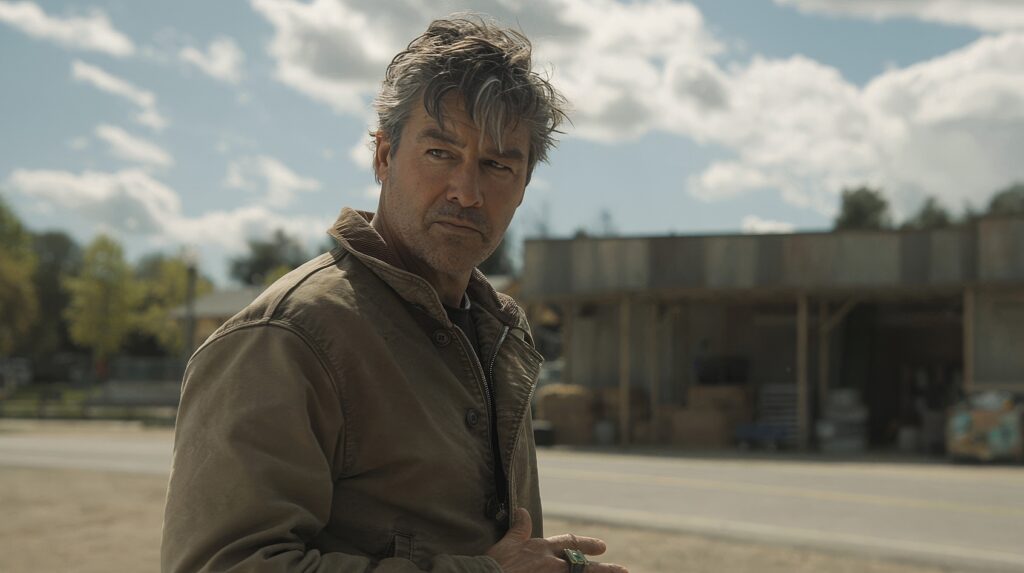
(Courtesy of HBO Max) Kyle Chandler in “Lanterns.” Courtesy of HBO Max
If the box office is a fair, measurable indicator of how the public feels about these superhero archetypes, guess what? Espenson’s theory still holds: Chosen One stories still rule.
Meanwhile, the introduction of the Worthiest of Earth’s Mightiest Heroes in “Captain America: The First Avenger” ranks #52 on a very long list.
About that. Two caveats, and they’re big ones, have to do with the quality of certain heroes’ movie introductions and America’s longstanding genuflection before elites.
Mainstream culture’s relatively lower esteem for the Green Lantern is absolutely related to cartoonish interpretations of his power in live-action depictions. Comic book versions of the Green Lantern toss around the power of the cosmos. When Lantern Corps members unite their rings’ powers, they can move planets. That has never been adequately portrayed in theatrical features.
In animated renditions streaming on HBO Max, the Green Lantern fares much better. Avid “Justice League” and “Justice League Unlimited” viewers recognize John Stewart as being held in equal esteem to the Big Three (i.e., Superman, Batman and Wonder Woman), especially in a crisis.
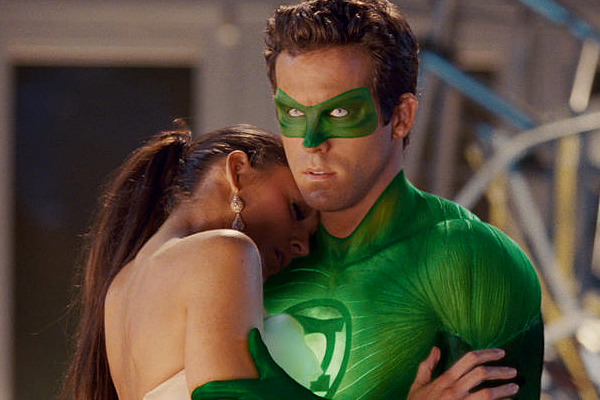
In the most recent “Superman” and 2011’s “Green Lantern” starring Ryan Reynolds, the way that Guy Gardner and Reynolds’ Hal Jordan toss around cartoonish CGI bubbles or massive green mallets falls short of conveying the Lantern Corps’ two-fisted punch of willpower and vision.
Blake Lively and Ryan Reynolds in “Green Lantern”
Also, not all heroes neatly fit into the Chosen vs. Worthy popularity equation. Superman, Wonder Woman and Thor were born to greatness. America’s most-loved fictional titans, Tony Stark and Bruce Wayne, have bottomless wealth to fund their vigilante adventures, making them especially mesmerizing to an audience raised on rags-to-riches fables.
To a man and woman, they made themselves Earth’s protectors because they have the means and muscle to take on the job. And once Stark Industries and Wayne Enterprises bankroll their respective super-squads’ fortified headquarters, they attract the universe’s talent. By their nature, Earth’s Green Lanterns are a natural fit to serve the Justice League’s governing inner circle. They’re also the only leaders who answer to other bosses. (Boo.)
Want more from culture than just the latest trend? The Swell highlights art made to last. Sign up here
But what some perceive as a negative makes the Green Lantern legend appealing to others, especially those driven to ascend through ambition and hard work.
HBO’s “Lanterns” is the first series to explore how that idea unfurls in a society that functions like our own — that is, one in which all things aren’t equal, and superheroes have a reputation for doing as much harm as good.
Maybe “Lanterns” can inspire us with its portrayal of worthiness. But it may take more than one good show to turn the tide of the Green Lantern’s reputation. Much as we respect that with great power comes great responsibility, it’s a lot dreamier to imagine what we could do with all that might if it were simply handed to us.
“Lanterns” premieres at 9 p.m. Sunday, Aug. 16 on HBO and HBO Max.
In the dog days of summer, there’s no better place to escape the heat than inside the air-conditioned paradise of a movie theater. Perhaps you’ll even find yourself there with a romantic companion, their uncovered leg grazing against yours as you both tuck your feet in to make room for the annoying person who came in late and is now trying to find their seat in the dark. Your skin touches theirs, trading the dewy moisture of perspiration. How electric; erotic, even. For just a second, the spark between you two is so powerful that it melts away every care outside of that place and time.
And then, your film — a romantic comedy or dramedy that seems like the perfect date movie — begins, and you’re quickly reminded that no amount of desire can remove you from the context of the world you exist in. The fantasy comes crashing down. Even the fluffy rom-coms are steeped in real life’s anxieties about the social and political, the wars and the wages. But the passion was there; it was real. Maybe the moment was even more charged by the knowledge, somewhere in the back of your head, that these unexpected, carnal joys arrive far less often when so much of our time is spent just trying to make it from one day to the next. Sex, even just the lingering thought of it, can feel like an extravagance. I’d wager that’s a big part of why this summer’s theatrical slate has been so overtly horny: Everyone is trying to figure out how sex fits into this strange modern life.
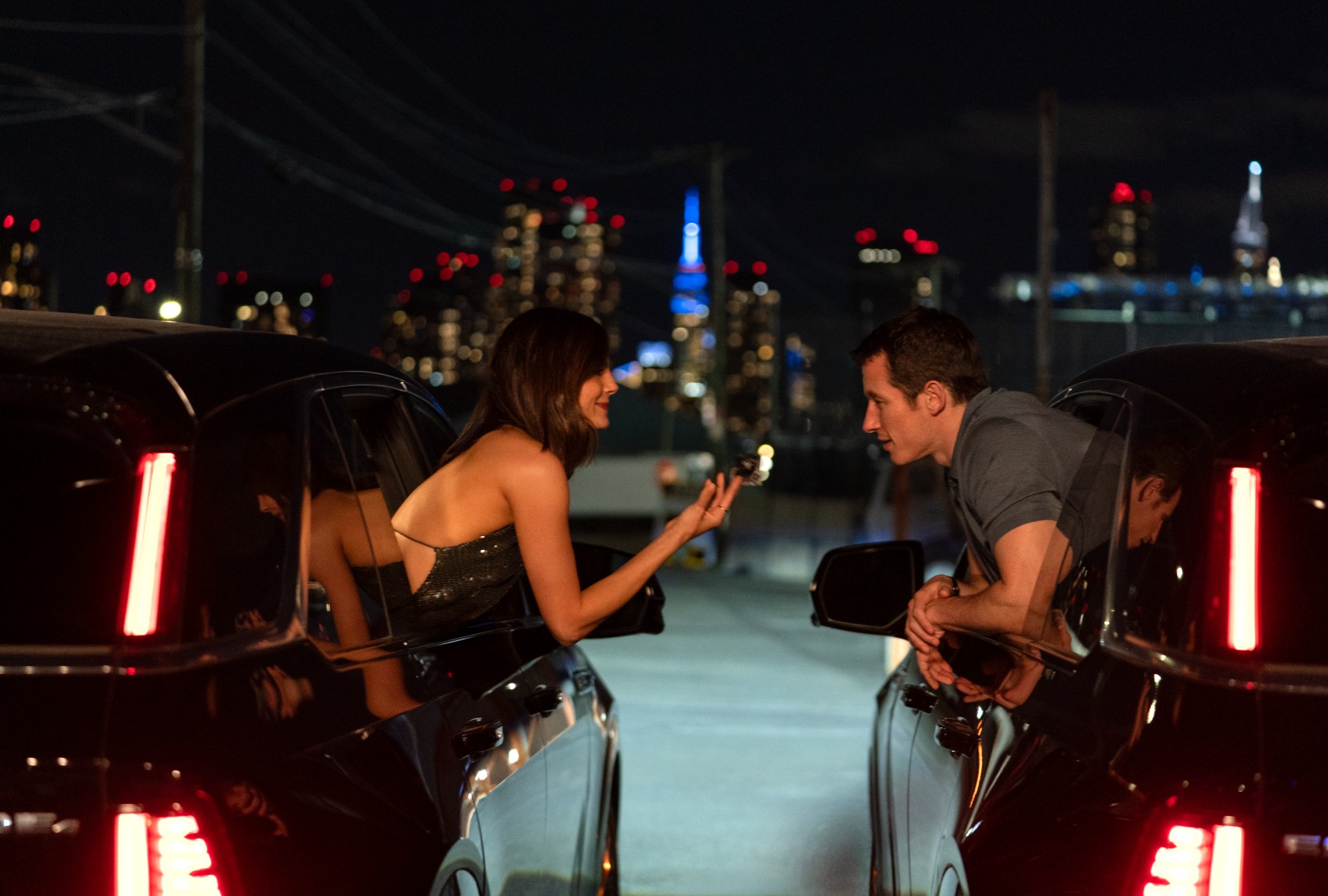
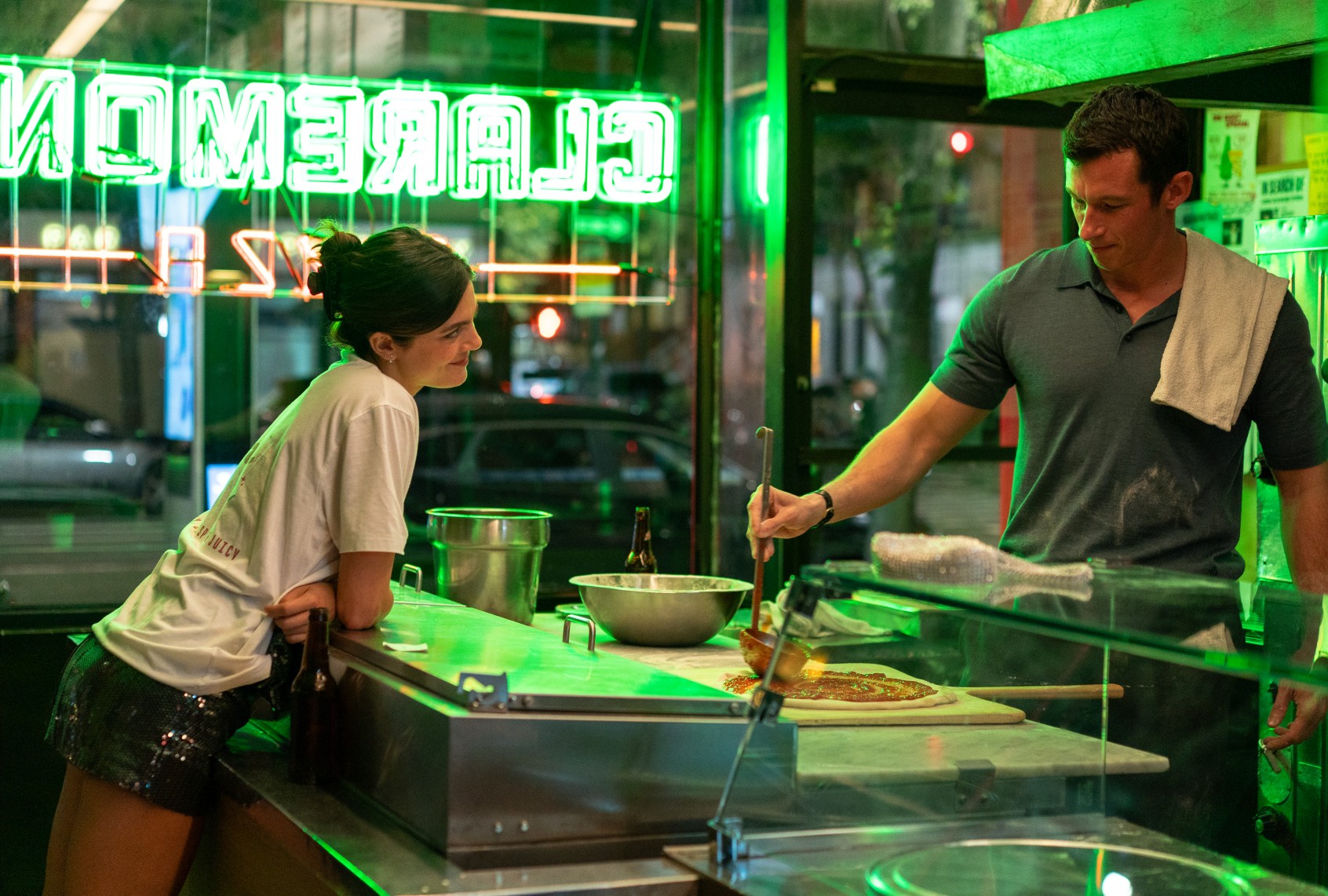
(Nicole Rivelli /Universal Pictures) Monica Barbaro and Callum Turner in “One Night Only”
“One Night Only” encourages a compelling and multilayered dialogue about the role of sex and intimacy amid terrifying political fury. How can we find the joy in all of this? Is, say, one hour of fleeting sexual pleasure enough to combat the 14-some others that we spend in waking dread? The solutions won’t, ahem, come easily.
No film makes that more clear than Will Gluck’s new romantic comedy, “One Night Only,” where, brace yourself here, premarital sex has been outlawed except for one outrageous annual holiday. Think “The Purge,” but for sex — “The Urge” was right there, but whatever — and just as dystopian, though with quite a bit more charm and fewer dead bodies. In the movie, unlucky-in-love strangers Owen (Callum Turner) and Allie (Monica Barbaro) find their paths repeatedly crossing during the 12-hour sex purge window, as both of them seek partners to get it on with. We know the pair will inevitably end up together. But it’s their journey and all the bizarre autocratic municipal rules they have to dance around that make “One Night Only” a clever, peculiar and head-scratching standout from the rom-com crowd.
“One Night Only” also happens to be the discourse darling du jour, with some suggesting that its unusual fusion of genre tropes and political overtones is an insidious embrace of our backslide toward fascism. Indeed, Owen and Allie quibble less about living under a punitive abstinence edict than one might expect, and the film doesn’t have nearly as much fun with, or fury for, the civic regime as it should.
But like this summer’s “The Invite” and “I Want Your Sex,” Gluck’s film encourages a compelling and multilayered dialogue about the role of sex and intimacy amid terrifying political fury. How can we find the joy in all of this? Is, say, one hour of fleeting sexual pleasure enough to combat the 14-some others that we spend in waking dread? The solutions won’t, ahem, come easily, but there’s really no more appropriate time to ask these questions and search for their answers than summer, when the heat makes us alternate between f*cking furiously and f*cking furious.
Curiously, “One Night Only” is more of the former than the latter. As the film’s title card tells viewers, the movie takes place three years into “the mandate,” as the characters refer to it. “It’s been . . . a lot,” the card continues. Opaque and jokey as it is, this is the only bit of tangible backstory the film provides about the average American’s response to the forbiddance of fornication. Though a few ideological asides do provide some additional color as the night goes on. Owen’s mother (Molly Ringwald) and her partner (LeVar Burton) get into a spat about the mandate’s legislation — “That’s what happens with single-issue voters!”; “No one voted for it, it was passed by Congress!” — that soon turns hot and heavy.
It’s a silly but reasonably shrewd way to depict how many of us have landed at some level of complacency in a political atmosphere where, most of the time, we have little direct control and negligible impact over the laws that dictate our lives, no matter how oppressive. We bicker about them, but the majority of Americans aren’t in the streets protesting. As neo-fascist as the country’s become, we still live under capitalism, and the ability to regularly protest is somewhat a luxury. But, then again, so is living in America at all (at least to some extent), even when it’s awful.
Want more from culture than just the latest trend? The Swell highlights art made to last. Sign up here
I realize I’m probably giving Gluck and screenwriter Travis Braun too much credit when I say these are the kinds of questions they wanted viewers to ask. But I find “One Night Only” to be a far more interesting film because it doesn’t answer everything up front or take the blanket optimist’s route. These characters know that the mandate is awful, but they’ve found screwed-up ways to live with it. Anyone who says that doesn’t reflect the modern American way has their head in the sand. And frankly, a film as pleasant but ephemeral as this isn’t going to push democracy any further into the dark.
What “One Night Only” makes so apparent is that our personal pleasure is at stake in this environment. Constant federal surveillance and deeply rooted institutional corruption are simply not sexy, even if being cognizant and fearful of them absolutely is. (Caring is still hot!) And I’ve always said that there is no better place to work out thorny, complex ideas — the kind that are sometimes difficult to devote time and energy to amid the stress of our day-to-day lives — than at the movies.
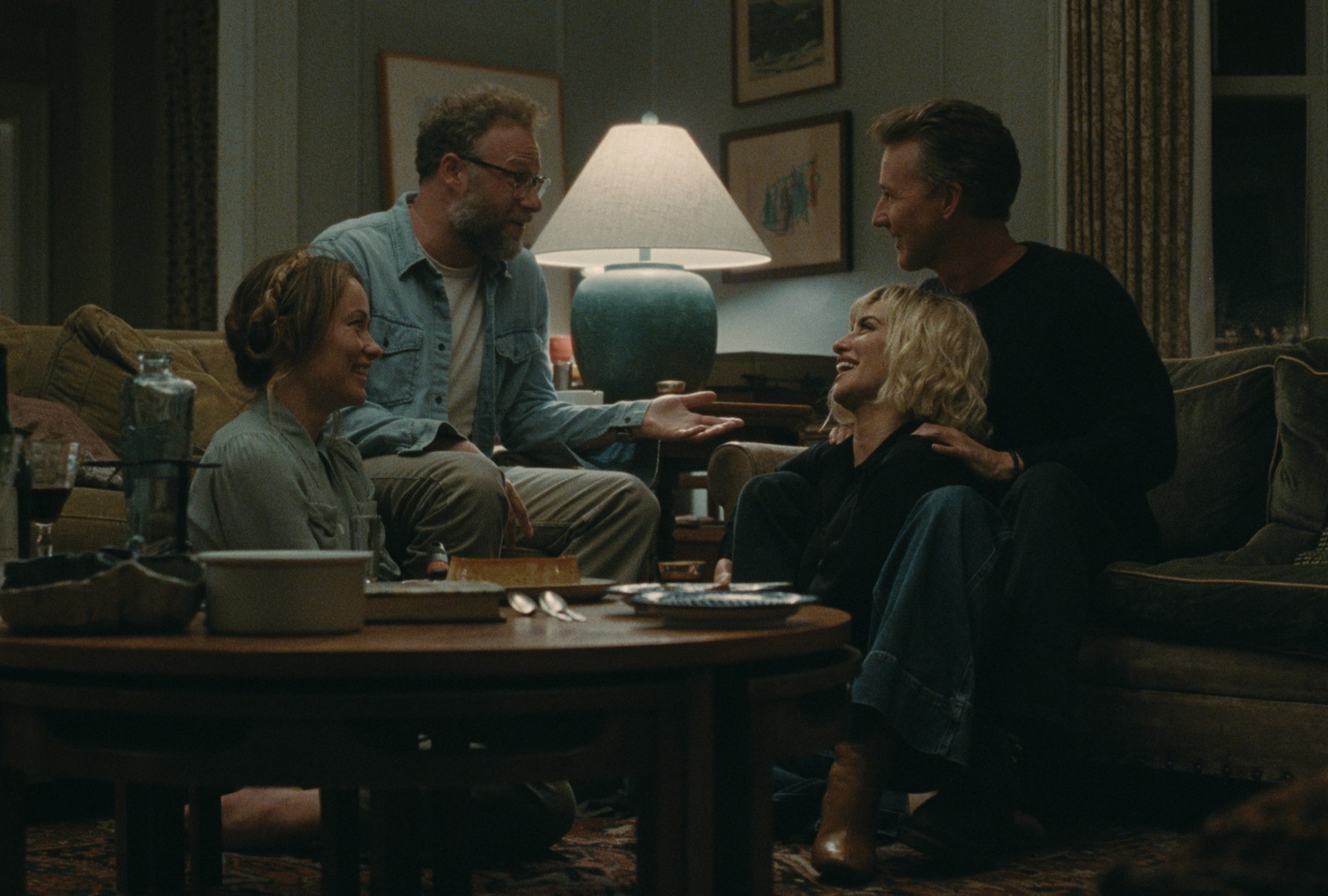
Gluck’s film arrives on the heels of a pair of sweltering summer peers that already laid quite a bit of thematic groundwork in the sex space for audiences to traverse. The stickiest of them all, Olivia Wilde’s terrific chamber dramedy, “The Invite,” just landed on VOD after steadily working its way up from limited to wide theatrical engagements — sort of like cinematic release-schedule foreplay. The film navigates ideas large and small, moving between the casual intimacies, or lack thereof, that make up long-term relationships, and the baseline human carnality that points us toward sex even when those relationships aren’t working.
(A24) Olivia Wilde, Seth Rogen, Penélope Cruz and Edward Norton in “The Invite”
That’s the glorious thing about going to the cinema: You’re bound to leave any movie with both questions and answers. Occasionally, one such question might be, “Does this movie covertly support fascism by making totalitarian sex mandates cute and manageable?”
Put simply: It’s more difficult to maintain the true intimacy than it’s ever been. The prevalence of dating apps and our ability to follow someone else’s every move on social media have zapped the honeymoon period’s lifespan. Throw in demanding jobs, expensive rugs, rapidly changing social mores, the desire to start or maintain a healthy relationship with your neighbors, and the nagging feeling that everyone in the world is having sex but you, and life gets overwhelming fast. Sex shuffles to the back burner. But though the flame might be small, it remains lit. And “The Invite” attests that it’s never too late to dial up the heat, so long as we’re honest about what we want and what we need from our partners.
“The Invite” is all about communication and open conversation. And that’s a critical strength in both relationships and in the ways we watch and digest art. That this summer has been replete with dialogues not only about our sexual neuroses and compulsions, but real, steadfast love in all its forms, is a sure sign that love and sex are on our minds more than they have been in a few decades. Much like the influx of grief-laden horror movies that followed the 2016 election, one can trace our preoccupation with intimacy back to political rot. Our government directs so much of our lives that it’s impossible to remove its influence completely. Now, we’ve moved past grieving the lost hope and have the chance to create our own using the spark of romance and physical connection.
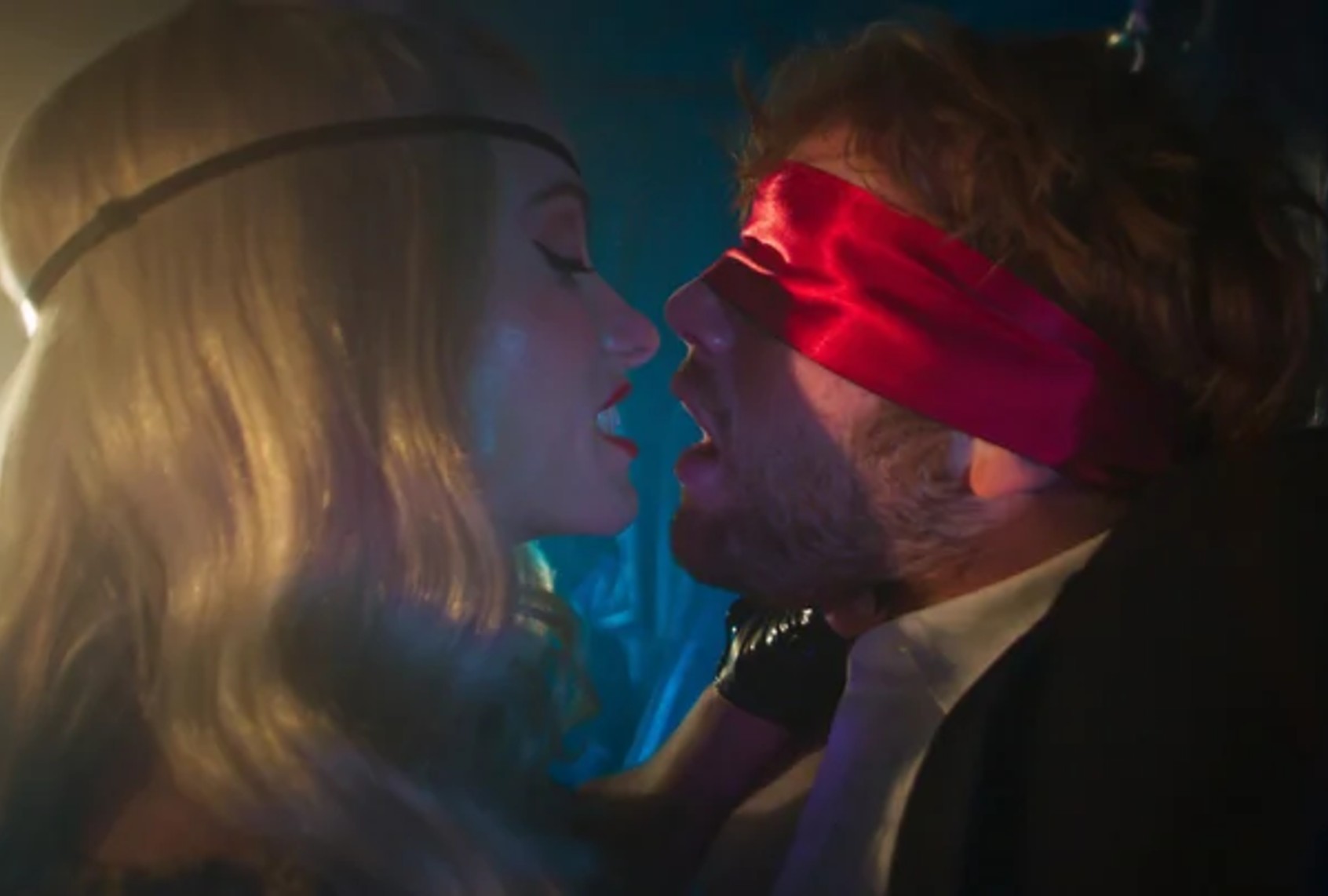
(Magnolia Pictures) Olivia Wilde and Cooper Hoffman in “I Want Your Sex”
As Gregg Araki’s playful comedy “I Want Your Sex” asserts, crafting the transient delights of the flesh into something stable and meaningful will take some trial and error, perhaps even some sacrifice. We’re living in a moment where people can easily choose to void sex from their lives or pursue it as a ritualistic part of their existence, and the space in the middle is murky and treacherous. If you have questions about sex and where it fits into your life, Araki’s ardent message is to explore them. The answers may come with regret or heartbreak, but they may also come with glorious satisfaction and unbelievable revelations. More often, the resulting discoveries will sit somewhere in between those two emotional polarities. We can’t live our lives to the extreme all the time, but we can do ourselves a favor and become better acquainted with exactly what we want and how to get it.
That’s the glorious thing about going to the cinema: You’re bound to leave any movie with both questions and answers. Occasionally, one such question might be, “Does this movie covertly support fascism by making totalitarian sex mandates cute and manageable?” And those are queries that must be addressed because, whether we like it or not, even dystopian rom-coms might point us in the right — or even new — direction. The federal government certainly isn’t trying to orient us toward a brighter, more consistently pleasurable future. Why not take matters into our own hands? Or better yet, put those hands on someone we love and care for, even if only for a night.
A new Apple documentary explores the life of Aziz “Zyzz” Shavershian, who rocketed to internet fame in an age before influencers, then died at age 22 in 2011.
With all the other craziness going on in 1997’s Batman & Robin, it’s easy to overlook the fact that rapper Coolio had a cameo appearance in the movie. In case you missed it, that’s him playing the “banker” that Barbara (Alicia Silverstone) pays to participate in the motorcycle race.
Just after Robin (Chris O’Donnell) sneaks his way in from the shadows, Coolio can be seen firing the gun that signifies the beginning of the competition. Check out the scene for yourself below.
On the surface, it might seem like a random cameo from a rapper who was at the height of his success at the time. However, during a 2017 interview, Coolio revealed that there was a little bit more to the story.
According to him, the only reason he agreed to be in Batman & Robin was because he was promised the role of the Scarecrow in the next Batman movie. In the end, Coolio didn’t feel like he missed out since he apparently didn’t get along too well with director Joel Schumacher.
Coolio’s ‘Batman & Robin’ Cameo Was Apparently Meant to Lead Somewhere Much Stranger
For his part, Schumacher said that he went out of his way to try and get another actor to play the Scarecrow in the unproduced sequel. While speaking with TheHollywood Reporterin 2015, Schumacher explained that he’d actually gone to visit Nicolas Cage on the set of Face/Off to gauge his interest. But even though a script—entitled Batman Unchained—had been written by I Am Legend scribe Mark Protosevich, the poor reception of Batman & Robin ultimately led to the project’s cancellation.
There were a few other interesting ideas proposed before the plug was officially pulled on Batman Unchained, though. For example, the possibility of Courtney Love playing Harley Quinn was floated at one point. The studio also wanted the film to feature cameos from all of the villains from the previous Batman movies.
To be clear, that would’ve included Jack Nicholson reprising his role as the Joker, along with Danny DeVito as the Penguin, Michelle Pfeiffer as Catwoman, Jim Carrey as the Riddler, and Tommy Lee Jones as Two-Face.
Three days after the 1977 animated movie The Rescuers was reissued on home video in 1999, the Walt Disney Company announced that they were recalling 3.4 million VHS and LaserDisc copies because they contained an “objectionable background image.” As it turns out, two frames of the film, which couldn’t be seen under ordinary viewing circumstances, featured a photo of a nude woman.
The hidden picture pops up roughly 38 minutes into the movie, when rodents Bernard and Bianca are riding around on the back of Orville the albatross. You can check out the footage in question below, and it should go without saying that it’s NSFW:
A Disney spokesperson said that the offending image was placed in the film more than 20 years earlier, but declined to reveal who was responsible. This marked the first time that a Disney release was recalled for such a reason. According to the company, they opted to take action in order to keep their promise to customers that the brand could be trusted to provide them with “the finest in family entertainment.” The Rescuers was later reissued with the nudity removed.
Over the years, many have understandably wondered about the person who decided to sneak a topless woman into a beloved children’s movie, and what their motivation was. In 2023, Eddie Bowley of the Eddache YouTube channel claimed that a background artist named Ann Guenther was the culprit. The source of this information, Bowley says, is animator Tom Sito, who worked on Disney classics like The Little Mermaid, Beauty and the Beast, and Aladdin. Sito knew Guenther personally and apparently heard it from her directly.
As for the why of it all, Bowley uncovered that Guenther was passed over for a promotion at Disney in favor of a man she’d trained for the position—this was reportedly because they didn’t want a woman to have the job. The Rescuers was the last movie Guenther worked on for the company prior to being let go, which would appear to suggest that she did it out of revenge. However, when Bowley ran the idea past Sito, he was informed that it was merely an in-joke on Guenther’s part.
Furthermore, Sito told Bowley, “Animators have been putting things like this in cartoons since the 1930s.”
Debate over the true villain in Obsession is raging again after Universal Studios announced the movie’s female lead will be featured at an upcoming Halloween event.
Last week, Warner Bros. Discovery confirmed that Jim Carrey will be starring in a new live-action film adaptation of The Jetsons. Longtime fans of the original Hanna-Barbera cartoon will no doubt recall that this isn’t the first time Hollywood has attempted to bring the characters to the big screen.
Paramount tried to get something going as far back as 1985, but nothing ever came of it:
Made-for-TV movies like The Jetsons Meet the Flintstones followed in the late ‘80s, but the only theatrically released film the franchise has gotten to date was 1990’s Jetsons: The Movie. However, the long-awaited adaptation wasn’t well-received, and poor ticket sales prevented it from making a profit at the time. That’s in addition to the two dark clouds hanging over the film’s production. And just in case viewers hadn’t heard, the end credits made sure to hit them with this somber reminder that we lost the two lead voice actors before the movie was completed:
Before Jim Carrey’s ‘Jetsons’ Movie, the Franchise Had a Tragic Big-Screen Debut
For the uninitiated, we’re not talking about two nobodies who happened to land these parts. George O’Hanlon and Mel Blanc had been voicing George Jetson and his boss, Cosmo Spacely, respectively, since The Jetsons debuted in 1962. They also came back to reprise the roles for the 1985 revival series and the aforementioned TV films. Jetsons: The Movie would be the last project either of them worked on.
O’Hanlon suffered a stroke in the studio and passed away just after he finished recording his lines. He was 76 years old. Blanc was admitted to Cedars-Sinai Medical Center a few months later, where he died from heart disease and emphysema at the age of 81. Jeff Bergman, who eventually replaced Blanc as the voice of Bugs Bunny and Daffy Duck, was brought in to complete the dialogue for Blanc and O’Hanlon’s characters following their deaths.
Director Matt Johnson’s latest feature, “Tony” — a biopic following a young Anthony Bourdain (Dominic Sessa) through his first kitchen experience, slinging cheap fish in a Provincetown greasy spoon — exists inside a quote. The film opens with a pull from Bourdain’s beloved pseudo-memoir, “Kitchen Confidential,” in which Bourdain reminisces about his 19-year-old self, trolling around Cape Cod trying to impress a girl and become a writer, with zero experience doing either. “I was — to be frank — a spoiled, miserable, narcissistic, self-destructive and thoughtless young lout, and badly in need of a good ass-kicking,” Bourdain writes early in the book.
From the jump, it’s hard to shake the feeling that “Tony” is mistakenly aligning itself with the public’s idea of Bourdain rather than the man’s reality. When I think of Anthony Bourdain, I think of two people. The first is the enigmatic yet ultimately unknowable chef, whose charm and good nature sometimes dulled a cloud of unmistakable darkness to the eyes of the public; the second is the idealistic version of Bourdain, who exists in half-remembered citations and GIFs of his many travel shows removed from their context — rosy, nostalgic tributes to an image, rather than a person.
Regrettably, “Tony” operates in the latter state: all sentiment and little practical truth, different from the ways Bourdain’s effusive, colorful work and writing make people feel when they really dive into it. It’s part biopic, part coming-of-age story and all gung-ho idealism, battered and fried until golden and palatable, before being spritzed with a fresh splash of lemon, providing the film a brief, compelling tartness that fades all too quickly. Like a lobster roll made with imitation crab meat — or a guy who lists Bourdain as his biggest inspiration in a prompt on his Hinge profile — “Tony” is economical and satiating, but far less satisfying than the real thing.
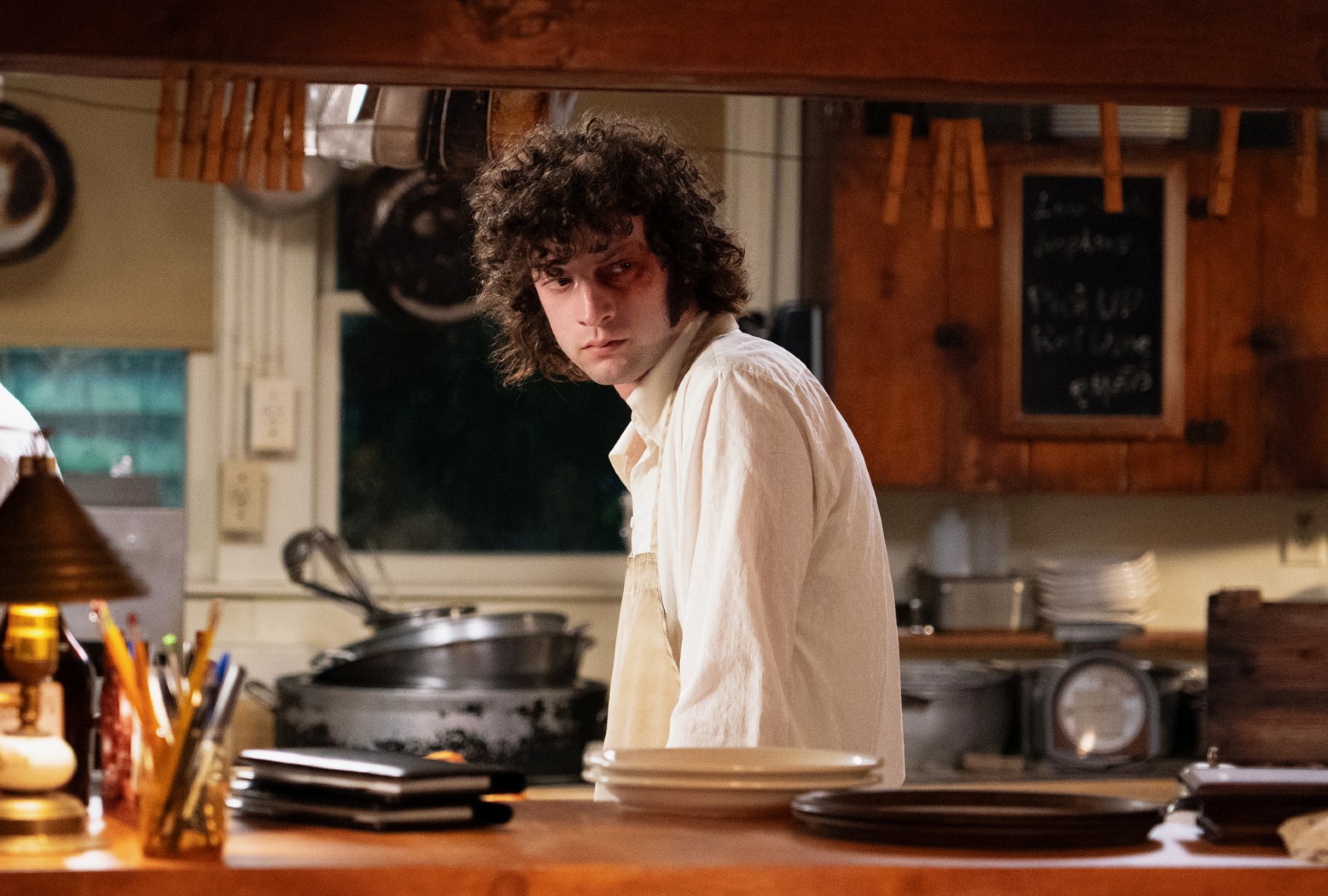
(Seacia Pavao/A24) Dominic Sessa in “Tony”
Bourdain gave fellow outsiders an insider’s view of the kitchen. He made people fall in love with food, its rituals and its culture. And though “Tony” doesn’t entirely lack that heady romanticization, its choice to amplify its introductory quote — making Bourdain an even more insufferable lout for dramatic effect — feels antithetical to Bourdain’s raw candor.
What’s more, the film is bizarrely undercooked when it comes to Bourdain’s experiences in the kitchen. To be fair, Johnson has his work cut out for him. “Tony” is adapted from only the first 50 pages or so of “Kitchen Confidential,” meaning Johnson and his co-writer Matthew Miller (working from a screenplay originally written by Todd Bartels and Lou Howe) essentially had to flesh out a pitch draft’s worth of detail into a feature-length film. And for those who like their biopic by-the-numbers, the finished product is a perfectly serviceable entry into the canon.
But I get the sense that, in comparing Bourdain’s writing to the film, true die-hards will long for his quippy, evocative storytelling that’s absent from “Tony.” Bourdain gave fellow outsiders an insider’s view of the kitchen. He made people fall in love with food, its rituals and its culture. And though “Tony” doesn’t entirely lack that heady romanticization, its choice to amplify its introductory quote — making Bourdain an even more insufferable lout for dramatic effect — feels antithetical to Bourdain’s raw candor.
Now, I’m not exactly a stickler for precise detail. All book adaptations, whether from novels or memoirs, could stand to embellish the facts here and there, or go ahead and reinvent the wheel when possible. This irks literature purists. But cinema is a different medium, and as such, changes must be made. It did strike me as odd, however, that “Tony” is forged on a factual alteration that diverts Tony from the kitchen far too often — the movie’s cardinal sin.
After pitching a bogus novel to the Vassar English department in hopes of scoring a writing fellowship that will provide his summer with a sizeable goofing-off stipend, Tony’s sure he’s got the prize in the bag. At a college bar, he drunkenly peacocks for his high school crush and fellow Vassar student, Nancy (Emilia Jones). Tony tells her that he’s going to be a famous writer, before challenging her comprehension of a few five-dollar words. Repelled, Nancy replies that she will be happily spending her summer slinging pizzas in Provincetown.
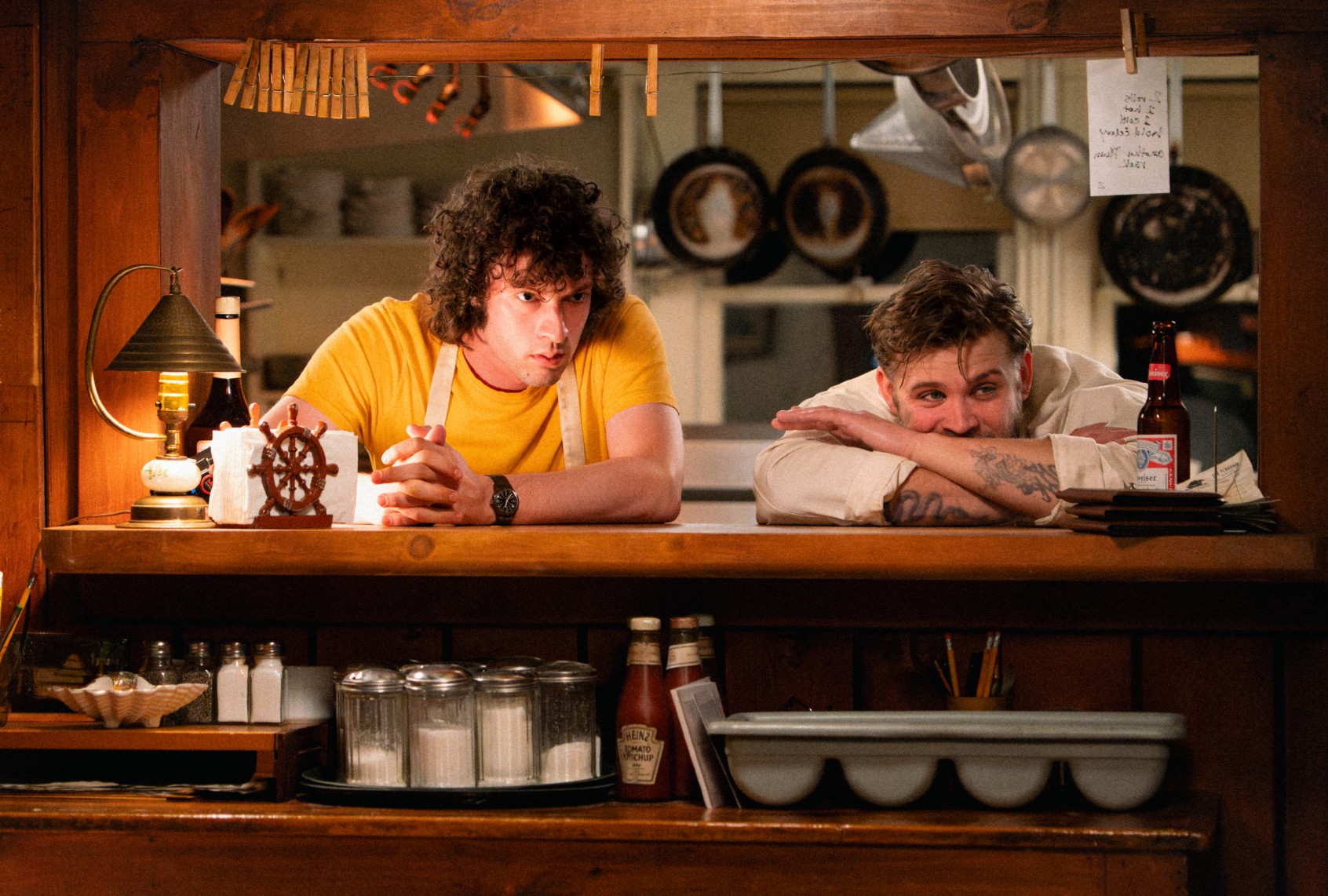
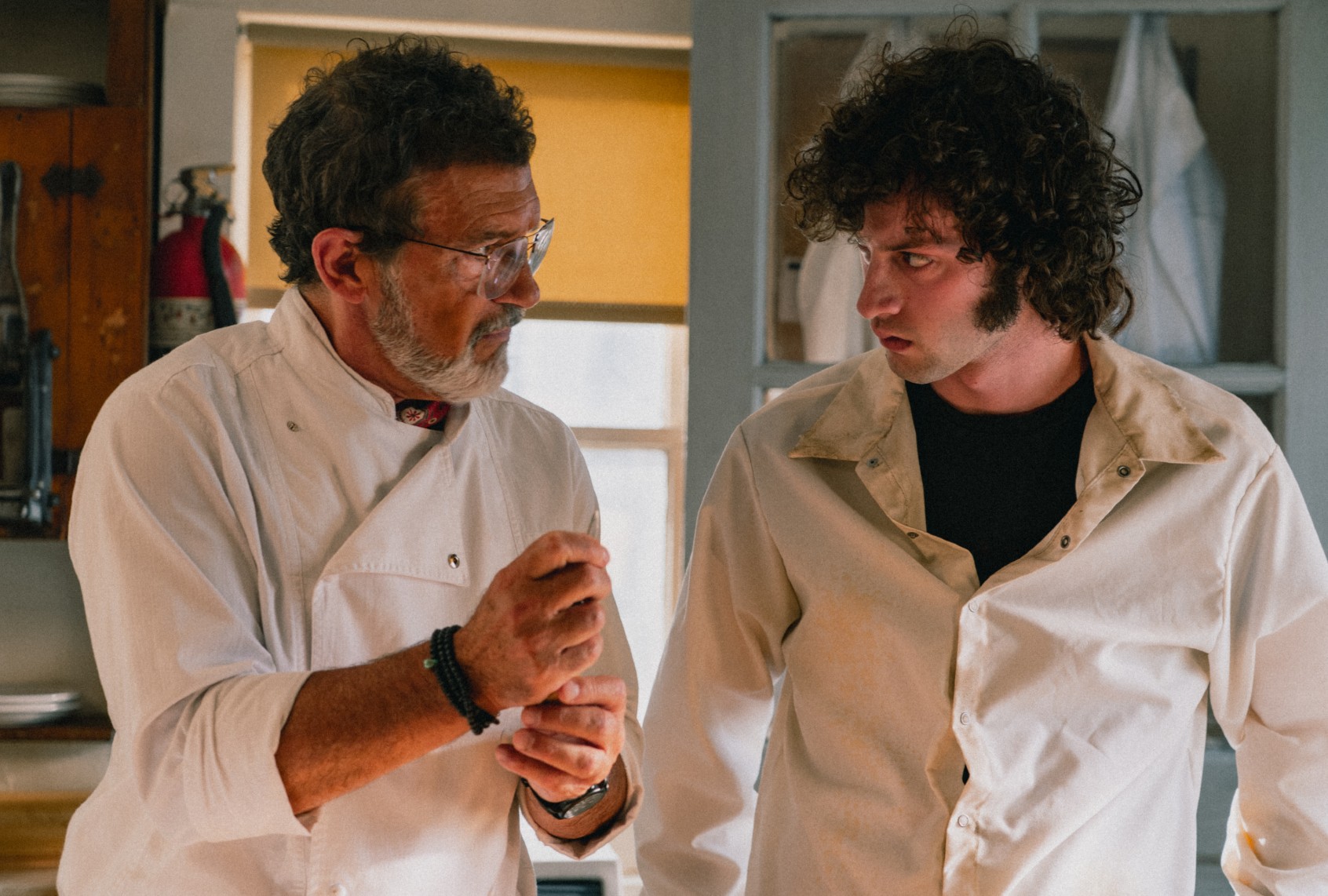
Surprise, surprise: Tony doesn’t get the fellowship, and instead, flees his childhood home early in the morning to catch a bus and a ferry to Provincetown. With no money but plenty of blind devotion to Nancy — whose character, it’s worth mentioning, has subzero charm and nuance, making Tony’s staunch affection feel like a ruse to the viewer — Tony arrives hapless and hopeless. It turns out Nancy’s got a pizza-slinging beau, so Tony drowns his sorrows in fried fish and cheap beers at the ramshackle clam shack The Flagship. When he can’t pay for his meal, Tony’s tossed out by the head Chef (Antonio Banderas) and his flighty kitchen cohort, Sal (Leo Woodall). Long story short: Tony wants to stay and pursue Nancy, Chef lets Tony sleep on his hammock in exchange for washing dishes at the restaurant, and the film can never decide which narrative to give more time to.
Want more from culture than just the latest trend? The Swell highlights art made to last. Sign up here
In “Kitchen Confidential,” Bourdain describes his decision to head to Provincetown as an impulse motivated less by romantic desire than by general apathy. “I went in with some friends on a summer share in Cape Cod. It was what my friends were doing, and that was enough for me,” he writes. A brief mention of a pizza-spinning girlfriend is tossed off immediately after, replaced by vivid stories about his first summer working at the real-life Flagship, given the pseudonym The Dreadnaught. Each member of the kitchen crew in Johnson’s film is as scraggly and unpredictable as Bourdain describes them in the book, teaching him as much about sex and drugs as they did broiling lobsters and frying up clams.
Johnson is so concerned with conforming to the auspicious, nostalgic idea of who Bourdain was that he makes his biopic far too safe. He reduces Bourdain to a zygote who simply needed enough nurturing to become his older, cooler self, when he could, instead, read between the lines to find what makes young Tony special.
Here, “Tony” is in its element as Johnson crafts the intimidating yet irresistible camaraderie of a kitchen, and all of the misfits who work inside it. But when Tony leaves for the day and is left to his own devices in Provincetown, the movie falls hard into all of the trite trappings of your average biopic. Tony and Sal get into all kinds of trouble, snorting coke and banging broads, but these things often happen in freewheeling montages with little consequence. It’s nearly impossible to get a sense of how Tony himself is actually feeling. Watching this version of him is akin to seeing Sessa bang his hands against the confines of that Bourdain quote, desperately trying to make something substantial out of this thin rendering of a very significant persona.
All of the men who idolize Bourdain for their imagined notions of who he was — who model themselves after the image of him sitting in a leather jacket and tiny sunglasses, with a pack of cigarettes on the table of a Parisian cafe — will love it. Under a clip of Bourdain sitting at this cafe, one person commented (before Bourdain’s death), “When I grow up I am going to be just like Anthony Bourdain.” That’s the perfect summation of the toothless film Johnson has crafted.
(Seacia Pavao/A24) Dominic Sessa and Leo Woodall in “Tony”
“Tony” tries to distance itself from the public’s quixotic version of Bourdain by making the younger depiction casually unbearable, the kind of person you wouldn’t enjoy working with — and especially not mentoring — in a kitchen. But these attempts largely come off as cloying, even silly. There’s one moment where Tony witnesses Sal score drugs before watching him shoot up on the boardwalk, as if to say, “We may not show it here, but Anthony Bourdain will later struggle with heroin use!” The dope is dopey, and it’s unfortunately only a foray into mushier territory. Banderas provides his mentor figure with a delightful vigor, but Johnson can’t quite figure out what to do with him, or how to make Chef feel like a real person. (How fitting we never learn his real name.) Even a few flowery sentences in “Kitchen Confidential” about lessons learned working at The Dreadnaught dwarf “Tony” in comparison. For a film about the origins of a foul-mouthed culinary renegade, beloved for his thoughtful musings on food and life, there’s bafflingly little interiority.
One could argue that’s Johnson’s point: Tony hadn’t yet become Anthony. Bourdain’s singular reflections could only come from a life well-lived and filled with mistakes. But that doesn’t mean that this version of Bourdain has to lack depth. Johnson is so concerned with conforming to the auspicious, nostalgic idea of who Bourdain was that he makes his biopic far too safe. He reduces Bourdain to a zygote who simply needed enough nurturing to become his older, cooler self, when he could, instead, read between the lines to find what makes young Tony special. Bourdain’s writing is far more tender and interested in other people than “Tony” ever is. And as intent on vivifying culture as Bourdain was, I think he’d watch this movie and feel that there’s an authenticity that is deeply missed. But we’ll never know that for sure. If “Tony” must open with a quote and confine Bourdain to his words, as he so often is posthumously, I’ll close with one that appears just a few sentences before it: “The less said about that part of my life, the better.”
When you think about who could’ve pulled off playing John McClane in 1988’s Die Hard other than Bruce Willis, what kind of names pop into your head? Action stars like Arnold Schwarzenegger, Sylvester Stallone, Burt Reynolds, and Harrison Ford probably spring to mind, no? It should come as no surprise, then, that every single one of those actors was offered Willis’s role at some point. You know what is surprising, though? The first person the filmmakers reached out to about starring in the movie was Frank Sinatra.
Here’s how that ended up happening: Die Hard, as it turns out, is actually based on the 1979 Roderick Thorp novel Nothing Lasts Forever. The story revolves around retired NYPD detective Joseph Leland, who heads to Los Angeles to visit his estranged daughter, Stephanie Gennaro. Stephanie works inside a 40-story skyscraper, where her company is throwing its annual Christmas party.
While Leland waits for the party to end, a group of terrorists take the guests hostage, forcing Leland to spring into action.
‘Die Hard’ Had to Offer John McClane to Frank Sinatra First
But Nothing Lasts Forever wasn’t the first book to feature Leland. The ex-cop made his literary debut in Thorp’s 1966 novel The Detective. Two years later, The Detective was adapted into a film in which Leland was portrayed by none other than Frank Sinatra. Though the movie did well both critically and commercially, the idea of a sequel didn’t come about until after Thorp wrote Nothing Lasts Forever.
However, the folks at 20th Century Fox were evidently pleased enough with The Detective that they purchased the rights to a follow-up long before one had even been written. Because of that, the studio was contractually obligated to offer Sinatra the lead role in Die Hard. To clarify how ridiculous it would’ve been for Sinatra to entertain the possibility of taking the job, the singer was 77 years old by the time Die Hard was released. Sinatra wisely declined the proposal.
The 2005 Rob Schneider comedy Deuce Bigalow: European Gigolo could never accurately be referred to as a critically acclaimed movie. In a front-page article featured in the Los Angeles Times, film critic Patrick Goldstein chastised Hollywood studios for bankrolling sequels like European Gigolo and referred to Schneider as a “third-rate comic.” Schneider wasn’t happy about this, and took out full-page ads in Daily Variety and The Hollywood Reporter attacking Goldstein and questioning his credentials. In particular, Schneider pointed out that Goldstein had never won any awards for his journalism.
Schneider also suggested that Goldstein hadn’t won a Pulitzer Prize because “they haven’t invented a category for Best Third-Rate, Unfunny, Pompous Reporter.” “I can honestly say that if I sat with your colleagues at a luncheon, afterwards they’d say, ‘You know, that Rob Schneider is a pretty intelligent guy,’ whereas, if you sat with my colleagues, after lunch, you would just be beaten beyond recognition,” Schneider continued.
The Legendary Roger Ebert Review That Absolutely Torched Rob Schneider
Though he was a little late to the party, Pulitzer-winning critic Roger Ebert chimed in on the controversy in August of that year. “Schneider is correct, and Patrick Goldstein has not yet won a Pulitzer Prize. Therefore, Goldstein is not qualified to complain,” Ebert wrote. “As chance would have it, I have won the Pulitzer Prize, and so I am qualified. Speaking in my official capacity as a Pulitzer Prize winner, Mr. Schneider, your movie sucks.”
Two years later, Ebert would release a book called Your Movie Sucks, which compiled some of his most scathing film reviews—including his zero-star review of Deuce Bigalow: European Gigolo. Despite that, Ebert and Schneider made amends following Ebert’s thyroid cancer surgery in 2012.
On his website, Ebert revealed that Schneider sent him a bouquet of flowers and wished him a speedy recovery, signing his note, “Your Least Favorite Movie Star, Rob Schneider.” Of the flowers, Ebert said, “They were a reminder, if I needed one, that although Rob Schneider might (in my opinion) have made a bad movie, he is not a bad man, and no doubt tried to make a wonderful movie, and hopes to again. I hope so, too.”
One of the most persistent urban legends in Hollywood history revolves around a munchkin hanging himself during a scene from 1939’s The Wizard of Oz. As the story goes, the actor in question was driven to suicide by his unrequited love for a fellow little person. This was said to have been captured on film as Dorothy skips down the yellow brick road with the Scarecrow and the Tin Man, singing “We’re Off to See the Wizard.”
Take a look at the sequence below, and keep your eyes on the trees in the background.
Did you catch that movement in the center there? Well, as it turns out, that’s what people have been claiming is a dangling munchkin corpse for decades now. But what do the experts have to say on the matter, you ask? For starters, historian John Fricke, who wrote The Wizard of Oz: The Official 50th Anniversary Pictorial History, told Peoplein 2024 that there’s no dead munchkin in the movie.
“This is the kind of stuff that gets perpetuated,” says Fricke. “We’re living at a time when anything is believable.”
The Truth Behind the Infamous ‘Wizard of Oz’ Hanging Munchkin Myth
However, Fricke is far from the only person to have dismissed the longstanding rumor. In fact, Snopes debunked this whole thing way back in 1997. According to them, what you see in that shot isn’t a person at all, but a bird (believed to be a crane) that was borrowed from the Los Angeles Zoo to give the indoor set more of an outdoors feel. What may have looked like a body swaying back and forth in the grainy days of VHS was, in fact, just a large bird flapping its wings.
Furthermore, the timeline of this alleged suicide doesn’t make sense at all. You see, the Munchkinland scenes in the film were actually shot after the forest scenes, meaning none of the munchkin actors would’ve been hanging around (one way or another) at that point. It also defies logic that not a single one of the many people involved with the movie would’ve caught this while it was happening. Oh, and as for the idea that the studio edited the “real” hanging out of later home video releases, that’s been discredited as well; case in point, this recording from a 1980 TV broadcast that predates the earliest VHS release:
In the music video for Ariana Grande’s latest single, “Petal” — the title track off her eighth album, released last week — viewer discretion is advised. A parental advisory opens the clip, warning of the video’s explicit content and depictions of graphic violence, which culminate in Grande taking a chainsaw to the heads of four cigar-smoking, whiskey-chugging record execs. Earlier in the video, Grande’s character, Pepper, receives their written notes, including one that pointedly contains the critique, “Boring on the eyes, a little homely, couldn’t hurt to lose a few pounds.” The power tool to their throats is supposed to be a moment of personal and artistic triumph, echoed by the raucous cheers from the other women waiting to audition outside the blood-splattered boardroom.
But when Grande emerges from the audition, fake blood glistening from the visible curvature of her sternum beneath her skin, the jubilant, almost extreme response from the rest of the women feels as insidious as the criticisms from the men. They’re blindly screaming their heads off, bolstered by the person who stopped molding herself in someone else’s image, who refused to cater to how the world or the industry thought she should appear. Grande’s defiant self-control over her image is something for them to celebrate, even worship. Her restraint is the commendable trait on which the women hang their devotion. As the chorus of “Petal” puts it, “It’s such a f*cked situation.”
Want more from culture than just the latest trend? The Swell highlights art made to last. Sign up here
Shortly after the video was released, the internet exploded with concern about Grande’s noticeably svelte appearance, and the scenes in the clip that seemed intended to exploit it. Grande’s stanbase quickly retaliated, saying that those commenting on her weight were bringing back body-shaming and tabloid-era hypercriticism. Detractors responded in turn, worrying that Grande’s ardent fans were enabling the singer’s unhealthy behavior and speculated eating disorder. The worry over Grande’s visible emaciation rendered the video itself moot. Whatever the message was — a self-aware nod to Grande’s own struggles, a defensive reply to those saying she’s too thin, a criticism of blind idol worship — it was quickly lost. A couple of days later, Grande’s team announced that she’d be taking a break from “public-facing work” following the conclusion of her Eternal Sunshine Tour in September. And while Grande later insisted the break was pre-planned and not “reactive or impulsive,” there’s no doubt the announcement was timed to dull the cacophony of both the jeers and cheers.
(Magnolia Pictures) John Early in “Maddie’s Secret”
In a moment when no one can quite agree on how to properly address what’s so clearly happening before our eyes with Grande, a film like “Maddie’s Secret” opens a dialogue. It’s not pretty or easy. But then again, movies tend to make the most sense out of the aspects of life that are neither pretty nor easy.
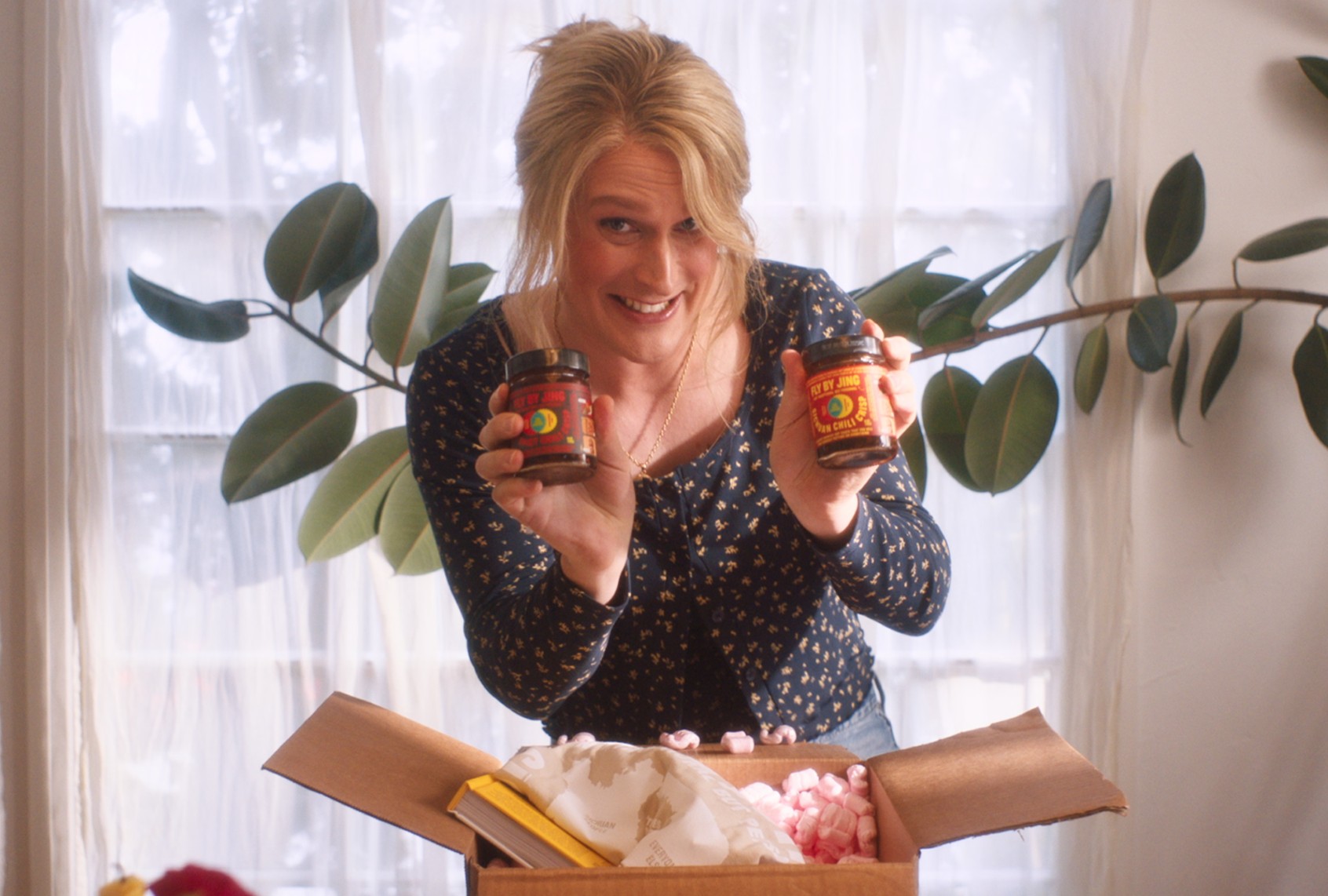
Watching the veneer slip from Grande’s grasp during a pivotal moment in her life is eerily reminiscent of the events in John Early’s wonderful film “Maddie’s Secret,” which coincidentally had its digital release the same day “Petal” hit shelves. In the film, Early plays Maddie Ralph, an aspiring test-kitchen chef at a hip food publication. With a major career milestone within her reach and increased appearances in front of the camera, the sudden pressures on Maddie trigger long-hidden patterns of disordered eating: bingeing and purging, secrets and lies.
And though Early’s film is a melodramatic comedy, it gets patently serious when it comes to the grim realities of eating disorders, taking an unrestrained and, at times, uncomfortable look at the harm enabling can do, and the tragedies it can engender. In a moment when no one can quite agree on how to properly address what’s so clearly happening before our eyes with Grande, a film like “Maddie’s Secret” opens a dialogue. It’s not pretty or easy. But then again, movies tend to make the most sense out of the aspects of life that are neither pretty nor easy.
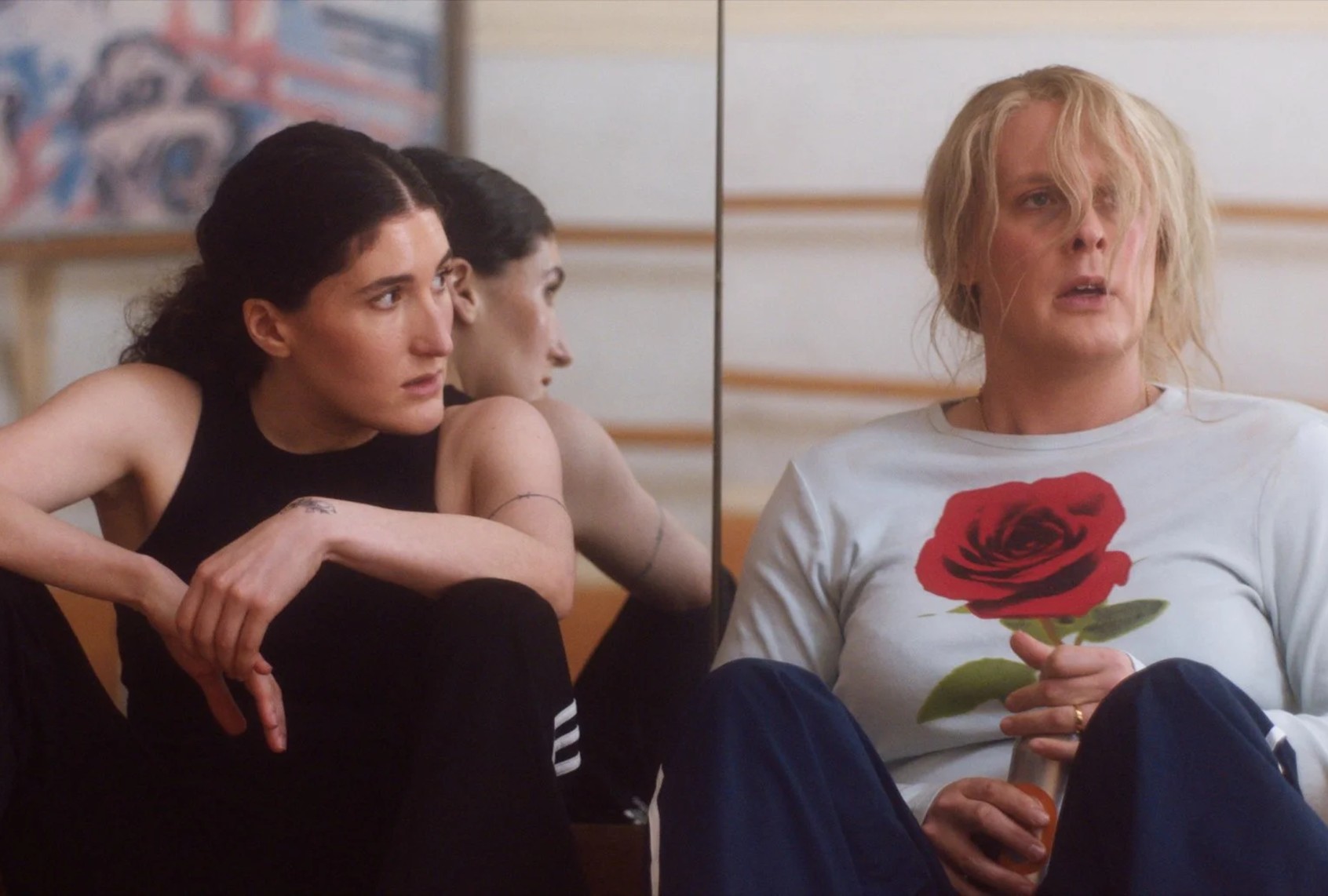
It helps that Early’s vision of our media-steeped contemporary lives sees through the shiny, digital facade. The company Maddie works for, GourMaybe, functions somewhat like the pre-cancellation “Bon Appétit” test kitchen. It’s so intentionally inclusive and ambitious that it turns right back around to feel limiting, pigeonholing Maddie into a place where she feels in constant competition with her colleagues and herself. While waiting for two of her coworkers to leave a bathroom so she can purge, Maddie hears them discussing an app where you “input all your trauma and it links you up with a therapist, all over FaceTime.” The dance class Maddie attends with her best friend, Deena (Kate Berlant), is “radically inclusive, none of that toxic gym bro stuff.” All of the regimens surrounding Maddie and her illness are purportedly designed to be easily accessible for healthy, honest living. But they’re the same old systems in different clothes. And when Maddie’s disorder tells her she needs to stay in control, she contorts all of this trendy pastel-colored, serif-typefaced wellness to her favor, using it to fuel her harmful compulsions.
Grande moves in a similar space, but without the satire to easily delineate the difference between healthy and unhealthy behaviors. Like Maddie, she can easily cloak compulsions under the blanket of modern body positivity. When her noticeably smaller appearance began to concern people in 2023, Grande took to TikTok, urging the public to be “gentler and less comfortable commenting on people’s bodies . . . [even if you] think it’s good or well-intentioned.” She continued to say this would “keep each other safer” and that “you never know what someone is going through.” Fans have reiterated this messaging as her already thin frame became measurably smaller in the years since. But to turn the other cheek at this point, or even to chalk these changes up to healthful new habits, would be to ignore the obvious. Grande’s music would go on to parrot her sentiments, building a fan-fortified transparent wall between herself and the public — a barrier that would allow us to watch her grow thinner, while blocking every genuine concern.
(Magnolia Pictures) Kate Berlant and John Early in “Maddie’s Secret”
“Maddie’s Secret” does an impressive job of highlighting the dangers of this kind of enabling. Deena has an almost stan-like preoccupation with Maddie. Her relationship frequently crosses boundaries, but Maddie permits it because the attention makes her feel good and motivates her disorder. When Deena finds Maddie hunched over the toilet one evening, vomit strewn across her lips, Maddie swears that she’s taking steps to get it under control, and Deena assures Maddie that her secret is safe without providing her friend with the necessary action to actually help her. Deena wants to watch Maddie soar, to see her climb the echelons into food media superstardom.
Like Grande to her adoring fans, Maddie is Deena’s idol, and Deena measures Maddie’s success by her work benchmarks and public visibility. If, God forbid, Maddie should disappear — if Grande departed public life, as she’s now planning on — there would be a hole in Deena’s life. She would have to admit that she’s being wickedly selfish. So instead, Deena keeps an eye out in bathrooms and at dumpsters while Maddie purges. She shrugs off Maddie getting faint at dance class because she threw up her lunch. And then, Maddie collapses.
The health of millions of people doesn’t fall entirely on Grande’s shoulders. There are plenty of other ways that our culture has disguised unhealthy behaviors, as “Maddie’s Secret” so cunningly stresses. But Grande does perpetuate a silence, complacency, and enabling by painting genuine concern as gossipy chatter.
This is where the film becomes its most prickly. Early is interested in the sickly vanity of eating disorders and conceptual femininity, and he explores the danger of these illnesses through a lens that is both uneasy and unique to his film. The stakes are higher and more honest here than in most of the TV movies that “Maddie’s Secret” draws from. Maddie winds up in the hospital after cardiac arrest, a condition she’s far too young for. Her gums are bleeding, her jaw is swollen and there are teeth marks on her knuckles. A hospital psychiatrist, Dr. Kronenfield (Chris Bauer), tells Maddie that she’s at immediate risk of rupturing her stomach or esophagus and dying. “I’ll get it under control,” she tells him. “I’ve done it before, and I’ll do it again.” It’s the same language Maddie sold to Deena, but a view Dr. Kronenfield won’t buy. “You relapsed before, and you’ll relapse again,” he replies, urging Maddie into inpatient treatment.
Here, “Maddie’s Secret” fully diverges from its semi-parodic path, following Maddie to treatment, which, like many people who end up in mandatory care facilities, she doesn’t take seriously, believing she knows her body best. Her flippancy is only exacerbated by Deena, who fakes a bulimic health scare to join treatment and jailbreak Maddie so she can prepare for a major interview that will dictate her future at GourMaybe. But as Dr. Kronenfield warned, impulsion begets compulsion, and the decision causes Maddie’s horrific relapse and leaves Maddie’s rehab roommate (Vanessa Bayer) alone and vulnerable to her own illness.
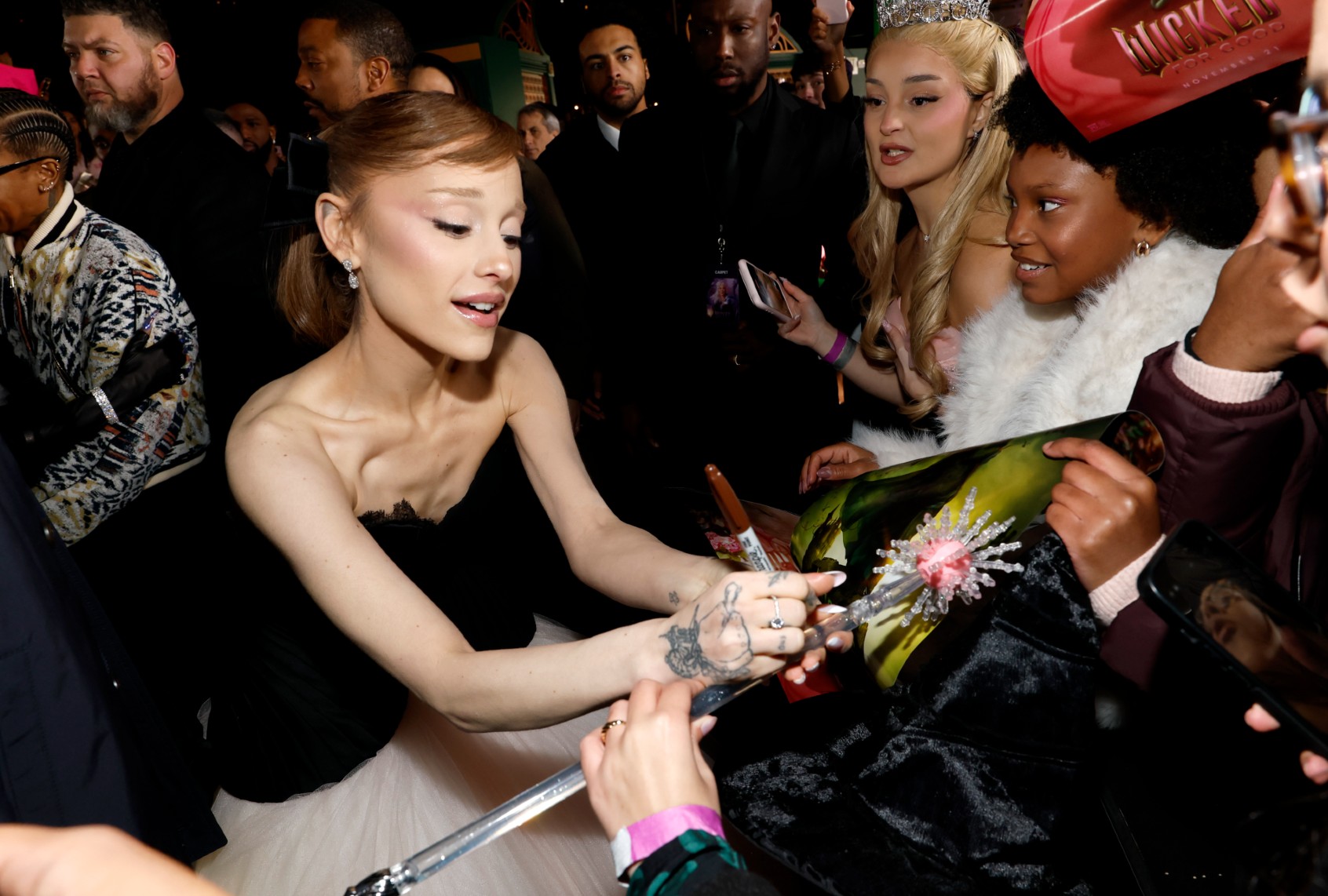
(Anna Webber/Getty Images for Cold Stone Creamery & Wetzel's Pretzels) Ariana Grande and Taylen Biggs
That’s the kind of ripple effect that such wanton enabling can have, even if it’s not intentional. Perpetuating these kinds of gravely serious illnesses extends the sickness past the confines of our own bodies, and into the world around us. For someone like Ariana Grande, who has millions of eyes on her at all times, the potential for harm is astronomically magnified. Surely she understands that. But when a fair portion of those millions are telling her that she looks perfect and encouraging her to keep going, keep performing, keep working, all for their entertainment, of course it becomes harder to see that the only thing they really want is for her to keep running herself ragged.
The health of millions of people doesn’t fall entirely on Grande’s shoulders. There are plenty of other ways that our culture has disguised unhealthy behaviors, as “Maddie’s Secret” so cunningly stresses. But Grande does perpetuate a silence, complacency, and enabling by painting genuine concern as gossipy chatter.
Pro-anorexia and pro-ED content has exploded over the last decade. What was once tucked into corners of the internet is now visible just beneath the sheen of any social media algorithm. A film like “Maddie’s Secret” accurately portrays idolization and enabling with as much horror as it should. Early plays Maddie’s lowest moments with raw sincerity and expressions of utter helplessness — visible cries for help, acted out with total concern and love for the feminine. In its own special way, the film provides an accessible entry point to discussing these matters, one that crashes through the transparent walls Grande, her fans, and the well-intentioned body positivity movement have built around her. If talking about a woman’s body is so radioactive that we can’t even begin to address the issue, leave it to Early — a man channelling his love for headstrong women who get so swept up in the world’s expectations that they risk losing it all — to speak out of turn.
There's been some speculation about exactly what Primetime, A24's movie about the hit show To Catch A Predator, is going to say. Having seen the trailer, I figure that if you were skeptical of host Chris Hansen's motives and character, this movie shares those concerns and might even be entirely about them. — Read the rest
“I NEED TO SEE THE ODYSSEY IN 70 mm IMAX.” | Universal Pictures/The Odyssey official trailer
In late July, Universal and IMAX extended 70 mm IMAX showings of The Odyssey through mid-September. In New York City, these screenings basically sold out immediately, save for a few seats in the front row.People trekked to AMC Lincoln Square 13 — one of only 25 theaters in the US, 41 in the entire world, that can screen the film in this format — to wait in line to buy tickets in person because the app was constantly crashing. Similarly, September screenings across the countryare still packed.
This phenomenon signals to me that there are a lot of people (Virgos? Oracles?) who have a better grasp of the future, specifically the 30 days between August and September, as well as the concept of an upcoming Wednesday, than I will ever possess.
I also see it as a sign that scarcity is the most powerful social currency of the moment. Like a cup of frozen yogurt people wait hours for or a Trader Joe’s tote that incites a hot frenzy, seeing Christopher Nolan’s latest masterpiece in its intended format is just the latest and greatest example of how access to something limited or exclusive has become a dominating cultural force.
Why seeing The Odyssey in 70 mm IMAX is an odyssey in itself
Paul Hardart, a professor at NYU Stern School of Business who specializes in the marketing of film and television, sees the demand to see The Odyssey in this specific format as a collision between scarcity, and high value cultural currency. Hardart said that in order to really understand why the movie has become such a phenomenon, you have to understand that there’s a higher bar for going to see a movie in a theater than there used to be.
“Coming out of the pandemic, what has changed — particularly in the movie business and particularly the theatrical movie exhibition experience — is people go to comedies, dramas, and adventure movies less frequently,” Hardart told me. One of the big motivators to get people off the couch and into a multiplex is the promise that the movie will be an experience.
“To get me out of my home, it’s got to be worth it,” Hardart said of the current mentality, adding that The Odyssey is exactly this type of movie. “I want to have an experience and I’m going to go with my friends and you know what, I might pay extra for it. I’m going to go see The Odyssey the way it was intended.” When you’re able to get an 70 mm IMAX ticket, not only do you get to see this great work of art, but you also get to tell everyone you were able to do so despite it being so difficult.
“I saw it in a regular theater and I felt like a loser,” Hardart added. It’s not that the regular, non-70-mm viewing didn’t have great performances, or beautiful cinematography, or any of the factors that contributed to all of the critical adulation that the movie’s received. Hardart thought it was fantastic. But he wanted to see it in the way Nolan intended, in a format that’s only available in 41 rooms in the entire world. This experience-first approach isn’t specific to movies; Hardart is also seeing it happen at concerts, festivals, and any kind of in-demand, exclusive event.
“If you go to the US Open, they have those Honey Deuce drinks; so many people there are taking selfies of themselves drinking these $25 drinks,” he said. “I don’t know if they’re there for tennis. But I think some of them are there to say, ‘I went to the Open, I had the experience, and I drank this bespoke drink, and I want you to like me or respect me or think I’m cool.’”
The dopamine-fueled reason we want things that no one else has
Jared Watson, an assistant professor of marketing at NYU Stern, studies the things people buy to feel cool, and the broader subject of consumer culture at large; he introduced me to a concept called signal theory. In the context of consumer behavior, it’s how we try to communicate to others that we’re hip, or smart, or likable — any trait that might not be immediately observable — through the things we buy and possess. Thanks to social media, our experiences have become as visible and effective as material objects in telegraphing an identity.
“We’re all constantly trying to show people who we are and what we’ve done and the life that we have,” he told Vox. “And scarcity is really gasoline on that fire.”
There’s still massive social currency to be mined.
The more difficult it is to have an experience, the higher its social value. Watson said that humans get much more satisfaction when they’ve experienced or purchased something before everyone else has. Once everyone has access to the thing we’re using to signal, its social value goes down.
This may help explain The Odyssey’s 70 mm IMAX phenomenon. Because there are a limited number of showings, seats, and theaters, it’s going to be a long time before the number of fans who’ve seen it in 70 mm outnumber the people who haven’t, if that day ever comes. There’s still massive social currency to be mined.
There’s also the fact that humans love the anticipation of getting our hands on something, maybe even more than obtaining it, according to Ginger Pennington, an associate professor at Northwestern University. Pennington studies human motivation and consumer psychology.
“The pleasure that you’re feeling is more intense right before you get the thing you’re coveting than when you get or when you actually have it and are able to consume it or use it,” she said, explaining that the positive hit resembles the pleasure some people get from gambling, and is part of what drives shopping addiction.
Essentially, getting to the front of a frozen yogurt line is going to be more satisfying than whatever the frozen yogurt tastes like; nabbing a Trader Joe’s bag is going to make us much happier than stuffing the tote. And perhaps finally getting tickets to The Odyssey will give you more pleasure than actually seeing The Odyssey. Though, to be clear, I do not pretend to know how intensely one can love The Odyssey or Christopher Nolan. I just know I need to see it in 70 mm.
 Login
Login