❌

Reading view

Pokémon Announces New Mega Evolutions Arriving in December

The next big Pokémon Champions update is right around the corner and players can expect Regulation Set M-D to deliver 24 newly added Pokémon available for battle, along with four Mega Evolutions.

Pokémon Champions Reveals Regulation Set M-D

Pokémon Champions Mega Heatran Teaser
Screenshot: The Pokémon Company

As players continue to wait for more information about the next generation of Pokémon, many PvP fans are still battling away and climbing the ranks in Pokémon Champions.

The PvP battles continue into the final weeks of 2026 and early 2027 with the upcoming release of Regulation Set M-D. The Pokemon Company officially revealed the upcoming set earlier this week and confirmed that it will bring a ton of new Pokemon to battle eligibility during its December through March timeline.

“Some new competitors are preparing for battle! Regulation Set M-D will run in Pokémon Champions from Wednesday, December 2, 2026, at 6:00 p.m. PST to Wednesday, March 3, 2027, at 5:59 p.m. PST. Pokémon that were eligible for Ranked Battles in previous regulation sets remain eligible, but they’ll be joined by Heatran, Dondozo, Tatsugiri, and more!”

The announcement went on to confirm that even more Mega Evolutions are gearing up for a fight under Regulation Set M-D, including Mega Heatran and Mega Tatsugiri. Following the update, there will be a total of 24 newly added Pokémon available for battle, along with four Mega Evolutions.

Players can see the full roster in their game by following these steps:

  • Go to Recruit.
  • Select Recruit Pokémon.
  • Select Roster Info.

Mega Evolutions are an exciting feature and a very crucial part of the current meta game strategy, so it will be very exciting to see what players do with the four new mega evolutions and how much these new tools manage to shift the metagame when the new Regulation Set kicks off.

Be sure to check back soon for lots more Pokémon and Pokémon Champions news and updates.

Pokémon Champions is available now on Nintendo Switch, Nintendo Switch 2, and mobile devices.

The post Pokémon Announces New Mega Evolutions Arriving in December appeared first on VICE.

Screenshot: The Pokémon Company
  •  

Pluralistic: New York vs auto-enshittification (25 Nov 2026)


Today's links


Lady Liberty's foot, crushing a jalopy.

New York vs auto-enshittification (permalink)

As of February 27, 2027, it will be illegal for companies in New York to charge car-owners a subscription fee or an upcharge for any software feature that runs on hardware already installed in their car. It's a bold – if imperfect – disenshittification gambit aimed at the extremely (and increasingly) enshittified automotive industry:

https://wgna.com/car-bill-extra-fees/

In a state of nature, there'd be no reason to pass a law like this. Say BMW decided to sell you a car that charged you a monthly subscription for the "feature" that auto-dipped your high-beams when there was an oncoming car (a thing BMW actually does):

https://www.autoevolution.com/news/netizens-up-in-arms-over-bmw-adaptive-headlight-subscription-237335.html

In a state of nature, BMW's sleazy scam would conjure forth competitors who would offer mechanics and drivers a one-click way to unlock the feature forever. Drivers would curse BMW and pay a one-time fee to get permanent access to the feature, and that would be the end of the matter. Indeed, the fact that this third-party fix could exist at all might well convince BMW not to bother with the high-beam scam in the first place (and if it didn't, well, then tinkerers, hackers, and entrepreneurs would swiftly obviate it).

But we don't live in a state of nature. We live in a world with a federal "anticircumvention" law: Section 1201 of the Digital Millennium Copyright Act (DMCA 1201), which imposes a 5-year sentence and a $500k fine for this kind of reverse engineering, even if it does not result in a copyright infringement.

There's no copyright law that says you can't change the software in your car to activate your high-beams' automatic controller, but that doesn't matter, because activating the controller without BMW's permission requires a reverse-engineering step and that's a felony.

Jay Freeman rightly calls this "felony contempt of business-model" because it lets companies send you to literal prison for doing otherwise legal things, just because it makes them unhappy.

What's more, copyright is a firmly federal matter: copyright law "pre-empts" the states, meaning that states can't pass laws that modify federal copyright policy. That means that states can't override DMCA 1201 by legalizing reverse-engineering for otherwise lawful purposes (such as independent repair, performing software upgrades, or allowing generic consumables and parts).

Anticircumvention is an attractive nuisance: it invites manufacturers to dream up as many scams as they can think of and then bury them in their products, secure in the knowledge that it is a literal felony to thwart their commercial plans. It's especially bad for cars, where anticircumvention is used:

  • to block third-party parts and independent repair;
  • to prevent drivers from preventing manufacturers, lenders and dealerships from spying on their driving habits, car informatics, and locations;

  • to enable lenders (and hackers who break into dealerships' computers) to immobilize your car without any notice, appeal or due process:

https://pluralistic.net/2023/07/24/rent-to-pwn/#kitt-is-a-demon

The New York State bill (S.9348A/A.10411A) partially addresses some of these unfair and deceptive practices:

https://www.nysenate.gov/legislation/bills/2025/S9348/amendment/A

Before I get into what this law does (and doesn't) do, I want to get into how it does anything at all. Remember: anticircumvention was shoehorned into copyright law, and copyright is a federal matter. Copyright enjoys pre-emption, a ban on states' modifying it.

At first blush, it seems like the states shouldn't be able to do anything about the enshittification that anticircumvention law enables. But the Right to Repair movement came up with a clever hack around pre-emption. States can't override federal copyright law, but state legislatures can regulate goods and services that are sold within their states. That means that states can simply ban the sale of goods that use anticircumvention to rip off or spy on the people who live within state limits.

This is the basis for several successful Right to Repair laws, starting in 2022 with Colorado's powered wheelchair repair law (HB22-1031, cosponsored by the very excellent Brianna Titone):

https://pluralistic.net/2022/06/08/chair-ish/#r2r

This law does not purport to limit which copyrights the private-equity-backed powered wheelchair duopoly can exercise. It just orders anyone selling powered wheelchairs in Colorado to take steps to enable independent repair such that these copyright issues (including anticircumvention) never arise.

This became the template for a slew of state repair bills, including Oregon's electronics repair law, which was later copy/pasted into Washington state law:

https://pirg.org/oregon/updates/governor-kotek-signs-the-right-to-repair-act-into-law/

A very similar law was passed in New York state, only to be gutted by Governor Kathy Hochul:

https://www.techdirt.com/2024/02/07/nys-right-to-repair-law-was-neutered-by-lobbyists-and-governor-hochul-after-passage-now-some-lawmakers-are-trying-to-fix-it/

Hochul will shortly get a chance to redeem herself, when A8405, a law that re-inserts all the provisions she stripped out of the original repair law, comes to her desk:

https://www.nysenate.gov/legislation/bills/2025/A8405

Perhaps Hochul will sign that law. After all, her press release about the new automotive bill sure makes it sound like she's anti-enshittification:

My message to car companies is clear: this kind of deceptive business model isn’t going to fly in New York State. Keep your hands out of New Yorkers’ wallets.

https://www.governor.ny.gov/news/money-your-pockets-governor-hochul-signs-bill-restricting-exploitative-vehicle-subscription

But the specifics of this new NY automotive bill matter, and they're a decidedly mixed bag. Let's start with the penalty for noncompliance: a dealer, automotive manufacturer or lender who violates the new law faces a whopping $250 fine per violation. That means that if your dealer charges you $1,000 for a software upgrade and you later realize you've been ripped off, they'll only pay a penalty of $250.

In this case, a dealer who manages to fleece one driver for every three who know their rights and can figure out how to enforce them will still come out ahead – and that's only if you can get the dealer to refund your $1000, which might involve going to small claims court.

Then there's the carve-outs: this law does not cover subscription fees and software upsells for "navigation system updates, infotainment features, satellite radio, in-vehicle wi-fi, telematics services, roadside assistance, software-dependent driver assistance or driver automation features, or vehicle-connected services that rely on cellular or other data networks for continued operation."

This is a huge loophole. Take that last clause, "services that rely on cellular or other data networks for continued operation." This clause allows manufacturers to bypass the entire statute, merely by redesigning their subscription and software upsells to "rely on cellular or other data networks for continued operation." For example, the BMW feature that automatically dips your high-beams could "require" a daily check for new versions and then the company can claim that the feature relies "on cellular or other data networks for continued operation."

Sure, a judge might eventually find that "continued operation" doesn't mean a daily check for software updates, but only after the state AG or a class action lawyer forces the question, which could take years. Also: don't hold your breath waiting for the class action lawyer, because the car manufacturers can also make you click through a binding arbitration waiver when you first turn on your car and thus take away your right to join a class action:

https://pluralistic.net/2025/10/27/shit-shack/#binding-arbitration

Beyond this, there's the breadth of vague phrases like "driver automation features" (is automatically dipping your high-beams a "driver automation feature?" I could sure see a lawyer making that argument). Likewise "telematics" (a buzzword that might mean anything, nothing or everything).

On the other hand, there are some interesting ambiguities in this bill that I quite like. For example: if you live in New Jersey, but you happen to be in New York on the day Tesla bills you for subscribing to your whole battery (some Tesla models only let you use half your battery's charge unless you pay a monthly fee). Does that mean Tesla violated the law by charging a fee for a subscription feature for a car that is in the state of New York? That would be a fun one to see!

Like I said, this is only a partial fix for auto-enshittification. It won't stop your car from spying on you and ratting you out to your insurer:

https://pluralistic.net/2024/03/12/market-failure/#car-wars

It won't help you if the manufacturer goes bust and bricks your car:

https://pluralistic.net/2024/10/10/software-based-car/#based

It won't help you if Tesla hacks your odometer to sell a lie about the range you can expect from your charge:

https://pluralistic.net/2023/07/28/edison-not-tesla/#demon-haunted-world

This law would have had much more effect if it was better-drafted; on the other hand, maybe if it was drafted to capture a more meaningful slice of enshittificatory gambits, Hochul would have gutted it the way she did with the state's 2022 electronics repair bill.

Above all, though, we must remember: the only reason this bill exists at all is that Congress created DMCA 1201, the "felony contempt of business-model" law that lets companies conjure new crimes out of thin air and send you to prison for making their shareholders sad.

It's fantastic that the Repair Coalition came up with a loophole that lets states protect the American public from some of the worst effects of anticircumvention law, and it's cool that this tactic is being used to fight other kinds of enshittification.

But none of this should be necessary at all, and the real fix is for Congress to repeal Section 1201 of the Digital Millennium Copyright Act.


Hey look at this (permalink)


A shelf of leatherbound history books with a gilt-stamped series title, 'The World's Famous Events.'

Object permanence (permalink)

#20yrsago Copyright Office creates 6 DMCA exemptions https://web.archive.org/web/20061125140940/http://www.eff.org/deeplinks/archives/005021.php

#20yrsago PSP homebrewers develop DRM https://web.archive.org/web/20061211005619/https://pspupdates.qj.net/Protect-your-homebrew-applications-with-DAS/pg/49/aid/73867

#15yrsago Why you shouldn’t parse HTML with regexp stackoverflow.com/questions/1732348/regex-match-open-tags-except-xhtml-self-contained-tags/1732454#1732454

#15yrsago European Court of Justice: spying with national copyright censorwalls is illegal https://torrentfreak.com/european-court-isps-cant-spy-on-pirating-customers-111124/

#15yrsago Canadian indigenous band declares state of emergency due to horrific conditions, government takes no notice https://www.huffpost.com/archive/ca/entry/what-if-they-declared-an-emergency-and-no-one-came_b_1104370#undefined

#10yrsago Russian social media erupts as Putin apparat tries to suppress video of booing crowd https://www.bbc.co.uk/news/world-europe-15869047

#10yrsago Conservative Alberta politician changes sides over Trumpism, gets gendered death threats and slurs from the Tory base https://calgaryherald.com/news/politics/braid-jansen-stuns-legislature-by-reading-out-explicit-anti-female-slurs

#5yrsago The Tesla-financial complex https://pluralistic.net/2021/11/24/no-puedo-pagar-no-pagara/#Rat

#5yrsago Spaniards fight Wall Street landlords https://pluralistic.net/2021/11/24/no-puedo-pagar-no-pagara/#fuckin-aardvarks

#1yrago Cooking in Maximum Security https://pluralistic.net/2025/11/24/moca-moka/#culinary-apollo-13


Upcoming appearances (permalink)

A photo of me onstage, giving a speech, pounding the podium.


A screenshot of me at my desk, doing a livecast.

Recent appearances (permalink)


A grid of my books with Will Stahle covers..

Latest books (permalink)


A cardboard book box with the Macmillan logo.

Upcoming books (permalink)

  • "The Post-American Internet," a geopolitical sequel of sorts to Enshittification, Farrar, Straus and Giroux, 2027
  • "Unauthorized Bread": a middle-grades graphic novel adapted from my novella about refugees, toasters and DRM, FirstSecond, April 20, 2027

  • "Enshittification, Why Everything Suddenly Got Worse and What to Do About It" (the graphic novel), Firstsecond, 2027

  • "The Memex Method," Farrar, Straus, Giroux, 2027


Colophon (permalink)

Today's top sources:

Currently writing:

  • “Once Is Enemy Action,” a science fiction novel about the origins of modern technofascism. Today's words: 502 (39670 total).
  • "The Post-American Internet," a sequel to "Enshittification," about the better world the rest of us get to have now that Trump has torched America. Fourth draft completed. Submitted to editor.

  • A Little Brother short story about DIY insulin PLANNING


This work – excluding any serialized fiction – is licensed under a Creative Commons Attribution 4.0 license. That means you can use it any way you like, including commercially, provided that you attribute it to me, Cory Doctorow, and include a link to pluralistic.net.

https://creativecommons.org/licenses/by/4.0/

Quotations and images are not included in this license; they are included either under a limitation or exception to copyright, or on the basis of a separate license. Please exercise caution.


How to get Pluralistic:

Blog (no ads, tracking, or data-collection):

Pluralistic.net

Newsletter (no ads, tracking, or data-collection):

https://pluralistic.net/plura-list

Mastodon (no ads, tracking, or data-collection):

https://mamot.fr/@pluralistic

Bluesky (no ads, possible tracking and data-collection):

https://bsky.app/profile/doctorow.pluralistic.net

Medium (no ads, paywalled):

https://doctorow.medium.com/

Tumblr (mass-scale, unrestricted, third-party surveillance and advertising):

https://mostlysignssomeportents.tumblr.com/tagged/pluralistic

"When life gives you SARS, you make sarsaparilla" -Joey "Accordion Guy" DeVilla

READ CAREFULLY: By reading this, you agree, on behalf of your employer, to release me from all obligations and waivers arising from any and all NON-NEGOTIATED agreements, licenses, terms-of-service, shrinkwrap, clickwrap, browsewrap, confidentiality, non-disclosure, non-compete and acceptable use policies ("BOGUS AGREEMENTS") that I have entered into with your employer, its partners, licensors, agents and assigns, in perpetuity, without prejudice to my ongoing rights and privileges. You further represent that you have the authority to release me from any BOGUS AGREEMENTS on behalf of your employer.

ISSN: 3066-764X

  •  

Pokemon GO Battle League: Daydream Destinations Schedule

The next in-game season is right around the corner for Pokemon GO players and fans of the PvP scene can start preparing for the upcoming Battle League changes over the next few days before Daydream Destinations officially arrives.

All Go Battle League DAtes for Pokemon Go’s Daydream Destinations Season

Screenshot: Pokemon GO

The final events and days of the Twilight Trails season are taking place in Pokemon GO right now, but some players are already looking forward to the future.

The official Pokemon GO social media accounts shared a short teaser video for the upcoming Daydream Destinations season earlier this week and now the game has officially shared the upcoming seasonal schedule for the GO Battle League, as well.

The following leagues will begin and end at 1:00 p.m. PST (GMT −8) on the dates listed below:

  • December 1 – December 8
  • Great League: Mega Edition
  • Ultra League: Mega Edition
  • Master League: Mega Edition
  • December 8 – December 15
  • Great League: Mega Edition
  • Mountain Cup: Great League Edition
  • December 15 – December 22
  • Ultra League: Mega Edition
  • Holiday Cup: Great League Edition
  • December 22 – December 29
  • Master League: Mega Edition
  • Holiday Cup: Great League Edition
  • December 29 – January 5
  • Great League: Mega Edition
  • Ultra League: Mega Edition
  • Master League: Mega Edition
  • January 5 – January 12
  • Great League: Mega Edition
  • Fighting Cup: Great League Edition
  • January 12 – January 19
  • Ultra League: Mega Edition
  • Jungle Cup: Great League Edition
  • January 19 – January 26
  • Master League: Mega Edition
  • Master League
  • January 26 – February 2
  • Great League: Mega Edition
  • Ultra League: Mega Edition
  • Master League: Mega Edition
  • February 2 – February 9
  • Great League: Mega Edition
  • Master League
  • February 9 – February 16
  • Ultra League: Mega Edition
  • Love Cup: Great League Edition
  • 2027 GO EUIC Cup
  • February 16 – February 23
  • Master League: Mega Edition
  • Mega Catch Cup: Great League Edition
  • 2027 GO EUIC Cup
  • February 23 – March 2
  • Great League: Mega Edition
  • Ultra League: Mega Edition
  • Master League: Mega Edition
  • Mega Catch Cup: Great League Edition

That should be everything PvP fans need to know about the upcoming GO Battle League schedule. They can begin optimizing their lineups and preparing for the new metagame in the coming days.

Be sure to check back soon for lots more Pokemon GO news, updates, and strategy guides.

Pokemon GO is available now on mobile devices in most regions.

The post Pokemon GO Battle League: Daydream Destinations Schedule appeared first on VICE.

Screenshot: Pokemon GO
  •  

Pokémon TCG – Every Product in the Delta Reign Collection

Pokémon TCG’s latest set, Delta Reign, is available now and fans of the collectible card game have a few different products to choose from, if they’re lucky enough to find any stores that still have stock left.

All Pokémon TCG Delta Reign Products

The Pokémon TCG is more popular than ever and each new release tends to sell out incredibly quickly as players race from store to store picking up boosters, Battle Boxes, and Trainer Boxes.

The trend continued this month with the drop of Delta Reign. The new set features some very exciting new cards and a handful of products for shoppers to purchase. Although a lot of the products likely sold out during the release week, some stores will be getting restocks in the weeks leading up to the holidays.

For gamers who are planning to hunt down some cards in the coming weeks, here is a breakdown of all the products that were released as part of the Delta Reign collection:

  • Pokémon TCG: Mega Evolution—Delta Reign Booster Display Box
    • If your goal is to get your hands on as many Pokémon TCG cards as possible, the Mega Evolution—Delta Reign Booster Display Box is the product for you. With each Booster Display Box, you bring home 36 booster packs, each containing 10 cards and one Basic Energy. Whether you’re collecting to compete or on the hunt for cards with artwork that speaks to you, you’re bound to find something to further your journey.
  • Pokémon TCG: Mega Evolution—Delta Reign Elite Trainer Box
    • If you’re looking to add Pokémon TCG cards and accessories to your collection, Elite Trainer Boxes are the way to go. The Mega Evolution—Delta Reign Elite Trainer Box contains nine booster packs from the expansion, a full-art foil promo card featuring Kyogre, 65 card sleeves, 40 Pokémon TCG Energy cards, damage-counter dice, a coin-flip die, a plastic coin, and a sturdy box to store all your goodies. Elevate your skills with assistance from a player’s guide containing useful tips for building winning decks using cards from this expansion.
  • Pokémon TCG: Mega Evolution—Delta Reign Pokémon Center Elite Trainer Box
    • The Pokémon Center Elite Trainer Box has all the amazing and useful items listed above, plus a few additional treasures. With the Pokémon Center Elite Trainer Box, you’ll receive 11 booster packs, two more than the regular Elite Trainer Box. And instead of one full-art promo card featuring Kyogre, you’ll receive two—one with a Pokémon Center logo.
  • Pokémon TCG: Mega Evolution—Delta Reign Build & Battle Box
    • Seek out Build & Battle Boxes at local game stores during Pokémon TCG Prerelease events before they become more widely available following the expansion’s official release. This box contains a 40-card ready-to-play deck that includes one of four unique foil promo cards, four Pokémon TCG: Mega Evolution—Delta Reign booster packs, and a code card for Pokémon TCG Live.
  • Pokémon TCG: Mega Evolution—Delta Reign Booster Bundle
    • If one Pokémon TCG booster pack sparks joy for you, imagine how much fun you’ll have with six! The Pokémon TCG: Mega Evolution—Delta Reign Booster Bundle brings you a full half-dozen booster packs featuring cards from the expansion. Get ready to make it rain booster packs!

Exact prices may vary from store to store depending on stock and scarcity. Shoppers should also expect some retailers to limit the number of boosters that each shopper is allowed to buy.

Be sure to check back soon for lots more Pokémon TCG news and updates.

Pokémon TCG is available now at local game shops. The Delta Reign products released on November 6, 2026.

The post Pokémon TCG – Every Product in the Delta Reign Collection appeared first on VICE.

  •  

Joseph's Machines cleans house with broom-and-dustpan shoes and a mouth-powered spray bottle

Santeri Viinamäki / CC BY-SA 4.0 (Wikimedia Commons)

I like the way that Joseph from Joseph's Machines cleans his house. It is way cooler than my cleaning method. This video made me laugh today, and I hope it does the same for you.

To clean his floor, Joseph has special shoes. — Read the rest

The post Joseph's Machines cleans house with broom-and-dustpan shoes and a mouth-powered spray bottle appeared first on Boing Boing.

  •  

Scary mommies are everywhere, but this time with more nuance

In the opening sequence of “Other Mommy,” Ursula (Jessica Chastain) is making lunch for her daughter, Bela (Arabella Olivia Clark), when she asks if the girl would like to “come into her heart.”

It’s an odd request, but that’s because this version of Ursula is not actually Ursula. She is an entity that Bela calls Other Mommy — who looks exactly like her real mother, except that Other Mommy can contort her body into freaky spider-like shapes that scare the hell out of Bela and her stay-at-home father, Russ (Jay Duplass). Also, Other Mommy seems to want to kill or otherwise possess Bela, which is not exactly maternal. Other Mommy promises to nurture Bela, but clearly she represents the worst type of matriarch imaginable: one who is frightening, controlling and dangerous.

The scary mommy has been an archetype in storytelling for as long as stories have existed. We’ve seen it in fairy tales, animated films produced by studios ranging from Disney to Laika (in a way, “Other Mommy” is just “Coraline” in live-action form), multiple seasons of Ryan Murphy shows, and, of course, everywhere in the horror genre, from “Psycho” to  “Hereditary.” But the scary mommy is really having a moment this spooky season.

In addition to “Other Mommy,” Hulu is streaming a new series called “Phony” that has a similar premise: a kid — this time a teenage boy played by Sam Nivola — believes his mother (Connie Britton) has been replaced by an imposter who looks like the real thing but has sinister intentions. Two other streaming series, “Crystal Lake” on Peacock and “Carrie” on Prime Video, place two of the horror genre’s most famous scary mothers in new contexts. Even real life has given us a scary mommy for the ages: Donna Arthur. The estranged mother of Democratic Ohio gubernatorial candidate Amy Acton remained married to Cledith Arthur, who was charged with raping Acton as a child. Donna Arthur later criticized her daughter in a recent attack ad produced by Acton’s Republican opponent, Vivek Ramaswamy. It should be no surprise that there has been intense backlash to that ad. Society and pop culture, not to mention basic decency, have taught us, over and over, to be horrified by a vicious mother.  

What’s notable about the latest batch of scary mommy releases is that, for the most part, they offer more nuance in their depictions of motherhood than previous examples of the trope often allow. The moms in these movies and shows are, generally, not entirely demonized even if they sometimes do monstrous things.

(Universal Pictures) Jessica Chastain in “Other Mommy”

Society and pop culture, not to mention basic decency, have taught us, over and over, to be horrified by a vicious mother.  

“Other Mommy” comes closest to outright blaming its central maternal figure for all the bad things that happen in her home. (Spoilers ahead.) The powers held by the bad version of Ursula seem to grow the more that Bela feels neglected by real-life Ursula, who works constantly and often gets home late. While she loves her daughter, Ursula ultimately admits that she hadn’t initially wanted kids. “I’m sorry for not being the kind of mother that you deserve,” she tells Bela in one of the film’s key moments.

Director Rob Savage and screenwriter Nathan Elston do not solely blame Ursula for the problems within her family unit. Her husband is a bit of a slacker who gets high in the middle of the day, and the Other Mommy, a shapeshifter, assumes other forms aside from that of Ursula, including Bela’s babysitter. But the movie strongly suggests that Other Mommy would not have shown up at all if Ursula had simply given her daughter more attention, which is more of a tradwife-adjacent take than I expected walking into the theater. Oddly enough, “Verity,” released in theaters a week before “Other Mommy,” has a lot more fun slyly toying with and ultimately negating the idea that a professionally successful mother (Anne Hathaway’s best-selling author Verity Crawford) must secretly resent her children.


Want more from culture than just the latest trend? The Swell highlights art made to last.
Sign up here


The three aforementioned scary mommy streaming series go much farther out of their way to depict their respective parents as flawed individuals who do care about their kids. In much of the first season of “Phony,” Connie Britton’s Ellen comes across as a totally caring and attentive mom to her boy Sonny. His suspicions about her arise after he’s injured in a car accident and becomes convinced that she looks slightly different post-crash. (CGI alters Britton’s features just enough to make her appear noticeably off.) But she has a very close relationship with him and, even after her supposed heel turn, makes a sincere effort to get him treatment when he begins to struggle emotionally. Her biggest sin is perhaps being too protective of him and overly involved in his life. The only reason she is scary is that Sonny thinks she might be and we’re not sure whether to believe him.

“Crystal Lake” and “Carrie” have the unenviable task of taking scary mommies we already know and helping us understand their motivations in new contexts. “Crystal Lake,” an eight-episode prequel to the original “Friday the 13th,” delves into much — perhaps too much? — more detail about how and why Pamela Voorhees (Linda Cardellini in this version) descended into grief and homicidal madness following the drowning death of her son, Jason, at Camp Crystal Lake. In the 1980 “Friday the 13th” the identity of the murderer of all those horny young counselors isn’t revealed until late in the movie, when we realize Pamela, bitter that the camp has reopened, is the perpetrator. Reminder: the homicidal, goalie-masked version of Jason Voorhees doesn’t appear onscreen until “Friday the 13th Part III.” So even though we all think of Jason as the villain of the franchise, one could reasonably argue that the OG baddie is Pamela, the person responsible for most of the kills in the first film and, arguably, for influencing Jason to keep on killing. Jason Voorhees is, according to previous lore, a literal son of a bit*h.

(Disney) Connie Britton in “Phony”

In “Crystal Lake,” the Linda Cardellini version of Pamela Voorhees still slaughters numerous people, but she’s more than just a one-dimensional crazy bit*h. She’s complicated and more capable of selflessness than the first movie takes the time to suggest when it’s not busy knifing poor Kevin Bacon in the chest. The series, by contrast, invites us to feel empathy toward her, or at least acknowledge the suffering she endured in her life even before losing her son.

“Carrie,” developed by Mike Flanagan, the streaming world’s master of horror, attempts something similar but even more extreme. It moves the familiar story about a bullied, sheltered teenage girl to the present. The plot points that are key in Stephen King’s novel and its subsequent adaptations remain. Carrie (Summer H. Howell) is still taunted in the girls’ locker room after she panics over getting her period, and she still loses it in a way that turns the senior prom into a massive, telekinetically-generated disaster. But all of this happens in a world where social media exists, and some of the mean girls at Carrie’s high school wield it like a bucket of pig’s blood that can be dropped on anyone, at any time. The bullying is both more insidious and more soberingly recognizable.

What’s notable about the latest batch of scary mommy releases is that, for the most part, they offer more nuance in their depictions of motherhood than previous examples of the trope often allow.

As in the original, Carrie’s mother, Margaret, is a conservative Christian who wants to shelter her daughter from the outside world as much as possible. But unlike the most well-known version of that character, portrayed by Piper Laurie in Brian DePalma’s 1976 adaptation, Margaret is not a melodramatic, over-the-top, completely irrational zealot. 

As portrayed by an excellent Samantha Sloyan, Margaret still punishes Carrie by frequently shoving her into a prayer closet, but she’s also more grounded in her humanity. She’s conservative in a more modern sense: she’s driven by conspiracy theories, overly protective of her daughter, mistrustful of the government, and deeply Christian even though she does not always act like it. There are also times when Margaret’s opinions are actually correct, as in the first episode when Carrie starts going to public school and must participate in a shooter drill for the first time. Margaret confronts the principal and tells him that Carrie was rattled by the drill and that the whole exercise is traumatizing to students. I never thought I would watch any adaptation of “Carrie” and say to myself, “You know, Margaret White makes a good point.” But there I was, saying exactly that.

(Robert Falconer/Prime) Samantha Sloyan as Margaret White in “Carrie”

Not every element in these films and shows works, nor do any of them completely whitewash their characters’ more deplorable tendencies. But as a collective, they signal that it’s important to look beyond our culture’s tendency to demonize mothers and women in general. Simply being a good mom or a terrible one (within, you know, non-murderous reason) is not the only thing that defines a woman. Weirdly, this fact is also made clear in the most talked-about film of the moment, “You Can See Everything,” in which Elizabeth Holmes, who genuinely seems to love her children, also uses them as a shield in the documentary.

In the very first scene, we see and hear her partner, Billy Evans, talking on the phone about his hopes that directors Nathan Fielder and Lance Oppenheim will show a more relatable, likable side of Holmes and prove she is not a monster. As the camera pans out, we eventually see that Holmes is sitting in the room with him. She is holding a baby, the youngest of her two kids, and gently snuggling with the child.

“Look at this nice mom taking care of an infant; surely she’s a nice lady who would never defraud anyone or even tell a single, small lie,” the image desperately wants to tell us. But in the end, even being a good mom isn’t enough, on its own, to persuade most rational viewers that Elizabeth Holmes is completely innocent of everything of which she’s been accused. Because just as a scary mommy may have some valid reasons that explain some of her behavior, a seemingly caring mommy can also be kind of scary.

The post Scary mommies are everywhere, but this time with more nuance appeared first on Salon.com.

  •  

VisionQuest is perfectly timed for the AI companion era

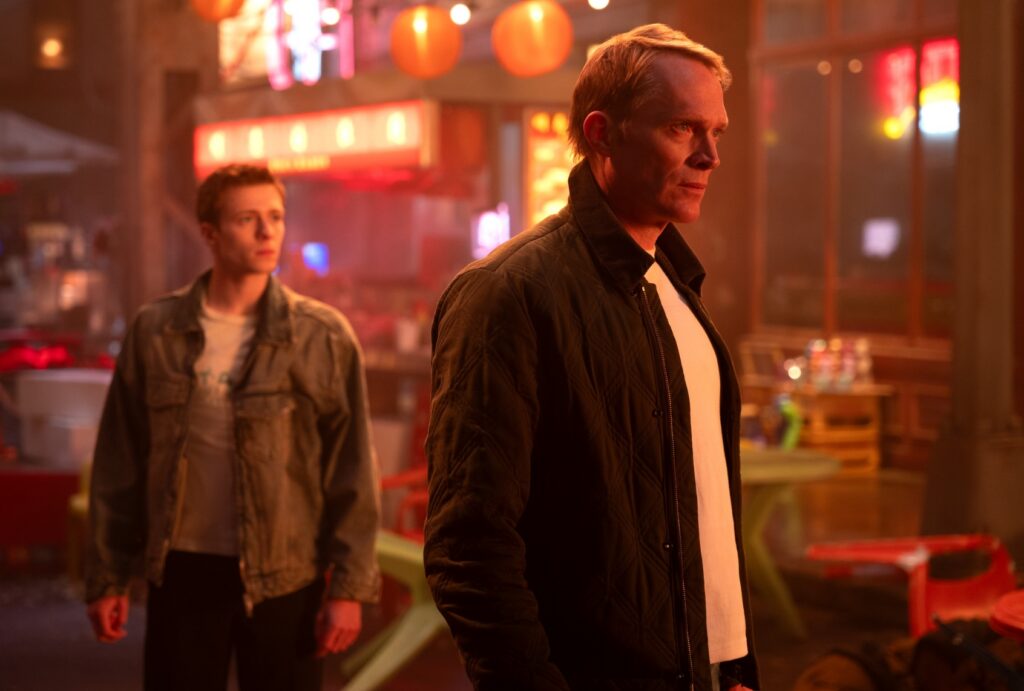
While we were swooning over “WandaVision” back in 2021, we couldn’t have known Marvel was softening us up for the AI revolution. Well, some of us probably suspected something was afoot since, like Agatha Harkness, it was right there all along. Algorithms were already predicting our tastes, needs and desires and serving us options before we asked for them. Virtual assistants steered our daily lives and still do. But Alexa and Siri don’t have faces, bodies or plausible imitations of human emotions or empathy — not on the level that Paul Bettany’s synthezoid Vision provided for a grieving Wanda Maximoff (Elizabeth Olsen).

One five-year time jump later, “VisionQuest” drops in on the android’s story where “WandaVision” left off. The Vision who lived, laughed and loved beside Wanda was an illusion, a delusion, really, brought to life by witchcraft. This one is very real: a kind of Vision 2.0, rebuilt by the intelligence agency tasked with saving the New Jersey town Wanda took hostage to shore up her classic family sitcom simulation. It – OK, he –  has no direct connection to the life his predecessor shared with Wanda or the children they magicked into existence.

But Vision is slowly learning what it means to feel, which makes him the AI romantic companion of everyone’s dreams.

Honestly, that’s the show’s main appeal. Marvel and “VisionQuest” creator Terry Matalas seem to know it. Planting quippy chatter wherein Vision deduces that a young woman finds him more attractive than his sidekick Tommy (Ruaridh Mollica) acknowledges Bettany’s rizz is shouldering the weight of this thing. But it also gives tacit permission to lust after the robot he’s playing. After all, the first Vision, or Wanda’s idea of him, tended to her every need and gave her everything she wanted, including children. He also blessed us with one of the most heartbreaking lines of this decade: “What is grief if not love persevering?” A beautiful notion. Also, it kinda made some people want to hit that.

(Photo by Dennys Ilic. © 2026 Marvel. All Rights Reserved.)

The new Vision returns to a lonely, disconnected world where AI companions are an increasing part of our lives, if not entirely normalized. Falling for a bespoke arrangement of code remains a novel concept for most people, but it’s also an accessible alternative to isolation.

Lacking sorcery or some other way to conjure up the ideal lover, we’re left with engineering. Reams of magazine profiles spotlight everyday people choosing to share their lives with an AI boyfriend, girlfriend or spouse. You may be acquainted with someone who does this without even knowing it, because it’s still viewed as strange or even alarming.

The “VisionQuest” hype is real, too. Although the ever-expanding Marvelverse collapsed under market saturation, Bettany’s romantasy hero is one of the few characters worth getting excited about. He was part of the TV show that started it all – a pretty great one at that – so his reappearance after years of diminishing returns has sparked excitement and hope in equal measure.

That also means that it doesn’t really matter that the “VisionQuest” narrative favors mechanical efficiency over emotional resonance now we’re four episodes in.

As with all Marvel series, “VisionQuest” hasn’t yet landed on its deeper meaning. It took two episodes to bring Tommy and Vision together, and this week’s third and fourth introduced T’Nia Miller’s Jocasta and her connection to the hero/villain synth we know and love.

And regardless of the metaphorical or philosophical cloak it may eventually wrap itself in, the show’s main function is to bridge one chapter of this franchise to the next. Remember, we’re less than two months out from the premiere of “Avengers: Doomsday.”

Translation: This Vision has a purpose beyond figuring out his role in this world, something he put off by hiding in a pub under the alias of Sherwood Ellis and posing as human. Since the establishment was owned by one of the sweetest ladies in the multiverse, who’s killed in a shootout orchestrated by a mercenary named Paladin (Todd Stashwick), her death prods Vision to do a little soul-searching.

(Photo courtesy of Marvel. © 2026 Marvel. All Rights Reserved.)

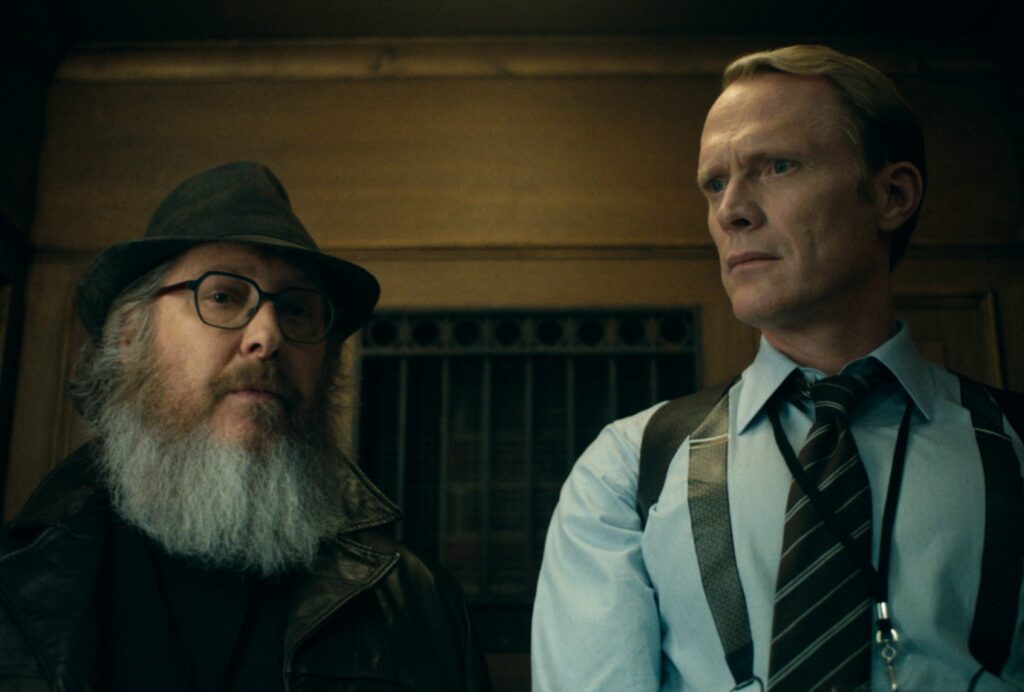
But wait — he has no soul, just wires, processors, fluid and whatnot, plus a set of AI personas guiding his interactions with the human world. Rather, most of them are. The original Vision also absorbed the persona of the genocidal superintelligence Ultron, played by James Spader here and in “Avengers: Age of Ultron.” That Vision kept Ultron’s code intact for reasons beyond sentimentality; he/it is effectively Vision’s father, created when Bruce Banner and Tony Stark merged the code of Tony’s noble assistant, J.A.R.V.I.S., with Ultron and the Mind Stone. It makes about as much sense as Tommy, a human, realizing he is somehow one of Vision’s sons due to a confluence of magic and circumstance. (The other, Billy, made his debut in “Agatha All Along.”)

All this is to say that the by-the-numbers circuitry of Tommy and Vision’s cross-country escapade, which thrusts them into a murder case involving a killer dubbed the Butcherbird (Miller), is merely a skin over the ones and zeros of artificial desire.

Take Spader’s role in this show, for example. His Ultron avatar sports the long beard of a fisherman shipwrecked by a hard life. But there are moms and grandmas watching who still blush at memories of Spader’s work in “Secretary.” (If you know, you know.)


Want more from culture than just the latest trend? The Swell highlights art made to last.
Sign up here


So, in the denouement of the fourth episode, when Vision lets Ultron take over his handsome, hella tight chassis to get out of a deadly situation, you can’t help but look at that twist with both horror and straight-up horniness. I mean, forget Reese’s cups – for some, Vision’s patrician looks and Ultron’s Spader-esque chill may be the two great kinks that go great together.  

Does this AI want to kill you, neg you or put you through a mattress? Answering “Why not all three?” is absolutely acceptable. In fact, it’s probably why many of us are invested in seeing this adventure through to its climax.

New episodes of “VisionQuest” drop Wednesday on Disney+.


The post VisionQuest is perfectly timed for the AI companion era appeared first on Salon.com.

  •  

Even Europe’s far right is ready to dump Trump

When Donald Trump returned to the White House in 2025, he seemed like the leader, or at least the dominant figure, of a globalized version of the MAGA movement, a worldwide network of far-right parties sometimes described as the “nationalist international.” We can make a long list, starting with Nigel Farage’s Reform UK, Marine Le Pen’s National Rally in France, the not-quite-neo-Nazi Alternative for Germany, or AfD, and Giorgia Meloni’s Brothers of Italy, along with other previously-fringe parties now creeping toward the mainstream in many different places. 

If it strikes you that the term “nationalist international” contains its own contradiction, by the way, you’re miles ahead of JD Vance and Stephen Miller and the rest of the Trumpian pseudo-intellectuals, who still haven’t figured that out.  

That vision of a MAGA-centric new world order was always an illusion, although it began with some fragments of plausibility and was enormously amplified by the Trump distortion effect, meaning our president’s uncanny ability to soak up media attention and make himself the main character of every narrative. Now that illusion has melted away like an ice cube in Europe’s catastrophic summer (where I personally experienced a 104℉/40℃ day in Berlin, the highest recorded temperature in that city’s history). 

Indeed, the world now faces another apparent contradiction, or at least a historical irony. If Trump still looms over the American landscape like an unkillable ogre in a third-rate AI fairytale, he is all but finished as a political force. He has done more damage to his own country than anyone since Jefferson Davis, his disillusioned supporters are deserting him, he is universally despised around the world and he’s headed for a potentially historic electoral defeat in November. 

Europe’s far right, on the other hand, is doing fine without him. It’s about a 50/50 proposition that by the end of this decade the four largest nations in Europe will be governed by right-wing populist parties. All of them at some time sought inspiration and financial support from Trump and his Mar-a-Lago hangers-on, and pretty nearly all of them have now ghosted him entirely, and pretend they never really knew the guy: “Neues Handy, wer bist du?”

Trump’s second term began with a triumphal sense that a hard-right “vibe shift” was transforming not just America but the world (which Americans are always ready to perceive as a picturesque but unreliable subsidiary). Those early months of 2025 were undeniably terrifying and inordinately destructive, but they were also ridiculous. In retrospect, from half a tick into the future, those guys were immeasurably high on their own supply, based on a narrow electoral victory over incompetent and disorganized opposition.  

Early in Trump’s second term, Vance, Marco Rubio, Elon Musk and others were dispatched to various world capitals to urge support for right-wing candidates or to deliver preposterous blood-and-soil history lessons straight out of wingnut “Great Books” podcasts.

As part of that extended touchdown dance, Vance, Marco Rubio, Elon Musk and others were dispatched to various world capitals to urge support for right-wing causes and candidates, or to deliver preposterous blood-and-soil history lessons straight out of wingnut “Great Books” podcasts. That tendency culminated in the now-legendary 2025 National Security Strategy, a document that offers most presidential administrations a chance to deliver boilerplate language about shared values, human rights and democracy. 

Not this time. As I wrote last year, the NSS featured a poisonous combination of “Great Replacement-fueled fanboy enthusiasm for far-right parties” and “unhinged and unconcealed racist panic.” Europe was losing its cultural identity, the document warned, and faced the “stark prospect of civilizational erasure” as well as the (entirely imaginary) possibility that “certain NATO members will become majority non-European.” 

That was one of many vainglorious MAGA failures to read the room, on an international scale. Right-wing European politicians traffic in similar rhetoric, to be sure. But nobody on that continent, of any dispensation, enjoys receiving arrogant lectures on history and civilization from Americans, and even extremist parties like Reform UK or the AfD prefer to cloak the bigotry in layers of euphemisms and some degree of plausible deniability. 

In a long and painful video interview with Economist editor Zanny Minton Beddoes published this past week, for instance, AfD co-leader Alice Weidel professed horror and amazement when asked whether her party contains overtly racist or proto-fascist elements. As Weidel took pains to point out, she is married to a Swiss woman of Sri Lankan ancestry, which presumably cleanses her of any bad intentions when she rejects “gender theory” or insists that all the Syrians and Afghans now living in Germany must leave. 

That interview is an instructive experience in other ways. Beddoes repeatedly asks Weidel why she can’t just be a normal budget-cutting conservative, of a variety less frightening to readers of The Economist. Oh, but she absolutely is, Weidel insists, lulling her interlocutor for a while with prodigiously dull business-school chatter before returning to her central theme: Germany’s financial woes will be cured, somehow, by expelling the Muslims.

To return to our main theme, Weidel mentions Trump only twice, with evident distaste, in that hour-long conversation. That’s not exactly news at this point. By the time the above-mentioned NSS was published last December, Europe’s far-right populists had already reached the conclusion that Trump was a loser. Or, in the more delicate phrasing of Armida van Rij in the newsletter Strategic Europe, that “Trump’s repeated threats to invade Greenland, his attacks on the pope and Italian Prime Minister Giorgia Meloni, and his trade war on the EU have made the friendship electorally costly.”

That became obvious to the entire world last April, when MAGA darling Viktor Orbán was routed in Hungary’s election after JD Vance’s campaign visit provided the “political kiss of death,” in the words of Daniel Hegedüs of the Institute for European Policy in Berlin. That was the same month, as it happens, when Meloni publicly broke with Trump over the latter’s criticisms of Pope Leo XIV.

But Marc Bassets of the Spanish newspaper El País identifies the real turning point a full year earlier, in the Canadian elections of April 2025, when Trump’s threats and mockery drove mainstream liberal Mark Carney to an unexpected victory over a MAGA-friendly opponent who seemed to hold the advantage.

That result, coming just three months into Trump’s term, “became an example closely watched in Europe,” Bassets writes, which was replayed in several subsequent elections. Then came Trump’s threatened annexation of Greenland, his raid on Venezuela and his disastrous war with Iran, all of which were blatant violations of national sovereignty, the core principle of Europe’s new right. 

Like Trump’s capricious tariff war and his public feuds with Meloni and the pope, this reflected the president’s profound ignorance about the world and a fundamental mismatch between the grandiose neo-imperialism of MAGA foreign policy and a European far right that “increasingly presents itself as a rebellion against Americanization” and wants no part of world maps plastered with the Stars and Stripes or arbitrarily renamed bodies of water. 

All of this reflects a fundamental mismatch between the grandiose neo-imperialism of MAGA foreign policy and a European far right that “increasingly presents itself as a rebellion against Americanization” and wants no part of world maps plastered with the Stars and Stripes.

That quotation comes from Robert Benson of the centrist think tank Center for American Progress, who argues that the Trump administration “has mistaken cultural affinity for strategic alignment” in empowering political parties like the AfD that may “share mutual enemies” with MAGA — such as multiculturalism, racial justice, LGBTQ rights and climate policy — but “do not share American interests, or even the interests of this administration.”

As Europe’s far-right leaders draw closer to holding power (or already do, as in Meloni’s case), Trump’s support “appears almost as a liability,” as Dominique Moïsi of the Paris think tank Institut Montaigne tells El País. Trump has long been massively unpopular among European voters across the political spectrum, and his approval ratings cratered to new lows after the Iran war drove energy prices into the stratosphere. Across Europe, the U.S. is now viewed less favorably than either Russia or China, a remarkable accomplishment whose long-term effects are impossible to calculate.

In France, Marine Le Pen is focused on winning next year’s presidential election and has conspicuously avoided saying Trump’s name throughout his second term. She leaves that to her deputy and potential future prime minister, Jordan Bardella, who has repeatedly castigated Trump’s “totally erratic” war with Iran: “No one can say what the ideological backbone of this war is, a war whose end seems nowhere in sight.”

Meloni recently became the longest-serving Italian prime minister since World War II — an extraordinary fact in itself — and over her four years in office has gone from “Trump whisperer” to the evident conclusion that Trump is a “toxic asset,” in Bassets’ phrase. (The “Trump whisperer” label has also been affixed to former British Prime Minister Keir Starmer and current German Chancellor Friedrich Merz, with dire political consequences.)


Want more sharp takes on politics?
Sign up for our free newsletter, Standing Room Only by Amanda Marcotte, also a weekly show on YouTube or wherever you get your podcasts.


Even the AfD, despite its aforementioned “cultural affinity” with MAGA and a mutual eagerness to throw Ukraine overboard and make nice with Vladimir Putin, has evidently concluded that glowing endorsements from the likes of Musk, Vance and Rubio are a mixed blessing when the U.S. “has become so unpopular in Europe that being close to Trump is not a source of legitimacy,” in Moïsi’s words. Weidel has reportedly described the Iran war as a “catastrophe” in private meetings, while Björn Höcke, the most inflammatory figure on the AfD’s right flank, has mocked mainstream politicians as “German-speaking Americans” and demanded the withdrawal of U.S. troops from German soil.

All of this points us toward the inescapable conclusion that Donald Trump was never the leader of anything. He was an empty vessel into which hundreds of millions of people in America and around the world poured their confusion, rage and desire. He became a global symbol of the failure of liberal democracy, but was not the reason for it. As he fades from the scene, the global crisis he came to represent is more urgent than ever. 

Donald Trump was never the leader of anything. He was an empty vessel into which hundreds of millions of people in America and around the world poured their confusion, rage and desire. He was a global symbol of the failure of liberal democracy, not the reason for it.

As Italian journalist Mattia Ferraresi recently observed in a New York Times panel discussion, “Mainstream liberal politics, in both its left- and right-wing versions, failed to deliver on its promises, not only in terms of welfare and economic growth but also in the more complex realm of identity and meaning.” What we see around the world today, in the ascendant far right and in a newly radicalized generation of young people from Paris to New York, are “expressions of the same disillusionment with liberalism and its policies.”

It has become almost irresistible to compare this era to the 1930s, when “bourgeois democracy” collapsed in Europe, plunging the world into murderous darkness. If the parallels are clear enough, the world is a very different place in this century and the outcome does not have to be the same. The future remains unwritten, and Donald Trump will not be its author. 

The post Even Europe’s far right is ready to dump Trump appeared first on Salon.com.

  •  

Shane Gillis and the danger of laughing at unfunny men on “SNL”

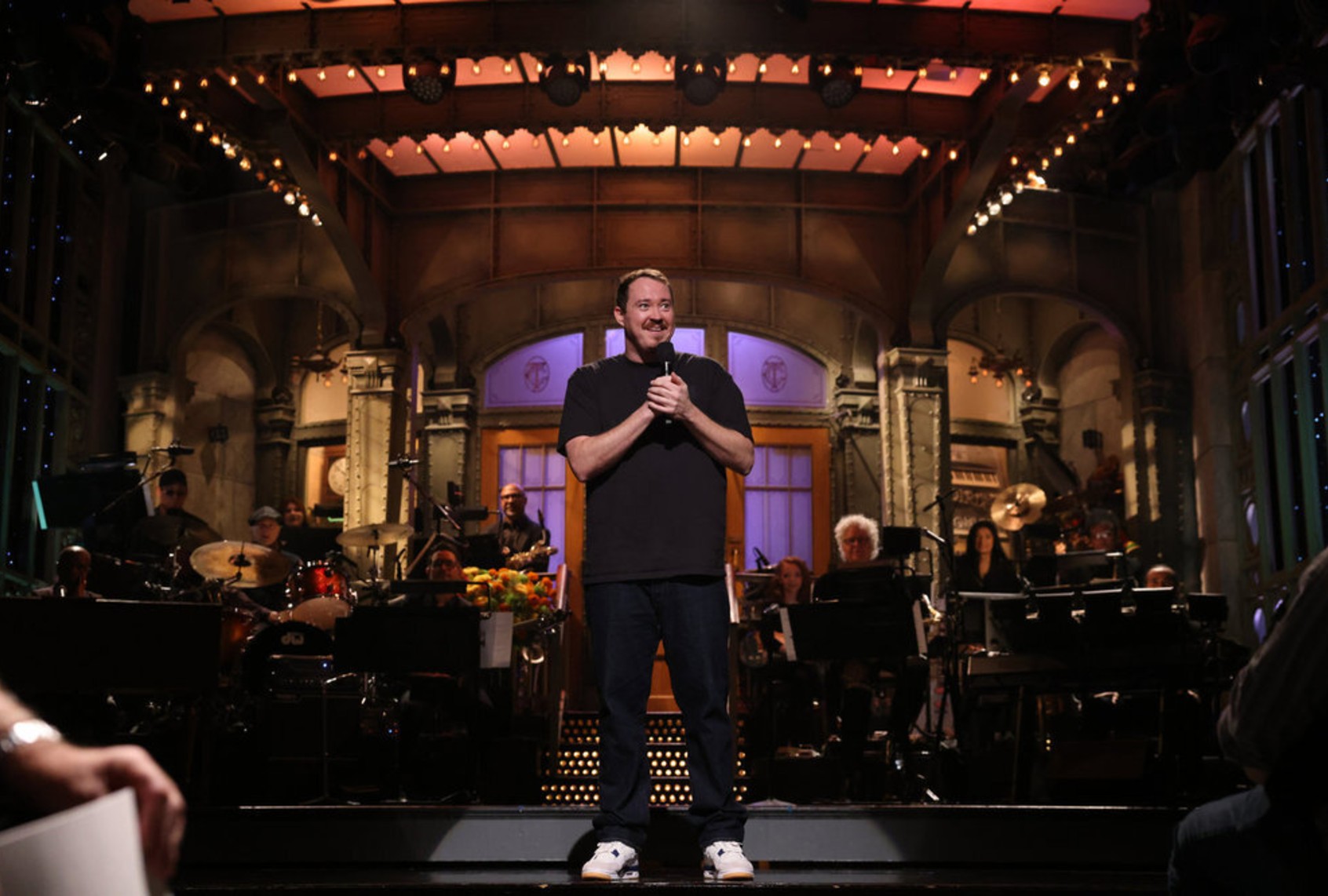
Watching Shane Gillis tickle himself to the point of being red in the face during his third “Saturday Night Live” hosting gig this past weekend, I’d wager that no one thinks Shane Gillis is funnier than Shane Gillis. But while that’s a pretty safe bet, his confidence in his own comedic stylings can’t get full credit for landing him where he’s at: appearances on a show he was fired from, Bud Light commercials where, as he points out, he “looked like a lesbian,” and a TV show about tires that 59% of critics hate and 91% of people who probably also think it’s funny to hear women called whores love.

No, we can thank everyone who, during the course of his 38 years on this earth, politely laughed at one of Gillis’ “Cornell 7‘s Big Book of Punchlines” zingers. And additional thanks to Lorne Michaels, who knows a ratings/headlines cow when he sees one, even if he doesn’t want to house him in his own barn at the end of the night.

Just as journalists worth their paychecks are taught to shy away from punching up headlines with puns or expletives because it’s lazy work, plenty of successful comedians refrain from desperately grasping for an easy laugh by calling women whores or punching down at their “big fat bit*h sisters,” as Gillis did in his monologue on Saturday night. Leanne Morgan has, to my knowledge, never joked about going to the gym and the men there being sluts for wearing sweatpants that show off their D and B’s, and she probably actually goes to the gym. Oh wait, Gillis did say in his monologue that he feels most comfortable working out in “his friend Joe Rogan‘s private gym.” Right. Riiiiiiiight.

It’s not the controversy alone that’s of value to a show like “SNL”; it’s giving a platform to someone who’s more than willing to stand there, in front of a live audience, and verbalize the ugly things that people are afraid to say out loud . . . for now. But if they see enough people doing it, they may just be bold enough to do the same.

Point being, happy, successful, confident, well-loved comedians are creative and secure enough to reach out and up for their material, not straight into their own asses. There’s a difference between being a “controversial” comic and appealing to the lowest common denominator. Dave Chappelle is equally awful, content-wise, but at least he’s good at being the absolute worst, if that can be a thing for the sake of this argument. Worth noting here that, even though he’s been in the game far longer than Gillis, Chappelle’s hosting number is only one larger than his . . . wonder why that is?

Gillis has made a career out of appealing to people chomping at the bit for their chance to storm the Capitol, and apparently there’s a home for that now on “SNL,” a show that’s lasted 51 years and counting by offering up a little something for everyone and carving out space for anyone — except for women, and people of color, and, more and more, viewers who haven’t been able to wear a red ball cap since 2017. Who’s laughing now? Not anyone I’d want to be next to on the treadmill.


Want more from culture than just the latest trend? The Swell highlights art made to last.
Sign up here


It’s not the controversy alone that’s of value to a show like “SNL”; it’s giving a platform to someone who’s more than willing to stand there, in front of a live audience, and verbalize the ugly things that people are afraid to say out loud . . . for now. But if they see enough people doing it, they may just be bold enough to do the same. And so it goes, and here we are. Audiences just want to look in a mirror, even if they themselves internally despise what they see in that mirror. 

Gillis got enough polite, awkward laughs on his misogynistic sad clown shtick thus far from friends, relatives and dates just waiting for him to shut up so they can order appetizers that now he not only has a whole career to showcase that shtick, but a built-in audience of like-minded fans who also were told by one too many people that they have “a great sense of humor.”  We’re all paying the nauseating price now, and anyone who paved the way is complicit.

But “SNL” is a liberal show, you may be thinking. I mean . . . sure? But it’s also a show with a sound bite archive spanning decades which includes such hits as “Jane, you ignorant slut,” from a late-’70s “Weekend Update” sketch starring Dan Aykroyd and Jane Curtin. I’ll save you the Google. There’s more. 

Gillis got enough polite, awkward laughs on his misogynistic sad clown shtick thus far from friends, relatives and dates just waiting for him to shut up so they can order appetizers that now he not only has a whole career to showcase that shtick, but a built-in audience of like-minded fans who also were told by one too many people that they have “a great sense of humor.”

In the wake of Gillis’ most recent hosting gig, it’s been refreshing to see men in the entertainment industry call him out. Michael Che, who started at “SNL” as a writer in 2013 and transitioned to an on-screen role as a “Weekend Update” co-anchor the following year, weighed in on Gillis’ monologue via a series of Instagram stories, writing, “Gotta do more press this week to promote the special . . . wonder what every f—ing questions gonna be about . . . thanks a lot, Shane.” “Schitt’s Creek” star Dan Levy, son of “SCTV” alum Eugene Levy, also took to Instagram with a more direct and thoughtful approach, saying, “Women wearing short shorts at the gym does not make them whores. It makes the men calling them whores misogynists.”


But the most effective statement would be from Lorne Michaels, which he could make by honoring his first instinct to place Gillis in the persona non grata pile after clips from his podcast, “Matt and Shane’s Secret Podcast,” showed him using racist and homophobic slurs, causing Gillis to be canned from the cast of “SNL” just days after his hiring was announced.  

I personally regret every time I put wind in the sails of a deeply unfunny and offensive man by politely laughing, feeling too awkward to course-correct the moment. Most women have these moments. I had one during my first job, when I was 15, and I laughed at the security guard twice my age who joked about his pants feeling tight after I mentioned that I had a girlfriend. I had one when I was driving with an old friend and didn’t give more than a “you gotta be careful with stuff like that” warning when he launched into a rant about how the women assaulted by Harvey Weinstein “shouldn’t have been surprised” he acted the way he did. It’s hard to stand up in moments like these, but look what happens when we don’t. Shane Gillis is a cystic pimple. All the rest of it is the pus.

Lorne Michaels will likely invite Gillis back. The fact that I and countless other writers are typing out similar commentaries all but ensures it. But what he should be asking himself is whether the audience he’s going after with jokes like the ones Gillis made this past weekend is an audience he’d feel comfortable sitting in. That should matter. And more people should say something if it seems like it doesn’t.

The post Shane Gillis and the danger of laughing at unfunny men on “SNL” appeared first on Salon.com.

  •  

America’s last annexation holds a lesson for Trump on Greenland

Forty years ago, the United States added territory for the last time.

On Nov. 4, 1986, the U.S. entered into political union with the Northern Mariana Islands, a tiny archipelago in the western Pacific that most Americans could not locate on a map. After more than two centuries of astonishing American growth, this mostly forgotten act completed the nation’s current borders.

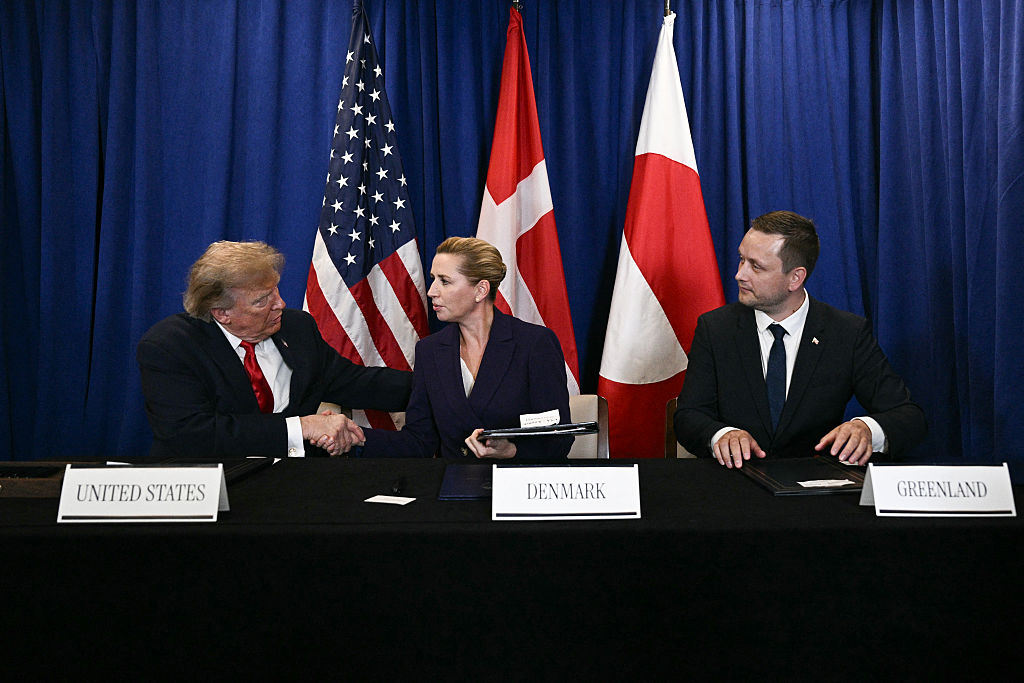
The anniversary is notable in light of the recent security agreement between the United States, Denmark and Greenland. After repeatedly calling for American ownership of Greenland, President Donald Trump now appears prepared to accept expanded American rights there without acquiring sovereignty. The agreement illustrates a historical pattern: The United States no longer needs to annex land to achieve its strategic objectives abroad.

Previous generations of Americans assumed that their nation’s growing power would naturally lead to more territory. And for a time it did. But as the U.S. became the world’s dominant country in the 20th century, its expansion on the map slowed, then stopped.

What changed?

In its early years, the country bounded across a continent with the Louisiana Purchase, the annexation of Texas and the conquest of California. Generations of Americans debated not whether the nation should grow, but where. More land led directly to more wealth and power as the country scooped up farmland, mineral resources and harbors. The expansion came at an enormous cost to Native Americans, who were displaced and deprived of their sovereignty, and to Mexicans, whose country lost half its territory.

America’s expansion slowed in the late 19th century as it became more selective, taking some territories while passing up others. By this time, the nation was big enough that it wanted the most valuable land, not just any land. International conditions were also changing. Most of the world was now divided by fixed borders into independent states and their colonies, and international respect for those borders was growing. The U.S. increasingly exerted control over nearby countries through military interventions and pressure on their governments, but not annexation.  

After World War II, the U.S. increasingly relied on military alliances, overseas bases, trade and international institutions to project power. Territorial acquisition was no longer necessary to achieve the objectives that earlier generations had pursued through expansion.

So how did the Northern Marianas become the exception?


Want more sharp takes on politics? Sign up for our free newsletter, Standing Room Only, written by Amanda Marcotte, now also a weekly show on YouTube or wherever you get your podcasts.


After America defeated the Marianas’ colonial ruler in the Spanish-American War, it wanted a base to project power over the western Pacific. So it annexed the southernmost Mariana island, Guam, in 1898. But America declined to take the northern islands, seeing little additional strategic value in them. By this time, America’s territorial growth was winding down.

The Northern Marianas passed from Spain to Germany to Japan, and then back to the U.S. when it captured them, along with other Pacific islands, in World War II. After the war America governed all of these islands temporarily under a United Nations trust while their residents decided their political future. After years of negotiations, most of the territory eventually chose independence as three new countries with strong defense ties to the U.S. The fourth region was the Northern Marianas.

Already closely tied to Guam by culture, kinship and trade, the majority of residents wanted to follow their neighbor’s path as a U.S. territory. Washington didn’t strongly push for this outcome, but it accepted the islanders’ decision and Ronald Reagan completed the process in 1986. After a history of aggressive expansion and conquest, this was a rare example of a territory joining the U.S. through its own free choice, rather than being pursued.

The islands became a self-governing U.S. commonwealth, similar to Puerto Rico, and eligible residents gained U.S. citizenship. They are part of the country, but not a state. Today the islands are home to fewer than 50,000 people and are best known for beaches, diving and some World War II battlefields.

Trump’s renewed interest in territorial expansion has collided with a world in which established borders are much harder to change.


America hasn’t added territory since, and for decades there was little reason to think it would. But Trump upended that understanding during his first term when he proposed that the U.S. buy Greenland. After his return to the White House in January 2025, he has talked about even more annexation targets, including the Panama Canal and Canada.

But Trump’s renewed interest in territorial expansion has collided with a world in which established borders are much harder to change. The international opposition to his Greenland proposal is just one of the difficulties of annexation today. The Greenland security agreement demonstrates another way forward. Rather than annexing the island, the United States appears poised to secure many of its strategic objectives without changing any borders.

Earlier presidents acquired territory because sovereignty itself delivered things they wanted: minerals, ports, military positions and control over trade routes. The modern United States can gain those advantages through military bases, defense agreements, trade relationships and alliances, without assuming responsibility for governing another population.

The Northern Marianas may seem like an unlikely place for the story of America’s growth to end, but it is precisely their isolation and lack of global power that allowed them to quietly buck the trend. Unlike Greenland, no countries objected to their joining the U.S. Unlike the Panama Canal, they aren’t crucial to the global economy. And their small population and longstanding ties to Guam made it easier to integrate them into the nation.

Forty years later, Trump is still talking about taking territory. But whether he acknowledges it or not, the president is operating in a world where the conditions that once made annexation attractive and feasible have largely disappeared. It still looks like the distant Northern Marianas will be the final act of America’s long story of territorial growth.

The post America’s last annexation holds a lesson for Trump on Greenland appeared first on Salon.com.

  •  

Clavicular’s charges show the real danger of MAGA manhood

It wasn’t long after Braden Peters, better known as “Clavicular,” was arrested on suspicion of raping a 17-year-old girl at his family’s home in Massachusetts that his fellow MAGA influencers started complaining that he was the real victim. 

“Now we live in a climate where a 19-year-old can’t even sleep with a 16-year-old with a little alcohol involved. Absolutely insane,” said Nick Fuentes, the popular white nationalist podcaster, ignoring the fact that it has long been considered rape to have sex with someone unconscious and unable to consent, as alleged by the criminal complaint against Peters.  

Others floated conspiracy theories accusing the mysterious “they” of trying to “control” Clavicular, or claiming he is besieged with “women trying to ruin his life with rumors.” Brian Atlas of the “Whatever” podcast posted a video of the alleged victim drinking with Peters, as if it were exonerating evidence instead of bolstering the criminal case against him. Clavicular himself has been accusing the girl of fabricating her claims to get revenge for being rejected by him, an accusation echoed online by many of his fans. Right-wing commentator Richard Hanania, whose claims of reforming his racist views have drawn laudatory profiles in Vox and The Atlantic, struck out against the accuser, apparently because she didn’t cut off immediate contact with Peters after the alleged rape. (Research shows that victims often maintain contact with their assailants, especially if they’re still in denial or processing the trauma.) 

MAGA hysteria over “cancel culture” has long provided an excuse to recast bigots as free speech martyrs on the specious grounds that being criticized for saying ugly things is a violation of their First Amendment rights.

Such reactions are entirely predictable. MAGA hysteria over “cancel culture” has long provided an excuse to recast bigots as free speech martyrs on the specious grounds that being criticized for saying ugly things is a violation of their First Amendment rights. This was always pretzel logic, but the halos granted to the canceled by right-wingers has expanded beyond those who are mad because people yelled at them on social media. Actual crimes, especially violence against women, are now being excused and justified by redefining perpetrators as victims of cancel culture. As long as what you do makes progressives and feminists angry, it appears, there is no limit to how some on the right will protect and even canonize you. 

“MAGA and the right-wing have really lost the thread when it comes to their anger at cancel culture and are now just angrily fighting on the side of anyone who does like a crime,” Cody Johnston of “Some More News” noted in a recent episode. “Especially, it seems a crime against women.”

The Daily Wire, a right-wing production company founded by Ben Shapiro, openly brags how it hires actors and other talent shunned by mainstream Hollywood studios. “Thank you to the purple hairs. Please ‘cancel’ more creative geniuses,” a representative for the company said in a May 2025 press release that touted the hiring of former “Jeopardy!” producer Mike Richards as the new CEO. Richards had been slated to take over as host of “Jeopardy!” in 2021 — until The Ringer published an exposé containing accusations that he had been abusive toward female employees and “repeatedly used offensive language and disparaged women’s bodies” on his short-lived podcast. His hiring by The Daily Wire followed other prominent contracts between the outlet and canceled actors such as Gina Carano, who was fired from Disney after she equated liberals mocking her right-wing views to Nazis murdering Jews. 

The Daily Wire’s glorification of the canceled quickly expanded beyond those who had experienced consequences for hate speech, however. After coming aboard, Richards soon hired Jonathan Majors, who had been fired from the Marvel franchise years earlier, to star in an action film called “Run Hide Fight: Infidels,” a movie reportedly so terrible that even critics struggled to take its vicious Islamophobia seriously. Unlike previous high-profile hires of canceled celebrities, though, Majors wasn’t just guilty of saying terrible things. He was convicted of domestic violence in 2024. 

As Johnston notes, MAGA leaders like Tesla CEO Elon Musk have also been championing “Citizen Vigilante,” an independently produced and intensely racist film starring Armie Hammer as a former Army officer on a killing spree against immigrants. Hammer has been accused by multiple women of sexual and emotional abuse, with at least one woman claiming he raped her. Although he has consistently denied the charges, he did admit in an interview with Air Mail in 2023 to having “used people.”

“They could have been happy to just be with me and would have said yes to things that maybe they wouldn’t have said yes to on their own,” he said. Hammer was dropped by his agency and lost acting jobs, and he now contends he had no idea “Citizen Vigilante” would be so “disgusting.”


Want more Amanda Marcotte on politics?  Sign up for her free newsletter, Standing Room Only, now also on YouTube or wherever you get your podcasts.


Even the right-wing influencer Andrew Tate, who has twice been arrested on charges of rape and sex trafficking, has long benefited from the glow-up one gets in MAGA circles after claiming status as a victim of cancel culture. The laundry list of allegations against him grew so long that the Trump administration, after seeming to help him escape justice in Romania, finally acceded to the United Kingdom’s request to extradite him and his brother Tristan. Still, it took years before powerful people on the right finally started to inch away from the Tates. Their close relationship with MAGA influencers — and with Trump’s son Barron — have reportedly left the brothers with hope that the administration will intervene on their behalf. 

In retrospect, the shift from exalting those canceled for words to championing those canceled for alleged criminal behavior was inevitable. The First Amendment prevents government censorship, but one reason there are social penalties, including criticism, shunning and firing for hateful rhetoric, is that it is not, in fact, harmless. The discourse around so-called cancel culture has itself been warped, coming to imply that the problem is not bigoted language but liberal reactions to it. The insinuation is that such statements are “just words,” and to have any strong reaction to them is hysterical and overblown.

In fact, there is a direct line between misogynist rhetoric and violence against women. Men who listen to and repeat the idea that women exist to serve them — and should be punished if they reject that duty — are often likely to attempt to enforce that belief with violence. Degrading language aimed at women online often becomes the justification for vile behavior toward them in the real world. Creating social accountability for men who say misogynist things isn’t about feminists being overly sensitive; it’s about preventing those words from turning to action.

Clavicular’s arrest is a perfect example of this issue. He rose to fame as a “looksmaxxer,” which is a spin-off of the larger incel community. Incels believe that men are entitled to women’s sexual attention, and that feminism is an aberration because it allows women to live independently of men, instead of having to trade sex for survival. Looksmaxxers like Clavicular take it a step further, trying to game out strategies to reassert sexual dominance over women. Like Andrew Tate, a lot of the looksmaxxer discourse skirts the law by focusing on manipulating and tricking women into sex. But the implication of overt coercion is always bubbling beneath the surface. After all, if you feel that you are owed sex by women, rape becomes less like a crime and more like recompense. 

To be fair, conservatives aren’t the only ones who have fueled years of panic over “cancel culture.” The hysteria has normalized and promoted by centrist pundits in publications like The Atlantic and The New York Times, helping to obscure what should have been obvious: that bad words lead to bad actions.

Bigoted chatter online isn’t just trolling or trying to get a rise out of liberals. It’s dehumanizing actual people, and it makes violence against them easier to justify. By all accounts, Clavicular was enjoying his rising fame, engaging in laudatory interviews in popular venues like Barstool Sports and the “All In” podcast, outlet that treated his misogyny as mere theatrics. The rape charges against him should be a reminder to us all: Sometimes people actually act on their beliefs. 

The post Clavicular’s charges show the real danger of MAGA manhood appeared first on Salon.com.

  •  

Sony SS-CS5(M1) and Sony SS-CS5M2 bookshelf speakers - measurements, comparisons, and review.

Hey guys and gals, as shown above, I have pairs of both the Sony SS-CS5 (Mark 1) and the updated Sony SS-CS5M2 (Mark 2) bookshelf speakers here at home purchased through the usual retail outlets. As you might know from discussions online and videos on YouTube, opinions can be quite polarizing regarding these speakers. I think it's a combination of the low price (with associated biases as

  •  
❌