❌

Reading view

How Maroš Šefčovič talked his way to a China trade breakthrough

How Maroš Šefčovič talked his way to a China trade breakthrough

Europe’s trade chief has won a first concession from Beijing. Now he must convince EU leaders that dialogue can deliver more.

By Camille Gijs and Carlo Martuscelli
in Brussels

Illustration by Natália Delgado/POLITICO

When Maroš Šefčovič set out his strategy for engaging with China to European Union ambassadors in July, he had a warning for governments urging tougher action on trade against Beijing.

“Sometimes, it’s even popular to start a trade war, but it’s very difficult to finish it,” the EU trade chief recalled later in an interview with POLITICO.

Three months on, Šefčovič has secured a first breakthrough, reaching a deal in Beijing last week to sharply reduce imports of Chinese hybrid cars. The symbolic win marks a small step toward stabilizing a trading relationship that Brussels believes has reached a dangerous tipping point.

The agreement, which will initially cap imports at 350,000 vehicles a year, marks a significant concession from Beijing, whose carmakers have been flooding the European market with increasingly competitive vehicles. 

For Šefčovič, who negotiated last year’s tariff truce with Donald Trump, the agreement suggests his strategy of engagement backed by the threat of tougher trade measures may be starting to pay off.

Šefčovič agreed to launch the trade dialogue at a meeting with Chinese Commerce Minister Wang Wentao in Brussels in late June.

By focusing initially on cars — an area where the EU has leverage as one of the few major markets still open to Chinese manufacturers — the Slovak commissioner hoped to secure a confidence-building win before tackling thornier questions, from critical raw materials to China’s vast industrial overcapacity.

At the same time, he worked to coalesce European governments behind a parallel effort to strengthen the bloc’s trade defenses, reinforcing his negotiating position with the threat of tougher action to bring down the EU’s €1 billion-a-day trade deficit with China.

The hybrid deal, however, is only the opening move in a much bigger contest.

EU leaders meet in Brussels on Thursday to take stock, weighing the benefits of continued engagement against demands for more aggressive action to protect European industry from a surge in Chinese imports.

The meeting will test whether a commissioner who has made a career of finding compromises with difficult partners can maintain Europe’s support for a strategy whose success is far from assured.

“You have to deal with the same partner across the table,” Šefčovič said of the risks of starting a trade war, in the interview with POLITICO in August. “So if you can avoid this, it would be much better.”

Market power

Šefčovič’s opening move was to focus on an area where Europe still has leverage: access to its market of 450 million people.

China’s fiercely competitive manufacturers have become global powerhouses, but they are struggling with weak demand at home. A prolonged property slump has weighed on consumer spending, while cutthroat competition has triggered price wars. Domestic sales of passenger vehicles fell 28% in September from a year earlier.

That makes overseas markets increasingly important. With the U.S. shutting out Chinese imports, Europe remains one of the most lucrative markets still open to Chinese manufacturers.

Šefčovič gambled that Beijing would prefer to accept limits on exports rather than risk losing access to the European market altogether.

He set his sights on the automotive sector, where Chinese manufacturers have been making rapid inroads. Chinese carmakers accounted for just 2% of both the European hybrid and plug-in hybrid markets in 2024; by the first half of 2026, their respective shares had risen to 14% and 25%, industry figures show.

The Commission was preparing to restrict hybrid imports even without an agreement. But a negotiated settlement also offered Šefčovič something valuable politically: evidence that engagement with Beijing could deliver tangible results.

BYD electric cars in a dealership in Berlin on April 5, 2025. | Sean Gallup/Getty Images

The negotiations were intense, according to a person familiar with the talks on the Chinese side.

“It was very, very tough,” the person said, speaking on condition of anonymity to discuss the closed-door negotiations. “Both sides hadn’t seen such intensity in a long time. No summer break, no holidays. They worked around the clock even one, two days prior to Šefčovič’s trip to Beijing.”

While pursuing dialogue, Brussels also wanted to convince Beijing that it was prepared to take tougher action if the negotiations failed.

Šefčovič had earlier flagged plans for a new “diversification instrument” that would require businesses in critical sectors to source essential inputs from at least three suppliers — a move to reduce China’s ability to exploit Europe’s dependence on its critical raw materials.

Then, just three days before Šefčovič’s trip to Beijing, France and Germany raised the stakes.

President Emmanuel Macron and German Chancellor Friedrich Merz called for a powerful new trade weapon that would allow Brussels to restrict — or even shut off — access to the European market within days for countries deemed to have severely distorted the bloc’s single market.

The proposal did not explicitly name China, but Beijing was its obvious target. 

Keeping it together

EU leaders are expected to welcome the agreement but also press the Commission to act quickly to strengthen the bloc’s trade defenses, according to several diplomats. The understanding reached in Beijing has bought time, but hasn’t settled how far Brussels should go if Chinese exports keep rising or negotiations stall.

“We’re losing thousands of jobs in industry; olive oil and ice cream won’t solve the core issue,” said one EU diplomat after Šefčovič briefed ambassadors on Sunday, referring to reported deliverables from the talks.

A senior German official welcomed the Beijing deal as a first step in the right direction. “It’s a positive sign — which, of course, doesn’t fully solve the problem of the trade deficit with China,” the official said.

But Berlin’s support for a tougher line might prove short-lived.

Alicia García-Herrero, a senior fellow at the Bruegel think tank, argued that Beijing’s concessions had been calculated to assuage Berlin, given the importance of the automotive industry to the German economy.

Production line at the Stellantis multinational car manufacturer’s plant in Poissy, France on April 15, 2026. | Simon Wohlfahrt/AFP via Getty Images

“I’m just hoping Merz doesn’t turn away from the letter he sent to the Commission,” she said. With the German chancellor politically weakened at home, García-Herrero fears he may be reluctant to risk a prolonged confrontation: “I worry Merz will take this quick win and run.”

That leaves Šefčovič facing a balancing act: keeping EU governments on board with continued engagement with China while maintaining a credible threat of tougher action if the talks break down. 

“I expect [leaders] to give the Commission a nod to move ahead with other trade defense measures. China may see this as a betrayal. If that is the case, we could return to conflict very quickly,” said Noah Barkin, a senior adviser at the Rhodium Group’s China practice.

The battle ahead

For Šefčovič, the challenge now is to turn a limited breakthrough on cars into a broader rebalancing of trade with China — while buying Europe time to strengthen its defenses should the negotiations fail.

“There is an argument for doing to China what China had done to Europe for years — bogging Beijing down in dialogue and process while Europe gets its tools in place. But the EU needs to make full use of the time that these talks provide,” said Rhodium’s Barkin. 

The trade chief is expected to hold a video call with Wang in January, before the two meet again next March. Those talks will test whether Beijing is prepared to make further concessions in sectors where European industry is increasingly on the defensive, including chemicals.

Another priority is critical raw materials, where China has agreed to continue issuing export licenses for rare earths. Beijing’s grip on their supply gives it considerable leverage over European manufacturers, underscoring the limits of Šefčovič’s negotiating position.

The Commission is also preparing two proposals for December: the diversification instrument, aimed at reducing dependence on Chinese supplies, and a mechanism to shield European industries and regions from retaliation.

The scale of the challenge is daunting. Chinese hybrid imports were worth €6.7 billion in the first half of 2026, against an EU-China trade deficit of €360 billion last year. The agreement offers some relief to European automakers but does little to address the underlying imbalance.

Brussels hopes the hybrid safeguard can serve as a blueprint for protecting other industries facing a surge in Chinese imports.

“We hear our industry. That includes the chemical industry, the wind industry, the furniture industry. We know where there’s a surge, and we know what hits the hardest in terms of our deindustrialization,” a senior Commission official said on Monday.

Šefčovič acknowledged the limits of dialogue in his August interview, warning that negotiations would become harder to sustain without tangible progress.

“What would be very important is to come back to say there is acknowledgment of the issue and there are already some pilot schemes which we want to test and to see if they are working,” he said.

“But if simply there will be no action, then of course it will be much more difficult for us just to talk about these issues.”

Jordyn Dahl in Brussels and Hans von der Burchard in Berlin contributed reporting. 

  •  

France’s Philippe says Le Pen’s EU proposals would ‘crack open’ bloc

PARIS — French center-right presidential candidate Edouard Philippe accused his far-right rival Marine Le Pen of trying to force a Frexit in disguise with her euroskeptic campaign promises.

“There is something in Marine Le Pen’s proposals that has the potential to blow Europe up, or let’s say to crack it open,” Philippe said at POLITICO’s Paris Competitiveness Summit on Tuesday.

The former prime minister — who is currently the best-placed centrist candidate to challenge the front-running Le Pen, according to recent polls — said Le Pen’s plan to unilaterally demand a drastic cut to France’s contribution to the EU budget was akin to “saying you want out of Europe” without openly advocating for leaving the bloc. Le Pen had previously called for a referendum in France on leaving the EU but dropped the proposal after her crushing defeat to Emmanuel Macron in the 2017 presidential election. Her party, the National Rally, now says it wants to change the EU from within.

Philippe, a fiscal conservative who has been pitching himself as the voice of reason in a campaign dominated by populist rivals, also slammed budget plans Le Pen unveiled last week as “grotesque,” accusing her of pitching “fantasy” savings.

Le Pen’s fiscal plans have faced serious scrutiny since being presented, with many observers saying they either lack key details or overestimate savings on major proposals like immigration. Progressive think tank Terra Nova wrote in a note out Tuesday that Le Pen’s budget presentation was “riddled with errors and contradictions” as well as “botched estimates.”

“She isn’t even able to estimate the cost of the pension reform she is proposing,” Philippe said.

Le Pen said in August that her plan to bring France’s legal retirement age back down to 62 for most workers would cost €9 billion a year, and last week she said she would lay out at a later stage how she intends to fund her flagship pledge. However, the Institut Montaigne, a fiscally conservative think tank, estimated the proposal would cost €34.7 billion a year.

Philippe is hoping to convince voters that his fiscally conservative agenda is the right path in a country burdened by a ballooning public debt and a budget deficit still above 5% of gross domestic product, in breach of EU rules.

Philippe said France needed to get its finances back on track to regain credibility on the European stage after a “loss of influence” over the past few years.

Though he currently leads a crowded field of centrist candidates, Philippe’s campaign has struggled in recent weeks to gain momentum — and far-left candidate Jean-Luc Mélenchon is now challenging the former PM for second place in the polls. France’s presidential election goes to a runoff if no candidate receives more than 50% of the vote, and Le Pen’s strong poll numbers all but guarantee her a spot in the second round.

Tough on China

The former prime minister pitched a pragmatic European agenda with less regulatory burden, more focus on investment and a tougher approach to China.

Philippe had some harsh criticism for an already embattled flagship measure of the EU’s green deal, saying the 2035 combustion engine ban has been “disastrous.”

There was “a great naiveté toward China,” which ultimately benefited from Europe’s push on electric vehicles, Philippe said.

“We need to much better protect our market,” he added. “If one wants access to the European market, one has to manufacture in Europe. If a carmaker doesn’t manufacture here, then we have to slap high tariffs.”

The EU is in the process of drawing up new “Made in Europe” rules that would favor European producers over those outside the bloc, in response to trade practices by competitors like China and the United States.

Shortly before Philippe took the stage, European Commissioner for Industry Stéphane Séjourné said at the POLITICO event that a Franco-German deal trading stronger protections on the definition of Made in Europe in exchange for a loosening of combustion engine rules should be finalized “in the next few hours or in the next few days.”

On artificial intelligence, Philippe aligned himself with Macron, advocating for European sovereignty in the field and the need to regulate what he described as “an instrument of power.”

“What I see is an AI world making money for the U.S. with European savings and European data, and that bugs me,” he said.

  •  

Germany wants UK to raise tariffs on Chinese EVs

LONDON — Germany wants the U.K. to raise tariffs on Chinese electric vehicles in exchange for protection from Made in Europe rules, according to a person familiar with Berlin’s position.

Friedrich Merz’s government believes the move would show reciprocity on trade and counter accusations from other EU member states that Britain is trying to “cherry pick” the benefits of EU membership, said the person, who was granted anonymity to discuss closed-door talks.

It comes as Prime Minister Andy Burnham met with the German chancellor on his first official visit to the country this week.

Burnham and Merz were due to talk about possibilities for Britain’s future relationship with the EU — after the British prime minister put rejoining the bloc back on the table of U.K. politics for the first time in a decade.

Berlin’s position on EV tariffs is significant as Germany has broadly backed a tolerant policy towards the U.K. on trade matters since Brexit — in contrast to more hard-line positions taken by countries like France.

The EU is in the process of drawing up new Made in Europe rules that would favor European producers over those outside the bloc — in response to trade practices by competitors like China and the United States.

The U.K. is worried that the measures will hit British business — especially automakers — and wants assurances from Brussels that it will get an opt out. If Berlin gets its way, those assurances could be dependent on emulating EU trade policy with regard to Chinese EVs.

Predatory strategy

Germany’s vaunted car industry, arguably the jewel in the country’s economic crown, has faced stiff competition from Chinese imports in recent years.

EU countries have accused China of dumping low-cost, state-subsidized electric vehicles into the European market and in December 2024 imposed countervailing duties as high as 35.3. percent on some manufacturers.

Industry Commissioner Stephane Séjourné accused China of pursuing a deliberate “predatory strategy” with state subsidies to the tune of €10,000 per vehicle.

The U.K.’s Trade Secretary Jonathan Reynolds told POLITICO last month that the government was keeping tariffs “under review, to be frank, more closely than lots of other issues” and that “different parts of our own sector want different things from” the government’s policy.

Hamish Falconer, the U.K.’s minister for European relations, told POLITICO’s Brussels Playbook Podcast this week that he was “surprised” at reports tariffs might be a condition of Made in Europe opt-outs, adding: “That’s not the kind of conversation that I’m having with my European counterparts.”

Going ahead with higher tariffs risks alienating Beijing, which has expressed serious concerns about the policy. It would also raise the price of electric vehicles on the market, potentially making it harder for the government to meet its decarbonization targets.

  •  

China trade talks test EU’s appetite for tougher action

BRUSSELS — European Trade Commissioner Maroš Šefčovič opened two days of talks in Beijing on Thursday aimed at rebalancing a gaping trade deficit, with failure to reach a deal likely to test Brussels’ resolve to impose tougher trade restrictions.

The meeting marks the final round of an effort launched in June to reset the lopsided trading relationship, and will hinge on whether China’s Commerce Minister Wang Wentao is prepared to make substantial concessions.

If no agreement can be reached to narrow the EU’s €1 billion-a-day goods trade deficit, Brussels and Beijing could find themselves on a collision course. EU leaders will review the outcome of the talks at a summit in Brussels next Thursday, where they will consider next steps.

Arriving in China, Šefčovič said his goal was to balance what he called an unsustainable trade deficit. Heading into a meeting with Wang, he said it was crucial that the talks deliver “tangible outcomes.”

The discussions have zeroed in on cars, with Chinese exports increasingly eating into the market share of European automakers. In August, one in eight cars bought in the bloc was Chinese, thanks largely to a boom in sales of plug-in hybrid electric vehicles.

European negotiators have been pushing China to commit to some form of export restraint — in particular for hybrids. Unlike Chinese-made battery-electric vehicles, which were hit with extra countervailing duties in 2024, plug-in hybrids are not subject to such measures.

Without meaningful commitments from Beijing, the Commission has warned it will resort to unilateral trade restrictions. For cars, it is considering safeguard measures that would mix import quotas and tariffs to protect European automakers.

Chemicals are next. Industry Commissioner Stéphane Séjourné said Thursday that the Commission plans to introduce targeted safeguards on plastics and composite materials, subject to a request from EU governments that Brussels do so.

Wind in his sails 

Šefčovič flew to Beijing with the backing of the leaders of Europe’s two biggest economies — France and Germany — to take a tougher approach to trade.

In a joint appeal on Monday, President Emmanuel Macron and Chancellor Friedrich Merz said the Commission should be given a freer hand to shut off access to the EU for goods from countries that distort the bloc’s single market.

While the two leaders did not mention China in their letter to Commission President Ursula von der Leyen, there was no mistaking the target of their proposed trade “kill switch,” which could be blocked only by a qualified majority of EU countries.

The EU already has a powerful trade weapon in its Anti-Coercion Instrument, designed to counter economic bullying by foreign powers. 

But Brussels has yet to muster broad support from member countries to deploy it, most recently in January when U.S. President Donald Trump threatened to seize Greenland, a Danish territory.

The EU’s difficulty in responding swiftly to trade threats has heightened concerns about a surge in Chinese exports that European officials say benefit from unfair government subsidies. With Trump hiking U.S. tariffs, ever more Chinese exports are heading to Europe — increasing pressure on industries that are already being forced to retrench.

Europe’s heavy dependence on China for processed rare earths and other critical raw materials also leaves it vulnerable to retaliation should relations deteriorate.

“If we aren’t willing to fix the way our model works, then we’ll be destroyed,” said one EU diplomat, summing up the concerns flooding Brussels.

“What’s the point of having [more tools] if the Chinese can shut down our strategic production in a matter of days?”

Low expectations

Although Šefčovič entered the talks strengthened by the Franco-German letter, a second diplomat said they didn’t foresee a deal with Beijing this week.

“He knows that a lot of member states are behind the Franco-German push,” the diplomat said, adding that this “has been seen in China.” 

But Beijing has little room to compromise, given its reliance on exports to sustain growth amid weak domestic demand and a prolonged property slump.

“The Chinese side is starting to recognize that there is a problem. But I don’t think they are ready to enter into a substantial deal,” said Gunnar Wiegand, a former head of the EU diplomatic service’s Asia-Pacific department.

Wiegand, now a visiting fellow at the German Marshall Fund, said Šefčovič had earned a reputation as a dealmaker in talks on Britain’s exit from the EU and in last year’s trade deal with Trump. This time, however, “both sides are bound by their own circumstances,” he said.

Europe is desperate to halt the erosion of its industrial base, while China remains heavily dependent on exports to sustain economic growth. 

“The Chinese are going to object to being singled out. Even if a deal with the EU would be the most rational solution, other important markets for Chinese exports, such as ASEAN countries, will start asking the same. It will undercut their global market,” he said. 

  •  

Trump’s tariffs may kill free chips and salsa

There are certain sensations you don’t realize belong to an era until they’re gone: the modem’s electronic shriek as it connected to the internet, the satisfying clack of a landline receiver, the little metallic weight of an arcade token in your palm. Lately, I’ve been wondering if the basket of free chips and salsa — dropped almost ceremonially onto the table before anyone has ordered a thing — might eventually join them.

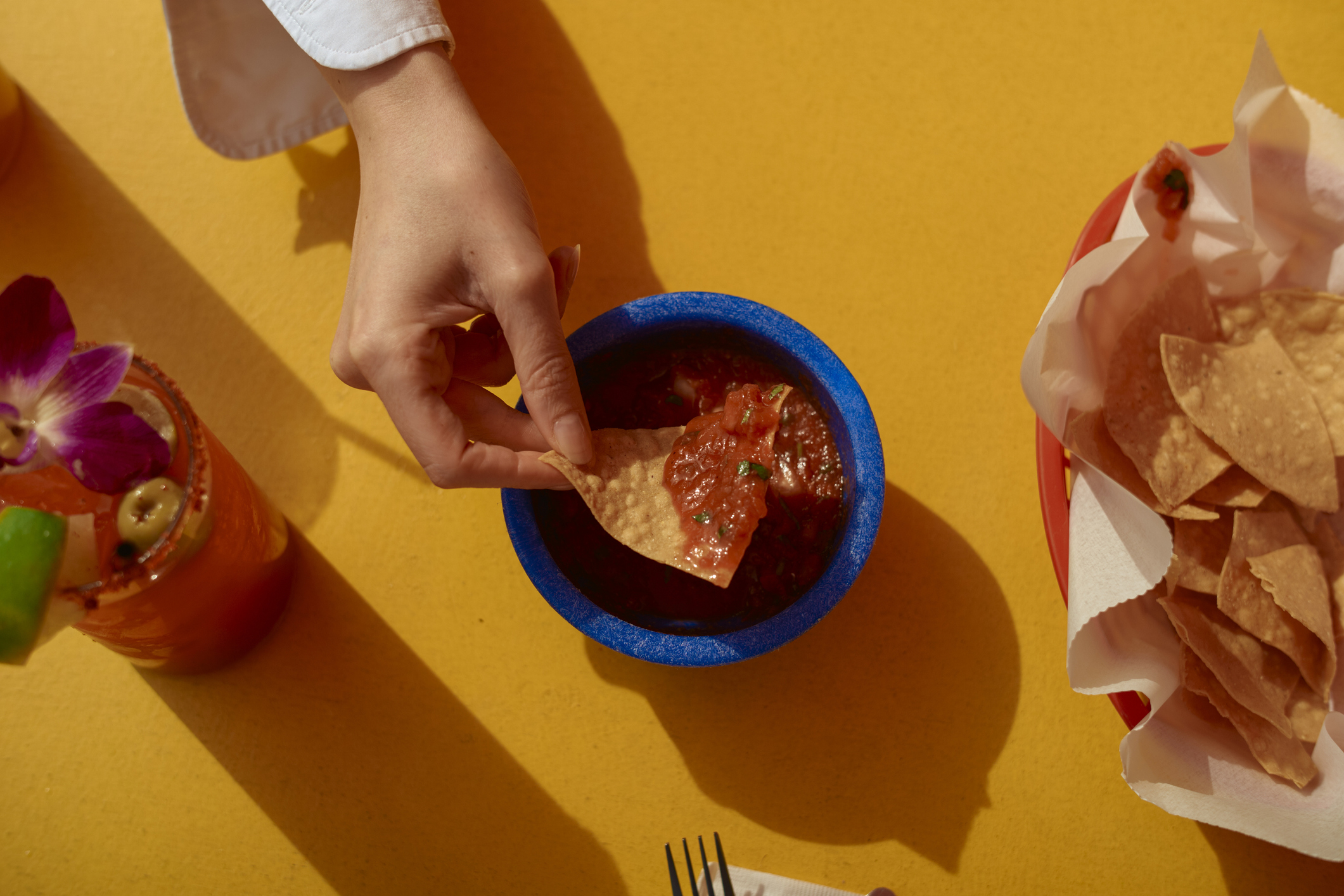
At El Nopal, a regional Mexican chain my family has frequented for years, the opening minutes of dinner follow a familiar choreography. We slide into a pleather booth beneath burnt-orange walls and televisions playing Spanish-language fútbol. Half the table orders Diet Coke, the other water with lemon; someone requests a skillet of molten white queso. Then come the chips: hot, sturdy, generously salted, piled into black woven baskets alongside ramekins of fire-engine-red mild salsa and a darker, spicier version flecked with onion and jalapeño.

For our family of six, there are always two baskets, dividing the table into loose territories. Those seated in the middle are expected to choose a side; reaching from both feels vaguely lawless. Everyone has a salsa ritual. Mine is two-thirds spicy, one-third mild. My sister mixes the mild with queso until it turns a muted pink. One of my brothers splashes vinegary house hot sauce into the spicy. Soon the menus are stacked, the pebbled Coke cups are sweating rings onto the table and somebody is pointing with a chip while saying, “No, no, tell her the part about —”

The Trump administration has made that little ritual more expensive to maintain.

In July 2025, the administration withdrew from a long-standing agreement governing fresh tomatoes imported from Mexico and imposed a 17.09% antidumping duty on most of them. The Commerce Department said the move was intended to counter Mexican tomatoes being sold in the United States at unfair prices and protect domestic growers.

Then the weather got bad.

Poor conditions in Mexico and Florida further reduced supplies, and tomato prices climbed to their highest level in roughly two decades. Dante Galeazzi, president of the Texas International Produce Association, told Houston Public Media that at one point the fresh tomato market had jumped to about $80 a box. Grocery stores began backing away from tomatoes earlier in the year; restaurants, he said, held on longer.

There is only so much a restaurant can absorb.

“The challenge is for our Texas restaurants, they operate on very narrow profit margins in what I would call good economic times,” Kelsey Erickson Streufert, chief public affairs officer for the Texas Restaurant Association, told the publication.

These are not, she continued, particularly good economic times for running a restaurant. Food is more expensive, but so are labor, utilities, insurance and credit card swipe fees — virtually everything required to keep the doors open. Eventually, the arithmetic gets down to the ramekin.

“You have restaurants that are simply saying, ‘Look, I can’t afford to put salsa on the tables anymore,’” Galeazzi said. “What are consumers going to do? Where are consumers going to find this relief?”

The tragedy of a $4 basket of chips is obviously not the $4. It is the moment someone at the table inevitably says, “Eh, do we need these today?” Sometimes the answer will be yes. Some days undoubtedly call for acid, salt and crunch. On other days, maybe you skip them. You wait patiently for the entrées. The stories still get told. Someone finds a plastic straw to point with instead.

It’s fine.

But the texture of the wait is different.


Want more great food writing and recipes? Sign up for Salon’s free food newsletter, The Bite.


That small decision — chips or no chips — moves the diner almost imperceptibly from guest to customer. The thing that once arrived as part of the welcome now joins the same mental ledger as everything else: Drinks? An appetizer? Queso? Dessert? Do we need it? Is it worth it? Should we just save the money?

People sometimes joke online about whether you grew up in an “appetizers and drinks” family or an “entrées and water” family. It is a joke, mostly, about the invisible financial rules children learn at restaurants: what counts as normal, what counts as a treat and what you know better than to ask for.

Part of the appeal of the neighborhood Americanized Mexican restaurant has long been that it offers a particularly accessible kind of abundance. You can order an inexpensive combination plate and a soda, or water with a squeeze of lime, eat something hot and filling and deeply flavorful, and be out the door in 45 minutes without anybody making you feel strange about any of it.

And while you wait, you get the same chips as the table ordering margaritas.

Free chips briefly flatten the distinction between the appetizers-and-drinks family and the entrées-and-water family. Everybody gets to start with something.

Of course, restaurants cannot run on symbolism.

The “free” things on the table have never actually been free to them. Somebody bought the tomatoes. Somebody fried the chips. Somebody washed the ramekins and refilled the baskets. Hospitality has always had scaffolding beneath it; ideally, the guest simply doesn’t spend much time looking at it.

Lately, that scaffolding has become harder for restaurants to hide.

One of my favorite Chicago breakfast spots recently changed the way it serves Texas toast. Two slices had been the default for years. Now the waiter asks: Do you actually want two, or would one be enough? They were happy to bring two, he explained. But a lot of second slices were coming back uneaten, and they simply couldn’t afford to keep throwing them away. It is difficult to begrudge a restaurant that calculation. In fact, the question struck me as a rather thoughtful solution: Have as much toast as you want. Just tell us you want it first.

But it also made visible, for a moment, the financial scaffolding behind the plate.

That is what interests me about the chips and salsa, too. Not that restaurant owners are becoming less generous, but that the economic forces pressing on them increasingly require them to show their work.

Trade policy tends to arrive in public dressed in abstraction: percentages, agreements, investigations, duties, markets. Then someone opens an invoice. A tomato costs more. A batch of salsa costs more. The complimentary appetizer that was once cheap enough to disappear into the cost of doing business becomes expensive enough to notice. Eventually, somebody has to decide whether hospitality can continue to absorb it.

And then, one night, a server has to ask if you would like to add chips.

This is a mundane outcome of economic policy — almost comically so. No one’s dinner is destroyed. No one sits staring mournfully at the bare lacquered table. There is simply a small patch of negative space where something automatic used to happen.

But small gestures are often where hospitality lives.

The loss of free chips and salsa isn’t really about chips and salsa. It is about what happens when policy decisions force restaurants to make the scaffolding of their hospitality more visible — when a gesture designed to make guests forget about the transaction becomes part of the transaction itself. At El Nopal, when the baskets arrive, nobody asks who is paying for this round. Nobody pauses to determine whether everyone wants enough chips to justify them. Nobody calculates how hungry they are with their entrée still twenty minutes away.

Someone tells a story. Someone interrupts to improve the punchline. Someone else points across the table with a tortilla chip. And everyone reaches into the basket without asking.

The post Trump’s tariffs may kill free chips and salsa appeared first on Salon.com.

  •  

Trump rolls over for China’s panda gift

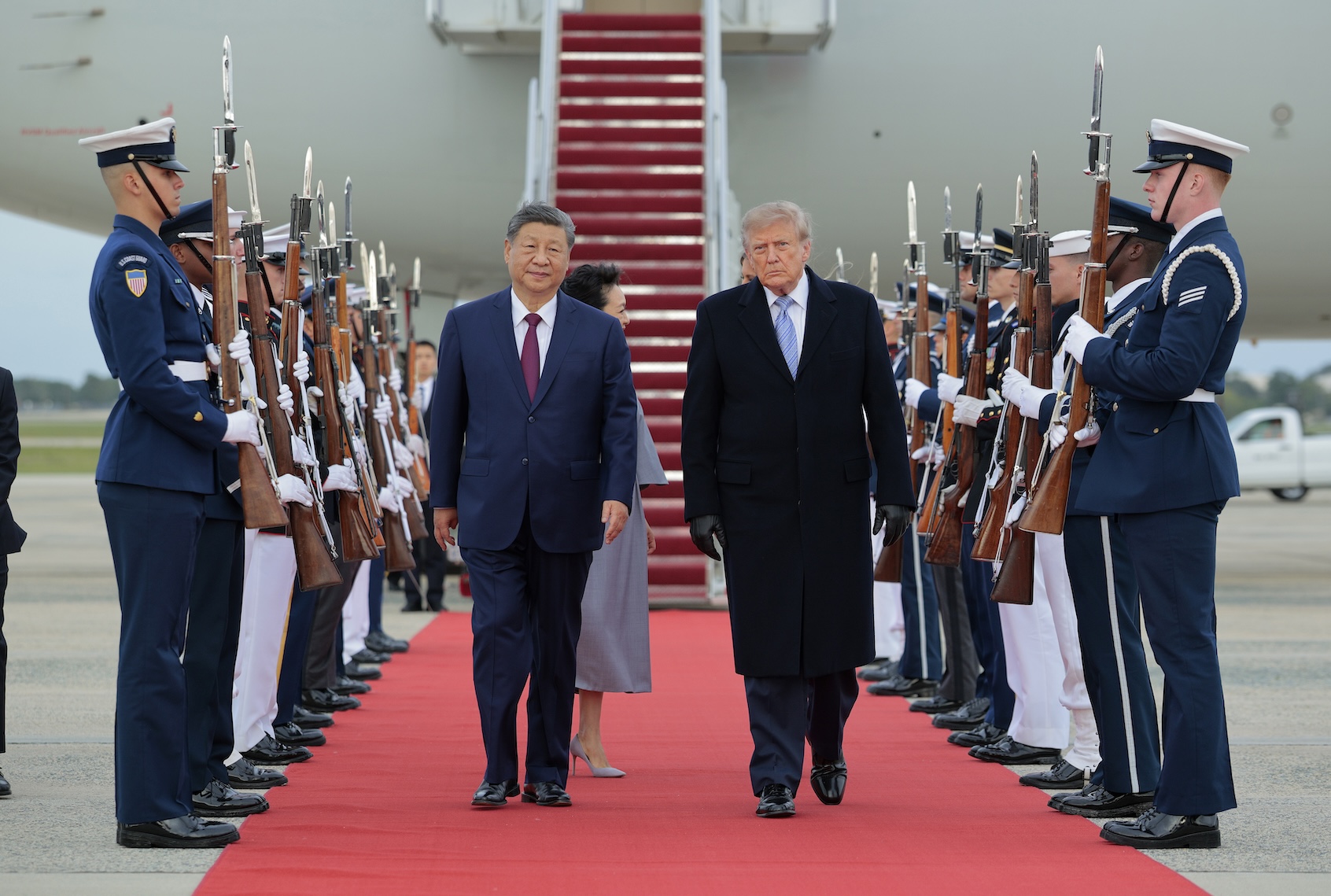
Certain obvious questions arise from Chinese President Xi Jinping’s visit to Washington this past week, a spectacle that one observer has described as “diplotainment” rather than actual diplomacy. Exactly how much did Donald Trump abase himself in service to a temporary and transactional friendship with the dictatorial leader of a nation that is, at least by conventional standards, America’s principal strategic enemy? 

No one knows; I am tempted to surmise that Trump doesn’t know himself. The man who in sunnier times for his regime enjoyed calling himself “your favorite president” does not seem to be his own favorite president these days. Trump almost visibly glowed with delight when Xi praised the quality of service and attention to detail of his White House visit. “Everything is done to the highest order of perfection, and there is thought in every little detail,” the Chinese president said through a translator. “And it’s greatly appreciated.”

You could describe that as the meaningless courtesies of routine statecraft, but it also suggested a high-flying hotel guest offering his compliments to the concierge: The eggs this morning were entirely delicious. And the way your people turn down the sheets at night: exquisite!

If we could somehow remove ourselves from the anguish and destruction caused by Trump’s improvised policies (which resemble comic-book versions of Big Brother’s “Two Minutes Hate” from the film version of “1984”) and his aggressively stupid public persona, we might be able to perceive some pathos in his predicament. He cannot escape from a situation he believed he had created and felt he could control: He is the massively unpopular elected leader of a rapidly collapsing superpower, whose downward slide he promised to reverse but has only accelerated, perhaps to the point of terminal velocity.

Trump visibly and hungrily longs for things he cannot have: the alleged greatness of the mythological American past, rendered as white supremacist schlock inherited third hand from the more vigorous fascist movements of the last century; the enforced adulation and obligatory public spectacle of a totalitarian regime such as Xi’s China or Kim Jong-un’s North Korea; most of all, perhaps, his own youth as a brash Manhattan philanderer and unstoppable political renegade, when he didn’t fall asleep in public or stumble around awkwardly with an unexplained contraption under his clothing.

Trump visibly longs for things he cannot have: the alleged greatness of the American past, rendered as white supremacist schlock; the enforced adulation of a totalitarian regime; most of all, perhaps, his own youth as a brash Manhattan philanderer and unstoppable political renegade.

To consider such matters is not a distraction; it begins to point us toward the larger and more painful questions behind the Xi-Trump pseudo-summit. It surprised literally no one that the two leaders negotiated no new agreements on regulating A.I. (or “Super Intelligence,” in Trump’s self-parodying rebrand), the status of Taiwan, the sporadic trade war between the two nations or ending the war with Iran and restarting the global flow of Middle East oil. No mention was made of Trump’s vaporware claims last May that the Chinese had agreed to buy hundreds of Boeing aircraft and $10 billion worth of U.S. beef and soybeans, but Xi promised to send two pandas from China’s breeding facility to the Atlanta zoo. So much winning. It’s impossible to calculate.

In large part, the absolute nothingness of this summit reflects the fact that China is already winning across the board and Xi needed nothing from Trump beyond the legitimation provided by a diplotainment spectacle “to the highest order of perfection.” As China scholars Nicholas Bequelin and Yaqiu Wang write in a Foreign Policy analysis published before the summit, over the first 19 months of Trump’s second term, the geopolitical “balance of power has shifted in Beijing’s favor”:

China has weathered the trade war, narrowed the technology gap, tightened its leverage over critical supply chains, increased pressure on Taiwan, and deepened ties with Russia and much of the global south.

Contrary to more Sinophobic commentators, they argue that China’s ruthlessly pragmatic leadership is not interested in dominating the world, or at least not in the same way postwar America did. But it does have a long-term agenda, they write, which includes breaking the global dependence on U.S.-centric financial institutions, discrediting democracy and furthering a historical process Xi has described as “the rise of the East and the decline of the West.”

I don’t disagree with any of that, but the most important aspect of Bequelin and Wang’s analysis gets a little buried beneath a forest of impeccably organized policy details. Xi has no need to strike an overtly aggressive posture and can afford to cosplay friendship with Trump because “the West,” or at least its greatest military and economic power, is doing a terrific job of declining all on its own. To borrow the nostrum attributed to Napoleon, the Chinese president is smart enough not to interrupt an opponent while he’s making a mistake. 

It may take generations — if there are any future generations — to measure the scale of America’s self-inflicted damage, which goes well beyond material issues into the realm of psychology or perhaps spirit. (If it’s pretentious to use the Hegelian term Geist, it still fits.) It remains astonishing, not to mention upsetting and enraging, that in the face of a global climate crisis that has already caused millions of deaths and is obvious to nearly everyone on the planet, the U.S. has deliberately chosen to double down on fossil fuels while “China is consolidating its worldwide dominance in batteries, solar, and EVs,” as Bequelin and Wang write. 

Faced with America’s spectacular self-own, who can blame people in the Global South for suspecting that the tradeoff between “democracy” and “authoritarianism” was never as straightforward as they were led to believe?

Chinese solar panels and batteries, often offered at steeply discounted prices, are revolutionizing transit and energy issues in many poorer countries, beginning to break the expensive and damaging addiction to foreign oil. Meanwhile, the U.S. has largely abandoned or dismantled its foreign aid programs aimed at fostering economic development, public health and education, while doing its level best to destroy its own reputation as a multiracial secular republic rooted in the rule of law. Faced with America’s spectacular self-own (which didn’t start with Trump, to be clear), who can blame people in the Global South for beginning to suspect that the tradeoff between “democracy” and “authoritarianism” was never as straightforward as they were led to believe?

Despite the widespread anger and disillusionment of Trump’s second term — an encouraging trend, to be clear — it’s still too easy for Americans to duck the biggest and most glaring question of all: To paraphrase one of the greatest works of postmodern angst, how did we get here? It no longer feels remotely adequate (if it ever did) to suggest that angry, vicious people accidentally elected an angry, vicious president who is pursuing a self-destructive and nihilistic agenda, and that at some future date our national sanity and our “indispensable” role in world affairs will be reasserted. 


Want more sharp takes on politics?
Sign up for our free newsletter, Standing Room Only by Amanda Marcotte, also a weekly show on YouTube or wherever you get your podcasts.


We tried that, remember? It didn’t work. Perhaps, from some great historical remove, Joe Biden’s presidency will appear noble and tragic. But it was also doomed, trapped in a vision of the past every bit as delusional as the MAGA fantasy, and nearly as damaging. The Biden regime’s self-appointed mission of enforcing a “rules-based order” involved pretending that the world had not changed, that America was still widely beloved and admired, that our so-called republic had not bred and nurtured Donald Trump and that he did not embody its bottomless greed, its gleeful ignorance, its wounded and flatulent national pride.

And so we arrive at the final conundrum of the Trump-Xi summit, and our president’s stopped-clock tendency to stumble upon hard truths. In his inimitable ass-backward fashion, Trump has discerned that the “free world” has become a meaningless abstraction and liberal democracy is in a state of systemic failure. He is correct about that, at least to a point. But he can provide no answer beyond prostrating himself before dictators and building monuments to himself in imitation of their grandiosity. If China’s repressive techno-state makes a distinctly unappealing candidate to lead the world into the future, America can only offer competing versions of an imaginary past. Hey, at least we got those pandas. 

The post Trump rolls over for China’s panda gift appeared first on Salon.com.

  •  

Pluralistic: How Canada can help Americans and defeat America (23 Aug 2026)


Today's links

  • How Canada can help Americans and defeat America: True Carneyism has never been tried.
  • Hey look at this: Delights to delectate.
  • Object permanence: Brazil v AIDS drug patents; TSA v gel-bras; After the Siege (Russian); Names are hard; Layton's last message; Hospital bill secrets; "The Unraveling"; Friction cannot be reduced, only redistributed; Free Kevin; EFF v Barney; MP3tunes; "Ghosts With Shit jobs"; Ikea as dystopian design-fiction; Torturing "young conservatives"; Roald Dahl body yeast ale; Prisoners die of heat; Privacy v antitrust; The internet is boring (2001); TSA v explosive water; Internet Archive x 9/11; Peter Thiel x litigation financing startup; Universities v unions.
  • Upcoming appearances: Sydney, Melbourne, Brighton, London, South Bend.
  • Recent appearances: Where I've been.
  • Latest books: You keep readin' em, I'll keep writin' 'em.
  • Upcoming books: Like I said, I'll keep writin' 'em.
  • Colophon: All the rest.


A Canadian flag, its elements replaced with circuit boards. In the foreground, a bent-double, exhausted Uncle Sam trudges over rocky terrain, shlepping a giant sack on his back. Centered in the maple leaf is the word SORRY.

How Canada can help Americans and defeat America (permalink)

As Canada is learning (the hard way), the "art" of all of Trump's deals can be summed up in a single word: "renege":

https://pluralistic.net/2026/07/22/table-flipper/#graveyard-of-indispensable-nations

In 2020, Donald Trump ripped up NAFTA, a trade deal that conferred a huge advantage to the USA at Canada's expense, and replaced it with CUSMA, a trade deal that was even more advantageous to America, and even worse for Canada. In 2024, after being elected for the second time, Trump publicly railed against CUSMA using the exact same language he'd used to decry NAFTA, branding it "a very bad deal" that needed to be shredded and renegotiated.

To that end, Trump declared sweeping tariffs on Canada's exports, thereby raising the costs Americans paid for many everyday goods, because while Canada does not ship a lot of finished products to the US, it is a key supplier of parts and materials, all of which were made instantly more expensive thanks to the Trump tariffs. Trump went on to insist that Canada should annex itself to the US, becoming the "51st State." His operatives openly meddled in Canadian separatist movements, backing the "Wexit" partisans who want to separate the oil-rich, boom/bust-plagued province of Alberta from Canada.

CUSMA was negotiated by Justin Trudeau's government, and Trump II's tariff war landed on Trudeau's successor, Canadian Prime Minister Mark Carney, billed as a technocratic safe pair of hands who could be relied upon for sober, effective leadership.

Much to everyone's surprise, Carney – the epitome of a "Davos Man" – responded to the Trump tariffs by traveling to Davos and giving a fiery speech denouncing Trump and declaring a "rupture" that left the old world order dead:

https://www.weforum.org/stories/forum-institutional/davos-2026-special-address-by-mark-carney-prime-minister-of-canada/

Carney promised that Canada would go "elbows up" against America, with retaliatory tariffs, blockades and boycotts of key US exports. Cutting off this stream of goods would have the same effect on Canadians that Trump's tariffs had on Americans: raising prices. Unlike their American cousins, Canadians were far more tolerant of this increase in their cost of living, because, unlike Americans, Canadians believed the narrative that they were sacrificing for the good of their country against an existential threat from a fractious neighbour. Americans were far less willing to believe that Canada was somehow cheating the US or flooding the country with fentanyl.

"Elbows up" is largely a war of symbols, in which Canadians take pride in mastering the minute differences between "Product of Canada," "Made in Canada," "Assembled in Canada," and "Designed in Canada" so they can seek out maximal Canadianness in their consumption choices. There's even a kind of twisted honour in committing yourself to drinking Wayne Gretzky's shitty rye in preference to delicious American bourbon, a way to affirm your love of country with each astringent, metallic swallow.

When the trade war was confined to symbolic terrain, Carney's elbows remained reliably elevated. But outside the realm of symbols, Carney's elbows wilted.

Take the Digital Services tax, a plan to charge America's tax-evading tech giants a 3% levy to make up for the untaxed profits they keep by pretending to be Irish. So long as Trump's tech giants can dodge their tax obligations, they can always outcompete Canada's tech sector, who are expected to pay 38% federal and provincial tax.

American tech companies are closely allied with the Trump regime: they financed his campaign, conduct domestic and international surveillance for him, provide the software to administer his ethnic cleansing, and restrict access to software that helps Americans evade the armed secret police he sent into the streets to kidnap and disappear his enemies:

https://pluralistic.net/2025/10/06/rogue-capitalism/#orphaned-syrian-refugees-need-not-apply

Trump repaid his tech giants by threatening Carney with still more tariffs unless he canceled the Digital Service Act, and Carney capitulated. Meanwhile, Carney raced to enact a plan to fire tens of thousands of civil servants and replace them with AI chatbots running American software on American chips:

https://www.pm.gc.ca/en/news/news-releases/2026/06/04/prime-minister-carney-launches-ai-all-canadas-new-national-artificial

Canada's federal and provincial ministries are all entirely dependent on American cloud software, most notably Microsoft's Office 365, a package that Trump has fashioned into a geopolitical weapon, ordering Microsoft to shut down foreign officials who thwarted his plans, denying them access to all their data and cutting off their ability to communicate with the outside world:

https://apnews.com/article/icc-trump-sanctions-karim-khan-court-a4b4c02751ab84c09718b1b95cbd5db3

In other words, Canada is already terribly vulnerable to American cyberwarfare. Trump's tech companies don't have to hack into Canada's digital infrastructure to shut it down: they already control it. But – incredibly – Carney found a way to make this situation even worse, turning over key aspects of the digital back-end of Canada's military to Palantir, the tech company most closely aligned with Trump, whose CEO openly boasts that his company was founded to kill America's political enemies:

https://thedeepdive.ca/canada-military-palantir-license-deal/

Carney's symbolic gestures – memorable speeches and minor changes to consumption habits – are second to none. But when it comes to building a strong country that is resilient against the attacks we can all foresee (not least because Trump has repeatedly told us he intends to launch them), Carney himself becomes Carneyism's fiercest opponent:

https://pluralistic.net/2026/05/30/rupture/#deeds-not-words

It's not just the attacks that are foreseeable, alas. Trump can always be relied upon – to break his word. Carney repeatedly caved to Trump, and in response, Trump has hit Canada with massive new tariffs – 50%! Remember: the "art" of every Trump deal is renege:

https://www.pbs.org/newshour/economy/what-to-know-about-trumps-50-tariffs-on-canadian-goods-that-just-went-into-effect

Trump can also be relied upon to circle back to his fixations and obsessions. Decades ago, someone showed Trump a Mercator projection map of the Earth and he became obsessed with "yuge" Greenland, to the point where he is prepared to dissolve Nato and go to war with Europe to steal it from Denmark:

https://archive.is/3Q8nj

By the same token, Trump has long been publicly obsessed with the Gilded Age president William McKinley, who enacted sweeping tariffs at a time when the US economy was rapidly growing, a fact that lodged in Trump's brain and led him to believe that tariffs are a surefire growth-hack that will let him eliminate taxes on the wealthy without shutting down the country:

https://edition.cnn.com/2025/02/12/business/trump-william-mckinley-tariffs/

Trump will still be obsessing about these idées fixes when he draws his last breath, gasping out "Greenland…tariffs" as he tumbles from his golden toilet, forehead and coronary arteries bulging from the strain of trying to pass a half-digested Big Mac with only a viscous paste of rectal mucus and Diet Coke to lubricate that final, unyielding bolus.

The fact that Trump is immune to learning from his mistakes (because that would require admitting that he made a mistake) does not bind Canada to do the same. Quite the contrary: Trump's inability to learn or reason means that if Canada engages in novel retaliatory tactics, it stands a good chance of flummoxing the Mad King, leaving him flat-footed and lumbering while it dekes him out and swarms past him.

Lucky for Canada, Trump's incontinent belligerence has opened up a large and diverse territory of novel tactics for conducting both geopolitical and economic policy. As November Kelly says, "Trump inherited a poker game rigged in his favour but he flipped over the table anyway because he resents having to pretend to play." The systems that Trump has dismantled as unfair to the US were, in fact, sources of tremendous advantage to America.

Take those tech companies that have fused so tightly with the Trump regime. These companies operate global monopolies that allow them to extract vast sums and even vaster troves of sensitive data from billions of people around the world. Having attained total economic dominance and total technical lock-in, these companies have embarked on a program of enshittification, squeezing their customers and suppliers for even more data and even more money:

https://us.macmillan.com/books/9780374619329/enshittification/

Under normal market conditions, the decay of these American platforms would invite competitors from around the world. The fact that Apple and Google extract 30% of every dollar spent in their app stores would bring forth new app stores who were willing to give better deals to app makers and app users. The fact that HP charges $10,000/gallon for the coloured water in its printers would invite competitors who were willing to take a mere 100,000% margin on ink.

The fact that Meta and Google and Microsoft and Apple spy on you with your devices and software and use that data to target you, manipulate you and overcharge you – and to train their AIs to steal from you even more efficiently – would create demand for privacy blockers, jailbreakers, and other "adversarial interoperability" tools that force your technology to work for you, even if the manufacturer wishes it were otherwise:

https://pluralistic.net/2025/11/01/redistribution-vs-predistribution/#elbows-up-eurostack

But we don't have "normal market conditions." For more than a quarter of a century, the US Trade Representative has demanded that all of America's trading partners – including Canada – enact "anti-circumvention" laws that make it a crime to alter how a digital device works unless the original (usually American) manufacturer consents.

In other words, it's illegal for some Waterloo grads to tap ambitious RIM millionaires for the seed capital to start a company that helps Canadians install Canadian app stores on their Canadian phones so when they buy things from other Canadians, all the money stays in Canada, without a 30% "app tax" being siphoned off by either Google or Apple.

That's right: in 2012, Canada passed a law that lets American companies use Canada's courts to destroy Canadian companies that help Canadian technology users get more out of their own property. This law – the Copyright Modernization Act – was wildly unpopular from the start. A federal consultation drew over 6,000 opposing comments, and only 53 comments in support of the bill. But Prime Minister Stephen Harper whipped the vote among his Conservative MPs and passed it, because he judged that tariff-free access to America's markets to be a price worth paying:

https://pluralistic.net/2024/11/15/radical-extremists/#sex-pest

Trump's tariffs prove that this was a bad bargain. By voluntarily gluing its technological elbows to its sides, Canada made itself easy pickings for America's tech giants, who wiped out Canada's tech sector while making Canada geopolitically and economically dependent on – and vulnerable to – the US and its tech companies. Canada is long overdue for a reckoning with this blunder.

The best time to have made Canada digitally sovereign would have been before an American president announced his intention to annex Canada and began explicitly deploying America's tech companies to attack his geopolitical adversaries.

The second-best time is now.

By repealing Bill C-11 and legalizing reverse-engineering and modification of digital technology with consent of its users and in accordance with privacy, consumer and labour rights, Canada will gain a devastating counter to Trump's tariffs.

Not only will legalizing jailbreaking let Canadians get more out of their own property, it will turn America's tech trillions into Canada's tech billions – while making Canada digitally sovereign by facilitating the uncoupling of Canadian ministries, corporations, households, and devices from America's cloud. This is how Canada removes the digital kill switch it handed to America, a kill switch that can shut down its tractors, phones, and governments.

This is the best possible moment for such a move. To incubate a successful tech sector, you need a) an innovative product; b) skilled technologists; and c) capital. Thanks to Trump, Canada has all three.

First: innovative ideas. Thanks to the prohibition on modifying America's defective tech exports, there is a whole orchard of low-hanging fruit for product designers to pick from: an app that aggregates all of your streaming services into one place and lets you record shows to watch later, even if the service deletes them; reliable tools for using generic ink and independent app stores; new firmware for tractors and cars that facilitates independent repair and unlock subscription features, and, of course, privacy- and ad-blockers of all description. These are truly disruptive products, striking at the maddening antifeatures installed at the insistence of sclerotic, extractive tech bosses. Move fast and break their things!

Next: talent. Who will do that fast moving? Again, we can thank Trump for giving Canada an army of skilled technologists who have fled Silicon Valley one step ahead of an ICE chud who wanted to black-bag them and deport them to Liberia (or a Salvadoran slave-labor camp). Trump is creating the largest wave of reverse brain-drain in history, as everyone ambitious and smart realizes that their lifelong US tech work dream is a nightmare. If Canada can't get enough talent to harvest that orchard of low-hanging fruit from its returning Canadians, it need only open its borders to the skilled technologists of all nations who are racing out of America as fast as they can go.

Finally, money. The AI bubble collapse is imminent. The forces of capital are desperate for promising, high-return investment opportunities that aren't grossly overvalued, overhyped and underperforming AI companies. Even if you can find a company like that in America, it's increasingly apparent that to make that business a success, you will need to buy more $TRUMP coins than your rivals, lest Trump direct his agencies to destroy your fledgling business.

And here's the kicker: turning America's trillions into Canada's billions, moving fast and breaking America's tech-kings, fixing the defects in America's extractive tech exports? It's all good for Americans. Sure, cratering the share-price of America's Big Tech companies will be bad for America's retirement savers, but the median American worker only has $955 saved for retirement:

https://finance.yahoo.com/news/955-saved-for-retirement-millions-are-in-that-boat-150003868.html

Most Americans are far more exposed to the predatory conduct of US tech companies than they are to the share price of those companies. That's because Americans are the beta-testers for every ripoff and surveillance tool that Silicon Valley produces. Long before those tools get to Canada or find their way around the world, they are making Americans poorer and worse off.

Remember: Canada is America's second largest trading partner. Americans are really good at buying things from Canada – even when those things aren't allowed in America. Trump wasn't entirely wrong when he accused Canada of flooding America with drugs – but the drugs Canada sends to America aren't fentanyl and oxy. Canada sends America insulin and other cheap pharmaceuticals that cost 10-100x more in Ripoff America than they do in Canada. If Americans can figure out how to buy cheap generic meds from Canadians over the US Postal Service, they will be able to buy disenshittification tools from Canadians over the internet.

Selling Americans products that make their lives better is much better politics than boycotting American products that make Canadians' lives better. No politician can pursue a strategy of higher prices and lower living standards forever – not even if you've got a lot of "elbows up" rhetoric you can use to convince Canadians that they're doing their duty to the nation by paying more for everything. Paying more for everything to punish Americans is like punching yourself in the face as hard as you can and hoping the downstairs neighbours say "ouch."

When Canadians swap delicious American bourbon for Wayne Gretzky's shitty rye, they punish corn farmers in states that begin and end with a vowel – farmers who have nothing to do with Canada's problems. By swapping disenshittification for tariffs, Canadians can go back to drinking delicious bourbon, and make money from that farmer by selling him the jailbreaks he needs to fix his tractor without paying the John Deere tax of $200+ that the company charges after you do your own repair to send someone to the farm to type an unlock code into your console.

A lot of Very Serious Grown Up Canadians have told me that they think Carney should confine his response to Trump to toothless symbolic gestures, lest they make Trump mad. Trump is always mad. He gets mad at symbolic gestures. He gets mad if you point out that Ronald Reagan thought tariffs were stupid:

https://abcnews.com/Politics/trump-raises-tariffs-canada-10-after-reagan-ad/story?id=126866712

Freeing Americans from the tyranny of their own tech companies has the power to create a partisan army of American Canada weebs who will fight for Canada when – not if – Trump gets mad at Canada. That's the best defense Canada can have – common cause and solidarity with the people of America, who share a common enemy in Trump, the least popular president in history, who is looting billions and letting his cronies destroy Americas' lives.

That's some real elbows up stuff. True Carneyism has never been tried – especially by Carney. It's long past time someone gave it a go.


Hey look at this (permalink)


A shelf of leatherbound history books with a gilt-stamped series title, 'The World's Famous Events.'

Object permanence (permalink)

#25yrsago Kevin Mitnick is out of prison https://web.archive.org/web/20010000000000*/https://www.techtv.com/screensavers/showtell/story/0,23008,3343816,00.html

#25yrsago Brazil to nationalize AIDS drug patents https://edition.cnn.com/2001/WORLD/americas/08/22/aids.drug/index.html

#25yrsago Copyright your DNA https://web.archive.org/web/20010827170510/http://www.cosmiverse.com/science08230102.html

#25yrsago The internet is boring now https://www.nytimes.com/2001/08/26/us/exploration-of-world-wide-web-tilts-from-eclectic-to-mudane.html

#20yrsago TSA busts “explosive water” that turns out to be cosmetics https://web.archive.org/web/20060822123448/http://www.kxma.com/getARticle.asp?ArticleId=35223

#20yrsago Windows Media DRM cracked, no one cares https://archive.blogs.harvard.edu/cmusings/2006/08/25/#a1889

#20yrsago Canadian music label puts fans and artists first https://web.archive.org/web/20060830211418/http://wired.com/wired/archive/14.09/nettwerk_pr.html

#20yrsago After the Siege in Russian https://craphound.com/Cory_Doctorow_-_After_the_Siege_Russian.html

#20yrsago Victory in War on Moisture: Gel-bras once again safe! https://web.archive.org/web/20060820185006/http://www.tsa.gov/travelers/airtravel/prohibited/permitted-prohibited-items.shtm

#20yrsago EFF sues Barney the humorless, copyright maximalist dinosaur https://web.archive.org/web/20060813093642/http://www.eff.org/news/archives/2006_08.php#004884

#15yrsago MP3tunes verdict: music lockers are legal https://www.eff.org/deeplinks/2011/08/mp3tunes-victory-music-lockers-is-good

#15yrsago Lolita on Wikipedia: 2,300 edits later https://web.archive.org/web/20111008072145/http://www.theawl.com/2011/08/case-history-of-a-wikipedia-page-nabokov’s-lolita

#15yrsago SF mockumentary: ‘Ghosts With Shit Jobs’ — China looks at westerners with awful jobs https://ghostswithshitjobs.com/

#15yrsago Information consumes attention: focus in the age of abundant stimulus https://web.archive.org/web/20111113004501/http://nymag.com/print/?/news/features/56793/

#15yrsago Jack Layton’s final public words: “Love is better than anger. Hope is better than fear.” https://web.archive.org/web/20110829050308/http://beta.images.theglobeandmail.com/archive/01310/Jack_Layton_s_lett_1310744a.pdf

#15yrsago Getting people’s names right in software design: a LOT harder than it looks https://www.antipope.org/charlie/blog-static/2011/08/why-im-not-on-google-plus.html

#15yrsago Internet Archive’s cache of 24/7 TV footage from 9/11 and beyond https://archive.org/details/911

#10yrsago Peter Thiel & Y Combinator fund a “litigation financing” startup to make money off other peoples’ lawsuits https://gizmodo.com/a-startup-backed-by-peter-thiel-makes-bankrolling-civil-1785707590

#10yrsago Universities fought unionization’s ‘one-size-fits-all’ using identical arguments https://crookedtimber.org/2016/08/25/great-minds-think-alike/

#10yrsago 5 years after Texas GOP’s attack on women’s reproductive health, TX leads developed world in maternal mortality https://web.archive.org/web/20160820212602/https://www.theguardian.com/us-news/2016/aug/20/texas-maternal-mortality-rate-health-clinics-funding

#10yrsago You didn’t find a meteorite https://sites.wustl.edu/meteoritesite/

#10yrsago Young Conservatives’ “leadership seminar” featured food & water deprivation, sexist epithets, physical abuse https://web.archive.org/web/20160824145226/https://www.thestar.com/news/queenspark/2016/08/23/ontario-tories-apologize-to-party-activists-after-controversial-youth-seminar.html

#10yrsago The 2017 Ikea Catalog considered as dystopian urban microapartment futurism https://web.archive.org/web/20160817154440/https://www.fastcodesign.com/3062854/ikeas-2017-catalog-is-a-terrifying-glimpse-into-the-tiny-apartments-of-the-future

#10yrsago Singapore will disconnect entire civil service from the internet https://www.theguardian.com/technology/2016/aug/24/singapore-to-cut-off-public-servants-from-the-internet

#10yrsago They’re making a Twits ale from Roald Dahl’s body-yeast https://web.archive.org/web/20160817154531/http://www.independent.co.uk/arts-entertainment/books/news/beer-to-be-made-from-yeast-swabbed-from-roald-dahls-writing-chair-a7195721.html

#10yrsago As America’s temperatures soar, prisoners are dropping dead https://web.archive.org/web/20160825000426/https://theintercept.com/2016/08/24/deadly-heat-in-u-s-prisons-is-killing-inmates-and-spawning-lawsuits/

#5yrsago Are privacy and antitrust on a collision course? https://pluralistic.net/2021/08/24/illegitimate-greatness/#peanut-butter-in-my-antitrust

#5yrsago What kind of emergency is our emergency? https://pluralistic.net/2021/08/23/dont-wanna-spoil-the-surprise/#monocausotaxophilia

#5yrsago The secrets of hospital bills https://pluralistic.net/2021/08/23/dont-wanna-spoil-the-surprise/#surprise

#5yrsago Belarusian dictator pwned by "cyber-partisans" https://pluralistic.net/2021/08/25/taxes-are-for-the-little-stores/#cyber-partisans

#5yrsago Big Box stores' other shoe drops https://pluralistic.net/2021/08/25/taxes-are-for-the-little-stores/#metastatic-parasites

#5yrsago The Unraveling https://pluralistic.net/2021/08/23/dont-wanna-spoil-the-surprise/#the-two-genders

#1yrago Friction cannot be reduced, it can only be redistributed https://pluralistic.net/2025/08/23/become-unoptimizable/#downward-redistribution


Upcoming appearances (permalink)

A photo of me onstage, giving a speech, pounding the podium.


A screenshot of me at my desk, doing a livecast.

Recent appearances (permalink)


A grid of my books with Will Stahle covers..

Latest books (permalink)


A cardboard book box with the Macmillan logo.

Upcoming books (permalink)

  • "The Post-American Internet," a geopolitical sequel of sorts to Enshittification, Farrar, Straus and Giroux, 2027
  • "Unauthorized Bread": a middle-grades graphic novel adapted from my novella about refugees, toasters and DRM, FirstSecond, April 20, 2027

  • "Enshittification, Why Everything Suddenly Got Worse and What to Do About It" (the graphic novel), Firstsecond, 2027

  • "The Memex Method," Farrar, Straus, Giroux, 2027


Colophon (permalink)

Today's top sources:

Currently writing:

  • “Once Is Enemy Action,” a science fiction novel about the origins of modern technofascism. Today's words: 557 (9258 total).
  • "The Post-American Internet," a sequel to "Enshittification," about the better world the rest of us get to have now that Trump has torched America. Fourth draft completed. Submitted to editor.

  • A Little Brother short story about DIY insulin PLANNING


This work – excluding any serialized fiction – is licensed under a Creative Commons Attribution 4.0 license. That means you can use it any way you like, including commercially, provided that you attribute it to me, Cory Doctorow, and include a link to pluralistic.net.

https://creativecommons.org/licenses/by/4.0/

Quotations and images are not included in this license; they are included either under a limitation or exception to copyright, or on the basis of a separate license. Please exercise caution.


How to get Pluralistic:

Blog (no ads, tracking, or data-collection):

Pluralistic.net

Newsletter (no ads, tracking, or data-collection):

https://pluralistic.net/plura-list

Mastodon (no ads, tracking, or data-collection):

https://mamot.fr/@pluralistic

Bluesky (no ads, possible tracking and data-collection):

https://bsky.app/profile/doctorow.pluralistic.net

Medium (no ads, paywalled):

https://doctorow.medium.com/

Tumblr (mass-scale, unrestricted, third-party surveillance and advertising):

https://mostlysignssomeportents.tumblr.com/tagged/pluralistic

"When life gives you SARS, you make sarsaparilla" -Joey "Accordion Guy" DeVilla

READ CAREFULLY: By reading this, you agree, on behalf of your employer, to release me from all obligations and waivers arising from any and all NON-NEGOTIATED agreements, licenses, terms-of-service, shrinkwrap, clickwrap, browsewrap, confidentiality, non-disclosure, non-compete and acceptable use policies ("BOGUS AGREEMENTS") that I have entered into with your employer, its partners, licensors, agents and assigns, in perpetuity, without prejudice to my ongoing rights and privileges. You further represent that you have the authority to release me from any BOGUS AGREEMENTS on behalf of your employer.

ISSN: 3066-764X

  •  

Pluralistic: How the EU can punish Google (despite Trump) (27 Jul 2026)


Today's links

  • How the EU can punish Google (despite Trump): Grant me the courage to change the things I can.
  • Hey look at this: Delights to delectate.
  • Object permanence: Chilling Effects; Billy Bragg v Myspace; Glenn Beck calls murdered Norwegian children "Hitler Youth"; Photog sues Getty for $1b copyfraud; Best paid CEOs perform worst; Olympics v "Olympics"; Alberta tar sands v "hot lesbians"; IoT security apocalypse; 3 Little Pigs in pidgin; The nasty party; Copyright extortionist infringed fellow extortionist; Grandpa mobbed for photographing grandson in park; Ice Bucket Challenge didn't cure ALS; Twiddling enshittifies your brain.
  • Upcoming appearances: Edinburgh, Sydney, Melbourne, Brighton, London, South Bend.
  • Recent appearances: Where I've been.
  • Latest books: You keep readin' em, I'll keep writin' 'em.
  • Upcoming books: Like I said, I'll keep writin' 'em.
  • Colophon: All the rest.


A giant fist clutching the Android robot. The robot is orange and has Trump's hair. The fist extends from an EU-flag-blue cuff, and it is ringed with yellow EU flag stars. To the side is an old-timey western bar with a drunk, smoking, glaring Uncle Sam leaning on it. The background is a haunted, moonlit forest.

How the EU can punish Google (despite Trump) (permalink)

The "Serenity Prayer" (Serenity to accept things I can't change/Courage to change the things I can/Wisdom to know the difference) is usually cited as pop psychology or addiction recovery advice, but I think there's a place for it in policymaking.

Take the EU's fight against US Big Tech. During the Biden years, the EU's tech policy matured into something serious and ambitious, culminating in the Digital Markets Act (DMA) and Digital Services Act (DSA), a pair of big, muscular policies that would curb Big Tech's most abusive conduct. The EU's ambition didn't occur in a vacuum: it was part of a global wave of antitrust fervor whose top agenda item was reining in tech:

https://pluralistic.net/2025/06/28/mamdani/#trustbusting

In this fight, the EU had important partners all over the world. For example, South Korea and Japan used the facts uncovered through EU enforcement action against Google and Apple to pursue similar cases:

https://pluralistic.net/2024/04/10/an-injury-to-one/#is-an-injury-to-all

But the EU's most important partner in its fight against American Big Tech was America. Biden's trustbusters – Lina Khan, Rohit Chopra, Jonathan Kanter, Tim Wu, et al – were every bit as serious about Big Tech power as anyone in the EU. After all, the American public are always the first victims of any new tech scam, and America is the only country with a large, affluent population who lack modern, comprehensive consumer privacy protection, making Americans highly prized prey for tech companies:

https://pluralistic.net/2025/04/23/zuckerstreisand/#zdgaf

With America and the EU on the same side of the tech fight, the world had a fighting chance. Tech knew this, which is why Big Tech backed Trump hard during the 2024 election and aggressively curried his favor after he won. From the tech barons who paid $1m each to sit behind Trump on the inaugural dais to the millions tech companies donated to Trump's Epstein Ballroom at the White House, tech has made it clear that it supports anything Trump wants to do, provided he shields Big Tech from any attempt to limit their ability to spy on and steal from Americans and the world.

Even before he took office, Trump made it clear how he would reward tech's loyalty: weeks before the inauguration, Trump went to Davos and threatened the EU with reprisals if they enforced the DSA or DMA against his tech companies:

https://techcrunch.com/2025/01/23/trumps-not-happy-with-how-eu-regulators-have-treated-us-tech-giants/

Trump wasted no time leaning on US trading partners on behalf of Big Tech. He bullied Canadian PM Mark Carney into dropping his plan to tax US tech companies. Big Tech uses a variety of tax-cheating gambits to evade taxation around the world, making it impossible for (tax-paying) domestic companies to compete:

https://www.canada.ca/en/department-finance/news/2025/06/canada-rescinds-digital-services-tax-to-advance-broader-trade-negotiations-with-the-united-states.html

Trump also got UK PM Keir Starmer to drop his plan to tax tech:

https://www.theguardian.com/us-news/2025/apr/01/starmer-offered-big-us-tech-firms-tax-cuts-in-return-for-lower-trump-tariffs

And he got the EU to roll back its plan to regulate AI:

https://fortune.com/2025/11/07/eu-ai-act-weaken-regulation-delay-big-tech-trump-government/

None of the governments that caved to Trump got anything in return. As I've written:

Give Trump everything he asks for and he'll demand more. Deny Trump anything and he'll demand more. Sign a contract with Trump and he'll break it. Send Trump an invoice and he'll stiff you. For Trump, "the art of the deal" can be summed up in one word: renege.

https://pluralistic.net/2026/07/22/table-flipper/#graveyard-of-indispensable-nations

Case in point: after the EU surrendered to Trump on AI regulation, Trump announced that a on ban EU officials who had worked on the Digital Services Act from traveling to the USA:

https://www.state.gov/releases/office-of-the-spokesperson/2025/12/announcement-of-actions-to-combat-the-global-censorship-industrial-complex/

Then, after the EU made more concessions to Trump, he announced a ban on even more EU officials:

https://www.lawfaremedia.org/article/the-trump-administration-targets-europe-s-content-moderation-laws

Trump ordered his tech giants to dig through EU officials' private correspondence so he can figure out who to ban next:

https://www.politico.eu/article/us-congress-judiciary-committee-big-tech-private-communication-eu-officials/

Trump's tech companies got the memo. When the EU ordered Apple to follow the law, Apple told the EU to fuck off:

https://pluralistic.net/2024/02/06/spoil-the-bunch/#dma

After all, Apple is a key partner in the Trump administration's mass deportations. Apple blocked an iPhone app that warns Apple customers if they're about to be kidnapped or murdered by ICE. Trump needs Apple, just as much as Apple needs Trump:

https://pluralistic.net/2025/10/06/rogue-capitalism/#orphaned-syrian-refugees-need-not-apply

Despite this, the EU keeps trying to enforce its laws against Trump's companies. Last week, the Commission announced a $1b fine against Google for violating the Digital Services Act with conduct that cost Europeans many billions:

https://digital-markets-act.ec.europa.eu/commission-fines-google-eur890-million-breaches-digital-markets-act-2026-07-23_en

In other words, Google wasn't even being ordered to disgorge all the money it stole, just some of it. Remember, a fine is a price: the EU's fine here will only make this kind of cheating slightly less profitable.

Nevertheless, Trump responded immediately by threatening the EU with many billions more in tariffs if they continue to attempt to enforce the law against one of his companies:

https://www.lemonde.fr/en/international/article/2026/07/24/trump-says-eu-to-pay-very-big-price-for-890-million-google-fine_6755804_4.html

Trump, the European Commission and Google all know this is about more than one $1b fine. The DSA and DMA both provide for steeply rising fines and other penalties for repeat offenders, and Google clearly has no plan to end its very profitable European crime-spree. Trump's threats aren't a bid to kill this enforcement – Trump wants to kill all enforcement.

Retaliatory tariffs aren't the only weapon Trump has at his disposal. If the EU (or any other country) levies a serious fine against Google, Apple, Oracle, Microsoft, or any of Trump's other tech companies, Trump can order US banks not to turn over those fines, even after the EU sends them a court order for the money. If a bank defies Trump, he can threaten to yank its charter. Or he could just run the same swindle he pulled on Tiktok: stealing the whole company and selling it to one of his buddies, who will run it the way Trump wants.

The reality is that without America's assistance, the EU has precious little hope of forcing American companies to do things they don't want to do. In terms of the Serenity Prayer, this is "a thing they cannot change."

The Serenity Prayer doesn't stop with "things you can't change." The next line seeks "the courage to change the things I can." The EU has no control over Google's conduct, but it has total control over its own conduct.

Specifically, the EU could get rid of the laws that ban European companies from modifying US tech exports. The EU adopted the Copyright Directive in 2001. Article 6 of the EUCD makes it a crime to reverse-engineer and modify a device without the manufacturer's permission. This law was adopted under pressure from the US Trade Representative, who threatened the EU with tariffs on its exports unless it adopted an "anticircumvention rule" that banned EU technologists from making products that let Europeans prevent US tech companies from stealing their money and data":

https://pluralistic.net/2026/01/01/39c3/#the-new-coalition

This law is still in force in the EU, despite the fact that Trump (predictably) reneged on the US side of the bargain, hitting the EU with massive tariffs and even threatening to steal part of Denmark.

Article 6 of the Copyright Directive is the reason European tech companies can't jailbreak America's apps, whether that's to get its government and corporate data off of US platforms:

https://pluralistic.net/2025/10/15/freedom-of-movement/#data-dieselgate

Or to modify American social media apps to respect EU privacy laws:

https://pluralistic.net/2026/01/30/zucksauce/#gandersauce

The EU can't control what Apple or Google do. But the EU can absolutely decide whether Trump's companies can use Europe's courts to destroy European companies that defend the privacy and economic integrity of the European people.

If the EU kills off Article 6 of the Copyright Directive, they can use European companies to bring Google and Apple's defective tech exports into compliance with European law. Unlike Trump's companies, those companies can be forced to pay their taxes and respect their users' privacy, labor and consumer rights.

That's the Serenity Prayer's "wisdom to know the difference."


Hey look at this (permalink)


A shelf of leatherbound history books with a gilt-stamped series title, 'The World's Famous Events.'

Object permanence (permalink)

#25yrsago Chilling Effects https://web.archive.org/web/20010801172448/http://eon.law.harvard.edu/chill/

#25yrsago 13-year-old hacker's book deal: “The Unofficial Guide to Ethical Hacking" https://web.archive.org/web/20011102164905/http://www.vnunet.com/News/1124279

#20yrsago France’s new copyright law slaughters kills use and open source https://web.archive.org/web/20060812223624/http://soufron.typhon.net/spip.php?article150

#20yrsago Billy Bragg gets MySpace’s terms of service changed https://web.archive.org/web/20100809150257/http://blogs.myspace.com/index.cfm?fuseaction=blog.view&friendID=34570397&blogID=137856388&MyToken=626131d4-c695-42ba-867b-754b9e2bfeaa

#15yrsago Buy an Old West town in South Dakota for $0.8M https://web.archive.org/web/20110728012824/https://edition.cnn.com/2011/US/07/27/south.dakota.town.sale/index.html

#15yrsago Glenn Beck compares murdered Norway campers to “Hitler Youth” https://www.latimes.com/archives/blogs/top-of-the-ticket/story/2011-07-25/opinion-glenn-beck-hits-new-low-compares-norway-victims-to-hitler-youth

#15yrsago 3 Little Pigs rendered into Papua New Guinea pidgin https://www.abc.net.au/reslib/200709/r184705_686227.mp3

#15yrsago Why they call the Tories “the nasty party” https://www.theguardian.com/uk/2011/jul/28/tory-lib-dems-clash-on-policy

#15yrsago US ISP/copyright deal: a one-sided private law for corporations, without public interest https://www.eff.org/deeplinks/2011/07/graduated-response-deal-what-if-users-had-been

#15yrsago Copyright extortionist ripped off his competitor’s threatening material https://torrentfreak.com/anti-piracy-lawyers-rip-off-work-from-competitor-110727/

#15yrsago Karl Schroeder: Science fiction versus structured study of the future, sf as aspiration https://www.antipope.org/charlie/blog-static/2011/07/beyond-prediction.html

#15yrsago Norwegian PM refuses to let terrorist attacks drive his country to intolerance and paranoid “security” https://www.nytimes.com/2011/07/28/world/europe/28norway.html?_r=1

#15yrsago Man with camera in park who fled angry parent sought by police (turns out he was taking pix of his grandson) https://web.archive.org/web/20110829052009/https://pixiq.com/article/man-photographing-grandkid-in-park-deemed-suspicious

#10yrsago Laurie Penny at the DNC: “Dissent will not be tolerated. Protest will not be permitted.” https://medium.com/welcome-to-the-scream-room/bad-moon-rising-8cd348df50e9#.9lhcixjn1

#10yrsago The Ice Bucket Challenge did not fund a breakthrough in ALS treatment https://web.archive.org/web/20160914225439/http://www.healthnewsreview.org/2016/07/ice-bucket-challenge-breakthrough-experts-pour-cold-water-superficial-reporting/

#10yrsago Silicon Valley banks offer tech giants’ new hires 100% mortgages on 24 hours’ notice https://web.archive.org/web/20160727095557/http://www.bloomberg.com/news/articles/2016-07-27/zero-down-on-a-2-million-house-is-no-problem-in-silicon-valley

#10yrsago Patent fighters attack the crown jewels of three of America’s worst patent trolls https://web.archive.org/web/20160727191625/https://arstechnica.com/tech-policy/2016/07/patent-defense-group-seeks-to-knock-out-top-three-trolls-of-2015/

#10yrsago Censorship company drops bogus lawsuit against researchers who outed them https://citizenlab.ca/research-interest/

#10yrsago Photographer sues Getty Images for $1B because they’re charging for pix she donated to LoC https://hyperallergic.com/photographer-files-1-billion-suit-against-getty-for-licensing-her-public-domain-images/

#10yrsago First-ever Michelin star for street food awarded to Singaporean hawker stalls https://web.archive.org/web/20160723174014/http://uk.reuters.com/article/us-singapore-food-hawkers-michelin-star-idUKKCN1021XA

#10yrsago Highest-paid CEOs generate lowest shareholder returns https://www.msci.com/documents/10199/91a7f92b-d4ba-4d29-ae5f-8022f9bb944d

#10yrsago Olympics to companies: mentioning “Olympics” in social media is a trademark violation #https://web.archive.org/web/20160727075209/https://www.espn.com/olympics/story/_/id/17120510/united-states-olympic-committee-battle-athletes-companies-sponsor-not-olympics

#10yrsago Pro-tar-sands activists say dirty Canadian oil is better because “lesbians are hot” https://www.joeydevilla.com/2016/07/26/this-ill-advised-hot-lesbians-ad-promoting-canadian-vs-saudi-oil-is-real-and-not-a-parody-by-the-onion/

#5yrsago The infosec apocalypse is nigh https://pluralistic.net/2021/07/27/gas-on-the-fire/#a-safe-place-for-dangerous-ideas

#1yrago How twiddling enshittifies your brain https://pluralistic.net/2025/07/28/twiddlehazard/#outboard-brains-considered-harmful


Upcoming appearances (permalink)

A photo of me onstage, giving a speech, pounding the podium.


A screenshot of me at my desk, doing a livecast.

Recent appearances (permalink)


A grid of my books with Will Stahle covers..

Latest books (permalink)


A cardboard book box with the Macmillan logo.

Upcoming books (permalink)

  • "The Post-American Internet," a geopolitical sequel of sorts to Enshittification, Farrar, Straus and Giroux, 2027
  • "Unauthorized Bread": a middle-grades graphic novel adapted from my novella about refugees, toasters and DRM, FirstSecond, April 20, 2027

  • "Enshittification, Why Everything Suddenly Got Worse and What to Do About It" (the graphic novel), Firstsecond, 2027

  • "The Memex Method," Farrar, Straus, Giroux, 2027


Colophon (permalink)

Today's top sources:

Currently writing: "The Post-American Internet," a sequel to "Enshittification," about the better world the rest of us get to have now that Trump has torched America. Fourth draft completed. Submitted to editor.

  • A Little Brother short story about DIY insulin PLANNING

This work – excluding any serialized fiction – is licensed under a Creative Commons Attribution 4.0 license. That means you can use it any way you like, including commercially, provided that you attribute it to me, Cory Doctorow, and include a link to pluralistic.net.

https://creativecommons.org/licenses/by/4.0/

Quotations and images are not included in this license; they are included either under a limitation or exception to copyright, or on the basis of a separate license. Please exercise caution.


How to get Pluralistic:

Blog (no ads, tracking, or data-collection):

Pluralistic.net

Newsletter (no ads, tracking, or data-collection):

https://pluralistic.net/plura-list

Mastodon (no ads, tracking, or data-collection):

https://mamot.fr/@pluralistic

Bluesky (no ads, possible tracking and data-collection):

https://bsky.app/profile/doctorow.pluralistic.net

Medium (no ads, paywalled):

https://doctorow.medium.com/

Tumblr (mass-scale, unrestricted, third-party surveillance and advertising):

https://mostlysignssomeportents.tumblr.com/tagged/pluralistic

"When life gives you SARS, you make sarsaparilla" -Joey "Accordion Guy" DeVilla

READ CAREFULLY: By reading this, you agree, on behalf of your employer, to release me from all obligations and waivers arising from any and all NON-NEGOTIATED agreements, licenses, terms-of-service, shrinkwrap, clickwrap, browsewrap, confidentiality, non-disclosure, non-compete and acceptable use policies ("BOGUS AGREEMENTS") that I have entered into with your employer, its partners, licensors, agents and assigns, in perpetuity, without prejudice to my ongoing rights and privileges. You further represent that you have the authority to release me from any BOGUS AGREEMENTS on behalf of your employer.

ISSN: 3066-764X

  •  
❌