❌

Reading view

6 Dating Trends That Could Be Secretly Ruining Your Love Life

Getting ghosted used to be the worst thing that could happen after a decent first date. The bar has dropped since then.

And dating wasn’t exactly going great to begin with. A 2023 Pew Research Center report found that 46% of Americans who had used dating apps or websites described their experiences as negative. Between people disappearing without explanation and others keeping you interested with absolutely no intention of dating you, it’s easy to see why. Here are six dating behaviors you might recognize, even if you’ve never heard their ridiculous names.

1. Breadcrumbing

A breadcrumber gives you just enough attention to keep you interested, usually a random “hey stranger” or an Instagram like at a questionable hour, without ever making actual plans.

In a study of 626 adults, researchers found that people who’d been breadcrumbed reported greater loneliness and lower life satisfaction. Ghosting, meanwhile, had no statistically significant association with those outcomes. At least when someone disappears, you eventually stop expecting a text.

2. Monkey Branching

Monkey branching is when someone starts pursuing their next relationship before ending the one they’re already in. They want another person lined up before breaking things off, presumably because spending a few Friday nights by themselves is simply too much to ask.

Dyllan Watkins, a Neuroscience BSc holder, in collaboration with poly dating platform Sister Wives, told Body+Soul that this behavior “could stem from an insecurity around trust or fear of abandonment.” Unfortunately, the person they’re currently dating gets to deal with the consequences.

3. Phubbing

Phubbing is short for phone snubbing, and it’s when someone scrolls through their phone while you’re attempting to have a conversation.

Baylor University researcher James Roberts found that people who experienced more phubbing from their partners reported greater conflict and lower relationship satisfaction. It’s hard to feel appreciated when you’re competing with someone’s Instagram feed or fantasy football league.

4. Floodlighting

Floodlighting is when someone unloads deeply personal information before you’ve had hardly any time to get to know each other. You’re 20 minutes into a first date and already know all about their childhood trauma and the ex who ruined their life.

Brené Brown has described this behavior as a way of protecting yourself from vulnerability. If the other person backs away, the floodlighter can convince themselves that opening up was a mistake.

5. Orbiting

Orbiting is when someone stops texting you but continues watching everything you post on social media. They might even like a photo once in a while. You haven’t had an actual conversation in weeks, but they’re still keeping up with your life on Instagram.

6. Cloaking

Cloaking takes ghosting a step further. Someone you’ve been talking to or dating disappears and blocks you everywhere, including the dating app where you originally matched. They’ve cut off every possible way to contact them, leaving you with no explanation and no opportunity to even ask what happened.

It’s pretty incredible how much effort some people will put into avoiding a conversation that could be over in two minutes.

The post 6 Dating Trends That Could Be Secretly Ruining Your Love Life appeared first on VICE.

  •  

This Is the Most Underrated Body Part on a Woman, According to Men

The neck doesn’t get much credit as a sexy body part. It probably should.

Men on Reddit have been discussing this for years. In an r/AskMen thread, guys admitted there’s something incredibly attractive about a woman putting her hair up or sweeping it over one shoulder to expose her neck. One called the move “so f***ing attractive,” while another described the neck as “a really intimate spot on the body.” A third guy said he liked it because it’s “right above the boobs.” Okay, Beavis.

There’s some research to back up the neck’s reputation as an erogenous zone. Bangor University neuroscientist Oliver Turnbull and his colleagues asked nearly 800 people to rate 41 body areas according to how sexually stimulating they found them. The neck ranked near the top, with women rating it slightly higher than men. Feet didn’t get much love.

Men Say This Overlooked Female Body Part Is Incredibly Attractive

Turnbull was interested in why certain places feel good when touched sexually, while others…not so much. After all, your neck and forehead both contain sensory receptors, but most people would probably prefer a kiss on the neck.

There’s also something intimate about letting another person get that close. “Letting someone touch the neck is a major act of trust, so, understandably, some people hate it,” sex and relationship therapist Cate Campbell told Metro. Some people love having their neck kissed, while others would prefer their partner keep their mouth elsewhere.

And there’s an important difference between kissing someone’s neck and putting pressure on it. Sexual choking has become increasingly common, especially among younger adults, and Indiana University sex researcher Debby Herbenick has spent years studying the risks.

“There is truly no safe way to choke someone,” she told Savage Love. Even relatively light pressure can restrict blood flow to the brain, with potentially serious consequences. Her research has also raised concerns about people experiencing choking during otherwise consensual sex without being asked first.

If you happen to find someone’s neck incredibly attractive, there’s nothing wrong with wanting to give it some attention. Just make sure they’re interested in that attention, too. And keep your hands away from their throat.

The post This Is the Most Underrated Body Part on a Woman, According to Men appeared first on VICE.

  •  

The Surprising Reason Some People Keep Dating Narcissists, According to Science

True crime fans know all about the love letters Ted Bundy received while sitting in prison. It’s a bizarre piece of history, especially considering the man was responsible for murdering numerous young women. And somehow, he still had women lining up to date him.

Bundy even married Carole Ann Boone during his murder trial. But forensic psychologist Katherine Ramsland told HuffPost that these women aren’t necessarily attracted to the crimes themselves. For some, a man serving a life sentence can be “the perfect boyfriend”—after all, you know exactly where he is at all times. 

The fascination with Bundy got University of São Paulo researcher Katharina da Silva wondering what draws people to partners with less-than-lovely personalities. Is there something about certain people that makes narcissism or manipulation attractive, even when everyone else can see the warning signs? To investigate, she and her colleagues surveyed 400 Brazilian adults for a study examining personality traits and romantic preferences.

Scientists Found Something Interesting About People Who Date Manipulative Partners

Participants answered questions about their own levels of narcissism, manipulation, and psychopathy, collectively known as the Dark Triad. They also rated how attractive they found those qualities in a potential partner. According to PsyPost, people who scored higher in these traits were generally more interested in dating someone similar. Narcissists preferred narcissists, and manipulators were drawn to other manipulators.

The researchers also asked participants to rate hypothetical partners on a scale of 1 to 7, and the difference was quite substantial. A kind, considerate person scored nearly 6, while someone described as calculating and willing to do whatever it takes scored about 2.4. Add a history of physical assault, and that number dropped to 1.5.

And money couldn’t save them either. Neither could fame or being ridiculously good-looking. Even when researchers gave the violent hypothetical partner a fortune, celebrity status or an attractive appearance, people still weren’t interested. Da Silva suspects the assault was enough to put people off, regardless of the other qualities.

“Prosociality still remains a far more desirable trait in the context of mate choice,” she told PsyPost.

There are limitations, of course. The partners were fictional descriptions without photos, and the participants were mostly educated adults recruited online. Since every hypothetical partner with appealing qualities also had a history of violence, the researchers couldn’t determine how people might respond to a wealthy, attractive manipulator without an assault charge.

So if a friend’s exes all seem cut from the same cloth, the common thread might be the friend.

The post The Surprising Reason Some People Keep Dating Narcissists, According to Science appeared first on VICE.

  •  

Europe’s conservatives have 2 new targets in their campaign to weaken EU climate laws

BRUSSELS — Center-right lawmakers in the European Parliament are intensifying efforts to weaken two EU climate laws, a campaign that could undermine the bloc’s push to cut planet-warming emissions.

The European People’s Party, the largest group in Parliament, will this week push for a three-year delay to rules on emissions of the climate pollutant methane, a change the fossil fuel sector and the U.S. government have lobbied hard for.

A growing number of EPP lawmakers now also want to delay — or scrap altogether — a new carbon price on transport and heating, known as ETS2, according to a document obtained by POLITICO. That puts them in line with several EU member countries, including Italy and Poland, which pushed for a delay to the new carbon price at a meeting of EU leaders in Brussels last week.

Both policies are central pillars in the EU’s effort to reduce its planet-warming emissions. A successful repeal of ETS2 in particular would be a blow to EU climate goals, as it covers around 40% of the bloc’s greenhouse gas emissions.

But it would also be a major victory for conservative and pro-business lawmakers and national governments that have been campaigning for less stringent EU climate laws in the name of industrial competitiveness.

Ax the tax

The EU Emissions Trading System, launched in 2005, requires power plants and factories in sectors like steel, chemicals and cement to acquire carbon allowances for every ton of carbon they emit. The total number of allowances is reduced each year, eventually reaching zero.

ETS2 applies the same idea to suppliers of fuel for transport and heating from 2028.

The cap-and-trade scheme will be a powerful tool for reducing emissions from these highly polluting activities. But many policymakers worry it will raise the cost of gasoline, diesel and natural gas and add to voters’ cost-of-living pressures.

Nine national delegations of the EPP — the Polish, Spanish, Italian, French, Romanian, Croatian, Slovenian, Slovak and Estonian — are now calling for ETS2 to be repealed, according to draft amendments obtained by POLITICO. “ETS2 should be deleted,” the amendment, sponsored by Polish EPP lawmaker Adam Jarubas, argues.

Another amendment in the same draft, backed by 10 national delegations, takes a softer approach and asks for ETS2 to be “postponed until 2031.”

EU legislators are already reviewing a proposed reform of the EU’s original Emissions Trading System, which makes amending ETS2 — which is contained in the same legislation as the first ETS — much simpler.

No majority in Parliament or among member countries currently supports delaying or repealing ETS2, but a string of elections next year raises the likelihood that more right-wing governments will be in power before ETS2 comes into force, adding momentum to the push to scrap or delay it.

Methane delay

Last week, the European Commission, the EU’s executive arm, proposed a year-long delay to rules that will require oil and gas importers to monitor, report, and eventually reduce emissions of the potent greenhouse gas.

The delay — which affects monitoring requirements and later obligations on methane intensity — followed months of lobbying from industry and member countries, which claimed the Commission provided insufficient clarity on how to comply. The U.S. government also pushed to delay the rules, which are currently due to come into force on Jan. 1, 2027.

But the proposed delay requires support from both governments and lawmakers, some of whom want to go well beyond the Commission’s revised timeline.

On Tuesday, European lawmakers voted to fast-track parliamentary discussions around the Commission’s proposed delay, laying the groundwork for a fresh vote Thursday. At that vote, the EPP is expected to campaign for a three-year delay of the rules, as well as possible further adjustments, according to one lawmaker familiar with the matter.

Dimitris Tsiodras, a European lawmaker, echoed industry concerns that compliance risks could deter cargoes from Europe if left unaddressed. “We cannot afford to put our energy supplies at further risk,” he told lawmakers.

Right-wingers against the rules will still face opposition from left-leaning lawmakers. Jutta Paulus, a German Greens lawmaker who steered the parliament’s position on the legislation in 2024, announced on Tuesday that her party would table an amendment to reject the delay altogether.

However, the EPP could reach an outright majority if it joined with right-wing and far-right groups.

The party is already exploring a deal with those groups if the Socialists and Democrats — the Parliament’s second-largest group — don’t cooperate with its push for a longer postponement, according to two people familiar with the matter. S&D lawmakers opposed extending the delay earlier this month, but a group spokesperson said the party has yet to adopt a formal position in negotiations.

A parliamentary push for a three-year delay could also invigorate member countries’ efforts to delay the rules further.

Member countries are currently divided, though many, including heavyweight France, support the one-year delay proposed by Brussels, according to two diplomats briefed on the matter.

Poland, Slovakia and Czechia, meanwhile, would prefer a three-year delay, but their luck in campaigning for an extension may depend on where Germany lands, the people said. Berlin is currently split between its socialist-controlled environment ministry and its center-right-controlled energy ministry, leaving countries uncertain whether they can formulate a joint position tomorrow, they added.

Italy is also trying to decide whether to opt for one year or more, two diplomats familiar with the matter said.

  •  

Tesla and SpaceX are discussing a possible merger, Musk says

Elon Musk with zeros and money falling from the sky.

Tesla and SpaceX have formed special committees to discuss a possible merger, Elon Musk said during the latter's third quarter earnings call Tuesday.

Musk, who serves as CEO of both companies, said the special committees were formed at the request of shareholders and consist of independent directors (though he did not name them). He also noted that he is not a member of either committee, nor involved in any of the discussions.

"Because I'm a conflicted party, I can't actually be in the discussions of the special committees," Musk said. "So it's an odd kabuki dance where two groups of people are talking and I can't be in the conversation. …

Read the full story at The Verge.

  •  

SpaceX will try catching Starship and its booster for first time, Musk says

SpaceX Starship

SpaceX CEO Elon Musk said the company would attempt to catch Starship and its booster next month, with the goal of recovering the entire orbital launch system for the first time. If successful, Musk said, the attempt would mark the first time in history an orbital launch vehicle has been fully recovered.

"This is a profound technology milestone in the history of civilization consciousness," he said during the company's third quarter earnings report Tuesday.

But he also allowed for the possibility of a failure. "Success is not guaranteed on these first flights, but I'd say it's more likely than not that this succeeds next flight," Musk sa …

Read the full story at The Verge.

  •  

Netflix is telling investors not to worry, even though you’re watching less and less

An illustration of the Netflix logo.

Netflix is making monetization a top priority amid reports of falling viewing time. As part of its third-quarter earnings report on Tuesday, Netflix lists improvements to monetization as one of its main focuses going forward, alongside efforts to boost entertainment value and leverage new technology.

The streaming giant doesn't say exactly how it plans to improve its monetization, but the company notes that these goals will help Netflix "create member value that lets us occasionally raise prices, and increase advertiser demand." Netflix also highlighted plans to push further into original titles, live events, and third-party programming as …

Read the full story at The Verge.

  •  

SpaceX says big AI growth fueled revenue jump

Elon Musk with big green arrows pointing up.

SpaceX announced revenues of $14.6 billion in its Q3 earnings on Tuesday, which it says was a growth of 161 percent year-over-year "fueled by our Super Intelligence (SI) segment and accelerated growth in Connectivity." While its Space division posted a $7 million loss in income from operations, its Connectivity group posted income from operations $2.4 billion and its SI group posted $431 million.

The company's so-called "SI" business saw revenues of $7.6 billion, which were up 830 percent year-over-year, "primarily driven" by "the activation of new cloud services agreements, the acquisition of Cursor, and increased Grok adoption across ente …

Read the full story at The Verge.

  •  

Microsoft reportedly plans Xbox handheld in 2027, next-gen console in 2028

Vector illustration of the Xbox logo.

Microsoft is reportedly planning to launch an Xbox "next-generation handheld device" for the holiday season of 2027. The Xbox next-gen console, codename Project Helix, would then launch in the holidays of 2028, according to a new report from Fortune.

The report doesn't make it clear whether the handheld would be made by a manufacturer like Asus, or by Microsoft itself. Xbox teamed up with Asus for its Xbox Ally devices, which ran a modified version of Windows 11 with an Xbox mode enabled. Xbox CEO Asha Sharma has also described Project Helix as a "family of devices," suggesting that Microsoft's next Xbox console may not be just one piece of …

Read the full story at The Verge.

  •  

AMD is bringing FSR 4.1 to Xbox consoles and handhelds

AMD has just revealed that it's bringing its latest upscaling technology, FSR 4.1, to the Xbox Series S and X consoles, as well as laptops, 6000-series GPUs, and handhelds like the Xbox Ally X devices. FSR 4.1 will start appearing for Radeon RX 6000-series GPUs today, as well as Ryzen AI Max 300 and 400 series devices, and Ryzen AI 9 300 and 400 series devices.

AMD launched its FSR 4.1 update for Radeon RX 9000-series graphics cards in March, and promised to bring the technology to older GPUs and handhelds this year. FSR 4.1 can improve performance in more than 300 supported games, including Cyberpunk 2077, Battlefield 6, and Assassin's Cre …

Read the full story at The Verge.

  •  

Ghosting Someone Might Actually Be Bad for Your Mental Health, According to Science

Ghosting has no winners. The person left on read spends weeks replaying every text, wondering what the hell happened. And according to new research, the person who disappeared might not feel so great about their decision, either.

Researchers from the University of Cambridge and the University of California conducted three studies for a paper. They examined people’s past experiences, hypothetical situations, and live online conversations. Their finding? “People who are ghosted underestimate how bad their conversation partners feel about ghosting them,” the authors wrote.

People who ghosted reported feeling guilty afterward, and previous research has associated ghosting with depressive symptoms. Interestingly, the guilt was worse when the ghosting happened accidentally. Maybe you forgot to respond to someone, and by the time you remembered, too much time had passed to reply without feeling awkward. So you just…never did.

Of course, feeling guilty doesn’t help the person on the receiving end. Psychologist Jennice Vilhauer wrote in Psychology Today that ghosting “creates the ultimate scenario of ambiguity,” leaving people wondering whether to worry about someone or accept the relationship is over.

Ghosting Isn’t Just Painful for the Person Left Behind, Scientists Say

Some people are also more inclined to ghost than others. A study led by psychologist Gili Freedman found that people who believe relationships are either destined to work or doomed from the beginning were 31.8% more likely to have ghosted someone. So I guess believing in soulmates can make ignoring someone’s texts a little easier.

The Cambridge researchers found that even a short message, something as basic as “sorry, can’t talk,” helped reduce the misunderstanding. A few words could spare both people unnecessary anguish.

Personally, I think ghosting is a cop-out. You can call it “protecting your peace,” and sometimes that might be true. But if you’re ghosting someone you once had a solid relationship with, I’m sorry, but it’s selfish. It’s just an excuse to avoid a hard or uncomfortable conversation.

I’ve been ghosted by someone I thought would be in my life forever (a friend, not a romantic partner), and I would have much preferred they tell me to “f*ck off” to my face than disappear without a conversation. At least I’d have known where we stood. To this day, thinking about this person is incredibly painful because I have no idea what really happened. 

Feeling guilty afterward is fine, I guess. Actually having the conversation would be better.

The post Ghosting Someone Might Actually Be Bad for Your Mental Health, According to Science appeared first on VICE.

  •  

Most Long-Term Singles Are Actually Happy Being Single, New Study Finds

Being single past 30 comes with a standard set of questions from aunts and coworkers, usually some version of “Are you seeing anyone?” No one ever asks if you’re actually happy.

Researchers at the University of Toronto did. Lead author Elaine Hoan and her team examined 11 years of data on 2,930 never-married Germans for a study published in Personality and Social Psychology Bulletin. Participants entered the study around ages 18, 26, or 36 and had to report being single at every annual survey to qualify.

Roughly 90% maintained relatively high life satisfaction throughout the study. “Singles’ overall satisfaction with their lives remained remarkably robust,” Hoan told PsyPost. Earlier research using the same data had suggested long-term singles became less satisfied as they aged, partly because it lumped everyone into one average.

Researchers Found That Long-Term Singles Are Happier Than You Might Think

Of course, being happy with your life doesn’t mean you’re thrilled about your dating prospects. About two-thirds of the youngest participants enjoyed being single, while older participants were less enthusiastic. Sexual satisfaction varied, as well. People with higher education levels were more likely to fall into the least sexually satisfied groups. Researchers suggested that demanding academic pursuits could leave less time for sex. So, there’s another thing that isn’t mentioned when you sign up for grad school.

Most participants also expressed moderate to high interest in finding a partner. They could enjoy their lives and still want someone to share them with. The happiest singles generally scored lower in neuroticism and higher in extraversion.

The numbers aren’t much different in the U.S. A 2023 report found that 57% of single adults had no interest in dating or finding a relationship. Single men were more likely to be looking than single women. And when Pew asked singles who weren’t dating why, 72% said they enjoyed being single. That’s a lot of people who are perfectly happy spending their weekends however they damn well please.

Still, people have a hard time believing someone could be happy without a partner. Psychologist Bella DePaulo, author of Single at Heart, has studied this skepticism by asking participants to judge otherwise identical descriptions of single and married people. Even when the single person described a happy life, readers were less inclined to believe it. “If you are already happy, don’t expect marriage to make you even happier,” she wrote in Singled Out, as reported by The Christian Science Monitor.

At the next holiday dinner, “I’m good, thanks” should cover it. Assuming anyone believes you.

The post Most Long-Term Singles Are Actually Happy Being Single, New Study Finds appeared first on VICE.

  •  

The ‘3-6-9 Dating Rule’ Might Explain Why So Many Relationships Fall Apart

TikTok has yet another dating theory people treat like gospel: the 3-6-9 dating rule. This concept breaks the first nine months of dating into three stages, with only the strongest couples surviving…

What Is the 3-6-9 Dating Rule? 

According to Susan Trombetti, matchmaker and CEO of Exclusive Matchmaking, the 3-6-9 dating rule is not a new concept, but it is gaining traction for its catchy name. The theory proposes the following three important stages of dating within the first year of a relationship:

0-3 Months: Honeymoon Phase

According to the 3-6-9 dating rule, a couple will remain in the honeymoon phase for the first three months of their relationship. 

“The honeymoon phase is when everything is perfect, you get butterflies when you talk to this person, and nothing seems to be wrong,” Trombetti says.

3-6 Months: Conflict Stage

The 3-6-9 dating rule suggests the honeymoon phase ends after three months, starting the conflict stage. You might start to take your partner off a pedestal and acknowledge their humanness—and vice versa. This can reveal minor annoyances and potential incompatibilities. No relationship is perfect, and you’ll have arguments from time to time. But if you can learn to navigate conflict as a unit, you’ll likely survive this phase.

“The conflict stage is when you most likely will have an actual disagreement on something. Think of this as your first real fight,” Trombetti states. “This will show the other person how you communicate during conflict and how you will resolve it.” 

6-9 Months: Long-Term Decision-Making Phase

By months 6-9, you should be assessing your long-term compatibility with your partner. If you have doubts, you might decide against wasting more time.

“Then the long-term decision-making stage is when you are actually deciding: Is this my person? Do I really see myself with them forever?” Trombetti explains. “This is when you start to really know if they are potentially the ‘one’ and worth pouring your time and heart into.”

Is the 3-6-9 Rule Credible?

According to Trombetti, the timing of the 3-6-9 rule does seem natural. However, she typically recommends waiting for three months before actually committing to someone, which she notes could delay the honeymoon phase.

“I do agree we typically see around 3 months to 6 months of larger conflict, and that really does show you a lot about the person,” she adds. “For 6-9 months, yes, you should know if you want to pursue someone long term, but this could happen earlier potentially if you knew the person prior or are working with someone like a matchmaker/dating coach. Timelines are relative depending on the work you have done on yourself. “

While this dating rule works in many relationships, it shouldn’t be treated as the end-all, be-all of dating advice.

“I would suggest using the timeline to your advantage as more of a check-in point for yourself,” Trombetti recommends. “For instance, I really like the 6-9 months time frame because at that stage you should start to really know if this is something you want to pursue long term. I am not saying get married right there and then, but I am saying it is a good time to recognize: Are there any red flags? Do I want this? And if you are not sure, that might be your answer right there.”

The post The ‘3-6-9 Dating Rule’ Might Explain Why So Many Relationships Fall Apart appeared first on VICE.

  •  

Sex Is Just as Effective as Nasal Spray for a Stuffy Nose, According to Scientists

Mouth-breathing and constant sniffles don’t exactly scream “sexy time,” but you might want to reconsider. Some researchers think sex could help clear a stuffy nose for about an hour.

The research has been making the rounds again, although it was first published in the Ear, Nose & Throat Journal in 2021. It even won an Ig Nobel Prize, which recognizes scientific research that makes people laugh and then think. Researchers led by German ear, nose and throat doctor Olcay Cem Bulut recruited 18 heterosexual couples to measure their nasal breathing before and after sex. They repeated the experiment the next day using a decongestant nasal spray.

For the first hour after sex, participants experienced about the same relief they’d gotten from the nasal spray. Airflow increased by 214 milliliters per second immediately after sex, compared with 235 from the spray. Three hours later, however, their congestion had returned. The spray lasted longer, and the improvement after sex was limited to participants who were already significantly congested.

Bulut came up with the idea after noticing the effect himself. He told Insider that arousal, physical activity, and “the climax at the end can possibly help to improve nasal breathing.”

A Study Found That Having Sex Can Relieve a Stuffy Nose for Up to an Hour

There are some limitations, though. The study involved only 36 people, and researchers had usable airflow measurements from 16. Everyone also had an orgasm, so there’s no way to know if sex without one would have produced similar results.

Sex can also make a stuffy nose worse, depending on the person. There’s a condition called honeymoon rhinitis that causes people to sneeze or get a runny nose when they’re sexually aroused. Doctors have known about it since at least 1875, when one reported a patient who couldn’t think about sex without sneezing. Imagine having to explain that to someone you’re dating.

Decongestant sprays have their drawbacks, too. Don’t use products containing oxymetazoline for more than three days because they can actually make congestion worse. The researchers also suggested masturbation might produce similar relief, although they didn’t test that theory.

An orgasm and an hour of nasal relief? There are worse ways to deal with a cold.

The post Sex Is Just as Effective as Nasal Spray for a Stuffy Nose, According to Scientists appeared first on VICE.

  •  

Après les émeutes, les plateformes dans le viseur du gouvernement.

L’exécutif a convoqué, ces dernières heures, les plateformes de e-commerce ainsi que Google, Facebook, Instagram et Snapchat pour leur demander de faire preuve de vigilance. D’abord, face aux pilleurs qui chercheraient à revendre des produits volés en ligne. Ensuite, pour demander aux réseaux sociaux de mieux contrôler leurs fonctionnalités, notamment les diffusions en direct. Elles sont accusées par les forces de l’ordre d’avoir servi aux casseurs à s’organiser efficacement. Mais avec quel effet?
Marcelo en discute avec Tiphaine et Klara. Des questions? Des commentaires? Ecrivez-nous sur Whatsapp au +32 49 07 69 41

**Un message de GSK : Prévenir, soigner, innover : GSK appelle à investir dans la santé des Français pour accélérer l’accès aux innovations et atteindre un objectif : zéro perte de chance pour les patients, en renforçant la recherche et les investissements industriels en France.**

  •  

Musk’s midterm meddling reeks of desperation

Remember when billionaire Elon Musk and President Donald Trump were supposedly enemies? At the start of Trump’s second term, the world’s richest man, was busy ripping through nearly every level of the U.S. government with the Trump-approved Department of Government Efficiency. But by June 2025, the Wall Street Journal reported the pair had “torched” their relationship, which amounted to a lot of social media slapfights and accusations about who was in the Epstein files. But the truth is, the two men have a storied on-off relationship that seems to fluctuate based on who’s grabbing the check.

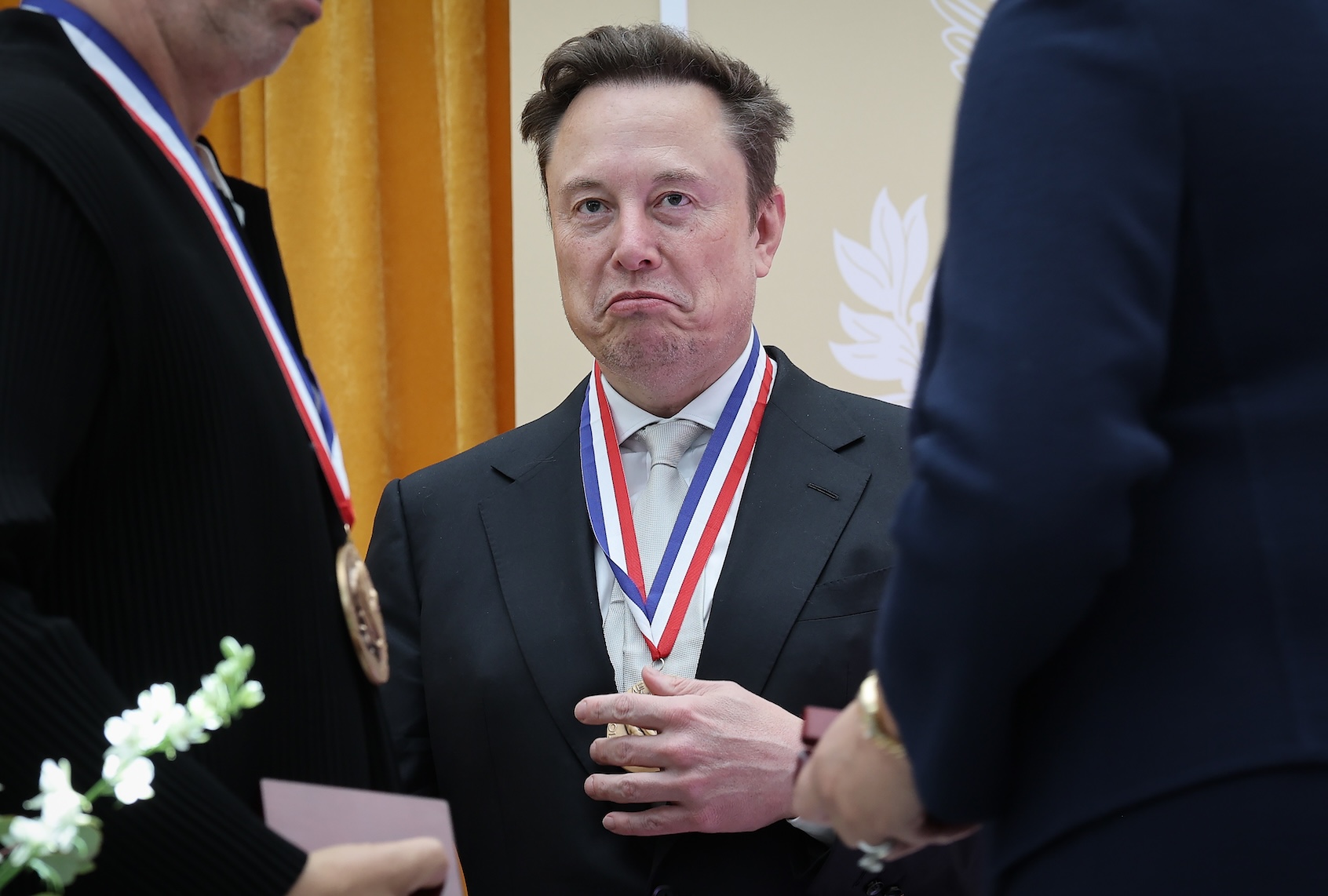
Lately, Musk and Trump are back to acting like close pals. It was hard not to cringe watching the president award Musk the National Medal of Science on Oct. 8, the highest honor the U.S. can bestow on a scientist or engineer. I was probably reading too much into it, but I sensed some awareness on Musk’s part that it was an empty gesture, unless inflating stock prices is a scientific achievement. But maybe the pageantry is meant to distract from how many government grants Musk has been awarded. According to multiple reports, Tesla and SpaceX basically would not exist without the government giving Musk’s companies wads of cash.

At any rate, Musk is now stepping in to try to save Trump’s allies in the midterms, dumping hundreds of millions into races, with Axios reporting he is “single-handedly keeping the Republican Party afloat in some of its most vital races.” So far, he’s spent some $366 million in pro-GOP midterm TV spots and other campaign efforts, with $276 million donated since July alone. No other known donor comes close to dishing out more funding. But for Musk that’s a relatively trivial amount, even though his fluctuating trillionaire status is currently hovering below the threshold for designation. 

Some of Musk’s money went to his own super PAC, but a good chunk also to the Senate Leadership Fund and the Lone Star Liberty PAC, both of which are backing Texas GOP Attorney General Ken Paxton’s endangered campaign for the U.S. Senate against state Rep. James Talarico. Right now polling indicates that statewide election results in the Lone Star State are going to be extremely tight, with new data from the University of Texas/Texas Politics Project released Wednesday indicating Democrats are statistically tied in key races. It’s not just Talarico, who leads Paxton 50% to 47%, but Democratic state Rep. Gina Hinojosa holds a one-point lead over Republican Gov. Greg Abbott, which is effectively a tie. Trump is reportedly already searching for someone to blame if Democrats pick up their first Senate seat in Texas since 1988.


Start your day with essential news from Salon.
Sign up for our free morning newsletter, Crash Course.


Across the country, other races indicate a high likelihood that Democrats will retake the House, while the Senate still looking like a tossup. With these numbers, Musk is likely to dump even more cash into the election before Nov. 3, but it increasingly smells like desperation. As Alex Gibney, director of the new documentary “Musk,” recently told Salon’s Melanie McFarland, Musk is “literally paying for political advantage.”

“He’s spending way more now than he did for the presidential campaign in 2024, and in part that’s to get more money for himself in the form of military contracts,” Gibney said. “But also, he knows that a reckoning is coming for him if the Democrats take over the House and the Senate, and there’s going to be a lot of investigations into him for corruption and abuse of power, taking our information, particularly possibly relating to DOGE, and doing God knows what with it.”

It remains to be seen if this midterm meddling will pay off for Musk. He got what he wanted out of the 2024 presidential election by propping up Trump’s campaign, but his attempts to financially sway results in other races haven’t worked. In 2025, Musk dumped more than $18 million into a Wisconsin Supreme Court race, hoping to suborn the state’s redistricting efforts and regulations of car manufacturers and dealers. His influence made it the most expensive judicial race in U.S. history, but that still didn’t get him the outcome he wanted.

Last Thursday, Musk settled a class action lawsuit alleging that his PAC had engaged in fraud in the 2024 presidential election by falsely telling voters they had a chance to randomly win $1 million when the winners were actually predetermined. He also dodged bribery charges in August for trying the same stunt in the Wisconsin Supreme Court election.

In the end, the results will all come down to voter appetites, and there are increasing indicators that the majority of Americans are fed up with the ultra-rich meddling in government. A recent Fox News poll indicates that corruption is the top concern among both Democratic and Republican voters, with 60% extremely concerned, a figure that outpaces inflation (58%), gas prices (50%), government leadership (49%) and healthcare (48%). Data from a Washington Post-ABC News-Ipsos poll released Sunday found roughly two in three Americans believe Trump is using the presidency to enrich himself, with most of the increase over the past year coming from people who lean Republican.

These numbers may indicate that people are starting to see through Musk’s ruse. He could probably pour even more money into politics, and probably will anyway, but there’s a glimmer of hope that it won’t accomplish much.

The post Musk’s midterm meddling reeks of desperation appeared first on Salon.com.

  •  
❌