Reading view

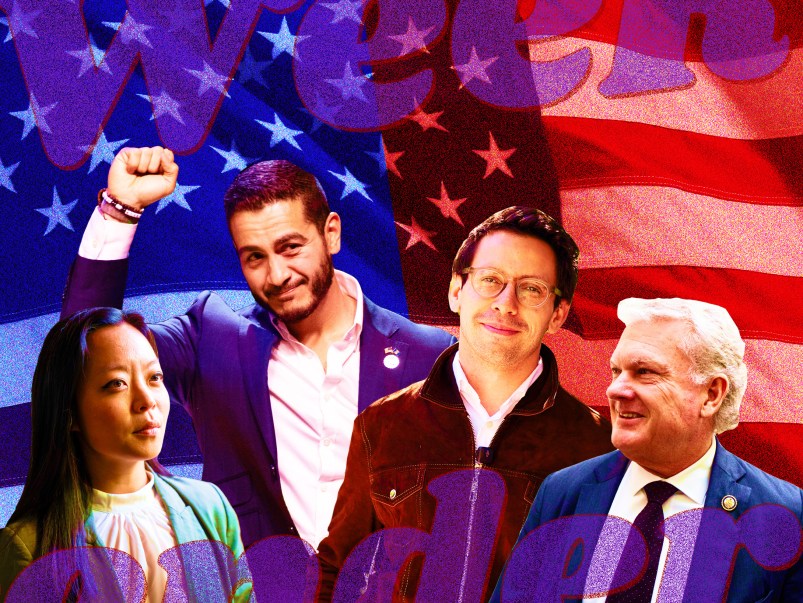
Let’s Take a Look-See at What ‘Far Left’ vs. ‘Far Right’ Candidates Actually Want
[Essay]

Whose Narrative Is It Anyway?

Political labels are increasingly meaningless. As Josh Marshall has been writing, fewer people these days are inclined to identify as “centrist” or “moderate.” So-called independent voters often espouse wildly incoherent views (see: those insane-making New York Times voter surveys). Donald Trump even accused Joe Biden of being a socialist.

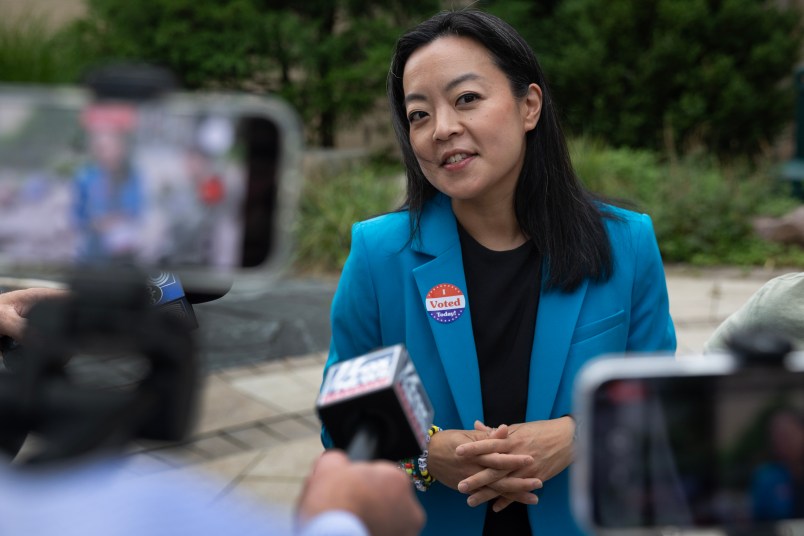
As we’ve seen in this year’s primary contests, there’s also a maddening tendency among elected officials and the political press to equate “far left” and “far right” candidates as occupying equally extreme, dangerous ends of the political spectrum, though those in the former camp mostly want universal healthcare and affordable housing while the latter is more likely to endorse the forced deportation of non-white people from the United States. Commenting on a Wisconsin gubernatorial field that included DSA-backed state lawmaker Francesca Hong and the election-denying congressman Tom Tiffany, University of Wisconsin professor Mark Copelovitch noted, “The @nytimes hasn’t written a single article asking if ‘voters will think Tom Tiffany is too radical’ because he is an election-denying, pro-ICE, authoritarian extremist. Somehow, his position on the political spectrum has disappeared completely from the National and State Conversations.” After Hong lost her bid by just 3,000 votes, the New York Times ran a piece headlined “A Stunning Loss in Wisconsin Shows the Limits of the Left” and declaring it a possibility that “the democratic socialist wave cannot reach beyond urban centers.” (The Wall Street Journal, Politico and Axios were similarly quick to diagnose Hong’s loss as a terminal failure of the “far left,” with CNN even declaring, “Democratic establishment roars back.” Tiffany, meanwhile, won his race. The Times headline: Tom Tiffany Wins Wisconsin’s Republican Primary for Governor.) 

Below, we take a look at some of the policies proposed by 2026 primary candidates in the “far right” camp versus those coming from candidates who’ve been labeled “far left.” Some of these things are not like the others. 

On immigration

Candidate: Darializa Avila Chevalier, Democratic nominee to represent New York’s 13th Congressional District 

The immigration proposals on Avila Chevalier’s campaign website include calls to mandate free legal representation for immigrants — an issue that several states are currently working to address, as TPM has reported. She also promises to fight to ”abolish ICE and the deportation machine,” which some 48% of Americans want to do, according to a July YouGov poll.

Candidate: Mike Collins, Republican Senate nominee in Georgia 

Collins sponsored the first piece of legislation that Trump signed in his second term: the Laken Riley Act, which targets undocumented immigrants charged with nonviolent crimes for deportation. He also sponsored a bill to end birthright citizenship.

On reproductive rights 

Candidate: Francesca Hong, Democratic gubernatorial candidate in Wisconsin 

Among a lengthy list of policy priorities, Hong, who lost her bid on Aug. 11, advocated for enshrining reproductive rights into Wisconsin’s constitution and for providing universal childcare and paid leave programs to allow people to access reproductive care. 

Candidate: James Fishback, Republican gubernatorial candidate in Florida 

Fishback’s campaign website credits him for recognizing “what too few establishment Republicans are willing to say: life begins at conception and abortion is murder.” The candidate pledges to shut down Florida’s remaining 53 abortion clinics (legality of that TBD!) and replace them with crisis pregnancy centers because “abortion is never the answer.” He’ll also establish paid maternity leave, since “welcoming a child into the world is one of the most important things a family can do.” Generous. 

On taxes

Candidate: Donovan McKinney, Democratic nominee to represent Michigan’s 13th congressional district

The Michigan lawmaker and DSA member’s campaign site is a bit thin on details, but he proposes raising taxes on billionaires and corporations in order to “fund crucial investments our community needs for housing, education, clean air & water, fair paying jobs and healthcare.” He also endorses a universal basic income. 

Candidate: Mike Lindell, Republican gubernatorial nominee in Minnesota 

Better known as “the MyPillow Guy,” Trump ally and conspiracy theorist Lindell proposes eliminating Minnesota’s in-person retail sales tax “so working families, small businesses, farmers, and retirees can keep more of what they earn.” Lindell lost his bid on Aug. 11.

On national security

Candidate: Abdul El-Sayed, Democratic Senate nominee in Michigan

El-Sayed’s support for Palestine and opposition to funding Israel’s military was one of the defining issues of the Michigan Senate primary. On his campaign website, he calls for a “sensible foreign policy,” which includes ending the war in Iran; ending the “warlike pathway that the foreign policy establishment has pursued with China”; imposing an arms embargo on Israel; reinvesting in foreign aid; reengaging with international bodies like the World Health Organization and the Paris Agreement; and “spending our taxpayer dollars here at home” rather than on funding foreign militaries. 

Candidate: Bo French, Republican nominee for Texas Railroad Commissioner 

The man tapped by the GOP to help oversee the state’s largest industry (it earned $27 billion last year) has his Day 1 priority set: prohibiting the sale of Texas land to people from Muslim-majority countries because of their purported threat to state security. “America has been at war with Islam since the time of our Independence, and stopping the subversive influence of Islam in Texas by banning all Muslim countries from acquiring land and interfering in Texas Oil and Gas will be my top legislative priority,” French says.

Link Copied

By Allegra Kirkland

[Report]

Trump Is Trashing the GOP’s Economic Edge

Are voters finally starting to realize they can’t entrust the nation’s economy to a piss-poor businessman whose companies are still failing? Maybe that’s too hopeful a view. But ahead of a 2026 midterm election that will decide not only which party controls the legislative branch of government but the future course of American democracy, several surveys show President Donald Trump’s tanking approval rating comes amid record low sentiment about his handling of the U.S. economy. 

For the first time since Trump began to dominate American politics about a decade ago, voters trust Democrats with the economy more than Republicans, per a Reuters/Ipsos poll taken between the end of July and beginning of August. It’s crucial now, as voter dissatisfaction with affordability has catapulted progressive and Democratic Socialist candidates to mayorships and nominations for higher office nationwide. For his part, Trump refuses to acknowledge affordability as an actual problem.

That strategy, based on polling — which, to be fair, has recently shown its limitations — appears not to be working for Trump specifically and the GOP at large. The president’s popularity has even slipped among his loyal MAGA base by 12 points since January 2025, according to an Economist/YouGov poll taken last week.

Let’s take a quick look at how this not-actually-sentient being called the economy has been behaving as of late. 

The U.S. lost 23,000 jobs in July according to the most recent jobs report from the Bureau of Labor Statistics, while the statistical agency also revised its positive jobs numbers from the two months prior down by a cumulative 103,000 positions. 

Wednesday’s release of inflation data by the BLS showed a modest 0.1% bump in the consumer price index and might’ve been welcome news for the administration if not for a tandem BLS report finding real wages fell by the same amount price inflation rose. Overall, standing basically stagnant at around 3.4%, the annual inflation rate is stuck above the Fed’s 2% target, and people’s paychecks aren’t keeping pace. Data published at the end of July saw the U.S. GDP grow at 1.5%, representing a soft second quarter and lower-than-expected economic growth.

Trump’s marquee policies of tariffs by any means necessary and a violent mass deportation scheme hurt all of these metrics, economists have repeatedly said. 

This is not to say all has been abysmal. The U.S. financial market remains resilient. In spite of Trump’s spasmodic policymaking, the stock market continues to reflect investors’ cautious optimism in AI and whatever else.  

The barrage of recent bad financial news started weeks before Trump Media & Technology Group — a large stake of which is held by Trump’s revocable trust — posted $238 million in losses. That’s 1,090% higher than the $20 million in losses the company took last year and contrasts ridiculously with the more than $2 billion Trump and his family earned in the first year of his presidency. Ironically, or perhaps by design, the lionshare of Trump’s 2025 gains came from crypto, as TMTG’s latest deep losses reflect a pivot away from the controversial industry. The data may sound conflicting — alarming economic indicators and unaffordable cost of living versus strong financial markets; an obviously failing business model versus a business owner who just keeps getting richer — but it’s of a piece with Trump’s entire modus operandi. 

Like the tax cuts enshrined in the One Big, Beautiful Bill; the myriad no-bid contracts going to unscrupulous figures and companies affiliated with Trump’s own family; and the president’s open exchange of favorable policy carveouts for corporations who give him gifts, the point seems never to enrich the lives of people living in America and always to enrich the president himself.

Link Copied

By Layla A. Jones

[Life Hack]

Axios’s Advancements in Reading

The efficiency experts at Axios, whom writer Matt Pearce excellently identified as the minds behind the gamified paragraph, claim to have discovered an even better way to read. Advancing the idea that reading any kind of book is hard these days, but reading difficult books is especially hard, one vacationing Axios writer had a breakthrough. While struggling to read the dense prose of James Fenimore Cooper’s “The Last of the Mohicans,” presumably while rolling about on a beach blanket, the writer decided to ask his chatbot for help. This way after each challenging chapter, he could refer to a “spoiler free” cheat sheet that, and we’re just guessing here, broke the chapter into bullet points and answered the all-important question: “why it matters.”

While Cooper is certainly a choice for vacation reading, it can hardly be a coincidence that the very first paragraph of “The Last of the Mohicans” speaks to the importance of struggle in preparing to handle adversity. If you’re thinking that this message seems to have gone over the head of the Axios writer (and his AI assistant), the writer does document the struggle of getting the AI to provide accurate information about the actual text, the AI having been trained primarily on ancillary data like book and movie reviews. To overcome this adversity, he suggests that those who wish to copy his methods ask their AI to seek out online versions of the book so that they can get more accurate answers about what they are “reading.”

Link Copied

By

[Words of Wisdom]

Color Me Reassured

“Nothing bad can happen from what we’re doing.” -President Trump on his executive order dictating changes to the childhood vaccine schedule that run counter to guidance from major medical organizations.

Link Copied

By

[TPM Trivia]

How Much of This Week’s News Do You Remember?

  1. Lindsey Graham’s sister, Darline Graham Nordone, advanced to the Republican runoff in South Carolina’s Senate race. Which other candidate advanced along with her?
  2. Donald Trump reportedly plans to spend how much on his White House vanity construction projects: a) $500 million, b) 750 million c) $900 million
  3. Which public-facing member of the Trump administration announced this week that she’d be leaving her role?

Answers below

Link Copied

By

[Programming Note]

Help Us Wrap Up the Journalism Fund Drive! 

We’re in the final stretch of the annual journalism fund drive, with less than $15,000 of our $500,000 goal to go. You’ve no doubt seen our many pitches for the fund by now, but as a quick recap, your contributions go towards:

  • Funding reporting trips so our team can produce original, on-the-ground stories for you all
  • Hiring new staff (we’re in the final stages of bringing on a new team member! More soon!)
  • Backing new projects like the newsletters we’ve launched (and relaunched) this year and podcasts like the TPM Social Club
  • Helping us keep the lights on (and the walls painted) in our NYC headquarters
  • Covering free memberships for students and folks dealing with financial hardship 
  • Allowing us to keep our reporting outside a paywall and accessible to all 

If you’re able, please help us get over the finish line. We appreciate you. 

Link Copied

By

[Good Posts]

Ah Yes, the Flesh of the Young

Stephen Miller referring to a baby as "this young body" for, presumably, the 500th time this week.

Ben Collins (@bencollins.bsky.social) 2026-08-10T20:33:23.917Z
Link Copied

By

[TPM in the Wild]

The Blue State Retribution Campaign

Congressman Raja Krishnamoorthi drew attention to Emine Yücel and Josh Kovensky’s recent report documenting how the Trump admin is withholding grant money from blue states to punish them. “Federal funding should serve Americans, not Trump’s grudges,” the Illinois Democrat wrote on Bluesky.

The Trump Administration admitted that it canceled federal grants simply because they went to Democratic states. Federal funding should serve Americans, not Trump's grudgeshttps://talkingpointsmemo.com/news/trump-administration-has-repeatedly-confessed-in-court-to-withholding-money-from-blue-states

Congressman Raja Krishnamoorthi (@congressmanraja.bsky.social) 2026-08-11T19:50:17.037592807Z
Link Copied

By

[Galaxy Brain]

What If We Kept the Reflecting Pool Saga Going Forever?

You might think the Trump administration would be sick of seeing negative headlines about the botched Reflecting Pool renovations. But the president doesn’t seem willing to let the whole drama go. 

Trump was, of course, super mad when U.S. Attorney for D.C. Jeannine Pirro dropped the felony case against former Olympian David Hearn, admitting that damage to the pool’s surface was caused by a botched contracting job rather than vandalism. Pirro even hauled boxes of evidence over to the White House to try to explain her decision to Trump in person. Trump himself this week admitted to “some contractor error.” 

But now White House officials have asked the Justice Department to consider a new misdemeanor prosecution of Hearn, according to a Wall Street Journal report. So strap in for another round of unflattering media coverage of the president’s weaponization of the DOJ and absurd pursuit of expensive vanity projects in the nation’s capital. A real “I’m not owned! I’m not owned!!” moment.

Link Copied

By

Trivia answers: 1) Rep. Ralph Norman (R-SC) 2) $900 million 3) Press Secretary Karoline Leavitt

Correction: This story originally noted the incorrect state for which Mike Lindell was the GOP nominee. We apologize for the mistake.

Link Copied

By

  •  

The Latest Wave of Primary Results Is in — Here’s What to Know

John Light has a run-down of results from last night’s major primaries in South Carolina, Wisconsin and Minnesota in this morning’s Brief. The evening saw DSA-backed progressive Francesca Hong lose her bid to become Wisconsin’s Democratic gubernatorial candidate in an upset, prominent election denier Mike Lindell lose his own gubernatorial bid in Minnesota, and more surprises.

Check out John’s post for the TLDR on a busy primary night.

  •  

How Cleta Mitchell Continues to Make Herself Relevant in the Election-Meddling Universe

[Report]

Still Meddling

For many years now, former Trump adviser and longtime election conspiracy theorist Cleta Mitchell has managed to make herself relevant in the MAGA universe despite never officially joining the administration.  

Mitchell’s election denial claim to fame came about most prominently in the aftermath of the 2020 contest. 

She was at the forefront of President Trump’s effort to overturn 2020 election results in Georgia, and was even a participant in Trump’s now infamous January 2021 phone call with Georgia Secretary of State Brad Raffensperger from January 2021, in which Trump urged him to “find” enough votes to overturn President Biden’s victory in Georgia. 

And more recently, Mitchell has been behind efforts to perpetuate fears about the non-existent threat of noncitizen voting, as well as efforts to push through the SAVE America Act, a restrictive election bill that would require documentary proof of citizenship to register to vote. She also runs the Election Integrity Network, an election denial group that pushes election conspiracy theories, including myths about noncitizen voting and the safety and maintenance of state voting rolls. 

And unfortunately, Mitchell is still hard at work coming up with ways to interfere in our elections. This time it’s through financial ties to the deputy assistant secretary for election integrity in the U.S. Department of Homeland Security, Heather Honey. 

According to a report from Democracy Docket, Mitchell granted Honey more than $72,000 last fiscal year. And in 2025, Mitchell reportedly granted Honey’s consulting firm, Verity Vote LLC, $121,284 for consulting services.

For some important context, Honey misrepresented 2020 election data by falsely claiming that Pennsylvania had more votes than the registered voters. These faulty findings were later cited by Trump during his Jan. 6, 2021 speech at the Ellipse.   

This isn’t the first time Honey and Mitchell have worked together, though. Honey is the founder of the Pennsylvania Fair Elections group, which is part of Mitchell’s Election Integrity Network. 

Link Copied

By Khaya Himmelman

[Rhapsody]

The MBA Is A Failed Idea

It’s time we get rid of MBAs. I’m not saying we take people who have MBAs and deport them, although….maybe. No, what I’m saying is we should abolish the Master’s in Business Administration. It’s a monstrous, grotesque relic of a bygone age that we never needed in the first place. It is a symbol of the squeezing, wrenching, grasping, scraping, clutching, covetous style of capitalism that reigns supreme in the United States, dictating that the point of a firm is not to provide a good or a service to a customer, but to make as much money as legally possible.

As many or maybe even all of us sit around and ask questions like, “Why does it seem like everything is getting worse? How are some people making more money than God when others can’t afford to feed their families despite working two or three jobs?” We can look to this cohort of “leaders” and identify at least a portion of the problem. They are a group of people who are trained to extract wealth and give it to the wealthy. 

When I was getting started in the news business, digital news was emerging and newspapers were dying. This was the big thing. Could print survive? It was existential but less comprehensive than the question we ask today: can the news survive? It seemed to me at the time that one of the problems in journalism was that when I scanned the landscape, most media organizations had a CEO who was not a former journalist or newspaper worker. This struck me as pretty insane. A newspaper is a unique kind of thing and the news is a unique kind of business. Ultimately, when I decided to come work at TPM, the fact it was run by Josh Marshall who was himself a journalist was a huge factor.

I was concerned with the world of journalism because I wanted to be a journalist. I understood the news. My reasoning was that journalism is kind of like a trade. Managing a newspaper is kind of like a trade. You need specific skills and knowledge to do it well. So when you bring in “business people” who run the companies to maximize profits, of course the product and service will suffer. But my scope was far too narrow. I think this applies to just about all industries. That’s why we should abolish the MBA.

In 1908, Harvard Business School launched the world’s first MBA program. The curriculum was based on Frederick Winslow Taylor’s theories on scientific management. So-called “Taylorism” was a rigorous approach to management that aimed to maximize efficiency by creating a system of clearly defined rules and processes for workers to follow. These rules and processes were arrived at via rigorous testing, analysis and measurement. Taylor thought this sort of thing could be applied to everything in life. 

One of the ironies of Taylorism is the gap between what Taylor seems to have intended if taken at face value and how his theories played out in practice. Here’s the first sentence of his book, “The principal object of management should be to secure the maximum prosperity for the employer, coupled with the maximum prosperity for each employee.” Compare that to this line from a 2017 Guardian column: “Taylorism became synonymous with the evils of extracting maximum value from workers while treating them as programmable cogs in machines.”

Taylor didn’t subscribe to what we’d today call a “Shareholder Theory of Value.” In 1970, Milton Friedman wrote a New York Times essay titled The Social Responsibility of Business is to Increase its Profits in which he argued that the executive of a given company is acting as an agent for the investors, and therefore the ultimate responsibility is to increase returns for said investors: “That responsibility is to conduct the business in accordance with their desires, which generally will be to make as much money as possible while conforming to the basic rules of the society, both those embodied in law and those embodied in ethical custom.” Friedman goes on to say that, of course, not all owners are the same. Someone might start a school or a hospital and in that case, the rendering of the service will be most important, not profit. It seems even Friedman couldn’t anticipate the private equity take over of hospitals.

If we take a version of Taylorism and give it Friedman’s ethics you begin to see the situation we’re in now: a bunch of highly-trained managers who go  all-out to maximize profits at all costs for their investors. Obviously, the prosperity of the employee, which was important to Taylor, is gone. Prosperity for the employee is only good if it somehow benefits the investors. Also gone: making sure the product or service itself is good. As long as you are maximizing profits for the investors, that is good, and that doesn’t require a good product or service, necessarily. You can lobby for a monopoly or lay some people off. The airlines keep making money. When was the last time you thought an airline improved?

Both Taylor and Friedman are contemptuous of other human beings and that prevents them from seeing their own errors. Taylor was operating under the assumption people were lazy. Friedman assumes they are selfish. Neither is true, and when neither is true, you don’t need a class of oversseers to make sure the plebs get their work done.

So why abolish the MBA? We need to begin to shift society away from being organized according to profit. This won’t happen overnight and it might not happen ever. But it’s an objective we need to establish. We should get rid of the pathway to a life dictated by profit and wealth extraction, which is what an MBA is. Yes, we need people who understand bookkeeping and accounting and the basics of business. But we don’t need technocrats who reduce everything to financial data.

Abolishing the MBA is not a vanity project or an exercise in some kind of jealous retribution. It’s not good for society to have “leaders” who see their life’s work as enriching investors. A well-organized society wouldn’t even have this option on the table. Especially at a time when we face a worker shortage.  

“We have pumped so many young people into business and finance,” Robert Hetrick, an economist at labor market data company Lightcast recently told The Hechinger Report, despite the acute demand for graduates in other fields. “It’s like a factory producing these workers like widgets, even though society is saying, ‘We really don’t need them.’ And the factory just keeps pumping them out.”

As a thought experiment, think of starting a society from scratch. You are going to need a lot of things. You’re never going to need anyone with an MBA because they are a kind of societal distortion. The true purpose of a firm is not to enrich its owners, it’s to provide a good or service to society. This isn’t some novel or insane idea only advocated by leftists. Management theorist Peter Drucker wrote that the concept of the profit motive is dangerous. Drucker wrote that both private and public organizations are parts of society that “do not exist for their own sake, but to fulfill a specific social purpose and to satisfy a specific need of a society, community, or individuals.” 

The MBA is a failed idea. It may have had lofty ambitions to create great managers who manage great companies to make society better. But that’s no longer the case, and it’s not certain it ever was.

Link Copied

By Joe Ragazzo

[Words of Wisdom]

Past Its Prime

“It’s not a big deal right now. The moon has clearly seen better days,” NASA Administrator Jared Isaacman on rockets crashing into the moon.

Link Copied

By

[TPM Trivia]

 How Much of This Week’s News Do You Remember?

  1. Why did the House Ethics Committee recommend the full House censure Rep. Chuck Edwards (R-NC)?
  2. What was in the large white box U.S. Attorney for D.C. Jeanine Pirro hauled to the White House this week for her meeting with President Trump?
  3. By how much did Abdul El-Sayed win over Haley Stevens in the Michigan Democratic Senate primary: 1%, 3% or 5%? 
  4. Which popular program for low-income kids is the Trump administration moving to dismantle? 

Answers below

Link Copied

By

[In the Cafe]

2020 Is the Year That Never Ends

Republicans just can’t quit 2020. Floundering for a coherent midterms message amid rising inflation and a president who is more interested in treating D.C. like his personal SimCity than addressing affordability, the GOP keeps returning to the conspiracy well of 2020. Mike Rothschild’s latest Rough Edges column examines how Republicans are “repackaging and reus[ing] the conspiracy theories that got us here,” from the “genetically engineered” COVID pandemic to the Big Lie that Trump actually crushed it in that year’s presidential race. 

Link Copied

By

[This Effing Guy]

The Stunning Hubris of Alleged Abuser (and Congressman) Max Miller

There’s run-of-the-mill scummy congressman behavior, and then there’s allegations of pouring boiling water on your then-spouse and fracturing your toddler’s collar bone. Republican Rep. Max Miller (R-OH) is accused of the latter. And yes, the former senior Trump adviser still thinks he’d be a great candidate for reelection, actually. 

Miller has resisted pressure from his party to drop his reelection bid, instead going on a spree of ill-considered press appearances that make him sound every bit the creep he is alleged to be. He told CNN that it’s been “several years” since he last used illegal drugs, that he’s taking testosterone, and that the allegations against him — if true — would be “incredibly troubling.” On Newsmax, he blamed his ex, Emily Moreno (daughter of Sen. Bernie Moreno [R-OH]), for “projection” and made detailed claims about her alleged mental health history. 

The House Ethics Committee is investigating the abuse allegations against Miller, and the likes of House Majority Leader Mike Johnson (R-LA) are playing the Let’s Let Things Play Out card. But the GOP only has until Monday to replace Miller on the November ballot if he withdraws. Miller, for his part, insists he’s not going anywhere, telling Newsmax, “There’s no chance that I’m removing myself from this race,” even if Trump himself asks him to do so. 

Link Copied

By

[Galaxy Brain]

Trump’s Literally Unbelievable Ability to Win Club Championships

Last weekend, Trump claimed to have won the senior (and super senior) club championship at Trump National Golf Club Bedminster in New Jersey. With an alleged score of two under par 70 on a course that has hosted multiple professional events, Trump bettered his age by 10 strokes and beat the next closest golfer by seven shots (imagine the golf world thinking it was a big deal when Jack Nicklaus shot a 71 to beat his age by a mere six strokes). This is apparently the 43rd club championship Trump has claimed, a feat sportswriter Rick Reilly has deemed without parallel. Taken together, Trump’s alleged results would seem to rank among the all-time accomplishments in amateur sport — not bad for an 80 year old guy who has only played golf 125 times since being back in office. 

Naysayers will of course cry foul. They’ll mention how caddies at Winged Foot Golf Club nicknamed Trump Pelé because of how often he kicked his ball out of the rough. They’ll wonder why he has never won a club championship at a course he doesn’t own. They’ll suggest that his alleged practice of being the first to play a course when it opens and then immediately declaring himself champion isn’t “legit.” They might even take issue with the time he allegedly didn’t even play the tournament but still ordered that the champion’s name hanging on the wall be replaced with his own when he recognized it as someone he thought he could beat. In other words, they will quibble.

Trump, for his part, demonstrated his legitimacy by posting a video of “the winning shot” accompanied by trash talk insulting the talentless losers at his own club. To ask why that shot — an approach from roughly 40 yards that lands about 5 feet from the hole — was the winning shot and not the putt — especially when the margin of victory was seven — would just be more quibbling. It was obviously a gimme.

Link Copied

By

Trivia answers: 1) For making romantic advances on two of his female staffers, buying them lavish gifts (like pink and blue handguns and a designer purse). 2) Evidence showing that damage to the Reflecting Pool was the result of contractor errors rather than deliberate vandalism 3) 1%, or roughly 15,000 votes 4) Head Start

Link Copied

By

  •  

The Low-Energy Response to the GOP’s ‘High-T’ Politics 

[Essay]

Talking About Soy Boys All the Time Is Weird, Actually

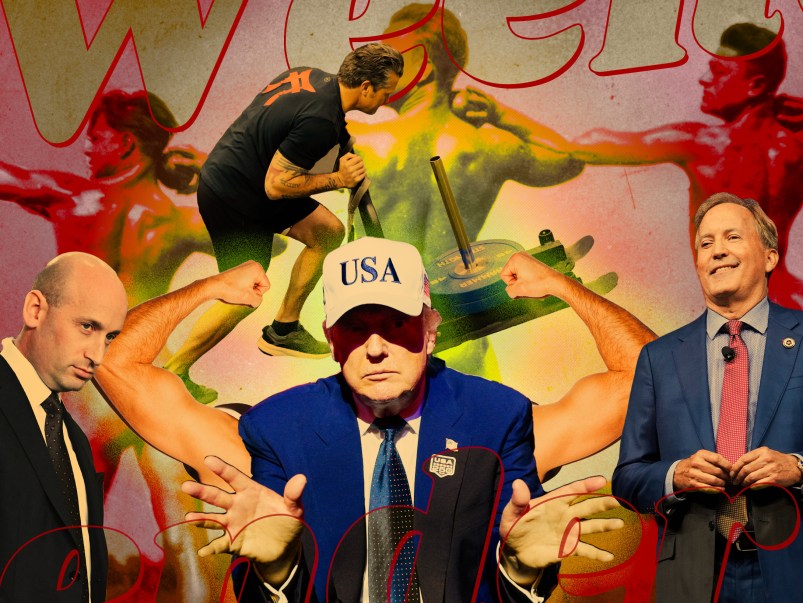
The barrage of testosterone-based attacks on Democratic Senate nominee James Talarico don’t seem to have done much. A new poll out this week from Slingshot Strategies shows Talarico up five points over Republican opponent Ken Paxton, and he’s been even or ahead in four of the seven polls conducted since Paxton secured the nomination in May and launched a general election ad accusing Talarico of being too “low-T for Texas.” 

At the time, there was a multi-pronged, coordinated effort from state and national Republicans to paint Talarico as effeminate and, bizarrely, transgender. RNC chair Joe Gruters: “Tala-freako is a creep. He’s a vegan. He thinks God is nonbinary. He wants to mutilate children.” White House adviser and Famously Normal Guy Stephen Miller called him the Democrats’ “first transgender senate candidate” and told Fox News his blood was made of soy milk. President Trump himself referred to him as “this transgender, this guy running in Texas” who “wears a mask all the time.” 

Interestingly, Republicans don’t really seem to have duplicated this messaging in other midterms races. Instead, they’ve used the electoral victories of several progressives and democratic socialists as an opportunity to wield the “Democrats are communists” cudgel. That’s the line Trump and co. have trotted out in swing states and against other high-profile Democratic candidates like Sen. John Ossoff (D-GA).

If all of this feels a bit desperate, that’s because it is. But voters don’t really seem to be buying it. Trump’s approval rating is at a record low. Ossoff is polling ahead in Georgia, while his Republican opponent Mike Collins and Paxton, both of whom likely owe their nominations to last-minute Trump endorsements, are mired in new scandals. Voters are angry about corruption, inflation, and the Iran War, and the Trump administration simply seems to be messing up on too many levels for voters to be distracted by the usual culture war red meat. Calling the libs “soy boys” and communists may get you a hit on Fox News, but it doesn’t necessarily resonate with regular people.

“People are catching onto the fact that these corny nicknames don’t lower the cost of groceries, don’t lower the cost of prescription drugs, don’t lower the price of gas,” as Talarico recently put it on MS Now. Not a bad line, nor was this: “When I first heard this low-T thing, I had to look it up. Guys my age aren’t really worried about that kind of thing.”

During the 2024 campaign, Minnesota Gov. Tim Walz went viral for calling out Republicans’ “weird” obsession with policing people’s bodies. Zohran Mamdani relentlessly focused on his proposals to make New York City more affordable when he was asked about Israel every five minutes during last year’s mayoral campaign. 

It seems like a good 2026 strategy for Democrats might just be leading with charisma, kindness and a focus on policies that actually benefit peoples’ lives, while letting Republicans obsess over Communist takeovers and testosterone levels. 

Link Copied

By Allegra Kirkland

[Report]

Schumer’s Big Idea for Battling Anti-Trump Corruption

U.S. diplomats have long offered foreign countries that face rampant, elite corruption and impunity a solution: create a new, independent prosecutor’s office dedicated to going after large-scale graft. 

In these countries, corruption had become so endemic that the institutions normally trusted to prosecute and try graft could no longer be trusted. Judges might be on the take; prosecutors too. Politicians might be accountable to businessmen; companies might be lavishing favors on judges for beneficial rulings. It all turns into one very fragile house of cards, in which nobody can hold another accountable for fear of causing a chain reaction that might bring everyone down with them. 

The solution has been to create an independent anti-corruption prosecutor and, if need be, a specialized court. It’s been tried in Ukraine, where I saw that country’s anti-corruption organ develop firsthand. In Guatemala, an internationally staffed, UN-backed anti-corruption commission led to the arrest of a former president in that country. In Indonesia, an anti-corruption agency was paired with specialized courts. The point here is that they’re independent, but also dangerous: not only are they supposedly designed to be free from a corrupt system, but they have authority to prosecute and imprison people. 

Now Sen. Chuck Schumer (D-NY) has proposed a version of this. Unveiled this week, it’s the Senate Minority Leader’s idea to combat massive, Trump II corruption. Under this idea, Congress would create an “Anti-Corruption Bureau.” In an irony lost on nobody at this point, its structure would partly mimic that used in Ukraine and elsewhere in Eastern Europe: an expert panel would screen candidates to sit as commissioners who would run the agency. 

The idea would abandon much of what has made these agencies successful overseas: criminal prosecution authority. Schumer’s agency could sue people via civil cases and refer matters to the DOJ for prosecution. It would take the Federal Election Commission, Office of Government Ethics, and Office of Special Counsel and combine them into one civil office. 

The FEC has long been paralyzed due to a lack of commissioners; other agencies that have long been independent are no longer so after multiple Supreme Court rulings destroyed that concept. Schumer’s proposal offers something new: a three-judge panel of D.C. Circuit judges would appoint replacements if a commissioner seat stays open longer than 14 days, with a retired federal judge as the replacement. 

The last idea included in this bill would allow people to sue over what they think is corrupt (this is also a boon to trial attorneys). The proposal would create a new cause of action under which private citizens and state attorneys general could sue senior executive branch officials and federal contractors for personal enrichment. For a messaging bill, it’s uniquely American: we might all be beset by rampant corruption, but at least we’d have the power to sue?  

Link Copied

By Josh Kovensky

[Words of Wisdom]

When the UFC Fighters Start Getting It…

“When you’re at a Trump rally, you’re like, Oh I can definitely see how Hitler happened. … When you go to a Trump rally, it makes you question the sanity of everybody. Like Trump’s up there talking about ‘We’re going to throw people in jail for burning the flag.’ And dude I’m like I don’t know, like you shouldn’t do that but it’s like, you know, there is a fucking Constitution.” – UFC fighter Sean Strickland 

Link Copied

By

[TPM Trivia]

 How Much of This Week’s News Do You Remember?

  1. Which Democratic official has repeatedly asked Sen. Mitch McConnell to provide formal proof of life in order to keep serving?
  2. Which longtime New York Times opinion columnist was recently tapped to join the Bari Weissified “60 Minutes”? 
  3. Why did Sen. John Fetterman (D-PA) deign to wear a suit instead of his usual hoodie this week?

Answers below

Link Copied

By

[This Effing Guy]

Fetterman Is Just Messing With Us at This Point

In his latest “fuck you” to the voters who elected him, Sen. John Fetterman this week published a Washington Post op-ed explaining why abolishing the filibuster would be bad, actually. It’s a reversal from the position he ran on in 2022 and a sentiment that has become increasingly unpopular among Democrats, most of whom realize that they have no hopes of passing any legislation with teeth so long as the GOP can simply kill it with the filibuster. The party fell two votes short of being able to pass a sweeping update to the Voting Rights Act and codifying Roe v. Wade during the Biden administration because Sens. Joe Manchin (WV) and Kyrsten Sinema (AZ) refused to use a “filibuster exception” that would’ve allowed those bills to pass with a simple majority. Fetterman, bafflingly, writes that Manchin and Sinema have been “vindicated,” and that it would be a damn shame to, as Manchin once phrased it, “put party power over everything else.” ‘Cause, you know, the GOP would never…

It’s just the latest indication that Fetterman is flirting with switching parties, beyond the incessant cozying up to Israel, his approval of Trump’s ballroom project, and his vote to fund the Department of Homeland Security amid ICE’s crusade against immigrants.

Link Copied

By

[TPM in the Wild]

Handbasket Hangs in Brooklyn, the Embarrassing WHCD and Comey vs. Trump

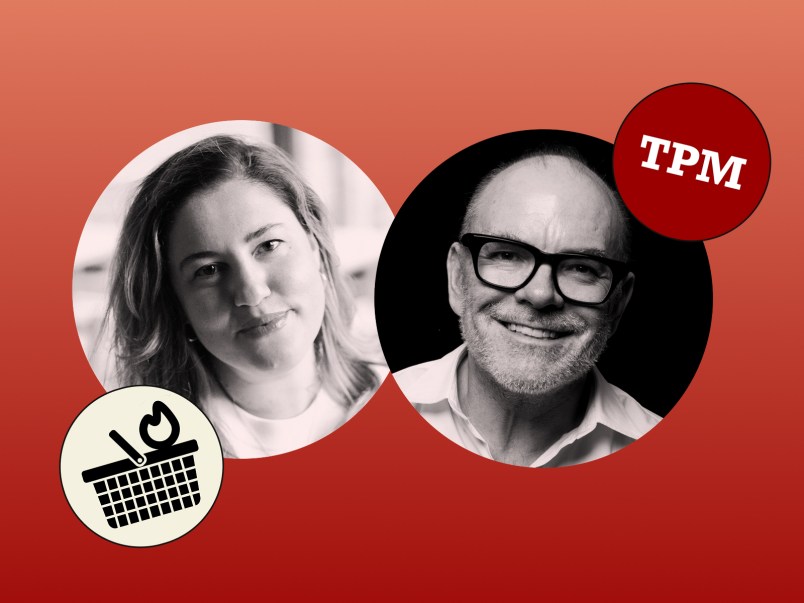
We had an absolutely lovely time at Crystal Lake Bar in Brooklyn on Wednesday with our pal Marisa Kabas! Thanks so much to the TPM and Handbasket readers who made it out to test your trivia skills, have some drinks, and hear Marisa, Joe Ragazzo and Josh Marshall talking midterms, Democratic strategy and the future of independent media. For those of you who live far away or couldn’t make it, we’ll release Marisa and Josh’s conversation as a bonus podcast episode soon. 

Marisa, Joe and Josh chat in the awkwardly low banquette

Hunter Walker on MS Now’s “11th Hour”

Hunter joined Ali Velshi on MS Now’s “11th Hour” to talk Trump’s 2028 jokes at the (rescheduled) White House Correspondents Dinner.

“We are facing a new type of dictatorial leadership, and this is why it’s kind of hard to have a dinner where we’re all sitting there and clapping on cue with the Mentalist after the President talks about this illegal and dangerous threat to go for a third term, when we know, Occam’s Razor, the guy has never lost an election and left willingly.” Amen. 

@huntersfeed

Reacting to the White House Correspondents Dinner with @Alivelshi @11th Hour MS NOW #msnbc #dc #media #washington #politics

♬ original sound – Hunter Walker

David Kurtz on The Daily Blast podcast

“There are an increasing number of examples where we see [Trump] bumping up against the limits of his powers,” David told The New Republic’s Greg Sargent this week. David joined Greg’s podcast to talk about the barrage of new filings in the James Comey “86 47” case, in which Comey’s lawyers argue — quite convincingly! — that he’s the subject of a vindictive prosecution and should be thrown out. As David and Greg discuss, there’s evidence of Trump literally sitting on Air Force One tracking minute developments in Comey’s case

Link Copied

By

Trivia answers: `1) Kentucky Gov. Andy Beshear 2) Ross Douthat 3) To attend Lindsey Graham’s funeral

Link Copied

By

  •  

PHOTOS: TPM and The Handbasket Get Together in Brooklyn

Thanks so much to everyone who came out to our event at Crystal Lake bar last night in collaboration with Marisa Kabas of The Handbasket! It was great to see some of you again, meet some local readers making it out to their first TPM event, and connect with readers who traveled just for this show. (Shout out to the lovely couple from Berkeley, California!)

  •  

Are Politicians Ready to Stop Turning Back the Clock?

[Essay]

The Politics of Nostalgia 

In what time would you prefer to live? The question is such a commonly considered hypothetical that how you answer it likely provides a good deal of insight into both your character and your politics. Answers typically tend toward nostalgia for an idealized past — sometimes drawn from lived experiences, but more often inspired by television, movies, books, the media, school, political propaganda, etc. Occasionally you come across someone who would like to live in the future, accommodated by imagined technologies or afforded some exciting new opportunity like intergalactic space travel. These ideas, too, are usually inspired by various media intakes. Rarely do you meet someone who would prefer to stay in the present. This might be because to answer this way cuts against the spirit of the hypothetical. It could also be that for most of the 21st century, the idea of being content in the present has appeared untenable. 

To be fair, it is hard to argue that we are currently living in the best of times. But what are we to make of it when cultural institutions like Hollywood have preferred to spend the last decade-plus mining and regurgitating the past rather than confront the present, and our politics have been dominated by the idea that we need to return to increasingly regressive eras of former glory? That we are a society inundated and overwhelmed by nostalgia is hardly news to anyone. Writing in Harper’s about how the “nostalgic gluttony” of the 1970s bicentennial stacks up against the current semiquincentennial, Thomas Frank explains, “Nostalgia is today a structural feature of our modern world, the emptiness and vapidity at the heart of our culture, the inevitable mass-produced sentiment of a society that permanently feels that everything is constantly going wrong but is chronically unable to identify why.” Viewing nostalgia as a structural feature gives some insight into why we are unable to get out of our current rut. It also provides a basis for understanding how politicians can use it to their advantage.

The fact that time plays a central role in the push and pull of our two-party system is at once obvious and obscure. You see in the underlying ideologies that animate the parties (Republican conservatism vs Democratic liberalism/progressivism), a pitting of the desire to maintain the past against the goal of improving the future. The last presidential election was a contest between “Make American Great Again,” and “We’re not going back.” In reality, of course, this dynamic is less clear cut. The Republican Party under Donald Trump has all but abandoned any pretense of conservatism and the evocations of the past are more in line with fascistic concepts of renewal than conservative reverence for tradition. The Democrats meanwhile appear on the fence about how committed they are to a progressive platform; and while there may be consensus that we can’t go back, they have yet to articulate a compelling vision of where we are going. This has allowed Republicans room to swoop in and lay claim to being the party of both past glory and future innovation. As Frank puts it: “Crisis and renewal are strictly a matter of marketing now, a fiction that permanently assigns the Democrats the role of technocrats managing national decline while Republicans get to stand for muscular optimism and economic expansion. When the GOP holds the White House, America is great; when it doesn’t, it isn’t.”

While this strategy may have been enough to put Trump and the Republicans back in charge of the government, it appears to be cracking under the weight of actual governance. While it was never entirely clear what period of perceived American greatness Trump was referring to the first time he ran for president (likely the Reagan ‘80s but also perhaps the 1950s), his recent highlighting of the McKinley administration as peak America, along with his administration’s repeated attempts to reconstitute more than century-old laws, harken to a time it’s hard to imagine many Americans are wistful for. Worse than the resurfacing of a more menacing and antiquated America is the administration’s embrace of a future dominated by data centers which power a world of unregulated AI, prediction markets, and cryptocurrency; especially considering the AI industry is just as likely to lean into the possibility that they are harbingers of the apocalypse, or at least widescale job loss, as they are to promise future prosperity. This leaves the present mired in cultural and democratic backsliding and facing what seems like a hostile future.

In his Harper’s essay, Frank suggests that one way out of this mess is for politicians to adopt “a kind of counter-nostalgia, reclaiming a mythic past for the forces of tolerance and democratic generosity.” It’s a nice idea, but I’m not sure it’s a good reading of the room. We will always rely on certain traditions and founding principles to define ourselves. Nostalgia is simply an indulgence in the memory of who we are. It can’t be dismissed, but it might be time to give it a rest. Lost in the panic over the end of reading or sex or whatever else The Atlantic is worried about is that there are also lots of new beginnings. It’s exhausting being constantly reminded that everything around you is in decline. When something is broken, it’s good practice to fix it. However, it’s not your only option. You can also build something new. And judging from recent developments in politics, movies, media, etcetera, people are hungry for something new.

On July 14, Bastille Day in France, the House passed the Sunshine Protection Act on an overwhelmingly bipartisan bias. The bill, if it passes the Senate, would make daylight saving time (DST) permanent — answering literally the hypothetical I posed at the start of this essay. While it would be easy to file this alongside other oddball legislation like the recent bill allowing the emergency broadcast system to issue alerts for shark attacks (who says these people aren’t working for your interests), the debate over daylight’s savings time goes back more than a hundred years and has a real constituency that would like to see it made permanent. D.S.T activist Scott Yates went as far as to tell the New Yorker in 2017 that if we could get the government to solve the problem of being forced to change the clocks twice a year it “will empower people to say that this thing we thought was immovable is really fixable. We can fix this.” I agree it’s time to stop turning back the clock, but it would also be nice if our politicians could put forward a positive vision of the future that extends beyond an hour. 

Link Copied

By Derick Dirmaier

[Essay]

What Should Democrats Do With This New Wave of Voters?

Listen, I will be blunt. I did not watch this Fox News interview with the Democratic Socialist of America’s New York City co-chair and come away thinking that this was someone ready to head a major movement or even adeptly fend off predictably disingenuous right-wing cable news attacks. However, I also didn’t see anything incredibly terrifying or dramatic. 

This clip aired on July 18, not long after some of the congressional candidates backed by the DSA won primary victories against more moderate Democrats. All of that came on the heels of the organization adopting a new platform that, among other things, called for a Green New Deal, universal healthcare, abolishing ICE, defunding the Department of War, and ending U.S. military aid to Israel while “prosecut[ing] U.S. and Israeli leaders responsible for the genocide in Gaza.”

Combined, these two developments spurred a wave of histrionics from Democratic operatives and apoplectic coverage from right-wing and more mainstream outlets painting the new candidates as “communists” and even part of a “parasite” project. It’s all a bit much, particularly considering how, in New York City, which has been ground zero for the wins and subsequent freakout, the DSA has recently brought more established Democrats into its ranks and backed some of former Mayor Eric Adams’ moderate agenda. 

The election was even rather widely dubbed a Democratic “Tea Party,” which is pretty obviously hyperbolic since it wasn’t fueled by a racist conspiracy theory. And some of the victorious candidates weren’t DSA members and are decidedly more moderate. But let’s stick with the DSA and its platform for a moment since the organization and its involvement this cycle inspired a majority of the hand wringing. 

We can all sit here and quibble over the specifics including the worst stuff some of the new candidates previously put on social media, the exact proper response to Israeli war crimes in Gaza, some of the more grandiose elements of the platform, including why the DSA or anyone else is still using the “defund” language when it’s such an unnecessary and proven political liability, and, of course, whether anyone on the left who isn’t an extremely gifted sparring partner should even be bothering with Fox. However, the reality is, nothing in this platform is that radical. It’s certainly not communism. And recent data — including the returns from these races — shows the progressive agenda presents a huge opportunity for the Democratic Party. 

Polling has consistently shown that the priorities of young voters mirror the progressive platform. Recent data from Yale, Tufts, and Harvard has shown that young voters’ top priority is the cost of living; they worry about the price of healthcare costs; are concerned about America’s relationship with Israel and foreign wars more broadly; they do not approve of ICE; they support climate action; and they want structural change. This is particularly important for Democrats since the youth vote has long been seen as their key to victory. And, obviously, today’s young voters are poised to become more and more influential in the future. 

But it’s not just young people who seem supportive of progressive priorities. New polling from YouGov released this week shows about half of Americans and nearly three quarters of Democrats support abolishing ICE. A poll released by the Guardian earlier this month showed a whopping 95%  of Americans believe there is an affordability crisis. And a majority of Americans — plus nearly 80% of Democrats — have an unfavorable view of Israel driven by the death and destruction in Gaza. This stuff is not radical or the provenance of the young. It is, in fact, mainstream and even cuts across party lines. 

That’s likely why there are indications in the 2026 primary returns that some of these new progressive candidates were able to bring large numbers of new voters to the polls. In two races in New York City where the DSA-backed candidates beat back fairly well-established political dynasties, the old guard didn’t actually shed support. Rather, the insurgents brought a whole new wave to the polls. 

Those wins aren’t the only indication that Democrats may have opportunities with new voters. The Harvard Institute of Politics survey of young voters found they favor Democrats by nearly 20 points. And data from Pew that we highlighted earlier this month shows that almost half of non-voters are more likely to lean Democrat compared to 37% who lean Republican. That’s a dramatic swing from 2024 when slightly more non-voters leaned to the GOP and the overall demographic was split almost evenly between the two parties. 

There are risks to outsider candidates and different approaches. Failed Maine Senate candidate Graham Platner did indeed attract new voters with a progressive message. However, his campaign infamously imploded amid a series of scandals. Of course, while Platner may have adopted the new left messaging, he didn’t exactly have a real background in progressive politics and centrist establishment Democrats were among his most influential backers

Overall, it is clear that this moment is a major opportunity for Democrats to woo new voters — and elements of the progressive platform could help them do it. Rather than fighting the new wave, they would be well served to find common ground and swim along with it. 

Link Copied

By Hunter Walker

[Bad Posts]

The Internet Was a Mistake

Did not know Idaho’s Mike Simpson was doing TikToks pic.twitter.com/HmbjAJsRbu

— Jake Wilkins (@JakeWilkns) July 21, 2026

Link Copied

By

[Journalism Fund]

We Need Your Help

Thank you to the many members and readers who have already contributed to the Journalism Fund. We are on pace to hit our goal, but as it goes with these things, we have to keep pushing. As Josh Marshall has repeatedly explained, it’s critical to the success of our organization. So if you haven’t yet contributed, plus you have the means and are a fan of what we do, we hope you can take a minute of your time today to help us out. It really only takes a minute and you will have our eternal gratitude.

Contribute to the Journalism Fund

Link Copied

By

[TPM Trivia]

How Much of This Week’s News Do You Remember?

  1. What is the name of Lindsey Graham’s sister who was appointed to serve out the rest of her late brother’s term, and is now running for his seat? 
  2. Which agency is moving to end demographic data collection after 60 years, and what do they do? 
  3. Which Democratic politician recently announced she would pivot to becoming a book influencer after her gubernatorial bid failed?

Answers below

Link Copied

By

[Words of Wisdom]

Home Sweet Home

“I like data centers so much, I wish I lived in one.” – CNBC host Jim Cramer

Link Copied

By

[This Effing Guy]

The Unfathomable Ghoulishness of Tom Homan

The Trump administration’s brutal immigration regime is responsible for deporting more than 590,000 people since he returned to office in January 2025, a majority of whom don’t have criminal convictions. At least 10 people have been fatally shot by immigration officials, and more than 50 have died in immigration detention. How does White House Border Czar Tom Homan summarize all of this? “We’re deportationmaxxing.”

Link Copied

By

[TPM in the Wild]

Sam Alito Has Gone Feral and Trump Has Wrecked the DOJ

Kate on Strict Scrutiny

We’ve all watched as Sam Alito’s brain has congealed into a mass of soft cheese, but TPM’s Kate Riga has had a front row seat. Kate joined Leah Litman of Crooked Media’s Strict Scrutiny podcast this week to break down the biggest decisions out of the recent Supreme Court term, talk about which cases have flown under the radar, and Alito going full Fox News Grandpa. 

Per Kate, “Alito is an old guy who is in this insular world of old, embittered right-wing men; he’s imbibing the same media they imbibe; he’s listening to the people they respect. And you can see it in his opinions on everything from the voter fraud conspiracies to the anti-trans stuff. His brain is pickled ‘cause that’s what he’s stewing in.”

Josh on The Beat With Ari Melber

Josh Marshall joined The Beat With Ari Melber to talk DOJ corruption and Josh Kovensky’s exclusive about the federal prosecutor who marched at January 6 now leading Trump’s task force targeting alleged left-wing political violence.

As Josh put it, “The Department of Justice basically gets whittled down to what serves the immediate whims of Donald Trump, and that is punishing and retaliating against the people he perceives as his enemies; keeping his friends out of prison; and getting in the grill of people who generate headlines that make him feel bad.”

.@joshtpm : The DOJ is just serving "the immediate whims of Donald Trump, + that is punishing + retaliating against the people he perceives as his enemies; keeping his friends out of prison; + getting in the grill of people who generate headlines that make him feel bad.” pic.twitter.com/bXpCtRWakp

— Talking Points Memo (@TPM) July 22, 2026

Link Copied

By

Trivia answers: 1) Darline Graham Nordone 2) The Equal Employment Opportunity Commission, which enforces anti-discrimination laws in the workplace 3) Former congresswoman Katie Porter

Link Copied

By

  •  

Only a Handful of Tickets Left

We’re one week out from our upcoming event in Brooklyn, and there are only a handful of tickets left. On Wednesday July 29, independent journalist and The Handbasket founder Marisa Kabas will join us at Crystal Lake bar in Brooklyn for an evening of conversation, drinks and trivia.

Marisa will talk midterms, Trump II and the state of independent media with TPM editor in chief and founder Josh Marshall; Nicole LaFond and I will lob some politics trivia questions at you; and TPM’s New York staff will be around to chat during our happy hour.

It’s only $25. Snag your ticket while you can!

  •  
❌