
❌

Reading view

The GOP’s Fear-Mongering on Crime Finally Hits Its Limit

This article is part of Cafe, TPM’s home for opinion and news analysis. 

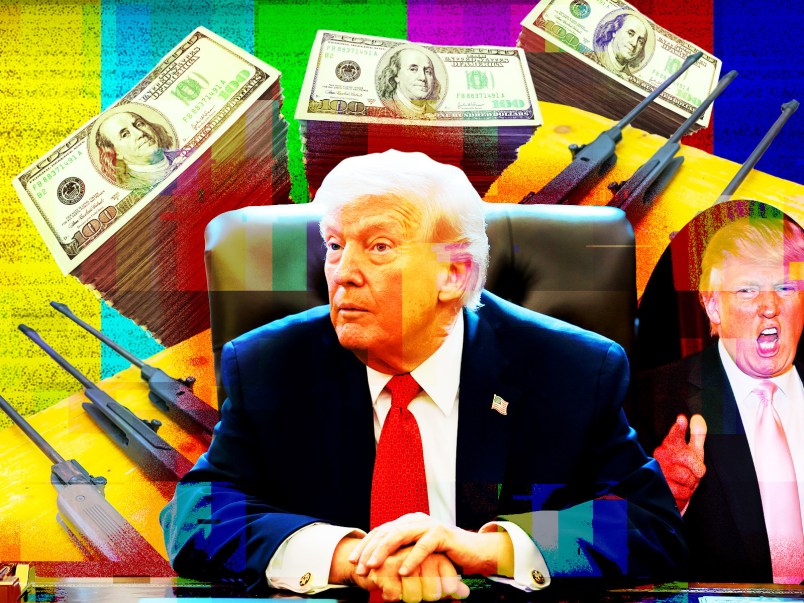
From Richard Nixon’s 1968 “law and order” campaign to George H.W. Bush’s Willie Horton ad two decades later, Republicans have a storied history of fear-mongering on the issue of crime to win elections. Yet despite pulling whole chapters out of that playbook and a media environment that benefits from keeping people on a constant state of alert, the GOP’s midterm wipeout could signal the limits, if not the end, of that strategy.

Yes, Donald Trump and GOP candidates trotted out all the familiar bogeymen; claims about immigrant crime with a particular focus on Somali populations,assertions that Democrats intend to “defund the police,” rioting in Paris. Each rolled out as a preview of coming attractions should Democrats be swept into power. Fox News dutifully amplified and shaped those messages, tossing in for good measure Islamophobic discussions of “terrorism” pegged to Michigan’s Senator-elect Abdul El-Sayed’s campaign.

As TPM noted, Trump eagerly stoked those efforts not only with a barrage of scary warnings about what “the radical left” had in store for America but by evoking the specter of a woman murdered by a Black man in North Carolina — a story seized upon by white nationalists and explicitly connected to Horton by Trump himself. Some observers referred to it as his “Willie Horton moment.”

After decades of efficacy, however, those fear-based appeals didn’t sufficiently move the needle to stave off disaster. For all their visceral qualities, concocted threats appeared to be little match for Americans’ actual challenges, including soaring gas prices spurred by Trump’s unpopular war in Iran, cruel immigration enforcement, and the prospect of unchecked data centers sucking up water and real estate.

Numerous factors played into a Democratic blowout of historic proportions, none more so than Trump’s look-out-below approval ratings and broken promises. Still, the power of fear, and hostility toward otherness, has often worked in prodding people to vote even against their self-interest. The reasons why that messaging did so little this year are worth examining. 

To those who might note that crime has been declining, it’s worth remembering that the perception of crime often diverges from the statistical reality. That’s a dynamic the late media scholar George Gerbner identified in the 1970s with what he called “Mean World Syndrome,” in which heavy consumers of media see society as more dangerous than it actually is. While Gerbner predicated the theory then on heavy diets of police procedurals and “If it bleeds, it leads” local TV news coverage, the cultural menu has only become scarier with the proliferation of true-crime podcasts and docuseries across platforms like Netflix and HBO.

Candidates continued to wallow in anecdotal tales of violence, no doubt heeding consultants and following Trump’s lead. But even before the election, pollsters were taking note that the old “Tough on crime” pitch didn’t resonate the way it had in the past, as the New York Times reported, in a striking departure even from Trump’s previous electoral battles.

Indeed, what has made crime such a reliable political tool hinges on something that goes beyond reason — an emotional response to hearing about someone being victimized. While local news capitalizes on proximity to viewers to heighten that reaction, cases regularly pass into the national lexicon by being broadly identifiable enough to make any parent, anywhere, momentarily clutch their throat, as underscored by new Netflix docuseries recounting the murders of Natalee Holloway and JonBenét Ramsey.

The extent to which the election overcame those political tides, and that psychology, suggests voters perhaps grew weary of Republican hyperbole about crime as a campaign issue, including Trump’s characteristic bombast about how the U.S. was experiencing “crime like nobody’s ever seen” before he cracked down on its “open borders.”

As it happens, the country’s complicated relationship with crime, politically and culturally, gets the full Ken Burns treatment this month with “Crime and Punishment in America,” a four-part PBS documentary premiering November 16. Directed by Lynn Novick and produced with frequent collaborator Burns, the sweeping production includes sections on Nixon’s campaign to rouse the “silent majority” with a “law and order” theme, evoking a degree of irony worthy of that Alanis Morissette song. Another chapter explores how devastating Bush’s Horton ad was against Michael Dukakis, portraying him, and Democrats, as “soft” on crime.

Political strategist Lee Atwater and Republican presidential nominee George Bush at a campaign rally during the 1988 presidential race. (Photo by © Wally McNamee/CORBIS/Corbis via Getty Images)

“I don’t think you can overestimate the impact of the Willie Horton ad for a generation of politicians,” legal scholar James Forman Jr. explains in the documentary. Notably, that included Democrats like Bill Clinton, who sought to neutralize that vulnerability by championing a “three strikes” law in 1994 amid what Forman calls a “bipartisan bidding war for criminal justice harshness.” (Clinton later expressed regret about the bill, which led to an explosion in the prison population.)

It would be lovely to think the electorate has wised up to the GOP’s cynical tactics, or that the media have recognized their complicity in stoking irrational levels of anxiety with each salacious news story. But that would require considerable naivete, and ignores a plethora of bad-faith actors. Trump’s appointment of Stephen Miller as his chief of staff also makes clear he has no intention of retreating from his most virulent instincts, and fear remains a powerful motivator and means of garnering attention, especially for conservative media desperate to retain an audience reeling from its electoral shellacking.

For clues about how that will manifest itself, pay close attention to Fox News, which is quite adept at pivoting to material that will distract, outrage, and titillate its conservative-leaning viewers. Last week, that included stories about how unrest in European cities could come to the U.S. and devoting time to mocking a West Hollywood ordinance granting certain protections to people in polyamorous relationships, the latter providing a perfect distillation of liberal California stereotypes.

The most reasonable conclusion is that voters rejected GOP warnings of Democratic dystopia because of the grim reality staring them in the face right now. Democrats were able to offerpossible solutions to problems they could lay squarely at Trump’s feet. By contrast, when you’re getting robbed at the gas pump on a recurring basis, the unpredictable nature of becoming a crime victim and the threat from far-away immigrant caravans feel a bit less pressing.

Although it’s surely premature to hope crime-based campaigning recedes given the election’s outcome, the implication that people have grown more immune to such pleas is a welcome development. Or, as George W. Bush once put it while mangling the adage he was trying to quote, “Fool me once, shame on you. You can’t get fooled again.”
  •  

Donald Trump’s Reality-TV Presidency Has Entered its Desperate Gimmick Phase

This article is part of Cafe, TPM’s home for opinion and news analysis.

Donald Trump fancied himself an expert on television long before parlaying his titan-of-industry image, forged by “The Apprentice,” into politics. But his “reality-TV presidency” — complete with cliffhangers, confrontations, and eliminations — increasingly resembles a once-popular show in its later seasons, resorting to gimmicks as it scrambles to sustain an audience.

As someone who chronicled Trump’s primetime success and absorbed his claims (invariably false) about titanic ratings long after “The Apprentice” slipped off its lofty perch, there’s an odd familiarity to the desperate push toward the 2026 midterms. Trump’s shtick mirrors the tricks and traps of an aging reality show, from poorly vetted, swing-for-the-fences casting decisions to escalating levels of violence and risk, to, finally, lavish cash giveaways. (The main difference, actually, is that TV shows have to make good on their payout promises.)

In just the last few weeks, Defense Secretary Pete Hegseth announced plans for a live-streamed execution, only to see the president retreat from the idea, despite his initial endorsement of it; Trump chose Katie Zacharia as his press secretary with scant due diligence before firing her after a half-Scaramucci; and the president touted a variety of prize incentives to voters, including a $5,000 pledge to all adults — but only if the election results go his way — and to-be-determined cash awards to whistleblowers to advance his anti-fraud obsession.

Based on the polling, nothing really appears to be moving the needle. Among students of television, that really shouldn’t come as much of a surprise, since once a “show” enters this phase, there’s often not much that can be done to stave off the inevitable decline, as fickle viewers begin looking for something new, gravitating toward the next big thing.

Trump remains fond of pointing out when women are beautiful as an act of nose-thumbing rebellion against “woke” culture, but his recent gushing about the appearance of various men, and their bodies, has become a new source of fascination, as well as a gift to late-night comics. But it all fits the pattern of Trump as the producer of his own show, where he’s invariably the hero surrounded by enemies on all sides. Within that aura of showmanship, Trump also views himself as a casting genius uniquely able to identify star power, underscored by his repeated references going back years to “central casting.”

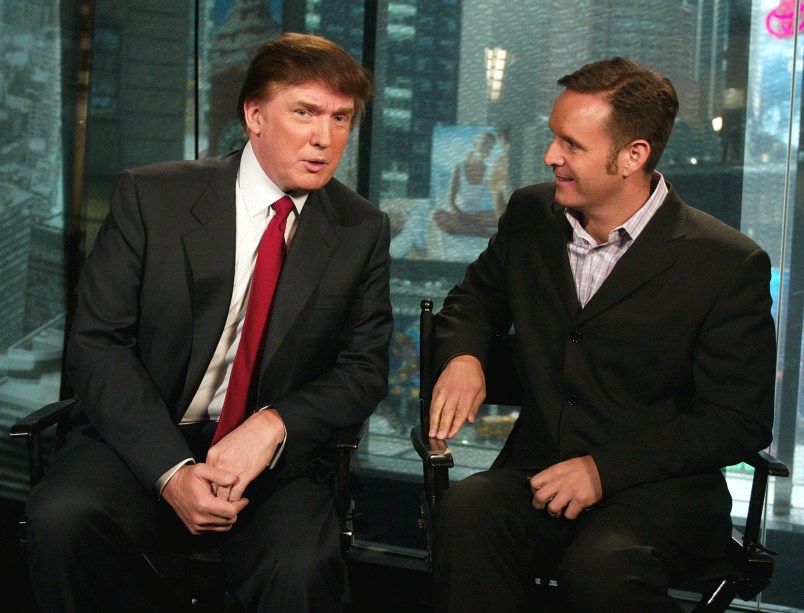
Donald Trump and “Apprentice” producer Mark Burnett talk to reporters on April 8, 2003 in New York City. (Photo by Jeff Christensen/WireImage)

Although “Survivor” producer Mark Burnett was the ostensible mastermind behind “The Apprentice,” Trump clearly felt like he internalized the tools of the trade. But these recent examples underscore the challenges of such sleight of hand, as well as how trying to bend an existing format can blow up in one’s face.

To those who might see the reality-TV analogy as strained, remember how Trump got here. The way “The Apprentice” carefully crafted Trump’s persona through creative editing, which was necessary to make sense of his behavior, is a story that’s been told and retold, primarily via confessionals and apologies from former staffers and the NBC marketing guru who helped launch the series.

Bill Pruitt, an early “Apprentice” producer, acknowledged in a 2024 Slate piece that he and his colleagues “played fast and loose with the facts,” creating “the myth” of Trump, beginning with the glittering boardroom built to stand in for the rundown space in his real-life offices.

Nor should it come as a shock that Trump harbors an inflated sense of his reality-TV acumen. Another producer, Jonathon Braun, recalled how Trump would make out-of-left-field choices about who to fire, forcing the producers to retrofit the entire episode to justify his chosen outcome. “Our job then was to reverse engineer the show and to make him not look like a complete moron,” Braun told New York Times reporters Russ Beuttner and Susanne Craig for their book “Lucky Loser: How Donald Trump Squandered His Father’s Fortune and Created the Illusion of Success.”

John Miller, the now-retired NBC executive, titled his 2024 essay/mea culpa “We Created a Monster: Trump Was a TV Fantasy Invented for ‘The Apprentice.’” As he told me in an interview in 2025, the qualities that Trump prized above all else were “loyalty and being telegenic,” adding, “Experience and competence are well down that list.” He also observed that Trump was both “manipulative,” and “extraordinarily easy to manipulate.”

Trump is gambling on a different, more serious playing field, but the inherent strategy is the same. For a president who sees himself as the ultimate showman, breathing life into a tiring act has notably led to some very rare backpedaling.

Zacharia offered a textbook illustration of those priorities, having effusively praised Trump on television — another attractive mouthpiece on the surface, appointed without evidence of the customary concerns about her qualifications or resume. 

Such corner-cutting can be perilous, and again, reality TV provides ample precedent. Take “The Bachelorette,” which picked Frankie Taylor Paul for the last edition despite questions about off-screen issues, then wound up having to shelve the entire season after TMZ posted video pertaining to a 2023 domestic-assault allegation.

Television producers regularly talk about “raising the stakes,” and stoking conflict or the perceived threat of violence is a go-to means of seeking to juice ratings. That might explain Hegseth’s tough-guy talk about a live-streamed execution, before the collective disgust over what the Daily Kos called a government-sponsored “snuff film” prompted the White House to back down.

Still, as critic Matthew Gilbert pointed out, televised executions seem less far-fetched than when “Network” satirized them 50 years ago. While daredevil televised stunts are as old as Evel Knievel, the possibility of seeing someone die — live! — has become another threshold for standing out amid a sea of content, such as “Free Solo” free climber Alex Honnold’s January special scaling a Taiwan skyscraper live on Netflix.

A less bloodthirsty gambit involves simply throwing extra prize money around, as “Survivor” did by doubling the potential payout for its 50th edition. Like physical altercations and tossed wine glasses, that usually feels like an exercise prone to yielding diminishing returns, to be pursued after exhausting most other options. 

Students of television, of course, will tell you that once a show enters this part of its lifecycle, there’s not much that can stave off the inevitable declines. Hit shows usually blaze hot, then fade, even if they endure for a long time like “Survivor,” like “The Apprentice” a  Burnett production, or “Dancing With the Stars.” That explains why something like “The Bachelor” franchise would roll the dice by selecting a bachelorette that ended up costing ABC and parent Disney millions in unused (so far, anyway) episodes.

Trump is gambling on a different, more serious playing field, but the inherent strategy is the same. For a president who sees himself as the ultimate showman, breathing life into a tiring act has notably led to some very rare backpedaling. And despite how effective the maestros at “The Apprentice” were in stitching together a better Trump, facing an angry electorate, he might be confronting his limits, finally, in terms of shaping reality.

  •  
❌