In a digital flyer promoting the stand-up shows that would culminate in her new HBO comedy special, “Parmesan,” comedian, actress and one of America’s greatest working artists, Kate Berlant, posed an important question: “HAVE YOU SEEN THIS CLOWN?” In one photo, Berlant, fresh from glam, seduces the camera; in the other, her face contorts into a rascally grin, eyes half-crossed for effect. No dichotomy better represents Berlant’s razor-sharp, thoroughly tasteful wit, which sits halfway between refined humorist and go-for-broke court jester.
If you haven’t seen this clown, there’s no better time than the present. Like most of Berlant’s work — from her extensive collaborations with best friend John Early to her unforgettable one-woman show, “KATE” — “Parmesan” is a masterful send-up of a time when we’re all doing character work. What begins as an honest account of modern life’s bleak state is distorted alongside Berlant’s malleable expressions, slowly blossoming into something life-affirming, like a diamond among the rubble. Some comedians like to say they give their audience a “night off” from the world. Berlant, on the other hand, relishes the chance to remind her audiences of just how blissfully hysterical the world can be.
Everyday life, in the Berlantian sense, is driven by affection for both the mundane and the surreal in equal measure. In the joke that inspires the special’s title, she measures an Instagram comment’s subzero value in a wide scope, lampooning the communal yet cartoonish nature of our endless scroll. Elsewhere, Berlant gets more personal than she ever has on stage, using the relatively recent discovery that she isn’t straight as the springboard for bits about how embracing queerness later in life can be as beautiful as it is uniquely mortifying.
But with Berlant, it’s not just about the jokes; it’s about the rhythm and physicality that accompany them. No one understands their audience better than she does, knowing comedy relies as much on observation as on good, old-fashioned slapstick. Berlant’s a tenured professor at the Make-‘Em-Laugh Institute, and “Parmesan” proves her research-driven thesis statement time and again: There’s no bad mood a good clown can’t improve.
Not long ago, celebrities took to social media to express their contempt for a business and barely made a ripple in the public conversation, let alone national headlines.
When Alec Baldwin furiously smashed his big thumbs into his tiny BlackBerry keyboard, tweeting, “Starbucks on 93 and B’way. Uptight Queen barista named JAY has an attitude problem,” no news outlets darted to the Starbucks location to interview Jay.
When Kelly Osbourne tried in vain to pop into a Starbucks bathroom during New York Pride, inventing the hashtag “#PissedMyOwnPants,” no one ran to that Starbucks to see if they could recover evidence of Osbourne’s urine to prove her woes.
We used to treat these complaints as absurd follies of celebrity excess — tone-deaf musings that proved how out of touch the rich and famous are with the everyday person working a customer-facing service job. Without fail, the celebrity always looked like the ridiculous party. But no part of celebrity culture in the past 10 years has proven that we are well past this comical stage more than Kelly Clarkson’s war with a small business that wouldn’t sell her a singing bird mounted on their wall.
A business capitulating to a celebrity who reflexively sends a dogpile on them would set an alarming social precedent. Even more frightening is that so many demanded that capitulation blindly, without knowing a single additional detail. No matter whose side one might gravitate toward, the speed at which a celebrity’s will can mobilize the public should be deeply concerning.
Over the weekend, Clarkson stopped into a curiosities shop called Art of Play in Brooklyn, New York, with a few items in mind. Within minutes, a national tragedy in the form of an egregious misunderstanding occurred between Clarkson and a shop attendant. According to the store, Clarkson inquired about purchasing Molly, a custom-made singing automaton bird mounted on their wall for magic shows and public display — a bird that is not for sale. Clarkson was told they could find a comparable item for her, but apparently felt slighted. “. . .Literally was looked at as if I couldn’t afford it,” Clarkson posted on X a few minutes after the initial interaction. “You’re an idiot and just lost a huge sale. But y’all should check out Art of Play in Brooklyn if you enjoy being treated like Julia Roberts’ character in ‘Pretty Woman.’”
The fallout was swift. Thousands of people flew to the store’s Google reviews to tank its ratings and leave upset comments, despite never having set foot inside. People crowded their Instagram page, commenting on a post from earlier in the week, “Here before they turn the comments off!” And while the situation has become multilayered and far too overblown in the days since, I found this initial reaction most disconcerting.
This was one post, fired off in disgust from a major celebrity with a massive, very supportive audience. Sick in bed with nothing better to do this weekend, I watched the fallout play out in real time minutes after the post went up. It was as if Clarkson’s fans had their sleeper cells activated, ready to use the weapons at their disposal — their phones — at their commander’s word. The situation extended far past stan culture’s typical digital boundaries and immediately into the real world. Based on Clarkson’s behavior over the last month, I’m confident not only that the real world isn’t a place she ventures into often, but that many of us could stand to venture into it far more frequently, too. If a former karaoke-singing talk show host, a cocky shop owner and a sweet wooden bird caught in the middle can have so many people at each other’s throats, the world has officially tilted off its axis and begun spinning into perdition.
For those not already intimately versed in the situation’s details — consider yourself lucky — here’s the brass tacks. Art of Play clarified that Clarkson asked to buy Molly the singing bird automaton, which they told her was not for sale. The store continued, “It’s been a surreal experience to be the focus of such widespread outrage after just one mention by a celebrity. Clarkson responded with a post from the store’s Instagram story, featuring a blurry $15,000 price tag next to Molly. Art of Play clarified that their wall-mounted piece was not for sale, but that the artist would sell a twin creation for $15,000; meanwhile, a store employee offered her a comparable $2,000 option.
One of the store’s co-owners, Adam Rubin, gave an interview to Curbed, saying, “Kelly Clarkson put us in danger,” which is one of the more patently hysterical results of this entire situation. Earlier this week, investigative reporter Pablo Torre obtained audio-free security footage showing the entire interaction between Clarkson and the store employee. In the footage, recorded on a crowded day with plenty of customers, the employee appears to tell Clarkson about Molly, then points out a similar bird elsewhere in the store and helps another customer. Clarkson goes to leave, stopping on the way out to exchange what seem like heated words with another employee behind the counter. The entire sequence of events lasts just five minutes, yet it has consumed the zeitgeist for days.
As someone whose years of retail experience led to everything from customers crumpling their receipts and throwing them in his face to others threatening him after being unsatisfied with their discounts, my initial reaction was to side with Art of Play. Frankly, I don’t see how anyone’s reaction wasn’t. There isn’t one celebrity, living or dead, who I’d blindly support in using their five-minute shopping experience — which caused only ego bruises, not physical ones — to sic their millions of fans on a store. That’s just not something any human with an ounce of couth or self-awareness about the power of platform would do. Clarkson, who has been famous for her entire adult life and managed to grow her audience into a loyal following largely unscathed by scandal, is responsible for wielding her influence with tact. This was not a tactful decision.
Want more from culture than just the latest trend? The Swell highlights art made to last. Sign up here
Art of Play jokingly raising Molly’s price to $15 million in the wake of the controversy doesn’t exactly paint the store in the best light either — though it at least exhibits a sense of humor. (I can’t say the same for their gross decision to try to prove their innocence with security footage.) I don’t entirely believe Rubin’s assertions that his employees have been put in danger, but his store certainly has. In commerce’s current state, small businesses live and die on Google reviews. It’s well within the store’s right to stick up for themselves and express shock at the way Clarkson’s fans operate. Capitulating to a celebrity who reflexively decides to send a dogpile on a business would set an alarming social precedent. Even more frightening is that so many demanded that capitulation blindly, without ever knowing a single additional detail outside of Clarkson’s post. No matter whose side one might gravitate toward, the speed at which a celebrity’s will can mobilize the public should be deeply concerning.
We live in a country where viral videos of unpleasant exchanges are valuable social capital, where those seeking power are looking to those who have it to learn what can be weaponized to seize control. It was always going to end this way when Clarkson named the store and pressed send.
But this is what happens when civilians stop treating celebrities like famous people and start trusting them like friends. Call it the talk show effect, or the America’s sweetheart effect; whatever you call it, it’s poisoning how we think and react. Internet stan culture has evolved so much that online culture wars have become real-life battles. When did a singer versus a singing bird become a saga that would capture the world’s attention? There is no world in which any of us should care about Clarkson’s innocuous interaction with a puzzle shop employee, and certainly no world where Clarkson should make it any of our business.
That’s what’s saddest about this situation: There are better ways to spend everyone’s time, and far more important ways for Clarkson to use her platform. Clarkson doesn’t appear to have posted anything on her X account that hasn’t gone through a manager in well over two years. And yet, she’ll go to bat for a perceived slight at a glorified magic shop? It’s been less than a month since her music industry peers, Macklemore and Ed Sheeran, got into a very public, contentious disagreement over Macklemore’s support of Palestine. And though several musicians spoke up and shared their opinions, Clarkson was not one of them. That issue — or the midterm elections, ICE protests, response to Flock cameras in Clarkson’s home state of Texas, anything! — was not important enough for Clarkson to log on to say something. Receiving less-than-perfect assistance in a small, crowded store? Alert the troops.
All this shows that, no matter how much Clarkson brands herself as everybody’s best friend, her actions don’t always reflect everybody’s best interests. This was clear as day two weeks ago when Clarkson was asked her thoughts on AI during an appearance on the “Las Culturistas” podcast. “Controversial, I don’t care: I love AI,” Clarkson said. “There are very amazing things with AI that I am obsessed with. I am very into it artistically, too.” Clarkson went on to say that her “issue” was with AI musicians potentially competing with human artists. In other words: Clarkson’s concerns aren’t with AI stealing other people’s art, gobbling up natural resources, replacing people’s jobs, or generally making the world worse. She cares when it affects her. What a perfectly succinct way to frame the feud with Art of Play too — and a perfect bit of cosmic irony that Clarkson wasn’t allowed to take a handcrafted bird home to an AI-obsessed household.
I’d like to think that Clarkson’s views on customer interactions, AI and the weight of political and social events don’t reflect the public’s. But judging by the response to Clarkson’s tweet, I don’t think that’s true anymore. In fact, Clarkson’s opinions are all-too indicative of the confluence between idol worship and social outrage. You might say it’s not that serious, and it wasn’t — until Clarkson made it that serious.
We’re a jacked-in species, seamlessly ported to our devices and the ephemeral digital worlds inside them, allowing them to dictate our emotional responses and how we use our precious time. We live in a country where viral videos of unpleasant exchanges are valuable social capital, where those seeking power are looking to those who have it to learn what can be weaponized to seize control. It was always going to end this way when Clarkson named the store and pressed send. How very ironic that the first American Idol has become a picture of the blind devotion synonymous with Western exceptionalism. Perhaps we should’ve listened a bit closer to the refrain in “Since U Been Gone,” where Clarkson tells us, straight up, “I get what I want.”
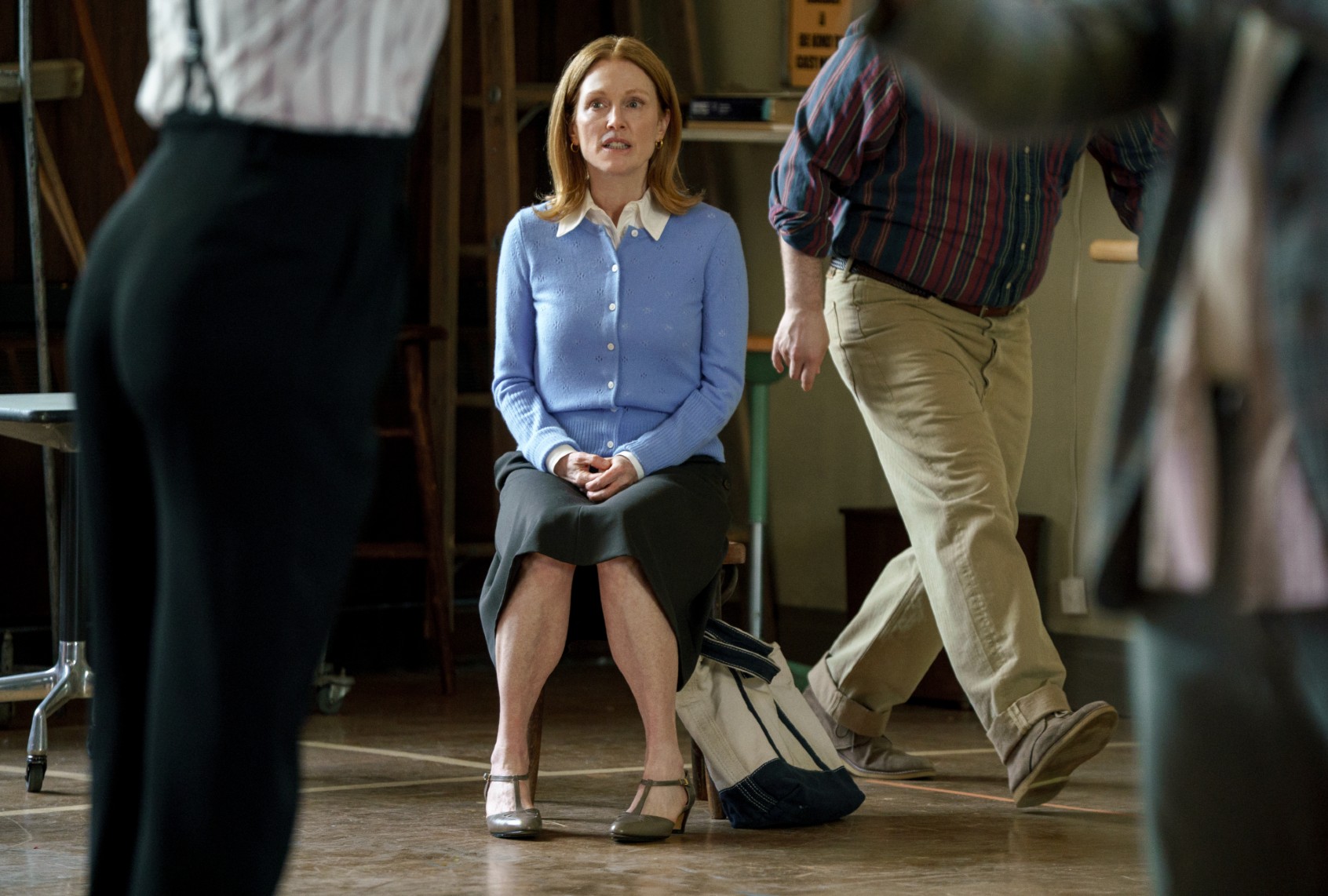
It’s audition day at New Jersey’s Brook Arts Center, and everyone is a bundle of nerves. Actors dot the lobby, doing vocal warm-ups between mini panic attacks and greeting old friends from past shows. This year’s production is “Nosy Neighbors,” a forgotten musical about a New York apartment building and its kooky tenants, including its superintendent, Miss Danielle — a dreamer who, despite repairing clogged toilets and collecting rent for a living, hasn’t let the city spit her out. The role is a bit part, but features a showstopping centerpiece number, the kind of song musical theater performers eat, sleep and breathe. But for mousy housewife Mona Friedman (Julianne Moore), the size of the part or the strength of the song don’t matter. Miss Danielle seems like the right choice to audition for because the role is age-appropriate, and Mona wants to be included however she can be.
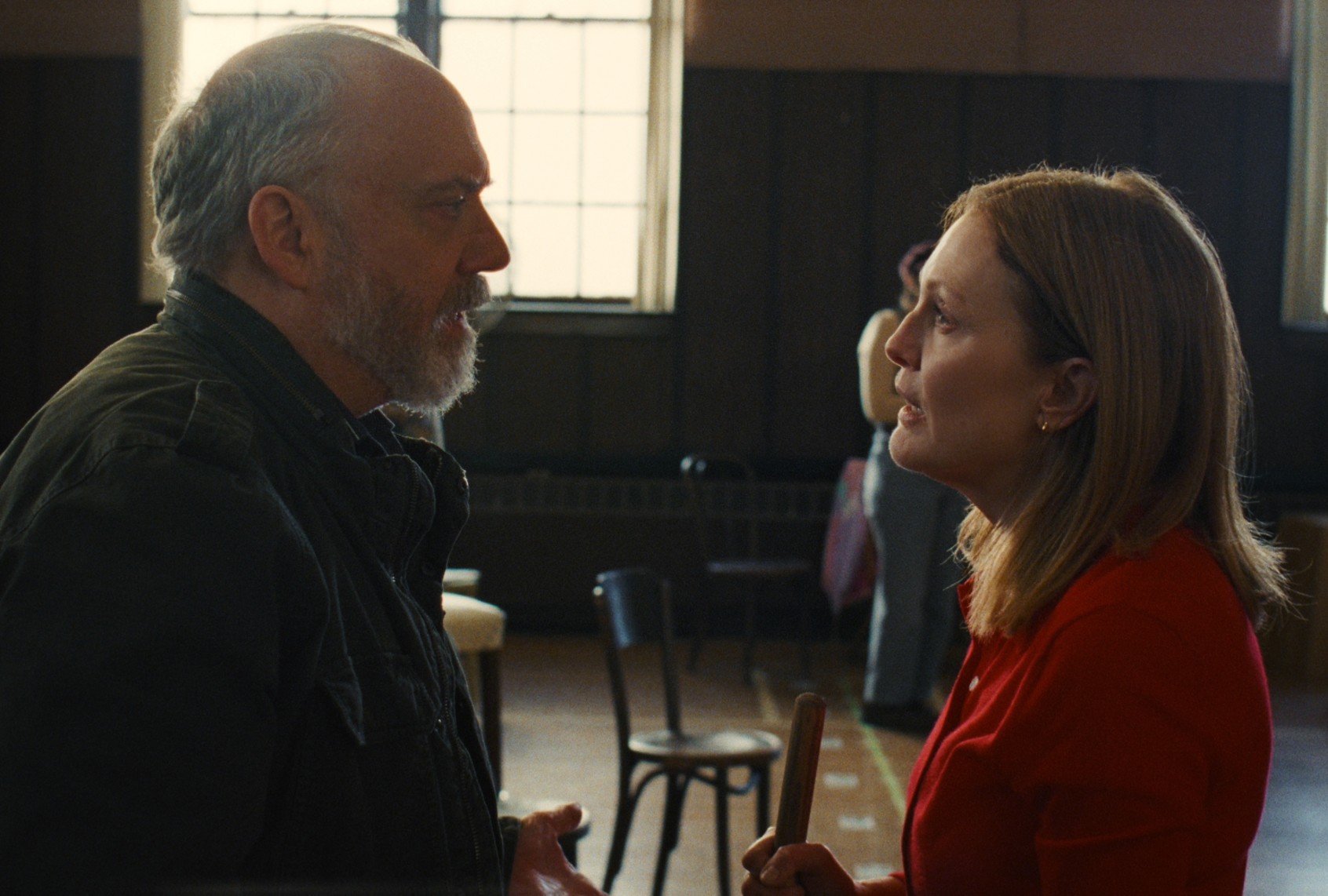
And though this might be New Jersey community theater, the standards are just as high as on Broadway. Renowned local director Jerry Blankenbuehler (Paul Giamatti) demands perfection; anything less than excellence won’t touch his stage. Mona, of course, has no way of knowing this. She’s an interloper among established thespians, a woman in her late 50s who has only just begun listening to the little voice inside her, the one begging her to step outside her comfort zone. She’s up against seasoned actors and singers who know what they’re doing, whose every step, gesture and note resonates effortlessly. Yet, somehow, that doesn’t stop her. Despite her nerves, she stands in the spotlight and sings Miss Danielle’s big number. It doesn’t matter how timidly the words might’ve come out; what’s important is that Mona did it.
(A24) Julianne Moore in “The Debut”
Mona transforms before our eyes from a diffident mother of two in an unhappy marriage into the star she always could be, though not without a few bumps in the road. It’s these obstacles that make Eisenberg’s film feel all the more realistic, accurately representing how much work it takes to find oneself, an arduous process that must be experienced over and over in different ways.
This is the brilliant way writer-director Jesse Eisenberg thrusts us into his third — and best — feature, “The Debut,” screening at this year’s New York Film Festival and premiering in theaters December 11. We meet Mona in media res, nervously tapping her shoes on the carpeted lobby floor and fretting over her audition. But instead of the traditional cutthroat audition setting, where every actor silently sizes up the competition, the Brook Arts Center fosters a warm environment. Fellow actors Stef (Halle Bailey) and Trish (Bonnie Milligan) assure Mona she’ll be wonderful. And though Mona’s audition might be far from it, that little spark of community and care is all she needs to feel like she’s right where she should be.
Want more from culture than just the latest trend? The Swell highlights art made to last. Sign up here
Finding this sense of contentment isn’t easy. Some go their whole lives searching for it, aching to find where they belong, or what gives them purpose. The longing is what makes life beautiful and also impossible. We’re so often told in childhood that we can be anything and anyone we want to be, dazzled by illustrations of astronauts smiling through their helmets while floating in space, or ballerinas gracefully twirling while dancing “The Nutcracker.” But just as often, these turn out to be children’s fantasies — wide-eyed dreams of imaginary futures, tempered by real life. Bills must be paid. Kids have to eat. We have to survive. And in the pursuit of survival, there’s rarely time for side quests.
That’s precisely why “The Debut” is such a brilliant revelation. There’s no shortage of cinematic depictions of people getting their groove back, but seldom is the search for the self portrayed with as much tender empathy as Eisenberg and Moore have for Mona — an instant all-timer in Moore’s stacked repertoire. Over the film’s blissful 105 minutes, in which Moore appears in every scene, Mona transforms before our eyes from a diffident mother of two in an unhappy marriage into the star she always could be, though not without a few bumps in the road. It’s these obstacles that make Eisenberg’s film feel all the more realistic, accurately representing how much work it takes to find oneself, an arduous process that must be experienced over and over in different ways. As Mona discovers, the stumbles are as important as the triumphs. There is no greatness without embarrassment.
(A24) Paul Giamatti and Julianne Moore in “The Debut”
But to be embarrassed, one must first get the chance to be embarrassed. The role of Miss Danielle is Mona’s to lose, and lose she does to local legend Serena Cherry (a wonderful cameo by Bernadette Peters), who gives Mona’s big song all of the polished oomph of the Great White Way. But competition isn’t any concern of Mona’s. She’s more interested in what simply auditioning made her feel, how she came alive, if only for a brief few moments until Jerry cut her off. On a double date with her husband and their best friends, Mona, beaming, tells the group that she’s auditioned for “a musical show.” Her inadvertent gaffes with industry terminology might make her seem silly and out of her depth. But they also indicate an eagerness to learn, a will that makes Mona’s eventual callback after Serena Cherry drops out of the show seem almost like manifestation.
And, really, that’s all achieving anything in this life is: manifestation. While the word has been co-opted and corrupted by vision-board romantics and TikTok gurus, it’s still the key to making what we want happen. Manifestation doesn’t mean something we want pops out of thin air just because we think about it; it means hard work and relentless effort. And if struggling is how Mona will mold herself for the theater — stretching and shaping her performance into something worthy of the greater New Jersey area’s most prolific stage — so be it.
It takes immense skill for a great actor to convincingly play a novice performer. And because Moore is so talented — so uniquely proficient at finding the human depth at the core of all her characters — she can make Mona unforgettable. Here, Moore shows reverence not only for her own craft, but for all the hopeful idealists who pine to know what it feels like to lose yourself in someone, or something, else. As Mona goes deeper into Miss Danielle, turning a minor role into something far bigger and more unwieldy than anything she or Jerry prepared for, Moore reminds us why we lie awake at night, convincing ourselves there might be more to life. We don’t just search for something that fulfills us because we want to know what it feels like to be happy in our work or hobbies; we do it to make sense out of a nonsensical life, to understand what being a human is all about.
To say I can relate would be an understatement. I rarely find myself both crying with laughter and crying through my laughter in the span of the same film. It moved me deeply to be tossed headlong into Mona’s life, to sit beside someone who, one day, decided that she wanted something else for herself. I saw reflections and heard echoes of all of the reservations I had about becoming a writer, telling myself that I’d never be able to conjure the commitment it takes to write consistently, afraid that everyone else had sharper, smarter worldviews than mine — that they could see things I’d never be able to. I’d convinced myself that it would take too much time to start over, and that it wasn’t worth trying.
Moore reminds us why we lie awake at night, convincing ourselves there might be more to life. We don’t just search for something that fulfills us because we want to know what it feels like to be happy in our work or hobbies; we do it to make sense out of a nonsensical life, to understand what being a human is all about.
But, like Mona and her fond memories of childhood church choir, I couldn’t let the urge go. It wasn’t enough to simply watch films; I needed an outlet for all the ways they made me feel and all the ideas they inspired. My life didn’t feel complete just watching other people’s art. I wanted to make my own, too. And, again, like Mona, accepting that dream as a potential reality can shift your self-perception entirely. I’m not the same person I was when I first started this, and I often feel like I don’t recognize the person who first put finger to keyboard. Getting here now — typing away while I sniffle with a cold, a life I wouldn’t change for the world — required carefully deflating a rapidly overblown ego.
There’s a tendency to think that, because one has had any success at all, be it a musical callback or a greenlit freelance piece or a short story selected for publication, that they know best. But that’s never the case, at least not in the arts. And as Eisenberg continues to remind us that this is not Mona’s musical — that everyone in the cast and crew is just as important as she is — “The Debut” starts to sing even more beautifully than it already had.
But “The Debut” is not only for those in, or interested in, the arts. It’s a film for anyone who has put aside their desires and told themselves it’s too late or too scary to try something new. Be it gardening, ceramics, hang gliding, mountain climbing, swimming, competitive hot dog eating (well . . . consult your doctor), photography, skeet shooting, upholstery, or even just journaling, trying anything and everything to be closer to your happiest self is worthwhile. You may crash and burn, sure. But you might also come to understand your reason for living. Either result will paint a fuller picture, widening the spotlight little by little, until everything begins to glow.
There’s nothing subtle about a movie where Nicole Kidman crawls on her knees to lick milk out of a saucer. And yet, Halina Reijn’s “Babygirl” is perhaps the most thematically complex and provocative film of the year, kitty-play and all — one that will continue to reveal its multitude of layers long after Sky Ferreira’s scorcher of an end credits song has dulled its blaze.
It’s a cornucopia of titillating treats, best exemplified by the film’s centerpiece scene, which features the most memorable orgasm since “When Harry Met Sally.”
That dissonance between Reijn’s deliciously clever writing and her narrative’s more forthright eroticism is encapsulated by the film’s outré promotional rollout. To tantalize and tease prospective viewers, the marketing team behind “Babygirl” has leaned all the way in, emphasizing the movie’s Christmas Day release in promotional materials that demand audiences “get everything you want” this holiday. Trailer drops and sneak peeks have been accompanied by milk emojis, while official stills flaunt Kidman’s costar Harris Dickinson’s back muscles.
It’s no shock that, for a film that plainly features kinky sex, the “Babygirl” marketing team would want to stress the movie’s raw eroticism to get curious viewers in theater seats. It’s a trick almost as cunning as the one Reijn pulls off in the movie itself, as she disguises a stirring work about controversial pleasure and cerebral expansion as a kind of elevated “Fifty Shades.” Once audiences get eyes on “Babygirl,” they quickly find that the movie is so much more than milk emojis, gold chains and rippling back muscles. Rather, it’s a cornucopia of titillating treats, best exemplified by the film’s incredible centerpiece scene, which features both the most memorable orgasm since “When Harry Met Sally” and gobsmacking bits of screenwriting and acting that will force you to reconsider good sex as you know it.
By the time we arrive at this moment, Kidman, Reijn and Dickinson have done a good bit of work to make the payoff so satisfying. Kidman’s character, the incredibly successful and even more brilliant automation industry magnate Romy Mathis, has inadvertently found herself locked into a sizzling affair with Dickinson’s character Samuel, an intern at Romy’s company. During their first meeting as part of a new company-wide mentorship program, Samuel matches Romy’s slippery intensity, and his reluctance to ingratiate himself intrigues her. The pair soon engage in a series of high-stakes games where Samuel is in control. They play with one another under everyone’s noses, yet never consummate their dynamic with more than a kiss. That is until things between Romy and Samuel become so heated that neither party can ignore the magnetic pull any longer.
Samuel arranges for Romy to meet him at a seedy hotel room, a far cry from the luxury that Romy is used to and expects. She arrives before he does, and when he opens the door to meet him, she chides his behavior. “Leaving me notes, texting me, calling me, sending me milk, are you f**king insane?” Romy asks. “Keeping me waiting in this disgusting hotel? I mean, I don’t wait for anything.” Romy got to the top of her field by ingeniously developing ways for fleets of robots to automate repetitive tasks, and her sexual exploits are no different; waiting around is time wasted and money lost.
But the line between sensual restraint and true inconvenience is one that Romy has never established, and her annoyance is only confusing for Samuel, who we soon realize is just as unfamiliar with this particular energy as Romy is. He can’t tell if Romy’s vexation is genuine or just another part of their game, and tries to figure it out with a command. “Get on your knees,” he orders. When Romy immediately objects, Samuel laughs in response, himself confused about where Romy’s desire ends and where it begins. “I don’t know how to . . . is that what you want? Be honest.”
Romy tells him that she worries about his age and about hurting him, and Samuel — the shrewd student that he is — reads between the lines. “Hurt me?” he asks with a smirk. “I think I have power over you, because I could make one call and you lose everything. What, does that turn you on when I say that?” Romy holds his gaze, silently communicating her arousal, and Samuel responds by once again telling her to get on her knees. She begins, but stops herself, getting up and gathering her things to leave before stopping at the door and running back into his arms. Samuel, however, doesn’t want reluctance. He wants certainty.
When he pushes Romy off of him, the two wrestle to the ground, playfully slapping each other and grunting. It’s a brilliantly uneasy moment, and Reijn ensures that the viewer will never quite know where it will go until it’s over. Kidman giggles and then grows timid. Suddenly, the fear that something violent will happen becomes very real, but Samuel only subdues Romy and tells her to stop so they can figure out what’s happening. He clamps his eyes closed, and when he refuses to open them at Romy’s request, she reaches up to pry open his eyelids, causing him to smile.
By now, the scene already feels like a masterwork in erotic tension, with most audiences undoubtedly on the edge of their seats. The banter between Samuel and Romy is mischievous and childlike, at once sexy and threatening before turning around again to feel wholly loving. Much in the way that Romy is desperate to understand what exactly it is she wants, so is Samuel. The lines are blurred again later in the film, when the threat of ruining Romy’s life becomes more than a seductive trick, and that inevitable turn wouldn’t be nearly as gratifying for the viewer if it weren’t for the intense intimacy established in the remainder of this scene.
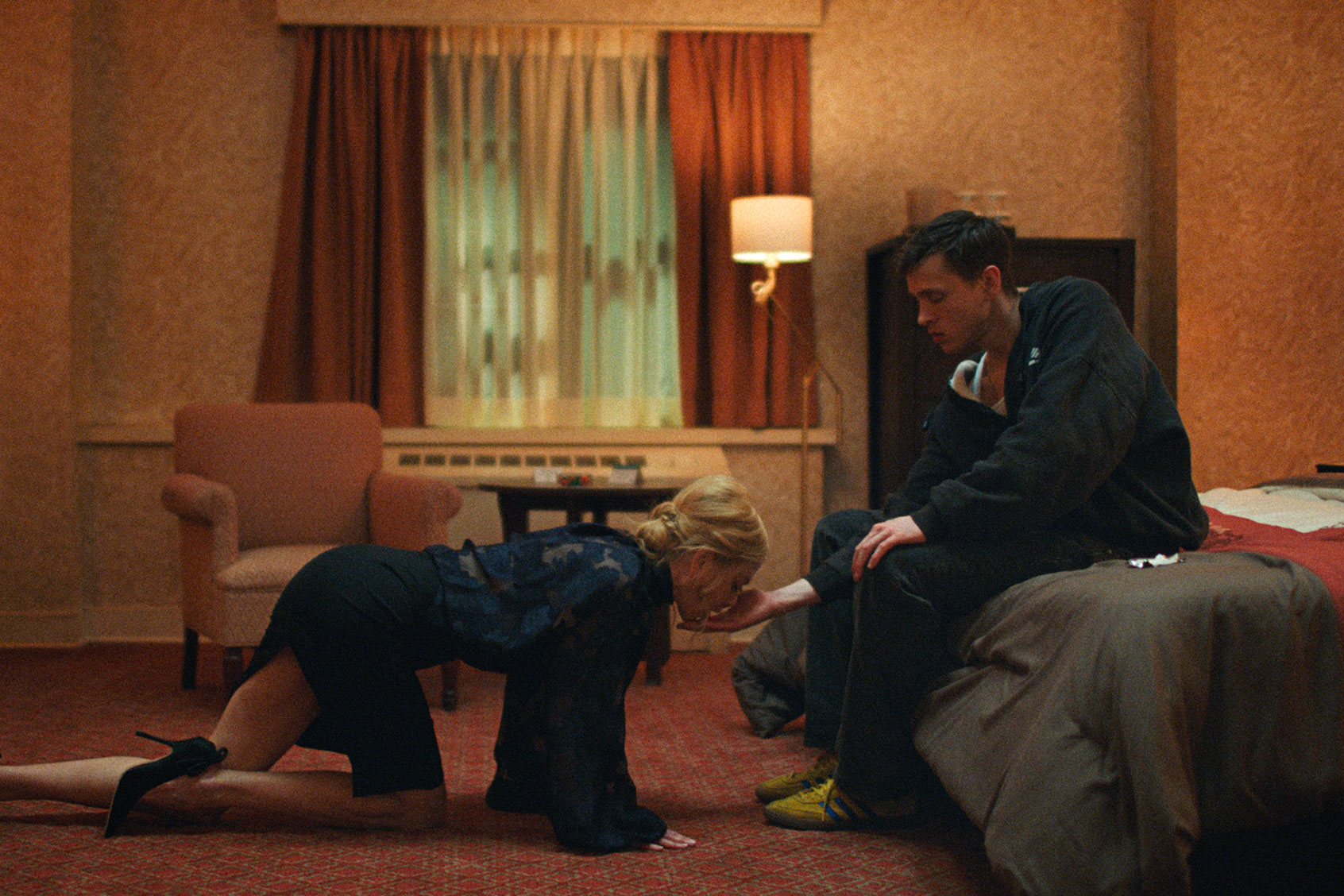
Samuel helps Romy off the floor and positions her in the corner of the room, like a child in time-out. This is Reijn’s most explicit image of Romy working through her incontrovertible Freudian shame, a humiliation that has troubled her for her entire life and which has no identifiable source — despite her attempts to pinpoint it through every therapeutic treatment known to man. At this stage, Romy is unwilling to remove her clothes, so Samuel circumnavigates the traditional nude image of sex to find a different route to her pleasure. He asks her to get on her knees before unwrapping a piece of hard candy and placing it into his hand. Romy crawls forward and picks it up with her mouth, allowing Samuel to pet her like a dog. Gently, he places Romy onto the dirty hotel room floor, facing away from him, and reaches into her skirt to finger her.
It’s a brilliantly uneasy moment, and Reijn ensures that the viewer will never quite know where it will go until it’s over.
What comes next (no pun intended) is one of the most startlingly crude and incontestibly incredible sex scenes in recent memory. Reijn’s camera closes up on Kidman’s face while Samuel works in the background, out of focus. We watch as Romy moves through pleasure, fear, bliss and confusion. Here, Kidman is using her powers as both a grade-A movie star and a true artist to mesmerize us, fully in service of Reijn’s vision. It’s a staggering bit of genius and one of the most unforgettable scenes in any film this year, a truly affecting look at the heady pursuit of physical euphoria. As Romy nears her orgasm, she’s terrified, and when she objects and tells Samuel that she “doesn’t want to pee,” we realize that she has no experience physically ejaculating. He quells her worries and brings Romy to orgasm, and she is immediately stricken with a massive wave of grief and guilt.
But Romy’s remorse doesn’t just stem from the fact that she’s cheated on her husband Jacob (Antonio Banderas), it comes from her realizing that her husband — the person she loves the most, with whom she shares two children — has never made her feel such full-bodied pleasure. Samuel bears a power that takes hold of Romy, the kind of hypnotic sway that she’ll have to contend with eventually. But first, she sobs, crumpling into Samuel’s arms while he holds her close.
It must be said that this scene demands everything of Kidman, and she bares herself entirely without any nudity at all. It is positively thrilling to see someone act at this level, so much so that Kidman’s performance demands that the viewer shed all pretenses. It’s impossible not to admire the complex, sophisticated work in this scene, which is so beautifully constructed that it defies whatever vulgar, less refined terms that may be used to define it going forward. Here, “Babygirl” graduates from to inviting to important, blowing past the tactics that marketers used to get people to pay the price of admission. Reijn’s film is more than just an erotic thriller, it’s a landmark piece of mainstream erotic cinema that, like Samuel and Romy, relishes the opportunity to push the boundaries.
Though writer-director Aaron Sorkin’s “The Social Reckoning” fancies itself a journalism thriller, the film offers only a handful of real thrills. Fans of the subgenre, known and loved for its depiction of journalism’s slow yet effective behind-the-scenes processes, might see this as a fatal flaw. After all, isn’t a journalism thriller without tension just a drama? Perhaps. But in the case of Sorkin’s latest — billed as a companion piece to the massively successful, defining 2010 film “The Social Network,” which he also penned — the lack of twists and revelations is a feature, not a bug.
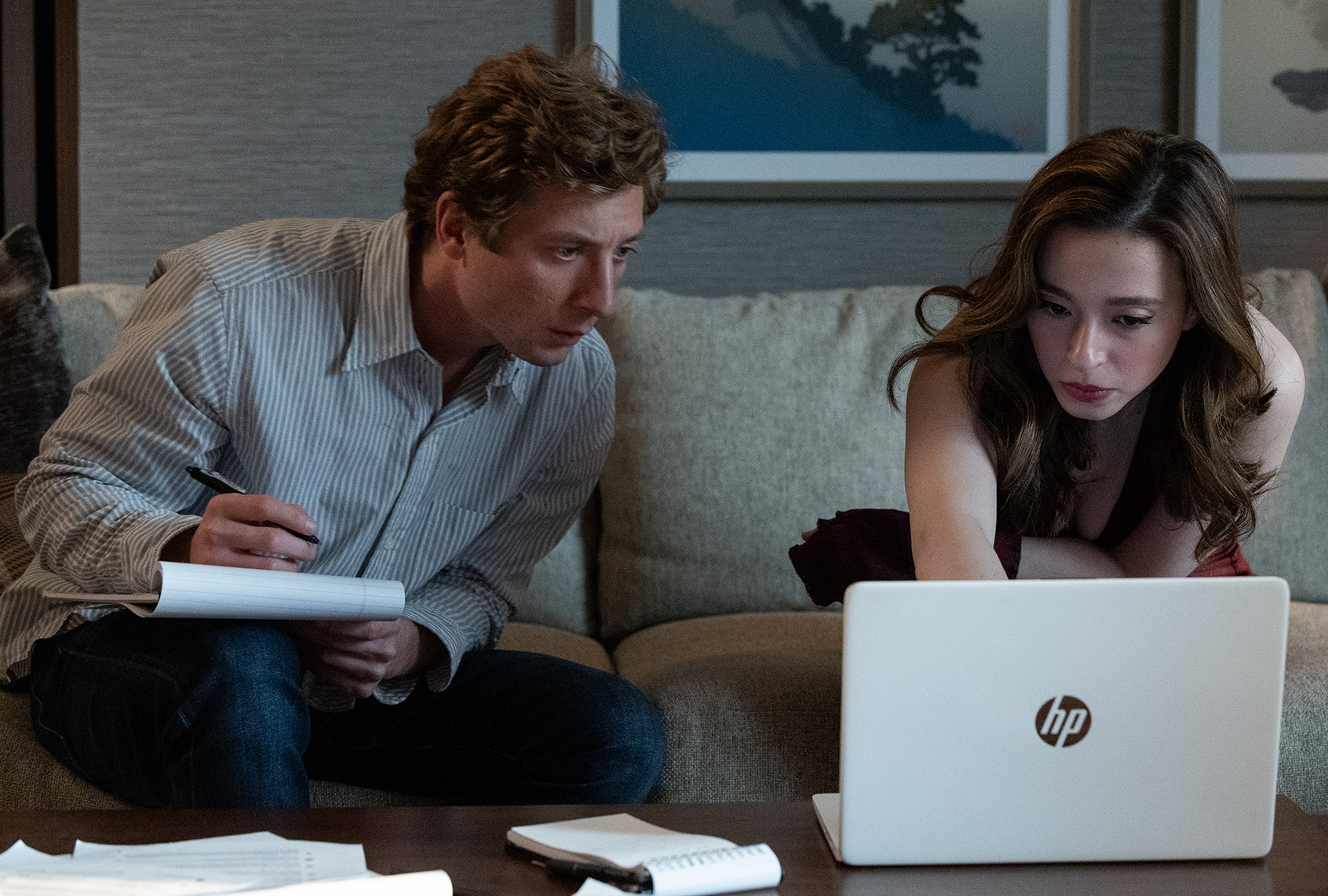
Set between 2019 and 2021, Sorkin’s film stares down the dawn of a new decade, preparing for the birth of our current web of chaos, cruelty and thinly veiled deceit. Fifteen years after Facebook first took the web by storm, the company has now grown into a conglomerate whose arms shuffle politics, culture and social mores around the world’s face like pieces on a game board. Facebook’s users are being radicalized at alarming rates thanks to algorithms that feed them extremist groups and all of their content. Facing problems everyone else turns a blind eye to, Facebook civic integrity team member Frances Haugen (Mikey Madison) reluctantly begins a working relationship with Wall Street Journal reporter Jeff Horwitz (Jeremy Allen White). At the risk of losing her job and being indicted for violating her NDA, Frances provides information droplets that eventually become the Journal’s “Facebook Files” series, exposing a deluge of damning, ethically dubious information against the company. In other words: The perfect material for someone like Sorkin.
(Sony Pictures Entertainment) Jeff Horwitz (Jeremy Allen White) and Frances Haugen (Mikey Madison) in Columbia Pictures’ “The Social Reckoning.”
Of course “The Social Reckoning” arrives too late to feel revolutionary; it would be late even if it depicted something that happened last week. Wedged in the tiny space between irrelevancy and timeliness, Sorkin’s companion piece doesn’t need to say anything new to do its job. The film only has to persuade us to pay attention to its shouts.
Between “The West Wing” and “The Newsroom,” Sorkin’s indulgent forays into the sociopolitical have long been criticized for their hubris. But despite his work being a bastion of Hollywood’s overwrought liberal optimism, “The Social Reckoning” presents a similar but discernibly different picture from the ones Sorkin’s already painted. Here, Sorkin funnels his penchant for self-important sanctimoniousness through the journalism thriller’s always-intriguing lens. And though the result is sometimes stale, the banality creates an eerie dissonance between the film’s subject matter and the world outside the cinema, pitting the snail’s pace that good investigative journalism requires against an external culture that moves at 5x that speed. This same discrepancy has made the journalism thriller itself feel somewhat archaic. If audiences already know the intimate details of how a very real public leak, whistle-blow, or scandal came together, what’s left for them to learn by fictionalizing it all?
The answer, unfortunately, is very little. But just because the viewer might not learn something new by watching “The Social Reckoning,” doesn’t mean that they won’t understand something better. Sorkin’s film highlights the conflict between slow-moving reporting and the light-speed pace of modern culture, a velocity enhanced by the very tech the film has in its crosshairs. The movie isn’t so much about the Facebook leaks as it is about an era when bone-chilling data revealing a company’s malevolence isn’t enough to stop evil machinations in their tracks. Of course “The Social Reckoning” arrives too late to feel revolutionary; it would be late even if it depicted something that happened last week. Wedged in the tiny space between irrelevancy and timeliness, Sorkin’s companion piece doesn’t need to say anything new to do its job; it only has to persuade us to pay attention to its shouts.
And persuade it does — for the most part, anyway. While “The Social Reckoning” might stand in the shadow of its formative predecessor, the film confidently asserts its own merit. It’s a well-oiled machine, moving at a perfectly amiable pace thanks to Madison and White’s lead performances alongside a host of quippy, Sorkin-style side characters. (Few things in the film are more enjoyable than Betty Gilpin’s wise-cracking Wall Street Journal bureau chief.) Granted, much of this pleasantness relies on watching the movie anytime before sunset. This is a matinee coffee film, not a popcorn feature, lest anyone expect edge-of-your-seat tension.
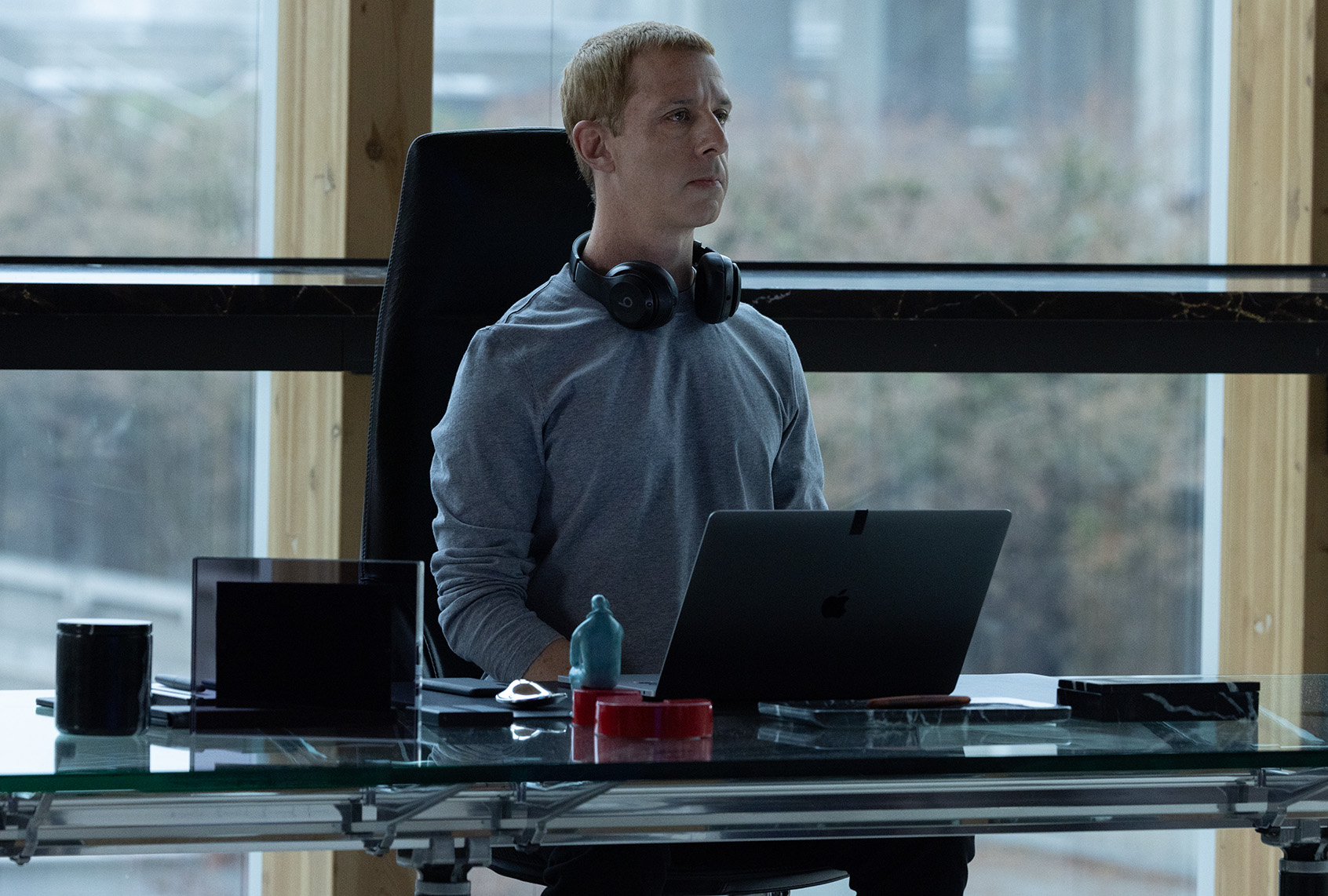
Because, really, what’s ultimately compelling about a movie peering into Facebook’s impropriety? That’s like asking someone if they know that violence is bad, or puppies are cute. The funny thing is, though, that nowadays, surveying 10 people about those questions could easily return 10 different answers, or responses rife with caveats and asterisks. That intentional confusion and misdirection is exactly what Sorkin gestures to in vignettes of Mark Zuckerberg (Jeremy Strong), intercut throughout the film, preparing for a civil hearing about Facebook refusing to fact-check political ads on its platform. Zuckerberg is a spin artist, skilled at worming his way out of trouble by tailoring the world around him to suit the beast he created. Facebook feeds a culture where up is down and left is right, and vice versa. Sorkin’s depiction of Zuckerberg as a sniveling coward might be smug, but it’s not inaccurate. The intention is not to show the audience who Zuckerberg is — Sorkin spent one film doing that already; it’s to assess the trickle-down effect of his spinelessness.
Want more from culture than just the latest trend? The Swell highlights art made to last. Sign up here
Zuckerberg and his cronies have the upper hand. They can change things in the blink of an eye, so imperceptibly that users will barely notice a change if at all. Journalism can’t move at that pace — not good, well-sourced, fact-checked, influential journalism, that is.
To do this, Sorkin compares Facebook’s reluctance to fact-check political advertising with its enthusiasm for spinning the truth to get engagement. Naturally, these two things are the same, but their effects eventually diverge, meaning that political ads are only one metric for inciting engagement. The most frightening aspect of mining engagement — the part we might not always think about — is how the tools and algorithms designed for it must change as users age out of different platforms. How do Facebook, Instagram and all of Zuck’s other spawn remain integral parts of our lives until we die if users eventually get weary enough to figure out their existence is better off without them? For publicly traded companies like these, declining engagement results in lost value.
This is the crux of Frances and Jeff’s concerns. (And, by extension, Sorkin’s film.) They want to expose the obscure operations, to implore users to reconsider their relationship with these platforms. The problem is that Zuckerberg and his cronies have the upper hand. They can change things in the blink of an eye, so imperceptibly that users will barely notice a change if at all. Journalism can’t move at that pace — not good, well-sourced, fact-checked, influential journalism, that is. When Frances hands Jeff documents that confirm Facebook knows all about Instagram’s negative impact on teenagers, she urges him, “Get it out there, before they start marketing Instagram Kids.”
The line chills not because something like Instagram Kids feels plausible, but because it’s already a reality. Impressionable people of all ages around the globe have direct access to the platforms that exacerbate rage and depression for monetary gain and immeasurable power. They had that access before “The Facebook Files,” and they have it today, years after those stories ran. So, what’s the point of all this?
I’d wager the film’s purpose is not to explain, but to appeal. “The Social Reckoning” exists to make what we already know compelling again, reminding — perhaps even convincing — viewers that journalism is not only worthwhile, but critically important. So, too, are the movies that depict journalism’s procedures and how arduous and exhausting they are. Everyone’s mileage will vary, but I find the film’s matter-of-fact formal structure more convincing than not. “Spotlight” won the best picture trophy only a decade ago. And while that film far exceeds “The Social Reckoning,” I wonder whether the reaction would be entirely the same today. Haugen and Horwitz battled similarly daunting foes, and the rot they uncovered was just as systemic and frightening as the reporting. The primary difference is that the corruption Sorkin points to is unique to the digital age, where everything is ephemeral — trumped by the next headline. Maybe, he posits, we shouldn’t forget so easily.
Read more
about thrillers that aren’t entirely what they seem
Of all the tawdry delights in “Verity” — Michael Showalter’s adaptation of bestselling author Colleen Hoover’s massively popular psychological thriller — the best and most unexpected is how well the film hides its secrets. Now, don’t get me wrong: The movie isn’t exactly garnering Oscar buzz, or even eliciting the fervent “you’ve got to see this!” refrain that followed 2014’s “Gone Girl” around. “Verity” is trashy fun through and through, and doesn’t try to elevate itself past that pulpy baseline. But Showalter and the movie’s screenwriter, Nick Antosca, are skilled in the art of misdirection. They know how to surprise, and they use their trio of actors to do it cleverly.
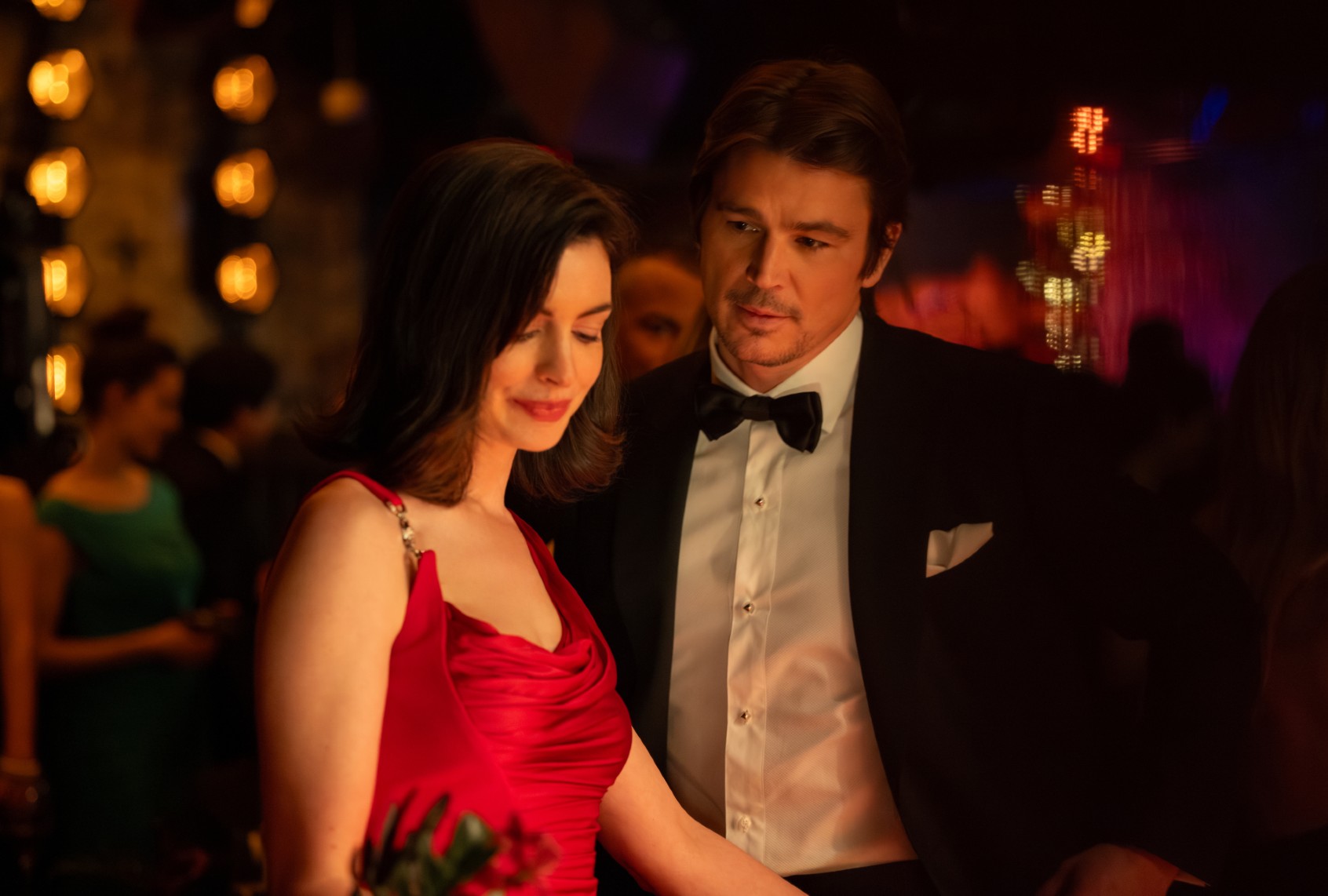
Take Anne Hathaway, fresh off a string of box-office smashes in “The Odyssey,” “The Devil Wears Prada 2,” “The End of Oak Street” and “Mother Mary.” (Alright, the last one made a few pennies and a nickel, but we can dream.) This year alone, Hathaway has repeatedly proven her versatility, jumping between gun-toting moms, tortured pop stars and struggling journalists. In “Verity,” she plays the titular character, Verity Crawford, the author of a string of hit thriller novels who’s been mysteriously incapacitated after a car accident and can’t finish her final three books.
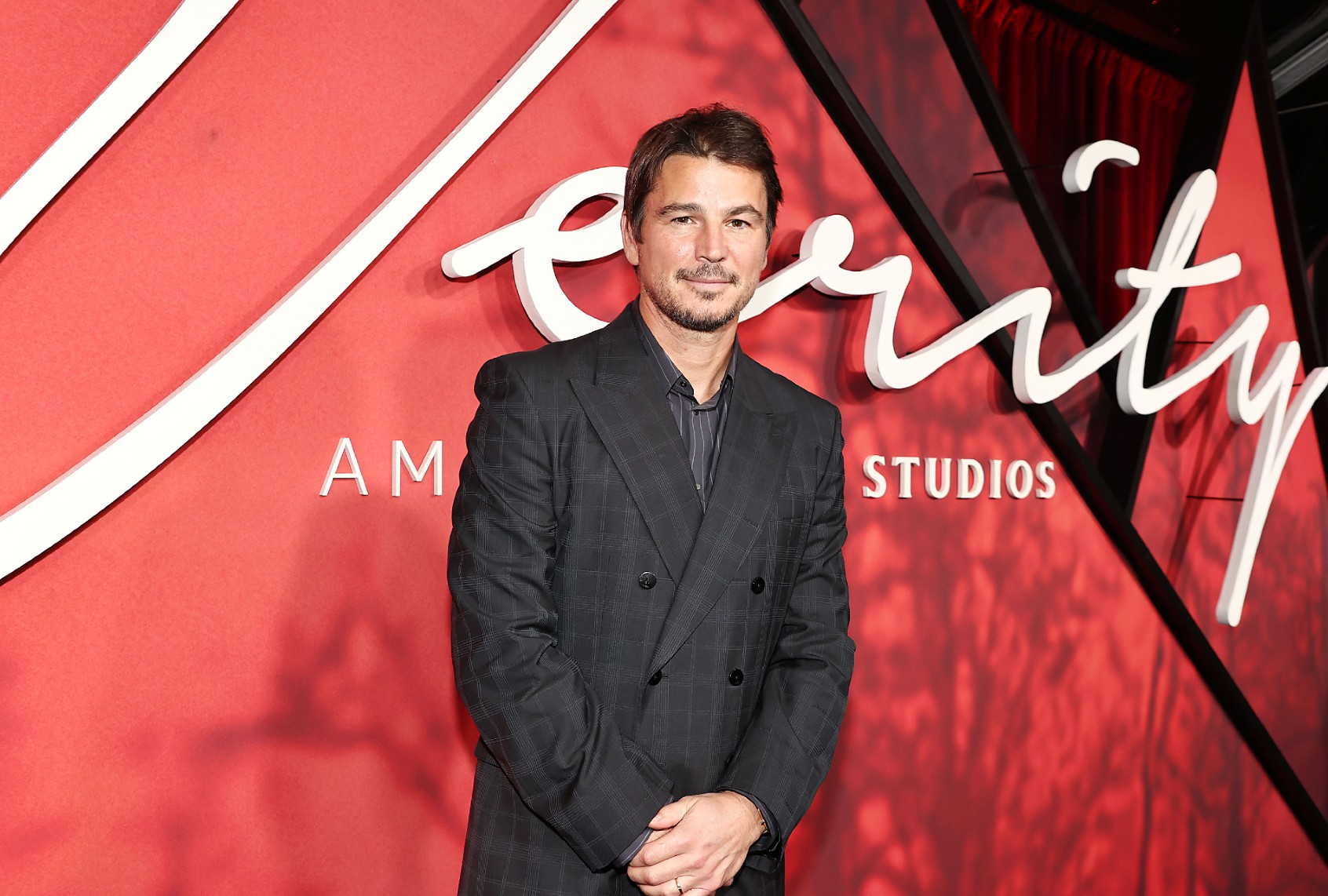
(Dave Allocca / Starpix) Josh Hartnett attends the “Verity” New York Premiere
Hartnett stands out among the roster of stubborn, uncompromisingly masculine leading men from his heyday, proving that there’s much more to winning over an audience than simply playing into the public’s perception.
To complete the series, Verity’s publisher taps little-known writer Lowen Ashleigh (Dakota Johnson), who agrees to step into Verity’s place using her copious notes. While Johnson’s elasticity as a performer is a bit more contentious, I’ve always found her choices fascinating — oscillating between rom-coms, superhero films and arthouse horror with the bat of a mascara’d eye. “Verity” is no different, allowing Johnson to move her character between suspicion and warmth with languid ease as she settles into Verity’s Vermont home to work.
Want more from culture than just the latest trend? The Swell highlights art made to last. Sign up here
But the key piece to the “Verity” puzzle is Josh Hartnett, who plays Verity’s put-upon husband, Jeremy, with all the unnerving capriciousness a film like this demands. Here, Hartnett’s character exists in flux, somewhere between his old life and a new start. He’s both charming and chilling, expertly using a near-imperceptible shift in expression or tone to keep the audience on their toes. With Hartnett weaving through the entire story, it’s nearly impossible to get a handle on what’s really going on in “Verity.” And that volatility is what makes the film so exciting, even when it goes full-tilt cheesy.
This is nothing new for Hartnett, who’s spent the last few years enjoying a well-deserved career renaissance, following up his role in “Verity” with a starring role in Netflix‘s supernatural thriller miniseries, “Below.” Once the quintessential ’90s heartthrob, Hartnett has parlayed the goodwill from his hunky idol days into something far more compelling. Though he’s always been a great actor, popping up here and there to elevate material, Hartnett has found an artistic sweet spot, using his effervescent charm and boy-next-door-all-grown-up good looks to subvert expectations. Hartnett stands out among the roster of stubborn, uncompromisingly masculine leading men from his heyday, proving that there’s much more to winning over an audience than simply playing into the public’s perception.
For those who have watched Hartnett grow throughout his career, the actor’s keen yet unassuming abilities surely don’t come as a shock. His late ’90s breakthrough in the triple-hitter lineup of “Halloween: H20,” “The Faculty” and “The Virgin Suicides” catapulted him to international fame practically overnight, cementing his place alongside the era’s Tiger Beat celebrity infatuations. The primary difference between Hartnett and his contemporaries, though, was that Hartnett could hold his own on screen. He may not have had the bona fides of someone like Leonardo DiCaprio, but Hartnett’s work was consistent and appealing. He knew how to play the everyman (or everyteenager), caught up in frequently absurd or abrupt situations beyond his control.
That’s not to say they were all hits, of course. 2002’s “40 Days and 40 Nights,” an offbeat rom-com about a Bay Area web designer who chooses to abstain from sex and masturbation for the duration of Lent, is patently ridiculous and more than a little sexist. But that’s also where Hartnett’s appeal lies. He understands how to use his innate magnetism to charm his way through even the silliest scripts, occasionally creating a dissonance between the film and his performances that makes even the duds memorable.
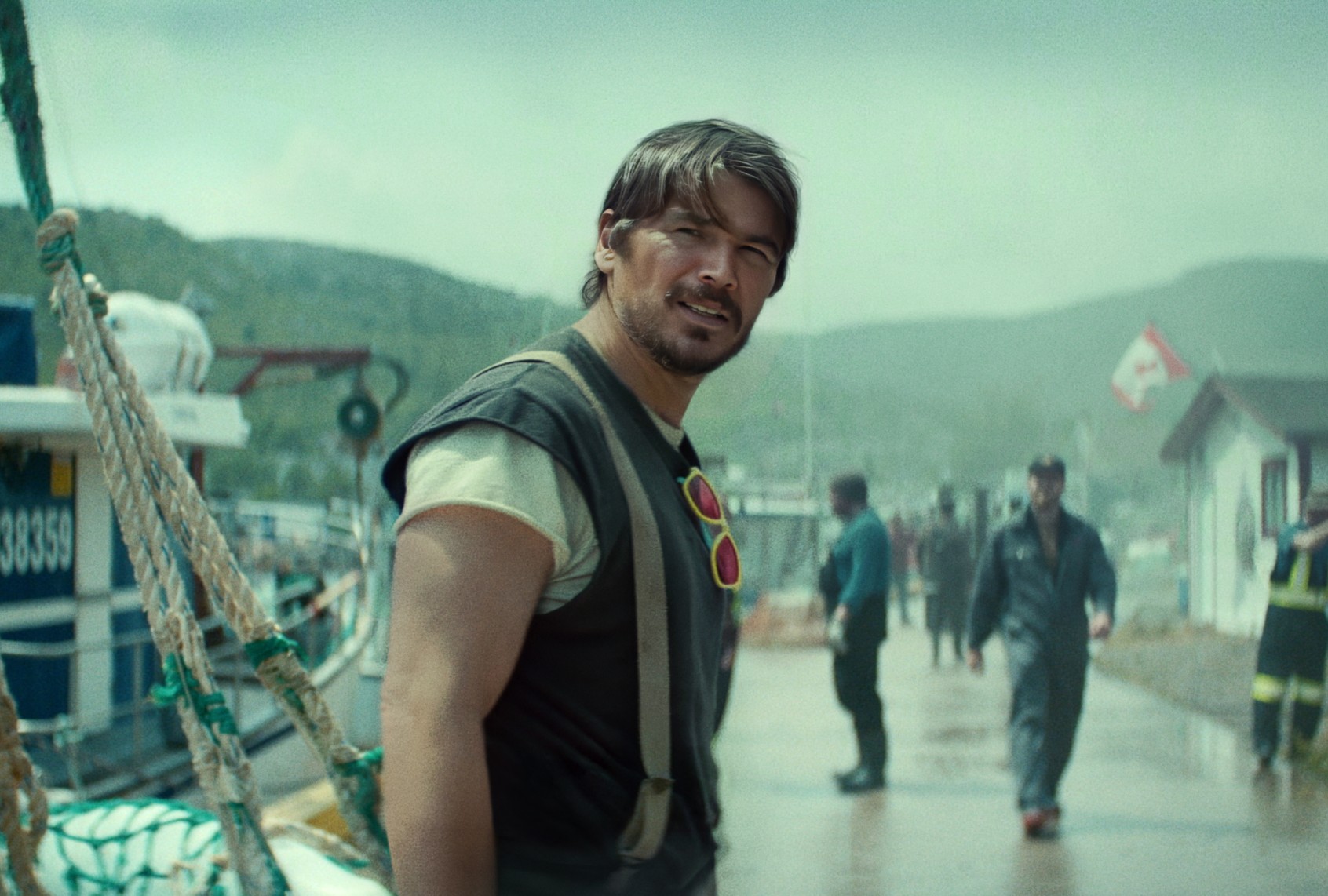
(Netflix) Josh Hartnett as Calvin in “Below”
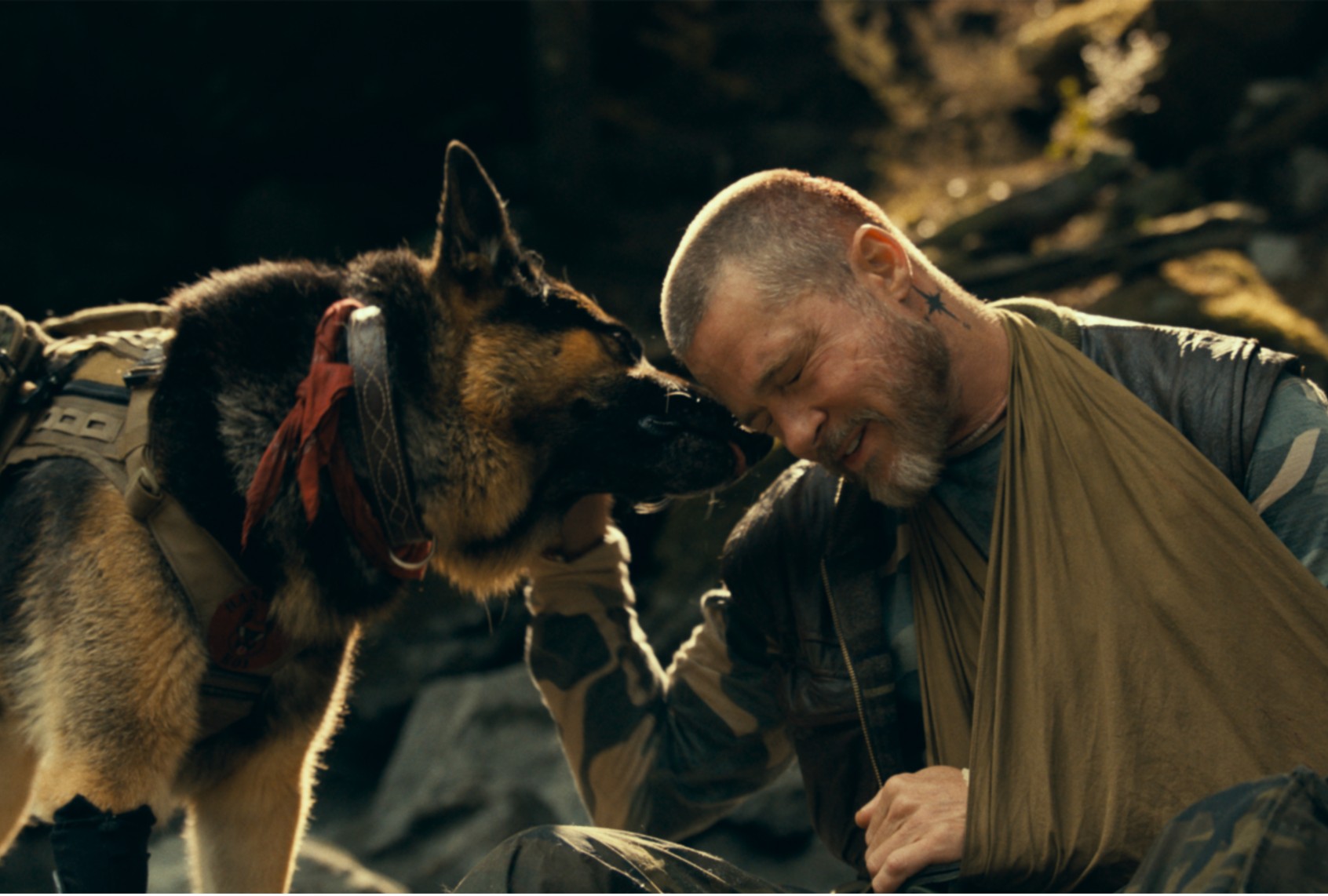
These days, I can’t say the same about some of Hartnett’s early peers, like Brad Pitt and Tom Cruise, who, despite rising to fame earlier than Hartnett, never fully figured out how to separate themselves from their reputation. Both Cruise and Pitt have a death grip on their A-List prestige, hyper-aware of how much the world perceives and enjoys their work. That self-awareness has made their late-period work all too stodgy, selecting roles clearly informed by their notable reputations. Take Pitt’s “F1: The Movie” and this year’s “Heart of the Beast,” where Pitt plays hypermasculine characters whose lives, actions and goals are defined by a relentless desire to come out on top. For someone whose notoriety has twice become inseparable from who he’s married to, Pitt’s choice to play gruff loners feels noticeably calculated, keeping an arm’s distance between his work and the audience.
For Hartnett, shading in a complete picture, warts and all, is essential to making a character believable. It’s an old-school way of thinking for the modern era — a belief that the work should be taken seriously but without ever letting the viewer in on how intensely he’s considering it.
In Cruise’s case, artistry seems to have taken a backseat almost entirely. Over the last decade, Cruise has resigned himself to action stardom, writing death-defying stunts into his contracts. Even with “Digger,” Cruise’s most ambitious project in years, he confines himself to a loud, obnoxious character destined to be written about as a “big swing.” The problem is that “Digger” only feels like a big swing because it’s marginally different from what Cruise has been doing lately. Cruise’s ambition is moot if he’s otherwise resigned himself to crowd-pleasers, making his occasional enterprising choices look even more daring.
Comparing Hartnett to actors like Pitt and Cruise might seem like a stretch. But consider that “Verity” topped last week’s box office by a wide margin, leaving “Digger” and “Heart of the Beast” eating its dust. No doubt this is partially due to Hoover’s extreme popularity, and Hathaway and Johnson’s bankability — those are fair elements to incorporate here. But when it comes to the difference in performance among all three leads, there’s really no competition.
Hartnett’s work is dynamic and unsettling, making what could be a forgettable tertiary character into an integral part of the story that viewers hold in the back of their minds, even when he’s offscreen. From the start, when Jeremy runs into Lowen on the street before they meet at Verity’s publisher’s office, Hartnett makes Jeremy’s presence feel dubious. His every motive feels ulterior, and his inevitable simmering romance with Lowen resembles a can of worms that could pop open at any moment.
But that’s Hartnett’s great skill. He understands how to keep viewers vigilant, how to shock them and startle them as soon as they think they know where he’s headed. He doesn’t just subvert expectations; he perverts them, creating characters who appear to have rich inner lives and plenty of secrets that the audience may never fully understand. M. Night Shyamalan’s 2024 thriller “Trap” used Hartnett’s expertise to its full potential, crafting a character who could be both a doting dad and a vicious serial killer at the same time. For Hartnett, shading in a complete picture, warts and all, is essential to making a character believable. It’s an old-school way of thinking for the modern era — a belief that the work should be taken seriously but without ever letting the viewer in on how intensely he’s considering it. With Hartnett, what you see is never what you get, at least not fully. And what a delight it is that this world still holds some surprises for us.
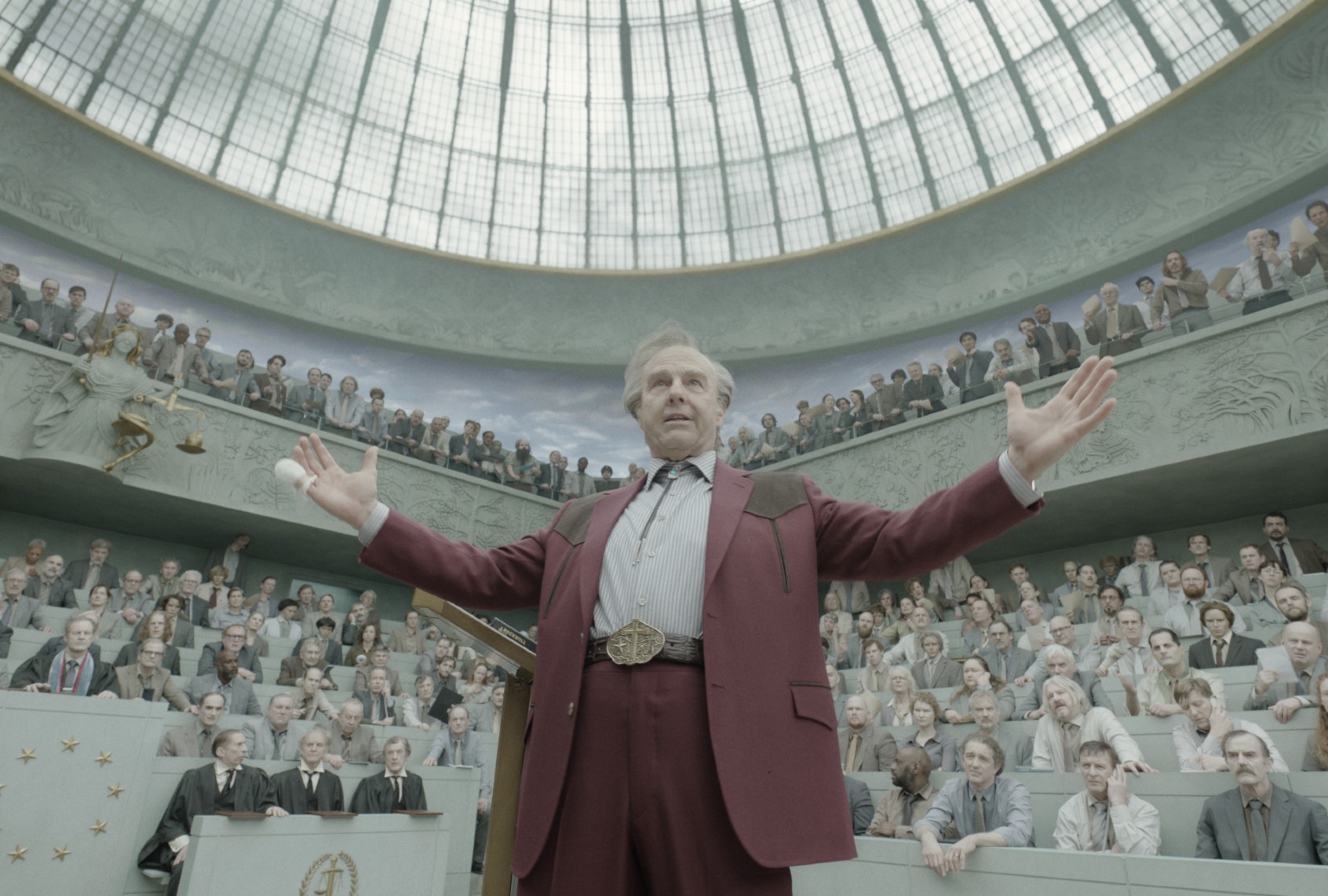
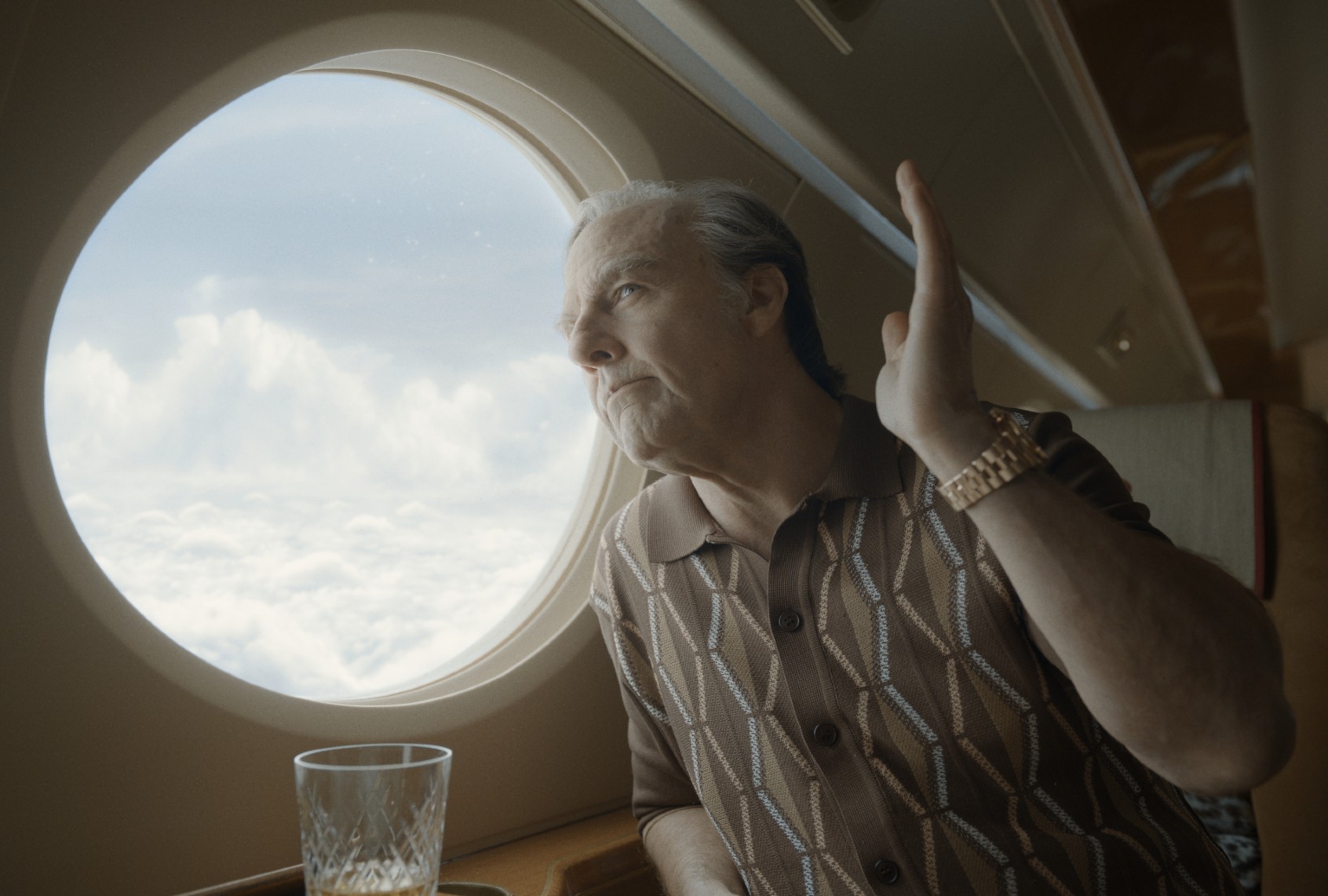
To film Alejandro G. Iñárritu’s new movie “Digger,” a satirical black comedy about an aging oil tycoon facing a potentially apocalyptic crisis he fathered, Tom Cruise needed extensive prosthetics — six hours of prosthetics, to be exact. Upholding his reputation as the most intense person in any room, Cruise has proudly touted that, by encouraging the makeup artists (and running drills with them using a stopwatch), they worked the entire process down from six hours to less than one. As this is basically unheard of, the anecdote plays great on a press tour. But Cruise’s story is also an ironic reflection of “Digger”: an undeniably ambitious project whose assuredness conveys a stubborn disregard for everyone but itself.
Typically, that kind of thing isn’t so bad in a movie. More filmmakers would do well to be so confident in their vision that they successfully tune out intrusive thoughts about what anyone else will think, refusing to dull their boldest ideas and temper their biggest swings. But “Digger” complicates this certitude, weaving its audience into the fabric of its story so tightly that they’re bound to their seat, forced to sit with their eyes peeled open as Iñárritu points his finger back at them. His thematic concepts and narrative red herrings rely on the viewer’s presence. Without us, there is no one to hoist blame upon when the film reveals its layers, no one to compare to the film’s wide-eyed spectators of global collapse.
(Warner Bros. Pictures) Tom Cruise in “Digger”
Iñárritu reduces our connection to art to a distraction. While that notion may be true for some, it’s not universal, and Iñárritu’s haughty assumption only reflects how disconnected “Digger” is from the very reality it presumes to understand well enough to satirize.
“Digger” can’t be a great film on its own; its success relies on generating strained discourse, on the cowardly option to chalk up its seismic errors in judgment and smug self-satisfaction to a difference in intellect. “This film is supposed to be annoying,” it argues time and again. “It’s supposed to move at a slug’s pace, and be lit with the putrid pallid color of a corpse’s husk. If you don’t get that, you must not be able to understand that this movie is already our reality.” To make a movie about the end of the world that asserts the viewer needs to understand their own complicity assumes an uncharitable worldview that keeps a vertical mile’s distance between the art and its spectators. With “Digger,” Iñárritu commands — to quote “Real Housewives of New York” alum Kelly Bensimon — “You come up to me; I don’t go down to you.”
But I’ll play ball. Americans did, of course, elect Donald Trump a second time. It’s fair to assume many of us require a stern talking-to, like dogs who need their pills hidden inside the cheese that is Cruise’s Mr. Movies persona. But the problem with Iñárritu’s approach is that he’s fashioned “Digger” as a satire for a post-satire world, a state of living where every day is almost comically bleak. The more glaring issue, though, is that he seems to think this is a novel concept, one he can mine with a twist that strips “Digger” of its parts to examine the relationship between the audience and the artistic outlets (like this very movie) they use for a blip of respite between the horrors.
Once Iñárritu peels the skin off, he resumes taking cheap shots at the exposed wound, reducing our connection to art to a distraction. He assumes that, these days, the public goes to see movies or plays, watches television, or reads books either to avoid this dismal reality or absolve themselves from it. While that notion may be true for some, it’s not universal, and Iñárritu’s haughty assumption only reflects how disconnected “Digger” is from the very reality it presumes to understand well enough to satirize.
Saying all of this broadly without context would be an argument as compelling as Iñárritu’s — which is to say, not very. That does, however, mean that a key spoiler for the film, which occurs about 40 minutes into its runtime, is just ahead. If you would prefer not to know more, pause here. (But bookmark this page to return to, won’t you?)
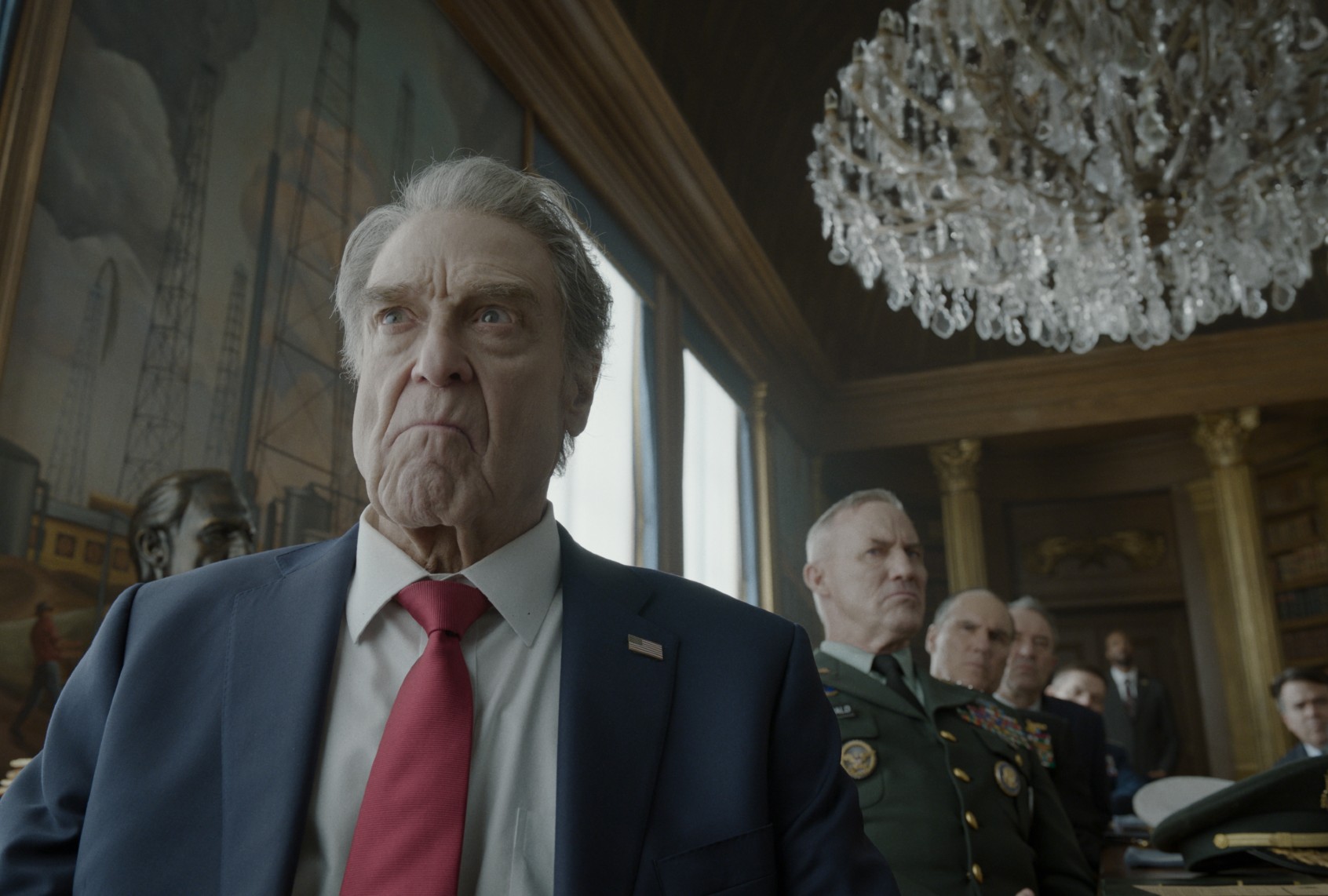
Iñárritu spends the film’s first quarter setting the scene and characters — strangely quite literally, raising what looks like a stage curtain but is revealed to be a window shade. Cruise’s Digger Rockwell rises from bed and tries to feed his bizarrely acting cat before learning of an explosion on his oil rig in Greenland. Lively scientist Dr. Nirav Ganesh (Riz Ahmed) warns Digger that the explosion has sent a massive ice shelf toward Norway, which will flood the coasts and hundreds of thousands of people. But it’s only the beginning. The explosion has triggered more movement, with another glacier headed toward Alaska. To avoid panic and stay ahead of the narrative, Digger meets with the president (John Goodman) and the military to discuss next steps.
As Digger and the president peer out a window, a light flickers. A tree in the distance falls, and a giant hand emerges from the ground to put it back in place. Iñárritu reveals that all of this is rehearsal for a new production of the cult-classic play “Fossil Fools,” about a real-life climate disaster and its players who changed the world forever. Digger and all the characters we’ve met so far are actors. This explains their blowhard nature. Their constant screaming and yelling is a feature of the play’s meta-satire. Unfortunately for us, the film’s audience, it doesn’t make watching the rest of the rehearsal any more enjoyable.
Want more from culture than just the latest trend? The Swell highlights art made to last. Sign up here
If anything, the “twist” — in quotes because I tend to see anything that occurs less than an hour into a two-plus-hour film as a plot point rather than a twist — blunders the viewer’s goodwill. The jokes are less funny because they don’t occur within the film’s natural rhythm. The overacting is exhausting because it’s not only Iñárritu’s creative choice, but rather the methods employed by the play-within-a-movie’s director. Every single frame of “Digger” is thrust through an extra two meta layers. This is an interesting exercise for the filmmaker, surely, but the rest of us are stuck waiting for Iñárritu’s larger message to come into play. Placing the narrative left turn so early into the film almost feels like a tactic to curb theatrical walkouts.
Those who resist the urge to use their precious time doing anything else will be rewarded not with payoff, but indictment. You there, yes you, the one sitting in seat 11E; you’re no better than the doomed dunces coming to see this production of “Fossil Fools.” Like them, you want the satire to make you feel smart, to make you feel like you’re one of the good guys? Too bad. By simply continuing to exist and endure this life you didn’t choose, you are no better than Digger Rockwell.
(Warner Bros. Pictures) John Goodman in “Digger”
Iñárritu portrays the average person as a seal, ready to bark and clap at anything that so much as alludes to reality. His film has ill will spewing from every pore, a complete loathing for humanity. Yes, we all have some level of complicity in the world’s eventual end. Tell us something we don’t know.
The film, of course, doesn’t say this in so many words. But it doesn’t have to, either. Cruise’s character is an intentional parallel to his own cinema-championing schtick, an actor who believes every scene he’s in should carry some semblance of the truth. But when he argues veracity’s importance, the play’s producer, Kenny (Jesse Plemons), reminds him truth doesn’t matter to the audience. The people are coming for catharsis. They want to cheer on Digger’s demise. This momentary cleanse won’t save them, but it will keep them going.
There is no shortage of ideas to dredge from this truth, about how we use art to cope, sometimes to our own detriment. When “Digger” briefly strikes this resonant note, its warring aspects begin to coalesce, before Iñárritu strikes them with a shovel and breaks everything up again. Just after the opening night’s audience gets their emotional release, a tone fills the theater, with a voice cautioning of a “Level 4 warning.” (What convenient timing, this happening after the play has finished!) Without surprise, the audience dons their luxury PPE — branded “LUNGZ,” complete with a cutesy “Z” at the end, because all these sheep adapted to their new normal so willingly — and makes their way into war-torn streets patrolled by drones and robot cops. Roll credits, roll eyes.
As if this whole affair weren’t self-satisfied enough, Iñárritu jabs his finger at the audience one last time. After about 90 seconds, the film’s end-credits song is interrupted by the same “Level 4” warning, this time aimed at the viewer trudging out of the theater (or, in the near future, asleep on their couch).
In a film full of contrived indignities, this is the most maddening, suggesting that anyone watching the film is no more clever than the “Fossil Fools” audience members. Iñárritu portrays the average person as a seal, ready to bark and clap at anything that so much as alludes to reality. His film has ill will spewing from every pore, a complete loathing for humanity. Yes, we all have some level of complicity in the world’s eventual end. Tell us something we don’t know.
Riffing on the human need for emotional engagement through the arts with such venom is not just a slap in the face; it’s evidence of Iñárritu’s gnawing insecurities. By lampooning the desire to see our experiences in art without crafting any emotional resonance of its own, Iñárritu comes off as unjustly malicious, upset that his films are too sprawling and cluttered to pull off that connection consistently. How brutally ironic that “Digger” is Warner Bros.’ last film before being swallowed by Paramount–Skydance. It may have ambition, and it may have exactly the kind of role Cruise needs to pursue. But the film merely gestures to its own unfortunate place in history, without ever cementing it as a tragedy. Dig into one’s ideas too much, and eventually they’ll become hollow.
It makes perfect sense that Emerald Fennell’s debut film, “Promising Young Woman,” is divisive. In fact, divisive isn’t quite the right word. Since its 2020 release, “Promising Young Woman” has become a lightning rod for heated conversation — quite a far cry from its initially warm reception, which led to five Oscar nominations and one win.
Much of this radioactivity results from Fennell’s proclivity for pushing buttons (a habit I defended earlier this year). But in the case of “Promising Young Woman” — about Cassie (Carey Mulligan), a directionless 30-year-old who spends her free time pursuing cosmic justice for her late best friend Nina, whose death was the byproduct of a brutal sexual assault — the discourse is understandable. Fennell wanted to make audiences uncomfortable right out of the gate. And to create this air of discomfort, Fennell crafted a movie that darts from hopeful to despairingly bleak in the blink of an eye.
Fennell’s acid-tongued rape-revenge film is caustic and cruel; a feel-bad film for, as Salon described it then, “the #MeToo times.” And though Cassie’s extracurricular pursuits echo that cultural reckoning, some distance reveals that “Promising Young Woman” is less about justice than protection. Revisiting the movie through this lens offers plenty of important wisdom that its detractors were quick to shrug off. But what’s tragic is that such a reappraisal has come at the cost of another woman’s safety.
Want more from culture than just the latest trend? The Swell highlights art made to last. Sign up here
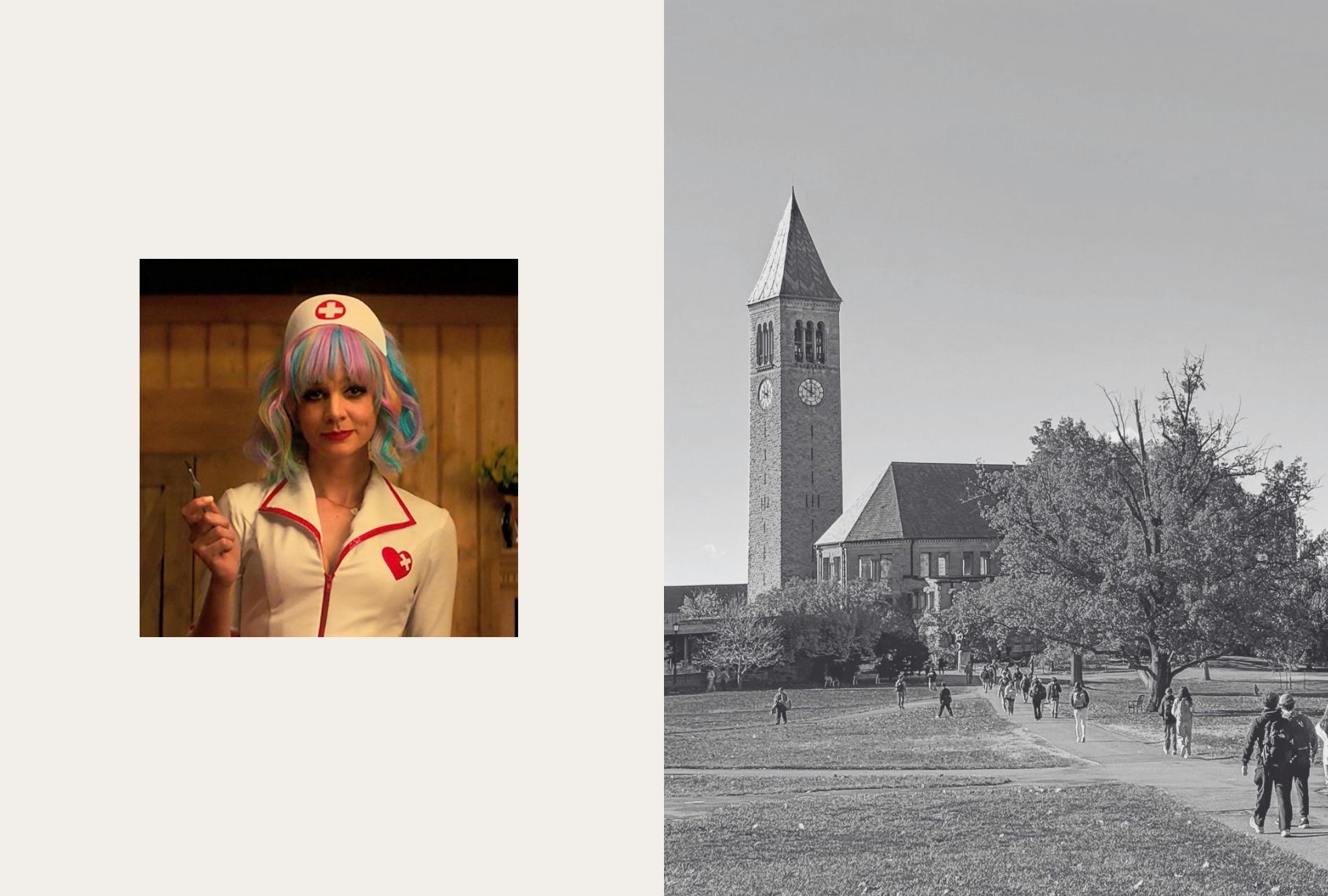
Over the past two weeks, Cornell University has faced a very public and very courageous rebellion, similar to the one Cassie attempts to mount in “Promising Young Woman.” The unrest is courtesy of four exemplary student journalists at the college’s newspaper, The Cornell Daily Sun, who published the names of seven male students named in a lawsuit against the university by an anonymous Jane Doe. The plaintiff alleges that, during a party at the school’s Chi Phi fraternity in 2024, she was coerced into taking drugs and gang raped by seven fraternity members.
Some distance reveals that “Promising Young Woman” is less about justice than protection. Revisiting the movie through this lens offers plenty of important wisdom that its detractors were quick to shrug off. What’s tragic is that such a reappraisal has come at the cost of another woman’s safety.
Shortly after, Jane Doe reported the incident to Cornell police, leading the school to assemble a sexual assault task force and conduct an internal investigation. Although students were alerted to the allegations, they never received the results of the school’s investigation. On September 16, nearly two years after the initial report, Jane Doe filed her suit against Cornell. The Cornell Daily Sun, having followed the case from the beginning, made the bold decision to publish all seven defendants’ names on the paper’s front page in an editorial titled, “Cornell Won’t, We Will.”
The editorial sparked immediate national attention, putting Cornell and Greek life — long the subject of intense scrutiny for its hypermasculine culture promoting sexual assault — in the public’s crosshairs. With discrepancies abound, a startling lack of clarity about Cornell’s systems (despite the school publishing a tail-between-its-legs FAQ), and the local district attorney revisiting the case, the rigor of Cornell’s Title IX investigation now looks shaky at best. In as little as two weeks, Jane Doe, The Cornell Daily Sun’s intrepid staff, and thousands of angry students and spectators around the country have turned their eyes toward Ithaca, New York, hoping this case might finally bring real change.
This is what protecting each other looks like. Safeguarding isn’t only about what we do for one another before a tragedy, but how we respond in the days, weeks, months and years that follow.
It’s not entirely surprising, then, that “Promising Young Woman” has founditsway back into the conversation surrounding what’s happening at Cornell. Some years before the film takes place, Cassie drops out of med school, consumed by remorse and, later, grief. Reminders of Nina and the assault linger around the campus’ every corner, exacerbated by the school’s dean (Connie Britton) choosing not to pursue an investigation into, or discipline for, Nina’s assault. The film isn’t only about justice; it’s about the people standing in its way. Faculty incompetence directly echoes the Cornell case. But, then again, so does Cassie’s greater endeavor.
More than revenge, Cassie wants to embarrass potential assailants and jolt them, however briefly, out of their repugnant misogyny. She wants to scare them straight, in hopes that they won’t touch another woman without her consent ever again. Cassie understands this is probably futile, especially in the patriarchy’s grand scheme. But it’s something she can do not only for Nina, but for every other vulnerable woman.
Before we go further, though, I should be clear that I don’t disagree with the notion that comparing a real-life rape allegation to Fennell’s film is in poor taste. My intention here is not to say, “Hey, this unspeakable event unfolding in the headlines right now? It’s just like that movie!” My objective is to use the existing comparisons to reexamine “Promising Young Woman,” try to understand Fennell’s intentions, and look at the bleak truths her movie stares straight in the face. If you dislike or even detest this film, I don’t seek to negate your feelings. I only posit that it’s important to understand art — especially contentious art about pertinent crises — on a cellular level to learn what it, and our responses to it, can teach us.
Revisiting the film for the first time in six years this week, I was caught off guard. Reputation is a funny thing — how easily it can subconsciously skew one’s perception, even when we try our best to remain impartial. I remember finding “Promising Young Woman” to be contemplative. Yet the steady post-Oscar blowback and general friction surrounding Fennell made me certain I’d overrated it. But this isn’t exactly a film one jumps at the chance to rewatch just for their edification.
Though I’d say we’ve reached a point where that undertaking is worthwhile. “Promising Young Woman” is not a compare-and-contrast film, where overly didactic morality coaching encourages the viewer to say, “Ah, yes, now I understand rape culture.” Here, Fennell asserts that rape culture is our culture, that patriarchy and misogyny seep through the cracks of every single surface. Having come face to face with its most brutal consequences, Cassie’s rose-colored glasses have been removed, stomped on, ground to a pulp and had their remains burnt to ash. Even when life offers her a grain of solace or happiness, the morsel is already rotting from the inside out. The decay just hasn’t made itself known yet.
Take that dichotomy between the self-importance running like a virus through young men and the prudent actions taken by The Cornell Daily Sun staff. Egotism reigns in our modern world, and only those brave enough to stand up to it can impede its rule.
Between pretending to be wasted at bars to trick predators into taking her home, Cassie learns that one of Nina’s rapists, Al (Chris Lowell) — now a successful doctor — is getting married. Seeing Al prosper while Nina’s memory fades is enough to push Cassie into full vigilanteism, working her way through the parties complicit in Nina’s death. In her quest, Cassie discovers that there is cellphone video footage of Nina being assaulted, reluctantly handed over by her ex-classmate, Madison (Alison Brie). “I don’t know how we could’ve watched that, and all thought it was funny,” Madison admits.
This aspect mirrors a frightening contemporary pattern reflected in the Cornell case, in which an alleged Snapchat thread from the Chi Phi house is presented as evidence. Social media has bolstered the narcissistic machismo already present among many men and ubiquitous in fraternity life. In a recent thread discussing her article on the “burnerverse” — a male social media subculture that seeks to exploit young women — Wired senior writer EJ Dickson explained the connection between social media and abuse.
“Sexual assault has always been a thing; ‘boys will be boys’ has always been a thing,” Dickson writes. “What’s new is the main character syndrome. It’s the complete lack of respect for others in favor of building up a narrative around yourself as a ketamine-blowing, hard-partying Zyn bro that doesn’t give a f*ck about anyone but yourself.”
Take that dichotomy between the self-importance running like a virus through young men and the prudent actions taken by The Cornell Daily Sun staff. Egotism reigns in our modern world, and only those brave enough to stand up to it can impede its rule. Cassie’s methods may be unorthodox, but they’re driven by her ardent desire to remind people that someone is always watching. Her approach is to shame and reveal, but not always to get justice. As Fennell reminds us at the end of the film, justice — if it ever comes — often arrives too late, and at the expense of too many lives.
That ending, which I won’t spoil here, is where the film most often divides. It is certainly alienating and somber. But I’d argue that Fennell intends to galvanize thought and action, not outrage. No conventional idea of justice, be it carceral or social, can reverse the harm that’s already been done. Given the fact that these problems have only worsened in the six years since the film’s release, the conclusion is pragmatically bleak. Anything less would be a fallacy, a dream of a world that we don’t, and might never, live in.
But amid darkness, there is hope, too. The film’s great strength is in remarking on how much tertiary damage sexual assault does. It’s not only the survivors who are left to pick up the pieces, but the people who love and take care of them, too. The aftermath is anything but simple, and that “Promising Young Woman” is so vexing only proves there is no easy way to make sense of the senseless. The most we can offer is our voices, actions and constant vigilance; to refuse ignorance together and demand accountability as a community. That’s Fennell’s challenge: When something is hard, and when the pain is gratuitous, don’t turn the other cheek, don’t let the heart-wrenching horror slip away. Do something, anything. And then do more.
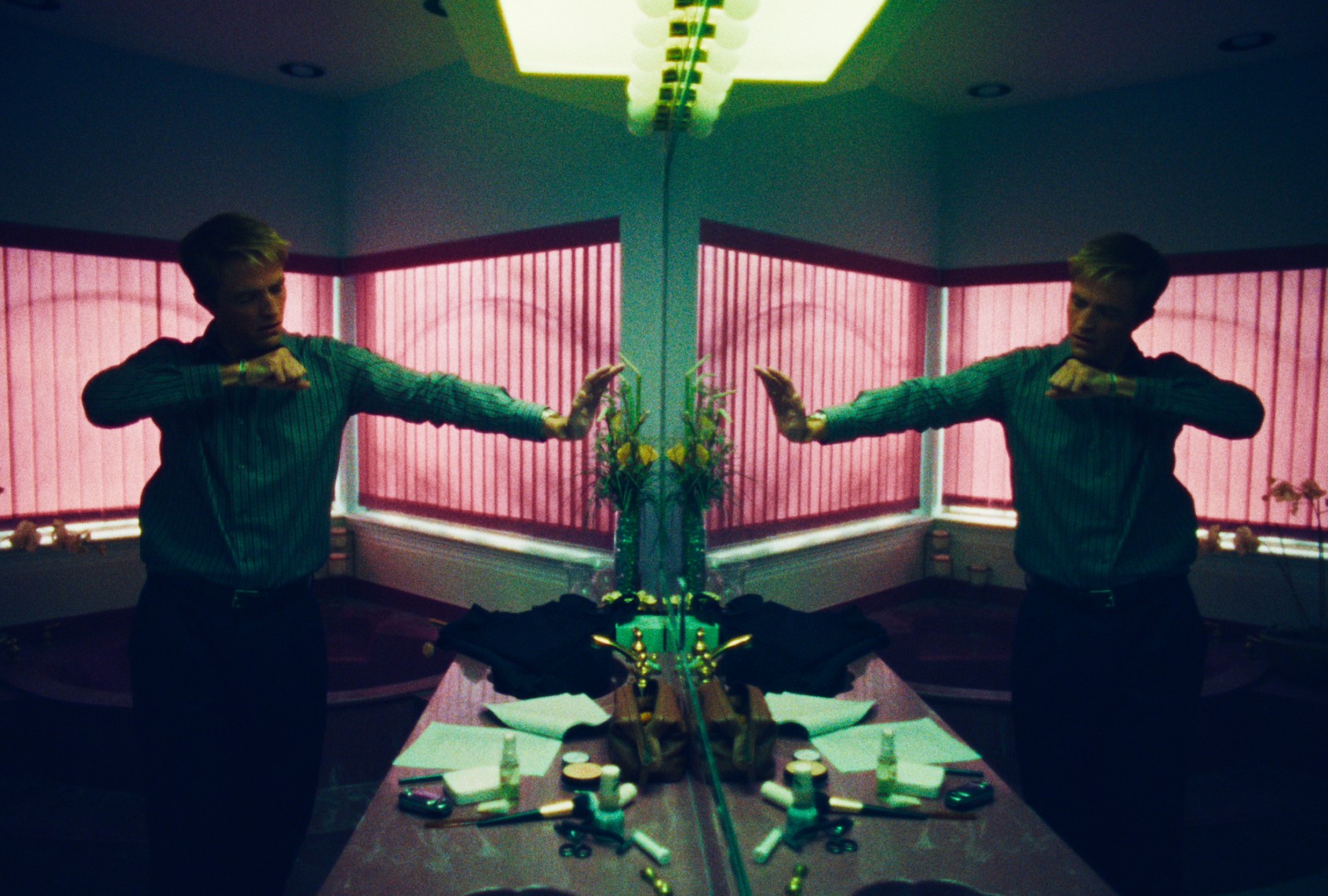
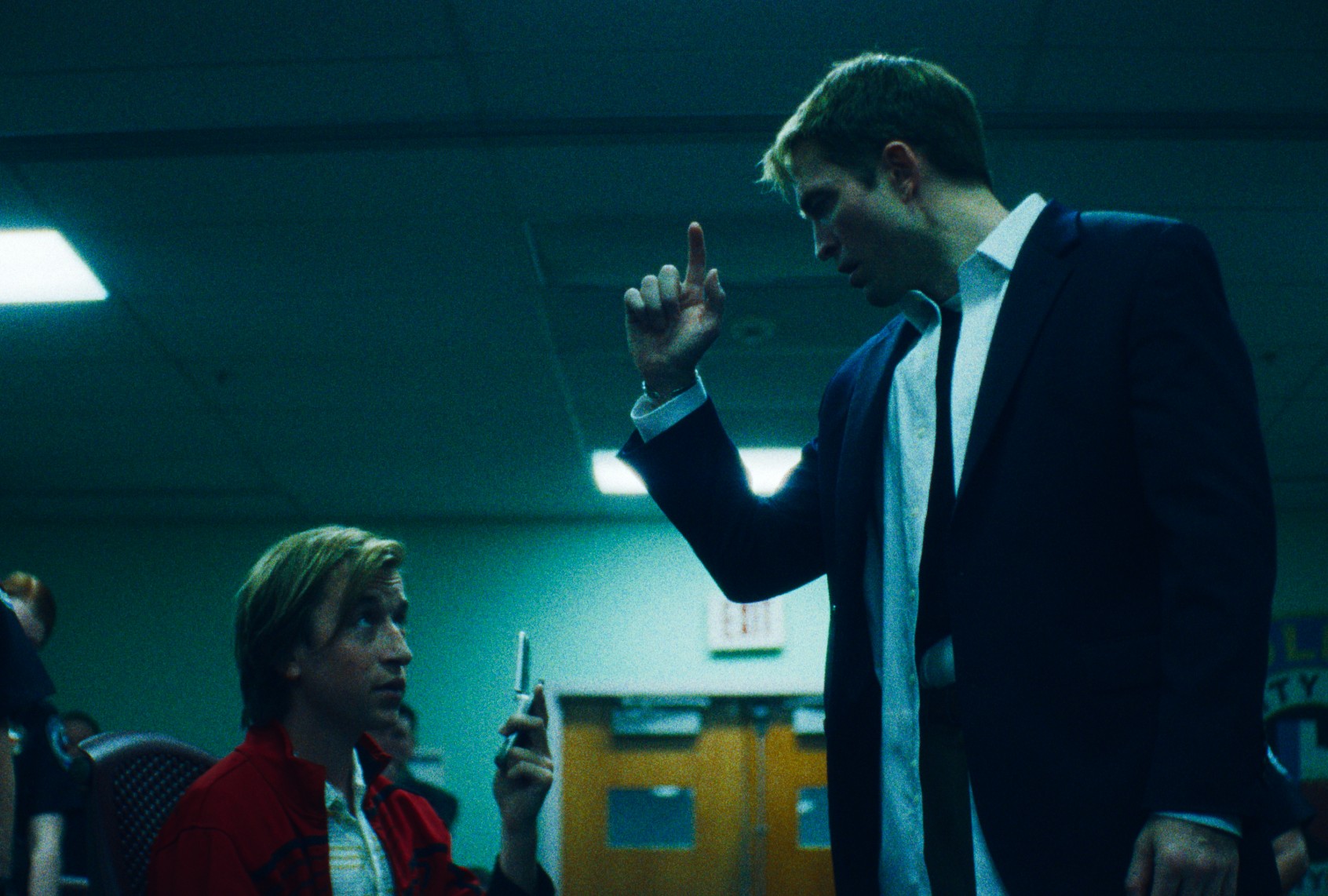
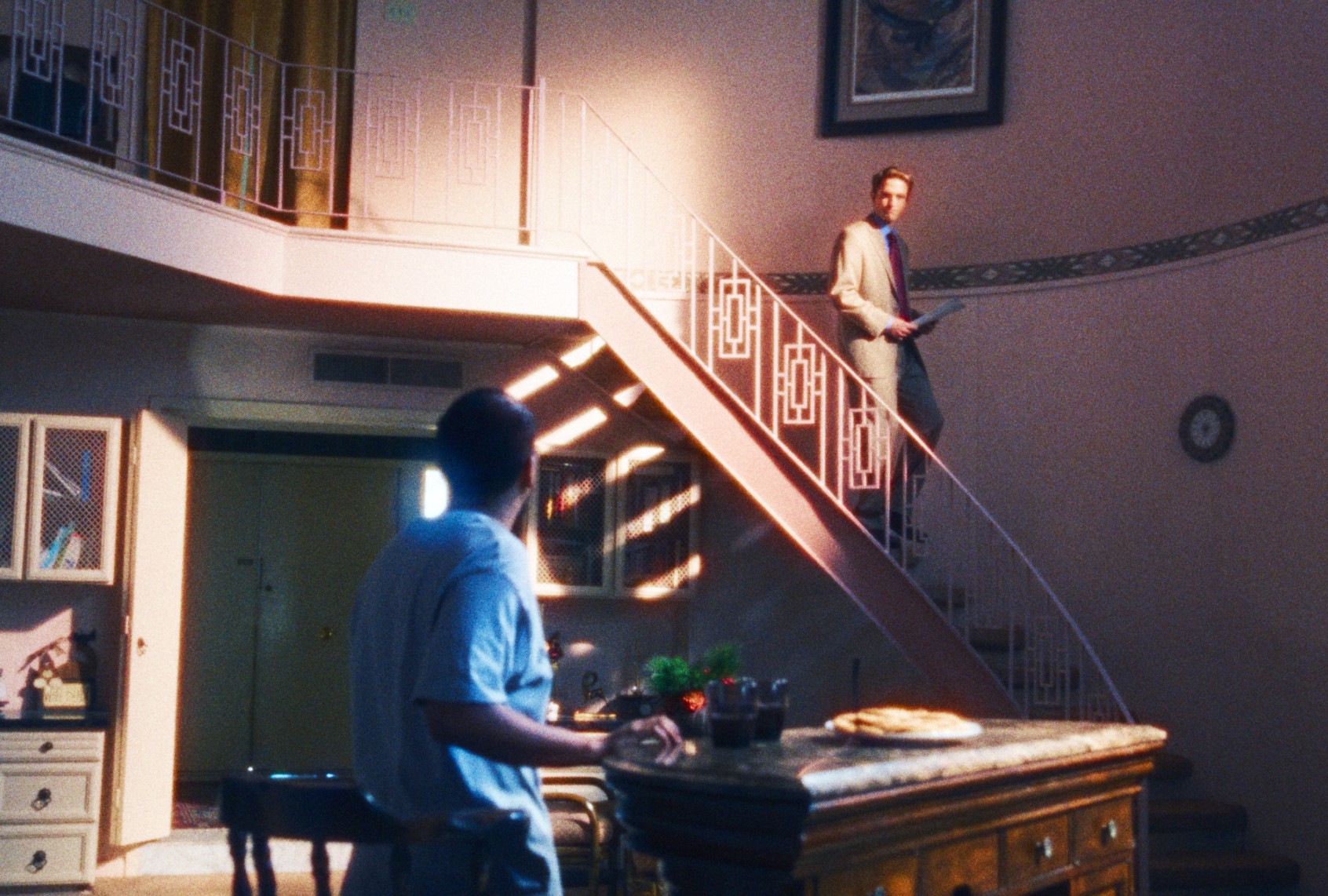
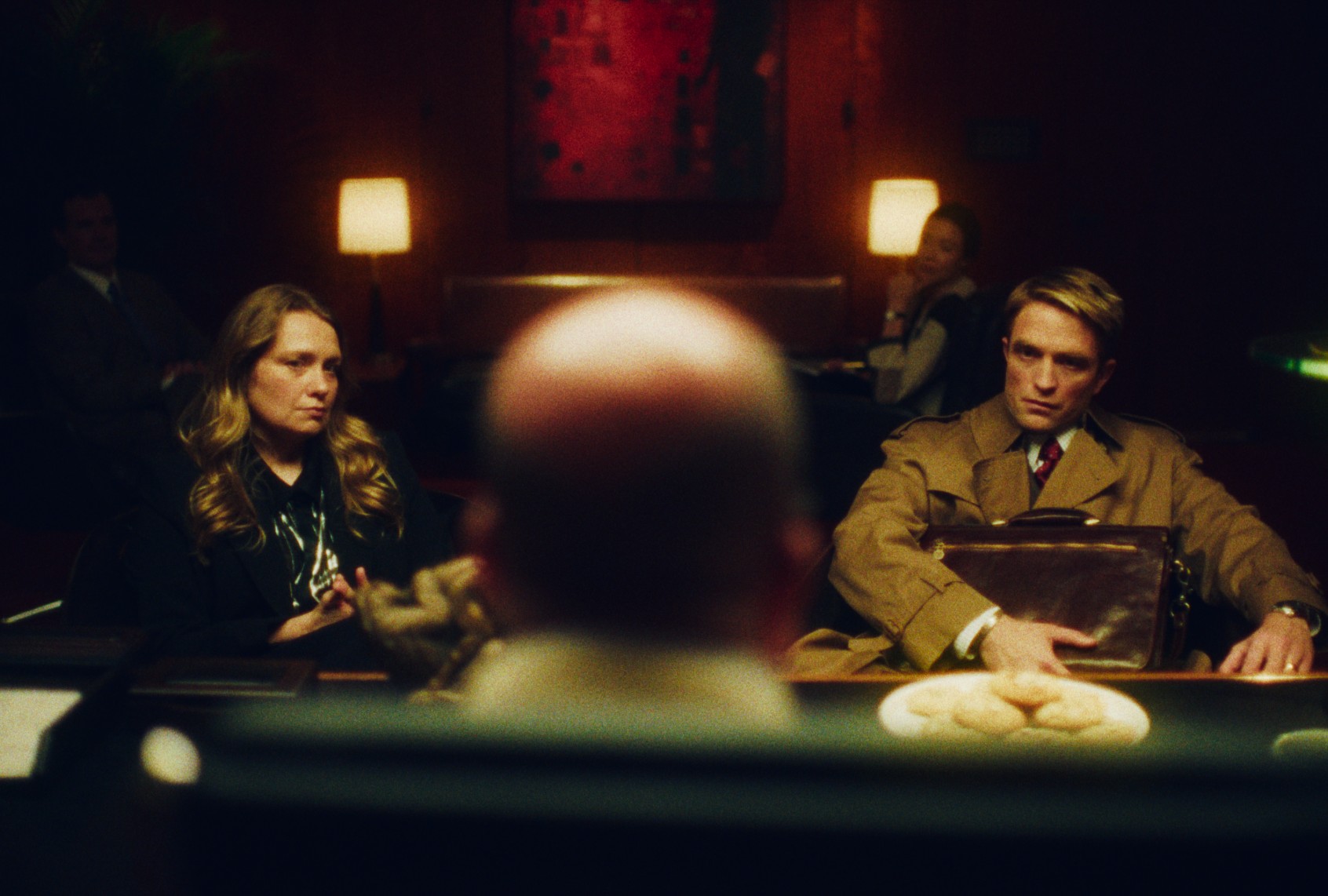
In “Primetime” — Lance Oppenheim’s psychological crime thriller about the rapid ascent and swift fall of the “Dateline NBC” segment “To Catch a Predator,” and its host, Chris Hansen (Robert Pattinson) — television is a complex ecosystem where hyperawareness is paramount to survival. To prosper in this broadcast biome, close surveillance is key. Attack too early and risk being mauled; retreat and risk going hungry, growing weaker and becoming the prey.
Though a skilled hunter, even a reporter like Hansen can’t go up against an apex animal like ABC’s “Lost” when it comes to ratings and audience share. To assert dominance and secure his spot on the food chain, Hansen needs to observe the waters and hook a big fish. His cohort Xavier Von Erck (Matthew Maher) — the founder of Perverted-Justice, the vigilante group in charge of luring the “Dateline” prey — believes he’s found just that in an internet chat room.
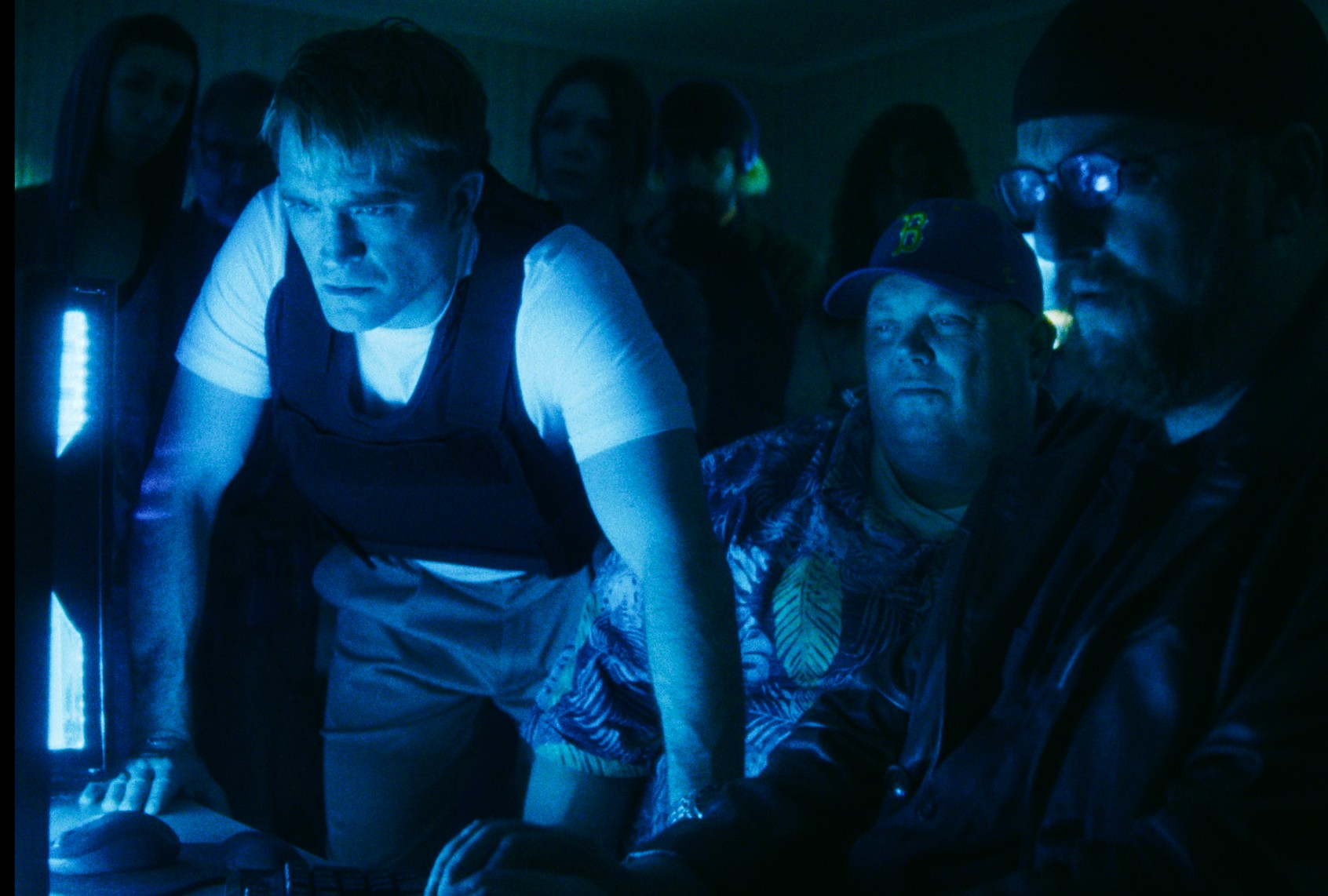
“This is big, the biggest,” Erck says. “A whale.” Oppenheim douses their conversation in blue, with the eerie artificial light of a computer illuminating both men from below. The effect erases the color from Pattinson’s eyes, fusing his iris and pupil into a black circle, like a shark that’s caught the scent of fresh blood. Emboldened by his animalistic observation, Hansen decides to weaponize Erck’s information and go in for the kill.
(A24) Robert Pattinson in “Primetime”
Buzzy new films like “Primetime” rarely reflect the modern surveillance state’s inflection points as well as older media like “To Catch a Predator” can. But if Gen Z is really interested in retracing history’s steps to learn about surveillance culture, “Primetime” is merely the tip of the iceberg.
To anyone who’s spent even a modicum of time online in the last 20 years, this attack pattern looks familiar. In the World Wide Web’s wilderness, casual users, corporations and government intelligence alike collect data about everyone and everything, building digital footprints and algorithmic profiles that sit hidden just behind our newsfeeds. Gen Z and digital natives grew up in this extreme surveillance state, emboldened by controversial legislation like the Patriot Act and USA Freedom Act, which allowed unprecedented surveillance as a post-9/11 counter-terrorism measure. And while younger people have been raised in a vigilantly monitored world, that doesn’t make the lack of privacy any less disconcerting.
Want more from culture than just the latest trend? The Swell highlights art made to last. Sign up here
Certainly, that’s why Gen Z has taken to “Primetime,” a film set in an era most of the generation is too young to remember firsthand, but one that has had a critical impact on their lives and well-being. In 2006, “To Catch a Predator” sat at the intersection of the surveillance state, militaristic nationalism motivated by the backdrop of the Iraq War, and digital culture proliferated by cellphones that were affordable and could accompany us anywhere. By the time Gen Z bled into Gen Alpha, all of these things morphed into one well-oiled machine, a self-regulating ouroboros. Though we may all be steeped in this reality, it’s unsurprising Gen Z would feel cheated out of a life where surveillance wasn’t constant — where they didn’t have to wonder whether a person on the train is scrolling on their phone or covertly taking a photo.
Naturally, “Primetime” has become a point of fascination for zoomers, who made up 69% of the film’s opening weekend audience. While younger viewers adore Pattinson and the movie’s distributor, A24, alike, it’s the film’s subject matter that’s driving their conversations. “Primetime” traces a straight line from today back to the mid-aughts, clarifying the connection between pivotal historical events and their contemporary consequences. And though I didn’t find that the film actually said much about those events, it’s easy to see why so many people under 30 argue otherwise. Buzzy new films like “Primetime” rarely reflect the modern surveillance state’s inflection points as well as older media like “To Catch a Predator” can. But if Gen Z is really interested in retracing history’s steps to learn about surveillance culture, “Primetime” is merely the tip of the iceberg.
Whether or not that tip feels sharp depends largely on one’s relationship to our everyday insanity. Most zoomers likely grew up perceiving “To Catch a Predator” and Hansen through memes — chat logs removed from their disturbing context, or compilation videos of the show’s “funniest” moments. That perception in itself is upsetting, not only because it trivializes survivors’ experiences, but confirms just how much the show succeeded in turning criminal intent toward minors into entertainment. For those who already understood these inherent problems, “Primetime” doesn’t pose many new questions, which gives one the sickly feeling that the film is repeating some of Hansen and the show’s mistakes. For others, who are only beginning to understand “To Catch a Predator” as a planet that orbited the surveillance state’s blinding sun, Oppenheim’s film may be rife with new threads to pull.
The film’s strongest narrative aspect in this regard is how accurately it reflects Perverted-Justice’s sting tactics, which made many “To Catch a Predator” cases unprosecutable or their evidence inadmissible by wading into entrapment. The team would hunt down potential predators in chat rooms and, in many instances, encourage prey to do things they were initially reticent to do or flat-out didn’t want to engage in. Occasionally, when the alleged predators would express their reluctance, the Perverted-Justice decoys would play mad or upset.
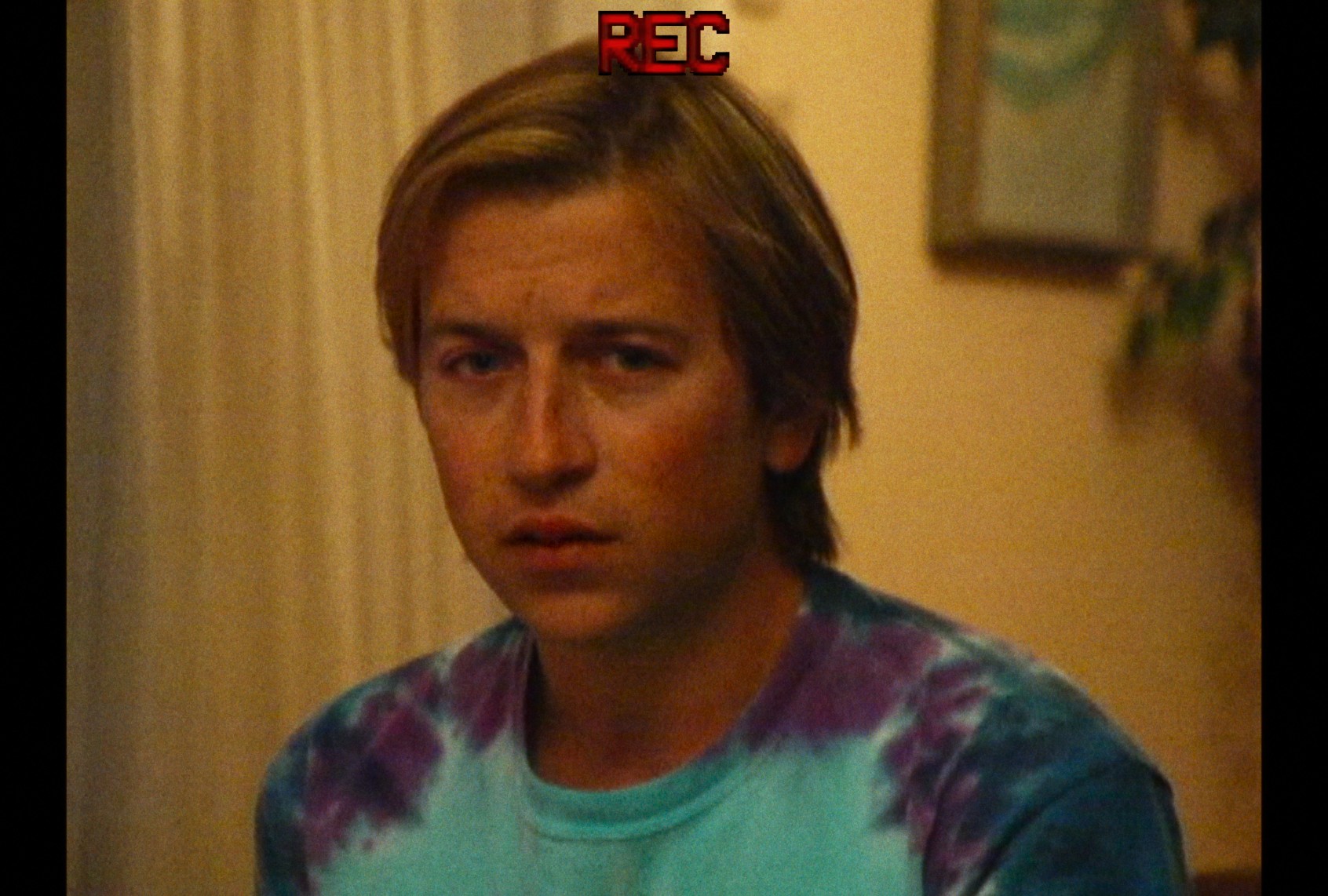
(A24) Skyler Gisondo in “Primetime”
To build out a profile on their prey, the decoys would use chats to draw personal information out of their subjects. Furthermore, the on-camera interventions and arrests were largely faulty, too. Hansen wasn’t a cop; he never read anyone their rights. And the police lying in wait would greet the predator with unnecessary aggressive, martial force. The surveillance state is the primal wilderness, where anything goes, and “To Catch a Predator” employed the laws of the jungle: Identify, lure, attack, kill.
“Gossip Girl” burst onto the scene in 2007 just as the cellphone was becoming the staple accessory for every teenager in America. The series’ writers keenly understood the technology’s wicked possibilities. Surveillance was no longer a military or government tactic; it was for everyone with a wireless connection.
The methods are strangely akin to those employed in the concrete jungle, where badly behaved teens act with as much life-altering, brutal force as the characters in “Primetime.” If “To Catch a Predator” is the paradigm of reality television’s reflection of the surveillance state, the original “Gossip Girl” — which aired concurrently, however briefly, with Hansen’s show — is the prototype for the insidious ways surveillance is weaponized. That might sound like an offbeat comparison, but just because a teen soap is, well, a teen soap, doesn’t mean it has no cultural merit.
“Gossip Girl” is an especially ideal time capsule for understanding how cellphones and all digital technology became useful tools for constant civilian monitoring. For anyone unfamiliar, the series follows a group of privileged teenagers living in New York’s Upper East Side, whose lives are chronicled by the anonymous titular blogger. Gossip Girl knows all of their desires and vices, their wins and their foibles. “She” walks among these spoiled brats, yes, but also relies on a steady stream of tips from readers. Photos, videos, intimate details; any hearsay is fair game, and Gossip Girl will go to the ends of the Earth to prove it— right up to the point where it’s revealed that Gossip Girl was actually not a “she” at all, but a male classmate.
This is all deliciously compelling on its own, but the series’ writers do a great job of emphasizing that these takedowns are products of the world we live in now. Gossip is currency, and anyone looking to climb the social ladder can use it to pay their way to the top — at the cost of their soul, of course. Characters blackmail one another left and right, sometimes with criminal intent. And while it’s entertaining to watch, the real marvel is how prescient the series is today.
“Gossip Girl” burst onto the scene in 2007 just as the cellphone was becoming the staple accessory for every teenager in America. The iPhone was four months old when the show premiered, and the series’ writers keenly understood the technology’s wicked possibilities. Surveillance was no longer a military or government tactic; it was for everyone with a wireless connection.
And while, like “To Catch a Predator,” one might argue that “Gossip Girl” encouraged this phenomenon by turning surveillance into entertainment, I’d say the show more often depicts its awful consequences. While the teenage characters already see the amateur espionage as part of their lives, the show’s adults are horrified by Gossip Girl and “her” web of tipsters. With age comes sagacity, and that transition sits parallel to the zoomers’ fervent response to “Primetime.”
The surveillance state perseveres by making itself invisible, an incontrovertible part of everyday life, especially for those who have grown up inside it. Sometimes, it’s much easier to see the boundary lines between the material and the intangible when someone or something points them out. “To Catch a Predator” and “Gossip Girl” are two sides of the same coin; the former an arm of dystopia, the latter a critic. “Primetime” may try to play both of these sides to its detriment. But what it lacks in searing critique of its subject matter, “Primetime” makes up for by showing viewers of all ages where older media and younger generations collide. Often, the best way to understand the world now is by revisiting its past, warts and all.
Brad Pitt and Paramount Pictures have quite a bit in common these days. Both Pitt and Paramount have leaned into machismo to appeal to a wider male demographic; both are trying to salvage their reputations after a string of tumultuous events and bad press; and neither has put out a good movie in over a year. Is it really any wonder that their latest collaboration, the by-the-numbers survival film “Heart of the Beast,” was crushed by a seven-year-old superhero movie?
If you’ve kept up with the headlines, probably not. After David Ellison acquired Paramount and set his sights on Warner Bros., goodwill has been hard to come by for the studio. Likewise with Pitt, a string of abuse allegations from his ex-wife, Angelina Jolie, led to the actor favoring producing over acting, stepping behind the scenes to minimize the damage. Perhaps if viewers don’t see Pitt as much, they’ll forget the allegations and embrace him once more as a movie star. When “F1” did gangbusters numbers last summer, it looked as though that strategy might work.
But with “Heart of the Beast” generating a fraction of the response Pitt’s films did even less than a decade ago, it’s evident that his star power has taken a hit. Case in point: “Heart of the Beast” was bested in its opening weekend by “Avengers Endgame: Encore,” a theatrical rerelease of Marvel’s 2019 hit. Though the new edition includes a few minutes of new footage, it’s telling that a pre-pandemic slice of superhero action — that any viewer could easily throw on in their living room at the push of a button — stomped all over Pitt’s brand new film.
Whether the underperformance is the result of Pitt’s smug Hollywood persona, or the fact that “Heart of the Beast” — where Pitt and his trusty dog, both Army vets, must preposterously brave the elements — is just “Homeward Bound” for beer-drinking buddies, is hard to say exactly. But it’s telling that, unless a massively popular sport with a built-in audience is involved, the turnout for a Pitt movie is waning. Even the faux-prestige of 2022’s “Babylon” couldn’t sway viewers. If neither Oscar-bait nor dude movies are working for Pitt, perhaps he should consider that positioning himself onscreen as the picture of militarized masculinity might not appeal to those who read the news.
When prolific filmmaker Werner Herzog first met the Chaplin twins, Freda and Greta, the internet as we know it did not exist. If it had, it’s likely that the mystifying story of these sisters — who had a brief flash of fame in the ’80s when their neighbor sought a restraining order against them after a sexual dalliance with the two of them turned hostile — would have already run its course. According to reports, Freda and Greta not only looked and dressed alike, but spoke in unison, as if they shared a single brain. No doubt the TikTok amateur detectives would’ve momentarily shifted from true crime to the Chaplin twins, trying their damnedest to debunk what only the sisters could truly understand. One can’t possibly grasp the closeness two people share until they’ve experienced firsthand the joy and indescribable pain that come with the kind of enmeshment written in fate’s codex.
Though to his credit, Herzog tried his best. In his memoir, “Every Man for Himself and God Against All,” he describes tracking down the Chaplin twins with a newspaper photograph of the building they lived in. “You could have folded a picture of them, and the two halves would’ve matched,” Herzog writes. He watched them vacuum together, walking side by side with four hands on the machine at once until they got stuck between two chairs, sending them into a tizzy. Trying to open a can of sardines could’ve gravely injured them had the twins not gotten into a screaming match in the process. Ever the humanist, fascinated by ordinary people taking on otherwise herculean tasks to the point of obsession, Herzog resolved decades ago to make a film inspired by the sisters. He even had a title.
(Gateway to Orkney) Rooney Mara and Kate Mara in “Bucking Fastard”
“Bucking Fastard” is a remarkable exploration of loneliness that only decades of tender rumination and appreciation could provide. For the wistful, lovelorn loner, it’s an imperative reminder that being attached at the hip can still be isolating, no matter how much two people think alike.
“Bucking Fastard,” Herzog’s long-gestating, extraordinary feature born from his time with the Chaplin twins, takes its name from an obscenity they shouted in court while on trial for the restraining order — a slip of the tongue allegedly uttered at the same time. History contends whether or not this really happened. But Herzog’s film makes it, and everything else, seem entirely possible. Screening at this year’s New York Film Festival, “Bucking Fastard” is a loaded cannon, currently waiting for a distributor to light the fuse to send Jean and Joan Holbrooke (Kate and Rooney Mara, respectively) soaring hand in hand into a world desperately in need of their peculiar wisdom.
Playing versions of the Chaplins, the Holbrooke sisters share shades of classic Herzog characters while being quite unlike any of the eccentrics he’s brought to life before. Set in the present day, the sisters feel out of step with time, as if a glitch in the system spawned them here, letting them observe the world without understanding what it’s like to really live in it. As such, Jean and Joan are the only people who truly understand one another. But having a companion who sees everything the same way we do does not necessarily equate to love. Either sister’s sense of self is fundamentally rooted in the other. Their crippling codependence is alienating, as if there really were only one of them.
As Herzog moves the sisters between reality and film’s dreamy latter half, he plunges into the fizzy static that comprises their cosmic connection, examining their solitude as only he can. “Bucking Fastard” is a remarkable exploration of loneliness that only decades of tender rumination and appreciation could provide. For the wistful, lovelorn loner, it’s an imperative reminder that being attached at the hip can still be isolating, no matter how much two people think alike.
Herzog impresses this notion from the very beginning: A dream shared by Joan and Jean, in which the sisters stand in a corridor flanked by caged birds. “We could not be sure we saw the same birds,” they recall. “Only that there were cages on both sides.” The introduction sits right between poetic and blunt, and this same small, temporal crevice is where the Holbrooke sisters spend their time. Jean and Joan’s shared existence would otherwise make their days dull and predictable, but their bizarre circumstances let them see beyond their own purview and into someone else’s, even if only for a blip. They revel in the fascination they stir. Still, other people’s reactions to their similarity only remind the sisters of the bond they can’t break. Their gift is a curse. That’s the funny thing about love: No matter how perfect it is — no matter how much it seems like it’s written in the stars — there will always be the suspicion, somewhere in the back of your mind, that life might have something else to offer.
I’m at a point in my own life where much of my time is consumed by this very thought, facing forks in the road that feel more like cliffs. At 32, I like to feel fairly confident that, when it comes to relationships, I know the difference between love and comfort. But then something will happen that reminds me of life’s sheer unpredictability, and that matters of the heart are purely unknowable. After years of certainty, I’m no longer sure that true love is someone who knows you to the point of an echo. Is such sheer, universal familiarity the root of love — the kind of connection that everyone from Keats to Keaton wrote about — or does it trap you in one place, stunting your growth? How can anyone live like this, so doubtful about what is right and wrong? This is what leaps of faith are for, sure. But eventually, you reach an age where you put more emphasis on faith than the leap itself. If pleasant contentment is guaranteed if you just stay put, why take the risk?
Want more from culture than just the latest trend? The Swell highlights art made to last. Sign up here
So much of Herzog’s career has been about weighing the hazards of happiness. Whether he’s challenging Fitzcarraldo (and himself) to lift a 320-ton steamship over a mountain, revealing the tragedy of Nosferatu’s immortality, or illuminating the perils of a life in nature, Herzog has dedicated his life’s work to pondering what we’ll do for our passions. In this way, “Bucking Fastard” feels like the culmination of it all. As the film progresses, Herzog intimately considers humanity’s relationship to the insurmountable. Could there be a place, somewhere in this vast Earth, where Joan and Jean don’t have to sacrifice their codependent sisterly bond to enjoy life’s pleasures?
So much of Herzog’s career has been about weighing the hazards of happiness. In this way, “Bucking Fastard” feels like the culmination of it all. Herzog intimately considers humanity’s relationship to the insurmountable. Could there be a place where Joan and Jean don’t have to sacrifice their codependent sisterly bond to enjoy life’s pleasures?
As soon as they begin to wonder, the Holbrooke sisters — almost imperceptibly — begin to drift apart before snapping back in place. But maybe that’s progress. It could be enough. Perhaps this existence is more about riding the ebb and flow than it is mapping the course.
I’d be remiss not to heap praise on the sisters Mara, who bring something to the screen that I haven’t seen in quite some time. Their bond is, no surprise, electric. But it’s their palpable trust in one another that’s staggering. Always in the same frame, they exude a preternatural comfort that extends beyond familial ties and speaks to their shared life paths. Both Rooney and Kate are keenly aware of how petrifying it can be to be perceived, and how galvanizing it can be as well, and they bring both senses to their shared performance. It’s a sight to behold. For what “Bucking Fastard” lacks in Herzog’s early directorial style, it makes up for by focusing its lens on the magic happening in front of it. It’s like watching stars being sewn into the fabric of the universe.
Naturally, the Mara connection is the selling point here. But it’s also what grounds Herzog’s very airy, funny film. Every time the filmmaker’s typically unconventional ideas threaten to tilt the movie too far askew, the sisters bring “Bucking Fastard” back on the straight and narrow. (Well, as straight and narrow as a film about two horny, completely in-sync sisters can be.) They beautifully elucidate Herzog’s complex notions of loneliness, reminding us that the heart’s desire to cling to something familiar and safe can also be its undoing. Such closeness is inherently limiting, even when it’s ideal, too. “Bucking Fastard” relishes those contradictions, supposing that there might be some version of life where they can coexist in harmony. Herzog doesn’t have the answer to that question, and he doesn’t pretend to. He only knows that it’s enough to wonder.
“Bucking Fastard” screens from Wednesday, September 30, at the New York Film Festival. The film is currently seeking distribution.
In the mid-2000s, “Dateline NBC” correspondent Chris Hansen became a national sensation for his hidden-camera sting show, “To Catch a Predator.” Shortly after, he became a meme.
Given the nature of “To Catch a Predator” — where Hansen applied his stern, lilting newscaster intonation to horrific online chat logs between grown men and what they assumed were teenagers — this blur between revulsion and comedy was practically inevitable. Hansen, along with the entire “To Catch a Predator” production, had a way of making the off-putting internet shorthand that men used in these archaic web chats to describe their sexual proclivities seem comical. As repulsive as the correspondence was, chat typos and ludicrous fetishes often made the predators look like bumbling fools, desensitizing viewers to their alleged crimes and downplaying the severity of their actions. As a form of ritual humiliation for its subjects, who were subsequently arrested and detained after being interrogated by Hansen in Tuscan décor kitchens around America, the show gave viewers the thumbs-up to turn its investigations into online fodder. Who were they hurting by making a joke out of those trying to hurt others?
Lance Oppenheim’s new film “Primetime,” in which Robert Pattinson assumes Hansen’s enigmatic role, reveals the answer — sort of. Pattinson portrays Hansen as a caricature of himself, accentuating the journalist’s unmistakable vocal cadence to remove any distance between “To Catch a Predator” and the man behind the show. The effect is something like uncanny sketch comedy, dredging laughs from Hansen’s stilted expressions and intense demeanor, regardless of a scene’s emotional gravity.
(A24) Robert Pattinson in “Primetime”
“Primetime” poses no questions about Hansen’s ethics that haven’t already been asked, making the entire affair feel guilty of the same sensationalism as Hansen’s original show.
When the film’s second trailer dropped, Pattinson’s delivery of the notable Hansen-ism, “You see how this looks, right?” instantly became a reaction video itself; a meme of a meme of a meme. Soon after, the film’s distributor, A24, posted a production photo of Pattinson styled to look like Hansen’s headshot, the source of innumerable jokes during the aughts when memes were just two blocks of text in Impact font. At a pop-up event, A24 sold “Primetime” merch featuring another Hansen quote: “What would’ve happened if I wasn’t here?” For a film ostensibly about how “To Catch a Predator” self-destructed by catering to people tuning in for laughs and entertainment, it’s disconcerting that the movie’s marketing would play into the exact culture it’s commenting on.
Want more from culture than just the latest trend? The Swell highlights art made to last. Sign up here
But perhaps that’s the point. “Primetime” presents itself as a story about Hansen’s callous quest for ratings and notoriety at the expense of his tact, but the portrait is unfinished. Not even “Predators” — the 2025 documentary on this very subject that not only beat “Primetime” to the punch but has far more to say about Hansen’s effect on culture — can complete the image. We, the audience, are the final piece of the puzzle, the culpable players who not only ate up the original “To Catch a Predator,” but all the media and memes that spun off it.
Now, “Primetime” (and its marketing) exposes itself as a continuation of that culpability, turning “To Catch a Predator” back into a spectacle for the viewer to gawk at, spoon-feeding them shallow bromides between handfuls of popcorn. The film poses no questions about Hansen’s ethics that haven’t already been asked, making the entire affair feel guilty of the same sensationalism as Hansen’s original show. “Primetime” isn’t a film so much as it is a final exam testing what we’ve learned over the last 20 years. The answer? Not much.
Set in late 2006, “Primetime” takes place in the shadow of Saddam Hussein’s collapsing regime, a context the film repeatedly emphasizes by reminding the audience that Hansen — though darting between Florida condos and Jersey Shore houses — is first and foremost a telejournalist. He senses the world changing in real time and doesn’t want to get left behind, lest his reporting and notoriety succumb to oblivion. With “To Catch a Predator” already a hit, NBC execs decide to move the show to a primetime slot to capitalize on its success. All Hansen has to do is deliver the high-impact predators: prominent pedophiles who can prove the show has a reach beyond the creeps who linger too long outside schoolyards. To do it, Hansen forges forward with all the ardent conviction of an American soldier, clinging to the belief that his definition of good is the greater good, too.
This is where “To Catch a Predator” divides. Some view the show as a public service; others see it as an illegitimate operation that lures creeps into a sting, allowing audiences to see the moment subjects realize their lives as they knew them are essentially over. On “To Catch a Predator,” there is no differentiation between the levels of danger the men pose; no mercy for those who understand they’re sick and desperately plead for rehabilitation. The show makes the final judgment call, with Hansen serving as executioner.
(A24) Robert Pattinson in “Primetime”
This total lack of regulation begets unchecked power. And it’s this scarcity of restrictions that contributed to the suicide of Bill Conradt, a former Texas district attorney who shot himself in November 2006 when police and NBC cameras forcibly entered his home. Eager to catch his biggest fish yet and keep the show highly rated, Hansen made the fatal mistake of pursuing the predator, rather than trapping him. Hence the film’s clunky equivalence of Hansen’s dogged chase to that of the American army.
The film seems to suggest that we — the audience to this specious display of white-knighting nobility — are monsters who can act just as heinous as the criminals. After all, the public drove up the “To Catch a Predator” ratings; they turned Hansen into both a hero and a joke. Perhaps we’re just as responsible for trivializing the show’s subject matter as the show itself.
These cultural comparisons would and should be interesting, if not for screenwriter Ajon Singh’s frustratingly shallow screenplay and Oppenheim’s stylish yet one-note direction. Whenever “Primetime” comes close to a deeper truth, the film backs off entirely, deferring to Pattinson to deliver the intended magnitude. And though his impersonation is spot-on, even a stellar character actor like Pattinson can’t voice his way out of platitudinous dialogue. “There used to be a pillory in every civilized town,” Pattinson’s Hansen remarks about the state of justice. “Now there’s a television with me on it.” Oh, brother.
But though “Primetime” fails to be a deservedly introspective analysis of its subject matter, it does tee up fair questions about its own existence. At one point, Hansen tells a “Predator” decoy, Dan (Skyler Gisondo), about a reporting trip to India, where he observed villages searching for a string of missing children. With no leads, the residents turned on each other to enact justice by their own hands. Hansen uses this as a metaphor for the “To Catch a Predator” conceit. But it’s a far better analogy for how viewers rallied behind the show, making Hansen and his questionable methods a sensation that could be replicated after their mutual cancellation.
Discussing his India trip, the “Primetime” version of Hansen remembers an alleged witness to the kidnappings, who describes the perpetrator as a monstrous ancient evil lurking in the dark. Hansen believes that by targeting predators, he is helping rid the world of such an entity. Later in the film, Oppenheim depicts a brief glimpse of said figure, lurking in the bushes outside of Conradt’s home in the wake of his suicide. The image is at once hokey and compelling, suggesting in unwieldy terms that the monster Hansen has been chasing is like a Hydra: cut off its head, and it’ll regenerate with two more.
Peering back at Hansen from the shrubbery, the film seems to suggest that we — the audience to this specious display of white-knighting nobility — are monsters who can act just as heinous as the criminals. After all, the public drove up the “To Catch a Predator” ratings; they turned Hansen into both a hero and a joke. Perhaps we’re just as responsible for trivializing the show’s subject matter as the show itself, and the fact that anyone is eager to see this movie points to the unfortunate truth that we haven’t learned from our actions in the last two decades.
And while that is true to some degree, the curious viewer can’t shoulder the blame for the film’s shortcomings. All the memes and merch exist on the movie’s fringes. If the movie had more to offer than frivolous musings about the fame machine and its sickly products — complex ideas that warrant real digging instead of ironically superficial investigation akin to Hansen’s — it might successfully catch us in its trap. But unlike the show it’s scrutinizing, “Primetime” lets its prey walk free.
In the sixth and final installment of Paul W.S. Anderson’s original “Resident Evil” film franchise, the writer-director — known for his abrasive, nu-metal vulgar auteurism — raises a middle finger of sorts to his detractors. Over 17 years and thousands of poor reviews, Anderson’s adaptations of the beloved Capcom survival-horror video game series became somewhat famous for pissing off critics and diehard game fans alike. The bulk of Anderson’s sprawling vision chose to forgo the games’ shadowy zombie story for high-octane thrills and compelling (if clunky) commentary on corporate greed, biological warfare, AI and identity. His “Resident Evil” films are unapologetically ambitious and undeniably imperfect, much like their human lead, Alice (Milla Jovovich), whose sole mission is to retain her humanity in a world eating itself alive. In charmingly symbiotic fashion, neither Alice nor Anderson himself is willing to give up on their mission without a fight.
As if Anderson were taking a victory lap to celebrate the impressive feat of making six films in a series that was horribly reviewed but terribly financially successful, a flashback sequence in 2016’s “Resident Evil: The Final Chapter” closes the sextet’s loop. In the scene, set just before the events of 2002’s “Resident Evil,” executives at the diabolical Umbrella Corporation gather to discuss the world’s impending end. Nuclear war is a real possibility, climate change is inevitable, famine and death are on the horizon. Umbrella’s answer? The T-Virus, a mutagenic pathogen that will bring an undead plague across the Earth, leaving it free for Umbrella’s higher-ups and other wealthy patrons to inhabit once the zombies are safely eradicated. “We will emerge onto a cleansed Earth,” says Umbrella CEO Dr. Isaacs (Iain Glen), “one that we can then reboot in our image.”
(Dušan Martinček/Columbia Pictures) Austin Abrams in “Resident Evil”
Everything has become so hyper-personalized and algorithmic that viewers subconsciously watch media looking for themselves. But that is the great joy of Anderson’s “Resident Evil” films: They are so remarkably stylized, so absurdly over-the-top, so referential and deferent to Anderson’s own inspirations, that they’ve become singular visions.
Here, Anderson’s message is clear: Whoever has the power controls the image. And if one doesn’t like that image, they’re free to fight back. But to know what they’re fighting for, one must first understand what they’re fighting against, engaging with the enemy rather than dismissing it.
That idea has been rattling around my mind after seeing Zach Cregger’s new “Resident Evil,” itself a reboot made in its creator’s image. Cregger’s film is more faithful to the spirit of the original games, with uncertainty and plenty of monsters just around every dark corner. The movie trades the gun-slinging Umbrella defector Alice for a medical courier named Bryan (Austin Abrams), who finds himself completely out of his depth when a routine delivery mutates into something much more horrifying.
“I’d rather watch a movie starring a schlub who’s out of shape and never fired a gun before,” Cregger told Polygon of his adaptation. Unlike Alice, Bryan is the audience stand-in: the average guy who responds to a mind-boggling, impossible situation as clumsily as you or I might. Critics and audiences responded in turn, taking an immediate shine to Bryan’s doofiness and contrasting it with Alice’s purposeful, goal-oriented approach to a zombie apocalypse. One review called Cregger’s movie “different and much better than the other ‘Resident Evil’ movies,” which were termed “depersonalized zombie sludge.”
I find that to be the trouble with the way people watch and talk about films these days, as if a movie’s merit is defined by whether or not it reflects the viewer. Everything has become so hyper-personalized and algorithmic that viewers subconsciously watch media looking for themselves. The line between art and commerce has blurred so much that people unintentionally conflate all visual media with advertising — if they can’t see themselves in it, they’re not buying it.
But that is the great joy of Anderson’s “Resident Evil” films: They are so remarkably stylized, so absurdly over-the-top, so referential and deferent to Anderson’s own inspirations, that they’ve become singular visions. The mere fact that there are six increasingly wacky installments should be enough to warrant curiosity. And yet, Anderson’s “Resident Evil” has always been the butt of the joke, brushed off largely because his movies dared to be different when people wanted more of the same.
Perhaps that’s rich, given just how much DNA the original “Resident Evil” franchise shares with the “Matrix,” “Mad Max,” and “Alien” franchises. And I’m no fool; having seen all of Anderson’s “Resident Evil” films, I know they are not created equal. Some, like the fifth installment, “Retribution” — which reorients the series to a much more salient, focused place — stand head and shoulders above others. But not every “Matrix,” “Alien,” “Mad Max,” or other film franchise movie shares the same quality as its in-universe peers, either. While one might argue that those are original titles of distinguished quality, it’s unfair to write off “Resident Evil” simply because it’s a game adaptation. After all, Anderson’s most fascinating ideas merge the immersive structure of gaming with the spectacle of filmmaking, and he’s one of the few filmmakers who has successfully pulled off such an audacious combination.
Want more from culture than just the latest trend? The Swell highlights art made to last. Sign up here
From the start, Alice is the viewer’s avatar, at once a skilled security operative and someone with no memory of their past. She, much like the person behind the proverbial controller, is dropped into a world quickly becoming overrun by a viral plague with no idea what to do. Press A to jump. Press X to shoot. Press Y+X for the combo move. Because we learn alongside Alice — only watching instead of playing — Anderson forges a connection between the viewer and the character on screen without running the analog cable that connects a controller to a console, as Cregger seems keen to do. Anderson’s “Resident Evil” protagonist is not a projection of any specific viewer. Rather, she’s the film’s embodiment of a lawful good, pre-programmed to fulfill her mission linearly without getting lost in the big, open world.
Vulgar auteurism doesn’t necessarily suggest that a film is as “good” as others of its ilk, only that the film earnestly explores ideas as enduring as those in any formally rigid, awards-bait film. Anderson’s “Resident Evil” franchise — with all of its ruminations on identity in the tech age, artificially intelligent warfare, corruption and greed — certainly fits that bill.
Maybe that can feel stifling for some viewers. Across six films, Alice rarely faces a challenge that she can’t overcome. Even the endings feel like save points, with Alice respawning at the start of each consecutive movie with another mutated monkey on her back.
For me, that’s where Anderson’s series gets its draw. Alice is placed in an impossible situation with no say in the matter, and no choice but to fight her way out. As she progresses through the level-by-level (or, in this case, film-by-film) structure, the knowledge she acquires informs her identity and reorients her spirit. Alice’s humanity is defined by her total rejection of the manufactured digital world and the havoc its creators wrought. Her quest is not to defeat all of the monsters, but to always remember that every zombie was, like her, human. That’s how she holds onto her soul.
But no matter how noble Alice’s mission is, her consistent character is no match for Anderson’s heavy hand. His “Resident Evil” films are as gratuitous as they are ridiculous — often repetitive and typically predictable. I’ve never found that to be a barrier to entry, especially for something so balls-to-the-wall exciting as these movies. The merits of so-called vulgar auteurism are often debated among film fans. But to say that no filmmakers are working in mainstream, high-flying, big-budget action with real artistic value negates the principle of filmmaking as an art form. Just because something doesn’t fit into the regressive limitations of “good” and “bad” doesn’t mean that it has no worth. Assertions of vulgar auteurism don’t necessarily suggest that a film is as “good” as others of its ilk, only that the film earnestly explores ideas as enduring as those in any formally rigid, awards-bait film. Anderson’s “Resident Evil” franchise — with all of its ruminations on identity in the tech age, artificially intelligent warfare, corruption and greed — certainly fits that bill.
I find that I’m beating this drum daily, trying to convince people that thoughtfully engaging with art they don’t immediately like or understand is a worthwhile practice. But we’ve reached a moment in media consumption where reputation is practically insurmountable. It’s become more difficult to convince people of “bad” media’s merits, to encourage them to see with eyes other than their own. I stumble into these moments all the time, waxing poetic about misunderstood and misread films like Halle Berry’s “Catwoman,” or claiming Zack Snyder’s “Sucker Punch” is a bold feminist text and not 110 minutes of CGI-laden misogyny. In all my years of picking apart films to grasp why they appeal to my senses, I’ve watched others’ curiosity decline, especially in the face of someone else’s passion. Now that Cregger’s “Resident Evil” looks and feels a bit more like the classic games, I fear the effusive reaction will drown out Anderson’s franchise’s nutty strengths forever.
Of course, not everything has to be highbrow and meaningful. Some things are silly, and will be just fine remaining that way. But it’s the inclination to bang the gavel and move on that irks me. With AI images bleeding into the real world at a pace none of us can keep up with, there’s human marvel to behold in Anderson’s madness. These are films of strenuous work and daring vision, even when their execution doesn’t always match up with those big ideas. Analyzing what works and what doesn’t, instead of dismissing the whole thing outright, is a free and life-affirming way to connect with the world and its people. Investigating everything further — following Alice down the rabbit hole and fighting alongside her to preserve what makes us human — might be laborious at times, sure. But it just might be one of the last ways to save our souls.
Perhaps it’s just hope springing eternal, but it seems that in the last week alone, there has been a significant step toward people finally understanding and accepting the incalculable toll of Israel’s war crimes and mass killing of Palestinian civilians in Gaza.
The progress has been twofold, courtesy of a one-two punch from the music and film industries: Robert Kraft Streisand-effected himself and Ed Sheeran in the wake ofMacklemore’s support of Palestine. In the days that followed, Sheeran’s other opening acts dropped out of his tour, leaving his remaining dates in limbo and egg all over his face. Musicians and public figures followed, incentivized to stick their necks out for Palestine as a simultaneous middle finger to the average American businessman. Then, Israel threatened to strip “NAZA” co-directors Rachel Szor and Yuval Abraham of their citizenship — or worse — if they return to the country, implying that the contents of the documentary making waves in the film festival circuit are really as damning as early critics say.
Israeli military officers describe hacking into young girls’ phones and listening, waiting for them to exclaim with happiness that their father has returned. That moment, amid the pure and innocent joy of a child reunited with their parent after a long day, is when the airstrike happens.
Some might call that fate, others coincidence. Really, it’s the result of the tireless efforts by activists, journalists, aid workers and artists globally who have been desperately trying to direct the world’s attention to the human rights crises in Gaza for nearly three years. But no matter what you call it, it’s working.
“Damning” is an understatement for the magnitude of the atrocities Szor and Abraham lay bare — ceaseless, calculated, and escalating crimes committed by the Israeli state. Throughout the film, which screens at this year’s New York Film Festival, Abraham interviews 24 different members of Israeli military intelligence about their day-to-day operations, learning the extent of the inhumanity running the show. Given Israel’s pattern of retaliation against dissenting voices, the interviews are filmed on the condition of anonymity, with voices digitally altered and conversations taking place under the cover of night on the rooftops in Tel Aviv.
(JW Films/The Guardian) “NAZA”
Naturally, this makes the film’s contents easier to refute for those who choose to deny the obvious. But the horrible and useful thing about the world today is that everyone has a camera. Palestinian suffering has been well and faithfully documented — including by Szor and Abraham, two of the four co-directors of the Oscar-winning 2024 documentary, “No Other Land.” But the most frequent and at-risk chroniclers of this critical point in history have been Palestinians displaced from Gaza and the West Bank, hoping to preserve the memory of their homes, lives and families, and hold the world’s attention without breaking its gaze. Now that their horrific plight coincides with Abraham and Szor’s second documentary, that goal stands to become a reality. But nothing will change if the world doesn’t listen up, harden their stomachs and stop pretending that the mass murders happening in Gaza, as “NAZA” so plainly puts it, are anything less than systematic.
Most pointedly, “NAZA” is titled for an Israeli military acronym referring to how many civilians will be killed in an airstrike. Throughout the film, officers rattle off numbers with all the nonchalance of times tables: 10, 15, 20, 25 NAZA, all expandable in Israel’s post-October 7 military escalation. While the state rattles off arguments about Hamas terrorists using human shields to avoid being killed, or going to great lengths to hide themselves, the officers interviewed report that the 75,000-plus Palestinians who have been killed in less than three years were considered disposable. The NAZA were no mere accidents, no casualties of war. They were tens of thousands of innocent people deemed complicit in the actions of a few, and therefore, their lives were of no value to Israeli military officials.
Even more frightening are the claims made about how this information is gathered. According to the interviewed personnel, the number of NAZA is determined by advanced, invasive surveillance — a combination of Gaza building codes that provide all the information needed about a structure’s inhabitants, and subcontracted AI programs that sort through data. The AI analyzes known Hamas agents’ phones for patterns in their cellular signals and compares them to hundreds of thousands of others in Gaza. If someone happens to live near a Hamas operative, or spends enough time in their general vicinity, the cell signal could very well lead the AI to determine that this person is also working for Hamas. The likelihood of that being true is slim, but that doesn’t matter when the mission is to kill anyone who might even tangentially, unknowingly associate with the organization.
At times, it feels difficult to compartmentalize it all at once. But that is also the film’s crucial challenge. “NAZA” asks its audience not only to withstand 77 straight minutes of horrifying information about the senseless deaths of Palestinian men, women and children, but to feel their spirit in every last syllable.
In an evocatively titled section of the film, “Daddy’s Home,” Israeli military officers describe hacking into young girls’ phones and listening, waiting for them to exclaim with happiness that their father — a person the Israeli military believes is tied to Hamas — has returned. That moment, amid the pure and innocent joy of a child reunited with their parent after a long day, is when the airstrike happens. To make sure they’ve accomplished their mission, Israeli officials keep listening, hearing the agonizing screams of mothers trying to save their daughters, and families begging for help and salvation. “It was like a video game,” one official tells Abraham.
This is merely the tip of the “NAZA” iceberg, and at times, it feels alarmingly and disappointingly difficult to compartmentalize it all at once. Not only do we learn swaths of dreadful, unforgettable information — much of which, the film notes, was previously published in the Guardian, Local Call and +972 magazine to little global reaction — but we come to understand AI warfare is not a threat, but a reality. It’s, admittedly, a lot to take in.
Want more from culture than just the latest trend? The Swell highlights art made to last. Sign up here
But that is also the film’s crucial challenge. “NAZA” asks its audience not only to withstand 77 straight minutes of horrifying information about the senseless deaths of Palestinian men, women and children, but to feel their spirit in every last syllable, and hold onto it when we go. We’re tasked with gauging our relative comfort with how much the world has changed in the three years since October 7, and how much bleaker things have become. Ignorance hasn’t done jack sh*t, and hasn’t made anybody’s lives any better. To continue to turn the other cheek now isn’t convenience; it’s cowardice, just as it always has been. That it’s taken this long to reach what could be a watershed moment speaks volumes about how every passing day furthers humanity’s desensitization.
In the film, Abraham asks one of the Israeli military officers if he thinks that these systematic murders — carried out knowingly alongside efforts to turn Gaza to rubble and deprive Palestinians of shelter, food, water, housing and basic safety — constitute a genocide. “Yes, absolutely,” they reply. In the background, residents of Tel Aviv go about their daily lives mere miles from the catastrophic anguish in Gaza. Here, Szor and Abraham quietly demonstrate the lengths and risks of their allyship, pitting their relatively comfortable upbringing in Israel against their fervent quest to unlearn a propagandistic way of living. Their lens finds people walking on their treadmills, talking on the phone, laughing with one another. Families gather; special moments are cherished. But these sights are drained of their warmth, depicted with a cold, eerie hum that, when it bleeds into the roar of suffering miles away, becomes a deafening cacophony.
But one doesn’t have to be near the desert to hear the dissonance. The sound is here, too. It’s right next to you, wherever you are, if you only listen for it. Those who have tried to tune out the blaring pandemonium — to ignore the cruel, senseless violence enacted upon a Palestine that deserves peace — won’t be able to stave it off much longer. It seems that much of the Western world is waking up, roused by that sonorous noise that they just can’t seem to shake. And with a newly announced, calculated theatrical rollout to “bring ‘NAZA’ to audiences as quickly as possible,” there is, at long last, a real chance that this wave is still rising, and won’t reach its crest. To quote some very succinct words from Macklemore, something I never believed I’d do but am very fortunate to be able to: “When the news cycle moves on, which it will, don’t move with it.”
“NAZA” screens from September 26 at the New York Film Festival, with a limited release in New York September 30, Los Angeles October 9, and a nationwide rollout to follow.
Few things in movies happen by coincidence, and fewer still in a film so self-conscious as Cristian Mungiu’s “Fjord.” The Romanian filmmaker’s stoic drama is designed to provoke viewers in opposite directions, snaring them in waiting traps and causing them to concede in agony, “You have a point!” Every aspect is meticulously studied and worried over, careful not to push the movie’s thorny narrative too far away from Mungiu’s bold central mission: artistic objectivity in one of the most partial, biased and fundamentalist times in modern history. Experiencing “Fjord” is more like playing a puzzle game than watching a film — viewers will be better served if they remember specific details for later. The minutiae are the key to freeing oneself from Mungiu’s clever trap.
That’s also why, when “Fjord” opens with soft piano chords playing “Amazing Grace,” it’s safe to assume the song will be an integral motif throughout the film. Here, grace is doled out either liberally or not at all, restricted by governmental red tape and damning paperwork. As a concept, grace isn’t amazing so much as it is a clerical headache, made all the more complicated by the efforts of the Gheorghius, Mihai (Sebastian Stan) and Lisbet (Renate Reinsve), whose five children have been removed from their care by Norwegian child protection services. Despite their genial nature, the Gheorghius stick out like sore Evangelical thumbs when they immigrate from conservative Romania to Lisbet’s progressive Norwegian hometown. So when one of their children is found with bruises on her in school, the discovery sets off a chain of events in which the Gheorghius’ faith is tested, and their values persecuted.
(Tudor Panduru/Neon) Jonathan Ciprian Breazu, Renate Reinsve, Filip Sebastian Barau, Sebastian Stan, Vanessa Cebam and Teodora Sabina Barau in “Fjord”
Though “Fjord” is an interesting film on its own, it’s an even more compelling experiment in how today’s over-explained world encourages people to watch movies: looking for the good and bad, right and wrong, protagonist and antagonist.
Or are they? In his biggest feature yet — aiming for Oscar contention after winning the coveted Palme d’Or at Cannes earlier this summer and screening at this year’s New York Film Festival — Mungiu repeatedly asks this question. Who is doing the most good when, ostensibly, everyone is trying to do the right thing, acting within their rights as parents or arms of the government? The answers aren’t at all simple, and Mungiu has no intention of making them so, much less revealing the whole truth behind the film’s central doubts.
Want more from culture than just the latest trend? The Swell highlights art made to last. Sign up here
At times, this makes the humble viewer feel a bit like a guinea pig in a focus group; the audience’s reactions are integral to measuring the film’s success. Though “Fjord” is an interesting film on its own, it’s an even more compelling experiment in how today’s over-explained world encourages people to watch movies: looking for the good and bad, right and wrong, protagonist and antagonist.
The problem is that the world outside the cinema is far more complex than those binary ways of thinking allow. If films are a reflection of the world we live in, Mungiu’s film reflects a reality where objectivity is at risk of extinction. In “Fjord,” Mungiu tests neutrality’s limits when the stakes are at their highest. And while his impartiality occasionally and inevitably falters, the missteps show how difficult, and ultimately useless, it is to ignore humanity’s wide-ranging gray areas to make a beeline for black or white.
Inspired by the events surrounding Ruth and Marius Bodnariu — a devout Christian couple who, in 2015, were separated from their five children by Norwegian social services for seven months on a similar suspicion of mistreatment — “Fjord” quickly gets to the root of its conflict. The Bodnariu case drew international attention from Christian fundamentalist groups, who asserted that the conservative family was facing religious persecution by a liberal government. To the Christian right, the Bodnarius were examples of unchecked left-wing power and an attack on personal freedoms. To Norway’s child services group, the Barnevernet, the Bodnarius were a model of the progressive but necessary systems put in place to protect children. The truth, of course, lies somewhere in the middle, in the opaque unknown.
Enter Reinsve and Stan, an ideal pair of leads capable of providing the understated, baseline emotion that Mungiu requires to pull off an undertaking as tricky as “Fjord.” Neither Lisbet nor Mihai can exhibit too much passion or zealotry, too much unjust anger or warranted affection. They must, at all times, walk a very thin line to maintain just the right amount of clearheaded patience, lest Norwegian officials — or we, the audience — suspect that any truth is the absolute truth.
(Neon) Renate Reinsve and Øyvind Venstad Kjeksrud in “Fjord”
But “Fjord” is not a mystery. The overarching question shrouding the film is not, “Did they do it?” but rather, “So what if they did?” Mungiu presents information in a cold, straightforward fashion, asking the viewer to weigh Mihai’s admitted slap or two on the butt as corporeal punishment against the forever unknown extent of the family’s discipline and the government’s ensuing reaction. In the process, Mungiu naturally runs into roadblocks that he can’t pass, dogwhistles to conservative and religious leaders around the world who decry government interference. In a recent New York Magazine profile of Stan, Mungiu admits: “Because I don’t explicitly approve or condemn the positions that I bring to public debate, the supporters of these groups will always try to capitalize on that and claim this simple lack of firm judgment equals a ‘victory.’
If “Fjord” earns the awards attention it’s gunning for, I’d expect that the next months will be filled with debates over whether the film is conservative-leaning or ultimately progressive, all of which will be moot and useless. Mungiu’s intention is not to make the audience look more closely — quite the opposite.
That begs the question: How much responsibility does a filmmaker have to take a clear stance in their work, especially in a film that is overtly intended to be a lightning rod for heated debate? None, I’d argue — so long as that filmmaker can present either side of said debate with as much tact as the other. If objectivity is the initiative, then both viewpoints must have their advantages and follies fully rendered. It’s only fair!
As it turns out, equity is difficult to maintain in such an absurd age. Though he keeps a mostly steady balance, Mungiu depicts the Norwegian left as well-meaning progressive dopes a few too many times to remain truly objective. When child services representatives express their shock that the teenage Gheorghiu children don’t have internet access at home, can’t go on YouTube, and — gasp! — don’t have smartphones, their surprise blunts Mungiu’s sharp point.
“The people who have the power to rip children from their families believe that it’s in a child’s best interest to have a brainrot device,” these moments suggest with a wink. While these facets might depict our tech-obsessed age, Mungiu writes them in a way that makes the Norwegians look silly, and the Gheorghius look like objectively good parents. But, then again, maybe a critic who doesn’t want to shoot his phone would think differently. Such is the beauty of Mungiu’s observational, deceptively nuanced writing.
If “Fjord” indeed earns the awards attention it’s gunning for, I’d expect that the next months will be filled with debates over whether the film is conservative-leaning or ultimately progressive, all of which will be moot and useless. To deem a film whose worst mistake is some inherent goofiness as “insidious” defeats the entire point. Mungiu’s intention is not to make the audience look more closely — quite the opposite. His film takes a bird’s-eye approach to conflict, carefully studying how the systems set in place for our common good, on either side of the party or religious lines, can cause plenty of damage, too. If humanity doesn’t exist on a binary, perhaps the emphasis shouldn’t always be on trying to see eye to eye; otherwise, no one can take a clear look at what’s happening in the periphery.
“Fjord” screens from Sunday, October 4 at the New York Film Festival, with a wide theatrical release October 9.

 Login
Login