
❌

Reading view

How Trump Is Selling Out Ukraine

Subscribe here: Apple Podcasts | Spotify | YouTube

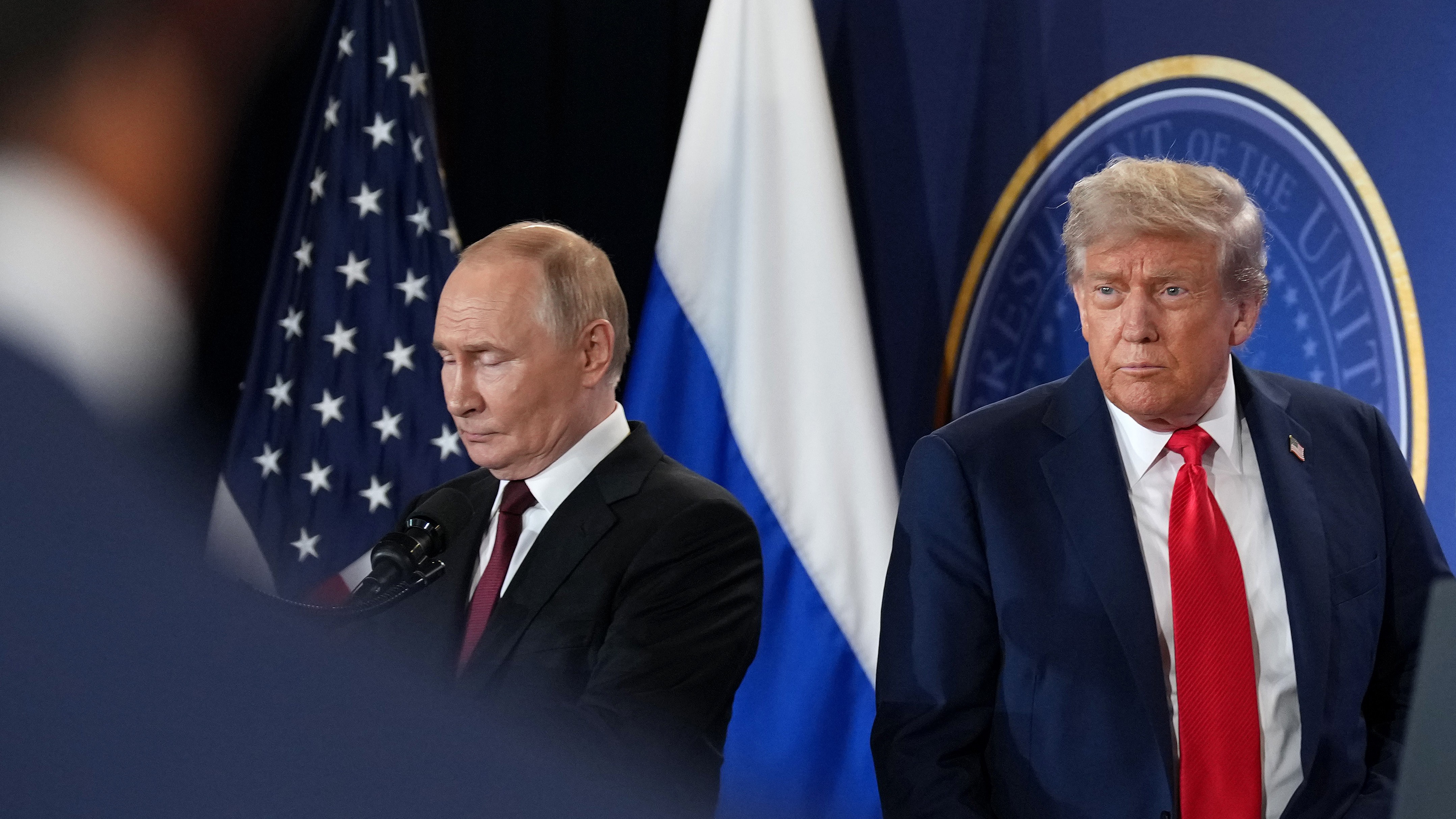
In this episode of The David Frum Show, The Atlantic’s David Frum discusses President Trump’s announced diesel deal with Russia, the administration’s abandonment of Ukraine, and why Trump is giving up so much to gain very little.

Then, David is joined from Kyiv by Illia Ponomarenko, a Ukrainian journalist and the author of the new book The Land of Tears and Hope. David and Illia talk about the history of Ukraine, its current state as the war with Russia rages on, and how and why the Trump administration seems so hostile to the country.

Finally, David concludes with discussion about why so little literature exists about the history of slavery in Eastern Europe.

The following is a transcript of the episode:

David Frum: Those Americans who want the United States to take a more pro-Russian point of view or who denigrate the Ukrainian cause—the vice president of the United States and the people around him—they will insist that this war is about NATO expansion. But when you actually listen to actual Russians, they say, No, no, no; this is all about Yaroslav the Wise. And from a Russian point of view, this is not about NATO expansion, except when they’re talking in English to gullible Americans.

[Music]

David Frum: Hello, and welcome to The David Frum Show. I’m David Frum, a staff writer at The Atlantic. My guest this week will be Illia Ponomarenko, author of a new history of Ukraine, Land of Tears and Hope, available from Bloomsbury in the month of November. Illia and I will discuss the deep history of Ukraine, the recent onslaught of Russian drones and missiles on Ukrainian cities, and how Ukrainians feel about their abandonment by the Trump administration.

This week’s book will also be Eastern European–focused. It’s not a book that exists. It’s a book that I would like to read, and I set out a research assignment for some intrepid Eastern Europeanist to deliver a book I would like to know more about in, again, in the deep history of the lands that are now Ukraine, now Poland, and now Russia.

But before either the dialogue with Illia or the book discussion, some opening thoughts about the most shocking recent turn in the U.S.-Ukraine story.

When Illia and I recorded our dialogue, we did not yet know about this announcement that was pending from the Trump administration, declaring or imagining or proposing, or whatever the word is, for what is likely vaporware. Not a real deal; a big purchase, a massive—in the words of President Trump—a massive purchase of Russian diesel fuel for the United States.

Now, I wrote an article for The Atlantic this past weekend with the facts and figures about just how negligible an achievement this so-called deal really is. The United States is a diesel superpower. It’s probably the largest producer of diesel on Earth. We don’t exactly know that for sure, because we don’t know really how much China produces, but probably the United States is the largest producer of diesel in the world. It is certainly the largest exporter of diesel in the world. And it produces much more than it uses at home. So it exports about a million and a half barrels of diesel fuel a day.

The reason American prices have been rising so fast for truckers and farmers and others who use diesel fuel is not because of anything that’s happening in the U.S. market, or even the North American market. The United States imports a little diesel fuel from Canada because it’s easier sometimes to import from Canada and then to export from the Gulf Coast than to supply the United States entirely from its own resources. The reason that the price has been rising is because of disturbances in the global market. What matters is world demand and world supply of diesel, not U.S. demand and U.S. supply of diesel.

Now, if this Russian deal exists at all, it’s a matter of a few hours’ worth of U.S. production and U.S. consumption. It’s not a big event, and it won’t change world prices because Russia doesn’t have a lot of diesel to sell. Although Russia used to be a big diesel producer, Russian oil facilities have been damaged so intensely by Ukrainian missile and drone fire that Russia has very little diesel to contribute. In fact, Russia has had an export ban on diesel since July. If Russia has any diesel to sell, it’s going to take it from another consumer; India, maybe. And by diverting diesel oil from India to the United States, it doesn’t do anything for the United States, which has more than enough diesel here at home. It makes life a little tougher for India, and it doesn’t change the world price at all, because nothing happens in global supply and demand. The whole thing is a complete nothingburger.

But it does two things that are important. The first is: The Russians have dangled in front of the Trump inner circle the prospect of enormous wealth for them if American sanctions on Russia are dismantled. And it’s taken a first step toward the dismantling of those sanctions and put the United States on the path to confrontation with Ukraine, because President Trump now has to worry the only way he can get Russian diesel is if the Ukrainians stop attacking Russian energy facilities, which they are doing in retaliation for the Russian attacks on their cities and schools and historical societies and hospitals, on their civilian population. They have struck back against Russian energy infrastructure to cramp Russia’s war-making ability.

President Trump has now created a situation where his goal of seeming to do something about diesel and maybe also enriching a lot of people who are in his inner circle is in conflict with Ukraine’s self-defense, and the only way he can get what he wants is by ordering Ukraine to stop defending itself. And we have seen already Trump’s pressure on Ukraine: If you continue to strike the Russian energy infrastructure, you are making an enemy of me.

He is taking away Ukraine’s war-making ability for his own reasons, in ways that will not help American motorists even slightly, American farmers, American truckers. And of course, he is doing nothing to bring about a resolution of the conflict in the Persian Gulf, which has removed so much diesel fuel from Europe and Asia because that’s where those countries get their supplies from.

Trump from the beginning of this second presidency has taken Ukraine as a kind of personal affront. Now, a lot of this is a little hard to understand, but maybe we don’t need to understand it. You know, when I was working on my story about Trump’s vaporware diesel deal, an editor asked me, Do you think Trump believes it? Do you think he imagines that these few barrels he’s getting from Russia are, in fact, going to make any difference to American supply? Or is he totally delusional? And I had to answer, I don’t actually—of course, I don’t know the answer to that question. My instinct—it’s just an instinct—is that President Trump was much more of a self-aware con man when he entered politics a decade ago than he is now. He now may be kind of lost: truly in a world of illusions, where he no longer himself knows what is true and what is a lie.

But it doesn’t matter, because there’s a consistent through line, whether these are deceptions of others or deceptions of himself. The through line is: He just is tantalized by the prospect of vast wealth for himself and others by doing deals with Russia. And he’s willing to sacrifice the lives and security and independence of Ukraine to his ambition. And he treats Ukraine’s self-assertion and self-defense as an act of impudence and defiance—not against those who are trying to invade and aggress and annex Ukraine, but against himself. Because Ukraine bothers him, and he doesn’t like it, and he wants it to go away.

What he’s leaving all Americans with is one of the most shameful passages in the history of American foreign policy. A people that are defending their national sovereignty, that are fighting back under the most difficult conditions with the supremest forms of human bravery. Who ask only from the United States the wherewithal with which to defend themselves, and who are being denied that wherewithal by President Trump for reasons we can’t understand, but none of which look good. I hope anyone who can hear my voice will join me in sharing their dismay and their shame at what President Trump has done to the good name of American democracy and American world leadership.

And now my dialogue with Illia Ponomarenko.

[Music]

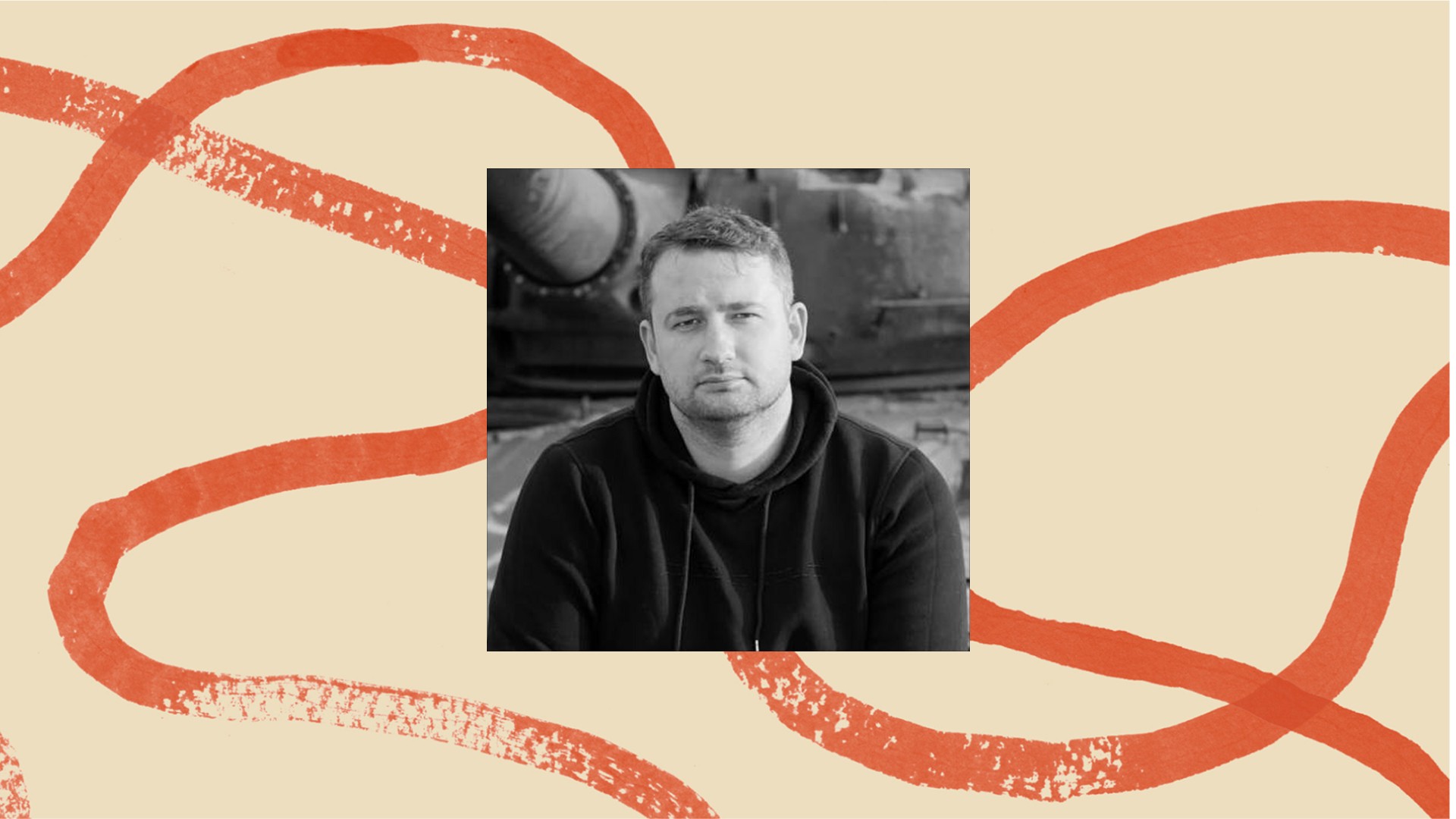
Frum: Illia Ponomarenko was born in 1992 in a small town in the Donetsk region of eastern Ukraine. He studied at Mariupol State University. When Russia invaded his home region in 2014, Illia began his career as a reporter. He has never stopped.

His first book, I Will Show You How It Was: The Story of Wartime Kyiv, was published in 2024 to global acclaim. Illness closed his path to military service, so he turned to a deeper fight: the fight over whether Ukraine has a history of its own. His new book, The Land of Tears and Hope, tells the Ukrainian story from the Slavic tribes and the Vikings through the Cossacks, Soviet terror, and the Maidan to this very war today. It will be published next month. Order it now.

Illia Ponomarenko, welcome to The David Frum Show.

Illia Ponomarenko: Hello. Thanks for having me.

Frum: Illia, you have written this deeply moving history of Ukraine, and I want to address it in full, but the events of the past days in Ukraine have been so dramatic and so horrible I think we must start there.

So tell us, we’re speaking in the early part of October, tell us the situation as it is now and what has happened in the past days to your country.

Illia Ponomarenko: Well, of course, the centerpiece of any news and the spotlight is Kyiv, this capital city, and what’s happening. The air battle over Kyiv that’s going on nonstop for days and weeks already, with drones, missiles. Never stopping, day and night.

So the central attention is given to the defense of the capital and to preserving life in the capital. And Russians are really trying to abrupt the very existence of the city, to instill fear, to abrupt transportation, normal food supply, water supplies. Bridges over the Dnipro River that divides the city, which is extremely vital. So Russians have switched to this tactic of trying to absolutely paralyze the very heart of the country—to install fear, to enforce the capitulation, since they can’t get any substantial military success for the fifth year of this war.

But I must say that, you know, I live just outside Kyiv in suburbs, and also in several places in Kyiv Oblast, in the outskirts. But I spend as much time as I can in the city, in many ways just to be there with my city, in there. And I would say that over the last three days, which is what I said on social media, the air battle—this constant attack—the entire environment had become a little less stressful, a little calmer. I would say I think, this my feeling, that Ukrainians managed—the Ukrainian military managed to overcome this surprise and shock and managed to adapt to this new situation. And I think if the situation continues, we might say that Russians have weakened in terms of their ability to strike Kyiv on the daily basis. So Ukrainians have made another move to adapt to what Russia does, and it goes on and on and on. So it’s constant battle between Ukrainian adaptation and Russian attempts to paralyze the city.

Frum: Let me try a little context. I think from the point of view of a lot of people in the Western world, in the United States—we’re so far away. It seems like this is an endless story of Russian attacks, Ukrainian defense. But there was a true intensification of the Russian air attack on the capital of Ukraine beginning at about the end of September, with some new technologies, some new methods. And the first effect was very devastating. A much greater loss of life, much greater damage than had been the case until the later part of September, the beginning of October. And so it is this new campaign—this intensified campaign at the end of September, beginning of October—that you say is now running out of impetus and faltering a little bit?

Ponomarenko: It gets significantly visibly weaker in terms of the number of drones, Russian drones, that made it to the capital and strike. So there are far less booms in the sky over Kyiv over the last few days, which is good. Which is something that enlightens us, because the military also reports a lot of new technologies, counter-technologies that are being applied to intercept jet-powered Russian drones that are super difficult targets to get.

Frum: These jet-powered drones, this is the new—because drones, until now, have been slow. And they could be shot down with a .50-caliber machine gun if the weapon-wielder was fast and skillful enough. But a jet-powered drone moves much faster, and so can’t be intercepted by a machine gun. You need a much more sophisticated technology to catch the jet-powered drone.

Ponomarenko: Yeah. One of the bright pictures of life in Kyiv is always seeing, in the streets, pickups with machine guns—sometimes it’s M2 Browning machine guns—with the mobile air-defense groups that try to shoot these things down.

But when it comes to jet-powered drones, which is the next step essentially, and especially when it comes to mass-produced, jet-powered drones, it’s a huge problem. Because they move at velocity of 700, 600 kilometers per hour. So it’s an insanely complicated target to get. And they are cheap; they are easy, simple. They are massive. So could be swarms of them over the Ukrainian cities.

Nonetheless, within weeks we started getting new solutions to this. There are—you know, Ukrainian defense in many ways is comprised of many, many private companies that suggest many, many technical solutions. Right now we have five or six prototype interceptor drones that are engine-powered, or jet-powered, that are being presented by various companies in Ukraine. And they are simply showing the first results, just the first results, on videos intercepting these Russian jet-powered drones. So surprisingly, it goes fast. The entire Russian campaign against Kyiv was a shock. It was sharp. It intensified really quickly and shockingly. But at the same time, the Ukrainian response to this is very fast and very sharp. So our big question is whether we could launch the mass production of a successful prototype that works well. And this is exactly, essentially, how this war works.

Frum: Ukraine is striking deeply at Russian targets, especially energy-production targets, ever farther into Russia. And there are reports—I don’t know how much weight to put on them—of surrenders among Russian ground troops, of deteriorating performance among Russian ground troops, that make us think that maybe something deeper is happening in the war than just the strike, counter-strike—the cycle of innovation and counter-innovation you describe.

Ponomarenko: But also, another front of this war is actual battlefield war, that’s happening along from the frozen front line in Ukraine’s south and east. And we have a situation in which Ukrainian military, in one of the most important, if not the most important axis of Russian attack, which is near the cities of Kramatorsk and Sloviansk—the very core of the industrial part of Donbas that’s still under Ukrainian control, and also the belt of the fortress cities in Ukraine’s east.

The Ukrainian military, over the months of very careful, very clandestine operations, managed to inflict a very, very serious defeat to local Russian forces. So that’s why we get pictures of surrendered Russian troops, because they got encircled; they got captured. That’s how the Ukrainian military, and it’s pretty open, and it could be independently verified that Ukrainian military have tactical gains. And also they managed to cut off one of the accesses of Russian attacks on these fortress cities: the northern claw, as we call it.

So Ukraine, despite all the bombs, despite all the bravado from the Russian side, Ukraine has pretty significant tactical successes on the field, on the battlefield. Which are pretty impressive on the scale of this war, five years on.

Frum: What can you tell us about the present state of American assistance to Ukraine?

The Trump administration has cut off aid to Ukraine. Such American weapons as you get are paid for by your European counterparts and allies. Is there any American intelligence flowing to Ukraine? Is there any non-material assistance you’re getting? Or is the attitude truly as hostile in Ukraine as it seems to be from the point of view of Washington, D.C.?

Ponomarenko: Well, of course, we are very far from being in the place where we’ve been under the previous administration when we had consistent and very serious and very regular packages of assistance. Right now, you are right to say that what’s being delivered to Ukraine from the United States is being purchased as part of the Pearl program by European backers. It’s mostly about supplies, technical maintenance, things that help maintain the U.S.-made hardware in possession of Ukraine. Very important part of this American participation is, of course, the intelligence. And I must say that despite all the complexities or all the complications that Ukrainian administration has with the United States, this intelligence sharing is one of the most important things that Ukraine has from outside the country, because it’s about saving lives. It’s about giving early warnings about Russian missile attacks. This is what we get from Americans, essentially.

So in many ways, what you see, from the point of view of [President Volodymyr] Zelensky—the way he talks to Donald Trump, the way he tries to preserve a more or less stable relationship with the United States and with the Trump administration—it’s about intelligence. Because this is something that we would be extremely, extremely reluctant to lose. Because it’s about saving lives; it’s about air defense.

Frum: Can you offer any generalization about how Ukrainians today feel about their relationship with the United States? And what the United States has done for them as it has become less generous, but not yet zero generosity?

Ponomarenko: Well, I’m really trying to give you a very average attitude that’s been present in the Ukrainian public opinion. Of course, a lot of people are dissatisfied. A lot of people are stressed about this, because one of the things that we always thought of as unshakable, as static as the Earth itself, is the American support. Bipartisan support in both house chambers of the Congress, in the White House. We always thought that our interests are 100 percent complacent with America’s interests, and this is what we thought was unshakable and unmovable.

I am not going to lie to you that Donald Trump remains one of the least popular figures in Ukraine. Because of many reasons, mostly because of a lot of words that he said about Ukraine. And I cannot lie to you that this image also affects really badly on the image of the United States as a country, or on the United States as a people, in the eyes of Ukrainians. A lot of emotions are involved into this. We must understand that war, being at war, is a very emotional thing. It’s about a lot of strong words; a lot of strong thoughts about this.

But I would not say that a lot of people here still respect the United States, still consider America to be the leader of the free world, the cornerstone of this free world. And despite everything that has happened over the last couple of years, still consider America to be probably back anytime soon in terms of its presence and its posture and its leadership.

So I would say that, you know, of course, feelings are very complicated. Feelings are very emotional about Americans. I cannot say that I agree with a lot of those things that I hear from my fellow Ukrainians about Americans and American aid. I really try, and I think it’s extremely fair and just to separate what this administration, what politicians do, what they say about, about us, what they do. And also, I try to remind my fellow Ukrainians of how many Americans do support Ukraine up to this day. We have figures between 60 and 70 percent on both sides of the political spectrum. I cannot stress this enough that, after all these years, having so many people across the ocean being so eager in terms of supporting Ukraine—the country that they probably never heard about before this war—is something that is to be deeply appreciated and something that is very ours to have.

Frum: For those of us who, like you, believe in the role of the United States as the guarantor of the free world, and who believe that the phrase free world means something, this has been a shameful hour. And the patience, and maybe someday the understanding and even forgiveness of the Ukrainian people to this deviation from America’s role in the world, is felt here too, and should be felt.

Let me talk to you about your book. And again, the title is The Land of Tears and Hope. It is, as you say, it’s emotional. And it is not a classic history written with chapter one, chapter two, that we—you jump like a film director from scene to scene, and pass over a lot of years, and have a very arresting technique.

Frum: Ukraine is one of the world’s newest states. Or the present Ukrainian state is one of the world’s newest states, founded in 1991. You make us feel the antiquity of Ukrainian culture, language, sensibility. How do you manage this contrast between the newness of the government, the newness of the constitution, the newness of the state, and the antiquity of everything that the state is built on?

Ponomarenko: That’s a very interesting thing about modern Ukraine. By saying modern Ukraine, I mean the country that was built after the revolution of 2014, which is the newest phase of Ukrainian existence. Because Ukraine is very young in terms of being a political entity, especially when it comes to being very independently thinking, sensing itself as an independent nation-state, not someone’s backyard, not as also Russia. But in terms of feeling itself like an entity, a country, a nation with its own home. It’s a very new thing to Ukraine even compared to its just 35 years of its independence.

And at the same time, Ukrainians—and Ukrainian people in general as a people, as ethnicity—have a very long historical memory. And a lot of things that are dearest to us, that are part of our culture, of our everyday thinking about traditions, of the fairy tale that we tell to our children through the night, and many of those things date back to medieval times. Date back to the early modernity, like Ukrainian Cossacks. They date back to pre-Christian times, ancient Slavic tribes.

You know, when I was writing this book, it was a surprise even to me when I realized this: how many things we have from our everyday traditions, from our holiday celebrations, from our sayings that we get back from pre-Christian times, from thousands of years ago. A lot of things in our life go back to those times—when there was no Ukraine, neither as a nation, neither as a state, neither as in, even in a word in this. But they live with us.

Frum: I think this is something that Americans especially have a hard time understanding. Those Americans who want the United States to take a more pro-Russian point of view or who denigrate the Ukrainian cause—the vice president of the United States and the people around him—they will insist that this war is about NATO expansion, about verbal undertakings to Mikhail Gorbachev back when there was a Soviet Union. And then what, well, what does it say in the Budapest Memorandum of 1994?

But when you actually listen to actual Russians, they say, No, no, no; this is all about Yaroslav the Wise. And from a Russian point of view, this is not about NATO expansion, except when they’re talking in English to gullible Americans. For them, this war is about whether Ukraine exists—as a culture, as a polity, as a society—or whether you’re just sort of charming primitive, rural Russians who don’t understand that you need to belong to the greater entity of Mother Russia.

And you talk a lot about that in the book, about the distinctiveness of Ukraine. And maybe begin with this question: So, how many years separate the founding of the city of Kyiv from the founding of the city of Moscow?

Ponomarenko: Whoa. It’s even a complicated question to answer when the city of Kyiv, as we know it, was founded. Because there are lots of evidence, lots of arguments among scientists. But let’s try to set the beginnings of Kyiv as a continuous city around the fall of the Roman Empire’s time. And when it comes to Moscow, a lot of people barely realize that. They imagine Kyiv and Ukraine and what ended up being Ukraine, and then what ended up being Russia, as in the model that Moscow gave birth to Kyiv, gave birth to Ukraine. It’s an offshoot of great Russian tradition. But at the same time, the situation was just exactly vice versa.

There was ancient Kyiv—ancient great kingdom of those people who are ancestors. And those people, once upon a time, many years after their best time, after their blossoming time, they established what was a very distant fort in the forest that was named Moscow. So essentially, those cities, those lands that ended up being the historical core of Russia—we’re talking about the city of Vladimir, of Suzdal, the very core of Russia—they were settlers. They were settled from, say, historical Kyiv to those places, because people were seeking land, new territories. So, simple truth is that what ended up being Ukraine gave birth to what ended up being Russia—not vice versa.

But at the same time I do give this information, I do provide the reader with these thoughts about the past and the common roots of Eastern Slavic peoples, Russians, Ukrainian people, Russians. But at the same time, I do not stick to this very nationalistic and very radical and simplified view that Ukraine is the only country that has the roots in this long past, and no one else does. I think that Russians and Ukrainians have a common origin, and also Belorussians.

But Ukraine—what we have right now in Ukraine—has the biggest share of these roots belonging to it. So that’s my position about this. And why I wrote about this book is that in Ukraine of today, a very important part of life is getting back to these roots, appreciating this. Stopping to think about us, ourselves and this country as the backyard of Russia—but a country that has its roots back through to the Middle Ages, to ancient times, that was the cradle of Christianity in this region of human civilization. That has very ancient and very beautiful and in many ways unique historical wonders in this land. A huge part of Ukrainian life right now in this national awakening is getting back to its roots, its ancient roots.

Frum: In more recent times, and by that I mean the past few hundred years, Ukraine has been entangled in very grim, bloody, complex relations with not only with the Russian neighbors, but with Poles and with its Jewish minority. And these swirl together in stories that are sometimes very powerfully resonant, but sometimes very ugly and bloody. And you talk about that a lot: about the Ukrainian-Polish duality, the Ukrainian-Jewish duality, as well as the Ukrainian-Russian duality.

Ponomarenko: I do talk about this. And my central point in this regard is that Ukraine is a very rich country. Ukraine is a very beautiful country. And because of this, it has a very tragic history. And Timothy Snyder, historian that is insanely popular in Ukraine, he was just brutally right to include Ukraine as part of the so-called bloodlands. Because Ukraine, with all its riches, with all its geographical position, it has always been a target for many empires that wanted to possess Ukraine and its riches. And its geographical positions, its human resources, its brains.

So in many ways, the Ukrainian history—and I realized it myself as I was preparing for this book—I realized that we are essentially as a people, Ukrainian people have been moving for many centuries in this closed circle of trying to get independence and its own nationhood, and losing it again. And becoming a powerhouse for new empires and a donor of resources for new wars, new empires. Such as the Russian Empire was in many, many ways built on the conquest and possession of Ukrainian riches. Same goes about Stalin’s USSR. Hitler wanted Ukraine badly as part of his Lebensraum, because Ukraine is a very fertile land. It’s a very pleasant land to be on.

Ukraine is a part of human civilization where it’s really good to be a master in. You have a really rich empire if you have Ukraine. And this moving on this vicious circle of history, it always comes with insane blood, with insane national intra-ethnic feuds, violence, social tensions. Such as with Jewish population, with Polish population. So my very central point of this book eventually is that it’s a land of tears because of many, many wars; many, many tragedies. Some of the worst tragedies of human history happened in Ukrainian lands between parties that wanted to possess this land. But also a land of hope, because we hope that with this independent Ukraine and in this war in which Ukraine may again lose its freedom and its independence, there is hope that at least at this time—for the first time in many, many centuries—we could break through this vicious circle, and upheld this democratic, free, strong Ukraine that would never be a powerhouse and a donor for new empires and new wars.

Frum: I grew up in Canada, which was the center of a lot of diaspora Ukrainian intellectual activity. And I don’t want to make this too much of a generalization, but I would say, when I was young anyway, that diaspora Ukrainian intellectual activity tended very much to the reactionary side: ultra-nationalist and very defensive of Ukraine and all that it had done. And so there was a tendency to say, to think that the bloodshed between Ukrainians and Poles, it stretches back to the 1600s, but was very intense during the Second World War. The Ukrainians were innocent; the Poles were guilty. The crimes against the Jews, well, they didn’t happen, and if they happened, the Jews deserved them.

And what has been striking about Ukrainian culture since 1991, and especially since 2014, and very much in your book, is the ability to tell a story of national pride while integrating national shames, without letting those shames detract from the future. And understanding that Ukrainians and Poles had a very tangled history. Ukrainians and Jews have had a tangled history, a lot of suffering. And yet something new and modern and liberal can emerge from this by recognizing the full truth and all the components of the Ukrainian national identity.

Ponomarenko: In my book, I specifically stay away from radical views or idealizing the history of this land. I state it very clear, and I think it’s a very just thing to say that Ukraine is a very complicated place. It’s a very brutal place in history. It’s a very terrible place in terms of all the blood that was shed for this country, and in this country. It’s one of the crossroads of this world where many people wanted to be a master in.

So I specifically say that when it comes to, for instance, the killings of Jewish and pogroms. For instance, we have a national hero of Bohdan Khmelnytsky, who led the greatest and the biggest rebellion of Ukrainian Cossacks since the 17th century, that almost led to the installment of the Ukrainian nationhood within the old Polish crown. And right now, especially in the last 100 years, Bohdan Khmelnytsky is idolized. It’s his own monuments. He’s on Ukrainian money. He’s the symbol of the founding fathers of the Ukrainian nationhood. But at the same time, one of the darkest pages of Ukrainian history is the way the Jewish population was treated during those uprisings, because the uprising of Ukrainian Cossacks against the Polish crown in the 17th century was the outburst of anger of extremely poor people. Of extremely oppressed people in terms of their religion, in terms of their money. It was an outburst of anger against the very system they were living in, with nobles being absolutely unpunishable with religious oppression. So it naturally fell upon Jews, as part of this system that was also unjust toward them in this regard.

Frum: Because the Polish nobles were far away, and the Jews were neighbors right next door.

Ponomarenko: Yeah; it was a very complicated social system. In which Jews, for instance, when it comes to 17th century—in that period, for instance—Jews were laid upon with duties like taxes, or they were the only ones that are allowed to with banking operations. And who loves people who you owe money, or who collect taxes, or who run bars, for instance. Who have monopoly on producing drinks, for instance.

So it was about a lot of hatred, about a lot of injustices. And try to explain to a very angry peasant—who has been robbed, who has been poor, extremely destitute, who has barely any education when it comes to basic things—when emotions go through, try to explain to these people, to this angry crowd ready to take up arms and commit massacres, that, for instance, Jews are not guilty of this; that they are surviving also on the last wheels.

So in general, Ukrainian history is full of such things. And in my book, I do not represent any radical. I do not provide any justifications. I explain how it happened, what happened. But I do not idealize. And I simply speak on behalf of very average, young Ukrainian that’s thinking about this country with no nationalism, with no radical points, with no attempts to idealize Ukraine and its history.

Ukraine is a complicated place. And what’s important also about this country, especially when it comes to the Ukraine of today, is that I see it with my own eyes from everyday life in my country. That we have overcome a lot of those things that drag us down from the past. We mentioned Ukrainian-Jewish relations. Despite all this past, despite such a bloody history of pogroms dating back to 20th century, what we have right now in Ukraine is that the chief rabbi of Ukraine is a hard advocate for Ukrainian victory, and he spends basically entire his life advocating support for Ukraine. His son, his adopted son, died fighting for Ukraine as a volunteer in the armed forces. When it comes to Islam, for instance, we have a chief mufti, former chief mufti of Ukraine—which is the top priest, or top clergyman, for Ukrainian Muslim community—he resigned from his position, and he’s a battlefield medic with the Ukrainian military.

We have Jewish presidents as of now.

Frum: Well, I sometimes think that it’s going to be fascinating to explain when my grandchildren or great-grandchildren visit Kyiv that the biggest statue in Kyiv is Khmelnytsky—who ranks along with, just behind Hitler as one of the greatest villains in Jewish history—and the second-biggest statue in Kyiv will be of President Zelensky.

Ponomarenko: I’m not sure about this, because Ukrainians tend to be highly critical towards the leader that they have as of the moment.

Frum: While he’s alive, sure.

Ponomarenko: Yeah; as of the moment, yeah. One of the things that really saved this country and continues moving forward is that we have a tendency of being extremely critical towards any sort of authority. So, Zelensky might, could have been like a war hero. He could be a president that was elected by a landslide. But it always happens that Ukrainians fall in love very quickly, and they get dissatisfied and extremely critical very quickly, even quicker than that.

But when it comes to—you have a very good point about monuments. I take a walk in downtown Kyiv, and I see a monument for Sholem Aleichem, the great Jewish writer. We have a museum for him in downtown Kyiv. We have—what’s the word for this? It’s the placard with the commemorative placard, commemorative plate. Toward, yeah—that marks the building where Golda Meir was born and raised in Kyiv. She’s a girl from Kyiv.

At the same time, we have a lot of Jewish places. There are Middle Eastern cuisine restaurants, and what’s important in this is that they often share the same street with Muslim places, with halal places for Muslims. One of the most important and popular Kyiv restaurants is, it’s called Musafir. It’s Crimean Tatar food. Like a Muslim place that gives you, essentially, gives you a vibe of a Muslim homecoming and Muslim cuisine. And I can give you a lot of examples of such things in a predominantly Slavic country with Christian churches and all those things.

But what I really appreciate about my country—and I really feel about this—is that I see that in this country, with its feeling of purpose that unites confessions, religions, many ethnicities. I really like this, about my Ukraine.

Frum: Well, let me ask you about another painful historical passage. And there’s been, especially in very recent weeks, an attempt to stoke Polish-Ukrainian animosities that date back to the events of the Second World War. Poland and Ukraine had claims on overlapping territories. The ebb and tide of wars sometimes favoring the Poles, sometimes favoring the Ukrainians. Led to terrible massacres. And Poland has been an indispensable ally of Ukraine in its struggle for freedom, but there have been attempts politically to sort of trigger, push those painful memories of the past in a way that would sever the Polish-Ukrainian relationship. How does that play in Ukrainian culture? How does that play in Ukrainian politics?

Ponomarenko: I too confidently can say that something that could be called “a Polish question” is absolutely absent in Ukrainian politics. Nobody talks about Poland. Nobody talks about the complicated Polish-Ukrainian history. Average Ukrainian—especially when it comes to those who are beside arguments on Twitter with Poles—average Ukrainian thinks about Poland as a neighboring country that has not wasted any time, just like we did, with its independence. That has gained enormous successes as an economy. Essentially the example of what could have happened to Ukraine if we haven’t wasted our time.

Frum: I mean, both of you—Poland in 1989 was almost as poor as Ukraine was in 1989.

Ponomarenko: Yeah, if not poorer. If not poorer, yes.

Frum: And Poland made a series of very bold free-market choices, ripped the bandage off, took a real—I was there in 1990. It was tough. But Poland has had this remarkable growth. The free-market policies have paid off, and Poland is now on its way to becoming a fully developed—if it’s not already a fully developed country, it’s minutes away from being a fully developed country.

Illia Ponomarenko: It’s very cool. It’s very impressive in this regard. And my entire point in my book, and in my entire presence on social media and everywhere, is that I’m trying to talk like an average, simple Ukrainian, that has no extreme political views of this. An average, simple Ukrainian says that Poland is a cool place. It’s very impressive that they have achieved this. Two million, if my memory doesn’t fail me, two million Ukrainians live in Poland and work in Poland. And we spend a lot of time using Polish airports, in general using Poland as a hub. Not only for, you know, the military supplies and everything, but also for substituting things that are not available to us because of the wartime.

Most of the people go—if we need airports, most of the people in Ukraine still go to Poland to cross the border and to get to the airports and travel for anything. So, it’s really sad to see that from the Polish side, we see that this complicated history between Ukrainians and Poles often gets used as a political tool within Poland.

I definitely can say that nobody talks about this in Ukraine, because we have far more pressing problems on our heads, to be honest. But I must say that it’s really sad, and it was pretty shocking to me to see that, beyond those fiery rhetorics and playing politics about this, we have pretty material things happening. Like continuing and shocking attacks on Ukrainians in Poland. That’s happening. They are popping up in the news, way too frequent, which is kind of shocking to disregard.

Frum: One thing that you very eloquently write about is something that Ukrainians, as you say, do feel strongly about, and that is the flag of the European Union. And you have this very poetic passage in the book where you describe as Ukraine was negotiating a kind of auxiliary membership in the European Union, just before the Maidan in 2014, that the European flags began to appear. And I think in most of Europe, the European flag is associated with regulations on fishing, food safety, air [control]—you know, what kind of coolant you can use in a refrigerator. A series of boring bureaucratic technicalities to make sure that goods and services can move across borders.

It isn’t any kind of inspirational idea anymore. It’s just a bunch of rules. But you describe very movingly how, for Ukrainians, it became an idea.

Ponomarenko: We have a pretty long history of this European Union flag of being a symbol. It dates back to 20, 25 years ago, when Ukrainians started massively thinking about going west, essentially turning away from Russia.

Essentially it’s about the emergence of my generation, of the people in their 20s and 30s. It is in our childhood that we started getting things like democracy from school. Human rights; the rule of law. We started understanding this as something very normal—something very good to aspire to.

So I’m not sure if I had this in my book. But there was, in early days of Euromaidan revolution, it was late 2013 in Mariupol. We had a little rally in support of signing this association agreement with the European Union, and I remember myself leading a small crowd of my friends, students, and also a couple of lecturers. And all holding this European flag and moving through Mariupol avenues.

It has always been a symbol of hope. It has always been a symbol of a generation that is pretty different from our parents. It has always been a symbol of us really wanting to be in this place where our biggest problem is regulations—you know, the temperature in our ACs, boring laws, these arguments over percentages. It’s just an idealized, very romantic dream of Ukraine overcoming a lot of things that drag us behind. And a romantic dream of Ukraine as a nation, as a state. Just getting closer to who we were. Very modern, very Westernized in our mindsets, in our tastes and everything. A generation that is really not different from any generation right now in the West.

But we had a state that was incompatible with our values, especially when it comes to hyper-corruption during the [Viktor] Yanukovych presidency. And this state, the mafia state, under the wing of Moscow, has become so incompatible with our values—with our aspirations for the future, with the way we think about our country, the way we want it to be—that it essentially led to a revolution. And the symbol was moving towards that place where people argue about ACs as their biggest problems, instead of us.

Frum: It’s now a dozen years since that revolution in the Maidan. Historians write about the past. I don’t know if you consider yourself an historian. I don’t know whether your next book will also be in history, but sometimes they’re tempted to make a comment about the future. Can you look out and say—if your future self could write one more chapter of the book, what would that chapter look like?

Ponomarenko: If I could, I would want to give an afterword in the history, in the book, about the way it came to be for Ukraine after the end. Because I end not on a strictly positive mode. My book’s ending is about hope. It brings a reader to a moment when the full-scale Russian invasion starts in 2022. And I’m not promising myself and the reader a victory. I’m not promising myself, and the victory a success. I’m not saying that Ukraine will win. I’m talking about hope, and essentially the last word in my book is hope. The hope that we will prevail—we will break through this vicious circle that we have been discussing right now.

And one of the images that I had in my head, and I expressed in my final words in this book, is this idea of Christmastime. Christmas Eve in Kyiv in the evening, in the frosty night, in the first Christmas after the war. Kyiv is one of the most beautiful places to celebrate Christmas in terms of the spirit, the spirit of Christmas here.

And I would want to write an afterword of how this first Christmas after the war in free, independent Ukraine would take place. Because it’s just like the European Union flag—it’s a dream. It’s something to aspire to. It’s something to hope for. And it would mean that our hope came true: of saving this country and giving it, handing it over to our children.

Christmas in postwar Kyiv, in independent Ukraine—that would be my afterword, I’d say. Yeah.

Frum: And Christmas is so symbolic for Ukrainians, because even the date on which you celebrate Christmas expresses your vision of the kind of future you want for your country. Whether that is December 25th, as would be celebrated to your west, or a different date, as would be celebrated to your east.

Ponomarenko: We officially switched to having two Christmases. Officially in Ukraine, there are two Christmases, so it serves both traditions. [December] 25th or January 7th. And, of course, it’s part of the de-Russification, the getting out of the Russian-style traditions. With—it goes along with the disgust with everything that’s represented by Russian church, Russian traditions, Russian way of life and everything. And I truly believed that this thing with Christmas on December 25th was more of a formal thing, or more about the youth, you know? Westernized youth; we want the same Christmas, just like on Home Alone day. It’s more about us being too westernized as distant from, you know, most of the population that sticks to the older traditions.

But at the same time, with every year of this war, I see it with every Christmas. That really, far more people that I expected do celebrate and switch to Christmas on December.

Frum: Whatever day it is, I wish you that future Christmas in peace and freedom. I hope it comes soon. Illia, thank you so much for joining me. The book is The Land of Tears and Hope. It will be published in November by Bloomsbury. As you said, it was written originally in English. It’s a very moving book. It is very cinematic, very dramatic. And it was both exciting and very touching to read, and I was grateful to have a chance to read an early edition of it. Illia Ponomarenko, thank you so much for joining me today on The David Frum Show.

Ponomarenko: Thank you. Thank you very much for this.

Frum: Bye-bye.

[Music]

Thanks so much to Illia Ponomarenko for joining me today on The David Frum Show. As I said at the top of the show, this week’s book is not a book I have read. It’s not a book I can read, because it’s a book that doesn’t exist yet, but that I want to read. Let me explain.

Our modern world has been shaped by slavery and the traffic in slaves. Illia makes the point, in his remarkable history of Ukraine, that Ukraine was a target of slaving through much of the past 500 years.

That point is made briefly in Illia’s book, because there’s not a lot that is known about that compared to the other great slave traffics that made the modern world.

Imagine a map of Western Eurasia. Draw a line from the Ural Mountains that separates European from Asian-Russia through the Middle East, putting Iran on our one side of the line and India and what’s now Pakistan on the other side of the line, around Africa and into the Western world, North America, South America. In that world, in the past 500 years, there have been four massive, horrifying slave traffics.

By far the best known is the one that took African slaves across the Atlantic to the New World. That slave traffic is very well documented. If you want to learn more about it, you can go to the website slavevoyages.org, and there you will find a database of every known slave ship that crossed the Atlantic over the past 500 years. About 36,000 ships’ voyages, in all, that moved about 12 million people. Twelve and a half million people got on the boats; about 10 and a half million people got off the boats. Of those people—the 10 and a half million who got off the boats in the New World—about 46 percent went to Brazil, the rest to elsewhere in Spanish America. About three and a half percent went to what became the United States. Their fates, their destinies, their horrors, their sufferings: Those are as well studied as any topic in modern history.

But there are three other slave traffics that are not nearly so well known. Maybe the runner-up in terms of well-knownness is the slave traffic that took people from Italy, southern France, southern Spain, as far away as England and even Iceland, into the western part of North Africa, to what’s now Algeria and Tunisia, the Barbary Coast. That also is reasonably well studied, because the languages of the people who were enslaved are well known to Western scholars. They spoke French; they spoke Spanish; they spoke Italian. And the slavers spoke Arabic, a language that is also quite well known to Western scholarship. And there’s an estimate that in the 200 years or 250 years from 1530 to 1780, about a million people were taken from France, Italy, Spain—as far away as England, Ireland, and Iceland—into western North Africa.

The two other traffics, however, are not nearly so well known. The traffic from Africa east into the Middle East. That’s not so well known. And the traffic from what is now Ukraine, Poland, and Russia into what is now the Middle East, into what was then the Ottoman Empire, is also very poorly studied. And that last is the book that I want to read about.

The estimate that scholars have—and it’s a very rough estimate—is that over the past 500 years, about 2 million people were taken from what is now Poland, Ukraine, Western Russia, into what is now the Middle East, into the Ottoman Empire. The records on this are very poor, and they are in languages that are not well understood in the West. They’re in the Ottoman archives. They’re in other small languages of Eastern Europe. And of course, Eastern Europe has been subject to all kinds of horrifying violence in recent times that destroyed archives, that destroyed archeological sites. So it’s kind of a mysterious topic.

And the topic has also been distorted because, for much of the past 100 years, Eastern European history was channeled through institutions dominated by the former Soviet Union, which propounded a heavy-handed Marxism that—for reasons of its own ideological internal necessity—didn’t take seriously the slave operations. Of what affected the foreign slave operations. They’re very interested in serfdom: the people who were held to the land inside Eastern Europe. But not so interested in the people who were removed from it.

But as Ukraine and Poland and these other countries find their own destiny, this is a topic I think we need to know better. Slavery is violence. Slavery is inflicted by people more capable of organized violence on people less capable of organized violence. People and nations. What does it do to a nation to be on the receiving end of organized violence, foreign-organized violence, century after century in the way that Eastern Europeans were? How does it change them? How does it shape their national sense of themselves? That’s a subject I’d like to know a lot more about, and there isn’t the literature to tell me about it. But as Ukraine and Poland and the others find their place in the modern world, I think it’s a story that we need to know more about, and that I’d like to read more about.

So if there’s anyone out there who has fluency or familiarity or even competence in Ottoman archives—Turkish language, Polish language, Ukrainian language, Russian language—here’s an assignment for you: Help us understand what it did to Eastern Europe to be on the receiving end of this organized violence for so many hundreds of years. And how that experience feeds, if it does feed, into the rising national consciousness of Eastern Europe today.

That’s it for this week’s edition of The David Frum Show. Thanks so much for joining me. I hope you will share this program on whatever platforms are available to you. Remember, as always, the best way to support the work of this program, if you’re minded to do that, is by subscribing to The Atlantic. Please consider that. See you soon here on The David Frum Show. Bye-bye.
© Ivan Chernichkin
  •  

How Trump Is Selling Out Ukraine

Subscribe here: Apple Podcasts | Spotify | YouTube

In this episode of The David Frum Show, The Atlantic’s David Frum discusses President Trump’s announced diesel deal with Russia, the administration’s abandonment of Ukraine, and why Trump is giving up so much to gain very little.

Then, David is joined from Kyiv by Illia Ponomarenko, a Ukrainian journalist and the author of the new book The Land of Tears and Hope. David and Illia talk about the history of Ukraine, its current state as the war with Russia rages on, and how and why the Trump administration seems so hostile to the country.

Finally, David concludes with discussion about why so little literature exists about the history of slavery in Eastern Europe.

The following is a transcript of the episode:

David Frum: Those Americans who want the United States to take a more pro-Russian point of view or who denigrate the Ukrainian cause—the vice president of the United States and the people around him—they will insist that this war is about NATO expansion. But when you actually listen to actual Russians, they say, No, no, no; this is all about Yaroslav the Wise. And from a Russian point of view, this is not about NATO expansion, except when they’re talking in English to gullible Americans.

[Music]

David Frum: Hello, and welcome to The David Frum Show. I’m David Frum, a staff writer at The Atlantic. My guest this week will be Illia Ponomarenko, author of a new history of Ukraine, Land of Tears and Hope, available from Bloomsbury in the month of November. Illia and I will discuss the deep history of Ukraine, the recent onslaught of Russian drones and missiles on Ukrainian cities, and how Ukrainians feel about their abandonment by the Trump administration.

This week’s book will also be Eastern European–focused. It’s not a book that exists. It’s a book that I would like to read, and I set out a research assignment for some intrepid Eastern Europeanist to deliver a book I would like to know more about in, again, in the deep history of the lands that are now Ukraine, now Poland, and now Russia.

But before either the dialogue with Illia or the book discussion, some opening thoughts about the most shocking recent turn in the U.S.-Ukraine story.

When Illia and I recorded our dialogue, we did not yet know about this announcement that was pending from the Trump administration, declaring or imagining or proposing, or whatever the word is, for what is likely vaporware. Not a real deal; a big purchase, a massive—in the words of President Trump—a massive purchase of Russian diesel fuel for the United States.

Now, I wrote an article for The Atlantic this past weekend with the facts and figures about just how negligible an achievement this so-called deal really is. The United States is a diesel superpower. It’s probably the largest producer of diesel on Earth. We don’t exactly know that for sure, because we don’t know really how much China produces, but probably the United States is the largest producer of diesel in the world. It is certainly the largest exporter of diesel in the world. And it produces much more than it uses at home. So it exports about a million and a half barrels of diesel fuel a day.

The reason American prices have been rising so fast for truckers and farmers and others who use diesel fuel is not because of anything that’s happening in the U.S. market, or even the North American market. The United States imports a little diesel fuel from Canada because it’s easier sometimes to import from Canada and then to export from the Gulf Coast than to supply the United States entirely from its own resources. The reason that the price has been rising is because of disturbances in the global market. What matters is world demand and world supply of diesel, not U.S. demand and U.S. supply of diesel.

Now, if this Russian deal exists at all, it’s a matter of a few hours’ worth of U.S. production and U.S. consumption. It’s not a big event, and it won’t change world prices because Russia doesn’t have a lot of diesel to sell. Although Russia used to be a big diesel producer, Russian oil facilities have been damaged so intensely by Ukrainian missile and drone fire that Russia has very little diesel to contribute. In fact, Russia has had an export ban on diesel since July. If Russia has any diesel to sell, it’s going to take it from another consumer; India, maybe. And by diverting diesel oil from India to the United States, it doesn’t do anything for the United States, which has more than enough diesel here at home. It makes life a little tougher for India, and it doesn’t change the world price at all, because nothing happens in global supply and demand. The whole thing is a complete nothingburger.

But it does two things that are important. The first is: The Russians have dangled in front of the Trump inner circle the prospect of enormous wealth for them if American sanctions on Russia are dismantled. And it’s taken a first step toward the dismantling of those sanctions and put the United States on the path to confrontation with Ukraine, because President Trump now has to worry the only way he can get Russian diesel is if the Ukrainians stop attacking Russian energy facilities, which they are doing in retaliation for the Russian attacks on their cities and schools and historical societies and hospitals, on their civilian population. They have struck back against Russian energy infrastructure to cramp Russia’s war-making ability.

President Trump has now created a situation where his goal of seeming to do something about diesel and maybe also enriching a lot of people who are in his inner circle is in conflict with Ukraine’s self-defense, and the only way he can get what he wants is by ordering Ukraine to stop defending itself. And we have seen already Trump’s pressure on Ukraine: If you continue to strike the Russian energy infrastructure, you are making an enemy of me.

He is taking away Ukraine’s war-making ability for his own reasons, in ways that will not help American motorists even slightly, American farmers, American truckers. And of course, he is doing nothing to bring about a resolution of the conflict in the Persian Gulf, which has removed so much diesel fuel from Europe and Asia because that’s where those countries get their supplies from.

Trump from the beginning of this second presidency has taken Ukraine as a kind of personal affront. Now, a lot of this is a little hard to understand, but maybe we don’t need to understand it. You know, when I was working on my story about Trump’s vaporware diesel deal, an editor asked me, Do you think Trump believes it? Do you think he imagines that these few barrels he’s getting from Russia are, in fact, going to make any difference to American supply? Or is he totally delusional? And I had to answer, I don’t actually—of course, I don’t know the answer to that question. My instinct—it’s just an instinct—is that President Trump was much more of a self-aware con man when he entered politics a decade ago than he is now. He now may be kind of lost: truly in a world of illusions, where he no longer himself knows what is true and what is a lie.

But it doesn’t matter, because there’s a consistent through line, whether these are deceptions of others or deceptions of himself. The through line is: He just is tantalized by the prospect of vast wealth for himself and others by doing deals with Russia. And he’s willing to sacrifice the lives and security and independence of Ukraine to his ambition. And he treats Ukraine’s self-assertion and self-defense as an act of impudence and defiance—not against those who are trying to invade and aggress and annex Ukraine, but against himself. Because Ukraine bothers him, and he doesn’t like it, and he wants it to go away.

What he’s leaving all Americans with is one of the most shameful passages in the history of American foreign policy. A people that are defending their national sovereignty, that are fighting back under the most difficult conditions with the supremest forms of human bravery. Who ask only from the United States the wherewithal with which to defend themselves, and who are being denied that wherewithal by President Trump for reasons we can’t understand, but none of which look good. I hope anyone who can hear my voice will join me in sharing their dismay and their shame at what President Trump has done to the good name of American democracy and American world leadership.

And now my dialogue with Illia Ponomarenko.

[Music]

Frum: Illia Ponomarenko was born in 1992 in a small town in the Donetsk region of eastern Ukraine. He studied at Mariupol State University. When Russia invaded his home region in 2014, Illia began his career as a reporter. He has never stopped.

His first book, I Will Show You How It Was: The Story of Wartime Kyiv, was published in 2024 to global acclaim. Illness closed his path to military service, so he turned to a deeper fight: the fight over whether Ukraine has a history of its own. His new book, The Land of Tears and Hope, tells the Ukrainian story from the Slavic tribes and the Vikings through the Cossacks, Soviet terror, and the Maidan to this very war today. It will be published next month. Order it now.

Illia Ponomarenko, welcome to The David Frum Show.

Illia Ponomarenko: Hello. Thanks for having me.

Frum: Illia, you have written this deeply moving history of Ukraine, and I want to address it in full, but the events of the past days in Ukraine have been so dramatic and so horrible I think we must start there.

So tell us, we’re speaking in the early part of October, tell us the situation as it is now and what has happened in the past days to your country.

Illia Ponomarenko: Well, of course, the centerpiece of any news and the spotlight is Kyiv, this capital city, and what’s happening. The air battle over Kyiv that’s going on nonstop for days and weeks already, with drones, missiles. Never stopping, day and night.

So the central attention is given to the defense of the capital and to preserving life in the capital. And Russians are really trying to abrupt the very existence of the city, to instill fear, to abrupt transportation, normal food supply, water supplies. Bridges over the Dnipro River that divides the city, which is extremely vital. So Russians have switched to this tactic of trying to absolutely paralyze the very heart of the country—to install fear, to enforce the capitulation, since they can’t get any substantial military success for the fifth year of this war.

But I must say that, you know, I live just outside Kyiv in suburbs, and also in several places in Kyiv Oblast, in the outskirts. But I spend as much time as I can in the city, in many ways just to be there with my city, in there. And I would say that over the last three days, which is what I said on social media, the air battle—this constant attack—the entire environment had become a little less stressful, a little calmer. I would say I think, this my feeling, that Ukrainians managed—the Ukrainian military managed to overcome this surprise and shock and managed to adapt to this new situation. And I think if the situation continues, we might say that Russians have weakened in terms of their ability to strike Kyiv on the daily basis. So Ukrainians have made another move to adapt to what Russia does, and it goes on and on and on. So it’s constant battle between Ukrainian adaptation and Russian attempts to paralyze the city.

Frum: Let me try a little context. I think from the point of view of a lot of people in the Western world, in the United States—we’re so far away. It seems like this is an endless story of Russian attacks, Ukrainian defense. But there was a true intensification of the Russian air attack on the capital of Ukraine beginning at about the end of September, with some new technologies, some new methods. And the first effect was very devastating. A much greater loss of life, much greater damage than had been the case until the later part of September, the beginning of October. And so it is this new campaign—this intensified campaign at the end of September, beginning of October—that you say is now running out of impetus and faltering a little bit?

Ponomarenko: It gets significantly visibly weaker in terms of the number of drones, Russian drones, that made it to the capital and strike. So there are far less booms in the sky over Kyiv over the last few days, which is good. Which is something that enlightens us, because the military also reports a lot of new technologies, counter-technologies that are being applied to intercept jet-powered Russian drones that are super difficult targets to get.

Frum: These jet-powered drones, this is the new—because drones, until now, have been slow. And they could be shot down with a .50-caliber machine gun if the weapon-wielder was fast and skillful enough. But a jet-powered drone moves much faster, and so can’t be intercepted by a machine gun. You need a much more sophisticated technology to catch the jet-powered drone.

Ponomarenko: Yeah. One of the bright pictures of life in Kyiv is always seeing, in the streets, pickups with machine guns—sometimes it’s M2 Browning machine guns—with the mobile air-defense groups that try to shoot these things down.

But when it comes to jet-powered drones, which is the next step essentially, and especially when it comes to mass-produced, jet-powered drones, it’s a huge problem. Because they move at velocity of 700, 600 kilometers per hour. So it’s an insanely complicated target to get. And they are cheap; they are easy, simple. They are massive. So could be swarms of them over the Ukrainian cities.

Nonetheless, within weeks we started getting new solutions to this. There are—you know, Ukrainian defense in many ways is comprised of many, many private companies that suggest many, many technical solutions. Right now we have five or six prototype interceptor drones that are engine-powered, or jet-powered, that are being presented by various companies in Ukraine. And they are simply showing the first results, just the first results, on videos intercepting these Russian jet-powered drones. So surprisingly, it goes fast. The entire Russian campaign against Kyiv was a shock. It was sharp. It intensified really quickly and shockingly. But at the same time, the Ukrainian response to this is very fast and very sharp. So our big question is whether we could launch the mass production of a successful prototype that works well. And this is exactly, essentially, how this war works.

Frum: Ukraine is striking deeply at Russian targets, especially energy-production targets, ever farther into Russia. And there are reports—I don’t know how much weight to put on them—of surrenders among Russian ground troops, of deteriorating performance among Russian ground troops, that make us think that maybe something deeper is happening in the war than just the strike, counter-strike—the cycle of innovation and counter-innovation you describe.

Ponomarenko: But also, another front of this war is actual battlefield war, that’s happening along from the frozen front line in Ukraine’s south and east. And we have a situation in which Ukrainian military, in one of the most important, if not the most important axis of Russian attack, which is near the cities of Kramatorsk and Sloviansk—the very core of the industrial part of Donbas that’s still under Ukrainian control, and also the belt of the fortress cities in Ukraine’s east.

The Ukrainian military, over the months of very careful, very clandestine operations, managed to inflict a very, very serious defeat to local Russian forces. So that’s why we get pictures of surrendered Russian troops, because they got encircled; they got captured. That’s how the Ukrainian military, and it’s pretty open, and it could be independently verified that Ukrainian military have tactical gains. And also they managed to cut off one of the accesses of Russian attacks on these fortress cities: the northern claw, as we call it.

So Ukraine, despite all the bombs, despite all the bravado from the Russian side, Ukraine has pretty significant tactical successes on the field, on the battlefield. Which are pretty impressive on the scale of this war, five years on.

Frum: What can you tell us about the present state of American assistance to Ukraine?

The Trump administration has cut off aid to Ukraine. Such American weapons as you get are paid for by your European counterparts and allies. Is there any American intelligence flowing to Ukraine? Is there any non-material assistance you’re getting? Or is the attitude truly as hostile in Ukraine as it seems to be from the point of view of Washington, D.C.?

Ponomarenko: Well, of course, we are very far from being in the place where we’ve been under the previous administration when we had consistent and very serious and very regular packages of assistance. Right now, you are right to say that what’s being delivered to Ukraine from the United States is being purchased as part of the Pearl program by European backers. It’s mostly about supplies, technical maintenance, things that help maintain the U.S.-made hardware in possession of Ukraine. Very important part of this American participation is, of course, the intelligence. And I must say that despite all the complexities or all the complications that Ukrainian administration has with the United States, this intelligence sharing is one of the most important things that Ukraine has from outside the country, because it’s about saving lives. It’s about giving early warnings about Russian missile attacks. This is what we get from Americans, essentially.

So in many ways, what you see, from the point of view of [President Volodymyr] Zelensky—the way he talks to Donald Trump, the way he tries to preserve a more or less stable relationship with the United States and with the Trump administration—it’s about intelligence. Because this is something that we would be extremely, extremely reluctant to lose. Because it’s about saving lives; it’s about air defense.

Frum: Can you offer any generalization about how Ukrainians today feel about their relationship with the United States? And what the United States has done for them as it has become less generous, but not yet zero generosity?

Ponomarenko: Well, I’m really trying to give you a very average attitude that’s been present in the Ukrainian public opinion. Of course, a lot of people are dissatisfied. A lot of people are stressed about this, because one of the things that we always thought of as unshakable, as static as the Earth itself, is the American support. Bipartisan support in both house chambers of the Congress, in the White House. We always thought that our interests are 100 percent complacent with America’s interests, and this is what we thought was unshakable and unmovable.

I am not going to lie to you that Donald Trump remains one of the least popular figures in Ukraine. Because of many reasons, mostly because of a lot of words that he said about Ukraine. And I cannot lie to you that this image also affects really badly on the image of the United States as a country, or on the United States as a people, in the eyes of Ukrainians. A lot of emotions are involved into this. We must understand that war, being at war, is a very emotional thing. It’s about a lot of strong words; a lot of strong thoughts about this.

But I would not say that a lot of people here still respect the United States, still consider America to be the leader of the free world, the cornerstone of this free world. And despite everything that has happened over the last couple of years, still consider America to be probably back anytime soon in terms of its presence and its posture and its leadership.

So I would say that, you know, of course, feelings are very complicated. Feelings are very emotional about Americans. I cannot say that I agree with a lot of those things that I hear from my fellow Ukrainians about Americans and American aid. I really try, and I think it’s extremely fair and just to separate what this administration, what politicians do, what they say about, about us, what they do. And also, I try to remind my fellow Ukrainians of how many Americans do support Ukraine up to this day. We have figures between 60 and 70 percent on both sides of the political spectrum. I cannot stress this enough that, after all these years, having so many people across the ocean being so eager in terms of supporting Ukraine—the country that they probably never heard about before this war—is something that is to be deeply appreciated and something that is very ours to have.

Frum: For those of us who, like you, believe in the role of the United States as the guarantor of the free world, and who believe that the phrase free world means something, this has been a shameful hour. And the patience, and maybe someday the understanding and even forgiveness of the Ukrainian people to this deviation from America’s role in the world, is felt here too, and should be felt.

Let me talk to you about your book. And again, the title is The Land of Tears and Hope. It is, as you say, it’s emotional. And it is not a classic history written with chapter one, chapter two, that we—you jump like a film director from scene to scene, and pass over a lot of years, and have a very arresting technique.

Frum: Ukraine is one of the world’s newest states. Or the present Ukrainian state is one of the world’s newest states, founded in 1991. You make us feel the antiquity of Ukrainian culture, language, sensibility. How do you manage this contrast between the newness of the government, the newness of the constitution, the newness of the state, and the antiquity of everything that the state is built on?

Ponomarenko: That’s a very interesting thing about modern Ukraine. By saying modern Ukraine, I mean the country that was built after the revolution of 2014, which is the newest phase of Ukrainian existence. Because Ukraine is very young in terms of being a political entity, especially when it comes to being very independently thinking, sensing itself as an independent nation-state, not someone’s backyard, not as also Russia. But in terms of feeling itself like an entity, a country, a nation with its own home. It’s a very new thing to Ukraine even compared to its just 35 years of its independence.

And at the same time, Ukrainians—and Ukrainian people in general as a people, as ethnicity—have a very long historical memory. And a lot of things that are dearest to us, that are part of our culture, of our everyday thinking about traditions, of the fairy tale that we tell to our children through the night, and many of those things date back to medieval times. Date back to the early modernity, like Ukrainian Cossacks. They date back to pre-Christian times, ancient Slavic tribes.

You know, when I was writing this book, it was a surprise even to me when I realized this: how many things we have from our everyday traditions, from our holiday celebrations, from our sayings that we get back from pre-Christian times, from thousands of years ago. A lot of things in our life go back to those times—when there was no Ukraine, neither as a nation, neither as a state, neither as in, even in a word in this. But they live with us.

Frum: I think this is something that Americans especially have a hard time understanding. Those Americans who want the United States to take a more pro-Russian point of view or who denigrate the Ukrainian cause—the vice president of the United States and the people around him—they will insist that this war is about NATO expansion, about verbal undertakings to Mikhail Gorbachev back when there was a Soviet Union. And then what, well, what does it say in the Budapest Memorandum of 1994?

But when you actually listen to actual Russians, they say, No, no, no; this is all about Yaroslav the Wise. And from a Russian point of view, this is not about NATO expansion, except when they’re talking in English to gullible Americans. For them, this war is about whether Ukraine exists—as a culture, as a polity, as a society—or whether you’re just sort of charming primitive, rural Russians who don’t understand that you need to belong to the greater entity of Mother Russia.

And you talk a lot about that in the book, about the distinctiveness of Ukraine. And maybe begin with this question: So, how many years separate the founding of the city of Kyiv from the founding of the city of Moscow?

Ponomarenko: Whoa. It’s even a complicated question to answer when the city of Kyiv, as we know it, was founded. Because there are lots of evidence, lots of arguments among scientists. But let’s try to set the beginnings of Kyiv as a continuous city around the fall of the Roman Empire’s time. And when it comes to Moscow, a lot of people barely realize that. They imagine Kyiv and Ukraine and what ended up being Ukraine, and then what ended up being Russia, as in the model that Moscow gave birth to Kyiv, gave birth to Ukraine. It’s an offshoot of great Russian tradition. But at the same time, the situation was just exactly vice versa.

There was ancient Kyiv—ancient great kingdom of those people who are ancestors. And those people, once upon a time, many years after their best time, after their blossoming time, they established what was a very distant fort in the forest that was named Moscow. So essentially, those cities, those lands that ended up being the historical core of Russia—we’re talking about the city of Vladimir, of Suzdal, the very core of Russia—they were settlers. They were settled from, say, historical Kyiv to those places, because people were seeking land, new territories. So, simple truth is that what ended up being Ukraine gave birth to what ended up being Russia—not vice versa.

But at the same time I do give this information, I do provide the reader with these thoughts about the past and the common roots of Eastern Slavic peoples, Russians, Ukrainian people, Russians. But at the same time, I do not stick to this very nationalistic and very radical and simplified view that Ukraine is the only country that has the roots in this long past, and no one else does. I think that Russians and Ukrainians have a common origin, and also Belorussians.

But Ukraine—what we have right now in Ukraine—has the biggest share of these roots belonging to it. So that’s my position about this. And why I wrote about this book is that in Ukraine of today, a very important part of life is getting back to these roots, appreciating this. Stopping to think about us, ourselves and this country as the backyard of Russia—but a country that has its roots back through to the Middle Ages, to ancient times, that was the cradle of Christianity in this region of human civilization. That has very ancient and very beautiful and in many ways unique historical wonders in this land. A huge part of Ukrainian life right now in this national awakening is getting back to its roots, its ancient roots.

Frum: In more recent times, and by that I mean the past few hundred years, Ukraine has been entangled in very grim, bloody, complex relations with not only with the Russian neighbors, but with Poles and with its Jewish minority. And these swirl together in stories that are sometimes very powerfully resonant, but sometimes very ugly and bloody. And you talk about that a lot: about the Ukrainian-Polish duality, the Ukrainian-Jewish duality, as well as the Ukrainian-Russian duality.

Ponomarenko: I do talk about this. And my central point in this regard is that Ukraine is a very rich country. Ukraine is a very beautiful country. And because of this, it has a very tragic history. And Timothy Snyder, historian that is insanely popular in Ukraine, he was just brutally right to include Ukraine as part of the so-called bloodlands. Because Ukraine, with all its riches, with all its geographical position, it has always been a target for many empires that wanted to possess Ukraine and its riches. And its geographical positions, its human resources, its brains.

So in many ways, the Ukrainian history—and I realized it myself as I was preparing for this book—I realized that we are essentially as a people, Ukrainian people have been moving for many centuries in this closed circle of trying to get independence and its own nationhood, and losing it again. And becoming a powerhouse for new empires and a donor of resources for new wars, new empires. Such as the Russian Empire was in many, many ways built on the conquest and possession of Ukrainian riches. Same goes about Stalin’s USSR. Hitler wanted Ukraine badly as part of his Lebensraum, because Ukraine is a very fertile land. It’s a very pleasant land to be on.

Ukraine is a part of human civilization where it’s really good to be a master in. You have a really rich empire if you have Ukraine. And this moving on this vicious circle of history, it always comes with insane blood, with insane national intra-ethnic feuds, violence, social tensions. Such as with Jewish population, with Polish population. So my very central point of this book eventually is that it’s a land of tears because of many, many wars; many, many tragedies. Some of the worst tragedies of human history happened in Ukrainian lands between parties that wanted to possess this land. But also a land of hope, because we hope that with this independent Ukraine and in this war in which Ukraine may again lose its freedom and its independence, there is hope that at least at this time—for the first time in many, many centuries—we could break through this vicious circle, and upheld this democratic, free, strong Ukraine that would never be a powerhouse and a donor for new empires and new wars.

Frum: I grew up in Canada, which was the center of a lot of diaspora Ukrainian intellectual activity. And I don’t want to make this too much of a generalization, but I would say, when I was young anyway, that diaspora Ukrainian intellectual activity tended very much to the reactionary side: ultra-nationalist and very defensive of Ukraine and all that it had done. And so there was a tendency to say, to think that the bloodshed between Ukrainians and Poles, it stretches back to the 1600s, but was very intense during the Second World War. The Ukrainians were innocent; the Poles were guilty. The crimes against the Jews, well, they didn’t happen, and if they happened, the Jews deserved them.

And what has been striking about Ukrainian culture since 1991, and especially since 2014, and very much in your book, is the ability to tell a story of national pride while integrating national shames, without letting those shames detract from the future. And understanding that Ukrainians and Poles had a very tangled history. Ukrainians and Jews have had a tangled history, a lot of suffering. And yet something new and modern and liberal can emerge from this by recognizing the full truth and all the components of the Ukrainian national identity.

Ponomarenko: In my book, I specifically stay away from radical views or idealizing the history of this land. I state it very clear, and I think it’s a very just thing to say that Ukraine is a very complicated place. It’s a very brutal place in history. It’s a very terrible place in terms of all the blood that was shed for this country, and in this country. It’s one of the crossroads of this world where many people wanted to be a master in.

So I specifically say that when it comes to, for instance, the killings of Jewish and pogroms. For instance, we have a national hero of Bohdan Khmelnytsky, who led the greatest and the biggest rebellion of Ukrainian Cossacks since the 17th century, that almost led to the installment of the Ukrainian nationhood within the old Polish crown. And right now, especially in the last 100 years, Bohdan Khmelnytsky is idolized. It’s his own monuments. He’s on Ukrainian money. He’s the symbol of the founding fathers of the Ukrainian nationhood. But at the same time, one of the darkest pages of Ukrainian history is the way the Jewish population was treated during those uprisings, because the uprising of Ukrainian Cossacks against the Polish crown in the 17th century was the outburst of anger of extremely poor people. Of extremely oppressed people in terms of their religion, in terms of their money. It was an outburst of anger against the very system they were living in, with nobles being absolutely unpunishable with religious oppression. So it naturally fell upon Jews, as part of this system that was also unjust toward them in this regard.

Frum: Because the Polish nobles were far away, and the Jews were neighbors right next door.

Ponomarenko: Yeah; it was a very complicated social system. In which Jews, for instance, when it comes to 17th century—in that period, for instance—Jews were laid upon with duties like taxes, or they were the only ones that are allowed to with banking operations. And who loves people who you owe money, or who collect taxes, or who run bars, for instance. Who have monopoly on producing drinks, for instance.

So it was about a lot of hatred, about a lot of injustices. And try to explain to a very angry peasant—who has been robbed, who has been poor, extremely destitute, who has barely any education when it comes to basic things—when emotions go through, try to explain to these people, to this angry crowd ready to take up arms and commit massacres, that, for instance, Jews are not guilty of this; that they are surviving also on the last wheels.

So in general, Ukrainian history is full of such things. And in my book, I do not represent any radical. I do not provide any justifications. I explain how it happened, what happened. But I do not idealize. And I simply speak on behalf of very average, young Ukrainian that’s thinking about this country with no nationalism, with no radical points, with no attempts to idealize Ukraine and its history.

Ukraine is a complicated place. And what’s important also about this country, especially when it comes to the Ukraine of today, is that I see it with my own eyes from everyday life in my country. That we have overcome a lot of those things that drag us down from the past. We mentioned Ukrainian-Jewish relations. Despite all this past, despite such a bloody history of pogroms dating back to 20th century, what we have right now in Ukraine is that the chief rabbi of Ukraine is a hard advocate for Ukrainian victory, and he spends basically entire his life advocating support for Ukraine. His son, his adopted son, died fighting for Ukraine as a volunteer in the armed forces. When it comes to Islam, for instance, we have a chief mufti, former chief mufti of Ukraine—which is the top priest, or top clergyman, for Ukrainian Muslim community—he resigned from his position, and he’s a battlefield medic with the Ukrainian military.

We have Jewish presidents as of now.

Frum: Well, I sometimes think that it’s going to be fascinating to explain when my grandchildren or great-grandchildren visit Kyiv that the biggest statue in Kyiv is Khmelnytsky—who ranks along with, just behind Hitler as one of the greatest villains in Jewish history—and the second-biggest statue in Kyiv will be of President Zelensky.

Ponomarenko: I’m not sure about this, because Ukrainians tend to be highly critical towards the leader that they have as of the moment.

Frum: While he’s alive, sure.

Ponomarenko: Yeah; as of the moment, yeah. One of the things that really saved this country and continues moving forward is that we have a tendency of being extremely critical towards any sort of authority. So, Zelensky might, could have been like a war hero. He could be a president that was elected by a landslide. But it always happens that Ukrainians fall in love very quickly, and they get dissatisfied and extremely critical very quickly, even quicker than that.

But when it comes to—you have a very good point about monuments. I take a walk in downtown Kyiv, and I see a monument for Sholem Aleichem, the great Jewish writer. We have a museum for him in downtown Kyiv. We have—what’s the word for this? It’s the placard with the commemorative placard, commemorative plate. Toward, yeah—that marks the building where Golda Meir was born and raised in Kyiv. She’s a girl from Kyiv.

At the same time, we have a lot of Jewish places. There are Middle Eastern cuisine restaurants, and what’s important in this is that they often share the same street with Muslim places, with halal places for Muslims. One of the most important and popular Kyiv restaurants is, it’s called Musafir. It’s Crimean Tatar food. Like a Muslim place that gives you, essentially, gives you a vibe of a Muslim homecoming and Muslim cuisine. And I can give you a lot of examples of such things in a predominantly Slavic country with Christian churches and all those things.

But what I really appreciate about my country—and I really feel about this—is that I see that in this country, with its feeling of purpose that unites confessions, religions, many ethnicities. I really like this, about my Ukraine.

Frum: Well, let me ask you about another painful historical passage. And there’s been, especially in very recent weeks, an attempt to stoke Polish-Ukrainian animosities that date back to the events of the Second World War. Poland and Ukraine had claims on overlapping territories. The ebb and tide of wars sometimes favoring the Poles, sometimes favoring the Ukrainians. Led to terrible massacres. And Poland has been an indispensable ally of Ukraine in its struggle for freedom, but there have been attempts politically to sort of trigger, push those painful memories of the past in a way that would sever the Polish-Ukrainian relationship. How does that play in Ukrainian culture? How does that play in Ukrainian politics?

Ponomarenko: I too confidently can say that something that could be called “a Polish question” is absolutely absent in Ukrainian politics. Nobody talks about Poland. Nobody talks about the complicated Polish-Ukrainian history. Average Ukrainian—especially when it comes to those who are beside arguments on Twitter with Poles—average Ukrainian thinks about Poland as a neighboring country that has not wasted any time, just like we did, with its independence. That has gained enormous successes as an economy. Essentially the example of what could have happened to Ukraine if we haven’t wasted our time.

Frum: I mean, both of you—Poland in 1989 was almost as poor as Ukraine was in 1989.

Ponomarenko: Yeah, if not poorer. If not poorer, yes.

Frum: And Poland made a series of very bold free-market choices, ripped the bandage off, took a real—I was there in 1990. It was tough. But Poland has had this remarkable growth. The free-market policies have paid off, and Poland is now on its way to becoming a fully developed—if it’s not already a fully developed country, it’s minutes away from being a fully developed country.

Illia Ponomarenko: It’s very cool. It’s very impressive in this regard. And my entire point in my book, and in my entire presence on social media and everywhere, is that I’m trying to talk like an average, simple Ukrainian, that has no extreme political views of this. An average, simple Ukrainian says that Poland is a cool place. It’s very impressive that they have achieved this. Two million, if my memory doesn’t fail me, two million Ukrainians live in Poland and work in Poland. And we spend a lot of time using Polish airports, in general using Poland as a hub. Not only for, you know, the military supplies and everything, but also for substituting things that are not available to us because of the wartime.

Most of the people go—if we need airports, most of the people in Ukraine still go to Poland to cross the border and to get to the airports and travel for anything. So, it’s really sad to see that from the Polish side, we see that this complicated history between Ukrainians and Poles often gets used as a political tool within Poland.

I definitely can say that nobody talks about this in Ukraine, because we have far more pressing problems on our heads, to be honest. But I must say that it’s really sad, and it was pretty shocking to me to see that, beyond those fiery rhetorics and playing politics about this, we have pretty material things happening. Like continuing and shocking attacks on Ukrainians in Poland. That’s happening. They are popping up in the news, way too frequent, which is kind of shocking to disregard.

Frum: One thing that you very eloquently write about is something that Ukrainians, as you say, do feel strongly about, and that is the flag of the European Union. And you have this very poetic passage in the book where you describe as Ukraine was negotiating a kind of auxiliary membership in the European Union, just before the Maidan in 2014, that the European flags began to appear. And I think in most of Europe, the European flag is associated with regulations on fishing, food safety, air [control]—you know, what kind of coolant you can use in a refrigerator. A series of boring bureaucratic technicalities to make sure that goods and services can move across borders.

It isn’t any kind of inspirational idea anymore. It’s just a bunch of rules. But you describe very movingly how, for Ukrainians, it became an idea.

Ponomarenko: We have a pretty long history of this European Union flag of being a symbol. It dates back to 20, 25 years ago, when Ukrainians started massively thinking about going west, essentially turning away from Russia.

Essentially it’s about the emergence of my generation, of the people in their 20s and 30s. It is in our childhood that we started getting things like democracy from school. Human rights; the rule of law. We started understanding this as something very normal—something very good to aspire to.

So I’m not sure if I had this in my book. But there was, in early days of Euromaidan revolution, it was late 2013 in Mariupol. We had a little rally in support of signing this association agreement with the European Union, and I remember myself leading a small crowd of my friends, students, and also a couple of lecturers. And all holding this European flag and moving through Mariupol avenues.

It has always been a symbol of hope. It has always been a symbol of a generation that is pretty different from our parents. It has always been a symbol of us really wanting to be in this place where our biggest problem is regulations—you know, the temperature in our ACs, boring laws, these arguments over percentages. It’s just an idealized, very romantic dream of Ukraine overcoming a lot of things that drag us behind. And a romantic dream of Ukraine as a nation, as a state. Just getting closer to who we were. Very modern, very Westernized in our mindsets, in our tastes and everything. A generation that is really not different from any generation right now in the West.

But we had a state that was incompatible with our values, especially when it comes to hyper-corruption during the [Viktor] Yanukovych presidency. And this state, the mafia state, under the wing of Moscow, has become so incompatible with our values—with our aspirations for the future, with the way we think about our country, the way we want it to be—that it essentially led to a revolution. And the symbol was moving towards that place where people argue about ACs as their biggest problems, instead of us.

Frum: It’s now a dozen years since that revolution in the Maidan. Historians write about the past. I don’t know if you consider yourself an historian. I don’t know whether your next book will also be in history, but sometimes they’re tempted to make a comment about the future. Can you look out and say—if your future self could write one more chapter of the book, what would that chapter look like?

Ponomarenko: If I could, I would want to give an afterword in the history, in the book, about the way it came to be for Ukraine after the end. Because I end not on a strictly positive mode. My book’s ending is about hope. It brings a reader to a moment when the full-scale Russian invasion starts in 2022. And I’m not promising myself and the reader a victory. I’m not promising myself, and the victory a success. I’m not saying that Ukraine will win. I’m talking about hope, and essentially the last word in my book is hope. The hope that we will prevail—we will break through this vicious circle that we have been discussing right now.

And one of the images that I had in my head, and I expressed in my final words in this book, is this idea of Christmastime. Christmas Eve in Kyiv in the evening, in the frosty night, in the first Christmas after the war. Kyiv is one of the most beautiful places to celebrate Christmas in terms of the spirit, the spirit of Christmas here.

And I would want to write an afterword of how this first Christmas after the war in free, independent Ukraine would take place. Because it’s just like the European Union flag—it’s a dream. It’s something to aspire to. It’s something to hope for. And it would mean that our hope came true: of saving this country and giving it, handing it over to our children.

Christmas in postwar Kyiv, in independent Ukraine—that would be my afterword, I’d say. Yeah.

Frum: And Christmas is so symbolic for Ukrainians, because even the date on which you celebrate Christmas expresses your vision of the kind of future you want for your country. Whether that is December 25th, as would be celebrated to your west, or a different date, as would be celebrated to your east.

Ponomarenko: We officially switched to having two Christmases. Officially in Ukraine, there are two Christmases, so it serves both traditions. [December] 25th or January 7th. And, of course, it’s part of the de-Russification, the getting out of the Russian-style traditions. With—it goes along with the disgust with everything that’s represented by Russian church, Russian traditions, Russian way of life and everything. And I truly believed that this thing with Christmas on December 25th was more of a formal thing, or more about the youth, you know? Westernized youth; we want the same Christmas, just like on Home Alone day. It’s more about us being too westernized as distant from, you know, most of the population that sticks to the older traditions.

But at the same time, with every year of this war, I see it with every Christmas. That really, far more people that I expected do celebrate and switch to Christmas on December.

Frum: Whatever day it is, I wish you that future Christmas in peace and freedom. I hope it comes soon. Illia, thank you so much for joining me. The book is The Land of Tears and Hope. It will be published in November by Bloomsbury. As you said, it was written originally in English. It’s a very moving book. It is very cinematic, very dramatic. And it was both exciting and very touching to read, and I was grateful to have a chance to read an early edition of it. Illia Ponomarenko, thank you so much for joining me today on The David Frum Show.

Ponomarenko: Thank you. Thank you very much for this.

Frum: Bye-bye.

[Music]

Thanks so much to Illia Ponomarenko for joining me today on The David Frum Show. As I said at the top of the show, this week’s book is not a book I have read. It’s not a book I can read, because it’s a book that doesn’t exist yet, but that I want to read. Let me explain.

Our modern world has been shaped by slavery and the traffic in slaves. Illia makes the point, in his remarkable history of Ukraine, that Ukraine was a target of slaving through much of the past 500 years.

That point is made briefly in Illia’s book, because there’s not a lot that is known about that compared to the other great slave traffics that made the modern world.

Imagine a map of Western Eurasia. Draw a line from the Ural Mountains that separates European from Asian-Russia through the Middle East, putting Iran on our one side of the line and India and what’s now Pakistan on the other side of the line, around Africa and into the Western world, North America, South America. In that world, in the past 500 years, there have been four massive, horrifying slave traffics.

By far the best known is the one that took African slaves across the Atlantic to the New World. That slave traffic is very well documented. If you want to learn more about it, you can go to the website slavevoyages.org, and there you will find a database of every known slave ship that crossed the Atlantic over the past 500 years. About 36,000 ships’ voyages, in all, that moved about 12 million people. Twelve and a half million people got on the boats; about 10 and a half million people got off the boats. Of those people—the 10 and a half million who got off the boats in the New World—about 46 percent went to Brazil, the rest to elsewhere in Spanish America. About three and a half percent went to what became the United States. Their fates, their destinies, their horrors, their sufferings: Those are as well studied as any topic in modern history.

But there are three other slave traffics that are not nearly so well known. Maybe the runner-up in terms of well-knownness is the slave traffic that took people from Italy, southern France, southern Spain, as far away as England and even Iceland, into the western part of North Africa, to what’s now Algeria and Tunisia, the Barbary Coast. That also is reasonably well studied, because the languages of the people who were enslaved are well known to Western scholars. They spoke French; they spoke Spanish; they spoke Italian. And the slavers spoke Arabic, a language that is also quite well known to Western scholarship. And there’s an estimate that in the 200 years or 250 years from 1530 to 1780, about a million people were taken from France, Italy, Spain—as far away as England, Ireland, and Iceland—into western North Africa.

The two other traffics, however, are not nearly so well known. The traffic from Africa east into the Middle East. That’s not so well known. And the traffic from what is now Ukraine, Poland, and Russia into what is now the Middle East, into what was then the Ottoman Empire, is also very poorly studied. And that last is the book that I want to read about.

The estimate that scholars have—and it’s a very rough estimate—is that over the past 500 years, about 2 million people were taken from what is now Poland, Ukraine, Western Russia, into what is now the Middle East, into the Ottoman Empire. The records on this are very poor, and they are in languages that are not well understood in the West. They’re in the Ottoman archives. They’re in other small languages of Eastern Europe. And of course, Eastern Europe has been subject to all kinds of horrifying violence in recent times that destroyed archives, that destroyed archeological sites. So it’s kind of a mysterious topic.

And the topic has also been distorted because, for much of the past 100 years, Eastern European history was channeled through institutions dominated by the former Soviet Union, which propounded a heavy-handed Marxism that—for reasons of its own ideological internal necessity—didn’t take seriously the slave operations. Of what affected the foreign slave operations. They’re very interested in serfdom: the people who were held to the land inside Eastern Europe. But not so interested in the people who were removed from it.

But as Ukraine and Poland and these other countries find their own destiny, this is a topic I think we need to know better. Slavery is violence. Slavery is inflicted by people more capable of organized violence on people less capable of organized violence. People and nations. What does it do to a nation to be on the receiving end of organized violence, foreign-organized violence, century after century in the way that Eastern Europeans were? How does it change them? How does it shape their national sense of themselves? That’s a subject I’d like to know a lot more about, and there isn’t the literature to tell me about it. But as Ukraine and Poland and the others find their place in the modern world, I think it’s a story that we need to know more about, and that I’d like to read more about.

So if there’s anyone out there who has fluency or familiarity or even competence in Ottoman archives—Turkish language, Polish language, Ukrainian language, Russian language—here’s an assignment for you: Help us understand what it did to Eastern Europe to be on the receiving end of this organized violence for so many hundreds of years. And how that experience feeds, if it does feed, into the rising national consciousness of Eastern Europe today.

That’s it for this week’s edition of The David Frum Show. Thanks so much for joining me. I hope you will share this program on whatever platforms are available to you. Remember, as always, the best way to support the work of this program, if you’re minded to do that, is by subscribing to The Atlantic. Please consider that. See you soon here on The David Frum Show. Bye-bye.

© Ivan Chernichkin
  •  

Trump Is an Easy Mark for Putin

Late last night, President Trump announced a “massive” deal to buy diesel fuel from Russia. For the American truckers and farmers Trump claims to be serving, the deal means little or nothing. Trump may not know or may not care that his latest gambit will not reduce diesel prices. His poll numbers are plunging to Herbert Hoover levels. He needs a last-minute electioneering gimmick.

But while the deal will not benefit American consumers, it has immense consequences for others. For Vladimir Putin’s Russia, the deal is a potential lifesaver. For war-ravaged Ukraine, it is the most outrageous and heartless Trump betrayal to date. For Trump’s entourage, the deal promises corruption opportunities on a multibillion-dollar scale. And for people trying to understand the Trump presidency, the deal is further proof of the accusation that Nancy Pelosi flung in Trump’s face in 2019: “With you, all roads lead to Putin.”

The United States is a diesel superpower. It is one of the world’s largest producers and exporters of diesel fuel. U.S. refineries produce about 5.2 million barrels of diesel a day. Americans consume about 3.7 million barrels a day. The surplus is sold abroad: In recent months exports have run above 1.5 million barrels a day.

The United States imports some diesel fuel from Canada, about 154,000 barrels a day, owing to the peculiarities of pipeline and shipping networks: It’s cheaper to supply New England from the Canadian refinery in New Brunswick than from U.S. refineries along the Gulf Coast. By comparison, Trump’s Russia deal is for 2.25 million barrels: the equivalent of about 16 hours’ worth of U.S. consumption, 10 hours’ worth of U.S. production, or 14 days’ worth of Canadian imports.

Unfortunately for U.S. diesel consumers, the price of diesel fuel is set by global markets, not North American ones. Trump’s Iran war has disrupted fuel supplies from the Middle East, including diesel supplies. Before the war, Europe imported more than half a million barrels of diesel a day from the Persian Gulf. The world’s second-biggest diesel exporter used to be Russia, which shipped about 817,000 barrels a day in 2025. When the Iran war raised energy prices, Russia was positioned to profit.

[David Frum: Why Trump didn’t predict the gas-price spike]

The United States in the past tried to help Ukraine by sanctioning Russian energy exports. Trump sometimes pretended to support this policy. In September 2025, for example, Trump proclaimed a tariff on India, ostensibly to punish India for buying Russian oil—but then lifted it in February.

So the Ukrainians took matters into their own hands. As Russia has intensified its horrific drone and missile attacks on Ukrainian civilians, Ukraine has struck back with a devastating campaign against Russian energy infrastructure, including diesel. By late summer 2026, the Ukrainians estimated that they had shut down 43 percent of Russian refinery capacity. According to Ukrainian reports, Russian production of oil of all kinds plunged from 5.6 million barrels a day before the Iran war to 4.1 million barrels by late summer 2026. Russia imposed a ban on diesel exports in July. That ban has been extended into October.

Friends of Ukraine hailed the attacks on Russian energy infrastructure as a war-changing success. Trump saw a threat to Republican hopes in the midterms. Curbs on Russian fuel exports helped push the price of diesel fuel in the U.S. above $5 a gallon in July, then higher than $6 a gallon in September.

Since Trump’s return to power in 2025, the Putin regime has dangled lucrative deals in front of the president’s entourage.

The Wall Street Journal reported in November 2025 about secret conversations in Miami the previous month between the head of Russia’s sovereign wealth fund, Kirill Dmitriev, and Trump’s negotiators, Steve Witkoff and Jared Kushner:

“For the Kremlin, the Miami talks were the culmination of a strategy, hatched before Trump’s inauguration, to bypass the traditional U.S. national security apparatus and convince the administration to view Russia not as a military threat but as a land of bountiful opportunity, according to Western security officials. By dangling multibillion-dollar rare-earth and energy deals, Moscow could reshape the economic map of Europe—while driving a wedge between America and its traditional allies.”

The report noted that Dmitriev “found receptive partners in Witkoff—Trump’s longtime golfing partner—and Kushner, whose investment fund, Affinity Partners, drew billion-dollar investments from the Arab monarchies whose conflict with Israel he had helped mediate.” The New York Times reported last week about an even more brazen Russian offering: a multibillion-dollar oil deal for assets owned by Russia’s Lukoil, which would directly benefit a Trump donor and two Middle Eastern groups that have done business with Kushner or Witkoff’s family. (A spokesman for Steve Witkoff said of the Times story that Witkoff “has no conflict of interest and no financial stake in this matter.” Of the Wall Street Journal story, a source described as “familiar with Witkoff’s thinking” said “the envoy is confident that any settlement with Russia would benefit America broadly, not just a handful of investors.”)

But all these apparently enticing Russian schemes come with a catch: Russian energy assets are not worth much if those assets are regularly wrecked by Ukrainian drones. This makes plain the implicit quid pro quo in these lucrative deals offered to Trump’s family and friends: If you compel Ukraine to surrender, we will enrich you beyond reckoning.

Putin is attempting to leverage Russia’s most strategic asset in his war on Ukraine: Trump’s weakness for corruption. The 2.25 million barrels of diesel Putin offered Trump will have zero net impact on world energy markets or the world price of diesel. But accepting those barrels will collapse the U.S.-led sanctions regime on Russia—and align Trump with Putin against the Ukrainian air attacks on Russian energy production.

Trump stopped providing aid to Ukraine long ago. But the U.S. still provides Ukraine with crucial intelligence information. If Putin can entice Trump to cut Ukraine off from U.S. intelligence, he can do real damage to Ukraine’s capabilities. Russian diesel fuel is the cheese in that mousetrap. Trump’s negotiators are sniffing at the bait: The Kyiv Post reported today that Witkoff and Kushner are already threatening to stop information-sharing if Ukraine continues to strike Russian energy assets. And meanwhile, FBI Director Kash Patel is reportedly planning his own trip to Russia—one that members of Congress are urging him to cancel, as my colleague Sarah Fitzpatrick recently reported.

There is much about Putin’s offer of diesel that remains doubtful. Does Trump have the legal authority to buy previously sanctioned Russian oil? Does Russia even possess the diesel to sell? But one thing at least remains as clear as ever: With Trump, all roads lead to Putin.

© Andrew Harnik / Getty

  •  

Why American Cities Cost So Much and Deliver So Little

Subscribe here: Apple Podcasts | Spotify | YouTube

In this episode of The David Frum Show, The Atlantic’s David Frum opens with his thoughts on the sudden recall of 12 B-1 bombers from their base in the south of England to the mainland of the United States. He asks what prompted the move and why the Trump administration refuses to learn vital military lessons from Ukraine.

Then, David is joined by Reihan Salam, the president of the Manhattan Institute for Policy Research, to discuss why American cities cost so much and often deliver so little. They explore how some urban governments waste public money, how cities could provide better services to residents, and why the rise of populism is doing little to solve Americans’ actual problems.

Finally, David ends the episode with a discussion of Every War Must End by Fred Charles Iklé.

The following is a transcript of the episode:

Reihan Salam: Well, David, I actually don’t believe that it is Donald Trump who is the only political figure who will have been discredited by this moment. When you’re looking at the Democratic coalition right now, I see a lot of anger and frustration with how people see their leadership class as well. So I think that this is going to be this big generational turnover that could go very badly.

[Music]

David Frum: Hello, and welcome to The David Frum Show. I’m David Frum, a staff writer at The Atlantic. My guest this week will be Reihan Salam, president of the Manhattan Institute, and we’ll discuss how American cities can deliver better government to their residents at more reasonable costs than they now do. This week’s book will be a masterpiece of strategic thinking: Every War Must End by Fred Charles Iklé. But before either the dialogue or the book discussion, some opening thoughts on a news story you may have seen this past weekend: the sudden recall of 12 B-1 bombers from their base in the south of England to the mainland of the United States.

As so often with Trump-administration military stories, there may be less, or there may be more, to this story than meets the eye. The Trump administration is staffed by people who look for any opportunity and any excuse to recall military assets from allies, and especially from European allies, back to the American mainland. This recall may be something that people in the Trump administration wanted to do anyway, for their own reason. And we’ll find out more about that in the days ahead.

But the first reports may also be true—that there was some sudden threat to these bombers that necessitated their removal from England back to the American mainland. What might that threat be? Either a terrorist attack in Britain, or else possibly a drone-and-missile attack like those that have been experienced by American forces in the Persian Gulf. We don’t know.

But what we do know is that through the Persian Gulf, the Iranians have had great success, much greater success than as first reported, pushing back American forces from their perimeters. The American naval base in Bahrain was badly damaged by Iranian drones and missiles.

As we have seen in Ukraine, suddenly individuals far from the battle scene controlling these small, comparatively inexpensive new technologies can inflict tremendous damage anywhere on the enemy’s territory. The Ukrainians have done it to Russia, and the Russians have done it to the Ukrainians.

We may be living through a revolution in military technology as dramatic as when the advent of gunpowder made obsolete the knight on horseback and the castle made of stone. The United States is poorly adapted to this revolution, and especially poorly adapted under the Trump administration. There are deep reasons why the United States is poorly adapted to this revolution. The United States has made an enormous investment in very costly, very sophisticated platforms: bombers, fighters, aircraft carriers, tanks, equipment. Machinery that moves aboveground, on the land, on the ocean, in the air. And it is reluctant to accept that this enormous investment may now be obsolete, and obsolete in ways that empower weaker adversaries who master the new technology of drone warfare first.

The United States is also poorly adapted because of the way America finances and approves its military technology. The congressional system—the iron triangle of lobbyists and administrations and Congress—tends to regard weapons as not just tools of war, but also as tools of economic development back at home, and oftentimes as income-support strategies for retired members of the military. And so the United States invests very deeply in systems that are driven by domestic needs and not by the needs of the battlefield.

In the Trump era, these difficulties are augmented by two special problems. The first is the nation that is the pioneer and leader in drone warfare is Ukraine. And the United States under President Trump is terribly reluctant, brutally reluctant, to learn lessons of war from Ukraine. President Trump, Vice President Vance, and others around them decided early that the Ukrainians were losers, that they were doomed, that they were dependents, they were welfare recipients, they were moochers, they deserved nothing, and they had nothing to offer. Now it turns out they may be the leading military innovator of the modern era, and suddenly it’s very embarrassing to turn around and say, maybe these guys, of whom the Trump administration has so little good to say, maybe they have something to offer that America needs. So the reluctance to learn lessons from Ukraine—and the eagerness to fire the generals and admirals most ready to learn the lessons from Ukraine—that has handicapped the United States.

There’s another handicap in the drone-warfare era, and that is ideological. Secretary Hegseth is a man with a vision of the military as a tool for waging culture war, not real battlefield warfare. He has inveighed against troops who wear beards, against troops who are overweight, against troops who don’t have enough testosterone. He wants to promote troops that look a certain way, that can do certain physical exercises. It is said in a new Rolling Stone profile of just-retired Secretary of the Army Dan Driscoll that Hegseth’s vision is of an army that is ready for Instagram, not ready for war. And as he systematically goes through the army, firing those generals who want to learn the lessons of the new, Hegseth has left the United States vulnerable to the lessons of the new.

My wife’s grandfather was the founder of the Canadian [Royal Army] Armoured Corps. He’s contested through his life with the old and outdated proponents of cavalry warfare. And he lamented: There’s something about senior military command that has the effect of transforming brain into bone. Something like that seems to be going on in the higher reaches of the Trump Defense Department. And it’s happened at a time when we desperately need all the brains we can get.

As I said, there may be less or more to this story of B-1 bombers being recalled than first reported, but it is a portent of something ominous in the changing world of national security. Something ominous that this administration and this Department of War, so called, is uniquely unready to meet.

And now my dialogue with Reihan Salam.

[Music]

Frum: Reihan Salam grew up in Brooklyn, the son of immigrants, and went through New York City’s public schools. He started out doing research for David Brooks at The New York Times, worked as a producer at NBC News, and became an editor at The Atlantic and National Review. In 2008, he and Ross Douthat co-authored Grand New Party: an argument that the GOP, the Republican Party, should do more to appeal to working-class voters. In 2018, he published Melting Pot or Civil War?, arguing for an immigration system built on skills. In 2019, he became the fifth president of the Manhattan Institute, carrying a warning to all conservatives that a conservatism that does not speak to cities will be marginalized.

Canadian listeners: Be aware that Reihan also possesses an expert knowledge of Canadian politics.

Reihan is an old and dear friend, and it’s a pleasure to welcome him to The David Frum Show. Reihan, welcome.

Reihan Salam: Thank you for having me, David. It’s a pleasure to be with you.

Frum: Well, let’s focus on your day job of city government. Back in the Reagan ’80s, there was a bumper sticker, a good-natured conservative joke: Thank God we don’t get all the government we pay for. I don’t know that New Yorkers or San Franciscans or Angelinos—they pay for a lot of government, a lot. And I think most of the inhabitants of these overwhelmingly Democrat blue cities would like to see more reward for the money they pay. This has been the work of the Manhattan Institute.

It looks like in 2026 the country is going to veer to the left; maybe quite far to the left. State government, local government in these places is already pretty far to the left. Without telling anyone on the left not to be on the left—they wouldn’t listen—but how do people in New York, in Los Angeles, in San Francisco, in similar cities, get more of the government they’re already paying for?

Salam: Well, fundamentally, when I think about a dense, large city, I do believe that it is reasonable to expect that you’re going to have a larger government. Density creates enormous opportunities; it creates enormous productivity. But it also creates demons of density as well, when you’re thinking about the need for more stringent policing, when you’re thinking about the other questions of urban management, public health. When you’re thinking about drainage, when you’re thinking about environmental pollutants. Any number of questions. So my starting point is that it is reasonable to expect that you’re going to have a more energetic government in these places. You need a more energetic government to fully unlock that potential of urban life.

The problem, as you suggest, is that also that wealth that you create in these dynamic, productive cities also becomes a target for extraction. And though you might have the starting point as, Hey, we need to have a capable government to solve problems X, Y, and Z, another thing that can often happen, depending on the political dynamic in the city and whether or not you have meaningful competition and what have you—and we can get more into that—but basically, you have this dynamic where in many cases that wealth is being extracted by interest groups that become really potent and entrenched.

So think about it this way. New York City employs 300,000 city employees. That is in some ways an undercount, because you have a lot of other people who are employed indirectly, who are subsidized by city and state government in various other ways. That is already a very potent political constituency unto itself. People who have a vested interest not only in a city government that is large, but also a city government that is offering very favorable terms of employment to its various employees.

What do I mean by favorable term of employment? Well, let’s say you don’t necessarily want a very high degree of accountability. Let’s say you want very strong tenure rules. Let’s say you want the job to be a more attractive or appealing job according to various metrics, so that the job actually becomes more attractive than the equivalent job in the private sector. So you may well get featherbedding over time. You may well employ more people than you need to, strictly speaking. Or, you know, though, technically, we have civil service hiring and notionally we’re hiring people on a meritocratic basis, but it could be that that’s not quite how it happens. That you’re growing the city-employment rolls because you’re, again, trying to achieve some larger political objective.

In New York City—and I think this applies to many other cities as well—you could think of this as the friction not between Republicans and Democrats, but call it Tammany Hall and reform. Tammany Hall being the politics of patronage, the politics of using public dollars, not necessarily solely to achieve a public purpose, but using public dollars to entrench and grow a given political coalition. And then, the party of reform—that again could come with a Democratic label or a Republican label or whichever label—that comes in to say, Okay, we’re going to take away the punch bowl. You know, We are going to be the ones who are going to refocus city government on what matters, on delivering efficiency. And I think that that is this oscillation of power that has been part of the American urban story. But it’s not unique to dynamics within the city. It also is shaped by dynamics outside of it, and larger cultural and political forces.

Frum: I was in New York this past weekend. At one point in the weekend I was crawling along westward, inch by inch, on a Midtown street and observing: The reason the street was moving so slowly is because it was a three-lane street. One lane was being used for driving, and two lanes were being used for cheap parking. Who made that decision that the city should give two-thirds of the street away as a subsidized parking lot to the people using the street? So that’s a giveaway to somebody, or more or less randomly chosen people, but it’s still a giveaway. And I think everyone who drives along the street must have had the same question that I’ve done. And yet obviously it’s impossible to do anything about it, because there it is: Two-thirds of the street is used for subsidized parking.

Salam: Well, we also know from the great scholar of parking, Donald Shoup, that actually quite a bit of that traffic consists of people who are looking for a parking spot. So, in a way, there’s many levels to this perversity.

But, part of it is a point, it’s an observation that kind of answers itself. So when you become used to the entitlement, the expectation that you’re going to have free parking, moving from one equilibrium—which is a very painful and damaging one, that causes all kinds of waste, all kinds of economic damage—to a new one that may well be much more efficient, but you’re not necessarily going to be thinking, Think about all this time that I’ve saved. I feel so blessed, I feel so fortunate. What you’re going to think about is that: I once had an entitlement to free parking on the street, and now I don’t. Including if you’re not someone who drives especially often. You just could think in the back of your head, Aha, I once had this entitlement.

And in New York City, and in many other cities besides, you also have these bespoke arrangements. You have what you might think of as these hereditary rights that you gain over time. So if you’re looking at many public employees in New York City, in many cases, they will use placards to identify themselves as public employees. And one reason they do that is to ensure that they will not receive tickets. Because the idea is that if you work in parking enforcement, if you are someone who is looking to a fellow public employee, you will treat them differently than you treat other people. Now, that hereditary privilege alone is something that actually has enormous effects on the flow of traffic.

But it’s just one of many ways in which, when you’re thinking about any city, you’re not just thinking about a place that is run through cool rationality. You know, how are we thinking about the technocratic management of this urban landscape? You are thinking about traditions; you are thinking about this deference; you are thinking about this exercise of power in a lot of other ways that don’t actually rise to the level of being covered by the newspaper or even being understood in some data-rich kind of way. These are just the ways that things work that degrade the quality of life, but that people tolerate until they don’t.

Frum: As blue cities and blue jurisdictions swing further to the left after November of 2026, which is what looks likely to happen, they are insisting that the solution is to capture more revenue, and especially to capture it from the very richest people. And so their projects—you see them in Washington state and other places—to impose an extra-heavy level of surtaxes on the very richest people in the jurisdiction, thinking that that’s the way out. That seems an ideological commitment. And it seems like a strange commitment for subnational governments to have, because it’s a country in which it’s very easy to move. It’s a world in which people have less and less reason that they have to be in any particular place. But it seems to be a move that urban governments are determined to make in 2026.

Salam: I am a great believer in the potential of our great cities, and so I do believe that they are very attractive. They have many advantages, particularly when you’re thinking about an aging society. It is not difficult to imagine a world in which younger people in an aging society want to cluster with other younger people. So those are advantages, and I think a lot of people are taking those advantages and saying, Gosh, we can tax much more, we can allow the quality of services to degrade further. And that’s going to be fine; there will still be the stickiness of economic activity. I believe that’s a mistake, even though I do believe in that power of urban concentration, urban agglomeration, urban productivity. Because, as you suggest, I think that there are other forces on the other end. There are other cities that are emerging that are themselves competitive.

But the larger point I would make is this, David. We have been living through a period of fiscal expansion and fiscal incontinence. You know that our deficits are above 6 percent of GDP right now. This is at a time when unemployment is 4.2 percent, quite low by historical standards. And yet, even then, we have this enormous deficit. And that deficit trickles into state and local governments. It trickles in, because you have your city budget funded by city taxes, but then you have your portion of the city budget funded by transfers from state governments. And then you have the proportion of the city and state governments funded by federal dollars as well. And this is really, really important to understand. Now you know as well as anyone, David, that a huge driver of employment in any American city, big or small, is what we affectionately refer to as “eds and meds.” The education system and the health system. These are two systems that are very heavily subsidized. The health system in particular is very heavily subsidized by federal dollars and, might I add, borrowed federal dollars.

New York City might be a somewhat extreme case, but it’s not unique. But in New York City, 52 percent of residents are on either Medicaid or something called the Essential Plan, which is a Medicaid-like publicly subsidized health system. Now we can debate whether or not that’s strictly necessary. I would argue that it’s not. That in fact, if we had a narrower safety net, we would have more effective safety-net programs, and you’d have a lot of other folks who would find private health insurance, let’s say, and then you would have a somewhat lower burden, tax burden, and yada yada. Let’s come back to that for a moment. But fundamentally, you’re looking at a city that is a very dynamic city with a very dynamic private economy.

But if you’re actually looking at employment, if you’re actually looking at the biggest, fastest-growing private-sector job in New York City, but also in many other cities besides, it is home health aids. Now that is a private-sector job in a sense, that you are not literally a public employment, but it is also a publicly subsidized job. And it’s a job in which you, David Frum, or I, Reihan Salam, if I were on a subsidized program and I have a subsidized home health aid, I’m not paying with my own dollars. And so in some cases, you might not actually have someone who is offering a service with value commensurate to what the public sector is paying for that service. That is something you are seeing more and more in American political economy, and particularly in our cities.

Frum: Okay. Now I invite you to imagine a meeting that you are taking with one of the more leftish crop of new urban officials, local officials, in the country after of November of ’26. And the meeting begins with the person you’re talking to saying: Reihan Salam, you are a self-identified conservative. Conservatives are very out of style. A lot of the problems that that our city faces are driven by the Trump administration: its many forms of interference in our lives that were unasked for. Why should anybody listen to you? What can you possibly have to say that’s of value to me as I cope with my problems and my constituents?

Salam: Well, I believe that fundamentally, whatever the partisan label, there are some underlying structural forces that are going to come to bite relatively soon. If you look at the urban-policy revolution that unfolded in the late ’80s, 1990s, 2000s, the big insight was not some grand ideological insight. It was this—it was that when you’re looking at a lot of major cities that had for many decades been begging the federal government for money—Give us more money to solve this problem. My old colleague Fred Siegel called this the riot ideology. If you do not give us money, there are going to be riots. You know, we’re not going to be able to control it; it’s going to be really bad. And therefore, you just kept going and rattled the tin cup, begging for more money from the federal government. The problem is when you have a federal government that starts to tighten its belt by necessity, then suddenly you’re going to have a more discerning federal government that’s going to be thinking about: Where exactly am I going to be applying these subsidy dollars? And it’s not necessarily going to be in a place that is not really politically contested.

During the migrant crisis that unfolded during the Biden presidency, Mayor Eric Adams, a Democrat, was begging the Democratic president, Joe Biden, to rescue New York City by infusing more federal dollars into the city. And the Biden administration said no. The Biden administration said, You have a right to shelter. You have a ton of other policies that actually have exacerbated this crisis in your city. And by the way, we’re not really concerned about losing the five boroughs of New York City as voters in our upcoming presidential election, so we’re not going to be all that concerned about you. And that’s in a case where they were quite happy, as President Trump is, to run an enormous federal deficit.

So basically what happened is you had an alternative to tin-cup politics. You had a group of mayors who said, We have to solve some of these problems ourselves. So you don’t have to listen to me. All you have to do is look at your bottom line. All you have to do is look at the fact that you’re going to start experiencing, if you haven’t already, very stringent budget constraints, and voters to whom you’ve been making a lot of promises that are going to be very hard to fulfill given this new fiscal landscape.

Frum: Can we talk about schools for a moment? I mean, you in your own life owe so much to the schools as ways to identify and promote talent. And so much of your rise to your eminence was achieved because of the talent scouting that occurred in the New York public-school system. New York and other cities seem to be less interested in doing that. In fact, they seem to want to break a lot of the mechanisms for finding talent and helping talent forward. Why does that happen? Is there anything that can be done to change the cities? Or maybe the cities aren’t even wrong. Maybe the talent-scouting mechanism is too exclusionary and unfair.

Salam: There’s so many things going on that are making our cities today really different than they were 30 years ago. So, narrowly on the education point, you know this as well as I do, David, in many big, urban public-school systems, it increasingly feels as though the system is being run for the benefit of the system’s employees than for its notional beneficiary students. That’s not because anyone is sinister. It’s because you’re seeing declining enrollment. That’s kind of one thing that is going on across jurisdictions. But also, you have the system that employs an enormous number of people who are themselves people who might feel economically fragile. These are people where some of them absolutely could find more remunerative employment outside of these public systems, but some of them are people who might not be able to find more remunerative employment outside of these systems. What we’ve been doing in the United States as a whole since the 1970s is, we’ve been increasing the amount of staff in our school systems. That is: We’re hiring more teachers, but we’re hiring more paraprofessionals as well. So if you’re looking at the staffing ratios, how many students do you have relative to the number of adult employees of the school system? You’ve seen a really dramatic change over this time.

And so if you’re looking to people who are employed in public education, they will often say that, well: Look, education is part of our mission. But we also are providing meals. We are providing counseling. We have students in some cases who are homeless, who are suffering from various other maladies. And so we are essentially social-service bureaucracies in miniature that are serving this troubled population.

Now, you know, we can get into that specifically, whether or not that’s a sound argument. But also think about a middle-class parent who, as you were suggesting before, has options. They don’t necessarily have to enroll their children in that school system. They can move elsewhere and what have you. That system that is leading with the idea that, well, Look, education schmeducation. Yes, this or that might be true—but how dare you not appreciate this incredibly profound social mission that we have? And by the way, gosh, you’re right, maybe we’re not doing as well as we might on the educational front, but that’s because of segregation and inequality and various other problems of cosmic injustice that we, of course, in our small little school system, can’t possibly solve on our own. So it becomes this incredible buck-passing to help cement the political coalition that allows for these failures to unfold.

And again, there are some great people in these systems. There are some excellent schools within these systems. But the underlying logic is one that leads you to more excuse-making and away from accountability.

Frum: Tell me what is wrong with the argument I’m about to present. A historic idea in the New York system—long ago, a generation ago and more—was, students in the school system are going to be disproportionately poor. Some of them are going to be very talented people who might not have on their own, from their own family resources, the opportunities that their talent could use, could benefit from, and could benefit all of us. So we’re going to do talent-sifting. We’re going to look for those talented 30 percent, and we’re going to promote them and fast-track them and help them to get to college and to discover things in themselves that the people in their lives, who they grow up with, may not recognize for them. That’s been a view in the past. It’s increasingly challenged. And we’ve all been reading with fascination the recent eruption between a famous New York Times writer and her daughter. The New York Times writer said to the daughter, You’re going to go to the same school as everybody else. And the daughter said, You have the ability to get me into a better school. Why won’t you help me? And the mother said, It’s a point of principle. What is wrong with what the mother is saying? And what is potentially right about the old way of doing it, or vice versa?

Salam: Well, I believe the mother in that case was right to say that: My daughter has been failed by these schools, and there is something broken. Where she goes wrong is with her view as to what the right structural solution would be.

So this is my answer to any number of dilemmas facing American cities, and it’s this: When you are an American city that has people who want to solve problems for you at very low fiscal cost to you, you should let them do it. What do we mean by that? So, one thing we hear again and again—you hear this in Los Angeles, New York City, Boston, San Francisco, of course, any number of cities—we have an acute housing crisis. And that’s true. We have an acute housing crisis in many American communities. But what you also have is a crisis that could present its own solution.

In New York City, asking rents are so high for the tiny number of units that are available that there are people crazy enough that they will come along and say, I will build private rental housing, if you let me do it and if you allow me to charge what the market will bear. You might think they’re mad. I might think they’re mad, because there’s so many other barriers that you have to overcome, so many political obstacles. But if you let them do it, they would do that.

In a similar vein, there are people who run school systems in New York City, in the five boroughs of New York City, but also in many other urban jurisdictions besides, who will say: Hey, I’m running a charter network. Give me a fraction. And by the way, they’d rather have more money, but they’ll say, Hey, give me 80 percent of what you’re giving to your public district schools for my public charter school, where I don’t have the same collective-bargaining rules and I have greater flexibility. And I can educate those students much more effectively. There are people who will solve that problem for you if you just let them solve it for you. So, to my friends on the left, what I would say is that, you have bigger fish to fry. You know, maybe you want to address the Middle East. You know, you want to address kind of various other problems. Why don’t you allow these other people to educate young people? And do it competitively and at reasonable cost. Why don’t you let these other people address this acute housing crisis, and you can focus, you know, much like the Queen of England, and now the King of England, is able to serve as defender of the faith and do other things, the magic and mysticism of kind of any any form of government. Why don’t you focus on those things and then allow these other people to solve the problem?

Frum: I’m smiling at your joke. The new mayor of New York should focus on solving the problems of the Middle East and let volunteers deliver schools and build housing for him.

Salam: Because they will do it. They will come along and do it if you actually just create a system.

Frum: And because, well, he’s got a lot to say about the Middle East, of course, and everyone there wants to hear from him.

Salam: And that seems to be, you know, kind of a burning passion for him and for many other people. And again, I might disagree with where he lands in the Middle East, but we’ll leave that aside.

Frum: But he’s probably pretty harmlessly occupied talking about it.

Salam: He might actually do less damage if he simply said, I’m going to actually serve as an ambassador for—I’m going to serve as a mascot for this or that political cause. But why don’t you create the systems that allow other actors, including in some cases public actors, to do good work.

Frum: Well, you mentioned housing, and that was where I wanted to go next.

You and I come from a tradition where we believe if you let private builders build tens of thousands of new units per year, even if all of those units are aimed at the top of the market, simply the presence of those tens of thousands a year of new units all aimed at the top of the market is going to push down prices all the way through the market. But that seems to be, at least in the city of New York, a discarded, rejected idea. And they say that if you build lots of units at the top of market, they will only serve the top of the market, and everything else will remain unchanged by the arrival of all of these new units. Can you speak up on behalf of what we used to think of as the basic economics of housing, against the new idea that no matter how many units you build at the top, it won’t change anything else for anybody else?

Salam: It’s very simple. If you—right now, the way that we are approaching housing in many of our cities is, you’re saying that the desire to build private rental housing is suspect. It is something that is very questionable. We will allow you to do it if you do 15 other things to prove to us that you’re not actually doing something sinister or dubious or questionable or whatever else. So one thing we’ll say is that we’ll allow you to build private rental housing if you set aside some number of those new units to represent permanently affordable housing stock. That is to say—if you set it aside so that people with incomes below a certain threshold can afford these units, and then if you’ll do that on a kind of ongoing basis, then we’ll allow you to build some other private housing.

But the funny thing there is that what you’re effectively doing is that these people who want to build more housing supply, you’re taxing them. You’re saying that: We’re actually going to limit the number of new market-rate units you can build, so that you can set aside this number of units that are mandatory below-market, affordable. So actually, you make it even harder to solve the bigger problem, which is that demand is outstripping supply.

Then you could say, Well, we’ll allow you to build it, but you need to offer very high wages to the people building it. Because actually somehow this work, relative to all forms of work otherwise, needs to be put in some separate bucket. And we don’t trust those workers to be able to come to some arrangement with you, because you exert power—any number of, there are all of these other side deals that are imposed so that you actually see to it that the amount of new housing is a trickle.

Now, actually, how it really works, when it works, is this: You allow a bunch of speculators to build, and indeed to overbuild, so that actually they eventually come to a point where they lose their shirts. And they, as investors, lose their shirts. It’s not the city government that loses its shirt through a subsidy; it’s the investors build and build and build until you’ve satiated the demand. And then, okay, lo and behold, we built a little bit too much. That’s what happened in Austin, Texas. Austin, Texas, built an enormous amount of housing, rents went down, and then developers stopped building new housing, because then they’re waiting for that amount of new supply to be absorbed by the marketplace. So I’m not of the view that if you allow private developers to build a lot of new housing, they’re going to build so much that New York City is going to become as inexpensive to rent an apartment as in Dubuque. That’s not going to happen.

But you will mitigate this acute problem we have right now, number one. And number two, you’ll have a bigger tax base. You will actually have a more prosperous, thriving city, which is a good thing unto itself. And I think that there are some folks on the left who recognize that you need to build more, but I call this immaculate-conception progressivism. They say that, well, you can build more—provided you do it in exactly the right way, in exquisitely moral ways. By my exquisite moral standards. I’m not going to let you do it in some laissez-faire fashion, where the idea is that you build it to the point where you lose your shirt. I’m going to do it with you as a partner. Side by side, we will do this together, and I will essentially dictate to you exactly what it ought to look like.

And I understand that there’s some subtleties here. There’s some complexities; there’s a question of getting from here to there. I get all of that. But I think that, fundamentally, if there are people who are willing, through their animal spirits, to address the problem, let them do it.

Frum: How much new housing does New York need, in your opinion? How many units per year would put the city on the path to escaping from the crisis of affordability it’s in?

Salam: I would say something like 50,000-plus new units a year, so that we would get something like half a million over the course of a decade. If you were to do that, then I believe housing would be much more abundant and more affordable than it is today. There are many other things that I would do too, David, but I think that that would go a long way.

Frum: And how many is New York building now? Do you happen to remember?

Salam: It’s more like in the kind of in the twenty thousands. You know, kind of maybe the high twenty thousands. But that is a little bit of an artifact of the fact that we just had a big rezoning, and also there are some units that are being built because of a tax credit that is about to expire. So people were rushing to kind of collect that tax credit. So those numbers I would expect to go down somewhat. But we’ll see.

I think that our current mayor recognizes that this is an acute challenge, and he does want to build more. He, however, is not always mindful of the various other regulations that he’s imposing that make this a less attractive place to invest. So we’ll see. But we’re not anywhere near where we need to be.

Frum: Now, urban politics, as you said, is inherently very complicated. People are close together; there are a lot of interests; there are lots of points of view. But one of the things that used to guide good decision-making was a few basic rules. And say, you know, I’m not going to master every complex detail. I just know if you build more housing, the prices go down. If you arrest more criminals, the streets are safer. If you sweep the streets, you’ll have less disease.

And those basic notions, which are not a hundred percent true, but good enough—we seem to have a harder and harder time holding on to them. And maybe that’s because of something that I talk about a lot, and I know you think about a lot, which is the implosion of conservatism as a workable philosophy. It used to be the conservatives’ jobs to say: Build more housing; the price will go down. And as conservatives give up their ancient views and chase after new ideas—new and often quite sinister ideas—who’s speaking for these old truths? Build more housing; put the criminals in jail; sweep the streets; have schools locate kids with less economic opportunity and more talent and find a way forward for them. Who’s to speak for that?

Salam: Well, first I’ll note that there have always been many conservatives who are small-C conservative, in the sense they want to protect their neighborhood, they want to protect its character. So some of that resistance to new building has always come from people who are small-C conservatives, who do not want the composition of their neighborhood to change and what have you.

But the larger point is well taken. And you wrote an essay many years ago, David, that left a very deep impression on me. About how what you and I call conservatism reflected arguably an historical moment. When you think about the progressivism of the early 20th century, this was a moment; this was a sensibility that was a response to the challenge of urbanization, an enormous immigrant influx, and a pattern of industrialism that demanded new forms of state capacity. And then you had a progressive movement that was actually a part of both major political parties. In a similar vein, you’ve observed, there was what you could call a supply-side movement, a conservative movement, that actually did shape both major parties as well. And now that movement appears to be in abeyance. And what you have now instead is new forms of populist politics. You have a left-wing flavor of it; you have a right-wing flavor of it. And instead, the partisans of what you might call pluralism or classical liberalism or something that resembles the conservatism of that earlier era—they still exist. These ideas are still there; these ideas are still very compelling and relevant. But you could argue that they represent a minority faction in both of the major-party coalitions.

And so what I would argue, David, is that I think that you need political innovation as well. You have a ton of new challenges right now that are markedly different from the challenges of even 15 years ago, when you and I were having that conversation about what had happened to the conservatism of that era of the ’70s, ’80s, and ’90s. And I think that those challenges demand new forms of left and right politics. And I think that’s a big part of what we focus on at Manhattan Institute.

Frum: Well, let me ask you, since you’re kind enough to allude to my work. I’m basically at the end of my career, but you’re in the middle and peak of your career. You are going to have to ride your way through whatever’s happening next in American politics, which probably is a kind of collapse and discrediting of the ideas associated with President Trump. How do you find your personal way forward through this new landscape, in which it’s 2029, it’s 2030, the Trump era is left behind? Maybe the Republican Party is chased off under Vice President Vance toward evermore protectionism, evermore chauvinism, evermore xenophobia. How do you—and you have always stood for the opposite of those things—how do you find your way forward as a thinker and as an institution, in a landscape where so much will have changed?

Salam: Well, David, I actually don’t believe that it is Donald Trump who is the only political figure who will have been discredited by this moment. When you’re looking at the Democratic coalition right now, I see a lot of anger and frustration with how people see their leadership class as well. So I think that this is going to be this big generational turnover that could go very badly. It could also go pretty well. When you’re thinking about the fact that we’ve had, I believe, it’s three American presidents who are all born in 1946, who presided over a period that many see as discredited. If you think about neo-socialism, this new movement, why is the term that had been so anathematized in American political life, why has it reemerged? One reason is because of that larger discrediting. And I think that in the case of Trump and Trumpism, what was fascinating about Donald Trump—and I’m talking about him in the past tense, but when he first emerged in 2015-2016—is that he served as a new coordinating device. There were many people on the right who felt as though they were burdened by backward compatibility. Ronald Reagan was still the figure that people could rally around. George W. Bush was a figure that many people felt they couldn’t rally around. And Donald Trump said some things, not entirely true, about how he had always opposed the Iraq War. It was a stupid war. And so he allowed himself to emerge as a new coordinating device.

However, I think that that Trump era right now, in 2024, that campaign, I think, showed the outlines of what could be a new coalition. The problem is that the Trump presidency and how it’s unfolded did not represent the cementing of that coalition, that multiethnic coalition, a coalition that was—call it a back-to-basics coalition.

If in 2025 you had a right-of-center presidency that said, We’re going to focus on inflation; we’re going to focus on getting the basics right; we are going to focus on having state capacity when it comes to managing immigrant inflows, managing law and order, this kind of thing. And we’re otherwise going to let the private economy roar—I think we’d be in a very different place right now.

But President Trump, like many of his opponents, he’s someone who is very fixed on past rivalries. He is someone who is very fixed—you know, he has deep self-interest, he’s very self-motivated. That’s certainly true. And I think that basically you are going to have a very different politics in a few years’ time. It’s very unpredictable, what it’s going to look like. But I do think that some of these core ideas you were talking about, these kind of core pragmatic ideas you’re talking about, I think that they’re going to have a place in the other side. And I think that that’s something that everyone is going to have to be thinking about. It’s a reckoning that it’s not going to apply just to the right, but also to the left.

Frum: Well, if we are turning the page, what writing will you put on that page? I mean, you’ve written two books about the way forward for conservatism at an interval of a decade. If you were to return to this at another 10-year interval, what would you say? What would you advise?

Salam: Well, I’m fortunate in running a nonpartisan organization. We pride ourselves on our independence. We certainly have a point of view, but a lot of what I’m thinking about is identifying talent. Thinking about people who have a thoughtful, smart perspective on where things are heading and advancing a certain vision of American life.

My view is that we have a multiethnic society. That’s just a reality that will be true one way or another, regardless of who’s in power. And how will we go about making that multiethnic society a success? And how will we ensure that that multiethnic society is in tune with core American values, and with core virtues that I see as good and valuable? When I came to identify with the political right, a lot of it was out of an appreciation for what Margaret Thatcher called the vigorous virtues: the virtues of independence, self-reliance, loyalty. These are just things that matter. They’re not the only virtues, but they’re virtues that matter, and they’re virtues that a system—a kind of government, a society, a culture—can either cultivate and celebrate or diminish and demean. And I just really believe that in our multiethnic society, there is a potential majority that embraces those ideals, that embraces the best aspects of our American, of our Western inheritance. And that’s what I’m really focused on. Just the idea of ensuring that these values survive into the future.

So some of that is looking at policy issues through this lens. You know, trying to find what are novel issues that we ought to be paying more attention to that we haven’t. If you believe, as I do, that building new housing is a good and valuable thing to do, and that will address some of these acute challenges, how do you make that argument? And also, how do you structure the bargain to make it work? So it’s not to bang my head against the wall and say that all is lost, all is doomed. It is to recognize: What do we have? What is the population that we have? What is the electorate that we have? What are the challenges we’re facing? And how can we make the best of it, and how can we draw people into our way of thinking? That is what I’m really passionate about and want to do more of.

Frum: Well, let’s finish by talking about this challenge of the multiethnic society. You and I have been talking about this for a long time, about how we make immigration a source of renewal and strength for American society and not a source of trouble. How do you think the United States of 2026 and future is doing on building itself as a multiethnic society? And what advice would you have? How would you recommend that it do better than it is doing now?

Salam: One of the biggest challenges we face is a challenge that we can’t avoid, we can’t work our way around. It’s the fact that birth rates are shrinking, the population is aging markedly—and, by the way, healthy lifespan is increasing as well. I mean, there are many things to look forward to, things that are good and positive. But they will have very unpredictable effects on our political culture. If you are in your 50s for 30 years—which sounds ridiculous, but I think that that could be something we’re looking at when you’re looking at the pace of biomedical innovation. What effect does that have on people in their teens and 20s? When you’re looking at how our information environment is changing at a time when you have increasingly intelligent machines. These are very deep questions about what it means to work and be a purposeful individual.

It could be that we could have challenges of affluence that are even greater and graver than the challenges of affluence we already face. So we’re going through these incredible ructions at the same time that we’re going through these multiple, reverberating identity crises.

When I think about the manias of our politics right now, I think often of the 1920s and 1930s. When you had the popular front, when you had a group of people who were themselves second-generation Americans—who are both included in a sense, but very alienated in another sense. I look at the fact that the populations right now that feel very alienated and out of sorts are not just minorities; it’s also majorities. I see this incredible psychic breakdown that’s happening in our society that goes above and beyond discrete policy questions.

And so, part of me thinks: Stick to your knitting; focus on the basics. How do we make public systems work? How do we address questions of integrity and corruption and competence? That’s something we can wrap our arms around.

But then I do think that these spiritual questions, which are not my bailiwick as someone who is in the business of policy research. But I do think that those questions matter an enormous amount, and they stem from an abdication of responsibility. You have a generation of people who are taking over as leaders of different institutions, who don’t think of themselves as the establishment. They think of themselves as fighting an establishment, but that establishment is hollow.

And actually, what we need is to have a group of people from different ethnic backgrounds, different kind of educational backgrounds and what have you, who take responsibility. Who say that rather than complain about the ways in which they’ve been victimized or aggrieved—and you see this very much on the right as well as on the left—how do you instead have a group of people who say that I am going to take responsibility? And therefore inspire other people by virtue of having taken that responsibility? That’s something I think about a lot, David. And part of that is about an ethic, a cultural ethic of inhabiting that role of adult. But instead, what’s incredibly attractive to everyone is to imagine themselves as victims of this or that catastrophe, as people who are damaged and therefore can’t take responsibility.

Frum: Well, give some affirmative advice to how to achieve this end you care about.

One of the things I think we’ve seen in the 2020s is that the ethnic groups of America are voting less differently one from another, while the sexes of America vote more differently one from another. And that’s true within ethnic groups and across ethnic groups. There seems to be, part of the alienation is an alienation between young men and young women. Which expresses itself in family formation, among other things.

Meanwhile, you’re getting these strange kinds of cross-cultural coalitions, which can be kind of reactionary sometimes. How do we make it better? What is your advice? This is something you think about a lot. Give us just something we can hold on to as a solution, as something to carry forward into the new era you’re talking [about].

Salam: In everyone’s life—as an individual, as a citizen, as a neighbor—to think about, in a more purposeful way, about what it is that you can do. Because I think that there’s a tendency to think about these problems—and I certainly am guilty of this myself—in purely abstract, broad terms. But when I see the people I admire the most, I see people who are raised in families where there wasn’t a ton of religious observance and who are becoming more observant themselves. Or people who are finding institutions in their own lives that they can breathe life into in a more deliberate way.

You know, we were talking about political parties in our major cities that are just moribund, when you have these incredible political monocultures. Well, you can complain about the problem, or you can get actually involved in a local political party that is moribund. And it can actually be very distasteful, because what you’ll find is that there are not necessarily a lot of other people who are very thoughtful. Or maybe that’s what you’ll find. But actually doing that patient work.

One thing that I find very striking is that—and again, I don’t run a political organization—but when I talk to people in politics, one thing that is very powerful for them is when you actually talk to or interact with people outside of your own narrow world, and you’re trying to persuade them. And you recognize they don’t agree with you on everything, but you want to bring them along in your direction. That is a very powerful civic habit that we’ve lost.

So I think that you and I are both very fortunate to live among neighbors, to have many friends who don’t agree with us on a great many things. And I think that’s a really valuable discipline, and that’s something that all of us can find in small ways. How do you have different kinds of conversation? How do you engage with people where you’re trying to solve a problem together with them as opposed to retreating? I think that that’s something that we can all do more of.

Frum: Reihan Salam, thank you so much for joining me today.

Salam: Thank you very much, David.


Frum: Bye-bye.

[Music]

Frum: Thanks so much to Reihan Salam for joining me today on The David Frum Show.

This week’s book is a classic of American strategic thinking: Every War Must End by Fred Charles Iklé. Originally published in 1971, the book gained great fame when Colin Powell urged it on all of his officers during the planning for the Gulf War of 1990 and ’91. But it remains burningly relevant today as the United States contemplates an exit from the war with Iran.

The author, Fred Iklé, was born in 1924 in Switzerland. He emigrated to the United States after World War II and became one of the leading thinkers in the new area of nuclear strategy and nuclear deterrence. He directed the Arms Control and Disarmament Agency under Presidents Nixon and Ford, and he was promoted to undersecretary of defense by Ronald Reagan.

I got to know him toward the end of his life, and he was as incisive and original at the end as he was all the way through.

Let me start my discussion of his book, Every War Must End, by quoting the opening paragraph:

“Fighting a war can cost more in blood and money than any other undertaking in which nations engage. And to wage war, governments develop more detailed plans, establish a more rigid organization, and institute tighter discipline than for any other national effort. Yet, despite all this elaborate and intense dedication, the grand design is often woefully incomplete. Usually, in fact, it is not grand enough. Most of the exertion is devoted to the means, perfecting the military instruments and deciding on their use in battles and campaigns. And far too little is left for relating these means to their ends.”

As we discussed at the opening of the program, this advice applies so pointedly to the troubles in which the United States finds itself today.

Military planning focuses on the work that soldiers do; it focuses on developing plans to actually wage the war.

How fighting will shape the political outcome, however, falls between the work of soldiers and the work of civilians. And because it’s in that in-between zone, it can often be neglected until it becomes too late, until the choices have narrowed.

That’s where the United States is today in Iran. What exactly are we trying to achieve? That was a question that was not asked hard enough back in February when the war began. And now the options don’t look so good as the United States tries to find a way out.

Leaders enter wars expecting battlefield success to produce its own reward. Win on the battlefield, and you’ll get something good without having to think very much about what it is you want. And they also don’t think very hard about if they don’t achieve total victory—Japanese surrender on the deck of the USS Missouri, Lee surrendering a sword to Grant—if they don’t get total victory, how do they arrive at terms that the defeated but not hopeless enemy will accept?

Through the war, both sides overrate their own prospects and assume the enemy is near breaking when the enemy may not be near breaking. And sunk costs—the money that has been spent, the lives that have been lost—make compromise feel like a betrayal of earlier sacrifices.

In the discussions of how to end the war, the advocates of peace risk charges of defeatism. And the hawks, too, often promise too easily that just one more big push can deliver the results that everybody wants.

In Iran, as in Vietnam and Iraq and Afghanistan before that, the United States has had terrible trouble defining an achievable end state that is worth the effort of the military undertaking in the first place.

So here we are, in the throes of this war, trying to make sense of what has been done. Why was it done, where is it going, what are we trying to do? And Fred Iklé in 1971 predicted it all. If you don’t think at the beginning about how the war will end, you’re unlikely to have a successful arrival at that destination point. That’s the question to start with. What are you trying to do? How likely is it that you can do it? And if you don’t achieve total victory, what is the means you’re going to use to ensure that the defeated but not hopeless enemy complies with the victors’, but not total victors’, requirements? That’s where the United States is today. It’s a book that repays rereading. I’ve been thinking about it a lot in these past days. Thank you for thinking about it with me.

See you next week on The David Frum Show. Remember, as always, if you’re minded to support the work of this program, the best way to do it is by subscribing to The Atlantic. And please share the work of this program on whatever social-media platform you use. Thanks for watching or listening. See you next week. Bye-bye.

[Music]

© Nathaniel Johnston

  •  

How Trump Could Threaten the 2026 Election

Subscribe here: Apple Podcasts | Spotify | YouTube

In this week’s episode of The David Frum Show, The Atlantic’s David Frum opens with his thoughts about the recent state visit by the Chinese president Xi Jinping to the United States. David discusses President Trump’s embarrassing behavior at the dinner and how he has isolated the United States in its rivalry with China.

Then, David is joined by former Attorney General of the United States Eric Holder to discuss the dismantling of the Voting Rights Act, the battle over gerrymandering, and whether Americans can expect the 2026 midterm elections to be free and fair. Frum and Holder also discuss how attorneys general should react to unlawful orders from the president.

Finally, David ends the episode with a discussion of the novel Agrippa, by Robert Harris.

The following is a transcript of the episode:

Eric Holder: We have changed, done things that seemingly were impossible—got women the right to vote, ripped down a system of American apartheid. All because the American people decided that that was no longer going to be allowed, or that changes had to be made.

[Music]

David Frum: Hello, and welcome to The David Frum Show. I’m David Frum, a staff writer at The Atlantic. My guest this week will be former Attorney General Eric Holder. This week’s book will be Agrippa, a novel by Robert Harris.

I want to just issue a caution about the interview that you’re about to see. We had a little trouble this week with the video recording. About half the video got gobbled up by the internet gods. So, there will be some interruptions of the video flow, but you will be able to see most of the show in video, and of course, the sound quality is perfect all the way through. So if you’re listening, you won’t notice anything. If you’re watching, you may see some interruptions. Please forgive us. We did the best we could.

Before either the dialogue with Attorney General Holder or the novel Agrippa by Robert Harris, I want to offer some opening thoughts about the recent state visit by the Chinese president and Chinese dictator to Washington, D.C., and his lavish reception by President Trump.

I often think that when future historians try to make sense of the Trump era, among the things they will note is this was a real acceleration in the decline of American prestige and power in the world. The Chinese visit drives home what the challenge to American leadership in the 21st century has been.

China is becoming a bigger and stronger country, and there’s no way around that, and that is potentially a very good thing. They have lifted hundreds of millions of people out of poverty, a great gain for human happiness. They have produced products and services that are of use to the whole world. We’re all better off because of China’s rise. If China becomes a good global citizen playing by the rules, we will all benefit from the transformation in Chinese power that has happened since they broke with the rigidity of the Mao Zedong system and introduced some degree of market mechanism into Chinese economic life.

But right now, China is turning a snarling face to the world, and we all have to worry about Chinese aggression, Chinese subversion, Chinese intellectual property theft, China just not playing by the rules of global trade. So there’s a tremendous human achievement; there’s a great human opportunity. But there is also a great danger.

The difference between China and dangers that America has faced in the past is that, unlike past adversaries, China is not only a military competitor to the United States; it is also a technological, economic, and financial peer. The United States has not faced a country that was simultaneously an adversary and a peer really since it confronted the British Empire before the Civil War. And then you had the advantage of great common interest, great common language, many common values. Those things are absent in the relationship with China.

If the United States is to balance China’s power peacefully, it has to approach this problem in a very different way from the way it approached the problem of the Soviet Union. One more difference is that China is so enormously big: bigger population, an economy nearing the size of the United States. So to peacefully balance China, the United States just can’t do it on its own. It’s going to need to marshal a global coalition of some kind. And not just the familiar and easy coalition with like-minded democratic powers of the European Union—Australia, Japan, Great Britain, others. To balance China, the United States has to work with more uneasy partners—Indonesia, Malaysia, Vietnam, the Philippines, India—countries that don’t necessarily share political systems with the United States, may not share values, and may not share a view of the world that is exactly like that of the United States in the way that fellow democracies did.

So it’s a hard problem. But the Trump administration has been all about severing those connections, both to the old familiar allies of the European Union and the other democracies, and of course, to the new allies, where they have created point of friction after point of friction through their aggressive trade practices. They have left the United States alone in the room with the Chinese—without friends it can rely on, without friends who can rely on the United States.

And the consequence of that aloneness was on display at the state dinner, which is that Trump basically had to suck up to the Chinese. It was a disgusting thing to watch. The shameful incidents of mocking his predecessor to the Chinese leader. When you think, what do the Chinese make of this? They saw this is a political system that is isolated. This is a political system that is permeable. This is a political system that is based on one family’s appetites. This is a political system we can push around—and push the United States around, I think we can expect a lot more of.

This dinner marked a real way station on the progress of American decline. Let’s hope it’s a correctable one, and let us try not to fear that it is not a correctable one.

And now, my dialogue with Attorney General Eric Holder.

[Music]

Frum: Eric H. Holder Jr. serves as chairman of the National Democratic Redistricting Committee. He served as attorney general of the United States from February 2009 to April 2015. Before that, he served three decades in public service with appointments to Senate-confirmed positions by President Reagan, President Clinton, and President Obama.

Attorney General Holder was born in the Bronx, New York, and grew up in East Elmhurst, Queens. He holds undergraduate and law degrees from Columbia University. And it’s a great honor and pleasure to welcome him to The David Frum Show.

Eric Holder: Good to be here with you, David, and I’m glad to hear you mention East Elmhurst. I’m proud to be a Queens boy.

Frum: (Laughs.) Glad to mention it.

Let me ask you about the thing you have been working on so intensely in this present cycle, which is: How do you feel, and how should people listening to you feel, about free and fair elections in the cycle of 2026?

Holder: Well, I think we ought to be concerned about the state of our democracy generally, and the way in which our elections are going to proceed this year more specifically.

I think we have seen that certain groups of Republicans have done whatever they possibly can to ensure a victory for them that might not necessarily be supported by the number of votes that they actually get. President Trump’s determination to get five extra seats out of Texas by doing a mid-cycle redistricting—actually a mid-cycle gerrymander—is an indication of that. We see what’s going on in Missouri now, where Republicans are going to the Supreme Court for the third time to try to stop the people of Missouri from determining whether or not they will support a redistricting—another gerrymander—that Republicans have tried to put in place in Missouri. So I’m worried about that which Republicans have done.

And then, you know, after the Supreme Court decision in the Shelby County case in 2013, the Callais decision just in this last term, Republicans have used those tools that the Supreme Court has given to them to try to come up with ways in which they can disenfranchise certain people.

Frum: Well, let’s go step by step through your areas of worry. And I think you’ve alluded to three different things there. So let’s go slowly through the first one, which is: President Trump has threatened a series of deviations from all past election practice. Grabbing ballot boxes, threatening to send troops, interfering with voting by mail. That category of previously unseen activity—how worried should we be about that?

Holder: I don’t want to alarm people. I don’t want to be hyperbolic or alarmist, but I think we’ve got to be prepared for just about anything. Donald Trump has shown that he’s prepared to use all the levers of power that he has in order to ensure a result that he wants, and he cloaks this in this notion of concern about voter fraud, which is close to nonexistent. And I think that they will potentially deploy ICE agents at or near polling places, potentially declare an emergency of some sort to try to use federal power. I’ve seen that the Justice Department now says that it has recruited 1,000 monitors or observers that they’re going to deploy to various sites around the country. I think all in an attempt to come up with ways in which they can determine the outcome of elections in various states, regardless of what it is that the people want to do as indicated by the votes that they cast.

Frum: We’ve seen President Trump invoke various kinds of emergency powers for the president in various kinds of situations where emergency powers have not been invoked before. Not natural disaster, but just—something’s happening that he doesn’t like and he then uses federal and presidential power in new kinds of ways. Could that intersect with free and fair votings in dangerous ways?

Holder: Yeah, I think the potential is certainly there to do that. You know, declare an emergency of some kind. I don’t know what it would be; a national security emergency? I mean, he seems to focus on national security as a way to do the kinds of things that other presidents did not have the ability to do. Whether it’s tearing down the East Wing, building an arch, excluding the press from the White House press room because of some kind of national emergency.

And so declare a national emergency, and then do a whole variety of things to keep troops in places where they shouldn’t be. As I said before, deploy ICE agents in neighborhoods where they need not be.

I think these are all possibilities that we need to be concerned about. And it is something that we on the Democratic side have tried to prepare ourselves for, by going through a series of tabletop exercises to anticipate that which the president might try to do, and then come up with ways in which we can push back against that, and do so in a timely way. Not do something that will be effective two weeks after we go to court, or do whatever it is that we do—but actually stop that which the president is trying to do, what Republicans are trying to do, and so they don’t have the impact that they want.

Frum: In these tabletop exercises when you think about things that the president might do, there are precedents—not in the mainland U.S.A., but in Puerto Rico and the Northern Marianas territories—where elections have been delayed for some time because of natural disasters. Now, in those cases, the natural disaster really happened, and people were dislocated, and the machinery of government was interfered with, and there were more urgent priorities than holding a vote. And the vote was then, after the delay, properly rescheduled at a future time and conducted in a free and fair way in those areas.

But those are precedents for the use of executive power in not states, but territories. Is there any foothold there that a president could use in the mainland U.S.A.?

Holder: Yeah, I suppose you could point to those rare instances where natural disasters have had an impact on the ability of people to cast ballots. But we also have to remember that we conducted national elections during war. I mean, during the Civil War, World War II. And so the resilience of the American electoral system has been tested in a whole variety of ways.

Now, if a hurricane was to somehow—you know, Hurricane Sandy version two was to show up, I don’t know, in New York—and that meant that people could not get to the polls? Yeah, there are ways in which you could delay the vote, but I don’t think that’s likely to happen. And I do think that our history really shows us that there is little, if anything, that we can not handle and allow the American people to get to the ballots, get to the polling places, and cast ballots as they always have when it’s bright and sunny. Whether it’s raining or whether it’s snowy.

I think the American people are really charged up about this election. And I think that they’re going to push through anything, whether natural or something fomented by this president. They’re going to push through all of that to make sure that their voices are actually heard.

Frum: Can you update us on the state of the gerrymandering push, counter-push?

It was initiated by the Republicans, who did an off-cycle gerrymander in Texas, as you said. Democrats responded, and for a time it looked like the Democrats actually were more successful. Now it looks like that balance of power has reversed itself. How do you read the gerrymandering war? And what larger implications does it have that the two parties are engaged in this kind of contest, each with the other?

Holder: Yeah, I mean, we formed up the National Democratic Redistricting Committee that I’ve been chair of since January of 2017, all with the thought that we wanted to do away with partisan and racial gerrymandering. Which, if you look at in historical terms, both parties have engaged in—Republicans maybe more recently, certainly since 2010. And what were pretty successful. The New York Times said that, I think, in the 2022 election that Americans were going to vote on the “fairest maps” in a generation. We then saw the president try to go into a process by which there would be this partisan gerrymandering that has had a really negative impact on our ability to get that fairness.

And as you calculate all the things that Republicans have done, all the things that Democrats have done, in this what I call race to the bottom—Republicans end up with, I think, about a five-seat advantage as a result of the mid-cycle gerrymandering that they have done this year.

Now, you have to understand that when Steve Bannon first looked at that proposal that the president made, they were anticipating that they might get as many as 21 additional seats. But as a result of what happened in California, the inability, as a result of popular discontent, South Carolina, Georgia were not able to do what they wanted to do. A court victory in Utah was something that helped Democrats. People—Republicans—in Indiana refused to go along with what the president wanted to do. But after you boil that all down, you end up with about a five-seat switch to the Republicans as a result of this inappropriate mid-cycle redistricting.

Frum: Is there any way for the national political system to draw back from this kind of behavior? There are certain limits on how far you can go. Neither party pushes the other to the extremist verge. Is there any way back? Or once you escalate, are you forever on a cycle of up escalation, up escalation, up escalation?

Holder: See, that’s a really good question. And the answer is yes. There is a way to get back to—well, maybe get back to a place where the nation has never been, but get to a place where the nation should be. And that is to simply ban partisan gerrymandering. And Congress can do that. Congress has the ability to determine the manner and means by which elections are held. And Congress could simply say, We’re banning mid-cycle redistricting. We’re banning partisan gerrymandering. Specify in the statute exactly how courts might interpret whether or not a particular state is, in fact, engaging in gerrymandering.

And my hope would be that if the House is taken by the Democrats, that that is a bill that they will introduce—I don’t expect necessarily that Donald Trump would sign it—but if there is trifecta Democratic control after the 2028 presidential election, my hope would be that there would be a stand-alone bill that would simply ban partisan gerrymandering, ban mid-cycle redistricting, and get back to the way in which I think the founders intended. Which was to, as you say, have the census done in the year ending in zero, and then have redistricting done in the year after that. It’s entirely possible.

Frum: You mentioned, in your introductory review of all that was going on, the drawback of the Voting Rights Act. And that has interacted with partisan gerrymandering in ways that are complicated and often unexpected—where basically right-wing Republicans and minority Democrats develop a common interest against non-minority Democrats in moving minority voters into safe seats and leaving the rest of the state for the Republicans.

As the Voting Rights Act has been reduced in scope by the courts, what does that mean for the future of free and fair elections in the United States? And how do you move to a more colorblind system of seat allocation while protecting the often-infringed-upon rights of minority voters to have their votes taken seriously and count equally?

Holder: Yeah; you know, there’s not a tension necessarily between trying to protect the rights of people of color and making sure that lines are drawn in such a way that they are more generally fair. To allow communities, various communities of interest, to vote in a cohesive way is not inconsistent with having a system that is perceived to be fair.

The Voting Rights Act was, I think, really the crown jewel of the civil-rights movement. And allowed for the registration of African Americans, particularly in the South, the flowering of African American political power. And then after that, Hispanic political power. And that has made, I think, the nation better.

The retreat by this Supreme Court—or the demolition of the Voting Rights Act by this Supreme Court—I think has had, and will continue to have, a negative impact on fairness around the country.

But I also think it’s an interesting thing. If you, again, ban partisan gerrymandering in those places where you have a history of racialized voting, polarized racial voting, banning partisan gerrymandering has the equal effect of eliminating racial gerrymandering, particularly in the South.

I think a lot of the things that have concerned this Supreme Court about the Voting Rights Act are really inconsistent with, certainly, the findings that Congress made—a series of findings that Congress had made when the bill was first passed and then reauthorized. And the reauthorizations were all signed by Republican presidents. This Supreme Court looks at an America that I don’t think truly exists. When Chief Justice [John] Roberts said that America has changed—well, yeah, that’s true. America has changed. We’re different now than we were in 1965. But we’re not yet at the place where we need to be when it comes to having race-neutral redistricting, race-neutral electoral processes, where everybody has the opportunity to cast a ballot.

One study shows that Black folks are a lot more likely to have to wait in line for over an hour in order to cast a vote than their white-citizen counterparts, and that’s the kind of thing that I think we can’t turn away from. That’s just a reality that continues to show the problems that we have in this nation.

Frum: Would you mind taking us on a short history of the Voting Rights Act, its reauthorization, and what the Supreme Court has done? So I think a lot of people have sort of a general sense of what happened. But the idea that this is not a history that begins and ends in 1965, but it’s an ebb and flow over time. Could you take us through that, starting in 1965 and bringing us up to the present?

Holder: Yeah; in 1965, you know, we see the Selma-to-Montgomery march after Bloody Sunday, where John Lewis and others had their skulls cracked on the Edmund Pettus Bridge. The nation sees that. [President] Lyndon Johnson says that in a famous speech, “We shall overcome.” Proposes the Voting Rights Act of 1965, which is passed. And the Voting Rights Act essentially said that in those jurisdictions that were covered—that was the technical term—that had a history of racial discrimination against African Americans in allowing them to both register and to vote, that the federal government would have the ability to put upon those jurisdictions a preclearance responsibility, such that if those states engaged in voting changes—moving polling places, closing polling places, other electoral processes—you had to get the approval of the federal government.

And those, again, were primarily southern states. But interestingly, over time, parts of New York actually came under the jurisdiction of the Voting Rights Act, and other northern states.

The Voting Rights Act was then reauthorized two or three occasions after—

Frum: Let me pause you. That original law was time-limited.

Holder: It was time-limited, and it had to then be reauthorized. The last time it was reauthorized it got just about three, four, five negative votes in the House of Representatives. It was passed unanimously by the Senate—that is, the reauthorization—and then signed back into law I believe by President George W. Bush. And this was after Congress had conducted really numerous hearings, thousands of pages of testimony, and then made specific findings.

The Supreme Court in the 2013 Shelby County case made the determination that the coverage formula—that is, to decide which states should be covered by the Voting Rights Act—had been outmoded, outdated. And as a result, threw that out, which took away from the government the ability to use that preclearance authority. And as a result, we saw a whole range of things happen relatively quickly. Twenty-five states put in place a whole range of voter-suppression things. Seventeen hundred polling places closed around the country. A great number of purges of voting rolls happened—about 40 percent of which happened in places that had previously been covered by the Voting Rights Act, therefore disproportionately impacting people of color.

And we have seen with the demise of the Voting Rights Act and its further attempts by, or successful moves, by the Supreme Court in the Callais decision, just recently, to do away with Section 2 of the Voting Rights Act—which said that if you can show that the power of people of color was diluted by moves that people in power took with regard to electoral things, that could also be challenged. The Supreme Court has essentially taken away that ability. It’s essentially destroyed the Voting Rights Act. In spite of the fact that, as I said, Congress made specific findings, the court has, I guess, in some form or fashion, made its own determination, its own findings. Without conducting hearings, necessarily. And that, I think, it’s had a negative impact on the ability of African Americans—and other people of color—to get the representation to which they are entitled.

And right after the Callais decision, we saw a number of states automatically start redistricting in such a way that they drew out of power African Americans, Hispanics, who were in seats that had been previously covered by the Voting Rights Act.

Frum: What remains, if anything, of the Voting Rights Act?

Holder: Not much. You know, there are still ways in which parts of the act can be used, but I think, realistically, in order to get back to where we were, a new Voting Rights Act has to be put in place. One was proposed and passed through the House—the John Lewis Voting Rights Advancement Act; it was filibustered in the Senate—to come up with a new way in which a coverage formula could be determined, and that would be responsive to what the Supreme Court found issues with in the 2013 Shelby County decision. And so I think that’s another thing that a new Congress would have to do.

So there are ways in which you could get back to a more modern version of the Voting Rights Act, but it would require an act of Congress.

Frum: Do you have any sympathy for the argument? The argument in 2013 as signed, it said, it was John Roberts said—and the majority for which he spoke—said, You can’t base 2013 voting-rights law on the realities of the country as they were in 1963. Do you have any sympathy for that point of view? And is there any way that a legislative draftsperson could write a law and say, Okay, John Roberts, we concede your point. Let’s base the laws on the realities of today, not 1963?

Holder: When the Court says that, if you look at that in a vacuum—okay, say, Well, yeah, that kind of makes sense. But that ignores the fact that Congress actually conducted hearings, had people come and testify, made findings. Thousands of pages of testimony and findings and exhibits. And on the basis of all the work that Congress did, they reauthorized the Voting Rights Act. That was simply ignored by the Court.

Could Congress come up with a way in which they satisfy the concerns that were raised by the Court in the Shelby County case? I think absolutely yes. You could come up with a new way in which you make the coverage formula apply to certain states, based on a new history that is determined by tests that would be put in place by Congress, that show that, in fact, states are doing things inappropriately. And that have a negative impact on the ability of certain people—people of color, that’s the focus of the act—people of color have been treated unfairly.

Yeah; Congress could certainly draw a new Voting Rights Act that would answer the concerns that were raised in the Shelby County case.

Frum: I want to pick up a thread that you left tantalizingly dangling earlier in our conversation. You talked about how President Trump has given orders to the Justice Department to do things that you find ominous.

You headed that building. You served that building for many, many years. And you headed that building, I think for—you’re the third-longest-serving attorney general in American history. How robust and how not robust is the Department of Justice to this kind of pressure? What are the things that would hold, and what do you observe that would be in danger of snapping under that kind of presidential pressure?

Holder: It’s a really good question, and I think that they have been very careful in the way in which they have really kind of changed the Justice Department and made it an arm of the White House. And one of the ways in which they did that was to get people who served in the Department of Justice over extended periods of time—and these would be Republicans, Democrats, conservatives, progressives, people who left their political leanings at the door and simply enforced the law—and so they’ve taken huge numbers of lawyers in a variety of places in the Justice Department that are now no longer in the department. And replaced them with ideologues who will do the kinds of things, do the bidding, of the political arm of the White House. And the Justice Department that we have now is almost unrecognizable to me and would be unrecognizable to Republican attorneys general as well.

Look, I didn’t agree with everything that Bill Barr did, or John Ashcroft did, or Jeff Sessions did, but they operated within certain parameters. In the way that I’m sure they didn’t agree with me, and I hope they would say that I operated within certain traditional parameters as well.

What we see Todd Blanche doing, Harmeet Dhillon doing, at the Civil Rights Division is inconsistent with the way in which the Justice Department has conducted itself under both Republicans and Democrats. The inability of Todd Blanche to say I’m not going to take political direction from the White House, or try to extol the virtue of the independence of the United States Department of Justice, again, is inconsistent—since Watergate, certainly—with the way in which the Justice Department has conducted itself. And again, under Republican as well as Democratic attorneys general.

Frum: What would have happened if President Obama had said to you, Attorney General Holder, this person really bugs me. I want you to find some way to bring charges against that person if you possibly can. Now, you will say President Obama wouldn’t have said it. Let’s just say he was just in a very, very snappish mood one day and he said that. What would happen?

Holder: Well, I would’ve tried to persuade him that that was a bad thing to do, for a whole variety of reasons. But if that were not, if I did not convince him of that, I would have resigned. And it would’ve been a noisy resignation. You know, the attorney general has the ability within the large conference room that is right outside the attorney general’s personal office, you have the ability to put up four portraits of your predecessors. And I had Justice [Robert] Jackson, then Attorney General Jackson. I had Janet Reno, who I worked for. Bobby Kennedy, who [was] one of my idols. But I also had Elliot Richardson up there—and he was there to remind me that you might at some point have to do something inconsistent with what your president wants you to do, and that may mean that you’re no longer going to be attorney general of the United States. And that’s why Elliot Richardson is one of my personal heroes.

And so if Barack Obama had told me to start an investigation of David Frum? You know, pull his taxes, with absolutely no basis for that—or even the suggestion that I would get from him, forget about whether there was a basis—that is something that for me would terminate my time as attorney general.

But I would not be one of these people who would go out quietly. I would explain to the American people exactly why I was leaving, and what the danger was of what the president was asking me to do.

Frum: Let me ask you about something else that has happened a lot, both in the first Trump term and even more in the second. I wrote at the beginning of the Trump presidency an article in which I quoted something that I heard when I was visiting Hungary in 2016. And somebody pointed out there that, look—Hungary is a signatory of the European Convention on Human Rights. It’s under the jurisdiction of European courts. Viktor Orbán, authoritarian though he is, can’t simply toss people in prison. He can’t simply have death squads. He can’t seize property. But what he can do is make it clear that there is a much better treatment available to his friends than there is to his opponents. The friends get VIP seating; everybody else just gets the regular treatment.

And the phrase that this person used, which I quoted in many articles, was: In a modern state, the real power of control of the government is not the ability to persecute the innocent, but to protect the guilty. And that’s the thing we’ve seen Trump use his power much more to do. Is to say, If you’re my friend, then the rules don’t apply.

What should an attorney general do when confronted with a president who says, Look, this person’s been good to us. He’s been a generous donor to important causes. Just give him, cut him a break. Or, He’s a friend of ours. He’s asked for a pardon for a former business associate. What is not happening there that should be happening?

Holder: You simply tell the president no. You’ve got to have that ability. You’ve got to say to the president, No; we’re not going to subvert the processes that we have in place and give a pardon to somebody who has broken the law, hasn’t met any of the requirements that the Justice Department has in place and has applied, you know, uniformly to decide who’s worthy of a pardon. You simply say, No. In the same way that if the president tells you to go after somebody, you say, No, we’re not going to do that. The president tries to tell you to stop an investigation of somebody who is a supporter of the president? You say, No, we’re not going to do that. And if that, again, means that you’re going to lose your job as attorney general, well, there’s great honor, I think, in that. And you stand up for a system, a neutral system. That’s what the attorney general does.

You know, when I was up for confirmation as attorney general, I remember Pat Leahy, who was then head of the Judiciary Committee, said, You know, you’re not the secretary of justice. You’re different from other Cabinet members. You’re going to be the attorney general of the United States, and there has to be some distance between you and the president that you serve, the administration that you are a part of. And that really resonated with me back during the confirmation process. And as I said, you know, Elliot Richardson’s example was always, for me, a guiding principle.

Frum: Let me ask you about one last field of questioning. You know, the United States has a long and unhappy history of electoral shenanigans of all kinds: partisan, racial, all kinds. But one of the things, at least in the modern era, that Americans have known is: The shenanigans stop on the voting day. Once the votes are cast—whatever difficulties were put in the way of certain people or other people, whether it’s by race or by political party, on their way to the vote—once the ballots are cast, then the process goes forward in a secure and safe way. So much so that people didn’t even know what happens between. You vote, then there’s an inauguration some weeks later, and you don’t think too much about all the mechanics in between.

We saw in 2021 an attack on the integrity of an election after the election. And again, it’s hard to remember when that had ever happened before. Do you have any fears that such an attack could happen after the election of 2026? And do you have any instincts about what would be, if someone were to be malicious enough to try such a thing, what are the avenues they might try?

Holder: Yeah. I actually have a way in which I look at this whole electoral process in 2026, and I break it down into three segments. One: What’s going to happen before the election with regard to structural changes that people have been trying to make? You know, the gerrymandering that’s been going on. What actually happens in that second segment, with regard to when people are actually casting ballots, and that means from early voting up to Election Day. And then what happens after Election Day, when the votes are to be counted and when then people are supposed to be certified as winners.

And I’ve been part of groups that have tried to do, again, these tabletop exercises with regard to all three of those segments to try to anticipate that which might happen. I don’t think we necessarily see another January 6th where there is an insurrection on the Hill. But there can be a whole variety of things that happen from Election Day and then the weeks after that where things are done to try to countermand that which the American people have decided by the way in which they have cast their votes. And so we’ve got to be prepared for all of these possibilities.

And I think one of the ways in which we counter that most directly is to have as many people get out there and cast votes as is possible—to make sure that the margins in the elections that are to be decided are big enough such that they can’t be monkeyed with. So at the end of the day, I’m actually pretty confident that, although there are going to be bumps along the way, and we’re going to see things that perhaps we’ve never seen before, that we’re going to get results that are consistent with the desires of the American people. But I don’t think that we can simply hope that is going to happen. We have got to be prepared to fight if that’s necessary.

Frum: Can I say a cynical thing? Without casting doubts on the integrity of American government and all that, is there any way for a Hakeem Jeffries to communicate to a Mike Johnson: Speaker Johnson, if this is a free and fair election, you’re probably going to lose. And after you lose, you’re going to go into business as a consultant with a big salary and a big office and a very sweet life. And if the process of certification goes smoothly and lawfully, your clients will always get a respectful hearing here from the new majority. I can’t say they’ll always win. They’ll always get a respectful and attentive hearing. If there’s any shenanigans, however, no one will get a hearing. Is there any way to communicate that?

Holder: Yeah, I don’t think that’s a bad message. I mean, I actually think that If Democrats were to take over the House, they need not replicate that which I think Republicans have done, or groups of Republicans have done while they’ve held power in these last couple of years. To get back to kind of norms would be a good thing—but also to hold out the stick, which is to say, as you said, Look, if you all try to do things that are inconsistent with how we normally conduct elections and certify elections, there’s going to be a price that that will be paid.

I don’t think that’s a bad thing. But I also think that’s the kind of thing that should be publicly said, you know? It shouldn’t be just a conversation between Mike Johnson and Hakeem Jeffries. That is something that Hakeem Jeffries, other leaders in the Democratic Party, should make known publicly. So that people on K Street—when they’re making determinations as to who’s going to represent them, lobby for them in front of this new Democratic majority—understand that there’s a price that those people, defeated Republicans, will have to pay for the inappropriate things that they have done.

But, my hope would be that if there is in fact a change in leadership in the House, that it happens in the way that it normally has occurred. That people leave the House, that’s what they want to do—go make gobs of money doing things, representing people, and bringing their points of view back to the House. I got some issues around old lobbying and all that stuff and the revolving door. But at least, let’s try to do things in a way that’s a little more consistent with the transfer of power than we have seen in recent times.

Frum: Can I ask you for a final sort of summing-up view? As people listen to your voice and they hear your concerns about 2026, there’s been also some guarded optimism in some of the things you’ve said. How should people—I mean, we’re now into the voting season. Early voting will begin very soon. In some states, I think it’s already begun. What mentality should people who hear you bring to this election? How worried should they be? How hopeful should they be? How fearful? How brave? What would you say to them, just as you sign off?

Holder: I would say that the American people tend to underestimate the power that they have. I mean, as you kind of at the beginning went through a whole number of positions that I have held, it almost sounds like I couldn’t hold a job, you know? But I’ve had a series of government positions, but I hold the most important title now that I’ve ever had—and that’s American citizen. And I think that people need to understand that American citizens have enormous amounts of power. That when we act together, when we are focused on our civic and political life, we change this nation. We have changed, done things that seemingly were impossible—got women the right to vote, ripped down a system of American apartheid. All because the American people decided that that was no longer going to be allowed, or that changes had to be made.

Dr. King said that the arc of the moral universe is long, but it bends towards justice. But here’s the deal—it doesn’t bend on its own. It only bends when people like us, the American citizens, put their hands on that arc and pull it towards justice. We have had that power in the past. We still retain that power now. The American people, I always say, are slow to rouse, but once we get focused on something, once we commit ourselves to it, we are a mighty force. And this is as true in 2026 as it was during the civil-rights era, as it was during the suffragette movement. If we are prepared to fight for our democracy, if we are prepared to make our voices known, we can still have the America that we want.

Frum: And if people are afraid?

Holder: Push through those fears. I’m sure that Dr. King—you know, John Lewis, Diane Nash, Susan B. Anthony, Elizabeth Cady Stanton—I’m sure that they were afraid. I’m sure they had doubts about their abilities to do that which they wanted to accomplish. And nevertheless, women got the right to vote. Desegregation occurred.

[It] requires courage. I mean, this nation—this is our 250th anniversary. It took courage for a bunch of farmers and folks to take on the mightiest empire in the world and declare that we were gonna be a free nation. If we’re going to honor that past, we have got to push through the doubts that we have. We have to have the courage that they had. We have to honor them by acting in ways that are consistent with what they did, and make better the nation that exists now, and make better and more hopeful the future that I think this nation can still have.

I believe in this country, you know? I really do. And we go through these times where we have great successes, and then we have retreats. But the arc of this nation has always been generally in a positive way. This can’t be the first generation of Americans that fails to defend our democracy, and I’m confident that we won’t be.

Frum: Attorney General Eric Holder, thank you so much for your continuing public service. Thank you for joining me today on The David Frum Show.

Holder: Right. Thanks for having me, David.

[Music]

Frum: Thanks so much to Attorney General Eric Holder for joining me today on The David Frum Show. As I said at the top of the show, this week’s book is a historical novel, Agrippa by Robert Harris.

Marcus Vipsanius Agrippa was the right-hand man of the first non-assassinated emperor of Rome, the Emperor Augustus. He was the general who masterminded Augustus’s victory at the Battle of Actium, the battle that confirmed Augustus’s rule of the Roman world. He built aqueducts. He was a great engineer. He was also the main planner of the Pantheon building in Rome, and his name is still on the facade, to be seen by tourists, of the Pantheon. M. Agrippa fecit. “Marcus Agrippa made it.”

Romans of the day usually omitted his middle name, Vipsanius, so they knew him as we know him: Marcus Agrippa.

This is a novel about Agrippa’s life. Which is a challenging thing to do, because Agrippa left behind very little record of anything he wrote or said, quite unlike his contemporaries Julius Caesar, Marcus Cicero. I had the opportunity to ask Robert Harris about this book at an event in Washington a little while ago. I interviewed him at the Georgetown Barnes & Noble bookstore, and one of the questions I asked Harris was about his attraction to the historic-novel form. Why did he do it? Most of his output has been set in times past, often in the Roman world. Harris, a very witty man, gave me two answers as to why he chose this format. The first answer was that they—dead people, ancient people—can’t sue you. He wrote a novel that was based on the life of Tony Blair that raised a lot of libel risk, and he learned a lesson from that. He also said that things that are set in the past become less dated. If you write a novel set today, 10 years from now, people will notice the technology looks old-fashioned. Whereas if you write in Roman times, no one minds. That was an interesting answer. I didn’t find it quite satisfying to the question. Why do I, as a reader, like to consume historical fiction?

And I thought about that sometime after our dialogue at the Georgetown Barnes & Noble, and here is a thought that I offer to you. There are two things if you study history that you need to keep in mind, and they’re contradictory. The first is that people in the past were very much like us. They loved; they feared; they lived; they died. And in other ways, were completely unlike us. They lived under not only material conditions, but moral conditions very different from our own. And in particular, it’s very hard for people who live in the modern world of science to put ourselves back into a world where religion was more central than it is today. And where the fear of magic and incantations was as powerful as it was, for example, for the ancient Romans.

But as you keep these two truths in mind, there’s a question that the person who wants to understand the past must grapple with, and that is: which of the two truths to keep uppermost at which time?

I think, as you begin to be interested in history, the truth you need to grapple with first is the similarity of the past. That’s why you care so much about it; because you recognize that people then were like people now in very important ways. And only later and secondarily, and as you go deeper, do you need to grapple with the second truth, which is how different they were.

Historical novels are a great entry into the similarity. The novelist inevitably assimilates the past to the present. If you read an old-fashioned historical novel—Ben-Hur, which was written in the 19th century—you’re struck at what a 19th-century person the Ben-Hur in the 19th-century novel was. And if you read Agrippa by Robert Harris, written in the 21st century, Agrippa seems like a very 21st-century person.

So you can get a sense of the drift away from the reality of the time by how close these people come to you. But because they come close to you, you can begin to care about them and to investigate more. So historical fiction can be a great entry point into the understanding of the past. It shouldn’t be the finishing point, because then you need to grapple with the other truth of the difference of the past, of the difference between then and now. And maybe as you study the past longer, it is those differences that come more and more to the fore as the things that really fix your attention and help you to understand why the past is so important to understanding the present.

That’s it for this week’s edition of The David Frum Show. Thanks so much for joining me. I will ask again, if you’re minded to support the work of the program, the best way to do that is by subscribing to The Atlantic. Please share and subscribe, and like and heart and whatever you do on social media, to bring this program to the attention of other people who might be interested in it. Thanks so much for watching and listening. See you soon. Bye-bye.

© Universal History Archive / Getty

  •  
❌