❌

Reading view

In rural Wisconsin, politics is still about meeting voters. Online, it’s getting weird

This story was originally reported by Grace Panetta of The 19th. Meet Grace and read more of their reporting on gender, politics and policy.

LA CROSSE, Wisconsin — September is both campaign season and parade season in Wisconsin, as communities across the state celebrate Oktoberfest and the harvest of fall crops like apples and pumpkins. And many Democrats say a candidate can gauge how the November general election will go by the reaction they get along the parade route. 

Democratic congressional candidate Rebecca Cooke was one of the many elected officials out stumping for votes during a late September weekend. She had a packed schedule: first at Oktoberfest in the city of La Crosse and then at the annual Apple Festival in the small town of Gays Mills, about an hour’s drive away. And this year, the crowds’ responses are pointing in her favor. 

At Oktoberfest, she and staffers wearing forest green T-shirts with “Let Her Cooke” on the back criss-crossed the parade route backward at first, shaking hands and passing out campaign literature to voters, before marching with the local Democratic Party and statewide candidates including gubernatorial nominee David Crowley and his running mate, Sarah Godlewski.   

Two years ago, Democrats said the response to their candidates was more tepid, a harbinger of President Donald Trump’s victory. Four years ago, it was split, reflecting a midterm year in which anger over the Supreme Court’s overturning a federal right to abortion helped blunt the usual trend of the president’s party losing seats in midterms, but Republicans still won back the House of Representatives by flipping seats like Wisconsin’s 3rd Congressional District, represented by Rep. Derrick Van Orden. 

Rebecca Cooke reaches out to greet a festivalgoer on a crowded street as large bubbles float nearby.        
Rebecca Cooke greets festivalgoers in Gays Mills, Wisconsin, on September 27, 2026.
(Jenn Ackerman for The 19th)

But this year, Cooke and fellow Democrats got lots of cheering and whooping on the route — and many politely declined campaign literature, saying Cooke already had their vote. 

“I’ve seen her on TV!” exclaimed one child upon seeing Cooke, reflecting what it’s like to grow up in a swing state.  

“Van Orden should be in jail!” shouted one woman along the Oktoberfest route. 

Cooke is facing Van Orden in a rematch for their critical battleground district. It’s one of many rural, Midwestern seats that once voted reliably Democratic before shifting right and voting for Trump in three straight presidential elections. Democrats are betting on voters’ unhappiness with the economy and high prices to flip the seat and make inroads in rural America. 

“It’s a district where Obama’s message and Trump’s message resonated,” said Anthony Chergosky, a professor of political science at the University of Wisconsin-La Crosse. “I hesitate to make any long-term predictions about the partisanship of this district because we have seen people as different as Obama and Trump do well here.”


Van Orden, a former Navy SEAL now seeking a third term, has long drawn controversy for his behavior, including an episode in 2021 when he confronted a teenage library worker over a Pride display of LGBTQ+ books in a manner she described as threatening, and a 2023 incident when he unleashed a profane outburst of anger at a group of young Senate pages. He’s also a prolific online poster: the Wisconsin Democratic Party has taken to putting out “Whine Wednesday” news releases rounding up Van Orden’s week of activity on X. 


Start your day with essential news from Salon.
Sign up for our free morning newsletter, Crash Course.


Van Orden also has a history of making inflammatory statements about women, including comments appearing to blame single mothers and women being in the workforce for all sorts of social ills. The Wisconsin Muslim Alliance has repeatedly condemned him for remarks he made in September criticizing Gov. Kathy Hochul of New York for wearing a hijab while speaking at a Muslim civic center, when he accused her of “kowtowing to Muslim men because that’s what that culture is all about.” 

Recently, Van Orden has ramped up his use of AI-generated imagery and deepfakes of Cooke, which Cooke and her team have said are misleading and an effort to deceive voters, as the Midwest has become an epicenter for a cross-partisan grassroots backlash against data center construction. 

The district, in western Wisconsin, is a microcosm of many of the dynamics shaping the midterm elections, and Democrats see momentum and enthusiasm on their side, largely due to frustration with the Trump administration’s economic policies. Tariffs have hit farmers and the agriculture industry especially hard. Rising gas and diesel prices, exacerbated by the Trump administration’s war in Iran, are also top of mind for many voters, especially in rural areas.

Rep. Derrick Van Orden speaks at a press conference in front of a cornfield as journalists with cameras look on.        
Rep. Derrick Van Orden speaks during a press conference on September 24, 2026, in Menomonie, Wisconsin.
(Stephen Maturen/Getty Images)

“The unique combination of overall economic anxiety, rising healthcare costs, and gas and diesel prices that are just adding insult to injury in rural Wisconsin,” said Joe Zepecki, a Wisconsin-based Democratic strategist. “All of those ingredients are there for a good year for Democrats in Western Wisconsin.”


Cooke first ran for Congress in 2022, losing the Democratic nomination to state Sen. Brad Pfaff. After Cooke won the Democratic nomination in 2024, Van Orden defeated her by less than three percentage points, underperforming Trump’s eight-point victory in the district. The fact that Cooke outperformed Vice President Kamala Harris was a sign, she said, that her campaign’s strategy of going everywhere and having meaningful conversations in rural communities was working. 

Cost of living is the top thing she hears about while out knocking doors, she said, and voters are squarely placing the blame on the war in Iran. 

“I think the thing with this administration is they promised a lot of folks an America First agenda, and then this is the opposite of an America First agenda,” Cooke said in an interview after walking in the La Crosse Oktoberfest parade. 

Voters in the district cited both the high cost of living and Van Orden’s voting record as reasons they supported Cooke in November. 

Peter and Keely, a couple along the parade route in Gays Mills who declined to give their last names, said prices were “way too expensive” and that Trump had “overpromised and underdelivered.” Cooke would be “level-headed”, Keely said, at a time when “we need hope.” 

“Democrats have more to offer,” she added. “The GOP is more extreme.”  

Van Orden is “out of control,” said Sue Doeherty, another voter in Gays Mills, citing his vote for Republicans’ major tax-cut and spending bill, which further restricted eligibility for programs like Medicaid and SNAP. 

“None of us care for him,” she said. “He’s for everything Trump wants.”  

Scott Cardinale, the 52-year-old owner of Dantes Bar and Grill in downtown Gays Mills, said he was supporting Cooke because “Republicans suck.”

“Just look at gas prices, inflation and interest rates,” he said while putting burger patties on the grill outside the bar. “Everything Trump has done,” he said, has had a negative impact on small business owners like himself. 

Cooke, a sixth-generation Wisconsinite who grew up on a family dairy farm in Eau Claire, worked in professional politics before returning home, where she started a small business and then a nonprofit focused on economic development and job creation — while also working part-time as a waitress. She’s running as a candidate with working-class roots, focused on the farmers and rural communities she argues both political parties have neglected. 

Rebecca Cooke smiles while carrying plates of food inside a restaurant.        
Cooke, a sixth-generation Wisconsinite who grew up on a family dairy farm in Eau Claire, worked in professional politics before returning home, where she started a small business and then a nonprofit focused on economic development and job creation — while also working part-time as a waitress.
(Courtesy of Rebecca Cooke)

“I’ve lived failed policies of all sorts of administrations,” she said. 

“It sort of doesn’t matter whoever’s in power, it always feels like people in rural America and farm families, in particular, are very much put last, and so I think that having that sort of lived experience allows me to understand a lot of the issues that people are going through,” she said. “And I also think it helps to earn trust with people that I’m going to go to DC and not just play politics as usual, but work to actually get things done. And because I give a shit, you know?”

Cooke has avoided getting pigeonholed ideologically: she’s among a small group of Democratic candidates dubbed the “Bernie Dogs” for earning endorsements from both ends of the Democratic Party’s ideological spectrum: progressive Sen. Bernie Sanders and the political arm of the moderate Blue Dogs caucus. The Bernie Dogs, she argued, will be “the majority makers” if Democrats win back the House, and their votes will be critical to passing policies in Congress. 

While different factions of Democrats have been hashing out their own ideological differences in races across the country this year, Cooke said the key dividing line in the party isn’t left versus center, but about who can build a “big tent.”

“When I say expand a big tent, I don’t mean a Democratic tent, I mean a getting-Trump-voters-to-vote-for-Democrats big tent,” she said. “And that’s what every Democrat should be focused on.” 


The district, rated a tossup, has drawn national interest — and outside spending — from both parties, with several members of Trump’s Cabinet stumping for Van Orden in the district in recent months. Van Orden and Republicans have painted Cooke as being in lockstep with the far-left flank of the Democratic Party and have attacked her background as fake and “phony.” 

“The only thing worse than paid political operative Rebecca Cooke’s fake waitress act is her radical far-left agenda that is completely out of touch with western Wisconsin values. Commie Cooke has been rejected by Wisconsinites twice and will be rejected once again this November,” Zach Bannon, a spokesperson for the National Republican Campaign Committee, House Republicans’ campaign arm, said in a statement. 

“This election has increasingly become about authenticity, where the two candidates are talking about the issues in their campaign ads, but they’re also accusing the other of being inauthentic — or certainly, that’s been a theme of the Van Orden campaign,” Chergosky said.  

Cooke and her lawyers have increasingly called out Van Orden for posting AI-generated deepfakes of Cooke on social media. 

Cooke supports a federal moratorium on new data center construction and has run ads hitting Van Orden on the issue. Trump has embraced the emergence of artificial intelligence and said communities who don’t get behind new data centers will be “backwards and poor,” even as downballot Republicans in other competitive races have pivoted to opposing data centers.  

The backlash to Van Orden’s posts reached a fever pitch last week, when a lawyer for Cooke’s campaign sent Van Orden a cease-and-desist letter last week over the AI-generated deepfake videos he’s posted of her throughout the campaign. 

Rebecca Cooke walks down a street with campaign staff and supporters, holding literature as vehicles and American flags line the route behind them.        
Rebecca Cooke distributes campaign literature at the Gays Mills Apple Festival in Gays Mills, Wisconsin, on September 27, 2026.
(Jenn Ackerman for The 19th)

Van Orden’s campaign called the cease-and-desist a “stunt” and accused Cooke of running ads he said made “blatantly false” claims about his record on tax credits for data centers and on banning members of Congress from trading stocks.

“She is not to be trusted and has proven over the last six years that she will say whatever it takes to get elected to Congress,” Van Orden said in a statement. 

He then responded by doubling down with more AI slop. In two videos Van Orden posted to X and “Made with Grok Imagine,” X’s proprietary AI tool, depict Cooke as an indignant red duck. In one, a cartoon duck wears a blue shirt reading “DSA,” a reference to Democratic Socialists of America (of which Cooke is not a member), and another more realistic-looking duck (apart from its bright red feathers) wears a shirt saying: “I demand DVO cease and desist from telling the truth about me.”

The post In rural Wisconsin, politics is still about meeting voters. Online, it’s getting weird appeared first on Salon.com.

  •  

As Susan Collins goes for a sixth term, Maine Democrats worry she’s a ‘Teflon candidate’

This story was originally reported by Grace Panetta of The 19th. Meet Grace and read more of their reporting on gender, politics and policy.

BATH, Maine — Election after election, Republican Sen. Susan Collins has defied national political winds to return to office, representing a state that has backed Democrats in every presidential contest since 1992. But her Democratic opponent, Troy Jackson, is betting that her eight-year-old vote to confirm Justice Brett Kavanaugh and the Supreme Court’s subsequent overturning of federal abortion rights will persuade voters to sweep her out of office. 

Collins, seeking a sixth term, became the last Republican standing in a blue state by cultivating a moderate image, including supporting abortion rights, and leveraging her expertise and seniority to bring federal dollars back to Maine.

“To be effective in the Senate, you need knowledge, experience, seniority and relationships,” she said Tuesday in her first debate against Jackson, the former Maine Senate president. “That combination has allowed me to pass bipartisan legislation.”

But Collins, 73, now faces her toughest race yet, thanks to President Donald Trump’s poor approval ratings and the impact of his administration’s policies on the state. Though even with the impact of tariffs raising prices and the unpopularity of the Trump administration’s immigration enforcement agenda, Maine doesn’t seem to be an easy target for Democrats. Polls show a razor-thin margin between Collins and Jackson, who, according to some surveys, is running a closer race than Democratic Senate candidates in redder states like Texas, Ohio and Alaska. For Jackson to win, the Democratic women who have split tickets to vote for Collins before need to stick with their party — and Democrats think her vote for Kavanaugh might help sway them in the other direction.

A dozen Maine Democratic voters told The 19th they’re hopeful about Jackson’s chances, but they’re not counting Collins out in a state with a strong independent streak and parochial political culture where local issues take precedence over the hyper-polarized national climate.  

“I’m nervous,” said Faith Woodland, a voter who attended a town hall event focused on abortion that Jackson’s campaign held in the seaside town of Bath. “We’re all hoping Troy wins,” she added, but she fears that Collins “may be another Teflon candidate.” 

Concerns over the cost of living and voter discontent with Trump’s second term are the top issues in the race. Jackson, a former logger with deep ties to the labor movement, is running as a champion for working people  — at campaign events, staffers wear T-shirts with phrases like “Solidarity” and “Kicking Ass for the Working Class.” 

Jackson is also making abortion central to his case against Collins, casting her 2018 vote to confirm Kavanaugh, who sided with the majority to overturn Roe, as a major error in judgment that undercuts her image as a measured decision-maker. He argues that it shows Mainers can’t trust her to protect their rights, even though the procedure remains protected in Maine. 


Start your day with essential news from Salon.
Sign up for our free morning newsletter, Crash Course.


“She said that she doesn’t regret that vote. Well, most everyone I know does,” Jackson, wearing a bright pink T-shirt that read “I Stand With Planned Parenthood” over his button-down, said at the event on Monday alongside Nicole Clegg, a vice president at Planned Parenthood New England. 

“I mean, she thinks we’re stupid, that’s really what it comes down to,” he said later. “She thinks that we don’t understand the process, that she didn’t know what he was going to do. I mean, everyone in the country knew exactly what he was going to do. It’s not us that’s stupid, it’s her.” 

(At the end of the event, he clarified that he meant that Collins “would have been stupid” if she thought people didn’t know what would happen with Kavanaugh, not that she is stupid.)  

And their first debate on Tuesday fell on the eight-year anniversary of Collins’ vote, which she took after she said Kavanaugh assured her he believed Roe v. Wade was settled law. When the candidates were given the opportunity to question each other, Jackson asked her: “What will it take for you to admit you’re ever wrong?” 

Collins noted she voted to confirm more liberal Supreme Court justices who voted against overturning Roe v. Wade. When pressed by the moderator as to whether she thought Kavanaugh lied to her, she said that she didn’t — but that he “should not have said it was settled law.”  

Outside groups like Planned Parenthood Votes are spending and running ads focused on abortion in Maine, which is home to a considerable number of older women who remember life before Roe v. Wade. Kristin Malin, who lives in Georgetown and attended the event Monday, said she recalled the time before unmarried women could access even contraception. For them, defeating Republicans is an imperative. 

“I’m not in love with Troy Jackson,” former state Sen. Margaret Craven, who served in the legislature for over 20 years, told The 19th while participating in a small anti-Trump demonstration in downtown Lewiston on Tuesday. But Collins, she said, “has let women down” and has been “a total failure.” 

Eileen Coyne, a Jackson supporter who was also out protesting, agreed.  “Young women don’t realize what they’re losing,” she said. 


Jackson, who placed third in the Democratic primary for governor this year, didn’t plan on running for Senate. But he became the nominee this summer in a fast-tracked party-run process to replace previous nominee Graham Platner, who galvanized a grassroots movement around his campaign but dropped out of the race after being accused of sexual assault. He denied the allegation. 

The switch from Platner to Jackson caused some consternation among the party’s grassroots base.

Lisa Sabatine, 67, was involved with Platner’s campaign from the outset as a volunteer coordinator and is now organizing and canvassing with another group, People Power Maine. She said Monday that she supports Jackson but has been “struggling” with national Democrats and outside consultants’ involvement in his campaign. When Jackson replaced Platner, she said “I thought we just handed Susan Collins a win.”

Both Jackson and Collins have reputations not as expert orators chasing the political spotlight, but as workhorses focused on getting results. While some have expressed concerns about Jackson’s skill as a retail politician, others argue his down-to-earth approach and authenticity are assets. 

“Maine is a really independent-minded state, and Mainers don’t like being told what to do,” Devon Murphy-Anderson, executive director of the Maine Democratic Party, said Tuesday. “Troy speaks like a Mainer, and he has Maine values, and he fights like a Mainer because he is a Mainer. He is not polished like Washington because he has not spent his career in Washington.”

With decades-long careers in public office, both Jackson and Collins are striking a balance between defending their records and acknowledging that voters think the status quo is broken. Each argues that they’re best positioned to fix it.

“Under Troy Jackson’s failed leadership, Maine is less affordable and education scores have plummeted,” Samantha Cantrell, a spokesperson for the National Republican Senatorial Committee, said in a statement Tuesday night. “Mainers already rejected Troy once this year, and they will do it again in November.”

“It’s a very tense time,” said Chris Holden, who said she was “grateful” for Collins’ service in her first two terms in office (Collins initially said she would only serve two terms when she first ran for the Senate in 1996), but believes it’s time for her to move on. She lamented the influence of outside spending in the race, saying, “money talks.” 

Debora Houdek, who lives in Auburn and has been out canvassing and volunteering for Jackson, was also concerned about Democrats’ ground game. 

“I’m starting to get worried,” she said. “We need more people in the streets.”   


All those factors raised the stakes for Jackson’s first debate against Collins, which Democrats agreed he resoundingly won by landing several sharp attacks on Collins and accusing her of not doing enough to stop the most unpopular elements of Trump’s second-term agenda. When Collins noted that she worked to get road salt, essential for Maine winters, removed from the list of Canadian goods subject to tariffs, Jackson quipped back: “We can’t eat road salt.”    

Collins highlighted the legislation she’s gotten passed and the federal funding she secured for projects in Maine from her powerful position leading the Senate Appropriations Committee. 

“It was clear from the beginning that Senator Collins is running to serve Maine, and Troy Jackson thinks he’s running against Donald Trump,” Blake Kernen, a spokesperson for Collins, said in a statement following the debate. 

But Collins spent much of her speaking time on the defensive, disputing the methodology behind statistics Jackson cited, including an analysis concluding that she votes with Trump 96 percent of the time, and untangling the intricacies of Senate procedure to defend her record in the body. 

Maine Senate President Mattie Daughtry, who attended a watch party state Democrats held in downtown Portland, said after Jackson “definitely dominated” and won the debate. “He had Senator Collins on her back foot,” she added. 

“Statistics don’t fill your fuel tank. Statistics don’t make your grocery bill not $200,” Daughtry said. “She’s wrong with her votes 96 percent of the time, and she’s arguing about parliamentary procedure.”

The post As Susan Collins goes for a sixth term, Maine Democrats worry she’s a ‘Teflon candidate’ appeared first on Salon.com.

  •  

The Epstein reckoning hits the campaign trail

This story was originally reported by Grace Panetta of The 19th. Meet Grace and read more of their reporting on gender, politics and policy.

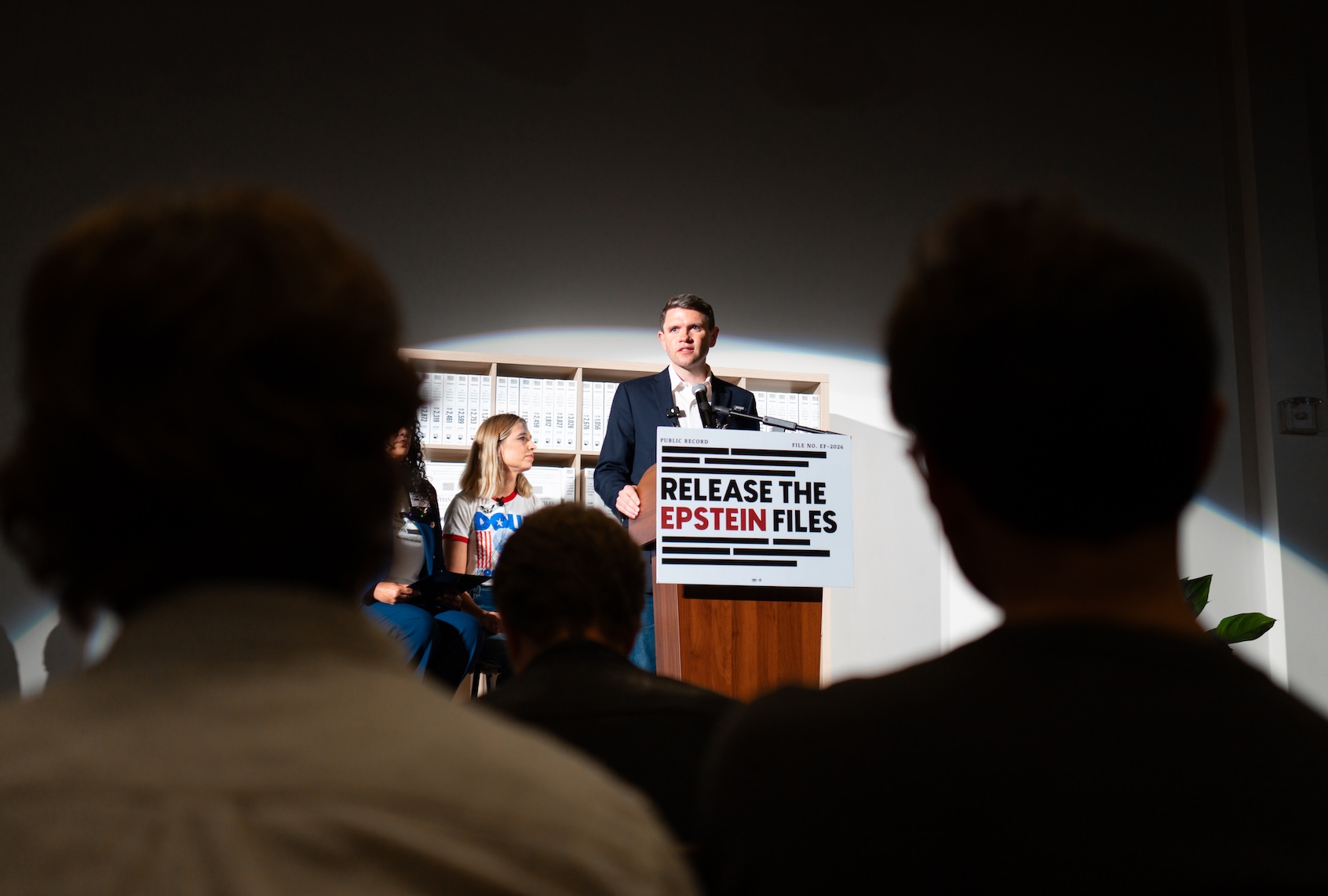
As Republicans gathered in Dallas, Texas for their pre-midterm convention last week, Democratic Senate nominee James Talarico focused on survivors of Jeffrey Epstein. 

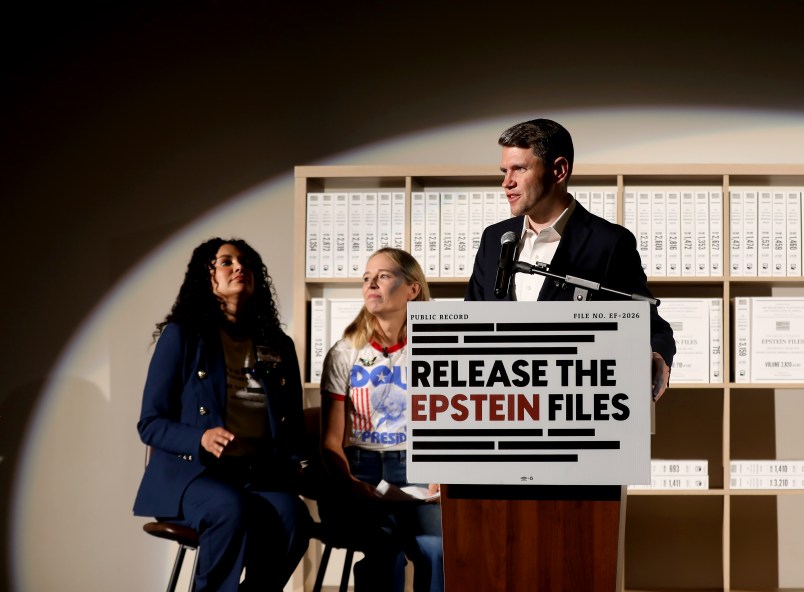
Talarico got a tour of the Reading Room, a traveling exhibit of the nearly 3 million files that the Department of Justice released from its investigation into the late disgraced financier and convicted sex offender — the result of a hard-fought battle by survivors of Epstein’s abuse who are still seeking justice and transparency from a government they say repeatedly failed them. 

Speaking alongside Epstein survivors Annie Farmer and Sharlene Rochard, Talarico praised them for their courage in coming forward and attacked his Republican opponent, Texas Attorney General Ken Paxton, for not meeting with the survivors and what he said was “a history of covering up abuse.” Talarico called on Paxton to use his authority to sue the Justice Department over its handling of the release of the files connected to Epstein, who died in prison in 2019 while awaiting trial for federal sex trafficking charges.  

“When did pedophilia become a partisan issue? When did holding sexual abusers accountable become controversial? When did Ken Paxton decide it was OK to ignore these survivors?” Talarico said. 

“I am tired of seeing powerful people cover up abuse. I think we’re all tired of it — Democrats, Republicans and independents alike,” he added. 

Republicans currently enjoy an advantage as the party voters trust more on crime — 45 percent of voters said they trusted the GOP the most on the issue in a 2025 Pew Research Center survey, up from 40 percent in 2023. It’s typically been GOP candidates who have run attack ads hitting their opponents as being “soft” on crime. But the dynamics around crime messaging have shifted with the national spotlight on the Epstein files and the bipartisan push for more accountability for Epstein’s crimes — an issue that Democratic strategists and pollsters say has rare, high levels of crossover support. 

And Democrats in races from Arizona to North Carolina are attacking their Republican opponents for their votes not just on the Epstein files, but on their ties to other sex offenders and their records on cases of sexual abuse. 

In Texas’ Senate race, Talarico has also slammed Paxton for his office offering what he called an “Epstein-style” plea deal to a defendant, Waco attorney Adam Hoffman, who was charged with sexually abusing a minor. After Hoffman’s trial ended in a hung jury, the prosecution offered a deal that would have allowed him to serve just one day in jail, which sparked public outrage and was rejected by the judge in the case. Hoffman eventually pleaded guilty to misdemeanor charges and was sentenced to 60 days in jail but was not required to register as a sex offender. 


Start your day with essential news from Salon.
Sign up for our free morning newsletter, Crash Course.


In a letter to a Republican state lawmaker earlier this year, the career prosecutors who tried the case said the outcome was in the best interest of the child victim, who did not wish to voluntarily testify in a second trial. 

The day after the GOP convention last week, Talarico’s campaign debuted a new television ad attacking Paxton over the plea deal. 

“Ken Paxton’s corruption endangers our kids,” the ad says. “We don’t need any more pedophile protectors in Washington.” 

Paxton’s campaign responded by highlighting a pro-Talarico super PAC taking $11.5 million in donations from Reid Hoffman, a venture capitalist, tech founder and Democratic megadonor who crossed paths with Epstein through his work with the MIT Media Lab in the 2010s, after Epstein became a convicted sex offender. Hoffman apologized in 2019 for associating with Epstein.

“James Talarico continues to lie to Texans about his radical record with the help of Epstein money. It’s disgusting that the man claiming to run a campaign against billionaires is bought and paid for by Epstein’s billionaire buddy,” Paxton campaign spokesperson Madison Cercy said in a statement to The 19th.

President Donald Trump, who spoke both nights at the Dallas convention and has backed Paxton, also had ties to Epstein, but he says they stopped associating well before Epstein became a convicted sex offender. Trump himself in 2024 was found guilty of falsifying business records, and in 2023 was found liable for sexual abuse in a case over accusations from the 1990s.

Also last week, the North Carolina Democratic Party aired digital ads on conservative media platforms hitting the state’s Republican U.S. Senate nominee, Michael Whatley, for his ties to Harvey West Jr., a GOP donor and convicted sex offender whom Whatley repeatedly elevated to top posts within the state Republican Party.   

Whatley, an ex-Republican National Committee chair endorsed by Trump, is running against former Democratic Gov. Roy Cooper for the seat opened up by retiring Republican Sen. Thom Tillis. 

Democrats and Republicans alike have scrutinized Whatley for his ties to West, a former police officer who was charged with the statutory rape of three minor girls. West pleaded guilty to lesser charges of taking indecent liberties with minors in 2000, serving six years in prison and registering as a sex offender. Earlier this summer, a national Democratic super PAC unveiled $2.3 million in digital ads attacking Whatley over the matter.

“If this is who Whatley hires for a job, why would we ever hire Whatley for the Senate?” said the ad from the WinSenate PAC.  

Whatley’s campaign has dismissed the criticisms over his elevation of West as a “distraction” and a “smear.” Whatley has also made attacking Cooper on crime and public safety central to his campaign message, including by criticizing the early release of some incarcerated people during the COVID-19 pandemic. Cooper has called the attacks misleading.  

“Michael Whatley spent his career appointing a convicted child sex predator who served six years in prison and spent over a decade as a registered sex offender to a top role within the North Carolina Republican Party – North Carolinians deserve better,” a Cooper campaign spokesperson said in a statement to The 19th. 

And another convicted sex offender who served time in prison for crimes against children recently delivered the opening prayer at a rally in support of Whatley’s campaign, the Associated Press reported Friday. Whatley’s campaign told the outlet it did not organize the rally or choose any of the speakers. 

In Arizona, both Democratic Gov. Katie Hobbs and Republicans have criticized the GOP gubernatorial nominee, U.S. Rep. Andy Biggs, for his handling of legislation aimed at addressing law enforcement corruption in enabling the abuse of women and children within the Fundamentalist Church of Jesus Christ of Latter-Day Saints. The polygamist religious cult led by Warren Jeffs, who is currently serving a life sentence for child sex assault, had a stronghold in the small Arizona town of Colorado City, including over local law enforcement.  

In 2013, a bill that would have given the state the ability to take over the Colorado City marshals overwhelmingly passed in the state House. But Biggs, then a state senator and president of the upper chamber, didn’t bring it to a vote in the Senate, drawing ire from lawmakers in both parties. Hobbs’ campaign and its allies have hit Biggs over the issue with a website and a documentary-style video.     

Biggs has defended his handling of the matter, pointing to his background as a prosecutor and his past votes to decertify the Colorado City Police Department. 

“Whatever she wants to say, it’s bogus, it’s crap and it’s a lie,” Biggs said in a recent interview on local radio station KTAR News. 

“First of all, that particular bill was so poorly crafted that the Fraternal Order of Police and the Arizona Association of Police opposed it,” he added. “Second of all, I have a record of protecting women and children that’s unparalleled.” 

Two Democrats running to flip competitive House seats, Christina Hines in Michigan and Shannon Taylor in Virginia, are running on their records prosecuting crimes against women and children and holding the powerful to account. 

Taylor, a local prosecutor running against U.S. Rep. Rob Wittman in Virginia’s 1st District, has made her record on public safety and fighting corruption central to her campaign. 

Last week, she released a television ad highlighting her willingness to go after members of her own party. The ad points to the prosecution of former Democratic state lawmaker Joe Morrissey, who entered an Alford plea to a misdemeanor charge of contributing to the delinquency of a minor in 2014 after being charged with multiple felonies stemming from a sexual relationship with his then-teenage receptionist. He denied wrongdoing and was pardoned in 2022.   

“As Henrico’s top prosecutor, I didn’t care that he was a Democrat, or the pressure I got to make it go away, so I called for a special prosecutor,” she said, referring to her post as the commonwealth attorney for Henrico County. “I’m Shannon Taylor, and I approve this message because doing what’s right matters more than politics.”  

Hines, who has a background as a sex crimes prosecutor, is running against Mike Bouchard Jr.  for an open seat in Michigan’s 10th District in the Detroit suburbs. 

“In my stump speech, I always talk about how Congress actually needs a sexual assault prosecutor right now more than ever,” Hines told The 19th in an interview in July before going out to knock on doors. 

Not a week of her campaign goes by, she said, without someone sharing their own story of abuse with her. 

“This is a rampant issue in our society, and I end up talking to people all over the place that that is a top issue for them in their life,” Hines added. “And they might not tell everybody else, but it matters to them that I have that background.” 

The post The Epstein reckoning hits the campaign trail appeared first on Salon.com.

  •  

We have to talk about the Jon Ossoff thirst edits

This story was originally reported by Grace Panetta of The 19th. Meet Grace and read more of their reporting on gender, politics and policy.

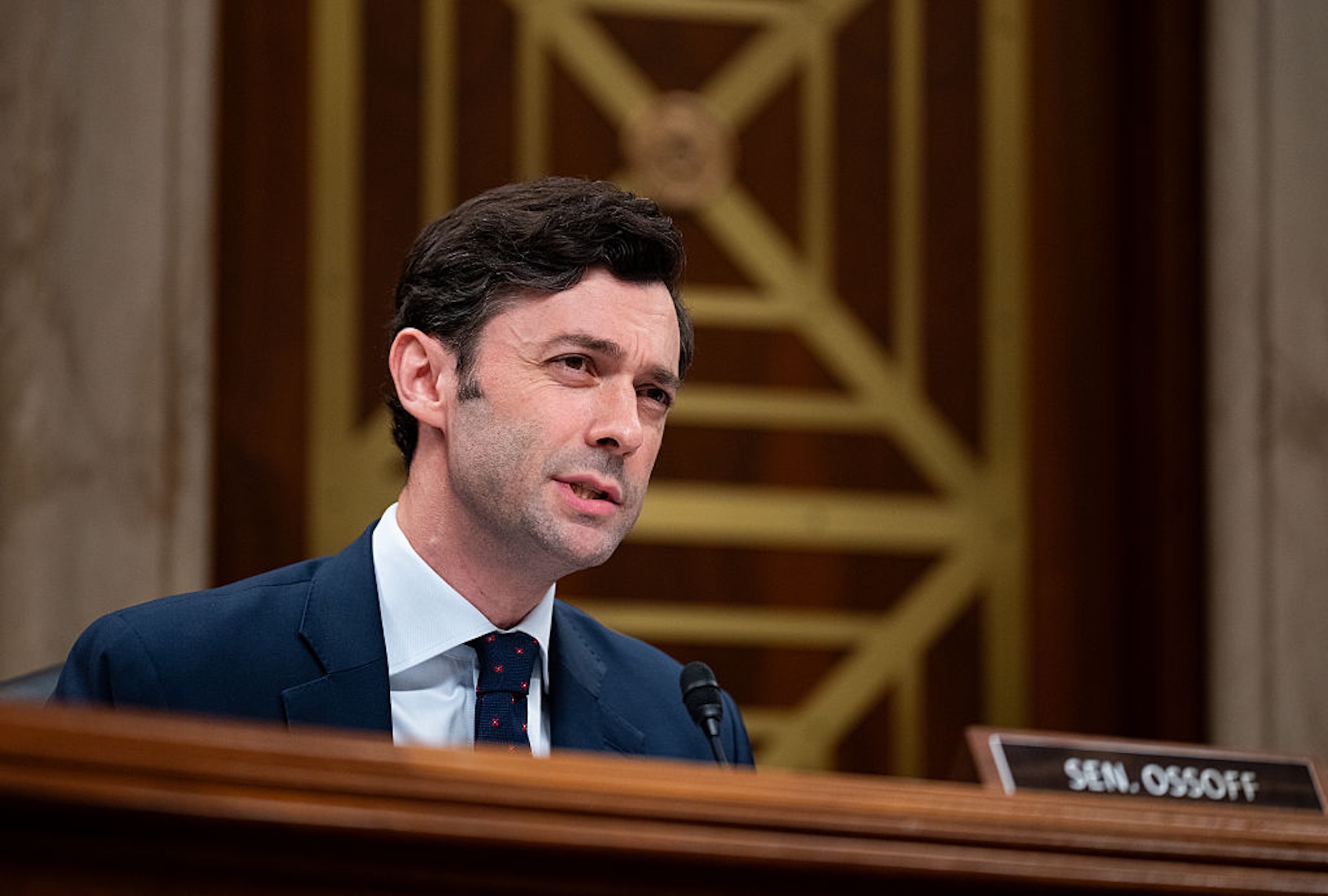
Sen. Jon Ossoff of Georgia is running one of the most competitive 2026 campaigns as he seeks a second term. He’s emerged as a breakout star communicator and has been floated as a 2028 presidential contender. And a lot of people on the internet think he’s really hot. 

As the midterms approach, the 39-year-old Democrat may be the most thirsted-after Senate candidate on the internet. Take a scroll through Instagram and TikTok, and you’ll see fan edit-style videos of Ossoff at campaign rallies and in Senate hearings. “I’m sick of acting like Jon Ossoff isn’t hot,” says one TikToker. Another refers to him wearing glasses as his “slutty Atticus Finch cosplay,” a reference to actor Gregory Peck in the 1962 film adaptation of “To Kill A Mockingbird.”  

Amaris Hayes, a 31-year-old Florida-based creator, posted a video comparing Ossoff to Fitzgerald Grant, the fictional president played by Tony Goldwyn in the Shonda Rhimes-created political drama “Scandal.”

“I’m so glad that I’m going to be able to experience a hot president in my lifetime,” she said in the video. 

“Democrats on the internet can be too serious,” said Monica Venzke, a Democratic communications professional whose “passion project” is running Boyfriends We Deserve, which leans into thirst to boost Democratic candidates on social media. “It is objectively fun to have a little internet crush, and let that person be the senior senator from Georgia.”

And while those who work in campaigns often say the internet isn’t real life, thirst edits have broken containment as Ossoff’s national profile has grown. In July, one of TMZ’s Washington, D.C.-based correspondents asked Ossoff how he felt about people online saying he has “BDE.” 

“Oh, my brother. Only an Aussie would ask me that,” a bemused Ossoff responded with a smile to TMZ reporter Charlie Cotton, who is Australian.  


Start your day with essential news from Salon.
Sign up for our free morning newsletter, Crash Course.


Looks and physical attractiveness have influenced American politics since the widespread adoption of television, and Ossoff isn’t the first or the only political candidate the internet has thirsted over. But Democrats, out of power and frustrated with their party leadership, have especially gravitated toward him as they seek sharp communicators and a younger generation of leaders. 

Ossoff has so far avoided being labeled either a moderate or a progressive and hasn’t been a political firebrand. But this year, he’s gained attention and virality for his sharply worded criticisms of Republicans, a sustained focus on corruption in his political messaging and his intense questioning of Trump administration officials in Senate hearings. 

“I think yes, he is an attractive younger man, but I think it’s also the fact that there is an attempt to listen to his constituents that I feel like we haven’t had in my lifetime,” Hayes said.

Content creators and Democratic strategists also told The 19th that thirst content, when done right, can be a gateway into real political engagement. It’s a way for Democrats to make up ground on the social media platforms where a larger-than-ever share of Americans are getting their news — turf that Republicans dominated in the 2024 election, many Democrats argue.  

“I do think it’s a way to get the internet back, and also a way to make being a Democrat cool again, make it manly to be a Democrat,” Venzke said.

“Republicans are having fun on the internet, and it’s working for them,” she argued. “Let us have fun. If the girls and the gays want to look at Jon Ossoff and be like, ‘Wow, he looks so good in those pants,’ let us. It benefits him, and we’re all having fun.” 

In many ways, the Ossoff thirst content is a natural evolution of the fandom communities around TV shows and musical artists that flourished on websites like Tumblr in the aughts and 2010s — now adapted for the vertical-video-dominated, infinite-scroll era of the internet, where political campaigns are competing for the increasingly scarce resource of voters’ attention.

“I think that the renewed attention on Senator Ossoff has served as a reminder to the Democratic Party, hopefully, that voters can’t be treated like a captive audience,” said Sophia Gomelsky, a Democratic campaign strategist and activist who last year posted an edit of Ossoff clips to Sabrina Carpenter’s “Tears,” a decidedly thirsty song.   

“Very similarly to how the music industry runs on the enthusiasm of fans and their attention, politicians actually have to compete and energize voters around their visions and their policies,” she added.

While more candidates and advocacy groups are formally partnering with influencers and content creators, organic thirst and fan content function as a more natural on-ramp to engagement than a traditional television ad making an explicit appeal to vote for or against a candidate. 

“It’s not really my role to show you that you should vote for Jon Ossoff, that’s Jon Ossoff’s role,” Venzke said. “I’m gonna show you Jon Ossoff. And then once he has your attention, it’s his job to close the deal.”

One of the first people to tap into the power of thirst as a gateway to political engagement is Qondi Ntini, a Washington, D.C.-based organizer and founder of Thirst for Democracy who dubbed Ossoff “Senator My Boo” and his fellow Georgian Sen. Raphael Warnock “Senator Bae” when they were both running for the Senate in 2020. 

Ntini, who has spent years organizing and fundraising for Democratic candidates, has this year expanded into making physical merch. She found Georgia-based print shops to make pink “Senator My Boo” buttons and has been working with local Democratic activists and volunteers to distribute them at Ossoff’s rallies, including one he held Sunday in Athens. Her hope is that they help Democrats in a purple state find each other and feel not alone. 

“If they can kind of identify each other, wear the buttons or hand them out to the community, it’s kind of a signal,” she said. “Like we are not standing by ourselves, we are a legion, basically.” 

She doesn’t, however, want those engaged by thirst content to stop there. 

“What I would want to caution people against is thinking that the thirst or the engagement is the end — that’s been my reservation with it,” she said. “I mean, I’ve been doing this thirst thing for six years, but it is tied to action, otherwise, what’s the point? Engagement is cute, but it doesn’t move people.”

Ossoff (like most politicians) hasn’t directly engaged with or reposted the thirst videos, and his campaign didn’t respond to a request for a comment for this article. But his campaign has deployed a strategy of putting out high-quality livestreams and videos from his rallies from multiple camera angles, including a profile shot some refer to as “the Obama angle,” that is prime material for clips and edits.  

“The way that folks like myself have content to make thirst trap edits is because it’s out there,” Venzke said, adding that thirst content is “free earned media” for candidates. 

At a rally in August, Ossoff took a shot at how Trump “wants to build the ballroom and travel with Natalie,” which struck a nerve with the White House and sparked a multi-day news cycle about Trump’s ever-present personal aide, Natalie Harp. 

Marie Soledad, a California-based content creator, got interested in Ossoff in part through seeing thirst edits of him on social media. She’s a member of the Chorus network, a nonprofit incubator program of liberal creators who were discussing and planning Ossoff-related content in the wake of the “Natalie” comments.  

“The vibe is Jon Ossoff is sexy, sex sells, we need votes. Why not talk about this?,” she said. “It’s fun. It’s a fun way to get people civically engaged.”

There can, however, be a fine line between thirst and objectification, and some videos about Ossoff on social media verge into decidedly not-safe-for-work territory: “Someone said he walks like it’s heavy,” read the text of one TikTok video. “Some people are upset that I said Jon Ossoff could talk you through it,” said another creator. (We’ll leave those up to reader interpretation). 

Soledad wanted to capitalize on the attention on Ossoff without crossing that line. So she wrote and published a piece of Y/N or “Your Name” fanfiction (which was not formally part of her work with Chorus) about a “completely fictional” millennial Democratic senator from Georgia running for reelection in 2026 named “John Getsuoff.” 

For creators like Soledad, thirst content is also a way to engage with sex and sexuality in a positive way at a time when states including Georgia have passed bans on abortion, Trump was elected to a second term after being found liable of sexual abuse and the release of files connected to the late convicted sex offender Jeffrey Epstein has kept sex abuse at the forefront of the national conversation. 

“I think it’s awesome that we have sexy Democrats who are allowing people to feel sex-positive in a respectful — sometimes people aren’t, but I try to be — respectful way, right?,” she said. “I think the Democratic Party shouldn’t shy away from it.”

If anything, Democrats are leaning in: the official TikTok account of the Democratic National Committee has posted thirst-esque edits of Ossoff and other millennial candidates including Michigan Senate Democratic nominee Abdul El-Sayed — along with lots of nostalgia content of former President Barack Obama. Headquarters, formerly known as Kamala HQ on X, posted a side-by-side composite of Ossoff and El-Sayed last month with the caption: “There are 69 days until midterm election day.”  

Ossoff’s looks have also drawn GOP attacks. Both his Republican opponent, Rep. Mike Collins, and a top national Republican super PAC have aired attack ads against Ossoff, hitting him over his spending on professional hair and makeup services. Ossoff has called the ads “deceptive” for using AI-generated imagery depicting him getting various beauty treatments in a salon. 

Some Democrats have floated Ossoff as a 2028 presidential candidate, though he’s said he isn’t running. Venzke said that while there are “bigger fish to fry” in the next presidential election, she’s already seeing multiple prospective contenders leaning into looks. 

Politicians, she said, shouldn’t be afraid to invest in their appearances — and embrace the thirst content. 

“My actual advice is let influencers do their thing,” Venske said. “Trust them. Don’t, for lack of a better word, be a prude about it.”

The post We have to talk about the Jon Ossoff thirst edits appeared first on Salon.com.

  •  

The Epstein Reckoning Hits the Midterm Campaign Trail

This story was originally reported by Grace Panetta of The 19th. Meet Grace and read more of their reporting on gender, politics and policy.

As Republicans gathered in Dallas, Texas for their pre-midterm convention last week, Democratic Senate nominee James Talarico focused on survivors of Jeffrey Epstein. 

Talarico got a tour of the Reading Room, a traveling exhibit of the nearly 3 million files that the Department of Justice released from its investigation into the late disgraced financier and convicted sex offender — the result of a hard-fought battle by survivors of Epstein’s abuse who are still seeking justice and transparency from a government they say repeatedly failed them. 

  •  
❌