Reading view

Make Measles Great Again

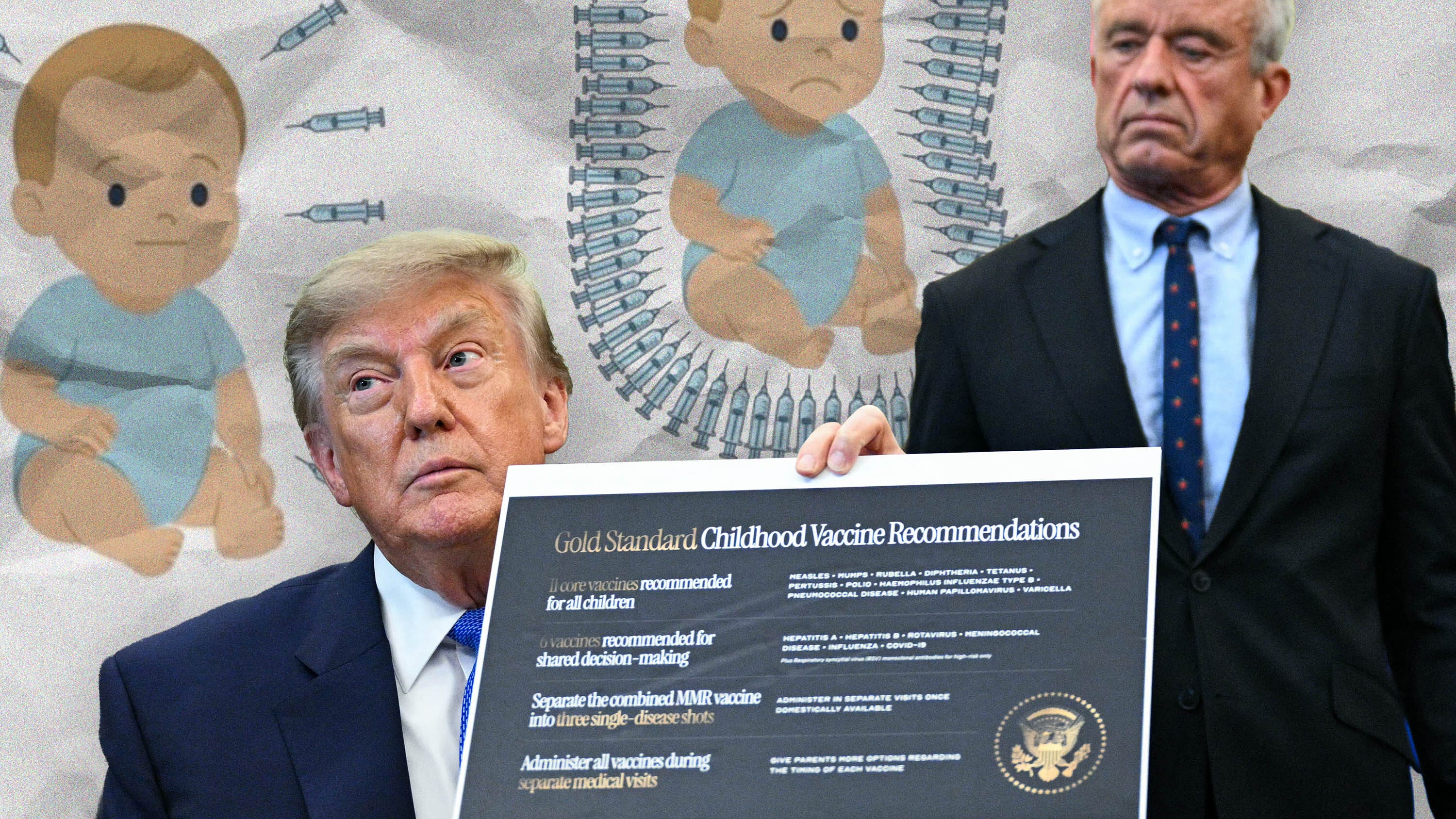
(Photo illustration by Bill Kuchman/The Bulwark | Photos: Getty, Shutterstock)

A PRESS RELEASE ABOUT KIDS AND VACCINES that the CDC distributed on Monday had just three sentences. But wow, those three sentences said a lot—about how we are backsliding on vaccination, and how the Trump administration is about to make things even worse.

The first two sentences initially seemed innocuous, maybe even a little encouraging. They explained that vaccination rates for kindergarteners “remain high,” with just a tiny drop-off between the 2024–25 and 2025–26 school years. But if you clicked through to the data, you learned that there has been a substantial rise in exemptions—that is, families opting out of school vaccination mandates, citing either medical necessity or, in states that allow it, personal beliefs.

Overall, 4.2 percent of kindergarteners had exemptions for at least one vaccine normally required for school attendance. That was up from 3.6 percent the previous year. The jump of 0.6 percent might not seem like much, but keep in mind that it is a national average, meaning that it masks wide variation among the states.1 The highest exemption rate was in Idaho, where 17 percent of parents opted out of the requirements.

Statewide vaccination rates also had that kind of variation. In many states, more than 98 percent of kindergartners had gotten the MMR vaccine, which protects against measles, mumps, and rubella. But in the states with the lowest rates, far fewer did: Idaho, again at the bottom, saw just 75 percent of kindergartners get it.

The scientific term for that is “yikes.”

And just as the national numbers mask variation among the states, the statewide numbers mask variation within their borders. MMR rates in some communities are well below the 95 percent level that’s become the scientific shorthand for “herd immunity,” meaning protection sufficient to stop sustained transmission when isolated cases appear. It is in these communities that outbreaks have driven this year’s measles count past 2,500, the highest in thirty-five years, with more than four months of calendar still to go.

And it’s not just measles. Although pertussis case numbers were down in 2025 from a year earlier, the tally remains higher than before the pandemic, with falling vaccination rates believed to be a significant factor.2 And last year there were sixteen related deaths. Babies are also dying from brain bleeds after their parents spurned vitamin K shots that would have prevented them, as ProPublica reported earlier this year.3

Against that backdrop, Monday’s data release would have been an obvious opportunity for the CDC to encourage vaccination, as part of a broader and aggressive public relations push. But there has been no such push from administration officials, including new CDC director Erica Schwartz, and the only advisory in Monday’s press release was its bland final sentence: “CDC continues to encourage parents to discuss vaccination options with their doctors.”

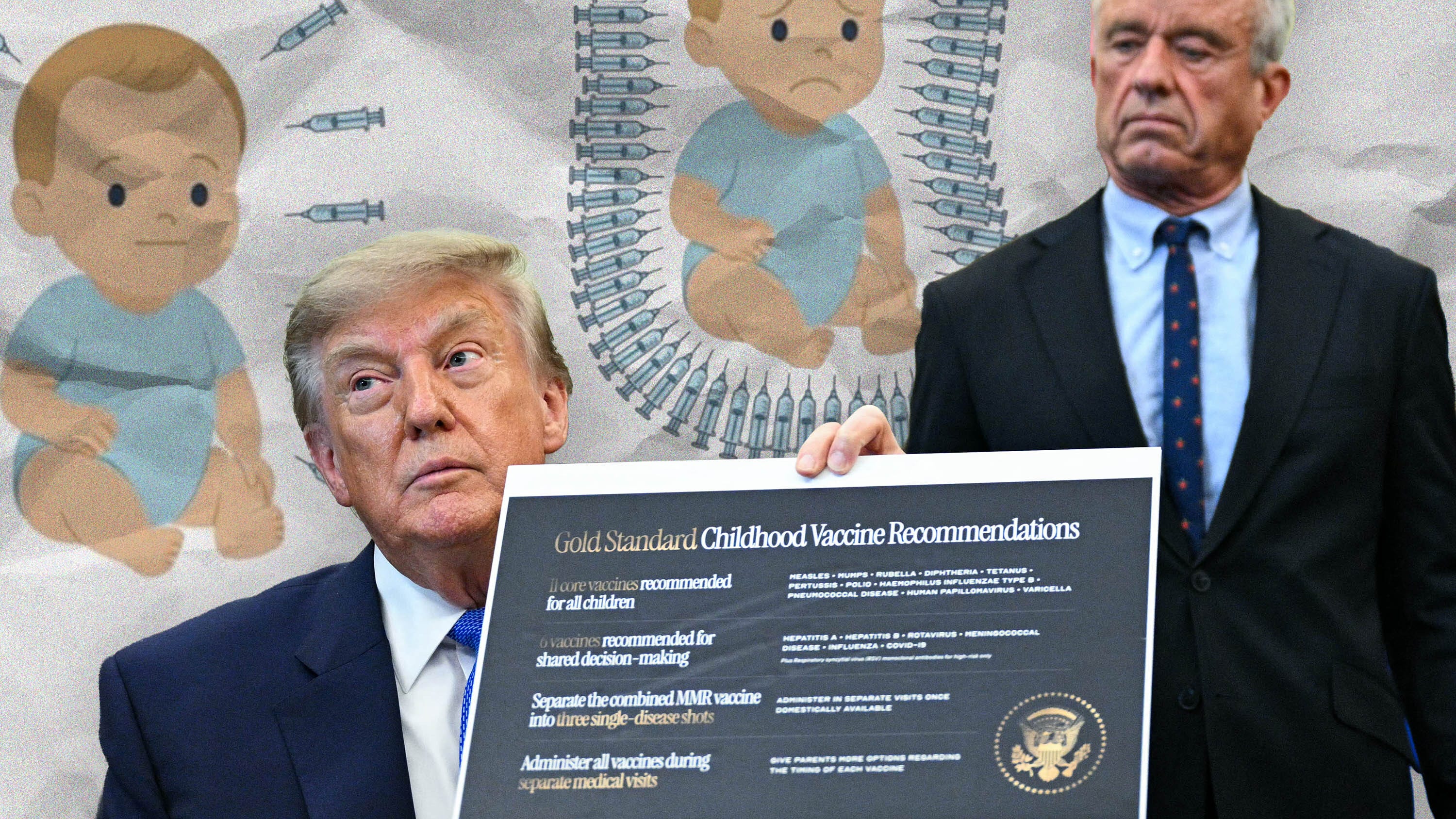
That mantra should sound familiar. It has been the agency’s party line under Robert F. Kennedy Jr., who has been undermining federal support for vaccines ever since taking over as health and human services secretary last February. And he’s been doing so with the full support of President Donald Trump, whose own medically illiterate skepticism of vaccines was on full display last week during an Oval Office ceremony to sign an executive order.

An underappreciated element of that order is an instruction to federal agencies, calling on them to scrutinize and pressure states that make it difficult for parents to take exemptions—yes, the very trend that Monday’s press release documents. Among the agencies the order mentioned was the Justice Department, in what has been widely interpreted as a promise to start or join litigation against states that, in the Trump administration’s view, don’t make exemptions appropriately easy to obtain.

California is almost certainly one of those states, because exemptions there are especially tough for parents to get. But that wasn’t always the case. California’s vaccine rules are stringent because lawmakers made them that way. And they did so following a measles outbreak a decade ago—one that offers a preview of what’s in store for the rest of the country if the Trump administration’s latest effort succeeds.


Want to support our in-depth reporting, our careful policy analysis, and our thoughtful commentary? Or our sparkling conversation and our sharp movie and book reviews? Our members make it all possible. Join Bulwark+ today and ensure you don’t miss a thing.

Join now


IN EARLY JANUARY 2015, California’s state health department started getting reports of suspected measles cases from doctors and clinics. First it was one, then a half dozen, then dozens. Public health investigators got to work and quickly found a common element: All of the initially affected people had been to the happiest place on earth—i.e., Disneyland—just before Christmas.

The resort’s theme parks were a perfect environment for the disease to spread, as a subsequent Los Angeles Times article detailed, especially with the peak crowds from the holiday season. Standing in packed indoor queues for rides and shows, kids and adults were swapping breath and droplets for long enough to pick up a virus that can linger in the air for up to two hours, and that infects about nine of ten susceptible people who encounter it.

Except, that is, when they are vaccinated. The full, two-dose MMR vaccine is 97 percent effective at preventing measles, and symptoms in the breakthrough cases tend to be milder. The overwhelming majority of cases in the 2015 outbreak—both those who picked up the disease in Disneyland and those who got it afterward through secondary transmission—either had not been vaccinated or had unknown vaccination status.

California lawmakers responded quickly, in part because they were already paying attention. In 2012, following a decade in which the number of non-medical exemptions had risen from 4,000 to nearly 15,000, the legislature had passed a law making the process of obtaining an exemption a bit more complex: Instead of simply signing a piece of paper saying they had a principled reason for objecting, parents had to show they’d gotten information from a health provider about the risks and benefits of immunization (like avoiding the possibility of disability or death from measles).

Share The Bulwark

To lawmakers like Democratic state senator Richard Pan, a pediatrician, the Disneyland outbreak was proof that California needed to do more. Pan cosponsored a bill eliminating non-medical exemptions altogether, arguing—in a neat reversal of anti-vaxxers’ libertarian rhetoric—that the legislation was “about freedom; freedom from deadly contagions that are now preventable because of vaccines.” The bill drew plenty of angry opposition, enough that Pan got extra security. But the bill passed and became law with the signature of Jerry Brown, California’s Democratic governor.4

Four years later, following reports that some doctors were signing exemption forms without good clinical reason and sometimes without even seeing patients, lawmakers passed a bill tightening the medical exemption standard. Under the new legislation, which Democrat Gavin Newsom signed and is still in force today, the state tracks medical exemptions through a central system that requires doctors to attest that they’ve evaluated the patient and have a clinical basis for the exemption.

There’s solid evidence the laws had the effect their champions had hoped for. Before 2015, the MMR vaccination rate for California kindergartners was just above 92 percent, according to official state data. Since 2016, it has been at or above 95 percent for every year.

That’s not 100 percent, obviously. And the rate has actually declined by nearly a percentage point over the past few years, in a reminder that official requirements are just one of the factors determining vaccine takeup.5 But at least some of the parents opting out of vaccines for non-medical reasons are homeschooling their children, reducing the opportunities for spread within schools. And the state’s overall high vaccination rates are making outbreaks less likely.

That sounds a lot like a successful public health effort. Now the Trump administration seems bent on undermining it, possibly through the courts.

Help vaccinate the world against ignorance: Share this newsletter far and wide.

Share


FOUR OTHER STATES also have no religious exemption for school vaccine requirements. And like those four states, California has faced litigation from anti-vaccination groups, religious freedom advocates, and parents who say that’s illegal. The Justice Department could join those lawsuits, or launch new ones.6

To date, lower federal courts have issued inconsistent, sometimes conflicting rulings in cases before them, University of California, San Francisco law professor Dorit Reiss told me in a phone interview. And the Supreme Court has so far declined to take up the issue directly.

But Reiss said that could change, noting that the justices have already vacated a lower court decision backing New York’s strict vaccine laws. In that 2025 ruling, the Court’s conservative majority instructed the lower court to take up the case again, this time taking into account a recent decision recognizing parents’ rights to pull their kids out of LGBTQ-inclusive lessons for reasons of religious faith.

And Justice isn’t the only cabinet department that Trump commanded to focus on vaccine exemptions. Under the executive order, the Department of Education can withhold grants to states that don’t allow exemptions easily enough to meet the administration’s standards. And while any attempt to cut off funds would likely provoke legal challenges from states like California, it might push other states with strict vaccine requirements in the other direction.

West Virginia is a perfect example. It is one of the four other states with no current religious exemptions and, as of the 2025–26 school year, it had the nation’s highest MMR vaccination rate: almost 99 percent. But bills that would reinstitute religious exemptions or roll back vaccine mandates in other ways have been gaining strength in the legislature. And the governor has already tried to introduce religious exemptions via executive order, though a federal court has for the moment blocked him.

The threat of litigation or lost funds, not to mention anti-vaccination lobbying from the Trump administration, could help the sponsors of those bills rally majority support.

“I know that my immunization colleagues in red states are worried,” said Reiss, who is a widely cited expert on vaccination law. “They expect legislation to be brought—and they expect pressure to pass it—that would either weaken vaccine mandates or weaken vaccine recommendations following the federal guidance.”

A glimpse of what could be in store for West Virginia comes from Mississippi, where MMR vaccination rates have fallen from 99 percent in 2023 (then the highest in the nation, just above West Virginia) to 97 percent (sixth highest). One reason is the introduction of religious exemptions, after a federal judge sided with plaintiffs who said the state’s lack of faith-based exemptions violated their freedom of religion. More than 3,500 students received the exemptions last year, nearly six times the number claiming medical exemptions.

State Health Officer Dan Edney told Mississippi Today that more measles outbreaks are “inevitable” as vaccination rates fall. That’s true for the rest of the country, as well. Evidently that trend is just fine with the Trump administration, where the only alternative to doing nothing is making the vaccination situation worse.

Want to leave a comment? Join Bulwark+

1

Clarification (August 18, 2026, 10:05 p.m. EDT): As originally published, this sentence began “The jump of 0.6 percent might not seem like much. . . .” To ease the mind of readers concerned that the jump from 3.6 percent to 4.2 percent should instead be called a 16.7 percent increase, we have changed the clause to refer to a “jump of 0.6 percentage points.”

2

The story with pertussis is more complicated than with measles, because newer versions of the vaccine provide protection that wanes over time, making it more likely people will get the disease—albeit, with less severe symptoms.

3

Tetanus may be coming back too, though the numbers are so low it’s hard to be sure that’s a real trend.

4

Pan is currently the Democratic nominee running for Congress in California’s redrawn 6th district. He is up against the incumbent, Kevin Kiley, a former Republican now running as an independent.

5

Kennedy and his allies frequently say that the backlash to COVID-19 rhetoric and policies have fueled vaccine skepticism. And that’s almost certainly true. But they rarely mention their own role in undermining faith in scientists, both before and during the pandemic, by fearmongering and spreading false information.

6

Note that one of the states is New York, which removed religious exemptions via legislation in 2019 and did so in response to a major measles outbreak in the state.


  •  

Debunking MAGA’s Outrageous Puppy-Killer Smear Against Abdul El-Sayed

Jonathan Cohn gives his take on the viral “puppy killer” attack against Abdul El-Sayed—and explains how a misleading story about Detroit’s animal control department became a powerful piece of political misinformation. The reality is far different from the headline. El-Sayed inherited an animal control system plagued by neglect and abuse, and the department improved significantly after he took over. Jonathan breaks down how the Daily Mail, right-wing influencers, Republican candidates and Fox News helped spread the story and why this episode is a warning about how easily misinformation can overwhelm the truth.

Read more from Jonathan:
https://www.thebulwark.com/p/debunking-maga-puppy-killer-smear-against-abdul-el-sayed

Leave a comment

Read more

💾

  •  

Debunking MAGA’s Puppy-Killer Smear Against Abdul El-Sayed

(Photo illustration by Bill Kuchman/The Bulwark | Photos: Daily Mail, Fox News, Shutterstock)

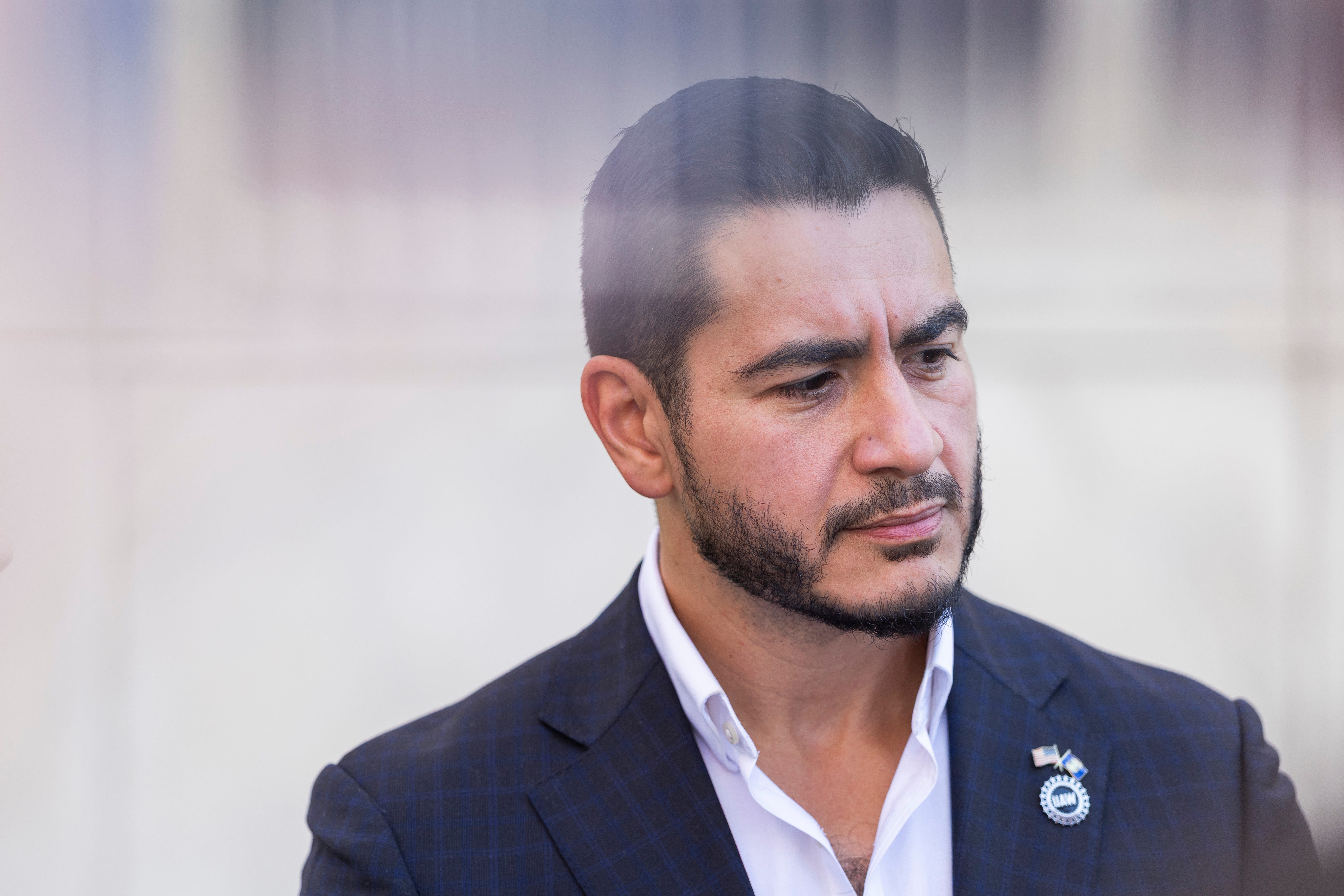
A NEW MAGA ATTACK on Abdul El-Sayed is making the rounds. This one is about his tenure as public health director in Detroit, and how he supposedly oversaw an animal control unit that was rife with abuse and cruelty. The unit was a “slaughterhouse,” according to a Thursday Daily Mail headline that by now has almost certainly landed in millions of social media feeds, thanks to retweets from prominent right-wing influencers and Republican politicians.

But the attack appears to be nonsense.

Not spin. Not shading of the truth. Total, utter nonsense—the kind that tells the very opposite of the actual story.

As it happens, that actual story is politically relevant. There really were big problems with animal control in Detroit. But El-Sayed didn’t create them. He inherited them when he became Detroit’s public health director. And according to every source I could find on Friday, as this controversy was ricocheting across the internet, El-Sayed’s efforts helped to make those problems better.

A single set of figures illustrates the progress during his sixteen-month tenure. The “save” rate—meaning, the percentage of animals not euthanized—was no higher than 26 percent when he took over in 2015, and probably lower. (The exact figure is unclear because of some data issues back then.1)

In 2016, the first full year animal control was under his management, the save rate was up to around 60 percent. By the time he left in 2017, in order to run for governor, it was approaching 70 percent.2

Those numbers come from Melissa Miller, the animal rights advocate and expert whom El-Sayed had put in charge of animal control—and who told me during a phone interview Friday that she was furious about the stories circulating on social media, because they were so off-base. Miller described El-Sayed as “transformational,” explaining that “he inherited an extremely dysfunctional and inhumane department” and yet managed to bring in new management and start changing the culture within a few weeks.3

“I think that’s pretty impressive,” she said.

Tracking down Miller was not difficult: It took just one call. But even that small effort was not necessary to understand the truth. The two news clips now making the rounds on social media—that article in the Daily Mail, another on the Fox News website—contain exonerating information. But it’s buried in the text, below headlines and framing making it seem as if the animal control unit’s problems were El-Sayed’s doing.

That’s what makes the smear of El-Sayed more than just another instance of dishonest propaganda. It’s a case study in how easily misinformation can metastasize in our national political debates. And it’s best understood by looking back at what was actually happening in Detroit’s animal control when El-Sayed first took his post in city government.

Share


CONDITIONS AND PRACTICES in Detroit’s animal control department were bleak in 2015, according to media reports from the time. Drains in the nearly century-old building backed up regularly, creating pools of raw sewage. Maggots fed on dead rats.

Owners who came to reclaim their pets frequently discovered they were injured or had infections, Miller told me. And for those that weren’t claimed? “There were no adoptions,” Miller said. “Basically, if an owner did not reclaim a dog or cat, they did not leave. Everything was euthanized.”

At the time, Mayor Mike Duggan was less than two years into his tenure, and still in the early stages of a project to rebuild government infrastructure after years of downsizing and then a full municipal bankruptcy. In late August, Duggan appointed El-Sayed with a mission to reconstitute the public health department, which had shrunk to just five employees and was outsourcing most of its work to contractors. Less than two months later, in mid-October, Duggan formally announced that he was giving El-Sayed oversight of the animal control unit, which previously had been under the police department’s management.

It’s not clear whether the idea was Duggan’s or El-Sayed’s, or how long before that announcement El-Sayed had begun to prepare for his new responsibilities. Either way, El-Sayed had to quickly learn about both the state of the unit and the basics of animal control, which is not something doctors or epidemiologists (El-Sayed is both) typically learn in school.

“Abdul did something that we had long hoped for within the animal welfare community,” Miller told me, “which is to meet with professionals, go see some shelters that are doing it right, talk to subject matter professionals and get an understanding of why everyone was saying like, no, this isn’t right.”

Almost immediately, Miller said, El-Sayed initiated a program to make a limited number of animals available for adoption every week. But that was a prelude to a bigger change: The appointment of Miller as the unit’s new director. That happened in December, about six weeks after El-Sayed had taken charge, in what the Detroit News described as his “first major act.”

“The facility was in terrible shape and some of the practices were, frankly, inappropriate,” El-Sayed told the News. “Our system was, in many ways, broken. Both in terms of the way that we brought dogs in, we sheltered dogs, we paid and took care of the dogs with us. . . . All of those things needed to be rethought and they are being rethought actively.”

Shortly afterwards, he met with some activists who were protesting conditions at the shelter. “In the coming year the face of animal control will look very different than it has in the past,” he promised them.

El-Sayed followed through on those vows, Miller told me, pointing to the rapid drop in the euthanasia rate that began one month after she took over. And while she said El-Sayed mostly delegated management to her, she credits him with teaching her the ins and outs of department administration—and with responding quickly to time-sensitive matters, like finding contractors to clear the drains that were backing up fetid water into the kennels, even though he had his hands full trying to rebuild the health department.

“He gets when the decisions need to be made that day, and he was very responsive to that,” Miller said.

Could there be some hitherto unreported and unpublicized animal control problems from the time when El-Sayed had oversight? Sure. But El-Sayed has talked about this part of his biography for years and publicly he’s gotten praise for it, including from the mayor who put him in charge.

“He (El-Sayed) took it over, got us into the interim facility, lowered the euthanasia rate and wanted the permanent facility,” Duggan said in 2021, when announcing plans for a new shelter. “This is the culmination of what he had hoped for.”

Fight lies with truth: Share this newsletter as widely as possible.

Share


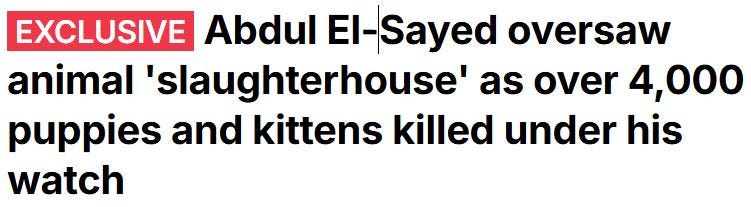
THE DAILY MAIL STORY STARTS with a menacing headline:

"EXCLUSIVE: Abdul El-Sayed oversaw animal ‘slaughterhouse’ as over 4,000 puppies and kittens killed under his watch"

As the article explains in the text, the word “slaughterhouse” comes from a whistleblower lawsuit, by an employee who had reported poor conditions and abusive behavior to supervisors.4 But all of the incidents in the lawsuit are from before El-Sayed was in charge of the animal control unit, or even before he started as health commissioner.

The lawsuit never mentions him or the city health department. Instead, it mentions the police department, which was the agency that had overseen animal control before Duggan moved it over to El-Sayed’s portfolio.

Likewise, the Daily Mail article cites “particularly stark” euthanasia figures from 2015 as proof of what El-Sayed oversaw during some of the animal unit’s “darkest days.” Then, as an aside, it notes that the figures improved afterwards. But this is just another version of what Miller told me: That the unit had a high euthanasia rate until late 2015, when El-Sayed came in and started making changes.

The Fox News story on the controversy actually notes this fact explicitly:

Detroit Animal Care and Control’s (DACC) live-release rate was roughly 20% to 26% when El-Sayed inherited the operation in late 2015 but climbed to about 61% to 62% by late 2016—an improvement his campaign points to in arguing that the raw number of animals euthanized during his tenure obscures a turnaround from the dire conditions and euthanasia rates he inherited.

But the headline on the article says:

"El-Sayed in the hot seat after ‘sickening’ animal control record goes viral on social media"

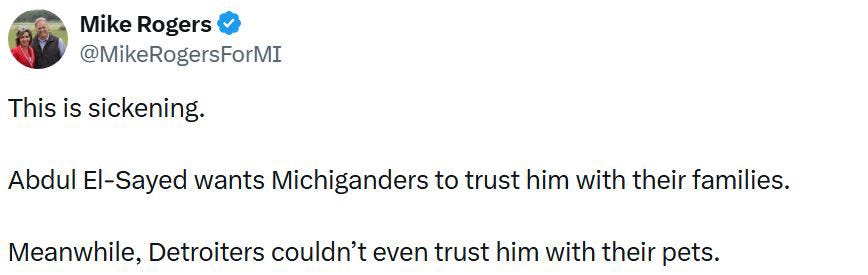
Somebody who saw only the headline would assume the stories were real, especially if they also saw tweets by the likes of Mike Rogers, the Republican former congressman running against El-Sayed for Senate.

On Thursday, Rogers tweeted:

Rogers was hardly alone:

  • Lisa McClain, a Michigan Republican who is chair of the House Republican Conference, tweeted that El-Sayed “literally ran a puppy slaughterhouse.”

  • The Republican National Committee tweeted that “Abdul is a puppy killer.”

  • The National Republican Senatorial Committee announced it was forming a group called “Dogs Against Abdul.”

  • The newly formed “Democrats for Mike Rogers” tweeted “PURE EVIL” and warned the election posed a choice between “Abdul El-Sayed and your pets.”

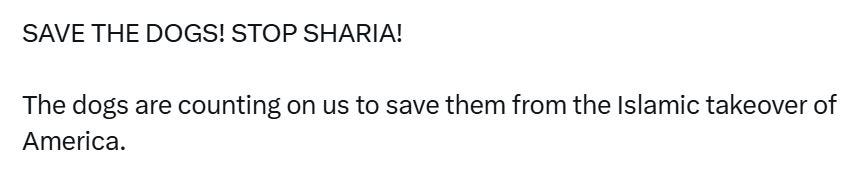
Right-wing influencers like LibsOfTikTok and Laura Loomer also made big impressions—the latter by linking up the alleged animal abuse (which she’d actually tweeted about before the Daily Mail article) to her feelings about Muslims:

"SAVE THE DOGS! STOP SHARIA! The dogs are counting on us to save them from the Islamic takeover of America."

Just how much political impact any of this will have remains to be seen. El-Sayed is on the receiving end of an absolute torrent of attacks right now, many of them straight-up appeals to anti-Muslim and anti-Arab sentiments. And it’s likely just a taste of what’s to come. The animal control unit story might barely register by the time the campaign is done.

But stories about pet abuse, real or imagined, can break through to the public in ways that few other controversies can. Just ask Mitt Romney or Kristi Noem. That might help explain why attacks involving animal abuse have become a weapon of choice for Republicans, whether they’re lies about Haitian immigrants eating people’s pets or distortions of Anthony Fauci’s record on animal experimentation.

Republicans and their allies don’t have to do this, obviously. El-Sayed has provided plenty of material for honest critics to attack. But going after his actual record would leave open the possibility voters might agree with him. Calling him a puppy killer is more likely to work and easier to spread, thanks to social media where even the most baseless, malicious rumors can count on credulous amplification.

Want to leave a comment? Join Bulwark+

1

Animal control units have many responsibilities, including protecting the public from violent animals. But the save/non-euthanasia rate is the metric that’s at the heart of this controversy. And in 2016 the animal control department announced that dog bites citywide were down 30 percent, attributing the improvement to outreach and education efforts.

2

For context, the national save rate is around 82 percent, according to the nonprofit organization Best Friends.

3

Miller went on to serve as animal control director in nearby St. Clair County, resigning earlier this summer in protest of a policy local officials had adopted. She is now a private consultant on animal welfare issues.

  •  

Vaccine Lies, Direct from the Oval Office

(Photo illustration by Sarah Rogers/The Bulwark | Photos: Getty, Shutterstock, Department of Health and Human Services)

SOMEWHERE IN AMERICA, sometime soon, a parent is going to take their 1-year-old to the pediatrician for what should be a normal well-child visit including vaccinations. They’re going to be nervous, like so many parents are—trying desperately to do all the right things for their child’s health, doing their very best to figure out what the medical science really says. And when the pediatrician recommends the standard measles vaccine doctors have been giving safely for half a century, the parent is going to say no, because they heard the shot’s current formulation might be lethal.

At that point, the doctor might ask where they got that information. The parent will say they heard it from the president of the United States.

Sadly, they will be telling the truth.

On Monday, Donald Trump signed an executive order that seeks to make radical changes to the government’s official childhood vaccine schedule—first by reducing the number of vaccinations from seventeen to eleven and then by breaking up the current MMR shot, which combines measles, mumps, and rubella vaccinations, so that children get them as a series of three separate sets of injections. The order also calls on the Justice Department to scrutinize states that don’t allow what the Trump administration considers adequate leeway for parents who want to ignore school vaccination mandates for reasons of religion or personal conscience.

Legally speaking, the order may not do much. Health and Human Services Secretary Robert F. Kennedy Jr., who has spent decades crusading against vaccines, tried to implement the same schedule changes in January. A federal court blocked those changes, ruling that Kennedy had made the decision on his own authority without going through the proper procedures or consulting the kind of experts that the law requires. Trump’s order would seem to fail the very same legal tests, which means the official government recommendations should, in theory, not change.

But as a practical matter, the order could influence states, which have the power to set school vaccination recommendations—especially if the Justice Department starts launching lawsuits against states like California with tighter requirements. And that’s to say nothing of how actions and rhetoric by normally respected agencies and officials, including the president himself, can influence the behavior of parents.

That’s especially true when it comes to recommending taking the MMR as three separate vaccines. No American company manufactures the individual components or is even licensed to do so, according to University of California, San Francisco Professor Dorit Reiss, and the only foreign suppliers—in China, India, Indonesia, and Japan—haven’t gone through American certification. That means it would take years just to generate a supply of the individual MMR component vaccines, Reiss told me in a phone interview. And in the interim, parents spooked by supposed dangers of the combined version would be more likely to skip it, further depressing vaccination rates at a moment when the consequences should be clearer than ever.

Last week the CDC recorded 94 new measles cases, pushing this year’s national tally to 2,465. That is already higher than last year’s total of 2,289, which was by far the highest since 1991. And those numbers aren’t mere statistics: They are real people—mostly children who are unvaccinated or have unknown vaccination status, and are in some cases being hospitalized. They are at risk of encephalitis, long-term vision and hearing loss, plus a progressive brain condition that can injure or even kill children years after infection. A child in Los Angeles died from that condition late last year.

And it’s not just the measles making a comeback. Pertussis, the “whooping cough” disease that once killed thousands of children a year, is on the rise again. Doctors and hospitals are reporting more parents turning down Vitamin K shots that prevent potentially lethal brain bleeding during infancy.1 Overall, one in six parents now say they skipped at least one of the officially recommended vaccines for their children, according to a KFF-Washington Post poll from last summer.

Kennedy and other administration officials get super prickly at the suggestion they are responsible for any of this, arguing the decline in vaccination rates behind disease resurgences antedates Trump’s second term. They are correct about the timing, just as they are correct to suggest that anger over public health policy during the COVID-19 pandemic helps to explain declining confidence in what the experts recommend.

But Kennedy has been no innocent bystander to this process. He’s long been one of America’s most influential sources of vaccine misinformation, especially when it comes to the unfounded suggestion of links between vaccines and autism. And since taking over HHS he has repeatedly used his office to undermine confidence in vaccines.

Monday’s announcement is a sign that Kennedy is still pursuing his crusade. And it makes clearer than ever before that the crusade is as much Trump’s as it is his.


Fresh reporting.
Sharp analysis.
Honest commentary.

Join Bulwark+ today


TRUMP HAS BEEN CHEERING ON KENNEDY for a while, and just two weeks ago the Wall Street Journal reported that he was actually frustrated that Kennedy wasn’t pushing even more aggressively to change the vaccine schedule. If there are any lingering doubts about Trump’s interest in the matter, they melted away during a Monday Oval Office signing ceremony when he seemed especially—and bizarrely—fixated on the amount of fluid that vaccination supposedly requires injecting.

“I saw this early on, and I’ve seen proof of it, where they have a vaccination that looks like the size of a bottle of soda poured into a little child’s body,” Trump said. He brought it up again later, referring to “what seemingly looks like gallons, where they pump so much in.” And when explaining the order to break up the MMR into its three components, delivered separately, he said it would increase the time elapsed “between visits, so the body can handle this massive amount of fluid being pumped in. I think it’s going to make a big difference.”

In reality, the amount of vaccination fluid in a normal medical visit wouldn’t fill a fraction of a bottle cap, let alone a whole soda container. But Trump was tapping into a sentiment widely shared in the anti-vaccination movement—and evidently by senior adviser Stephen Miller—that both the total number of shots and the combination of MMR shots into one are hazards because they overwhelm the immune system.

We get off of this ridiculous path of having our children get seventy to ninety shots,” Miller said, working himself into one of his familiar mini-rages. “That is wantonly excessive. Remember, every one of these shots produces a profound immunological response.”

It is true that doctors give kids more shots today than they did twenty-five or fifty years ago. It’s not true that this is provoking an overall greater response from the immune system. That’s because—as Stanford University infectious disease specialist Jake Scott told me in a phone interview—the shift away from whole-cell vaccines and more precise vaccine engineering means today’s vaccines contain far fewer antigens, which are the proteins and other substances that trigger the body’s immune response.

“We basically learned to strip vaccines down to only the pieces needed for protection, so there are more shots but less [antigenic] material,” Scott said. Overall, he noted, today’s vaccine schedule protects against 16 to 18 diseases with about 165 antigens, while the 1986 schedule protected against just 7 diseases with more than 3,200 antigens.

“The trade we made is more shots, far less immune burden,” said Scott, who also noted that children take in thousands of antigens a day through normal contact with the outside world. “So what is the concern? The number of needles, or the number of things that the immune system is being exposed to.”

Share The Bulwark


TRUMP DIDN’T DISCOVER OR INVENT the claim that evidence shows a link between the combined MMR vaccine and autism. It traces back to a now-infamous paper in the Lancet by British physician Andrew Wakefield that the editors ended up retracting and the British Medical Journal found after an investigation to be “fraudulent.”2 British authorities ultimately took away Wakefield’s license to practice.

At the time, Wakefield maintained he was being punished for daring to question the scientific establishment. It’s the same posture Kennedy has long maintained, one that taps into widespread distrust (even outside of MAGA circles) of American institutions and once-revered experts.

“This is what gold-standard science means,” Kennedy said in the Oval Office Monday. “No predetermined answers, no institutional taboos, no sacred cows, no hiding uncertainty. . . . Be honest.”

But a truly honest assessment would acknowledge—as countless academic reviews and media fact-checks have shown—that researchers across the world have investigated vaccines over and over again, conducting exactly the sorts of inquiries Kennedy says have been lacking, and found no evidence to sustain fears of the vaccine skeptics and opponents.3

“There are so many studies, vaccines have been some of the most thoroughly studied medicines of all time,” Scott said. “I think the honest version of [Kennedy’s statement that scientists haven’t fully explored an autism link] is that people have studied it, they’ve thought about it, they’ve published on it for decades, and he just doesn’t like the answer.”

A truly honest assessment would also acknowledge that more than a hundred countries use the combined MMR vaccine. It would likewise acknowledge that the only exception among G-7 countries is Japan, which since 2006 has offered the mumps vaccine as a separate, optional shot. And now Japanese officials are considering a switch back to the combined MMR, amid concerns about mumps outbreaks from low vaccination levels.

“There is not a single legitimate medical or public health organization that has concluded the MMR vaccine should be split up into three vaccines,” Joshua Sharfstein, a pediatrician and former FDA deputy commissioner who is now a public health professor at Johns Hopkins University, told me. “There is no evidence to support splitting up the MMR into three vaccines. That concept was based on one study, which was later found to be untrustworthy and was retracted by the editors.”4

Fight lies with truth: Share this newsletter with parents, doctors, and concerned citizens.

Share


MONDAY’S EXECUTIVE ORDER CAME one week after the Senate confirmed Erika Schwartz to serve as CDC director, giving the agency its first permanent director since Trump, at Kennedy’s behest, fired Susan Monarez a year ago. Schwartz is a physician and former deputy surgeon general who during her hearings said she supported vaccines, while sidestepping questions about her willingness to defy Kennedy if he handed down orders at odds with the scientific consensus.

Schwartz was not present for Monday’s signing ceremony, despite the CDC’s central role in vaccine policymaking. And the HHS media office did not respond when I asked whether Schwartz agrees with the new Trump directive, or whether she wished to comment on it.

Public health experts, including some CDC veterans, have noticed.

“Seemingly the implementation of such an order requires participation by the new director or the secretary,” Demetre Daskalakis, the infectious disease expert who resigned from a senior CDC post after Monarez’s ouster, told me via text on Tuesday. “Given the lack of data supporting this order, silence from the director would be complicity.”

Trump did have a doctor with him in the Oval Office on Monday. It was Jay Bhattacharya, the director of the National Institutes of Health who had been overseeing the CDC while it waited for its new leader. Bhattacharya did not specifically endorse the scientific content of the order, such that it was. Instead he spoke about the importance of rebuilding faith in vaccines by acknowledging the questions about them.

This supposedly neutral approach is the way Kennedy frequently justifies his position, and it’s the type of thinking that Trump has referenced as well—that they are merely asking questions about vaccines, even though the questions have been asked and answered many times. “The message you’re sending is that our current schedule, which has been developed over decades, is not safe—that MMR is not safe,” Reiss said. “That’s going to undermine trust, not increase it. . . . It’s just going to create more fear, uncertainty, and doubt.”

If Trump had considered the possibility, he didn’t show it. “Nothing bad can happen from what we’re doing,” he said. But bad things are happening already, as the measles figures show, and more are on the way.

Want to leave a comment? Join Bulwark+

1

Correction (August 12, 2026, 9:20 p.m. EDT): As originally published, this sentence erroneously referred to “lethal brain clotting” instead of “lethal brain bleeding.”

2

The investigation was by journalist Brian Deer.

3

Scott noted that one of the most definitive studies is one Danish researchers published last year. It took advantage of the nation’s exhaustive data-keeping to follow 1.2 million children born over a two-decade span, and found no link between the presence of aluminum salts—a vaccine additive many critics allege is harmful—and dozens of conditions including autism. Kennedy demanded that the journal, the Annals of Internal Medicine, retract the study. The editors refused.

4

For more background on the history of MMR and the perils of breaking it up, I recommend Matthew Herper’s latest article in STAT.

  •  

How to Break the Fifty-Year Stalemate on Childcare Policy

(Photo illustration by Bill Kuchman/The Bulwark | Photos: Shutterstock, Getty)

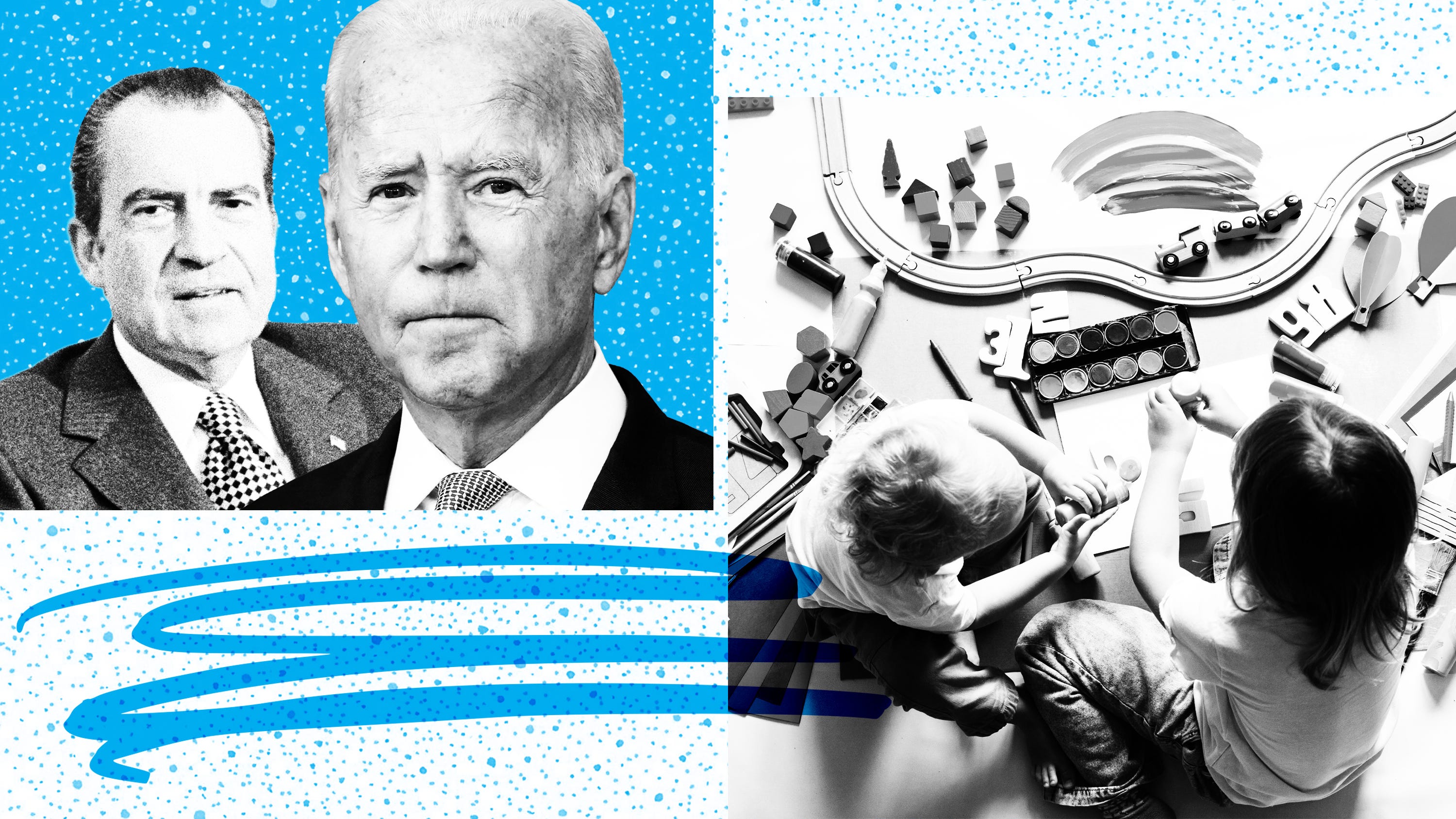
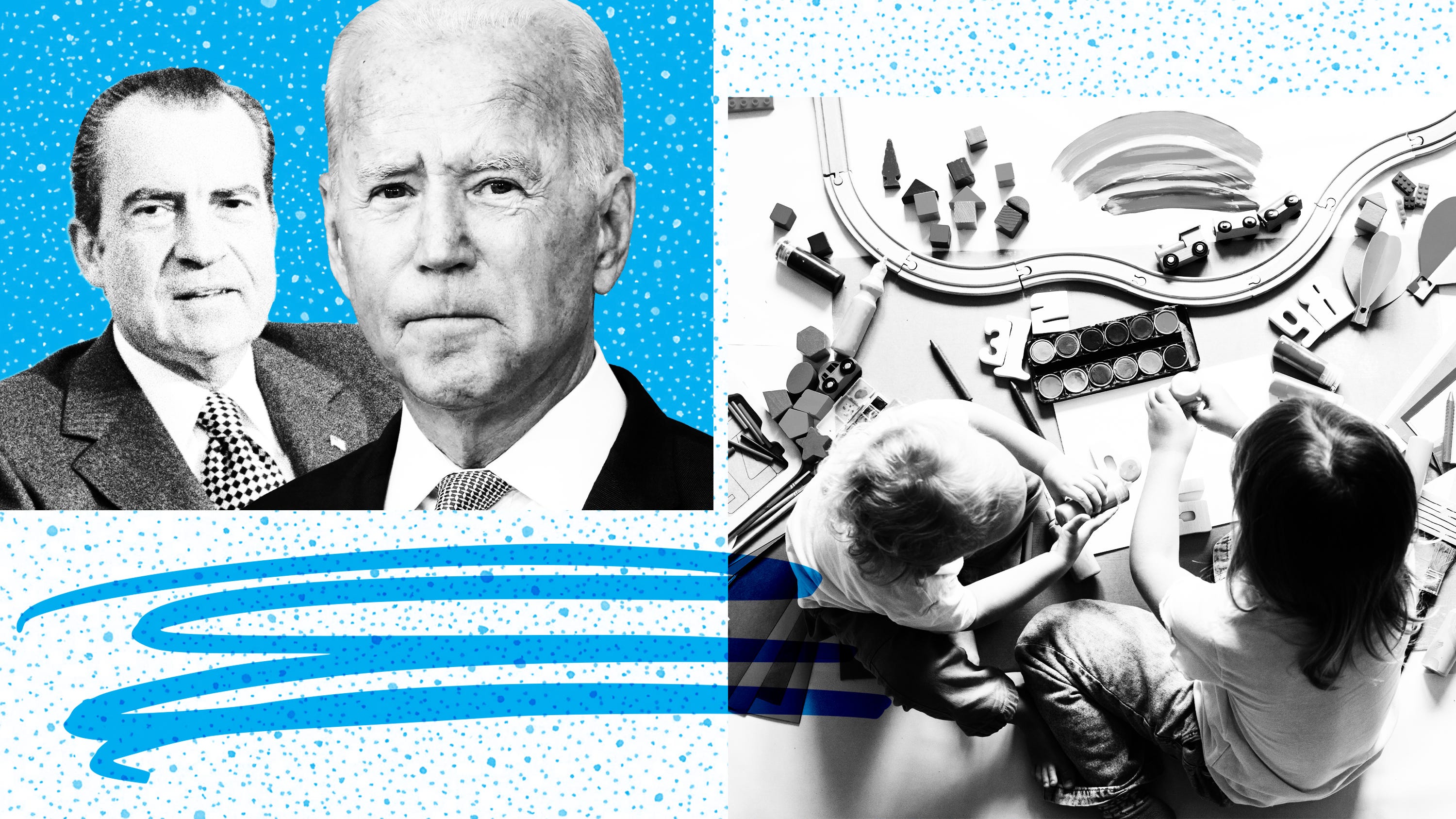
MILLIONS OF WORKING PARENTS struggle every day to find decent childcare they can afford. And it might not be happening if only Richard Nixon had signed legislation to create a comprehensive childcare system back in 1971.

The bill had landed on his desk in the middle of a major demographic shift: women entering the workforce in large numbers, creating demand for childcare that leaders in both parties said they wanted to address. Nixon signaled he would support a major initiative, and seemed friendly to a bipartisan bill that passed both chambers.

But autonomy for women and changes to family structure didn’t sit well with many social conservatives, especially top Nixon adviser Pat Buchanan. Nixon heeded Buchanan’s advice and rejected the bill, warning in a veto message that it would be “family-weakening.”

Since then, Democrats and Republicans have been arguing over whether the federal government has any business supporting childcare and—if it does—what that support should look like. The polarization helps to explain the failure of more recent efforts to pass childcare legislation.

A new proposal from Project 2029, a Democratic-aligned think tank, is designed to get past that polarization.

It envisions legislation on a scale that would rival or exceed what those 1971 lawmakers had in mind. But it also addresses some concerns from Republicans and conservatives by offering families a choice: access to free childcare, financed and regulated by the federal government, or direct cash support that parents could use to offset the cost of other arrangements, including staying at home to raise kids themselves.

“In a lot of ways, this represents a real evolution in Democratic thought on childcare,” Elliot Haspel, a prominent left-leaning analyst and writer on childcare policies, told me in a phone interview. “It’s the idea that, actually, families want and need wildly different things when it comes to their childcare, and it’s also that they need something that is simple to use.”

The primary authors of the proposal are veterans of past Democratic administrations. That’s not a coincidence.

For the last few years, left-leaning advocates and experts on a variety of issues have been trying to develop ideas that approach longstanding problems in novel ways. A starting point for many of these conversations has been trying to understand past failures. In the case of childcare, that means revisiting what went wrong the last time Democrats tried to take a big swing—back in 2021, when Joe Biden was president.


Think of this less as a paywall and more as a tiny velvet rope—and it’s not hard to get through it: Just sign up for Bulwark+ today.

Membership has its perks: Join Bulwark+


Read more

  •  

The Brutal Path Ahead for El-Sayed

Michigan Democratic Senate primary winner Abdul El-Sayed arrives to a press conference in front of the statue The Spirit of Detroit on August 5, 2026 in Detroit, Michigan. (Photo by Finn Gomez/Getty Images)

Detroit, Michigan
ABDUL EL-SAYED TOOK THE STAGE to address supporters around 1 a.m. early Wednesday morning, unable to give the speech he had wanted and was obviously planning to give.

Hours after the very first returns had suggested he was on his way to a double-digit win in the Michigan Senate Democratic primary, the race was too close to call. El-Sayed was holding a small lead over his opponent, Rep. Haley Stevens. But there was just enough outstanding vote in and around Detroit to make declaring a winner impossible at that point.

“I wish I could tell you I was declaring victory right about now—turns out it takes a long time to count some votes in Michigan,” he said, as the tired but still enthusiastic throng inside Detroit’s Majestic Theater cheered loudly.

But then El-Sayed shifted gears into what was almost certainly part of the planned victory speech. He talked about his love of America—how it had given him opportunities for an upbringing and education he might never have had in his parents’ native Egypt, and how the best way of showing that love was making sure all children here have those opportunities. And he talked about the importance of reaching out to Stevens’s supporters, because of their shared goal of defeating GOP nominee Mike Rogers and stopping Donald Trump.

“However much we might disagree with our Democratic opponent, there is so much more that unites us than divides us,” he said. “And so to all of our supporters here tonight watching on TV, tomorrow we begin to mend fences. Whatever happens tonight, we have a responsibility to assure we unite to make sure that Mike Rogers never sees the inside of the U.S. Senate.”

The magnanimity was a sharp break from the rhetoric that had come to define the most bitter Democratic primary anybody here can remember. And it showed that El-Sayed sensed the looming challenge of becoming his party’s nominee, which he became a few hours later when multiple news outlets declared him the primary’s winner.

But El-Sayed only has ninety-one days to win over skeptical parts of the electorate. That’s not a lot of time in American politics. And Tuesday’s results clearly revealed some of the ways that it is going to be difficult—factors that set Michigan apart from the rest of the country, and El-Sayed apart from other candidates in this year’s election.

Let me explain why.

Read more

  •  

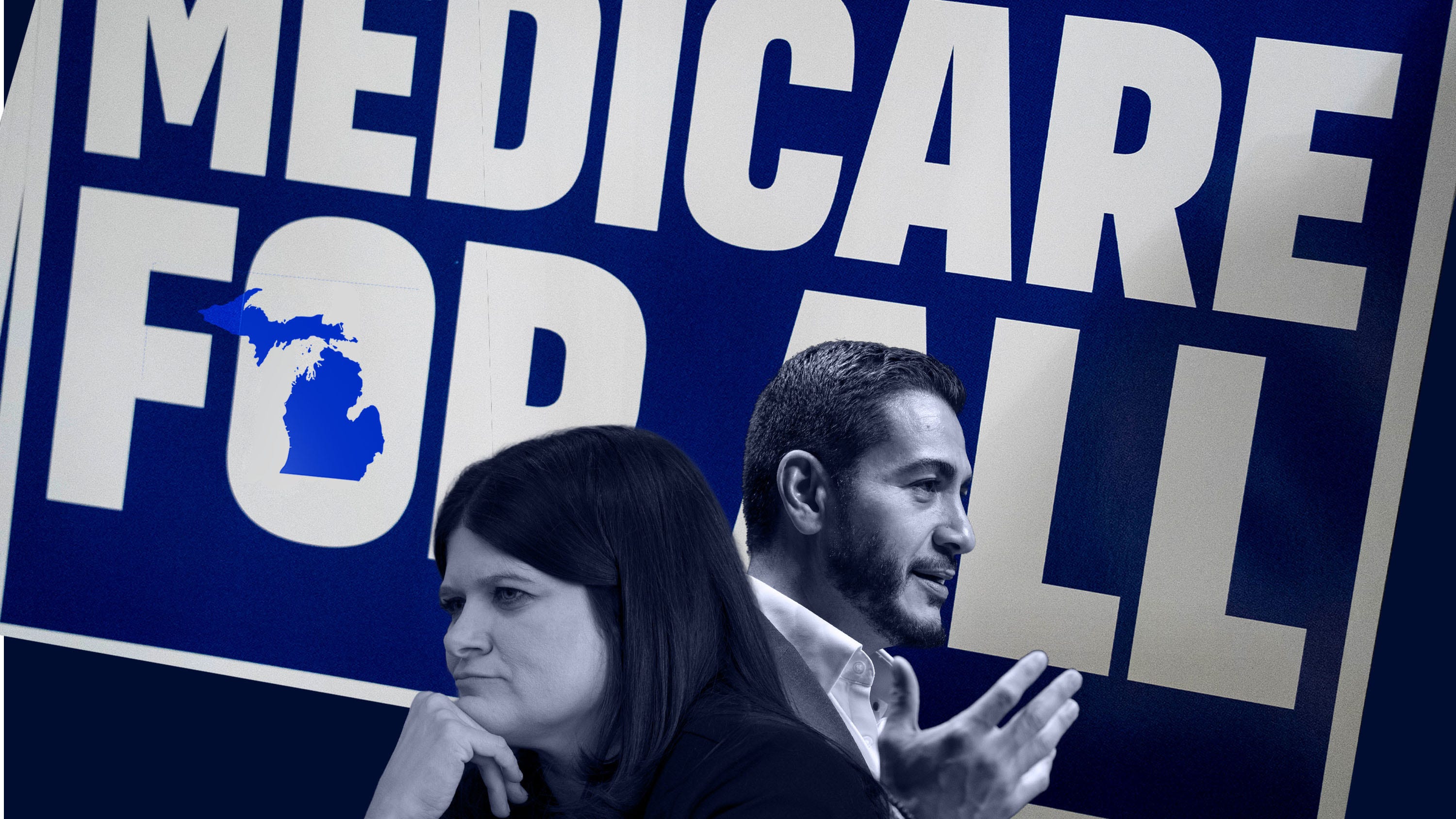
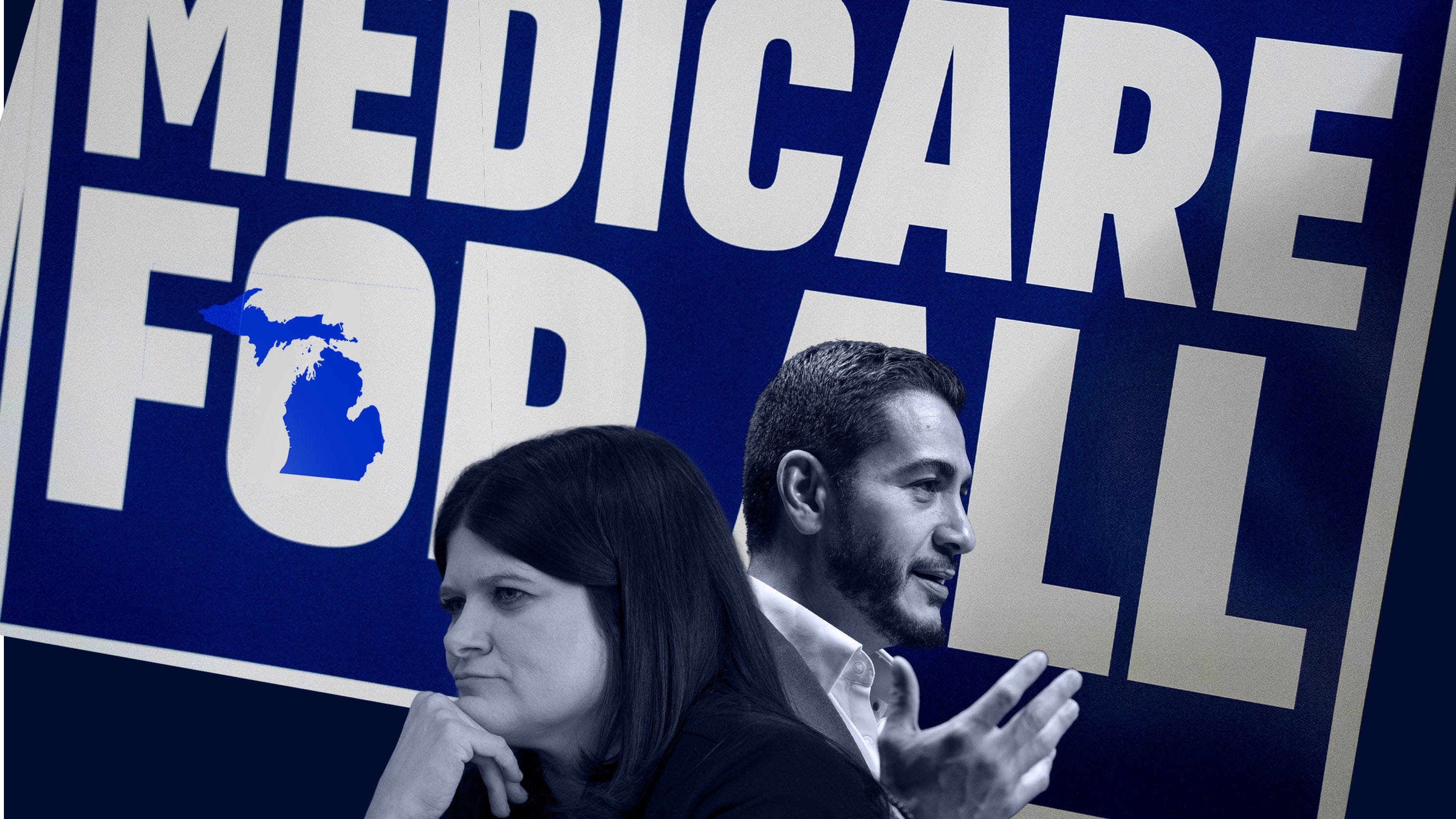
The ‘Medicare for All’ Test for Michigan Democrats

(Photo illustration by Sarah Rogers/The Bulwark | Photos: Getty)

Detroit, Michigan
ABDUL EL-SAYED HAS BEEN RUNNING to become Michigan’s Democratic Senate nominee for more than fifteen months. And if there’s been one constant over that period it’s been his promotion of “Medicare for All” as a way to make sure all Michiganders—and all Americans—have access to affordable, quality health care.

It’s a big focus of his stump speech, something he usually raises right at the beginning. It’s all over his campaign signage. And it’s the only specific policy promise in his three-part campaign slogan, which he and supporters invoke constantly:

Money out of politics. Money in your pockets. Medicare for All.

Medicare for All—a proposed version of universal health care that would have the government cover everybody directly, mostly doing away with private health insurance—has been part of the policy conversation among Democrats since the 1940s, when Harry Truman proposed a national health plan that included a prototypical version of the idea.

In the last few decades, partly as a nod to real-world political constraints, Democrats have leaned more toward hybrid plans with both private and public insurance as the surest path to universal coverage. That approach gave us the Affordable Care Act in 2010, which alongside Medicare and Medicaid—and with some financial reinforcements put in place during the Biden administration—reduced the uninsured rate to a record low.1 It’s as close as America has ever come to a place where health care is a right, not a privilege.

But even then, millions of Americans didn’t have insurance or couldn’t cover their out-of-pocket costs. And that was before Donald Trump and the Republicans started hacking away at the existing programs, exposing even more people to crushing medical bills. Partly in reaction to those realities—and partly thanks to high-profile advocacy by the likes of Senator Bernie Sanders, the Vermont democratic socialist—over the last decade or so the idea of a full reset through Medicare for All has gotten increasing attention from the Democratic faithful.

On Tuesday, those sorts of voters in Michigan will get a chance to weigh in on this debate when they decide between El-Sayed, who is a former public health director in Detroit and Wayne County, and Haley Stevens, who is a four-term House Democrat. Stevens is from the wing of the party that prefers to work within and around existing arrangements, whether that means trying to repair the damage from Trump or creating a new, optional public insurance program for people who want an alternative to private coverage.

For voters here who care about health care, weighing the two candidates means considering the different policy paths they recommend, including the merits of Medicare for All itself. But it also means pondering something that hasn’t gotten as much attention: exactly what kind of senator El-Sayed and Stevens would each likely turn out to be, and what history teaches us about how their distinct styles would play out in the current political landscape.


Original reporting.

Sharp analysis.

Honest commentary.

Stick with us through the midterms and beyond—sign up for a Bulwark+ membership and get your first two weeks free.

FREE TRIAL: Bulwark+ for 14 days


IT WOULD BE DIFFICULT to overstate how central health care is to El-Sayed’s identity.

The political origin story he tells involves his journey through medical school when, while working in a New York City hospital, he saw the difference between the lavish attention to wealthy patients on the top floor and the shabby treatment that the destitute got down in the emergency room. One of his staple campaign lines is that the life expectancy in the country of his parents, Egypt, is roughly the same as it is in parts of Detroit.

He says it convinced him to focus on public health rather than the practice of medicine—which, in turn, drew him to Medicare for All. “In public health, we’re always in this position where we’re underfunded and underinvested-in,” El-Sayed told me during a phone interview Saturday, while driving between campaign stops. “That’s because our current health care system sucks so much money into the care part of things rather than the prevention part of things.”

Abdul El-Sayed speaks to reporters after a canvassing event in Canton, Michigan, on Wednesday. (Photo: Jonathan Cohn)

A few years ago, El-Sayed collaborated with a physician-researcher on Medicare for All: A Citizen’s Guide, a book that briefly explains how America’s health care system evolved, then sketches out the broad outlines of a Medicare for All system, including benefits and financing.2

The pitch El-Sayed makes in his speeches and appearances doesn’t get into the policy weeds; it is more like a general pitch for the idea of universal coverage, which is something that takes a variety of forms abroad. Many countries’ systems include significant roles for private insurance, and some have considerable out-of-pocket spending. At the same time, even the hybrid systems of countries like France or the Netherlands have more in common with the single-payer systems of Canada, Taiwan, and Sweden than they do with the American patchwork.

One way to think about Medicare for All—and to evaluate El-Sayed’s support for it—is to imagine, as a thought experiment, what it would be like to transplant one of those systems here. You’d have to account for all kinds of cultural differences, including among medical practitioners, that can have profound effects on the economics of health care. You’d also have to account for the transition, which may be the hardest part of the equation because health care represents one-sixth of the economy and even modest changes would entail massive disruption.

Spend any time with the numbers and you’ll discover Medicare for All, like all health care systems, including America’s status quo, would require making difficult tradeoffs. Throw in the political obstacles to any kind of substantial health care reform—a list that includes the power of monied interests, the skewed representation of the Senate, and the public’s fear of change3—and the chances of actually enacting Medicare for All anytime soon is slim at best, even if El-Sayed gets to the Senate.

Some people act like the only way to support universal coverage as a goal is to support Medicare for All, as if anyone who doesn’t back Medicare for All isn’t truly committed to universal coverage. That would surprise the likes of Ted Kennedy, the legendary Massachusetts Democratic senator who was the patron saint of universal coverage while he was alive, yet was a key orchestrator of multiple compromises including early work on the legislation that became the Affordable Care Act.4

El-Sayed hasn’t done anything to dispel this notion, and probably reinforced it by dismissing narrower proposals like one Democratic-aligned think tank’s call to make primary care free. But in our phone interview he said he understands the technical challenges and would, if elected, seek to help Democratic colleagues work through them.

He also said he understands the political challenge, which is why he routinely refers to Medicare for All as a “Mount Everest” to be scaled in stages. “I’ve been very clear that I want to get to Medicare for All, and I also believe that we’ve got to take a pathway there. To me, as long as it reduces the power of the health care corporations, expands health care, and does so publicly, I’m for it, and would be glad to work with likeminded partners on that path.”

Share The Bulwark


FOR A MODEL OF WHAT this might look like in practice, you need look no further than Sanders, who is not just Medicare for All’s most visible champion but also El-Sayed’s, having endorsed both his 2018 gubernatorial bid and now his Senate run. The Vermont senator played a key role in shaping the prescription drug reforms that Democrats passed and Biden signed in 2022.

Sanders’s harping on persistently high health care costs during the 2016 presidential primaries frustrated Democrats who were preparing to defend the Affordable Care Act against possible repeal, and back in 2009 he held off supporting the law until the final stages of Senate debate. But he came around to yes, as the Obama White House and Senate leaders knew he would, with his one big ask being an $11 billion investment in community clinics entirely consistent with the law’s spirit. And in 2017, once the repeal effort got underway, Sanders proved an enthusiastic and effective defender of the law.

Another Sanders accomplishment was a landmark 2014 reform of veterans health services. That was a bipartisan effort, one that he negotiated with the late John McCain, and it’s an open question how much interest El-Sayed would show in such deal-making, or how much capacity he has for it. It requires EQ as much as IQ, and not disparaging adversaries in the way he has treated Stevens multiple times—most recently just this week, when he described the four-time election winner as the “least capable candidate in America.”

Stevens in many ways illustrates the opposite archetype. She has a proven record of bipartisanship. In fact, that’s been the main thrust of her campaign: that she’s a workhorse who gets stuff done, winning recognition as an effective legislator precisely because she makes deals on legislation targeting particular needs or groups of constituents.

Health care is not as central an issue for Stevens’s campaign or her public identity as it is for El-Sayed. (To be fair, you could say that of most politicians. In Stevens’s case, industrial policy is her thing, and she’ll hold forth on it for hours if you let her.) If Sanders is a prototype of who El-Sayed might be, a more likely role model for Stevens would be Debbie Stabenow, who represented Michigan in the Senate from 2001 to 2025.

Stabenow, who has endorsed Stevens, also focused on issues other than health care. But she did leave her mark in a few spots. One of those was the treatment of mental illness; over the course of years, she built a bipartisan coalition for legislation that now funds mental health clinics around the country, in a way that appears to be providing much-needed care while easing the burden on local law enforcement.

Other than that, Stabenow supported whatever health care measures Democratic leaders promoted. Most likely Stevens would too, because that’s how she’s conducted herself in the House whenever health votes came up. That includes the 2022 law giving the federal government power to negotiate some drug prices in Medicare. Stevens voted yes, notwithstanding some (relatively small) campaign donations from drug companies she has taken over the years.

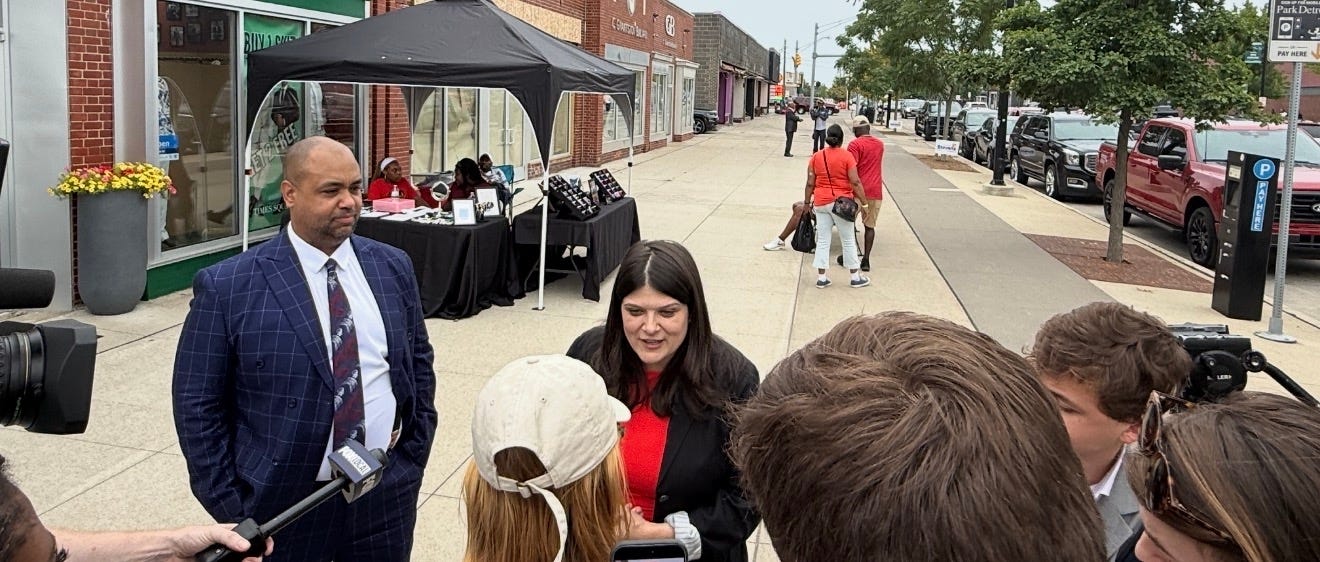
Haley Stevens appears with one of her backers, Detroit City Council President Pro Tem Coleman Young II, during the city’s Jazz on the Avenue festival Saturday. (Photo: Jonathan Cohn)

Insofar as the Democrats stay on the path they’ve been on—using the policy architecture now in place to finally get to universal coverage—Stevens as senator figures to be another lawmaker helping that journey along. And she would come to office with legislative experience, something one of her key backers told me gave her an advantage over El-Sayed.

“She’s the only person that actually passed legislation,” Coleman Young II, president pro tem of the Detroit City Council, told me during a joint appearance with Stevens on Saturday. “If we were talking about who could be the best public health director, we’d be in trouble. We’re campaigning for who’s going to be the best United States senator. This is a legislative position, and Haley Stevens has the record.”

Pop this newsletter into a friend’s inbox or post it to social media:

Share


WHAT STEVENS WOULD CLEARLY not do as a senator is try to push the boundaries of debate over health care in the way that El-Sayed would. He has said repeatedly that if he is elected, he would try to use his platform to build support for his agenda—including Medicare for All—to national audiences, to the point of visiting other states where lawmakers might not be with his program.

Stevens has suggested that makes El-Sayed more interested in making headlines than making progress. And there was a time, certainly, when that kind of advocacy would look to fellow members of the Senate like grandstanding, making it difficult to accumulate power and negotiate—and, eventually, to pass laws that could benefit constituents.

But lawmaking in 2026 is different from, say, 2016 or 2006. More now than ever before, attention is political currency. In the hands of somebody committed to a cause like Medicare for All, it can change the agenda, sometimes substantially. The proof is Sanders, whose persistent advocacy for Medicare for All—even when he was the only nationally recognizable figure pushing for it—is a big reason it’s a central part of the conversation among Democrats.

In that sense, the main impact of electing El-Sayed would be adding to that chorus another, younger version of Sanders—somebody who would push the whole caucus in the direction of expanding health care access, and who could inherit the Medicare for All movement whenever Sanders, now 84, decides to hang up his democratic socialist spurs. And it is safe to assume that merely electing El-Sayed would have a galvanizing effect on the national debate, by challenging old conceptions of what’s politically possible in a swing state campaign.

But first El-Sayed would have to win the general election, while running in a state far less hospitable to his politics than Vermont has been for Sanders. And it doesn’t take a ton of imagination to see how difficult that could be.

Just for starters, El-Sayed would have to overcome an onslaught of negative advertising even more overwhelming than the one he’s facing now. And this time it would feature the sort of attacks fellow Democrats would never make but Republicans make all the time. Example: El-Sayed has said undocumented workers should get coverage if they pay taxes. The position is highly defensible as a substantive proposition but highly difficult to defend politically.

El-Sayed, never lacking in confidence, thinks he can win this fight. And he is well equipped to do that—especially in a campaign against presumptive GOP nominee Mike Rogers, a former GOP House member who took money from pharmaceutical companies and has a long record of supporting Republican bills to take health care away from people.

El-Sayed could leverage his background as a doctor and epidemiologist who has literally spent years helping people to get health care. And unlike Stevens, he could present himself as somebody who has never taken money from corporate PACs. Those are all powerful rhetorical tools, especially in the hands of a communicator as deft as El-Sayed.

FREE TRIAL: Bulwark+ for 14 days


ELECTABILITY IS A TOUGH THING TO PREDICT. Its consequences aren’t. Just look at the recent history of health policy debates.

One more Democratic senator in 2009 would have given the Affordable Care Act’s architects leverage to pass a more generous bill, one that got closer to delivering what Medicare for All would. And in 2021, one more Democratic senator would have allowed leaders to muscle through a program for home health care they had to drop, to expand the universe of drugs subject to government price negotiation, or to fund more years of the temporary Obamacare subsidies Republicans have since allowed to lapse.

By contrast, with one fewer Democratic senator in 2017, the Affordable Care Act probably wouldn’t have survived repeal. And with one fewer Democratic senator in 2009, it might not have become law at all.

There are countless more examples like that on other issues, all highlighting the same essential reality that is true on health care. The effect of nominating El-Sayed instead of Stevens as nominee would be substantial—for better or worse, depending on your perspective. But it would be small relative to the impact of putting up a losing candidate in the general election. For health care especially, the cost of turning Michigan’s Senate seat red could be catastrophic.

Leave a comment


‘Bring better ideas.’

Excerpts from an interview with Abdul El-Sayed on August 1, 2026, lightly edited for clarity.

JONATHAN COHN: One of the things I want to do is predict for people—on health care—what you would be like in the Senate. And I was thinking back to when we had a video interview a few months ago, when I asked you whom you thought of as role models. You mentioned Bernie Sanders and Elizabeth Warren. Looking at them, are they a pretty good preview of how you would like to operate in the Senate?

ABDUL EL-SAYED: And I mentioned a third, Senator Chris Van Hollen. Yes. I think our work is about getting the nuts and bolts of the policy right, making the moral and political argument, and then working to line up the votes because you’ve moved the ground underneath the U.S. Senate and public policy. I want to be able to do my part on all three of them, working alongside colleagues who’ve been thinking about this and doing this work for a long time. I think about Senator Sanders, of course, and Congresswoman [Pramila] Jayapal and Senator Warren, and then many others. I hope that folks can rely on me to be a bona fide policy student, somebody who’s taking what I’ve learned as a researcher and an expert to build that into public policy. And then also an advocate on the ground, to use the broader public conversation around what all of us can believe in and should fight for when it comes to health care. And then working alongside somebody like a Senator Van Hollen to say, okay, how do we start to think about building the coalition for this in the Senate, to line up the votes that we need to get it done.

COHN: You look back at Bernie Sanders, he obviously is talking constantly about Medicare for All. But he also did a big bipartisan veterans bill with John McCain. And he worked on the prescription drug price negotiation. Do you imagine yourself being someone who would work on things like this that are not Medicare for All, and really put your muscle into them?

EL-SAYED: For sure. I’ve been very clear that I want to get to Medicare for All, and I also believe that we’ve got to take a pathway there. To me, as long as it reduces the power of the health care corporations, expands health care, and does so publicly, I’m for it, and would be glad to work with likeminded partners on that path. I think the mistake is sometimes to say, ‘Okay, we’ve made these changes and therefore we’re good to go. We’re not good to go until we have Medicare for All. But you know on the pathway—the steps along the way—I’ll be working hard with my colleagues to try to get those things done too. . . . When it comes to making the VA whole, when it comes to funding our investment in affordable prescription drugs, when it comes to our investment in medical science, you’re going to see me right at the forefront.

COHN: You’ve talked a lot about how you want to be going into other districts and states, making the case for Medicare for All, and other priorities too. Does that include fellow Democrats? Would you go to a Democratic district or state if you feel like a senator is pulling in a different direction?

EL-SAYED: I think we have a responsibility to fight for the things we need and deserve. In the end, politics is about a competition of ideas. I think you lose that competition if you’re not willing to take your ideas and present them to a broader public, and I think it’s important for voters to have an alternative to somebody who’s corporate bought. Now, that means beating Republicans big time. But it also means standing up within our own party, like I’m doing in this primary, when it is the power of corporations buying our own party against the will of the broader public. . . . I’m focused on the best interests of the people of Michigan. And to achieve the things I need for the people of Michigan, it’s going to be really important that we have the kind of movement inside the U.S. Senate to be able to pass the legislation that is in service of people here in my state. So the question is: Am I afraid of what colleagues might think of my advancing my ideas? I tell them: Bring better ideas.

COHN: I know some people are worried you’re more excited about attacking Democrats and fighting out a factional war in the party, rather than beating Republicans.

EL-SAYED: Give me thirteen weeks and ask them if they think that after I’ve dispatched Mike Rogers.

Leave a comment

1

The low point was measured in 2023, when just 7.2 percent of the population had no insurance. That corresponded to 23.7 million people, a significant portion of them undocumented immigrants not eligible for public programs.

2

The book stresses that, in El-Sayed’s vision, the new program would fill in benefit gaps of the existing Medicare program (which doesn’t cover vision, hearing, or dental, for example, and has no out-of-pocket limit). It proposes financing from a combination of repurposed spending from existing programs, administrative savings, government regulation of payments to providers, and progressive taxes that in theory would not force lower- or middle-income people to pay more than they do now.

3

Polling results on Medicare for All can vary a lot depending on wording. And as a recent Zeteo/Searchlight survey showed, people get more skittish when they learn Medicare for All would mean giving up their existing insurance.

4

As the Atlantic’s Jonathan Chait has noted, one effect of this rhetoric is to minimize—or even erase—the Democratic party’s consistent commitment to universal coverage, which also traces back to the Truman era.

  •  

How Old-School Race Animus Could Shake Up the Michigan Senate Race

(Photo illustration by Bill Kuchman/The Bulwark | Photos: Getty, Shutterstock)

Detroit, Michigan
ABDUL EL-SAYED STOOD AT THE EDGE of a picnic pavilion in Detroit’s largest urban park on Sunday, making his case for why he is the Democratic Senate candidate best positioned to help the city’s voters.

El-Sayed, who is locked in a tight contest with four-term House Democrat Haley Stevens, is a doctor and epidemiologist who has served as public health director for Detroit and then (separately) its surrounding county. He reminded the crowd that in those two positions he supplied kids with free eyeglasses so they could see in school, went after polluters whose emissions were causing asthma, and spearheaded an effort to remove lead from water pipes that were slowly poisoning several city neighborhoods.

“I have been showing up for Detroit since I first stepped into the city as its health director back in 2015,” said El-Sayed, “and I intend to show up for Detroit every single day when I walk into the Capitol as your next U.S. Senator.”

The gathering in Rouge Park was one of several “Knock Out the Vote” events El-Sayed has held in these final two weeks before the August 4 primary. Judging by the cheers and scattered “amens,” it was a success. But it was also hard not to notice the complexion of the group. It was


Hey, guys — I know paywalls are a drag. But this one is easy to get around: Just sign up for a free trial of Bulwark+. You’ll be able to read this whole newsletter and enjoy all our other locked content for two weeks without paying a cent. And if you do sign up today, drop me a line in the comments!

–Jonathan

FREE TRIAL: Enjoy 14 days of Bulwark+


Read more

  •  

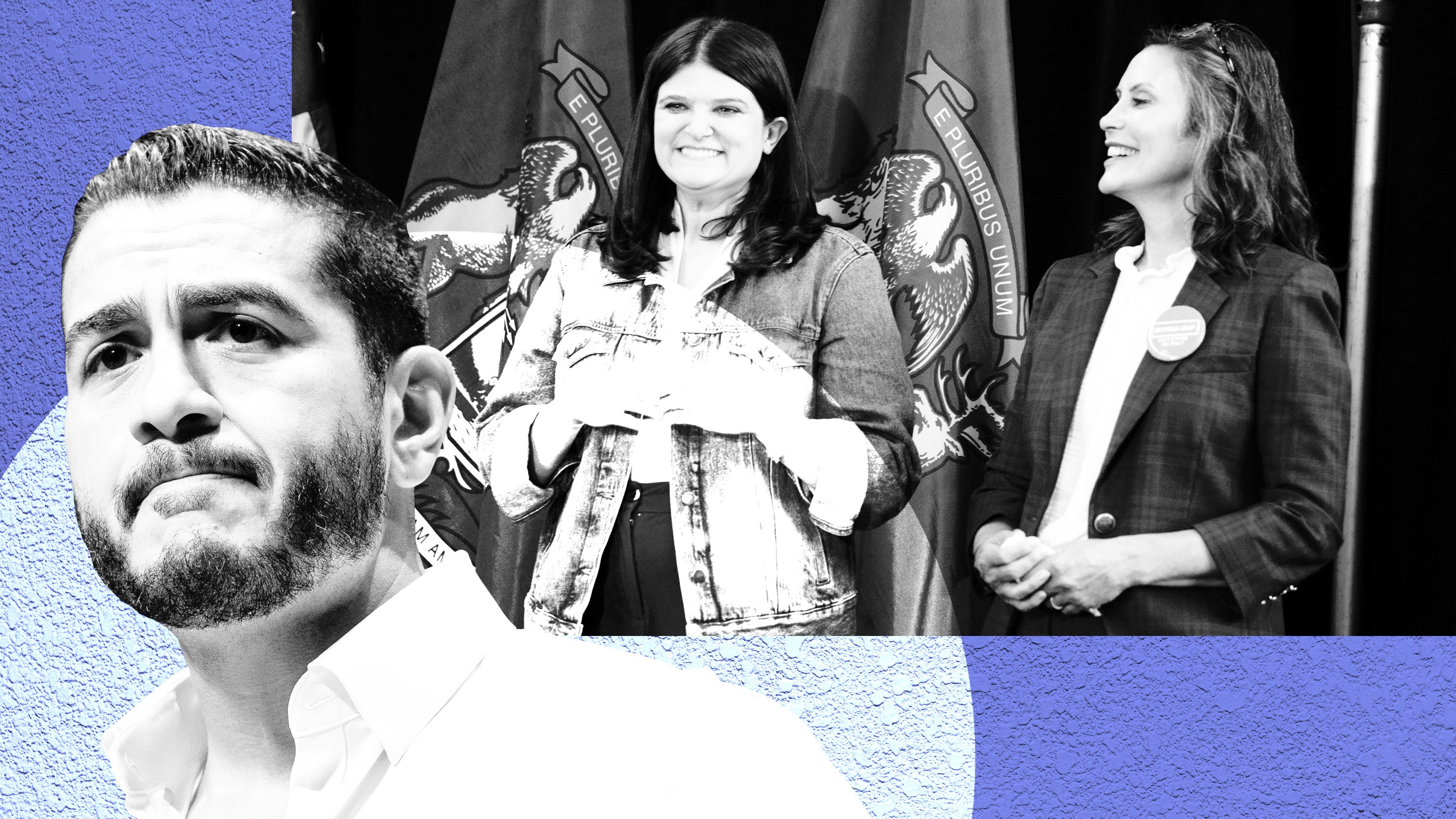
Why Gretchen Whitmer’s Senate Endorsement Matters

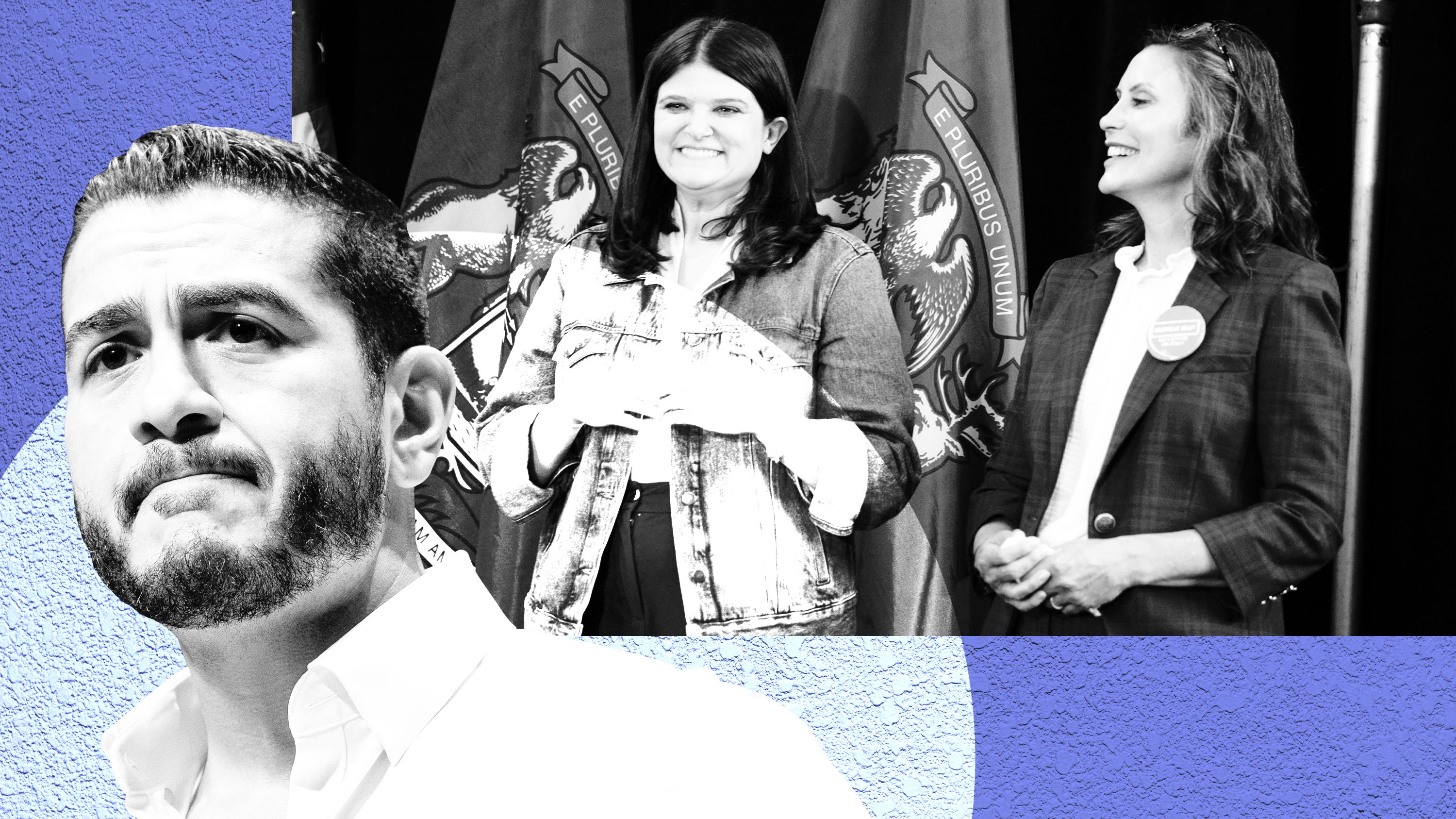
(Photo illustration by Bill Kuchman/The Bulwark | Photos: Getty, Shutterstock)

Detroit, Michigan
ANOTHER JOLT JUST HIT the highest-profile Democratic Senate primary in the country: Big Gretch entered the conversation.

That’s the affectionate nickname for Gretchen Whitmer, the two-term Democratic governor who is by most reckonings the most popular statewide elected official in Michigan. On Friday, she announced that she was endorsing Haley Stevens, the four-term House Democrat who has been running in a tightly contested, increasingly bitter campaign against former Detroit and Wayne County public health director Abdul El-Sayed.

Whitmer made the announcement in a video—and then in person about three hours later, during a campaign event at a Teamsters union hall in Detroit, where she said “Michiganders need a fighter in Washington.” Never once in either case did she mention El-Sayed. But she alluded to him indirectly during the speech when she said the top priority for Democratic voters was keeping the open Senate seat—now occupied by Gary Peters, who is not seeking re-election—in the party’s hands.1

“Democrats cannot take back the Senate without winning the state of Michigan,” Whitmer said, as a crowd of about a hundred supporters cheered. “We don’t hold this seat, we can’t fight back against Medicaid cuts. We can’t fight back against tariffs, against skyrocketing gas and grocery prices. We can’t fight back against the chaos and division and political gamesmanship that have consumed our country for too long.”

Join Bulwark+ with a 14-day free trial

That argument cut right to the heart of the question that for many Michigan Democrats is the most important: Which candidate has the best chance of winning? Supporters of Stevens have said she’s the one, citing her record of winning in swing districts and the difficulties El-Sayed would have defending a left-wing platform in a closely divided state. El-Sayed’s backers counter that his populist message actually speaks to many conservatives, while Stevens’s support from wealthy outside groups ties her to an establishment that infuriates voters across the ideological spectrum.

Whitmer at the Friday appearance didn’t have to spell out which side of the argument she finds compelling. But she did drop a reminder of why she has some authority to speak on the matter—as “someone who won statewide twice,” pausing and drawing out that last word for emphasis, and holding up two fingers for effect.

Just how seriously Michigan voters will take this advice is a separate question. Endorsements certainly don’t have the power they did in the old days. Just ask the editors of the Detroit Free Press, whose compelling endorsement of the campaign’s third candidate, state Sen. Mallory McMorrow, appeared exactly six days before she dropped out of the race.

Meanwhile, more than 690,000 Michiganders have already voted via mail or absentee ballot, according to official figures.2 And Whitmer’s reputation has recently taken a hit thanks to in-state controversies over her support for data-center construction and her veto of several budget amendments. The former has pissed off progressives, environmentalists, and local activists. The latter has pissed off longtime Whitmer allies in the state legislature and key interest groups like labor.

But there are still plenty of reasons to think Whitmer’s endorsement will matter, maybe quite a lot.

We know—paywalls are a pain. But there’s an easy way around this one: Sign up for a free trial of Bulwark+ membership. You’ll be able to read the rest of this newsletter covering the Michigan primary, participate in the comments section, and enjoy our other locked content for two weeks without paying a penny. We bet you’ll like it.

FREE TRIAL: Get Bulwark+ for 14 days

Read more

  •  
❌