❌

Reading view

Fed Governor Lisa Cook Won’t Attend ‘Unfair Hearing’ in Surreal, SCOTUS-Caused Performance

In a new letter, Federal Reserve Governor Lisa Cook’s lawyer wrote that she will not attend a hearing the Trump administration has set for December 14 absent major changes. 

President Donald Trump attempted to fire Cook in August 2025, seeking to replace her with a loyalist under the pretense of mortgage fraud charges. This has been a common tactic as the administration has sought to purge its enemies from the government thanks to the zealousness of Bill Pulte, the director of U.S. federal housing, who has weaponized his access to mortgage documents as a cudgel against Trump’s perceived political foes. 

Nearly a year later, the Supreme Court blocked her firing, but didn’t preclude it completely. I wrote this at the time: 

  •  

What Went Wrong in Montana

Virtually every Democrat in Montana can agree on two things: Republican Senator Steve Daines outfoxed them, and the left fumbled a winnable Senate seat. 

“S squared,” former Montana Gov. Brian Schweitzer (D) summarized to TPM. “Shitshow.” 

  •  

Montana Republicans Immediately Sue After Voters Pass Anti-Citizens United Measure

‘Here We Go Again’ With ‘Silencing Peoples’ Voices’

Voters last week emphatically passed the “Montana Plan,” a ballot item that would ban corporations from spending money on local, state and federal elections.  

The victory (which voters delivered with a 65% to 34% margin) was less than short-lived — the Montana GOP and a smattering of other groups sued to enjoin the measure 18 minutes before the Associated Press even called the race, per the Montana Free Press.

“Here we go again with regard to silencing peoples’ voices,” Nancy Keenan, the former executive director of the Montana Democratic Party, told TPM.

The groups claim a myriad of constitutional violations, including of their freedom of speech. Their suit heavily cites Citizens United, the infamous 2010 case in which the Roberts Court knocked down restrictions on corporate political spending and gave birth to a new era of huge sums poured into politics and sprawling dark money networks.

  •  

Riding a Historic Blue Tsunami, Democrats Flip the Senate by Winning Big in Trump Country

When President Donald Trump took over for the second time, things looked interminably bleak for Democrats. 

Americans had willingly reelected a man who encouraged a mass of his followers to sack the Capitol and prevent the certification of an election he’d lost. And the first opportunity for a Democratic comeback, in a long two years, was anything but certain: While the Republicans’ House majority was small, the path to Senate control was riddled with states Trump had won three times. 

Then Trump started governing. Some combination of tariffs, ICE brutality, the Iran War and his fixation on construction (and demolition) projects in D.C. created a Pig-Pen-like haze around him so toxic that his approval plunged into the low 30s. Combined with Democrats’ newfound popularity with diehard midterm voters, the Trump miasma was too strong for Republicans to hold the upper chamber, even with a map so friendly they may as well have designed it themselves.  

  •  

A Spooky Halloween With Peter Thiel and the Antichrist

[Essay]

A Gothic Telling of Peter Thiel’s Rivalry With the Antichrist

Peter Thiel seems determined to associate himself with the Antichrist. For years now, the venture capitalist has been making headlines with his private, off-the-record lecture series on the subject and with bizarro podcast appearances — such as when he struggled to answer Ross Douthat’s question on whether he thinks the human race should endure. (“There’s so many questions implicit in this.”) But with influential Silicon Valley denizens seemingly in competition with one another to put forward the most unrelatable and sometimes unhinged ideology while also pushing a technology that could complicate humanity’s future, Thiel’s fixation on the Antichrist might, in 2026, solicit little more than a shrug. 

This is in part because, unlike this new wave of tech moguls and weirdos preaching New Age “isms,” such as rationalism or effective accelerationism, Thiel’s ideology is a comparatively known quantity. He wrote in 2009 that he doesn’t “believe that freedom and democracy are compatible.” He was the only major tech leader to endorse Donald Trump in 2016. He bankrolled Hulk Hogan’s lawsuit that put Gawker out of business. The company he founded, Palantir, has contracts with cities, states and the federal government to power surveillance by the police and ICE. For fans of liberal democracy, he’s become the first true tech villain of the internet age. That a man so many people take, figuratively, to be the antichrist would be obsessed with the literal antichrist is too cute by half, and perhaps just another Silicon Valley ego trip. 

At least, that’s how I had been thinking about it until I got an email offering to take me “Inside Peter Thiel’s Nashville Antichrist Lectures.” And maybe the Halloween spirit got the better of me, because I clicked.

The link came from Pirate Wires, a right-wing tech site founded by Mike Solana, the chief marketing officer of Founders Fund — a venture capital firm founded by Peter Thiel. Being familiar with the site, I wasn’t expecting an objective account. But who cares? I was being taken inside, and that had its perks. As my insider correspondent explained, although the event was off-the-record, he was allowed to bring a notebook (after the first day) and permitted to write about its contents. 

To the extent that I can summarize four days of billionaire mumbo jumbo that took my inside-access correspondent some 10,000 words to convey, the crux of Thiel’s concept of the Antichrist comes from 1 Thessalonians 5:3 where the apostle Paul says, “For when they shall say, Peace and safety; then sudden destruction cometh upon them, as travail upon a woman with child; and they shall not escape.” This verse has often been cited as a prophecy of the end times; the Antichrist brokers a false state of security with humanity before breaking it and leading them to damnation. In Thiel’s telling, the phrase “Peace and safety” is a stand-in for the global regulatory state exemplified by institutions like the United Nations or the FDA. For Thiel, the age of modernity, and thus progress, ended sometime between the development of the nuclear bomb and the moon landing. Post moon landing, we’ve been in a state of stagnation where concerns over safety have trumped our innate desire to innovate and solve problems like the pesky issue of our own mortality. AI won’t move the needle enough: Thiel wants us to become fully transhuman and go to Mars.

Borrowing heavily from Carl Schmitt, Thiel identifies the Antichrist as an attempt to unify nations into one global world order. He believes that current apocalyptic fears about climate change, nuclear war, or AI-driven doomsday are manifestations of the Antichrist intended to make us afraid of our own technology and lure us into a unified nanny state under a false sense of security. We will follow the Antichrist according to Girard’s memetic theory, which explains humans fundamentally seek to imitate other humans. Copying others, says Girard, can lead to memetic rivalry or violence in which case communities restore unity by directing the violence at a scapegoat (the crucifixion of Jesus being the ultimate example). In Thiel’s reading of Girard, scapegoats are necessary, and thus a single world order without nation states competing and scapegoating each other would lead to the ultimate unleashing of violence — e.g. armageddon.

Thiel contrasts the Antichrist with the katechon, another biblical term referring to the power that stops the Antichrist from accomplishing his mission. For example, Schmitt saw Hitler as the katechon to the Antichrist that was the Soviet Union. (He admitted later he was wrong.)

Thiel won’t definitively put a name to the Antichrist (or on the katechon), but he does offer some requirements needed to fill the role. He/she should be young (ideally 33), popular, likely a politician, and will talk obsessively about the coming apocalypse. He has repeatedly offered up climate activist Greta Thunberg and AI doomer Eliezer Yudkowsky as potential candidates. Donald Trump isn’t the Antichrist, according to Thiel, but his presidency could be the katechon.

Apparently modeled on another four-part lecture series on the Antichrist given by theologian and philosopher John Henry Newman in 1835, Thiel’s lectures, as depicted by my inside-access correspondent, do evoke the lyceum of the antebellum era. Set at a Free Masons lodge in downtown Nashville, my correspondent described the scene as attended mostly by men in suits packing tin canisters of Zyn. I could see Thiel at the podium, resembling any number of mid 19th century charlatans explaining to a willing audience how they had fused religion and science with some new theory or invention. I happen to have a particular fondness for this era because it was these charlatans that inspired one of my favorites writers: Edgar Allan Poe.

I thought of Poe as I read Theil’s interpretation of the Antichrist. Specifically, Poe’s story William Wilson. It’s about a privileged man who in his youth unknowingly encounters his consciousness transformed into a physical entity identical to him in appearance. This doppelgänger follows and antagonizes him through boarding school, elite universities and into adulthood. Ultimately, there is a confrontation between the two rivals and William stabs his antagonist. In classic Poe fashion, when William views himself in a mirror, he sees that he has stuck the knife in himself.

It was written a hundred years before Girard introduced his idea of the mimetic double, where rivals become so fixated on copying each other that the relationship inevitably ends in violence. I wonder if Peter Thiel has ever read it.

Ultimately, what persuaded me there might be something worth considering in Thiel’s lectures comes near the end of my correspondent’s account where he notes: “At one point, Thiel joked that perhaps he is not introspective enough to realize that he himself is in fact the Antichrist, but that in any case he fails to meet the (self-identified) criteria.” It took William Wilson looking in the mirror to see the truth.

Link Copied

By Derick Dirmaier

[Essay]

Explaining Nicki Minaj’s Inexplicable (Very Explicable) MAGA Turn

Nicki Minaj, the rap star now under (real? joking?) consideration to be the next White House press secretary, says she has already benefitted from cozying up to President Donald Trump — and could be eyeing more.

Her political odyssey has been extreme. Here’s Minaj in 2020, saying she was “not gonna jump on the Trump bandwagon.” 

“I get that a lot of people don’t like him for obvious reasons. But what stuck with me was the children being taken away from their parents when they came into this country,” she said. “That really bothered me because I was one of those immigrant children coming to America to flee poverty. And I couldn’t imagine a little child going through all of that, trying to get to another country because they didn’t have money in their country, or whether you’re fleeing from war.”

And here’s her now: “I am probably the president’s number one fan, and that’s not going to change.”

And here are some things that happened in her life meanwhile: 

  • January 2020: Her brother, Jelani Maraj, was sentenced to 25 years to life in prison for repeatedly raping his 11-year-old stepdaughter 
  • September 2021: She seemed to buy in to some COVID-19 conspiracy theories, posting a much-memed tweet about her cousin’s friend’s “swollen testicles” and “impotency” that he suffered as a vaccine side effect (public health officials quickly debunked the connection)
  • July 2022: Her husband, Kenneth Petty, was sentenced to house arrest and probation after he failed to register as a sex offender in California. He had been convicted of first-degree attempted rape in 1995 (Jennifer Hough, the woman who said in a lawsuit that he raped her at knife point when she was 16, sued the couple in 2021, alleging that they were harassing her to get her to recant her testimony)
  • Shortly before the 2024 election: She reportedly called Trump and told him that she was secretly supporting his reelection
  • January 2026: She posted that she’d received a Trump “gold card” a fast-tracked visa the White House says can be purchased for $1 million (the White House clarified to the New York Times that the card was just a memento, though Minaj also posted that her citizenship paperwork was “being finalized”)
  • Earlier this year: She accused rivals in the music industry of “satanic practices” and told Katie Miller on her podcast that the moon landing was faked  
  • Wednesday: She tweeted: “Kathy Hochul is an evil woman. The Democratic Party should forfeit her seat because even if she wins, she will be of great consequence to them. Downward spiral for her. She will not escape God’s wrath. She did not denounce evil when she had the chance.” 

A couple other things that are true: 

  • Minaj’s brother was convicted in state court, and can only be pardoned by the New York governor (Hochul, or, perhaps, her Republican opponent Bruce Blakeman, whom Minaj has endorsed)
  • Minaj’s husband’s failure to register as a sex offender is a federal offense, and can be pardoned by the president  

Multiple things can be true at once. Minaj seems inclined towards conspiratorial thinking, and towards specific conspiracies that have a right-wing valence. She also has a contrarian streak and is famously pugnacious towards other musicians who — broad strokes — tend to be liberal. But it would be naive to ignore that Trump (and Blakeman, who is trailing Hochul by around 12 points, per Nate Silver’s aggregator) also has something material, and very valuable, to offer her.

Link Copied

By Kate Riga

[Rhapsody]

Stop Lying

Of all the voices I’ve heard in my life, there are few I’ve heard more than ESPN college football analyst and broadcaster Kirk Herbstreit. I love college football, and that means Herbstreit is a fixture in my living room on Saturdays. It was surprising, then, when a few weeks ago I heard him say — after Texas Senator Ted Cruz (R-TX) appeared on College GameDay — that he doesn’t really follow politics, claimed he is “for America,” and that he “didn’t even know anything about Cruz’s views.”

When a football guy says, “I’m just for America,” that is usually a tell he is hiding something. I was pretty sure I’d heard or seen Herby commenting on politics before (which I later confirmed). But the bigger issue was revealed by David Covucci on his site FOIABall where he explained that Herbstreit had headlined an event sponsored by a PAC in Alabama, which in turn gave money to Republican Sen.ator Tommy Tuberville’s (R-AL) campaign.

I’m not here to admonish Herbstreit for his politics. I really don’t care that much. What’s irritating is how comfortable celebrities and powerful people are lying these days. I can’t really put it better than Covucci: “One thing that’s been driving me up the wall lately (I’ve mentioned this before) is how okay all our public figures have become with blithely lying to us. It’s always been a problem in politics. Now, it’s everywhere.”

Lying is, generally speaking, a bad thing to do. It’s especially bad when you are (kind of) a journalist. It’s also embarrassing and pathetic. How could a guy who talks about young men and toughness — a quarterback standing in the pocket attempting to complete a pass even as he’s about to get blasted, for example — not even handle a group of reporters asking about his politics? He couldn’t have just said, no comment. He had to lie? 

Shame on you, Kirk.

Link Copied

By Joe Ragazzo

[TPM Trivia]

How Much of This Week’s News Do You Remember?

  1. What state refused to comply with the DOJ’s request to separate 400 ballots from supposed noncitizens voters when they discovered citizens on the list the DOJ provided?
  2. What is TPM doing for the first time on Tuesday night as part of its election coverage?
  3. Name the two right-wing influencers who were charged with voter fraud after making a video trying to demonstrate how easy it is to get away with voter fraud?

Answers below

Link Copied

By

[Words of Wisdom]

Youthful Indiscretions

“As I near 60 years old, the expiration date has come and gone on any of my youthful indiscretions.” — Tennessee congressional candidate Brent Taylor (R), commenting on his history of sending unsolicited nude photos to women up until the youthful age of 53.

Link Copied

By

[Definitive Ranking]

Top 5 John Carpenter Movies to Watch on Halloween

With all due respect to Wes Craven, Tobe Hooper, George A. Romero and even the great Alfred Hitchcock, nobody made movies that are more suited for Halloween watching than John Carpenter. Here are the top five:

1: Halloween

Obviously. Although it came out after Black Christmas, it set the template for the slasher movie and spawned countless imitations.

2: The Thing

Carpenter’s best movie, but it’s hard to compete with Halloween on Halloween.

3: In the Mouth of Madness

If not the best channeling of H.P. Lovecraft’s “weird fiction” then it’s tied with number 4 on the list. It gets the nod here because the vibes are more Halloween. 

4: Prince of Darkness

Nothing makes sense. That’s the point. “You will not be saved by the Holy Ghost. You will not be saved by the god Plutonium. In fact, YOU WILL NOT BE SAVED!”

5: Christine

A movie about a car possessed by an evil spirit that is way better than it has any business being. Possibly the third best Stephen King horror adaptation after The Shining and Carrie.

Honorable mention to The Fog. Happy Halloween!

Link Copied

By

[No Words]

Pennsylavania!

Link Copied

By

Trivia answers: 1) Washington 2) A live election show! 3) James O’Keefe and Cam Higby

Link Copied

By

  •  

Trump Admin Lobs Half-Hearted Hail Mary in Effort to Coerce States to Overhaul Elections

Hello, and Welcome Back to The Franchise

The Trump Justice Department has, after a month’s delay, revived its attempt to bully states into changing how they administer elections under threat of withheld FEMA funds. It’s just one of many efforts by Trump’s DOJ to try to exert federal control over election administration. 

  •  

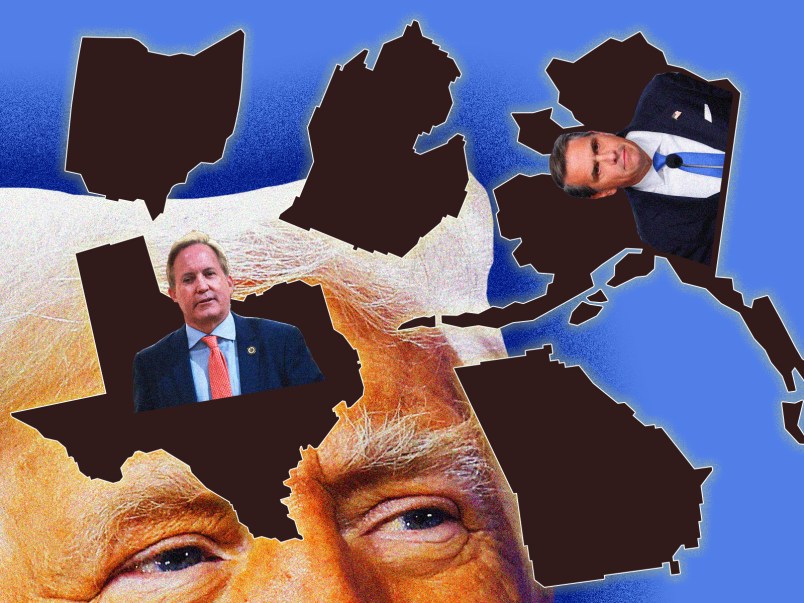
TPM’s Comprehensive Guide To How Senate Swing States Certify Their Elections—And How Bad Actors Might Screw With It

Consider this nightmare midterms scenario: Democrats whomp Republicans in the House of Representatives, as polling currently suggests they will. 

But the race for Senate control is closer. 

As counting in early November grinds on, it becomes clear that control of the Senate hinges on a few thousand votes in a single Senate race. Those votes are all that separates Congress from a 50/50 Senate in which Vice President JD Vance presides as a tiebreaker vote and a 51/49 Democrat majority.

What then? A given Senate candidate could refuse to concede, tapping into fraud allegations. Anyone who remembers 2020 will recall the baseless MAGA world conspiracy theories Trump allies boosted to try to delay the certification of that election. The same plan could lead to a lengthy fight over certifying key Senate races, with a Trumpified DOJ doing what it was prevented from doing in 2020: throwing its weight into the process, setting up a slow-moving fight over control of the body hinging around just one closely decided race. With a pre-emptive lawsuit targeting Alaska, the DOJ has shown its ready to go. 

Each state has its own process for certification, governing how it canvasses and formalizes a given senator’s win in the state. The process covers disputes, including how officials are to respond to lawsuits, and which officials, in the end, have the authority to certify an election. In some states, these positions have been taken over by 2020 election deniers. In others, state legislatures have passed laws making it easier to file mass voter challenges. Activists have used these laws to challenge thousands of voters and ballots, raising concerns that those disqualified might exceed the margin of a victory or loss. Similarly, some states have cooperated with the DOJ in its effort to obtain each state’s voter roll, raising the prospect that the DOJ itself might challenge the vote. .

Once the outcome of a state’s election reaches the Senate, it has a series of procedures laid out to govern disputes. But, unlike the states, they’re not laid out in statute: the Senate largely decides these things through norms that have calcified over the centuries. States send their certificates of election to the vice president — so, JD Vance — and the Senate Rules Committee plays a role in deciding disputed elections.

Below, we break down the certification protocol in each state where Senate races are expected to be tight. We look at how states canvass the vote, making sure ballots are in and properly counted. We look at the process for certification. We look at who can challenge voters individually or en masse, and who can challenge state officials decisions. We look at what it takes to trigger a recount, and how that recount works.

We hope this helps you wrap your head around how things might unfold should Trump and his allies attempt to interfere, overturn or otherwise challenge election results next week.  


Texas 

Who’s in charge?

When experts fret about Republicans trying to overturn a 2026 election, they usually point to Texas. If Democrat James Talarico wins the Senate race, it’ll likely be by a very small margin, and the current attorney general, Ken Paxton (R) — not exactly known for his integrity — is Talarico’s Republican opponent. One of Paxton’s claims to fame is leading a (quickly tossed) lawsuit to challenge battleground state election certifications in 2020. 

Certification-wise, local authorities (usually county commissioners) meet to conduct the canvass no later than 14 days after Election Day. No later than 24 hours after the local canvass, the county clerk must deliver the certified results — and a separate slate of certified returns for the gubernatorial race — to the secretary of state. For statewide races except the gubernatorial, the governor then conducts the state canvass and certification at a time set by the secretary of state — no earlier than 18 days after and no later than 33 days after Election Day. For the governor’s race, the results are canvassed by the state legislature and certified by the speaker of the House. 

Completing the canvass, certification and recount processes are all mandatory duties of election officials, and can be enforced with a mandamus action in state court. 

Still uneasy? You’re not alone. Since his attempted 2020 ratfuckery, Paxton has tried to get ballots tossed in Houston, lawfare Beto O’Rourke out of running in 2026 and indict the Travis County clerk. In addition, when the Texas Court of Criminal Appeals prevented him from expanding his power to prosecute election crimes, he helped get the recalcitrant judges ousted and replaced with those who acceded to him (He still hasn’t tested those powers, though, and many experts think they’d still be found to be unconstitutional.). He could also seek a court order to seize ballots, though they’d remain in the custody of the court.

Paxton’s office gives him unusual power to challenge the election, and he’s shown a willingness to cry (unsubstantiated) fraud and go after election officials before. But courts have proven adept at turning back his brand of lawsuits before, and experts generally express confidence that they’ll hold again.

Who can challenge?

In Texas, an automatic recount is only triggered in the case of a tie. The losing candidate in a race decided by a plurality vote may petition for a recount if the margin is less than 10% of the votes received by the winning candidate. The request must be submitted by 5 p.m. on the third business day after the initial canvass is complete, and begun either no later than the seventh day after the petition was approved or the day after all ballots have been delivered to the proper authorities (whichever is later). 

A registered voter can challenge the qualifications of another voter in the same county by sworn statement. it is a felony to include intentionally misleading information, and the statement must be predicated on personal, first-hand information. There would then be a noticed hearing before the registrar.


Alaska

Who’s in charge?

Alaska certifies its elections via a state review board, based in Juneau. The official who actually certifies the result, however, is the director of the state’s Division of Elections, an agency housed within the office of the Lieutenant Governor. This time around, Lt. Gov. Nancy Dahlstrom will oversee the process alongside Division of Elections Director Carol Beecher, a Republican, who tried in 2023 to remove the state from a non-partisan voter roll maintenance system. As you may have guessed, Beecher found a reason to try: election denial conspiracy theories about the system, the Electronic Registration Information Center, known as ERIC. Beecher’s efforts ultimately failed – Alaska stayed in ERIC.   

Who can challenge?

The state pays for a recount if the margin is 0.5 percent or less; appeals after a recount go to the state Supreme Court. Contesting an election over fraud allegations works differently: in that case, a candidate has to prove, in state court, fraud large enough to change the result. There’s no process under Alaska law that allows for mass challenges to votes. Instead, individual election officials and poll watchers can challenge voters that they believe to be unqualified.

Elections Director Beecher’s aggressive effort to purge the state’s voter rolls before the midterms has resulted in controversy that’s reached from the state to Washington. After the state DMV sent a list of 3,000 people who might not be eligible to vote, Beecher removed them all. More than 600 people were wrongly removed, she later told state lawmakers. Beecher also gave the DOJ an unredacted version of the state’s voter rolls last year, prompting as-yet-unrealized concerns that the DOJ may use the information to try to block people from voting. 

Trump has already ordered the feds to try to interfere in the state’s certification. In October, the DOJ sued to block the state from certifying its election if Mary Peltola wins; the lawsuit is widely expected to go nowhere, though it signals that the DOJ is ready to try to intervene. 


Kansas

Who’s in charge?

A State Board of Canvassers certifies the race. In Kansas, it’s composed of Governor Laura Kelly (D), Secretary of State Scott Schwab (R), and the state Attorney General, Kris Kobach (R), a staunch trump ally and longtime proponent of restrictions on who can vote.

Who can challenge?

Recounts are available under state law if the margin if 0.5 percent or less; a candidate projected to lose funds their own if the margin is larger. 

The state doesn’t allow mass challenges to voter eligibility or votes themselves. The duty falls instead on individual election judges. 

For Kansas, the risk of mass disenfranchisement mostly comes through attempts to remove large groups of voters from the state’s election lists. This has developed most dramatically through the debate this year over the “SAVE Kansas Act.” Enacted over Gov. Kelly’s veto, the law bars nonprofits from conducting online voter registration drives, a cop to one strain of voter fraud conspiracy theory that blossomed after the 2020 election. It also checks the state’s voter rolls against DMV data and immigration status via the federal SAVE database, while removing people who don’t vote for four years and fail to respond to a notice. The law’s passage has prompted concerns from the ACLU that it could result in naturalized citizens being removed from voter rolls along with other categories of people. 


Ohio

Who’s in charge?

County boards of elections begin the official canvas 4 days after Election Day. Secretary of State Frank LaRose (R) then certifies the results. 

Ohio’s Republican leadership, particularly LaRose, routinely engage in what we’d call old-school voter suppression: making it harder to pass citizen-initiated ballot referenda, changing the composition of the state Supreme Court when it thwarted Republican gerrymanders, etc. Not having been a true battleground state (until maybe this year), the election denialism stuff has been more on the margins. LaRose referred more than 1,000 cases of alleged voter fraud to the Trump DOJ last year, and willingly handed over the state’s voter rolls complete with sensitive and private information. There is an ongoing lawsuit in Ohio over new proof of citizenship requirements for voters who register at the Bureau of Motor Vehicles. Ohio is also one of at least 16 states that handed over its voter rolls to the Trump administration. 

Gov. Mike DeWine (R) is a pre-Trump, establishment Republican, while LaRose has become progressively more MAGA, particularly for his failed Senate bid to take on Sherrod Brown this year (he is now running for state auditor instead). Legislators have ensured that the state Supreme Court is now solidly right-wing.

Who can challenge?

In Ohio, an automatic recount is triggered if the margin is less than or equal to .25%, and it must be completed within 10 days of being ordered. Any candidate that receives votes can request a recount within 5 days of the results being declared, but takes on the financial burden (except if the recount changes the election outcome/if any precinct changes by 4% or more, the requester is refunded the cost of recounting that precinct). Candidates can request partial recounts. 

Only precinct election officials — poll workers — in Ohio can challenge a voter on Election Day. Even if the voter is found to be ineligible by a majority of precinct officials, she still casts a provisional ballot.


Iowa

Who’s in charge?

Iowa’s federal and statewide elections are partially overseen by Governor Kim Reynolds, a close Trump ally and election denier who holds an automatic position on the state canvassing board. In addition to the governor, the elected officials involved in certification include the secretary of state, the state auditor, the treasurer and the agriculture secretary. Reynolds refused to acknowledge Trump’s 2020 loss and said people believed the election was “not valid.”One Democrat, State Auditor Rob Sand, sits on the body, as do other Republicans who have not promoted the Big Lie. 

Who can challenge?

Iowa law allows a candidate to contest an election based on a number of factors, including allegations of fraud by election officials, that illegal votes accepted, or that legal votes rejected at the polls. A candidate for governor has 30 days to contest the results. Governors’ race challenges are decided by a joint committee established by the state legislature.

Voters in Iowa are allowed to challenge the validity of another’s voter registration before and on Election Day (even at the polling place) based on several factors including allegations of noncitizenship or falsified registration address. Zealous state residents have taken advantage of the ability. In Linn County, four people were behind 495 voter challenges filed in 2026 as of late August.

Iowa is one of at least 16 states that acquiesced to the Trump DOJ’s’s demand for sensitive voter data, meaning the DOJ already has information on the state’s voter roll, which Republican Secretary of State Paul D. Pate turned over when asked. Paul, however, has has actively worked to debunk disinformation and election conspiracy theories.


Michigan

Who’s in charge?

Michigan’s elections are governed by a board that must be bipartisan by law, the members of which are appointed by the governor with input from the state Senate. The board’s Republican chair has publicly lamented that conspiracy theories about the security of U.S. elections “are going to ruin democracy,” and affirmed that President Trump lost the 2020 election in Michigan.

Democratic Secretary of State Jocelyn Benson acts as chief election officer.  

Michigan has a super-decentralized system of election administration that relies on more than 1,600 county, city and township-level election officials who manage elections and ballot counting.

Who can challenge?

Candidates for office can request a recount if they believe administrative error or election fraud interfered with the results of their election under Michigan state law. If two of four members from opposite parties on the state board of canvassers, which certifies statewide and federal elections, suspects fraud in an election, the issue is referred to the state attorney general. 

Any registered voter of a specific jurisdiction can challenge the registration of another in that same jurisdiction via sworn statement, but people who submit challenges “indiscriminately and without good cause” could face misdemeanor charges, per state law.


Georgia

Who’s in charge?

Trump’s infamous and unsuccessful pressure campaign against now-outgoing Secretary of State Brad Raffensperger in 2020 highlights how important a single person can be to upholding democracy in the state. It’s pretty unclear whether the Republican Secretary of State candidate running to replace Raffensperger would stand up to Trump in the event he tries to steal another election. Further down the chain, county-level boards have become a battleground over election certification, with some being infiltrated by members of organized election denialist efforts. A superior court judge and an appeals court have ruled that county election boards must certify elections under deadlines imposed in Georgia state law. The Atlanta Journal-Constitution reported in 2024 that at least 19 members of Georgia election boards across nine counties had rejected certifying elections since 2020. Challenges are decided by the state’s courts.

Three of the five members of the Georgia State Election Board, along with the board’s executive director, are also election deniers. While that board doesn’t certify elections, it enacts and enforces election rules. Before the 2024 election, the board approved new rules that gave it greater authority to delay certification. 

Who can challenge?

A candidate or voter who cast a ballot can challenge the outcome of that election under Georgia law. Elections can be contested on suspicion of fraud or error. Challengers have five days after an election is certified to file their challenge with the county Superior Court and a select judge will preside over the contest. Georgia election law is complex. A candidate can request a recount up to two days after an election is certified when the vote margin is no greater than 0.5% and to be completed within 17 days of the recount request. For elections suspected of fraud that use a paper ballot, county superintendents, political parties or candidates can request a recount. For elections that use electronic voting, superintendents, candidates, and groups of at least three voters within the county can request recounts. Requests can also be made by a candidate directly to the Secretary of State, and are conducted at the Secretary of State’s discretion. Such recounts must be conducted prior to the legal deadline for election certification. Further litigation of alleged election fraud is decided by the Superior Court, and appeals referred directly to the Georgia Supreme Court.

One person can challenge voter eligibility an unlimited number of times in their own county before or on Election Day based on things like citizenship status, residence, and felony convictions. In Chatham County, one person challenged the eligibility of almost 900 people.


Minnesota

Who’s in charge?

In Minnesota, a panel of senior officials certify the vote via a State Canvassing Board. The body is composed of the Secretary of State, two justices of the state supreme court, and two lower level district judges. Certification is rendered conditional if a lawsuit is filed contesting the results. 

Who can challenge?

Recounts aren’t automatic; candidates can request one, with the state paying, if the margin is within 0.25 percent. 

State law blocks the kind of mass challenges that other states allow. Instead, individual petitions have to be filed challenging a voter’s registration. More challenges can take place at polling precincts. There, Minnesota residents can file forms challenging voters — the dispute is decided by an election judge. 

The state has successfully fended off the DOJ’s attempt to gain access to its full, unredacted list of voter data. Its win over the administration in court marked the DOJ’s 23rd straight loss on that count. Some concerns persist. A recent lawsuit alleged that DHS managed to obtain much of the data, and is sharing it within the federal government in violation of the law. 


North Carolina

Who’s in charge?

North Carolina “state law has long established that officials have a mandatory, nondiscretionary duty to certify elections,” according to a recent report by several nonprofits focused on election law. 

In North Carolina, the secretary of state does not oversee the state’s elections. Instead the North Carolina State Board of Elections (NCSBE) is the state agency charged with the administration of the elections process and compliance. 

The NCSBE is an independent state agency that works in conjunction with the state’s 100 county boards of elections. The board is currently made up of five board members — three Republicans and two Democrats. Potential members are nominated by the state party chairs and the state auditor appoints the members from those list of nominees. That state board is not allowed to have more than three people affiliated with the same party.

The State Board of Elections must meet by the Tuesday three weeks after Election Day — Nov. 24, 2026 — to complete the canvass for nonlocal elections and “authenticate the count in every ballot item in the county by determining that the votes have been counted and tabulated correctly,” according to North Carolina legislation. If for some reason, the state board has not received the county canvasses by Nov. 24, “the State Board may adjourn for not more than 10 days to secure the missing abstracts.”

Six days after the completion of the canvass — if there are no pending election protests — the state board must issue a certificate of election and provide a copy to the secretary of state.

Who can challenge?

But following Election Day there may be election protests. For a statewide election, the state board must order a mandatory recount if a candidate requests it and the difference between the votes are not more than half a percent of the votes or 10,000 votes (whichever is less). A request for a mandatory state recount must be made in writing to the state board by noon on the second business day after the county canvass.

North Carolina also allows private individuals to challenge another person’s eligibility to vote. But state law presumes a voter’s eligibility and the burden is on the challenger to prove the voter is ineligible. Any challenges to a voter’s registration or absentee ballot has to be made in writing and signed under penalty of perjury by a voter registered in that county.

If there are election protests, the certificate of election must be issued 10 days after the state board’s final decision on an election protest — “unless the state board orders a new election or the Superior Court of Wake County orders a stay of the certification pending an appeal of the protest.”


New Hampshire

Who’s in charge?

After all absentee ballots have been processed and after the polls are closed, election officials — under supervision of the moderator — immediately begin counting the votes. After the tabulation of votes is completed, and the results are announced by the moderator, the town or ward clerk will prepare the election return and submit the election return form to the Secretary of State David Scanlan. Once the secretary of state receives all the returns, he will review and total the votes and declare the winners of the election.

Following that — after the time for any recount or appeal has expired or when all candidates waived, in writing, a recount or appeal — Gov. Kelly Ayotte (R) will issue certificates of election to members of the United States Congress, according to the state law. And the secretary of state will issue certificates of election to state senators, state representatives and county officers.

Who can challenge?

A voter voting in any state election may be challenged by any other voter registered in the town or ward in which the election is held, an election official, a challenger appointed by a political committee or a challenger appointed by the attorney general, according to state legislature. 

The challenger has to submit a written challenge to the official presiding over the polling place in question. The official then determines whether the challenge is well grounded. The state statute requires a signed affidavit under oath and that the challenger in question has to have personal knowledge or another basis for probable cause for the challenge. The challenge cannot rest solely on a vague suspicion. Before making a decision, the official has to give the challenged voter an opportunity to push back on the allegations.

If the official “determines that it is more likely than not that the challenge is well grounded,” the official does not receive the voter’s ballot, according to state law. If the challenge is not well grounded, the voter must be allowed to vote. If the voter disagrees with the official’s decision they can seek immediate review in the New Hampshire Superior Court.

Under New Hampshire law, any candidate in a state general election may request a recount if the vote difference between them and the winning candidate is less than 20% of the total ballots cast. The request has to be made in writing to the secretary of state by the Friday after Election Day.


South Carolina

Who’s in charge?

In South Carolina, the Board of State Canvassers certifies the election. The members of the State Election Commission (SEC) serve as the state board of canvassers after elections to certify election returns, to declare candidates elected and to hear protests and appeals. The SEC has five commission members. At least one has to be a member of the majority political party and at least one has to be a member of the largest minority political party represented in the general assembly.

The Board of State Canvassers must convene within 10 days of Election Day — Nov. 12 — to canvass votes, certify results and order any necessary recounts. The board can continue to meet on a day-to-day basis for up to 15 days to complete their responsibilities — including declaring which candidates have been elected and the certified vote totals, according to the state legislature. The certified results are then delivered to the secretary of state.

Who can challenge?

An eligible voter or qualified watcher may challenge the eligibility of a voter if they suspect they are not qualified to vote. If the challenge is coming from an individual, they must direct their challenge to an election manager. The manager then presents the challenge to the voter in question.  

The election manager has to explain the qualifications for voting and can question the individual about their eligibility. But if the voter maintains they are qualified while the challenge stands, the voter must be allowed to cast a provisional ballot. That ballot will be handled separately and cannot be included in the initial count of regular ballots. The ballot will be turned over to the board of voter registration and elections or the election authority that has supervision of the election to be reviewed at the legally scheduled meeting. If no one provides evidence to support the challenge, the ballot will be counted. If evidence is presented, it will be reviewed and a final decision on the ballot will be made by the authority.

A voter eligibility challenge must happen before the voter in question deposits a paper ballot or casts their vote on a voting machine. For absentee ballots, challenges must be made before the return envelopes are opened and the ballot envelopes are removed.

Separately, a recount is generally required when the difference between two candidates is no more than 1% of the total votes cast for that office — unless the candidates waive the recount. 

The board of state canvassers can also act “in an appellate judicial capacity” if election disputes arise. Any election dispute or protest has to be submitted in writing to the board before the deadline, which is noon five days following the canvassing of the votes.

The board, in its judicial capacity, can hold hearings where candidates, alongside legal counsel, may present evidence, examine and cross-examine witnesses. The board then decides on the issue at hand by a majority vote and certifies the election results. 

Those decisions can usually be appealed to the South Carolina Supreme Court with a priority consideration. 


Nebraska

Who’s in charge?

Following the completion of the canvass by the county canvassing board, an abstract of votes for all officers should be delivered to the current Secretary of State Robert Evnen, according to Nebraska statute.

Evnen has previously pushed back against allegations of election fraud and irregularities during the 2020 election. In an interview, Evnan even said he sees “no justification” for a full, forensic audit or a hand recount of the 2020 election results in Nebraska.

A state board of state canvassers — made up of the governor, secretary of state, auditor of public accounts, state treasurer and attorney general — then meet on the fourth Monday after the election to canvass the votes cast. The board can continue to meet until all returns are received and all votes are tabulated. The board’s job is to use abstracts they received from counties to determine which of the candidates has been elected.

This group, made up entirely of Republicans, does not under state law have the ability to question the results. 

“The duty of the board of state canvassers to canvass the votes is ministerial in nature,” according to the Nebraska statute.

Within 40 days after Election Day, the secretary of state has to prepare and deliver a certificate of election to the “person who meets the constitutional and statutory requirements of office and whom the board of state canvassers or Legislature has declared to have received the highest vote for such office or position in the statewide primary or general election,” according to the Nebraska statute.

The certificate has to be signed by the governor and countersigned by the secretary of state.

Who can challenge?

In Nebraska, an election inspector, judge, clerk or any registered voter can challenge a person’s eligibility to vote even if they are registered to vote. A challenge, essentially, triggers a formal process. Once a challenge is made, the voter in question — in the presence of an inspector or a judge of election — has to write their name, address and signature under an oath that reads: “I do solemnly swear that I will fully and truly answer all such questions put to me related to my place of residence and qualifications as a registered voter at this election.”

The challenged voter will then have to answer questions from an election official about their residence as well as qualifications to vote in that election. The official may ask additional questions to assess eligibility. If the voter complies and meets the eligibility standards — including age and citizenship — they must be allowed to vote.

A candidate who was not elected can request a recount if the margin of defeat falls within the threshold established by the statue. The written request has to be submitted no later than the third day after the county canvassing board or state canvassing board concludes its canvass.


Maine

Who’s in charge?

Certification in Maine is straightforward: Within two business days after the election, the county clerks file an attested copy of the election returns with the secretary of state’s office. Within 20 days after the election, the secretary of state compiles and certifies the returns, and gives them to the governor. 

Who can challenge?

There are no automatic or partial recounts in the state, and a candidate has to request a recount within 5 business days of the election. If the margin is up to 1% of the total votes or fewer than 1,000 votes, whichever is less, the state pays. If the gap is bigger than that, the requester has to pay in full (unless the recount changes the result). Any candidate running can initiate a recount.

A voter or election official can also challenge the qualifications of another voter in the same municipality. The ballot in question is marked, and a hearing is held after the election to confirm the challenged voter’s qualifications.

The primary players in Maine’s certification and recount processes are Secretary of State Shenna Bellows and Governor Janet Mills, both Democrats. The state, like many of its blue peers, was sued by the Trump Justice Department to compel the release of its voter rolls. That case was dismissed quickly by a federal district court judge, who called the government’s arguments “half-hearted.”  

Correction: This post misstated a detail of Ken Paxton’s campaign against state judges who opposed him and has been updated. TPM regrets the error.

  •  

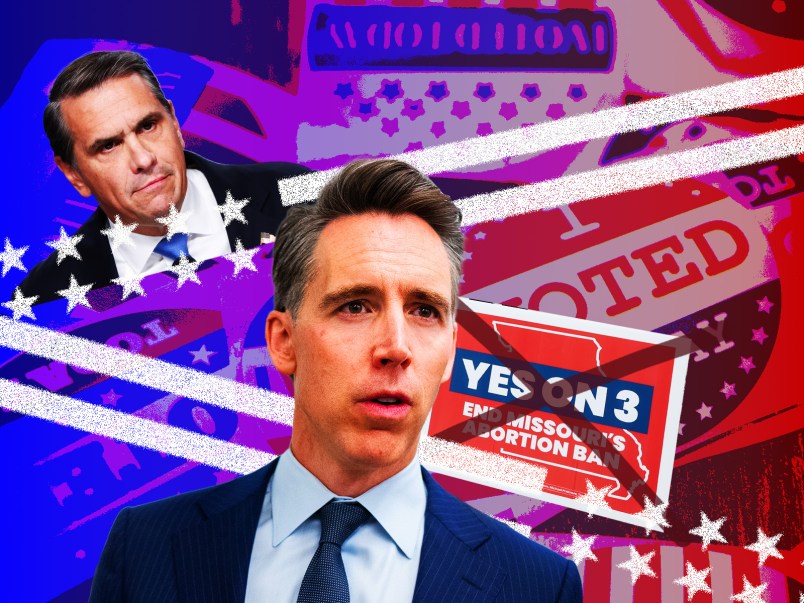
Missouri Republicans Try To Trick Voters Out of Abortion Rights 

Hello, and Welcome Back To The Franchise

Dobbs fallout may have dropped out of the headlines, but existential state-level battles that will decide the fate of women nationwide continue to rage. 

This cycle, there’s one anti-abortion amendment and three pro. Two of them could upend the abortion landscape in their states. 

  •  

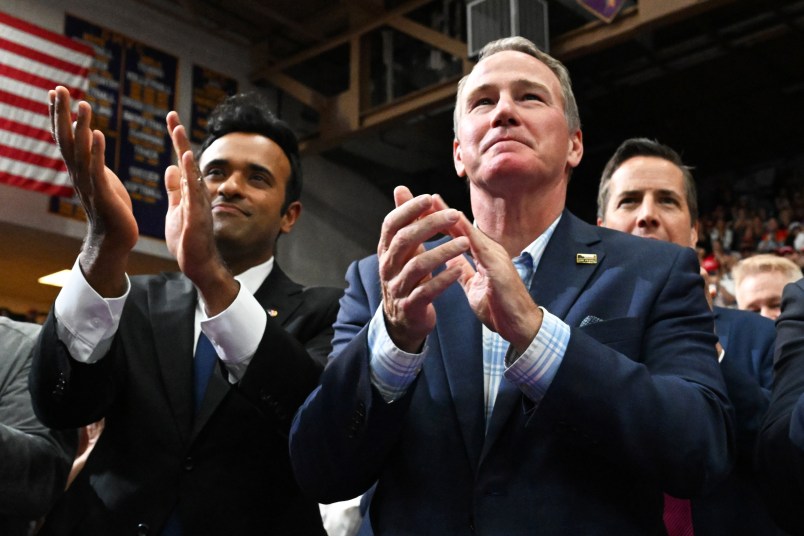
Some Ohio Republicans Embrace, Some Scurry Away from Appalling Ramaswamy Ad

The Ramaswamy campaign’s new ad featuring Democrat Amy Acton’s mother, in which she repeatedly denounces her daughter as a liar, is making Republicans squirm even in this era of Trump-inflected gutter politics. Acton and her mother have been estranged for decades since her mother’s husband — her stepfather — was indicted for raping Acton when she was a child. 

  •  

13 Races We Think Will Define the Midterms

There’s a lot to pay attention to this year. With Democrats putting up seemingly fantastical numbers in the polls, the map is expanded in ways that no one thought possible a year ago. Is Texas in play? Is Kansas? Looming over it is Trump’s cult of personality, and the lie that any election in which he or his allies run, they win.

This list is an attempt to pinpoint races that tell the story of where America is at this November, explain why, from TPM’s perspective, these races matter, and look ahead to the conversation we’ll be having in coming months.


1. Peggy Flanagan (D) / Michelle Tafoya (R) — Minnesota Senate

Why is this race especially important to TPM?

Extremism. 

What to know:

Michelle Tafoya (R) has been doing well in polls in recent months, showing her within a few points of Peggy Flanagan (D) in what is normally a solidly blue state. That’s inspired the Trump administration to pull out all the stops to put its finger on the scale, rebooting the racial panic it tried to stoke last winter over the state’s Somali population. The capstone of that effort is the administration’s legal gambit to deport Rep. Ilhan Omar (D). It seems unlikely that this is going to land well in a state still recovering from this year’s federal invasion, which claimed the lives of two U.S. citizens. If Flanagan wins, as it still seems she will, Minnesota could end up as a prime candidate for Trump to target with his expected election interference. 

What do the polls say?

It’s close. 


2. The Five Congressional Seats Texas Republicans Redrew Their Map to Win

Why is this race especially important to TPM?

Voting rights. 

What to know:

There were few congressional districts in Texas that went untouched by the legislature’s late-2025 redistricting bonanza, carried out, at Trump’s behest, in a mid-cycle gerrymandering bid to help Republicans hold the House regardless of voters’ wishes. Texas Republicans were the first to answer Trump’s call, and the party salivated over the boon they could extract from the giant state. Now, however, it appears that the Texas GOP may have overplayed its hand. In two heavily redrawn districts along the border, Texas’ 28th and 34th, Democrats stand a real chance. After all of Republicans’ work, Cook Political Report rates one, the 28th, represented by Vicente Gonzalez (D), as a “toss-up,” and another, the 34th, represented by Henry Cuellar (D), as “leans Democrat.” GOP spending patterns show that they are not taking the other three — the 9th, the 32nd and the 35th — for granted either. In order to create those five, theoretically pro-GOP districts, many other districts had to give up some Republican votes, ironically turning much of the state into a battleground where Democrats, in the right cycle, could snatch back some seats . 

What do the polls say?

As usual with House races, there aren’t many public polls. But following the Republican money suggests that they are getting uneasy here. 


3. Troy Jackson (D) / Susan Collins (R) — Maine Senate

Why is this race especially important to TPM?

Separation of powers, expanding Democrats’ map. 

What to know:

Sen. Susan Collins (R) has been Democrats’ white whale for multiple cycles now, a talented politician who has defied political gravity and hung on in a state that’s only getting bluer. When Democrats’ first choice, Graham Platner, imploded after he was accused of sexual assault, they desperately grappled around for a replacement, landing on former state Senate leader Troy Jackson (D), who put together a lightning-fast nomination campaign. Jackson has not quite made up for lost time, with his truncated campaign and lack of Platner’s charisma keeping this race tight enough to make Democrats nervous.   

He’ll hope to get a boost from ballot mate Hannah Pingree (D), who seems comfortably bound for the governor’s mansion.

What do the polls say?

Recent polls have given Jackson a small edge, but it’s a nail-biter. 


4. Merrillee Malwitz-Jipson (D) / Marshall Rawson (R) — Florida House District 10

Why is this race especially important to TPM?

Extremism.

What to know:

Even in today’s Republican Party, it’s rare that you have someone who attended the Charlottesville white supremacist rally run for a state House seat. But Marshall Rawson (R) is one such candidate. Rawson activism with a neo-Confederate group called League of the South has been known for a decade, but it didn’t emerge until after he won his primary that he had attended the biggest white supremacist rally in a generation, at which participants famously chanted “Jews will not replace us.” TPM broke the story of Rawson’s attendance in September. 

What do the polls say?

The Florida House district is extremely Republican, and Rawson will likely win. 


5. Jon Ossoff (D) / Mike Collins (R) — Georgia Senate

Why is this race especially important to TPM?

Extremism, election denial. 

What to know:

This race is one of several that will determine control of the Senate. But it also features perhaps the most extreme candidate running for the chamber this cycle, Mike Collins (R), who not only is slavishly loyal to president Trump, but has joked about killing immigrants, retweeted a video of white university students making monkey sounds at a Black woman, and cheered the January 2026 FBI raid on Fulton County’s election office with a since-deleted post on X: “Go get ‘em Kash.” Given this, it may not be surprising that he has constantly been asked to explain why so many white nationalist and anitsemitic figures have turned up in his campaign, congressional office, and family. What has been surprising, though, is his complete inability to answer for it. In recent debates, Collins has fumbled through questions about these connections, and refused to concede Trump lost the 2020 election.

What do the polls say?

Collins’ opponent, incumbent Sen. Jon Ossoff (D), is ahead. 


6. Sherrod Brown (D) / Jon Husted (R) — Ohio Senate

Why is this race especially important to TPM?

Expanding Democrats’ map. 

What to know:

There was a time when Ohio picked the president. That broke down in 2020 when Trump won the state by 8 points despite losing reelection. It has trended increasingly red in recent years, raising the question of whether a Democrat can still win statewide. If one can, the conventional wisdom goes, it is Sherrod Brown (D) in 2026. His opponent, Jon Husted (R), has struggled to distance himself from the many data centers he brought to Ohio during his time as lieutenant governor, and that the public now adamantly opposes. If Democrats can’t pick up this seat with an optimal candidate in an optimal cycle, it’s hard to see when they ever would. 

Elsewhere on the Ohio ballot, the contest for governor between former state health department director Amy Acton (D) and former presidential candidate Vivek Ramaswamy (R) is also competitive. Ramaswamy has struggled throughout his campaign to connect with voters and to hit baseballs. Some polls have Acton up by as many as nine points. The race is wrapping up on a particularly nasty note, with an attack ad featuring Acton’s mother — long estranged from the candidate after she stayed with the man who sexually abused Acton when she was a child — to paint Acton as a liar. The Ramaswamy campaign doubled down amid the ensuing outrage, calling Acton a “serial fabulist.”    

What do the polls say?

Acton is running a tick ahead of Ramaswamy, but both that race and the Senate one are extremely close, the Democrats having a slight edge.


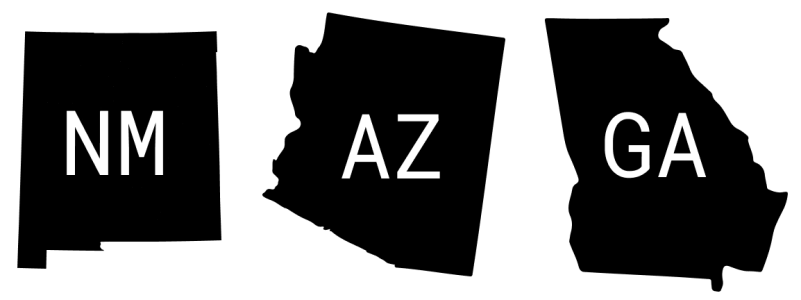
7. Secretaries of State races, including in New Mexico, Arizona and Georgia

Why is this race especially important to TPM?

Extremism, voting rights, election denial. 

What to know:

The secretary of state’s office may have gone without much attention before the Trump era, but no longer. The official who oversees elections in key states is in the cross-hairs of those who believe the myths that election was stolen in 2020, and that widespread fraud and non-citizen voting continues to help Democrats. In Arizona and New Mexico, two election denial activists are themselves on the ballot, running for the role. In Georgia, the Republican candidate has reportedly said there were “irregularities” in the 2020 election but has stopped short of claiming Trump won. That candidate, Tim Fleming (R), has also repeated false claims about mail-in ballots being used to commit voter fraud and has been evasive about whether he would be ready to do as his would-be predecessor, Brad Raffensperger (R), did and stand up to Trump. Fleming did tout that he has voted for the president six times during a debate in May. When you have a Republican administration that has shown it is hellbent on seizing the constitutional right to administer elections from states, it’s pretty crucial to have people who are not election deniers serving in those roles in the lead up to 2028. 

What do the polls say?

Too little polling to say anything conclusive.


8. Adam Hamilton (D) / Roger Marshall (R) — Kansas Senate

Why is this race especially important to TPM?

Expanding Democrats’ map. 

What to know:

Though everyone is surprised that a Democrat may be on the cusp of winning a Senate election in Kansas, the party has experienced electoral success in the state before — and relatively recently. Current, term-limited Gov. Laura Kelly (D) won in 2018 and again in 2022, riding, the first time, the backlash to Trump and, the second time, the backlash to Dobbs. Now, Democrats could strike gold again with popular Methodist minister Adam Hamilton (D), who is up against the uniquely unlikeable and scandal-hobbled incumbent senator, Roger Marshall (R). This is the kind of race where Democrats will need everything to go right, but they at least have secured themselves a candidate compelling enough to put the state into play, and possibly to give Democrats a blueprint for other deep red state races. Elsewhere on the ballot, polling shows a competitive gubernatorial contest between state senators Ty Masterson (R) and Cindy Holscher (D).

What do the polls say?

Hamilton v. Marshall is as close as can be. Holscher is running a few points behind Masterson.


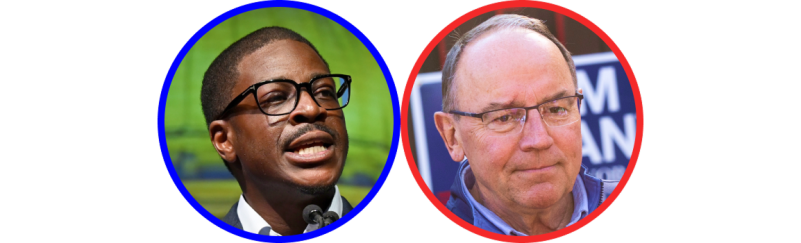
9. David Crowley (D) / Tom Tiffany (R) — Wisconsin Governor

Why is this race especially important to TPM?

Extremism, voting rights, election denial.

What to know:

Tom Tiffany (R) is a weird character, and Wisconsin is important. Wisconsin Gov. Tony Evers (D) announced last summer that he would not seek a third term in office, creating an open race for governor in Wisconsin for the first time since 2010. Tiffany, a member of Congress, has done nothing to engender confidence that he would support free and fair elections in the state. The main problem with the Trump-backed Tiffany is the extent to which he threw his weight behind overturning the results of the 2020 election. Tiffany didn’t just vote against certifying President Biden (D) as the winner of the election in Arizona and Pennsylvania (he vowed to do the same for Wisconsin but that vote was interrupted by the mob of Trump supporters that stormed the Capitol), he also joined a Ken Paxton (R)-led effort to throw out Wisconsin’s election results after Trump lost. His election denialism continues to this day, too — in June he embraced the FBI’s investigation into the 2020 election in Wisconsin. 

But Tiffany is no exception to the trend that’s emerged in recent weeks, as Republicans try to distance themselves from the deeply unpopular president who is not on the ballot but wants voters to pretend he is. In September, Tiffany’s campaign conceded “Joe Biden won” when asked about the 2020 results. Even then, his campaign still involuntarily offered to “cooperate with law enforcement on investigations” into Wisconsin elections.

What do the polls say?

Close, but Crowley seems slightly ahead. 


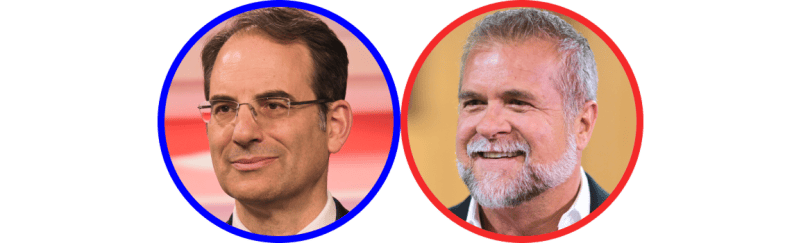
10. Phil Weiser (D) / Viktor Marx (R) — Colorado Governor

Why is this race especially important to TPM?

Extremism.

What to know:

Viktor Marx (R) is a unique character well-suited to our unique political moment. Over his years as a Christian nationalist leader, author, and self-described “high risk missionary,” the Republican Party nominee for governor in Colorado has boasted of having personally rescued thousands of people from conflict zones and of attaining multiple black belts in various martial arts. His impressive resume is not limited to the earthly realms, however: he has also, in his telling, battled demons and faced down Satan himself, biographical details TPM has covered with interest. Critics have questioned Marx’s claims. He’s likely to lose to the Democratic nominee, Phil Weiser, potentially dragging fellow Colorado Republicans down with him. 

What do the polls say?

Marx is almost certainly going to lose. 


11. Kristen McDonald Rivet (D) / Tom Smith (R) — Michigan’s 8th Congressional District

Why is this race especially important to TPM?

Extremism, election denial. 

What to know:

This is a weird one. The Republican candidate Tom Smith won his nomination by accident, likely due to racism. (Smith actually dropped out of the race in July and a different Republican, a Navy veteran and former law enforcement officer, had earned Trump’s endorsement in the primary. The Trump-backed candidate’s name was Amir Hassan, and, well, as one GOP strategist put it to Politico in August, the “GOP base was reluctant to support a dude named Amir Hassan.” Hence, Michigan voters elected the white-bread sounding Tom Smith, who was no longer running.) TPM later learned and was first to report that Smith attended protests in Washington, D.C. on Jan. 6, 2021 and live-tweeted the whole experience from “Jar Head Salsa,” a Twitter account for the food company he runs with his son. 

What do the polls say?

There aren’t many polls of this race, but things are not looking good for Tom. For starters, Kristen McDonald Rivet (D) has wildly out-raised him. As of the beginning of this month, the Democrat had raised about $5 million in donations and contributions to her campaign. Tom’s raised about $250,000. 


12. Missouri ballot amendments 

Why is this race especially important to TPM?

Voting rights, abortion. 

What to know:

You may recall one of the few bright spots to come out of the 2024 elections was the passage of an amendment that enshrined the “right to reproductive freedom” in the Missouri Constitution. The measure passed 52% to 48% and protected abortion in a state led by politicians who would outlaw it if given the chance. Now, the Missouri General Assembly is asking voters to repeal that same constitutional amendment that they voted into law just two years ago. Amendment 3 would ban abortion in Missouri with exceptions only for medical emergencies, fetal anomaly, rape and incest. The measure would also ban gender-affirming care for minors. Missouri Republicans are gambling that some mixture of low turnout and confusing ballot language will help them thwart the clearly articulated desire of their constituents.

That perversion of democracy will sit alongside its triumph, as Missouri voters will also get the chance to vote up or down a maximal Republican gerrymander, despite state officials’ best efforts. The legislature passed the map last year, gerrymandering Black and Democratic voters in the Kansas City area out of electoral power, then tried to shield the new map from the state’s referendum voting process. They failed, due mostly to the still-normal Missouri Supreme Court — which, as we predicted, those same politicians are now looking to dismantle and MAGA-fy. 

What do the polls say?

There’s limited polling of these measures.


13. Matt Dunlap (D) / Paul LePage (R) — Maine’s 2nd Congressional District

Why is this race especially important to TPM?

Extremism.

What to know:

Paul LePage (R) is an old school TPM character: He was Trump before Trump, he often jokes. A trailblazer on the hard right, he denounced immigrants as “the enemy” and labeled one political opponent a “socialist cocksucker” a full decade ago. He looms large in Maine, where he served as governor from 2011 to 2019. The district in which he is now running — Maine’s 2nd — covers a huge portion of the state, the largely unpopulated north. Republicans often win it, though for the last several years it’s been held by Jared Golden (D), a conservative Democrat who is retiring. Matt Dunlap (D), a much more mainstream Democrat, is running against LePage to replace Golden. It’s been conventional wisdom that Dunlap is too progressive for this district, though a big enough blue wave could net the seat anyway. Recent polls show Dunlap ahead. Cook Political Report rates it “lean Republican.”

What do the polls say?

Dunlap seems to have a slight lead. 

Josh Kovensky, Hunter Walker and Christopher Mathias contributed reporting.

  •  
❌