❌

Reading view

Trump Is Almost Certainly Referring to This Dr Phil Project With His Claims of ‘Oil, Gas and Mineral Exploration’ in Greenland

A Texas Energy Company, Dr Phil & Trump’s ‘Golden Dome’ Friends

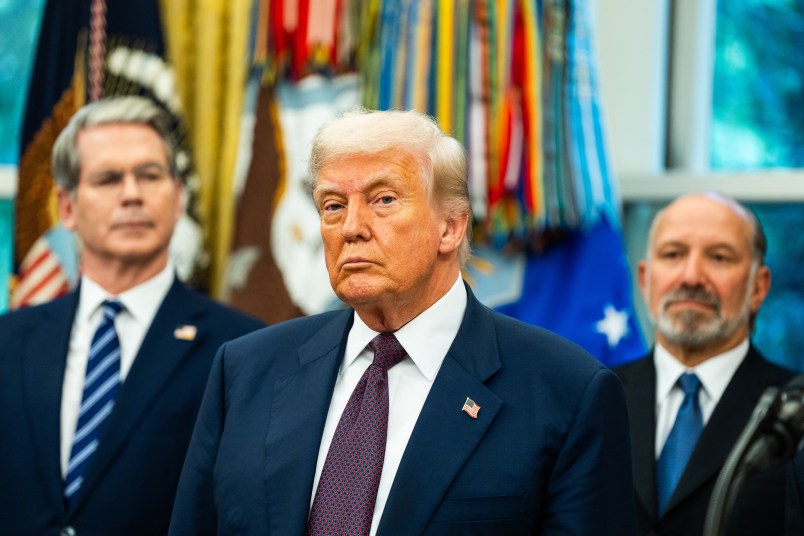
President Trump made one key motivation of his imperialistic ambitions in Greenland clear in a Truth Social post early this morning, claiming that a “massive oil, gas and mineral exploration” was set to begin in “our new and beautiful Greenland!”

He is referencing the paltry-for-the-U.S. security deal that he was able to eke out of Greenland and Denmark last month, which Trump has hailed as some sort of victory for his longtime vision of the U.S. taking Greenland under its control. In reality, Denmark, the U.S. and Greenland signed an agreement in September that allows the U.S. to expand its military presence on the semi-autonomous territory of Denmark. It appears as though the deal has, for now, quieted Trump’s broader ambitions to take the island by force.

The deal does not give the U.S. any new mining or drilling rights and Greenland banned all future oil drilling back in 2021. Greenland officials have already combatted Trump’s statement, according to CNN:

While Greenland’s deputy mining minister Jørgen Hammeken-Holm acknowledged that “there are activities by US companies,” he told CNN that “we are very far away from ‘massive’ exploration.”

“There are many smaller explorations underway but these could take years to become operational,” he added, echoing researchers who have pointed out the difficulties and enormous expense involved in extracting resources from Greenland.

I haven’t really seen anyone mention this in their coverage so I wanted to elevate some reporting I did a few months back about a Trump-linked Dr. Phil drilling project that is in the works in Greenland — and almost certainly what Trump is referring to here (Reuters does mention the project in passing in its coverage of Trump’s remarks). The connection becomes more explicit in this line of Trump’s Truth Social post:

There are Experts that are saying that the amount of easily available Oil is far greater than that of almost any land, anywhere in the World and, even more importantly, from a Security Purpose in the Defense and Offense of both the United States of America, and Europe, is second to none.

Trump is likely referring to the project that a Texas-based firm, Greenland Energy, is trying to embark on in Greenland’s remote Nunap Qeqqa, or Jameson Land. Greenland Energy executives have claimed they have reason to believe that $1 trillion worth of crude oil may lie beneath the surface of Jameson Land. 

Reports surfaced in August suggesting the company was readying resources to begin drilling in the region, even though it did not yet have permission from local officials or the Greenland government to do so. The government is currently still reviewing whether Greenland Energy has the right to drill in the area due to its partnership with a UK company that secured the rights to drill in Jameson Land before the 2021 ban.

I wrote about the whole thing extensively here. But in essence, the Texas-based Greenland Energy project had Trump’s finger-prints all over it before he made things so explicit in this post. Executives for the company have mentioned “disruptions to key shipping corridors, particularly around the Strait of Hormuz” as a motivating factor for embarking on the project and Dr. Phil’s media company has partnered with Greenland Energy to make a docu-series about the drilling venture.

Add to the fact that Greenland Energy personnel have close and obvious ties to Trump and his hegemonic salivating over Greenland, per my piece back in August:

Greenland Energy announced in June that it had added Carol Craig to the company’s board of directors. Craig runs a space exploration and defense company that is heavily involved in Trump’s “Golden Dome” project, the missile defense plan that Trump has used as a basis for his ongoing argument that the “ownership and control of Greenland is an absolute necessity” for the U.S. (It’s worth noting that the chair of Greenland Energy’s board, Larry Swets, is reportedly known to have the president’s ear and has said publicly that the drilling project is “not related to American annexation,” per The Guardian.)

View Article


From: Dr. Phil and a Texas Oil Firm Go to Greenland With a Suspicious Agenda. Signs Point to Trump’s Imperialist Visions.

By Nicole LaFond | 08.10.26 | 5:07 pm

The signs were all there before Trump shouted about them on Truth Social just after midnight last night.

— Nicole LaFond
  •  

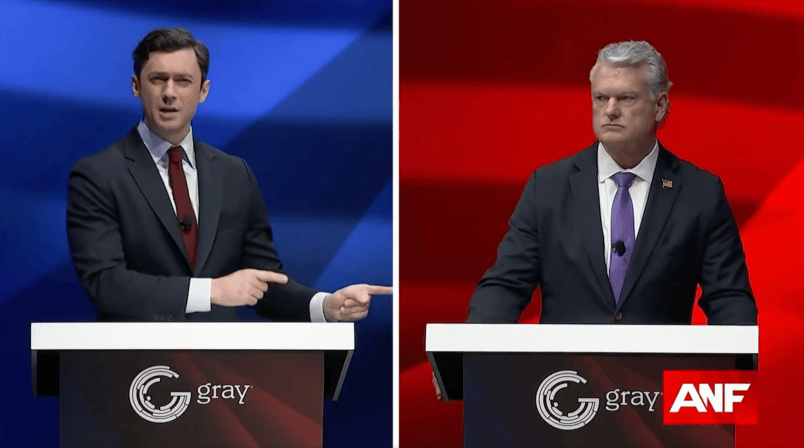
Somehow, Mike Collins Was Completely Unprepared for Questions About His Neo-Nazi Ties During Senate Debate 

Rep. Mike Collins (R-GA) failed to answer a question about who won the 2020 election, said tariffs were making trade fair for Georgia manufacturers, and attempted to elicit sympathy for his own family when asked to condemn the white nationalist views held by his son-in-law during the first Georgia-wide U.S. Senate debate on Thursday night.

  •  

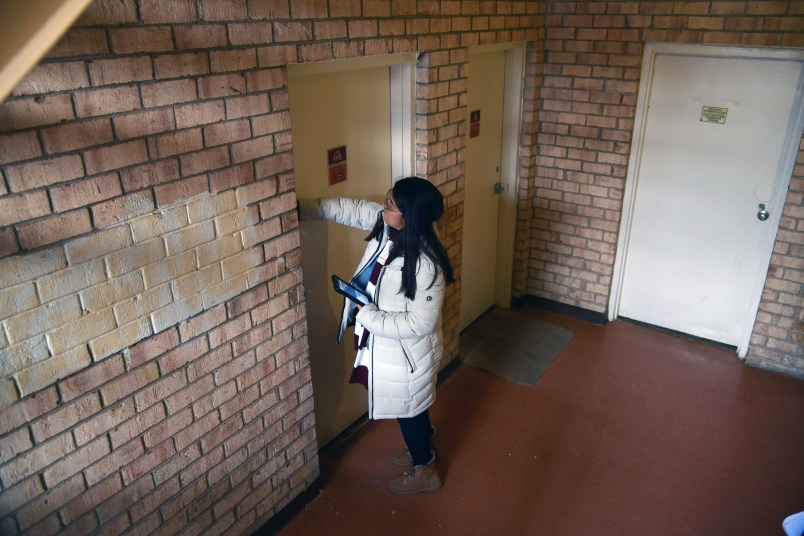
New IRS Citizenship Question Could Make It Easier for Census Bureau to Shift Political Power

A proposed change to a key tax form could help the Trump administration achieve new anti-immigrant policy objectives, including preventing undocumented immigrants from receiving federal tax benefits. But it could also be used to accomplish a more sweeping objective: Shifting the balance of power in Congress by excluding many classes of immigrants from apportionment, the process through which power in the House of Representatives is allocated.

  •  

The Midterms Look Bad for Republicans. How Are GOP Candidates Coping?

[Essay]

Breaking Down the Different Flavors of GOP Midterms Cope

It’s never a good sign when the Senate Majority Leader suggests the election prospects for his own party look grim. Sen. John Thune (R-SD) admitted in a recent interview that he believes even losing Senate control in the midterms to be a real possibility for the GOP, saying, “I worry about that, for sure.” 

Donald Trump is largely responsible for this situation. He’s fully leaned into unpopular policies (building AI data centers, going to war in Iran, launching trade wars with allies, etc.) that have driven up prices, and, despite his dismal approval rating, is insisting there’s no daylight between himself and the rest of the party. As he said at his weird fake midterms convention in Dallas, “Pretend that I am on the ballot.” 

Even accounting for all the usual caveats about poll margins, it does seem like the Democrats are on track to have a strong midterms cycle. So Republican candidates are experimenting with different flavors of cope as they look towards Election Day. Nicole and John have tracked some of this in Where Things Stand and The Brief, respectively, so we tried to come up with some handy categorizations. Here’s what we’ve got.

All Aboard the Islamophobia and Red Scare Express

Some red state MAGA loyalists are playing the culture war hits, trying to keep the focus on nonexistent crises rather than any of the issues actually affecting their voters. We’re talking Sharia takeovers, communist creep, and stolen elections. As Josh Kovensky reported earlier this year, Texas Republicans Gov. Greg Abbott, who is running for reelection, and Attorney General Ken Paxton, the Senate nominee, pioneered the strategy of targeting the local Muslim community in their midterms messaging. Abbott spent the summer fighting “a proposed mosque-anchored housing development outside Dallas” and “campaigning against what he calls the imposition of Islamic law,” per The Guardian.

Sen. Tommy Tuberville, the gubernatorial nominee in Alabama, has taken it upon himself to become a foremost critic of Michigan Democratic Senate nominee Abdul El-Sayed, calling him a “TERRORIST” and “RADICAL ISLAMIST” who would “do everything he can to destroy America.” 

Other Republicans are red-baiting their hearts out, with Rep. Greg Steube (R-FL) claiming that Medicare for All is a “communist” policy and Rep. John McGuire (R-VA) labeling Democratic immigration policies “crazy communism.” 

Self-proclaimed “MAGA warrior” Mike Collins is going for an “all of the above” approach in his Georgia Senate race, promoting xenophobia; pushing 2020 Big Lie conspiracies; and advocating to compensate some people prosecuted for Jan. 6. (Meanwhile, he’s doing little to distance himself from the many racist extremists in his orbit — including in his family.)

Flirting With Criticism

Republicans in swing states and seats are trying to toe the line, breaking with Trump on specific issues, particularly ones germane to their states or districts. They’re leveling targeted criticism and trying to display independence.

So you’ve got midwestern Senate nominees Mike Rogers in Michigan and Rep. Ashley Hinson in Iowa calling for an end to the Iran War, saying soaring gas and grocery prices are harming their voters. Both previously supported the war. Last week, Iowa Reps. Zach Nunn and Mariannette Miller-Meeks even voted to support removing U.S. forces from Iran.

Rogers has also bucked Trump’s AI boosterism, calling for a “national security framework” on the technology and for a one-year moratorium on new construction in Michigan. Sen. Jon Husted (R-OH) has gone further in his reelection campaign, sponsoring legislation to make data centers pay their own utility bills.

In Florida, Rep. María Elvira Salazar used her first TV ad of the general election to warn that Trump will lose Latino voters thanks to his overly aggressive immigration enforcement and mass deportation policies. Salazar, who serves as assistant whip, claims that she risks losing her seat in a district Trump won by 15 points. 

Trump Will Always Be Daddy

While most vulnerable Republicans are trying to distance themselves from Trump, a brave few are hugging him tight. Take Eric Flores, who is running in a South Texas district currently represented by a Democrat, and where Latino voters will determine the result. Praising Trump’s immigration policies, Flores told Fox, “When people say that folks are running away from President Trump, I’ll tell you, I’m certainly not doing that. And let me tell you why: Because he has made promises to South Texas, and he has kept them, especially when we look at border security.” 

We Don’t Know Him

Probably the funniest genre of response comes from Republicans pretending that Trump straight-up doesn’t exist. As John noted in the Brief this week, several Republicans have stripped mentions of Trump from their campaign websites, including Florida congressional candidate Mike Beltran, Iowa congressional candidate Joe Mitchell, and, most recently and notably, Florida gubernatorial nominee Byron Daniels. 

Team ‘We’ll Defy Expectations!’ 

Despite all indications that Democrats seem likely to take back the House, Speaker Mike Johnson insists Republicans are going to defy history and “grow the majority.” 

“It’s a contrast election, and people are making a contrast between common-sense solutions and candidates, and really crazy, which is represented by the other side,” Johnson told Fox News Digital in September. “I am very bullish about the outcome on election night.”

Rep. Ryan McKenzie (R-PA), who spoke at the GOP convention, also predicted Republicans are “actually going to defy the historic trends. Why is that? Because the Democrats are so far left they are totally out of touch.”

Link Copied

By Allegra Kirkland

[Report]

GOPers Blame Americans’ Data Center Opposition on China

Watching the Super Bowl last winter, I saw a commercial from my local electricity company that seemed a little… political.

Baltimore Gas & Electric (BGE) was trying to convey something to me that seemed tangentially related to bipartisan data center opposition that has been rising nationwide and is especially poignant in the D.C., Maryland, Virginia corridor also known as “Data Center Alley.” 

“Private power plant companies that control our power supply are failing to meet demand,” the ad said, with PRIVATE POWER PLANT and CONTROL OUR SUPPLY in capital, neon letters. “When there’s a shortage, prices go up.”

The ad was indirect but — and without speaking to the merit of its intentions — the vibe was pretty obviously trying to leverage public outrage about skyrocketing electricity bills related to energy demands from AI data centers. I was struck by the idea that my electric company would wade in any way into such a charged political issue — a self-interested energy corporation joining hands with riled-up townspeople and climate activists against a common enemy.

If you ask Reps. Jason Smith (R-MO) and John Moolenaar (R-MI), that enemy is the Chinese Communist Party.

Smith, chair of the House Ways and Means committee, and Moolenaar, chair of the House Select Committee on China, sent a letter Tuesday to Treasury Secretary Scott Bessent and IRS CEO Frank Bisignano blaming American data center opposition on an orchestrated disinformation campaign supported by the Chinese government. Yes, you did read that right.

“This is not an organic grassroots movement,” Smith said of data center opposition. Instead, Chinese-backed nonprofits are being used to “manipulate public discourse surrounding the technological infrastructure necessary to win the AI race.”

Smith and Moolenaar’s proof? An OpenAI report which found Chinese-linked influence over social media content “claiming that data center construction was raising electricity prices.” (It is.) And a report that X, owned by AI mogul Elon Musk, identified 200 bots posting anti-AI stuff on the site. OpenAI found no evidence that the campaign it uncovered influenced public opinion.

Instead, data shows that 58% of registered voters believe data center construction by big companies will do more harm than good, according to a September NPR/PBS News/Marist poll released Wednesday. 

Data centers are even more unattractive when they’re local, with 60% of Americans, including 54% of Republicans, responding that they would not be comfortable with a data center in their communities, according to a Pew Research survey published Tuesday. And Pew’s survey also found negative sentiment about data centers increased by 16 points among Republicans between January and August.

This feels like an issue uniting Americans across party lines in grassroots opposition, driven not only by NIMBYism, or even by the documented harms to climate posed by energy-sucking super computers, but also by the desire of the everyman to stand up against entities they believe pose a direct risk to their immediate communities and their pockets.

In attempting to blame anti-AI sentiment on a foreign adversary, Smith and Moolenaar have opted to follow their leader, President Donald Trump, off the “AI opposition is a hoax” cliff. 

Trump has said opposing data center construction will make communities “backwards and poor”; tried to prohibit states from regulating AI; included expanded tax benefits for data center construction in his “Big, Beautiful Bill”; and called disconcerting warnings from AI company CEOs about the risks AI pose to humanity a “hoax.” This week, he’s trying to rebrand the tech from artificial intelligence to superintelligence, a move which may conjure unintended connotations.

The president’s contrary positions on AI and data center construction have pushed Republican politicians, especially those facing competitive midterms, to split from Trump.

While Smith and Moolenaar are both up for reelection, they’re in uncompetitive districts ranked by Cook Political Report as solidly Republican. But Ohio Republican Jon Husted is facing backlash to his once-strong support for data centers as he’s locked in a dead heat with former Sen. Sherrod Brown (D-OH). Other Senate Republicans are pushing to support Husted’s bill focused on shielding people’s electricity bills from data center energy usage hikes. In Texas, Democrats are hoping their early opposition to data centers can help them win statewide office for the first time in more than two decades. And at least 27 states have passed legislation that datacentertracker.com categorizes as “favorable for communities.”

For what it’s worth, Twitter’s former head of corporate communications told Axios all evidence points to data center gripes being authentic, not the product of a “Chinese psyop.”

“If you can get both Greg Abbott and Kathy Hochul agreeing on something,” communications consultant Jim Prosser told Axios, “it’s probably not a Chinese psyop. It’s probably not a mass delusion people are having on these issues.”

Link Copied

By Layla A. Jones

[Good Posts]

5 Year Plans

no dad, owning a successful lesbian covid conscious bar in western mass was YOUR dream. I’M going to clown school

— leah (@kmewisfc) September 23, 2026
Link Copied

By

[TPM Trivia]

How Much of This Week’s News Do You Remember?

  1. Who was the anonymous White House source cited in the Politico story Trump is using to justify denying the publication access because the reporting “threatened national security and/or spread falsehoods”?
  2. After effectively shutting down the Kennedy Center when he wasn’t allowed to put his name on it, which culturally significant national landmark is Trump apparently trying to slap his name on next? 
  3. Which musician was scheduled to headline a MAGA music festival that ended up getting canceled because it failed to sell more than a handful of VIP tickets?

Answers below

Link Copied

By

[Galaxy Brain]

Anti-Vax or Pro Rock?

Campaigning for state auditor in Minnesota, failed gubernatorial candidate and real-life doctor Scott Jensen wants to know why western medicine keeps ignoring the science — from hundreds of years ago. Jensen’s medical license has been challenged for spreading COVID-19 misinformation and he has admitted to “quietly” being a member of America’s Frontline Doctors (AFLDS/AFD), known for its anti-vaccine activism and for its founder, Simone Gold, being involved in Jan. 6. As Jensen told an interviewer, “The notion of electromagnetic powers, of minerals, and rocks, and things like that, that could have curative capabilities, we’ve ignored.” 

Given the widespread use of magnetic resonance imaging machines and the countless rock and mineral-derived chemicals used in modern medicine, we’re uncertain who the “we” is here. But sure, Dr. Jensen, go on. “We” would recommend a bong hit first, but know that your views on legalized weed have changed, despite co-authoring a bill supporting legalization in 2019. Not sure what you have against plants, but good luck with your rocks.

Link Copied

By

[Words of Wisdom]

Knowing Where You Live is the Robot’s Job Now

“There are a lot of skills that don’t matter. My first confession, I actually don’t know my address.” — Jensen Huang, CEO of Nvidia, the world’s most valuable company

Link Copied

By

[No Words]

Maybe This Should Have Been the Strategy All Along

WASHINGTON, DC – SEPTEMBER 19: The White House Briefing room, on September 19, 2026 in Washington, DC. Reporters from MS NOW, CNN and Politico were barred from the White House a day after President Trump said he was banning the three outlets from the property. (Photo by Graeme Sloan/Getty Images)
Link Copied

By

Trivia answers: 1) JD Vance 2) The Ford Theatre 3) Kid Rock, of course

Link Copied

By

  •  

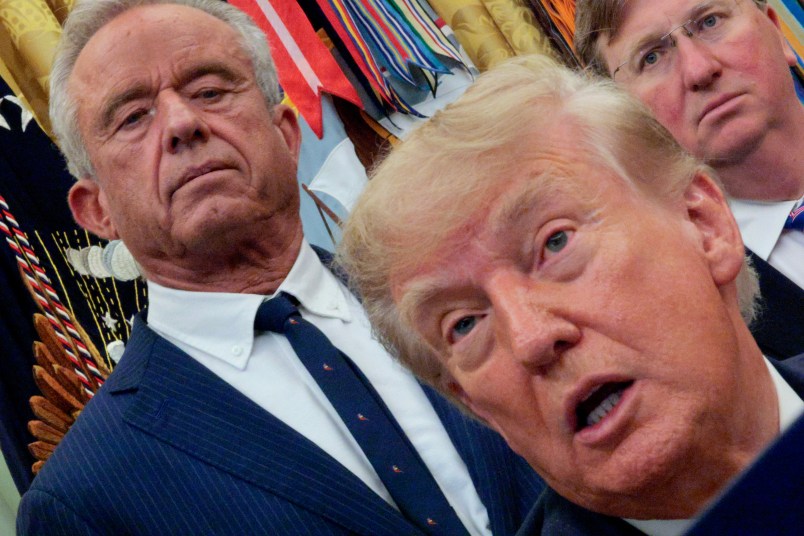
HHS Appears to Be Prepping for Big Changes to Childhood Vaccine Recommendations

Robert F. Kennedy Jr. has escorted his dangerous vaccine skepticism into the homes of every American through his role as secretary of the Department of Health and Human Services. Now, public health experts and attorneys are worried that Kennedy might do away with effective federal vaccine recommendations altogether.

Right now, vaccines are recommended either on a universal basis, using a risk-based assessment for people with specific risk factors, or using what Kennedy’s HHS calls shared clinical decision-making, a controversial vaccine skeptical-adjacent category that the department has defined as an individualized process between a patient and physician. The comment period for an HHS request for information concluded on Sunday and sought comment on whether existing types of federal vaccine recommendations should remain in place. 

The request, posted to the Federal Register, also sought to consider “individual autonomy and religious freedom…and the communication practices necessary to earn and maintain public trust,” related to the federal childhood vaccine schedule.

But while shrouded in language implying greater freedom, pediatric health advocacy groups, health attorneys, and public health researchers said in public comments that further changes to vaccine recommendations will only jeopardize public health and child safety. 

And HHS’s apparent plan to change childhood vaccines is groundless.

““[T]here simply is no basis for the RFI’s implicit suggestion that the current recommendation framework produces unsafe results and needs fundamental revision,” wrote a group of health advocacy groups and scholars, including the American Public Health Association, Robert Wood Johnson Foundation, and Bruce G. Gellin, former deputy assistant secretary of Health and director of the HHS National Vaccine Program Office. 

The HHS request poses its own potential vaccine categories, including vaccines that are recommended but not for babies, or recommended, but with other undefined caveats.

It comes as part of President Donald Trump’s August 2026 executive order, which required HHS to revive a defunct childhood vaccine task force and to reevaluate childhood vaccines.

“The arbitrary categories identified in the RFI without context, without accompanying evidence and without a clear communication strategy with medical professionals, the public health system, and the American public will inevitably produce widespread confusion and uncertainty,” the group of public health advocacy organizations and experts wrote in the public comment. “In the setting of such confusion, the principle of informed decision-making is at risk with the likely result that vaccine doses will be missed and diseases that are vaccine preventable will recur.”

Currently, America is experiencing its worst year for measles, the once all-but-eradicated viral disease, since 1991, according to the Associated Press. There have been 792 cases of the disease in Pennsylvania this year alone, and four people in the state have died of the illness since January. RFK battled Governor Josh Shapiro, claiming without evidence that state officials errantly attributed the deaths to measles. Kennedy had two of the Pennsylvania deaths removed from the Centers for Disease Control and Prevention measles dashboard which, as of Sept. 18, did not have any measles deaths listed.

Echoing Trump’s executive order, the HHS information request emphasizes that evidence, alongside freedom and trust, are paramount when considering vaccine recommendations. A public comment submitted by members of Georgetown University’s McCourt School of Public Policy, however, notes that patients overwhelmingly trust their personal healthcare providers. A July survey by KFF found 86% of respondents trust their own doctor compared to 51% who trust the CDC and 34% who trust RFK. Even MAGA Republicans are more likely to trust their healthcare provider than RFK, at 86% compared to 74%.

“Any change to the current categories could cause provider and public confusion, leading to greater mistrust and wider spread of misinformation,” Hannah Green, state health policy analyst, and Kelly Whitener, an associate professor, wrote in the Georgetown public comment.

  •  

Missouri Dismisses Hail-Mary Lawsuit to Gain More Political Power, Confident Trump Admin Will Do What it Wants

The state of Missouri early this year sued the Department of Commerce to force something that would have once been considered radical: That the federal government exclude certain immigrants from the population count when apportioning political power and distributing federal funds. 

Less than a year after the lawsuit was filed, however, the Census Bureau has proposed to do just that. 

On Tuesday, a judge granted Missouri’s request to dismiss the case.

A senior judge for the Eastern District of Missouri ordered the case dismissed without prejudice, meaning plaintiffs can renew their suit against the government, on Tuesday afternoon.

Missouri’s notice of dismissal came only after the Census Bureau published its controversial new rule which takes the first steps to exclude millions of immigrants from the census count by changing how the Bureau defines a person’s usual residence and by pitching a future immigration status question. But the rule is far from finalized. It must first undergo a 30-day public comment period which is sure to yield strong opposition to the rule, feedback which federal agencies have previously considered prior to finalizing a new policy. 

Nevertheless, it appears the unfinished Census Bureau rule has satisfied Missouri’s dubious legal argument that undocumented and other classifications of immigrants should not count toward a state’s population to be used for congressional apportionment or for the distribution of federal funds. The rule cites and incorporates legal arguments from Missouri’s suit.

In a statement provided to the St. Louis Post-Dispatch, Missouri Attorney General Catherine Hanaway’s office said it dismissed the case in light of the Census Bureau proposed rule.

“The proposed rule agrees with our understanding of the law and even cites our complaint,” Hanaway’s office told the publication in a statement. “Going forward, we will focus on assisting the Trump Administration defend what we anticipate will soon be a final rule. We will continue fighting to ensure citizens’ voices are never diluted in favor of illegal immigrant trespassers.”

In July and September, the Department of Commerce filed a motion to stay court proceedings in the case, suggesting its then-impending rule would address the plaintiff’s issues.

The Census Bureau’s latest moves represent an evolution of President Donald Trump’s unsuccessful first-term attempt to include a citizenship question on the census. Back then, the court found the administration lied about its reasons for wanting to include a citizenship question. The Trump administration maintained at that time that the question would be used to better enforce aspects of the Voting Rights Act.

This time, the mask is off. The Census Bureau in its new residence rule wrote that it found “merit in” legal argument that all immigrants except lawful permanent residents “should not be included in the apportionment count.” 

The rule would also dispense with recording race, ethnicity, and certain gender attributes. Race has been included on every census since 1790. 

Missouri filed its case in January to force the Department of Commerce and the Census Bureau to exclude undocumented immigrants and people with temporary visas from the census population count taken every 10 years. Including certain immigrants in that count, the suit argued, gave blue states with higher immigrant populations more seats in Congress and more Electoral College votes, and took away one congressional seat and an Electoral College vote Missouri would’ve otherwise received in 2020. The same harm, the suit alleged, would be perpetuated in 2030 unless the Census Bureau dramatically altered the way it counts U.S. residents by excluding a large swath of immigrants for the first time in history.

Missouri’s suit blames a 1980 policy by President Jimmy Carter which merely affirmed the historic practice of counting all residents of the country regardless of immigration status. The 1980 census sought to mitigate an undercount of these groups through intentional outreach, but not through the adjustment of any legal standard regarding the counting of all persons, as required by the 14th Amendment.

In moving to dismiss its suit even prior to the finalization of the Census Bureau’s embattled rule, attorneys for Missouri appear to expect that the rule will move forward in time for the 2030 Census.

The Missouri Attorney General’s Office did not immediately respond to TPM requests for comment. The Commerce Department, Census Bureau, and White House also did not immediately respond to TPM requests for comment.

  •  

Census Quietly Changes Charter for Key Policy Committee, Opening Door for Political Interference

As the Census Bureau wades deeper into politics, governance changes at an agency committee that handles data privacy, scientific analysis and stewardship issues have opened the door for Trump administration interference, current and former agency staffers told TPM. Some of the most significant changes have put President Donald Trump’s political appointees in leadership roles on the historically nonpolitical committee, just as the Bureau has emerged as a hot-spot for right-wing-driven policymaking.

  •  

Trump Admin Officially Moves to Reshape National Political Power With New Changes to 2030 Census

A version of a federal rule proposing to exclude certain noncitizens from being counted in the 10-year Census was published to the federal register this morning, and is more aggressive in several ways than the draft version first revealed in full last month by TPM. The final version explicitly proposes a question about immigration status on the census, excludes refugees and asylees from the count, and changes how members of the military are to be tallied.

  •  

How a Baseless, Right-Wing Social Media Panic Led to Dramatic Changes at the Census Bureau

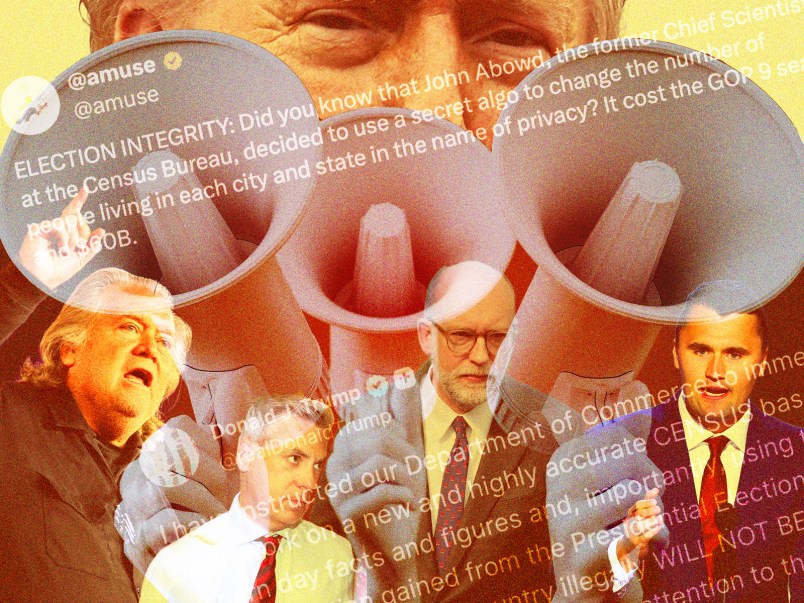
When longtime Indiana politician Sen. Jim Banks (R-IN) lobbed a powerful allegation against the Census Bureau last October, what had been a low-profile, fringe GOP conspiracy theory burst to the fore. Banks said he believed the Census Bureau had injected errors in the decennial population count and survey which were so severe, they netted Democrats more representation in Congress at the expense of Republican seats.

“The Biden admin used a shady ‘privacy’ formula,” Banks wrote on X, adding that the 2020 census “scrambled the data and miscounted 14 states. It included illegal immigrants and handed Democrats extra seats.”

  •  
❌