GLADSTONE, Missouri — The right to an abortion in Missouri is on the verge of disappearing, again.
It’s a threat that loomed over Tiffany early on a recent September morning, when she drove into Gladstone, just north of Kansas City, for her abortion.
The 26-year-old mother of three made the two-day trip to reach the clinic just a couple of weeks after finding out she was pregnant. Despite living in Springfield, a city of about 170,000 near the Arkansas border, she couldn’t find an appointment for an abortion at her local clinic until late October, near the end of her first trimester.
Instead of waiting, she decided to spend the night at a friend’s house halfway between her home and the Planned Parenthood in Gladstone — the first clinic that could take her — hours away. After her appointment, she planned to drive back home in time to meet her children when the bus dropped them off.
“I love kids so much,” she said, sitting on an exam table, waiting to see the doctor. This abortion, she explained, “has everything to do with loving my own children, that I already chose to have.”
But in November, the rights of Missourians including Tiffany to get such care — which has been slowly becoming more available across the state after a 2024 vote to enshrine abortion rights in the state constitution — may come screeching to a halt.
A proposal known as Amendment 3 would reverse that vote and ban abortion in the state constitution, allowing the procedure only in rare cases: when pregnancy constitutes a medical emergency, upon the discovery of a fetal anomaly or before 12 weeks in cases of rape or incest. It would also ban gender-affirming care for transgender minors, even though such care is already illegal in Missouri.
The reopened criminal investigation into an alleged gang rape at Cornell University has sharpened scrutiny on voluntary intoxication laws, which make it harder to protect assault survivors if they chose to drink alcohol or use drugs at the time of the attack.
A former Cornell student identified as Jane Doe said she arrived intoxicated at the Chi Phi fraternity house in October 2024. In a civil lawsuit filed in September, she said that she was then drugged and sexually assaulted by multiple fraternity members while incapacitated.
But voluntary intoxication laws, which are in place around the country, say that if the person who was assaulted chose to become intoxicated, they are capable of consenting to sex, so sexual assault laws do not apply. The county’s district attorney, who announced Monday his office would reopen an investigation into the alleged assault, cited New York’s laws around intoxication and consent in explaining why he initially did not pursue criminal charges. These laws are in place in states around the country.
Here is how these laws work and how they affect sexual assault prosecutions.
What are voluntary intoxication laws?
Individual states handle sexual assault law differently. Most states say that being intoxicated may prevent someone from being able to consent to sex, but not all of them do. Without that explicit provision, it can be much harder to prosecute sexual assault that occurred when the person assaulted was drinking or using drugs.
According to the Associated Press, 19 states say that an intoxicated person is only considered incapacitated — and therefore unable to consent — if they were given drugs or alcohol without knowing. New York, where Cornell is located, is one of those states.
That means that if someone chose to consume alcohol or drugs and then was sexually assaulted, it can be harder to pursue criminal charges.
“In these states where these laws are still persisting for some reason, they still want to continue to be holden to this notion that somebody who is inebriated deserves to be punished, or has it coming for them, so to speak,” said Dr. Chinmoy Gulrajani, a professor at the University of Minnesota Medical School who has studied these laws.
Which states have these laws?
Connecticut
Delaware
Florida
Hawaii
Indiana
Kentucky
Maine
Mississippi
Missouri
New Hampshire
New York
New Jersey
North Dakota
Oklahoma
Pennsylvania
Tennessee
Utah
West Virginia
Wyoming
How did this come up in the Cornell case? Has it come up in others?
Tompkins County District Attorney Matthew Van Houten — who had authority to pursue criminal charges — cited New York’s voluntary intoxication law in explaining why he initially did not do so.
“Under New York State Law, ‘mental incapacitation’ occurs when a victim is rendered incapable of controlling her own conduct due to the administration of a drug without her consent,” Van Houten wrote in a statement released Monday. “The facts provided by Jane Doe’s statement do not allege that she was either rendered incapable of controlling her own conduct or that any drug was administered to her without her consent.”
This provision has come up in other cases.
Last year, Texas lawmakers changed their definition of sexual assault to include voluntary intoxication based on the experience of a woman named Summer Willis, who said she was raped at a fraternity party 10 years prior after accepting a drink that she believes was laced.
Prosecutors had said that because she accepted a drink, the incident would not, at the time, have been considered sexual assault.
What do we know about alcohol and sexual assault, including on college campuses?
Research shows that drinking alcohol can impair people’s ability to make decisions about or consent to sex. Studies have repeatedly found that in most sexual assaults, someone — the person who committed the assault or the person assaulted — consumed alcohol. The figure is higher for sexual assaults on college campuses.
One paper, published in 2019 by Johns Hopkins University using data from the American Association of Universities, found that close to 80 percent of men or women who were assaulted said they had been drinking before the incident. About 60 percent of trans, genderqueer or nonbinary respondents said they had been drinking before. In most cases, the person who perpetrated the assault had also been drinking.
People who have been drinking or using drugs can, in some cases, consent to sex. But broadly over the past decade, there has been a societal shift toward understanding that people who are more heavily intoxicated cannot do so, Gulrajani noted.
“With more, better sex education regarding consent, some guidelines have been set down about informed consent, especially when it comes to sexual matters,” he said.
Have there been changes in sexual assault prosecutions?
It’s not clear what consequences that cultural shift regarding consent has had — including whether it has changed how sexual assaults are handled in the justice system.
In fact, a paper published in 2022 in the Journal of the American Academy of Psychiatry and the Law noted that when someone was assaulted after being intoxicated, police and prosecutors are less likely to follow up with rape allegations. Conviction rates are lower than when the person assaulted was sober.
“Gendered roles about consensual sex and rape myths, such as that intoxicated women are more sexually available than sober women, may alter a juror’s opinion about voluntary intoxication,” the authors of that paper wrote.
But laws are starting to change. In the past five years, at least three states — Minnesota, Michigan and Texas — have changed their laws so that they do not differentiate based on whether someone had voluntarily become intoxicated. Those changes have largely been the result of public scrutiny after high-profile cases of sexual assault, such as in the Texas case.
Bills have been introduced in other states to make similar changes, Gulrajani said. In New York, legislation has been put forth every year since 2019 to make it easier to prosecute these cases. It has never passed. But the attention on the Cornell case could spur action, he said.
“The court of public opinion is the most consequential for politicians and legislatures,” he said.
The family of a woman who died after she could not get an abortion in Texas is suing doctors and state officials including Attorney General Ken Paxton. It is the first lawsuit over a death linked to an abortion ban.
“It’s horrible that she’s gone and she was taken from us this way. It’s horrible that she’s not here anymore,” said LaTanya Walker, Tierra Walker’s aunt and the lead plaintiff in the case, in a press conference Wednesday. She added: “I want justice for her. I want it to not happen to anyone else. It needs to stop.”
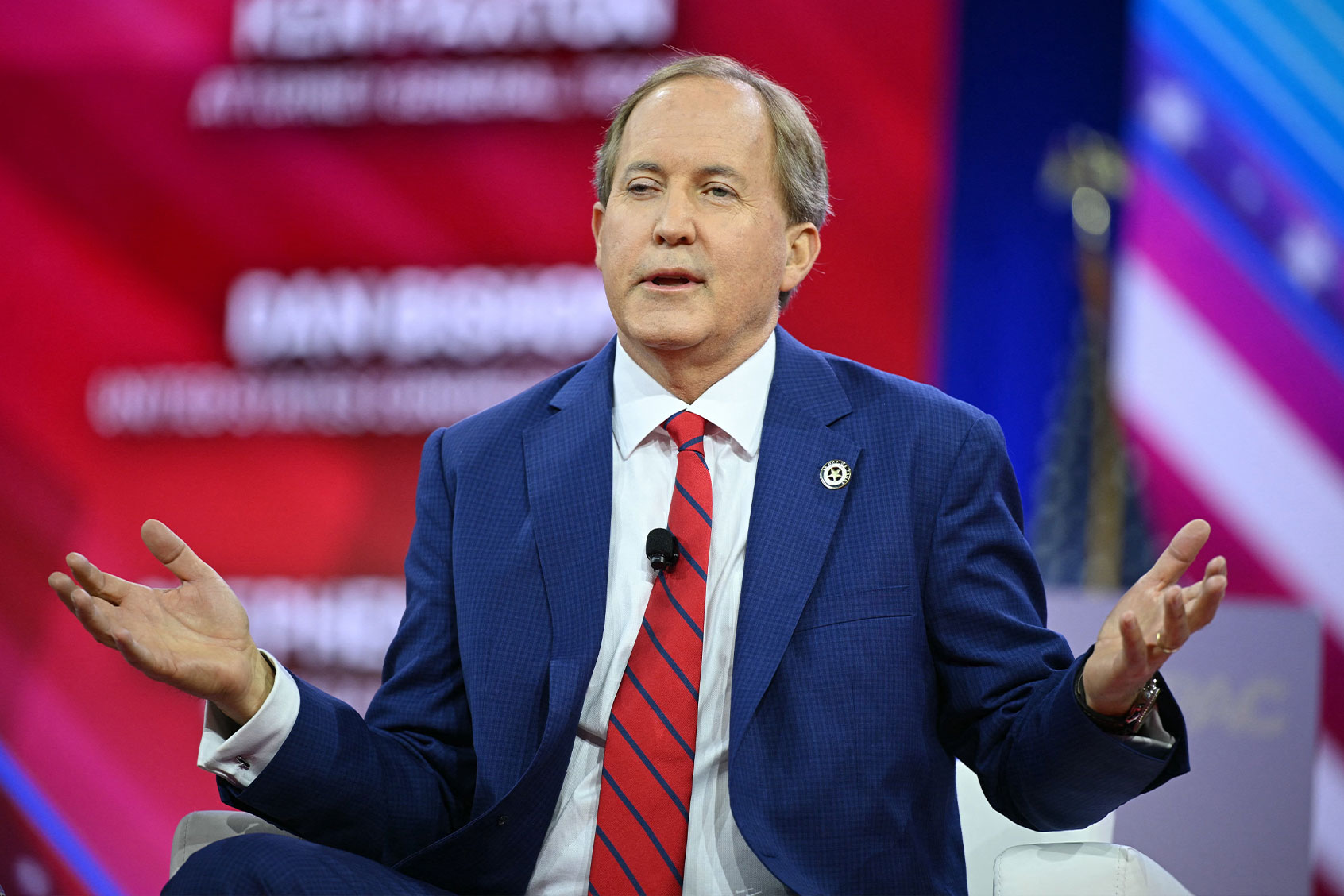
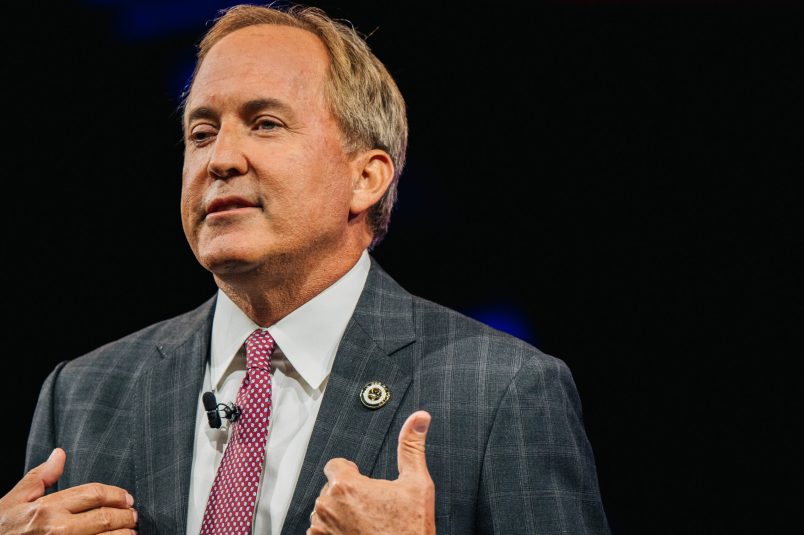
The case, filed Tuesday in state court by a malpractice firm and the abortion rights group Amplify Legal, argues that Texas’ abortion bans violate both the state and U.S. Constitution. This case is also the first to directly sue Paxton, who has taken a leading role in enforcing Texas’ ban. Paxton is locked in a tight race for the U.S. Senate.
“Tierra Walker is dead and those responsible must be held accountable,” the suit reads. “At every turn, Texas’s political and medical establishments not only failed but actively harmed Ms. Walker.”
Walker is one of the numerous women whose deaths have been linked to abortion bans. Other deaths have occurred in North Carolina and Georgia, states with bans less restrictive than Texas’. Texas’ near-total abortion ban provides exceptions only if staying pregnant puts someone “at risk of death or poses a serious risk of substantial impairment of a major bodily function.” In 2025 — after Walker’s death — the state passed a law meant to clarify what constitutes a risk of death. But the penalties for violating the state’s ban remain onerous, and many doctors have said it is not obvious what care they can provide or how sick a patient must be before they can intervene.
Walker, whose case was first reported on last year by ProPublica, died December 30, 2024, when she was 37 years old and 20 weeks into her pregnancy. Her medical history of chronic conditions — including diabetes, hypertension, obesity and severe asthma — made her pregnancy particularly high-risk. She was hospitalized multiple times during her pregnancy and repeatedly asked for an abortion. According to the lawsuit, doctors did not give her information on how she could get an abortion, instead dismissing her after telling her “your baby is fine.”
“They just kept saying, ‘It’s not the baby, the baby’s fine,’” LaTanya Walker said.
Walker died days after being discharged from the University of Texas Science Center at San Antonio, also known as the University Health System, according to the lawsuit. Her son discovered her dead on his 15th birthday.
After Walker’s death, a medical examiner ruled that she died of hypertensive cardiovascular disease with preeclampsia, the latter of which is a dangerous pregnancy-related high blood pressure condition that doctors had identified in Walker.
Some Texans have been able to get abortions by leaving the state or ordering abortion medication online. Walker’s illness — which included seizures and frequent hospitalizations — prevented her from traveling out of state, said Molly Duane, one of the family’s attorneys. LaTanya Walker considered ordering abortion pills for her niece, she said, but she ultimately did not because she worried about whether they could exacerbate medical conditions.
“That’s the problem. You should be able to get healthcare from your doctor,” Duane said.
Medical records cited in the suit note that on her last hospital visit, her blood pressure was dangerously high and only temporarily responsive to medication. According to those records, the doctor caring for her at that point, who is a named defendant in the suit, wrote that “delivering the baby” — which would terminate the pregnancy — ”may be the best treatment for preeclampsia.”
Doctors who reviewed the case for ProPublica all told the news outlet that, given Walker’s medical risks, she should have been offered an abortion.
The suit names Paxton and Stephen Brint Carlton, the executive director of the Texas Medical Board, in their official and individual capacities, as well as Bexar County District Attorney Joe Gonzales in his official capacity. It also names the University of Texas Science Center at San Antonio and three of the doctors who cared for Walker.
The 19th reached out to Paxton’s office and Senate campaign, Carlton, the University Health System and the Bexar County District Attorney’s Office for comment, but received no immediate reply.
Paxton has been a staunch defendant of Texas’ abortion ban. In another case, he threatened legal action against anyone who gave an abortion to one woman — despite a court saying she qualified for an exception to the state’s ban. He has also sought to dismiss a case brought by women who had been denied abortions in medical emergencies, and who were pushing for greater clarity over when someone could receive an abortion in Texas.
The plaintiffs, Walker’s family, are seeking a jury trial and pursuing both damages and a judgement finding that Texas’ abortion laws violate the state constitution.
The family of a woman who died after she could not get an abortion in Texas is suing doctors and state officials including Attorney General Ken Paxton. It is the first lawsuit over a death linked to an abortion ban.

 Login
Login