Reading view

People Are Starting to Worry About Whether Kevin Warsh is a Credible Fed Chair
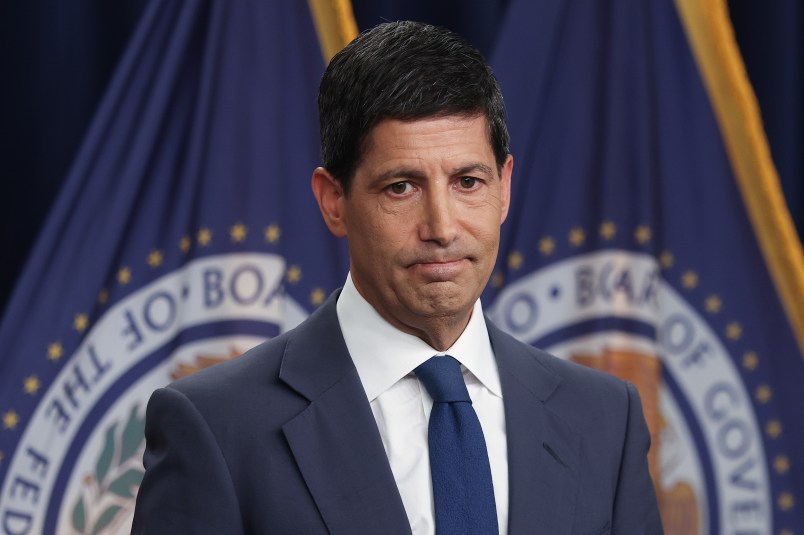
Trump’s new Federal Reserve Board Chair Kevin Warsh took two missteps in two opposite directions during and after yesterday’s Federal Open Market Committee (FOMC) rate decision. And it wasn’t necessarily the board’s choice to hold interest rates steady — a decision that was mostly expected given current economic conditions — that most rankled markets and economists. Rather, it was both what Warsh said, and also what he didn’t say, that put a diverse set of central bank stakeholders on alert.

When the FOMC on Wednesday issued its second rate decision since Warsh began leading the agency in May, the press release repeated information from the committee’s mid-June event.

“Productivity growth and capital investment are strong.” 

But this time, there was more evidence than before that those assertions are not necessarily being borne out in the data. 

Trump has continued to cast a resilient but stagnating economy in rosy hues, and engaged more aggressive and overt tactics to influence monetary policy at the Fed as he tries to force members of the central bank to cut interest rates. In tandem, Warsh’s pared-down approach to FOMC communications and use of the word “strong” to describe economic indicators showing weakness failed to fully reflect an economic reality which led three Fed governors to dissent from the majority decision and vote in favor of higher interest rates. 

Labor productivity increased just 0.3% in the first quarter of 2026 according to the Bureau of Labor Statistics. That number was revised down by half a percentage point. The Federal Reserve Bank of Philadelphia’s survey of 33 economic forecasters projected U.S. gross domestic product would grow at a 2.1% annual rate in the second quarter of 2026, and revised down their growth projections for the remainder of the year, in a survey published in May. Then on Thursday, second quarter GDP came in even lower, slowing to 1.5% according to data released by the Bureau of Economic Analysis. Investment growth was also lower than the BEA had previously projected.

“There is still no evidence of an AI-driven productivity boom after three consecutive quarters of weak productivity growth,” Dean Baker, co-founder of the Center for Economic and Policy Research, wrote in a brief published Thursday

Baker also noted that growth in AI investment, while still strong, slowed.

“The economy is soft and vulnerable,” Mark Zandi, chief economist at economic research firm Moody’s Analytics, said on X

The Federal Reserve Board declined to comment on which data the FOMC relied on for its statement about strong productivity growth and investment.

“It would be concerning if factual misrepresentations are getting elevated due to political convenience,” former Fed economist Skanda Amarnath, who has accused Warsh of political puppetry in past interviews with TPM, said on X.

There are still positive aspects of the economy. Unemployment has not spiked. Forecasters surveyed by the Philadelphia Fed revised their annual GDP growth projections upward beginning in 2028. And investment growth still represents a positive contribution to overall GDP growth.

On Wall Street, markets responded negatively to Warsh’s refusal not only to speak about what the Fed might do in the future, but to even acknowledge what kinds of economic conditions might warrant a future rate hike. A Thursday BEA release on personal consumption expenditures, measuring the price people in the U.S. pay for things, showed price inflation well above the Fed’s 2% target and the Iran War has spiked the cost of energy, among other goods and services.

“If inflation continues to be elevated through the forecast period, interest rates could well be part of that solution, but I wouldn’t say it’s in isolation,” Warsh said during a Wednesday press conference. 

He went on to leave the door open regarding whether the Fed’s 2% inflation target will remain after January, when a series of expert-staffed committees established by Warsh to initiate his stated goal of central bank “regime change” return with their findings.

“In Warsh’s press conference, he once again failed to specify how he intended to achieve his stridently asserted inflation resolve,” Michael Feroli, chief U.S. economist at JPMorgan, reportedly said in a note.

Investor concerns about inflation sent the 30-year treasury bond to its highest yield in 19 years.

“[Warsh] also cast doubt on whether PCE inflation will remain the Fed’s inflation target in the medium run,” Feroli said in his note. “Both of these points raise questions about the new chair’s credibility in delivering lower inflation.”
  •  

Senators Urge SEC to Investigate Truth Social Plan to Sell Access to Wall Street

Two influential Senate Democrats are pushing back on the nearly unfathomable idea that a company owned by the sitting U.S. president can sell Wall Street early access to that president’s thoughts and actions.

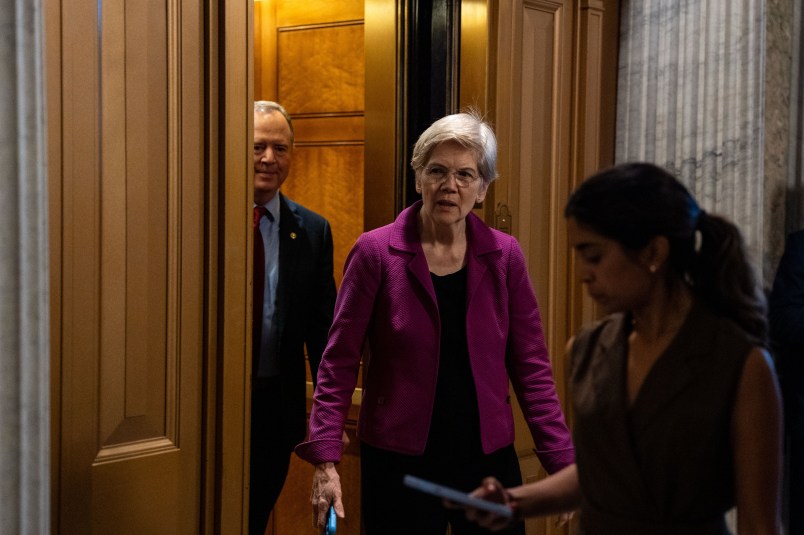
Sen. Elizabeth Warren (D-MA), ranking member of the Senate Banking Committee, and Sen. Adam Schiff (D-CA), a member of the Senate Judiciary Committee, called on Securities and Exchange Commission Chair Paul Atkins to “immediately” investigate a forthcoming subscription model from the company behind President Donald Trump’s Truth Social that plans to sell extra-fast access to the most influential posts on the platform to high-paying clients. 

The subscription appears to be founded in the premise that Trump’s social media posts influence financial markets and investors. Providing high-paying institutional customers first dibs on that market-moving information, the senators said in the letter, could give them a trade advantage and further exacerbate the divide between a hyper-wealthy investment class and everybody else.

“The Trump Administration is the most corrupt in the nation’s history, and questions about inappropriate insider access to information about its policies and actions have raised questions on multiple occasions,” the letter, dated Tuesday, reads. 

The Truth Social fast-access plan, though, “represents a shocking abuse of the office of the President and the trust of the American public for his personal gain.”

On July 16, Trump Media and Technology group announced Truth API, the “business-to-business” subscription model that would offer banks and trading firms “real-time” access to Trump’s market-moving musings on Truth Social. A press release about the program boasted that it would feed subscribers the platform’s most influential posts “within milliseconds.” And the company — 41% of which, according to the senators’ letter, is held by Trump’s revocable trust — didn’t shy away from the fact that this scheme will be profitable. It mulled charging as much as $100,000 a month for the subscription, according to a report from Reuters.

“As adoption grows, we expect Truth API to become a meaningful, ongoing source of revenue for the company, creating lasting value for shareholders,” TMTG interim CEO Kevin McGurn said in a mid-July release.

The plan is set to launch by August 1 and immediately drew concerns about insider trading. One former SEC official told TPM the plan should at least draw scrutiny from Congress and the SEC. 

Warren and Schiff are calling on the SEC to provide an analysis of the TMTG plan as it relates to laws about insider trading and market manipulation, to detail plans for enforcement in the event of market manipulation relating to this subscription, and to share legal tools available for retail investors.

Warren and Schiff’s letter to Atkins goes on to list the well-documented ways in which stock performance has changed based on Trump’s social posts: Citigroup outperformed other banks the day Trump made a Truth Social post praising the bank, the letter said. After Trump used Palantir Technology’s ticker symbol to celebrate the Defense Department contractor’s equipment, the company’s stock shot up, it noted. And “Intel shares proceeded to jump 3%” hours after Trump wrote “Intel Stock continues to rise” on Truth Social.

“Ultimately,” the letter says, “Trump Media’s new service threatens to undermine the integrity of capital markets.”

  •  

Trump’s New ‘Forced Labor’ Tariffs Were Set Under Sham Pretenses

President Donald Trump has made clear from very early in his second term that he intends to reorder global trade  by instilling permanent tariffs. More than a year later, his government has proven relentless in its attempt. Compounding the growing inflationary pressures from his ill-conceived war in Iran, Trump on Friday set a new round of tariffs ranging from 10% to 12.5% on products from more than 80 countries.

But like other aspects of the administration’s signature policies — from bogus Justice Department investigations to unfounded claims of widespread national voter fraud — the stated reasons behind the administration’s freshest round of tariffs smell like a sham, a former trade official and international trade policy expert told TPM.

  •  

5 Points on Trump’s Loyal Labor Secretary Nominee

Keith Sonderling has been acting Secretary of Labor since ex-secretary Lori Chavez-DeRemer resigned in April amid a flurry of misconduct allegations ranging from drinking on the job to having an affair with a staff member. Sonderling, though, was reportedly at the helm long before then.

On Thursday morning, members of the Senate Health Education Labor and Pensions Committee will vote in an executive session on whether to advance Sonderling’s nomination to lead the embattled agency to the full Senate. 

Formerly a Republican labor and employment attorney representing business interests, Sonderling joined the government during Trump I as the first-ever political appointee for the Wage and Hour Division. He went on to help lead the division, and later serve as a commissioner on the Equal Employment Opportunity Commission throughout the Biden administration. In every role, he maintained the most conservative views. 

As acting Secretary of Labor, Sonderling has wielded himself as a weapon in Trump’s retribution campaign against blue states. If he’s confirmed as Labor Secretary, here is a snapshot of the man to whom Congress will give a rubber stamp.

DOL’s Weaponization of Alleged Fraud to Punish Blue States

In June, the Department of Labor under Sonderling issued a historic threat: to defund federal contributions to state unemployment programs unless states took “immediate action” to root out fraud and waste in those programs. While a release about the effort mentioned all 50 states as well as some U.S. territories, it targeted California, Illinois and New York as the most “glaring” alleged examples of unemployment funds misuse.

“We are officially putting governors on notice,” Sonderling said in a release. “This department is no longer afraid to use every lever available to ensure taxpayer money is protected.” 

The Labor Department’s push comes as part of Vice President JD Vance’s anti-fraud task force that Trump has said will target blue states. Sonderling is a member of the task force.

He’s Behind the Big Push to Bring Crypto into Your 401K

Months before the Labor Department proposed a rule that would make it easier for retirement account fiduciaries to invest in risky assets — and while Chavez-DeRemer was still the Labor Secretary on paper — Sonderling promised industry insiders he would deliver on the controversial policy.

Experts told TPM in April that the proposed rule removes legal protections from retirees in the event employer-sponsored retirement plan managers don’t live up to their fiduciary duties. It would allow fiduciaries to pursue riskier investments like boom-and-bust cryptocurrencies and private credit, an industry whose investors sought withdrawals at such a rate they triggered withdrawal caps and couldn’t recoup their full investments.

“We have an industry living in fear … that a judge or a lawyer is going to second guess their decisions,” Sonderling said at a January industry event. “We have to eliminate that.”

In February, Sonderling Would Not Commit to Upholding Federal Union Rights

During a Senate hearing considering Sonderling’s nomination as deputy labor secretary, he faced in-person and written questions from Democratic senators asking his commitment to upholding the collective bargaining rights of the department’s employees as the Trump administration continued working to dismantle federal unions. 

Asked by Sen. Angela Alsobrooks (D-MD) whether he understood the collective bargaining process, Sonderling responded, “I am not a traditional labor lawyer,” an odd response for the de facto leader of a department that handles workers rights.

At the EEOC, He Voted Against Pregnancy and Gender Protections

Confirmed and appointed vice chair of the EEOC in 2020, Sonderling remained on the commission until his term expired in August 2024. While there, he voted to block the Pregnant Workers Fairness Act. Republicans opposed the rule, which requires companies to provide reasonable accommodations for pregnant people, because it lists abortion as a protected medical condition.

Sonderling also opposed a rule that expanded discrimination protections to include gender interpretations in addition to biological sex. That rule was approved by the Democratic majority but parts of it were struck down by a Texas court in 2025.

While leading the Labor Department, Sonderling has continued to weaken worker wages and protections. In May, the department rescinded time-and-a-half pay protections that expanded overtime pay eligibility for more than four million workers. Under Sonderling, the department has also proposed the roll back of Fair Labor Standards Act protections for home healthcare workers.   

He’s Been a Key Part in Pro-Biz Staffing Across Agencies

Far from a quiet Republican bureaucrat, Sonderling reportedly “had to move heaven and earth,” to get Republican Labor official James Macy nominated to the National Labor Relations Board. Operatives told Politico Sonderling was instrumental in selecting candidates for several agencies.

Even if he isn’t confirmed by the Senate, Sonderling can likely lead the department in an acting capacity indefinitely

  •  

States Are Feeling the Economic Toll of Trump’s War on the Federal Government 

A new report shows how President Donald Trump’s administration is harming state economies nationwide as several states that rely on federal government jobs and spending landed on a list of the top 10 worst economies in the nation.

And the Trump administration’s sweeping cuts to the federal workforce are continuing to acutely impact the Washington, D.C., Maryland, Virginia region. 

  •  
❌