Jamelle Bouie almost never misses. In this video that’s just shy of 10 minutes long, he chastises American political & cultural pundits for their lack of moral seriousness w/r/t their focus on “wokeness” instead of the real harms being done by the authoritarian Trump regime. (And he worked in a reference to Jonathan Frakes saying no.)
I bring this up because this is just a great example of a phenomenon I’ve been struck by over the past year. Which is that, in the midst of a government that is systematically dismantling Americans’ rights, that is systematically dismantling the post-World War II world order, that is systematically tearing apart the social safety net, that is trying to exert nearly totalitarian control over large parts of American life, which is constructing concentration camps and throwing migrants into them, which has killed two Americans on the street and is looking to suppress as much as possible dissent, even bringing the full force of the federal government against people it wrongly accuses of wrongdoing — as we observe all of this, so many of our pundits and professional commentators are still obsessed with people they got mad at in 2020 and 2021.
They are obsessed with fighting the specter of wokeness — whatever that misappropriation of African American vernacular means. They look at overzealous college students, overbearing HR departments, or colleagues who put pronouns in their signatures as tantamount to a Cultural Revolution. And meanwhile, as the Secretary of Defense quite literally purges Black people from the highest reaches of the military, it doesn’t look like anything to them.
They don’t even comment on it. The Republican Party has turned pretty openly against liberal democracy. Republican lawmakers are confirming election deniers to lifetime appointments. They’re nominating election deniers to high-ranking offices like governor. And meanwhile, pundits, reporters, the press — they’re obsessed with “Hey, did Francesca Hong once say that she thought we should cancel Thanksgiving?”
I would note that the free speech absolutists are awfully quiet these days too.
There were excesses in 2020 but they were mostly low-stakes efforts by well-intentioned people to address real injustices.
The excesses of the right during the same era were far more harmful. The reckoning we need now is about how elites lost sight of that.
…
Centrists convinced themselves annoying leftists on twitter were an equivalent threat to Jan 6 insurrectionists. They wildly inflated the threat of left-wing authoritarianism while ignoring how it was taking hold on the right.
Meanwhile, the right never meant any of it. They moaned about “cancellation” for a decade but embarked on mass firings as soon as they took power. They pretended to care about “free speech restrictions” and “educational indoctrination” while embarking on them every chance they got.
The excesses of the Woke 1 era mostly amount to cringe public statements, harmless vocabulary updates and loss of prestige for public figures.
The backlash to Woke 1, on the other hand, is imprisoning dissidents, dismantling public education and eroding democracy. That’s what needs reckoning.
Ok so when you woke up this morning, you probably didn’t expect to watch a 20-minute video about a trebuchet — but to be fair, I didn’t either. But Tom Stanton’s build of a fully mechanical trebuchet that propels a tiny plastic pellet faster than the speed of sound (complete with tiny sonic boom) is genuinely fascinating to watch.
He starts with a basic plan, but as he builds & tests, there are all sorts of problems (weight, strength) that he needs to overcome. The final product is impressive, but it’s the process that’s most interesting to me. What a gift these sorts of videos are…you could sometimes find process-heavy shows on PBS (like How to Create a Junk Food) when I was a kid, but if I’d had access to stuff like the supersonic trebuchet video (and all those Lego engineering videos), I’d have probably wanted to grow up to be an engineer.
Craig Mod wrote about his recent adventures using LLMs: A Swarm of Blood Robots. “I now have a comprehensive family tree, naming the very boats my Italian and Polish ancestors came over on in the late 1800s, the villages a few came from…”
“Draw any shape and hear it as a drum.” Eigendrum: a drum simulator where you can change the shape of the drum to see how it affects the sound it makes.
G.P.S. and the Lost Art of Getting Lost. “G.P.S. has also led us to outsource existential skills: locating yourself in space, parsing out your surroundings, staying calm when you don’t know where you are. Do we lose something when we no longer get lost?”
The Copyist Program offers time and space for artists to develop their own interpretation of an artwork through intimate study in the Museum’s galleries. Copyists have created reinterpretations of original artworks in The Met collection since 1872.
Here’s Knight from the video, in which he is copying Diego Velázquez’s Juan de Pareja:
Almost every artist was a copyist up until the 20th century because as a painter you would go through certain exercises to learn how to paint. You haven’t begun to see a painting until you’ve copied it.
And I especially liked this bit:
Velázquez’s brain is on that canvas. So we’re encountering a person’s brain that doesn’t exist anymore when we’re looking at a painting by them. I’m literally interacting with Velázquez.
It takes some imagination, but standing before a painting by Hilma af Klint, a sculpture by Bernini, or a cave painting in Chauvet, France draws you back in time in a powerful way: you know you’re standing precisely where those artists stood hundreds or even thousands of years ago, laying paint to surface or chisel to stone. Even experiencing art through prints or photographs leads the mind to consider all the cultural, political, technological, and economic things that were happening when the work was produced. Art is a doorway to past worlds.
I’m Done Using AI. “It made me lazy. It made me stop caring. It made me a worse programmer. It made me depressed. Because I stopped doing the hard work, I stopped learning, I stopped growing, I stopped being the one making the software.”
Why weren’t bicycles invented sooner? “Why was no one…even considering the question of human-powered vehicles until the 1400s? Why weren’t there bicycle mechanics in the 1300s, when there were clockmakers, or at least by the 1500s, when we had watches?”
Death Cab for Cutie rolled into the NPR offices for a Tiny Desk Concert, which featured two new songs from their current album and some oldies: Title and Registration and Soul Meets Body. Gibbard noted:
I’m starting to realize that some of our earlier records came out a similar distance away from, like, the Beatles records when I was a kid.
I took this as an opportunity to listen to my favorite Death Cab song, Transatlanticism. And when are we getting a Postal Sevice Tiny Desk? Come on, we’ve been good! We need this!
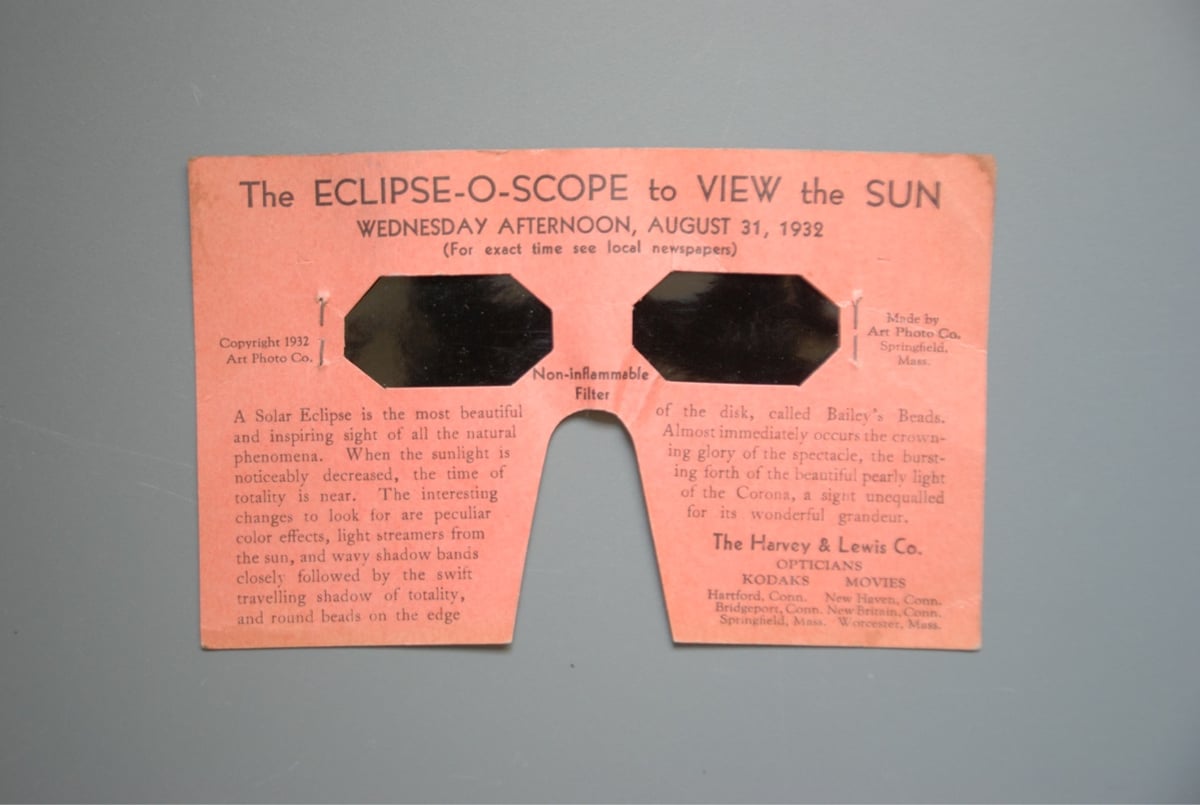
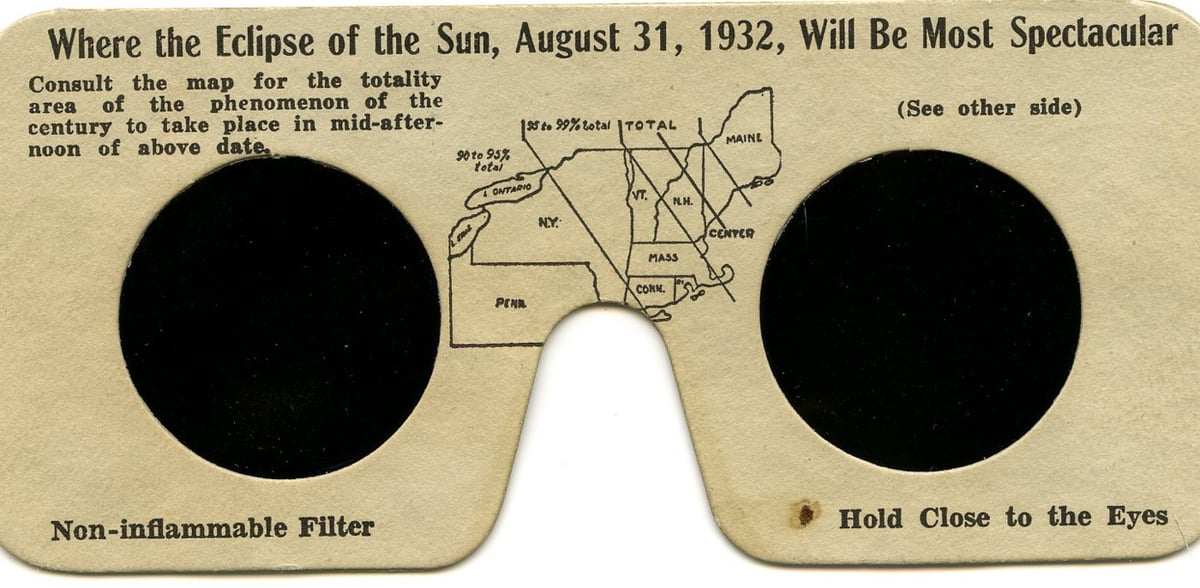
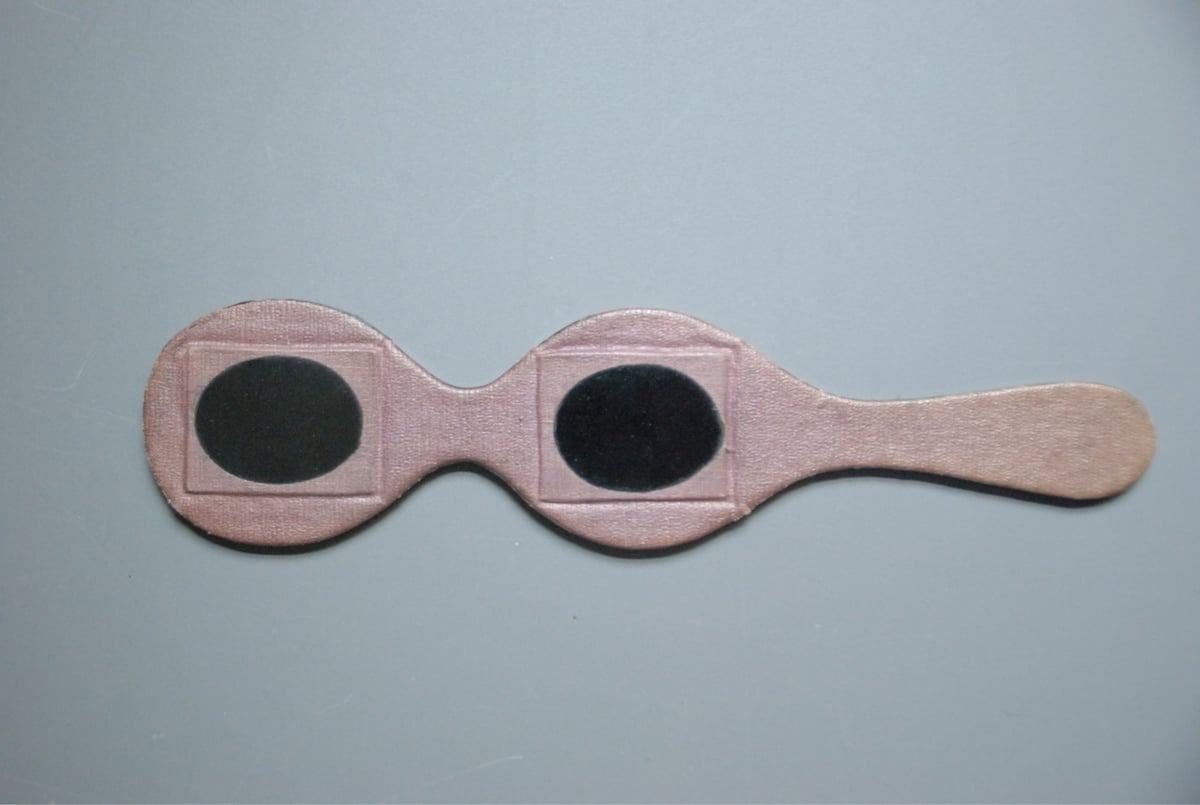
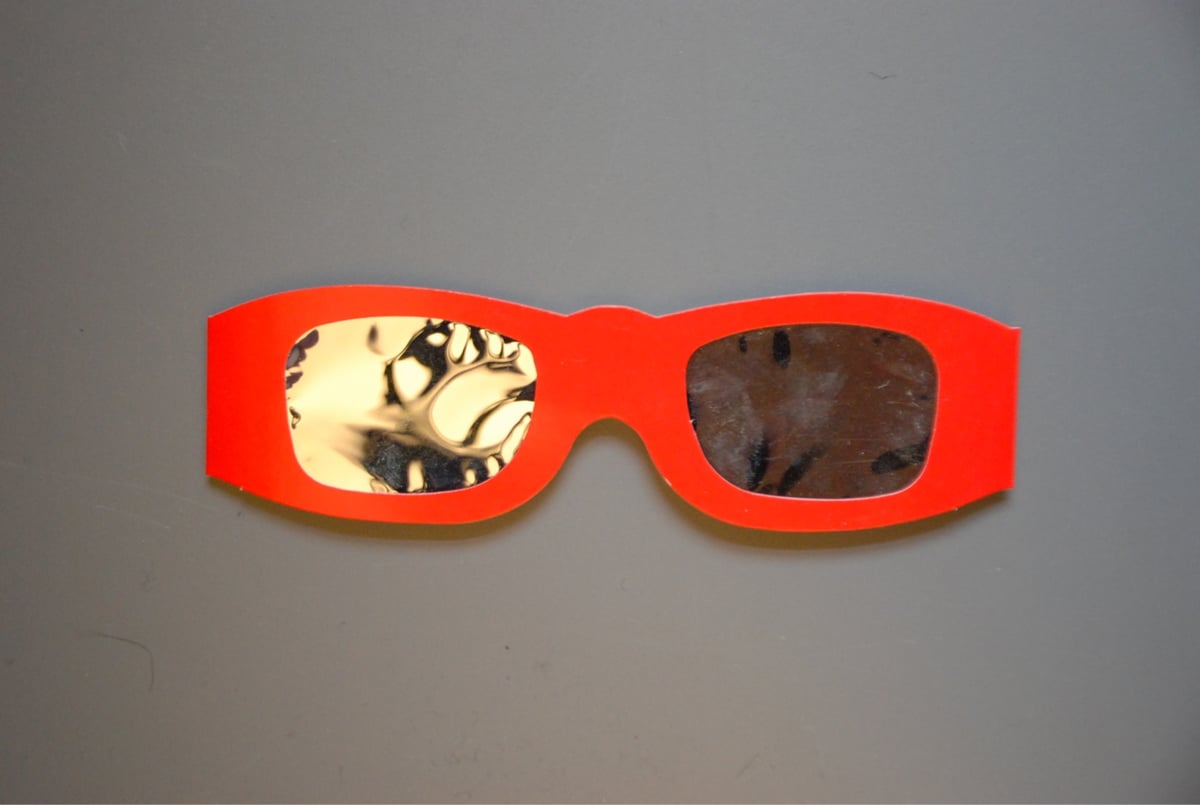
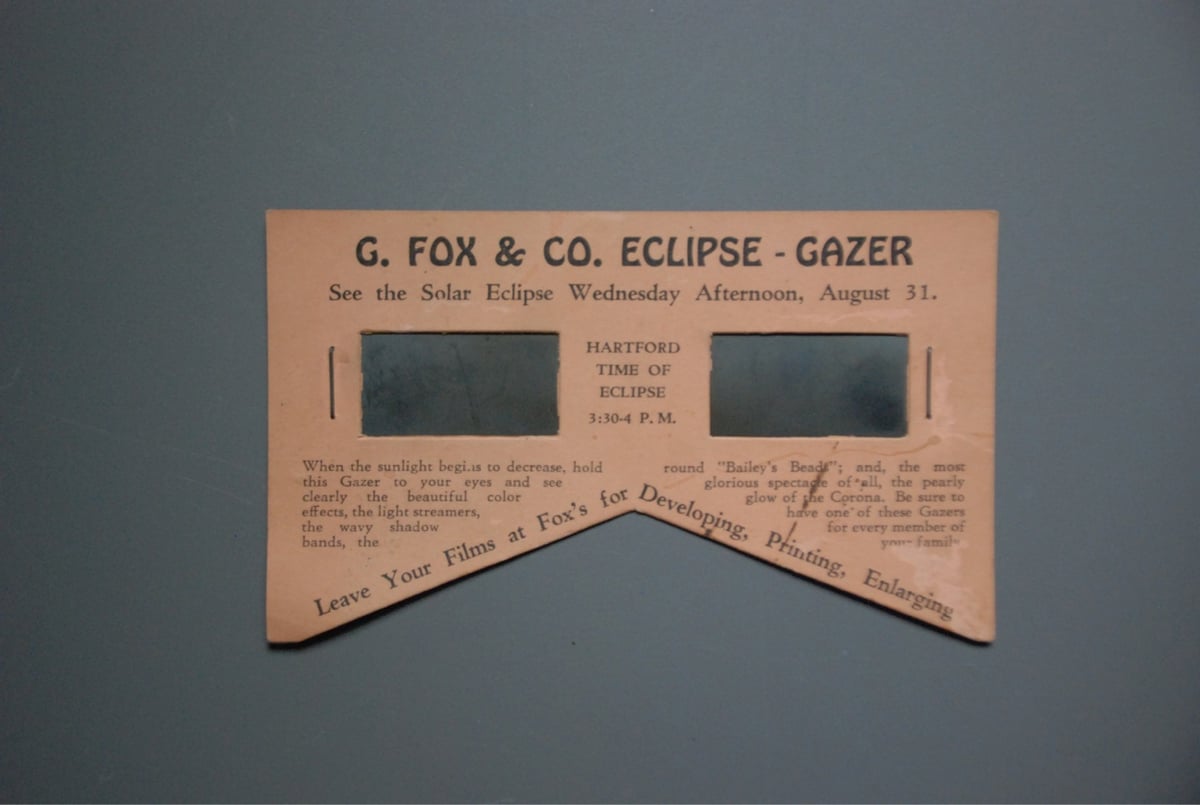
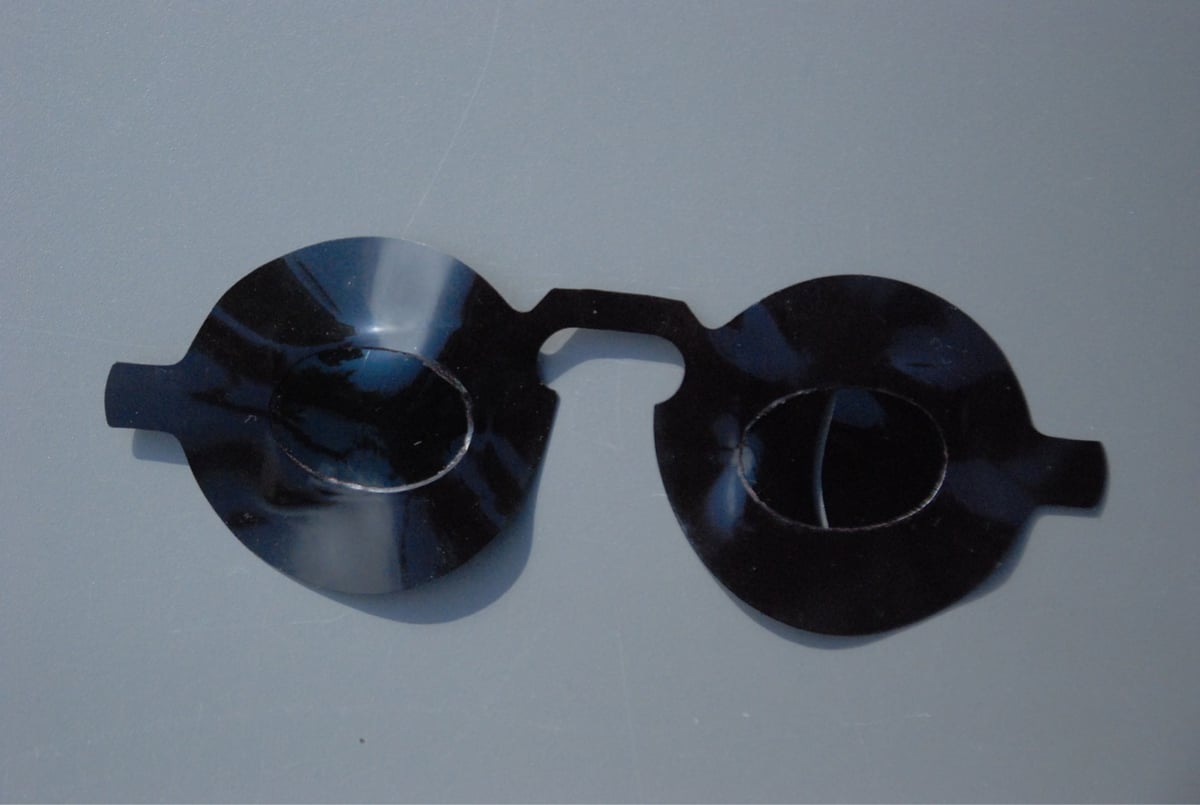
Oh wow, Williams College’s Hopkins Observatory has a huge collection of eclipse glasses & viewers (and other eclipse ephemera), some of them dating back to 1793. Here are a few of my favorites:

 Login
Login