❌

Reading view

Trump gets richer while gas prices soar

In mid-September, Chinese scientists announced a breakthrough in extracting hydrogen and fresh water from the ocean with about 15% better energy efficiency than older techniques. Their research, published in Nature Energy on Sept. 15, underscores that China continues to dominate in the renewable energy race, generating so much that the country can’t even use it all. As Reuters reported in August, “China turned away enough clean energy to power Mexico ​for a year in the six months through June as its grids hit their limits.” At the Fortune Leaders Forum in Macau on Sept. 8, Youyuan Huang, executive vice chairman of BTR New Material Group, the world’s top maker of battery anode materials, said “China’s grid is a very strong and stable one . . . but we’ve installed too much green energy.”

Boy, the U.S. could sure use some of that excess juice. Currently, this country is embroiled in a self-inflicted energy crisis, largely a result of President Donald Trump’s war against Iran, that is sending deep ripple effects across the globe as oil prices spike. In the U.S. alone, diesel prices have risen around 70% since before the war began on Feb. 28, hitting a record $6.52 on Sept. 22, and in the last two months, at least 16 trucking companies, both large and small, have been bankrupted. The world’s richest nations are trying to staunch the bleeding, recently vowing to release up to 100 million barrels of diesel and crude oil within four months. But on Monday, Amin Nasser, CEO of Aramco, the world’s largest oil company, cautioned that this is little more than a Band-Aid and that long-term supply issues remain. Until the Strait of Hormuz “fully reopens and confidence returns, the crude reality is that pressure at both ends of the barrel will intensify,” Nasser said at the Energy Intelligence Forum in London.

Some “crude reality” would be another nice-to-have for those helming U.S. policy. The rising fury against the war and high energy prices threatens to clobber Republicans in the midterm elections. So the Trump administration is frantically trying to drive down diesel prices, first by floating the idea of banning exports. This tactic, criticized as “unwise” by some oil executives, has been abandoned for now, but at a Monday rally in Nebraska — where Trump also seemed to promote the idea of Iran attacking two California cities — he signed an executive order promoting the use of red-dyed diesel. Normally reserved for agriculture operations, red diesel is exempt from highway fuel taxes, but experts caution that expanding its use probably won’t help much because major fuel suppliers are unlikely to go along with it. For one, the taxes are only deferred, meaning companies could end up paying them later. But red dye, when used, can also gum up tanks and fuel systems. “We do not expect most reputable diesel retailers and fuel marketers to do this,” the Society of Independent Gasoline Marketers of America and the National Association of Truck Stop Owners said in a note to their members, citing “limited upside.”

On Friday, Trump announced his latest bid to reduce prices: buying oil from Russia. Shortly afterward, the Treasury Department issued a temporary license allowing Russian diesel to be supplied to the global market. Though details were scarce, this undermines the president’s own sweeping Russia sanctions law he signed last month. Regardless, it doesn’t look like it will do much to lower prices. “It’s kind of shuffling deck chairs on the Titanic,” Michael Lynch of the Energy Policy Research Foundation, told the Associated Press. “If we get diesel from Russia, basically it means that their existing customers are not going to get it and they’ll have to go somewhere else, and that will keep the price basically where it is now.”

With diminishing options — besides the obvious one of ending the Iran war immediately, which Trump can do whenever he wishes — the administration’s primary strategy is to blame everyone else. On Monday, he repeated claims on social media that Ukraine is most at fault for high oil prices thanks to their continued attacks on Russian oil refineries, and that “What’s driving up gasoline is no longer the Strait of Hormuz.” The president also said the closure of oil refineries in “blue states” is part of the problem. 

With diminishing options — besides the obvious one of ending the Iran war immediately, which Trump can do whenever he wishes — the administration’s primary strategy is to blame everyone else.


Energy Secretary Chris Wright has also spread these claims, appearing Oct. 4 on “Face the Nation” to blame Ukraine and California Gov. Gavin Newsom, the latter for closing two refineries. (In fact, Newsom had nothing to do with the refinery closures.) Wright insisted that fuel prices will drop soon, as Trump has been claiming for months now. He also said that Trump was warned before attacking Iran that it might create an energy crisis — “he was well aware of the risk to energy flows that were coming out of the Persian Gulf region” — but the president insisted it would all be worth it to stop Iran from getting a nuclear weapon.

Wright has been especially busy lately trying to instill a sense of optimism around the energy sector, dismissing climate change as a non-issue while laundering Trump’s vision of “energy dominance.” All of this is remarkably myopic. Half of it is an artificial war against renewable energy projects, including the cancellation of almost $8 billion in Biden-era clean energy grants, and using specious claims about “national security” to cancel offshore wind projects. The other half is accelerating oil, gas and coal extraction while slashing protections for endangered species threatened by drilling in the Gulf of Mexico. But here’s the rub: Neither approach has made fuel cheaper, and it doesn’t seem that will change any time soon.


Start your day with essential news from Salon.
Sign up for our free morning newsletter, Crash Course.


There’s little wonder why: Wright founded Liberty Energy in 2011, one of the fossil fuel giants that led that decade’s fracking boom, and he has attacked renewable energy projects almost as enthusiastically as Trump, saying they can never fully meet increasing energy demands. China and other countries have conclusively proved that false, but it’s not an either-or situation. Despite being the world’s No. 1 renewable energy producer, China is also rapidly expanding its coal industry. “The growth of renewable electricity is not incompatible with maintaining, and sometimes developing, fossil-fuel capacity,” science and technology historian Jean-Baptiste Fressoz explains in his 2025 book “More and More and More: An All-Consuming History of Energy.” 

In other words, human energy consumption is rising so fast that we’re continuing to grow all energy sectors rather than entirely replacing fossil fuels with renewables. (That’s not great news for the climate, of course.) But only the U.S. is leaning quite so hard into 19th-century fossil fuels instead of 21st-century solutions.

Why would the Trump administration push so hard for retrograde technology? Perhaps it’s time to admit that the president actually has no interest in driving down consumer prices or the cost of living, let alone ending the war, whether it hurts his party’s electoral chances or not. Trump is deeply invested in oil and gas companies, which have enjoyed obscene profits throughout the conflict. As Reuters reported in late September, “The ​five largest Western oil companies — BP, Chevron, ExxonMobil, Shell and TotalEnergies — are expected to report combined third-quarter profits of around $53 billion, according to RBC Capital Markets estimates, up from $48 billion ‌in the second quarter and more than double year-earlier levels.” 

Trump has caught plenty of these profits, with an August report from the Joint Economic Committee finding that the president “owned as much as $45.6 million in oil and gas company stocks in 2025, a portfolio that is now worth as much as $61.1 million given the surge in oil and gas stocks driven by Trump’s war in Iran.”

No wonder Trump continues to hint that the Iran war will heat up again after the midterms: He has a vested interest in keeping it going and inflating gas prices, so maybe it makes sense to call his bluff here. After all, truckers may be dropping more than $1,000 every time they fill up, or losing their jobs entirely, but the ultra-rich aren’t feeling much stress from all this. They are well positioned to buy up bankrupt trucking companies and jack up prices, further consolidating their monopolistic or oligarchic power. It’s the classic “shock doctrine,” in which corporations exploit disaster conditions, created intentionally or not. 

It would be more sensible to follow China’s lead on renewable energy, just as it would probably be smart to retreat on Iran rather than get entrenched in another forever war. But that just wouldn’t generate such spectacular windfall profits for Trump or those in his orbit. The solution is to nail these people to the consequences of their decision. They don’t want to end this crisis, so we must make them.

The post Trump gets richer while gas prices soar appeared first on Salon.com.
  •  

Trump’s “Camp Donald” grift is designed to outlast his presidency

The American presidency is one of the most stressful jobs there is. Presidents famously age during their terms, often starting off looking hale and hearty and, by the time they’re finished, appearing tired, more lined and a whole lot grayer than when they started. So it’s understandable they would need to recharge by getting away from Washington from time to time. 

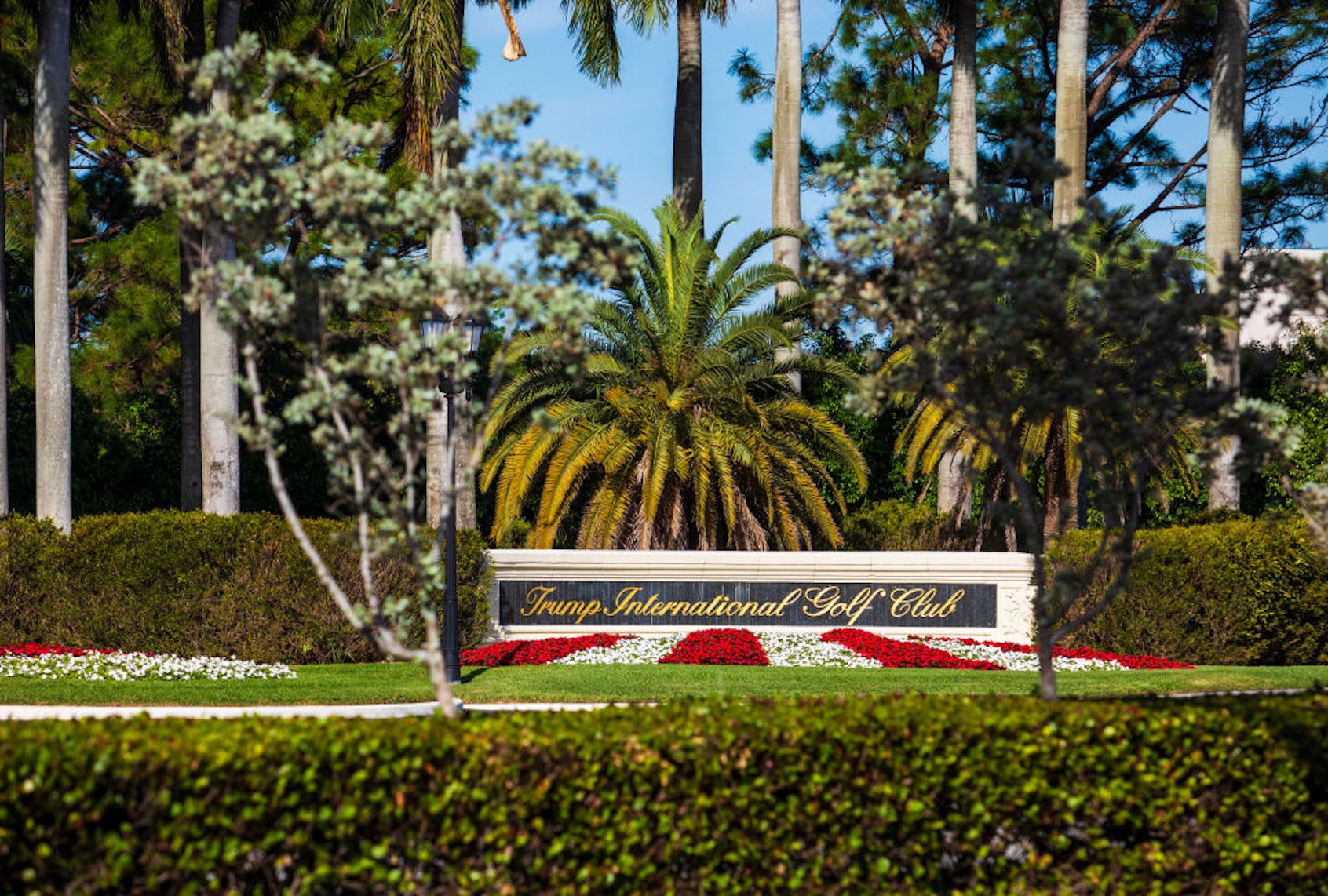
Donald Trump has made a habit of this, regularly jetting to his Mar-a-Lago estate in Florida, and his golf club in Bedminster, New Jersey, for extended periods of time in lieu of Camp David, the famous presidential getaway nestled in Maryland’s Catoctin Mountains. Now, according to a recent report by the Washington Post, he is seeking to create a permanent official presidential retreat in Florida at his Trump International Golf Club in West Palm Beach.

This would be an unprecedented move, even though it isn’t unusual for presidents to crave time away from Washington. According to the White House Historical Association, many of the early presidents left the White House in the summer because they believed that the white fog that formed on the nearby marshes was a deadly white gas; they wanted to get away for their health. In fact, James K. Polk is the only president to have stayed in the White House for each of the three summers he was president, and since he died shortly after leaving office, his fate was attributed at the time to those white gases.

Presidents, of course, have to keep working wherever they are. Some have wanted to escape Washington’s notorious humid summers, while others longed to flee the cold and create a “winter White House” in warmer climes. Harry Truman reportedly liked his Key West winter home so much that he called it the “Little White House” and spent 175 days of his presidency there. Richard Nixon was also fond of Florida, but he also frequently jetted back to his native California, as did Ronald Reagan. George W. Bush spent as much time as possible at the West Texas ranch he bought just before assuming the presidency. 

The first official presidential retreat was the Old Soldiers Home, which was commandeered by President James Buchanan as a summer getaway since its location in leafy Northwest Washington was cooler and quieter than the White House. It was subsequently used by Abraham Lincoln and his family, and he was said to have written the Emancipation Proclamation there. Some subsequent presidents enjoyed the retreat as well, but it was soon out of fashion as they began to travel further afield for their vacations. 


Want more sharp takes on politics? Sign up for our free newsletter, Standing Room Only, written by Amanda Marcotte, now also a weekly show on YouTube or wherever you get your podcasts.


From 1880 until 1977, when President Jimmy Carter sold off the last one, there was always a presidential yacht for the chief executive to unwind on and entertain guests, but there wasn’t another official presidential retreat until 1942, when President Franklin Roosevelt visited a Works Progress Administration project in Maryland called Camp Hi-Catoctin and selected it as the location for a future presidential retreat he dubbed Shangri-La. Roosevelt used the property to relax, but he also saw it as a perfect place for high-level diplomacy. His successor, Harry Truman, made it a permanent federal facility and then, after he took office in 1953, Dwight Eisenhower renamed it Camp David in honor of his young grandson. Since then, the property has been the site of many meetings with foreign leaders, including the diplomatic negotiations hosted in 1978 by Carter between Egyptian President Anwar Sadat and Israeli Prime Minister Menachem Begin that culminated in the Camp David Accords. 

Its location — just a 30-minute helicopter ride but many spiritual miles away from the White House — makes it a convenient spot for important domestic matters to be dealt with outside the bustle of the White House. Richard Nixon famously fired his trusted aides H.R. Haldeman and John Ehrlichman at Camp David in 1973, while 12 years earlier John F. Kennedy received counsel there from Eisenhower after the Bay of Pigs disaster. 

While some presidents have clearly enjoyed Camp David more than others, Trump has made no secret of his deep dislike of it. He has used it only rarely, and the one time he has been known to propose having any high-level talks there was in 2019 when he inexplicably invited Taliban leadership to join him there just days before the anniversary of Sept. 11, a meeting which was mercifully cancelled after the group killed an American in a car bomb attack in Kabul. 

Even on his official trips, if he’s unable to return home Trump will sleep at one of his own hotels, a move that is always profitable for him personally since the government pays for much of the huge entourage trailing the president.

Trump only wants to visit his own properties. According to the independent watchdog Citizens for Responsibility and Ethics in Washington (CREW), as of June the president has spent 37% of his second term at his own properties, with Mar-a-Lago receiving the most visits. Even on his official trips, if he’s unable to return home Trump will sleep at one of his own hotels, a move that is always profitable for him personally since the government pays for much of the huge entourage trailing the president. In fact, one of the perks Trump has given himself is that his various winter and summer retreats are also his commercial properties, and his visits not only promote the properties, they also provide opportunities for paying customers to have access to the president. His behavior has become so commonplace that few even remark anymore that the president lives a good part of the time at clubs with members who pay hundreds of thousands of dollars to spend time in his presence. 

The grift will apparently continue even after he leaves office. Trump recently announced that his proposed presidential library in Miami will double as a hotel, making it yet another profit center for the family. (He is also being sued by various interested parties who are upset that he was given the valuable land, worth a reported $330 million, for only $10 by Florida Gov. Ron DeSantis, with the understanding it would be used for a nonprofit organization.) Now he has big, unprecedented plans for the new Camp David.

According to the Washington Post, “a parcel” of his West Palm beach golf resort will “be designated a permanent, official sanctuary for foreign leaders and future U.S. presidents, designed to host international summits and house presidents when they take vacations in Florida.” Trump’s generosity is such that he also plans to throw in complimentary members for presidents. It’s obvious that there is a lot of money to be made, which will be accompanied by ongoing access to him and his family. If foreign dignitaries were there to meet with the president and take in some golf, you can imagine that Trump would be at the club next door waiting to hold court. As Rick Reilly, author of “Commander in Cheat: How Golf Explains Trump,” told the Post, “I suppose he wants to make a power play with these people and show them who is the king of America.”

Trump claims there would be no cost to the government, since he plans to pay for the housing himself. But as we’ve seen with the rapidly increasing costs to American taxpayers for his ballroom money pit at the White House, that’s unlikely to be the case. Taxpayers will almost certainly be on the hook for many millions, if only for the enhanced security that would be necessary. After all, this is the golf course where a would-be assassin was caught last year hiding in the bushes.

Trump leases the land for the golf course from Palm Beach County, which is seriously considering his proposal. If it is approved, the only course of action for the administration that follows Trump is to offload it — just as the federal government did with Mar-a-Lago after the socialite Marjorie Merriweather Post left it to the government when she died in 1973 to serve as a winter White House. Eight years later, citing exorbitant annual maintenance costs, the government returned the property to the Post Foundation, which put it for sale in 1985 before it was bought by Trump.

No name has been chosen for the property. But I don’t think there’s any mystery about what it’s going to be, do you?

The post Trump’s “Camp Donald” grift is designed to outlast his presidency appeared first on Salon.com.

  •  

Leave the Greenland sharks alone

The 1975 film “Jaws,” in which a local government hires a shark hunter to protect the town’s tourism industry, delighted me as a 10-year-old. But other than its infamous opening sequence, I don’t recall being scared. My younger sister, however, developed a years-long fear of deep water, even our 11-foot-deep pool. Maybe I’d just cultivated too much shark knowledge, well aware that these apex predators are docile and do not hunt humans like they do in Peter Benchley’s novel. The book and the film — I consumed both and can report that Steven Spielberg’s adaptation is better — only instilled in me a deeper love and respect for sharks. They are still my favorite fish to observe in aquariums or the ocean.

Outside of the movies, shark bounties are uncommon these days. That’s why news this week that Greenland was planning to cull 1,000 Greenland sharks was so alarming to many online. Officials in the Avannaata municipality on the island nation’s west coast approved the plan, offering fishers 300 Danish kroner, or about $45, per shark heart. The government complained that hungry sharks are eating too much Atlantic cod and Greenland halibut, cutting into what humans can bring home and damaging their gear. Lars Erik Gabrielsen, mayor of Avannaata, told The Guardian, “We need to safeguard the income of fishermen and the catch so that we can continue to eat the foods that we have relied on for generations.”

Conservationists and shark lovers were outraged at the proposal. Nick Dulvy, a professor and marine conservationist at Simon Fraser University in British Columbia, called it a “disaster” and said that biologically, the sharks are “the most sensitive species in the ocean to overfishing.” Marine ecologist Spencer Roberts, whose advocacy work includes calling out shark poaching, posted on X that “There is a psychotic sense of entitlement spreading around the world that imagines humans own the fish in the sea and demands retaliatory killing of predators who rely on these fish. Even centuries-old sages of the Arctic Ocean are not safe from this deranged human delusion.”


Start your day with essential news from Salon.
Sign up for our free morning newsletter, Crash Course.


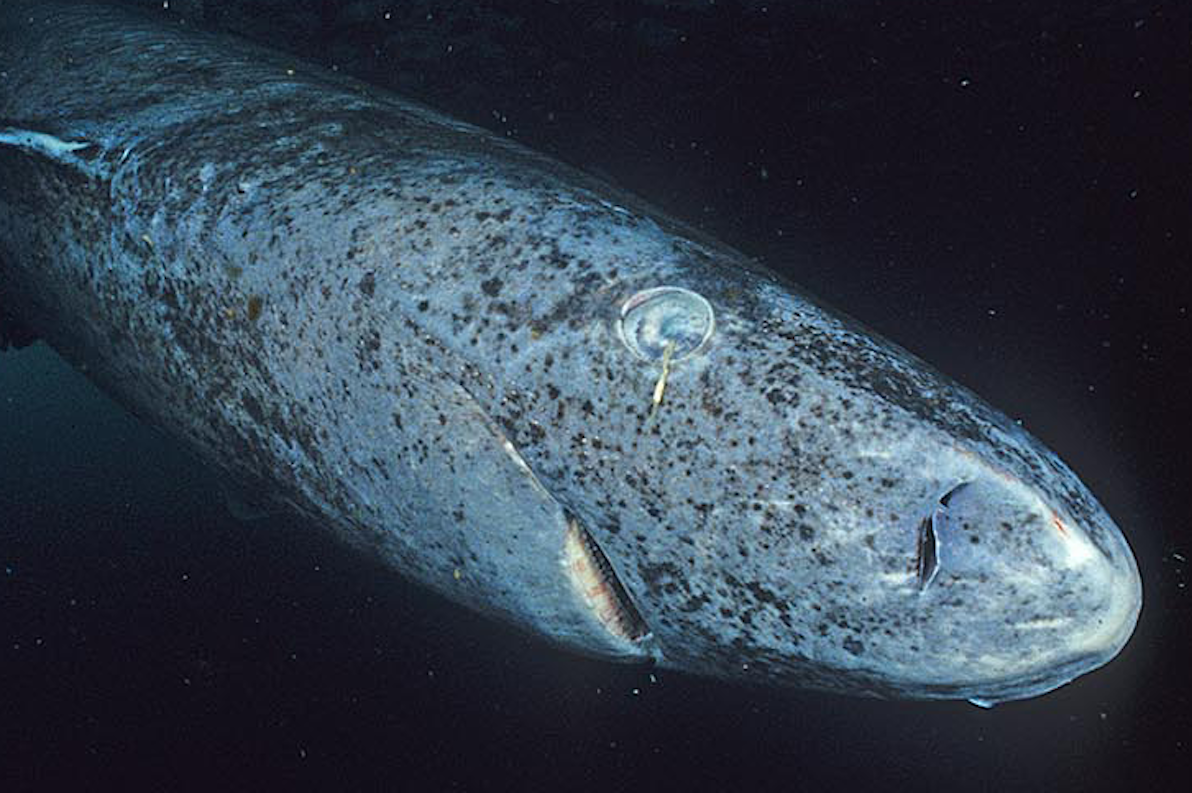
Indeed, the Greenland shark (Somniosus microcephalus) is bizarre and misunderstood, basically being the couch potato of the depths of the North Atlantic and Arctic Ocean, where waters are just above freezing. Known as an abyssal species, it slothfully trawls the shadows like some mournful Lovecraftian being, possessing an especially sluggish metabolism, which isn’t surprising considering its size. Greenland sharks weigh in at one ton and reaching up to 23 feet in length. The maximum lifespan can average 400 years, the longest lifespan of any known vertebrate, meaning there are apparently Greenland sharks that are older than the United States. If that doesn’t blow you out of the water, I don’t know what will. Humans are famously bad at mentally fathoming deep time, so thinking about these ghostly rotund things hiding in the dark of the ocean, outliving empires like an ichthyological Ozymandias, fills me with even more awe than most sharks do.

In a rare spot of good news, the local government dropped the plan after national officials questioned its legality, but a future cull hasn’t been ruled out. Still, it’s worth upholding this turnaround as an example of why speaking out on animal rights can be successful. We don’t need to just sit back and watch the extinction of any species that doesn’t directly benefit us, while of course recognizing that fishers have to eat too. Some have proposed reimbursing fishers or using acoustic deterrents instead of mass slaughter.

But it’s more than just Greenland sharks at risk, with an estimated 79 million sharks dying in fisheries in 2019. At least 25 million of those species are threatened. As coral reefs struggle to survive, many sharks are losing their main food source, but humans are to blame for that one. These animals can be dangerous, same as a grizzly bear or elephant, but people tend to value sharks a lot less. This is in spite of their critical role in a healthy environment. Sharks aren’t monsters, they evolved to fill very specific roles in the ocean — a huge block in the Jenga of life — and if they go, our oceans would dramatically tumble in ways that would negatively impact humans too.

“Jaws” is a fantastic film if you can suspend your disbelief about a great white being the menace of the seas. That’s really us, but it doesn’t have to be.

The post Leave the Greenland sharks alone appeared first on Salon.com.

  •  

Clavicular’s charges show the real danger of MAGA manhood

It wasn’t long after Braden Peters, better known as “Clavicular,” was arrested on suspicion of raping a 17-year-old girl at his family’s home in Massachusetts that his fellow MAGA influencers started complaining that he was the real victim. 

“Now we live in a climate where a 19-year-old can’t even sleep with a 16-year-old with a little alcohol involved. Absolutely insane,” said Nick Fuentes, the popular white nationalist podcaster, ignoring the fact that it has long been considered rape to have sex with someone unconscious and unable to consent, as alleged by the criminal complaint against Peters.  

Others floated conspiracy theories accusing the mysterious “they” of trying to “control” Clavicular, or claiming he is besieged with “women trying to ruin his life with rumors.” Brian Atlas of the “Whatever” podcast posted a video of the alleged victim drinking with Peters, as if it were exonerating evidence instead of bolstering the criminal case against him. Clavicular himself has been accusing the girl of fabricating her claims to get revenge for being rejected by him, an accusation echoed online by many of his fans. Right-wing commentator Richard Hanania, whose claims of reforming his racist views have drawn laudatory profiles in Vox and The Atlantic, struck out against the accuser, apparently because she didn’t cut off immediate contact with Peters after the alleged rape. (Research shows that victims often maintain contact with their assailants, especially if they’re still in denial or processing the trauma.) 

MAGA hysteria over “cancel culture” has long provided an excuse to recast bigots as free speech martyrs on the specious grounds that being criticized for saying ugly things is a violation of their First Amendment rights.

Such reactions are entirely predictable. MAGA hysteria over “cancel culture” has long provided an excuse to recast bigots as free speech martyrs on the specious grounds that being criticized for saying ugly things is a violation of their First Amendment rights. This was always pretzel logic, but the halos granted to the canceled by right-wingers has expanded beyond those who are mad because people yelled at them on social media. Actual crimes, especially violence against women, are now being excused and justified by redefining perpetrators as victims of cancel culture. As long as what you do makes progressives and feminists angry, it appears, there is no limit to how some on the right will protect and even canonize you. 

“MAGA and the right-wing have really lost the thread when it comes to their anger at cancel culture and are now just angrily fighting on the side of anyone who does like a crime,” Cody Johnston of “Some More News” noted in a recent episode. “Especially, it seems a crime against women.”

The Daily Wire, a right-wing production company founded by Ben Shapiro, openly brags how it hires actors and other talent shunned by mainstream Hollywood studios. “Thank you to the purple hairs. Please ‘cancel’ more creative geniuses,” a representative for the company said in a May 2025 press release that touted the hiring of former “Jeopardy!” producer Mike Richards as the new CEO. Richards had been slated to take over as host of “Jeopardy!” in 2021 — until The Ringer published an exposé containing accusations that he had been abusive toward female employees and “repeatedly used offensive language and disparaged women’s bodies” on his short-lived podcast. His hiring by The Daily Wire followed other prominent contracts between the outlet and canceled actors such as Gina Carano, who was fired from Disney after she equated liberals mocking her right-wing views to Nazis murdering Jews. 

The Daily Wire’s glorification of the canceled quickly expanded beyond those who had experienced consequences for hate speech, however. After coming aboard, Richards soon hired Jonathan Majors, who had been fired from the Marvel franchise years earlier, to star in an action film called “Run Hide Fight: Infidels,” a movie reportedly so terrible that even critics struggled to take its vicious Islamophobia seriously. Unlike previous high-profile hires of canceled celebrities, though, Majors wasn’t just guilty of saying terrible things. He was convicted of domestic violence in 2024. 

As Johnston notes, MAGA leaders like Tesla CEO Elon Musk have also been championing “Citizen Vigilante,” an independently produced and intensely racist film starring Armie Hammer as a former Army officer on a killing spree against immigrants. Hammer has been accused by multiple women of sexual and emotional abuse, with at least one woman claiming he raped her. Although he has consistently denied the charges, he did admit in an interview with Air Mail in 2023 to having “used people.”

“They could have been happy to just be with me and would have said yes to things that maybe they wouldn’t have said yes to on their own,” he said. Hammer was dropped by his agency and lost acting jobs, and he now contends he had no idea “Citizen Vigilante” would be so “disgusting.”


Want more Amanda Marcotte on politics?  Sign up for her free newsletter, Standing Room Only, now also on YouTube or wherever you get your podcasts.


Even the right-wing influencer Andrew Tate, who has twice been arrested on charges of rape and sex trafficking, has long benefited from the glow-up one gets in MAGA circles after claiming status as a victim of cancel culture. The laundry list of allegations against him grew so long that the Trump administration, after seeming to help him escape justice in Romania, finally acceded to the United Kingdom’s request to extradite him and his brother Tristan. Still, it took years before powerful people on the right finally started to inch away from the Tates. Their close relationship with MAGA influencers — and with Trump’s son Barron — have reportedly left the brothers with hope that the administration will intervene on their behalf. 

In retrospect, the shift from exalting those canceled for words to championing those canceled for alleged criminal behavior was inevitable. The First Amendment prevents government censorship, but one reason there are social penalties, including criticism, shunning and firing for hateful rhetoric, is that it is not, in fact, harmless. The discourse around so-called cancel culture has itself been warped, coming to imply that the problem is not bigoted language but liberal reactions to it. The insinuation is that such statements are “just words,” and to have any strong reaction to them is hysterical and overblown.

In fact, there is a direct line between misogynist rhetoric and violence against women. Men who listen to and repeat the idea that women exist to serve them — and should be punished if they reject that duty — are often likely to attempt to enforce that belief with violence. Degrading language aimed at women online often becomes the justification for vile behavior toward them in the real world. Creating social accountability for men who say misogynist things isn’t about feminists being overly sensitive; it’s about preventing those words from turning to action.

Clavicular’s arrest is a perfect example of this issue. He rose to fame as a “looksmaxxer,” which is a spin-off of the larger incel community. Incels believe that men are entitled to women’s sexual attention, and that feminism is an aberration because it allows women to live independently of men, instead of having to trade sex for survival. Looksmaxxers like Clavicular take it a step further, trying to game out strategies to reassert sexual dominance over women. Like Andrew Tate, a lot of the looksmaxxer discourse skirts the law by focusing on manipulating and tricking women into sex. But the implication of overt coercion is always bubbling beneath the surface. After all, if you feel that you are owed sex by women, rape becomes less like a crime and more like recompense. 

To be fair, conservatives aren’t the only ones who have fueled years of panic over “cancel culture.” The hysteria has normalized and promoted by centrist pundits in publications like The Atlantic and The New York Times, helping to obscure what should have been obvious: that bad words lead to bad actions.

Bigoted chatter online isn’t just trolling or trying to get a rise out of liberals. It’s dehumanizing actual people, and it makes violence against them easier to justify. By all accounts, Clavicular was enjoying his rising fame, engaging in laudatory interviews in popular venues like Barstool Sports and the “All In” podcast, outlet that treated his misogyny as mere theatrics. The rape charges against him should be a reminder to us all: Sometimes people actually act on their beliefs. 

The post Clavicular’s charges show the real danger of MAGA manhood appeared first on Salon.com.

  •  

Commentary: Cory Doctorow: Reverse Centaurs

Science fiction’s superpower isn’t thinking up new technologies – it’s thinking up new social arrangements for technology. What the gadget does is nowhere near as important as who the gadget does it for and who it does it to. Your car can use a cutting-edge computer vision system to alert you when you’re drifting out of your lane – or it can use that same system to narc you out ...Read More

  •  

Commentary: Cory Doctorow: Rubber-Hose Cryptanalysis

If there’s one thing I can’t abide, it’s nontechnical technothrillers. You know the trope: “We’ve got eight minutes to crack this mainframe, but it’s protected with encryption that is rated for ten minutes. We’re gonna have to hack really hard. Come on, hacker, HACK AWAY!”

Technothrillers are consumed by an increasingly computer-savvy audience, which means that the kind of technical elision and corner-cutting that dominates the field grows thinner by ...Read More

  •  

Commentary: Cory Doctorow: Strange Bedfellows and Long Knives

If a group of people have been trying to get something done for some time without success, there are two possibilities: Either they’re failing because of bad tactics, or they’re failing because they simply lack the power to achieve their goals. When things start changing in big, dramatic ways, that means that some group in society has either discovered a new tactic, or they’ve found some new coalition partners.

Most ...Read More

  •  

Commentary: Cory Doctorow: There Were Always Enshittifiers

In my new novel Picks and Shovels, we learn the origins of Martin Hench, my bestselling, two-fisted, scambusting forensic accountant who debuted in 2023’s Red Team Blues and whose adventures continued in 2024’s The Bezzle.

Marty’s origin story starts at MIT in 1982, where he joins the proud lineage of computer science students who flunk out of their degrees because they’re too busy hacking code to do their ...Read More

  •  

Cory Doctorow: Hard (Sovereignty) Cases Make Bad (Internet) Law

Let’s start with two obvious facts:

  • The internet is a communications medium, that
  • crosses international borders.
  • That means that every single policy question related to the internet will have:

  • a) A free expression dimension, and
  • b) A national sovereignty dimension.
  • With that out of the way….

    Late last August, Pavel Durov – the billionaire owner of the Telegram app – was arrested by French authorities after he landed his private ...Read More

    •  

    Cory Doctorow: Marshmallow Longtermism

    There are many ways to cleave the views of the political right from the political left, but none is so science fictional as the right’s confidence in the role of individual self-discipline on one’s life chances. Dip into any political fight about crime and poverty and you’re sure to turn up someone confidently asserting that these social ills are rooted in impatience. Poverty, we’re told, is rooted in an unwillingness ...Read More

    •  

    Cory Doctorow: No One Is the Enshittifier of Their Own Story

    No one was more surprised than I was when the American Dialect Society named ‘‘enshittification’’ – my dirty little coinage to describe how everything on the internet is (suddenly, simultaneously) getting (much) worse – to be its Word of the Year. But though the news was a surprise, it was a very pleasant one.

    My early writings on enshittification focused on its symptoms, the way platforms decay. The progression of ...Read More

    •  

    Cory Doctorow: Capitalists Hate Capitalism

    In conflict, we find clarity.

    We all hold contradictory views: We love our families, but they drive us crazy. We want more housing in our cities, but we don’t want our property values to decrease with expanded supply. We want better schools, but we recoil from a 0.1% municipal levy to fund them.

    It’s normal to hold contradictory views, but when those views come into conflict, how we act shows ...Read More

    •  

    Cory Doctorow: What Kind of Bubble is AI?

    Of course AI is a bubble. It has all the hallmarks of a classic tech bubble. Pick up a rental car at SFO and drive in either direction on the 101 – north to San Francisco, south to Palo Alto – and every single billboard is advertising some kind of AI company. Every business plan has the word “AI” in it, even if the business itself has no AI in ...Read More

    •  

    Commentary by Cory Doctorow: Don’t Be Evil

    It’s tempting to think of the Great Enshittening – in which all the inter­net services we enjoyed and came to rely upon became suddenly and irreversibly terrible – as the result of moral decay. That is, it’s tempting to think that the people who gave us the old, good internet did so because they were good people, and the people who enshittified it did so because they are shitty people. ...Read More

    •  

    Commentary by Cory Doctorow: Plausible Sentence Generators

    I was surprised as anyone when I found myself accidentally using a large language model (that is, an “AI” chatbot) to write some prose for me. I was twice as surprised when I found myself impressed by what it wrote.

    Last month, an airline stranded me overnight in New York City when my flight to LA was canceled due to an air traffic control snafu. The airline rep at the ...Read More

    •  

    Commentary by Cory Doctorow: SF Doesn‘t Predict, It Contests

    On June 20, 2023, I will be awarded an Honourary Doctor of Laws from York University’s Faculty of Liberal Arts and Professional Studies, in Toronto, Canada. The text below is the speech I will give.

    Goodness me, it is a gigantic honour to be here today, and to be recog­nized in this way. I’m profoundly grateful to the faculty and administration here at York, and to my friends and family ...Read More

    •  

    Commentary: Cory Doctorow: End to End

    Within the very first year of operation, 1878, Bell’s company learned a sharp lesson about combining teenage boys and telephone switch­boards. Putting teenage boys in charge of the phone system brought swift and consistent disaster. Bell’s chief engineer described them as ‘Wild Indians.’ The boys were openly rude to customers. They talked back to subscribers, saucing off, uttering facetious remarks, and generally giving lip. The rascals took Saint Patrick’s Day ...Read More

    •  

    Commentary: Cory Doctorow: Social Quitting

    As I type these words, a mass exodus is underway from Twitter and Facebook. After decades of eye-popping growth, these social media sites are contracting at an alarming rate.

    In some ways, this shouldn’t surprise us. All the social networks that preceded the current generation experienced this pattern: SixDegrees, Friendster, MySpace, and Bebo all exploded onto the scene. One day, they were sparsely populated fringe services, the next day, every­one ...Read More

    •  

    Commentary by Cory Doctorow: The Swerve

    If the bullies at the school gate steal your kid’s lunch money every day, it doesn’t matter how much lunch money you give your kid, he’s not gonna get lunch. But how much lunch money you give your kid does matter – to the bullies. Hell, they might even start a campaign: “The chil­dren of Jack Valenti Elementary School are going hungry! Congress must step in to give those kids ...Read More

    •  

    Cory Doctorow: Moneylike

    “Five thousand quatloos that the newcomers will have to be destroyed.”

    Quatloos. Credits. Euros. Dollars. Dogecoin.

    Wait, Dogecoin?

    At some point in your life, you’ve probably asked yourself, “What is money?” There’s something existential about pulling a bank-note out of your wallet and asking yourself, “Why does so much of my wak­ing life revolve around getting more of these slips of green paper?” (Outside of the USA, you may ask ...Read More

    •  
    ❌