❌

Reading view

A Note On the Florida Senate Race

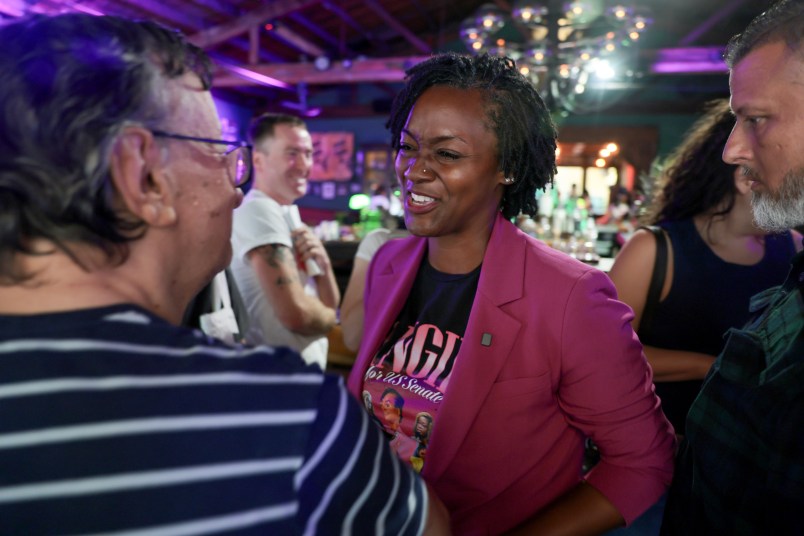
I’ve mentioned a few times that I think Democrat Angie Nixon, just based on my watching her in campaign appearances and interviews, is a very strong candidate — certainly the most canny and able of the DSA-affiliated major race candidates I’ve seen this year. Being a strong candidate, to be clear, is a different metric from whether you’re a good match for a state or district. But I also think her winning isn’t impossible. Same story we’ve seen in other places: bad bad climate for Republicans and an at best meh GOP incumbent. Ashley Moody is a DeSantis crony who was basically gifted the seat when Marco Rubio became Secretary of State.

  •  

Cotton Heaving as He Races toward November

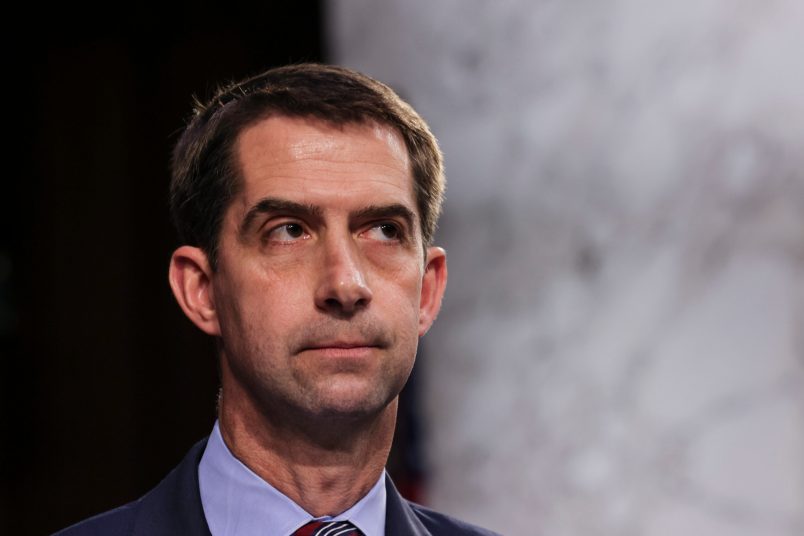
I need to start these kinds of posts by saying: No. I absolutely do not believe Tom Cotton will lose his reelection campaign. But even races that aren’t in contention can give you a read on the partisan climate. The Cotton campaign just released an internal poll showing him 11 points ahead of Democrat Hallie Shoffner — 50% to 39%. A Libertarian candidate has 4% support and 7% are undecided. That’s a solid lead. And a result any candidate would be happy with. Except when you remember that Trump won the state with 64% of the vote two years ago and Cotton won reelection with 67% of the vote in 2020. In 2022, John Boozman won with 66% of the vote. Cook appears to list Arkansas as an R+15 state. And they’d know. But in terms of actual election results, it certainly seems more like an R+30 state. In any case, the point is clear: This is a big level of underperformance in an extremely red state.

  •  

TPM Video: What Can We Make of Our Digital Emperors?

Today on TPM’s Untitled Friday Show (Name TBD), I was joined by one of my oldest colleagues (and friends) Derick Dirmaier. TPM’s Head of Product. We’ve been in the digital news game a long time. We’ve seen some things.

We talked about how the online world, which once seemed separate and distinct, has encroached on the so-called real world. At the center of this transformation are, of course, the tech moguls. These guys have amassed insane amounts of power and often when the speak, sound totally insane. They also have legions of sycophantic admirers. What should we make of all this?

We spent some time trying to sort through it all. Thanks for joining us!

  •  

Oh Hey, More AI Stuff — Is This Our Reliable Narrator?

Yet another update on the running AI discussion.

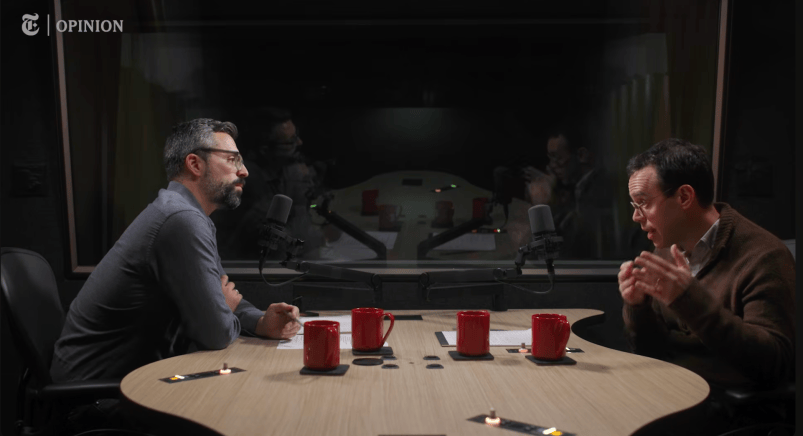
Here’s an interview Ezra Klein did with a guy named David Robinson. And that interview is about a piece Robinson, a member of the Open AI safety and safety documentation team, wrote in The Atlantic announcing his resignation from OpenAI — a decision and announcement he is self-aware enough to note has become something of a cliche. I found the interview interesting and edifying, largely on the front I mentioned earlier about finding reliable narrators.

Robinson isn’t a data scientist or a programmer. His role at OpenAI was essentially being the conduit between the teams building the LLMs and the knowledgable and interested public, specifically the people who write the documentation — what does this model do, how does it work, what are the possible safety risks. As is usually the case in any highly technical space, the people doing the work aren’t going to be writers and they’re usually not going to speak a language outsiders can necessarily understand. So you have people who are close enough to the work and the workers to understand what is happening and also able to speak human so they can communicate it to everyone else. Robinson led the team that served in that role.

  •  

The AI Panic and the Hunt for Reliable Narrators

This is an update to my post from Tuesday about the “existential risk” panic. A good friend of mine reached out to me and said, in so many words, yes, all that techno-babble is weird. But that doesn’t mean these risks aren’t real. And as I tried to make clear in my piece, I agree with that, at least to the extent that if Group A isn’t made up of reliable narrators, I’m not clear who the reliable narrators are. He pointed me to this recent report put out by the Rand Corporation, which is kind of the original think tank and has always been closely tied to the U.S. government and for lack of a better word the U.S. military-intelligence-industrial complex. It’s an interesting report. Or at least I found some interesting and I think sensible prescriptions in it once I got through the first half or two-thirds of it, which contained very Randian decision trees, definitions and a lot of what seemed like assumptions about existential risk and coexistence with AI that I didn’t understand. It eventually sets out a sensible if hard-to-execute approach which generally amounts to a safety-first regime of governing AI (make sure new things don’t endanger us before we build them or make them widely available) and, critically, open the decision-making up to public institutions with public accountability.

  •  

Do Me This Favor

If you ever spend time on YouTube, I hope you’ll take a moment to subscribe to our YouTube page, which you can find right here. We have a couple great podcasts with video versions as well as various conversations and interviews we’re publishing. But even if this isn’t for you, simply clicking the subscribe button on our page helps more new people find our videos, find out about what we do at TPM and potentially become new TPM members. That simple button click helps us a lot. If you could take 30 seconds right now, go to this link, and hit subscribe I would be so appreciative.

  •  

Trump Rages, Rages Against the Dying of the Light

This is the weekly, free edition of The Backchannel. If you’d like to receive the free edition of The Backchannel in your inbox, you can subscribe here.

Donald Trump’s manic building and naming spree has been a core feature of his second term in office. And that’s saying something. Because if nothing else, you can’t say Trump hasn’t been active. There are wars, blowing up the international trade regime, the on-going attempted authoritarian takeover of the state, the bust-out rush to wrest as much money out of the presidency as he can, his significant role energizing the AI boom (and possible bust). But with all these things, the building and naming spree stands out, especially in 2026. I focus on this today. I return to this today because of news that Trump wants to turn his West Palm Beach golf club into a new Camp David, a permanent presidential retreat.

The details here are important. If Trump had some secluded property he wanted to donate to the federal government for this purpose, there might be some logic, though it’s hard to imagine Democrats wouldn’t put it up for sale at their first opportunity. What he wants to do is different. His plan is to donate a parcel of land at the private club for the Florida Camp David. So it’s really that future presidents would have there own private bungalow at Trump International Golf Club in Palm Beach. As an additional, rather comical, sweetener the club’s legal counsel, who is presenting the idea to Palm Beach County officials, says that future presidents will even be offered comped memberships to the club.

  •  

Welcome to Polltober! A TPM YouTube Exclusive Series

You have questions, we have answers. Since TPM readers are as obsessed with political minutiae as our reporters are, we’re launching a special limited-run bonus version of the pod in this final month before the 2026 midterms. Introducing: the Polltober Show.

Every Tuesday from now until Election Day, Josh and Kate will get into the weeds on all things midterms, drawing on questions that you — our lovely readers — will submit! If there’s anything you want to know about specific races, candidates, chamber control, the courts, the polls, whatever, just drop your queries in the YouTube comments on the latest episode of the TPM Show or the Polltober Show itself. I will scoop them up and pass them on to Josh and Kate to mull over.

This week, Kate Riga and Josh Marshall dig into the first listener mailbag, breaking down key races in Florida and Georgia as well as decoding Democrats’ generic ballot lead.

Don’t forget to subscribe to our YouTube page for more content and the rest of Polltober!

  •  

Who Is Behind the AI/Existential Risk Scare?

For years, and especially in the last month or so, we’ve been collectively inundated with an AI industry which, uncannily and bizarrely, tells us simultaneously that AI is essential, inevitable and runs a significant chance of exterminating all of us in as few as two or three years. If you’ve dipped into this debate at all, you’ve quickly come upon discussions of so-called “rationalists” or “long-termists” or supporters of “effective altruism” who are simultaneously ubiquitous among those developing AI and in the AI safety (i.e., the folks sounding the alarm) community as well. (For the sake of simplicity and brevity, I’ll refer to these folks as the “REL nexus”: rationalists, effective altruists and long-termists. This is my coinage since I don’t know a better one.) I’ve spent a fair amount of time familiarizing myself with this world and how it relates to current debates about AI. So I wanted to share my basic impressions.

  •  

We’re Launching a Special New YouTube Series Around the Midterms!

You have questions, we have answers. Since TPM readers are as obsessed with political minutiae as our staffers are, we’re launching a special limited-run bonus version of the pod in this final month before the 2026 midterms. Introducing: the Polltober Show.

On Tuesdays, Josh and Kate will get into the weeds on all things midterms, drawing on questions that you — our lovely readers — will submit! If there’s anything you want to know about specific races, candidates, chamber control, the courts, the polls, whatever, just drop your queries in the YouTube comments on the latest episode of the TPM Show or the Polltober Show itself. Our producer Jackie Wilhelm will scoop them up and pass them on to Josh and Kate to mull over.

Look forward to getting into the weeds with you!

  •  

Sign Of The Times … Texas Edition

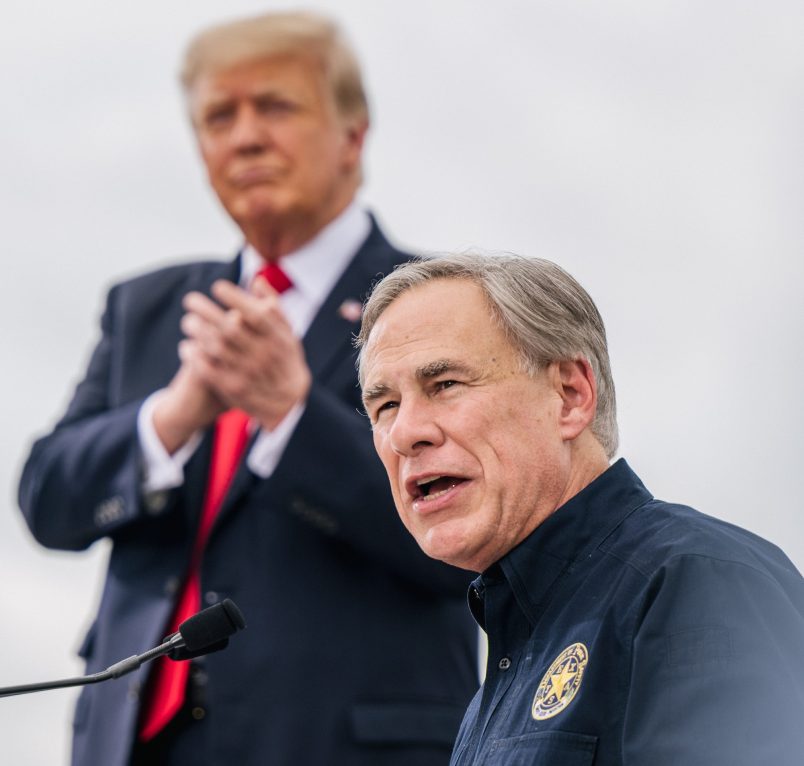
It’s surprising to see Donald Trump campaigning in Texas a month before a midterm election, as he will this week. Far more surprising to see him snubbed by the incumbent Republican governor who until as recently as a month ago appeared to be in an all but nominal reelection campaign against state Rep. Gina Hinojosa. Houston Chronicle reporter Ben Wermund caught up with Greg Abbott who told Wermund he wouldn’t be able to show up because of “other campaign events already planned.” Said Abbott: “Whenever he does show up, it leads to excitement with the base. He does a good job with getting the base organized and turning out.”

He “does a good job.” lol …

While I am certainly not predicting Abbott’s defeat, recent polls have shown a genuinely competitive race. Fox and Siena polls both take in the last week of September showed at Abbott +5 (Fox) or Hinojosa +4 (NYT/Siena). A Marist poll a week earlier showed Hinojosa +3. A few lesser known or GOP sponsored polls have leaned more toward Abbott. An additional concern for Abbott is that Ken Paxton seems to be running genuinely behind. So Abbott could also pick up some some of the downdraft from that race.

  •  

Turkish and Pakistani Troops to Saudi Arabia

Hard to know quite what to make of this, or how much to make of it. But we’re getting what may be a preview of elements of a new era in the Middle East. According to a just released communiqué, Turkey and Pakistan will be sending troops to Saudi Arabia under the three countries’ new “Mecca Pact” to assist with fighting the Houthis in Yemen. The statement is very short on details. So it’s not clear whether this is a meaningful deployment of manpower and resources or something more nominal and symbolic. Nor is the timing of any deployment clear.

  •  

Memories of the Hastert Years … and the Ironies of History

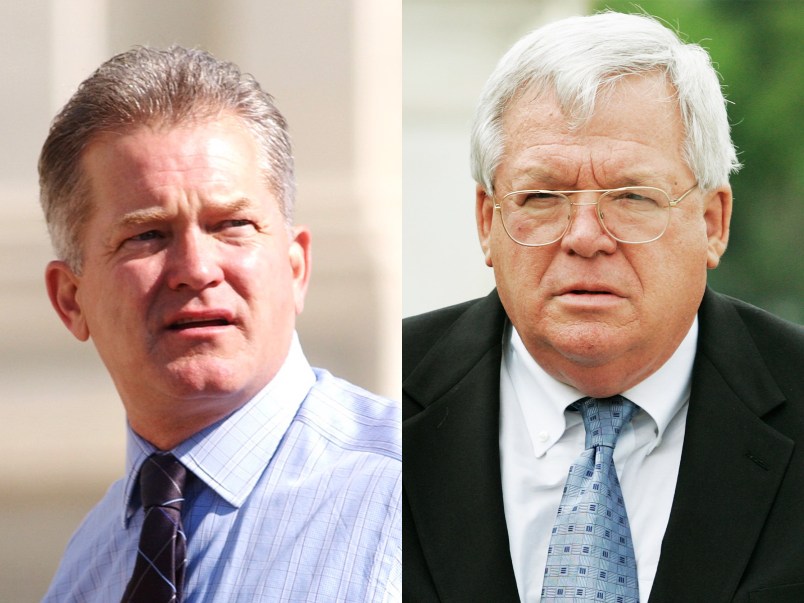
It’s hard to know what to say about former Republican Speaker of the House Denny Hastert, whose death at the age of 84 was reported this morning. Few if any political leaders in modern American history have experienced a fall quite so ignominious and total. The obvious point of comparison is Richard Nixon. But post-Watergate Nixon was never without his defenders and supporters. All but his most adamant critics granted significant successes of his presidency. And by the time of his death in 1994, he’d made significant progress in being treated by many as a sage elder statesman, albeit a greatly tarnished one. Hastert remains almost a test case of a top political leader whose fall was immediate and absolute. He came as close as one can come to have to having zero public defenders (though a significant number of former colleagues wrote leniency letters on his behalf at sentencing in 2016).

What stands out in my mind are two moments, one from his moment of ascent to power and another at the denouement but certainly not the nadir of career. Go back to 1998. The so-called Lewinsky scandal had been trundling forward for most of the year. Republicans are giddy about the Red Tsunami that was about to supercharge the existing GOP majority. Predictions of a 30- or 40-seat pick up were common and assumed. (I was one of few people I knew to basically predict no wave at all; it was simply a matter of watching the polls rather than the bipartisan hype.) When Democrats ended up gaining five seats, House Speaker New Gingrich was summarily tossed overboard — a mix of the failure of his wild overpromising and slowly building frustrations with his erratic and high drama leadership style.

  •  

Candidate Quality

The New York Times and Siena released another batch of polls this morning across a swath of red states. The general picture is the same as its been for weeks. Many of these races are close. But Democrats are ahead in almost all of them. The exception in this batch is Iowa where Ashley Hinson is up by a single point over Democrat Josh Turek. That’s essentially a tie and it compares to Sherrod Brown +3, Mary Peltola +7 (first round) and James Talarico +6.

Some have posited at least the possibility that Democrats are benefiting from poll bias in the reddest states. But I think the real story here is another we’ve discussed: candidate quality. Hinson has run in and won a number of competitive races over the last decade. And she’s objectively a solid if not necessarily a terribly candidate. She’s a former newscaster and those always benefit from some level of familiarity and trust based on many voters feeling they know them. The others range from meh (John Husted in Ohio) to catastrophic (Ken Paxton). Again and again we’re seeing cases where Republicans have been able to run passable and even sub-standard candidates in red states. And there’s a good chance that will continue to be the case when there’s no Cat-5 Hurricane year. But it’s when a big storm comes that you find out the levee ain’t very strong.

  •  

Remember the Metaverse? Tech’s Hunger for the Next Big Thing Long Predated AI

We’ve been following this conversation here in The Editors’ Blog about what AI is, what it can do and whether it can possibly live up to its hype. It’s worth considering the question from what we might loosely call not only the supply side but also the demand side. From a very broad perspective, the history of the last three decades has been one defined by the fact that you have too much capital chasing too few productive investments. That’s the driver of the recent history of cycles of booms, bubbles, over-investment and busts: the Asian Financial Crisis, the Dot Com Bust, the Global Financial Crisis, perhaps soon the AI Bubble Collapse, along with many smaller of regional ones.

  •  

Yet More …

We’re seeing article after article now restating in slightly different ways the same basic point about the AI infrastructure boom: how will this level of investment ever be recouped? This new article in the Journal is entitled: Will America Spend 9% of Its GDP on AI? The Industry Is Counting on It. (It references the same Brookings study we discussed a week ago.) This is more or less the same story as I flagged in that Bain report in last night’s post. A market of $6 trillion for AI by 2031; 9% of GDP in 2032. The numbers may be based on slightly different global modelings — just how much investment, rates of return, etc. But they’re mostly different ways of stating the staggering growth that will be required to cover current levels of capital expenditure. The Journal notes that 9% of GDP in 2032 (one year later than the Bain & Co report focuses on) will mean Americans are spending as much on AI as food, half as much as they will spend on health care. The Journal article reminds us that this isn’t simply about adoption and new products. You have to factor in what will likely be rapidly falling prices as well as competition from new entrants with possibly far lower sunk costs and debt.

Getting into the particulars involves so many variables it’s hard make sense of it without an economic degree. But the overall story is the same as the one in the Bain study. Silicon Valley has committed the economy to unimaginable levels of investment in a very promising but still largely unproven technology. And now we have to go on a national crash course of maniacal innovation just to get out from under that spending overhang or the whole economy craters. Of course, if AI just does a million amazing things and makes all our lives happier and more fun … well, we’ll have to really thank them. But this seems uncertain.

  •  

Bain Capital Brainstorms Where The AI Revenue’s Gonna Come From

Toronto, Canada - February 22, 2025: AI virtual assistant apps on a smartphone - DeepSeek, xAI Grok, and OpenAI ChatGPT.

A friend sent me this new Bain Capital study on the growth required to match the current levels of capital expenditure on AI, essentially breaking down the cost of the data center and other associated build outs. It’s an interesting document, not simply for the number-crunching and the predictions, but as a document in the more literary and analytic sense. Needless to say, Bain isn’t coming at this from any “boo capitalism!”/”this is insane lol” viewpoint. But the conclusions aren’t that far from the “this is insane lol” position. It’s very much, “hey! we can do this” but also, “um … wow, there’s quite a lot to do.”

The broad stroke numbers are these. The study says that to keep up with the current levels of capital expenditures AI will need to become a $6 trillion dollar market by 2031. (To give some perspective on that number, a recent Gartner study predicted that global IT spending will be just under $6.4 trillion this year. So devices, hardware, software, services, kind of everything.) It then posits that we can see the beginnings of, with some level of out-year predictability, something on the order of a $1.5 trillion market — which would be made up of a greatly expanded consumer market (Claude apps, ChatGPT, etc.) of between $200 and $400 billion and then an enterprise market (software, sales, marketing, business optimization) of between $1 and $1.4 trillion. So we’re left with about $4.5 trillion to go. That’s where the crash course in innovation comes in.

  •  

Doubts About the AI Boom Are Seeping Into Elite Headlines

This is the weekly, free edition of The Backchannel. If you’d like to receive the free edition of The Backchannel in your inbox, you can subscribe here.

In my recent writing about LLMs and AI, I’ve mainly focused on what it can do, what it is, what its potential dangers are. I haven’t focused as much on the pretty substantial evidence that we’re in the midst of an AI bubble. The entire U.S. economy is heavily dependent on the AI boom. Much of the rest of the economy is in a slump. That boom is based on cheap money and very high expectations for AI profits, just as the Fed is facing irresistible pressure to raise interest rates, which is to say, raise the cost of money. This whole question of an AI bubble gets talked about a lot. You probably know the basic outlines. What’s caught my attention is how just in the last week or so these questions, verging into assumptions about unsustainable spending, are bleeding into the tech and the Beltway political press.

  •  

Rusty Red State Candidates With Rusty Values

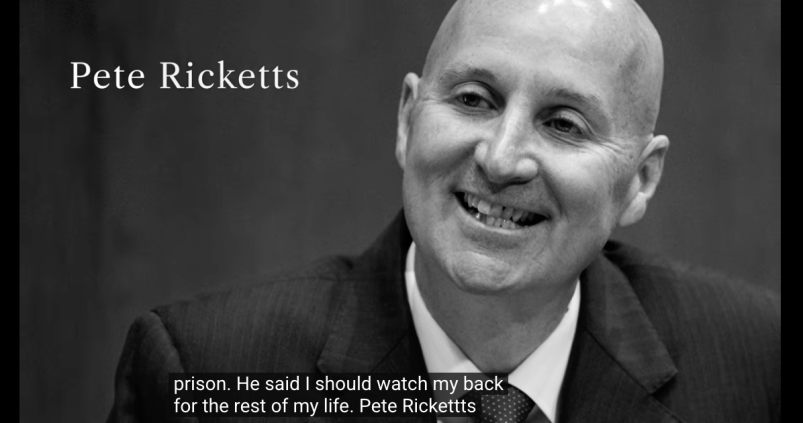
This afternoon I saw an ad being run by a SuperPAC supporting Dan Osborn (“Nebraska Values PAC”) against Sen. Pete Ricketts (R) of Nebraska. It’s a brutal ad about a brutal crime. (You can watch it here.) A woman identified as “Jody S.” speaks over a montage of a crime scene imagery explaining that in 1993 an intruder broke into her home, tied her to her bed and violently raped her while her children listened to everything. A man named John Arias was arrested, pled guilty, was convicted and sentenced to prison. We then fast-forward to then-Gov. Pete Ricketts casting the deciding vote as the member of a pardon board that ultimately pardoned Arias. Jody S. notes that Arias told her she would never be safe from him and that he was now off the state sex offender registry and allowed to own a gun. She also notes that she wasn’t even informed about the pardon until after it happened.

I tend to be hard-hearted about political ads. I watched this one a few times to make sure I had the details right. It’s hard to watch; in a way it’s more hard to listen to. The ad has stark black and white imagery and has audio of Ricketts announcing, in an uncomfortably chipper tone, his vote during the hearing: “But with that you’ve got your pardon.”

  •  

A Critical Moment for the Rule of Law

This morning the full D.C. Circuit Court of Appeals heard oral arguments on whether the Trump administration will be subject to a contempt of court inquiry for not stopping and turning around the deportation flights in the original Alien Enemies Act case, which began way back in March 2025, when the Trump administration sent more than 200 Venezuelan men to El Salvador’s CECOT prison.

Each side — the Trump DOJ and the ACLU — was given 30 minutes, but the oral arguments ended up lasting nearly three hours.

The top line: The en banc court is likely to rule against the Trump administration and allow U.S. District Judge James Boasberg to proceed with a contempt of court inquiry.

  •  
❌