 Login
Login
house lemonade
17 July 2026 at 16:23


This Guacamole recipe is balanced and refreshingly simple, and it always gets compliments from whomever tries it! Ripe avocados, onions, cilantro, lime, salt, and jalapeño are all you need. Our Go-To Guacamole Recipe Guacamole is one of those recipes that confused me for years. I was young and naive, and for some reason, I was […]Places mentioned in the video where I shopped: Miyam, Terroirs de Avenir, Pari Local and Leonie bakery…
You may have noticed I moved my Paris shopping videos here from Instagram. Subscribe to my newsletter and get them sent right to your inbox!
Get the Tapenade with fig recipe here:

As I mentioned in my last newsletter, Norway has been on my bucket list of places to visit in my lifetime. I’d heard about the magnificent fjords and wanted to see them before I kicked the bucket. (Thanks commenter Paul, for pointing out how we similarly, and oddly, use “bucket” in English.) Several friends kindly gave me lists of restaurants they recommended, but I nixed any place that served dinner as a lengthy tasting menu. I’m no longer interested in (is anybody?) sitting at a table for four hours while being presented with course after course of little things served on rocks, or in spoons, while the server carefully explains each one before you eat the little mouthful, then they whisk away your plate (or rock) and bring you another.

When people travel they often say they want to eat where the locals eat. But in a city like Copenhagen, which has less than one million inhabitants, or even Paris, anywhere that’s good is going to have a mix of visitors and locals.
It’s easy to get wrapped up in trying to eat at “the” places, although in most cities nowadays, you need to do a little planning and make reservations if you want to get a table for dinner. I tend to do a deep dive into a city while planning a trip, but most of this trip was meant to be relaxing. So the first part was a couple of days in Copenhagen, then we were scheduled to depart on a boat to see the Norwegian fjords, which left from the Danish capital.

We’re not really cruise people, but the best way to see the fjords is by boat.
Red Bean Popsicles are an all-time favorite Asian dessert during the summertime. This version is super creamy and sweet, and even better than the ones you remember from childhood. It almost tastes like a red bean ice cream! My grandson Ethan absolutely loved them, and has started asking for them after dinner! The Perfect Red […]I love granola, and this grain-free granola is no exception. Most granola recipes are oat-based, but this one is oat-free. Regardless, it offers a sweet, nutty crunch that’s reminiscent of my most popular granola recipe. Like any good granola, it’s irresistible.
When I first heard of grain-free granola, I was perplexed by the concept. I’m a big fan of oats and whole grains, of course, and I still am. Unfortunately, I was forced to become more carb-conscious while I was pregnant to manage my blood sugar (gestational diabetes is zero fun).
This grain-free granola livened up my breakfasts and snacks during that time. It’s a kitchen staple for me to this day, and I’m always sad to run out of my most recent batch. I found the original recipe in a book by dietitian Lily Nichols called Real Food for Pregnancy. I couldn’t help but play around with it, so I’m sharing my version and some fun options with you today.
Continue to the recipe...The post Grain-Free Granola appeared first on Cookie and Kate.
Summertime is grilling season and in case you missed it, listen to my chat with Francis Lam on the Splendid Table. Our July 4 episode was all about grilling!
We’re also in sandwich season and my favorites are banh mi and tomato-mayo. The two were born in different places on our planet but they overlap in their reliance on mayonnaise. The synergy between mayo and Maggi seasoning sauce heavily defines the rich umami of a good banh mi. You likely buy mayonnaise but it’s expensive, despite being made of only egg, oil, and seasonings!
I’d love for you to make your own mayo because I have a ridiculously easy, 2-minute method for a Kewpie-style mayonnaise. I call it “Q.P. Mayonnaise” because Q.P. stands for Quick Prep. I’ve never had a bad batch.
My recipe plus a video to show you how easy it is to make are at my website. So, skip the grocery store run and make my 🆓 Kewpie dupe recipe (in the article, you’ll also get links to a master banh mi blueprint and hot dog banh mi recipe).

Grilling and mayo intersects in Vietnamese cooking in the form of rice paper pizzas called bánh tráng nướng (grilled rice paper). After reading about them in ’s newsletter dispatch, asked about the pizzas. They were a wonderment to Yotam’s children, who adored them and couldn’t stop talking about them. Yotam didn’t offer a recipe. Did I have one?
Yes I do, in Ever-Green Vietnamese. Drew looked up the recipe in my book and we discussed the possibility of the pizza being a fun thing for kids and adults alike. Thanks to Yotam and Drew, today’s newsletter features the pizzas!
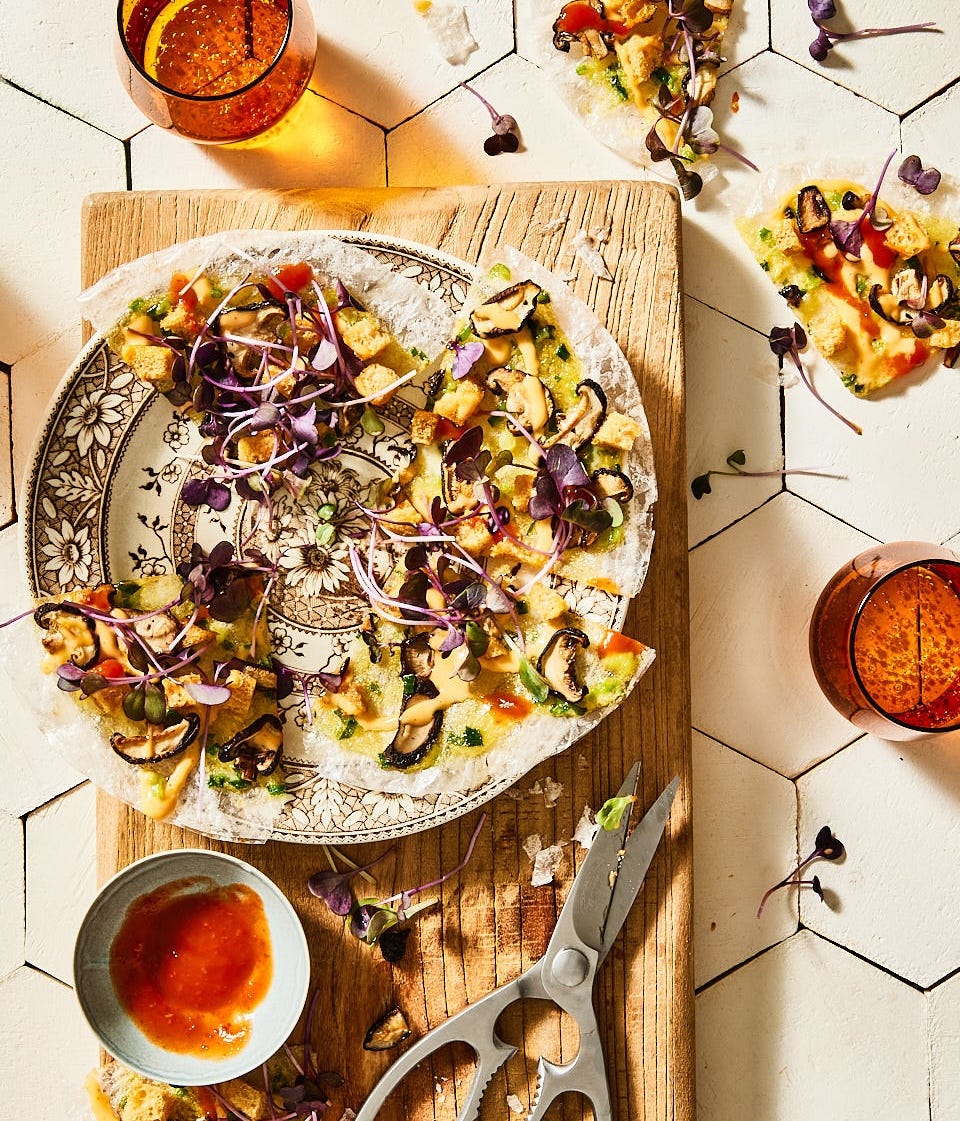
A beloved modern snack, bánh tráng nướng is sad to have originated in Phang Rang, a coastal city in southern Vietnam with Cham roots. It’s not the same as traditional thick rice crackers of the same name; Viet food terms to confuse.
From Phan Rang, the grilled rice paper “pizzas” trended upward in hipster-ish Da Lat and Saigon (HCMC) where young people literally ate them up. A Neapolitan would scoff at calling them “pizza”, but that’s how many Viet people have described the crispy, chewy grilled rice-paper platforms, which are topped with a mixture of eggy green-onion oil and a choice of savory, crunchy, unctuous, spicy toppings. Like with Italian pizzas, toppings vary endlessly.
I first had rice-paper pizzas prepared by a street vendor in Da Nang, a coastal town in southern Vietnam. It was early afternoon and she had positioned herself near a school. Why wasn’t she near businesses like other vendors I has seen?
The snack is a hit with schoolkids, she told me.
School hadn’t let out yet so I got to spend a while watching her craft my order on a coal-fired brazier. She had all her mis en place ready and rhythmically prepared each one, asking me what toppings I wanted. “The works!” I said. Among her toppings was a hot, salty-sweet sauce and crunchy canned shoestring potato sticks!
I grabbed a little video of her cooking:
The sauce was a byproduct from a beef jerky maker, she divulged. No wonder it tasted so good. Her riotous combo of textures and flavors was superb. My travel buddy, Karen, ate so many that she got a stomachache afterwards. We’re either kids at heart or the pizzas are damn good or both. My vote is both!
What’s fabulous about Vietnamese pizzas is that they’re fashioned from next to nothing but they are so much more than the sum of their humble parts. That’s the genius of street food vendors whose craft needs to be portable, uniquely delicious, and financially viable (low cost).
A leaf fan was part of the lady’s barebones set-up. Over the years of traveling to Vietnam, I’ve seen Viet pizzas as rounds or folded up like a quesadilla or small burrito.
Replicating food that you taste while traveling isn’t easy because of differences in ingredients and cooking equipment. There are countless hyperlocal rice papers in Vietnam that aren’t available in America. And I’m not going to ask you to get a charcoal brazier going to serve 4! After weeks of trying, I got an assist from chef friends. Their tips along with lots of recipe testing and development is how I successfully translated this street food from Vietnam into a doable recipe for your home kitchen.
Below you’ll find:
A versatile recipe for Grilled Rice Paper Pizzas in text and downloadable PDF
Step-by-step photos and instructions to manipulate rice paper into a crispy pizza!
Selection tips for choosing suitable rice paper
Timing and planning tips so you can make a fun group activity around bánh tráng nướng
Let’s grill them up!
Curious cooks, readers and eaters fuel this newsletter. The dispatch was created for paid subscribers who sponsor PTFS. To get the full Vietnamese grilled rice paper lowdown, fully use the recipe index plus save 25% on my cooking classes, become a paid subscriber. Your support makes a big impact.
It’s been hotter than heck in Paris, and we’re in the midst of our third heatwave. One way our friends in Italy beat the heat (and get their coffee fix) is to make affogato, a dish of ice cream “drowned” in espresso, with liquor sometimes added, giving it an extra kick.
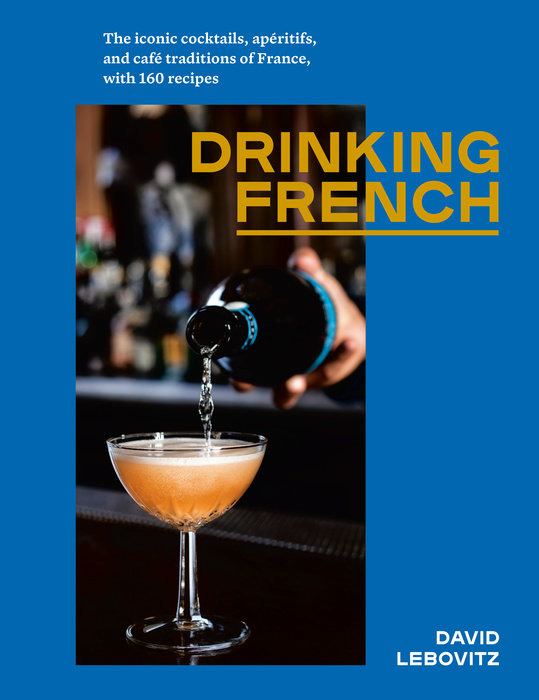
I met Margot Lecarpentier when writing my book, Drinking French. Margot is the owner and head bartender of Combat, one of my favorite cocktail bars in Paris, and she stopped by to make a spirited affogato for me, under the shade of our fig tree.
Affogato is often made with vanilla ice cream but Margot asked me to make a batch of chocolate sorbet, which was perfect with the mix of liquors she stirred up.
Subscribe to my newsletter to get recipes, videos, posts, and more, sent right to your Inbox!
The amaro Margot chose, Rabarbaro Nardini, which is made from rhubarb and has a husky flavor that works beautifully with the other ingredients. There are a lot of amaros/amari out there, and ones such as Fernet-Branca, Braulio, and Dell’Etna, have their own distinctive vegetal notes. You could use one of those, or whatever is available.
You can certainly change the other ingredients to your liking as well, such as swapping in amaretto for the coffee liqueur, or whiskey for the rum, although as I noted in the video, her recipe — as she made it — was truly the best affogato I’ve ever had.
[btw: In the video, you’ll notice some steam drifting across the table. That’s water for heating the ice cream scoop 😄, which helps make nicely-shaped scoops.]
Enjoy the affogato…and stay cool!

Two regular servings, or one generous serving
In the video, we shared a generous scoop but you can use this recipe to make two individual portions; feel free to adjust quantities to your taste. Vanilla ice cream is the classic, but Margo thought it’d be fun to use my Chocolate sorbet, and her instincts were spot on.
3/4 ounce (20ml) of each; dark rum, amaro, and coffee liqueur
2 generous scoops, or several smaller scoops, of ice cream
2 shots of espresso
Mix together the rum, amaro and coffee liqueur in a small pitcher or measuring cup.
Put a scoop, or several scoops, of ice cream in two separate ice cream dishes.
Divide the liquor mixture over the two portions of ice cream and add a shot of espresso to each one.

Want more chocolate? Check out my new book: The Great Book of Chocolate!
Get The Great Book of Chocolate

Hello there!
California’s Napa Valley wine country is dreamy but it’s also expensive. A couple weekends ago, we went to Napa for a friend’s 90th birthday party and we were astounded by the prices. So, I’d leading off with pointers gleaned from our recent experience there.
💎 Do go on Sunday through Thursday when hotel prices tend to be lower. On a Saturday night at the tidy Best Western Plus, we [ahem] paid $400‼️ (tax and fees included); the midweek rate is about $140. Across the street from the BW are an In-and-Out burger, McDonald’s and Raley’s supermarket so you can get snacks and/or breakfast — which are not included in the hotel price. There’s a swankier Hampton Inn nearby. Stay on the edge of Napa to save money and drive a few minutes into Napa central. You’ll have to drive to the wineries anyway!
💎 Don’t overlook the wine bars and restaurants run by the Culinary Institute of America. They are located in Napa at Copia and at the historic Greystone campus on Highway 29 in St. Helena. The wine bars are automated and you can sample what you like from a curated list (you won’t have a bad wine). It’s fun and low-pressure. The CIA restaurants are helmed by student chefs who prepare and serve a la carte and multi-course dinners with wine pairings. The grounds at Copia and Greystone are great to stroll around, too. More about the CIA wine bars and restaurants here.
Very close to Copia is Oxbow Marketplace for fancy-casual food, an outpost of Gott’s Refresher (good burgers), the Model Bakery (sinful English Muffins and more), plus the Fatted Calf (sandwichery, butcher shop, charcuterie). Grab lunch or dinner or make yourself a picnic.
💎 Pop in for lunch at charming Oakville Grocery. Compared to when I first went in the late 1980s, the grocery store is now much more upscale but in a pleasant, casual elegant way. There’s outdoor seating, plenty of parking, and a automated wine bar. Order a sandwich, pizza, or salad or grab a sweet. Buy a split bottle of bubbly and sit outdoors under the shade for a splendid, lazy lunch.
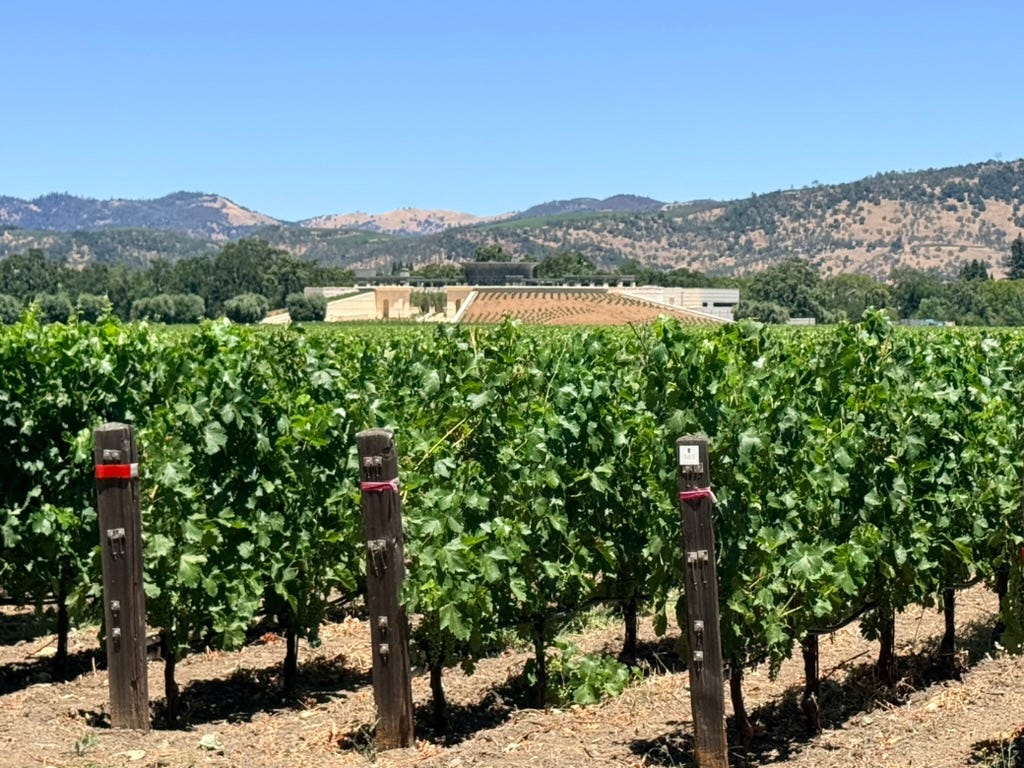
You’ll be hanging out adjacent to Opus One (Mondavi’s ultra luxe winery), a spectacular facility where the “Opus One Experience” costs $250 per person. Less expensive is the Mondavi Estate that just reopened after renovations; tastings and tours are ticketed and worthy, if you’re a wine enthusiast and Mondavi fan.
💎 Buy beans at Rancho Gordo’s official shop! They recently moved to a bigger location on Main Street, where you can peruse their full selection. The staff is super knowledgeable, and I always notice a new bean or two when I go there (versus shopping online for RG beans). Beans make great gifts.
💎 Eat well at Stateline Roadhouse, if you’re in the Kansas City barbecue mood. Stand in line to place your order at the counter and they’ll bring it to your table. Along with the regular menu, check out the specials by chef/co-owner Darrell Bell, who trained in France and has cooked at Michelin-star restaurants in the States. One time, we got a hamachi collar special that was a knockout.
Pass the Fish Sauce is a reader-supported publication. To receive new posts, mine the 150+ recipe index, and get 25% off class sign-ups, become a paid subscriber. I welcome your support at all levels!
The PTFS community is near and far, which I’m grateful for in unfathomable ways. I write these dispatches and share recipes that I think you’ll want to cook because they’re tasty, fun, and out of the ordinary.
Bob recently shared a special Peking duck dinner with pancakes and salad with the nuoc cham vinaigrette. Duck and lychee with nuoc cham vinaigrette is an idea I’m borrowing! Also, I love how Bob got a duck from Weee! Do you shop at Weee!?
made the apricot ginger jam with ‘cots on the East Coast and reports the results were 💯! I made a second batch and gifted some to the neighbors whose trees I gleaned. The stellar recipe is 🆓 on my website for you to use!
in France made the fresh apricot sauce with his local abricots and loved it. He had fun taking it in many directions.
I’m stoked that my recipes offer you entry points to play with food in ways that you normally wouldn’t. To keep me posted and share photos, comment on my dispatches, or use Substack Notes or Subcriber Chat (better for pics). I love hearing from you!
Don’t forget to register for the July 19 cooking class! It’s only 10 days away. Paid subscribers can sign up for a 25% discount with a special promo code (which you can share with friends and family). Details here: 👇
For this upcoming Sunday Special, I’m sharing knowhow for making a Viet street food that’s popular with kids of all ages. I consider us all youthful adults.

This is my go to side salad that I make often, whether it’s for two people, four, six, or ten. A good side salad strikes a balance of ease and satisfaction, and this has become my old reliable for simple dinners at home and entertaining. The Key Ingredient Is Kind of a Big Dill The […]
When you move to a foreign country, or even another city, one of the first things you need to do is find a doctor. It’s especially intimidating if you don’t speak the language and don’t understand the health care system, and don’t know how everything works. Twenty-five years later, I’ve learned that nobody in France fully understands how the French health care system works.
I was talking to a French insurance broker about that recently, and he said, surprisingly, that foreigners often understand the system better than native French people since they have to figure out how it works, whereas French people don’t really have to (or want to) understand it as it’s just part of their lives.
I was lucky to find a French doctor who spoke English, who also happened to be what I call a “legacy” doctor. Because she’d been working so long, she knew all the top doctors and specialists, and they knew (and liked) her. So I was always well taken care of when I went to a doctor who she referred me to. Most doctors in France have a different bedside manner than some of us might be used to.
A visiting friend from the States was hospitalized in Paris and he kept referring to doctors and nurses by their first names. No one said anything, but I could see them tighten up a bit when they were called “Pierre” or “Christine,” rather than “Monsieur” or “Madame.” I was thinking I should try that sometime, just to see what happens, or to see if it breaks the ice…but I’m not sure I’d get the same “pass” as he did, as a foreigner.
My doctor retired last month and I learned an important lesson: Find a doctor who is younger than you.
It’s hard to find a généraliste, a primary care physician, in Paris, and I was fortunate to have one that was very engaged with me and my care. She did call me by my first name, unlike every other doctor I’ve been to in France, which I gave her a pass on since she knew me pretty well. Often she seemed more interested in talking about chocolate than she did about the rash on my thigh.
I managed to get some good material out of her, albeit a few stories that I wasn’t sure I could repeat. Once when I was removing my pants in her office, I sprained my finger. “Oh, you gay men and your skinny jeans…” were her words of consolation for my crooked digit. The one on my hand, that is. Another time she poked my tummy, which bounced back like Poppin’ Fresh, the Pillsbury doughboy, and told me I should lose some weight. If she knew so much about gay men, she would know that you should never, ever touch our stomachs if we’re over fifty. And my job is to eat. If I’m not eating, I’m not working. At least that’s what I keep telling myself.
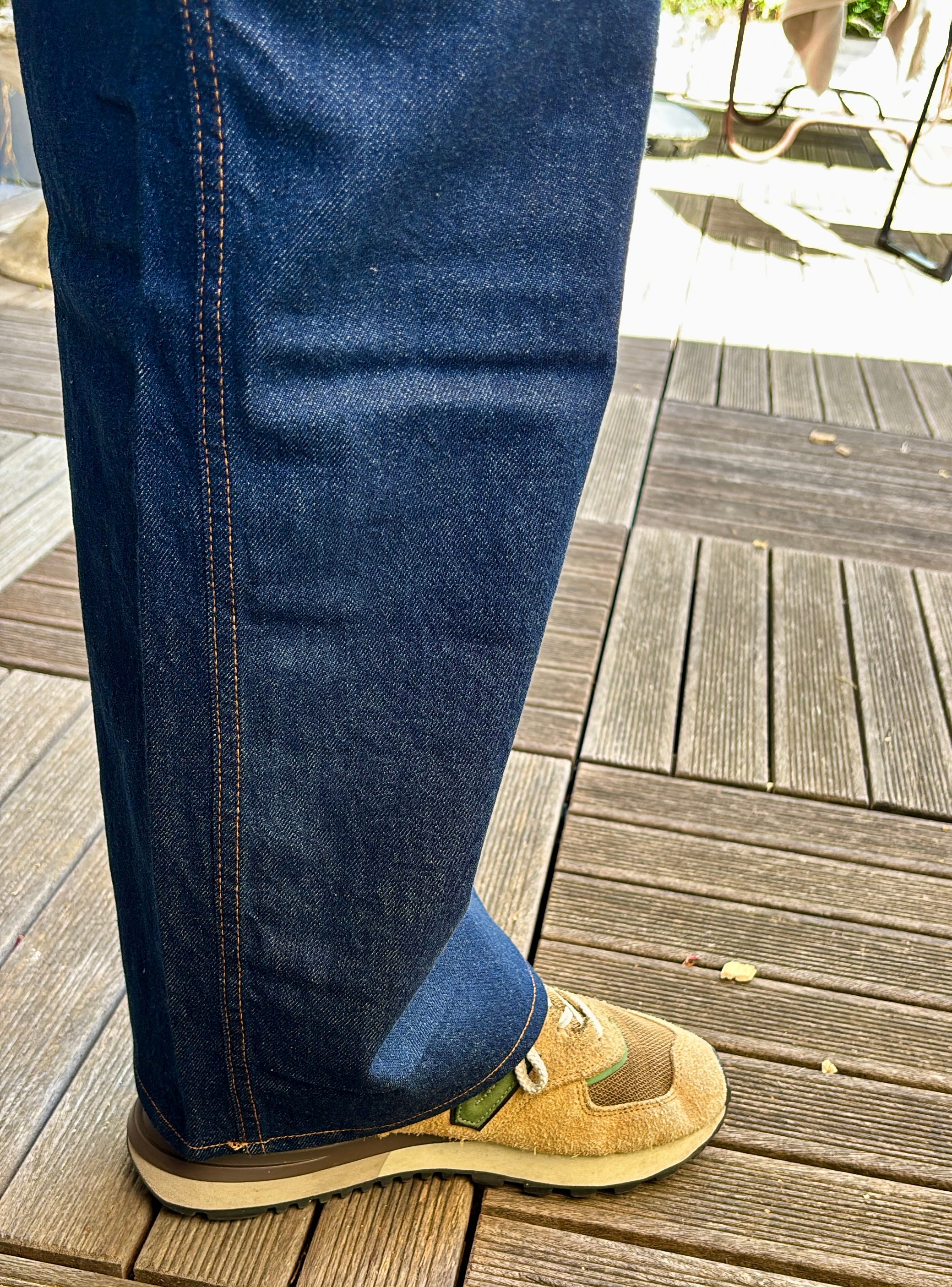
We had our final appointment last month, which she booked specifically for me because she wanted to say goodbye. She’s going to be taking a big trip that includes Tahiti, Brazil, and Australia, and I told her that I was going to Scandinavia, which had been on my “bucket list.” She looked puzzled, so I had to explain in French why a travel list could also be a bucket. (Which I don’t understand either.) And although people in France don’t hug their doctors, I couldn’t resist doing so on my way out the door. And yes, I’m now wearing looser jeans, thanks to both of her observations.
So now I need to find a new doctor, hopefully one that knows better than to touch my stomach. Hopefully, she or he will like chocolate as much as I do. Almost every woman I’ve met in France is happy to talk about chocolate, so maybe I’ll stick with women.
Right after the second weekend of June, we sailed off to Scandinavia. Being my life, of course, there was a one-day baggage handler strike planned at the Paris airports on the day of our flight. I was on turbo-hold with Norwegian Airlines for a little over an hour seeing if we could move our flight to the day before (discount airlines are great…er, until you need help), until I gave up. Then I had the brilliant idea to send our luggage ahead using Sendmybag.com.

Their website clearly explained the process and the price, which wasn’t super expensive - around $75-100 per bag - but then there were some additional dripping charges such as a tracking fee and a postage fee if you want luggage label holders mailed to you. And I was hit with $47 for a “fuel surcharge” due to the escalating price of fuel, which jacked up the price. But still, it was worth it. The only glitch was that the guy picked up the luggage a few hours before the designated pickup time. Thankfully I was home, and when any kind of delivery in France arrives (or in this case, departs), you breathe a sigh of relief.
I was a little nervous since deliveries are notoriously chancy here, but it worked, and our luggage was waiting for us when we arrived at our hotel in Copenhagen. Whew!


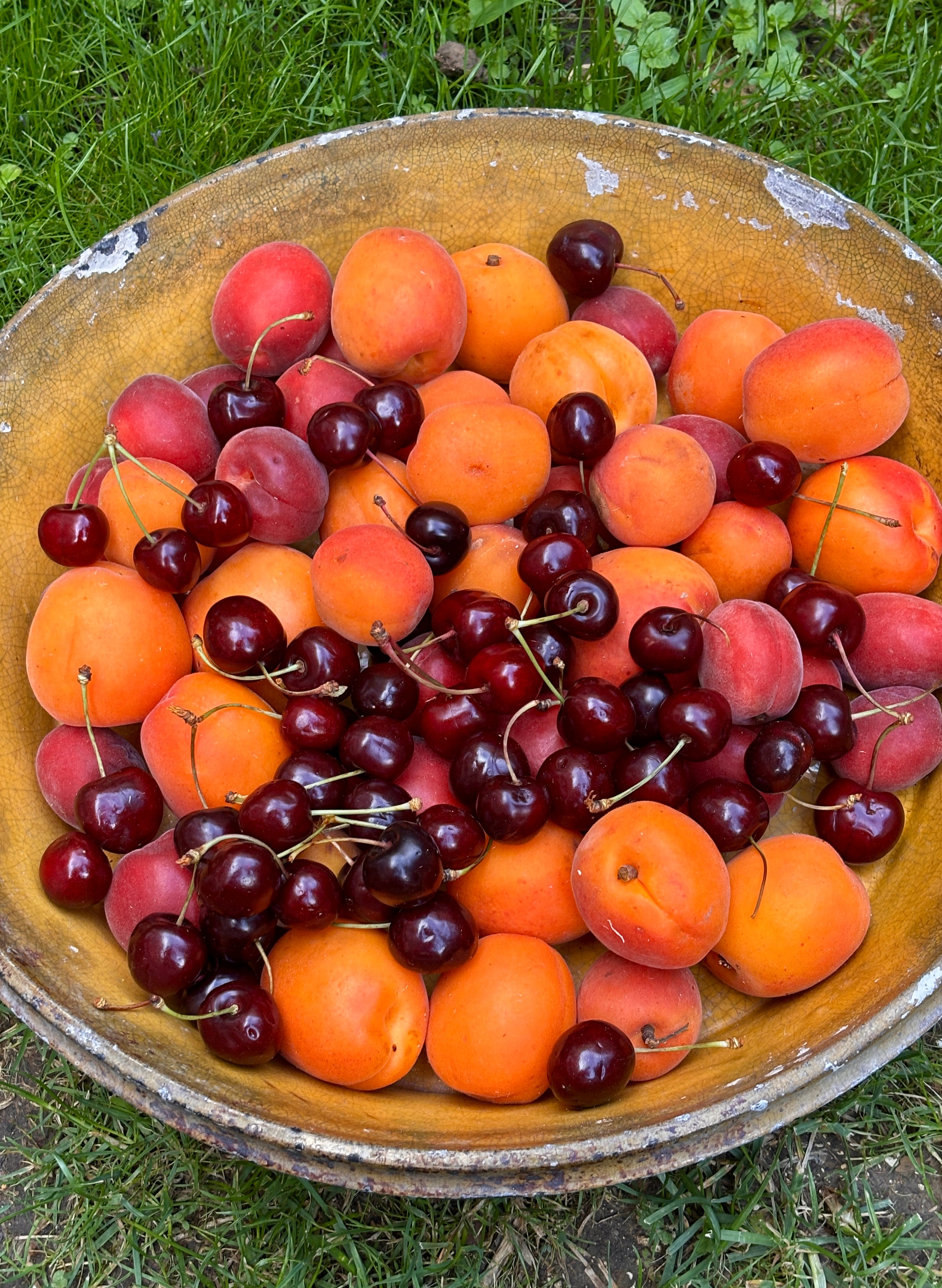
Now that summer is in full swing, I’m doing my best to use all the beautiful fruits and berries I’ve waited all year for. One of my favorite recipes is this versatile fruit crisp, which you can adapt to any other fruits that are in season:
I also make a lot of jams in the summer, and one of my favorites is Strawberry jam, which we enjoy this time of year, but is especially welcome in the middle of winter. Everyone I know who is married to a Frenchman says that they are jam-eating machines. (Who knew that someone could plow through that much jam at one sitting?) So I hide a few jars, just to make sure they’ll be some in January.
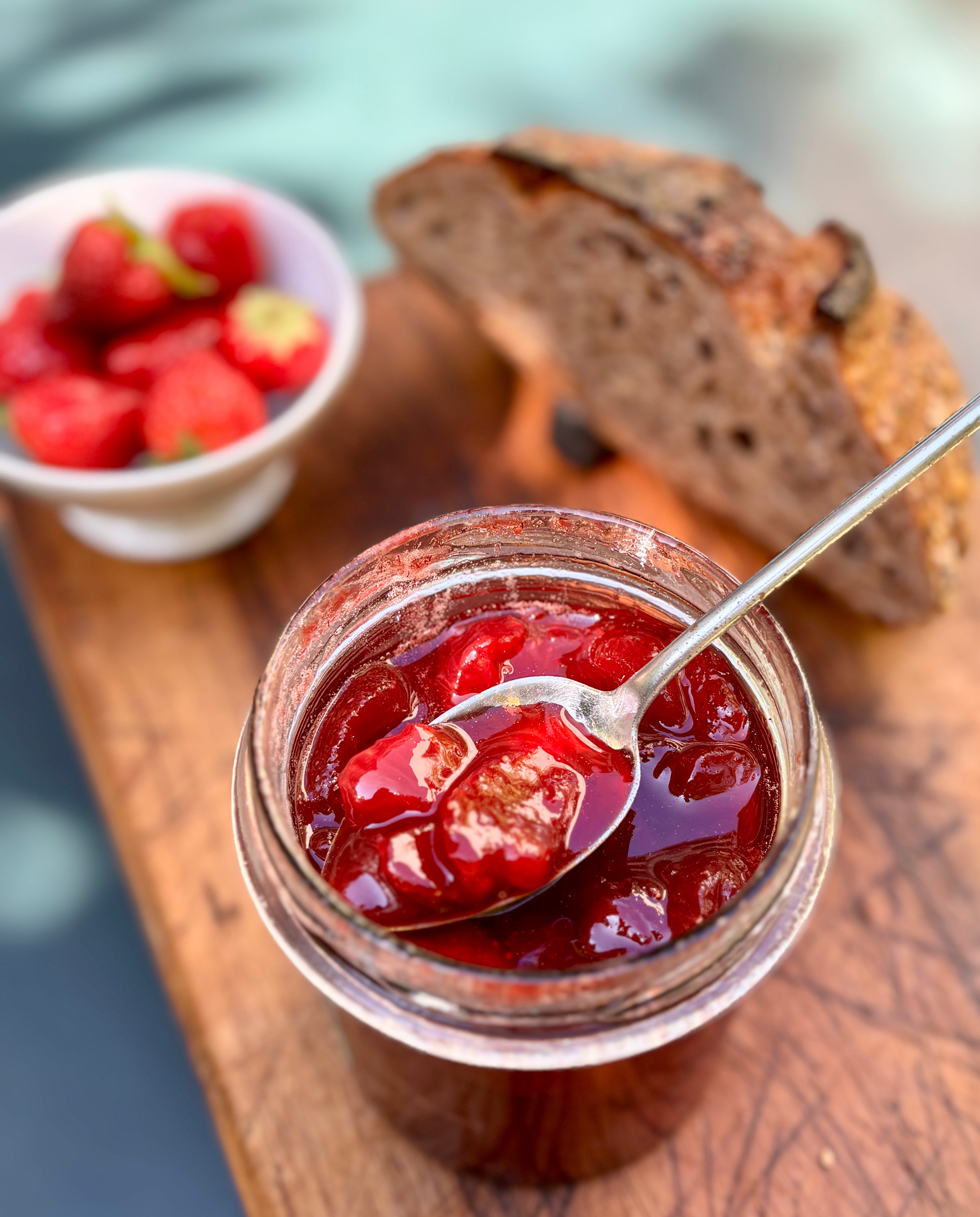
As a jam-maker, I plow through plenty of jam jars and am always on the prowl for more.
When we moved into our apartment, there was a very kindly older man who I’d see shuffling around in the hallway and mailbox area of our building. He moved slowly and would sometimes acknowledge me, and other times, not. Romain and I were often concerned that he might get preyed upon by people who roam around and when they see an elderly person looking dazed, go up to them and say they’re owed some money, and offer to take them to an ATM and help them withdraw some cash to repay them. 😡
So we kept an eye on him, until we stopped seeing him. Then, a few weeks ago, we met a man in our building who told us that was his father, who had passed away, and he’d come to clean out his apartment. Of course, like everyone in Paris, we’re interested in real estate (as well as being nosy neighbors) and asked to see it, before it hit the market. It wasn’t a large place and had a very modest Parisian kitchen. In spite of the balcony, and the view, my eyes were fixed on the empty jam jars in the kitchen. I guess the older you get in Paris, the more empty jam jars you amass — especially if you’re not a jam-maker and giving them away.
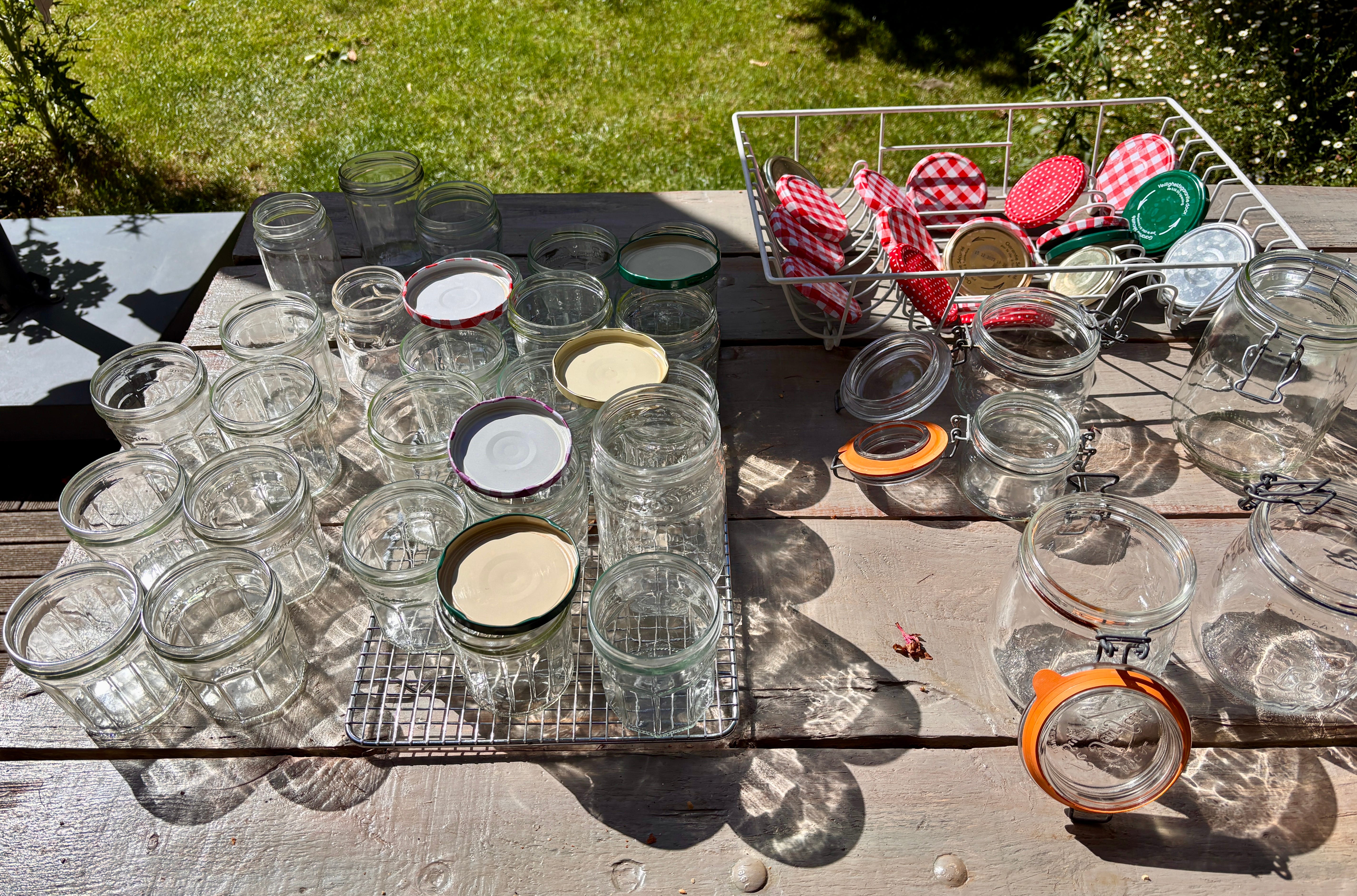
Even though we felt okay asking to see the apartment, the jam jars were a different story and I didn’t want to ask if I could have them. A few hours later, however, when I saw the fellow hauling bags of stuff out of the apartment and walking toward the garbage room, I heard the clanging of glass in the bags and asked if they happened to be jam jars and if so, could I have them?
So I’m now ready for summer.
Get The Great Book of Chocolate!
As most of you have heard, last month there was a vicious heatwave in France, with temperatures close to 44ºC/111ºF in one part of the country. While some say, “It’s hot in________ [fill in their city], too,” the heat is different here, and people aren’t prepared for it, nor is Paris adapted for it. We’ve had heatwaves since I moved here in 2003, but the problem with heatwaves is that once they’re over, people forget about them.
Anyone who’s been entangled in any sort of French bureaucracy call tell you that the French tend to be process-oriented, focusing on the process, rather than being solution-oriented. And anyone who’s been in France during the summer knows that air-conditioning is rare to nonexistent. But because things like to get discussed…and discussed and discussed…air-conditioning was talked about a lot more this year, and more people were buying them, even those who were convinced they’d get sick from them. (In spite of that, 2025 people didn’t survive this last heatwave due to heat-related illnesses. In 2003, that figure was nearly 15,000.)
It’s a subject that comes up a lot and two good analyses from locals take a deeper dive into it: Paris is Boiling by and France has seen the future, and it’s an inferno by , which concludes that there’s a lack of a centralized plan of action,* which is unfortunate in a country that excels in coming together to provide for its citizens.

Somehow, I had the foresight back in March to plan our trip to Scandinavia, which coincided with the heatwave in France, so we missed it. (Non, je ne regrette rien.) In Norway and Denmark, it felt like summer in San Francisco: cool, overcast, and often foggy. But beautiful. We ate well and saw some magnificent scenery—those fjords! I was going to share more in this newsletter but I had to catch up on everything I set aside while on vacation, as well as finish Widow’s Bay. During one episode, there was a scene that actually made me jump off the couch. So I’ll write about our trip in a separate post, coming soon…
-David
Sign up below to get newsletters, with recipes, videos, podcasts, Paris travel tips, and more — sent right to your Inbox!

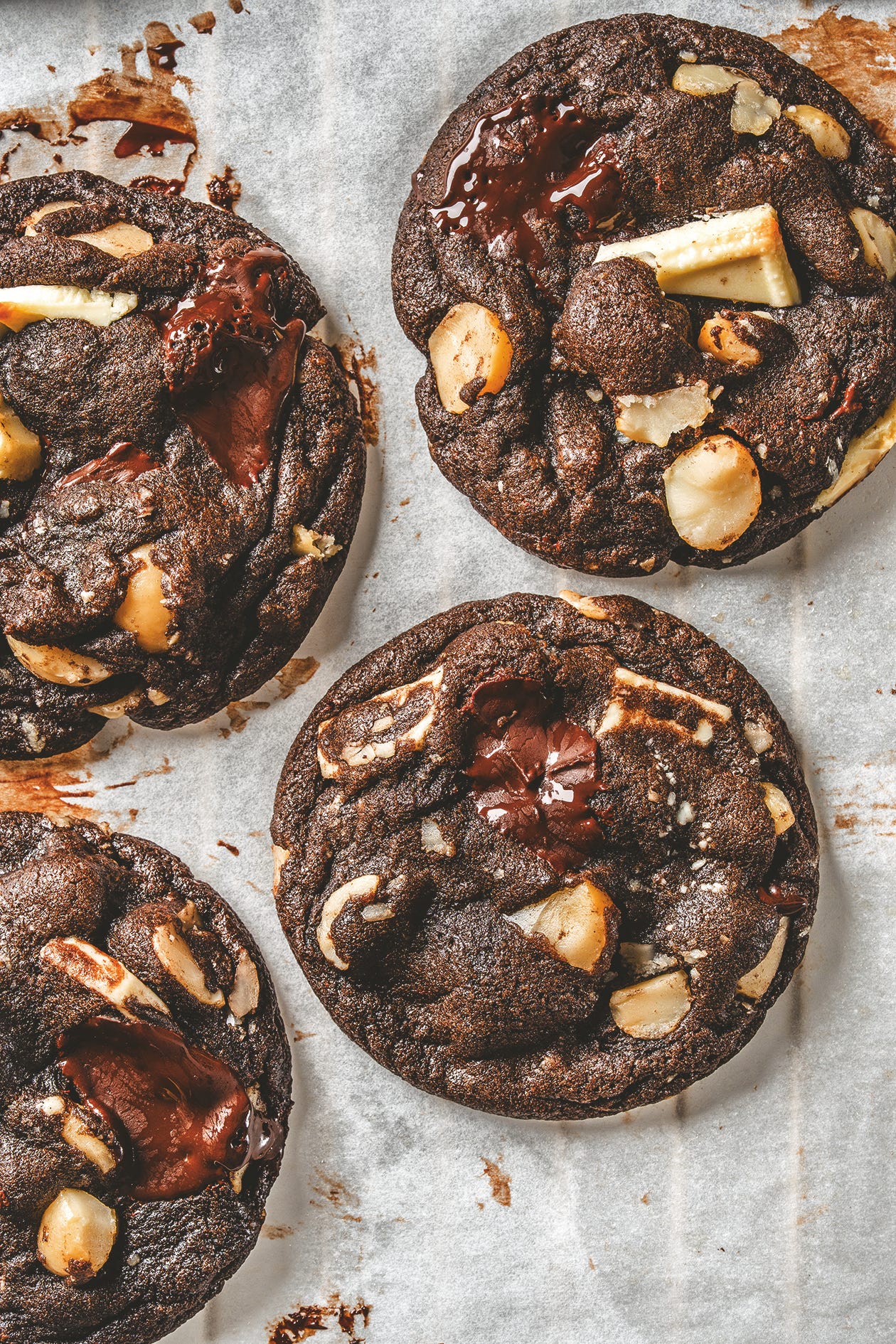
When I was revisiting The Great Book of Chocolate, one thing that fascinated me in the world of chocolate was chocolate alternatives, which don’t contain a trace of cacao, or cocoa, so they aren’t really chocolate.
Many of us remember our old nemesis, carob, which traumatized a generation (possible paywall.) As part of that generation, I was curious to see it re-emerge, as well as to find chocolate alternatives made with sunflower seeds, fava beans, upcycled grape seeds, and malted barley. I ordered half a dozen of them to try and wrote more about them in the book.
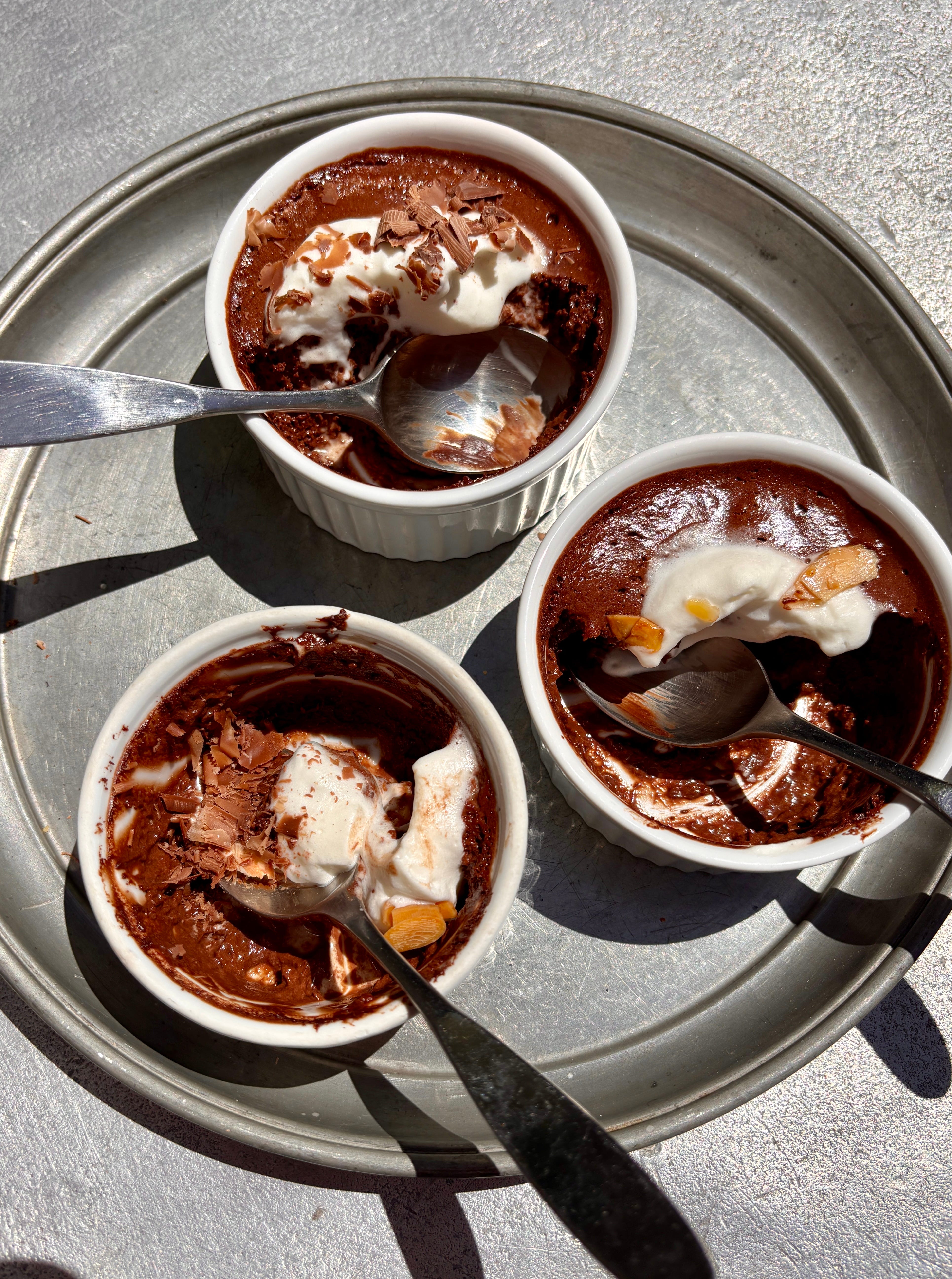
I was initially put off by the smell of the one I got from Win-Win, which smelled like beans, but not cocoa beans. Still, I like to keep an open mind when writing books, and I baked the Individual Warm Chocolate Cakes from the book with the Win-Win Dark Chocolate Alternative and was surprised at the results, which I shared with my friend Margot, owner of Combat cocktail bar in Paris, who has great taste:
What you don’t see in the video is the aftermath of the three uneaten cakes, which Romain and I snacked on afterward, and I found myself lopping off bites of cake the rest of the day. So while I’m not ready to give up on real chocolate, it’s nice to know there are alternatives out there.

Closing out here with a few of my favorite summer recipes that I wanted to share…
I can’t resist pasta any time of the year, and Pasta alla Norma uses summer eggplant and basil, which will transport you to Sicily. At least it has that effect on me:
A live video chat I did with prompted me to make his Lemon blueberry cake, which is punctuated with lots of juicy blueberries, blanketed under a brightly flavored, crunchy glaze:
Share David Lebovitz Newsletter
In my continued effort to promote white chocolate, which is the subject of some derision (lighten up, folks!), cocoa butter-rich white chocolate pairs perfectly with zippy fresh ginger, and this ice cream is a great accompaniment to a summer fruit crisp or cobbler:
It’s said that Pan bagnat is a salade Niçoise in a roll, which is pretty much the case. Filled with lots of raw vegetables, hard-cooked eggs, flakes of tinned tuna, and punctuated with salty olives, stuffed in a roll bathed (bagnat) with good olive oil, these summer sandwiches are perfect for picnics or backyard lunches. Do-aheaders will appreciate that they’re best made in advance:
If you like my Basil vinaigrette, give this Tarragon vinaigrette a try, especially if you have any overload of tarragon in your garden, as we do. It’s great drizzled over summer tomatoes or with grilled fish, chicken, or vegetables:
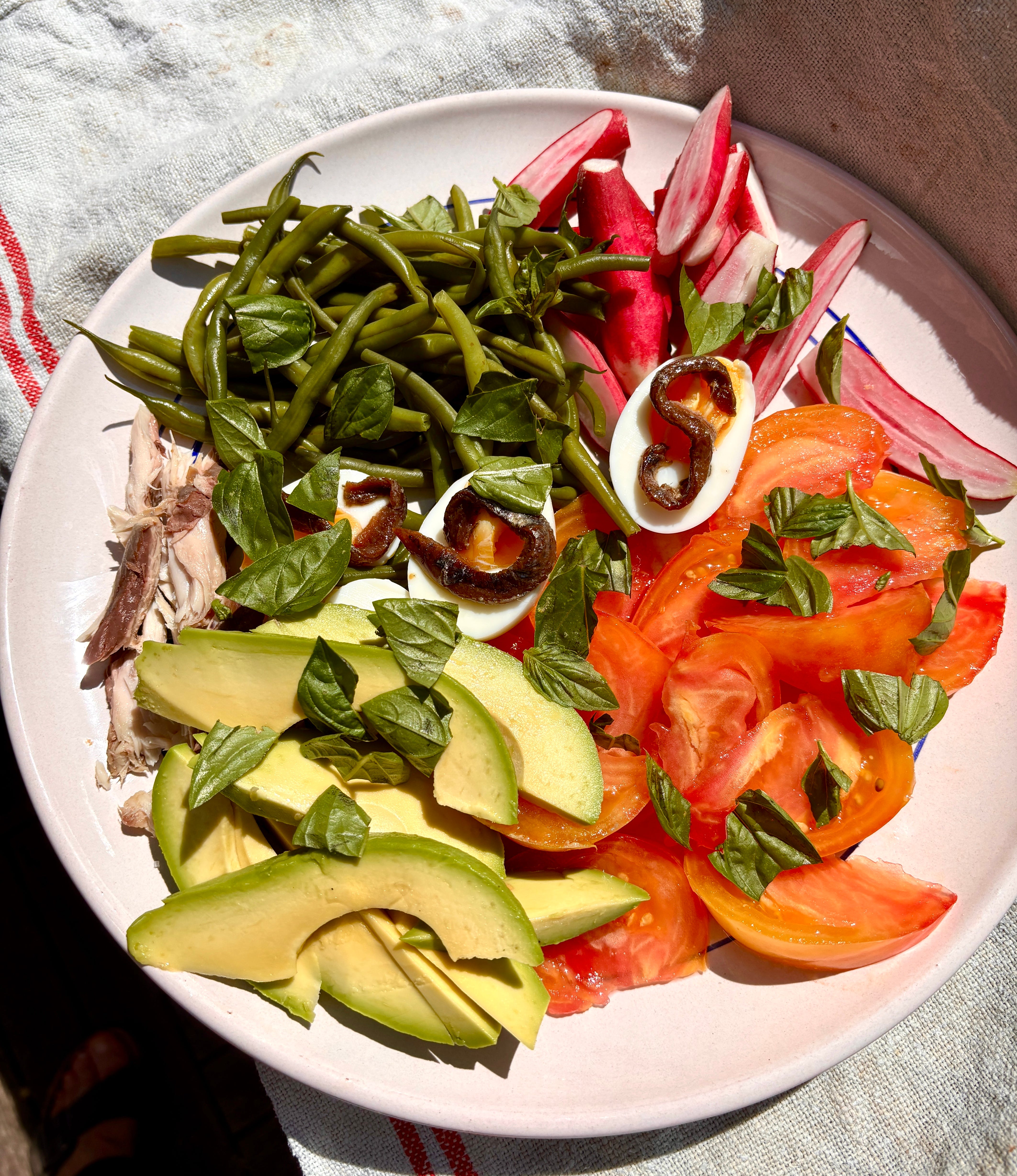
In fact, I served it for lunch today, with a composed salad of radishes, bonito, avocado, hard-cooked eggs with anchovies, green beans, and torn basil from our garden, which is thriving in this heat…
Share David Lebovitz Newsletter

*There is a plan to harness the water of the Seine and use that to partially cool down the city. Spoiler: The plan is scheduled to be completed in 2042 and the cost is estimated to be €2,6 billion/$2.9 billion; by 2050, temperatures in Paris could reach 50ºC/122ºF.
The geothermic cooling system didn’t quite work very well in the athletes village during the Paris Olympics and athletes were offered the opportunity to buy AC units for their lodgings. But hopefully the systems will improve over time.
Today we have a recipe for a delicious shiso drink—a uniquely Asian pink lemonade to quench your thirst all summer long. It’s made with purple shiso (also known as perilla), an Asian herb that when combined with acidic lemon juice makes an all natural, herbal pink lemonade. Shiso Pink Lemonade, with Antioxidants! This shiso drink […]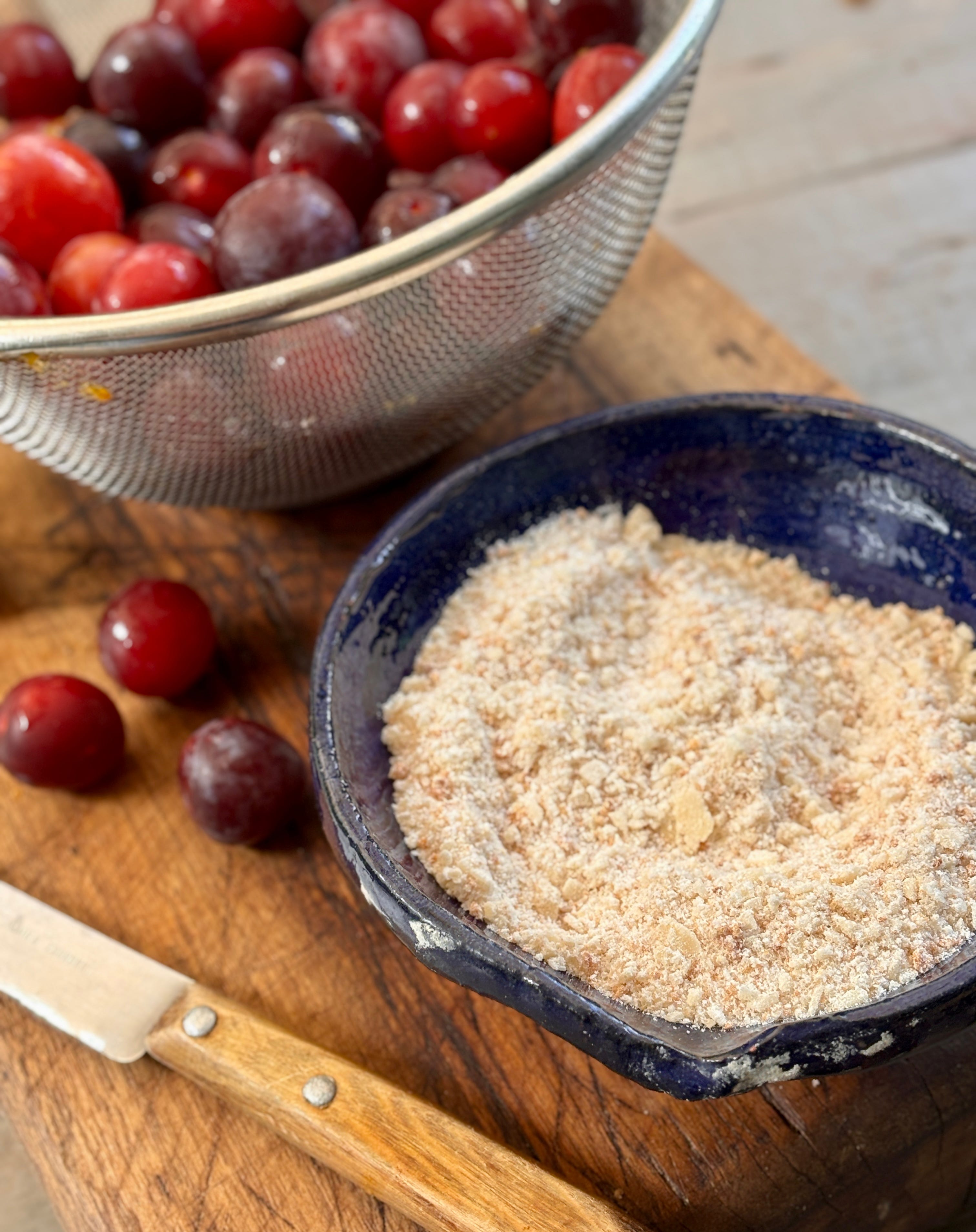
Americans seem to be obsessed with ultimates. Magazines, websites, and social media have made people think that the goal of everything is hyper-crispiness. Don’t get me wrong. I like crispy, too, especially when it comes to fried chicken, French fries, potato chips, baguettes, and fruit crisp toppings. I even spent a few months working on a proposal for a cookbook of recipes of only crispy foods, which I think was ahead of its time. I’m sure by now someone else has done it.
But one thing everyone wants to know is how to keep the bottom of pie dough crispy. News Flash: If you cover something relatively fragile with four-to-six times its weight of fruit (which is 90% water), and bake it for 30 to 45 minutes, you shouldn’t expect that layer of dough underneath to remain as dry as a Wasa bread.
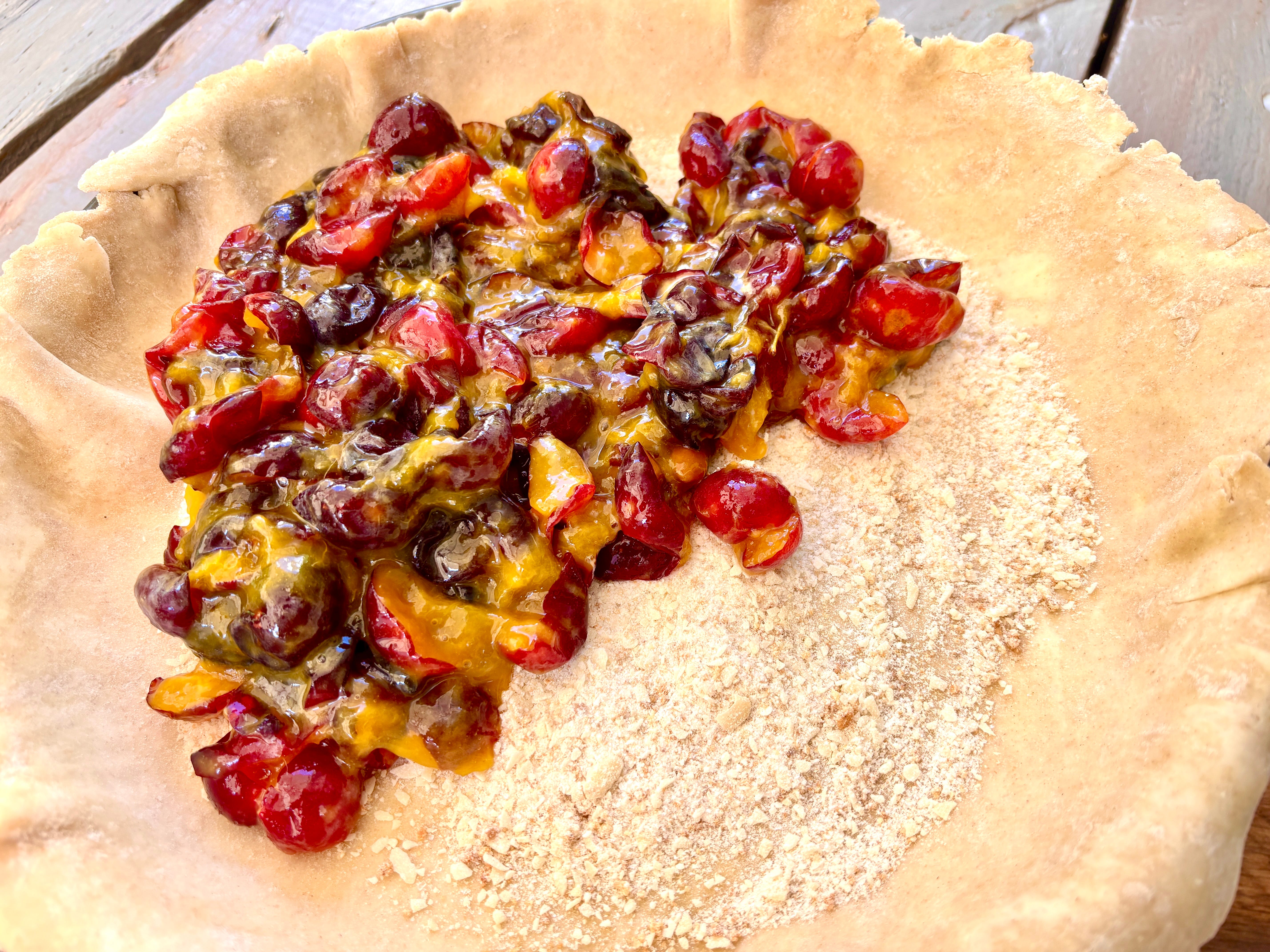
I’ve never heard anyone in France asking (or complaining about) dough that’s not crispy on the bottom of a tart. And that’s in a country where complaining is the national sport. In defense of that, complaining in France isn’t considered a negative thing. It means that you’re exigeant, or discerning. So perhaps that’s why I fit right in.
Hello there!
We’re heading into a long weekend so I’m heading things off by sending this early. You won’t hear from me on Sunday but I’ll be back next week. A zillion thanks to all the folks who’ve registered for the virtual “Banh Xeo Fry Off” cooking class on July 19! Seats are still available. 😁 Join me!

The United States has its problems and we are divided on many issues. However, I’m happy to be an American citizen, especially when I reflect upon the clever, delicious ways that flavors and traditions have naturally come together at our tables. You can enjoy purist beef pho noodle soup but there are Viet cooks making smoked brisket pho in Texas and New York. In California, I’ve spotted menus offering birria pho.
For past July 4 menus, I’ve patriotically prepared red white and blue potato salad and enjoyed hot dogs and burgers. This year, I’m leaning toward the Hanoi-style bún chả grilled pork with rice noodles (aka the “Obama Special”).
Vietnamese people have been in America for over half a century and have contributed plenty. Why not include some Vietness to celebrate the nation’s commitment to democracy and self determination?
Many other Asian people have been in the United States far longer than Viet people. Filipinos were the first Asian people documented to have arrived, landing in Morro Bay , California, in 1587. They were part of the Spanish galleon trade which transported people, many of whom were enslaved, between Manila in the Philippines and North America. The ship the Filipinos were on soon departed from California bound for Acapulco, its final destination.
Numbering about 4.6 million, Filipinos comprise the third largest group of Asian Americans (nearly 20 percent of the total Asian American population), according to Pew Research. The Filipino population is most concentrated in California and Hawaii. There are Filipino restaurants and many capable Filipino chefs creating incredible culture-bending foods.
I thought of all this while paging through a new cookbook by Maui-based chef and restaurateur, Sheldon Simeon. He’s got extra cred and popularity from being a favorite Top Chef contestant. Simeon is Filipino American and like many Fil-Am chefs I’ve met, has a knack for cleverly tweaking and combining classics.
His new book is called Ohana Style (“Ohana” means blood family as well as your community, your people). The book is filled with cheffy homey fare.
This week, I test drove two recipes. One is a fabulous Vietnamese Coffee Swirl Brownie that marries fudgy American brownies with Viet coffee and condensed milk. The cream cheese swirl makes the brownie seem cheesecake like too. It’s a high-class, handsome sweet that’s easy to make. Cut the brownie into big or small pieces, depending on who’s coming over. They freeze well too so you can enjoy some now and later.
Get the Vietnamese Coffee Swirl Brownie recipe on my website; it’s 🆓 for all to make.

Aside from the brownie, I test drove the “Ginger Chimichurri” from Ohana Style. It’s cheffy in how all the flavors are layered into one gingery herb sauce. Simeon’s recipe isn’t like a classic, loose chimichurri, but rather more like a creamy sauce — so I’ve renamed it as Ginger Herb Sauce here. Whatever you call it, it’s light and you really experience the ginger, herb mixture plus lingering allium notes. As a bonus, the sauce is packed with good-for-you phytochemicals.
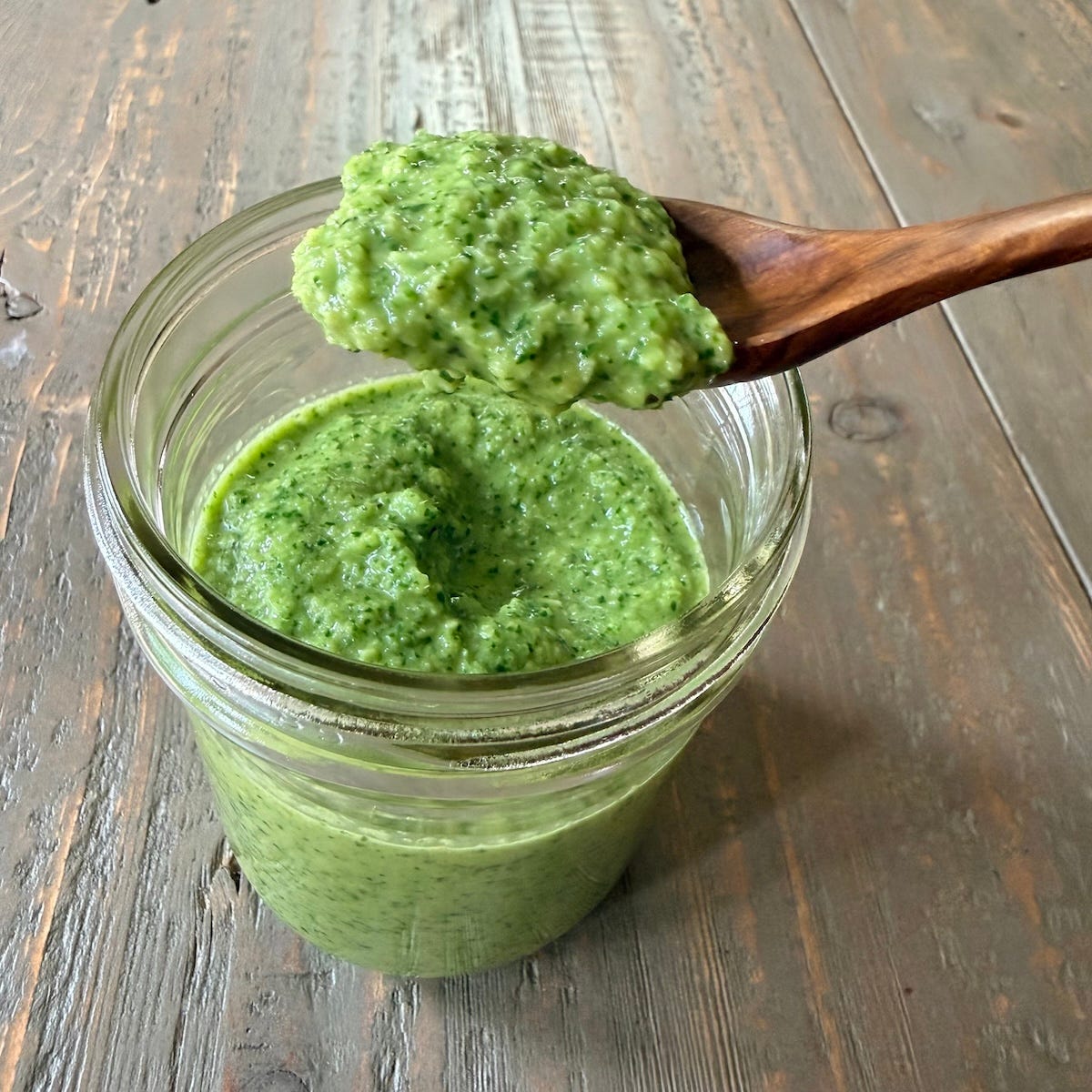
Simeon’s flavors combination was excellent though there were no weight measurements to serve as guardrails for the ingredients. I went two rounds with the sauce recipe and added weight measurements so you can follow it easily and make tweaks of your own. Also, I simplified the process so you can quickly blitz your way to Ginger Herb Sauce happiness.
The notion of combining all these flavors is boldly American. Better yet, the sauce can be quickly manipulated to make many flavorful dishes.
What to do with all the Ginger Herb Sauce that you’re about to make? 😉 In Ohana Style, Simeon shows it photographed with prime rib. He suggests serving it with grilled or roasted meats or using it as a dressing for vegetable dishes, dip for bread, or “any other way you can think up.”
With that cue, I thought up four simple ways to use the sauce aside from just swiping bread through it.
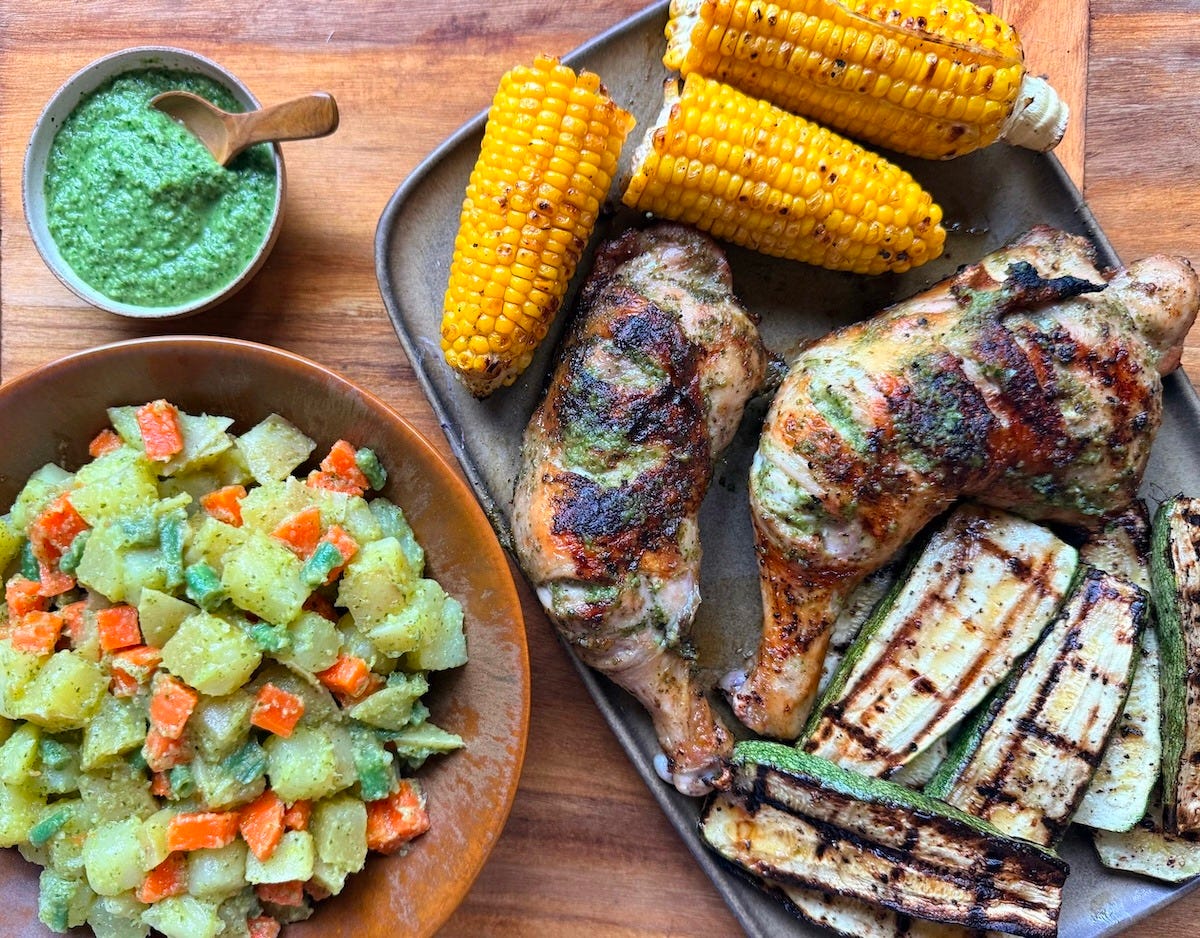
Served with crispy tofu, the sauce lends a rich bright flavor. Quickly manipulated into a dressing, the sauce turns potato salad emerald green. Brushed on grilled chicken, the sauce veils it with gingery, herbaceousness. In thirty seconds, I turned it into a salad dressing for mixed greens too. I bet you can smear it on a roast beef sandwich in lieu of horseradish or mustard! It’s a rare recipe that can magically transform so many ingredients from land and sea into something new and exciting.
Below you’ll find a package of five (5) recipes in text and as a downloadable PDF. There are bonus pointers, too!
Ginger Herb Sauce recipe
Crispy Tofu with Ginger Herb Sauce
Ginger Herb Grilled Chicken
Emerald Potato Salad
30-Second Green Salad
The sauce is vegan adaptable and keeps for 1 week. I’m sure you’ll come up with more ideas than what I’ve offered you here.
People from all over the world have come to America over the centuries, melding traditions to create new ones. I doubt that these culinary ideas could have been born and executed so well in another country. Happy Independence Day! 💥
Curious cooks, readers and eaters fuel this newsletter. The dispatch was created for paid subscribers who sponsor PTFS. To get all five recipes, fully use the recipe index plus save 25% on my cooking classes, become a paid subscriber. Your support makes a big impact.
This blueberry cobbler is a summertime delight! It features jammy ripe blueberries beneath an almond flour-based biscuit topping that’s tender on the inside and perfectly crisp and craggy along the edges. I hope this recipe will become one of your go-to summertime treats. It’s certainly a winner in my repertoire.
This recipe is the cobbler version of my popular blueberry crisp. It’s based on my peach cobbler recipe, which was arguably the most delicious dessert made in my kitchen last summer. I’ve always loved making fruity crisps, and now I’ve moved on to cobblers. Don’t make me choose a favorite!
Continue to the recipe...The post Blueberry Cobbler with Almond Topping appeared first on Cookie and Kate.
Subscribe to my newsletter to get posts, recipes, videos, and more, sent right to your inbox!
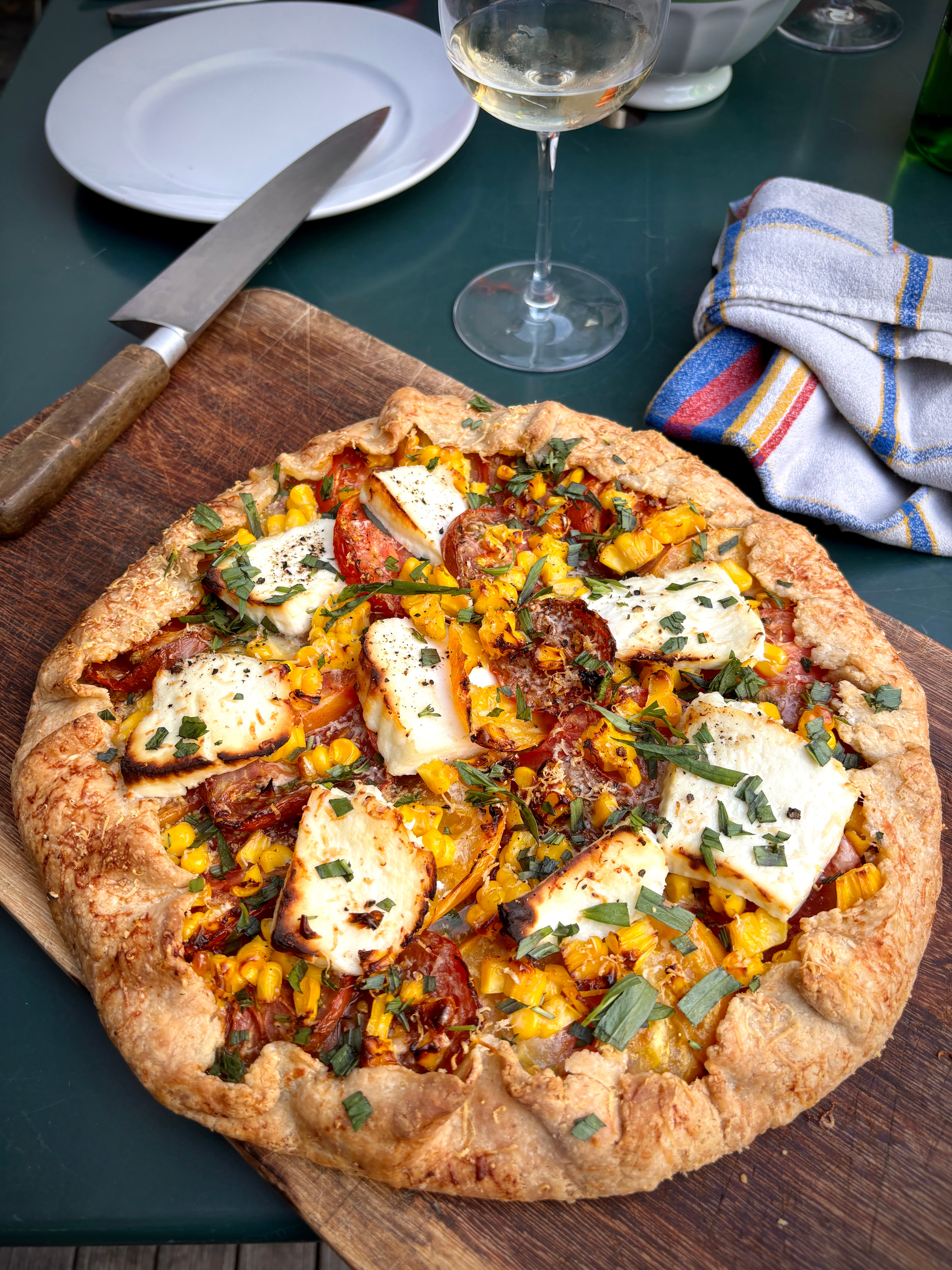

I’m away until the end of the month, traveling, and (fortunately) escaping the heat in Paris. Here’s a summer recipe I thought I’d reshare that’s easy to make, and captures the essence of the season. It’s definitely going on rotation when I get home! - David
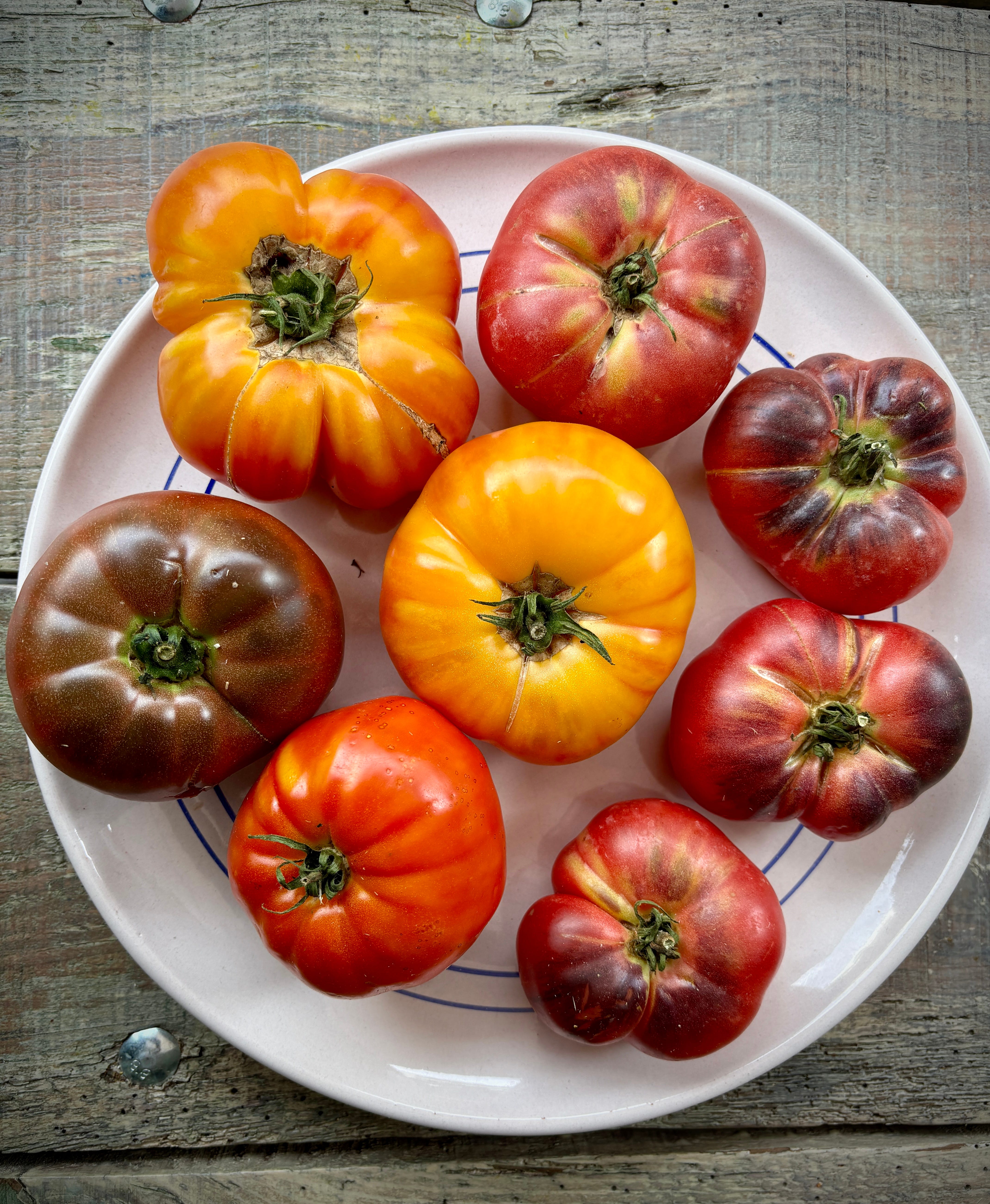
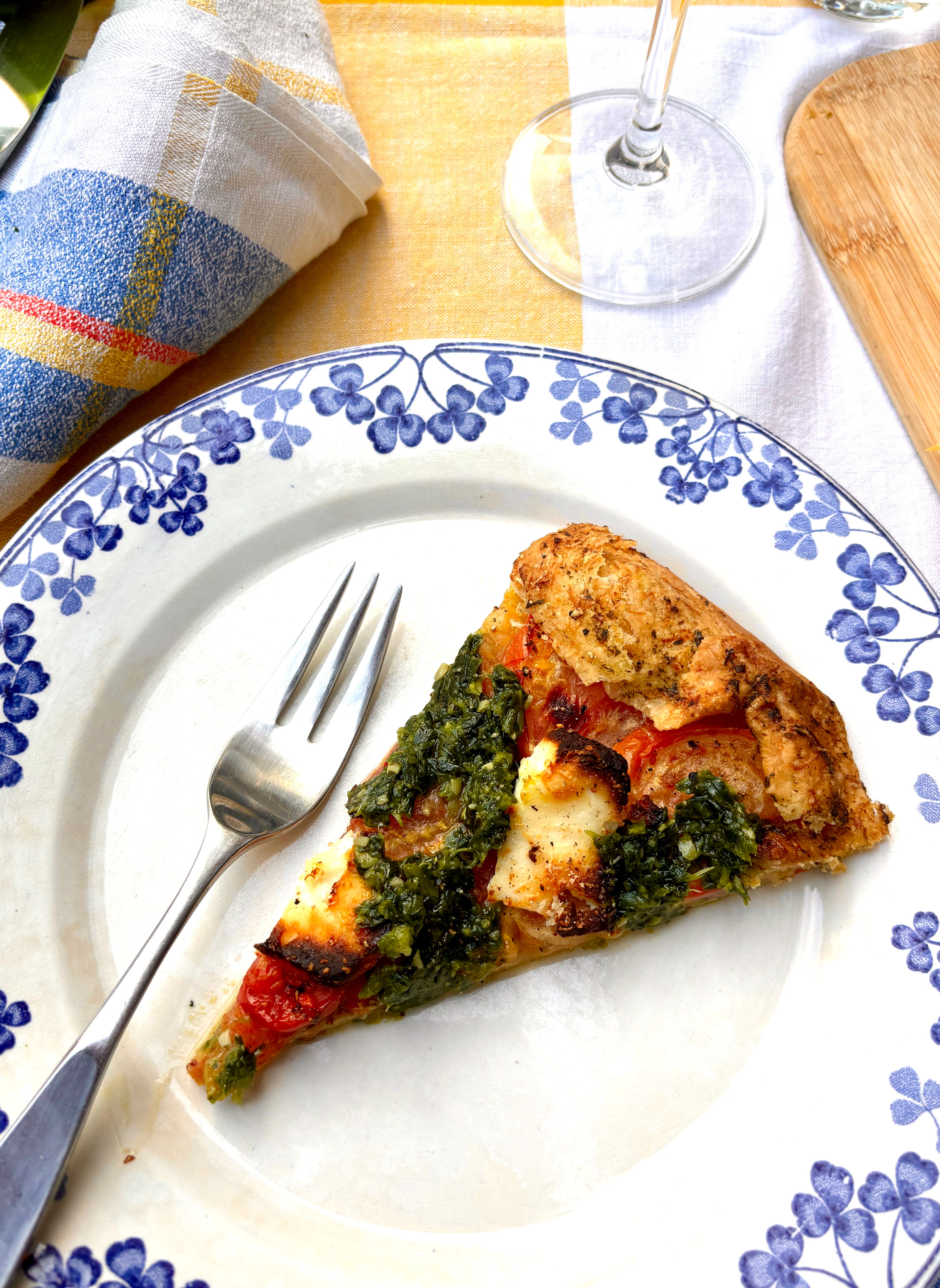
Tarts, or galettes as they’re sometimes called, are a great way to use summer. I know some people are timid about making dough, but this dough couldn’t be simpler, and it’s very hard to screw up.
And if it’s warm where you are, it comes together in a flash. Just be sure to chill the butter and I know sometimes people chill the flour as well, but I’ve never done that. (I actually learned to make puff pastry in a hot restaurant kitchen, in the summer. So making this kind of dough seems to me like a walk in the park…)
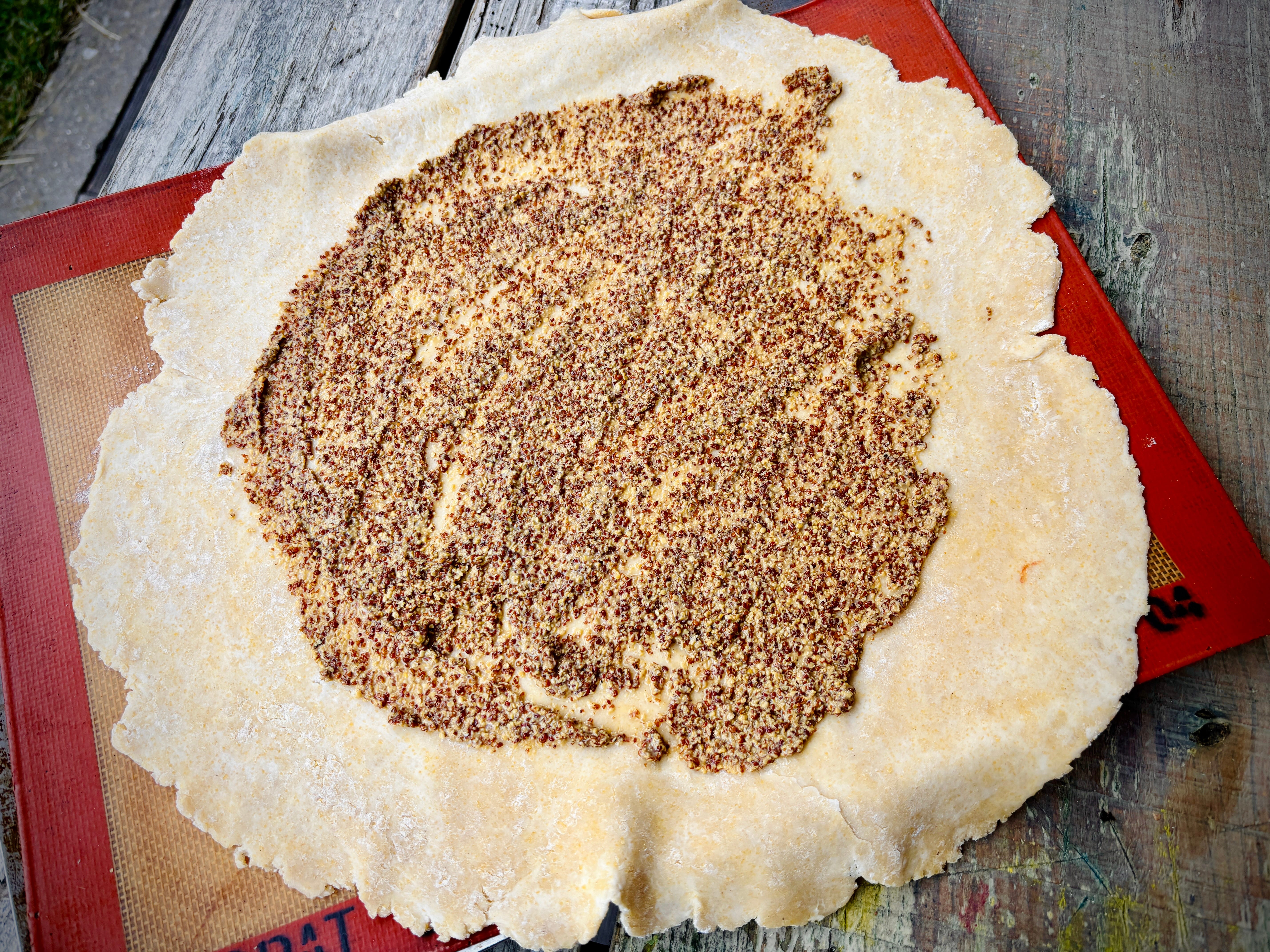
Regarding the mustard, to be honest, I’m more of a fan of Dijon mustard than Romain, who prefers the grainy type. But during the mustard shortage last year, we could only get grainy mustard, so I had a lot of that on hand. But I remain on team Dijon.
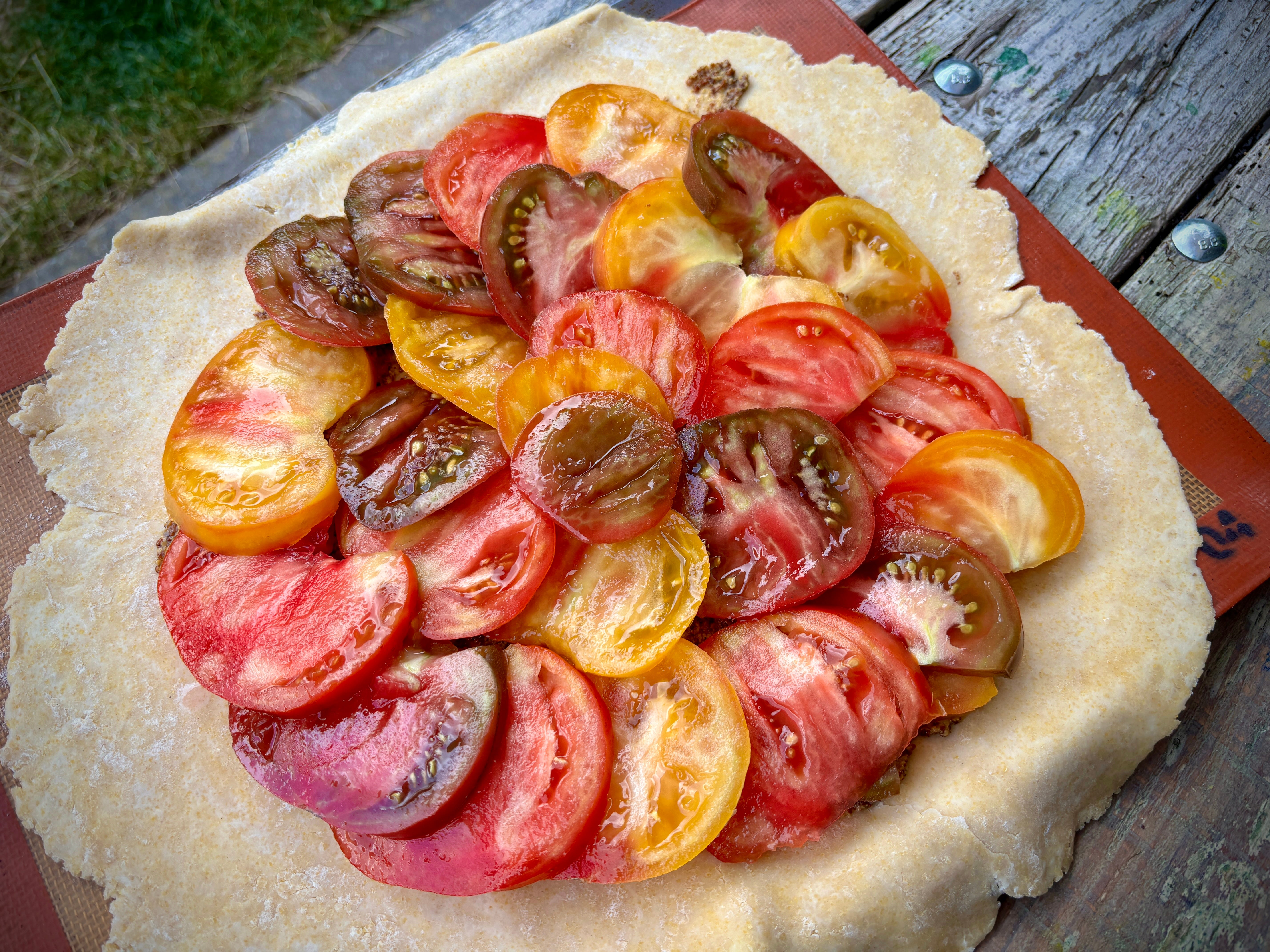
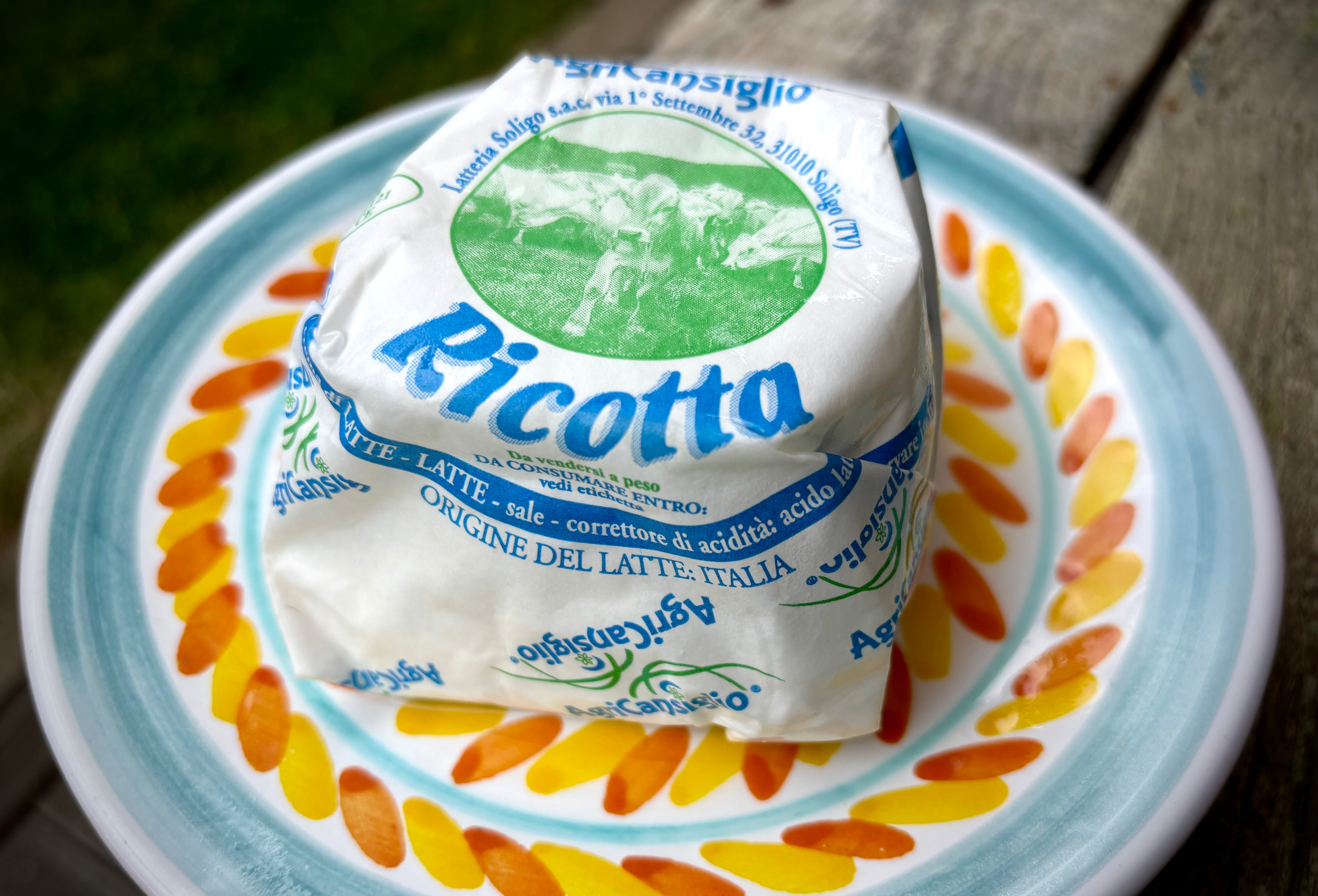
I sometimes top the tart with slices of fresh ricotta before baking, and if you’ve got fresh corn, you can add that as well.
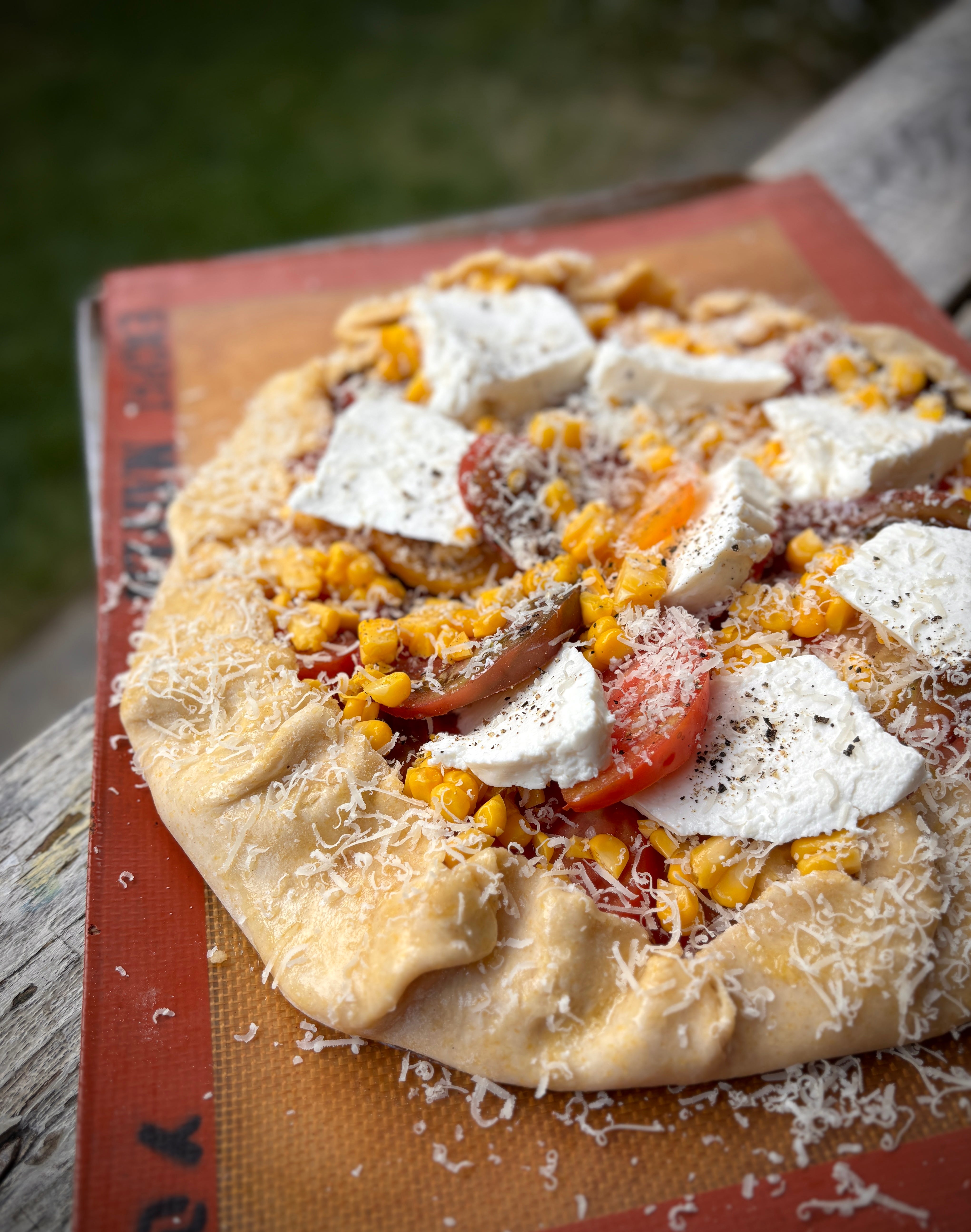
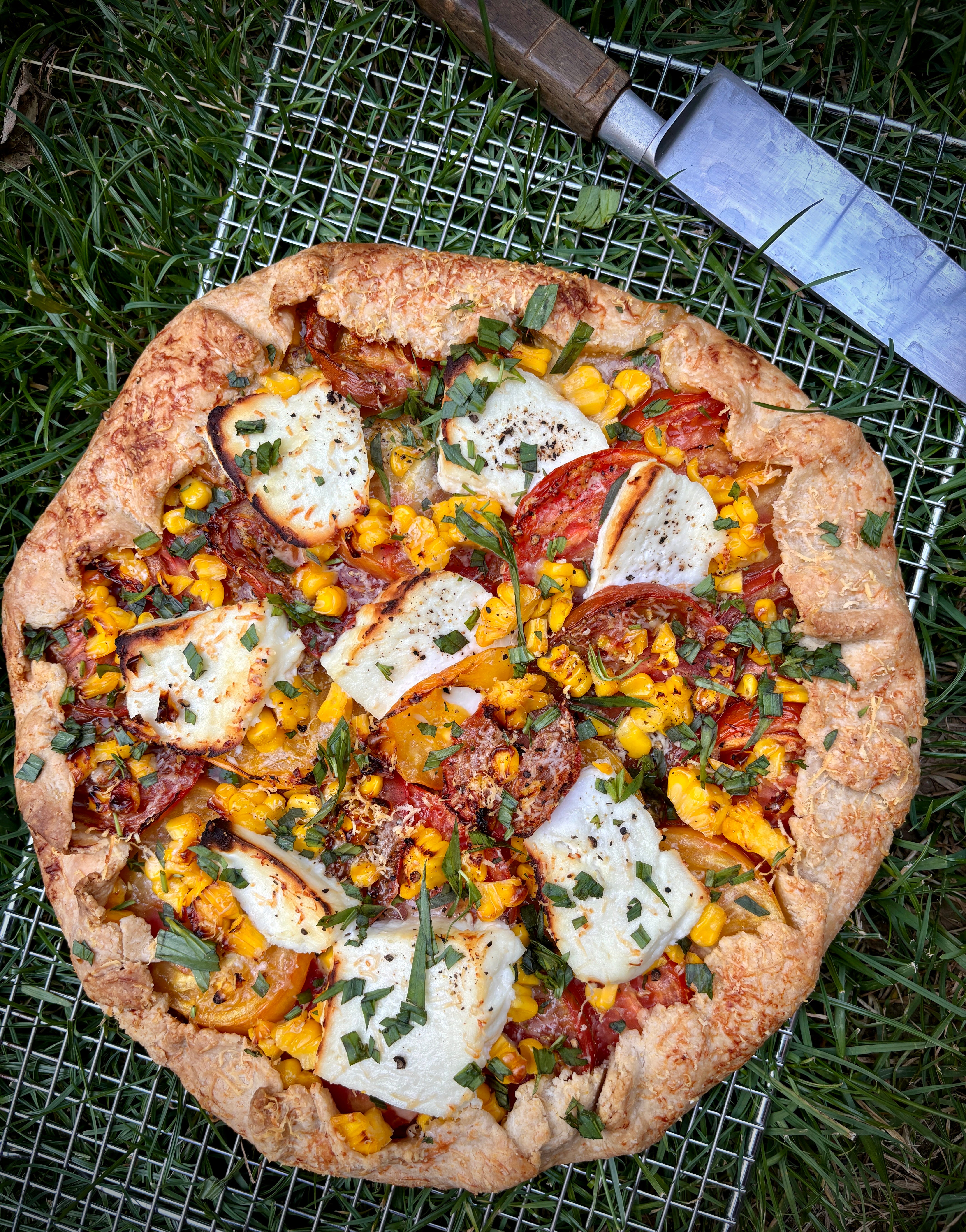

Serves 8 (Although everyone always wants a second slice so realistically, it serves 4)
Polenta will make the dough a little less smooth to roll out, but I do like the taste and texture of the coarse bits of ground corn, so it’s worth it for the flavor. You can use fine polenta or cornmeal or additional all-purpose flour (or a whole-grain flour, such as teff or buckwheat) in place of the polenta if you want to leave it out.
I love fresh ricotta with this tart, but you could try it with another cheese that’s relatively moist but won’t melt into a puddle, such as feta or provolone.
I’ve added corn kernels to this tart before baking when I had a hankering for corn. (Fresh or frozen will work.) You can finish the tart with fresh herbs, such as basil, tarragon, savory, or parsley.
For the dough
1 1/4 (175g) cups all-purpose flour
1/4 cup (35g) polenta or cornmeal
2 teaspoons sugar
1/2 teaspoon salt
3 ounces (85g) unsalted butter, chilled and cubed
5 tablespoons (70ml) ice water, plus more if necessary
For the tart
1/4 cup (60g) Dijon or whole-grain mustard
3 medium tomatoes (~1 1/2 pounds)
Salt and freshly ground pepper
6 ounces (170g) whole-milk ricotta
1 1/2 tablespoons melted butter
Parmesan cheese
To make the dough, mix together the flour, polenta, sugar, and salt in the bowl of a stand mixer fitted with the paddle attachment, or make it by hand by putting the dry ingredients in a medium bowl (and use a pastry blender or your fingers to mix the dough). Add the cubed, cold butter and mix until the pieces of butter are the size of large corn kernels. Add the water and continue to mix until the dough starts to come together. Use your hands to gather the dough and shape it into a disk. If the dough feels too dry to do that, add more water, 1/2 tablespoon at a time, until it comes together. Wrap the dough in plastic wrap or your favorite eco-friendly alternative and chill for at least an hour. (The dough can be made up to 3 days in advance.)
To make the tart, remove the dough from the refrigerator. Unwrap it and, holding the disk of dough perpendicular to the counter, rap the sides of the dough on the counter, turning it as you go, to soften the edges, which helps them stay together and not get too ragged when you’re rolling out the dough.
On a lightly floured countertop, roll the dough out to a 14-inch (36cm) circle, turning the dough and sprinkling more flour on the counter and the dough to keep it from sticking as you’re rolling.
Place the dough on a baking sheet lined with parchment paper or a silicone baking mat. Preheat the oven to 400ºF (200ºC) while you assemble the tart.
Spread a layer of mustard on the dough, leaving a few inches/centimeters empty around the perimeter, which you’ll fold over the filling later.
Slice the tomatoes about 1/3-inch (1cm) thick and layer them in concentric circles, overlapping them a little, over the mustard. Sprinkle the tomatoes with a little salt and freshly ground pepper. Fold the edges of the dough over the tomatoes to make an outer crust.
Place chunks of ricotta cheese over and, in some places, partially tucked under the tomatoes. Brush the edges of the dough with melted butter and grate Parmesan cheese over the entire tart, including the crust.
Bake until the tomatoes are soft and cooked through and the crust is dark golden brown, about 35-40 minutes. Slide the tart off the pan onto a wire rack and let cool for about ten minutes before serving.

Share David Lebovitz Newsletter
Subscribe to my newsletter to get more recipes, stories, and Paris travel tips. Free subscribers get some posts, and paid subscribers get all posts and the ability to participate in the community of commenters!
Hello there!
Wowza — I’m thrilled that so many of you are interested in the July cooking class. I worried that it was summer and you’d not be available. But I was wrong!
Coincidentally, and I have been chatting about the challenges of making bánh xèo well. He has used my recipe in Vietnamese Food Any Day but hasn’t gotten satisfaction so he signed up for the class! Sometimes you need to watch someone to get all the moves and pointers so you can finesse your own cooking. Also, the VFAD recipe is good but the new one that I’ll be teaching is excellent.
That’s the beauty of taking a cooking class. I’ll be your banh xeo coach.
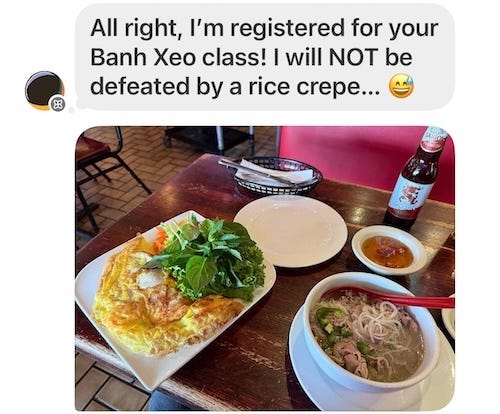
For details on the upcoming cooking class and promo codes, check this dispatch. (You can get the Early Bird deal till 6/30!)
Now for something spicy.

When I researched and developed the versatile only kung pao chicken you need, it dawned upon me that Sichuan cooking has a knack for using peanuts to yield heady dishes. Kung pao is one of them but there’s another popular dish called “second sister rabbit cubes” (èr jiě tù dīng 二姐兔丁 ) that includes peanuts, poached rabbit, fermented chile sauce, and green onions.
I make a vegan riff with tofu because it’s easier, healthy, and just as rich, spicy and umami laden. Also, the rabbit version is cool weather fare but the tofu version is lighter and great year round. Without a nickname, my take on the Sichuan favorite is simply called “spicy tofu and peanuts” (huā rén dòufu gān 花生豆腐干).
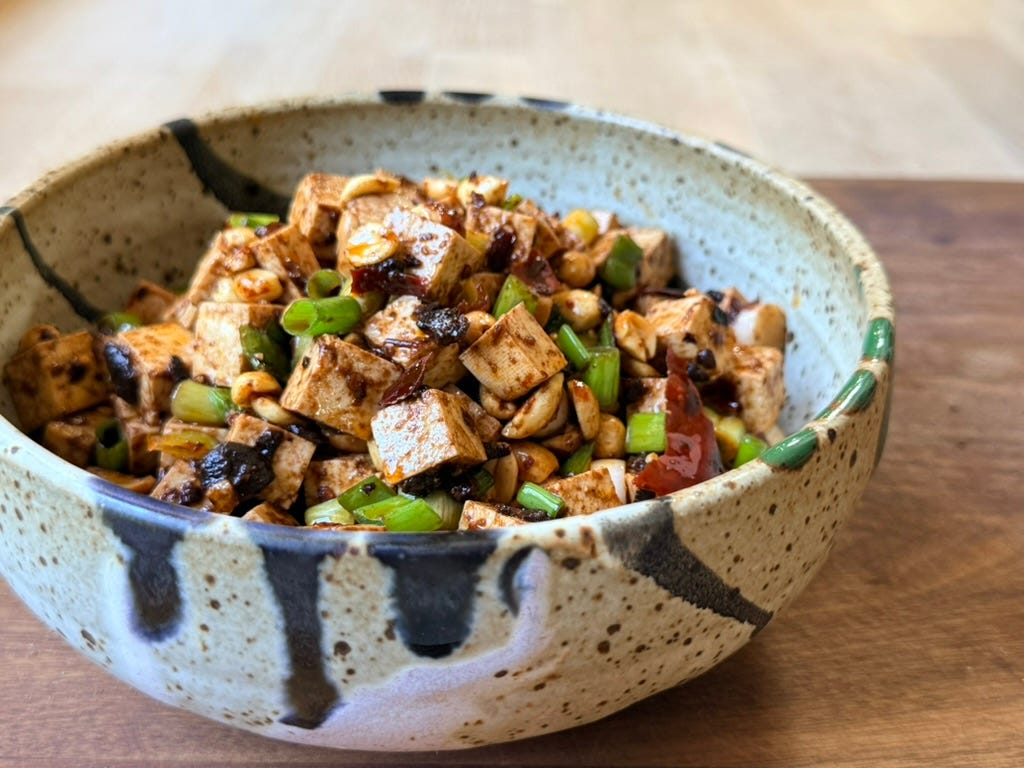
Like kung pao chicken and mapo tofu 🆓, dishes like this one are wickedly addictive. They possess a broad range of flavors — from rich and salty to spicy and pungent. The spectrum of textures span from soft to crunchy to chewy. Stand over the bowl, inhale the tofu’s aromas, and you’ll want to dive right in.
Your nose will tingle just a bit from the chile heat — which you can partly control with homemade chile oil. This condiment is a constant in my kitchen like it is in many Asian kitchens. It’s more useful than chili crisp because it plays with other flavors well without taking over.
Make the 2-ingredient recipe from my 🆓 free chile oil recipe at the website. Dial in the heat and play with the flavors! Aside from using chile oil here and in the Taiwan sesame cold noodles, you can drizzle it onto noodle soup, mix it into dipping sauces, and so much more.
Below you’ll find:
Spicy Tofu and Peanuts recipe in text and as a downloadable PDF
Pointers on sourcing and using two umami powerhouses — fermented chile bean sauce and fermented black beans
Tips for how to choose the “right” tofu and prep it for big flavor
Ingredient substitutions (because we all like them!)
Serving suggestions so you can make the most of this recipe
And, this tofu dish happens to be vegan. I hope you befriend and make it often.
Curious cooks, readers and eaters fuel this newsletter. The dispatch was created for paid subscribers who sponsor PTFS. To get all the spicy tofu details, fully use the recipe index plus save on my cooking classes, become a paid subscriber. Your support makes a big impact.
This Eggplant Stir-fry with Chicken is in the Cantonese style—the flavor of the eggplant shines through with aromatic garlic, scallions, ginger, and juicy chicken. It’s a delicious one-pan meal and my new favorite way to enjoy Chinese eggplant. Do I Need to Use Chinese Eggplant? Chinese eggplants have fewer seeds than the average globe variety […]