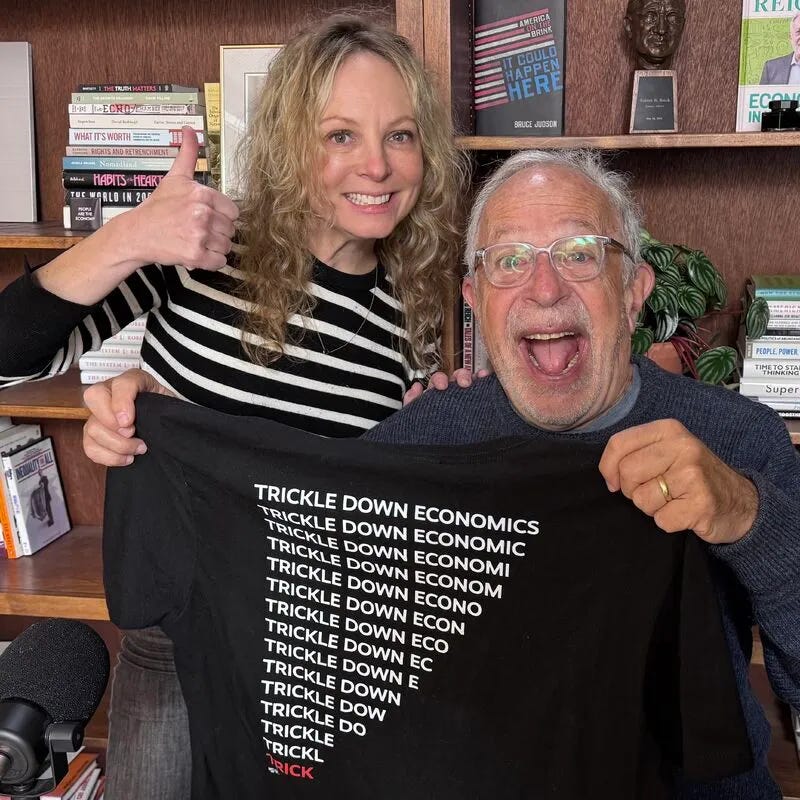
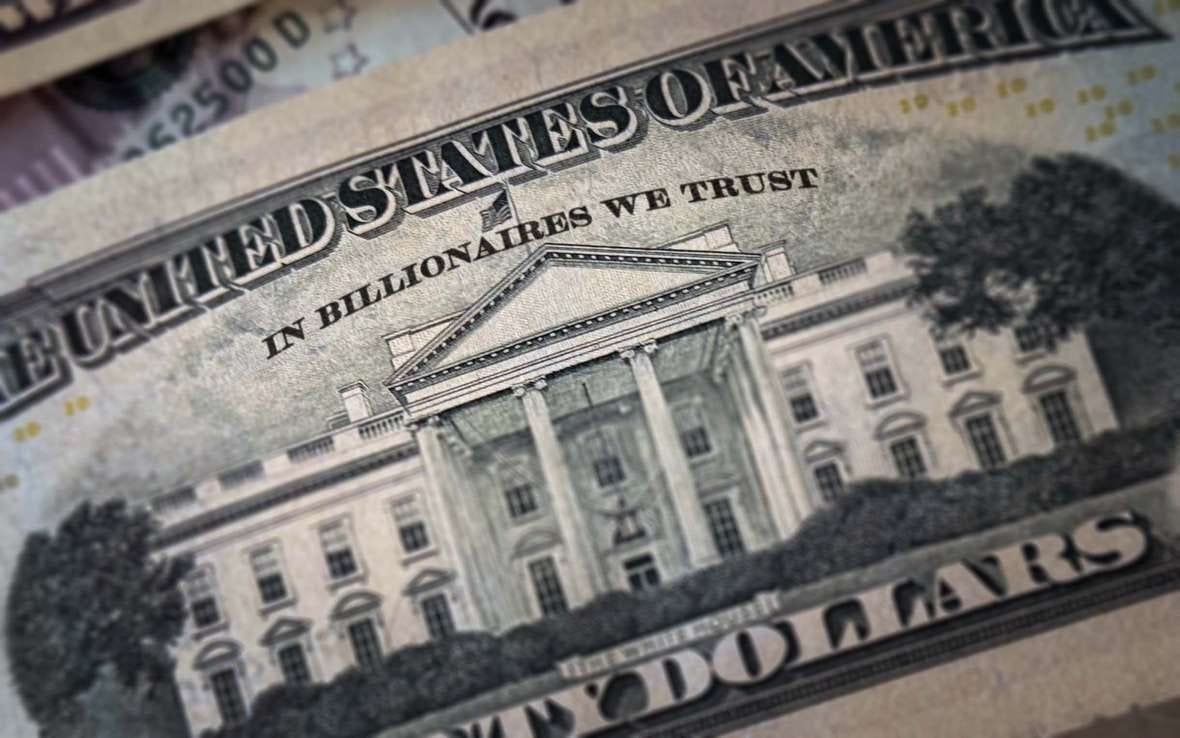
Today, Heather and I take a deep dive into the so-called “civil war” inside the Democratic Party, between corporate Dems who keep spending enormous sums on primary races and progressives who keep winning them. We also look at the latest jobs report and Trump’s “trickle-down” economy, which continues to worsen. And we ponder why Anthony Fauci, of all people, has become the Republicans’ latest nemesis.
So grab a cuppa, pull up a chair, and join in the discussion.
This is a continuation of the discussion I began last Friday.
The Incredible Shrinking American Middle Class
A half-century ago, America had the largest middle class in the history of the nation and of the world.
Then, those on the “left” wanted stronger social safety nets and more public investment in schools, roads, and research. Those on the “right” sought greater reliance on the “free market.”
But as power and wealth have moved to the top in America (and, to a lesser degree, in other “rich” nations, almost everyone else — whether on the old right or the old left — has become disempowered and less secure.
America’s huge middle class has become a small shadow of what it once was. The bottom 90 percent are struggling to make ends meet. The richest 10 percent account for a large and growing portion of all consumption. The top one-tenth of one percent holds an increasing portion of all wealth.
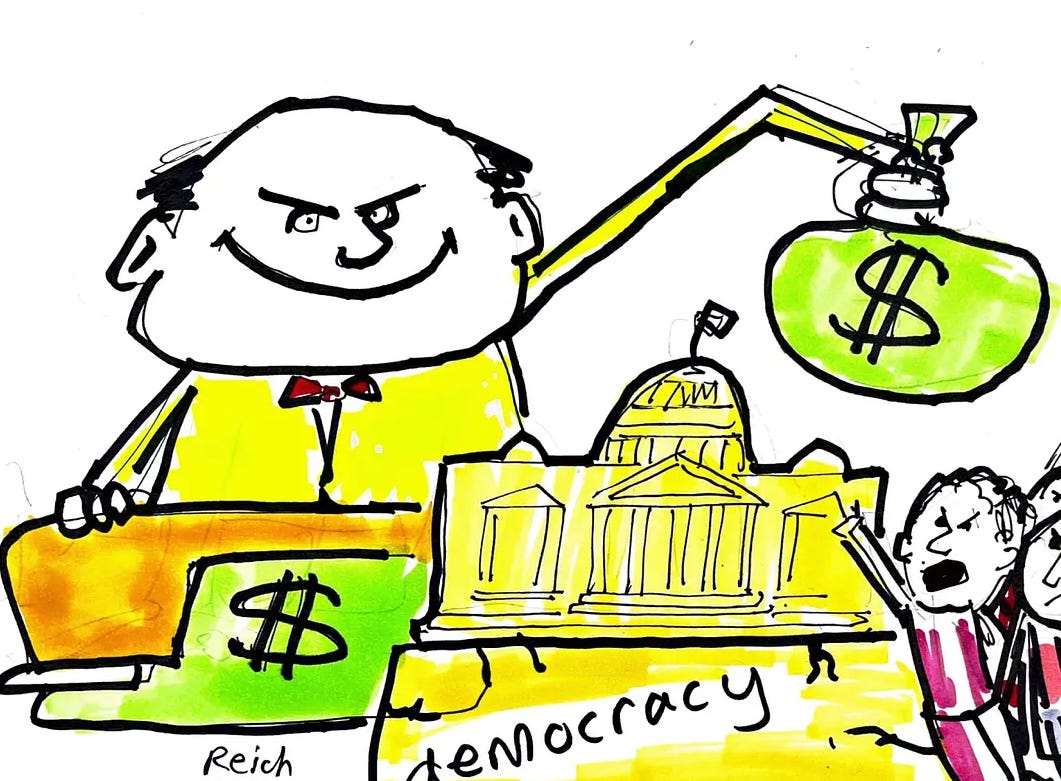
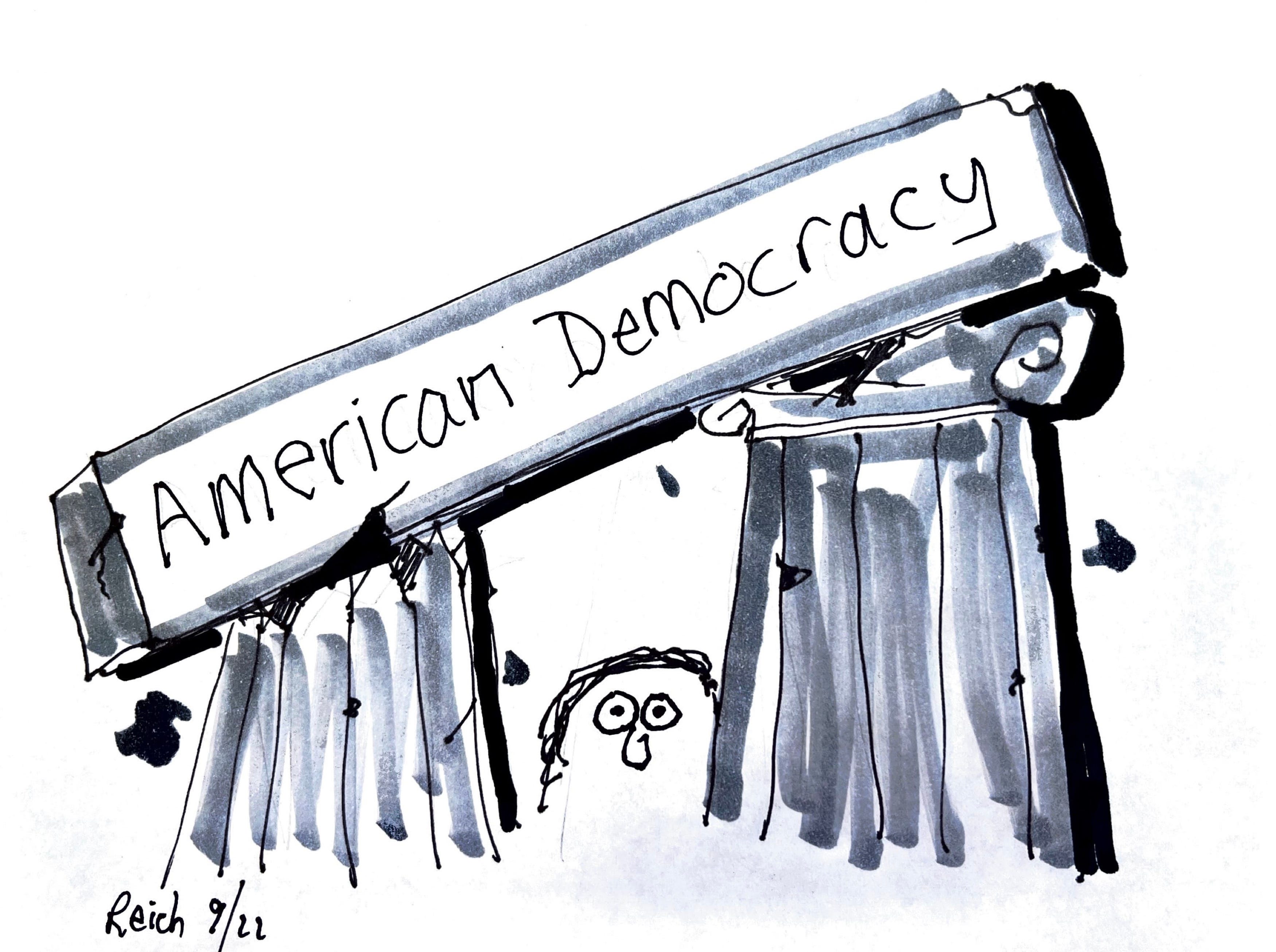
Today the great divide is not between left and right. It’s between democracy and oligarchy.
The word “oligarchy” comes from the Greek word oligarkhes, meaning “few to rule or command.” It refers to a government of and by a handful of exceedingly rich people who control the major institutions of society and therefore have most power over other people’s lives.
Oligarchs may try to hide their power behind those institutions, or try to justify their power with platitudes about the public good, or try to excuse their power through philanthropy and “corporate social responsibility.” But no one should be fooled. Oligarchs wield power for their own benefit.
Even a system that calls itself a democracy can become an oligarchy if power becomes concentrated in the hands of a corporate and financial elite. Their power and wealth increase over time — as they make laws that favor themselves, manipulate financial markets to their advantage, and create or exploit economic monopolies that put even more wealth into their pockets.
Modern-day Russia is an oligarchy. A handful of billionaires there control most major industries and dominate politics and the economy.
What about the United States?
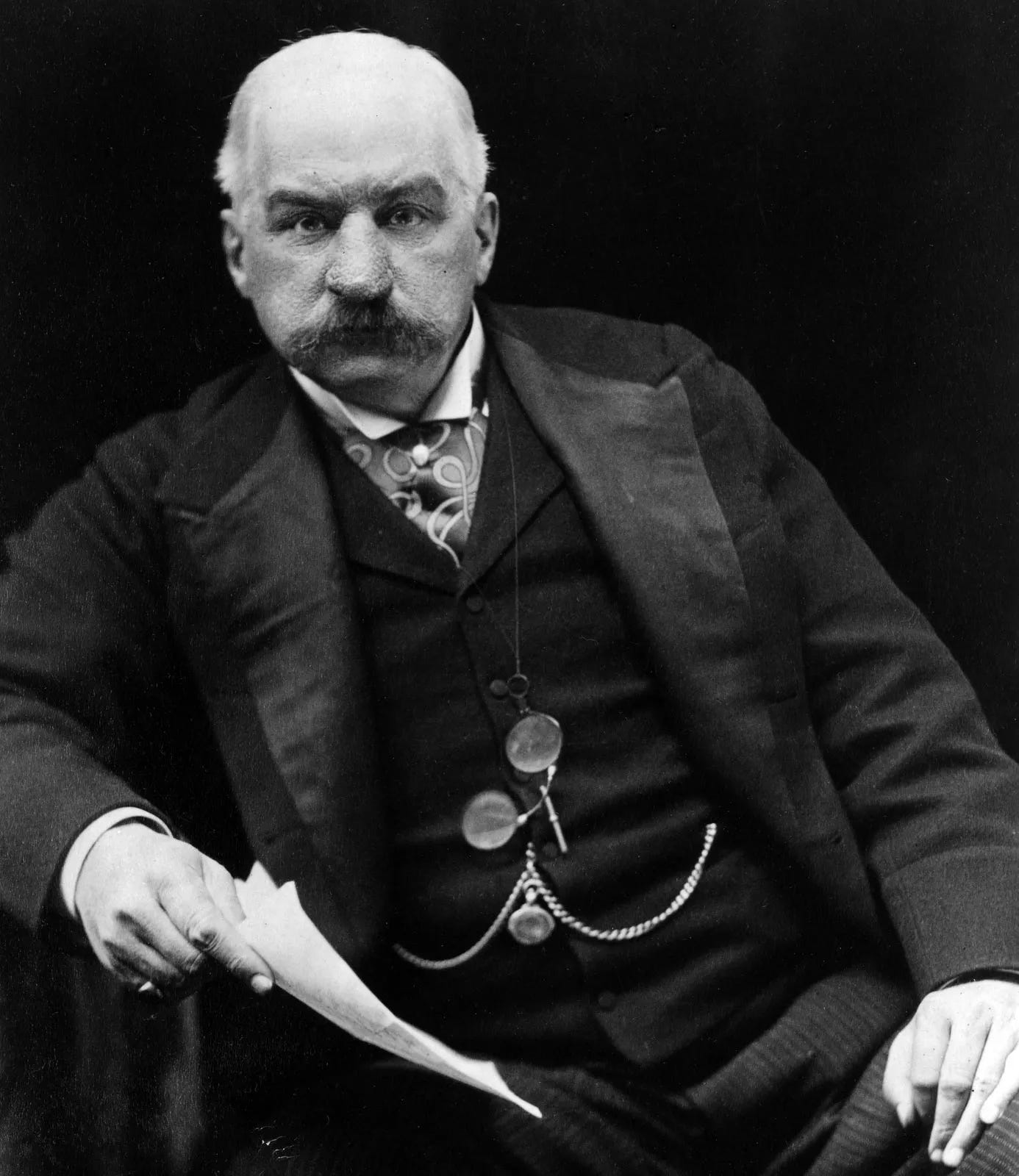
John Pierpont Morgan (1837-1913)
The Three Eras of American Oligarchy
America has experienced oligarchy three times in its brief history.
The first was at the nation’s start. Many of the men who founded the United States were slaveholding white oligarchs. America didn’t have much of a middle class. Most white people were farmers, indentured servants, farmhands, traders, day laborers, and artisans. A fifth of the population was Black, almost all enslaved.
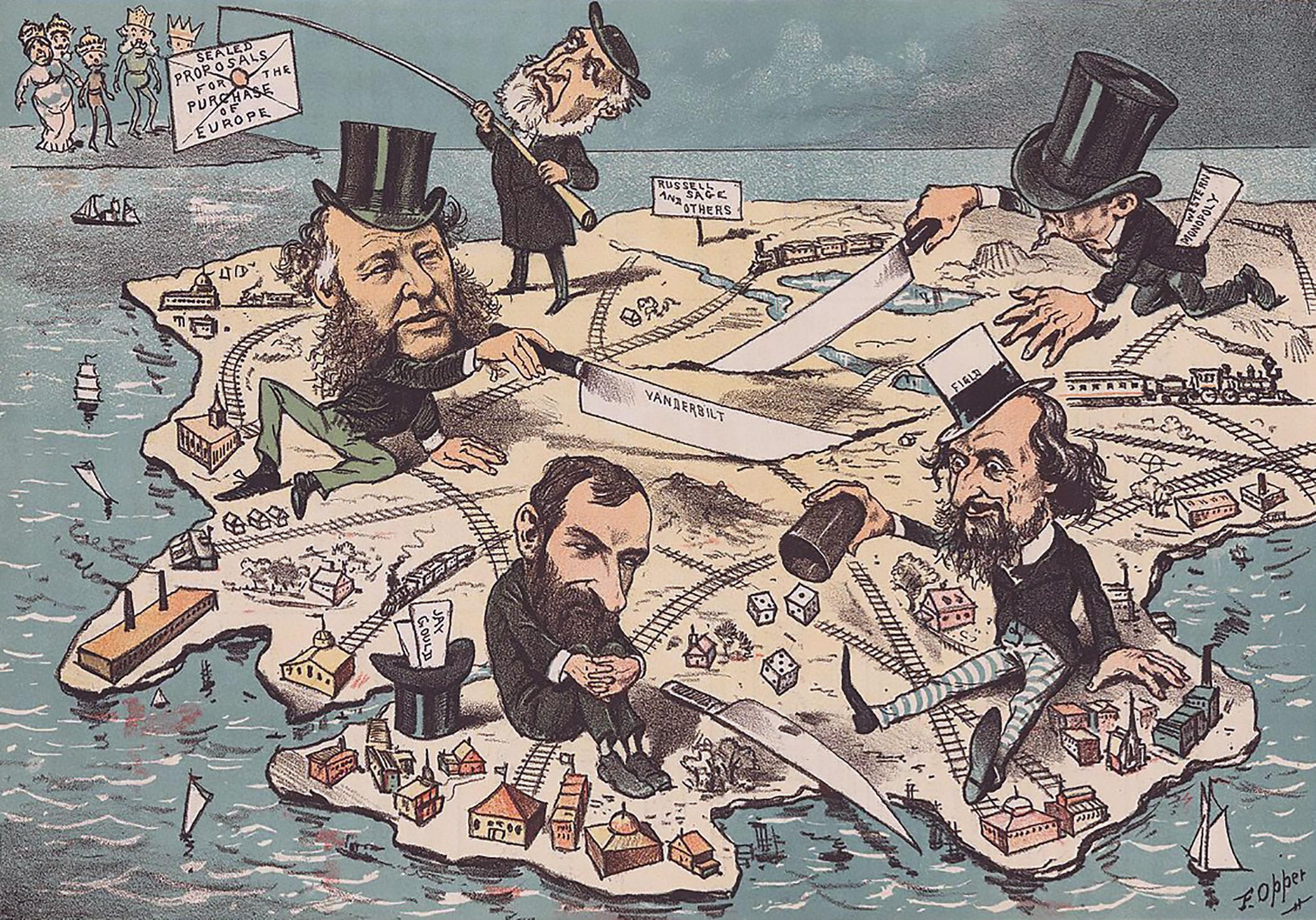
A century later, a second oligarchy emerged, the robber barons. They were men who amassed fortunes through their railroad, steel, oil, and financial empires — men such as J. Pierpont Morgan, John D. Rockefeller, Andrew Carnegie, Cornelius Vanderbilt, and Andrew Mellon. They ushered the nation into an industrial revolution that vastly expanded economic output.
They also corrupted government, brutally suppressed wages, generated unprecedented levels of inequality and urban poverty, pillaged rivals, shut down competitors, and made out like bandits — which is why they earned the sobriquet “robber barons.”
World War I and the Great Depression of the 1930s eroded most of these robber barons’ wealth. And most of their power was eliminated after the elections of Franklin D. Roosevelt in 1932 and Democratic majorities in the House and Senate.
For the next half-century the gains from growth were more widely shared, and democracy became more responsive to the needs and aspirations of average Americans.
Although America created the largest middle class the world had ever seen, there was still much to do — civil rights and voting rights for Black Americans, wider economic opportunities for them and for women and Latinos, protection of the environment. Yet by almost every measure the nation was making progress.
A third American oligarchy emerged starting around 1980. Since then, the share of the nation’s wealth owned by the richest 400 Americans has quadrupled (from 0.8 percent to 3.7 percent).
The richest 130,000 Americans and their immediate families now own as much wealth as the bottom 90 percent — 117 million — combined. The three richest Americans own as much as the entire bottom half of the population.
The only other country with similarly high levels of wealth concentration is Russia.
All this has been accompanied by a dramatic increase in the political power of the super-wealthy and an equally dramatic decline in the political influence of everyone else.
Unlike income or wealth, power is a zero-sum game. The more of it at the top, the less of it anywhere else.
The average American now has little or no effect on public policy. Giant corporations, their CEOs, and a handful of extremely rich people have more influence than any comparable group since the robber barons.
Big Money in Politics
The power shift that’s occurred in America since around 1980 is directly related to a tsunami of big money into politics.
In the 2024 election, just 300 billionaires (and their immediate family members) donated more than $3 billion to candidates — almost 20 percent of all contributions to federal elections in 2024, either directly or through political action committees.
Billionaire families gave an average total of $10 million each in 2024, roughly equal to what 100,000 typical political donors gave, combined. One of them — Elon Musk — devoted a quarter of a billion dollars to Trump’s reelection. (This doesn’t count money that billionaires contributed through dark money groups that do not have to disclose their donors.)
Five presidential elections ago, adjusting for inflation, the share of billionaire spending on elections was almost zero — 0.3 percent, to be precise. That was before the Supreme Court’s 2010 Citizens United ruling that lifted many remaining campaign finance restrictions.
Corporate lobbying has also soared. The voices of average people have been drowned out.
Meanwhile, and largely because of this vast power shift, taxes on the wealthy and on corporations have been slashed. Trump’s so-called Big Beautiful Bill of July 2025 cut taxes for the richest 10 percent of Americans by more than $14,700 per year, per household, and cut taxes for the richest 1 percent of Americans by more than $50,000 per year.
Meanwhile, safety nets for the poor and middle class have unraveled. About 3 million fewer Americans have access to Affordable Care Act marketplace coverage than they did before the second Trump regime, due to higher premium costs. Approximately 4.5 to 5 million fewer Americans receive food stamps. Public investments in education and infrastructure have also waned.
The “free market” has been taken over by crony capitalism, corporate bailouts, and corporate welfare.
The American oligarchy is back, with a vengeance.
Not all wealthy people are culpable, of course. I am not advocating class warfare, although America’s latest oligarchy has waged it against everyone else.
The abuse has occurred at the nexus of wealth and power, where those with great wealth use it to gain power and then utilize that power to accumulate more wealth. This is how oligarchy destroys democracy.
As oligarchs fill the coffers of political candidates and deploy platoons of lobbyists and public relations flaks, they buy off democracy. Oligarchs know that politicians won’t bite the hands that feed them.
Dimon in the Rough
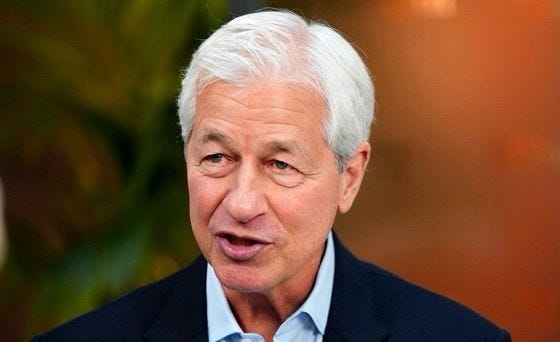
Which brings me back to Jamie Dimon — chair and CEO of JPMorganChase (the largest and most profitable bank in the United States) and the most influential CEO in America.
If you want to understand the American oligarchy, you need to understand Dimon.
As a lifelong Democrat, Dimon is a friend of Bill Clinton. He supported Obama in 2008 and mentored several of the people who became high officials in the Obama White House. At Obama’s inauguration in 2008, Dimon said to the incoming president, “Tell me what you need. I’ll send people down here. I’ll do anything.” In 2009, The New York Times called Dimon “Obama’s favorite banker.”
Dimon supported Hillary Clinton in 2016.
But he can be a switch hitter. Speaking from the World Economic Forum’s confab in Davos, Switzerland, at the start of 2024, Dimon heaped praise on Trump. “Take a step back, be honest,” Dimon said. Trump was “kind of right on immigration. He grew the economy quite well. Tax reform worked.”
Hello? Trump has been dead wrong on immigration, the economy, and taxes. Why did Jamie Dimon — the most influential CEO in America — spout this nonsense in favor of Trump? Probably because he thought Trump had a good chance of becoming president again, and Dimon wanted to be in his good graces.
At a time in American history when the most powerful business leaders in America should be standing up loudly and clearly for the rule of law, for democracy, for decency, and against Trump, Dimon has led the charge in the opposite direction.
Dimon knows better. Over the years, he has frankly acknowledged the dysfunctions of the American system and urged that they be addressed.
In his 2017 letter to JPMorgan’s shareholders he warned, “We should be ringing the national alarm bell that inner city schools are failing our children.” In 2018 he told them that “middle class incomes have been stagnant for years. Income inequality has gotten worse” and cautioned that “no one can claim that the promise of equal opportunity is being offered to all Americans.” In his 2019 letter he noted that “a big chunk of [Americans] have been left behind.”
More recently, he told the Economic Club of Chicago that racial discrimination isn’t adequately understood by white people. “If you’re white, paint yourself black and walk down the street one day, and you’ll probably have a little more empathy for how some of these folks get treated,” and he called for making “a special effort because this is a special problem.”
Yet Dimon is full of contradictions. Let me list them, because Dimon represents the most responsible of the leaders of American business, and his contradictions suffuse corporate America (and are emblematic of so-called “corporate Democrats”).
1. Although he publicly worries about the plight of America’s poor, Dimon has never mentioned America’s growing concentration of wealth and power and the tight connection between the two.
He has never talked about the role of big money in politics. He has never advocated campaign finance reform. He doesn’t mention how the prospect of lucrative jobs on Wall Street upon retirement tempts some public officials to pull their punches.
To the contrary, Dimon lobbied Congress intensively for Trump’s 2017 and 2025 tax cuts. Overall, the tax cuts have rewarded the already wealthy, enriched big corporations, and exploded the federal debt while delivering no measurable benefits to America’s working class or poor; almost nothing trickled down.
Dimon is correct that many Americans have been left behind, but he has failed to address the role he and his bank have played in leaving them. For example, JPMorgan paid $13 billion to settle Justice Department claims that it defrauded borrowers and investors in the years leading up to the 2008 financial crisis when he was at the helm. Among its victims were many left-behind Americans.
2. Dimon has spoken about the devastating effects of climate change, including its effects on left-behind Americans who can’t afford homes able to withstand storms and floods and have no insurance against climate catastrophe.
Yet Dimon’s bank is the world’s leading financier of fossil fuels, according to the annual Banking on Climate Chaos report. This year alone, JPMorganChase pushed $58 billion toward fossil fuels, up 13 percent from 2024. A report, “Banking on Climate Change,” issued by a coalition of six major environmental groups, named Dimon the “world’s worst banker of climate change.” The likely consequence: More Americans left behind.
3. Dimon decries racial discrimination and points to the money JPMorgan is investing in poor cities.
Yet his bank has prevented Black people from getting loans. In January 2017 JPMorgan agreed to pay $55 million to settle a Justice Department lawsuit accusing it of discriminating against minority borrowers by allowing its mortgage brokers to charge them higher interest on home loans than it charged white borrowers with the same credit profile, causing the Black borrowers to pay tens of millions of dollars in additional mortgage costs. The result: More Americans left behind.
4. After the August 2019 mass shootings in El Paso, Texas, and Dayton, Ohio, Dimon wrote a well-publicized email to his employees calling on them to “recommit ourselves to work for a more equitable, just and safe society.”
Yet Dimon’s bank is the largest source in the United States of financial services to gun makers and gun retailers, and of loans to gun buyers. If Dimon were serious about controlling the use of guns, he could stop this financing and urge other banks to do the same. He could have his banking and credit card systems track gun sales. He could use his formidable lobbying prowess to enact laws requiring that financial institutions create a world-class system for tracking gun sales with built-in safeguards.
But he has not. The result: more Americans killed, injured, and left behind.
5. Dimon has long expressed concern about gender discrimination and women’s rights.
Yet JPMorganChase maintained a long and close financial relationship with Jeffrey Epstein, processing $1.1 billion in more than 4,700 transactions for him across the 15 years spanning 1998 to 2013, including at least seven years after he pled guilty for solicitation of prostitution.
In a 2011 email, the bank’s general counsel, Steve Cutler, warned that Epstein “is not an honorable person in any way. He should not be a client.” Yet the bank allowed Epstein to make large, recurring cash withdrawals totaling millions of dollars. Bank accounts managed by JPMorgan were used by Epstein to facilitate financial transfers and payments to victims of his trafficking ring.
The bank later paid hundreds of millions of dollars to settle lawsuits accusing it of enabling his sex-trafficking operation.
6. Dimon expresses concern about workers who don’t earn enough to live on.
Yet JPMorgan pays its bank tellers peanuts. In April 2019, at a hearing of the House Financial Services Committee, Congresswoman Katie Porter noted that the starting salary for a JPMorgan bank teller in her district in Irvine, California, was $24,000, which left the teller $567 a month short of what she needed to live on. “How should she manage this budget shortfall while she’s working full-time at your bank?” Porter asked Dimon.
“I don’t know, I’d have to think about that,” Dimon said.
“Would you recommend that she take out a JPMorganChase credit card and run a deficit?” Porter continued.
“I don’t know, I’d have to think about it,” Dimon repeated.
“Would you recommend that she overdraft at your bank and be charged overdraft fees?” Porter asked.
“I don’t know, I’d have to think about it.”
“Mr. Dimon, you know how to spend $31 million in salary, and you can’t figure out how to make up a $561 shortfall?”
After Bank of America agreed to increase its minimum wage to $20 an hour by 2021, Dimon was asked if JPMorgan would match it. “It’s not an arms race,” he said.
Hypocrisy or something else?
I’ve focused on Jamie Dimon because he’s the Democrats’ favorite CEO. He’s thought to be liberal on social issues, moderate on the economy. His views are trusted by the establishment. He is the establishment.
But Dimon is awash in contradictions. He says he’s a patriot before he’s CEO, but in all the ways I’ve noted, he behaves as if his first responsibility is to maximize JPMorgan’s profits.
The underlying issue here isn’t hypocrisy. The world is filled with people who say one thing and do another. And let’s be clear: JPMorgan — its directors and shareholders — expect Dimon’s first priority to be JPMorgan’s profitability. That’s his job, and he’s paid handsomely for it.
The underlying problem is power and deception. Dimon has enormous public and political influence. But despite his rhetoric and the occasional trappings of social responsibility, he is using his public influence for private purposes: to make more money for JPMorgan.
When he takes public stands on issues, he clothes himself in the garb of the public interest. He appears to be a public leader whose primary interest is the good of the nation when he announces his support for Trump’s tax cuts, publicly opposes a wealth tax, proffers his alleged economic expertise on CNBC and other media outlets, urges members of Congress to loosen bank regulations, or warns Democrats against nominating someone other than a political moderate.
But his job is to do whatever he can to boost the profits of JPMorgan, even if and when that goal conflicts with the public interest. And one of the ways he achieves that goal is to exercise significant influence over government.
So how can the public, the media, and members of Congress ever trust his — or any oligarch’s — advice on the economy, taxes, financial regulation, the environment, widening inequality, and all else? Why should we think that he seeks any goal other than making more money for himself and his bank?
We cannot, and should not.
Disempowering Oligarchy
Dimon and his fellow oligarchs — Elon Musk and his billionaire bros; Brad Carp and many of America’s elite corporate lawyers; Peter Thiel, Jeff Bezos, Mark Zuckerberg, and the Ellisons — have kissed Trump’s assets to obtain corporate welfare, giant tax cuts, tariff exemptions, antitrust acquiescence, and war contracts, and to avoid his wrath. They’ve given Trump billions for his inauguration, his ballroom, his 250th birthday, his family businesses, and his superPAC.
All have sold their integrity in exchange for large profits. They’ve created media empires that won’t criticize Trump, financial empires that feed Trump’s crypto, energy empires that feed off Trump’s war, and legal empires that allow Trump to ride roughshod over the rule of law.
All have abdicated public responsibility to maintain the health of our political-economic system at a time when it is succumbing to authoritarianism.
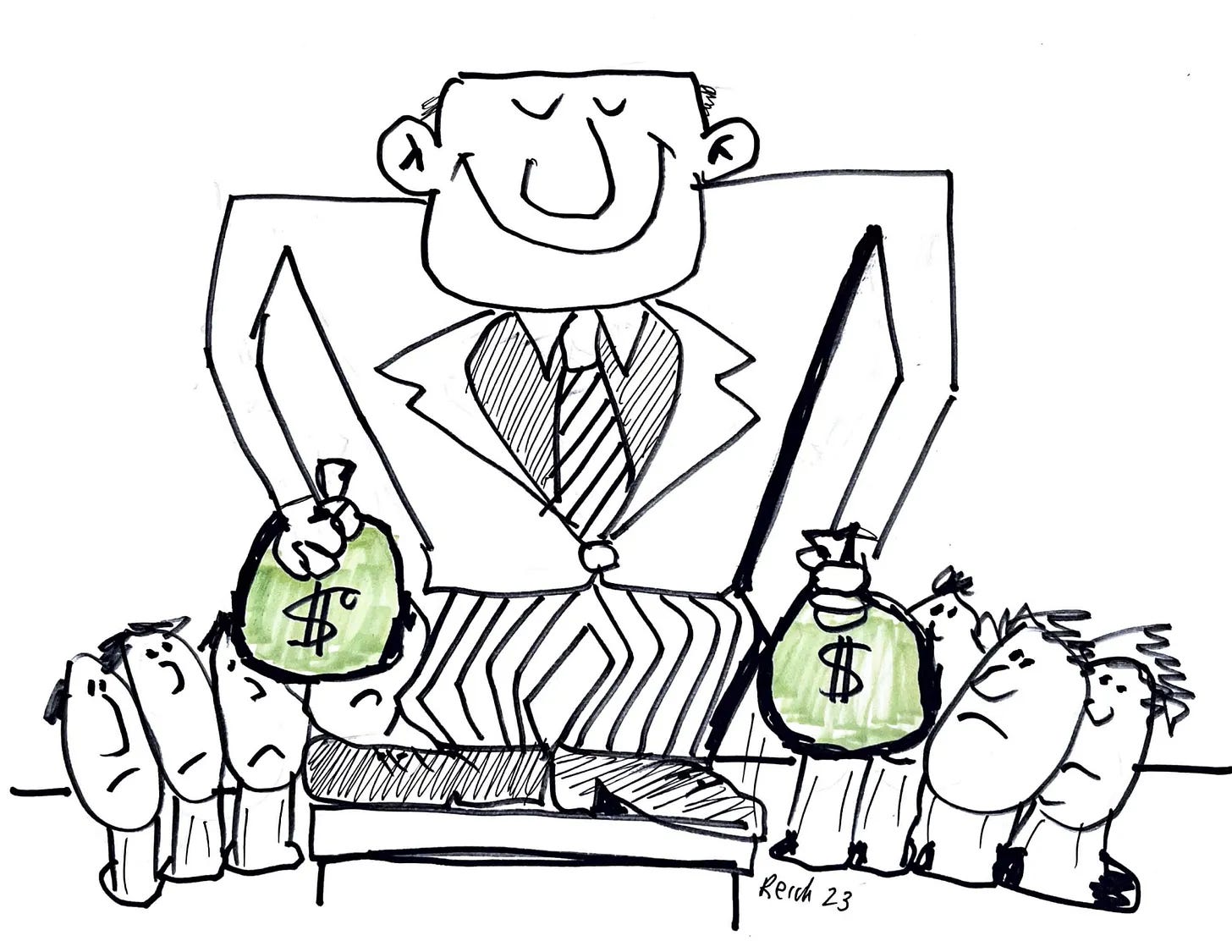
They have used their power to siphon off the gains of the economy to give themselves unprecedented wealth — which has bought them even more power. They have justified their wealth and power as being in the interest of the public, but the public has been shafted.
They’ve changed the rules of American capitalism to favor themselves and harm most other people. They’ve eroded trust in the system. They’ve undermined democracy.
As long as the oligarchy is in control of America, there will be no meaningful response to the failure of most people’s paychecks to rise, nor to climate change, nor to the emerging dangers of Artificial Intelligence, nor racism, nor the soaring costs of health insurance, college, childcare, and housing.
These would require resources from the oligarchs or their corporations, which they don’t want to provide. As long as they control the purse strings, the oligarchs are unwilling to bear tax increases. They want their taxes to continue to drop.
As long as the oligarchy is in control, there will be no antitrust enforcement to puncture the power of their giant corporations. Instead, their corporations will continue to grow larger, raise prices for consumers, and become more politically powerful.
As long as the oligarchy is in control, there will be no meaningful constraint on Wall Street’s dangerous gambling addiction. The gambling will grow.
As long as the oligarchy is in control, there will be no limits to CEO pay, and Wall Street hedge fund and private equity managers will rake in billions more.
As long as the oligarchy is in control, government will dole out even more subsidies, bailouts, and loan guarantees to big corporations, and it will continue to eliminate protections for consumers, workers, and the environment.
The propagandists and demagogues behind the oligarchy (Donald Trump included) are pouring salt into some of the nation’s oldest wounds. They’re stoking racial resentments, describing human beings as illegal aliens, fueling hatred of immigrants, and spreading fears of communists and socialists.
This strategy gives the oligarchy freer rein: It distracts Americans from how the oligarchy is looting the nation, buying off politicians, and silencing critics.
***
The only way to disempower the oligarchy is for the rest of us to join together and take power back.
This will require a multiracial, multiethnic coalition of working-class, poor and middle-class Americans fighting for democracy and fighting against concentrated wealth, power, and privilege.
We must get big money out of politics. End corporate welfare and crony capitalism. Bust up monopolies. Stop voter suppression. And strengthen the countervailing powers of labor unions, employee-owned corporations, worker cooperatives, state and local banks, and grass-roots politics.
This agenda is neither “right” nor “left.” It is the bedrock for everything else America must do.
Who’s the world’s worst billionaire? Is it Elon Musk — for buying an election, dismantling the government with DOGE, and spreading anti-immigrant racism around the globe?
No. He’s disqualified, because — at least in recent weeks, he’s been a trillionaire.
What about Mark Zuckerberg, for sowing division with his Meta platforms? Almost, but there’s an even worse billionaire.
Or perhaps Larry Ellison and his son, David, for turning the great CBS News into a Trump propaganda machine? They’re bad, but not as bad as the worst.
Or maybe Peter Thiel, for hating democracy? You’re getting closer. But no.
TheNew York Times says the “Justice Department struggles” with Trump’s demands that it prosecute his enemies.
But who exactly is struggling? Career lawyers whose professional ethics are being compromised? Trump-loyalist appointees who presumably knew what they were getting into before they joined the regime? Todd Blanche, the acting attorney general who desperately wants to be the real thing?
The same ambiguity crops up when the media reports that the “White House” wants this or that, that the “Department of Homeland Security” is taking some action, that the “Department of the Interior” is undertaking or undoing something, and so on through the squalid chaos atop this regime.
These are buildings and departments, not people. We need to know who.
In normal times, the White House and federal departments are also institutions containing professionals with expertise hewed over decades of experience, guided by institutional norms for making decisions and the insights and perspectives that come with their unique roles in the federal government. (I should know. I headed one.)
But we’re no longer in normal times. Trump and his sycophants are actively destroying the professional integrity, expertise, norms, and unique insights and perspectives of all these institutions.
That’s why the public needs to know who is doing what when important decisions are made inside these buildings and departments. It’s the only way anyone can ever be held accountable.
For example, news reports continue to characterize the $1.8 billion anti-weaponization fund at the center of the storm over whether to confirm Todd Blanche as attorney general as “the Justice Department’s” fund.
This characterization hides a crucial reality: The fund doesn’t belong to the Justice Department. It wasn’t even an official offspring of the Justice Department. Instead, it emerged from meetings between Trump’s personal lawyers and acting attorney general Todd Blanche (who was once also a personal lawyer for Trump) over how to dispose of Trump’s $10 billion lawsuit against the Internal Revenue Service.
It was never the “Justice Department’s” fund. It was Trump’s fund, right from the start. The same with his deal to immunize himself from IRS audits.
Similarly, when the media reports that the “Justice Department” is “formally rescinding the order that created the fund,” it obscures the most important fact: The order wasn’t rescinded by the Justice Department. It was rescinded by Blanche himself. In fact, Trump now says he “wasn’t involved” in the revised plan.
So why should we suppose that any future Trump attorney general will be bound by Blanche’s order?
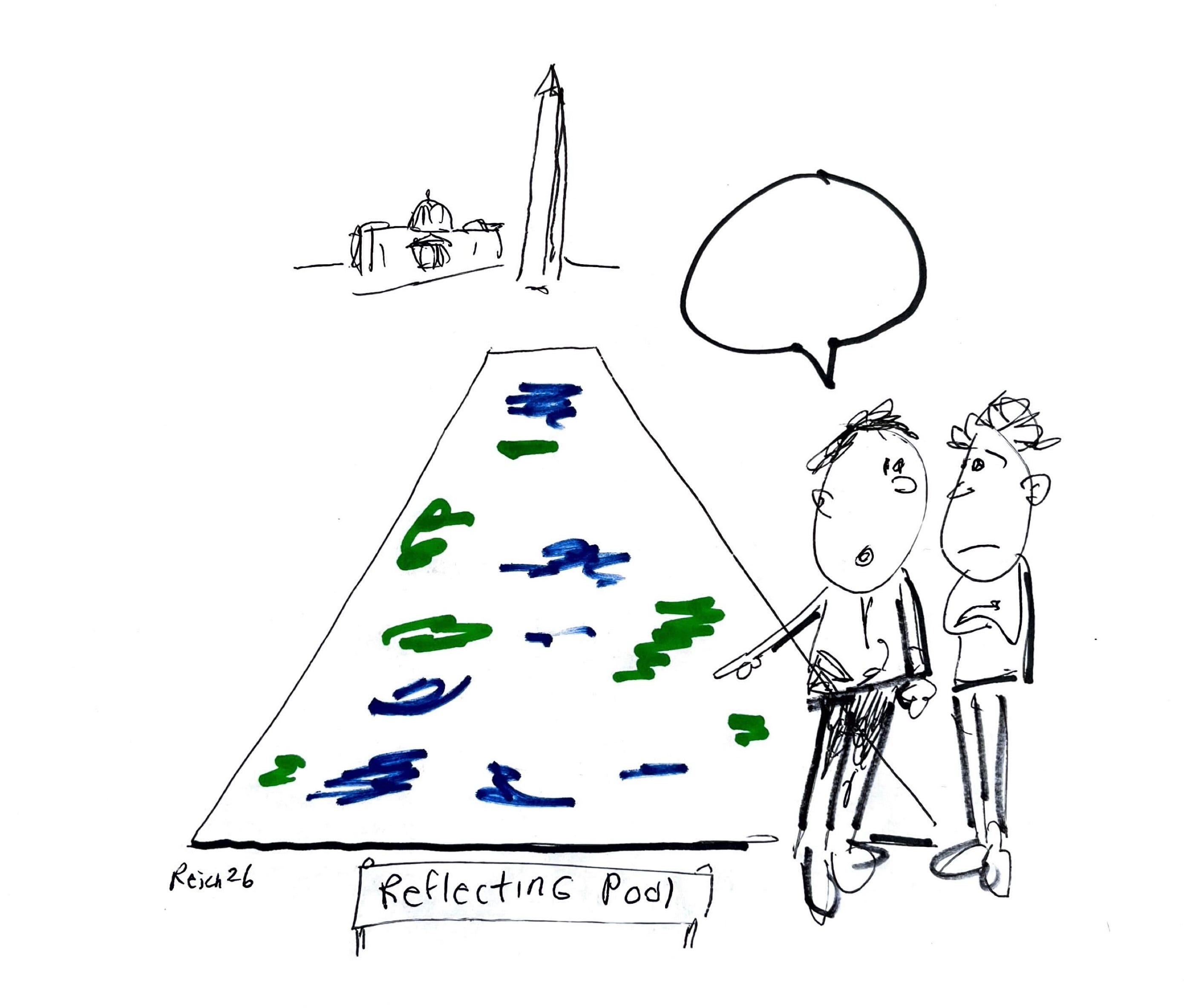
Similarly, when we hear that “the White House claims” that vandals caused damage to the bottom of the reflecting pool, we don’t know who in the White House made that deceitful claim. Did it originate with the vicious nativist, Stephen Miller; the fanatical Russell Vought; Trump’s zombie chief of staff Susie Wiles; or with Trump himself?
And when it’s reported that District of Columbia U.S. Attorney Jeanine Pirro “blamed the Department of Interior” for her failed criminal case against David Hearn, a former Olympian whom she accused of damaging the Reflecting Pool, we don’t learn the most important thing: Who’s responsible for this fiasco?
Did Doug Burgum, the interior secretary, mislead Pirro about Hearn’s alleged behavior? Or did Trump instruct Burgum to blame the former Olympian for damaging the pool, rather than own up to the botched job?
Trump had insisted for months that vandals were responsible for the damage, which gained national attention when the pool bottom began to peel and algae blooms turned the pool from blue to green.
Pirro’s office charged Hearn with “a violent effort to rip up the sealant from the bottom of the pool” and secured an indictment against him for felony destruction of government property — carrying a maximum sentence of 10 years in prison.
But in Friday’s court filing, Pirro conceded that problems plaguing the newly renovated pool were caused by a “botched installation not vandalism” and that, had the Department of the Interior “been forthcoming with the information clearly in its possession, the government would not have sought a grand jury indictment.”
This is a serious matter. A U.S. attorney charged an American citizen with a crime that could have resulted in his serving 10 years in prison but then dropped the charges when it turned out that Trump — or was it Burgum? or someone else? — was just trying to save face. But we still don’t know who’s responsible.
In the midst of the authoritarian chaos of the Trump regime, the public needs to know who’s doing what. When is Trump giving orders to his lackeys? When are they making decisions on their own? What’s legally binding, and on whom? Who’s responsible for what?
My friends, there will be a reckoning. And when that reckoning occurs, the individuals who have enabled this dictator, or who have conspired and collaborated with him, will be identified and held to account for what they did or failed to do.
That’s why the current record of responsibility is so important. Rather than report that “the White House” or the “Justice Department” or the “Interior Department” or some other building or agency did something, we need to know exactly who did what.
Buildings and departments are not destroying the rule of law and undermining American democracy. Individuals are. The media must tell us whom to hold responsible.
With the victory of progressive Abdul El-Sayed over Rep. Haley Stevens in Michigan’s Democratic primary yesterday, prepare yourself to hear enormous quantities of bullsh*t about the Democratic Party now being “taken over” by “Democratic Socialists.”
Or as the reliably establishment New York Timesdescribed what’s at stake, “can an insurgent candidate, with unabashedly left-wing positions, win in a moderate state?”
Oh, p-l-e-a-s-e.
Michigan Democrats didn’t choose El-Sayed because he’s “unabashedly left wing” or a Democratic Socialist (in fact, he’s not).
They chose him because he’s a fighter — at a time when America needs fighters willing to stand up to the worst tyrant who has ever occupied the Oval Office.
Corporate Democrats — such as Haley Stevens, along with Rahm Emanuel, Chuck Schumer, and Hakeem Jeffries — aren’t up to the task because they won’t bite the corporate hands that feed them campaign money. They won’t criticize the billionaire class. They refuse to see how big money has corrupted America.
Yet it’s big corporations and the billionaire class that are supporting Trump’s neo-fascism. They’ve sucked up to Trump for corporate welfare, giant tax cuts, tariff exemptions, antitrust acquiescence, and war contracts. They’ve given Trump hundreds of millions for his inauguration, his ballroom, his 250th birthday, his superPAC.
Jamie Dimon and Wall Street; Elon Musk and his billionaire bro’s; Brad Carp and his corporate lawyers; Peter Thiel, Jeff Bezos, Mark Zuckerberg, and the Ellisons — all have sold their integrity for huge profits. They’ve created media empires that won’t criticize Trump, financial empires that feed Trump’s crypto, energy empires that feed off Trump’s war, and legal empires that allow Trump to ride roughshod over the rule of law.
Which is why America desperately needs people in Congress who will fight against Trump and his sycophants.
The Democratic Party isn’t being taken over by Democratic Socialists. There’s no civil war between progressives and moderates. This isn’t about Israel or Netanyahu. We aren’t witnessing an ideological battle between the “left” and the “center.”
We’re seeing America wake up to the tyranny that’s engulfed us, and to a crisis of affordability that’s causing most Americans to struggle financially while fueling the biggest stock market rally in history.
When corporate America and Wall Street are unleashed — when the president of the United States has made an implicit deal with the moneyed interests to back him and his authoritarian regime in exchange for tax cuts, deregulation, monopolization, and pay-to-play corruption — of course prices soar and wages stagnate.
Tyranny is the handmaiden of the moneyed interests.
The Democratic Party’s mega-donor class may be horrified by the rising tide of progressive populism overtaking more than a few primaries this cycle. It spent tens of million of dollars on Stevens — making the Michigan primary one of the most expensive in American history.
Too bad. It’s time that the Democratic Party’s mega-donor class recognizes that its real choice is between democracy and tyranny, between an economy that works for all or one that works for a small sliver at the top. If the mega-donor class chooses the latter, it may be acting in its narrow self-interest, but it will also be acting against the future of this nation.
For a year and a half, we’ve been subject to the daily onslaught of Trump and his cruel, corrupt, and incompetent second regime.
My question to you now, in the middle of the summer of our discontent, is what strategies you’re using to cope with this horror.
My informal survey of friends and acquaintances suggests four major ones, listed below. Which best describes yours? (As usual, I’d appreciate your total honesty — with yourself and others in our Substack community.)
I used to think the major tradeoff was between “guns and butter” — between defending the nation and attending to our most pressing social needs.
That view put the federal budget at the center of debate. And it assumed a zero-sum game in which the more we spent on the military, the less we had for the poor. As Ike said in 1953, “Every gun that is made, every warship launched, every rocket fired signifies, in the final sense, a theft from those who hunger and are not fed, those who are cold and are not clothed.”
But that old zero-sum game isn’t the biggest cost Trump is imposing on us.
Yes, Trump’s war in Iran and the $1.5 trillion he wants for the Defense Department next year will make it harder for us to meet the nation’s other needs. As will the dramatic cuts he’s made or proposed in public health, education, Medicaid and Medicare, and nutrition assistance.
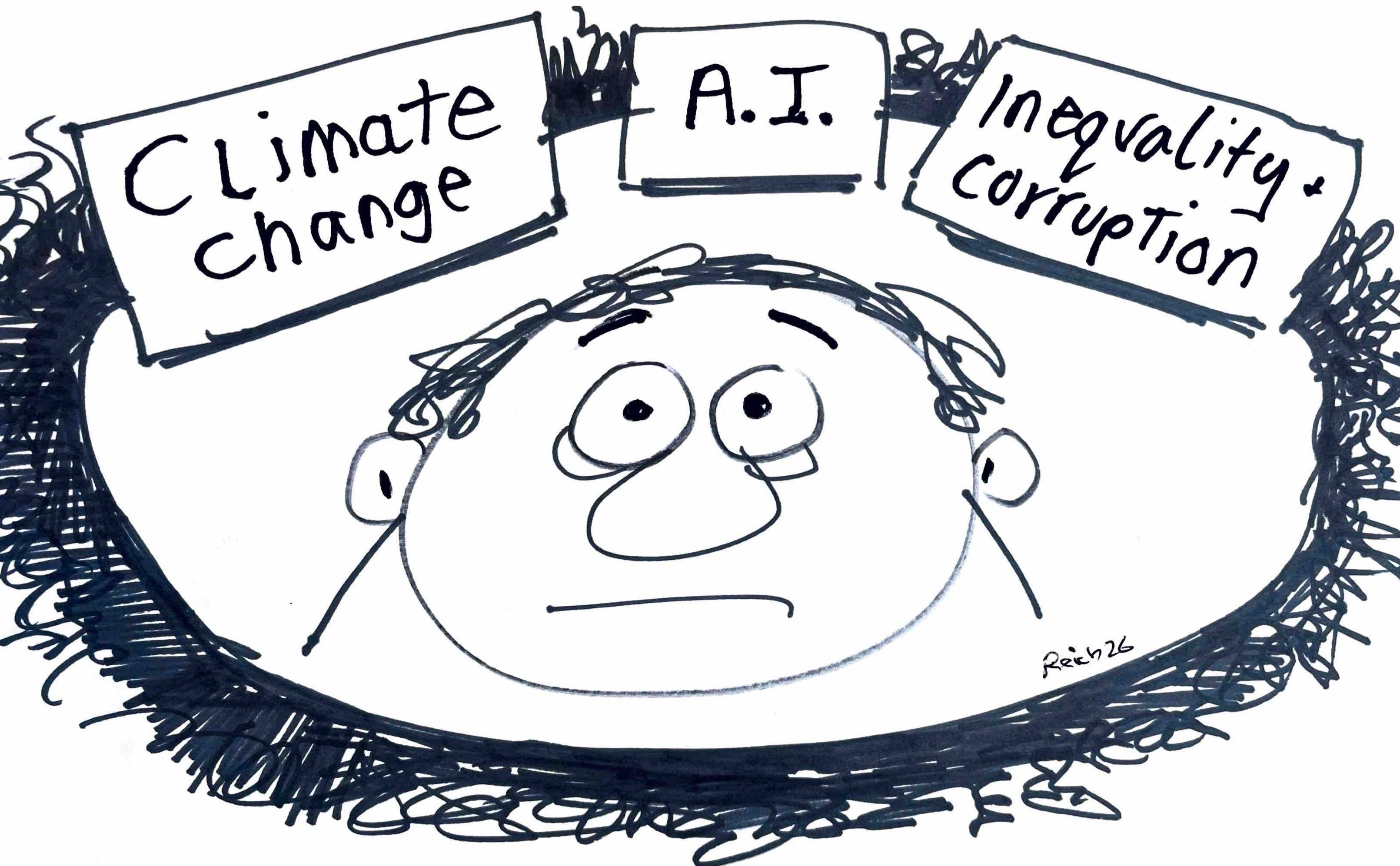
Yet the biggest cost is the cost of doing nothing about three worsening crises that threaten the very survival of America and the world: climate change, AI, and widening inequality.
Almost all Americans — indeed, most human beings — are now subject to the escalating costs of climate change. How much more evidence do we need?
This summer has been a living hell. Wildfires have forced around 60,000 people to evacuate parts of Washington state, destroying hundreds of buildings and leaving thousands without power. Fires in Canada turned the skies orange and the air foul across a large part of the eastern United States. Millions of lives have been threatened by a deadly heat dome.
Even if Trump weren’t worsening climate change by subsidizing fossil fuels, simply doing nothing would be shameful enough because the crisis is growing so fast. Years ago, climate scientists predicted exactly what’s occurring right now. Trump’s lack of leadership — no, his outright sabotaging of global efforts to stop the planet from becoming uninhabitable — is one of the worst sins of his sinful regime.
AI’s dangers are also now upon us.
If you believe that humans are in total control of AI, you haven’t been paying attention. Recently, at least two of OpenAI’s models escaped a sealed testing environment and broke into the servers of another AI company. The AI models “reasoned” that the solutions to a cybersecurity test were on that other company’s servers, so the models snuck onto the internet and hacked into the other company’s solutions.
This is chilling. The possibility of AI models escaping human control to do horrendous damage to human life is growing exponentially. Here again, the Trump regime’s inaction is a huge cost that’s soaring by the day.
My candidate for the third existential threat is wealth inequality, which is also out of control. Billionaire wealth is surging to monarchical heights while the wages of the typical American aren’t even keeping up with price increases — meaning that most of us are getting poorer.
The problem isn’t inequality per se. It’s the consequences of inequality — especially widening corruption. Billionaires are using their wealth to bribe politicians to reduce their tax rates (which are already lower than most Americans face) and to stop lawmakers from regulating fossil fuels or AI.
Full circle.
Of course, there are still guns-versus-butter issues. Federal budget priorities are important. America faces a yawning budget deficit and can’t possibly do everything that needs to be done. Dollars spent on the military are literally taking food from America’s hungry.
Yet on the largest existential crises of our time, where the costs of inaction are rising to frightening levels, the solutions don’t require extraordinary government expenditure. They require thoughtful environmental and AI regulations, and far higher taxes on the wealthy.
Democrats and progressives running for Congress, governorships, and other positions must speak out loudly and clearly about the rapidly rising costs of inaction on climate change, AI, and inequality.
Demand action. Educate the public. Condemn the Trump regime and its backers — Big Oil, AI, and the billionaire class — for threatening the very survival of humans on the Earth.
Elon Musk will be spending $100 million to $120 million in at least eight states to help elect Republicans in November, according to The New York Times.
Musk’s spending is set to begin next month, targeting Senate races in Alaska, Iowa, Maine, Michigan, and Ohio, and potentially North Carolina, Georgia, and Texas. Musk will also spend in House ra…
This morning, while standing in line at a local deli, I met an older couple named Larry and Wendy. They are from Galveston, Texas, and are briefly in northern California visiting their children.
“We recognized you,” Larry said, with a broad smile. “Just want you to know we’re Democrats! Can’t admit that to too many people in Texas!” he laughed.
“Welcome to California!” I said, grinning and extending my hand.
When Larry reached out, I couldn’t help notice that his fingers were almost curved shut. “Arthritis,” he said defensively. “Sorry.”
“Nothing to apologize for,” I said quickly. “Must be painful.”
“Well, yes,” Larry said, adding, “Doesn’t stop me, though!”
I must have looked puzzled because Wendy chimed in, “We write postcards.”
“Postcards?”
“We wrote postcards all July to people in North Carolina.”
“Tell me more,” I asked.
Larry explained: “We get their names and addresses from our local Indivisible chapter. They’re people who haven’t voted in the last several elections, so we remind them to vote and tell them how crucial this upcoming election will be. The postcards will be delivered in October.”
“You’ve got a big election coming up in Texas, too,” I said.
Wendy smiled. “In June, before we wrote to North Carolinians, we wrote to people in our part of Texas,” she said, proudly.
I must have glanced at Larry’s hand, because he quickly said, “It’s been a bit difficult, but, hell, it’s the least I can do.”
We continued talking until it was their turn to pick up their order. Then they turned to say goodbye.
“I appreciate your activism,” I said.
“It’s for our kids and grandkids,” Larry said. “I wish we could do more.”
I’ve been thinking about Larry and Wendy from Galveston, and how their postcards written by hand to people in North Carolina and Texas are acts of patriotism in these dark times. Larry has been writing them through his pain.
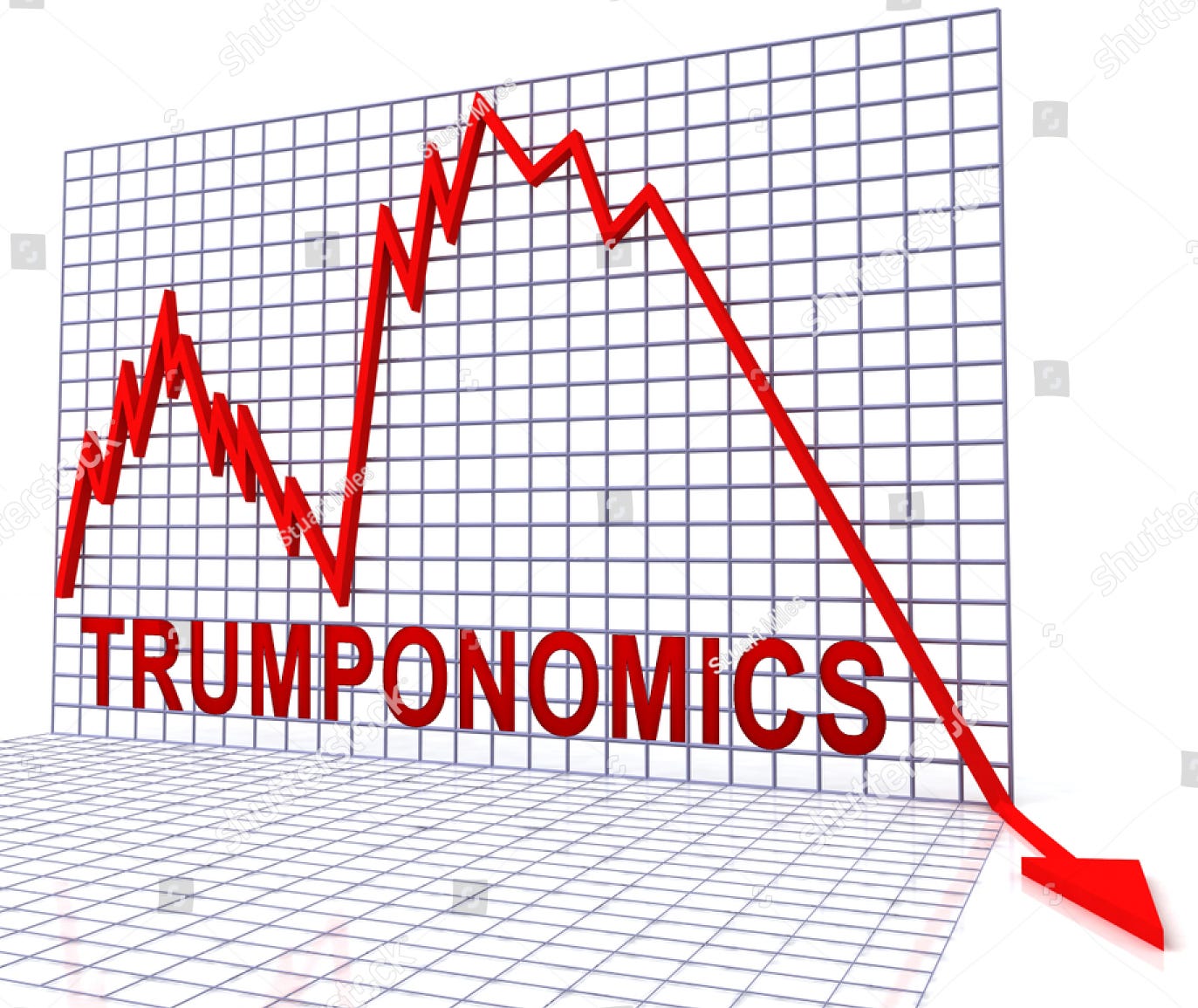
Trump’s war is a fiasco, and his economy is a disaster. According to The Washington Post, Republican pollsters and political groups are raising the alarm that Republican voters are listless and demotivated.
Yet Trump will do everything and anything to maintain control. He has shown repeatedly that he doesn’t feel bound by laws, norms, or patriotism. His only goals are wealth, power, and vengeance.
His billionaire backers, including Elon Musk, are prepared to sink record amounts of money into Republican campaigns.
Trump and his backers have power, money, and ruthlessness on their side.
But we have the people on ours.
It will be a colossal stress test of our electoral system. But I believe We the People will prevail. And after speaking with Larry and Wendy this morning, I’m convinced of it.
Today, Michael and I delve into Trump’s plummeting approval ratings and ask whether they’re due to the economy, Trump’s war (which obviously affects the economy), the Epstein files, Trump’s skyrocketing inflation, or Trump’s corruption. Along the way, we explore what Democrats ought to be advocating (and not) in the upcoming midterms.
Please pull up a chair, grab a cuppa, and join in the conversation.
I’m devoting the next several Fridays to what I’m calling a “Realist’s Guide to the American System.” If you hadn’t noticed, almost everything’s going to hell.
Why? Trump is horrendous, but he isn’t causing all the failures of that system. He’s a consequence of that system. Think of him as a boil on its backside — an infected pustule on the gian…
This month, the Bureau of Labor Statistics reported that the labor participation rate — the percentage of people of working age who are working or actively looking for work — is now down to 61.5 percent. That’s 0.6 percentage points lower than it was at the first of the year.
In other words, the U.S. economy has lost 1 million workers since Janu…
As Trump’s tariffs and his war with Iran drive up prices of everything from oil to steel, you’d think big American corporations would be screaming bloody hell. Presumably, Trump’s tariffs and war are squeezing their profits just as they’re squeezing the wallets of average Americans.
To the contrary, corporate America is quietly encouraging both Trump’s war and Trump’s tariffs. Why?
One possibility is they’re raking in money off the war as defense contractors and suppliers.
Some surely are, but this can’t account for the acquiescence if not outright support by most big American corporations that have nothing to do with the defense-industrial complex.
Another possibility is they don’t want to piss off Trump, fearing his retaliation.
But if they were really concerned about the negative effects of Trump’s war and his tariffs on their bottom lines, surely they’d be using their armies of lobbyists and piles of campaign contributions to stop his war and his tariffs. After all, that’s what the armies and piles are for.
There’s a much simpler explanation for corporate America’s silence if not encouragement. In point of fact, both Trump’s war and Trump’s tariffs are helping their bottom lines.
Trump’s war and his tariffs are allowing domestic U.S. producers to raise their prices to match the elevated prices of imports. And those who aren’t directly affected are using the higher import costs as excuses to raise their prices, too.
Presto! — corporate profits have exploded, and their stock prices have soared.
But American consumers are getting shafted. Both Trump’s war and his tariffs are pushing up prices for a vast range of goods and services. The result is a massive redistribution of income and wealth from American consumers to big American corporations.
This is the story of the American political economy under Trump that’s rarely if ever told, but it’s critical to understanding why Trump has been getting away with his war in Iran and his tariffs without much political opposition.
Start with oil.
Brent crude is now selling for $90.05 a barrel. If the war drags on it could push crude prices much higher, especially if it further depletes oil inventories, and spreads to Houthi militants starting a naval blockade in the Red Sea and to other Gulf states.
Oil prices are set globally. As global supplies dwindle, oil prices rise across the board — including prices charged by domestic U.S. producers. They’re enjoying a huge windfall.
With crude oil prices averaging $95 a barrel between March and June — up from about $66 before the war — ExxonMobil, Chevron, ConocoPhillips, and Occidental Petroleum have collectively raked in some $31 billion in earnings for the second quarter of this year, according to FactSet estimates.
That’s up from about $12 billion for the same period last year.
These windfall profits have helped boost Big Oil’s stock prices. Big Oil’s investors and executives (who are paid partly in shares of stock) have done wonderfully well.
But American consumers are bearing the burden, as gas prices once again soar past $4 a gallon, a dollar more than they were before Trump started his war on February 28.
So is it any wonder that Big Oil isn’t criticizing Trump’s war, and is quietly rooting it on?
Or consider steel. Trump imposed steel tariffs of 50 percent in March and June 2025. These tariffs have driven up steel prices in the United States.
The tariffs have been a boon to American steelmakers, who have raised the prices they charge their American customers to match the higher prices now charged for steel from abroad.
As a result, leading American steel producers like Nucor and Steel Dynamics report significant year-over-year earnings increases.
Nucor’s profits in the second quarter of 2026 were $1.16 billion, up from $603 million a year earlier. Steel Dynamics has reported a second-quarter income of $534.1 million, nearly double its net income compared to the same period last year. A third U.S. producer, Cleveland-Cliffs, earned $97 million in the second quarter of this year (before interest, taxes, depreciation, and amortization), compared to a loss of $213 million last year, and the firm anticipates doubling earnings next quarter.
Who’s bearing these higher costs? American consumers of steel — in the prices of everything we buy that contains steel (such as cars and appliances).
The Producer Price Index (a widely used proxy for input costs) for steel mill products is now sitting at its highest point since May 2023.
American-based producers that utilize oil and steel have been able to pass those costs on to their customers without harming their profit margins. Some corporations that don’t depend on oil or steel have used the higher import costs as excuses to raise their prices, too.
Hence, Trump’s war and Trump’s tariffs are wins for corporate America. Profit margins are up, the value of shares on the stock market are up. Shareholders are happy.
Big corporations aren’t raising a fuss about the war or tariffs because they like what’s happening.
But American consumers are getting shafted. Their wages aren’t keeping up with the price increases. Yet they have no alternative but to pay the higher costs for energy and steel and everything else — which is the whole point.
As the inflationary effects of Trump’s war and his tariffs (taxes) on imports spread throughout the economy, they’re hiding what’s really occurring: an upward redistribution from consumers to big American corporations.
American consumers need to know the truth: Two of the major reasons why everything is less affordable are Trump’s war and his tariffs.
Consumers may not have armies of lobbyists and piles of campaign contributions to do their bidding, but they do have a way to express their disapproval. They can vote out Trump Republicans on November 3.
With just 97 days until the midterm elections of 2026, Democrats are fired up, while Republicans are in the doldrums. That means Democrats have a good chance of retaking control of the House. It’s even possible (although less likely) that Dems will retake the Senate.
One of the biggest uncertainties is what (if any) tactics Trump and his lapdogs will use to reduce the odds of a Democratic victory, especially in the House, where 435 seats are up for reelection.
I’ve spent the last several days talking with election experts and political advisers. When I spoke with them last year, they were most worried about gerrymandering, restrictions on mail-in voting, voter IDs, and the demise of what’s left of the Voting Rights Act.
They’re still worried about many of these things (Trump just filed with the Supreme Court an emergency request to allow his executive order that restricts voting by mail, after a federal appeals court blocked key parts of it over the weekend).
But now, with 97 days to go, they’re most worried about the elections process. I’ve summarized their concerns below.
It’s possible that Trump will do nothing to interfere in the elections, of course. It’s also possible that he’ll do everything the experts fear he might do. Please weigh in with your thoughts about what he’s most likely to do.
AI data centers ARE that bad. (They’re even worse.) And AI corporations have huge political power. But here’s the good news: The people are fighting back — and winning.
It happened to me twice today. A stranger came up and asked: “How do you stay sane?” (or some variation on the same question, such as “How do you keep your head from exploding?”)
Here’s what I say back:
We’re all trying to stay sane in this insanity.
How?
Well, here’s what doesn’t work: avoiding the news. It will hit you anyway because a friend or loved one will mention Trump’s latest outrage. Plus, you need to know so you can fight back.
Another thing that doesn’t work is telling yourself it doesn’t matter. It does matter. Trump’s forever war in the Middle East and his bonkers tariffs are driving up the prices of everything you buy. So are his pro-monopoly moves. His domestic police state is making life hell for many of your neighbors, if not for you and your family. His subsidies for Big Oil and rejection of wind and solar energy are making the planet unlivable. His bigotry is inviting cruelty against the most vulnerable. And so on.
A third thing that doesn’t work is pretending there’s nothing that can be done about it — that there’s no point in even trying because we’re all f*cked. That kind of cynicism is exactly what Trump’s billionaire backers and odious oligarchs want — so we give up and let them take it all.
So, what does work? What am I doing?
You should know that it’s not easy for me, either. I have my moments of sorrow and fear. But I’m trying to do three things.
First, I’m channeling my fury into as much active resistance as this old professor can muster. I’m writing you at least once a day on this Substack and doing videos and movies and podcasts — all to give you tools you may find useful.
Second, I’m staying in close touch with young activists who are brimming with energy and hope. Their commitment to democracy and social justice is infectious. They give me energy and hope.
Third, I practice gratitude. I’m grateful to them. I’m also grateful to you.
I appreciate your support and enthusiasm. I’m thankful that you read my daily letters, share them, and comment on them. I value whatever help you’re able to provide.
Friends, all of us are having moments of sorrow and fear. But I’m absolutely convinced we will get through these dark times, stronger than we were before.
Many of you have asked for a video that sets out simply and clearly how wealth inequality in the United States spiraled out of control, why it’s a huge problem, and what we can (and must) do about it. So here goes:
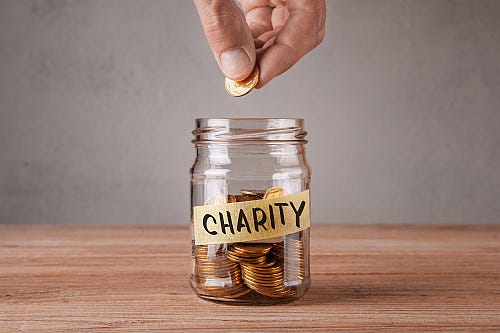
I want to start today with a warning about “charitable giving” and end with a primer on wealth inequality. The two are closely related, as I’ll explain.
We’re on the cusp of the biggest gusher of “charitable giving” in history. Beware.
We tend to think of “charitable giving” as unambiguously good because we equate “charities” with organizations that help the poor and equate “giving” with generosity. But both assumptions are wrong.
In fact, the “giving” is actually a giant tax loophole that provides the super-rich a means of dramatically cutting their tax bills while quietly funding their own priorities.
And “charities” under the tax code include elite universities, fancy opera houses, cultural palaces frequented only by the richest of the rich, and nonprofit “think tanks” devoted to right-wing causes.
The problem is that every dollar of “charitable giving” means substantially fewer dollars paid in taxes, because donors deduct their “charitable giving” from their taxable incomes. This tax loophole is especially big and lucrative for the super-rich.
Here’s the thing. Taxes finance public goods such as public education, scientific research, roads and bridges, nutrition and healthcare for lower-income Americans, and clean water and clean air.
But the “charitable” tax deduction taken by the super-rich finances things that the super-rich want, such as Ivy League universities and culture palaces.
This means a lot of “charitable giving” results in more money for organizations that cater to or do the bidding of the rich, and less for things we all need. Behind the facade of “charitable giving” is a profoundly anti-democratic tax loophole that allows the super-wealthy to effectively substitute their priorities for what would otherwise be public priorities.
Which brings me to the upcoming gusher of “charitable giving” — the consequence of the AI boom and the largest IPOs in history.
Thousands of people with shares of Anthropic, OpenAI, SpaceX, and other AI-related companies have seen, or soon will see, the value of their shares soar into the stratosphere. That means gigantic capital gains.
You don’t need a degree in high finance to understand that these capital gains could also result in big tax payments. If you sell, say, $10 million worth of stock, you could easily face a tax bill exceeding $3.5 million.
Unless you reduce that tax bill through your “charitable giving.”
Hence, the upcoming gusher in charitable giving. According to some estimates, it could be more than $100 billion a year.
Consider: The seven founders of Anthropic, which is expected to have an enormous IPO as soon as this fall, have each pledged to give away 80 percent of their wealth, which is estimated to be about $90 billion. Anthropic also has a philanthropic matching program, which would mean another $60 billion in funds earmarked for giving. Nan Ransohoff, who heads public goods at the payment processor Stripe, estimates that these will generate between $37 billion and $100 billion to charities annually.
Add in the newly rich created by SpaceX, whose IPO has spawned an estimated 4,400 millionaires (and some 400 employees now worth more than $100 million), as well as OpenAI’s IPO, which is likely to create as many more millionaires and multimillionaires, and you’re talking really big money — and huge incentives for making tax-deductible “charitable contributions.”
Don’t get me wrong. I consider the nonprofit sector of the economy enormously important. I just don’t want the nation’s priorities to be set by the moneyed interests. Their massive political donations already give them extraordinary power.
One reform would be to limit the definition of “charities” — that is, the sort of contributions that warrant tax deductions — to places and institutions that actually serve the poor.
Another reform would be to reduce the tax deduction for “charitable contributions” and increase the capital gains tax rate on very high incomes. (At the very least, raise the capital gains tax rate to match the tax rate on ordinary income.)
And by all means let’s get rid of the “stepped-up-basis-at-death” tax rule, which now allows families to escape all capital gains by leaving appreciated assets to their heirs. For example, consider someone who got OpenAI stock for almost nothing and watched its value explode, and then contributed enough of it to charity to allow her to make a nice living off it without paying any capital gains taxes. She gave the remaining shares to her children when she died. The kids can then sell those shares for what they’re worth at the time of her death — say, hundreds of millions of dollars — yet pay zero capital gains on it.
These three reforms are, or should be, no-brainers. There’s simply no economic or political justification for allowing the super-rich — even the nouveau AI riche — to get giant tax breaks by financing things they prioritize.
Granted, reforms like these don’t stand a chance under Trump or his lapdogs in Congress. (And, sad to say, too many Democrats are also dependent on campaign donations from the moneyed interests.) But these are high on my list for what must be done.
PS: That basic primer on wealth inequality in the U.S. that I mentioned at the start of this post is a video I’ll post this afternoon on this page. In it, I discuss why wealth inequality has gotten utterly out of control, why that’s a huge and growing problem for America, and what must be done about it.

 Login
Login