AI data center construction is diverting capital and labor away from building everything else we need. AI is the biggest, most costly, and least popular economic bet America has ever made. Why are we making it? Who stands to gain? Who’s going to lose? What can we do?
The Democrats’ focus on affordability seems to be a winning strategy (we’ll know for sure in a little over two weeks). But we mustn’t lose sight of the moral squalor at the core of the Trump regime.
It’s that moral squalor — the utter disregard for the opinions, norms, and ideals of the nation or, for that matter, of humanity — that uniquely marks Trump and the reprobates he has attracted to Washington. It has also poisoned much of the Republican Party, including the billionaires and tech bros who finance it.
To put this despicable era behind us, we’ll need to renounce and reverse this squalor.
What are loosely described as Trump’s “conflicts of interest,” for example, extend way beyond enriching himself from his presidency. He has violated the basic norms of presidential decency.
He just decided to host the Group of 20 annual summit of world leaders at his private golf club in Miami in December. When he sought to do this during his first term, it was viewed as a blatant violation of the emoluments clause of the Constitution. Now, after America’s moral sensibilities have been numbed by Trump’s appetite for foreign gifts — such as Qatar’s “donation” of a $400 million jumbo jet — it barely merits a mention.
He sells advance notice of his market-altering announcements for $100,000 a month, thereby profiting by tipping off people who trade on the information before it becomes publicly available. He files a trademark application for “Trump TV” to control the name of a streaming service that the White House uses for official presidential communications, thereby pocketing the benefits from taxpayer funds used to create and run the channel.
His family-backed crypto firm introduces a stablecoin just months before he signs legislation promoting it. His wife is paid tens of millions for a self-promotional film by Jeff Bezos’s Amazon, a federal contractor and major retailer subject to a myriad of regulations. His son has a Russian oligarch, close to Putin, pick up the tab for part of his wedding afterparty in the Bahamas.
He arranges for the Justice Department to grant him and his family immunity for any back taxes and penalties they might owe.
And so on. Trump has tossed away all constraints on making money off his presidency “because I got no credit in the first term” and “I found out that nobody cared.”
Credit? Someone who is entrusted with the highest office in the land must receive “credit” for doing what’s right, in order to continue doing what’s right? Nobody cares? A president can embrace corruption if the public doesn’t mind?
It’s not just the blatant self-dealing. His moral squalor extends to every aspect of governing.
He lies incessantly — a gushing firehose of deception.
His foreign policies make Henry Kissinger’s realpolitik seem principled by comparison. He orders the abduction of the president of another nation, installs a new president of his choosing, and announces he’s taking that nation’s oil — and doesn’t even account for what he does with the oil money.
He attacks Iran without consulting America’s traditional allies or even Congress.
Eager to reduce diesel prices (which are hurting Republicans in the midterms), he turns his back on Ukraine and sides with Putin, the aggressor in that conflict — making a deal to import Russian diesel fuel (a windfall for Putin who can now bomb Ukraine even harder) while demanding that Ukraine stop attacking Russian oil refineries. Trump then blames Ukraine president Zelenskyy for high oil prices rather than Trump’s own war with Iran, and says Ukraine should get a new president.
If this isn’t moral squalor, I don’t know what is.
The squalor also extends to usurping the authority of Congress to decide on tariffs, wars, and whether and how to spend taxpayer money.
And extends to his cynical defiance of Supreme Court orders. When the high court invalidates Trump’s tariffs, he reimposes them under a different statute. When the court rules that he doesn’t have grounds to remove a member of the Fed board of governors, he concocts a means to do so anyway. When the court says he has to remove his name from the Kennedy Center, he closes the center and threatens to demolish it.
It extends to his using the Justice Department and the FBI to prosecute people who have stood up to him, including courageous judges and prosecutors.
It extends to his overt bigotry and racism — claiming Mexicans are “bringing drugs and crime”; calling Somali-Americans “garbage” and denouncing “what they’ve done to Minnesota, these people from Somalia”; and taunting Muslims (calling Dr. Abdul El-Sayed, the Democratic Senate candidate from Michigan, “Mohammed”).
It extends to giving a gigantic tax cut to America’s wealthiest people, financed by cutting nutrition assistance and health care to America’s most vulnerable people.
The moral squalor has turned much of America into a police state — terrorizing large numbers of people residing here, including many here legally. Deploying ICE agents at schools, courthouses, and hospitals. Forcibly taking parents away from their children. Allowing masked gunmen without identification to grab suspected undocumented immigrants off our streets, from their cars, and out of their homes — giving them no opportunity to defend themselves in front of third parties before putting them into often overcrowded and unhealthy prisons or sending them to other countries where they’re imprisoned. Killing and murdering — even murdering Americans who are trying to monitor their activities — then refusing even to conduct official inquiries into the murders.
When asked if there are limits to his authority, Trump replies: “Yeah, there is one thing. My own morality. My own mind. It’s the only thing that can stop me.”
“My own” morality is no morality at all. Morality reflects collective judgments about right and wrong, shared values about what we owe one another as citizens of the same society. Morality refers to the ideals we seek to achieve together.
Trump is not guided by any sense of right and wrong. He is guided only by what enriches him or gives him more power and glory — a nihilistic might-makes-right ethos in which the strong do whatever they want and the weak suffer what they must.
To be sure, Trump’s moral squalor could not have permeated America — he could not have been elected a second time — had our shared norms and ideals not already been compromised.
Vast inequalities of income and wealth, coupled with a growing sense that the social contract at the heart of the American system was coming undone and that those at the top have rigged the game, were already fueling anger and distrust. Trump ignited that fuel.
But without shared ideals or common moral values, there is nothing pushing back against this despicable president and regime — no countervailing moral force against the ongoing squalor.
Part of the project of ridding ourselves of Trump, therefore, must be to rekindle our understanding of the common good and appreciation of what we owe one another as members of the same society.
Of course we must make life more affordable; Democrats are wise to emphasize this in the midterms. But we also must demand common decency from our president.
Trump and Vance claim they’re putting “America first.” They’re not. They’re putting themselves first and America last.
So what would a REAL “America first” agenda look like? Take a look:
Our real America First agenda doesn’t exclude or vilify people. It doesn’t surveil them, take away their healthcare, or give billionaires and corporations unrestricted power over their lives.
America First means taking care of and investing in everyone who resides within our borders. Helping people abroad, not bombing them. Ensuring working people have freedom and control over their own lives.
Don’t let Trump and Republicans claim they put America first. They don’t. This agenda does.
He’s Exhibit A on why billionaire wealth should be taxed, why we have to get big money out of politics, why billionaires shouldn’t be allowed to buy up major media, and why our government shouldn’t give them huge military contracts.
I’m talking about Elon Musk, of course.
Yesterday, former Ukrainian defense minister Mykhailo Fedorov thanked Musk for restoring his Starlink satellite’s vital high-speed connectivity: “Thank you, @elonmusk. We hope for your continued support.” (Connectivity had slowed after Musk posted Saturday that “Zelensky has gone too far.”)
But who gave Musk authority to slow his satellite service in the first place — or, for that matter, to publicly comment on Ukraine President Zelensky? (Musk says Starshield systems are owned and controlled by the US government, and that “any limits on speed or usage are decided by the US military and ultimately POTUS.” But if that’s the case, why did Fedorov thank Musk?)
Every time I list another of Musk’s outrages, someone says, “Yes, but he’s an innovator!”
He’s not. As is made clear in Alex Gibney’s smart new documentary, “Musk,” Elon didn’t invent Tesla. He didn’t invent X. He didn’t invent SpaceX. He didn’t invent Starlink satellites. He didn’t invent squat.
Musk is to innovation what Trump is to governing. Both are conmen. Both are megalomaniacs. Both love authoritarians and detest democracy. Both are racist and misogynistic. Neither believes in (or harbors an ounce of) empathy toward anyone. Both think nothing of corrupting governments for personal gain. Both say they’re self-made men — and both worship their creators.
Both spout bigoted filth all hours of the day and night to hundreds of millions of people.
Okay, let me just say it out loud: Both Musk and Trump are loathsome human beings.
Someday historians will come up with an explanation of how two such awful people could have become the two most powerful people in America if not the world (what was there about America in the early 21st century?).
But for now the goal of sane people must be to defund both of them and get them as far away from politics as possible.
That will be difficult, to be sure. Musk has so far sunk roughly $366 million into the 2026 midterm election cycle, $276 million of it since July — all to help Republicans retain control of Congress. That makes him the largest single known donor in the entire midterm elections. And he’s aiming to collect a lot of quid pro quos.
Hell, he spent a quarter of a billion dollars in 2024 to help Trump win reelection and was rewarded by Trump with access to every bit of data the U.S. government keeps on every one of us, along with billions of dollars’ worth of no-bid contracts with the Pentagon. (His Starlink satellite system is now key to the military strategy of the United States as well as that of Ukraine.) He was also rewarded with a chain saw inaptly named “Department of Government Efficiency,” which he used to destroy U.S.A.I.D. and slash other government agencies he doesn’t like.
In the last few months Musk has given at least $10 million to a Texas super PAC seeking to elect Republican Ken Paxton to the Senate, despite (or is it because of?) Paxton’s long record of ethical lapses, legal controversies, and official misconduct. Musk’s businesses are headquartered in Texas, so he needs to buy friends there.
On Sunday, Musk pushed the false story to his 242 million followers on X that James Talarico, Paxton’s Democratic opponent, was absent from the campaign trail because he had suffered a mental breakdown and was receiving counseling at the Lindner Center of Hope, a mental health center in Ohio.
Musk’s story has been thoroughly debunked. Security camera footage shows Talarico at home, not at an Ohio mental health facility. (Meanwhile, according to The Wall Street Journal, on New Year’s Eve 2024, Paxtonpartied in Dubai with his extramarital girlfriend and two fugitives from charges of over $300 million in healthcare fraud in the U.S. One of the men donated $190,000 to Paxton, $25,000 of it after he was indicted.)
The project of defunding Musk will probably have to wait until after January 20, 2029, when, let’s pray, we have a sane administration in Washington that will end all government contracts with him (his support for right-wing extremists around the world makes him a security risk), bust up his monopolies (a reinvigorated Federal Trade Commission and Federal Communications Commission will see to it), and impose a significant wealth tax on him.
But you don’t have to wait until then. Stop buying Teslas. Don’t use X. Don’t sign up for Starlink. And support politicians who promise to defund him.
Oh, and what about deporting him? Hmmm. Didn’t he lack proper work authorization during his student-to-entrepreneur transition time in the mid-1990s?
Last week, Trump predicted “big surprises” ahead of the midterm elections. During an appearance last Wednesday in Maryland, Trump turned to Russell Vought, the director of the Office of Management and Budget, and stated, “We have some big surprises coming up in another few weeks, right Russ?” without specifying further — thereby teasing the prospect of a big measure later in October.
I’ve asked a number of political advisers, economists, and Trump-watchers what they think Trump has in mind. I’ve grouped their responses below. Please choose one that best matches your sense of Trump’s most likely “October surprise.”
I keep hearing from political insiders that there’s a growing chance Trump will be removed from office soon after the midterms. See this:
It’s becoming apparent that Trump is becoming more demented by the day. He can’t be trusted to do the job — which is why Congress ratified the 25th Amendment to the U.S. Constitution, section 4 of which reads:
“Whenever the Vice President and a majority of either the principal officers of the executive departments or of such other body as Congress may by law provide, transmit to the President pro tempore of the Senate and the Speaker of the House of Representatives their written declaration that the President is unable to discharge the powers and duties of his office, the Vice President shall immediately assume the pwers and duties of the. office as Acting President.”
As you see, even if Trump’s cabinet lapdogs won’t declare he’s unable, Congress may set up a “body” to decide it.
As the above video makes clear, there’s ample reason to believe this is already in the works.
In these last weeks before the midterms, Democratic candidates have been gaining ground by talking about two things: the affordability crisis and political corruption.
If Democrats regain control of Congress and genuinely want to respond to affordability, they’ll need to do everything possible to root out the corruption.
The two are inseparable. In large part, prices are rising faster than paychecks because so much of the economy has become subject to political bribery, Trump Republican pay-to-play schemes, and kickbacks to Trump and his cronies.
1. Trump’s war and the corruption underlying it
Trump’s war on Iran is causing Americans to spend almost 50 percentmore on gas than before the war, on average. And the diesel fuel needed to transport almost everything else we buy now averages more than $6.00 a gallon, which is also being passed on to consumers.
These price increases due to Trump’s war tell only half the story. The other half is the political corruption at the root of the war — enriching Trump’s friends and family.
The war has been a huge windfall for Big Tech supplying the military — such as Palantir, a core artificial intelligence and data-integration partner for the U.S. Department of Defense, founded by Trump and JD Vance’s buddy Peter Thiel, and Elon Musk.
Musk’s SpaceX reportedly quintupled its connection fees for the Pentagon, from $5,000 per terminal to $25,000 per terminal for terminals integrated into U.S. “kamikaze” (LUCAS) drones deployed in the conflict.
Not incidentally, Musk has quietly funneled more than $275 million to Republican candidates in the midterms, making him by far the largest single donor to either party.
Meanwhile, investment companies backed by Donald Trump Jr. and Eric Trump have accumulated billions in Pentagon contracts and future contract options, according to the government’s official contract reporting. (Congressional Democrats continue to demand that the Pentagon’s inspector general investigate the approved deals.)
2. Trump’s tariffs and the corruption beneath them
Trump’s tariffs offer another example of higher prices connected to corruption. The tariffs are import taxes that have increased annual household costs by an estimated $1,100, according to The Budget Lab at Yale.
Again, though, the price increases tell only half the story.
Trump’s tariffs have enabled Trump to give out tariff waivers and carve-outs to industries and companies that do him favors.
After Tim Cook, Apple’s CEO, donated $1 million to Trump’s inauguration and promised major domestic investments, Apple got tariff exemptions for imported smartphones, computers, semiconductors, and flat panel displays, all of which saved Apple huge amounts of money.
After Elon Musk sank a quarter of a billion dollars into Trump’s 2024 campaign, Tesla got a tariff exemption for electronics.
Reyes Holdings, a bottler that ranks among the largest privately held companies in the U.S. and is owned by brothers who have donated millions to Republicans, got a tariff exemption for polyethylene terephthalate, used to make plastic bottles. And so on.
3. Trump’s promotion of AI and the corruption underlying it
A third example linking higher prices to corruption is artificial intelligence. Together with the costs of Trump’s war in Iran, AI’s borrowing of over $500 billion so far this year has contributed to sky-high interest rates on mortgages, auto loans, and credit-card overdrafts. And AI data centers are raising electricity prices in areas where data centers are sucking up energy.
As with the war and the tariffs, Trump’s support for AI is tied to political payoffs. Tech companies and their executives donated over $300 million to support Trump’s 2024 reelection efforts and MAGA Inc, the political action committee aligned with Trump. (This doesn’t include Musk’s more than a quarter billion dollars in donations to Republicans.)
According to a CNBC analysis of FEC records, megadonor contributions from AI, crypto, and online gambling executives have overwhelmingly favored Republicans, with 14 of the 20 largest donor groups nearly exclusively backing GOP candidates or outside groups.
To see how Trump’s war, his tariffs, and his support for AI interact on prices, consider housing affordability, which is among voters’ top concerns.
While Trump’s war and encouragement of AI have contributed to the average 30-year fixed mortgage rate rising to over 7 percent, Trump’s tariffs have caused the prices of lumber and building materials to soar. The National Association of Home Builders estimates that tariffs on lumber and building materials have added $10,900 to the cost of constructing a new U.S. single-family home.
The price of copper, a key material for electrical wiring in residential and commercial construction, has risen 40 percent in the past year due to Trump’s tariffs and the demands of data centers — adding even more cost to building a typical home, which requires hundreds of pounds of copper.
4. Trump’s giant tax cut for the rich and the corruption it rests on
A final illustration of the close connection between rising prices and corruption is Trump’s tax cuts. Trump’s megadonors in the 2024 campaign demanded another big tax cut as a condition for their investments, which came in the form of Trump’s “Big Beautiful” (Big Ugly) bill.
But the tax cuts have come at the expense of healthcare for average Americans.
To pay for the tax cuts demanded by their largest donors, Trump and congressional Republicans have slashed Medicaid and failed to renew healthcare tax credits. As a result, millions of Americans are now forced to spend far more for health insurance coverage or do without it altogether.
5. The Democrats’ agenda if they retake control of Congress
If Democrats regain control of Congress, they will need to focus not only on alleviating high prices but also on eliminating the causes of those high prices. It will be impossible to do the former without attacking the latter.
In addition to ending Trump’s war and his arbitrary tariffs, they must reform campaign financing, and help reduce the influence of big money in politics. One method would be to match public financing with small-dollar donations.
They’ll also need to resurrect the systems of accountability Trump has dismantled —the independent civil service, independent inspectors general, the Office of Government Ethics, and the Federal Election Commission.
Under Trump and his Republican enablers, the richest Americans and biggest corporations have made out like bandits. Average working Americans are paying dearly for what the bandits have stolen. The grift and the graft must end.
***
PS: Today I’m joining Bernie Sanders, Stacey Abrams, Paul Krugman, Naomi Klein, Mehdi Hasan, Rebecca Solnit and others for “How We Win,” a weekly Guardian newsletter about defeating Trumpism. Sign up here for bold ideas to build a better future.
Sorry to intrude on your inbox again today, but I wanted to bring your attention to Monday’s raid by federal agents on the Washington-area home of Rep. Ilhan Omar — three weeks before she faces reelection to Minnesota’s 5th Congressional District.
The raid reportedly concerns Omar’s immigration history, including allegations of fraud that she has repeatedly denied.
Omar accuses the Trump regime of weaponizing law enforcement against a political opponent:
“Make no mistake: this is an attempt to target political enemies and weaponize federal law enforcement. For ten years, Trump has targeted me with baseless lies and smear campaigns. This is just the latest escalation in his campaign of political intimidation. I will not be silenced.”
Months ago, Trump called Omar — a Somali-born Muslim who became a U.S. citizen and was elected to Congress in 2018 — “garbage.” He said she shouldn’t be allowed to be a congresswoman and stood by as his supporters chanted to “send her back” to her native Somalia.
This past weekend — before Monday’s raid — Trump renewed his attacks on Omar. “She comes from Somalia,” Trump said, where “they don’t have a government, they don’t have police, all they have is crime and squalor.” He continued:
“She comes into our country and she says ‘my Constitution allows me.’ She’s talking about our Constitution. What they’ve done to Minnesota, these people from Somalia, should never be allowed.”
Let me remind you that this is the president of the United States mouthing this bigoted, racist, nationalistic filth.
In this weekend’s rant, Trump also stated that “JD Vance and our people are looking at it” — referring to Omar.
After the raid on her home, Trump said he has “always found [Omar] to be totally crooked” and called her “a terrible person.”
JD Vance has previously accused Omar of immigration fraud without providing any evidence. In March, Vance reiterated that claim, which he said he had discussed with White House senior aide Stephen Miller.
“We actually think that Ilhan Omar definitely committed immigration fraud,” Vance told a conservative podcaster. The next step, he said, was to figure out how to “build a case.”
In a democracy, the highest officials of one party do not “build cases” to pursue legislators from the opposing party.
Nor do they investigate their political opponents within days of an election, in violation of explicit Department of Justice rules.
The Department of Justice guidance for protecting election integrity explicitly states that the department should not engage in investigative measures that might “chill legitimate voting and campaign activities” or “interject an investigation itself into ongoing campaigns.”
The Justice Manual further states that federal prosecutors and agents “may never select the timing” of investigative steps, charges, or public statements for the purpose of affecting an election or giving an advantage or disadvantage to a candidate or political party.
Election-year guidance dating back to at least 2008 has emphasized that “politics must play no role” in investigative or charging decisions and that prosecutors should exercise particular caution close to elections.
If Democrats regain control of the House, they must investigate this flagrant abuse of power by Trump, Vance, and the Department of Justice.
In the meantime, you might consider making a contribution to Ilhan Omar’s campaign, here. And if you’re able to volunteer for her campaign, do so here.
This week’s Class 4 explores why geographic segregation by income, wealth, and race has been on the rise.
In case you missed them, here are the classes that have been released so far: Class 1, Class 2, Class 3.
For Class 4, just double-click on the video below, and you’re in the fourth week of class.
Some background:
Inequalities that depend on where you live are widening in particularly divisive ways.
To be rich in today’s America means never having to come into contact with anyone who isn’t. To be poor in today’s America means being trapped on islands of poverty from which escape has become more and more difficult.
The questions we’ll focus on today:
Why is it becoming easier for the wealthier to segregate from the poorer within a nation?
What forms does this segregation take in addition to geographic?
What are the consequences?
Is this much different from a nation as a whole cutting itself off from others around the world who are poorer?
A huge thanks to the Wealth and Poverty team — to Michael Lahanas-Calderón, Kyle Parker, Dan Davis, and Emmett Tjen — as well as Coro Fellows Ammar Ansari and Meagan Turner for preparing these course materials to be shared with all of you. And to Heather Kinlaw Lofthouse for making all this happen on this page.
Everywhere he goes on the campaign trail, Trump is telling Republican voters to “pretend I’m on the ballot.”
He’s not, of course, but his approval rating is so low that telling voters to “pretend” he’s on the ballot is backfiring big-time.
Which is why so many Republican candidates are trying to distance themselves from him. They’re not mentioning his name. They’re not talking about his policies. They avoid the word “MAGA.” A dozen have removed his name, image, or endorsements from their campaign websites.
They don’t want to appear with him. When Mike Schrimpf, a spokesman for John Sununu’s Senate campaign, was asked why Trump isn’t campaigning with Sununu, Schrimpf limply explained,“John’s focus the entire campaign has been on New Hampshire, and [he] doesn’t plan to campaign with anyone from outside New Hampshire.” Maine’s Republican Sen. Susan Collins toldThe New YorkTimes she has no plans to campaign with Trump.
Several prominent Republican candidates are openly criticizing Trump. Michigan’s Republican Senate candidate Mike Rogers released a direct-to-camera ad that takes on Trump’s trade war with Canada. “Here in Michigan, we know that Canada is not our enemy,” Rogers says, holding a can of the Canadian-brewed beer Labatt. “We need to end this tariff war — now.”
Yet Democrats in key battleground states aren’t letting their Republican opponents get away with distancing themselves from Trump. At last week’s Senate debate in Maine, Troy Jackson accused Susan Collins of failing to oppose Trump’s war in Iran and his tariffs. “We are in a crisis now because she wouldn’t stand up to Trump.”
In last week’s Georgia debate, Jon Ossoff tied his Republican challenger, Rep. Michael Collins, to Trump — charging that “Whatever Donald Trump says, Mike Collins does” and at one point even calling Trump’s tariffs the “Mike Collins Donald Trump tariffs.”
In last week’s Michigan debate, Democrat Dr. Abdul El-Sayed accused his Republican opponent, Mike Rogers, of being a “sock puppet” for Trump.
The more voters “pretend” Trump is on the ballot, the better for Democrats.
Yet I doubt Trump cares. He isn’t really campaigning for Republicans anyway. He’s campaigning for himself.
His “midterm convention” in Dallas at the start of September — invented by Trump to kick off the campaign season — was little more than a pep rally to glorify himself. His photographs covered the walls of the arena where the Dallas Mavericks play. His face was even plastered on coffee cups, in elevators, over mirrors in lavatories.
His endorsements of Republican candidates have been laced with self-absorption. When asking South Carolinians to vote for Darline Graham for the Senate, for example, he recounted that his “dear friend Lindsey” always told him Darline was the finest, most reliable, smartest, and most loyal person he had ever known. Then Trump said (cue Trump’s ego): “I would be upset with Lindsey for saying this, because I thought I had all of those qualities.”
When Trump appears on the road with Republican candidates who still want to be seen with him, he talks mostly about himself — explaining, for example, why he takes large doses of aspirin daily (he says he “psychologically” needs it); claiming that he has one of the highest IQs “anywhere in the world”; warning that if Democrats take over Congress he’ll be impeached; blaming his lousy polls on “an extremely poor job of promotion,” complaining that his hair is thinning; and railing at the media for not reporting the “huge crowds I’m attracting” to “my” rallies.
He barely mentions the Republican candidates. He doesn’t even talk about America as a whole. Instead, he praises Americans who support him and criticizes Americans who oppose him — such as those in Los Angeles and San Diego, whom he invited Iran to nuke.
He discounts polls showing a blue wave as “fake” because, he insists, the polls haven’t factored in his campaign appearances. “They don’t account for the fact that Trump is out campaigning,” he says. “MY RALLIES ARE SAVING THE REPUBLICAN PARTY, AGAIN!!!”
He’s been deaf to bipartisan concerns over his use of millions of taxpayer dollars to run ads boosting himself — finally conceding last week that he’ll pay for them out of his MAGA, Inc. PAC but won’t commit to reimbursing the public for the cost of the ads he’s already run.
Will Republicans blame him if the GOP loses Congress? More than 30 percent of non-MAGA voters who backed Trump in 2024say they will blamehim for any loss. (Half of Democratic midterm voters say they’ll attribute the loss to Trump, and 46 percent of Democratic voters say they’re casting ballots mainly to oppose Trump.)
But I don’t think he gives a fig. Trump isn’t out campaigning for Republican candidates. He’s campaigning for his boundless ego.
His rallies are delivering to him what he craves more than anything else: audiences that worship him. Although the crowds are far smaller than before, he’s still basking in their adoration.
I’m allowing myself to believe that sane people may be in charge of Congress starting next January 20. I know, I know: Polls have gotten our hopes up before only to have them dashed on the rocky shores of political reality.
But this time it does seem as if congressional Republicans will finally get their comeuppance for their blind loyalty to Trump.
The sense of relief in the land is palpable.
We may soon witness the beginning of the end of this daymare — unless Trump goes full-throttled dictator and prevents votes for Democrats in the Senate and House from being certified.
It’s important that we acknowledge that the forces that made Trump president — twice — are still embedded in America. I’m not referring to Hillary Clinton’s “basket of deplorables” or Mitt Romney’s “47 percent.” They aren’t to blame.
I’m talking about the anger and frustration tens of millions of Americans began to feel some 40 years ago when the basic bargain at the heart of the American economy — that if you worked hard and played by the rules, your standard of living would rise through your working life and your children would eventually do even better than you — started coming undone.
Since the 1980s, an increasing amount of wealth has been siphoned off to the top — which has given those at the top enormous power to alter laws and rules, and thereby siphon off even more. It’s been a vicious cycle of compounding riches for a privileged few accompanied by compounding anxieties for almost everyone else, especially working Americans without college degrees.
Trump has channeled their anger into rage at carefully selected scapegoats — immigrants, trans people, Black people, “socialists,” women, Muslims — and asserted white male Christian nationalism as a cure-all.
But it’s become evident to a growing number of Americans that white male Christian nationalism has cured nothing whatsoever. It’s just made it more difficult for us to join together to reestablish the basic bargain.
If all goes well in a few weeks (and I write these words with a mixture of hope and trepidation), we will have a chance to start anew, to plunge into the work of rebuilding what has been destroyed. But also to go beyond rebuilding. To join together to change the balance of power in this land so that we, the majority, can decide our fates — not the billionaires, the tech bros, and the titans of Wall Street.
We can get big money out of our politics. We can achieve Medicare for all, universal childcare and excellent schools, and affordable homes. We can bust up monopolies that keep prices high, rein in AI and its data centers, and provide a universal basic income so AI doesn’t take away our livelihoods. And we can raise taxes on the super-wealthy and the richest corporations to pay for what Americans need.
We can do all this and more — not immediately, not with Trump and his regressive regime still occupying the executive branch and much of the Supreme Court — but we can prepare for it; we can lay the foundation for our future.
Today, Heather and I are joined by our colleague Vishal Shankar to review where the midterm elections now stand and the issues emerging from them. We take a deep dive into what Trump is doing to save — or, in reality, hurt — Republican Senate and House candidates, and what a Democratic Congress (if we get one) might realistically do.
Please pull up a chair, grab a cuppa, and join the conversation.
RR
P.S. Heather and I will be at UC Berkeley’s Zellerbach Hall at 6 p.m. on Wednesday, October 14 for a screening of The Work in Progress film followed by a Q&A. Please join us and invite your friends! Tickets ($5 for students) here.
Cruel enough that the United States is going to put someone to death by firing squad, but only sadists would want it broadcast livestream.
Yet that’s what Pete (“High Testosterone”) Hegseth is planning. He confirmed it yesterday when speaking to the conservative broadcaster Real America’s Voice, saying said people should be able to watch “because people need to understand that there’s serious consequences for these types of things.”
Nidal Hasan committed a terrible crime. The former U.S. Army Major and psychiatrist opened fire with a handgun at a medical facility at Fort Hood, Texas on November 5, 2009 as soldiers waited for medical checks before deployment, killing 13 and wounded 32 others. Twelve of those killed and 30 of the wounded were soldiers. Hasan was sentenced to death by a military jury in 2013 after being convicted of 13 counts of premeditated murder and 32 counts of attempted premeditated murder.
The execution will be the first by firing squad carried out by the U.S. military since 1945, when army private Eddie Slovik was executed for desertion during the second world war. The last US military execution of any kind took place in 1961, when John Bennett was hanged.
But live-streaming it?
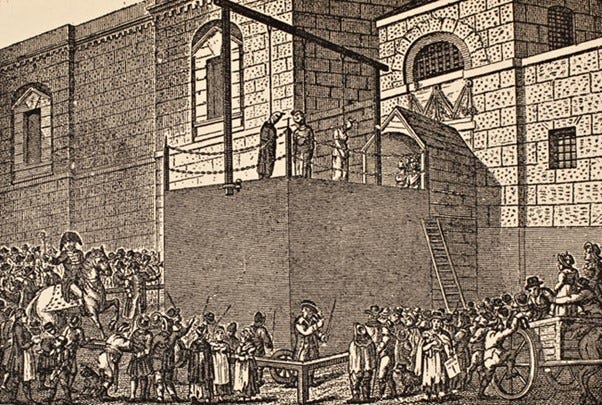
The hanging of Rainey Bethea in Kentucky in 1936 is regarded as the country’s last public execution. It was witnessed by thousands.
A live-streamed execution could be watched by billions.
No surprise. The current president of the United States is all about spectacle; his secretary of defense (war) is brimming with performative bravado. Punishment isn’t enough. The punishment must be cruel — and must be seen far and wide.
Asked today whether he had personally authorized or approved the live-streaming of Hasan’s execution, Trump responded, “Did I approve? Absolutely.”
What will be the likely effect on those who will see this? Will they be revolted? Excited? Will the live-streaming of the execution by firing squad deter people from committing mass murder — or will it encourage them? Or just degrade our sense of being human?
What about its effect on those who are enemies of the U.S.? As Ned Price, a former deputy to the U.S. representative to the United Nations, posted on X: “You can take it from those of us who’ve spent years working on terrorism: the surest way to spawn more radicalized zealots is to glorify violence, embrace a cult of death, and create a martyr for the cause.
Besides, haven’t we witnessed enough senseless and degrading cruelty in the pursuit of the execution of Christa Pike in Tennessee?
Public executions have largely disappeared around the world because they’re so barbaric. Amnesty International recorded 17 in 2025, including 11 in Iran and six in Taliban-run Afghanistan.
Historian Esther Cohen writes that during the later Middle Ages, governments often displayed their power in visual, theatrical forms: solemn royal or urban processions, festivals, and, most commonly, public executions of criminals. That was because other means of communication available to governments with their subjects were extremely limited — printing didn’t as yet exist, and preaching was the church’s prerogative.
Medieval public executions were intricate rituals displaying atonement, punishment and, most of all, the authority of the government to administer justice. They also inflicted considerable pain and suffering upon the condemned, so much so that one historian has termed them “spectacles of suffering.” The spectacles were meant to be visual representations of authority — displaying the full power of the law to all observers.
Making the criminal suffer achieved the dual purpose of cleansing his soul and deterring other potential criminals. Status was expressed by symbolic dress, worn at the procession preceding the execution, or by the form of inflicting death. Noblemen wore their livery of rank and office, while common criminals were often stripped to their shirts. People of rank were very rarely hung, for hanging was a shameful death; more often, people of nobility were beheaded, preferably with a sword.
Rulers took care to stage their public executions in a spectacular manner. The spectacle itself was its essence. “The Ritual of Public Executions,” from the 16th century, stated that the culprit was ‘to be dragged as a murderer, beheaded as a traitor, quartered for several other crimes, and his body hung on the gibbet as a thief and brigand.”
Trump and Hegseth are intent on extending such barbarism into the 21st century. Not only that, but they want to livestream the degrading spectacle, bringing it fully into the digital age. In this and countless other ways, they continue to degrade and demean America.
As income and wealth concentrate at the top, everyone else is finding themselves struggling. More than 60 percent of Americans are living paycheck to paycheck, which means they’re only one medical emergency or lost job away from poverty.
So what does the oligarchy — the billionaires, Wall Street mavens, and tech bros — do? They keep us separated and afraid of one another. They want us to blame the “other” for our problems.
Their greatest fear is we’ll discover our commonality and join together, and get to work busting up monopolies, raising taxes on the super-wealthy, and strengthening labor unions, cooperatives, and employee-owned businesses.
I explore this, this coming week in my Wealth and Poverty course. Please join me. Week 4 is available here on this Substack, Monday.
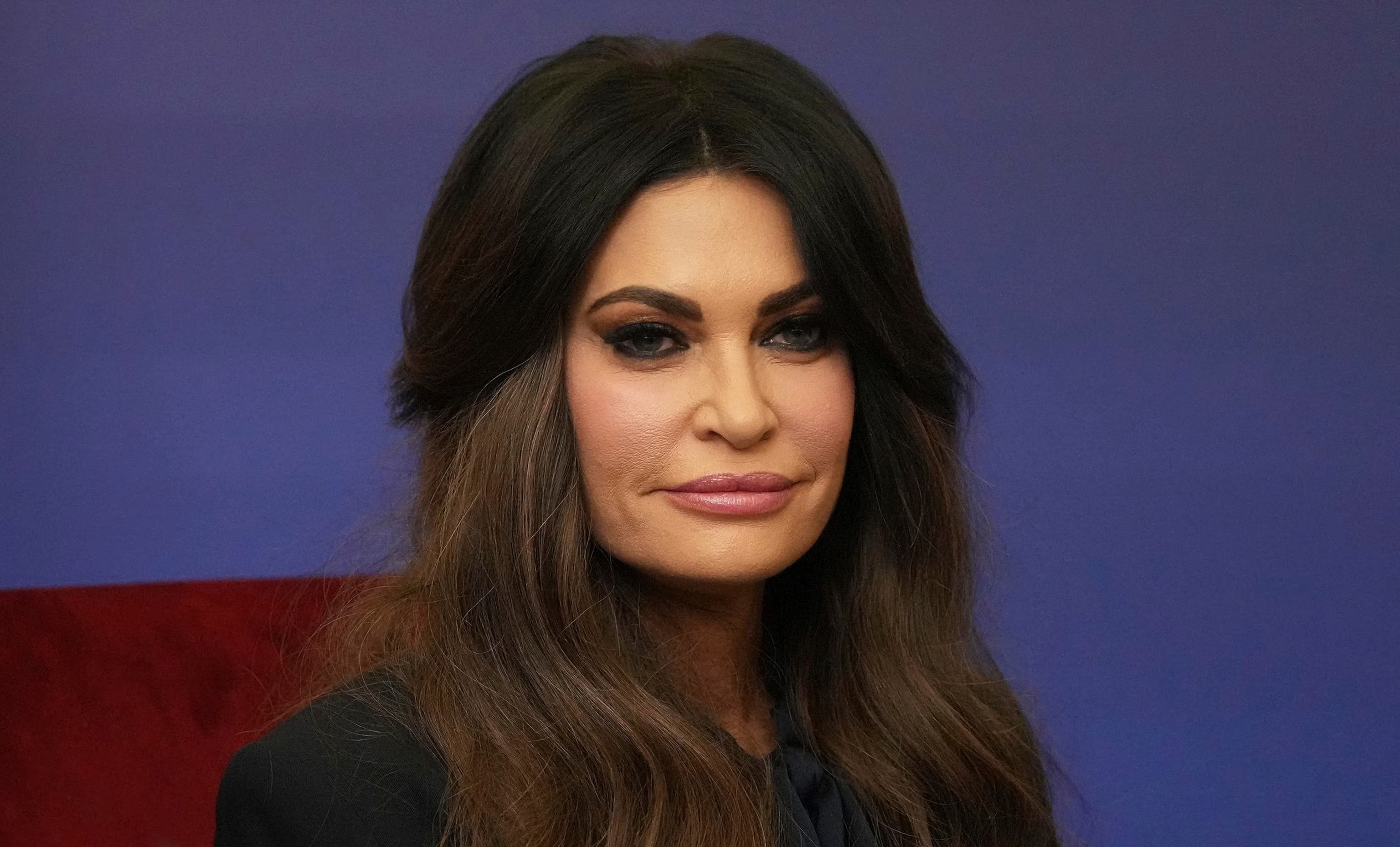
Here’s today’s trivia question (which may turn out to be not at trivial at all when all the facts emerge): Who solicited money from a presidential donor in return for access to the head of the IRS over the donor’s taxes, was a Fox News host, was engaged to the son of the U.S. president, was the former wife of someone who wants to be the next U.S. president, who raised money for and spoke at a rally that led to an attack on the U.S. Capitol, and now is a U.S. ambassador?
If you guessed Kimberly Guilfoyle, you’d be correct on all counts.
Rarely has a person been so enmeshed in the workings (or one might say, dysfunctions) of our current political-economic-media-influence system as Guilfoyle.
From 2001 to 2005, Guilfoyle was married to Gavin Newsom, now governor of California. In 2018, she began dating Donald Trump Jr., became engaged to him in 2020, and emerged as one of his father’s most outspoken defenders and a MAGA icon.
After Trump’s 2020 defeat, Guilfoyle sought to turn her status into a profitable business ventures including lines of hair care and fragrance products and a medspa. She also launched a political consulting firm and sought work in public relations.
In 2022, she launched what she termed an upscale vodka and champagne brand, American Dream, organizing a dinner for Mar-a-Lago guests that participants realized halfway through was an investment pitch.
According to a report in yesterday’s Wall Street Journal by Dana Mattioli, Drew Hinshaw, Rebecca Ballhaus, and Joe Parkinson, Trump grew frustrated with Guilfoyle for soliciting investments from Mar-a-Lago members for her companies, and complained that Guilfoyle was supposed to be raising money for him but instead was at his club raising money for herself.
The Journal reports that after Trump won the 2024 election, Eric Deters — a Trump donor and former co-owner of Snappy Tomato Pizza, a regional restaurant chain, who had mounted unsuccessful runs for Congress and governor — began soliciting Guilfoyle’s help on several matters, including gaining access to incoming Internal Revenue Service Commissioner Billy Long, to discuss an IRS probe into Deters’s tax deductions.
Guilfoyle offered to use her sway as Donald Jr.’s former fiancée. Deters promised to pay her as much as $1 million if she were successful.
Her engagement to Trump Jr. ended in December 2024. On December 10, 2024, Trump nominated Guilfoyle to be the U.S. ambassador to Greece.
After Billy Long was confirmed IRS commissioner, Guilfoyle sent him a congratulatory note, attaching a letter Deters had written outlining his tax dispute: “Don Jr. and I are very close with Eric Deters and his wife and I know he sent you a letter,” she wrote. “I am hoping I know how busy you are that you could give some time and attention to it.”
She assured Deters that “I wrote him a very nice message. Told him how important it was that you’re close to me and to don.”
The Journal reports that as her confirmation hearing approached, Guilfoyle complained to friends that she was broke.
She reached out to Deters with an urgent request: She needed $100,000 that she said she owed American Express — and needed Deters to give it to her in a way that wouldn’t leave a paper trail. “It won’t show up anywhere if you wire money to American Express,” she wrote on Signal, according to messages reviewed by the Journal.
“Honey please I need you to get this done for me today,” she texted Deters, adding a prayer hands emoji and a PDF with bill payment instructions from American Express. “You could just send it here,” she wrote on July 3, 2025, just days before her July 9 confirmation hearing.
Deters ultimately did not make the payment, But the set of transactions illuminates the casual pay-to-play world in which Trump, his family, appointees, and donors all operate.
The Senate confirmed Guilfoyle as ambassador to Greece on September 18, 2025.
Billy Long is now the U.S. ambassador to Iceland.
The top two Democrats on the House Foreign Affairs and Senate Foreign Relations committees have now called for an investigation into Guilfoyle.
Congressional Democrats are already looking into claims reported last month by the Journal that Guilfoyle told guests at a reception that the U.S. could undermine the Greek government if it chose to, that she promoted the business interests of one particular Greek construction and energy company, and allowed its lobbyist into private diplomatic meetings.
In Trump world, being close to power creates a special economy of getting and giving. The arenas include Fox News, Mar-a-Lago, the White House, Capitol Hill, and extend even to our foreign embassies. All relationships within these arenas — personal, romantic, political, diplomatic — are transactional.
This is the most corrupt era of American history since the Gilded Age. Trump is granting favors to today’s robber barons (Musk, Bezos, Zuckerberg, Ellison, et al.) in return for which they’re buying up media and silencing criticism of Trump. It’s a vicious cycle that threatens the core of our democracy. Please watch and share:
First, toss your salad. So far in 2026, there’ve been nearly 30,000 suspected cases of cyclospora — the explosive diarrhea parasite — with two fatalities. It’s been linked to produce from Taylor Farms, which supplies grocery stores and restaurants across the country, often under alternative brand names.
Next, throw out jalapeños, dips, and eggs because of salmonella recalls.
Trump claims grocery prices are coming down. I guess one way to bring them down is to leave us with nothing safe to buy.
All these recalls and illnesses aren’t a coincidence. They’re the result of incompetence and corruption within the Trump regime — and unchecked corporate power.
They dissolved a USDA advisory committee that existed to help prevent outbreaks like the ones we’re suffering. The USDA even CUTseveral cyclospora research projects — after the outbreak had already spread.
The Trump team was too stupid to realize that cutting food safety programs and firing thousands of public servants would have consequences.
Then there’s the possible corruption.
Rather than protect the public from cyclospora, Trump met with Taylor Farms executives at the White House as they sought to delay the FDA’s announcement linking their lettuce to the outbreak. Since then, the FDA sent mixed messages on its initial findings even as cyclospora cases continued to rise. Why?
Perhaps because Taylor Farms’ parent company has donated more than $2 million to Republican PACs this election cycle, with nearly half of that going to Trump’s MAGA Inc.
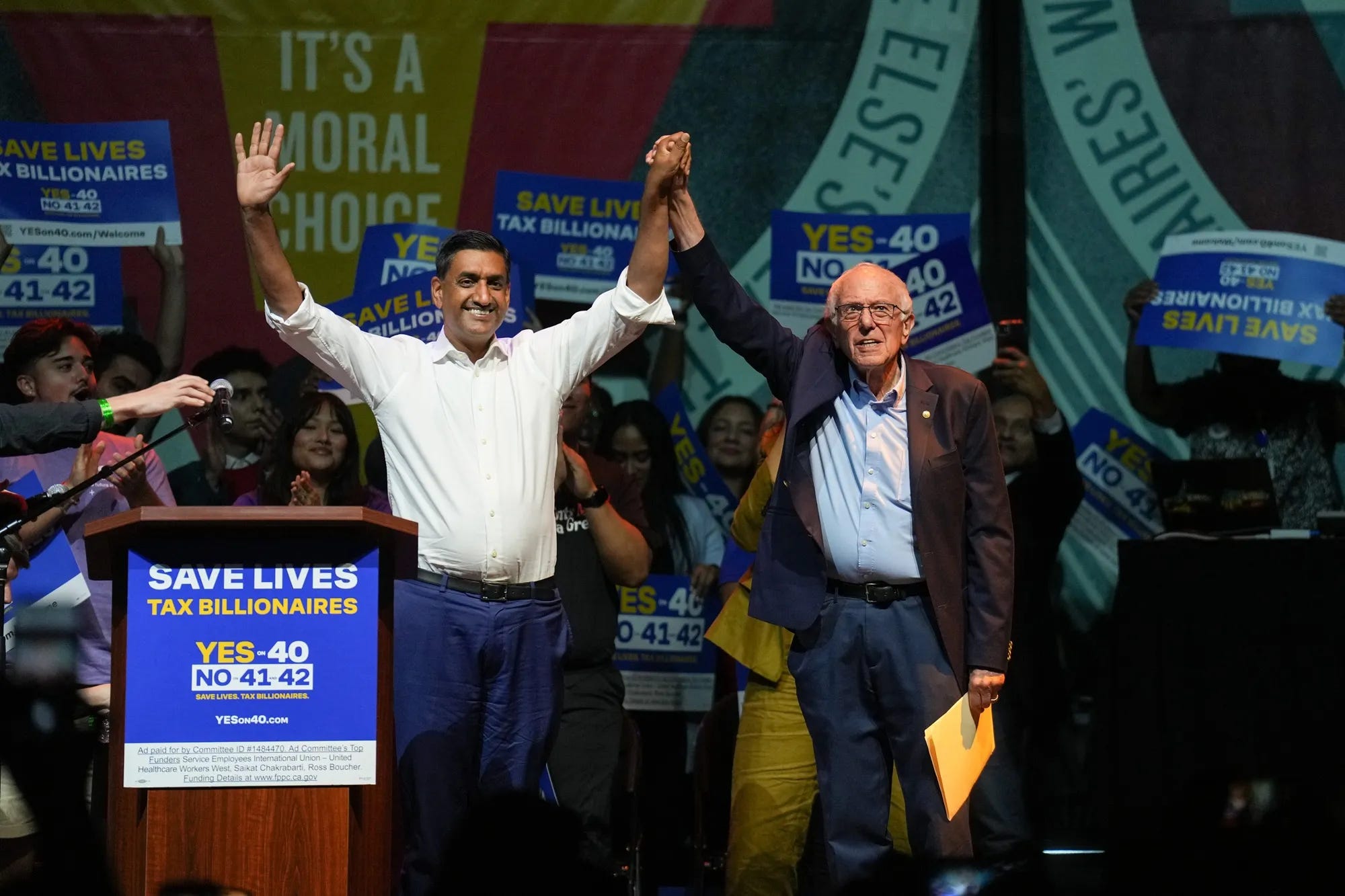
Ro Khanna and Bernie at last Saturday’s Pro-Proposition 40 rally
Friends,
After living in the Golden State for over two decades, I understand the old saw that America is built on a tilt, and everything good or bad slides down from California. (Mark Twain said everything loose slides toCalifornia.)
Among the good is California voters’ support for what could be America’s (indeed, the world’s) first tax on billionaires — which will appear as Proposition 40 on California’s upcoming ballot. (Note to Californians: Propositions 41 and 42 are poison pills designed to negate Proposition 40.)
A majority of Californians are in favor of Proposition 40 (65 percent of the state’s Democrats back it).
On the bad side are the hundreds of millions of dollars spent by California’s billionaires against the proposal (including $187 million from just one of them, Google co-founder Sergey Brin) — along with the cowardice of most of the state’s political class in either saying nothing about the billionaire tax proposal or falling in line behind Governor Gavin Newsom in opposing it.
I’ve studied the proposal, and, while not perfect, I judge it a significant step in the right direction. It would be a one-time 5 percent tax on the assets of California’s billionaires, designed to reimburse the state for the healthcare money lost to it when Trump’s Big Ugly Bill cut Medicaid to help pay for a gigantic tax cut that went mainly to the richest Americans and biggest corporations.
The billionaire tax is fair. It won’t cause billionaires to abandon California (only a handful have left and, as I said, it’s a one-time tax that pertains only to wealth as of January 1, 2026). It’s carefully crafted. It was largely the brainchild of two of my brightest colleagues here at Berkeley, economists Emmanuel Saez and Gabriel Zucman. It’s been endorsed by six Nobel laureates.
So, why are so many of California’s politicians — all of them Democrats, including Newsom — opposed? Could it have anything to do with their dependence on campaign funding from the super-wealthy? I’m not entirely sure, but that possibility has occurred to me — which in itself is a good reason to support the measure.
Meanwhile, the piles of money put into TV ads against the measure — coming from billionaires, of course — combined with the political opposition from Newsom on down is beginning to to take a toll. Although a majority of Californians are still in favor, the margin is slipping.
I should hasten to add that one California politician strongly supporting the proposed billionaire tax is Ro Khanna. He represents Silicon Valley in Congress, which makes his support of it both politically risky and an admirable profile in political courage.
Ro Khanna is interested in becoming the Democrats’ candidate for president in 2028 — as, of course, is Gavin Newsom. Progressives around America should take note.
Democrats have a good shot at taking control of the House and perhaps even the Senate, Trump’s approval ratings are among the lowest of any president on record, and the 80-year-old president is looking and acting ever more demented.
So how long will he last, and what’s likely to do him in?
I’ve posed that question to an array of president watchers, advisers, and historians, and I’ve grouped their responses below. (None talked about him dying in office, although that possibility can’t be entirely discounted.)
Please select the one that best matches your own sense of how Trump will go.

 Login
Login