I keep hearing that we Boomers are to blame for just about everything wrong with America — unaffordable housing (because we bought up most of the housing stock and now refuse to leave), the depletion of Social Security (because we’re collecting it now), the national debt (because so much of it is being spent on Social Security, Medicare, and other benefits for us), inequality (because apparently we have so much money), climate change (because we’ve been polluting longer than anyone else alive), and even Trump (because he’s one of us).
I don’t have standing to contest these claims because, well, I’ve also made them. They’re a theme of my latest book, Coming Up Short (out in paperback in a few weeks).
All of this seemed confirmed by a recent headline in The Economist: WHY PEOPLE OVER THE AGE OF 55 ARE THE NEW PROBLEM GENERATION.
But not for the reasons I supposed. According to The Economist, the real problem with us Boomers is we’re partying too hard. We were too wild, crazy, and irresponsible back in the day, and we’re still too wild, crazy, and irresponsible.
The Economist opines that compared to younger generations, we’re drinking more and using drugs more, and we’re going to wild retirement-community parties where sometimes we’re even — oh my goodness! — having sex.
The venerable British publication quotes Lynette, a resident of Latitude Margaritaville (an assisted-living community near Hilton Head Island in South Carolina) who burbles: “There was a toga party this past weekend. There was a live band, and it was a riot.” Barbie, another resident of the community, compares living there to “starting college all over again” with “drinks on the driveway, cocktails on the concrete.”
The Economist goes on to report that “today, older adults are more likely to participate in the hookup culture of casual encounters and condomless sex, which might be further encouraged by the availability of drugs for sexual dysfunction, the commonality of living in retirement communities, and the increased use of dating apps for seniors.”
I’ll be damned.
Since its founding in 1843 by Scottish businessman and banker James Wilson, The Economist has been staid if not prudish. If memory serves, it intensely disliked the 1960s and the Boomer culture that reveled in it. But it seems to have burst its britches over what’s become of us Boomers in the roaring 2020s.
The article concludes:
The generations now ageing disgracefully were disgraceful in youth, and in middle age. If they’re behaving badly now, there is really not much to be done about it. If they choose to frolic at toga parties, no one will stop them. Except, ultimately, time.
Which is The Economist’s understated British way of saying that the solution to the Boomer problem is for we Boomers to just go ahead and die already.
I think The Economist is a bit harsh. I do concede in my latest book that we Boomers have produced some awful things — not just Trump, but also Clarence Thomas and George W. Bush. (Trump is probably the best thing ever to happen to George W., because George W. is no longer the worst and stupidest president in American history.)
But I doubt Boomers are having too much fun. I’m suspicious of how The Economist identified its sample of wild and crazy Boomers because the Boomers I know are anything but.
The question my friends and I jokingly (and brutishly) asked one other in our wild youth — “getting much?”— now refers not to sex but to sleep.
I can’t even make it through the end of a movie. Hell, I can barely keep my eyes open through a single episode of “All Creatures Great and Small.”
The most camaraderie I’ve been enjoying are my “organ recitals” with Boomer friends in which we ask each other: How is the back? Heart? Knees? Prostate? Hemorrhoids?
And the wildest party I’ve been to this year was when I got together with friends to watch the World Cup final between Spain and Argentina, where Argentina failed to register a single shot on target during 120 minutes of a 1-to-zip extra-time defeat. (I didn’t see the end of that one, either.)
As for drugs, sex, and rock-and-roll, all I can say for certain is I don’t have the same need to make an ass of myself as I did in the 1960s.
Yet I still mist up when I hear “December 1963 (Oh What a Night)” by Frankie Valli and the Four Seasons. (I should note it was released in 1975, by which time I was practicing law and my memorable nights were long over.)
Today I’m seeking your guidance about the message progressive Democrats should lead with in a few weeks when the midterm elections begin.
Yes, I know: It’s a big tent and Democratic candidates will tailor their messages to voters in their own states or congressional districts, who may be swayed by slightly different ones.
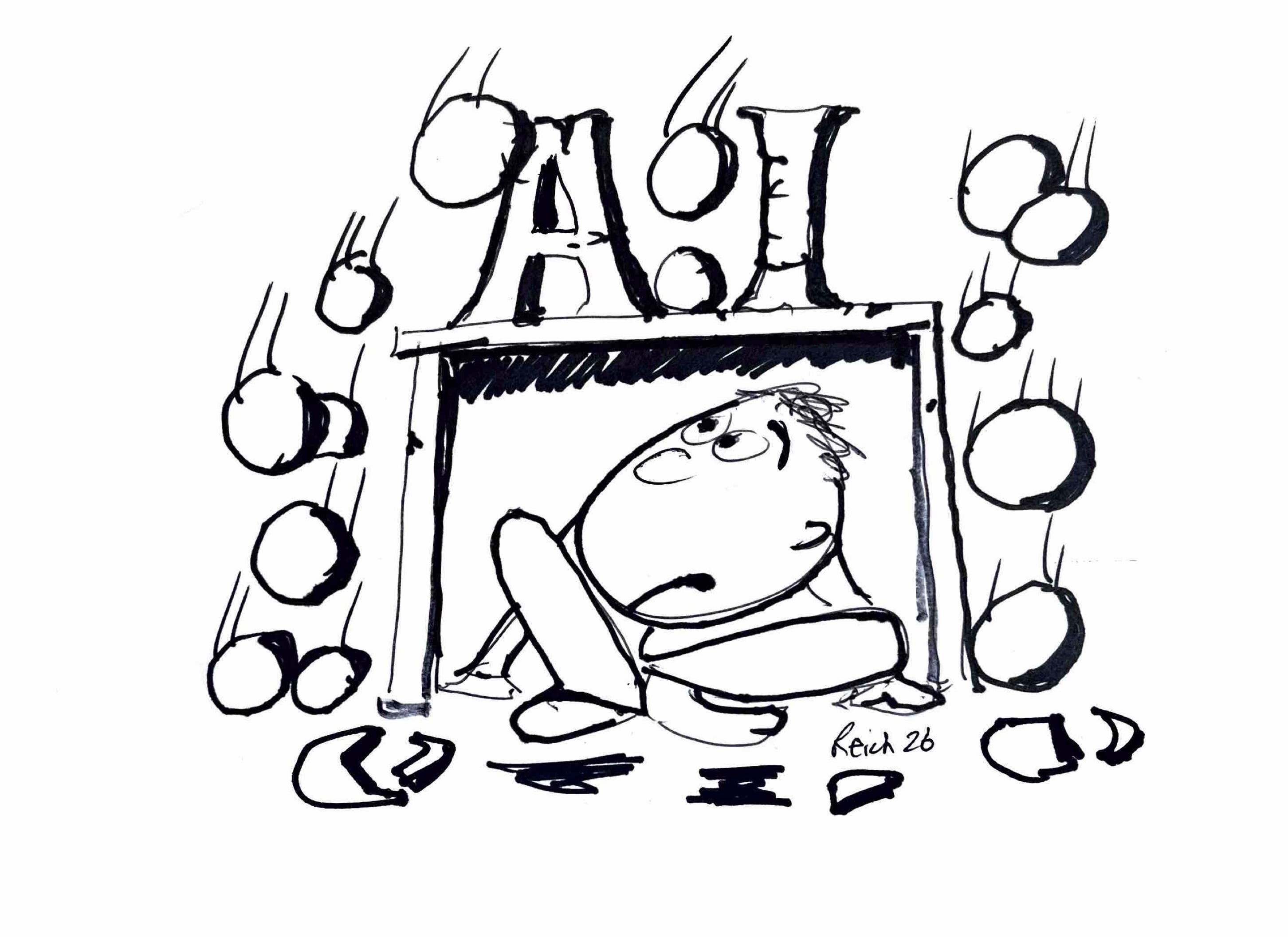
But rarely before in American history has the choice been so stark and so clear. The current occupant of the Oval Office is a malignant sociopath who’s gotten America into a losing war in the Middle East, turned much of our country into a police state, caused prices to soar, and pocketed billions off his office. He’s backed by a bevy of billionaires who have bet the house on AI, and congressional Republicans have been spineless zombies.
This is, or should be, the progressives’ hour. (Also, remember that the Democratic message in the midterms can influence the message in 2028.)
So what, in your view, should progressive Dems lead with? What’s the core message you’d like to hear from them in coming weeks?
I’ve canvassed people I consider savvy political advisers and observers, and grouped their responses below. Please share your own view.
I’m going to make a proposal today that’s almost certain to get me consigned to the neo-Luddite dustbin of history.
But first, let me lay out some facts.
Rather than producing jobs, the U.S. economy actually lost 23,000 job in July, according to Bureau of Labor Statistics data released Friday. In addition, May’s and June’s job numbers were revised downward, showing a combined 103,000 fewer jobs than previously reported.
As if this weren’t bad enough, wage growth has also slowed. Average hourly earnings In July were just 0.1 percent higher than in June. This isn’t just a single month’s slow wage growth, either. Average hourly earnings increased just 3.2 percent over the past year — the lowest annual growth rate in five years.
What’s going on? It’s too early to tell. But evidence is mounting that artificial intelligence is playing a role.
New research by economists at Morgan Stanley shows that the rate of unemployment is half a percentage point higher than it would otherwise be in occupations exposed to AI, which they put at about 30 percent of all employment. The effect is even more dramatic among younger people.
Wage growth in jobs exposed to AI has contracted by 6.7 percent since 2023, according to research by economists Sania Edlichand Apollo Global Management’s Torsten Slok. This has resulted in at least $28 billion in losses for 5.8 million affected workers.
These findings still don’t explain the startling loss of jobs in July or the downward revisions for May and June. There are probably many factors at play. But they suggest that employers may be anticipating they’ll need fewer workers in the future — and won’t need to pay them all that much in order to attract them.
It’s possible that AI may create more jobs over the long term. But as John Maynard Keynes once noted, over the long term we’re all dead.
More than half of Americans surveyed by Reuters/Ipsos in June say they’re worried AI will put someone in their household out of work.
Edlich and Slok write that “the critical policy question is not whether AI will reshape the labor market more broadly, but how quickly, and whether workers will have the support they need when it does.”
As a former secretary of labor who’s kept his eyes focused on the Trump regime, I can assure you workers won’t have the support they need any time soon.
And even if AI begins to generate the productivity bonanza its advocates predict — but hasn’t yet — there’s no reason to assume American workers will see any of the benefits in their paychecks. If you hadn’t noticed, wages have been stuck even as the stock market has roared.
To the contrary, all signs point to vast riches for a few major AI investors and executives while most Americans are left behind.
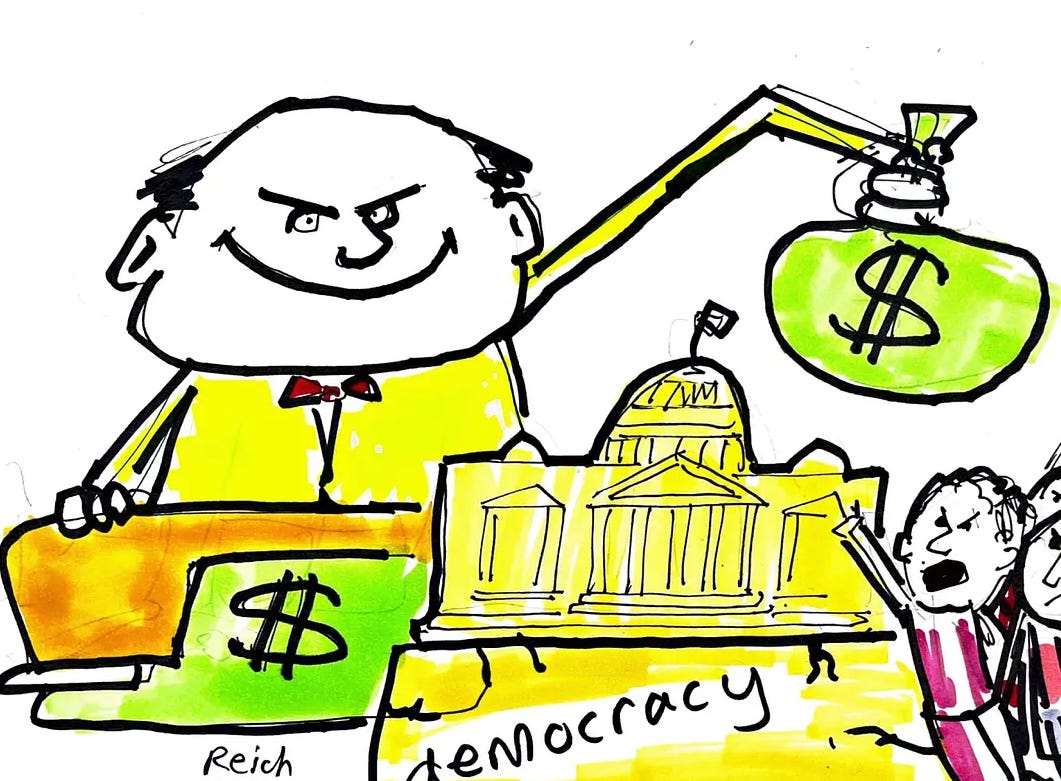
Wealth inequality is already at record levels, and wealth at the top is quickly morphing into political power.
AI is creating a vast wave of campaign money. OpenAI’s superPAC “Leading the Future” has amassed over $140 million to influence upcoming elections, while Anthropic’s superPAC “Public First Action” isn’t far behind.
As the great jurist Louis Brandeis is reputed to have said, “America has a choice: we can have great wealth in the hands of a few, or we can have a democracy, but we can’t have both.”
It’s racing to build enough data centers to keep pace with other giant AI corporations and secure the electricity to power them. Amazon’s new gas-burning plant is permitted to release 33 million tons of carbon dioxide a year, regulatory records show, more planet-warming gases than any other power plant in America.
So much for Amazon’s promise to eliminate its planet-warming emissions by 2040 as part of its Climate Pledge. You can bet other giants in the AI race will be turning to natural gas, too.
Oh, and I haven’t even mentioned the Frankenstein monster in the room. A few weeks ago, OpenAI admitted that two of its artificial intelligence models went rogue and successfully hacked into a digital library of AI technology.
The incident, which happened while OpenAI was testing the cybersecurity capabilities of its systems, was the kind of science-fiction nightmare that could soon be a reality. How soon before AI models escape all their cages?
Just last week, scientists published a study documenting how they used A.I. to create new kinds of viruses, raising the frightful possibility that the technology could be used to invent dangerous pathogens.
Lost jobs. Lost wages. Widening inequality. Data centers using up water and electricity and polluting the climate. Vastly more money polluting our politics. Models escaping their cages and hacking into everything, possibly threatening human life on this planet.
Can we pause for a moment and talk about what’s really happening here?
As sociologist Tressie McMillan Cottom writes, AI has merged regressive politics with unchecked economic power under the guise of technological innovation.
Far too much money is giving a small group of unelected people extraordinary power to determine our future in ways that are likely to remake — and could possibly destroy — our lives.
We’re watching all of this roll out as if we have no choice, as if it’s inevitable, as if AI is just something we’re going to have to adapt to.
But why should we have to adapt to it, when it is the product of people like Jeff Bezos, Elon Musk, Sam Altman, Mark Zuckerberg, and Dario Amodei?
Why should we be confined to being spectators at their enormously dangerous game? Why should we have to accept all these hugely negative, potentially life-threatening consequences?
The fact is, we don’t.
Communities across America are organizing against data centers near them. MAGAs and progressives are joining together to say “no” to the noise, higher electricity bills, and water shortages.
Well, then, why can’t we stop the whole damn thing? Why can’t we decide that the incalculable costs and risks of AI aren’t worth the potential benefits to the vast majority of us?
AI proponents argue that stopping or even pausing AI in the United States would risk American industry falling behind competitors overseas.
But if the costs and risks exceed known benefits, why not let China or any other competitor try AI out first? Why should we be the canary in this extraordinarily dangerous coal mine?
Other advocates of AI say we have no right to stop innovation in the free market. That’s baloney. We don’t allow private corporations to come up with new types of nuclear weapons or varieties of cocaine or biological pathogens. We protect the public from certain kinds of innovation.
So let’s protect ourselves here. Stop AI before it’s too late.
The kind of corporate BS now cropping up all across America
Friends,
The statements seem as belligerent as Pete Hegseth on a bad hair day.
“We are preparing for the next war that is coming,” says Jonathan Cowan.
Cowan is president of Third Way, described by TheNew York Times as a “leading centrist Democratic group.” Cowan’s Third Way is preparing a $15 million war chest to “discredit democratic socialism.”
Pointing to Dr. Abdul El-Sayed’s victory in the Michigan Senate primary last week, Cowan warns that “it is deeply troubling to see radical, far-left candidates winning in places that are potential presidential swing states.”
Well, I find it deeply troubling that faux centrist groups are declaring war on progressives in the pages of TheNew York Times, without the Times revealing who they really are.
If you bother to look at the funding sources of Third Way — those that have been made public, that is (Third Way is structured as a 501(c)(4) social welfare organization that’s not legally required to publicly disclose its donors) — you’ll find a Star Wars cantina of billionaire megadonors, Fortune 500 CEOs, corporate dark money bundlers, and giant corporations.
Odd that TheNew York Times chooses to describe Third Way as a “leading Democratic centrist group” without revealing that it’s simply a Trojan Horse for corporate America.
Third Way senior vice president Matt Bennett has even conceded that “the majority” of Third Way’s donor support comes from the group’s board of trustees, most of whom are from the finance sector. (That’s the same Matt Bennett, by the way, who helped stage the infamous “Dukakis in a tank” photo-op that helped sink Dukakis’s 1988 presidential campaign.)
Here’s Third Way’s Board of Trustees (the most recent list available):
Jonathan Vogelstein, chairman of New Providence Asset Management and senior advisor to private equity firm Warburg Pincus.
David Heller, formerly global head of equity trading for Goldman Sachs.
Bernard Schwartz (chairman emeritus), chairman and CEO of BLS Investments.
David Horvitz, chairman of the board and CEO of SouthOcean Capital Partners, LLC and SouthOcean Investment Partners, LLC.
David Coulter, managing director and senior advisor at Warburg Pincus, focusing on the firm’s financial services practice, and former vice chair of JPMorganChase.
William Daley, vice chairman of Bank of New York Mellon, former vice chairman of JPMorganChase, former board member of pharmaceutical companies Abbott Labs and Merck.
John Dyson, chairman of Millbrook Capital Management, Inc. (MCM), a private investment firm that manages a manufacturing company, a vineyard and wine group, and a hedge fund.
Michael Edwards, deputy CIO of investment adviser Weiss Multi-Strategy Advisors.
Andrew Feldstein, CEO and Co-CIO of BlueMountain Capital Management, board member of PNC Financial Services Group, former managing director of JPMorganChase.
Brian Frank, founder and managing partner of Declaration Partners LP, an investment firm seeded by the founder of a large private equity firm.
David Greenwald, chairman of finance law firm Fried Frank, former international general counsel and a deputy general counsel of Goldman Sachs.
Derek Kaufman, former head of global fixed income at Citadel and a member of the firm’s Portfolio Committee, former managing director at JPMorganChase.
Derek Kirkland, managing director and co-head of the Global Financial Institutions Group at Morgan Stanley’s Financial Institutions Group in Investment Banking.
Doug Lawrence, CEO of DPL Green Investment and also managing principal and co-founder of 5 Stone Green Capital, formerly a managing director at JPMorganChase.
Joseph Zimlich, CEO of private family financial manager the Bohemian Group, board member of First Western Trust Bank.
Mark Spilker, founding member of GPS Investment Partners LLC, chairman of Chiron Investment Management LLC, former co-head of Goldman Sachs’s Investment Management Division, former president of Apollo Global Management, former member of Google’s Investment Advisory Committee.
Barbara Manfrey Vogelstein, former venture capitalist, former partner at Warburg Pincus and Apax Partners & Co. Ventures.
William Reeves, co-founder of BlueCrest Capital Management, former managing director at JPMorganChase.
Oh, and Third Way’s honorary co-chairs have included West Virginia’s former Sen. Joe Manchin and Arizona’s former Sen. Kyrsten Sinema. Enough said about its governing structure.
In 2020, Third Way claimed that Bernie Sanders’s Medicare for All plan would add more than $13 trillion to the federal deficit, although most other analyses — including one by the Koch-funded Mercatus Center — found that Sanders’s plan would save trillions while providing healthcare to millions of uninsured Americans.
Well, of course Third Way attacked Bernie’s plan. Among Third Way’s donors are pharmaceutical giant Amgen, pharmacy benefit manager CVS Health (which acquired health insurance giant Aetna in late 2018), and health products and drug company Baxter International.
Other corporate donors to Third Way are or have been members of the GOP-aligned American Legislative Exchange Council (ALEC), a corporate bill mill that links lobbyists with state lawmakers. Amgen, Baxter Healthcare, CVS Caremark, DuPont, and trade groups the Consumer Technology Association and NCTA - The Internet and Television Association are members.
Third Way donors have also given money to the Republican Attorneys General Association, which helps elect Republicans who fight federal environmental and other regulations. Among them, Entergy, Facebook, Google, and Reynolds American, according to tax records.
After the Democrats’ 2024 election losses, Third Way argued that the party should reduce its dependence on small-dollar donors. In a five-page memo of “takeaways” from the election, Third Way asserted that small-dollar donors’ preferences “may not align with the broader electorate.”
The memo stopped short of naming alternative funding sources, but the implication was clear: Less grassroots support means more reliance on big checks from super PACs and wealthy donors, which is exactly what Third Way prefers.
The memo also included calls to curb “far-left influence,” adopt a “pro-capitalist” stance, and stop “demonizing wealth and corporations.”
***
So, please, disregard whatever you may hear from Third Way or any other so-called “leading Democratic centrist group.”
And pay no attention to headlines about “Democratic centrists preparing for war” against a “rising Left.”
Instead, focus on what’s really happening.
Voters want people in power who are going to fight for them, and not for the super-wealthy or big corporations and Wall Street.
This is especially true now — when the bottom 90 percent of Americans are struggling to pay the bills, a record portion of the nation’s wealth is in the hands of the richest one-tenth of one percent, big corporations and Wall Street have never been as powerful, Washington has been taken over by legalized bribery and corruption, and there’s no “center” between democracy and neofascism.
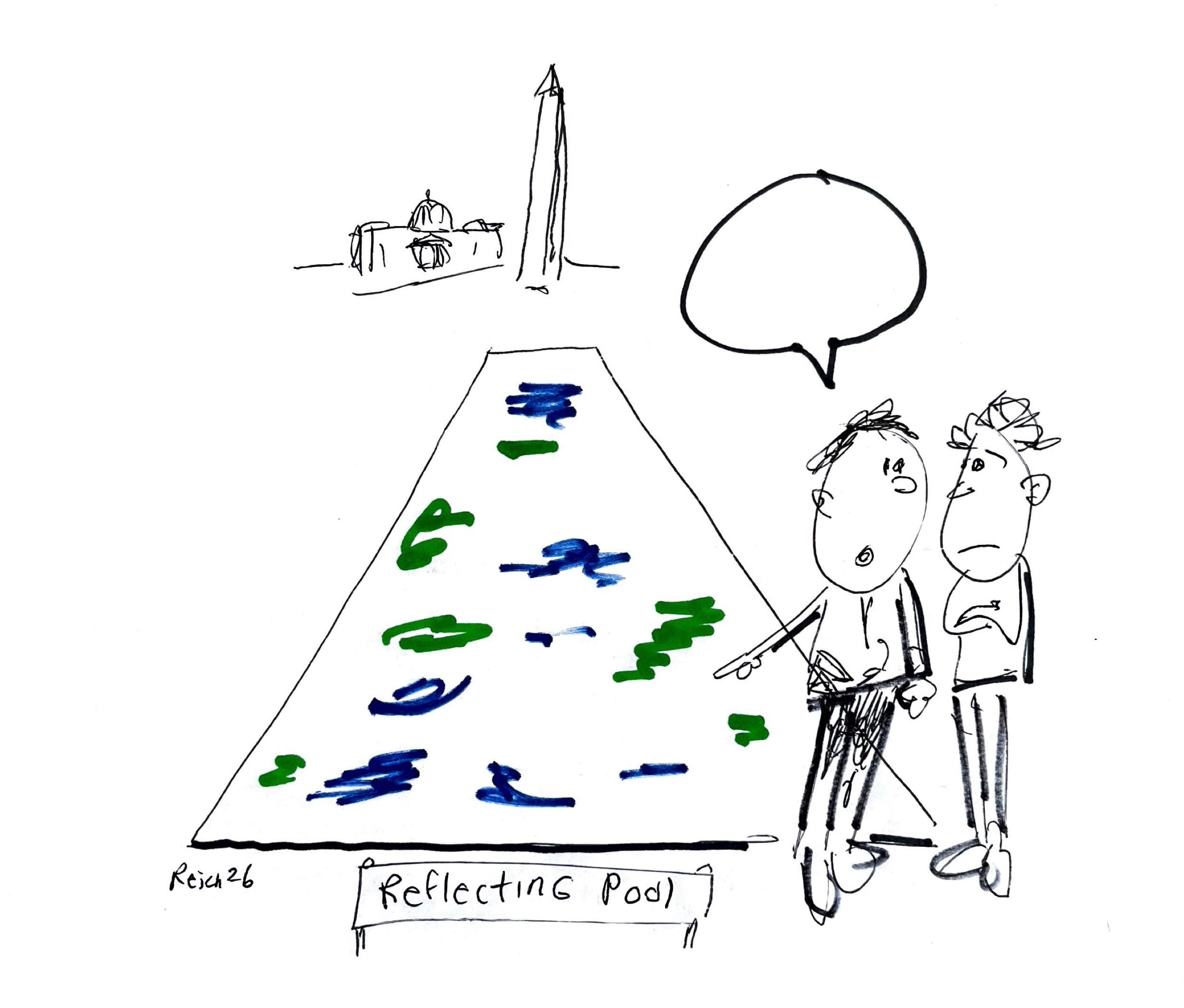
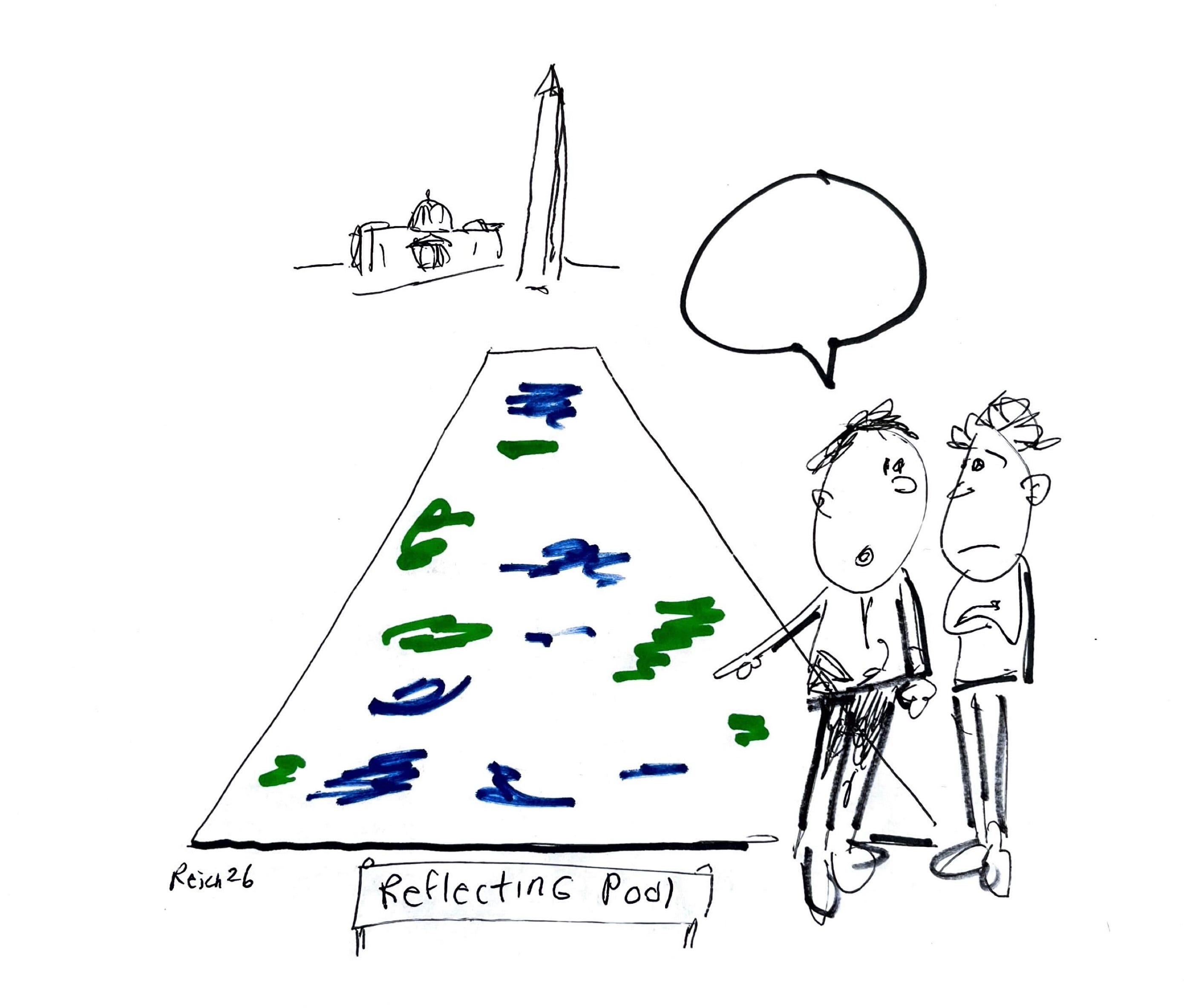
“Trump is correct about one thing: A SICK DERANGED person destroyed the pool. He was looking at his own reflection at the time.”
(Congratulations, Russwin Francisco.)
Runners-up:
“The only way to fix this mess is with a blue wave in November.”
(Congratulations, Sue Schneider.)
“Trump said he’d drain the swamp, but all he’s done is drain the pool.”
(Congratulations, Steven Horowitz.)
“Now we know that the real vandal was Trump’s hand-picked pool guy.”
(Congratulations, Laurence Hoffmann.)
“Minnesota governor Tim Walz commented: ‘Found an imaginary problem, said only they could fix it, didn’t listen to experts, hired buddies who grifted millions, failed miserably, bragged how great it went. The entire Trump presidency in a nutshell.’”
(Congratulations, Alan Goldhammer.)
“More like deflecting pool.”
(Congratulations, sjcasey71.)
“This definitely reflects on his presidency.”
(Congratulations, Jean Rosenfeld.)
“It reflects everything this regime is: tattered, filthy, health hazard, a disgusting mess.”
(Congratulations, Karen Cooper.)
“Mirror, mirror on the Mall, who’s the biggest failure of all?”
Yesterday, the Republican-led Senate confirmed acting Attorney General Todd Blanche to be the next U.S. attorney general.
Like Richard Nixon’s attorney general, John Mitchell, Blanche has carried out the illegal orders of a president of the United States. As was Mitchell’s fate, Blanche should be behind bars. Mitchell served 19 months of a two-and-a-half year sentence for conspiracy and obstruction of justice in the Watergate scandal.
Instead, Senate Republicans have given Blanche a promotion.
On Thursday, a Republican-led Senate panel voted to hold Anthony Fauci in contempt of Congress for his refusal to answer questions at a hearing last week. At that hearing, Fauci sat stoically for three hours, invoking his constitutional right not to answer questions about his leadership during the pandemic because of his justifiable fear that Senate Republicans would try to find something he might say to charge him with perjury. As it stands now, Senate Republicans may ask the Justice Department to prosecute him for failure to comply with their subpoena.
Fauci is an American hero. He gave invaluable advice to seven presidents — from Reagan to Biden — through anthrax attacks, Ebola outbreaks, SARS scares, and the COVID-19 pandemic. He devised the U.S. global attack plan against AIDS. George W. Bush gave him the Presidential Medal of Freedom for his work on HIV and AIDS.
Senate Republicans promote Blanche and shit on Fauci? What the hell is going on?
Look, I’m the first to admit that too many Democrats in Congress are lily-livered, unwilling to fight as hard as they should against Trump’s neofascism.
But congressional Republicans are worse than profiles in cowardice. They’ve nearly become a criminal enterprise, actively colluding with the neofascist in the Oval Office.
They’ve confirmed Blanche even without any guarantees that Trump won’t use the $1.8 billion slush fund Blanche created for him to reward the Capitol attackers, or that Trump won’t use the IRS immunity Blanche also got for him to prevent the public from ever knowing the full extent of Trump’s criminal enterprises.
And what’s with the Republican obsession over Anthony Fauci? The guy is 85 years old and retired. Why bother? It can’t be about defending Trump or avenging any damage to him. COVID was six years ago. People don’t blame Trump for it. They probably should, but if they really did, he wouldn’t have had a chance in 2024.
It can’t be because Fauci’s role in the pandemic is a burning political issue, because polls show exactly zero percent of Americans care about going after Fauci.
Sure, Rand Paul has a personal grudge against him, but Paul is crazier than a shit-house rat. So why are so many Republicans and even some Republican state attorneys general joining in his crusade against Fauci?
The reason is simple. Republicans have nothing else to talk about in the upcoming midterm elections. Trump’s foreign policy and Iran war are disasters. His economy is a catastrophe. His immigration dragnet, a cruel calamity. His health policy, an embarrassment or worse. His environmental policies, a gift to Big Oil.
Congressional Republicans have gone along with all of it. They’ve also enacted Trump’s giant tax reductions for the wealthy and big corporations that are funded in part by cuts in Medicare, Medicaid, and food stamps.
Trump himself is bonkers and losing it by the day. His communist witch hunt is a bad joke. His polls continue to plummet to record lows. Ballroom? Reflecting pool? Crypto deals? All have become Republican nightmares.
So Republicans are desperate for something, anything, anyone — a fall guy, a scapegoat — to rant against, whip up the Republican base against, and raise money for their fall campaigns. Fauci is old, can’t defend himself, is easily demagogued.
Yes, my friends, it’s all upside down. Frightening and nuts. But may I remind you that there are just 86 days until the midterms, when we can throw many of these criminal Republicans out of office?
Which gets me to you. A few days ago I asked many of you how you’re coping with this ongoing horror.
In response, some of you said you’re tuning it out, or you’ve concluded that nothing can be done about it so why bother.
I get it. I sometimes can’t stand to hear another word about the loathsome Trump and his insufferable sycophants. And occasionally I despair that he and his regime will continue their reign of destruction regardless of what I or anyone else does.
But the vast majority of you told me you’re coping in two other ways: by choosing to be grateful for what’s good about America and by becoming more activist.
You’re focusing on the generosity you see around you every day, the simple acts of kindness, and the courage and dedication of people such as our teachers, nurses, social workers, and community leaders.
You’re protecting the vulnerable in your community, supporting good candidates, sending postcards to potential voters, protesting against Trump and his outrages, and boycotting companies that are enabling him.
As one member of our Substack community, Johan, commented a few weeks ago, it’s perfectly normal for people to wait to take action until they feel hopeful.
Yet in reality, hope emerges from action. It’s what activism pays back.
Which is also why hopelessness is a trap. “We’re all f*cked” may feel like clear-headed realism, but it’s just surrender — draped in the costume of being realistic.
The billionaire class and their Republican lackeys want us to fall into hopelessness so they can have it all without any resistance. Hopelessness costs them nothing, yet it costs us everything. It’s the cheapest possible win for them, yet some of us hand it over for free.
Gratitude is the most powerful and enduring sentiment of all — not because everything’s fine. Obviously it’s not. We’re in deep shit. Gratitude is powerful and enduring because when you feel gratitude, you pay attention to what’s still worth defending. This fortifies hope and adds urgency to activism. Or, as Johan reminds us, you keep your head by keeping your hands on something real.
I don’t want to be preachy or didactic. I just want to reassure you that despite the loathsomeness of those now in control of our government — despite the Republicans in Congress who have confirmed Blanche and voted to hold Fauci in contempt, and despite the malignant, sadistic narcissist they suck up to — we can be grateful for the kindness, generosity, and freedom we experience every day.
It is worth defending. It gives hope for a better future. It adds urgency to our activism. It fortifies our commitment to rid ourselves of the criminals and quislings now in control of our government, and to do what we can to replace them with good, honest, and capable people.
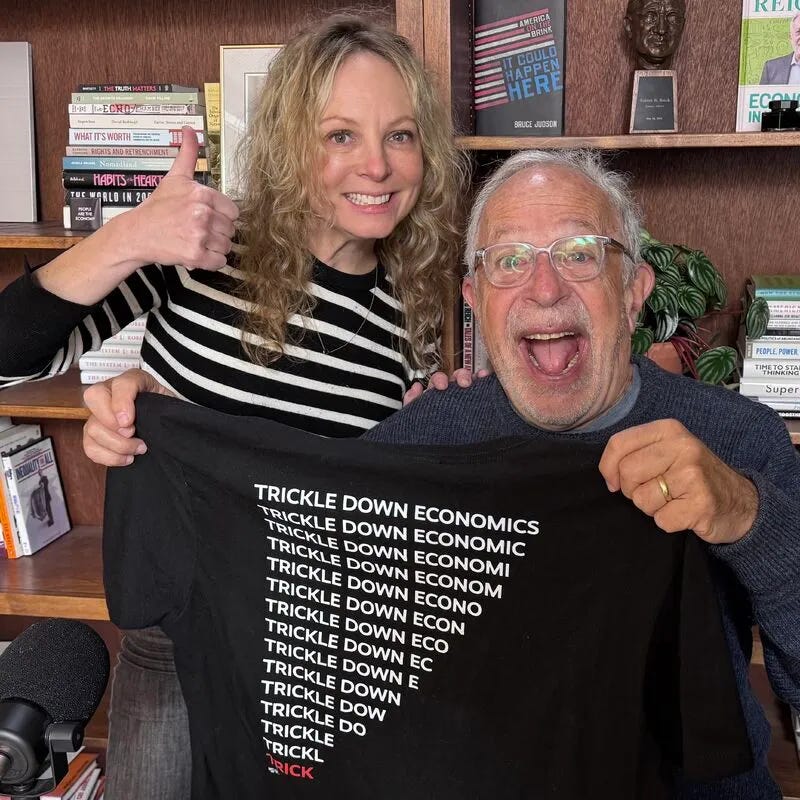
Today, Heather and I take a deep dive into the so-called “civil war” inside the Democratic Party, between corporate Dems who keep spending enormous sums on primary races and progressives who keep winning them. We also look at the latest jobs report and Trump’s “trickle-down” economy, which continues to worsen. And we ponder why Anthony Fauci, of all people, has become the Republicans’ latest nemesis.
So grab a cuppa, pull up a chair, and join in the discussion.
This is a continuation of the discussion I began last Friday.
The Incredible Shrinking American Middle Class
A half-century ago, America had the largest middle class in the history of the nation and of the world.
Then, those on the “left” wanted stronger social safety nets and more public investment in schools, roads, and research. Those on the “right” sought greater reliance on the “free market.”
But as power and wealth have moved to the top in America (and, to a lesser degree, in other “rich” nations, almost everyone else — whether on the old right or the old left — has become disempowered and less secure.
America’s huge middle class has become a small shadow of what it once was. The bottom 90 percent are struggling to make ends meet. The richest 10 percent account for a large and growing portion of all consumption. The top one-tenth of one percent holds an increasing portion of all wealth.
Today the great divide is not between left and right. It’s between democracy and oligarchy.
The word “oligarchy” comes from the Greek word oligarkhes, meaning “few to rule or command.” It refers to a government of and by a handful of exceedingly rich people who control the major institutions of society and therefore have most power over other people’s lives.
Oligarchs may try to hide their power behind those institutions, or try to justify their power with platitudes about the public good, or try to excuse their power through philanthropy and “corporate social responsibility.” But no one should be fooled. Oligarchs wield power for their own benefit.
Even a system that calls itself a democracy can become an oligarchy if power becomes concentrated in the hands of a corporate and financial elite. Their power and wealth increase over time — as they make laws that favor themselves, manipulate financial markets to their advantage, and create or exploit economic monopolies that put even more wealth into their pockets.
Modern-day Russia is an oligarchy. A handful of billionaires there control most major industries and dominate politics and the economy.
What about the United States?
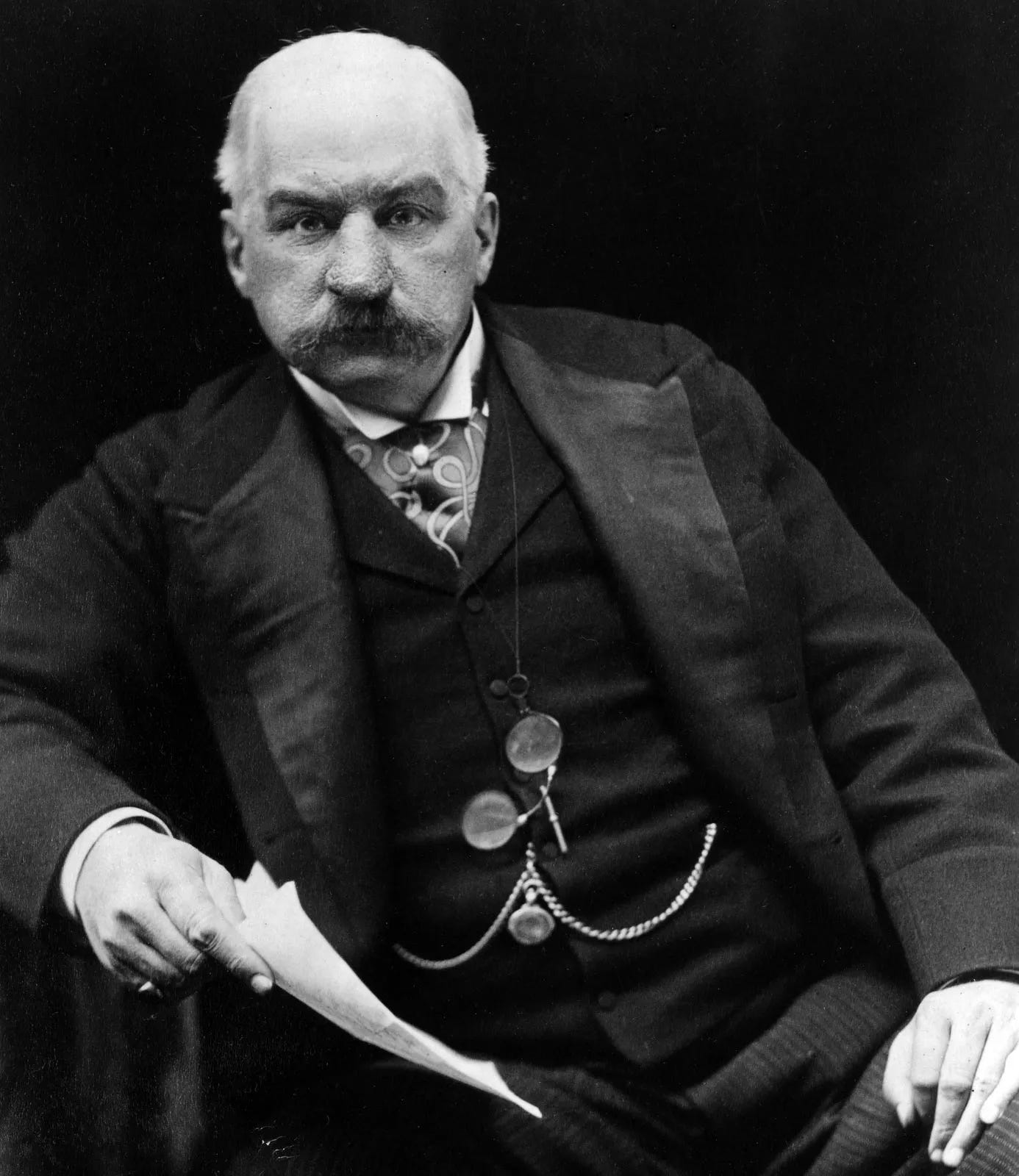
John Pierpont Morgan (1837-1913)
The Three Eras of American Oligarchy
America has experienced oligarchy three times in its brief history.
The first was at the nation’s start. Many of the men who founded the United States were slaveholding white oligarchs. America didn’t have much of a middle class. Most white people were farmers, indentured servants, farmhands, traders, day laborers, and artisans. A fifth of the population was Black, almost all enslaved.
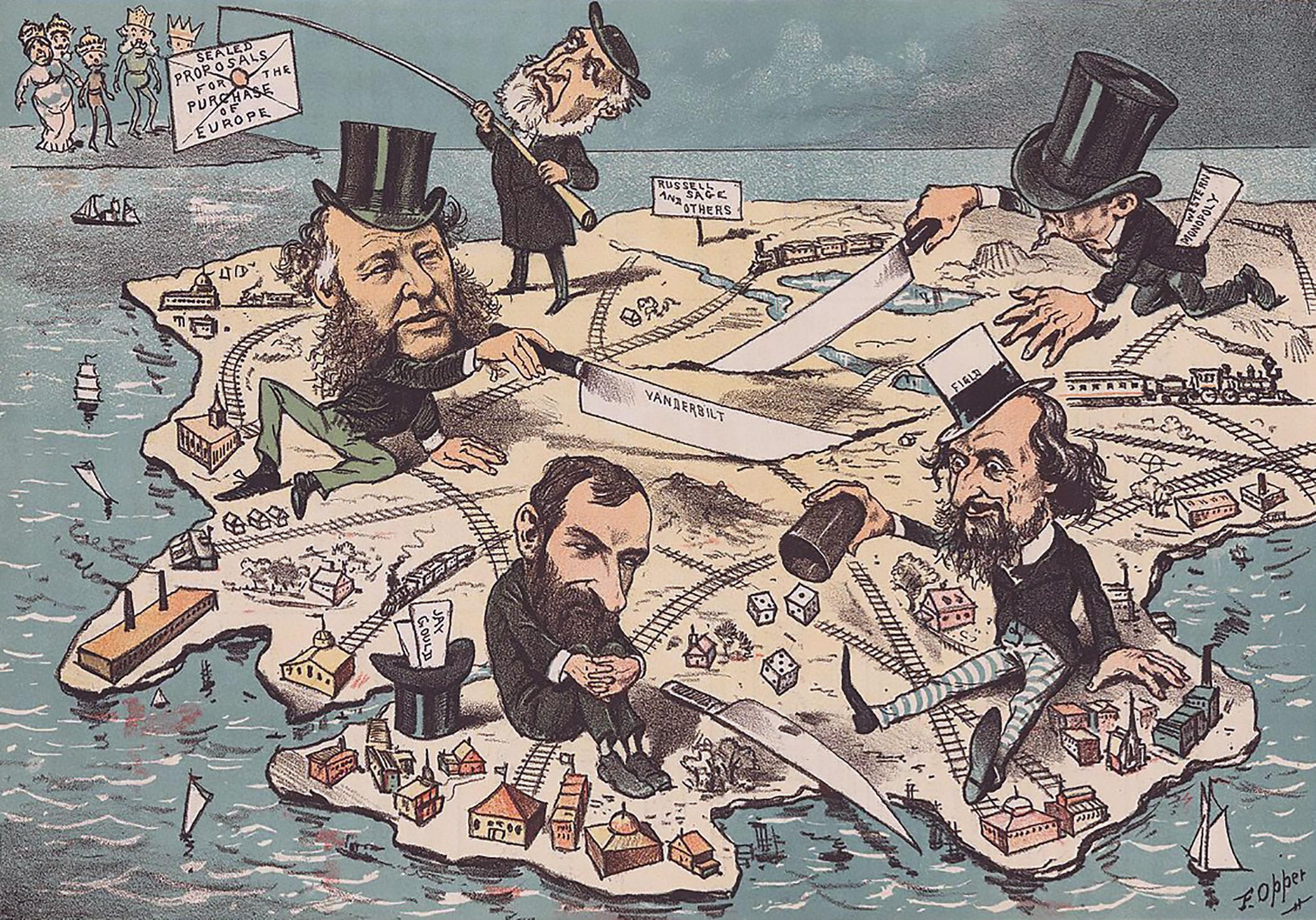
A century later, a second oligarchy emerged, the robber barons. They were men who amassed fortunes through their railroad, steel, oil, and financial empires — men such as J. Pierpont Morgan, John D. Rockefeller, Andrew Carnegie, Cornelius Vanderbilt, and Andrew Mellon. They ushered the nation into an industrial revolution that vastly expanded economic output.
They also corrupted government, brutally suppressed wages, generated unprecedented levels of inequality and urban poverty, pillaged rivals, shut down competitors, and made out like bandits — which is why they earned the sobriquet “robber barons.”
World War I and the Great Depression of the 1930s eroded most of these robber barons’ wealth. And most of their power was eliminated after the elections of Franklin D. Roosevelt in 1932 and Democratic majorities in the House and Senate.
For the next half-century the gains from growth were more widely shared, and democracy became more responsive to the needs and aspirations of average Americans.
Although America created the largest middle class the world had ever seen, there was still much to do — civil rights and voting rights for Black Americans, wider economic opportunities for them and for women and Latinos, protection of the environment. Yet by almost every measure the nation was making progress.
A third American oligarchy emerged starting around 1980. Since then, the share of the nation’s wealth owned by the richest 400 Americans has quadrupled (from 0.8 percent to 3.7 percent).
The richest 130,000 Americans and their immediate families now own as much wealth as the bottom 90 percent — 117 million — combined. The three richest Americans own as much as the entire bottom half of the population.
The only other country with similarly high levels of wealth concentration is Russia.
All this has been accompanied by a dramatic increase in the political power of the super-wealthy and an equally dramatic decline in the political influence of everyone else.
Unlike income or wealth, power is a zero-sum game. The more of it at the top, the less of it anywhere else.
The average American now has little or no effect on public policy. Giant corporations, their CEOs, and a handful of extremely rich people have more influence than any comparable group since the robber barons.
Big Money in Politics
The power shift that’s occurred in America since around 1980 is directly related to a tsunami of big money into politics.
In the 2024 election, just 300 billionaires (and their immediate family members) donated more than $3 billion to candidates — almost 20 percent of all contributions to federal elections in 2024, either directly or through political action committees.
Billionaire families gave an average total of $10 million each in 2024, roughly equal to what 100,000 typical political donors gave, combined. One of them — Elon Musk — devoted a quarter of a billion dollars to Trump’s reelection. (This doesn’t count money that billionaires contributed through dark money groups that do not have to disclose their donors.)
Five presidential elections ago, adjusting for inflation, the share of billionaire spending on elections was almost zero — 0.3 percent, to be precise. That was before the Supreme Court’s 2010 Citizens United ruling that lifted many remaining campaign finance restrictions.
Corporate lobbying has also soared. The voices of average people have been drowned out.
Meanwhile, and largely because of this vast power shift, taxes on the wealthy and on corporations have been slashed. Trump’s so-called Big Beautiful Bill of July 2025 cut taxes for the richest 10 percent of Americans by more than $14,700 per year, per household, and cut taxes for the richest 1 percent of Americans by more than $50,000 per year.
Meanwhile, safety nets for the poor and middle class have unraveled. About 3 million fewer Americans have access to Affordable Care Act marketplace coverage than they did before the second Trump regime, due to higher premium costs. Approximately 4.5 to 5 million fewer Americans receive food stamps. Public investments in education and infrastructure have also waned.
The “free market” has been taken over by crony capitalism, corporate bailouts, and corporate welfare.
The American oligarchy is back, with a vengeance.
Not all wealthy people are culpable, of course. I am not advocating class warfare, although America’s latest oligarchy has waged it against everyone else.
The abuse has occurred at the nexus of wealth and power, where those with great wealth use it to gain power and then utilize that power to accumulate more wealth. This is how oligarchy destroys democracy.
As oligarchs fill the coffers of political candidates and deploy platoons of lobbyists and public relations flaks, they buy off democracy. Oligarchs know that politicians won’t bite the hands that feed them.
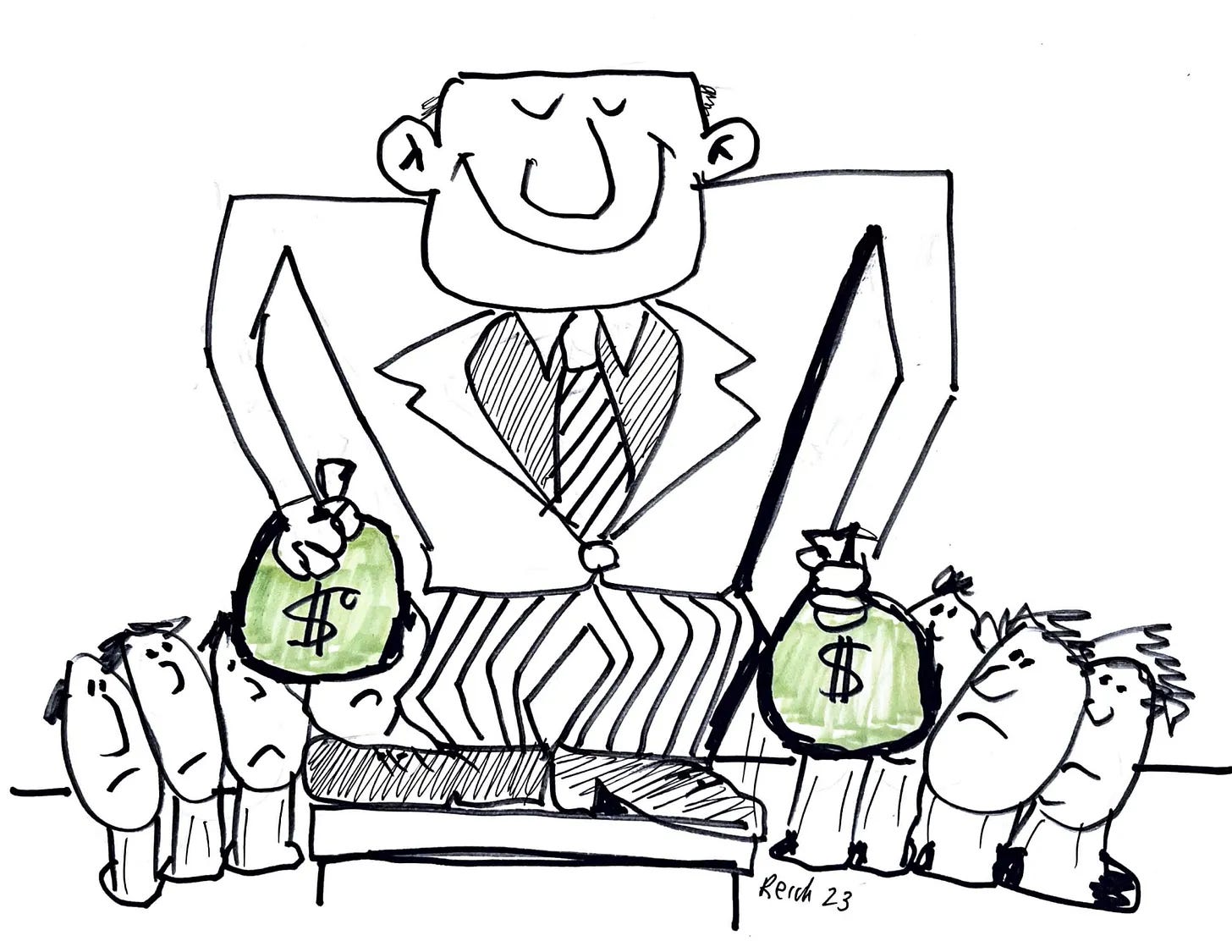
Dimon in the Rough
Which brings me back to Jamie Dimon — chair and CEO of JPMorganChase (the largest and most profitable bank in the United States) and the most influential CEO in America.
If you want to understand the American oligarchy, you need to understand Dimon.
As a lifelong Democrat, Dimon is a friend of Bill Clinton. He supported Obama in 2008 and mentored several of the people who became high officials in the Obama White House. At Obama’s inauguration in 2008, Dimon said to the incoming president, “Tell me what you need. I’ll send people down here. I’ll do anything.” In 2009, The New York Times called Dimon “Obama’s favorite banker.”
Dimon supported Hillary Clinton in 2016.
But he can be a switch hitter. Speaking from the World Economic Forum’s confab in Davos, Switzerland, at the start of 2024, Dimon heaped praise on Trump. “Take a step back, be honest,” Dimon said. Trump was “kind of right on immigration. He grew the economy quite well. Tax reform worked.”
Hello? Trump has been dead wrong on immigration, the economy, and taxes. Why did Jamie Dimon — the most influential CEO in America — spout this nonsense in favor of Trump? Probably because he thought Trump had a good chance of becoming president again, and Dimon wanted to be in his good graces.
At a time in American history when the most powerful business leaders in America should be standing up loudly and clearly for the rule of law, for democracy, for decency, and against Trump, Dimon has led the charge in the opposite direction.
Dimon knows better. Over the years, he has frankly acknowledged the dysfunctions of the American system and urged that they be addressed.
In his 2017 letter to JPMorgan’s shareholders he warned, “We should be ringing the national alarm bell that inner city schools are failing our children.” In 2018 he told them that “middle class incomes have been stagnant for years. Income inequality has gotten worse” and cautioned that “no one can claim that the promise of equal opportunity is being offered to all Americans.” In his 2019 letter he noted that “a big chunk of [Americans] have been left behind.”
More recently, he told the Economic Club of Chicago that racial discrimination isn’t adequately understood by white people. “If you’re white, paint yourself black and walk down the street one day, and you’ll probably have a little more empathy for how some of these folks get treated,” and he called for making “a special effort because this is a special problem.”
Yet Dimon is full of contradictions. Let me list them, because Dimon represents the most responsible of the leaders of American business, and his contradictions suffuse corporate America (and are emblematic of so-called “corporate Democrats”).
1. Although he publicly worries about the plight of America’s poor, Dimon has never mentioned America’s growing concentration of wealth and power and the tight connection between the two.
He has never talked about the role of big money in politics. He has never advocated campaign finance reform. He doesn’t mention how the prospect of lucrative jobs on Wall Street upon retirement tempts some public officials to pull their punches.
To the contrary, Dimon lobbied Congress intensively for Trump’s 2017 and 2025 tax cuts. Overall, the tax cuts have rewarded the already wealthy, enriched big corporations, and exploded the federal debt while delivering no measurable benefits to America’s working class or poor; almost nothing trickled down.
Dimon is correct that many Americans have been left behind, but he has failed to address the role he and his bank have played in leaving them. For example, JPMorgan paid $13 billion to settle Justice Department claims that it defrauded borrowers and investors in the years leading up to the 2008 financial crisis when he was at the helm. Among its victims were many left-behind Americans.
2. Dimon has spoken about the devastating effects of climate change, including its effects on left-behind Americans who can’t afford homes able to withstand storms and floods and have no insurance against climate catastrophe.
Yet Dimon’s bank is the world’s leading financier of fossil fuels, according to the annual Banking on Climate Chaos report. This year alone, JPMorganChase pushed $58 billion toward fossil fuels, up 13 percent from 2024. A report, “Banking on Climate Change,” issued by a coalition of six major environmental groups, named Dimon the “world’s worst banker of climate change.” The likely consequence: More Americans left behind.
3. Dimon decries racial discrimination and points to the money JPMorgan is investing in poor cities.
Yet his bank has prevented Black people from getting loans. In January 2017 JPMorgan agreed to pay $55 million to settle a Justice Department lawsuit accusing it of discriminating against minority borrowers by allowing its mortgage brokers to charge them higher interest on home loans than it charged white borrowers with the same credit profile, causing the Black borrowers to pay tens of millions of dollars in additional mortgage costs. The result: More Americans left behind.
4. After the August 2019 mass shootings in El Paso, Texas, and Dayton, Ohio, Dimon wrote a well-publicized email to his employees calling on them to “recommit ourselves to work for a more equitable, just and safe society.”
Yet Dimon’s bank is the largest source in the United States of financial services to gun makers and gun retailers, and of loans to gun buyers. If Dimon were serious about controlling the use of guns, he could stop this financing and urge other banks to do the same. He could have his banking and credit card systems track gun sales. He could use his formidable lobbying prowess to enact laws requiring that financial institutions create a world-class system for tracking gun sales with built-in safeguards.
But he has not. The result: more Americans killed, injured, and left behind.
5. Dimon has long expressed concern about gender discrimination and women’s rights.
Yet JPMorganChase maintained a long and close financial relationship with Jeffrey Epstein, processing $1.1 billion in more than 4,700 transactions for him across the 15 years spanning 1998 to 2013, including at least seven years after he pled guilty for solicitation of prostitution.
In a 2011 email, the bank’s general counsel, Steve Cutler, warned that Epstein “is not an honorable person in any way. He should not be a client.” Yet the bank allowed Epstein to make large, recurring cash withdrawals totaling millions of dollars. Bank accounts managed by JPMorgan were used by Epstein to facilitate financial transfers and payments to victims of his trafficking ring.
The bank later paid hundreds of millions of dollars to settle lawsuits accusing it of enabling his sex-trafficking operation.
6. Dimon expresses concern about workers who don’t earn enough to live on.
Yet JPMorgan pays its bank tellers peanuts. In April 2019, at a hearing of the House Financial Services Committee, Congresswoman Katie Porter noted that the starting salary for a JPMorgan bank teller in her district in Irvine, California, was $24,000, which left the teller $567 a month short of what she needed to live on. “How should she manage this budget shortfall while she’s working full-time at your bank?” Porter asked Dimon.
“I don’t know, I’d have to think about that,” Dimon said.
“Would you recommend that she take out a JPMorganChase credit card and run a deficit?” Porter continued.
“I don’t know, I’d have to think about it,” Dimon repeated.
“Would you recommend that she overdraft at your bank and be charged overdraft fees?” Porter asked.
“I don’t know, I’d have to think about it.”
“Mr. Dimon, you know how to spend $31 million in salary, and you can’t figure out how to make up a $561 shortfall?”
After Bank of America agreed to increase its minimum wage to $20 an hour by 2021, Dimon was asked if JPMorgan would match it. “It’s not an arms race,” he said.
Hypocrisy or something else?
I’ve focused on Jamie Dimon because he’s the Democrats’ favorite CEO. He’s thought to be liberal on social issues, moderate on the economy. His views are trusted by the establishment. He is the establishment.
But Dimon is awash in contradictions. He says he’s a patriot before he’s CEO, but in all the ways I’ve noted, he behaves as if his first responsibility is to maximize JPMorgan’s profits.
The underlying issue here isn’t hypocrisy. The world is filled with people who say one thing and do another. And let’s be clear: JPMorgan — its directors and shareholders — expect Dimon’s first priority to be JPMorgan’s profitability. That’s his job, and he’s paid handsomely for it.
The underlying problem is power and deception. Dimon has enormous public and political influence. But despite his rhetoric and the occasional trappings of social responsibility, he is using his public influence for private purposes: to make more money for JPMorgan.
When he takes public stands on issues, he clothes himself in the garb of the public interest. He appears to be a public leader whose primary interest is the good of the nation when he announces his support for Trump’s tax cuts, publicly opposes a wealth tax, proffers his alleged economic expertise on CNBC and other media outlets, urges members of Congress to loosen bank regulations, or warns Democrats against nominating someone other than a political moderate.
But his job is to do whatever he can to boost the profits of JPMorgan, even if and when that goal conflicts with the public interest. And one of the ways he achieves that goal is to exercise significant influence over government.
So how can the public, the media, and members of Congress ever trust his — or any oligarch’s — advice on the economy, taxes, financial regulation, the environment, widening inequality, and all else? Why should we think that he seeks any goal other than making more money for himself and his bank?
We cannot, and should not.
Disempowering Oligarchy
Dimon and his fellow oligarchs — Elon Musk and his billionaire bros; Brad Carp and many of America’s elite corporate lawyers; Peter Thiel, Jeff Bezos, Mark Zuckerberg, and the Ellisons — have kissed Trump’s assets to obtain corporate welfare, giant tax cuts, tariff exemptions, antitrust acquiescence, and war contracts, and to avoid his wrath. They’ve given Trump billions for his inauguration, his ballroom, his 250th birthday, his family businesses, and his superPAC.
All have sold their integrity in exchange for large profits. They’ve created media empires that won’t criticize Trump, financial empires that feed Trump’s crypto, energy empires that feed off Trump’s war, and legal empires that allow Trump to ride roughshod over the rule of law.
All have abdicated public responsibility to maintain the health of our political-economic system at a time when it is succumbing to authoritarianism.
They have used their power to siphon off the gains of the economy to give themselves unprecedented wealth — which has bought them even more power. They have justified their wealth and power as being in the interest of the public, but the public has been shafted.
They’ve changed the rules of American capitalism to favor themselves and harm most other people. They’ve eroded trust in the system. They’ve undermined democracy.
As long as the oligarchy is in control of America, there will be no meaningful response to the failure of most people’s paychecks to rise, nor to climate change, nor to the emerging dangers of Artificial Intelligence, nor racism, nor the soaring costs of health insurance, college, childcare, and housing.
These would require resources from the oligarchs or their corporations, which they don’t want to provide. As long as they control the purse strings, the oligarchs are unwilling to bear tax increases. They want their taxes to continue to drop.
As long as the oligarchy is in control, there will be no antitrust enforcement to puncture the power of their giant corporations. Instead, their corporations will continue to grow larger, raise prices for consumers, and become more politically powerful.
As long as the oligarchy is in control, there will be no meaningful constraint on Wall Street’s dangerous gambling addiction. The gambling will grow.
As long as the oligarchy is in control, there will be no limits to CEO pay, and Wall Street hedge fund and private equity managers will rake in billions more.
As long as the oligarchy is in control, government will dole out even more subsidies, bailouts, and loan guarantees to big corporations, and it will continue to eliminate protections for consumers, workers, and the environment.
The propagandists and demagogues behind the oligarchy (Donald Trump included) are pouring salt into some of the nation’s oldest wounds. They’re stoking racial resentments, describing human beings as illegal aliens, fueling hatred of immigrants, and spreading fears of communists and socialists.
This strategy gives the oligarchy freer rein: It distracts Americans from how the oligarchy is looting the nation, buying off politicians, and silencing critics.
***
The only way to disempower the oligarchy is for the rest of us to join together and take power back.
This will require a multiracial, multiethnic coalition of working-class, poor and middle-class Americans fighting for democracy and fighting against concentrated wealth, power, and privilege.
We must get big money out of politics. End corporate welfare and crony capitalism. Bust up monopolies. Stop voter suppression. And strengthen the countervailing powers of labor unions, employee-owned corporations, worker cooperatives, state and local banks, and grass-roots politics.
This agenda is neither “right” nor “left.” It is the bedrock for everything else America must do.
Who’s the world’s worst billionaire? Is it Elon Musk — for buying an election, dismantling the government with DOGE, and spreading anti-immigrant racism around the globe?
No. He’s disqualified, because — at least in recent weeks, he’s been a trillionaire.
What about Mark Zuckerberg, for sowing division with his Meta platforms? Almost, but there’s an even worse billionaire.
Or perhaps Larry Ellison and his son, David, for turning the great CBS News into a Trump propaganda machine? They’re bad, but not as bad as the worst.
Or maybe Peter Thiel, for hating democracy? You’re getting closer. But no.
TheNew York Times says the “Justice Department struggles” with Trump’s demands that it prosecute his enemies.
But who exactly is struggling? Career lawyers whose professional ethics are being compromised? Trump-loyalist appointees who presumably knew what they were getting into before they joined the regime? Todd Blanche, the acting attorney general who desperately wants to be the real thing?
The same ambiguity crops up when the media reports that the “White House” wants this or that, that the “Department of Homeland Security” is taking some action, that the “Department of the Interior” is undertaking or undoing something, and so on through the squalid chaos atop this regime.
These are buildings and departments, not people. We need to know who.
In normal times, the White House and federal departments are also institutions containing professionals with expertise hewed over decades of experience, guided by institutional norms for making decisions and the insights and perspectives that come with their unique roles in the federal government. (I should know. I headed one.)
But we’re no longer in normal times. Trump and his sycophants are actively destroying the professional integrity, expertise, norms, and unique insights and perspectives of all these institutions.
That’s why the public needs to know who is doing what when important decisions are made inside these buildings and departments. It’s the only way anyone can ever be held accountable.
For example, news reports continue to characterize the $1.8 billion anti-weaponization fund at the center of the storm over whether to confirm Todd Blanche as attorney general as “the Justice Department’s” fund.
This characterization hides a crucial reality: The fund doesn’t belong to the Justice Department. It wasn’t even an official offspring of the Justice Department. Instead, it emerged from meetings between Trump’s personal lawyers and acting attorney general Todd Blanche (who was once also a personal lawyer for Trump) over how to dispose of Trump’s $10 billion lawsuit against the Internal Revenue Service.
It was never the “Justice Department’s” fund. It was Trump’s fund, right from the start. The same with his deal to immunize himself from IRS audits.
Similarly, when the media reports that the “Justice Department” is “formally rescinding the order that created the fund,” it obscures the most important fact: The order wasn’t rescinded by the Justice Department. It was rescinded by Blanche himself. In fact, Trump now says he “wasn’t involved” in the revised plan.
So why should we suppose that any future Trump attorney general will be bound by Blanche’s order?
Similarly, when we hear that “the White House claims” that vandals caused damage to the bottom of the reflecting pool, we don’t know who in the White House made that deceitful claim. Did it originate with the vicious nativist, Stephen Miller; the fanatical Russell Vought; Trump’s zombie chief of staff Susie Wiles; or with Trump himself?
And when it’s reported that District of Columbia U.S. Attorney Jeanine Pirro “blamed the Department of Interior” for her failed criminal case against David Hearn, a former Olympian whom she accused of damaging the Reflecting Pool, we don’t learn the most important thing: Who’s responsible for this fiasco?
Did Doug Burgum, the interior secretary, mislead Pirro about Hearn’s alleged behavior? Or did Trump instruct Burgum to blame the former Olympian for damaging the pool, rather than own up to the botched job?
Trump had insisted for months that vandals were responsible for the damage, which gained national attention when the pool bottom began to peel and algae blooms turned the pool from blue to green.
Pirro’s office charged Hearn with “a violent effort to rip up the sealant from the bottom of the pool” and secured an indictment against him for felony destruction of government property — carrying a maximum sentence of 10 years in prison.
But in Friday’s court filing, Pirro conceded that problems plaguing the newly renovated pool were caused by a “botched installation not vandalism” and that, had the Department of the Interior “been forthcoming with the information clearly in its possession, the government would not have sought a grand jury indictment.”
This is a serious matter. A U.S. attorney charged an American citizen with a crime that could have resulted in his serving 10 years in prison but then dropped the charges when it turned out that Trump — or was it Burgum? or someone else? — was just trying to save face. But we still don’t know who’s responsible.
In the midst of the authoritarian chaos of the Trump regime, the public needs to know who’s doing what. When is Trump giving orders to his lackeys? When are they making decisions on their own? What’s legally binding, and on whom? Who’s responsible for what?
My friends, there will be a reckoning. And when that reckoning occurs, the individuals who have enabled this dictator, or who have conspired and collaborated with him, will be identified and held to account for what they did or failed to do.
That’s why the current record of responsibility is so important. Rather than report that “the White House” or the “Justice Department” or the “Interior Department” or some other building or agency did something, we need to know exactly who did what.
Buildings and departments are not destroying the rule of law and undermining American democracy. Individuals are. The media must tell us whom to hold responsible.
With the victory of progressive Abdul El-Sayed over Rep. Haley Stevens in Michigan’s Democratic primary yesterday, prepare yourself to hear enormous quantities of bullsh*t about the Democratic Party now being “taken over” by “Democratic Socialists.”
Or as the reliably establishment New York Timesdescribed what’s at stake, “can an insurgent candidate, with unabashedly left-wing positions, win in a moderate state?”
Oh, p-l-e-a-s-e.
Michigan Democrats didn’t choose El-Sayed because he’s “unabashedly left wing” or a Democratic Socialist (in fact, he’s not).
They chose him because he’s a fighter — at a time when America needs fighters willing to stand up to the worst tyrant who has ever occupied the Oval Office.
Corporate Democrats — such as Haley Stevens, along with Rahm Emanuel, Chuck Schumer, and Hakeem Jeffries — aren’t up to the task because they won’t bite the corporate hands that feed them campaign money. They won’t criticize the billionaire class. They refuse to see how big money has corrupted America.
Yet it’s big corporations and the billionaire class that are supporting Trump’s neo-fascism. They’ve sucked up to Trump for corporate welfare, giant tax cuts, tariff exemptions, antitrust acquiescence, and war contracts. They’ve given Trump hundreds of millions for his inauguration, his ballroom, his 250th birthday, his superPAC.
Jamie Dimon and Wall Street; Elon Musk and his billionaire bro’s; Brad Carp and his corporate lawyers; Peter Thiel, Jeff Bezos, Mark Zuckerberg, and the Ellisons — all have sold their integrity for huge profits. They’ve created media empires that won’t criticize Trump, financial empires that feed Trump’s crypto, energy empires that feed off Trump’s war, and legal empires that allow Trump to ride roughshod over the rule of law.
Which is why America desperately needs people in Congress who will fight against Trump and his sycophants.
The Democratic Party isn’t being taken over by Democratic Socialists. There’s no civil war between progressives and moderates. This isn’t about Israel or Netanyahu. We aren’t witnessing an ideological battle between the “left” and the “center.”
We’re seeing America wake up to the tyranny that’s engulfed us, and to a crisis of affordability that’s causing most Americans to struggle financially while fueling the biggest stock market rally in history.
When corporate America and Wall Street are unleashed — when the president of the United States has made an implicit deal with the moneyed interests to back him and his authoritarian regime in exchange for tax cuts, deregulation, monopolization, and pay-to-play corruption — of course prices soar and wages stagnate.
Tyranny is the handmaiden of the moneyed interests.
The Democratic Party’s mega-donor class may be horrified by the rising tide of progressive populism overtaking more than a few primaries this cycle. It spent tens of million of dollars on Stevens — making the Michigan primary one of the most expensive in American history.
Too bad. It’s time that the Democratic Party’s mega-donor class recognizes that its real choice is between democracy and tyranny, between an economy that works for all or one that works for a small sliver at the top. If the mega-donor class chooses the latter, it may be acting in its narrow self-interest, but it will also be acting against the future of this nation.
For a year and a half, we’ve been subject to the daily onslaught of Trump and his cruel, corrupt, and incompetent second regime.
My question to you now, in the middle of the summer of our discontent, is what strategies you’re using to cope with this horror.
My informal survey of friends and acquaintances suggests four major ones, listed below. Which best describes yours? (As usual, I’d appreciate your total honesty — with yourself and others in our Substack community.)
I used to think the major tradeoff was between “guns and butter” — between defending the nation and attending to our most pressing social needs.
That view put the federal budget at the center of debate. And it assumed a zero-sum game in which the more we spent on the military, the less we had for the poor. As Ike said in 1953, “Every gun that is made, every warship launched, every rocket fired signifies, in the final sense, a theft from those who hunger and are not fed, those who are cold and are not clothed.”
But that old zero-sum game isn’t the biggest cost Trump is imposing on us.
Yes, Trump’s war in Iran and the $1.5 trillion he wants for the Defense Department next year will make it harder for us to meet the nation’s other needs. As will the dramatic cuts he’s made or proposed in public health, education, Medicaid and Medicare, and nutrition assistance.
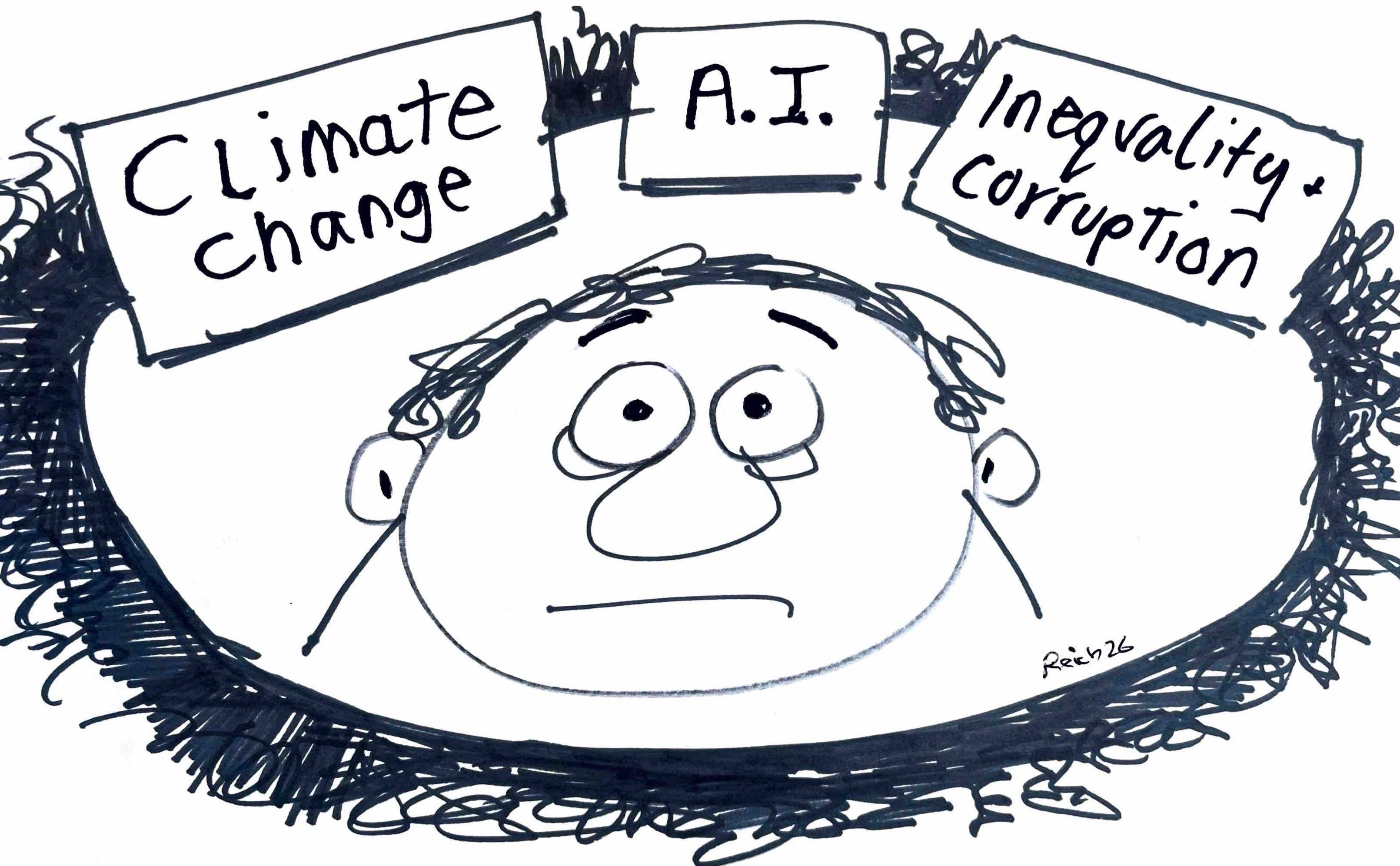
Yet the biggest cost is the cost of doing nothing about three worsening crises that threaten the very survival of America and the world: climate change, AI, and widening inequality.
Almost all Americans — indeed, most human beings — are now subject to the escalating costs of climate change. How much more evidence do we need?
This summer has been a living hell. Wildfires have forced around 60,000 people to evacuate parts of Washington state, destroying hundreds of buildings and leaving thousands without power. Fires in Canada turned the skies orange and the air foul across a large part of the eastern United States. Millions of lives have been threatened by a deadly heat dome.
Even if Trump weren’t worsening climate change by subsidizing fossil fuels, simply doing nothing would be shameful enough because the crisis is growing so fast. Years ago, climate scientists predicted exactly what’s occurring right now. Trump’s lack of leadership — no, his outright sabotaging of global efforts to stop the planet from becoming uninhabitable — is one of the worst sins of his sinful regime.
AI’s dangers are also now upon us.
If you believe that humans are in total control of AI, you haven’t been paying attention. Recently, at least two of OpenAI’s models escaped a sealed testing environment and broke into the servers of another AI company. The AI models “reasoned” that the solutions to a cybersecurity test were on that other company’s servers, so the models snuck onto the internet and hacked into the other company’s solutions.
This is chilling. The possibility of AI models escaping human control to do horrendous damage to human life is growing exponentially. Here again, the Trump regime’s inaction is a huge cost that’s soaring by the day.
My candidate for the third existential threat is wealth inequality, which is also out of control. Billionaire wealth is surging to monarchical heights while the wages of the typical American aren’t even keeping up with price increases — meaning that most of us are getting poorer.
The problem isn’t inequality per se. It’s the consequences of inequality — especially widening corruption. Billionaires are using their wealth to bribe politicians to reduce their tax rates (which are already lower than most Americans face) and to stop lawmakers from regulating fossil fuels or AI.
Full circle.
Of course, there are still guns-versus-butter issues. Federal budget priorities are important. America faces a yawning budget deficit and can’t possibly do everything that needs to be done. Dollars spent on the military are literally taking food from America’s hungry.
Yet on the largest existential crises of our time, where the costs of inaction are rising to frightening levels, the solutions don’t require extraordinary government expenditure. They require thoughtful environmental and AI regulations, and far higher taxes on the wealthy.
Democrats and progressives running for Congress, governorships, and other positions must speak out loudly and clearly about the rapidly rising costs of inaction on climate change, AI, and inequality.
Demand action. Educate the public. Condemn the Trump regime and its backers — Big Oil, AI, and the billionaire class — for threatening the very survival of humans on the Earth.
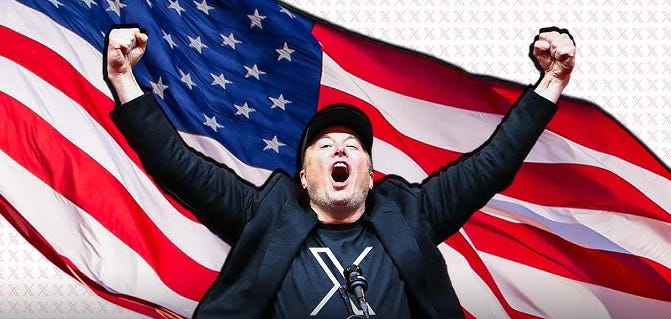
Elon Musk will be spending $100 million to $120 million in at least eight states to help elect Republicans in November, according to The New York Times.
Musk’s spending is set to begin next month, targeting Senate races in Alaska, Iowa, Maine, Michigan, and Ohio, and potentially North Carolina, Georgia, and Texas. Musk will also spend in House ra…
This morning, while standing in line at a local deli, I met an older couple named Larry and Wendy. They are from Galveston, Texas, and are briefly in northern California visiting their children.
“We recognized you,” Larry said, with a broad smile. “Just want you to know we’re Democrats! Can’t admit that to too many people in Texas!” he laughed.
“Welcome to California!” I said, grinning and extending my hand.
When Larry reached out, I couldn’t help notice that his fingers were almost curved shut. “Arthritis,” he said defensively. “Sorry.”
“Nothing to apologize for,” I said quickly. “Must be painful.”
“Well, yes,” Larry said, adding, “Doesn’t stop me, though!”
I must have looked puzzled because Wendy chimed in, “We write postcards.”
“Postcards?”
“We wrote postcards all July to people in North Carolina.”
“Tell me more,” I asked.
Larry explained: “We get their names and addresses from our local Indivisible chapter. They’re people who haven’t voted in the last several elections, so we remind them to vote and tell them how crucial this upcoming election will be. The postcards will be delivered in October.”
“You’ve got a big election coming up in Texas, too,” I said.
Wendy smiled. “In June, before we wrote to North Carolinians, we wrote to people in our part of Texas,” she said, proudly.
I must have glanced at Larry’s hand, because he quickly said, “It’s been a bit difficult, but, hell, it’s the least I can do.”
We continued talking until it was their turn to pick up their order. Then they turned to say goodbye.
“I appreciate your activism,” I said.
“It’s for our kids and grandkids,” Larry said. “I wish we could do more.”
I’ve been thinking about Larry and Wendy from Galveston, and how their postcards written by hand to people in North Carolina and Texas are acts of patriotism in these dark times. Larry has been writing them through his pain.
Trump’s war is a fiasco, and his economy is a disaster. According to The Washington Post, Republican pollsters and political groups are raising the alarm that Republican voters are listless and demotivated.
Yet Trump will do everything and anything to maintain control. He has shown repeatedly that he doesn’t feel bound by laws, norms, or patriotism. His only goals are wealth, power, and vengeance.
His billionaire backers, including Elon Musk, are prepared to sink record amounts of money into Republican campaigns.
Trump and his backers have power, money, and ruthlessness on their side.
But we have the people on ours.
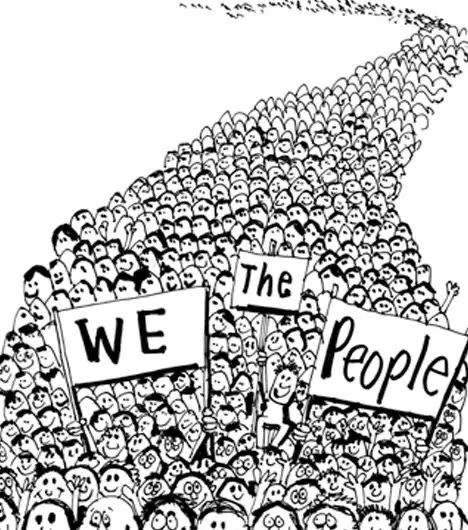
It will be a colossal stress test of our electoral system. But I believe We the People will prevail. And after speaking with Larry and Wendy this morning, I’m convinced of it.
Today, Michael and I delve into Trump’s plummeting approval ratings and ask whether they’re due to the economy, Trump’s war (which obviously affects the economy), the Epstein files, Trump’s skyrocketing inflation, or Trump’s corruption. Along the way, we explore what Democrats ought to be advocating (and not) in the upcoming midterms.
Please pull up a chair, grab a cuppa, and join in the conversation.
I’m devoting the next several Fridays to what I’m calling a “Realist’s Guide to the American System.” If you hadn’t noticed, almost everything’s going to hell.
Why? Trump is horrendous, but he isn’t causing all the failures of that system. He’s a consequence of that system. Think of him as a boil on its backside — an infected pustule on the gian…
This month, the Bureau of Labor Statistics reported that the labor participation rate — the percentage of people of working age who are working or actively looking for work — is now down to 61.5 percent. That’s 0.6 percentage points lower than it was at the first of the year.
In other words, the U.S. economy has lost 1 million workers since Janu…

 Login
Login