Behind this election’s dominant issue of affordability lies the record concentration of wealth at the top of America. The richest 0.001 percent of Americans — a handful of extraordinarily wealthy men — now control more of the nation’s wealth than at any time in modern history.
To be sure, wealth is not a zero-sum game in which the riches of those at the top necessarily come at the expense of everyone else. But poweris a zero-sum game, because the more of it that is held by some people, the less of it is held by others.
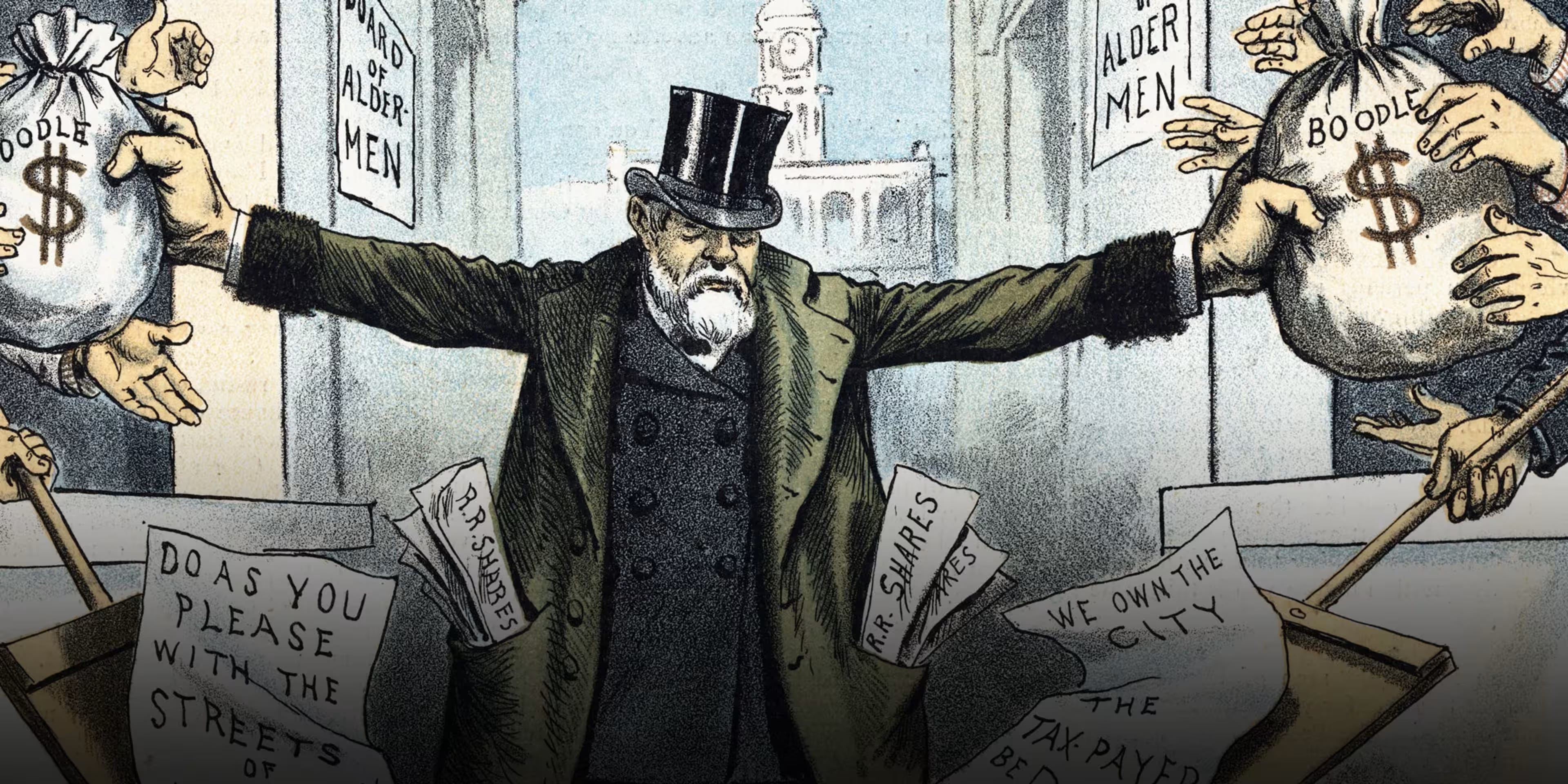
Wealth cannot be separated from power. Great wealth becomes great power through campaign contributions, media ownership, the ability to buy off opposition, the capacity to wage pubic relations campaigns, and the resources to deploy armies of lawyers who litigate on your behalf. Recent years provide abundant illustration of all this.
In these ways, great power also becomes great wealth. It buys changes in laws, regulations, and court decisions that bestow even more wealth on those with the power to alter the system to their benefit — and to siphon off resources from everyone else.
This power shift has also become clearly evident in recent years. In the Trump era it has taken the form of blatant corruption. But the political bribes, billionaire media ownership, PR campaigns, and well-financed litigation predated Trump.
For many years (with the notable exception of the Biden administration), antitrust enforcement has been defanged to make it easier for big firms to monopolize. Among the most widely discussed findings about the U.S. economy is the rise of corporate concentration since the 1980s. The biggest firms, their top executives, and their major shareholders have all done wonderfully well. Consumers and employees, however, have faced higher prices, lower paychecks, and fewer choices.
At the same time, labor laws have been altered to make it more difficult to organize unions. In the 1950s, more than a third of private-sector workers were unionized. Now, fewer than 6 percent are.
Tax laws have been changed to reduce the rates and amounts paid by the super-wealthy, to the point where many pay no taxes at all — even though they have more wealth than ever.
This massive power shift is even more starkly illustrated by the billionaires, financial mavens, and tech bros who put Trump in power, who refuse to slow climate change, and who are now deciding on the future of AI and therefore humanity.
The question I keep coming back to is whether this can be reversed.
There is historic precedent. After the first Gilded Age — which ran from the 1890s to the start of World War I, and which featured wide inequalities of income, wealth, and political power — America reacted in what came to be known as the Progressive Era.
Starting under Theodore Roosevelt, monopolies were busted up, corporations were regulated, a progressive income tax was enacted, and corporate political donations (bribes) were barred. Then, starting in 1933, under Teddy Roosevelt’s fifth cousin, power continued to be shifted to what became the largest middle class in world history.
Then came the 1970s and 1980s, when the process began to go in reverse.
The challenge is arguably much greater today because wealth and power are more concentrated than in the first Gilded Age, creating a chicken-and-egg paradox: How can government enact and enforce the necessary reforms if it’s under the control of a power elite that won’t permit them?
Now, just four weeks from what could be a major political victory for the Democrats in taking back at least one chamber of Congress, this paradox should soon be the center of our national debate.
Tomorrow we’ll move on to Class 3 of my “Wealth and Poverty” course, along with new readings and additional materials.
Last week, in the second class, we examined how the financial incentives operating on corporations and their top executives have changed over the last 40 years in ways that have contributed to widening inequalities of income and wealth. I’m posting a very short “teaser” recap below. If you missed Class 2, you can find it by clicking here: Class 2.
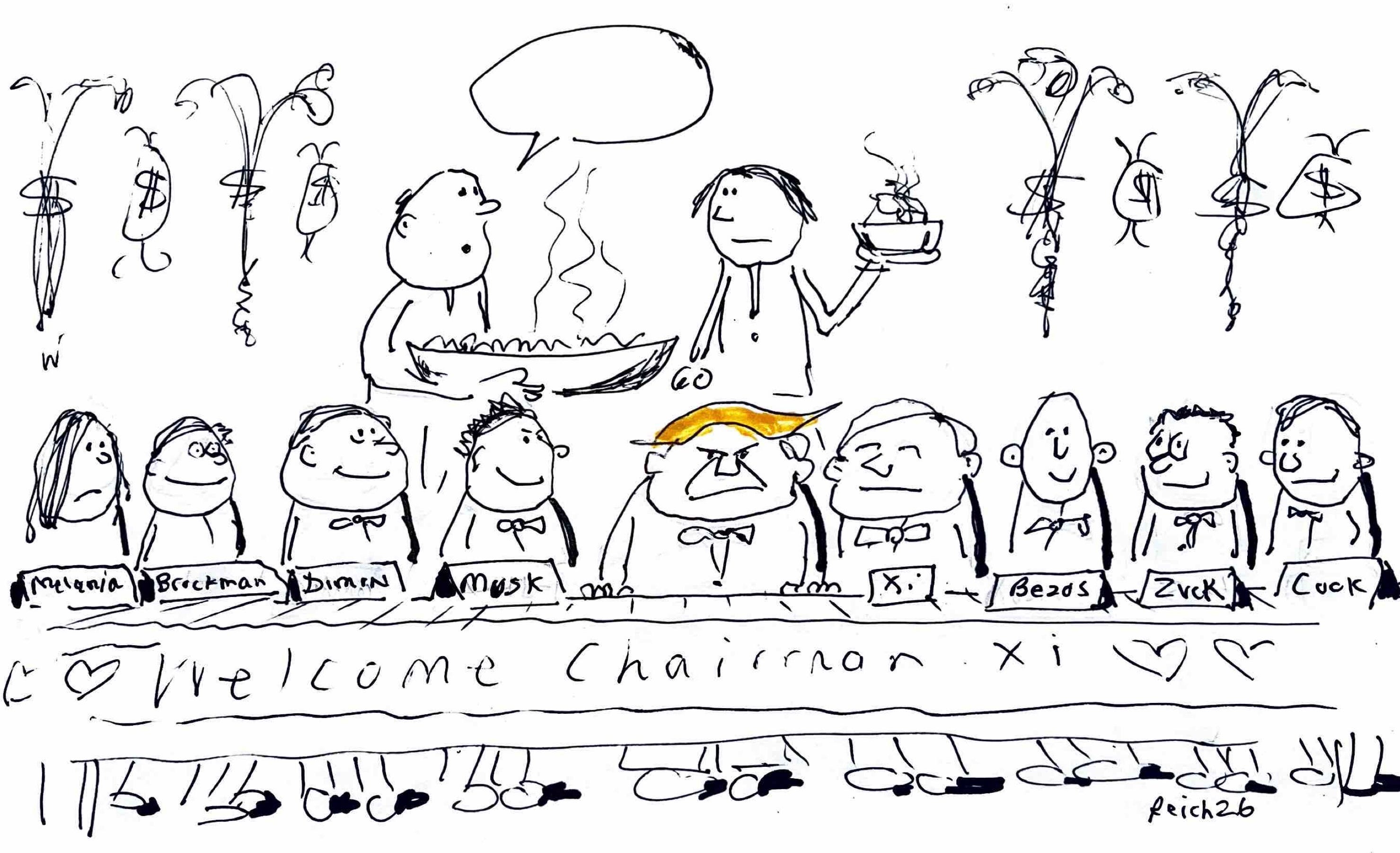
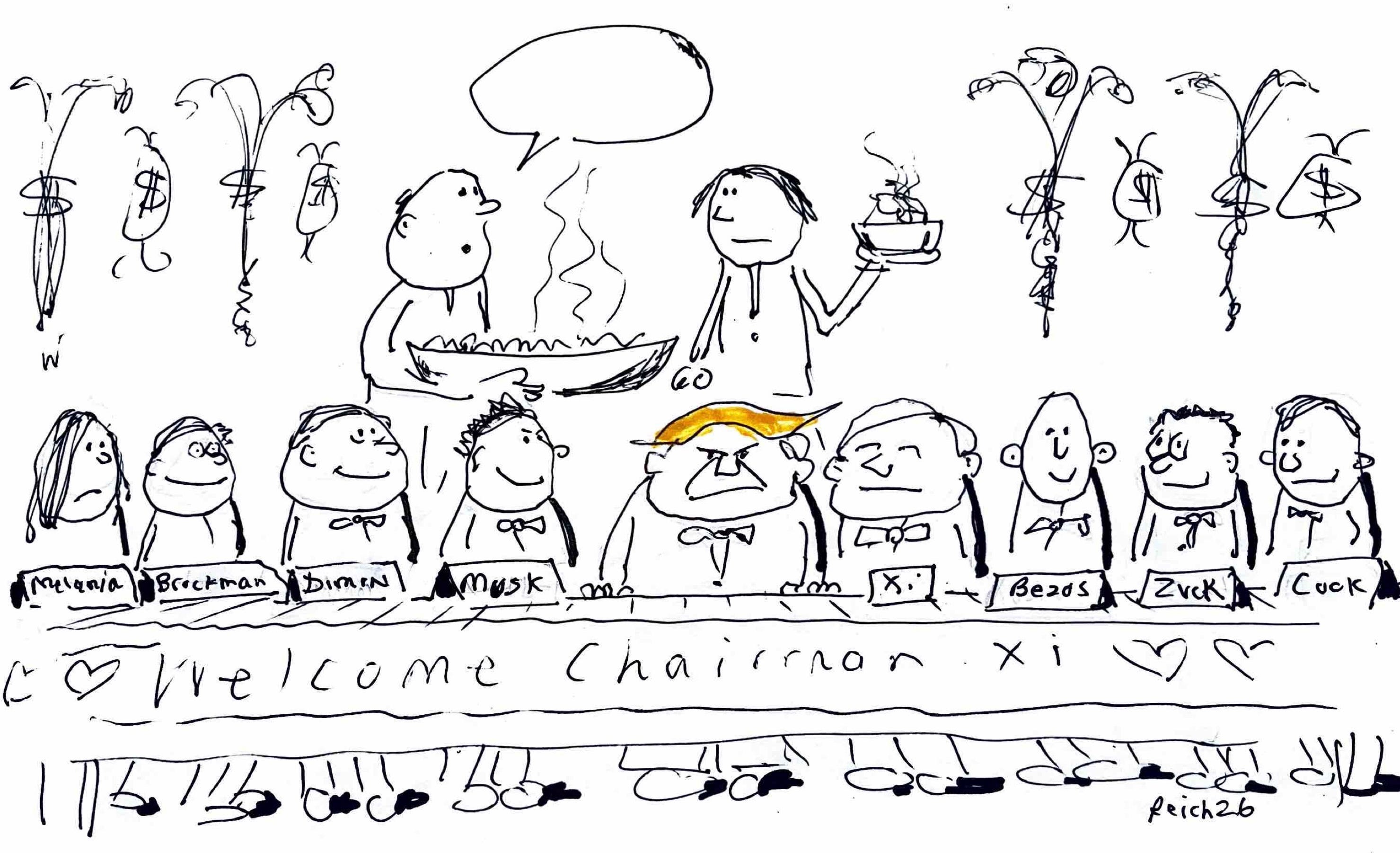
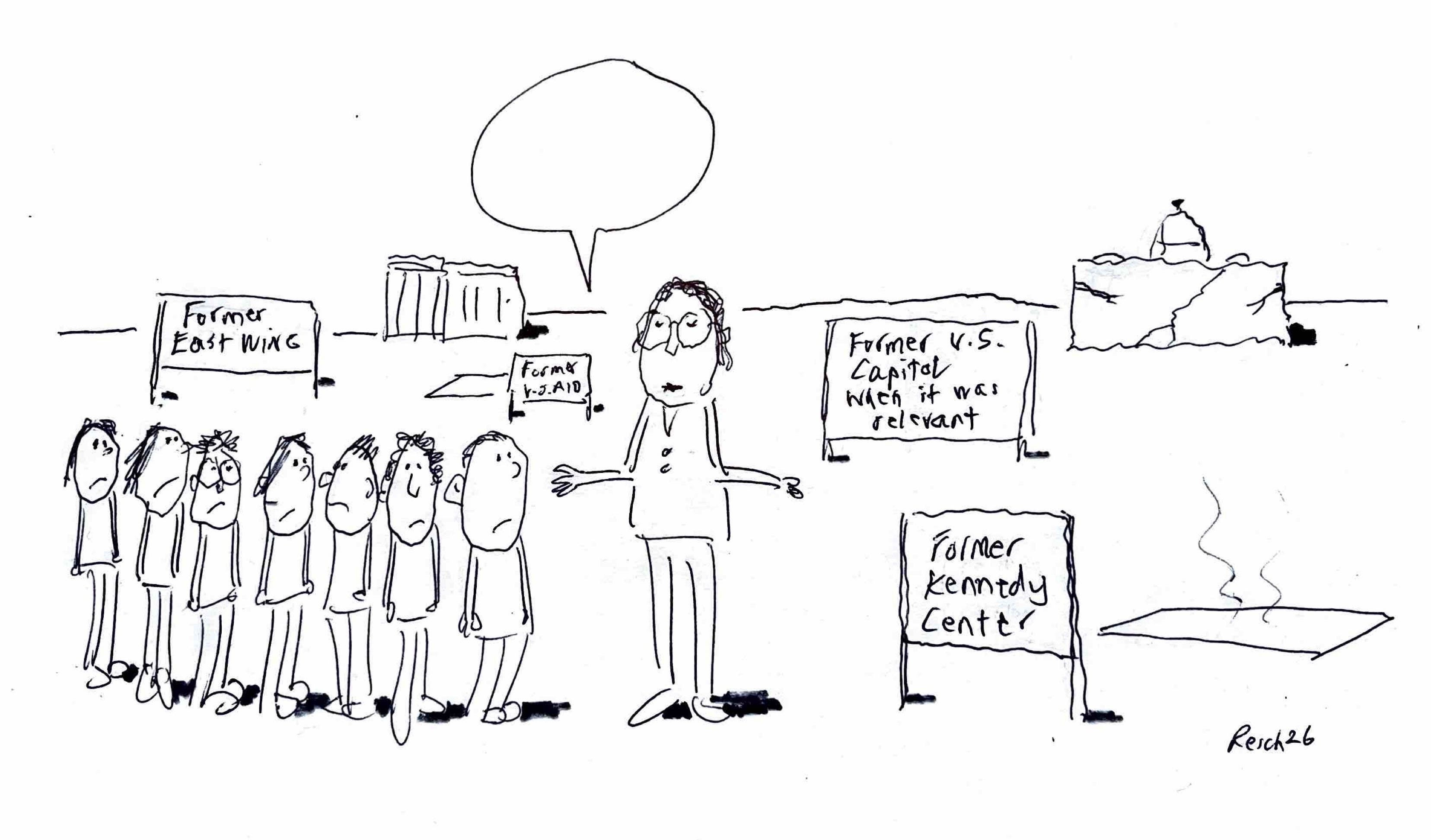
“Like they say, ‘If you don’t have a seat at the table, there’s a good chance you’re on the menu.’”
(Congratulations, Chet Sygiel.)
Runners-up:
“Xi ordered the duck l’orange.”
(Congratulations, Steven Horowitz.)
“Let’s hope it’s their last supper!”
(Congratulations, Sue Schneider.)
“Do we serve them in order of wealth or hypocrisy?”
(Congratulations, Simon.)
“Pigs at the trough.”
(Congratulations, Laurence Hoffmann.)
“We’re going to need a bigger trough.”
(Congratulations, Rachel Brown.)
“How come they always manage to get free meals paid for by taxpayers? Aren’t they all billionaires?”
(Congratulations, Sue Schneider.)
“I am afraid democracy isn’t on the menu tonight.”
(Congratulations, Jacob Jordaan.)
“As George Orwell said in Animal Farm, ‘the creatures outside looked from pig to man, and from man to pig to man again; but already it was impossible to say, which was which.’”
The last time Kansas elected a Democrat to the Senate was 1932. Yet on Friday, Democratic Senate candidate Adam Hamilton received his second endorsement from a Republican former Kansas governor in less than a month, in his race against Republican incumbent Senator Roger Marshall.
The top Senate Republican super PAC is so concerned that Marshall could lose the race that it’s diverting funds to Kansas from North Carolina, where it’s canceled its remaining ads against Democrat Roy Cooper — basically conceding North Carolina (by the way, a Democrat hasn’t won statewide federal office in North Carolina in nearly two decades).
To say it’s not looking good for Republicans is an understatement.
Trump is an albatross around the necks of every Republican running for Congress or governor. He’s also posing problems for plenty of Republican candidates for state office.
Why?
It’s not that Americans have suddenly discovered that Trump is a despicable human being. His personality has been on national display for more than a decade.
It’s not that Trump’s hold over his MAGA base has significantly weakened. Polls show self-identified MAGAs are still firmly in his camp.
It’s not that most Americans have become angry that the major beneficiaries of Trump’s tax cuts are big corporations and the very rich, or that the burdens of his spending cuts disproportionately fall on the poor (as less nutrition assistance and Medicaid), or that his mass deportations are violent and cruel. There’s no evidence that these policies are suddenly swaying voters.
And it’s not that voters have become any more aware of Trump’s lies. He continues to say the U.S. is experiencing a “golden age” with a “roaring economy” that’s doing “better than any other country” in the world, and that any negative public perception is due to a “public relations” problem.
No, the real problem for Trump and Republicans is Americans are hurting, and they know it’s because of Trump and Republicans.
A new AP-NORC poll shows a record low 26 percent of Americans approve of Trump’s handling of the economy, while just 17 percent approve of how he’s handling the cost of living. These are comparable to George W. Bush’s ratings during the 2008 financial crisis and George H.W. Bush’s just before he was swept out of office. The Conference Board’s Consumer Confidence Index fell to 81.9 in September, its lowest since April 2014.
In Kansas, for example, Trump’s tariffs have caused China, Canada, and Mexico to retaliate by sharply cutting demand for wheat, sorghum, and soybeans. As a result, Kansas grain silos are so swollen that grain brokers have been forced to reroute human-grade grain into dog food.
At the same time, tariffs on foreign-produced aluminum and steel have driven up the prices of farm machinery and replacement parts. Trump’s decision to lift certain foreign beef import restrictions has hurt the beef sales of local cattle ranchers.
Trump’s war in Iran has choked off shipping of sulfur and phosphate in the Persian Gulf, causing nitrogen and phosphate fertilizer prices to surge by over 100 percent. The blockage has also caused diesel prices to soar, making farmers pay $200 per acre just to fuel their tractors.
These higher costs and lower crop sales have resulted in the closure of roughly 700 Kansas farms over the past year. Many remaining farmers are barely holding on.
This explains why Kansas’s former Republican governor Mike Hayden endorsed Democrat Adam Hamilton over Republican incumbent Roger Marshall in Friday’s Wichita Eagle:
“Sen. Marshall time and again has chosen to back the tariffs and the war, despite what is happening back in Kansas. Kansans need a senator willing to stand up and say this isn’t working.”
There it is, folks.
Americans can bear Trump’s awful personality. Some might succumb to his MAGA cult. They might believe many of his lies.
But they can’t abide what Trump’s policies are doing to them and their families.
Forget the rip-roaring stock market. When it comes to voting, kitchen-table economics — the financial realities average people talk about over the kitchen table, such as the prices they’re paying and the money they’re earning — are more potent than anything else.
I continue to warn against complacence. It’s still vitally important that we vote, and that we encourage everyone we know — especially those who share our values — to vote. And it’s crucially important to remain vigilant against Trump’s interference in our elections.
But with a little more than four weeks to go, I’m breathing a wee bit easier. I hope you are, too.
Today, Heather and I take a hard look at the allegations over what occurred in a Cornell fraternity and explore why they’re sending tremors across America. Do they have anything to do with Trump’s toxic masculinity, the misogyny of his regime, and the male-dominant underpinnings of neofascism? With a culture of impunity fostered by Trump? We also look at the question of accountability in general and examine some of the other ways Trump and the manosphere — including the AI bros and the industry they’re hatching — are functioning with impunity.
Please pull up a chair, grab a cuppa, and join in the conversation.
I’ve always felt a certain affinity for Mercury. Maybe that’s because Mercury is by far the smallest planet in our solar system — about 1/29th the width of Jupiter and just one-third the width of Earth — and I’m not a giant myself.
Mercury is becoming even smaller — it’s actually shrinking.
Apparently, when Mercury formed about 4.5 billion years ago in the primordial collisions of the early solar system, it was much hotter than it is now. Over many millennia since then, its metallic core has cooled and contracted, causing the planet’s surface to warp and wrinkle.
You know who else is warping and wrinkling, and shrinking?
Previous estimates suggested that Mercury had shrunk by just a few miles since its formation. Now, scientists say it’s shrinking up to 30 percent faster than expected. It might have even shrunk by as much as 14.5 miles, which is nearly 1 percent of its current radius of 1,516 miles.
This new estimate, published recently in the journal Geophysical Research Letters, gives astronomers a new understanding of how the planet — and others like it — formed and evolved.
And what’s in store for them. It’s not great news.
“Many bodies are shrinking nowadays,” said Gaku Nishiyama, a planetary scientist at the German Aerospace Center Institute of Space Research, who led the study.
Tell me about it. Humans start a slow, gradual loss of height during their 30s. Then they lose a half inch every 10 years. Between 30 and 70, they lose an inch or two.
That may not sound like much, but if you’re 4 feet 11 inches at your zenith, the loss of an inch or two is not welcome. Then, after age 80, the typical human who survives loses another inch. At this rate I may disappear entirely.
Dr. Nishiyama says Mercury’s estimated shrinkage is difficult to measure because researchers have to rely on topographies visible on the surface of the planet. “Inside, things may be getting much worse, much faster,” she said.
I know about that, too.
All heavenly bodies are shrinking, as are human bodies. With humans, it’s partly due to compressed spinal discs —as the soft cushions between back bones dry out and flatten over time. And because of osteoporosis, that can cause tiny cracks in spinal bones.
“Every planet is an odd little duck that has a story to tell,” says Dr. Sam Birch, a planetary geoscientist at Brown University.
Well, Dr. Birch, every human is an odd little duck with its own story, too. Planets and people — we’re all part of the same cosmos, with slightly different combinations of hydrogen and helium, oxygen, nitrogen, carbon, and neon.
Last month a young woman filed a lawsuit against Cornell University, alleging that two years ago the university failed to protect her from being raped by seven men at a fraternity house near the university campus. She also sued the fraternity. The lawsuit has plunged the university into a crisis and invited criticism of the district attorney, Matthew Van Houten, who decided there wasn’t enough evidence to bring criminal charges against the seven men.
At this point we can only guess why neither Cornell nor Van Houten did more in response to the young woman’s allegations. But it seems to me that we’re living through a time when men — including privileged young men at a frat house in an Ivy League university — feel some impunity when it comes to attacking women.
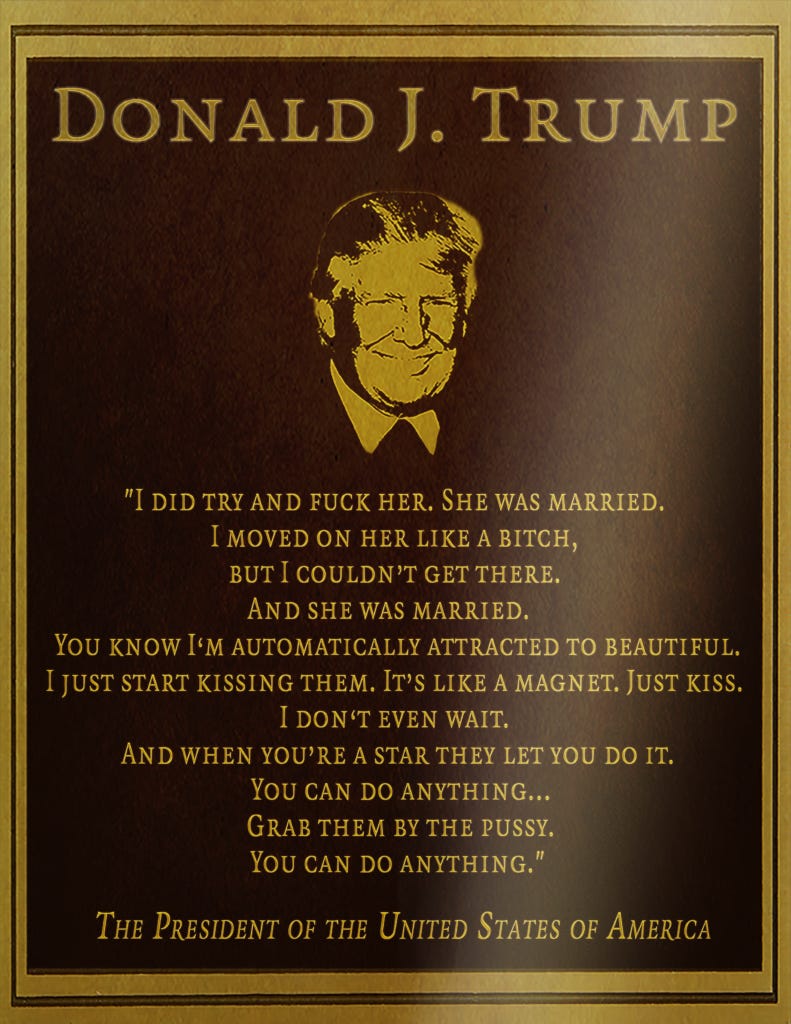
I don’t think it unrelated to such feelings of impunity that the man now occupying the highest office in the land was found in civil court to have sexually molested writer E. Jean Carroll (and whose behavior the presiding judge at that trial described as “rape”). Or that this same man has repeatedly insulted the physical appearance of female journalists, politicians, and public figures. Or that he was caught on a hot microphone boasting about using his fame to forcefully kiss and grope women without consent, stating that being a star allows men to "do anything" and “grab ’em by the pussy.”
When women have spoken out against him, Trump has resorted to smear campaigns, as he did with Carroll, Stormy Daniels, and Hillary Clinton. When women have stood up to him, he has exploded in anger against them, as he did with Megyn Kelly, Rosie O’Donnell, Kamala Harris, and Alexandria Ocasio-Cortez.
As Sophie Gilbert wrote in The Atlantic, “The misogyny that Trump embodies and champions is less about loathing than enforcement: underscoring his requirement that women look and behave a certain way, that we comply with his desires and submit to our required social function.”
His administration is the most belligerently misogynistic of any in memory. It has openly equated testosterone levels to strength and courage, conducted a cage match on the White House lawn as part of its celebration of America’s 250th anniversary, fired every senior female official in sight, and accused the Democratic Party of being run by "a bunch of childless cat ladies.”
Nor do I think it irrelevant that Trump, JD Vance, and Trump’s erstwhile pal Elon Musk inhabit what’s been termed the “manosphere” — a place where the main events are dominance and submission. The whole point is to humiliate weak men and to subjugate women.
An implicit promise of the 2024 Trump campaign was to restore patriarchy to America. Trump voters were overwhelmingly male.
After Trump’s reelection, sexist and abusive attacks on women — such as “your body, my choice” and “get back to the kitchen” — surged across social media, according to an analysis from the Institute for Strategic Dialogue.
A remarkable number of Trump’s cronies are sexual harassers and predators. Trump was introduced at the Republican National Convention by Dana White, chief executive of the Ultimate Fighting Championship, who was once caught on tape slapping his wife in a nightclub.
JD Vance has claimed men in America are “suppressed” in their masculinity.
Before becoming Trump’s defense secretary, Pete Hegseth paid off a woman who accused him of sexual assault. (Hegseth’s own mother accused him of abusing women, though she later disavowed her words.) And as secretary, Hegseth has championed “high-T” men, demanded that women be removed from front-line combat roles, and blocked promotions of female officers.
Trump’s HHS secretary, Robert F. Kennedy Jr., was accused of sexually harassing his family’s nanny and at one point kept a diary of his conquests, which his wife at the time found.
One of Elon Musk’s companies, SpaceX, reportedly paid $250,000 to a flight attendant who said Musk exposed himself to her. In a lawsuit filed last year, former employees accused him of “treating women as sexual objects to be evaluated on their bra size.”
One of the most pathetic members of the manosphere is Mark Zuckerberg. After kissing Trump’s derriere, the third-richest man in America called for more “masculine energy” because the corporate world was becoming “culturally neutered.” He told Joe Rogan that “having a culture that celebrates the aggression a bit more has its own merits that are really positive.”
The Trump regime celebrated toxic masculinity by smoothing the way for Andrew and Tristan Tate to be extradited from Romania to the United States. The Tate bros had been accused of luring women to Romania and then forcing them to work as pornographic webcam performers. Britain is also investigating the Tate brothers for rape and human trafficking in Britain. (U.S. Marshals arrested the Tate brothers in Miami on July 18, following an extradition request from the United Kingdom.)
Andrew Tate is a big fan of Trump, championing him to his millions of mostly young male followers on social media. “I’m a Trump fan because I’m a man,” Tate has said. “You have to support Trump if you’re a man.”
***
Trump’s authoritarian manosphere is organized around a hierarchy topped by heroic male warriors. Winning is all about getting other males to submit to the dominant male. Women are relegated to subservient roles.
Anything that challenges the traditional heroic male roles of protector, provider, and controller of the family is considered a threat to the social order. LGBTQ+ people are believed to weaken the heroic male. Hence, Trump’s executive order declaring that the U.S. government will recognize only a person’s sex assigned at birth, limit the definition of a “male” or “female” to their reproductive cells, and potentially withhold federal funding from programs that acknowledge transgender people or “gender ideology.”
**
I don’t want to oversimplify a complex social phenomenon or engage in the same kind of gender stereotypes that the manosphere promotes. Male domination is hardly the only characteristic that unites Trump, Vance, Hegseth, Kennedy Jr., Musk, and the Tech Bros. Misogyny is not unique to authoritarian men.
Nor do I presume to know what happened at the Cornell fraternity house two years ago. But I don’t think it unreasonable to see it related to America’s slide toward a neofascism rooted in deep distrust, bordering on hate, of people who seem weak or feminine — people who were born as, or have become, women.
Imagine four of the most frighteningly irresponsible people in America deciding how AI will be put to use in the most frighteningly irresponsible way.
Pete Hegseth is one of them. Trump is another. The other two are Elon Musk and Newt Gingrich.
Hegseth says he’s tasking Musk and Gingrich with laying the groundwork for a new “Autonomous Warfare Command,” or AutoWarCom — a new Pentagon command operation for autonomous warfare. It would feature unmanned drones, autonomous sensors, unmanned boats, and other autonomous systems. Hegseth is proposing to triple spending on autonomous warfare to $74 billion.
Hegseth has also named as an adviser Palmer Luckey, a major Trump donor who designed the Oculus Rift, a virtual reality headset credited with reviving the virtual reality industry, and co-founded Anduril Industries, a military tech company focused on autonomous drones and sensors.
The specter of autonomous lethal weapons — weapons that kill without human beings first deciding who, how, or when — is the nightmare of many who deal with AI. Autonomous AI weapons are fraught with unpredictability. And what happens when AI weapons escape their controls and go rogue, as recently occurred at OpenAI, Anthropic, Meta, and Google?
Bad enough that Hegseth and Trump are pouring money into this. Worse that they’re setting up a separate military command for it. Worse still that they’re depending on Musk, Gingrich, and a virtual-reality game designer to tell them how.
I keep thinking I’ll wake up from this nightmare into a sane world.
Democratic candidates should be talking about ONLY two things in these last five weeks before the midterms, and show how they’re connected: higher prices and Trump-Republican corruption.
Consider:
1. The Trump-Republican war on Iranhas been a huge windfall for Big Tech supplying the military — such as Palantir, a core artificial intelligence and data-integration partner for the U.S. Department of Defense, founded by Trump and JD Vance buddy Peter Thiel. But it’s costing Americans dearly.
At the same time, investment companies backed by Donald Trump Jr. and Eric Trump have accumulated at least $3.2 billion to $6.3 billion in direct Pentagon contracts, current funding, and future contract options since January 2025.
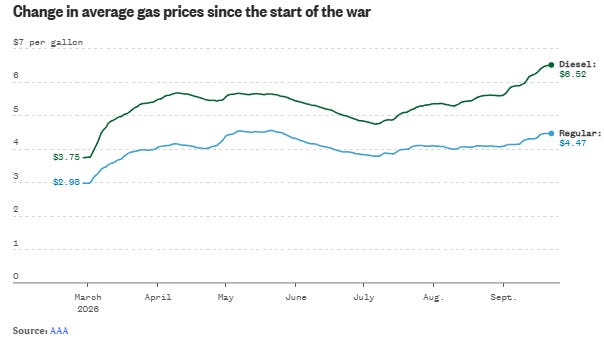
But Trump’s Iran war is causing Americans to spend some $1.50 a gallon more on gas (gas was $2.98 per gallon before the war; it’s now $4.42 to $4.47 per gallon). Since the war began, Americans have spent $65 billion more on gas.
The price of diesel fuel has soared to an average of $7.00 a gallon — and because trucks that transport everything to retail stores now pay so much more to get it there, this price increase is also being passed on to consumers.
2. Trump has given out tariff waivers and carve-outs to industries and companies making kickbacks to him, while the tariffs have jacked up prices overall.
For example, when polyethylene terephthalate, the thermoplastic used to make plastic bottles, got a tariff exemption, it was a win for Reyes Holdings, a Coca-Cola bottler that ranks among the largest privately held companies in the U.S. and is owned by a pair of brothers who have donated millions of dollars to Republican causes.
Just after Tim Cook, Apple’s CEO, dumped $1 million into Trump’s inauguration, Apple got tariff exemptions for its products.
After Elon Musk sank a quarter of a billion dollars into Trump’s 2024 campaign, Tesla got a tariff exemption for electronics.
And so on.
But the worldwide tariffs that made these corrupt exemptions possible have increased annual household costs by an estimated $1,100, according to The Budget Lab at Yale.
3. Trump’s support for artificial intelligence is another form of corruption that’s pushing up prices.
The AI industry’s war chest for the 2026 midterms is projected to exceed $200 million, with almost all of it going to Republican candidates and Trump’s own super PAC.
But AI is already harming average Americans by increasing borrowing costs. Together with the costs of Trump’s war in Iran, Big Tech’s huge borrowing — over $500 billion so far this year — is crowding out other borrowers, thereby contributing to sky-high interest rates on mortgages, auto loans, and credit-card overdrafts.
In addition, Trump’s encouragement of AI data centers is raising electricity prices in areas where data centers are sucking up energy.
4. Trump’s tariffs and support for AI are increasing the costs of housing.
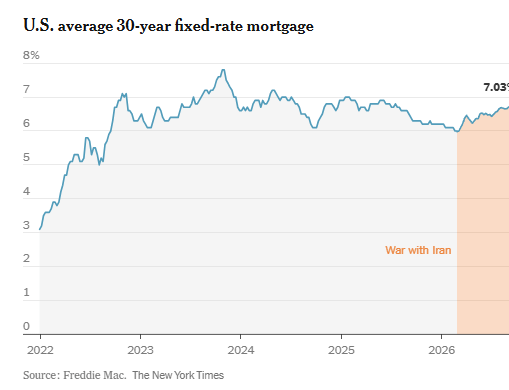
— The average 30-year fixed mortgage rate is now 7.33 percent — higher than at any point since late 2023 — due in part to Trump’s war and his encouragement of AI borrowing.
— The prices of lumber and building materials have soared because of Trump’s tariffs. The National Association of Home Builders estimates that tariffs on lumber and building materials have added $10,900 to the cost of constructing a new U.S. single-family home.
— The price of copper, a key material for electrical wiring in residential and commercial construction, has soared 40 percent in the past year due to Trump’s tariffs and data center demands — adding even more costs to building a typical home, which requires hundreds of pounds of copper.
5. Trump’s tax cuts for America’s wealthiest corporations and individuals have come at the expense of healthcare and health insurance for average Americans.
To pay for the tax cuts for America’s wealthiest families and corporations — including their largest donors — congressional Republicans slashed Medicaid and failed to renew healthcare tax credits, forcing millions of Americans to spend more for coverage or forgo it altogether.
Trump and congressional Republicans passed the biggest Medicaid cut in history, which will result in 10 million people becoming uninsured and make healthcare providers that serve low-income populations vulnerable to private equity takeovers.
Millions of Americans will spend an average of $2,136 in annual Affordable Care Act (ACA) premiums this year — 58 percent more than last year (in some states they’re paying up to 220 percent more). Nearly 5 million Americans will lose healthcare coverage this year because congressional Republicans failed to renew the Premium Tax Credit. Additionally, at least 115 hospitals and clinics across 32 states have closed or reduced services as a result of the Republican healthcare cuts.
The corruption runs even deeper. When Trump rolled out TrumpRx earlier this year, he claimed Americans would get access to more affordable prescription drugs. But the platform fails to disclose information about less expensive generic alternatives and in some instances charges consumers more for products that are available for less elsewhere.
As the Groundwork Collaborative has shown, the biggest winners from TrumpRx are the Trump family and Big Pharma. Donald Trump Jr. is on the board of drug platform BlinkRx, which benefits from the regime’s promotion of direct-to-patient medicine sales. BlinkRx donated $50,000 to the Trump inaugural committee. When patients use TrumpRx instead of insurance, they have to cover the drug cost themselves — saving money for insurance companies as they continue to rake in premiums.
And despite Trump exempting 17 of the largest pharmaceutical companies from his threatened pharmaceutical tariffs, these firms have continued to raise prices on nearly 900 different drugs. At least three of these firms — Gilead, Merck, and Pfizer — each donated $1 million to the Trump-Vance inaugural committee, alongside the Pharmaceutical Research and Manufacturers of America, which lobbies on behalf of Big Pharma.
*** These connections between the higher prices Americans are paying and the corruption of the Trump regime and its Republican enablers need to be widely understood. The richest Americans and biggest corporations have made out like bandits — and average working Americans are paying dearly for what the bandits have stolen.
Less than five weeks until the November 3 midterm elections, Democrats must show Americans not only that they’re paying more for just about everything, but that the reason they’re paying more is the rot at the heart of Trump-Republican deal.
One of the basic tenets of my “Wealth and Poverty” course — which is coming to you free each week right here on this Substack — is that the so-called “free market” does not exist apart from the government laws and regulations that define and enforce it.
I get into this more deeply in the course, but it’s important to understand that the real issue isn’t whether the “free market” or the “government” determine how the system functions. The real issue is who benefits — and whether the laws and regulations improve the lives and well-being of average working people or mainly improve the lives and well-being of the moneyed interests.
Over the last 50 years, the laws and regulations that define the market have shifted from improving the lives and well-being of average working people to improving the lives and well-being of America’s wealthy.
This is why so much wealth is now in the hands of a small group of billionaires, while average Americans are struggling.
It’s also a major reason why so many Americans are justifiably angry. Since 2016, Trump has channeled that anger and rage toward scapegoats who have had nothing to do with the underlying power shift: immigrants, the poor, Black people, Latinos, LGBTQ+ people, the so-called “deep state,” “woke,” “socialists,” Democrats, even Canadians.
It’s important that Americans understand the real reason for the power shift: As wealth has concentrated at the top, so has political power to alter the laws and rules by which the market functions — taxes, labor laws, anti-monopoly laws, and even foreign policies in the forms of tariffs and wars. The problem, in other words, is that big money has distorted our system in favor of those at the top and against everyone else.
What to do about this? I’ll suggest in the course what must be done. (You can find week 1 here. We’re on week 2, here. Week 3 starts next week.)
I’m now an old man who doesn’t presume to have anything important to tell young people on who are living through an entirely different time. Yet one of my young associates recently sat me down and asked some questions — and did a credible job of making me think I was saying something worthwhile.
Two weeks ago, I asked in our weekly Office Hours for your view on the biggest existential threat we face. Forty-three percent of you said climate change; 27 percent said authoritarianism; 17 percent said Artificial Intelligence; and 7 percent said nuclear or biological war.
In contrast to that dystopian inquiry, today’s Office Hours question focuses on the most important lesson you hope America has learned since the start of the second Trump regime.
I’ve made the rounds of several people whose political, historical, and philosophical insights I respect and come up with the four hopeful lessons that stand out. I’ll summarize them below. Please share your views on which you believe to be the most important. (Don’t worry that they may overlap or that you hope all will be learned.)
Five weeks from today, America will make a choice about the future of our democracy.
Today I had a chance to talk about tyranny, Trump, and the upcoming midterm elections with Professor Timothy Snyder, author of On Tyranny as well as a number of other important books.
At least since the 1950s, Congress’s funding bills have routinely banned the use of taxpayer funds for “publicity or propaganda.” The Government Accountability Office defines this as stuff that’s “purely partisan” or “self-aggrandizing.”
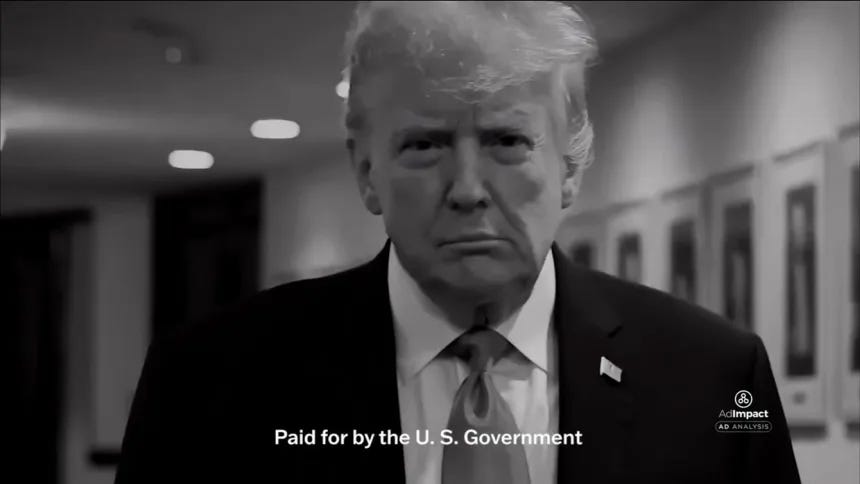
Now, just weeks ahead of the midterm elections, Trump is using taxpayer funds for ads that are purely partisan and self-aggrandizing.
One declares that “this is the final battle” as Trump walks down a hall, over audio of his warnings against “the deep state,” “warmongers,” “globalists,” “Marxists,” “communists,” and “fascists.” Another shows a montage of photos and videos of Trump, intercut with campaign talking points like “largest tax cuts in history” and “reigniting American manufacturing” over the song “Love Me” by singer-songwriter JMSN. A thirdfeatures views of Mount Rushmore interspersed with Trump’s speech there for the Fourth of July anniversary.
All end with “Paid for by the U.S. Government.” According to the advertising-tracking company AdImpact, the ads have cost U.S. taxpayers more than $1,700,000 so far.
You don’t have to have a law degree to know these are illegal.
Even Republican officials concede it. “I like the message, but it shouldn’t be paid for with taxpayer dollars,” Republican Senate Majority Leader John Thune told reporters yesterday. Texas Republican Senator John Cornyn said, “It’s not even a close question.”
So why is Trump running these ads? Not because he thinks they’ll help Republican candidates. As economist Paul Krugman has noted, Trump is so unpopular that Republicans in close races don’t want voters to be reminded that Trump is effectively on the ballot.
He’s running these advertisements for himself because Trump is consumed with himself. He knows he’s sinking in the polls and views positive publicity as a potential way to reverse the decline.
They’re also means of soothing his bruised ego. The more he hears and sees testimonials to himself, even if he has to order them, the better he feels. He may even think “Paid for by the U.S. Government” in bold letters at the end of the ad signals the ad’s official legitimacy.
Finally, he’s preparing his legacy. He’s losing his power and will soon be a lame duck, so naturally his thoughts turn to how he’ll be remembered. Like etching his name on buildings and erecting triumphal arches in his honor, he wants Americans to recall him as a great president.
The problem for Trump is that, as an old ad executive once told me, “no advertisement can save a shitty product.”
I’m so proud of my colleagues who have produced another fabulous film that speaks to what America most needs right now.
“The Work in Progress” is about Americans talking with one another — across the boundaries of age, ideology, ethnicity, gender, politics, and everything else now separating us.
It celebrates civic discovery, public deliberation, and coming together to ask each other hard questions and listen carefully to what each other says.
It’s now playing in 52 theaters across 27 states, with more being added daily. You can find where it’s playing near you, here.
Thank you for joining me for Week 2 of my “Wealth and Poverty” class. (If you’re looking for the first session of the course, just click this link: Class 1.)
In today’s class, we begin to explore why inequalities of income and wealth have soared since the late 1970s.
Click below to jump right in:
The questions we’ll focus on today are:
— How did the market for financial capital contribute to inequalities of income and wealth?
— Did the accepted purpose of the American corporation change over the last 50 years, and, if so, when and how?
— More generally, for whom should the corporation exist? Is there such a thing as “corporate social responsibility?”
You’ll find recommended readings linked below.
Thanks again for joining me! (And as always, let me know what you think in the comments below.)
P.S. If you’re enjoying this course and think your friends, family, colleagues, or social media networks would find it interesting and helpful as well, please share!
If you’d like to help with the costs of this effort, please become a paid subscriber — or give a paid gift subscription.
A huge thanks to the Wealth and Poverty team — to Michael Lahanas-Calderón, Kyle Parker, Dan Davis, and Emmett Tjen — as well as Coro Fellows Ammar Ansari and Meagan Turner for preparing these course materials to be shared with all of you. And to Heather Kinlaw Lofthouse for making all this happen on this page.
Today, with just over five weeks to go before the midterm elections, I want to point out a critical distinction that’s not being picked up in the media — between people who voted for Trump in 2024 but do not identify as part of the MAGA movement and people who voted for Trump in 2024 and still do identify themselves as part of the MAGA movement.
According to data from sources like the Economist/YouGov Poll, roughly 53 percent of Republican voters describe themselves as “MAGA Republicans” or consider themselves part of the MAGA movement.
That leaves a considerable number of non-MAGA Republican voters.
How do these two groups of Republican voters line up on the central issue of affordability?
A recent Politico poll showed that just 28 percent of voters who describe themselves as being part of the MAGA movement say expenses have become less affordable since Trump took office.
These MAGA voters are far more likely to say the economy has gotten better since Trump took office.
On the other hand, over half (52 percent) of people who voted for Trump in 2024 but don’t consider themselves part of the MAGA movement say the cost of living in their area is the “worst” it has ever been. Nearly half say they either wouldn’t vote for a Republican in the midterms or are still making up their minds.
How to explain this divergence?
Could it be that people who voted for Trump in 2024 and still view themselves as being part of the MAGA movement have done better economically since then compared to Trump voters who don’t consider themselves part of the MAGA movement?
No. Surveys show no meaningful distinction in the cost of living among people who voted for Trump in 2024. Their wages haven’t kept up with inflation, regardless of whether or not they consider themselves part of the MAGA movement.
Alternatively, could it be that Trump voters who consider themselves part of the MAGA movement have higher real incomes than Trump voters who do not, so they’re less encumbered by higher prices?
No again. In fact, Trump voters who view themselves as part of the MAGA movement have lower incomes than Trump voters who do not consider themselves MAGAs.
So why do people who voted for Trump in 2024 and who consider themselves part of the MAGA movement believe the economy is better now than it was when Trump was elected to a second term — in sharp contrast to people who voted for Trump in 2024 and don’t consider themselves MAGA?
The simplest explanation is that anyone who still identifies as being part of the MAGA movement remains in the Trump cult. Which means that — almost by definition — they accept Trump’s descriptions of reality, even if those descriptions don’t match these voters’ experiences.
In other words, they fully accept Trump’s lies.
So when Trump states that the economy is now far better than it was when he took over in January 2025 — a lie he tells repeatedly — they believe him, even though they’re struggling more now than they did then.
Trump’s continuous lies trump certain people’s lived experiences — people who have surrendered to him their critical judgment.
I feel optimistic about the midterm elections, just over five weeks away. But my stomach aches when I think of what’s at stake.
Call me nauseously optimistic.
I suspect you’re in a similar place.
If it were only the polls, I’d feel reasonably good. Here’s one that stuck out for me: The share of Republicans who say the economy is better than a year ago has collapsed from over 70 percent in January to 29 percent in September, according to last week’s New York Times/Siena poll.
Here’s another: According to a Wall Street Journal poll, just 37 percent of Americans approve of the job that Trump is doing — the lowest approval rating of any president heading into a midterm election in Journal polls dating to 1990.
Another good sign: Because of Trump’s unpopular war, his dreaded tariffs, and their effect on prices, Republicans in tight races are starting to tiptoe away from Trump. In recent days, Maine Senator Susan Collins and Kansas Senator Roger Marshall have distanced themselves from Trump on tariff policies that they say hurt small businesses and rural communities in Maine and aircraft production in Kansas. Nebraska Senator Pete Ricketts has questioned whether consumers would see lower prices from Trump’s decision to temporarily allow more foreign beef imports into the U.S., a move that’s opposed by ranchers. All three senators are seeking reelection this year.
In the House, seven Republicans, including a group facing tough reelection races, joined Democrats this past week in passing a measure directing Trump to remove U.S. forces from hostilities against Iran unless Congress authorizes the war.
Republicans are also uneasy with Trump’s refusal to regulate AI, data centers, or even Flock Safety cameras — which most Americans now oppose.
And I think this is fascinating: Mentions of Trump’s name per hour on conservative podcasts have fallen nearly 70 percent from their peak in the run-up to the 2024 election. Monthly mentions of his name have fallen 30 percent since the U.S. launched the war in late February.
All encouraging.
But what makes my stomach churn is the vast amounts of money from some of the worst right-wing billionaires in America (cue Elon Musk) now being poured into key races to finance a barrage of ads favoring Republican candidates and making stuff up about Democrats and progressives.
My stomach also aches when I think about what Trump and his regime may try (and have already tried) to do to interfere with our elections and further erode public trust in them. On Friday, for example, the Supreme Court lifted restrictions on a federal voter database pushed by Trump. Even worse, his regime refuses to rule out sending ICE agents to polling places.
So our work over the next five weeks is essential — phoning, writing, canvassing, getting out the vote, and, to the extent we can, funding candidates who will help average working Americans.
Yes, money talks, and Trump is a vicious dictator. But there are far more of us than there are Trump’s billionaires — more of us to do the talking and the organizing and the mobilizing. And far more of us to guard our electoral system than there are Trump lapdogs and agents.
And always remember this: We’re on the right side — the side of the people seeking the common good rather than the corporate and techno-billionaires seeking additional wealth and power for themselves.
Which is why I’m nauseously optimistic that we will prevail in just over five weeks. And you? How do you feel?
I’m spending all my time and efforts on the upcoming midterms (as many of you are) urging Dems to speak out for average working people, for lower prices and higher wages, and against the big-money corruption that’s the core of today’s Republican Party.
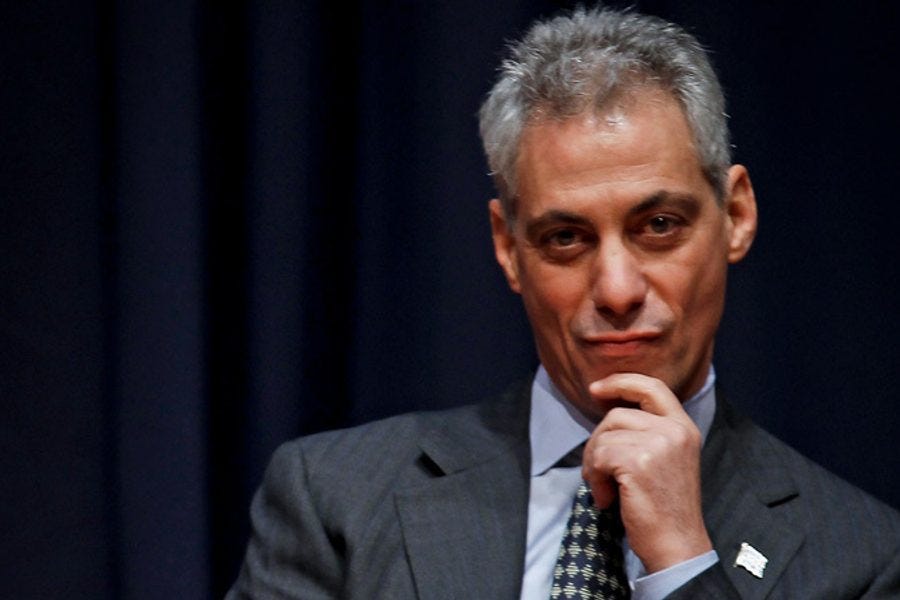
But I’ve also got to speak out about one Democrat who’s not running for midterm office but is using the midterms to build his base among future Democratic office-holders for his 2028 presidential run.
Today’s New York Times carried a Page 1 puff piece about him titled “Rahm Emanuel Makes His 2026 Play” with the subhead “The longtime Democratic insider has emerged as a behind-the-scenes force in his party’s push to win back Congress. After that, he’ll think about 2028.”
I know Emanuel. I worked with him for years in the Clinton administration, and then when he was Obama’s chief of staff.
Rahm Emanuel represents everything that’s been wrong about the Democratic Party for the last 34 years — its dependence on money from big corporations and the wealthy, its reluctance to embrace bold ideas to reverse widening inequalities, and its indifference to the needs of average working people — and Democratic candidates should be warned off him.
A specter is haunting the 2028 Democratic presidential field: the specter of reactionary centrism, which sports the political brand name of Rahm Emanuel.
Emanuel, the former Clinton White House policy enforcer who went on to become chief of staff in the Obama administration and mayor of Chicago, is going through all the motions of an early presidential hopeful.
He’s completed a “spin-free” bike tour through New Hampshire, he’s staged a photo-op on an Omaha “beer picket line,” and he’s delivered a high-profile speech arguing that America needs to adopt a more aggressive posture toward Benjamin Netanyahu’s irredentist warfare regime in Israel (without, of course, affirming anything close to the legitimate political agency of Palestinians). He’s making the rounds on the very serious interview and conference circuits to tout his broader foreign-policy sagesse.
Through it all, Emanuel has burnished his credentials as a wised-up disciplinarian figure in a Democratic Party that’s poised to succumb to a wild-eyed left-wing agenda that will poison its standing among independent-minded Real Americans during a pivotal election cycle.
There’s a singular irony in Emanuel’s peddling this prescription in 2026, ahead of an all-but-confirmed 2028 presidential run: It’s the same hoary consultant-brewed panacea that he introduced as one of the initial class of New Democrats in the early 1990s.
For this same structural critique to hold more than three decades later, you have to bracket the history of three centrist Democratic administrations, together with the disastrous legacies on trade, labor, financial regulation, and brain-dead austerity they left the MAGA movement to exploit at will.
You have to somehow accept the idea that a Democratic establishment dominated by big-money donors, tech lobbyists, and their leased consultant mouthpieces has fallen victim to a sans-culotte insurgency led by left-wing congressional staffers and “the groups” of the nonprofit sector, while the forgotten Middle America scours the political landscape in vain for a voice to represent it.
You also, not incidentally, have to disregard most of the actual political career of one Rahm Emanuel.
It’s no exaggeration to say, with apologies to Hegel’s characterization of Napoleon at the Battle of Jena, that Emanuel has embodied the neoliberal world-spirit on horseback. Back then, Emanuel’s policy portfolio was largely taken up with the push to win congressional approval for NAFTA and the 1994 crime bill—a measure that symbolized the savvy New Democratic repudiation of the old liberal interest-group model of lawmaking.
After weathering right-wing assaults on liberal governance as a prolonged study in crime coddling and kowtowing to union bosses, the Clintonian Capitol Hill strategists led by Emanuel were declaring their independence from the ancien régime by embracing traditional right-wing policy initiatives and placing a modest it-takes-a-village rhetorical spin on them.
By the squalid and inert later phase of the Clinton policy agenda—when the administration signaled total moral capitulation to the Gingrich right by signing its welfare-eradication legislation into law—it was no surprise to see Emanuel leading the charge in the White House.
Emanuel also sought, unsuccessfully, to turn Clinton into a hard-line immigration hawk, urging the president to “claim and achieve record deportations of criminal aliens.”
You could say that Emanuel was simply playing to his base: He became a key player in the Clinton White House after leading the big-donor fundraising initiative of the 1992 Clinton campaign. Emanuel’s long-mythologized DC reputation as a blunt, loud, and profane interlocutor stems from this time, when he could be heard berating big-ticket prospects with come-ons like “Five thousand dollars is an insult! You’re a twenty-five-thousand-dollar person!”
This marks the other sprawling paradox of Emanuel’s career: In posturing as the advocate of commonsense pragmatic governing, he is always representing a boardroom-first vision of politics.
Prior to his election to Congress in 2022, Emanuel spent a lucrative tour as an investment banker, bringing in a cool $16 million payday over three years. (He was, in fact, one of three former investment bankers to serve as chief of staff in Obama’s hope-and-change administration.)
When a pair of reporters from the Chicago Reader filed a FOIA request to access the mayor’s meeting schedule—which had been mostly shielded from public view—they found that he met almost exclusively with donors, and almost never with actual community leaders.
In other words, if you want an advance vision of a Democratic politics shorn of the influence of “the groups” and other irksome activists, look no further than Emanuel’s plutocratic governing record in Chicago. Alternately, you can divine the waning influence of groups-style activism in the very fact that Emanuel is now bruited as a serious candidate for the Democratic presidential nomination at all.
The scandal that paralyzed, and effectively ended, his mayoralty in Chicago was his administration’s obscene cover-up of the police murder of 17-year-old Lacquan McDonald, a Black man shot 16 times in the back by the police as he was walking away. When the video of McDonald’s killing was released, 64 percent of Chicagoans disputed Emanuel’s claim that he had never seen it before; more than half agreed that he should resign office immediately.
It says everything about the priorities of establishment Democrats that Emanuel should be an early 2028 contender, just six years after Senator Amy Klobuchar was effectively forced to scuttle her future presidential prospects in the wake of George Floyd’s police murder, since she had previously served as a county prosecutor in Minneapolis.
Grim as Emanuel’s litany of policy calls is, it may not represent his most woeful legacy in Democratic politics. That distinction likely falls to his 2006 tour as head of the Democratic Congressional Campaign Committee. During that pivotal midterm cycle, Emanuel largely prevailed in a feud over the “50-state strategy” advocated by Democratic National Committee chairman Howard Dean.
Dean argued that for the Democrats to secure a long-term governing coalition they had to mount viable candidates in—and devote resources to—states and districts that presented as redoubts of deeper-red Republicanism. The idea was akin to bolstering a flailing major-league team’s farm system with prospects that would yield significant dividends over the long haul, in lieu of a more myopic “win now” strategy focused on immediate returns.
In his accustomed role as gatekeeper to the large-donor caste, Emanuel carried the day, using his campaign coffers to effectively cut loose Democratic candidates in districts that would be a stretch to win in that cycle, and lavishing money on his preferred brand of donor-friendly campaign hopeful: right-leaning difference trimmers who often had a military résumé, some of them former Republicans. Even in that historic Democratic wave election, Emanuel’s handpicked standard-bearers fared poorly—but, far more consequently, Democrats relinquished viable candidacies in formerly contested states and districts for the political generation ahead.
A 2013 study from Governing magazine found that Dean’s project—which wasn’t officially mothballed until the end of his DNC tenure in 2009—yielded striking results. In 20 deep-red states, Democrats gained three House seats, and 39 state legislative ones, while clocking an increase in presidential vote share between 2004 and 2008 in 15 of the 20 states. … One could go further still, and note that as Democrats retreated to safer, donor-anointed battlegrounds to leave greater stretches of the political map in play for the right, ruthless GOP electioneers pounced.
The follow-on midterm cycle witnessed the devastating assault that the right termed Operation REDMAP—a bald effort to gerrymander as many congressional seats for Republican candidates as possible coming out of the 2010 Census.
In other words, as Democrats, high on their own donor-driven presidential-cycle savvy, believed they were cleverly targeting winnable districts in lieu of expanding the electoral map, Republicans seized control of the map, and every individual vote they could get their hands on.
Emanuel’s latest ploy for elite Beltway attention is an interview with Politico correspondent Jonathan Martin. It bears all the hallmarks of brain-dead access journalism, from a hackneyed introduction by Martin flogging all the clichés of Emanuel’s foulmouthed rise to power to Emanuel’s own farcical efforts to depict himself as a lone misunderstood apostle of financial regulation in the Obama White House and a heroic advocate of improved educational performance. (Tell it to the Chicago Teachers Union, pal.)
But its chief selling point—yet again—is Emanuel’s wised-up counsel to Democrats who dare to believe in a world where they might be allowed nice things. “I’m not very excited by people that took an election that was focused on Donald Trump’s corruption and now focused on a party that has candidates that want to defund the police, decriminalize the criminal justice system, and want to run an open border policy,” he maunders, before circling for good measure into some performative bigotry: “I’m tired of discussions about bathroom access, and I want to start having discussions about classroom excellence.”
The good news here is that the feeling is very much mutual. As Bernie Sanders declared on Face The Nation when host Margaret Brennan presented him with Emanuel’s latest screed against “the Bernie bros” in The Wall Street Journal: “People are sick and tired of the Rahm Emanuels and Democratic establishment and Republican establishment…. The American people are tired of a rigged economy, a corrupt campaign finance system. They want real change. They don’t want Rahm Emanuel and the establishment maintaining the status quo.”
Amen. Politico opportunistically titled Martin’s interview “Rahm Emanuel on Why the Democrats Keep on Losing.” The subhead should have simply explained that the short answer is Rahm Emanuel.

 Login
Login