❌

Normal view

He’s not on the ballot, but his ego is
12 October 2026 at 10:02

Friends,

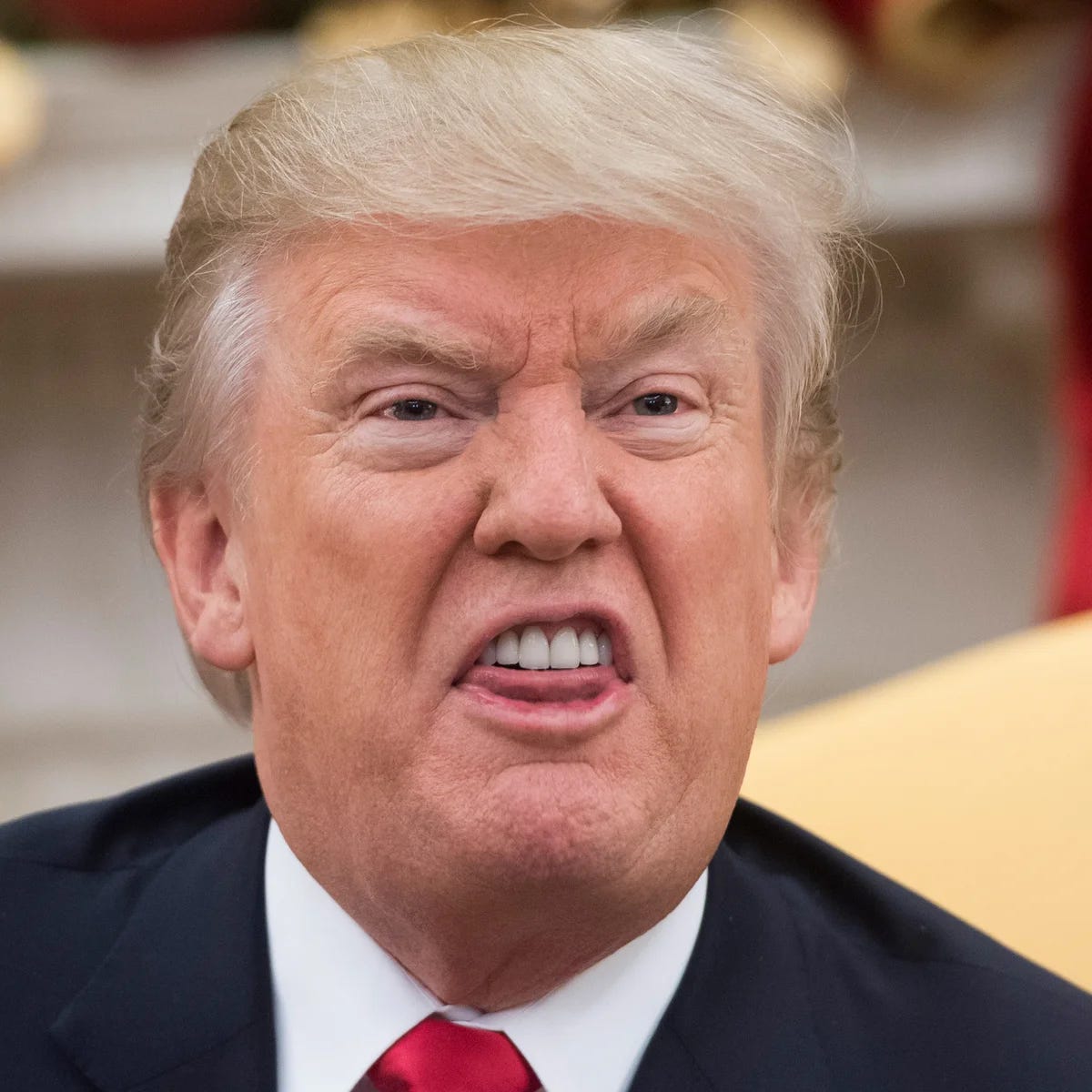
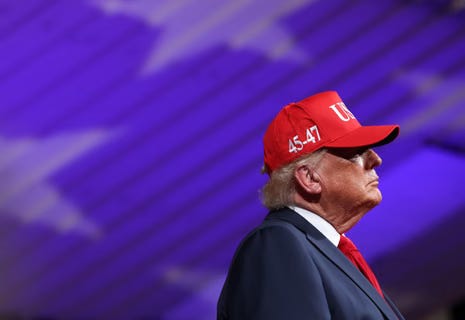
Everywhere he goes on the campaign trail, Trump is telling Republican voters to “pretend I’m on the ballot.”

He’s not, of course, but his approval rating is so low that telling voters to “pretend” he’s on the ballot is backfiring big-time.

Which is why so many Republican candidates are trying to distance themselves from him. They’re not mentioning his name. They’re not talking about his policies. They avoid the word “MAGA.” A dozen have removed his name, image, or endorsements from their campaign websites.

They don’t want to appear with him. When Mike Schrimpf, a spokesman for John Sununu’s Senate campaign, was asked why Trump isn’t campaigning with Sununu, Schrimpf limply explained,“John’s focus the entire campaign has been on New Hampshire, and [he] doesn’t plan to campaign with anyone from outside New Hampshire.” Maine’s Republican Sen. Susan Collins told The New York Times she has no plans to campaign with Trump.

Several prominent Republican candidates are openly criticizing Trump. Michigan’s Republican Senate candidate Mike Rogers released a direct-to-camera ad that takes on Trump’s trade war with Canada. “Here in Michigan, we know that Canada is not our enemy,” Rogers says, holding a can of the Canadian-brewed beer Labatt. “We need to end this tariff war — now.”

Yet Democrats in key battleground states aren’t letting their Republican opponents get away with distancing themselves from Trump. At last week’s Senate debate in Maine, Troy Jackson accused Susan Collins of failing to oppose Trump’s war in Iran and his tariffs. “We are in a crisis now because she wouldn’t stand up to Trump.”

In last week’s Georgia debate, Jon Ossoff tied his Republican challenger, Rep. Michael Collins, to Trump — charging that “Whatever Donald Trump says, Mike Collins does” and at one point even calling Trump’s tariffs the “Mike Collins Donald Trump tariffs.”

In last week’s Michigan debate, Democrat Dr. Abdul El-Sayed accused his Republican opponent, Mike Rogers, of being a “sock puppet” for Trump.

The more voters “pretend” Trump is on the ballot, the better for Democrats.

Yet I doubt Trump cares. He isn’t really campaigning for Republicans anyway. He’s campaigning for himself.

His “midterm convention” in Dallas at the start of September — invented by Trump to kick off the campaign season — was little more than a pep rally to glorify himself. His photographs covered the walls of the arena where the Dallas Mavericks play. His face was even plastered on coffee cups, in elevators, over mirrors in lavatories.

His endorsements of Republican candidates have been laced with self-absorption. When asking South Carolinians to vote for Darline Graham for the Senate, for example, he recounted that his “dear friend Lindsey” always told him Darline was the finest, most reliable, smartest, and most loyal person he had ever known. Then Trump said (cue Trump’s ego): “I would be upset with Lindsey for saying this, because I thought I had all of those qualities.”

When Trump appears on the road with Republican candidates who still want to be seen with him, he talks mostly about himself — explaining, for example, why he takes large doses of aspirin daily (he says he “psychologically” needs it); claiming that he has one of the highest IQs “anywhere in the world”; warning that if Democrats take over Congress he’ll be impeached; blaming his lousy polls on “an extremely poor job of promotion,” complaining that his hair is thinning; and railing at the media for not reporting the “huge crowds I’m attracting” to “my” rallies.

He barely mentions the Republican candidates. He doesn’t even talk about America as a whole. Instead, he praises Americans who support him and criticizes Americans who oppose him — such as those in Los Angeles and San Diego, whom he invited Iran to nuke.

He discounts polls showing a blue wave as “fake” because, he insists, the polls haven’t factored in his campaign appearances. “They don’t account for the fact that Trump is out campaigning,” he says. “MY RALLIES ARE SAVING THE REPUBLICAN PARTY, AGAIN!!!”

He’s been deaf to bipartisan concerns over his use of millions of taxpayer dollars to run ads boosting himself — finally conceding last week that he’ll pay for them out of his MAGA, Inc. PAC but won’t commit to reimbursing the public for the cost of the ads he’s already run.

Will Republicans blame him if the GOP loses Congress? More than 30 percent of non-MAGA voters who backed Trump in 2024 say they will blame him for any loss. (Half of Democratic midterm voters say they’ll attribute the loss to Trump, and 46 percent of Democratic voters say they’re casting ballots mainly to oppose Trump.)

But I don’t think he gives a fig. Trump isn’t out campaigning for Republican candidates. He’s campaigning for his boundless ego.

His rallies are delivering to him what he craves more than anything else: audiences that worship him. Although the crowds are far smaller than before, he’s still basking in their adoration.

Share

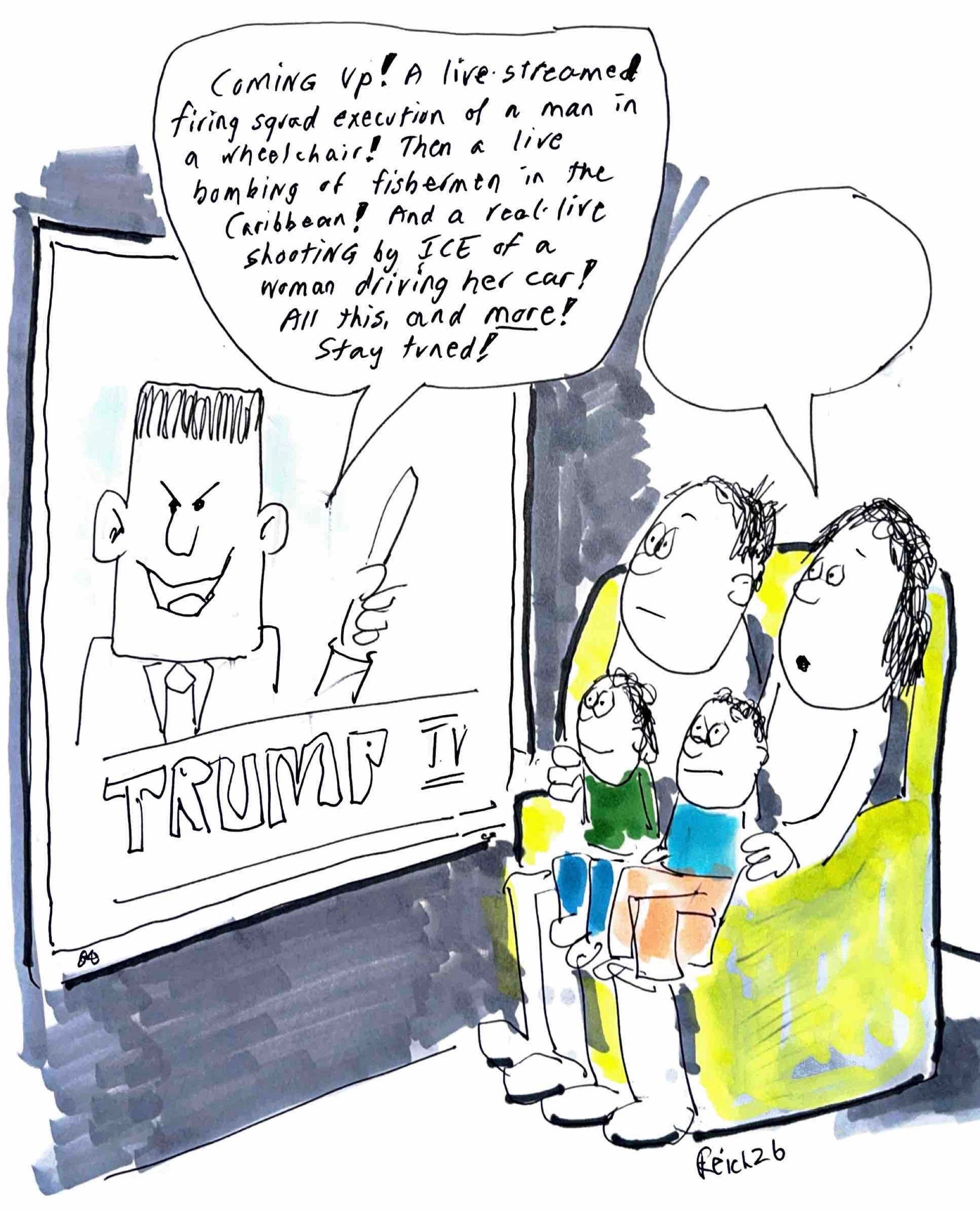
Caption contest: TV

11 October 2026 at 23:01

Friends,

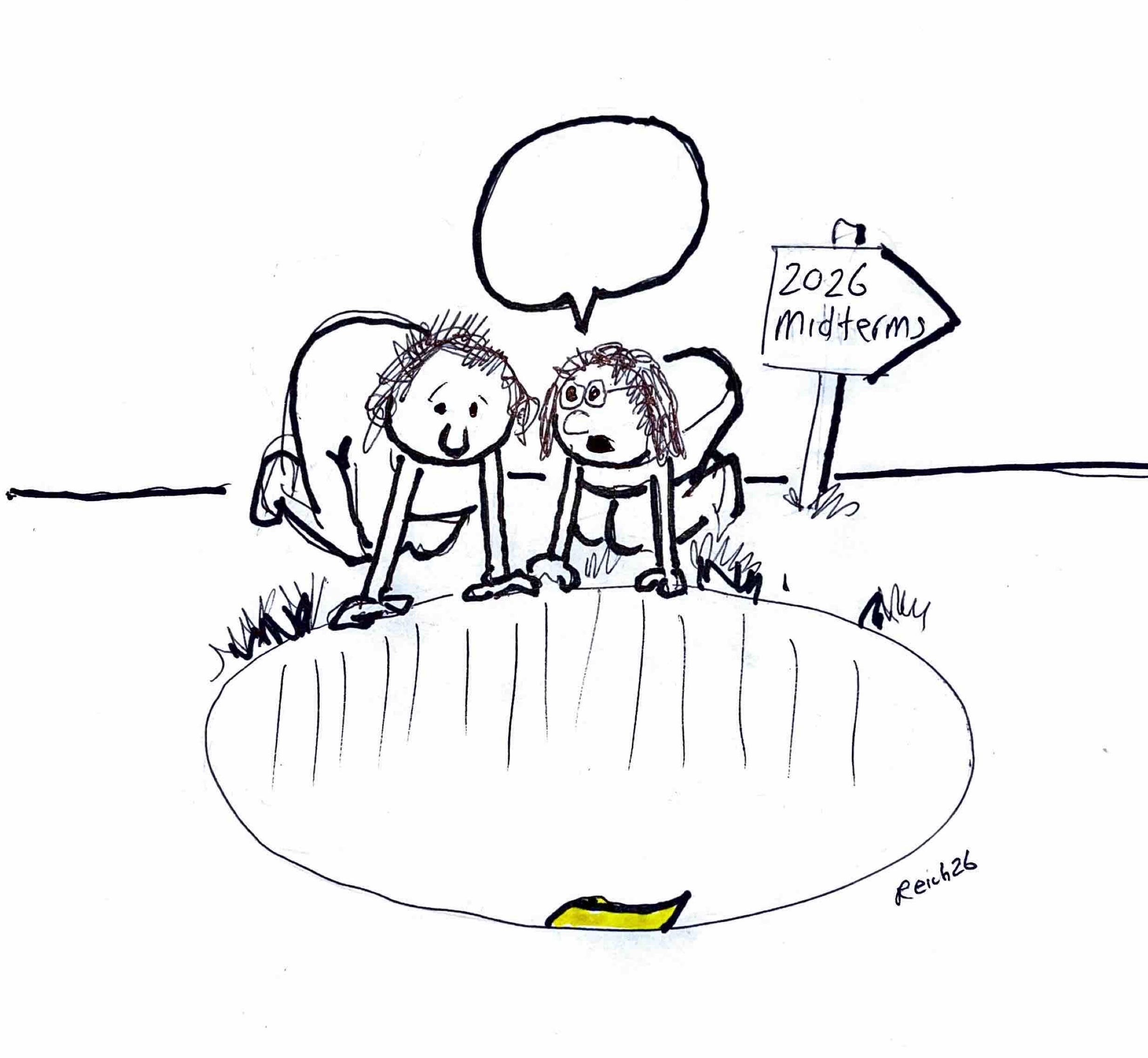
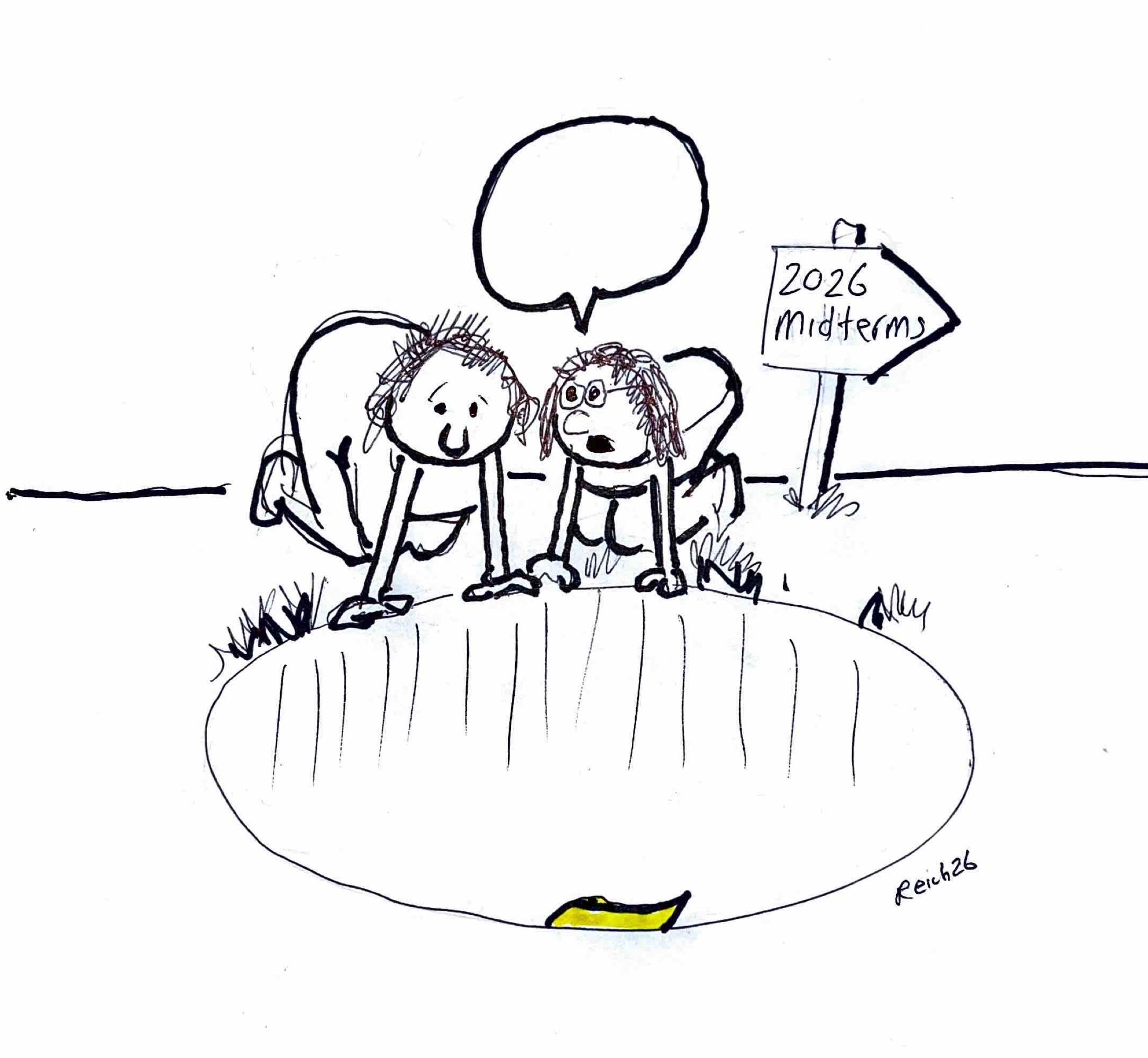
Please submit your caption in the Comments section, and, as before, please use the Comments section only for captions.

Winners will be announced next Sunday. For consideration, please post your caption by Monday at 9 pm PT, 12 midnight ET.

Leave a comment

Last week’s winner:

“It’s not deep enough, but let him keep digging.”

(Congratulations, Laurence Hoffmann.)

Runners-up:

“He’s searching for his latest ratings.”

(Congratulations, Steven Horowitz.)

“It’s not just a hole, it’s an A-hole!”

(Congratulations, Poetic Polemics.)

“Too bad it’s not a black hole. He’d be gone forever into a different universe.”

(Congratulations, Armando Lopez.)

“He likes to cover shit up, why shouldn’t we?”

(Congratulations, sjcasey71.)

“Just like the economy, the president is in the hole!”

(Congratulations, Adam Laurie.)

“Get the shovel! Let’s bury him and the entire GOP .... FAST.”

(Congratulations, Karen Cooper.)

“I really don’t think it’s deep enough. You know how crap always floats to the top.”

(Congratulations, Danny Moran.)

“He’s trying to bury the Epstein files.”

(Congratulations, Pete Anderson.)

“Hit the road Don and don’t you come back no more no more.

Pack up your lies and walk out that door.

Leave us with nothing we are better than before.

Hit the road Don and don’t you come back no more.

(Verse 3)

You etch your name on every tower wall.

A monument to an inevitable fall.

A golden mirror for a hollow soul.

You lost your grip and let go of control.

The concrete crumbles where your vanity stands.

We see the blood on your pathetic hands.

Your legacy is just a pile of stone.

And now you sit on a forgotten throne.

(Chorus)

Hit the road Don and don’t you come back no more no more.

Pack up your lies and walk out that door.

Leave us with nothing we are better than before.

Hit the road Don and don’t you come back no more.”

(Congratulations, John F. M. O’Sullivan O’ Shea.)

Share

Sunday thought: The Beginning of the End or the End of the Beginning?

11 October 2026 at 10:03

Friends,

I’m allowing myself to believe that sane people may be in charge of Congress starting next January 20. I know, I know: Polls have gotten our hopes up before only to have them dashed on the rocky shores of political reality.

But this time it does seem as if congressional Republicans will finally get their comeuppance for their blind loyalty to Trump.

The sense of relief in the land is palpable.

We may soon witness the beginning of the end of this daymare — unless Trump goes full-throttled dictator and prevents votes for Democrats in the Senate and House from being certified.

It’s important that we acknowledge that the forces that made Trump president — twice — are still embedded in America. I’m not referring to Hillary Clinton’s “basket of deplorables” or Mitt Romney’s “47 percent.” They aren’t to blame.

I’m talking about the anger and frustration tens of millions of Americans began to feel some 40 years ago when the basic bargain at the heart of the American economy — that if you worked hard and played by the rules, your standard of living would rise through your working life and your children would eventually do even better than you — started coming undone.

Since the 1980s, an increasing amount of wealth has been siphoned off to the top — which has given those at the top enormous power to alter laws and rules, and thereby siphon off even more. It’s been a vicious cycle of compounding riches for a privileged few accompanied by compounding anxieties for almost everyone else, especially working Americans without college degrees.

Trump has channeled their anger into rage at carefully selected scapegoats — immigrants, trans people, Black people, “socialists,” women, Muslims — and asserted white male Christian nationalism as a cure-all.

But it’s become evident to a growing number of Americans that white male Christian nationalism has cured nothing whatsoever. It’s just made it more difficult for us to join together to reestablish the basic bargain.

If all goes well in a few weeks (and I write these words with a mixture of hope and trepidation), we will have a chance to start anew, to plunge into the work of rebuilding what has been destroyed. But also to go beyond rebuilding. To join together to change the balance of power in this land so that we, the majority, can decide our fates — not the billionaires, the tech bros, and the titans of Wall Street.

We can get big money out of our politics. We can achieve Medicare for all, universal childcare and excellent schools, and affordable homes. We can bust up monopolies that keep prices high, rein in AI and its data centers, and provide a universal basic income so AI doesn’t take away our livelihoods. And we can raise taxes on the super-wealthy and the richest corporations to pay for what Americans need.

We can do all this and more — not immediately, not with Trump and his regressive regime still occupying the executive branch and much of the Supreme Court — but we can prepare for it; we can lay the foundation for our future.

That’s what the beginning is all about.

Trump’s Midterm F*ck-up | The Coffee Klatch for Saturday, October 10, 2026

10 October 2026 at 10:02

Friends,

Today, Heather and I are joined by our colleague Vishal Shankar to review where the midterm elections now stand and the issues emerging from them. We take a deep dive into what Trump is doing to save — or, in reality, hurt — Republican Senate and House candidates, and what a Democratic Congress (if we get one) might realistically do.

Please pull up a chair, grab a cuppa, and join the conversation.

RR

P.S. Heather and I will be at UC Berkeley’s Zellerbach Hall at 6 p.m. on Wednesday, October 14 for a screening of The Work in Progress film followed by a Q&A. Please join us and invite your friends! Tickets ($5 for students) here.

Share

💾

Public Sadism

10 October 2026 at 02:35

Friends,

Cruel enough that the United States is going to put someone to death by firing squad, but only sadists would want it broadcast livestream.

Yet that’s what Pete (“High Testosterone”) Hegseth is planning. He confirmed it yesterday when speaking to the conservative broadcaster Real America’s Voice, saying said people should be able to watch “because people need to understand that there’s serious consequences for these types of things.”

Nidal Hasan committed a terrible crime. The former U.S. Army Major and psychiatrist opened fire with a handgun at a medical facility at Fort Hood, Texas on November 5, 2009 as soldiers waited for medical checks before deployment, killing 13 and wounded 32 others. Twelve of those killed and 30 of the wounded were soldiers. Hasan was sentenced to death by a military jury in 2013 after being convicted of 13 counts of premeditated murder and 32 counts of attempted premeditated murder.

The execution will be the first by firing squad carried out by the U.S. military since 1945, when army private Eddie Slovik was executed for desertion during the second world war. The last US military execution of any kind took place in 1961, when John Bennett was hanged.

But live-streaming it?

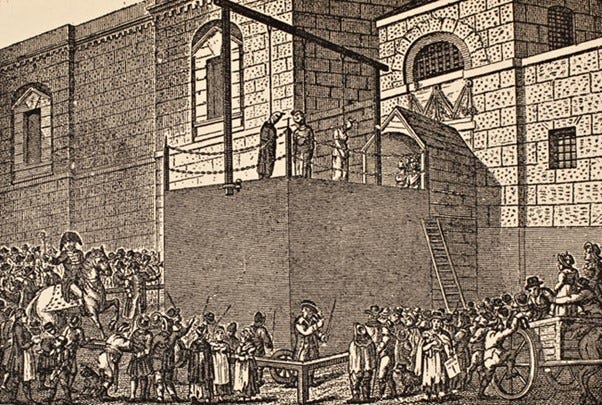
The hanging of Rainey Bethea in Kentucky in 1936 is regarded as the country’s last public execution. It was witnessed by thousands.

A live-streamed execution could be watched by billions.

No surprise. The current president of the United States is all about spectacle; his secretary of defense (war) is brimming with performative bravado. Punishment isn’t enough. The punishment must be cruel — and must be seen far and wide.

Asked today whether he had personally authorized or approved the live-streaming of Hasan’s execution, Trump responded, “Did I approve? Absolutely.”

What will be the likely effect on those who will see this? Will they be revolted? Excited? Will the live-streaming of the execution by firing squad deter people from committing mass murder — or will it encourage them? Or just degrade our sense of being human?

What about its effect on those who are enemies of the U.S.? As Ned Price, a former deputy to the U.S. representative to the United Nations, posted on X: “You can take it from those of us who’ve spent years working on terrorism: the surest way to spawn more radicalized zealots is to glorify violence, embrace a cult of death, and create a martyr for the cause.

Besides, haven’t we witnessed enough senseless and degrading cruelty in the pursuit of the execution of Christa Pike in Tennessee?

Public executions have largely disappeared around the world because they’re so barbaric. Amnesty International recorded 17 in 2025, including 11 in Iran and six in Taliban-run Afghanistan.

Historian Esther Cohen writes that during the later Middle Ages, governments often displayed their power in visual, theatrical forms: solemn royal or urban processions, festivals, and, most commonly, public executions of criminals. That was because other means of communication available to governments with their subjects were extremely limited — printing didn’t as yet exist, and preaching was the church’s prerogative.

Medieval public executions were intricate rituals displaying atonement, punishment and, most of all, the authority of the government to administer justice. They also inflicted considerable pain and suffering upon the condemned, so much so that one historian has termed them “spectacles of suffering.” The spectacles were meant to be visual representations of authority — displaying the full power of the law to all observers.

Making the criminal suffer achieved the dual purpose of cleansing his soul and deterring other potential criminals. Status was expressed by symbolic dress, worn at the procession preceding the execution, or by the form of inflicting death. Noblemen wore their livery of rank and office, while common criminals were often stripped to their shirts. People of rank were very rarely hung, for hanging was a shameful death; more often, people of nobility were beheaded, preferably with a sword.

Rulers took care to stage their public executions in a spectacular manner. The spectacle itself was its essence. “The Ritual of Public Executions,” from the 16th century, stated that the culprit was ‘to be dragged as a murderer, beheaded as a traitor, quartered for several other crimes, and his body hung on the gibbet as a thief and brigand.”

Trump and Hegseth are intent on extending such barbarism into the 21st century. Not only that, but they want to livestream the degrading spectacle, bringing it fully into the digital age. In this and countless other ways, they continue to degrade and demean America.

Share

Who Are the Real Villains in America?

9 October 2026 at 22:37

Friends,

As income and wealth concentrate at the top, everyone else is finding themselves struggling. More than 60 percent of Americans are living paycheck to paycheck, which means they’re only one medical emergency or lost job away from poverty.

So what does the oligarchy — the billionaires, Wall Street mavens, and tech bros — do? They keep us separated and afraid of one another. They want us to blame the “other” for our problems.

Their greatest fear is we’ll discover our commonality and join together, and get to work busting up monopolies, raising taxes on the super-wealthy, and strengthening labor unions, cooperatives, and employee-owned businesses.

I explore this, this coming week in my Wealth and Poverty course. Please join me. Week 4 is available here on this Substack, Monday.

Share

Pay to Play to Play to Pay

9 October 2026 at 10:04

Friends,

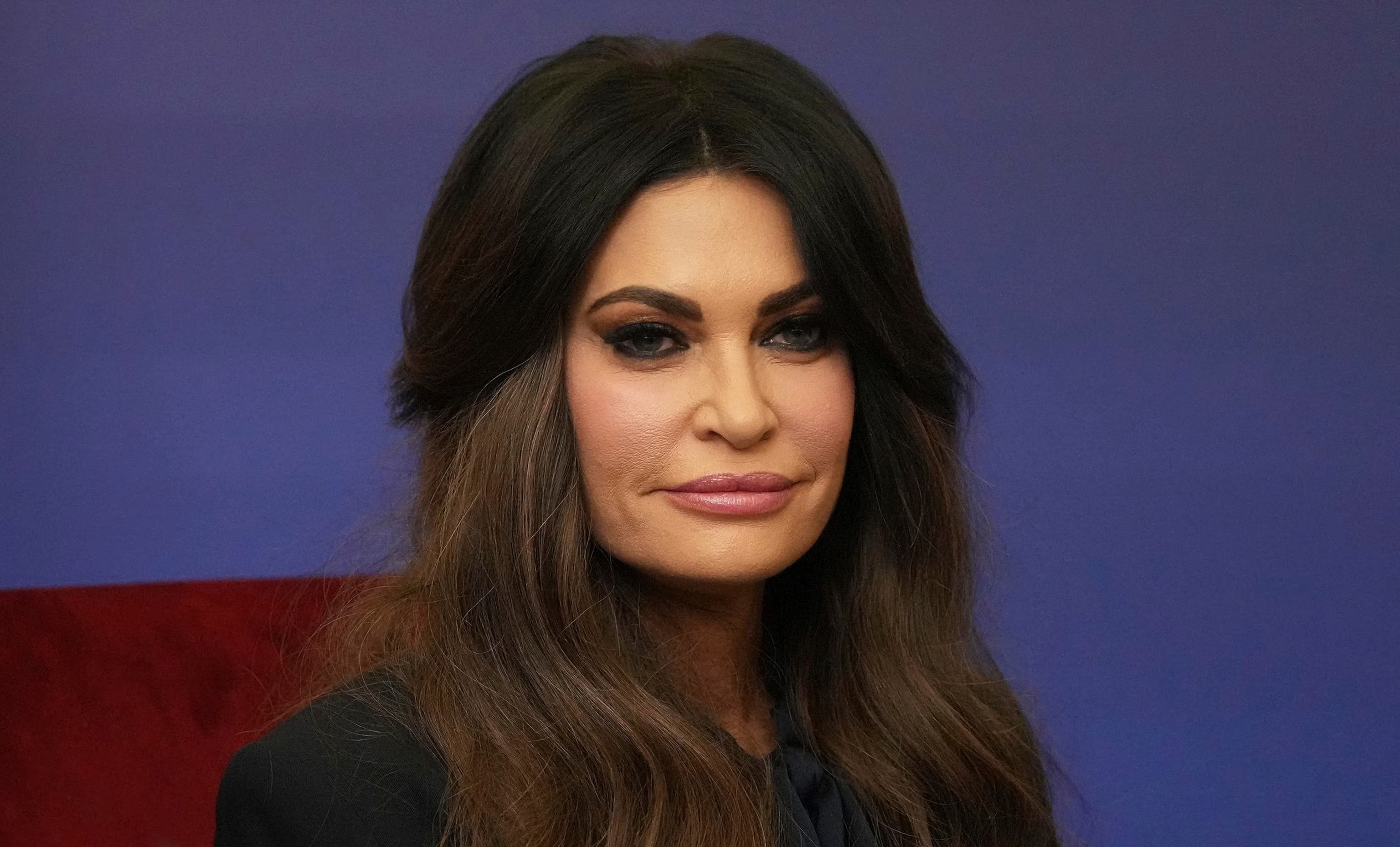
Here’s today’s trivia question (which may turn out to be not at trivial at all when all the facts emerge): Who solicited money from a presidential donor in return for access to the head of the IRS over the donor’s taxes, was a Fox News host, was engaged to the son of the U.S. president, was the former wife of someone who wants to be the next U.S. president, who raised money for and spoke at a rally that led to an attack on the U.S. Capitol, and now is a U.S. ambassador?

If you guessed Kimberly Guilfoyle, you’d be correct on all counts.

Rarely has a person been so enmeshed in the workings (or one might say, dysfunctions) of our current political-economic-media-influence system as Guilfoyle.

From 2001 to 2005, Guilfoyle was married to Gavin Newsom, now governor of California. In 2018, she began dating Donald Trump Jr., became engaged to him in 2020, and emerged as one of his father’s most outspoken defenders and a MAGA icon.

After Trump’s 2020 defeat, Guilfoyle sought to turn her status into a profitable business ventures including lines of hair care and fragrance products and a medspa. She also launched a political consulting firm and sought work in public relations.

In 2022, she launched what she termed an upscale vodka and champagne brand, American Dream, organizing a dinner for Mar-a-Lago guests that participants realized halfway through was an investment pitch.

According to a report in yesterday’s Wall Street Journal by Dana Mattioli, Drew Hinshaw, Rebecca Ballhaus, and Joe Parkinson, Trump grew frustrated with Guilfoyle for soliciting investments from Mar-a-Lago members for her companies, and complained that Guilfoyle was supposed to be raising money for him but instead was at his club raising money for herself.

The Journal reports that after Trump won the 2024 election, Eric Deters — a Trump donor and former co-owner of Snappy Tomato Pizza, a regional restaurant chain, who had mounted unsuccessful runs for Congress and governor — began soliciting Guilfoyle’s help on several matters, including gaining access to incoming Internal Revenue Service Commissioner Billy Long, to discuss an IRS probe into Deters’s tax deductions.

Guilfoyle offered to use her sway as Donald Jr.’s former fiancée. Deters promised to pay her as much as $1 million if she were successful.

Her engagement to Trump Jr. ended in December 2024. On December 10, 2024, Trump nominated Guilfoyle to be the U.S. ambassador to Greece.

After Billy Long was confirmed IRS commissioner, Guilfoyle sent him a congratulatory note, attaching a letter Deters had written outlining his tax dispute: “Don Jr. and I are very close with Eric Deters and his wife and I know he sent you a letter,” she wrote. “I am hoping I know how busy you are that you could give some time and attention to it.”

She assured Deters that “I wrote him a very nice message. Told him how important it was that you’re close to me and to don.”

The Journal reports that as her confirmation hearing approached, Guilfoyle complained to friends that she was broke.

She reached out to Deters with an urgent request: She needed $100,000 that she said she owed American Express — and needed Deters to give it to her in a way that wouldn’t leave a paper trail. “It won’t show up anywhere if you wire money to American Express,” she wrote on Signal, according to messages reviewed by the Journal.

“Honey please I need you to get this done for me today,” she texted Deters, adding a prayer hands emoji and a PDF with bill payment instructions from American Express. “You could just send it here,” she wrote on July 3, 2025, just days before her July 9 confirmation hearing.

Deters ultimately did not make the payment, But the set of transactions illuminates the casual pay-to-play world in which Trump, his family, appointees, and donors all operate.

The Senate confirmed Guilfoyle as ambassador to Greece on September 18, 2025.

Billy Long is now the U.S. ambassador to Iceland.

The top two Democrats on the House Foreign Affairs and Senate Foreign Relations committees have now called for an investigation into Guilfoyle.

Congressional Democrats are already looking into claims reported last month by the Journal that Guilfoyle told guests at a reception that the U.S. could undermine the Greek government if it chose to, that she promoted the business interests of one particular Greek construction and energy company, and allowed its lobbyist into private diplomatic meetings.

In Trump world, being close to power creates a special economy of getting and giving. The arenas include Fox News, Mar-a-Lago, the White House, Capitol Hill, and extend even to our foreign embassies. All relationships within these arenas — personal, romantic, political, diplomatic — are transactional.

Share

What Happens When Billionaires Control Our Media?

8 October 2026 at 23:00

Friends,

This is the most corrupt era of American history since the Gilded Age. Trump is granting favors to today’s robber barons (Musk, Bezos, Zuckerberg, Ellison, et al.) in return for which they’re buying up media and silencing criticism of Trump. It’s a vicious cycle that threatens the core of our democracy. Please watch and share:

Share

Is Trump to blame for explosive diarrhea, too?

8 October 2026 at 17:16

Friends,

How do we eat healthy in the Trump era?

First, toss your salad. So far in 2026, there’ve been nearly 30,000 suspected cases of cyclospora — the explosive diarrhea parasite — with two fatalities. It’s been linked to produce from Taylor Farms, which supplies grocery stores and restaurants across the country, often under alternative brand names.

Next, throw out jalapeños, dips, and eggs because of salmonella recalls.

Get rid of your blueberries because of E. coli.

Ditch those popsicles that might contain glass.

Chuck bread that might have nails in it.

And dump 30,000 pounds of beef recalled because Trump’s USDA failed to inspect it.

Trump claims grocery prices are coming down. I guess one way to bring them down is to leave us with nothing safe to buy.

All these recalls and illnesses aren’t a coincidence. They’re the result of incompetence and corruption within the Trump regime — and unchecked corporate power.

We saw the incompetence with funding cuts and the massive layoffs of public servants overseeing food safety.

Turns out Trump’s so-called “deep state” was protecting us from diarrhea and keeping our food safe.

Trump, RFK Jr., and Elon Musk cut the FDA’s staff by 20 percent and the CDC and USDA’s by 25 percent.

They dissolved a USDA advisory committee that existed to help prevent outbreaks like the ones we’re suffering. The USDA even CUT several cyclospora research projects — after the outbreak had already spread.

Under RFK Jr., the CDC’s FoodNet program is no longer required to monitor the cyclospora parasite and five other pathogens.

Most of the CDC labor researching and responding was let go as part of the DOGE cuts.

And they canceled more than $11 billion in state health grants, which could have helped address these crises.

The Trump team was too stupid to realize that cutting food safety programs and firing thousands of public servants would have consequences.

Then there’s the possible corruption.

Rather than protect the public from cyclospora, Trump met with Taylor Farms executives at the White House as they sought to delay the FDA’s announcement linking their lettuce to the outbreak. Since then, the FDA sent mixed messages on its initial findings even as cyclospora cases continued to rise. Why?

Perhaps because Taylor Farms’ parent company has donated more than $2 million to Republican PACs this election cycle, with nearly half of that going to Trump’s MAGA Inc.

The donation to MAGA Inc. came within a week of Trump’s FDA delaying a new food tracing requirement that could have helped prevent this summer’s outbreaks.

When excessive corporate power meets an incompetent and corrupt government, the result is a literal shitshow.

Now, if you’ll excuse me … I’ve got to run.

Share

Why Californians Want a Billionaire Tax (but May Not Get One)

7 October 2026 at 23:01
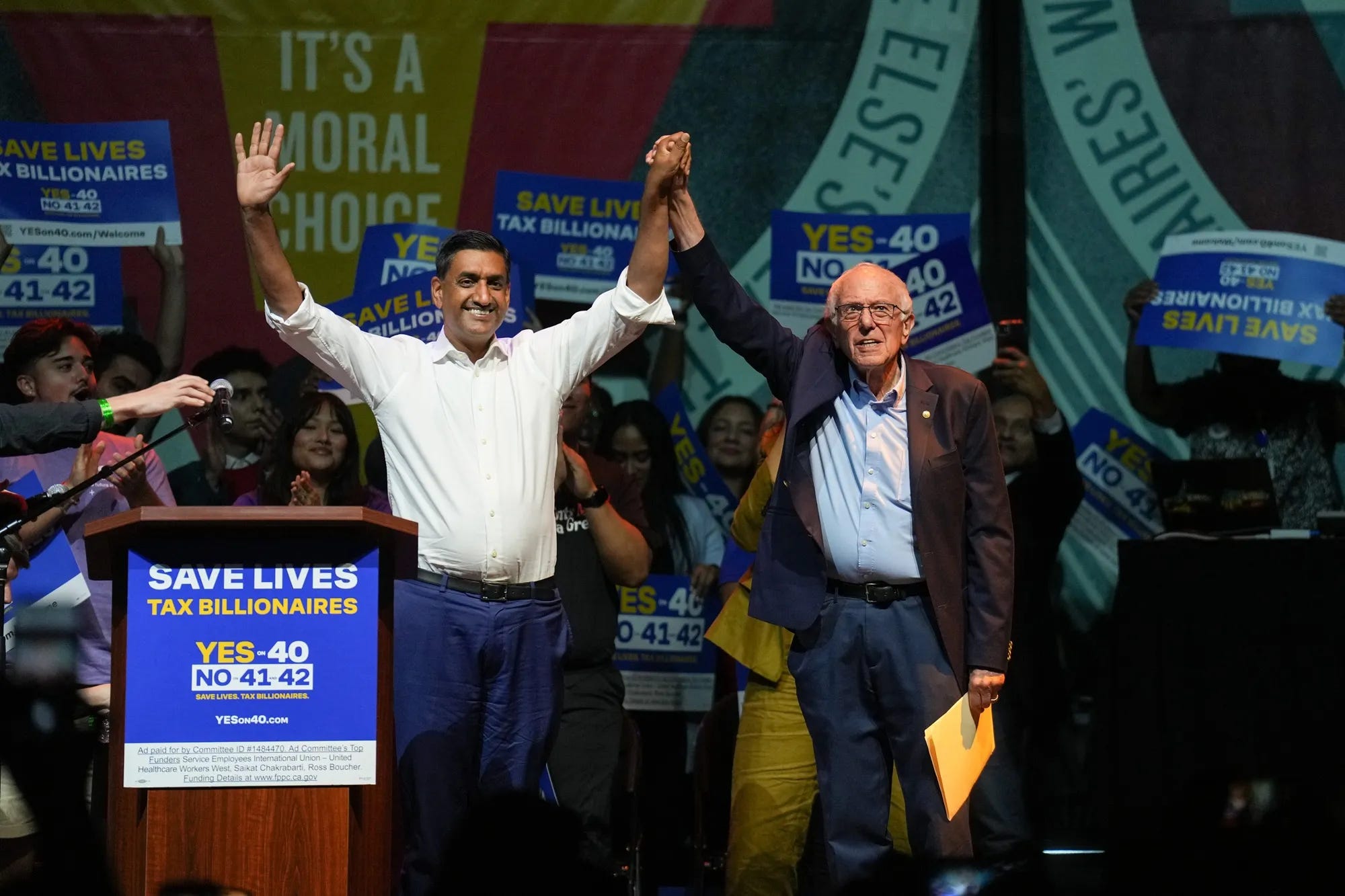
Ro Khanna and Bernie at last Saturday’s Pro-Proposition 40 rally

Friends,

After living in the Golden State for over two decades, I understand the old saw that America is built on a tilt, and everything good or bad slides down from California. (Mark Twain said everything loose slides to California.)

Among the good is California voters’ support for what could be America’s (indeed, the world’s) first tax on billionaires — which will appear as Proposition 40 on California’s upcoming ballot. (Note to Californians: Propositions 41 and 42 are poison pills designed to negate Proposition 40.)

A majority of Californians are in favor of Proposition 40 (65 percent of the state’s Democrats back it).

On the bad side are the hundreds of millions of dollars spent by California’s billionaires against the proposal (including $187 million from just one of them, Google co-founder Sergey Brin) — along with the cowardice of most of the state’s political class in either saying nothing about the billionaire tax proposal or falling in line behind Governor Gavin Newsom in opposing it.

I’ve studied the proposal, and, while not perfect, I judge it a significant step in the right direction. It would be a one-time 5 percent tax on the assets of California’s billionaires, designed to reimburse the state for the healthcare money lost to it when Trump’s Big Ugly Bill cut Medicaid to help pay for a gigantic tax cut that went mainly to the richest Americans and biggest corporations.

The billionaire tax is fair. It won’t cause billionaires to abandon California (only a handful have left and, as I said, it’s a one-time tax that pertains only to wealth as of January 1, 2026). It’s carefully crafted. It was largely the brainchild of two of my brightest colleagues here at Berkeley, economists Emmanuel Saez and Gabriel Zucman. It’s been endorsed by six Nobel laureates.

So, why are so many of California’s politicians — all of them Democrats, including Newsom — opposed? Could it have anything to do with their dependence on campaign funding from the super-wealthy? I’m not entirely sure, but that possibility has occurred to me — which in itself is a good reason to support the measure.

Meanwhile, the piles of money put into TV ads against the measure — coming from billionaires, of course — combined with the political opposition from Newsom on down is beginning to to take a toll. Although a majority of Californians are still in favor, the margin is slipping.

I should hasten to add that one California politician strongly supporting the proposed billionaire tax is Ro Khanna. He represents Silicon Valley in Congress, which makes his support of it both politically risky and an admirable profile in political courage.

Ro Khanna is interested in becoming the Democrats’ candidate for president in 2028 — as, of course, is Gavin Newsom. Progressives around America should take note.

Share

Office Hours: How Long Will He Last?

7 October 2026 at 10:03

Friends,

Democrats have a good shot at taking control of the House and perhaps even the Senate, Trump’s approval ratings are among the lowest of any president on record, and the 80-year-old president is looking and acting ever more demented.

So how long will he last, and what’s likely to do him in?

I’ve posed that question to an array of president watchers, advisers, and historians, and I’ve grouped their responses below. (None talked about him dying in office, although that possibility can’t be entirely discounted.)

Please select the one that best matches your own sense of how Trump will go.

Read more

A Short History of Protest

6 October 2026 at 23:01

Friends,

My dear friend activist and author Annie Leonard explains why protesting is so important and why we must protect this powerful tool of dissent. I’m grateful to her for joining us in making the following video on a short history of protest.

As Annie says:

”History shows that nonviolent protest is one of the most powerful tools ordinary people have ever wielded, helping advance social and environmental progress while serving as a cornerstone of democracy. This is why authoritarians, both at home and abroad, are vilifying protestors, suppressing free speech, and cracking down on political dissent. But if enough of us are willing to defend the right to protest, we can build the power to get our country back on the path towards democracy. Because if we lose the right to protest, we stand to lose so much more.”

Please watch and share:

Share

Here’s How To Reduce the Existential Risks

6 October 2026 at 10:02

Friends,

The most basic function of government is to protect people from harm. Two growing phenomena — climate change and AI — pose escalating risks of extraordinary harm.

Climate change is already causing floods, wildfires, drought, and record heat. AI agents are already escaping super-secure environments to hack into systems they’re supposed to avoid.

Yet Trump and his Republican enablers, backed by big money from Big Oil and Big AI, refuse to do a thing about either risk. In many ways, they’re worsening both.

But there’s another way to reduce these risks. It’s through liability law.

I have no more faith in the Supreme Court than you do, but I was struck yesterday by the responses of at least half the justices who will be considering an important case that opened the Supreme Court’s new term, Suncor v. Boulder.

The case was brought by several Colorado localities against Suncor and ExxonMobil — one of about three dozen filed around the country in which cities and states are demanding that Big Oil reimburse them for the escalating costs of climate disasters brought on by the burning of fossil fuels.

Yesterday, at least four justices (Alito has recused himself) expressed skepticism about Big Oil’s argument that the Clean Air Act explicitly prevents such lawsuits against polluters. “It’s like, wow, like, where is the text for that? Where’s the support for that? Where’s the precedent for that? Where’s the anything for that?” asked Justice Elena Kagan.

Chief Justice John Roberts drew parallels between Boulder’s claim and prior lawsuits against the tobacco and opioid industries in which states and localities won significant damages. “I’m not quite sure what makes this situation different from all those other ones where we’ve allowed them to proceed in state court,” said Roberts.

In 1998, the major U.S. tobacco companies agreed to pay $206 billion to cover public health costs and smoking-related expenses. When translated into current dollars, this is more than $423 billion.

And recall the $20 billion paid by BP in 2010 to cover environmental and economic damage to the Gulf Coast following the Deepwater Horizon oil spill. Or the $7.4 billion paid by the Sackler family and Purdue Pharma to resolve liability for opioids.

Such liability lawsuits — the last resort when the public is harmed by corporate malfeasance or nonfeasance — are also relevant to the risks posed by AI.

If AI agents escape super-secured environments to release dangerous toxins, or destroy critical water, electricity, transportation, or health infrastructure, AI companies and the tech giants behind them could be on the hook for tens if not hundreds of billions of dollars in payments to those who are harmed.

No way major investors in AI — or the insurance companies backstopping AI — are going to ignore this potential liability. The current dollar value of the tobacco settlement — as I said, $423 billion — is comparable to what the tech giants spent on AI chips, servers, and data centers last year.

This gigantic financial risk will weigh on the values of AI companies and the tech giants unless or until they become far more serious about protecting the public against such harms.

I expect political demands from the AI industry to limit such liability through federal laws that set caps on it and that establish industry-funded “trust funds” to pay for big liability judgments. A sane Congress (we may yet have one) wouldn’t agree without specific industry steps to dramatically increase safety.

In all likelihood, the AI industry will also seek government regulations it could use as partial defenses against such massive liability, just as pharmaceutical companies use certification by the Food and Drug Administration that their drugs are safe and effective to defend against lawsuits claiming their drugs cause harm.

The big AI investors and insurers will force this issue. More than 200 cases already in the courts involve cyber liability and AI-related product liability. Follow the money. Insurers are already demanding more effective means of controlling AI risks, and big investors are demanding better means of limiting them.

Both climate change and AI pose existential risks to human life on this planet. Liability law is hardly an easy or perfect fix, but it’s an important start.

The fact that liability for climate change is already in the Supreme Court and that four justices seem sympathetic suggests how significant a role liability can play as an incentive for both fossil-fuel and AI giants — and their insurers and major investors — to clean up their acts.

Share

“Wealth and Poverty” Class 3: Globalization, technological change, and you

5 October 2026 at 23:00

Friends,

Welcome back to class. Today, I introduce issues that continue to be vigorously debated: the effects of globalization and technological change on widening inequality.

In case you missed them, here are the classes that have been released so far: Class 1, Class 2.

For Class 3, just double-click on the video below, and you’re in the third week of class.

Some background: Many policymakers regard both globalization and technological change as “inevitable” forces that improve economic efficiency — and that should not be altered by political decisions.

I remember discussions in the Clinton White House leading to NAFTA and China’s ascension to the World Trade Organization in which administration officials described both as “necessary” to the evolving global economy. New technologies such as supersonic jets, AI, and facial-recognition software have also been assumed to be beyond political debate or control.

But neither globalization nor the path of technological change is inevitable. Government decides on timing (how quickly should we globalize or should a new technology be introduced?). On what particular goods and services should be subject to globalization and technological change (more or less labor-intensive industries? technologies critical to national security?). On how these changes come about (trade or direct investment? public subsidies? regulations?). And on measures to help those who bear the costs and burdens of these changes (refundable tax credits? education and training?).

It’s called “industrial policy.”

The questions we’ll be exploring today are:

  • How have globalization and technological change widened inequality?

  • Given their effects, what are the major job categories now and into the future?

  • Why have low-wage “personal-service” jobs replaced higher-paying “routine production” jobs?

  • Why are high-paying “symbolic analytic” jobs usually limited to college graduates?

  • Why are all jobs becoming less stable — even before AI is fully felt in the workforce? What are the consequences of these trends for politics?

  • Knowing what you now know about the effects of globalization and technological change, what do you think of a universal minimum income?

***

Recommended readings on globalization and inequality (just click on them):

Recommended readings on technological change and inequality:

For a full list of readings and the student handout for today’s class, you can visit the course website here.

Please share, and thanks for joining me today!

**********

This Substack is reader-supported. To support this work, please consider becoming a paid subscriber.


A huge thanks to the Wealth and Poverty team — to Michael Lahanas-Calderón, Kyle Parker, Dan Davis, and Emmett Tjen — as well as Coro Fellows Ammar Ansari and Meagan Turner for preparing these course materials to be shared with all of you. And to Heather Kinlaw Lofthouse for making all this happen on this page.

The Central Question of Power in America

5 October 2026 at 10:02

Friends,

Behind this election’s dominant issue of affordability lies the record concentration of wealth at the top of America. The richest 0.001 percent of Americans — a handful of extraordinarily wealthy men — now control more of the nation’s wealth than at any time in modern history.

To be sure, wealth is not a zero-sum game in which the riches of those at the top necessarily come at the expense of everyone else. But power is a zero-sum game, because the more of it that is held by some people, the less of it is held by others.

Wealth cannot be separated from power. Great wealth becomes great power through campaign contributions, media ownership, the ability to buy off opposition, the capacity to wage pubic relations campaigns, and the resources to deploy armies of lawyers who litigate on your behalf. Recent years provide abundant illustration of all this.

In these ways, great power also becomes great wealth. It buys changes in laws, regulations, and court decisions that bestow even more wealth on those with the power to alter the system to their benefit — and to siphon off resources from everyone else.

This power shift has also become clearly evident in recent years. In the Trump era it has taken the form of blatant corruption. But the political bribes, billionaire media ownership, PR campaigns, and well-financed litigation predated Trump.

For many years (with the notable exception of the Biden administration), antitrust enforcement has been defanged to make it easier for big firms to monopolize. Among the most widely discussed findings about the U.S. economy is the rise of corporate concentration since the 1980s. The biggest firms, their top executives, and their major shareholders have all done wonderfully well. Consumers and employees, however, have faced higher prices, lower paychecks, and fewer choices.

At the same time, labor laws have been altered to make it more difficult to organize unions. In the 1950s, more than a third of private-sector workers were unionized. Now, fewer than 6 percent are.

Tax laws have been changed to reduce the rates and amounts paid by the super-wealthy, to the point where many pay no taxes at all — even though they have more wealth than ever.

This massive power shift is even more starkly illustrated by the billionaires, financial mavens, and tech bros who put Trump in power, who refuse to slow climate change, and who are now deciding on the future of AI and therefore humanity.

The question I keep coming back to is whether this can be reversed.

There is historic precedent. After the first Gilded Age — which ran from the 1890s to the start of World War I, and which featured wide inequalities of income, wealth, and political power — America reacted in what came to be known as the Progressive Era.

Starting under Theodore Roosevelt, monopolies were busted up, corporations were regulated, a progressive income tax was enacted, and corporate political donations (bribes) were barred. Then, starting in 1933, under Teddy Roosevelt’s fifth cousin, power continued to be shifted to what became the largest middle class in world history.

Then came the 1970s and 1980s, when the process began to go in reverse.

The challenge is arguably much greater today because wealth and power are more concentrated than in the first Gilded Age, creating a chicken-and-egg paradox: How can government enact and enforce the necessary reforms if it’s under the control of a power elite that won’t permit them?

Now, just four weeks from what could be a major political victory for the Democrats in taking back at least one chamber of Congress, this paradox should soon be the center of our national debate.

Leave a comment

The emergence of shareholder capitalism

5 October 2026 at 01:01

Friends,

Tomorrow we’ll move on to Class 3 of my “Wealth and Poverty” course, along with new readings and additional materials.

Last week, in the second class, we examined how the financial incentives operating on corporations and their top executives have changed over the last 40 years in ways that have contributed to widening inequalities of income and wealth. I’m posting a very short “teaser” recap below. If you missed Class 2, you can find it by clicking here: Class 2.

Share

Caption contest: Hole

4 October 2026 at 23:01

Friends,

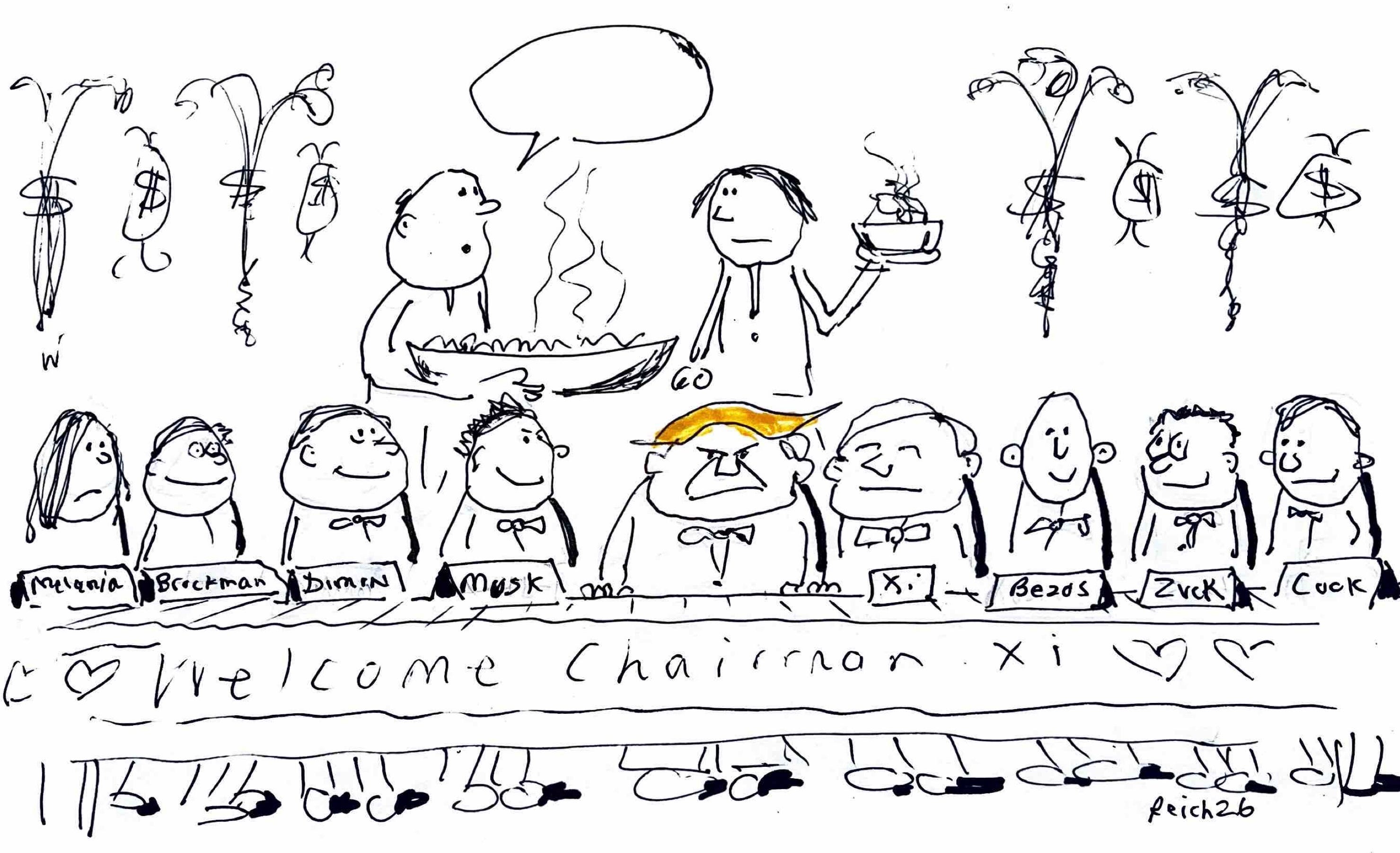
Please submit your caption in the Comments section, and, as before, please use the Comments section only for captions.

Winners will be announced next Sunday. For consideration, please post your caption by Monday at 9 pm PT, 12 midnight ET.

Leave a comment

Last week’s winner

“Like they say, ‘If you don’t have a seat at the table, there’s a good chance you’re on the menu.’”

(Congratulations, Chet Sygiel.)

Runners-up:

“Xi ordered the duck l’orange.”

(Congratulations, Steven Horowitz.)

“Let’s hope it’s their last supper!”

(Congratulations, Sue Schneider.)

“Do we serve them in order of wealth or hypocrisy?”

(Congratulations, Simon.)

“Pigs at the trough.”

(Congratulations, Laurence Hoffmann.)

“We’re going to need a bigger trough.”

(Congratulations, Rachel Brown.)

“How come they always manage to get free meals paid for by taxpayers? Aren’t they all billionaires?”

(Congratulations, Sue Schneider.)

“I am afraid democracy isn’t on the menu tonight.”

(Congratulations, Jacob Jordaan.)

“As George Orwell said in Animal Farm, ‘the creatures outside looked from pig to man, and from man to pig to man again; but already it was impossible to say, which was which.’”

(Congratulations, Diana.)

Share

Sunday thought: What’s Up With Kansas?

4 October 2026 at 10:04

Friends,

The last time Kansas elected a Democrat to the Senate was 1932. Yet on Friday, Democratic Senate candidate Adam Hamilton received his second endorsement from a Republican former Kansas governor in less than a month, in his race against Republican incumbent Senator Roger Marshall.

The top Senate Republican super PAC is so concerned that Marshall could lose the race that it’s diverting funds to Kansas from North Carolina, where it’s canceled its remaining ads against Democrat Roy Cooper — basically conceding North Carolina (by the way, a Democrat hasn’t won statewide federal office in North Carolina in nearly two decades).

To say it’s not looking good for Republicans is an understatement.

Trump is an albatross around the necks of every Republican running for Congress or governor. He’s also posing problems for plenty of Republican candidates for state office.

Why?

It’s not that Americans have suddenly discovered that Trump is a despicable human being. His personality has been on national display for more than a decade.

It’s not that Trump’s hold over his MAGA base has significantly weakened. Polls show self-identified MAGAs are still firmly in his camp.

It’s not that most Americans have become angry that the major beneficiaries of Trump’s tax cuts are big corporations and the very rich, or that the burdens of his spending cuts disproportionately fall on the poor (as less nutrition assistance and Medicaid), or that his mass deportations are violent and cruel. There’s no evidence that these policies are suddenly swaying voters.

And it’s not that voters have become any more aware of Trump’s lies. He continues to say the U.S. is experiencing a “golden age” with a “roaring economy” that’s doing “better than any other country” in the world, and that any negative public perception is due to a “public relations” problem.

No, the real problem for Trump and Republicans is Americans are hurting, and they know it’s because of Trump and Republicans.

A new AP-NORC poll shows a record low 26 percent of Americans approve of Trump’s handling of the economy, while just 17 percent approve of how he’s handling the cost of living. These are comparable to George W. Bush’s ratings during the 2008 financial crisis and George H.W. Bush’s just before he was swept out of office. The Conference Board’s Consumer Confidence Index fell to 81.9 in September, its lowest since April 2014.

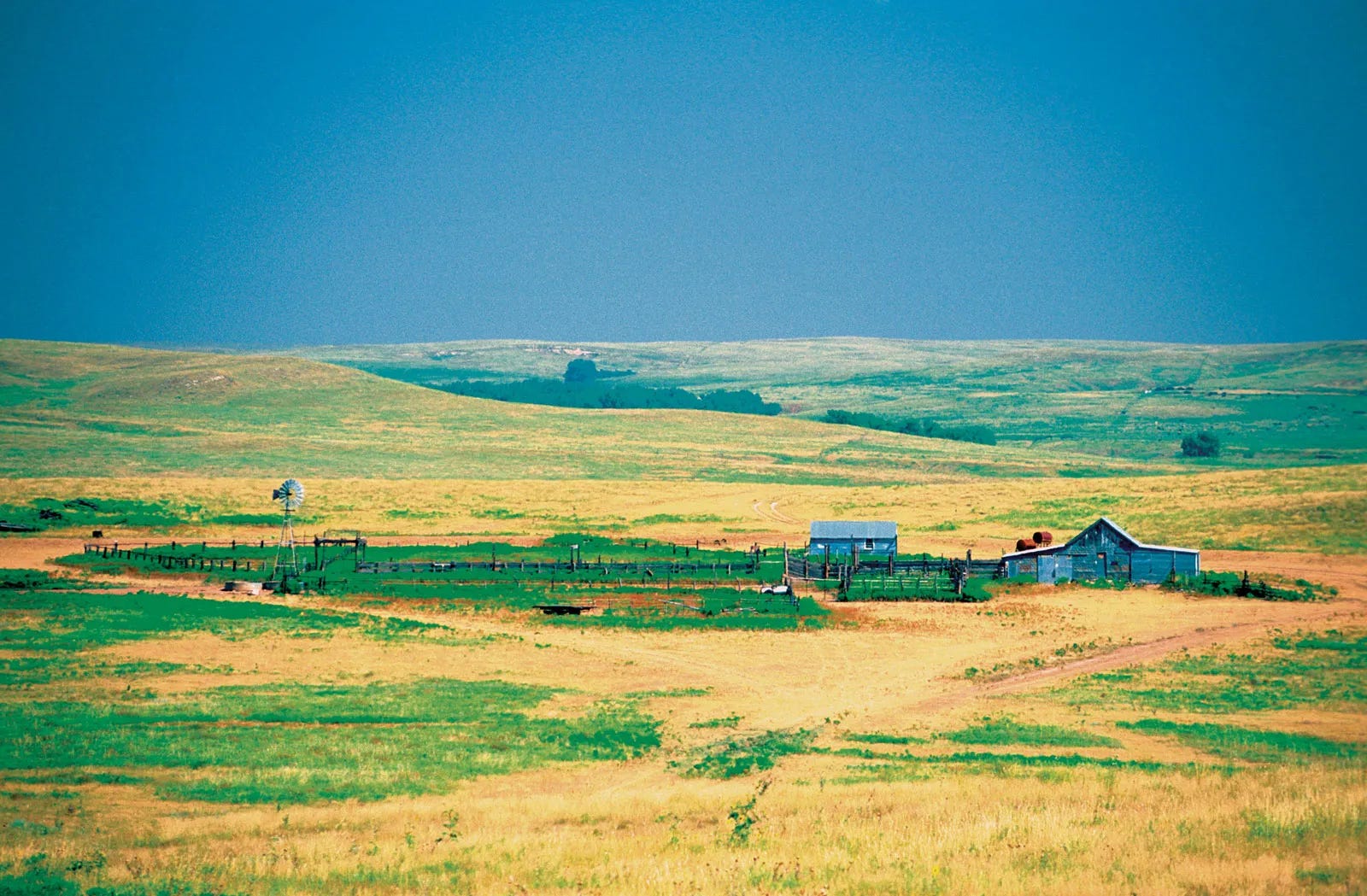
In Kansas, for example, Trump’s tariffs have caused China, Canada, and Mexico to retaliate by sharply cutting demand for wheat, sorghum, and soybeans. As a result, Kansas grain silos are so swollen that grain brokers have been forced to reroute human-grade grain into dog food.

At the same time, tariffs on foreign-produced aluminum and steel have driven up the prices of farm machinery and replacement parts. Trump’s decision to lift certain foreign beef import restrictions has hurt the beef sales of local cattle ranchers.

Trump’s war in Iran has choked off shipping of sulfur and phosphate in the Persian Gulf, causing nitrogen and phosphate fertilizer prices to surge by over 100 percent. The blockage has also caused diesel prices to soar, making farmers pay $200 per acre just to fuel their tractors.

These higher costs and lower crop sales have resulted in the closure of roughly 700 Kansas farms over the past year. Many remaining farmers are barely holding on.

This explains why Kansas’s former Republican governor Mike Hayden endorsed Democrat Adam Hamilton over Republican incumbent Roger Marshall in Friday’s Wichita Eagle:

“Sen. Marshall time and again has chosen to back the tariffs and the war, despite what is happening back in Kansas. Kansans need a senator willing to stand up and say this isn’t working.”

There it is, folks.

Americans can bear Trump’s awful personality. Some might succumb to his MAGA cult. They might believe many of his lies.

But they can’t abide what Trump’s policies are doing to them and their families.

Forget the rip-roaring stock market. When it comes to voting, kitchen-table economics — the financial realities average people talk about over the kitchen table, such as the prices they’re paying and the money they’re earning — are more potent than anything else.

I continue to warn against complacence. It’s still vitally important that we vote, and that we encourage everyone we know — especially those who share our values — to vote. And it’s crucially important to remain vigilant against Trump’s interference in our elections.

But with a little more than four weeks to go, I’m breathing a wee bit easier. I hope you are, too.

Share

Give a gift subscription

Is a Reckoning Coming? | The Coffee Klatch for Saturday, October 3, 2026

3 October 2026 at 10:02

Friends,

Today, Heather and I take a hard look at the allegations over what occurred in a Cornell fraternity and explore why they’re sending tremors across America. Do they have anything to do with Trump’s toxic masculinity, the misogyny of his regime, and the male-dominant underpinnings of neofascism? With a culture of impunity fostered by Trump? We also look at the question of accountability in general and examine some of the other ways Trump and the manosphere — including the AI bros and the industry they’re hatching — are functioning with impunity.

Please pull up a chair, grab a cuppa, and join in the conversation.

Share

💾

❌