Replit CEO Amjad Masad envisions a future of “self-driving companies,” where AI agents handle day-to-day tasks and people focus on higher-level decisions.
It’s been a packed agenda at the European Council summit, with little sign of progress on key issues. EU leaders continued to argue over the bloc’s long-term budget, with energy supply and security taking up much of the discussion … including questions over strategic gas reserves and the future of the Emissions Trading System.
The war in Ukraine looms large over the summit. Earlier this week, President Trump alarmed European leaders and horrified Ukrainian President Volodymyr Zelenskyy by announcing a deal to release Russian diesel onto the U.S. market, apparently in an attempt to lower fuel costs for American consumers.
Host Sarah Wheaton unpacks developments late into the night with colleagues who have been reporting on the summit. She’s joined by Chief EU Correspondent Zoya Sheftalovich, Chief Political Correspondent in Europe and the U.K. Tim Ross and Gregorio Sorgi, financial services reporter.
Let’s be clear about what we’re doing here. The Bulwark exists to fight authoritarianism and defend American democracy. We do that with reporting, analysis, accountability, and by building a community of people who refuse to look away or pretend this is normal. If you believe this fight matters, join Bulwark+ and help us do the work.
Sarah Longwell and Andrew Weissmann discuss the FBI raid on Ilhan Omar, Trump’s latest overtures to Putin, and the courts’ efforts to stop his taxpayer-funded campaign ads. Plus, Weissmann explains why simply ordering Trump to stop breaking the rules isn’t enough, and whether DOJ lawyers pursuing politically motivated prosecutions could eventually face disbarment.
Speaking at TechCrunch Disrupt, Amazon devices chief Panos Panay described a future where ambient AI devices work in the background, anticipating users' needs instead of waiting for commands.
Bluesky is bringing “social vibe coding” to its experimental Attie platform, allowing users to create interactive experiences like games, quizzes, and websites that can tap into the social network's audience.
Amazon-owned Bee has launched its first new AI devices since its acquisition, including an updated wearable and a credit-card-sized recorder that attaches to smartphones. The devices can summarize conversations, create to-do lists, and integrate with Alexa and Amazon shopping, with prices starting at $74.99.
EU leaders meet today for their first chance to beef about the budget face to face.
On the show, Zoya Sheftalovich and Sarah Wheaton dive deeper into why leaders look increasingly unlikely to reach an agreement on the EU’s next money pot by December. Plus, Zoya obtained a document revealing deepening relations between Russia and Slovakia. Will that be a cause for concern around the Council table?
Next up, Zoya spoke with Defense Commissioner Andrius Kubilius on stage yesterday. His main message? Europe should boost its defense capabilities and stop relying so heavily on U.S. military support.
And finally, ECB President Christine Lagarde plugged her upcoming memoir at a press conference … is she allowed to do that?
If you have a question or comment, don’t hesitate! message us on our WhatsApp here or at +32 491 05 06 29.
At TechCrunch Disrupt, Flock CEO Garrett Langley defended his company's surveillance technology despite growing privacy concerns, arguing that its crime-fighting benefits outweigh the risks of abuse.
Cerebras CEO Andrew Feldman predicts a future where personal AI assistants become as commonplace as household appliances, running partly on local devices and partly in the cloud.
Cerebras CEO Andrew Feldman has a message for AI leaders spreading doomsday warnings: Maybe stop talking? At TechCrunch Disrupt, he argued that the industry's focus on AI's risks is drowning out its potential benefits.
A federal judge ruled that Apple can access OpenAI's interview materials involving former Apple employees, as well as private messages and testimony from key figures in the case.
Google is making it easier to build and use personal Android apps created with AI, without having to make them available to everyone on the Play Store.
Siri can now learn users' preferred music app, allowing Spotify listeners to request songs, podcasts, and playlists without specifying which app to use.
American Express is introducing a new framework designed to ensure AI agents only make purchases their users have authorized, potentially preventing costly mistakes and disputes as AI-powered shopping grows.
(Photo illustration by Sarah Rogers/The Bulwark | Photos: Getty, Shutterstock)
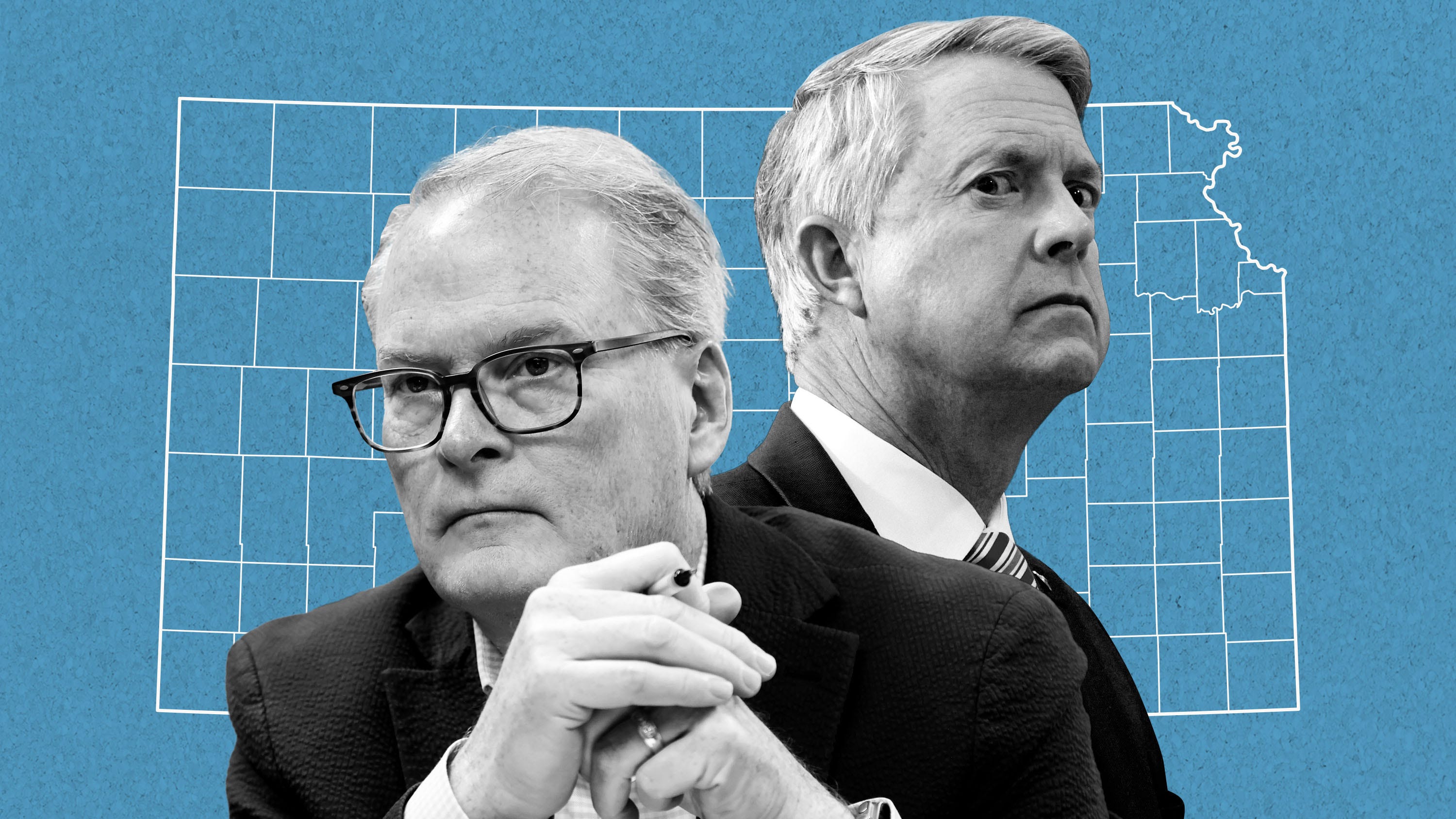
ONE OF THE UNEXPECTED NEW STARS of this midterm election has been Adam Hamilton, the Kansas megachurch pastor who has a chance—though it’s nowhere near certain—of defeating Republican Sen. Roger Marshall and becoming the first Democratic senator elected from Kansas in ninety-four years.
Donald Trump won Kansas two years ago by 16 points. That’s bigger than his margins in Iowa, Florida, Alaska, or Texas. So a Hamilton win would be one of the most impressive feats of any Democratic candidate this cycle. Hamilton has tied or led in every poll tracked by the New York Times since mid-September, but never by more than 5 points (and that was in a poll his campaign sponsored).
Getting to the heart of why Hamilton is overperforming is important, because Democrats are going to take lessons from this race about how they should run—and whom they should run—in red parts of the country, even if he falls just short. It’s important they learn the right lessons.
We talked to 2024 Kansas Trump voters to find those lessons. And what we found out was that
The American Geographical Society has long invited big-name adventurers—Amelia Earhart, Neil Armstrong—to sign its ceremonial globe. The latest? Astronaut Kathryn Sullivan.
On the heels of her Emmy win for “Widow’s Bay,” the “GLOW” star reflects on her slew of new projects, growing up with actor parents, taking on Cole Escola’s role in “Oh, Mary!,” and the importance of performing with your whole heart.
Republicans have been on a long winning streak in Florida...but they might be playing defense in 2026...because they have one candidate who's REALLY into data centers, and another candidate running what's being called a 'Joe Biden Basement' campaign. And the Democratic ticket may be one of the oddest couples in the history of politics, led by a former Republican Congressman (David Jolly) and a DSA-aligned state legislator (Angie Nixon). POLITICO's Kimberly Leonard joins Sarah to discuss whether Florida is back in the 'swing state' column in 2026.
Show links:
Tickets are on sale for CrookedCon on November 7 in Washington. Get discounted tickets at CrookedCon.com/Tickets, with code Bulwark20.
If you value this kind of in depth coverage and want to show your support for the our work, upgrade now to watch or listen to our premium ad free editions of Bulwark shows—PLUS you’ll get access to Sarah’s Focus Group newsletter too.
Each membership ensures we can give away subscriptions to those who can’t afford to join our community. The only way through is together.
Full ad-supported episodes ofThe Focus Groupare available wherever you get your podcasts and on YouTube. Hit that like 🤍 button and share this episode with a friend. Click here to add the show to your player of choice.
This story was updated at 6 p.m. on October 9, 2026.
Russia is a U.S. adversary, with a track record of interfering in U.S. elections. It’s providing support for Iran in its war with the United States even as the U.S. backs Ukraine in its long-running war against Russia. FBI agents work day and night to combat a long list of threats emanating from Russian soil: espionage, cyber intrusions, influence campaigns, and efforts to infiltrate American institutions and critical infrastructure. So when the news emerged this summer that FBI Director Kash Patel would be visiting Moscow just three weeks before the midterm elections, many of his own employees were puzzled—and concerned.
Current and former FBI officials familiar with the matter told me there was a quiet campaign to urge senior leadership to cancel the trip. When that and other efforts to pass apprehensions up the chain went unanswered, some shared their worries with Congress. Now a pair of senior House Democrats are taking the unusual step of asking the FBI director to scrap the visit, which is reportedly set to begin next week: “In the interest of national security, we ask you to reconsider. Call off this trip,” they wrote in a letter that I obtained. The letter is signed by Representative Jamie Raskin, the ranking member of the House Judiciary Committee, and Representative Jim Himes, the ranking member of the House Intelligence Committee. Patel has not replied to the letter and the FBI has not publicly confirmed his travel plans. Neither the FBI nor the White House responded to my multiple requests for comment.
With so little information available either publicly or internally, the anxiety within the agency Patel leads has only grown. Seventeen current and former FBI and Department of Justice officials, intelligence officials, and others familiar with the situation told me they were deeply worried by a variety of decisions that suggest ever-closer ties between the Trump administration and Russian President Vladimir Putin’s regime.
Many of the officials would speak only on the condition of anonymity because they feared retaliation if their name appeared in this story. Patel has filed a $250 million defamation lawsuit against The Atlantic and mein response to my reporting earlier this year that he has alarmed colleagues with episodes of excessive drinking and unexplained absences that were perceived as potential national-security vulnerabilities.
But some former officials were willing to be named. They told me that for the national-security and counterintelligence officials who have devoted their careers to the threat from Russia, the absence of information about the trip is particularly concerning. Christopher O’Leary, a former senior executive in the FBI’s counterterrorism division, told me that he and others found the timing of the trip bizarre, especially given the pressure that FBI leadership is putting on agents to substantiate election conspiracy theories at home that Russian intelligence services continuously amplify. “If there was real concern about interference in our elections, then the FBI director should be in the United States leading the effort around the clock,” not going to Moscow, O’Leary told me.
When Patel took over leadership of the bureau in February of last year, he struck a notably different tone on Russia than that of his predecessors. Rather than regarding Moscow purely as an enemy, he has sought out areas where the two nations can partner, including in combatting transnational violent crime and cyberfraud. He shares that approach with other senior officials in the Trump administration who have cultivated closer ties with Moscow.
In recent days, two of the president’s top advisers, James Blair and Chris LaCivita, found time amid the midterm campaigns to visit Republika Srpska to advise its pro-Russian government on voting issues, The New York Timesreported. A top Trump-administration diplomat has come up with a plan to trade sanctions relief in exchange for Russian political-prisoner releases—a deal that would bypass Ukraine and likely anger U.S. allies. Special Envoys Steve Witkoff and Jared Kushner have both spent considerable time with Putin as they seek a negotiated end to the war in Ukraine. Donald Trump Jr., meanwhile, accepted a lavish wedding gift from the Russian oligarch Umar Kremlev, who paid hundreds of thousands of dollars for the rental of a private island and a fireworks show, ProPublica has reported. (Kremlev said this week that Trump Jr. has paid him back.) Earlier this year, a gold-framed photo of Trump with Putin went up in the Palm Room at the White House. Just today, Trump announced that he and Putin had worked out a deal for the U.S. to import Russian diesel fuel, an agreement that directly undercuts American sanctions.
In interviews with Reuters in August, Patel boasted about the FBI’s new approach to its “non-traditional partners,” Russia and China. Patel described extensive behind-the-scenes cooperation with Russian authorities to target violent criminal networks. “This stuff doesn’t happen overnight,” he said. “We’ve been at this for 15 months.” Both Reuters and Politico reported this summer that Patel was planning a trip to Russia this month. Politico cited a U.S. official familiar with the plans in reporting that Patel would visit Moscow first, then St. Petersburg, with the host likely to be the FSB, the Russian security service that is the successor to the KGB.
While speaking with Reuters, Patel characterized the FBI’s relationships with Russian and Chinese law enforcement as “new and dynamic,” but he was careful to add that engagement did not negate the need for vigilance. “We are extremely mindful of their adversarial approach on many matters,” he said. “They are not going to stop, but if we can go and have wins for America, then we must engage.”
In congressional testimony, Patel has identified Russia as among the FBI’s biggest nation-state threats. Last month, he said “the counter-espionage arrests by this FBI are up 53 percent, including from Russia.” Three weeks ago, Patel took part in the announcement of charges against five people whom the FBI investigated for their part in what he described as “an alleged plot by the Russian intelligence services to murder a dissident on U.S. soil for daring to speak out against the Russian government.” Patel said the plot “exposes the lengths to which our adversaries will go to silence its critics,” adding that the FBI “is committed to defending the free speech of everyone within our homeland and will not tolerate any attempts by foreign governments to violate our laws and threaten our freedoms.”
Patel has spent years echoing Trump’s claims that Russia’s interference in the 2016 presidential election was a “hoax.” That’s also what Russia claims, but that runs against the conclusions of U.S. law enforcement and intelligence communities, including the bureau Patel now directs. Trump gave a prime-time address this summer on the threats that foreign adversaries pose to U.S. elections—though he focused almost exclusively on China, and made little mention of threats from Russia.
FBI directors have visited Russia before, most recently Robert Mueller in 2013, to discuss the Boston Marathon bombings and related investigations. But previous visits by FBI officials to Russia have come with greater internal transparency about the purpose and planning of the trip, four current and former FBI officials told me.
Kremlin spokesman Dmitry Peskov did not respond to multiple requests for comment, nor did the Russian embassy in Washington. In July, Peskov told Russian reporters, “I do not have any information on the matter. You know, such visits are not usually made public, so I cannot tell you anything about this,” according to the Russian state news agency TASS.
Two former senior FBI officials who oversaw Russian counterintelligence operations and were familiar with previous FBI directors’ contact with their Russian counterparts told me they could not think of a compelling reason for Patel to take the trip at this moment that outweighed the practical risks.
The letter this week from congressional Democrats asks Patel for clarity. “Why is the Director of the Federal Bureau of Investigation (FBI) visiting a hostile foreign power that has been committing war crimes, conducting influence operations against U.S. elections, conducting malicious cyberattacks against our critical infrastructure, and helping our adversaries target and kill American soldiers?” the letter asks.
“As Director of the FBI, you possess information that would be highly valuable to America’s adversaries. Unfortunately, your affinity for the Russian government does not inspire confidence that you will be able to effectively safeguard those secrets,” the letter continues.
The two congressmen requested a closed-door briefing to Congress about the trip and Patel’s efforts to forge ties with adversaries no later than 5 p.m. on October 12. They are asking for details about what prompted the trip, as well as the itinerary and planned meetings while Patel is in Russia. And they are asking for details about any social activities, “a full accounting” of Patel’s whereabouts during any downtime, and the names of all individuals who will accompany Patel, notably including “any private citizens or members of President Trump’s family.”
Multiple foreign officials who would normally be consulted have said they, too, were in the dark about Patel’s trip. A senior Ukrainian official said they had not been briefed or consulted about the trip, and had “no idea” why Patel was planning the visit. One senior European official said that in conversations with their American diplomatic and intelligence counterparts, the American officials had expressed concern about Patel’s trip.
Raskin told me that members of Congress were also confused about the purpose of such a trip. “The whole thing to me is absolutely astounding,” he said. “He will be a target and sitting duck for every kind of Russian espionage and influence operation. We are demanding they call it off. This could be a disaster for our country.” Three former FBI counterintelligence officials told me they shared those concerns. “There isn’t a single American official who doesn’t get targeted” by the Russian intelligence services while they are in the country, one person familiar with the situation told me.
Some of the tools that the U.S. once had to combat foreign meddling have eroded. The FBI’s Foreign Influence Task Force was disbanded almost immediately after the new administration came to power in 2025, and dozens of its specialized staff were either reassigned or removed from the bureau, Julia Curlee, a former CIA analyst and White House National Security Council director under the second Trump administration, told me. And NPR reported this week that the teams that track foreign spies on U.S. soil—known as counterintelligence squads—have only about half of their positions filled.
Curlee told me that it’s possible to imagine a legitimate reason for the FBI director to visit Russia—but that she doubts that’s why Patel is going now. “Unless he’s going to warn them to stay out of our elections, and get out of Ukraine, he has no business there,” she said.
Officials told me that they were confident that FBI staff would do everything in their power to mitigate the counterintelligence risks if Patel travels to Russia, but that they cannot prevent him from going. “Who can stop him?” one former FBI official asked.

 Login
Login