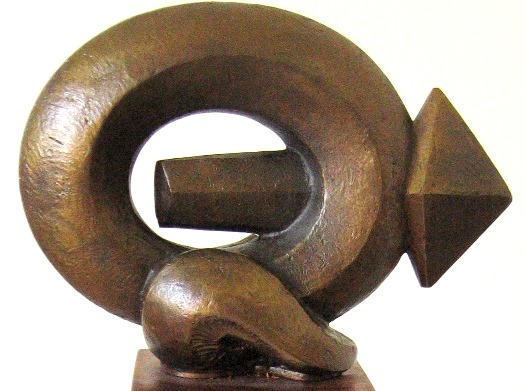
Finalists for the 2026 Washington Science Fiction Association (WSFA) Small Press Award for Short Fiction have been announced:
“Not a Fish”, Andrew Dykstal (Beneath Ceaseless Skies 6/12/25)
“Half Life”, Stephen Harper (Skull X Bones)
“The Last Mardi Gras”, Raven Jakubowski (DreamForge Anvil 6/1/25)
“The Teleporting Disaster Fairy”, Rati Mehrotra (Uncanny 11-12/25)
“Blackrock”, R.M. Olson (Skull X Bones)
“Billionaire’s Tears”, Vanessa Ricci-Thode (Escape Pod 7/24/25)
“Guardians of the Well”, Rose Strickman (In Another Time 6/25)
“Bag of Holding”, Liz Westbrook-Trenholm (On Spec 10/25)
The award, recognizing “the best original short fiction published by small presses in the previous year,” will be presented at Capclave, to be held October 2-4, 2026 at the Rockville Hilton in Rockville MD. The winner will be chosen by members of WSFA. For more, see the WSFA Small Press Award website.
The winner was announced at an award ceremony in London on August 12, 2026.
The 2026 judges are Eliza Filimon for the British Science Fiction Association, Tiffani Angus and John Coxon for the Science Fiction Foundation, and Esther Stewart for the SCI-FI-LONDON film festival. Andrew M. Butler represented the Clarke Award directors as non-voting Chair of the Judges.
Butler says,
“For forty years, the many Arthur C. Clarke Award judges have made the difficult choice of best sf novel. For our anniversary year, they picked E.J. Swift’s near future When There Are Wolves Again, a story of environmental change and possible recovery. If the industry continues producing such awesome novels, the ten years between now and the award’s 50th anniversary will be worth watching out for.”
Award Director Tom Hunter said,
“Sir Arthur was always passionate that the award’s definition of science fiction be as diverse and open as possible, and he would have applauded the record levels of new SF being published today and been delighted by this year’s winner. Following Sir Arthur’s passing, the award faced the real possibility of being forced to close after its 25th year. I am delighted that we have been able to steward the award successfully all the way to its 40th anniversary, and am happy to report the directors are already making plans for celebrating in 2036.”
In an Oscars season rife with controversies, shutouts and disappointments, the one seemingly surefire, feel-good figure this year has been Brad Pitt. Nearly 30 years into his Hollywood career, the hardworking leading man has created some of our most iconic movie moments and developed an uncanny instinct for creative, audience-pleasing parts. Now, he seems a lock to take home his first acting Academy Award (he has one under his belt as a producer on “12 Years a Slave”) for his supporting role as good-natured, possibly wife-killing, history-changing stunt double and righthand man Cliff Booth. But if ever there were a classic case of someone being the odds-on favorite based on overall industry goodwill than a singular performance, Pitt would be our greatest recent example. If merit alone earned awards, would Pitt really take it this year? Or to put it another way, can Brad Pitt act?
At 56, the Oklahoma native has entered a career stage where he seems at last to be forgiven for being so really, really, really, ridiculously good looking. Yet perhaps his best trick all along has been making his critics feel they shouldn’t dismiss him as a so-so performer just because he’s handsome, when in fact he might actually be just a so-so performer.
From the beginning, Pitt’s always been clever about how he leverages his physical appeal, using it as an instrument to create his characters rather than a diversion from his efforts. Even in his breakout role, as a smooth talking grifter in 1991’s “Thelma & Louise,” Pitt seemed in on the joke that as long as he kept his shirt off, he could tell a woman point blank that he was a robber — and then effortlessly rob her.
His rise was instantaneous after that. It was as if the factory that had created ruggedly beautiful stars like Gary Cooper and Gregory Peck had suddenly spit out one special new edition just for the ’90s. Campy starring roles followed in forgettable films like “Johnny Suede” and “Cool World,” parts that played off Pitt’s throwback appeal. Yet he also played the long game shrewdly, refusing to settle as simply agreeable beefcake. He sought out darker work in movies like “Kalifornia” (a film I still have to remind myself is not “Natural Born Killers”), “A River Runs Through It” and “Interview with a Vampire.” He appeared in his first Tarantino-penned film, “True Romance,” where he played a blissfully clueless stoner. And he had a knack for picking instant cult classics like “Se7en” and “Fight Club,” a movie that should have inspired a special Oscar category for Best Performance By a Pelvis just so Pitt could have won.
Yet when I think of the Brad Pitt of that era — the actor, not the celebrity he was in the World’s Sexiest Man, Mr. Jennifer Anniston, name-checked in a Shania Twain song years — I remember his performance in the lesser known “The Devil’s Own,” in which he plays an IRA member and says things like, “Oi need dat mooney, Tum.” He may not yet have an acting Oscar, but for this role, Pitt is widely regarded as delivering one of the worst Northern Irish accents ever committed in cinema. A few years later, in Guy Ritchie’s “Snatch,” Pitt played an Irish Traveller, and while he memorably delivered a comically unintelligible performance, it was not exactly a method actor’s one. Ritchie reportedly made the character a Traveller because Pitt couldn’t pull off a London accent, and Pitt recently revealed he based his character’s dialect on a minor character on “Father Ted.” Then there’s his unfortunate “Everyting gwarn be iree” moment in “Meet Joe Black,” an attempt that I assure you was cringeworthy two decades ago, and has since aged like milk. Even as he’s filled up his IMDb page, his technical abilities have remained limited.
Admirably, Pitt could have spent his career doing the big superhero parts, instead of skewering that image in “Megamind” and “Deadpool 2.” He could have done some lucrative spy series and be 20 years into the role by now. That’s what movie stars do, right? He’s consistently gravitated toward odder, more challenging work like “Burn After Reading.” His previous acting nominations have all been for more idiosyncratic films — “Twelve Monkeys,” “The Curious Case of Benjamin Button” and “Moneyball.” Yet the impression he gives is not that of some weird, English arteeeste who disappears into his characters. He’s just a hard-working regular guy who gets the job done. This is not without appeal.
And then there are those Tarantino movies. In “Inglorious Basterds” he carves up Nazis and helps rewrite a history where Hitler doesn’t weasel out in a bunker suicide. (Surely there’s a Tarantino-Pitt collaboration on the Jeffrey Epstein story somewhere in our collective future.) He also delivers another accent that gets a little shaky. Now, in his Oscar-nominated performance in “Once Upon a Time . . . in Hollywood,” Pitt plays a man who is seasoned, heroic, a little sinister, and still looks insanely good shirtless. In other words, he’s a Hollywood executive’s wet dream of himself.
Is “Once Upon a Time . . . in Hollywood” any good? I side with my colleague Matt Rozsa and say, it decidedly is not. It’s a meandering mess, from a filmmaker whose works increasingly play into the classic “If I was there, things would have gone a lot differently, let me tell you” fantasy. (Take that, hippies.)
Though there is not much to see in Pitt’s performance that he hasn’t already delivered in at least a dozen other eccentric-and-manly-but-the-ladies-like-him-too performances, critics loved it. The New York Times praised Pitt’s “down-to-the-bone minimalism” and the star has already picked up a shelf of prizes, earning goodwill at each stop on the road to Oscar for his charming acceptance speeches.
Though the Oscar is only supposed to be for one performance, Pitt’s awards trajectory this year has no doubt been boosted by “Ad Astra,” another acclaimed movie with an appeal that entirely eluded me. As astronaut Roy McBride, Pitt is a middle-aged man searching the solar system for his daddy. It’s desperately tedious and doesn’t make sense, and I would like a refund for those hours of my life. Pitt’s stoic performance doesn’t help matters, but he does get to well up with emotion at times, which does technically constitute acting.
Writing in the New York Times recently, critic Manohla Dargis observed that earlier in Pitt’s career, “It became a favorite cliché to write that he was a character actor trapped in the body of a star . . . Some of this, I think, stems from a suspicion of beauty, that it can’t be trusted.” Yet the “character actor in a movie star’s body” designation seems more fitting for Pitt’s costar and fellow Oscar nominee Leonardo DiCaprio, who from his earliest roles in “This Boy’s Life” and “What’s Eating Gilbert Grape” has always displayed serious native talent. Or look at another of his “Once Upon a Time . . . ” costars, Oscar nominee (for “Bombshell”) Margot Robbie, who in the last six months skillfully has played Sharon Tate, Harley Quinn, and an ambitious Fox News employee, and among other laudable elements, delivered a different (and believable) accent for each.
In contrast, Pitt seems to dazzle by sticking to similar characters in very different movies, a neat bit of acting sleight-of-hand. If he is indeed a character actor, he sure likes to stick to the same character — unselfconsciously virile, easy to imagine chewing on a toothpick.
I happen to enjoy plenty of Pitt’s movies and even his performances. I could watch him eat his way through “Ocean’s 11” all day, and I can’t imagine any other actor delivering the immortal line, “What’s in the box?” But his seemingly locked-down Oscars juggernaut is not a reward for a meticulous performance in a stellar movie. That is absolutely not what is happening here. It’s a prize for consistency, charm and charisma over several decades.
This shining moment also happens to come at one when the industry is still clearly not ready to fully reckon with itself. It’s been only two years since the real Sharon Tate’s famed widower, Roman Polanski, was removed from the Academy. And this year’s crop of Oscar nominees once again conspicuously fell short on honoring more diverse and deserving contenders. That’s not Brad Pitt’s fault. But it’s easy to see how his role represents a certain nostalgia for a certain era, when being a movie star didn’t mean you had to be an actor too.
The winners of the 2026 Aurora Awards for works by Canadians were announced in an online awards ceremony on August 9, 2026, hosted by Elizabeth May Anderson and Mark Leslie Lefebvre.
Best Novel
WINNER: The Downloaded 2: Ghosts in the Machine, Robert J. Sawyer (Shadowpaw) amazon / bookshop
A Shift of Time, Julie E. Czerneda (DAW) amazon / bookshop
Emily Wilde’s Compendium of Lost Tales, Heather Fawcett (Del Rey) amazon / bookshop
Direct Descendant, Tanya Huff (Astra House; DAW) amazon / bookshop
A Palace Near the Wind, Ai Jiang (Titan) amazon / bookshop
“In the Gardener’s Service”, Michèle Laframboise (Asimov’s 7-8/25)
The First Thousand Trees, Premee Mohamed (ECW) amazon / bookshop
“The Lure of Stone”, Silvia Moreno-Garcia (Uncanny 9-10/25)
Best Short Story
WINNER: “The Stone Played at Tengen”, R.H. Wesley (Clarkesworld 11/25)
“Hunted To Extinction”, Premee Mohamed (The End of the World As We Know It: New Tales of Stephen King’s The Stand)
“What If We Kissed While Sinking a Billionaire’s Yacht?”, Rachel A. Rosen (Antifa Lit Journal, Volume 1: What If We Kissed While Sinking a Billionaire’s Yacht?)
“the love song of house and lake”, Gillian Secord (On Spec 9/25)
“I Ain’t Your Doll Face”, Jacqueline Thorpe (Polar Borealis 3/25)
Best Graphic Novel/Comic
WINNER: Shark Girl, Kate Beaton (Quill and Quire)
“Bonds of the Forest“, Ally Rom Colthoff (Augur 8.3)
Questionable Content, Jeph Jacques (self-published)
It Never Rains, Kari Maaren (self-published)
Atana and the Jade Mermaid, Vivian Zhou (HarperAlley)
Best Related Work
WINNER: Year’s Best Canadian Fantasy and Science Fiction: Volume Three, Stephen Kotowych, ed. (Ansible) amazon
Augur 8.1-8.3, Azure Arther, Kerry C. Byrne, André Geleynse, Toria Liao & Kelley Tai, eds.
On Spec Vol 35, #131-134, Diane L. Walton, ed. (The Copper Pig Writers’ Society)
The winners for the 2026 Prix Rosny Aîné have been announced. The prize is awarded to SF novels and short stories written in French and published in print in 2025.
Best Novel
WINNER: Sintonia, Audrey Pleynet (Belial)
La Dernière Tentation de Judas, Phillipe Battaglia (Atalante)
The Science Fiction Research Association (SFRA) has announced the 2026 winners of its annual book awards.
The SFRA Award for Lifetime Contributions to SF Scholarship
Istvan Csicsery-Ronay, Jr.
The SFRA Innovative Research Award
“Growth, Resource, Population: The GRP Triangle in Contemporary Chinese Science Fiction by Female Writers.” , Regina Kanyu Wang (SFRA Review Summer ’25)
Thomas D. Clareson Award for Distinguished Service
Patrick Sharp
Mary Kay Bray Award
Paromita Sarkar for the review of The Blaft Book of Anti-Caste SF (SFRA Review Summer ’25)
SFRA Book Award
Black Apocalypse: Afrofuturism at the End of the World, Tavia Nyong’o (University of California Press)
Student Paper Award
“‘I Must Put Things in My Mouth:’ Loving Trans Children in Octavia Butler’s Adulthood Rites”, Franklin Mitchell (University of Colorado Boulder)
The awards, selected by a committee of SFRA members, are given in recognition of “members of the SF community who exhibit outstanding scholarship, pioneering viewpoints in the science fiction discourse, and lifetime contributions to SF research.” Winners were announced at the SFRA conference banquet in East Lansing, Michigan.
Clive Barker and Joyce Carol Oates have been announced as the recipients of the 2026 World Fantasy Awards for Lifetime Achievement, presented annually to individuals who have demonstrated outstanding service to the fantasy field. The final ballot for the 2026 World Fantasy Awards was previously announced.
The awards will be presented during the 2026 World Fantasy Convention, to be held October 22-25, 2026 in Oakland CA.
For more information, see the World Fantasy Convention website.
The Dagger in Vichy, Alastair Reynolds (Subterranean)
Best Poem or Collection
Entropocene, Jean-Paul L. Garnier (Space Cowboy)
Best Editor
Toni Weisskopf (Baen)
Best Literary-Critical Work
Playing at the World Volume 2, Jon Peterson (MIT Press)
Best Historical Work
Dreaming of Autonomous Vehicles: Miloslav (Miles) J. Breuer: Czech- American Writer and the Birth of Science Fiction, Jaroslav Olša, Jr. (Space Cowboy)
Best Fan Writer
Lloyd Penney
Best Fan Editor
Bob Jennings (Fadeaway)
Best Non-N3F Fan Publication
The N3F Fan Gazette
Best Fan Artist
Jose Sanchez
Best Pro Artist
Bob Eggleton
Best Fan Website
The FANAC: Fan History Project
The awards are presented irregularly by the National Fantasy Fan Federation (N3F), “the oldest (founded 1941) national science fiction club in the world.” For more information, see the N3F website.
The Queensland Writers Centre (QWC) has updated the entry guidelines for the 2026 Aurealis Awards, established to recognize the best in Australian speculative fiction, making changes including expanded terms for entry fees.
The Aurealis Awards were established in 1995 by Chimaera Publications, the team behind the magazine Aurealis. The Awards later partnered with different organizations to administer them. According to the Aurealis Awards web page, these have included “Fantastic Queensland, SpecFaction NSW, Conflux Inc. (ACT), the Western Australian Science Fiction Foundation (WASFF), Continuum Foundation (Vic), and the Canberra Speculative Fiction Guild (CSFG).” In August 2025, the Aurealis Awards announced “new overlords” on a web page no longer available, and the QWC later established the new web page for the Awards, in which they note that the QWC is “anchoring the awards ceremony within the vibrant programming of GenreCon.”
According to online sources, when the WASFF started overseeing the awards, fees were introduced for titles entered into all novel categories, as well as anthology and collections categories, each entry incurring a $10 cost. However, as of this time, the prior Aurealis Awards website now forwards to the QWC website, which does not show archival pages for the old website, making authoritative verification challenging.
The 2026 entry guidelines set entry fees as $30 for Best Science Fiction Novel, Best Fantasy Novel, Best Horror Novel, and Best YA Novel; $5 for the four short story categories; and $20 for other categories, with “belonging discounts” for QWC members and GenreCon ticketholders.
In response to the changes, authors Alan Baxter and Matt Tighe shared an open letter to the QWC expressing concerns about the entry fees:
The change to the fees is onerous, and a large change compared with the full history of the awards. This is perceived by many as a ‘pay to play’ situation that favours those able to absorb the cost, and disadvantages self-publishing authors and small presses as well as authors whose publishers won’t take on the costs. The new structure will ensure that many works worthy of consideration will not be submitted, and favours larger publishers and well-established authors.
As well, the reduced fees for QWC or GenreCon members is perceived as a clear conflict of interest between award management and the financial operation of the Centre, as well as a disadvantage to authors in regional, remote, or interstate areas for which the above is not practical nor feasible. No costs to enter an award should be passed onto the authors, and especially no preference given to some authors over others.
The letter also expresses concerns about changes to rules, in particular arguing there is “lack of clarity around judge autonomy” and highlighting the rule that works shortlisted for multiple categories can only win in one, saying, “This is an impeachment on judge impartiality and artificially restricts works that blend genre or that cross categories.” The letter requests that the guidelines should also include a “clear statement that AI-generated work is not eligible.”
The letter was sent July 18, 2026 “with almost 250 signatures,” including authors and editors such as Leigh Blackmore, Jeff Clulow, Gabino Iglesias, T.R. Napper, Cat Sparks, and Kaaron Warren.
On July 20, the post was updated to report a reply to the letter: “Thank you for sharing this finally. Because it is so close to our Management Committee meeting we will hold it over for their consultation on the 28th. We will be in touch after that. I will update as and when we hear more.” The meeting was reportedly later delayed to August 10.
Dragon Con has announced the ballot for the 2026 Dragon Awards.
Best Science Fiction Novel
God’s Junk Drawer, Peter Clines (Blackstone)
The Faith of Beasts, James S.A. Corey (Orbit)
Operation Bounce House, Matt Dinniman (Ace)
Radiant Star, Ann Leckie (Orbit US)
Slow Gods, Claire North (Orbit US; Orbit UK)
The Shattering Peace, John Scalzi (Tor; Tor UK)
Best Fantasy Novel (Including Paranormal)
Twelve Months, Jim Butcher (Ace)
Academy of Outcasts, Larry Correia (Aethon)
The Lost Reliquary, Lyndsay Ely (Saga)
Hell to Pay, Sherrilyn Kenyon (Oliver Heber)
Red City, Marie Lu (Tor)
Queen Demon, Martha Wells (Tor)
Best Young Adult / Middle Grade Novel
Make Me a Monster, Kalynn Bayron (Bloomsbury YA)
Ride or Die, Delilah S. Dawson (Delacorte)
The Executioners Three, Susan Dennard (Tor Teen)
Hazelthorn, CG Drews (Feiwel & Friends)
Sky on Fire, E.K. Johnston (Dutton Books for Young Readers)
Queen of Faces, Petra Lord (HarperCollins)
Best Alternate History Novel
World War 3.2, John Birmingham (Gigantic Bombs)
No Man’s Land, Richard K. Morgan (Del Rey)
A Resistance of Witches, Morgan Ryan (Viking)
The Winds of Fate, S.M. Stirling (Baen)
The Unnecessary War, Brian C. Thompson (self-published)
Powerless, Harry Turtledove (Caezik)
Best Horror Novel
The Possession of Alba Díaz, Isabel Cañas (Berkley; Solaris UK)
Play Nice, Rachel Harrison (Berkley)
King Sorrow, Joe Hill (Morrow; Headline UK)
The Bewitching, Silvia Moreno-Garcia (Del Rey; Arcadia UK)
Girl in the Creek, Wendy N. Wagner (Tor Nightfire)
Best Illustrative Book Cover
Jeff Brown for The Sapphire Heart, Abigail Bender, Victoria Hungria & Sandra Mead Miller (Three Scribes)
Dominic Harman for The Ishtar Deception, James L. Cambias (Baen)
T. Kingfisher for Hemlock & Silver (Tor; Tor UK)
Carson Lowmiller for Brigands & Breadknives, Travis Baldree (Tor)
Anna Moshak for The Second Death of Locke, V.L. Bovalino (Forever)
Joe Wilson for Pretenders to the Throne of God, Adrian Tchaikovsky (Head of Zeus)
Best Comic Book or Graphic Novel
Absolute Superman, Jason Aaron, illustrated by Rafa Sandoval
X-Men: Elsewhen, John Byrne
Daredevil, Stephanie Phillips, illustrated by Lee Garbett
Absolute Batman, Scott Snyder, illustrated by Nick Dragotta
Absolute Wonder Woman, Kelly Thompson, illustrated by Hayden Sherman
Something is Killing the Children, James Tynion IV, illustrated by Werther Dell’Edera
Best Science Fiction or Fantasy TV Series, TV or Internet
Alien: Earth
The Boys Season 5
Fallout Season 2
Foundation Season 3
A Knight of the Seven Kingdoms
Plur1bus
Strange New Worlds Season 3
Widow’s Bay
Best Science Fiction or Fantasy Movie
Superman
Project Hail Mary
Disclosure Day
Predator: Badlands
Frankenstein
The Sheep Detectives
Star Wars: The Mandalorian and Grogu
Toy Story 5
Finalists in digital and tabletop gaming-related categories were also announced. Winners will be announced at Dragon Con, to be held September 3-7, 2026 in Atlanta GA.
Dream Foundry, a “non-profit dedicated to bolstering the careers of nascent professionals working with the speculative arts,” has announced the finalists for its 2026 contests.
Writing Contest
Ooreoluwa O. Agbede
Sara Ang
N.A. Blair
Tomás Xavier Díaz
Angela Luo
Natalie Anai Nowo Lydick
Fatima Masood
Femi Salami
Ashleigh Spencer
Plamen Ivanov Vasilev
Art Contest
River Barton
Ginger Bertoni
Emelia Feldman
Javiera Díaz
Sierra Eston
Olive Humphrey
Niko Kristic
Jessie Li
Kurtis Sawyer
Marcus Leon Solomon
First place winners receive $1,500, second place receives $750, and third place receives $400.
The writing judges are P.A. Cornell and R.S.A. Garcia. The art contest judges are Becca Farrow and Hannah Vardit. The writing contest coordinator was Julia Rios and the art contest coordinator was Ilinca Barbacuta.
The World Fantasy Awards ballot for works published in 2025 has been announced. The awards will be presented during the 2026 World Fantasy Convention, scheduled for October 22-25, 2026 in Oakland CA.
The World Fantasy Awards finalists are:
Best Novel
Audition for the Fox, Martin Cahill (Tachyon)
Once Was Willem, M.R. Carey (Orbit US; Orbit UK)
The Secret Market of the Dead, Giovanni De Feo (Saga)
The Everlasting, Alix E. Harrow (Tor US; Tor UK)
The Adventures of Mary Darling, Pat Murphy (Tachyon)
Best Long Fiction
The River Has Roots, Amal El-Mohtar (Tordotcom; Arcadia)
“The Secret Diary of Mina Harker”, Theodora Goss (Letters from an Imaginary Country)
“Uncertain Sons”, Thomas Ha (Uncertain Sons and Other Stories)
The Death of Mountains, Jordan Kurella (Lethe)
“The Spotter”, Josh Malerman (You, Human: An Anthology of Dark Science Fiction, Vol. 2)
Psychopomp & Circumstance, Eden Royce (Tordotcom)
A Mouthful of Dust, Nghi Vo (Tordotcom)
Best Short Fiction
“The Hungry Mouth at the Edge of Space and the Goddess Knitting at Home”, Renan Bernardo (Reactor 8/27/25)
“In My Country”, Thomas Ha (Clarkesworld 4/25)
“10 Visions of the Future; or, Self-Care for the End of Days”, Samantha Mills (Uncanny 3-4/25)
“St. Dymphna’s School for Borderland Girls”, Jocelyn Szczepaniak-Gillece (Weird Horror Spring ‘25)
“Unfinished Architectures of the Human-Fae War”, Caroline M. Yoachim (Uncanny 5-6/25)
Best Anthology
Night & Day, Ellen Datlow, ed. (Saga)
Storyteller: A Tanith Lee Tribute Anthology, Julie C. Day, Carina Bissett & Craig Laurance Gidney, eds. (Essential Dreams)
The Best Weird Fiction of the Year: Volume 1, Michael Kelly, ed. (Undertow)
Year’s Best Canadian Fantasy & Science Fiction: Volume Three, Stephen Kotowych, ed. (Ansible)
Bog People: A Working-Class Anthology of Folk Horror, Hollie Starling, ed. (Chatto & Windus)
Best Collection
Letters from an Imaginary Country, Theodora Goss (Tachyon)
Uncertain Sons and Other Stories, Thomas Ha (Undertow)
The Eleventh Hour: A Quintet of Stories, Salman Rushdie (Random House; Jonathan Cape)
Black Hole Heart and Other Stories, K.A. Teryna, tr. Alex Shvartsman (Fairwood)
Best Artist
Galen Dara
Kathleen Jennings
Daniele Serra
Rachel Smythe
Charles Vess
Special Award – Professional
Clive Bloom, for London Uncanny: A Gothic Guide to the Capital in Weird History and Fiction (Bloomsbury Academic)
Jaymee Goh, Jill Roberts & Jacob Weisman, for Tachyon Publications
Tim Lucas, for Succubus (PS/Electric Dreamhouse)
Blumhouse & Dave Schilling, for Horror’s New Wave: 15 Years of Blumhouse (Simon Element)
Becky Siegel Spratford, for Why I Love Horror: Essays on Horror Literature (Saga)
Richard Wolinsky, for Space Ships! Ray Guns! Martian Octopods!: Interviews with Science Fiction Legends (Tachyon)
Special Award – Non-Professional
Scott H. Andrews, for Beneath Ceaseless Skies
Andy Cox, for Remains
Patrick Swenson, for Fairwood Press and for the Rainforest Writers Village Retreat
Elise C. Tobler, for The Deadlands
Wendy Wagner, for Nightmare
The Life Achievement Awards recipients have not yet been announced.
This year’s judges are Chịkọdịlị Emelụmadụ, Tamsyn Muir, Madeleine E. Robins, Richard Thomas, and Ann VanderMeer. For more information, see the WFC website.
The shortlist will be announced September 22, 2026. Shortlisted authors receive £2,500. The winner will be announced November 9, 2026; the winning work receives £50,000.
For more information, including the complete longlist, see the International Booker Prize website.
For previous titles of genre interest listed for the Booker, see past Locus coverage of the award.
The North Carolina Speculative Fiction Foundation (NCSFF) has announced the winner for the 2026 Manly Wade Wellman Award. The award recognizes “outstanding achievement in science fiction and fantasy novels written by North Carolina authors.”
Last Chance Live!, Helena Haywoode Henry (Nancy Paulsen)
Infinite Archive, Mur Lafferty (Ace)
The Coming Dark, D.J. Molles (Self-published)
Labyrinth, A.G. Riddle (Head of Zeus/AdAstra)
Shadows Upon Time, Christopher Ruocchio (DAW)
Children of Solitude, Michael G. Williams (Gold Dust)
Closing Time at the Sunny-Side-Up, David Niall Wilson (Shotgun Honey)
Fallen City, Adrienne Young (Saturday)
The winner was announced July 17, 2026 during ConGregate 12, held at the Airport Marriott in Greensboro NC. For more information, visit the NCSFF website.
Winners for the 2026 Imadjinn Awards have been announced. Winners were selected by jury and announced at the ImaginariumConvention, held July 17-19, 2026 at the Holiday Inn Louisville East in Louisville KY.
Best Science Fiction Novel
WINNER: Dead to Rights: A Car Warriors Autoduel Novel, Jay Barnson (Three Ravens)
Frozen Echoes, Ed Downes (Undertaker)
Bifrost Down, Jon R. Osborne (Seventh Seal)
Best Fantasy Novel
WINNER: Rise From Ruin, Melissa Olthoff (Baen)
The Blacksmith’s Boy, Bruce Buchanan (Wild Ink)
The Healer’s Heir, Katie Fitzgerald (self-published)
A Count of Courage, Nancy Moser (Mustard Seed)
Best Horror Novel
WINNER: Darkness Calls, Joe Chianakas (Rogue River)
Southern Cross, Vaughn A. Jackson (Falstaff)
The Great Dick: And the Dysfunctional Demon, Barry Maher (Crystal Lake)
The Exorcist’s House: Resurrection, Nick Roberts (Crystal Lake)
Best Urban Fantasy Novel
WINNER:The Unlife of Lisa Cooper: Vengeance, J.M. Celi (Rockamooka)
A Conundrum of Wizards, K.R. Brady (Woods)
Reaper, John G. Hartness (Falstaff)
House of Owls, Jon R. Osborne (New Mythology)
Best Paranormal Romance
WINNER:Dancing with a Demon, L.R. Braden (Magical Realms)
S’more Love, K. Rose (self-published)
Resurrection, Karen White
Best Romance Novel
WINNER: No Apologies, Andrea Jenelle (Willow Creek Publishing)
The Scald Crow, Karen White (Baisong)
Best Young Adult Novel
WINNER: The Unraveling of Emlyn DuLaine, Lindsay A. Franklin (Enclave Escape)
Paramour, Robin Alvarez (Tides Collide)
Missing Mom, Lynn Slaughter (Fire & Ice Young Adult)
Awakening: Winberie Journals Book One, Lynn Tincher (Hydra)
Best Middle Grade Book
WINNER: Not Lucille, Mike Steele (Creative James Media)
Dreams of Gold and Fire, Fred Phillips (Raconteur)
Scareville: Food to Die For, John Ward (Crystal Lake)
Best Cross Genre Novel
WINNER: The Eagle Flies at Night, Lance Loot (self-published)
Clutching Cthulhu’s Pearls, Marilyn Barr (self-published)
Best Anthology
WINNER: What Swallows the Light, Theresa Derwin, Charlene du Toit, Victoria Kiska & Paula Limbaugh, eds. (Crystal Lake)
Dancing With Destruction, Jason Cordova, ed. (Baen)
It Came From the Trailer Park: Double Wide Volume 1, Jesse James Fain & William Joseph Roberts, eds. (Three Ravens)
Best Short Story Collection
WINNER: Midnight Vintage, Sean Eads & Joshua Viola (Crystal Lake)
The Wind’s Four Quarters, Alma Alexander (Book View Cafe)
Six O’Clock House & Other Strange Tales, Rebecca Cuthbert (Watertower Hill)
Best Short Story
WINNER: “Through the Holler, Into the Dark”, Emma E. Murray (The Drowning Machine and Other Obsessions)
“The Leper’s Garden”, Jeff Clulow (The Leper’s Garden: And Other Contagions)
“This Broken World”, Mia Dalia (Choices: An Anthology of Reproductive Horror)
Best Audiobook Narration
WINNER: Harvest of Evil: The John Fisher Chronicles, Book 1, William H. Lehman, narrated by Perry Wince (Three Ravens)
Ghostship Derelict, J.R. Handley, narrated by Brian Fairbank (Three Ravens)
Shadow Card Guardian, Kacey Ezell, narrated by Anna Delphine (Sevillalost)
Best Thriller Novel
WINNER: The First Wives, S.E. Reed (Storm)
Cash Target, Edale Lane (self-published)
Collateral Damage, Mick Williams (Valiant)
Best Western Novel
WINNER: Legends of the West, Micheal Black (Circulation & Trade Division)
Blood Lake, C.M. Saunders (Undertaker)
Best Poetry Collection
WINNER: The Eight, Rita Spalding (Hydra)
The Book of Hours, Darius Jones (self-published)
Best Magazine/Periodical
WINNER: Kentucky Monthly, Stephen M. Vest (self-published)
parABnormal Magazine, H. David Blalock, ed.
Imadjinn prizes were also awarded for categories including Historical Fiction, Thriller, Children’s Book, Graphic Novel/Comic Book, and others. For more information, including a complete list of winners, see the Imaginarium website.
Noidanlanka by J. S. Meresmaa (Myllylahti), is the winner of the 2026 Tähtifantasia Award, presented by the Helsinki Science Fiction Society for the best Finnish fantasy book published in the previous year. Other nominees were:
Kuulotorvi, Leonora Carrington, tr. by Kristiina Drews (Kosmo)
Lumenlaulaja, Emmi Itäranta (Teos)
Kun aurinko kuoli, Yan Lianke, tr. Riina Vuokko (Rìxī)
Vahalapsi, Olga Ravn, tr. Sanna Manninen (Voksbarnet)
The 2026 jurors were Jukka Halme, Aleksi Kuutio, Osmo Määttä, and Niina Tolonen. For more information, see the official announcement.
The prize formerly known as the International Booker Prize has announced a partnership with Bukhman Philanthropies, which “has made a generous commitment to fund the next 10 years of the International Booker Prize.” The funding will double the prize awarded to the winning title from £50,000 to £100,000, split between the author and translator.
The Buhkman International Booker Prize “celebrates the best works of long-form fiction or collections of short stories translated into English and published in the UK and/or Ireland.” This year’s judges are Katie Kitamura (chair), Patrick McGuinness, Caleb Azumah Nelson, Olga Ravn, and Tessa Thompson. Submissions are open until September 24, 2026.
The shortlist will be announced on April 15, 2027. The winner will be announced the following month. Shortlisted titles receive £5,000, or £2,500 each for author and translator.
The Museum of Pop Culture (MoPOP) announced the 2026 inductees to the Science Fiction and Fantasy Hall of Fame: Lois McMaster Bujold and Tim Burton were honored as creators. “Metropolis” and the X-Men franchise were also recognized as exceptional creations in genre media. Inductees are added to the SF&F Hall of Fame display in the museum.
The Science Fiction Hall of Fame was founded in 1996 and then relocated from the Gunn Center for the Study of Science Fiction and Fantasy at the University of Kansas to its permanent home at MoPOP (formerly EMP) in 2004.
For more information, including a complete list of Hall of Fame members, see the MoPOP website.