❌

Normal view

Apples and bananas make everything near them ripen faster

By: Popkin
19 September 2026 at 19:24
how to store fruit and vegetables — Dj Galaxy / Public domain (Wikimedia Commons)

This cheat sheet shows you ways to store your fruit and vegetables that you might not have known about, and it is life-changing once you do. If you want your fruit and vegetables to last longer, then this is for you. — Read the rest

The post Apples and bananas make everything near them ripen faster appeared first on Boing Boing.

Moelleux of Summer Fruits

By: David
12 September 2026 at 16:32

This may or may not happen to you, but sometimes when I’m a guest in someone’s home, where everyone pitches in to make dinner, all eyes (or just the host’s eyes) fall on me to make dessert. Gulp. I happy to pitch in with the cooking or bringing along a few baked goodies for the weekend, but I’m not always prepared to bake on the spot.

If you’re lucky, there may be a scale, a cake pan, a sharp knife, and hopefully sugar, butter, eggs, and flour. If you’re really lucky, there might be a whisk and a spatula, too. But if you’ve ever tried to peel a dozen apples with a steak knife because it’s the only one that’s even close to sharp, or eyeball 1 cup/140g) of flour, you know what I’m talking about. I once did a post on Things I Bring When I’m a Guest for the Weekend, which raised the ire of some, but I require a minimum of a knife, a spatula, a bowl, and a cake pan if I’m going to bake something, like a cake.

You’re likely familiar with the Moelleux au chocolat, the soft warm individual melting cakes that everybody loves. (If you have the kind of friends that have six to eight ramekins, well, that’s great.) I recently saw French food writer and journalist François-Régis Gaudy (his book, Let’s Eat France, translated into English, is a lot of fun and pretty amazing) make a Moelleux à la abricot on his Instagram page, which didn’t require a mixer or any special equipment. Not even a whisk!

His Apricot Cake was a very casual affair, baked in a rectangular mold on a sheet of parchment paper, and came out of the oven rather free-form, looking exactly like something that would come out of a French home cook’s kitchen, when baking dessert for friends. I’m fine with that but didn’t know if you were, so I thought I’d tinker with it and make it in a cake pan, which is easier to slice. I also fiddled around with the ingredients, as well as putting the brown granulated sugar on top (rather than underneath), to give the moelleux a nice sheen.

I used a springform cake pan but you can use any similar-sized vessel; an 8-, 9- or 10-square or round cake pan would work, or even a baking dish. The baking time will vary but if your experience with using a variety of ovens in other people’s homes is anything like mine, you’ll find that each one is different, and what one says is 350ºF/180ºC will be different than another whose dial says 350ºF/180ºC. I don’t travel with an oven thermometer but may add that to things I bring when I’m staying with people.

Tip: If you’re staying in someone’s place for the weekend, you can mix the dry ingredients in a container or zip-top bag then put the dessert together when you get there.

I made one cake with apricots first, which was sensational, but knowing fresh apricots are harder to come by elsewhere, I made another one with plums, which came out great as well. It would work with other summer fruits and berries but I really like the tanginess of apricots or plums against the moist cake layer, so stuck with those two. A handful of berries wouldn’t hurt either, but I do recommend keeping it simple.

Print

Moelleux aux fruits d'ete

Inspired by a recipe from French food writer and journalist François-Régis Gaudry
The ground almonds are really delicious in the dessert, but if you can't get ground almonds (sometimes called almond meal or almond flour), you can use 1 1/4 cups (175g) of all-purpose flour in place of the mix.
The picture in the post of the batter shows 3 eggs being added, and I took that photo when I first tested the recipe, which I did a few more times after that. The final recipe that I came up with, below, uses 2 eggs.
Course Dessert
Servings 8 servings

Ingredients

  • 1 1/2 pounds (680g) apricots or plums (or another summer fruit, see headnote)
  • 3/4 cup, plus 2 tablespoons (100g) almond flour
  • 1/2 cup (65g) all-purpose flour
  • 1 1/2 teaspoons baking powder preferably aluminum-free
  • 1/4 teaspoon salt
  • 1 cup plus 2 tablespoons (230g) granulated sugar
  • 5 ounces (140g) unsalted butter at room temperature
  • 2 large eggs at room temperature
  • 1 teaspoon vanilla extract (or 1/2 teaspoon almond extract)
  • 1 1/2 tablespoons coarse granulated brown sugar such as tubinado sugar (or granulated white sugar)

Instructions

  • Halve the fruit and remove the pits. Slice the fruit into 3/4- to 1-inch (2-3cm) wedges. Set aside. Preheat the oven to 350ºF (180ºC.) Grease a 9-inch (23cm) springform pan very well with butter or non-stick spray. (If you don't have a springform pan, you can use another cake pan but it may be harder to get the cake out so you may want to also line the bottom with parchment paper.)
  • In a medium mixing bowl, stir together the almond flour, all-purpose flour, baking powder, salt, and sugar. (My preferred tool to use for this step is a silicone spatula.) Add the soft butter and mix it in with the spatula until it's broken up into little pieces, roughly the size of kernels of corn. Stir in the eggs and vanilla extract, until it's almost smooth. It's fine if there are small pieces of butter visible.
  • Scrape the batter into the prepared pan and smooth the top. Arrange the wedges of fruit on their sides in concentric circles over the batter, snugly placing the wedges against each other, pressing them gently into the batter as you go. Avoid putting them right up against the sides of the pan. It's best to leave some room for the batter to rise between the fruit and the pan, to avoid juices from the fruit adhering to the sides of the pan as the moelleux bakes. (It's unavoidable - and natural - if using juicy fruits, like plums, to have juice run out. But placing the slices not right up against the sides of the pan will help you get the cake out of the pan later.)
  • Sprinkle the coarse sugar over the top and bake until the center just feels set; a toothpick inserted into the center should come out free of cake crumbs stuck to it, about 1 hour. Remove from the oven and set on a cooling rack. If any fruit juices have bubbled up and stuck to the sides of the pan, run a knife around the outside of the cake, which will help it release later.

Notes

Notes: If you want to make this gluten-free, I'd go with the almond flour rendition, and use a gluten-free flour substitute in place of the wheat flour. If you want to reduce the sugar in the recipe, you could cut it by 6 tablespoons/75g and skip the sugar on top, although I wouldn't.

Pluralistic: The age of disinvention (25 Aug 2026)


Today's links


A 1960s family living room in which a mom, dad and two kids are mesmerized by a cabinet-style TV. The image has been altered. The TV has an early 1990s VCR atop it. The TV screen is displaying a cross-sectioned human head with brains and spine on display. A huge fist has materialized in the room, with bloody spiked knuckle-dusters, smashing into the VCR. The oil painting over the sofa has been replaced with a pulp image of a male head, its cranium removed and replaced by a dome. Inside the dome is a red eight-segment VCR clock, displaying 12:00. The background in the painting is a tangle of cassette tape. The whole image's colors have been boosted, giving it an overexposed look.

The age of disinvention (permalink)

They disinvented the VCR. You might think that the reason we don't have VCRs anymore is because VCRs were supplanted by DVDs, PVRs and streaming, but that's not the case. They had it in for the VCR from the very start, and they never stopped trying to kill it. Eventually, they succeeded.

The VCR was one of the fastest-adopted technologies in the history of the world, and it was disruptive. The fact that you could record shows to watch later, skip the ads, build a library of your favorites, even loan your tapes around – it drove the studios and broadcasters nuts. The VCR hit the market under a cloud of litigation, and the lawsuits went all the way up to the Supreme Court, culminating with 1984's Betamax decision, whose key precept is that a new technology doesn't violate copyright law if it can "sustain a substantial, non-infringing use":

https://en.wikipedia.org/wiki/Sony_Corp._of_America_v._Universal_City_Studios,_Inc.

As important as the VCR was as a device – creating the home video market, which begat DVDs, then streaming – the Betamax decision is even more important.

You see, copyright is a "fact-intensive" doctrine, which means that determining whether a use is or isn't a copyright violation can be a complex and expensive process of gathering facts, weighing conflicting expert views to arrive at a judgment. If the rule was that new technologies couldn't be introduced unless you could prove that they would never infringe copyright, we wouldn't have any digital technology. Indeed, most technologies would be illegal under that standard. You can infringe copyright with VCRs, photocopiers, hard drives, tape recorders, scanners, computers, phones… Hell, you can infringe copyright with an X-ray machine, a saxophone or a pair of ballet slippers!

There's clearly ways you can use a VCR to infringe copyright: for example, you can record a TV show to a tape, then sell that tape to someone else. There's also ways you can use a VCR that clearly do not infringe copyright: you can lug a camcorder around your kid's birthday party, pester the kids by recording them, then watch the footage later in your living room. Then there's an infinite universe of ways to use a VCR that might infringe copyright, depending on the specifics: recording the Super Bowl while you're at work, then inviting your workmates over to watch it after your shift ends; creating a library of kids' shows for the day-care you run out of your living room; making a highlight reel of your favorite politician's campaign speeches. Anyone who says, "Oh every judge would always call that legal‡ under every circumstance" is admitting they don't understand how copyright works.

‡ Or illegal.

This is a feature, not a bug. Copyright is a fact-intensive doctrine because it is a flexible doctrine. Since the printing press, new ways of mechanically reproducing and transmitting information have appeared at an accelerating pace, and judges are asked to figure out the rules for these new technologies long before legislatures come to grips with them and pass special, tech-specific laws.

Copyright's future-proofing lies in this flexibility, which the Supremes (correctly) recognized in 1984 with the Betamax decision. By ruling that any technology that had "non-infringing uses" was presumptively legal to create and market, the Supremes laid the legal foundation for all the digital tools that followed since.

Crucially, Betamax ensured that last year's tech lottery winners wouldn't get to prevent next year's winners from emerging. This year's admirals are always last year's pirates, and they insist that what they did to their predecessors was progress, while anyone who tries to do the same thing to them is a thief. The sheet music composers condemned the record player, recording artists decried the radio, broadcasters sued over cable and cable operators sued over VCRs. This never stopped: Sony – the company that invented the Betamax and defended it all the way to the Supreme Court – went on to sue Napster!

There's nothing inherently virtuous about "innovation." It's perfectly possible to "innovate" new ways to spy on people and rip them off. But if you're trying to launch a new product in a category that already has clear winners, the best way to convince people to take a chance on you is by making a valuable and useful product.

"Disruptors" are best when they move value from existing companies to those companies' customers. The first TV remotes let people change the channel when an ad came on, making their TV better at broadcasters' expense. The broadcasters had to struggle to adapt, which is fine. They're not charities, after all: they're in business to make money for themselves, and they're only going to give you as much value as they have to.

Competitors fight enshittification: any time a company that you do business with takes something away from you, a competitor can win your business by giving it back. If Youtube doubles the number of ads they expect you to watch – "charging" a higher attentional "price" – an ad-blocking competitor can bargain back on your behalf, allowing you to counteroffer with "how about if I just don't watch any ads?"

https://www.eff.org/deeplinks/2019/07/adblocking-how-about-nah

Inside every company, there are fair, honest people, and there are greedy, shitty people. Companies that face competitors are more likely to listen to the workers who want to give customers a fair shake. But if a company has no competitors, those good people can no longer say, "This is a losing strategy because it will open the door to competitors who will make us poorer." Without competitors, the argument against enshittification becomes, "I would feel bad about myself if we did that." This argument always loses to the bad guys, whose argument is, "We will all get richer if we do this."

That's why Google enshittified search: they had no competitors, so the worst ideas of the worst people at Google could be shown to make the most money, and so Google deliberately made its search results worse:

https://pluralistic.net/2024/04/24/naming-names/#prabhakar-raghavan

Of course, companies can also face consequences from the government, but the fewer competitors a company has, the easier it is for that company to capture its regulators:

https://pluralistic.net/2022/06/05/regulatory-capture/

Competition makes companies weaker, giving the public and democratic institutions more power. Competition makes the public richer at the expense of corporate shareholders, who have less money to spend on the project of subverting democracy.

That's the VCR story all over. The VCR shook up a sclerotic, stagnant TV and film industry, created the home video market, and opened up new distribution channels that allowed all kinds of new creative workers to reach new audiences, either directly or through a fiercely competitive new constellation of distributors who fought each other to offer them the best possible deal.

The media companies who were forced to adapt to the VCR never forgave it for forcing them to develop new, multi-billion dollar businesses without permission. As a Hollywood executive once put it to me, his goal was "a polite marketplace" where no one ever rudely forced him to disgorge more value to viewers and performers:

https://pluralistic.net/2022/01/02/the-internet-heist-part-i/

The executives who made billions after losing their bid to ban the VCR wanted to ensure that no one would ever be so "impolite" as to force them to make billions of dollars against their will ever again. They partnered with electronics firms to ensure that the VCR's successor technologies would only have those features that they approved.

That's why DVD players are not DVD recorders: the consortium that developed the DVD embedded "hook IP" in the technology. "Hook IP" is a term of art: it means any trademark, copyright or patent that is incorporated into a technology so that anyone who wants to implement that technology must license the hook IP; under the terms of those licenses, doing anything that disrupts the business plans of the consortium is banned.

The DVD consortium's hook IP had all kinds of bizarre licensing terms, like "region coding" – a requirement for DVD players to register the country in which they were sold and to check whether the DVDs you tried to play were from a compatible country. If not, the license terms required the DVD player to refuse to play your discs.

Region coding is an "anti-feature," a technology developed at great expense for which there is no market. Sure, some DVD player owners who had never shopped abroad for a DVD didn't care about region coding. But for customers who bought a disc on vacation, or moved from one country to another: region coding was terrible.

So there were customers who didn't care about region coding, and customers who hated region coding, but there were zero DVD player owners who wanted region coding. No DVD manufacturer could advertise that their products come with region coding. If there were two equivalent DVD players in the market, identical except that one had region coding and the other didn't, the "region-free" player would win. Region-coding is an anti-feature.

Anti-features aren't the only deliberate defects we find in DVD players. The consortium's hook IP licenses didn't just require anti-features, they also banned useful features…including recording. Long after the price of read/write optical drives plummeted to pocket-change, there was still no such thing as a home DVD recorder that would let you stick a spindle full of discs next to the TV and use them to record all your favorite shows.

Shortly after the DVD player emerged, Congress created the most powerful hook IP of all: "anti-circumvention law." Under anti-circumvention law, it's a literal crime – a felony – to modify or reimplement a technology without permission from the manufacturer. In 1998, Bill Clinton signed America's landmark anticircumvention law, the Digital Millennium Copyright Act, section 1201 of which establishes a five-year prison sentence and a $500,000 fine for "bypassing an access control":

https://pluralistic.net/2026/01/14/sole-and-despotic/#world-turned-upside-down

After DMCA 1201, all a manufacturer had to do was add an "access control" (like a password or an encryption key) to their device, and modifying that device in any way could land you in prison. As microchips plummeted in price, all kinds of devices and services acquired these "access controls," so that it became a crime to refill an ink cartridge, fix a tractor, or connect your insulin pump to your glucose monitor. Congress never passed a law criminalizing this conduct: rather, they gave companies the ability to write their own criminal code. Simply by adding an access control to a device, they could felonize any conduct that displeased them.

Every video format and distribution system that succeeded the VCR shipped with an access control: DVDs, Blu-ray and HD DVD, satellite and digital cable, and, of course, streaming video. This is how they disinvented the VCR. Once every video had an access control, it had "hook IP" that could be used to control all technologies that were capable of receiving, storing, or playing back that video.

Remember Tivo? The first digital "personal video recorders" were true successors to the VCR. They could record any broadcast or cable program, store it forever and fast forward through the ads. They were all "feature" and nary an "anti-feature" in sight. That's because they only worked with analog cable (which, being analog, didn't have "access controls" that qualified them for DMCA 1201 consideration) and broadcast signals (sent over the public airwaves on the condition that they not be scrambled).

Digital cable disinvented the Tivo. Every post-VCR digital video signal came with hook IP, and so the Tivos (and other PVRs) had to get permission before they could store and play back modern videos. To get that permission, PVR makers had to agree to a whole suite of anti-features, such as a "broadcast flag" that told it which shows you could and could not record. Even if you did record a show, PVR makers also supported more flags, such as an "expiry date" flag that forced your recorder to delete your shows after a set period, a "no skip" flag that blocked you from fast-forwarding through ads, and "geofence" flags that stopped you from playing back your stored videos based on which country you found yourself in.

Today, if you have a PVR, you probably rent it from your cable provider (who can use DMCA 1201 to block other PVRs from working with your cable provider). It's probably slow, with a confusing user interface, and it only records an ever-dwindling subset of the shows your cable company transmits. Notwithstanding that it's a genuinely shitty piece of technology, it's still awful that you can't buy it – the fact that you have to rent that crapgadget month after month means that you're paying for it several times over.

But at least cable signals have PVRs. For the majority of video we interact with, there's no PVR – not even a shitty, broken one. You can't record your Netflix videos, your HBO Max videos, your Disney Plus videos or your Prime videos. Recording a video off a streaming service has the same copyright status as recording a show off your analog cable had in 1984 when the Supreme Court handed down the Betamax decision, but because there's an "access control" on video streams, it's nevertheless a felony to make a VCR for a streaming service.

You know how streaming companies play all kinds of bullshit games, like dropping videos from their catalog? Even worse: the Amazon Prime scam where Christmas cartoons are all included in your "free" streaming tier from March-October, but cost $3.99 to watch from November to February. All of these ills can be cured with the VCR, a technology that was first marketed in 1971, a technology we have disinvented. If you could record those shows with a device that took orders from you, a device without anti-features, Amazon would derive no benefit playing these grinchy little games. If they played those games anyway, you could beat them.

It's not just VCRs. Anti-circumvention law led to the enshittification of everything from tractors to ventilators, phones to smart speakers, thermostats to games consoles, all of which are bristling with hook IP that lets their manufacturers decide what you can do with your own property.

All of this is extremely relevant at this moment, thanks to Trump's tariffs. For more than a quarter century, the US Trade Representative has arm-twisted every American trading partner into enacting an anti-circumvention law like DMCA 1201. All over the world, governments promised to lock up entrepreneurs and technologists if they dared to disenshittify America's defective tech exports. In exchange, these governments were promised free trade with the USA: tariff-free access to American consumers.

That's where Trump comes in. From the moment his "Liberation Day" tariffs landed, any country that upheld its anti-circumvention laws was sacrificing its national competitiveness, resiliency and integrity in exchange for nothing. Trump reneged on America's obligations to its trading partners, just like he reneged on every deal he's ever made:

https://pluralistic.net/2026/07/22/table-flipper/#graveyard-of-indispensable-nations

The good news is, this means we can have VCRs again! All it will take is for one (or more) countries to decide to lift its one-sided restrictions on making technologies "capable of sustaining a substantial non-infringing use" and wait for one (or more) entrepreneurs to figure out that reintroducing the VCR is a winner, just like it was in the 1970s, when the VCR was the fastest-adopted technology in the history of the world.

It's not just VCRs, of course. For a generation, entire product categories have been suppressed, all over the world. There is a whole CES (good) worth of products that are truly innovative (good) waiting to be brought to market.

The last time there was this much low-hanging fruit on offer was after WWII, where six years' worth of bombings, austerity and neglect provided endless opportunities to repair, rebuild and replace the worn, crumbling built environment, vehicle fleet and personal belongings of people all over the world.

After a quarter-century of innovation prohibition, there are dozens of lucrative, easily perfected technologies just waiting to be made: the dongle that jailbreaks your phone or console and installs a third-party app store, the dongle that flashes your printer so it takes generic ink; the dongle that lets your mechanic install generic parts in your car and lets farmers fix their tractors. Our whole digital world has been wrapped in chains by rent-extracting monopolists who gloried in their power to use hook IP to deprive you of the right to use your property in ways you see fit, writing private laws that made it a crime to displease them.

A generation of allowing companies to shift value from their customers and suppliers to themselves has made them richer, us poorer, and everything more expensive. They've accumulated vast wealth at our expense. Their margins are our opportunity.

The VCR was a great idea 55 years ago. 55 years later, it's an idea whose time has come – again.


Hey look at this (permalink)


A shelf of leatherbound history books with a gilt-stamped series title, 'The World's Famous Events.'

Object permanence (permalink)

#25yrsago Metacrap https://people.well.com/user/doctorow/metacrap.htm

#15yrsago Slashdot’s CmdrTaco steps down https://meta.slashdot.org/story/11/08/25/1245200/Rob-CmdrTaco-Malda-Resigns-From-Slashdot

#15yrsago Chalk memorial for Jack Layton in front of Toronto’s New City Hall https://www.flickr.com/photos/lewolf011/6076393292/

#15yrsago Coordinated multinational ATM fraud nets $13M in one night https://krebsonsecurity.com/2011/08/coordinated-atm-heist-nets-thieves-13m/

#5yrsago Vaccinate workers at (almost) any price https://pluralistic.net/2021/08/26/chained-to-the-mast/#vaccine-leave-hesitancy

#1yrago By all means, tread on those people https://pluralistic.net/2025/08/26/sole-and-despotic-dominion/#then-they-came-for-me


Upcoming appearances (permalink)

A photo of me onstage, giving a speech, pounding the podium.


A screenshot of me at my desk, doing a livecast.

Recent appearances (permalink)


A grid of my books with Will Stahle covers..

Latest books (permalink)


A cardboard book box with the Macmillan logo.

Upcoming books (permalink)

  • "The Post-American Internet," a geopolitical sequel of sorts to Enshittification, Farrar, Straus and Giroux, 2027
  • "Unauthorized Bread": a middle-grades graphic novel adapted from my novella about refugees, toasters and DRM, FirstSecond, April 20, 2027

  • "Enshittification, Why Everything Suddenly Got Worse and What to Do About It" (the graphic novel), Firstsecond, 2027

  • "The Memex Method," Farrar, Straus, Giroux, 2027


Colophon (permalink)

Today's top sources:

Currently writing:

  • “Once Is Enemy Action,” a science fiction novel about the origins of modern technofascism. Today's words: 544 (9802 total).
  • "The Post-American Internet," a sequel to "Enshittification," about the better world the rest of us get to have now that Trump has torched America. Fourth draft completed. Submitted to editor.

  • A Little Brother short story about DIY insulin PLANNING


This work – excluding any serialized fiction – is licensed under a Creative Commons Attribution 4.0 license. That means you can use it any way you like, including commercially, provided that you attribute it to me, Cory Doctorow, and include a link to pluralistic.net.

https://creativecommons.org/licenses/by/4.0/

Quotations and images are not included in this license; they are included either under a limitation or exception to copyright, or on the basis of a separate license. Please exercise caution.


How to get Pluralistic:

Blog (no ads, tracking, or data-collection):

Pluralistic.net

Newsletter (no ads, tracking, or data-collection):

https://pluralistic.net/plura-list

Mastodon (no ads, tracking, or data-collection):

https://mamot.fr/@pluralistic

Bluesky (no ads, possible tracking and data-collection):

https://bsky.app/profile/doctorow.pluralistic.net

Medium (no ads, paywalled):

https://doctorow.medium.com/

Tumblr (mass-scale, unrestricted, third-party surveillance and advertising):

https://mostlysignssomeportents.tumblr.com/tagged/pluralistic

"When life gives you SARS, you make sarsaparilla" -Joey "Accordion Guy" DeVilla

READ CAREFULLY: By reading this, you agree, on behalf of your employer, to release me from all obligations and waivers arising from any and all NON-NEGOTIATED agreements, licenses, terms-of-service, shrinkwrap, clickwrap, browsewrap, confidentiality, non-disclosure, non-compete and acceptable use policies ("BOGUS AGREEMENTS") that I have entered into with your employer, its partners, licensors, agents and assigns, in perpetuity, without prejudice to my ongoing rights and privileges. You further represent that you have the authority to release me from any BOGUS AGREEMENTS on behalf of your employer.

ISSN: 3066-764X

Instant Chai Latte Mix (Dairy-Free)

30 September 2025 at 10:00
Instant Chai Latte Mix (Dairy-Free)

Making chai lattes has never been easier! This Instant Chai Latte Mix makes comforting chai lattes possible instantly. Just add water and your favorite sweetener and enjoy!

This convenient mix makes it easy to have your favorite spice-filled beverage on busy mornings, at the office, when traveling, and beyond! It also makes a great gift for the dairy-free chai-lovers in your life! Just 5 minutes and 6 ingredients required, friends.

Instant Chai Latte Mix (Dairy-Free) from Minimalist Baker →

I Made the Viral Homemade Gatorade

23 April 2025 at 15:32

Who doesn’t love a special little beverage? As spring has slowly gotten warmer I’ve seen more and more people posting themselves making at-home iced tea concoctions, fruity syrups for seltzers, and even ‘loaded’ flavored waters. What has stood out to me from the bunch is a “homemade Gatorade” recipe by the creator @healthylittlepeach, which has gotten millions of views and tons of recreation videos. The allure lies in its “electrolytes” and health benefits. It looked deceivingly simple, and I was curious to see if it actually tasted good or refreshing.

Here’s how I made my own homemade “Gatorade:”

Read More >>

Kumquat Marmalade

By: David
19 January 2025 at 15:41

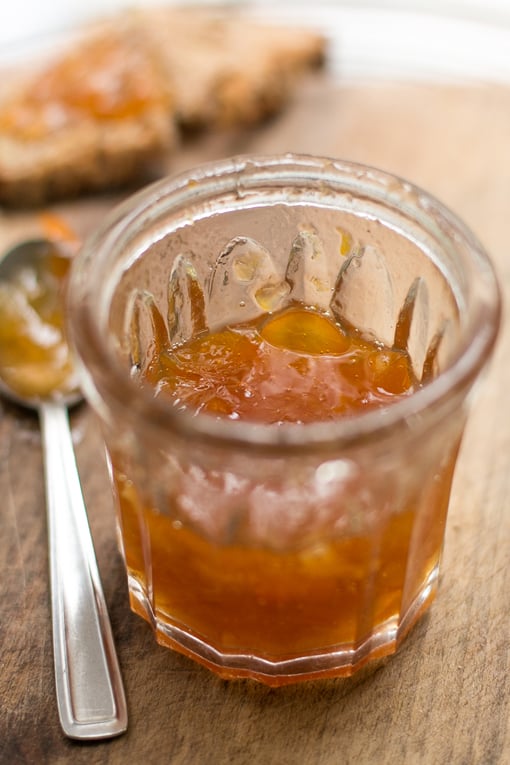
kumquat marmalade recipe

I’ve been on a marmalade bender lately. Well, it’s actually been for the last few weeks. Winter, of course, is marmalade season and the markets in Paris are heaped with citrus: Corsican clementines, pretty yellow bergamots, hefty pink grapefruits from Florida (although some infer appellations from elsewhere – namely, the Louvre), leafy lemons from Nice, and lots and lots of oranges.

Kumquat marmalade

The stands are so piled up that it’s not uncommon to be walking down the aisle and have an orange roll off of the piles and land on your foot. (Which is why it is a good idea to wash any fruit before you use it.) This means I’ve got so many jars of marmalade, that when my friend Luisa stopped by and saw the jars piled on top of a shelf in my bedroom, she said “I’ve doing the same thing ” at her apartment in Berlin. Sometimes I think jam-making could be classified as an epidemic and if so, there’s ample evidence that I’m ready for an intervention.

kumquat marmalade recipe

While kumquats were once classified with their look-alike citrus brethren and sistern (admittedly, it can be hard to tell as it’s difficult to get a look under their navels), they are now placed in another genus category (Fortunella), even though they share many characteristics of citrus fruits.

Kumquat marmalade

One of those characteristics is that they are winter fruits. And another is that they are très bon pour la santé (good for your health), containing lots of vitamin C. And they also make you feel happier, since not only does their tangy-bitter flavor brighten up even the darkest of winter day, nothing makes me happier than to wake up in the morning and gaze at my shelf of marmalade first thing in the morning.

Kumquat marmalade

I was especially happy when I was doing my shopping at the outdoor market and came across a big bin of kumquats. I scooped up a nice-sized bag of them and brought them home, where they patiently waited in the refrigerator until I decided what to do with them.

Originally I’d considered giving them a quick-candying and strewing them over poached prunes with a scoop of ice cream. But I ended up sticking my fingers into the bowl of prunes a few too many times during the week and ended up with a small puddle of cinnamon-spiced dark syrup pooled in the bottom of a container in my refrigerator, which I didn’t think would go with anything.

Kumquat marmalade

So I decided to get out my little serrated knife, slice up my Fortunella fruits, and make marmalade. I added a couple of lemons not just to bulk it up, but because I thought with the added sugar, the marmalade would benefit from some extra acidity.

Kumquat marmalade

I normally spoon my marmalades on morning toast, but after I made this batch, I had cleaned up the kitchen and was going to reward myself to a nice bowl of split pea soup for lunch with some Comté cheese and – like most good ideas (and a few of the bad ones) – it suddenly occurred to me that the tart marmalade might be nice with the nutty cheese I was cutting into batons.

Kumquat marmalade

And sure enough, it was. Fortunately I have three nice jars of marmalade to add to my collection. So far this year I’ve made Seville orange marmalade (eight jars) and four jars of mixed marmalade, using the bergamots and citron that were plucked off a tree in Sicily. After all that slicing, seeding, and simmering, the last pot of marmalade has been jarred and stored; they’ll last me through the winter. And if I am prudent, a number of spring and summer mornings as well.

Kumquat marmalade

Print

Kumquat Marmalade

Many of the little rings of kumquats will, unfortunately, come apart as you cook the marmalade. The reward, however, is gorgeous jars of tangy marmalade that you’ll be happy to spread on your morning toast or serve with a bit of cheese after dinner. I served mine with Comté, but a nice goat cheese or another nutty mountain cheese, like Gruyère, would pair nicely with it. It takes a bit of patience to slice and pluck out all the seeds from the kumquats, but you can get 2 to 3 jars of marmalade for your efforts. I use a small serrated knife to slice off the stem end, then start slicing the kumquats crosswise, until I get close to the center. Finally, I stick the tip of the knife into the area where the seeds are and slip them into a small bowl. Because the seeds are rather large, any that you miss you can usually find just by doing a little scanning of your pile of sliced kumquats. I use oval Nagami kumquats, which are more puckery than the round Meiwi kumquats, which you sometimes come across. Do try to get organic or unsprayed fruit from your local market or natural food store. The kirsch is optional, but it does nicely round out the flavor of the marmalade. You can substitute another liquor, such as gin, Grand Marnier or Cointreau, light rum, or a dash of brandy. Or it can be omitted, if you wish.

Ingredients

  • 2 lemons stemmed, halved lengthwise, seeded, and very thinly sliced
  • 1 pound (450g) kumquats stemmed, seeded, and sliced
  • Reserve the seeds from the lemon and kumquats
  • 5 1/2 cups (1.3L) water
  • 2 cups (400g) sugar
  • pinch of salt
  • Optional: 1/2 teaspoon kirsch or other liquor

Instructions

  • Put the lemon slices in a large non-reactive pot. Cover with cold water and bring to a boil. Reduce the heat and simmer until the lemons are translucent, about 5 minutes. Drain. (Discard the water.)
  • Put the blanched lemons back in the pot. Tie the seeds from the lemons and kumquats securely in a piece of cheesecloth and add the seed sack to the pot along with the sliced kumquats and water. Bring to a boil; remove from heat, cover, and let stand 24 hours.
  • The next day, put a small plate in the freezer.
  • Add the sugar and salt to the pot, and cook the marmalade for 30 to 45 minutes over medium heat. Remove the bag of seeds and when it’s cool enough to handle, squeeze the seeds in the cheesecloth using your hands or place it in a ladle and press it with the back of a soup spoon (being careful not to break the fabric and release the seeds) over the jam pot to so the pectin goes directly into the marmalade mixture.
  • Continue cooking until it has reached the jelling point, about 220ºF (104ºC) degrees, if using a candy thermometer. To test the marmalade, turn off the heat and put a small amount on the plate that has been chilled in the freezer and briefly return it to the freezer. Check it in a few minutes; it should be slightly jelled and will wrinkle a bit when you slide your finger through it. If not, continue to cook until it wrinkles slightly on the chilled plate when you nudge it.
  • Remove from heat, then stir in the kirsch (if using), and ladle the mixture into clean jars.

Notes

Note: I store my jams and marmalades in a cool place, often the refrigerator if not planning to use them within a few weeks. if you wish to can or preserve them, you can check out these canning tips.

Related Recipes

Kumquat Marmalade (Recipe Girl)

Kumquat Marmalade with Star Anise (Drizzle & Dip)

Sunday Morning Kumquat Jam (Amateur Gourmet)

Small Batch Kumquat Marmalade (Food in Jars)

Maple Kumquat Marmalade (A Bloggable Feast)

Cherry Compote

By: David
5 June 2024 at 18:14

I think I have something wrong with me. I seem to be afflicted with a particular malady that forces me to buy way too many summer fruits when they’re in season. It gets particularly dire when faced with apricots and cherries, two fruits whose seasons are much shorter than the others. The first fresh apricots I saw were back in upstate New York, around the 1980s, and I’d never seen them before. Someone brought us a basket of the tender, squishy little orange fruits to the restaurant that I worked at, and I remember being completely taken off guard, as the only apricots I’d ever seen were the dried ones. And while I loved the crinkly dried specimens, those fresh beauties with a red blush were a whole other taste entirely.

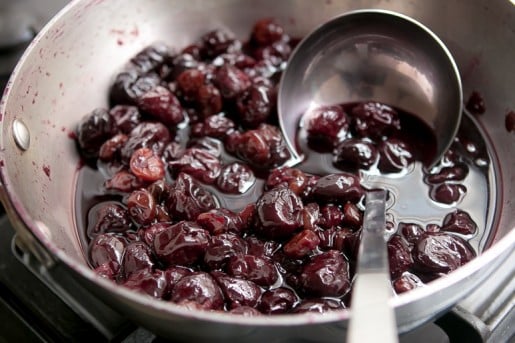
Fresh Cherry Compote recipe

Then, when I moved to California, I discovered how abundant fresh apricots are (or can be), as they are in France. But no matter how abundant – or not – cherries are when the season is in full swing, I always consider them extra-special fruits and give a prominent place in my kitchen. At the beginning of the season, they’re incredibly expensive and rarely good. Then, as the season moves along, they start showing up in larger mounds at the market, and the prices get gentler, coaxing me to buy as many as I can heft.

Fresh Cherry Compote recipe

Fresh Cherry Compote recipe-3

This week, I was helpless when faced with an overload of summer fruits at the market. And in addition to a giant bag of apricots, two bulging sacks of tomatoes, and eight white nectarines, I bought 2 kilos (about 4 1/2 pounds, give or take a few cherries) of fresh cherries — and from the looks of the other shoppers, it was more than any normal person would buy. (Although I think I made the vendor’s day.) But I couldn’t help it. They were Burlat cherries and I’d bought a small bag from the same vendor last week at the market, and there he was again, tempting me with more. Once I got home, I got my cherry pitter out, and pitted half of them, saving the others to eat fresh. (Except I almost polished off the fresh ones I was reserving as I was pitting these!)

Fresh cherries are, of course, great fresh. But cooking them can deepen, and even improve their flavor, especially nice if you get home and find yourself with a bag of rather wan ones. Or ones that you might snag at the end of the market, when the vendors are trying to get rid of any extras that might not keep until the next market day.

Fresh Cherry Compote recipe-4

In addition to being the answer to what the heck you (or I) are going to do with all those cherries, this recipe also deftly answers that age-old question: Can I freeze that? And the answer is a big, resounding, “Heck, yeah!” Once the compote has cooled, it freezes perfectly in zip-top freezer bags or other containers that you prefer to use, and will last up to a year. (You can also freeze pitted fresh cherries on their own as well.)

And let me tell you, it’s great to stumble upon a bag of cherry compote that may have moved to an unfavorable position in your freezer as summer shifted into fall – or winter, when they can become quickly forgotten. Once defrosted, and perhaps rewarmed, they’re terrific served with vanilla ice cream, plain yogurt, or alongside a cake, such as almond cake, gâteau de savoie, or angel food cake.

Fresh Cherry Compote recipe-5

I like to boost their flavor with a handful of dried sour cherries, added midway during cooking, so they plump up and absorb the cherry juices, which add another dimension of cherry flavor. A shot of kirsch also dials up the flavor nicely.

Print

Cherry Compote

Be sure to use a larger pot that you think. For 2 pounds (1kg) of cherries, I used a 6-quart (6l) pan. Since the cherry juices will foam up as they cook, using a larger pot – and removing the lid from time-to-time – will keep your from having to clean up a sticky mess. I’ve didn’t use much sugar here, so you can add more to taste, if your cherries aren’t as sweet as mine were. If you can get sour cherries, feel free to add some in place of the sweet cherries. If so, you may need to increase the sugar a little, to taste as well.

Ingredients

  • 2 pounds (1kg) fresh cherries
  • 1/4 cup (50g) sugar
  • cup (40g) optional: 1/3 dried sour cherries
  • 2 teaspoons kirsch (or another fruit-based liqueur, or eau-de-vie)
  • 1-2 drops pure almond extract

Instructions

  • Stem and pit the cherries. Put them in a large, nonreactive pot or saucepan and stir in sugar. Turn the heat to medium, cover, and cook for 10 minutes, lifting the lid and stirring them frequently, to encourage juicing and to make sure the liquid the cherries exude doesn’t foam up and overflow.
  • After 10 minutes of cooking, add the sour cherries, if using, and cook for 5 to 10 more minutes, until the cherries are wilted and completely cooked through.
  • Remove from heat and stir in the kirsch and almond extract. Let cool before storing or serving. The juices will thicken as the compote sits.

Notes

Storage: The cherry compote can be stored in the refrigerator for up to 5 days. It can be frozen for up to one year.

Related Recipes

No-Recipe Cherry Jam

Cherry Mess

Quick-Candied Cherries

Cherries in Red Wine Syrup

Lemon Yogurt Cake with Apricot-Cherry Compote

Cranberry Chutney

By: David
13 December 2023 at 15:17

Have you ever gone away for a few weeks and found out that you’d left the freezer door ajar? Well, I did. And let me tell you, it wasn’t pretty.

Before traveling, since I’m anti-gaspillage (against food waste), I jammed whatever I could into my already-stuffed freezer, including a half-eaten tomato tart, which I thought would be nice to have ready-and-waiting upon my arrival home, partially-used blocks of butter, and the miscellaneous leftover ends of bread that one collects when one constantly buys too much bread. When I returned, I realized that one of those bread pieces had been caught in the door and kept it from sealing closed.

Oddly, the fridge doors have an alarm, which beeps if they’re not completely shut, but the freezer door doesn’t. Coming home to an array of items that were half-frozen, half-defrosted (with gloopy liquid oozing out of them), possibly defrosted and then refrozen, and a few that were unidentifiable, was a bummer.

Some things I knew had to go – like sausages, stock, and a rather moldy half-eaten tomato tart, that I was sure could be reheated when I returned from my travels. (I won’t share a picture of that, but it looked like it needed a good shave.) But I also had several precious bags of cranberries that I’d stashed away for Thanksgiving and while they weren’t completely defrosted, I didn’t want to (or know if I could) refreeze them, so I decided to make chutney…and a whole lotta it.

Fortunately, all my candied and dried fruits were in fine condition and since I was cleaning my freezer, I also did a little purge of my drawers of things that weren’t sparking joy in my kitchen, and cooked them all up with some spices, some honey, orange juice, and vinegar, to make this tangy-tangy condiment.

(Just a note that dried fruits always spark joy in me. But a drawerful of little crinkled up cellophane bags with thirteen raisins or two dried apricots in them, don’t.)

To share my joy with you, I whittled my catastrophe-size recipe down to a reasonable recipe, but you’re welcome to double, triple, or quadruple it. Although it’ll keep for a few weeks in the refrigerator, I had so much that tightly sealed the overload into freezer bags and placed them back in the congélateur. However next time I’m headed out of town, I’m going to make sure my freezer is tightly sealed, because I’d be a bummer to lose those.

Print

Cranberry Chutney

Feel free to use any type, or combination, of dried fruit. Dates, figs, raisins, apricots, candied ginger, dried cherries, cranberries, pineapples, or other favorites, work well. (Of course, there's no need to chop the raisins or dried cranberries or cherries, if using.) You could also include chopped candied orange or lemon peel in the mix. Any tart apple is fine to use, but if using Golden Delicious apples, make sure to chop them very fine (unless you like chunks of apples in your chutney) as they don't break down as other apples do. If using frozen cranberries, no need to thaw them in advance. Just add them frozen and cook as directed. An interesting addition is to cook the chutney with a very small branch of rosemary. It'll lend an herbaceous note to the chutney. Remove it after the chutney is cooked. Or a tipple of whiskey (or an anise-based spirit, such as pastis) added right before the end of cooking could also be nice.
Course Side Dish
Keyword chutney, cranberry, sauce
Servings 3 cups (750ml)

Ingredients

  • 12 ounces (340g) cranberries fresh or frozen (if using frozen, no need to defrost before using)
  • 1 cup (125g) diced dried fruit (see headnote)
  • 1 tart apple cored, and finely diced (peeled or unpeeled)
  • 2/3 cup firmly-packed (140g) light brown sugar
  • 1/2 cup (125ml) orange or apple juice
  • 6 tablespoons (90ml) apple cider vinegar plus more if desired
  • 1 tablespoon honey
  • 1/4 teaspoon ground cinnamon
  • 1/4 teaspoon ground dried ginger
  • 1/8 teaspoon ground cloves
  • pinch red chile flakes
  • pinch salt

Instructions

  • Mix all the ingredients together in a large saucepan.
  • Cook over medium-high heat, stirring frequently, until the cranberries pop and begin to break down and release their juices, and the apple pieces are cooked through. Time will vary but it'll take about 10 minutes or so.
  • Remove from heat and when the chutney is cool enough, taste and add 1 (or 2) tablespoons additional vinegar, if desired.

Notes

Serving: Serve with turkey (at Thanksgiving or another holiday), or with poultry, pork, roasted vegetables, or even cheese.
Storage: Store in jars in the refrigerator until ready to use. The chutney should keep for at least a month. It can also be frozen for up to six months. If you wish to can it, you can find guidelines at the National Center for Home Food Preservation website.
 
❌